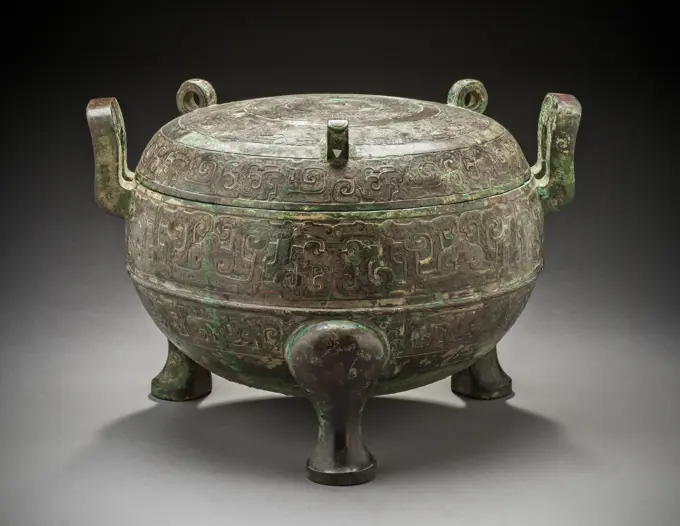
Ancient Vessels

A variety of ancient pottery and ceremonial vessels showcasing intricate designs and textures, reflecting rich historical significance across different cultures.

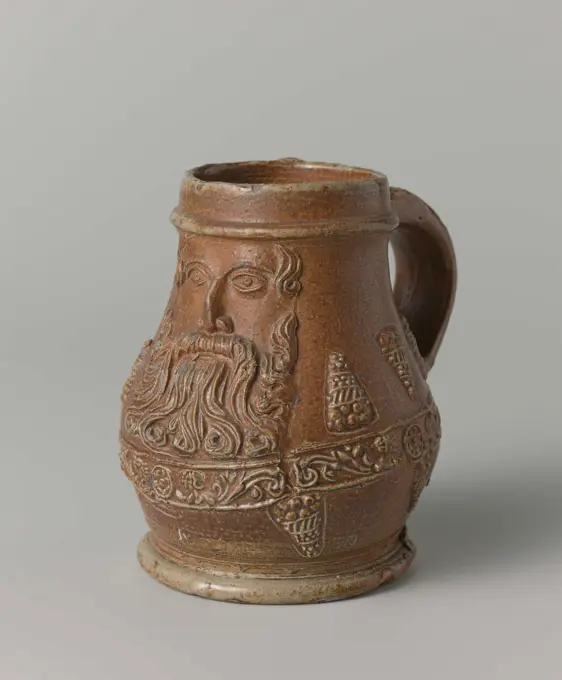
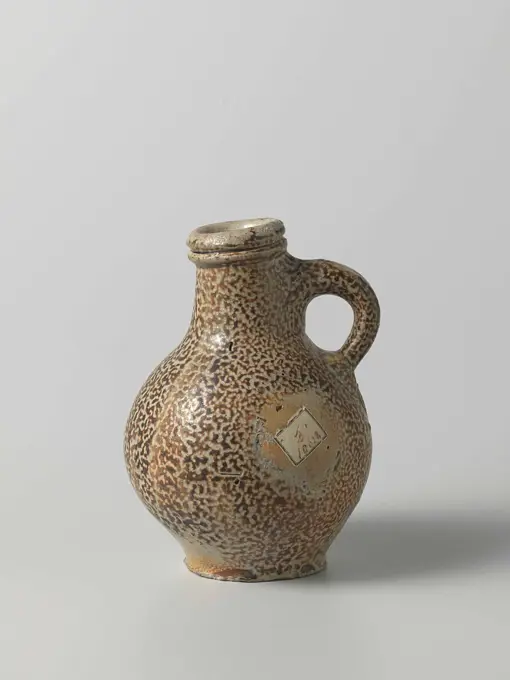
Jug with a mask and incised borders, anonymous, c. 1550 - c. 1599 Can be made of stoneware on the stand ring with a spherical body and narrow neck with a pinched spout. The C-shaped ear is attached to the neck and shoulder. Some profiles and a printed and imposed mask on the neck in relief. Covered with a brown glaze. On the abdomen vertical, taken tires. The neck and foot with horizontal tires. Raeren. Rae stoneware. glaze vitrification Can be made of stoneware on the stand ring with a spherical body and narrow neck with a pinched spout. The C-shaped ear is attached to the neck and shoulder. Some profiles and a printed and imposed mask on the neck in relief. Covered with a brown glaze. On the abdomen vertical, taken tires. The neck and foot with horizontal tires. Raeren. Rae stoneware. glaze vitrification
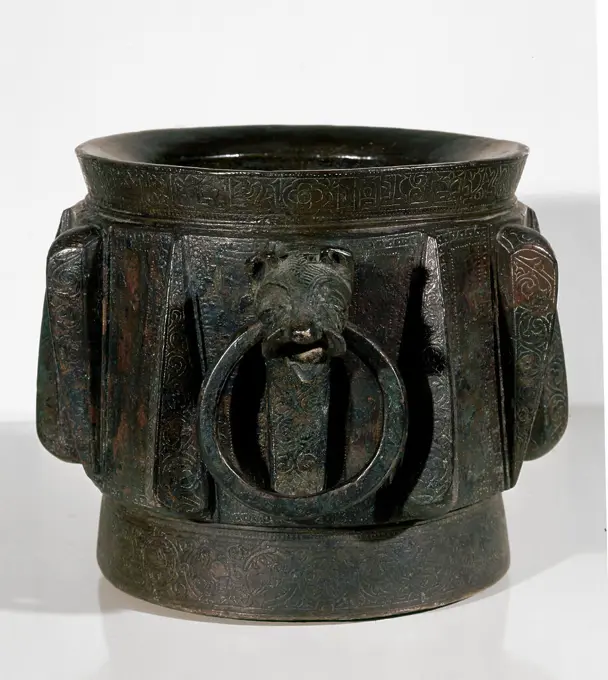
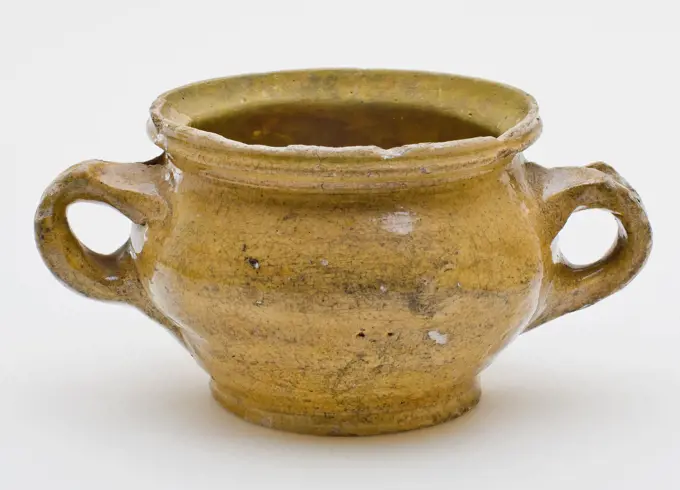
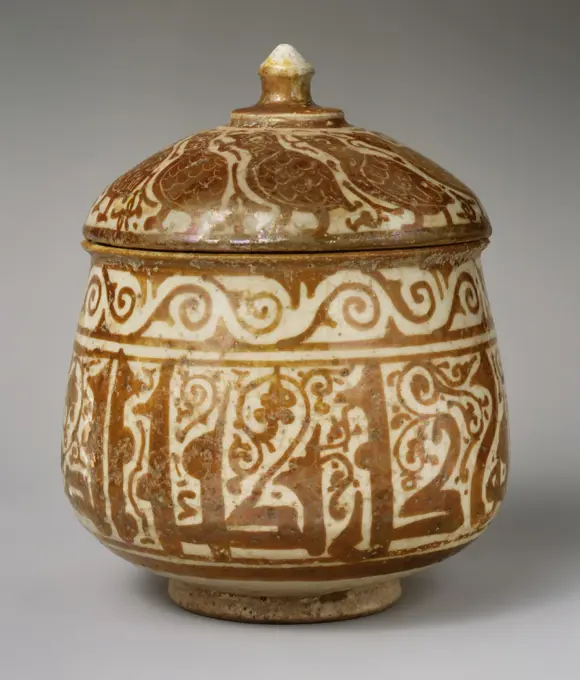
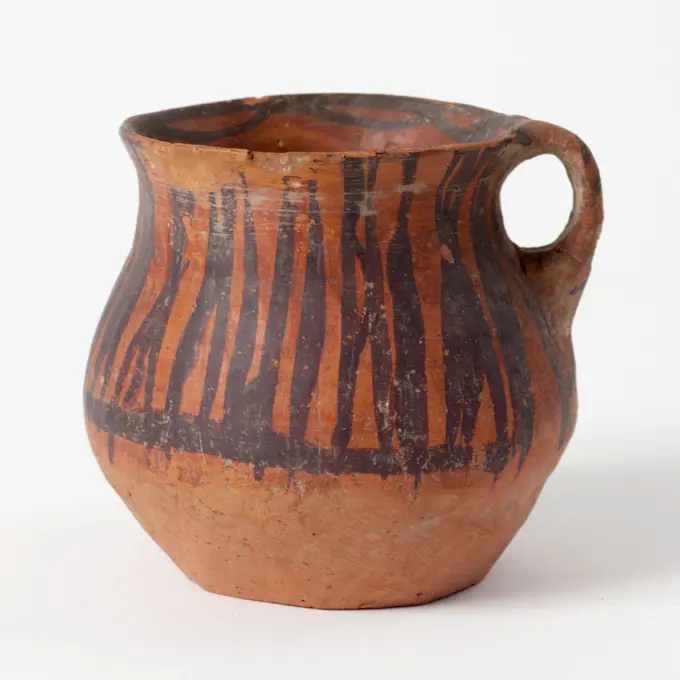
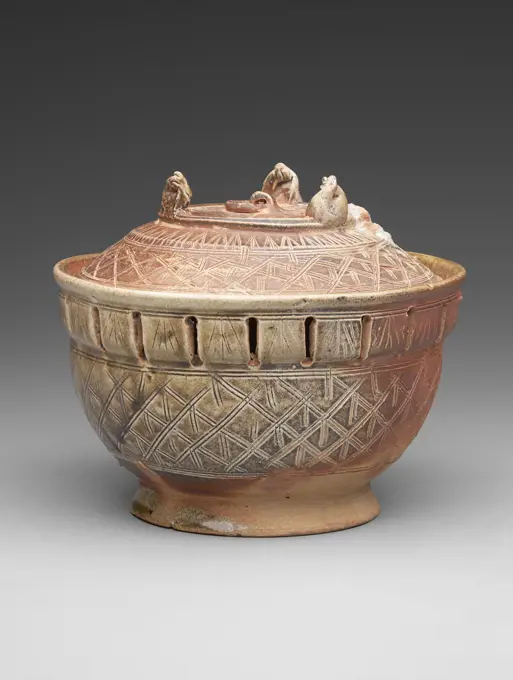
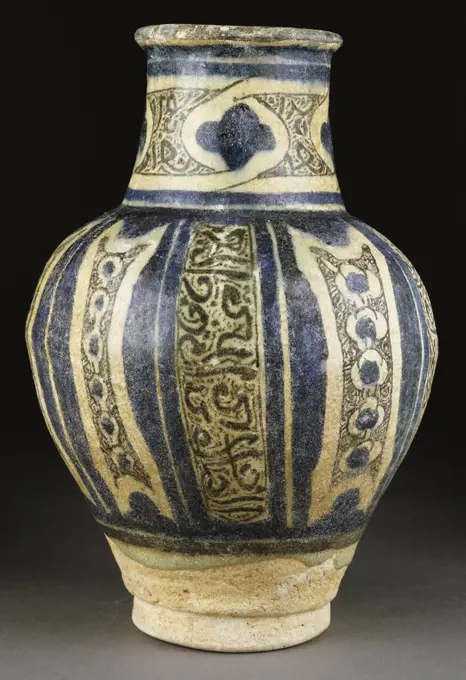
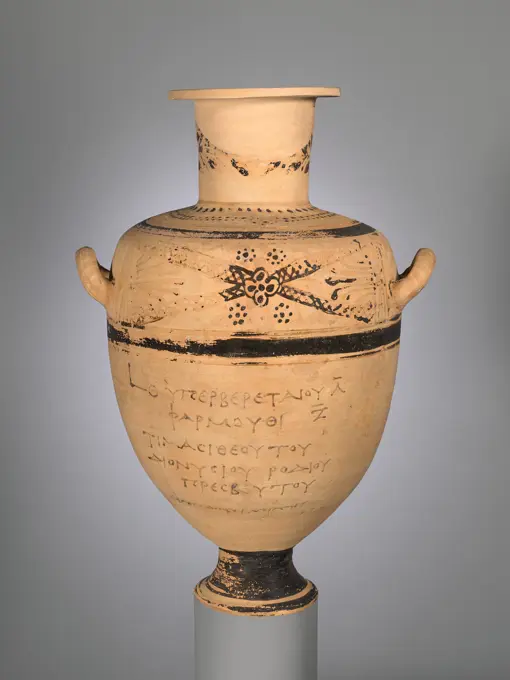
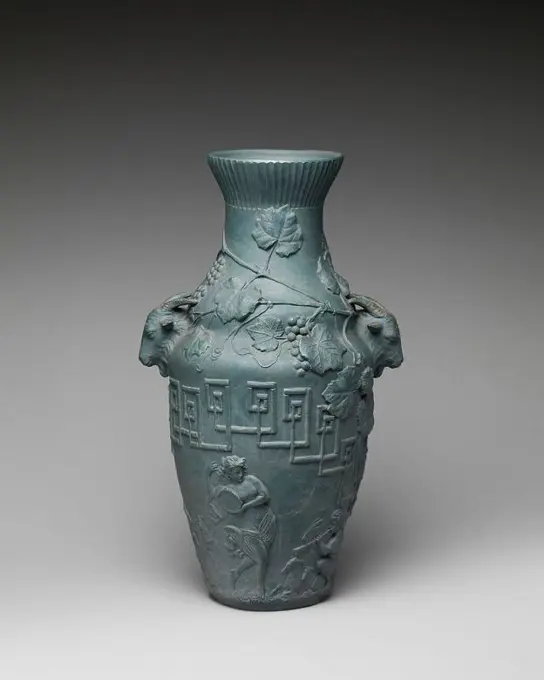
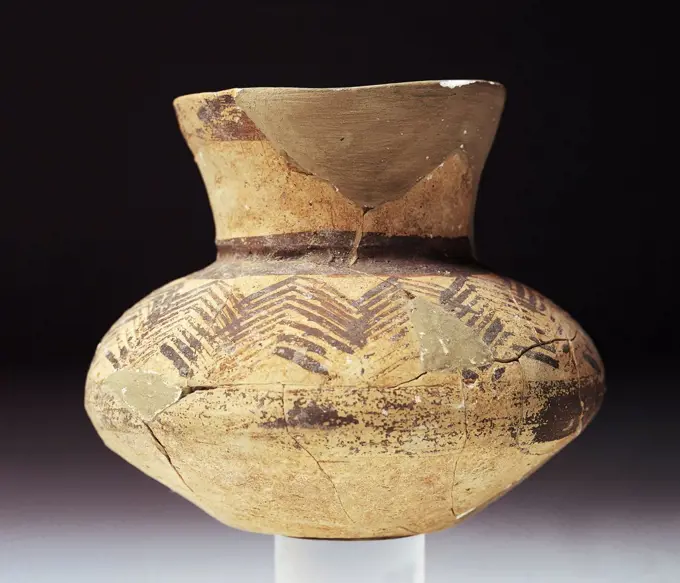
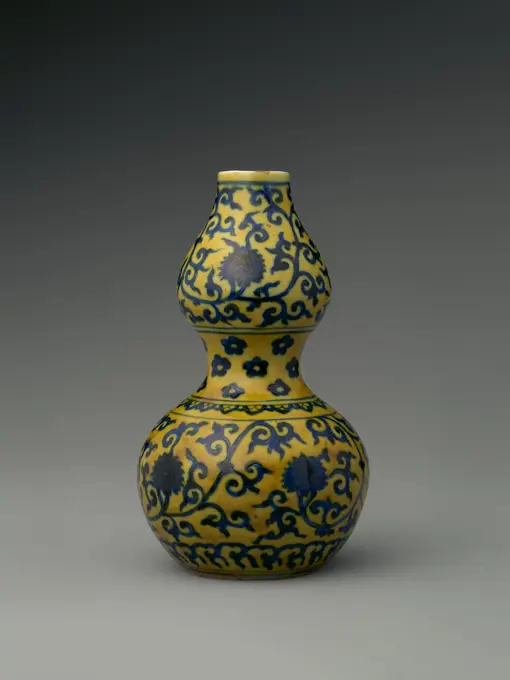
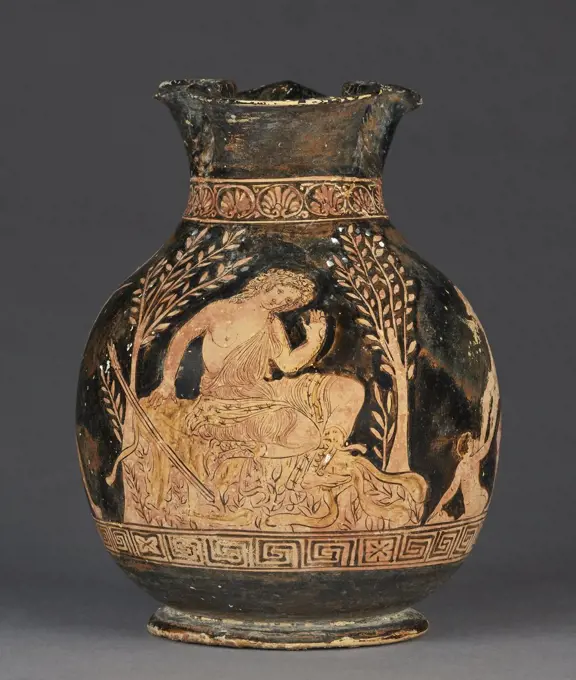
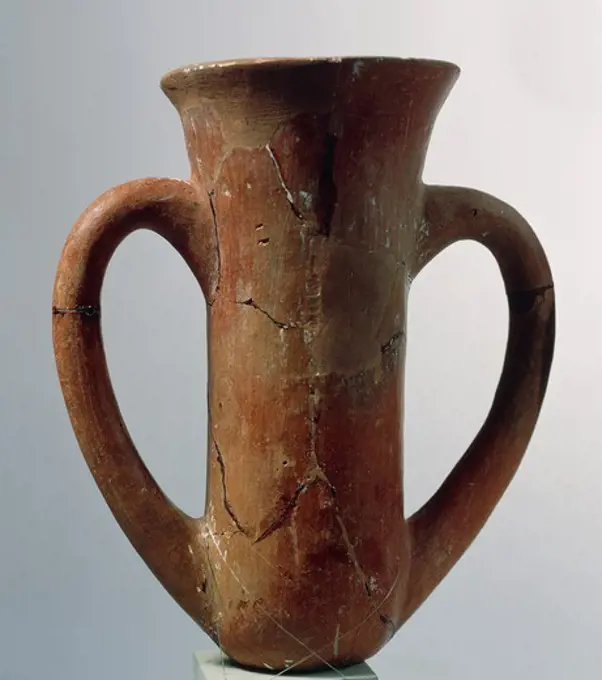
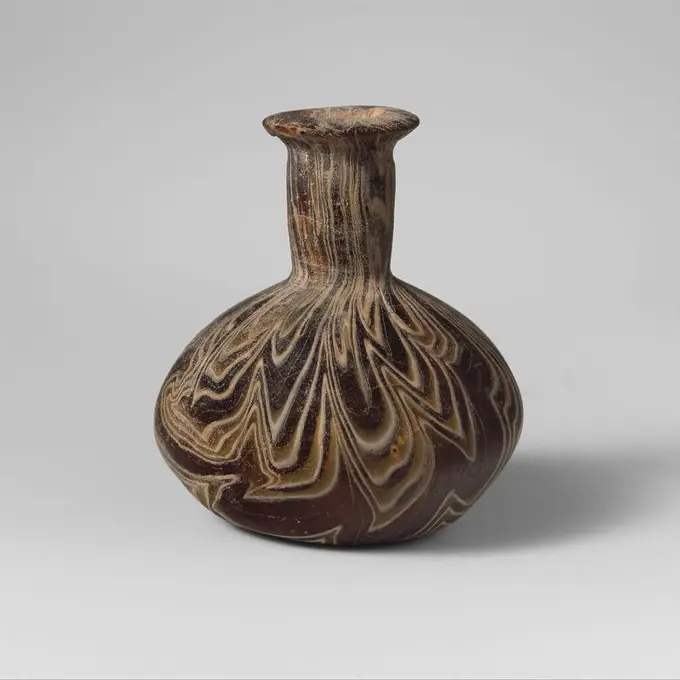
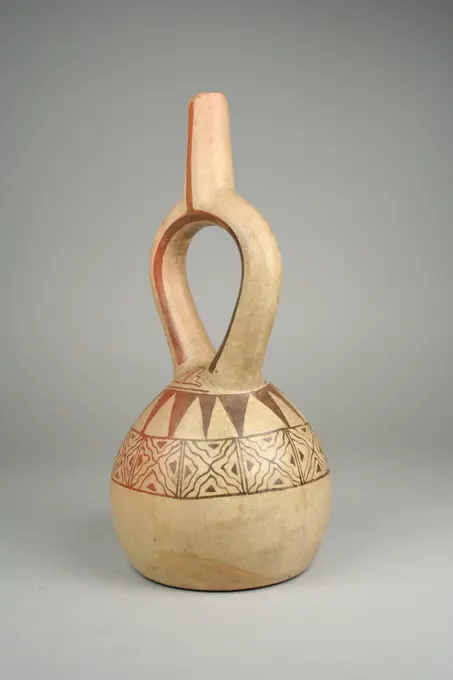
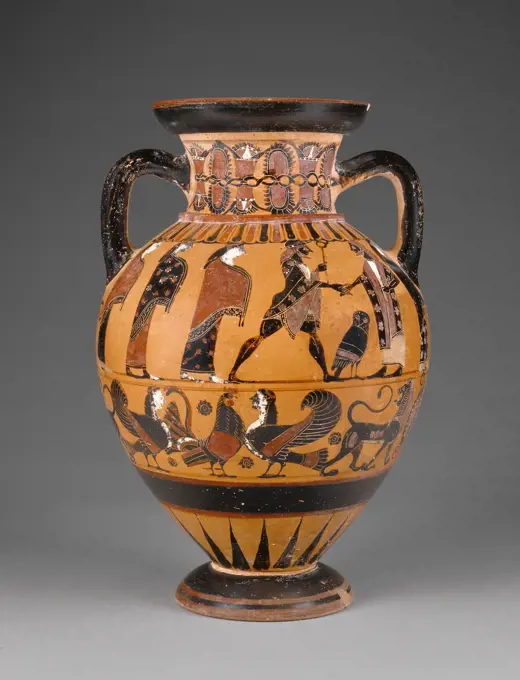
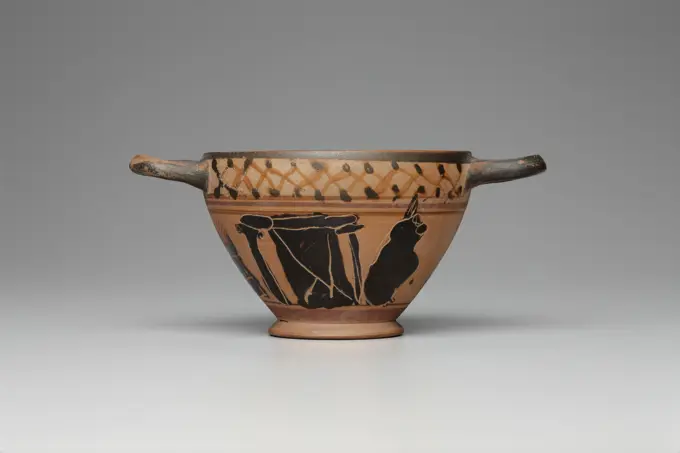
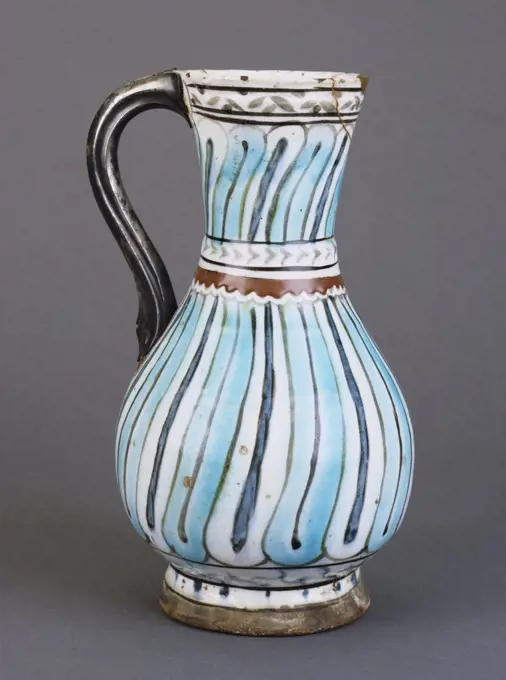
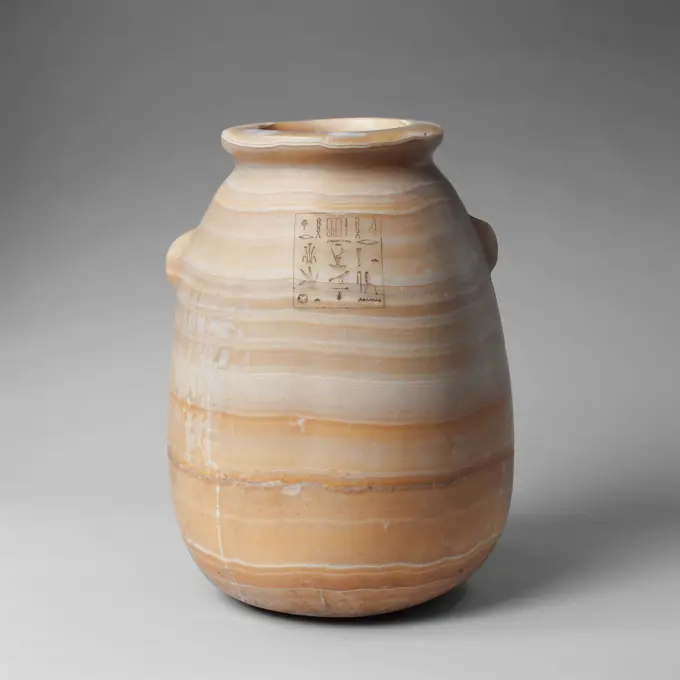
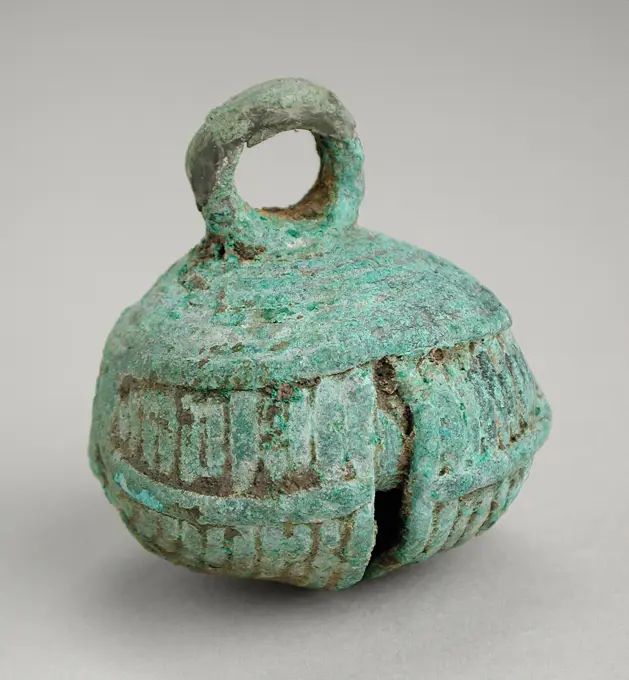
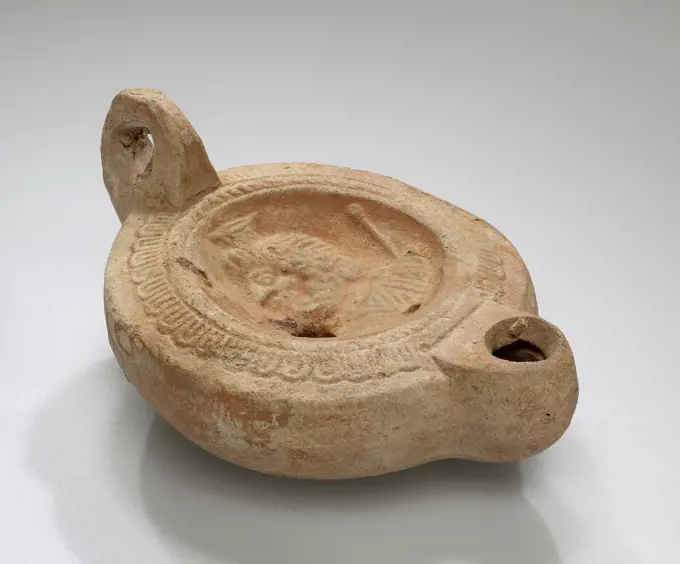
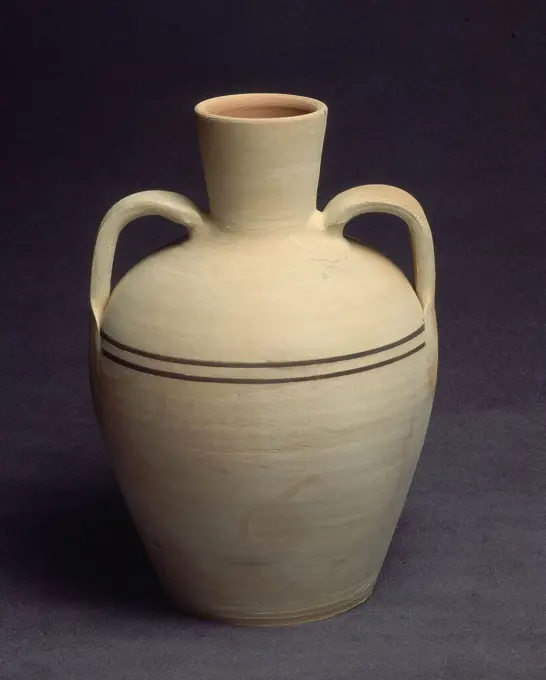
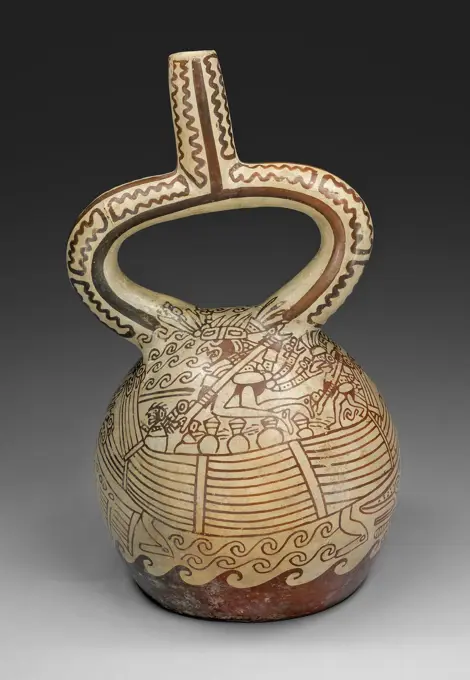
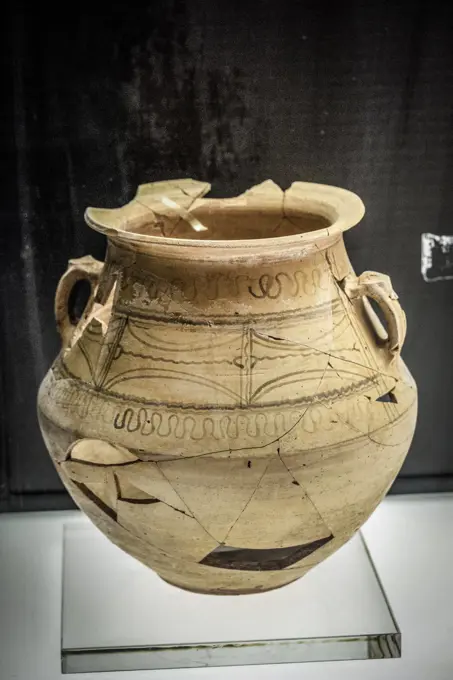
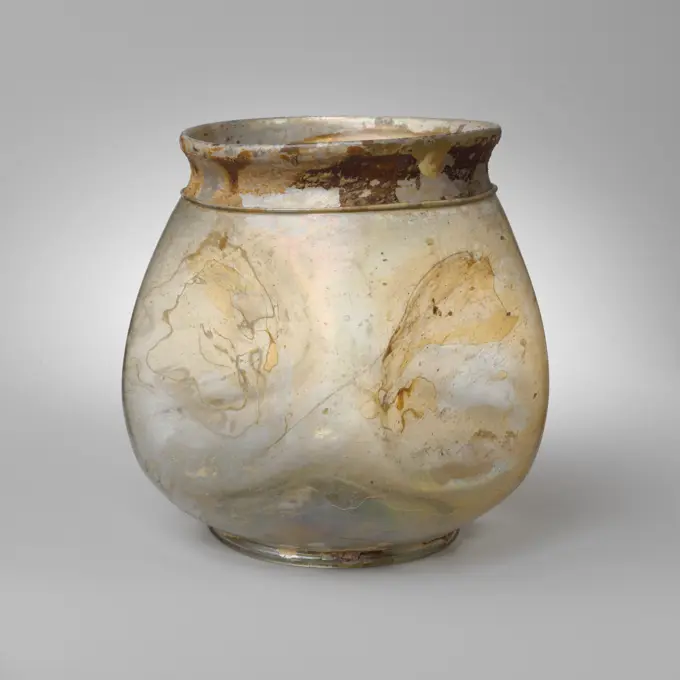
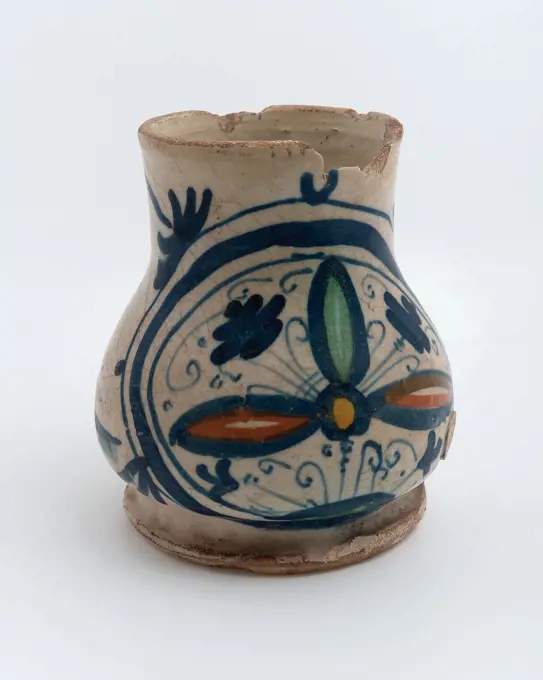
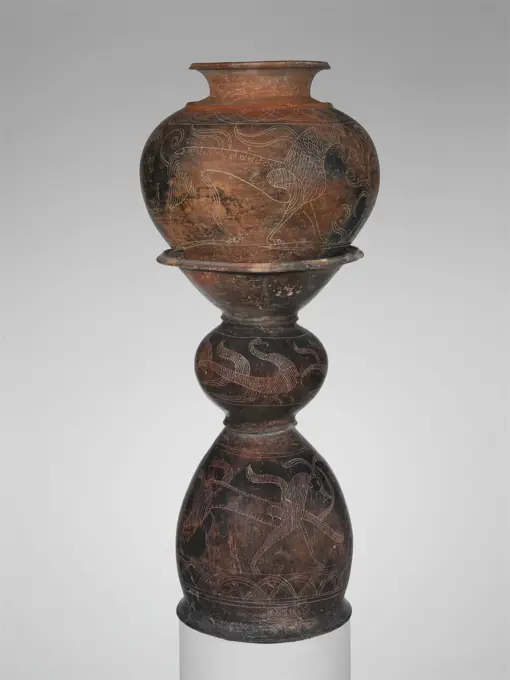
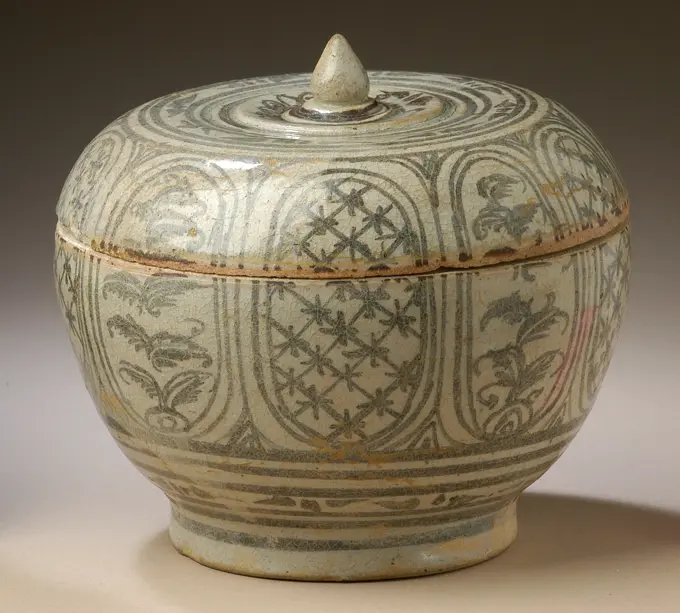
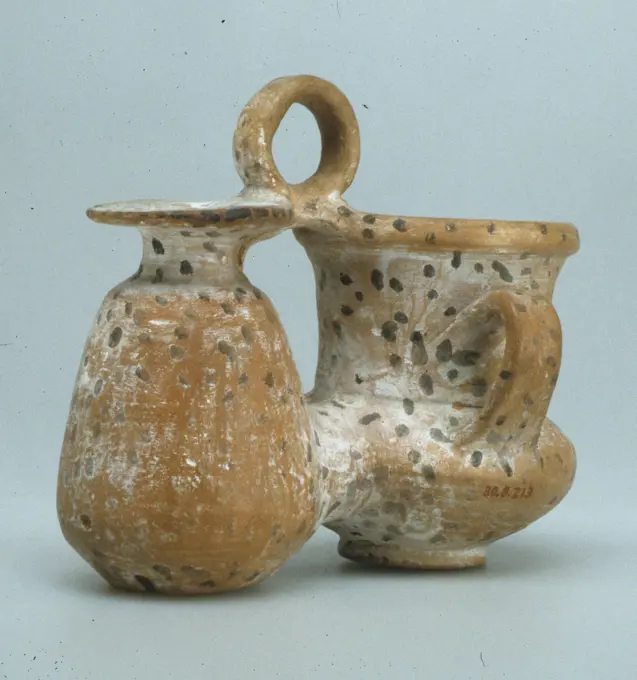
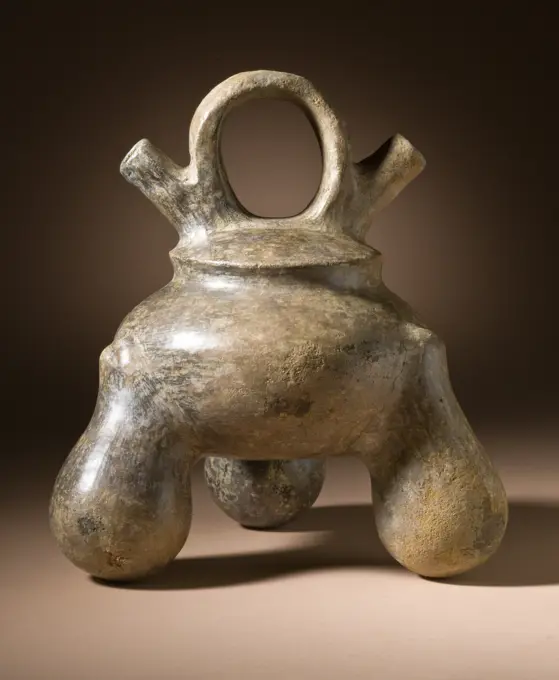
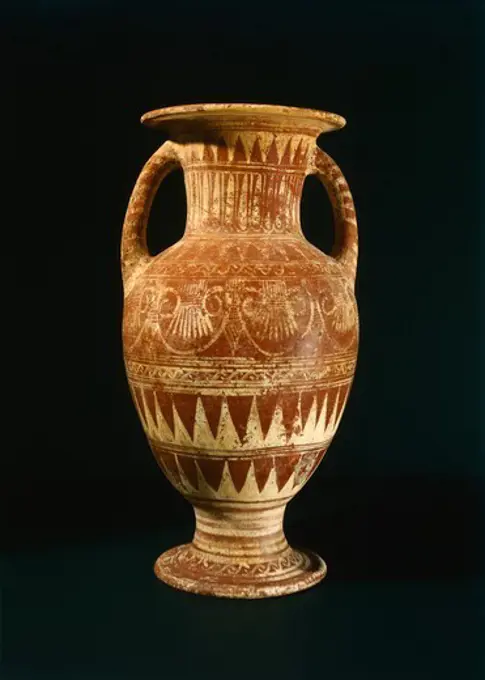
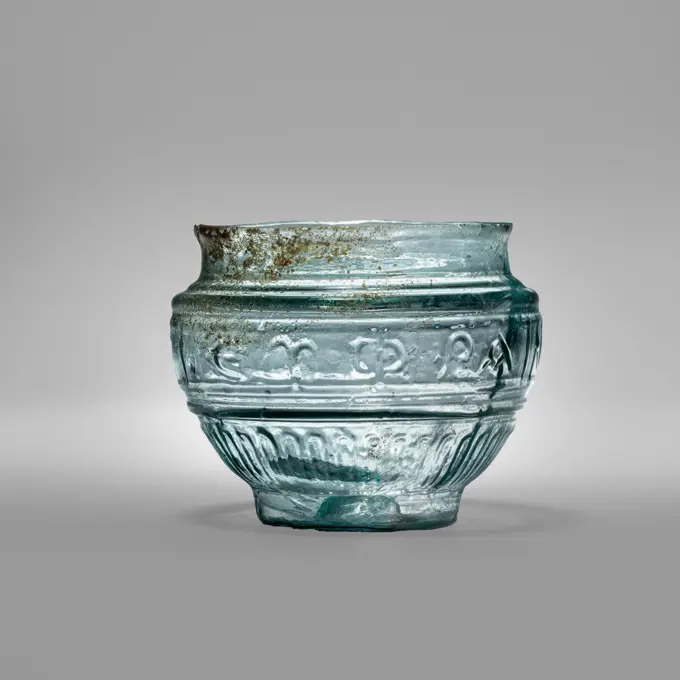
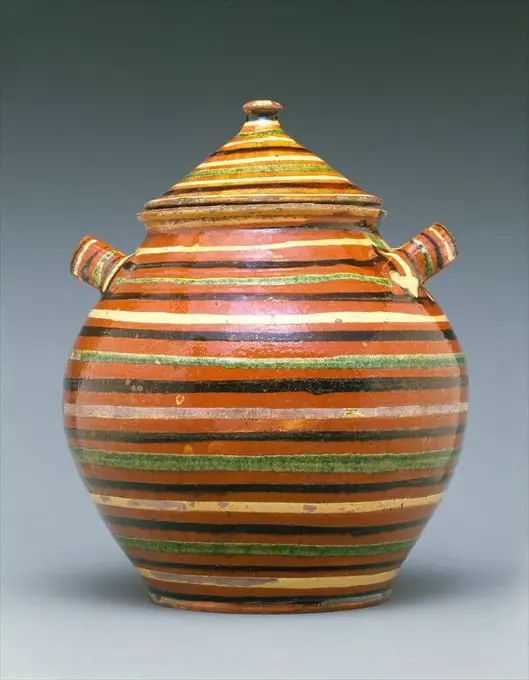
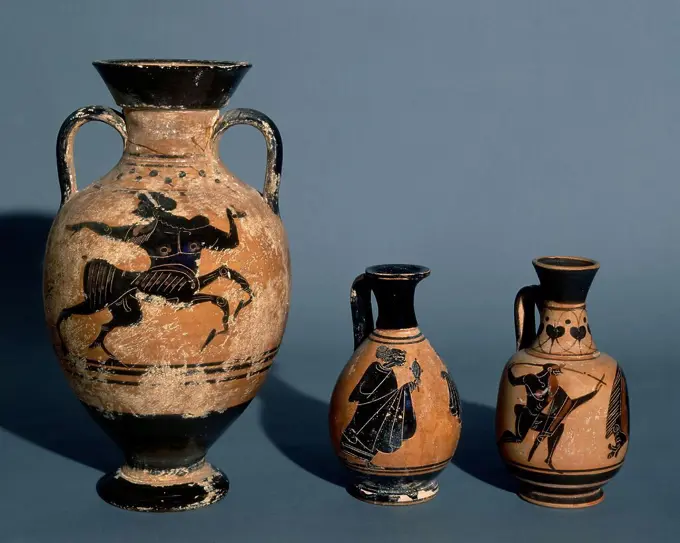
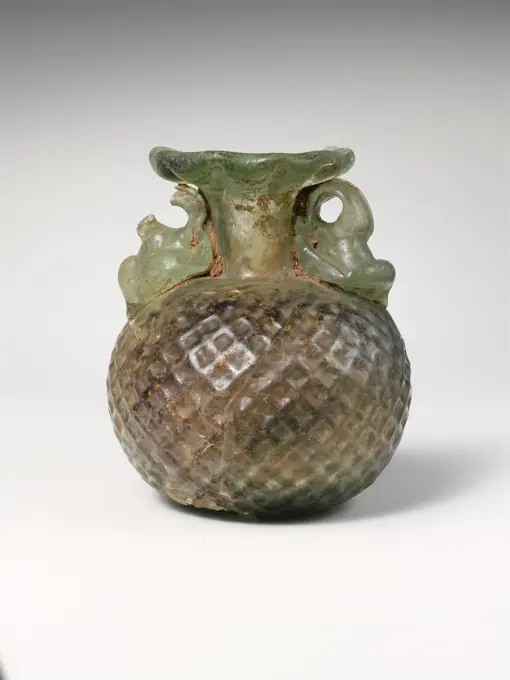
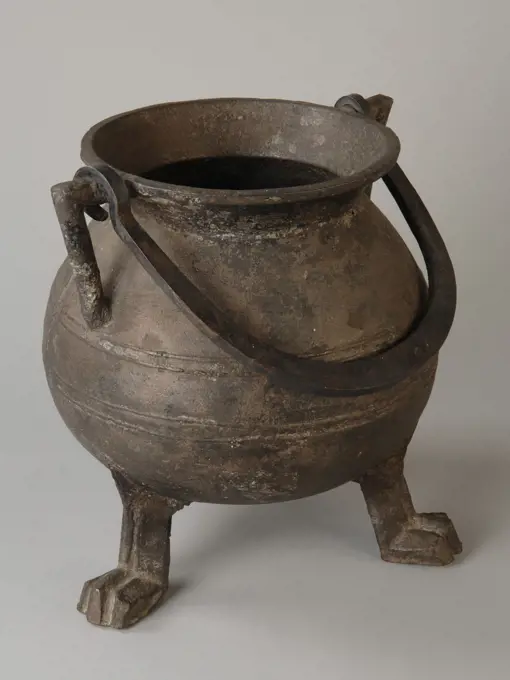
Bronze grape on claw feet, grape cooking pot tableware holder kitchenware soil find bronze iron metal, casted forged forged Large bronze grape Funnel shaped neck edge. Bullet belly Three sturdy legs three-toed claw at the feet. Wide handle sickle-shaped. Supplemented with twentieth century handle archeology Capelle aan den IJssel House in Capelle castle kitchen food food preparation war hiding store Soil discovery: house in Capelle from the well of castle Capelle 1964Vase, 1368. bronze. Cernuschi Museum, Asia Museum of Asia in the city of Paris.Yellow glazed pot with two ears, on stand, pot holder soil find ceramic earthenware glaze lead glaze, hand-turned glazed baked Pot with two upright pinched ears Double conical belly Sharp cut top edge obliquely standing White shard. Yellow Fully glazed except for the bottom of the soil archeology Rotterdam City Triangle Bulgersteyn cooking store food preparation store Soil discovery Castle Bulgersteyn Rotterdam.PUCHERO DE CERAMICA NEGRA CON DOS ASAS-PROCEDE DE FARO - OVIEDO (ASTURIAS). Location: MUSEO DEL PUEBLO ESPAÑOL. MADRID. SPAIN.Pyxis (Cylindrical Container) late 11th-early 12th century This type of coppertoned lusterware known as Tell Minis ware is named after a village in central Syria where such pieces were found. Syrian potters used minimal amounts of silver and greater amounts of copper in creating luster glazes, thus endowing the luster with a distinct dark coppery hue. A shortage of silver in the region at the time may have caused a change in the luster glaze recipe.. Pyxis (Cylindrical Container). late 11th-early 12th century. Stonepaste; luster-painted on incised, opaque white glaze. Attributed to Syria. CeramicsGlobular Jar with Mock Ogre Mask Ring Handles. China. Date: 206 AD-220 AD. Dimensions: H. 14 in. Stoneware with underglaze molded decoration and lead green glaze. Origin: China. Museum: The Chicago Art Institute, Chicago, USA.Amphoriskos, 6th-4th century B.C., Core-formed glass, dark blue with yellow and light blue decoration, 8.75 × 4.8 cm (3 7/16 × 1 7/8in.), Eastern Mediterranean orEgyptian, Late Period, Dynasties(26-27?), Containers -GlassTerracotta mug 4th century B.C. Etruscan Mug with two handles and no decoration.. Terracotta mug 255587Cup ". Terracotta with painted decoration in black. Neolithic period (around 8000 BC). Paris, Cernuschi museum. Anse, Chinese art, Chinese Ceramic, container, decorative motif, Neolithic period, container, cup, terracottaCovered Bowl(Gui), 1st century B.C.E.-1st century C.E., Stoneware with olive-brown glaze, 7 5/8 × 8 1/2 in. (19.4 × 21.6cm), China, Chinese, Han dynasty (206 B.C.E.-220 C.E.), Containers -CeramicsA fine Syrian pottery baluster vase. The white exterior painted under the glaze with vertical panels of black inscriptions. Damascus, 14th century, 31.7cm high.Terracotta Hadra hydria (water jar) 213 B.C. Greek, Ptolemaic, Cretan The inscription on this vase states that it contained the cremated bones of a certain Timasitheos of Rhodes, a dignitary who died on an offical visit to Alexandria. The date of his death is precisely recorded as 19 May 213 B.C., using both the Macedonian and the Egyptian calendars.. Terracotta Hadra hydria (water jar). Greek, Ptolemaic, Cretan. 213 B.C.. Terracotta. Hellenistic. VasesBearded manner. Bearded manner of stoneware, with pewter lid. Middle across the bullet round belly runs a horizontal frieze with inscription. Above and down to and round medallions with women's busts and standing acanthus leaves. Before on the neck a beard man.Bottle. Iran, 12th century. Glass. Glass, mold-blownVase with Stylized Floral Scrolls. Korea. Date: 918 AD-1392. Dimensions: H. 26.4 cm; diam. 16.6 cm. Stoneware with underglaze iron brown painted decoration. Origin: Korea. Museum: The Chicago Art Institute, Chicago, USA.Pastoral Vase. Culture: American. Dimensions: 18 x 10 x 9 in. (45.7 x 25.4 x 22.9 cm). Maker: Ott and Brewer (1871-1893); Isaac Broome (1835-1922). Date: ca. 1876. Museum: Metropolitan Museum of Art, New York, USA.Polychrome Jar 1910-1930 Arizona. Ceramic and pigment . HopiSmall giara from Shams-ed-Din, Syria, created in the Halaf period. Prehistoric civilizations of Mesopotamia, 6th-5th Millennium BC.Gourd-Shaped Bottle with Lotuses mid-16th century China Based on the shape of a calabash gourd, this type of bottle first appears in Chinese ceramics in the fourteenth century and becomes popular again in the sixteenth. Thought to hold the liquor of immortality, and carried by Daoist immortals, such gourds and the bottles in their shape are often associated with that religious tradition.. Gourd-Shaped Bottle with Lotuses. China. mid-16th century. Porcelain painted with cobalt blue under and colored enamels over transparent glaze (Jingdezhen ware). Ming dynasty (1368-1644), Jiajing mark and period (1522-66). CeramicsLamp. UnknownCovered Jar in the Form of a Bird 14th-ca. mid-16th century Thailand (Si Satchanalai). Covered Jar in the Form of a Bird 37482Apulian Red-Figure Chous (Shape 3); Attributed to near the Black Fury Group, Greek (Apulian), active early 300s B.C.; South Italy, Apulia, Europe; about 360 B.C.; Terracotta; Object: H: 16.8 x Diam. rim: 8.4 cm (6 5/8 x 3 5/16 in.), Object (body): Diam.: 12.8 cm (5 1/16 in.), Object (foot): Diam.: 8.6 cm (3 3/8 in.)Pitcher 201 CE-400 CE Syria. Glass, blown technique . Ancient RomanCANTARO O BOTIJA DE CERAMICA NEGRA DE QUART (GERONA) SIN VIDRIAR. Location: MUSEO DEL PUEBLO ESPAÑOL. MADRID. SPAIN.Miniature bottle ca. 8th-7th century B.C. Assyrian. Miniature bottle 324765Globular Beaker 5th-7th century Frankish. Globular Beaker. Frankish. 5th-7th century. Glass. Glass-VesselsVessel 3rd millennium B.C. Dilmun. Vessel 327494VASO GRIEGO S VII AC-ESTILO CORINTIO-BARRO. Location: PRIVATE COLLECTION. MADRID. SPAIN.Prehistory, Turkey, Chalcolithic period or Copper Age. Terracotta cupo, 3rd millennium b.C., from Troy II.Small Jug 664-380 B.C. Late Period. Small Jug. 664-380 B.C.. Faience. Late Period. From Egypt. Dynasty 26-29Ewer with Repeated Arabic Phrase, "Blessing" 10th century. Ewer with Repeated Arabic Phrase, "Blessing". 10th century. Earthenware; black slip with white slip decoration under transparent glaze. Attributed to Iran, Nishapur. CeramicsGlass mosaic bottle. Culture: Roman. Dimensions: H.: 2 7/16 in. (6.2 cm). Date: 1st half of 1st century A.D..Translucent honey brown and opaque white.Everted, slightly beveled rim with angular outer lip; cylindrical neck, tapering downward, with tooling indents around top below rim; squat globular body; slightly concave bottom.Marbled mosaic pattern formed from sections of a single cane in a brown ground with white parallel lines in a irregular zigzag pattern.Intact; dulling, slight pitting, whitish iridescent weathering, and inside neck and body soil encrustation.Rotary grinding marks on exterior. Museum: Metropolitan Museum of Art, New York, USA.Vase Necel, Franciszek (1868 1935)Geometric Pattern Bottle 4th-7th century Moche. Geometric Pattern Bottle 309442MORTERO DE BRONCE HISPANO MUSULMAN DEL SIGLO XI PROCEDENTE DE MONZON DE CAMPOS PALENCIA. Location: MUSEO BALAGUER. VILANOVA i LA GELTRU. Barcelona. SPAIN.Italy, Campania, Pontecagnano, Oriental style stamnoid olla (little cooking pot) depicting herons, 700/675 B.C.Jug. Small jug of stoneware without decoration.Model Cultic Pot. Egypt, 6th - 8th Dynasties (2374 - 2165 BCE). Furnishings; Cookware. CopperBlack-Figure Neck Amphora; Euboea, Greece; about 570 - 560 B.C; Terracotta; 35.6 × 23.2 cm (14 × 9 1,8 in.)BartmannkrugSkyphos. Culture: Greek, South Italian, Apulian. Dimensions: 3 3/4in. (9.5cm). Date: ca. 350-300 B.C.. Museum: Metropolitan Museum of Art, New York, USA.Ding food vessel, 5th century BCE, 6 × 7 3/16 × 6 1/4 in., 4.4 lb. (15.2 × 18.26 × 15.9 cm, 2 kg), Bronze with inlaid silver décor, China, 5th century BCEIncense Burner or Marbled Stoneware. Incense burner on three legs (tripod) of marbled stoneware. With two rectangular, vertical ears from the neck. In between a circular thickening on each side. Cizhou.Three Unglazed Pitchers and a Lid. Dimensions: H. 7 3/8 in. (18.7 cm)Diam. 5 5/8 in. (14.2 cm). Date: 9th century. Museum: Metropolitan Museum of Art, New York, USA.SkyphosCovered urn with geometric decoration 8th century Korea The custom of cremation is associated with buddhism, and the prevalence of such urn signals the growing popularity of the religion in Korea.. Covered urn with geometric decoration 39511Lime Container with Figural Handles ca. 500 B.C.-A.D. 300 Indonesia (Java). Lime Container with Figural Handles. Indonesia (Java). ca. 500 B.C.-A.D. 300. Bronze. Bronze and Iron Age period. MetalworkStoneware jug, around belly three ovals in which coat of arms, cylindrical neck with rings, jug crockery holder soil find ceramic stoneware glaze salt glaze, surface 8.7 hand turned stamped glazed glazed baked Stoneware jug gray shard locally rusty brown salt glaze on one side gray profiled neck with turns ring profiled foot text in appliqué: H. SCHULENBURH archeology heraldry import pottery pour serving drink wine beerancient oriental metal teapot on dark background. antique bronze tableware. ancient metal utensilsStoneware ease of use or chamber pot with ear, on the belly three weapon medallions and two lions, pot holder sanitary soil find ceramic stoneware glaze salt glaze, hand turned stamped glazed glazed baked Stoneware chamber pot gray shard with salt glaze profile rings around neck and bottom of the trunk archeology heraldry import pottery drains sleeping night room hygieneAn Iznik pottery jug, the white ground painted with turquoise and dark blue stripes outlined in black. 25.5cm high.. Ritual barrel for food with decorations on two tires and circles embossed over the belly. The ears have the shape of a monster that devours a stylized bird.Orientalising Vase with Harpy, Sphinx and Lion, c6th century BC.beak-spouted vessel. Iran, modern. Furnishings; Serviceware. CeramicTerracotta two-handled bowl. Culture: Cypriot. Dimensions: H. 3 3/16 in. (8.1 cm); diameter 5 13/16 in. (14.8 cm). Date: ca. 1600-1150 B.C..Loop handle, trough-spout, lattice and lozenge ornament. Museum: Metropolitan Museum of Art, New York, USA.Footed Cup with Pendants 5th-6th century Korea. Footed Cup with Pendants 39498Small Carinated Jar with Cloth Lid ca. 1504-1447 B.C. New Kingdom. Small Carinated Jar with Cloth Lid. ca. 1504-1447 B.C.. Pottery, cloth, string. New Kingdom. From Egypt, Upper Egypt, Thebes, Asasif, Tomb of Neferkhawet (MMA 729), east chamber, Burial of Baki (III), inside coffin at foot, MMA excavations, 1934-35. Dynasty 18, earlyLugged jar depicting two boats ca. 4500-4000 B.C. () Predynastic Period. Lugged jar depicting two boats 553602Jug. Culture: Cypriot. Dimensions: 7 3/16in. (18.3cm). Date: 750-600 B.C..High foot, narrow neck, concentric circles, swastikas. Museum: Metropolitan Museum of Art, New York, USA.Amphora-Type Vase with Stylized Flowers. China. Date: 1165-1234. Dimensions: 12.8 × 8.0 × 4.1 cm (5 1/16 × 3 1/8 × 1 5/8 in.). Glazed stoneware with underglaze molded decoration. Origin: China. Museum: The Chicago Art Institute, Chicago, USA.Pharmaceutical jar 570-526 BC Saite Period The incised inscription on this large jar identifies the contents of the vessel as "Special ointment of the Manager of the Red-Crown Enclaves and Chief Physician, Harkhebi." The man to whom the jar belonged probably lived in the Delta town of Buto; the "Red-Crown Enclaves" was an ancient area of that town, and his name, which means "Horus of Khemmis," refers to the site near Buto where the infant Horus was hidden by his mother, Isis, as described on the Metternich Stela (No. 51).Ointments are frequently cited in medical papyri as a component in prescriptions, and the contents of this jar may have been employed by Harkhebi for that purpose. It is also possible that the jar was made for the physician's tomb, but this is less likely, since Harkhebi's name lacks the epithet "justified," which was usually appended to the name of the deceased.. Pharmaceutical jar 546177Bell. Northeastern Thailand, Ban Chiang culture, 300 B.C.-A.D. 150. Tools and Equipment; musical instruments. Copper alloyLamp; Roman Empire; 2nd - 3rd century; Terracotta; 9.7 x 4.5 x 7.1 cm (3 13,16 x 1 3,4 x 2 13,16 in.)BOTIJA O RALLO DE CUELLO ANCHO CON DOS ASAS-DECORACION LINEAL EN MARRON. Location: ALFARERIA. SPAIN.Vase fragment East Greek/Sardis, Lydian. Vase fragment 252615 East Greek/Sardis, Lydian, Vase fragment, Terracotta, Overall: 1 3/4 x 4 1/8in. (4.5 x 10.4cm). The Metropolitan Museum of Art, New York. Gift of The American Society for the Excavation of Sardis, 1926 (26.199.18)Situla. Iran, Luristan, circa 1000-800 B.C.. Furnishings; Serviceware. Bronze, hammeredCERAMICA GUANCHE. Location: ARCHAEOLOGICAL MUSEUM. LAS PALMAS. GRAN CANARIA. SPAIN.Stirrup Vessel with Fineline Painting Depicting a Figures in Reed Boat Made 100 BCE-500 CE Peru. Ceramic and pigment . Moche. The body is pear-shaped with a wide neck. Decorated with a Frisian with a 3-minute design of leaf refines. Above and under the Frisian conical ornaments. On the front of the belly a beard man with symmetrical wavy beard.The Ramaka Casket; Inscribed Reliquary, Donated by Ramaka. Culture: Pakistan (ancient region of Gandhara, Bajaur). Dimensions: H. 2 15/16 in. (7.5 cm); Diam. 2 1/8 in. (5.4 cm). Date: 1st century A.D..Inscribed: "Donation of Ramaka, son of Mahasrava. Donation of Ramaka, son of Mahasrava, inhabitant of the village of Kamti. From him come the relics. The relics are abundantly deposited. All those who are worthy to be honored are honored.". Museum: Metropolitan Museum of Art, New York, USA.Painted container for storing food painted vessel for storing food copyright: xzoonar.com/bartomeuxbalaguerxrotgerx 23057748Painted beer jar with built-in strainer, Philistine. Dated 1100 BCDouble Spout and Bridge Bottle with Bird 5th-2nd century B.C. Paracas. Double Spout and Bridge Bottle with Bird 308648Terracotta oil lamp late 1st-early 2nd century A.D. Roman This lamp, coated with a vitreous green glaze, features a central floral decoration and two extended griffin heads at either side. Its form and style of decoration are very close to those of lamps from Knidos, which feature an extension of their nozzle-volutes into a decorative animal head, normally a horse but occasionally a griffin.. Terracotta oil lamp. Roman. late 1st-early 2nd century A.D.. Terracotta. Imperial. TerracottasGlass beaker with indented sides mid-2nd-early 3rd century A.D. Roman Translucent pale blue green; trail in same color.Everted, thickened, and rounded rim; narrow concave neck; convex curving side expanding slightly downwards, then curving in to tubular base ring, made by folding; kick in bottom with circular pontil mark at center.A single trail wound horizontally around top of body; on body, four large indents, giving square shape to side.Intact; a few bubbles and inclusions; some soil encrustation, creamy weathering, and iridescence.Colorless beaker with indented sides and trail around neck.. Glass beaker with indented sides. Roman. mid-2nd-early 3rd century A.D.. Glass; blown, tooled, and trailed. Imperial. GlassMajolica jug, moresk decor on the front in white fond, jug soil found ceramic earthenware glaze lead glaze, hand turned baked decorated glazed fried Majolica jug. Small format. Belly model with fairly wide neck opening Attachment of curved standing ear still present. Straight neck edge probably with spout Moresk polychrome decor at the front Stand area archeology indigenous pottery import decorate serving drink serveVase with basket-weave pattern ca. mid- to late 3rd millennium B.C.. Vase with basket-weave pattern. ca. mid- to late 3rd millennium B.C.. Chlorite. Early Bronze Age. Persian Gulf region or southern IranPedestal Bowl 11th-16th century Capulí. Pedestal Bowl 314180Lazio Viterbo Viterbo Museo Civico00. Hutzel, Max 1960-1990 Views of paintings (Middle Ages through 18th c.), frescoes, a tabernacle, coffin, sculpture reliefs, portal fragments, busts, sculpture, tapestry found in the Pinacoteca, Second floor gallery and Second floor cloister sequences. Antiquities: Many views of Etruscan and Roman fragments, sculpture, sarcophagi, pottery, masks, jewelry and other objects found in the Storeroom sequence (inventory numbers on back of prints), and the Cloister, Second floor Cloister, Valle Giulia, Sala Romana and Sala Etrusca sequences. General Notes: There are eight separate numerical sequences for this location. The cloister as an architectural structure, rather than museum site, is documented in the record and file for S. Maria della Verita, Cloister, all views of which are stored in Medieval core collection. Five views from the Museo Civico Second floor cloister sequence are stored in Medieval. German-born photographer and scholar Max Hutzel (1911-Terracotta dinos (deep round-bottomed bowl) and holmos (stand) ca. 630-600 B.C. Faliscan, Capena Dinos: heraldic lions flanking a plantHolmos: birds and lion-like monsters. Terracotta dinos (deep round-bottomed bowl) and holmos (stand) 252972 Faliscan, Capena, Terracotta dinos (deep round-bottomed bowl) and holmos (stand), ca. 630600 B.C., Terracotta, total H. 31 3/8 in. (79.7 cm); H. of cauldron 13 9/16 in. (34.5 cm); H. of stand 19 7/8 in. (50.5 cm). The Metropolitan Museum of Art, New York. Fletcher Fund, 1928 (28.57.22a, b)Covered Box. Thailand, Sawankhalok, 16th century. Furnishings; Accessories. Stoneware with underglaze black painted decorationJar, double ca. 1550-1295 B.C. New Kingdom. Jar, double. ca. 1550-1295 B.C.. Pottery. New Kingdom. From EgyptDouble-Spouted Jar with Strap Handle. Colombia, San Agustín, 500 BCE-500 CE. Ceramics. CeramicImpasto amphora, detail, orientalizing pottery from Cerveteri (Lazio). Etruscan civilization, 650-625 BC.Vessel, 7th-9th century, 4 1/4 x 5 x 5 in. (10.8 x 12.7 x 12.7 cm), Ceramic, Mexico or Guatemala, 7th-9th centuryCzarka with inscription Greek;  1. PO. 1st century AD (1-00-00-50-00-00);Ovoid Jar with Fish, Floral Sprays, and Floral Scrolls. China. Date: 1300-1368. Dimensions: H. 24.7 cm (9 3/4 in.); diam. 17.0 cm (6 11/16 in.). Cizhou ware; slip-coated stoneware with painted decoration in underglaze iron brown. Origin: China. Museum: The Chicago Art Institute, Chicago, USA.Sugar pot. Culture: American. Dimensions: H. 12 3/4 in. (32.4 cm); Diam. 10 in. (25.4 cm). Date: 1820-40.This is one of a small group of distinctive vessels from the Central Piedmont region of North Carolina. With its exuberant slip decoration and ample size, it is one of the finest of the known surviving pots from that area. Museum: Metropolitan Museum of Art, New York, USA.Wine bottle from the wreck of the East Indians' t Vliegend Hart, Anonymous, 1700 - 1735  Uivid glass wine bottle. Netherlands .CERAMICA GRIEGA. Location: BANCO EXTERIOR-COLECCION. MADRID. SPAIN.Terracotta oil lamp. Culture: Roman, Cypriot. Dimensions: Overall: 1 1/16 x 3 3/4 in. (2.7 x 9.5 cm). Date: ca. A.D. 40-100.With winged lion, with maker's mark "I". Museum: Metropolitan Museum of Art, New York, USA.Glass aryballos (oil bottle) 3rd century A.D. Roman Translucent pale green with blue tinge; handles in same color.Thick everted rim, folded over, in, and down, forming restriction to mouth; cylindrical neck; narrow horizontal shoulder; globular body; slightly concave bottom with small pontil mark off-center; two ring handles attached in a large, thick pad to top of body, across shoulder, and up neck. Two mold seams visible on sides of body.The underside of the rim is decorated with radiating tooled indents; on body, thirteen rows of small hollow lozenges and a series of vertical raised lines, extending from bottom row of lozenges on undercurve.Broken, with one third of rim and part of neck and one handle missing, cracks in body, and one deep chip in lower side; some bubbles and striations; dulling, faint iridescence, and slight soil encrustation on exterior, iridescent weathering on interior, which is largely filled with a loose ball of soil.. Glass aryballos (oil bottle) 249480Lamp. UnknownLidded Ritual Food Cauldron (Ding) with Interlaced Dragons. China, Shanxi Province, ancient state of Jin, Mid. Eastern Zhou dyn., late Spring and Autumn per. or early Warring States per., about 500-450 B.C.. Furnishings; Cookware. Cast bronzeTerracotta jug. Culture: Cypriot. Dimensions: H. 8 1/8 in. (20.6 cm). Date: ca. 750-600 B.C..The mouth has been carefully shaped into the head of a horned animal, undoubtedly a bull. The small openings at its muzzle and behind the horns indicate that the vase was used for a specific, probably ritual, purpose. Museum: Metropolitan Museum of Art, New York, USA.Cauldron. China. Date: 1050 BC-771 BC. Dimensions: 49 × 43 cm (19 3/8 × 16 15/16 in.). Bronze. Origin: China. Museum: The Chicago Art Institute, Chicago, USA.Terracotta inkwell and bronze stylus. Culture: Roman. Dimensions: H. 2 in. (5.1 cm)diameter 2 15/16 in. (7.5 cm). Date: 1st-2nd century A.D..Inkwell stamped on the bottom CN·HEThe inkwell is decorated with three theatrical masks in relief on the upper face. It was found together with the stylus (26.60.35). Museum: Metropolitan Museum of Art, New York, USA.Vase. unknown, craftsmanJar. Dated: c. 1938. Dimensions: overall: 40.9 x 30.4 cm (16 1/8 x 11 15/16 in.) Original IAD Object: 10 1/4" High 6 1/4" Dia. Medium: watercolor, graphite, and colored pencil on paperboard. Museum: National Gallery of Art, Washington DC. Author: George Loughridge.Flask. Unknown