Ancient Weaponry and Armor

Historical weapons and armor pieces, including a sword, helmet, and breastplate, reflecting craftsmanship from different time periods and regions.
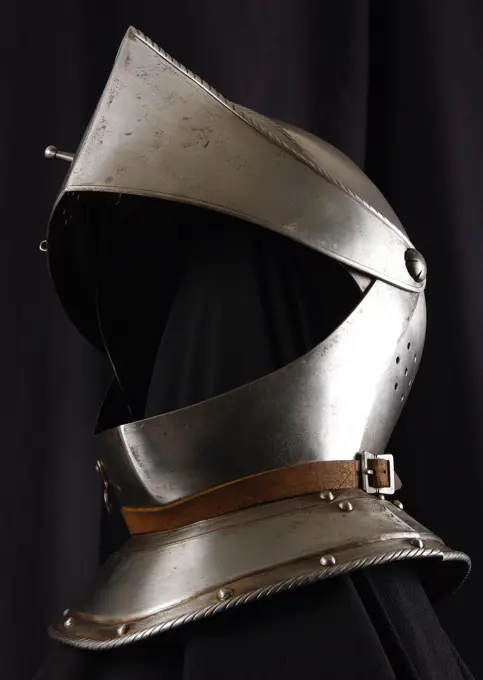
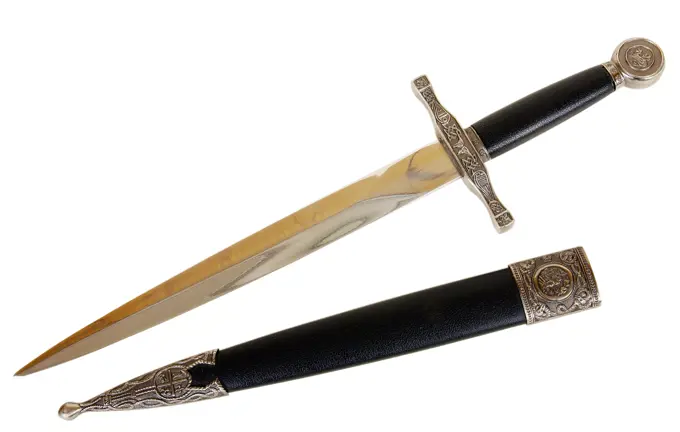
Armour Armour of the medieval knight. Metal protection of the soldier against the weapon of the opponent Copyright: xZoonar.com/ValeryxxSibrikovx 2474695
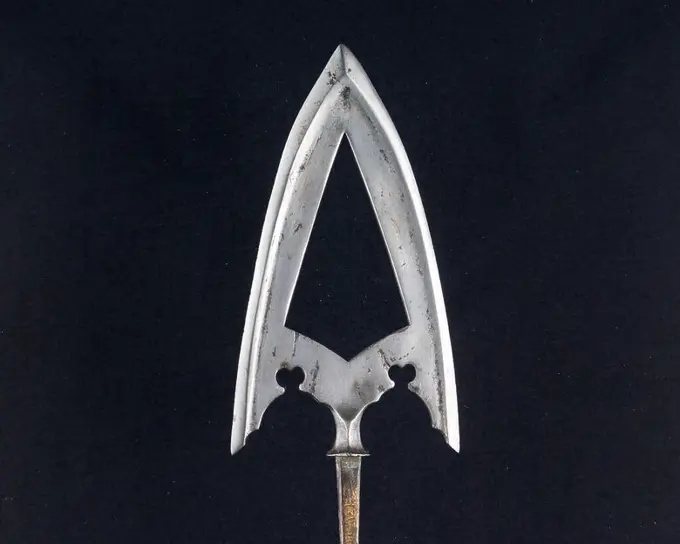
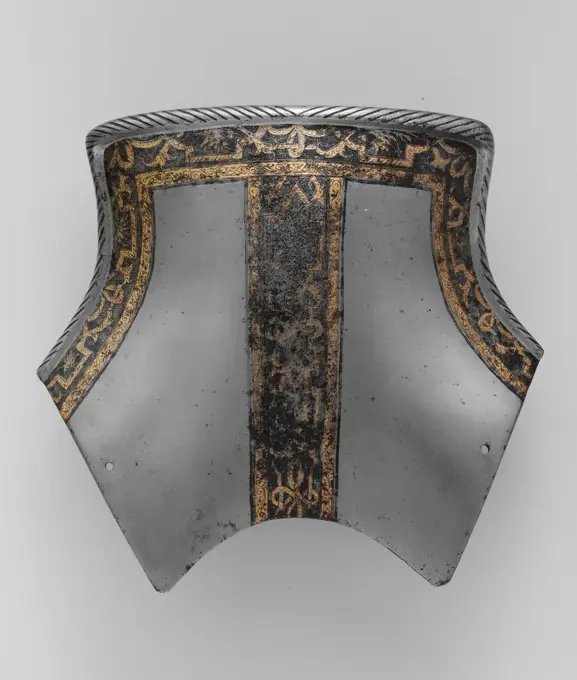
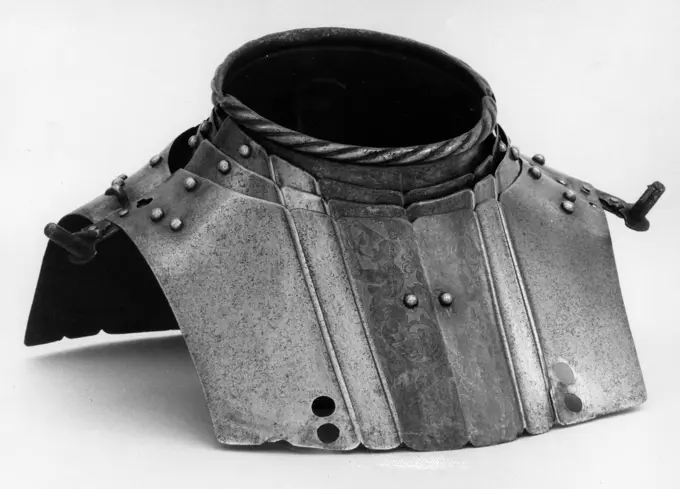
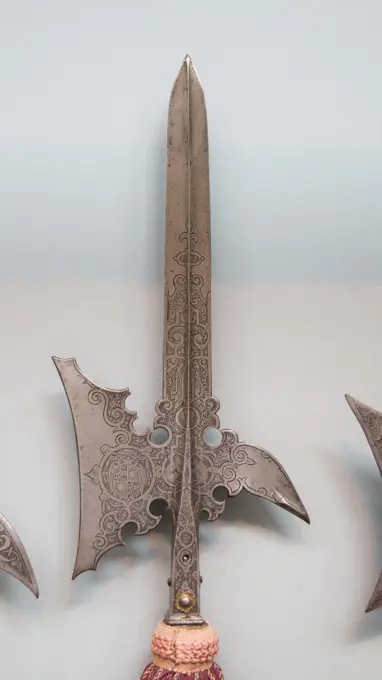
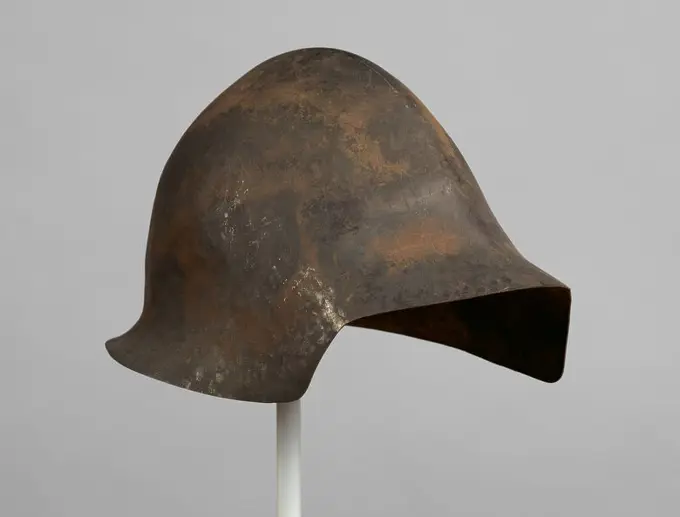
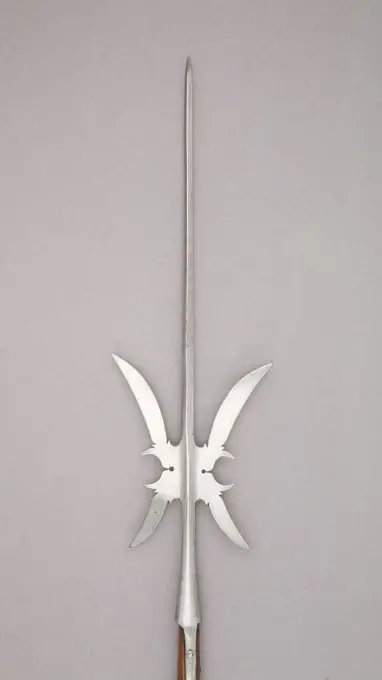
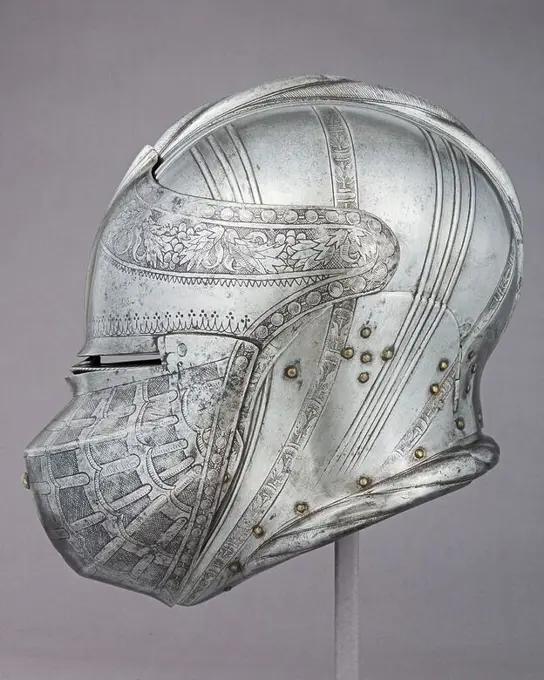
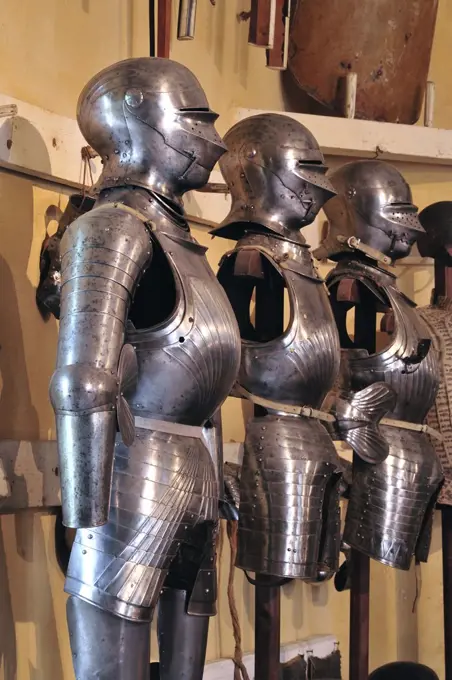
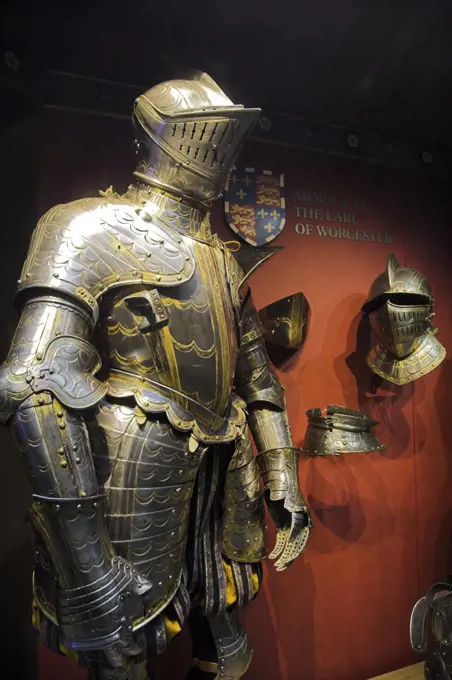
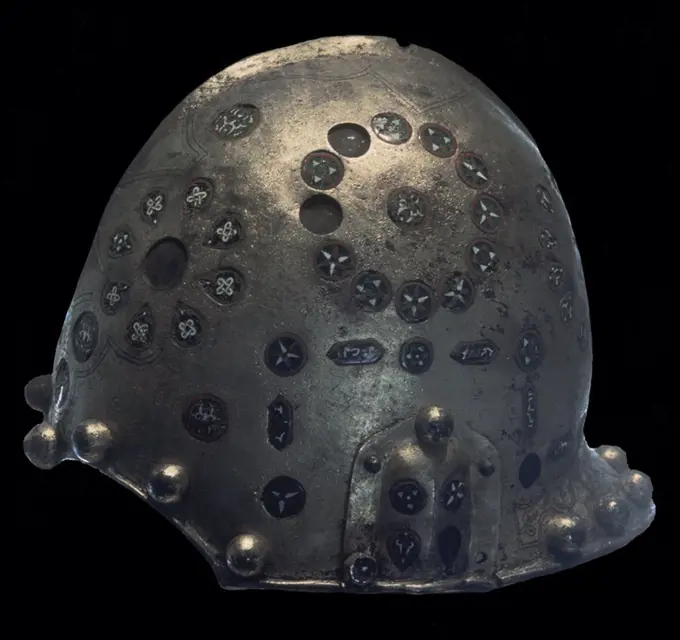
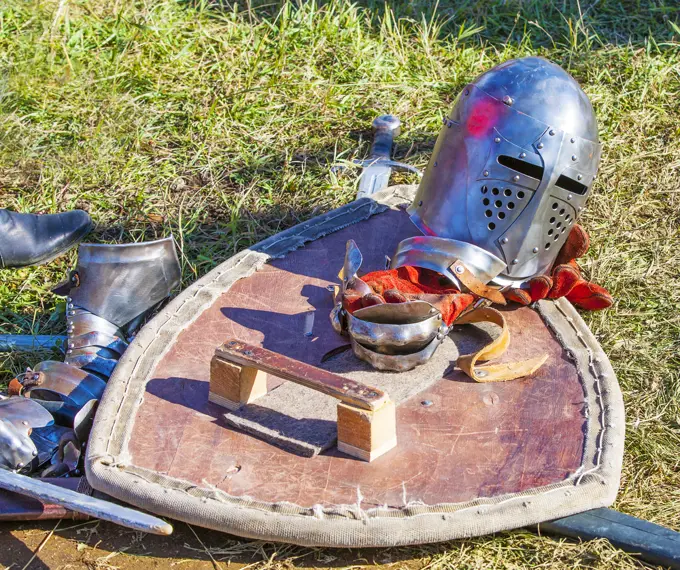
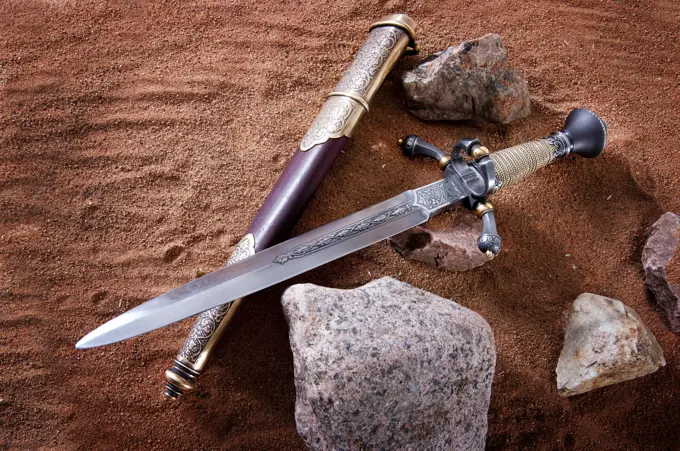
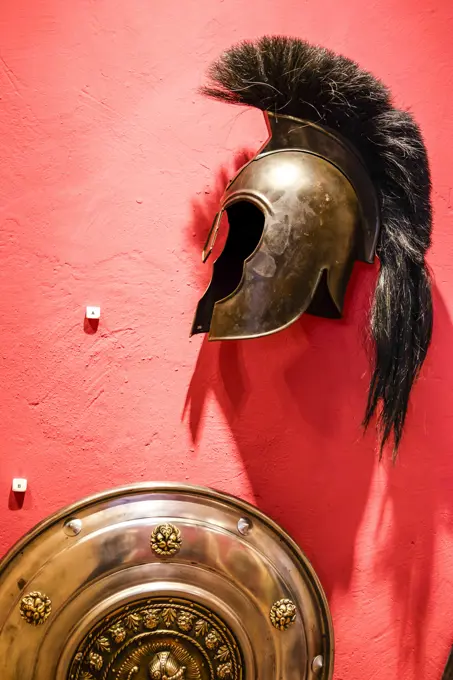
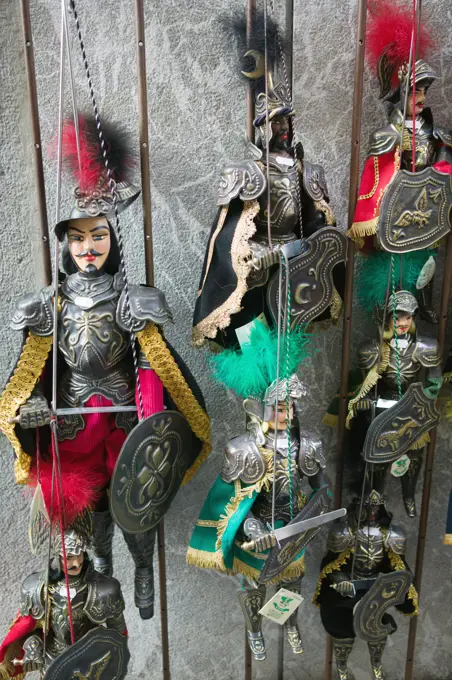
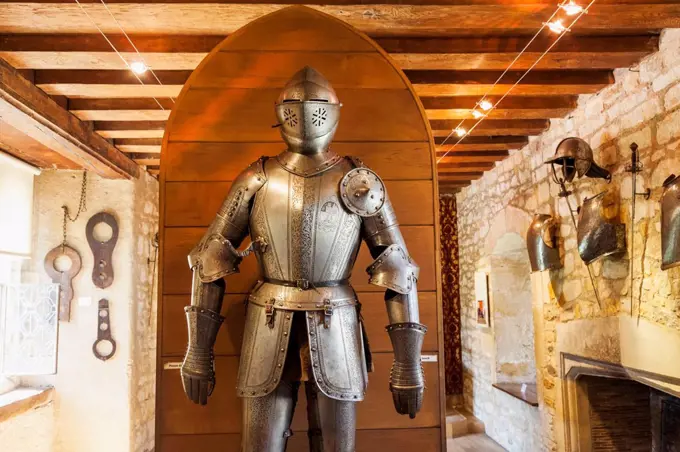
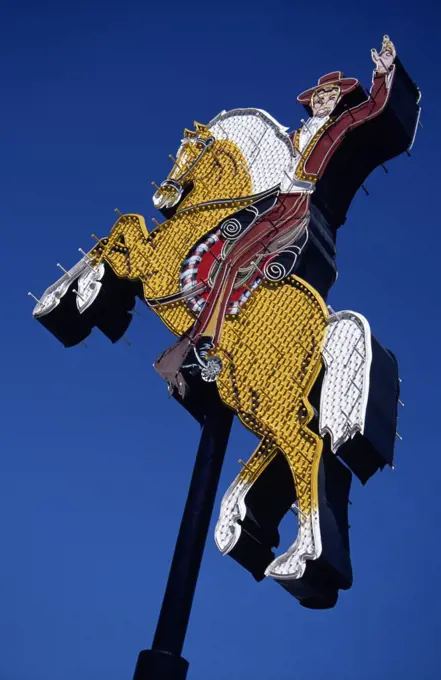
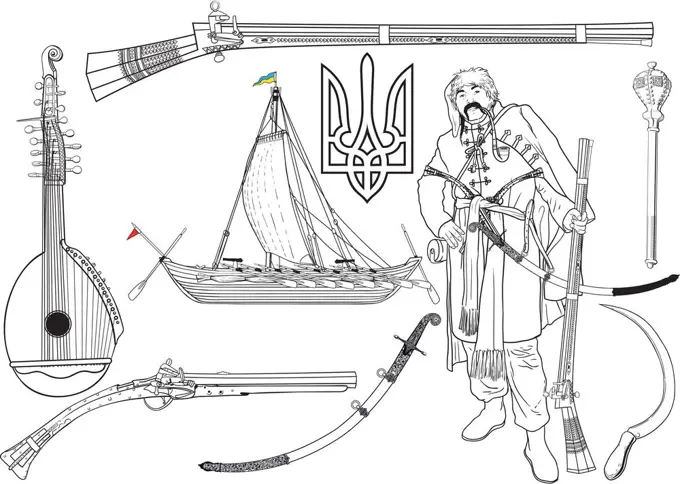
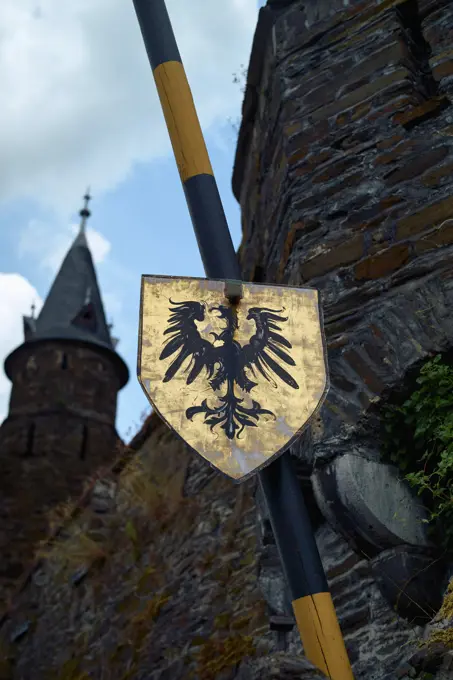
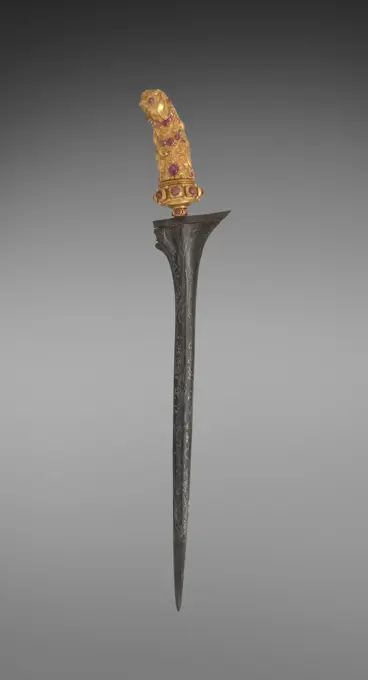
Kris, 1800s. Indonesia, Bali. Metal; overall: 49.4 cm (19 7/16 in.).Arrowhead (Yanone) 18th century Japanese Although today Japanese warriors are renowned most for their swordsmanship, archery, especially from horseback, has been an essential part of samurai warfare and culture for centuries. Arrows were fitted with heads of varying shape according to their intended use in war, the hunt, or target practice. Arrowheads made for use on the battlefield incorporated different designs intended for specialized purposes such as the piercing of armor or to cause maximum damage to horses and unarmored personnel.Large arrowheads, pierced and elaborately chiseled with landscapes, birds, flowers, dragons, and Buddhist divinities, were created to be admired for the beauty of their metalwork and design rather than for use in archery. Such highly elaborate examples may have been made for presentation or as a votive offerings to a shrine.. Arrowhead (Yanone). Japanese. 18th century. Steel. Archery Equipment-ArrowheadsArrowhead (Yanone). Culture: Japanese. Dimensions: L. 10 1/4 in. (26 cm); L. of head 4 in. (10.2 cm); W. 2 1/4 in. (5.7 cm); Wt. 1.7 oz. (48.2 g). Date: 18th century. Museum: Metropolitan Museum of Art, New York, USA.Pommel Plate ca. 1560-70 German, Augsburg This plate formed the center section of a three-part pommel, the sideplates of which are now missing. Its upper edge is embossed with a half-turn and roped. The decoration, now partially obscured by corrosion, consists of a wide band down the center etched with a repeating design of interlaced gilt strapwork forming knots and cartouches, the latter filled with gilt single-headed eagles, on a dotted, blackened ground; the narrow framing bands are etched and gilt with foliate scrolls. A band of identical ornament, but exactly halved, follows the roped edges. A small, circular hole at each side allowed the plate to be screwed to the saddletree.This piece provides evidence for the existence of an important Augsburg armor, otherwise unrecorded, of exceedingly high quality. Its etched decoration closely resembles that on the so-called Lark Garniture in Vienna (Hofjagd- und Rüstkammer, Kunsthistorisches Museum, A611), made in Augsburg in 1563 for ArchGorget ca. 1550 German. Gorget 35877Medieval Armour, Cesky Krumlov, Czech RepublicHalberd ca. 1650 Flemish. Halberd 26185smart dagger of the medieval soldier. It was used for huntingdagger Souvenir medieval dagger. An exact copy made of modern materials Copyright: xZoonar.com/ValeryxxSibrikovx 2421215Halberd of Wolf Dietrich von Raitenau, Prince-Archbishop of Salzburg (reigned 1587-1612) dated 1589 German This halberd, with its slightly concave axe blade, wide apical spike with sharp mid-ridge, strongly curved beak, and fancifully scrolled general outline, is typical of the parade weapons used by palace guards of German princes during the second half of the sixteenth and throughout the seventeeth centuries. Its entire surface, including the square socket and the long steel straps (Schaftfedern) fastening the head to the shaft, is profusely etched with scrollwork and grotesques. On either side of the axe blade is an etched rondel containing the coat of arms of Wolfgang Dietrich von Raitenau, Prince Archbishop of Salzburg, quarterly, 1 and 4 per pale, or, a lion sable, and gules, a fess argent (Salzburg); 2 and 3, argent, a ball sable (Raitenau), surmounted by a cardinal's hat. On a small cartouche approximately in the middle of the spike is etched the date 1589.. Halberd of Wolf DieHelmet and leather and bronze armourOne dagger and two axes isolated on whitePrototype for Helmet Model No. 2. Armorer: Daniel Tachaux (French, 1857-1928, active in France and America). Culture: American, New York. Dimensions: H. 8 in. (20.3 cm); W. 10 in. (25.4 cm); D. 13 3/8 in. (34 cm); Wt. 2 lb. 4 oz. (1020 g). Date: 1917.Daniel Tachaux was the most talented armorer working in Paris when he was hired by Dr. Bashford Dean (1867-1928) in 1909 to maintain the rapidly growing collection of Arms and Armor at the Metropolitan Museum. When the United States entered World War I in 1917, Dean was commissioned as a Major of Ordnance and tasked with developing protective helmets and body armor for U.S. troops. Tachaux worked closely with Dean to create the designs and then to make prototypes by hand, including this example, which was one of their earliest models. Museum: Metropolitan Museum of Art, New York, USA.Fluted Field Armor. German, Nuremberg. Date: 1500-1540. Dimensions: H. 188 cm (74 in.). Steel and leather. Origin: Nuremberg. Museum: The Chicago Art Institute, Chicago, USA.Does not SquadDouble Halberd. Culture: Italian. Dimensions: L. 87 in. (221 cm); L. of head 24 in. (61 cm); W. 6 7/8 in. (17.5 cm); Wt. 3 lbs. 6 oz. (1530.9 g). Date: ca. 1600. Museum: Metropolitan Museum of Art, New York, USA.Busby -Armet for the Tourney. Armorer: Attributed to Kolman Helmschmid (German, Augsburg 1471-1532). Culture: German, Augsburg. Dimensions: H. 12 1/2 in. (31.8 cm); W. 9 3/4 in. (24.8 cm); D. 11 7/16 in. (29.1 cm); Wt. 8 lb. 8 oz. (3866 g). Date: ca. 1515-20.The visor is fitted with an unusual reinforce depicting the type of grille defense that might be used on a helmet intended for a tournament with swords or clubs. This suggests it was originally part of a garniture that included exchangeable pieces for battle and tournament use. Museum: Metropolitan Museum of Art, New York, USA.ornate frame with armsArmors in the Armory of Churburg Castle, the largest private armory in the world, 1260, Schluderns, Bolzano, Trentino-Alto Adige, Italy.Field Armor. Culture: German, Nuremberg. Dimensions: H. 67 in. (170.2 cm); Wt. 49 lb. (22.23 kg); Wt. of helmet 7 lb. 4 oz. (3289 g). Date: ca. 1525; left arm defense, 19th century; rondels, 1923.This fluted armor is typical of the battle dress of the knightly cavalry of southern Germany and Austria in the 1520s. It is composed of elements from at least three very similar armors, all made in Nuremberg when fluted armor was at its peak of fashion. The armor is stamped on the pauldrons (shoulder defenses) with the mark of the city of Nuremberg, on the helmet with the letter N in a pearly circle, on the cuisses (thigh defenses) with a Gothic N, and on the right gauntlet with an unidentified maker's mark. The left arm defense is a nineteenth-century restoration. Museum: Metropolitan Museum of Art, New York, USA.Katana isolated over black, entire view, horizontal imageIreland, County Limerick, Limerick City, King John's Castle, 13th century, suit of midieval armorA suit of medieval armour on display inside the Tower of London.Thracian gladiator helmet and weapons on display at the Gallo-Romeins Museum, Gallo Roman Museum, Tongeren, Belgium, EuropeCELADA DE PARADA-NAZARI-FIN S XV-ACERO DORADO/PLATEADO Y ESMALTE CLOISONNE. Location: METROPOLITAN MUSEUM OF ART. NEW YORK.Turkish yatagan, 19th century, Álava Armory Museum, Vitoria, Basque Country, Spain.Siege Helmet late 17th century probably French. Siege Helmet 27081England, Kent, Maidstone, Leeds, Leeds Castle, Medieval Festival, Display of Medieval Armourknight armor on grasssmart dagger smart dagger of the medieval soldier. It was used for hunting Copyright: xZoonar.com/ValeryxxSibrikovx 6664309Statuette in brass of Dipa Lakshmi, Patan-Anhilwada, Gujarat, India 17th centuryTrojanische Ruestung im Millitaermuseum in Menorca, Spanien - Museu Militar de Menorca Troyan armour, 20th century room, Menorca Military Museum, old barracks of Cala Corb, central square of Es Castell, built by the British in 1771, Menorca, balearic islands, Spain Copyright: xZoonar.com/Tolox 22023516Colourful post in Indian village. Indian Landscapes, na, India. Architect: na , 2020.Spain, Rioja, Medieval Days of Briones (festival declared of national tourist interest), detail of knight's armourViking helmet with aventail or camail, ScandinaviaEmblem of the Bentley vintage car, Pune, Maharashtra, India Copyright: xSunilxKapadia/DinodiaxPhotoxITALY, Sicily, TAORMINA: Corso Umberto 1, Knight PuppetsAncient face shield in KatakolonEngland, Kent, Hever, Hever Castle, Display of Medieval Armour and WeaponsLow angle view of a neon sign, Las Vegas, Nevada, USAHorse Armour. One of only three complete horse armours, this is one of the best preserved. Made from carbon steel, copper alloy and leather.Elchgeweih Elchgeweih Copyright: xZoonar.com/MartinaxBergx 8920111Cartoon metal viking helmet with horns vector setA set of objects of everyday life of culture and armament of ancient Ukraine and the same Cossack in full uniform with a tube in the teethShips - Spanish Navy (Armada Española) - La Reale (Battle of Lepanto; 16th century). Model detailA weathered heraldic shield with a black eagle emblem attached to a pole against a backdrop of an old stone tower under a blue sky, Moselle River, GermanyKnight horizontal banner set with medieval armor and weapon isolated vector illustration. Knight Banner Set