Animal-Shaped Artifacts

Unique sculptures and vessels resembling animals, crafted from bronze and ivory, reflecting artistic traditions from various cultures through the centuries.
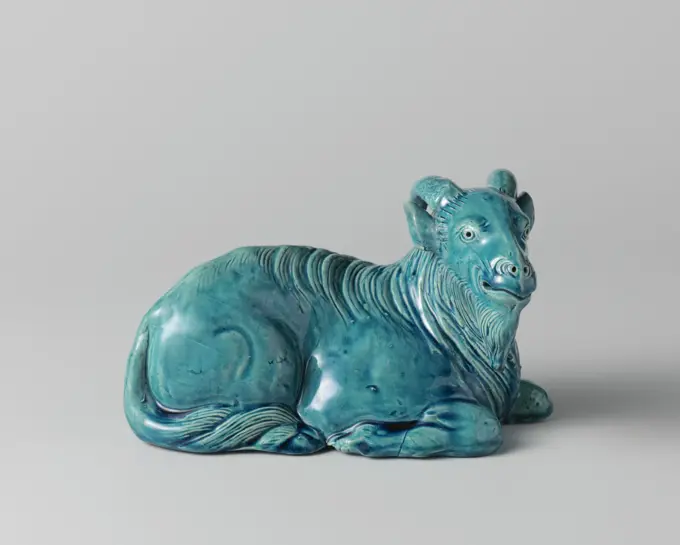
Pair of rams, anonymous, c. 1800 - c. 1900 Image of porcelain, covered with a turquoise glaze. The horizontal ram has two horns, goatee and long mane, the head is turned to the left. Monochrome. China porcelain. glaze. vitrification Image of porcelain, covered with a turquoise glaze. The horizontal ram has two horns, goatee and long mane, the head is turned to the left. Monochrome. China porcelain. glaze. vitrification
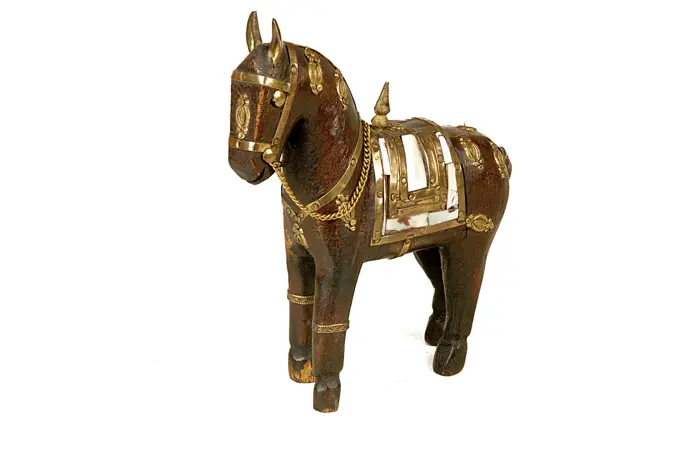
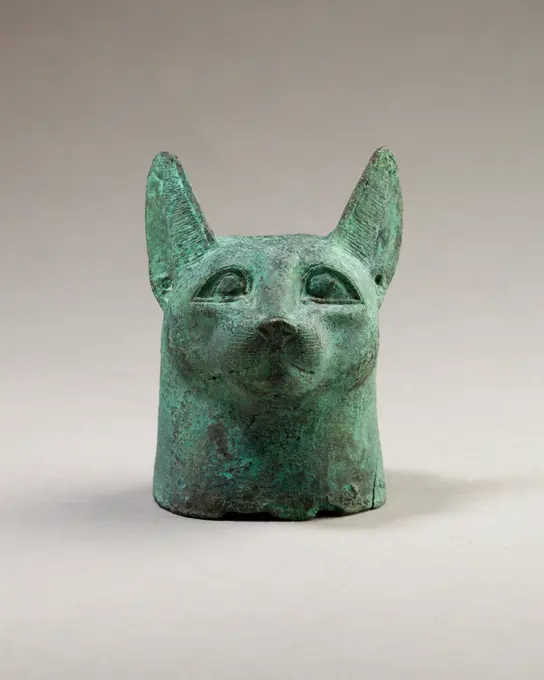
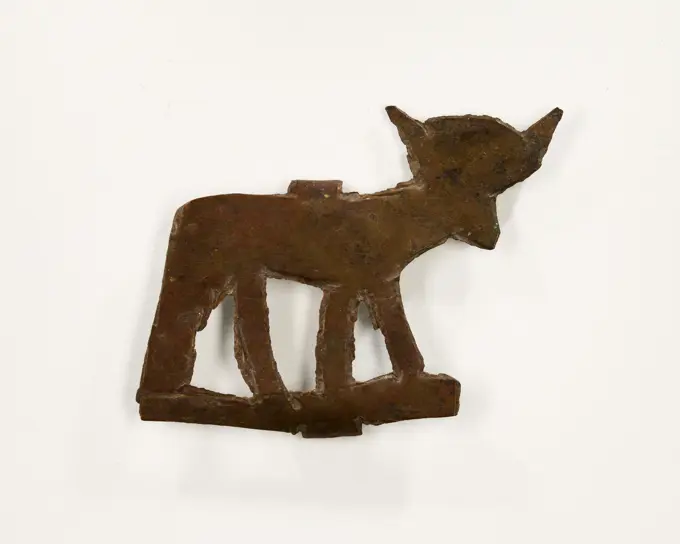
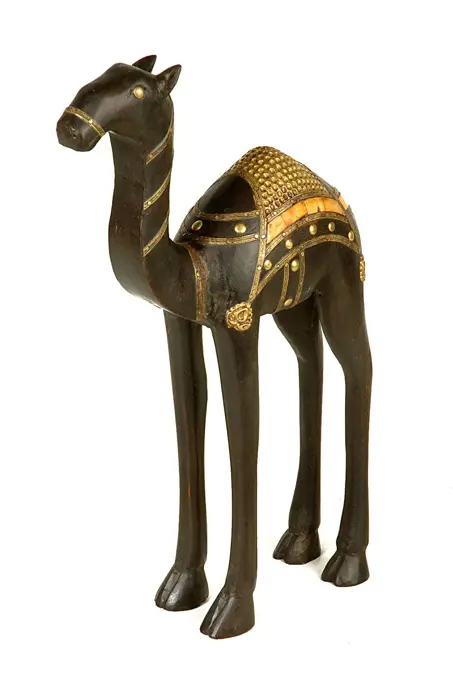
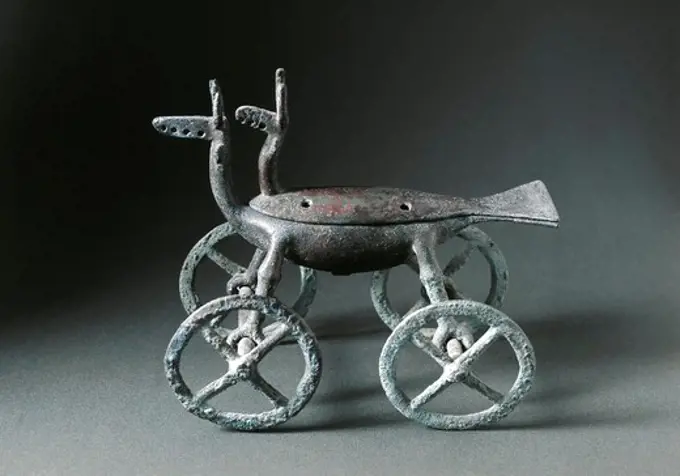
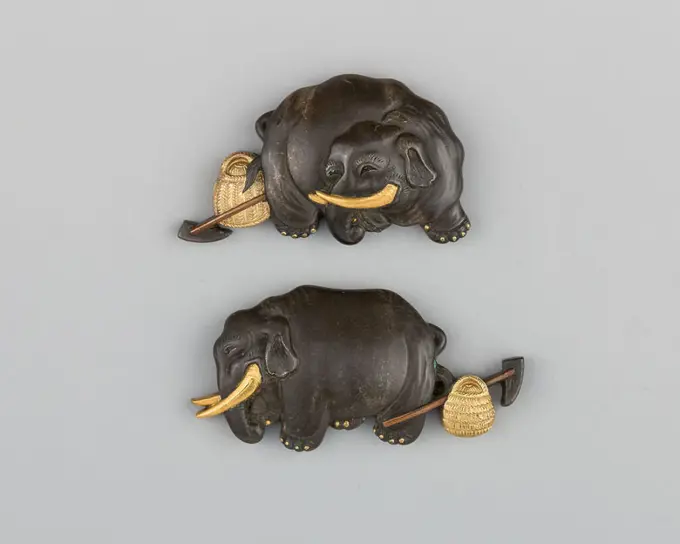
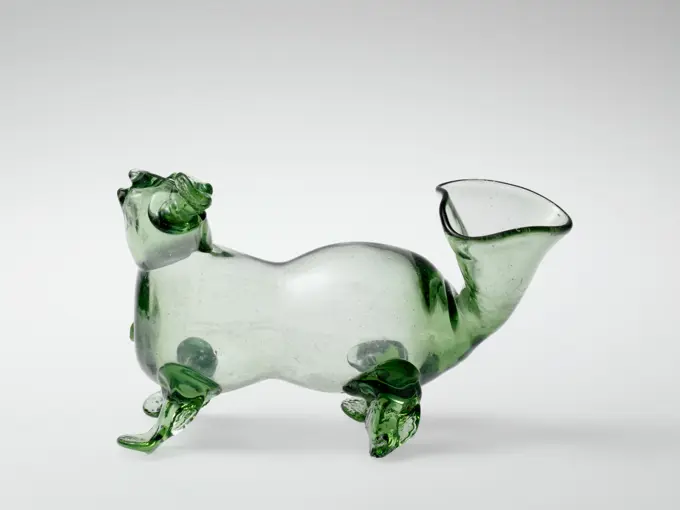
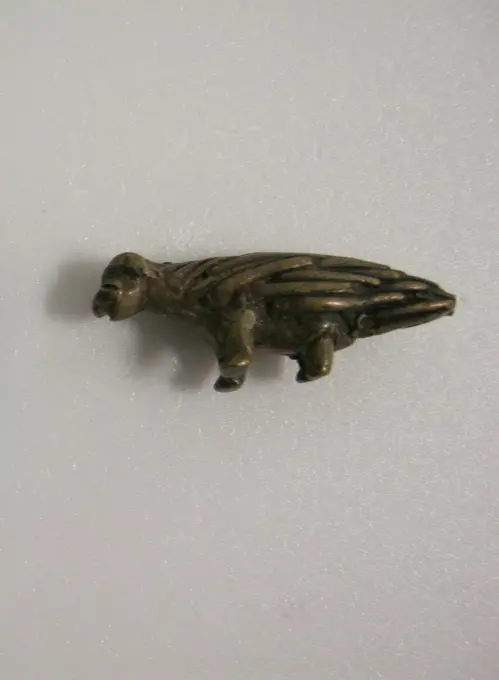
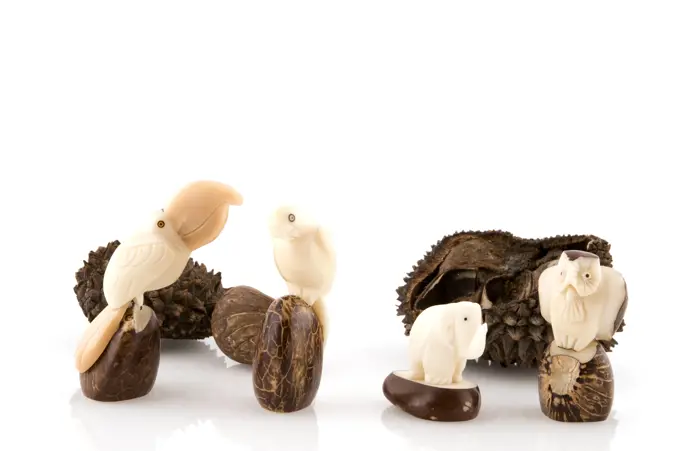
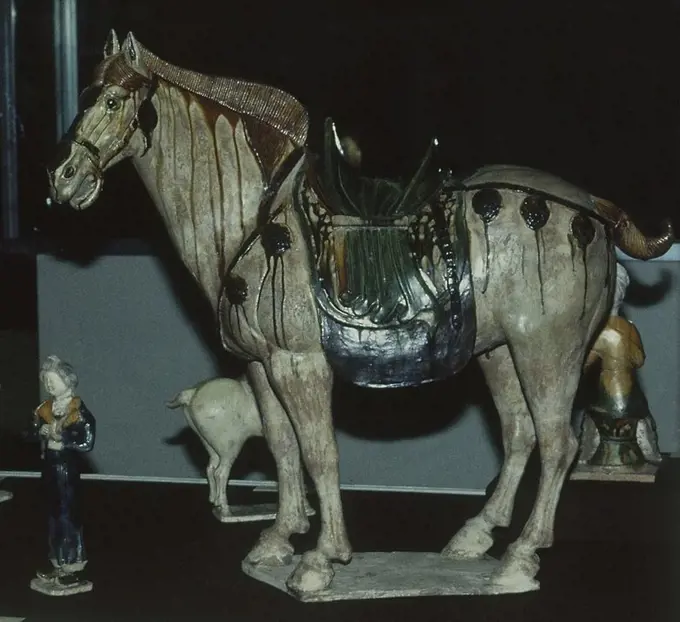
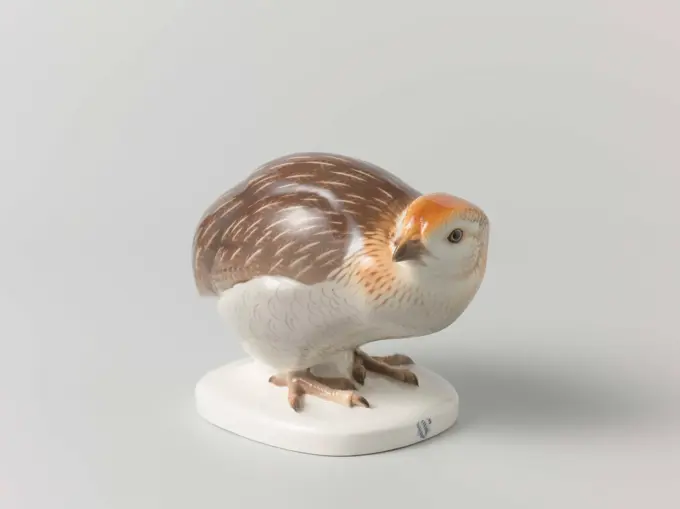
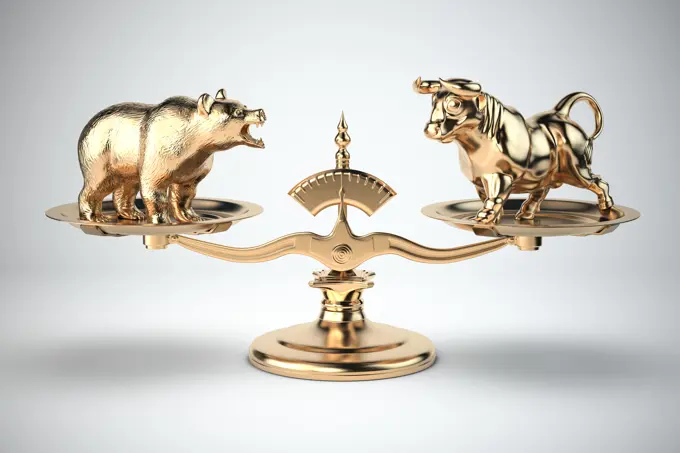
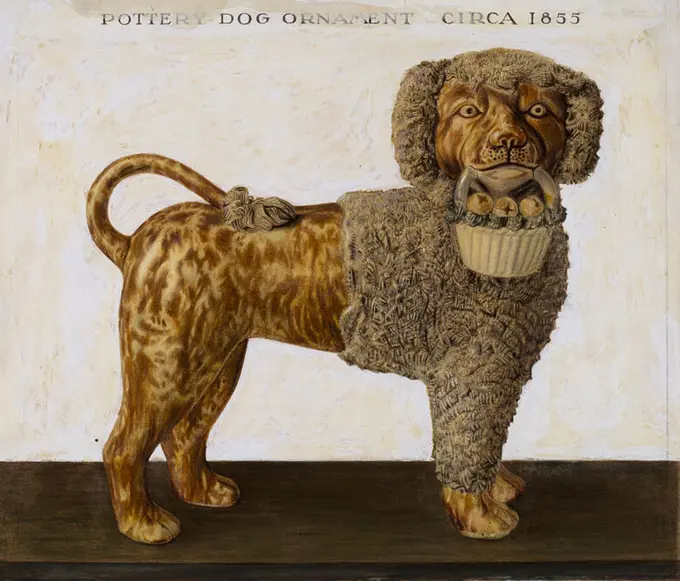
Support in the form of a mermaid and a Meerman and a dolphin on waves, belonging to the Maywijnvat of Stoneware. Support in the form of a mermaid and a Meerman and a dolphin on waves, belonging to Stoneware of Stoneware with tin tap.Brass and copper design fitting on antique wooden horse, Jodhpur, Rajasthan, India Copyright: xSafatxAli/DinodiaxPhotoxLyon. 7th c.-10th c. Chinese art. Tang period. Ceramics. UNITED KINGDOM. ENGLAND. London. The British Museum.Head of a cat 664-30 B.C. Late Period-Ptolemaic Period The cat was sacred to the goddess Bastet, and was offered in sanctuaries and deposited in animal necropoleis throughout Egypt. This cat has a thick, sturdy neck and eyes deep cut for the addition of inlay, which would have given it a life-like and arresting appearance. The left ear has an indentation on the lower part of the lobe, possibly a mark where the artist, if desired, could have later drilled a hole for an earring, a common feature for these cat heads and cat statuettes. The function of these large cat heads is ambiguous. They have been found in offering contexts, and it is commonly assumed that they formed part of a composite statuette; the full statuette, when intact, probably would have had a hollow wooden body and held a cat mummy inside, much as similar large hollow copper alloy statuettes did. However, these figures are almost never found with the composite bodies, even at sites where wood is relatively well preservedDog and Bear; Unknown maker, Italian; Florence (probably), Italy, Europe; about 1600; Bronze; Various, see extensionsGriffons, ca. 1830; gilt bronzeCow plaque ca. 1479-1458 B.C. New Kingdom This metal plaque depicts a cow with a sundisk between its horns, which is a common representation of the goddess Hathor. It was excavated at Deir el-Bahari, close to a shrine for this goddess. Most likely the plaque had been deposited at this shrine, as a donation to the deity. There are two elongated loops on the back of the plaque: one is in the center of the cows back, and the other is on the baseline. These were probably used for stringing this plaque together with a series of similar small pieces.. Cow plaque 549405Vase in the shape of a rooster of multicolored painted faïence. Vase of Faïence, in the shape of a rooster. Painted multi-colored.Campania Caserta Capua Museo Campano42. Hutzel, Max 1960-1990 Medieval: Byzantine architectural fragments; parchment fragments with miniatures (12th century) from Montecassino; painted wooden crucifix (13th century); Carolingian crucifixes; Bishop's miter (11th century) of gold and silver damask; fresco (13th century). Post-medieval: Architecture (15th century). Formerly the Palazzo Antignano. Unusual Catalan/Moorish-style portal; Paintings on panel and canvas (15th-18th centuries); marble intarsia (16th century); marble sculpture: busts of Christ and Mary (17th century); sculpture of saints in marble and in wood (15th century); painted and gilded sculpture in wood; marble grave sculpture (16th century); sarcophagus with allegorical carvings; gold reliquary "Rosa d'Oro"; crucifix made of elephant tusk Specific Location: Pianterreno Antiquities: Italic sculpture (seated women holding babies); inscription. Photo campaign #1: 533 photos. Roman relief and sculpture; cinerary urns; Greek anHorse with loose rider. Rider of unfathy faience. The horse stands on a rectangular pedestal and the rider is separate. The rider carries a bear hat and a German uniform from the second half of the 18th century. The horse has lifted his left front leg. The rider includes an identical copy with Invnr. BK-1955-403-b.Owl still bank, 20th century, 3 1/4 x 2 3/16 x 2 in. (8.26 x 5.56 x 5.08 cm), Ceramic, pigment, Guatemala (possibly), 20th centuryBrass design fitting on antique wooden camel, Jodhpur, Rajasthan, India Copyright: xSafatxAli/DinodiaxPhotoxLittle container with wheels used to burn essences, in the shape of a deerBronze water spout with lion mask (one of a a pair) ca. 100 B.C.-ca. A.D. 100 Greek or Roman This water spout may have been part of the external decoration of a shrine or a large chest.. Bronze water spout with lion mask (one of a a pair) 244554Pair of Sword-Grip Ornaments (Menuki). Culture: Japanese. Dimensions: Menuki (a); L. 1 5/8 in. (4.1 cm); W. 7/8 in. (2.2 cm); Wt. 0.5 oz. (14.2 g); menuki (b); L. 1 1/2 in. (3.8 cm); W. 7/8 in. (2.2 cm); Wt. 0.4 oz. (11.3 g). Date: 1743-1801. Museum: Metropolitan Museum of Art, New York, USA.Bottle 1738-ca. 1777 Probably Wistarburgh Glassworks This glass dog, or schnapshund, is an interesting example of a traditional German form persisting in late eighteenth-century colonial America. Popular from the seventeenth to the nineteenth century, these glass drinking vessels were novelty objects created by glassblowers in the area now known as Germany. The form came to America by way of German glassblowers, many of whom worked for Caspar and Richard Wistar at their Wistarburg Glassworks in Alloway, New Jersey. Caspar Wistar, who immigrated to America in 1717, established a glasshouse in that location in 1738. He employed almost exclusively German glassblowers to make bottles, equipment for scientists and physicians, as well as tablewares, such as sugar bowls and candlesticks. The majority of the wares that can be tentatively attributed to Wistar are made of unrefined bottle glass, often in a variety of colors. This schnapshund is made of green, unrefined bottle glass, in contrast Goldweight Porcupine, 19th-20th century, 1 7/8 x 9/16 x 1/8 in. (4.76 x 1.43 x 0.36 cm), Brass, Ghana, 19th-20th centuryPendant with Ram Head. China. Date: 1300 BC-1000 BC. Dimensions: 1 1/8 × 1 × 1/2 in. Jade. Origin: China. Museum: The Chicago Art Institute, Chicago, USA.BOTIJO CON FORMA DE TORO-VIDRIADO Y POLICROMADO-FINAL S XIX. Location: ALFARERIA. SPAIN.Pair of spaniels ca. 1830-50 British, Staffordshire. Pair of spaniels. British, Staffordshire. ca. 1830-50. Lead-glazed earthenware with copper lustre embellishments. Ceramics-PotteryHorse tertor (Cheveaux de Marly). Group of bronze with dark green patina, representing an antique warrior trying to tame a leaving horse. Signed in the base: COUSTOU; Stamped Société des Bronzes de Paris.Calcite ibex vase, Tutankhamun's burial treasures, world archaeological sensation, replicas, Valley of the Kings, world's most famous burial site, Luxor, Thebes West, Egypt, Luxor, Thebes, West, Egypt, AfricaTureen in the form of a Fighting Cock 1750-1760 Chelsea. Soft-paste porcelain and polychrome enamels . Chelsea Porcelain FactoryCrafts of horseCOSTA RICA, SAN JOSE, NATIONAL MUSEUM, INTERIOR, POTTERY 800-1500 ADStanding Hawks, Chinese ArtDemon Mask. Japan, Meiji period (late 19th-early 20th century). Jewelry and Adornments; masks. Wood, red and black lacquer, brass, pigmentFrench Bulldog. Ceramic figurine, dog breed isolated on whiteAsia, China, Shanghai, Shanghai Museum, gallery of chinese ancient bronze, Wine vessel late Spring & Autumn period early 6th century - 476 B.C., Ox-Shaped ZunFigure of a stork (one of a pair) late 18th century China. Figure of a stork (one of a pair). China. late 18th century. Porcelain painted with overglazed polychrome enamels (Jingdezhen ware). Qing dynasty (1644-1911), Qianlong period (1736-95). CeramicsStone Bird (Murre Or Auk). Artist: Samwillie Amidalak. Culture: Inuit. Dimensions: H x W: 1 9/16 x 3 5/8 in. (4 x 9.2 cm). Date: ca. 1949. Museum: Metropolitan Museum of Art, New York, USA.Antoine-Louis Bare (1795-1875). "Spaniel stopping on a rabbit". Bronze brown bonorous patina. Around 1845. Museum of Fine Arts of the City of Paris, Petit Palais. Statuette, 19th XIXth 19th 19th 19th 19th century, animalOwl Attacking a Bat. Hōraku (Japan, active early to mid-19th century). Japan, early to mid-19th century. Costumes; Accessories. Ebony with inlaysCopper fitting design on antique wooden kangaroos, Jodhpur, Rajasthan, India Copyright: xSafatxAli/DinodiaxPhotoxproducts from tagua carved animals from vegetable ivory Copyright: xZoonar.com/IvonnexWierinkx 6681973brown ceramic sheep statuette isolated on white backgroundCABALLO CHINO DE BARRO CON BARNIZ DE PLOMO COLOREADO - EXVOTO FUNERARIO - 74,6 - SIGLO VII-X - DINASTIA TANG. Location: VICTORIA AND ALBERT MUSEUM. LONDON. ENGLAND.Rabbit still bank, 20th century, 3 1/2 x 3 x 4 1/2 in. (8.89 x 7.62 x 11.43 cm), Ceramic, rubber, The Netherlands, 20th centuryCenser with the lid in the shape of the Lion of Fo. unknown, craftsmanSnuff Bottle with Old Man Riding a Donkey early 19th century China. Snuff Bottle with Old Man Riding a Donkey 41453A toy animal against a brow background, Denmark.Carved and polished Onyx (tecali) vessel with a seated figure. Post-Classic Date900-1521. Found at Isla de Sacrificios, tomb, Veracruz, Mexico. Decorative object of porcelain in the shape of a young quail, on oval pedestal. The colors are brown orange brown and gray.TAIPEI, TAIWAN - November 24 : Antiques are displayed in Taipei’s National Palace Museum on November 24, 2016 in Taipei, Taiwan, Asia.Dolls mechanically moved unknownSpaniel Made 1760 Jingdezhen. Hard-paste porcelain with polychrome enamels .Pair of warblers ca. 1765 Derby Porcelain Manufactory. Pair of warblers. British, Derby. ca. 1765. Soft-paste porcelain. Derby Porcelain Manufactory (British, 1751-1785). Ceramics-PorcelainWooden Dog Toy on White BackgroundThe rich rabbit Figur 2016 from porcelain the rich hare figure 2016 from porcelain, Carolein Smit. Bavarian National MuseumCairo, Egypt, Africa rags of Elephantine Island , 1914 - Egypt - Auguste Léon - (January -February) (French - Le Caire , Egypte , Afrique Béliers de l' île Eléphantine). Museum, sacred animal, interior view, funeral architecture, object of worship, Egyptian polytheism, funeral inscription, antiquity, showcase , display, hieroglyph, mummy, funeral furniture, Animal , Habitat , Architecture , Religion , Inscription , information , Art, Egypt, Cairo Museum, Elephantine sacred ramsRansel of brown hairy sheet, c. 1825 - c. 1832  Ransel of brown white fur with white belts. Three buckles on front. On the back mixture on the inside the No. 240. Inside valve the numbers 1844 and 124 ... Inside v.z.v. Wooden formwork. A roll on the top attached to whip with two white leather belts. Netherlands leather. textile materials. iron (metal)Horse toyCalcite and bitumen hedgehog mounted on wheeled base, Susa, c12th century BC. Artist: UnknownBull and bear on a scales. Bearish or bullish market on stock exchange concept. Bull and bear on a scales. Bearish or bullish market on stock exchange concept. 3d illustration Copyright: xZoonar.com/MaksymxYemelyanovx 20557165Tabby Bank' mechanical bank, c. 1886, 4 1/4 x 2 1/2 x 2 1/2 in. (10.8 x 6.35 x 6.35 cm), Iron, pigment, United States, 19th centuryStatuette of a Dog. UnknownPair of Grotesque Bird Jars. Made from a salt-glazed stoneware, carved and incised decoration, underglazed colours and enamels.Afghanistan, Ibex figurine, gold artifacts from Tillya Tepe find, Tombs of Bactrian nomadsPottery Dog Ornament. Dated: c. 1938. Dimensions: overall: 26.1 x 30.7 cm (10 1/4 x 12 1/16 in.). Medium: watercolor, graphite, colored pencil, gouache, andheightening on paperboard. Museum: National Gallery of Art, Washington DC. Author: Cleo Lovett.Goat and chicken, decorative detail of a pot, 1813, porcelain, mark of N 1813 crowned and stamped in red, Naples manufacture. Italy, 19th century.Chess figurine Mennecy Villeroy