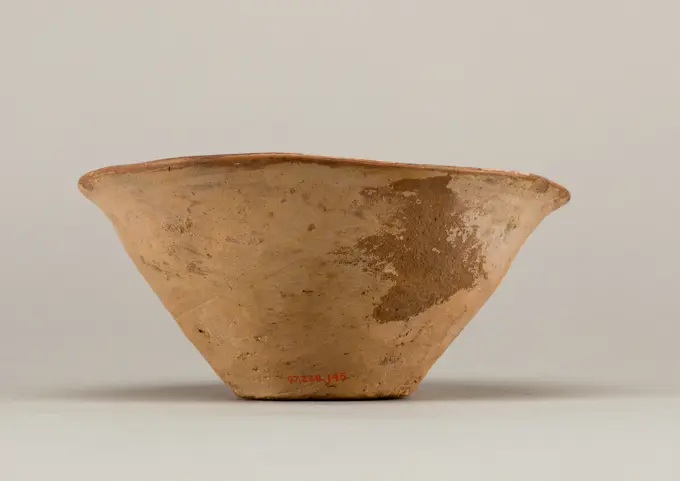
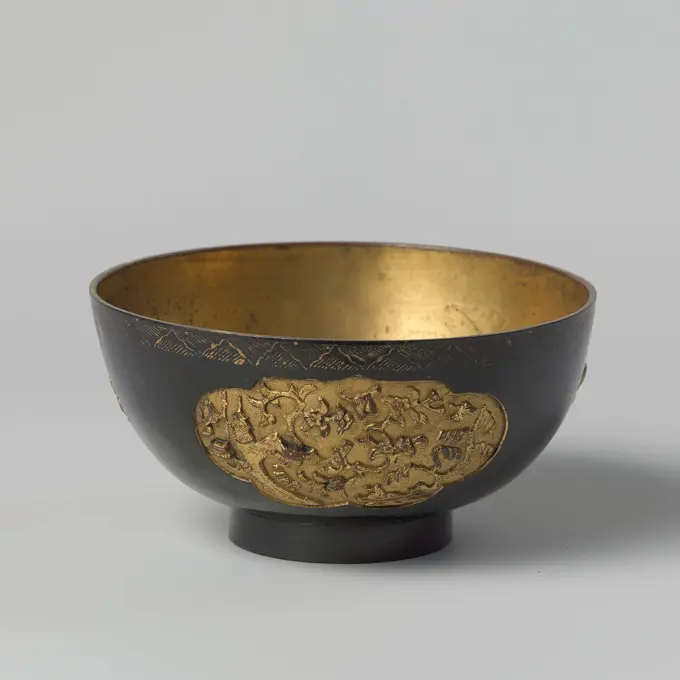
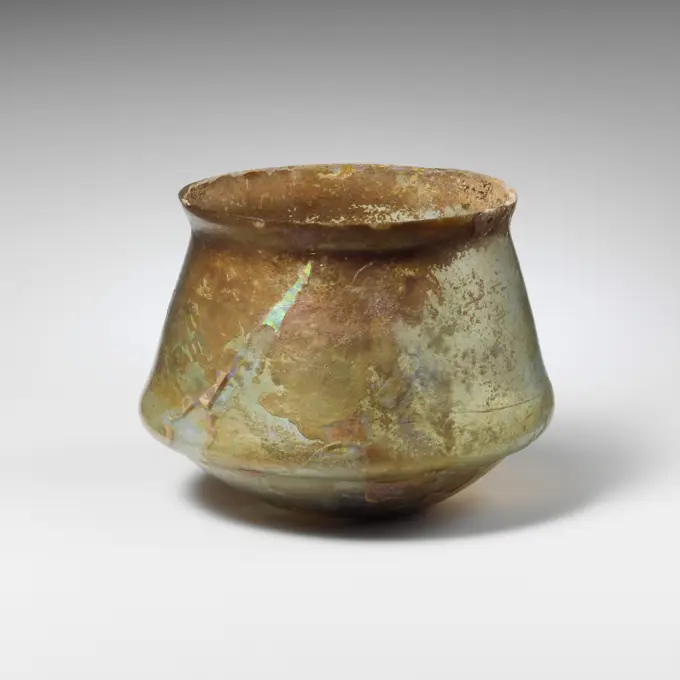
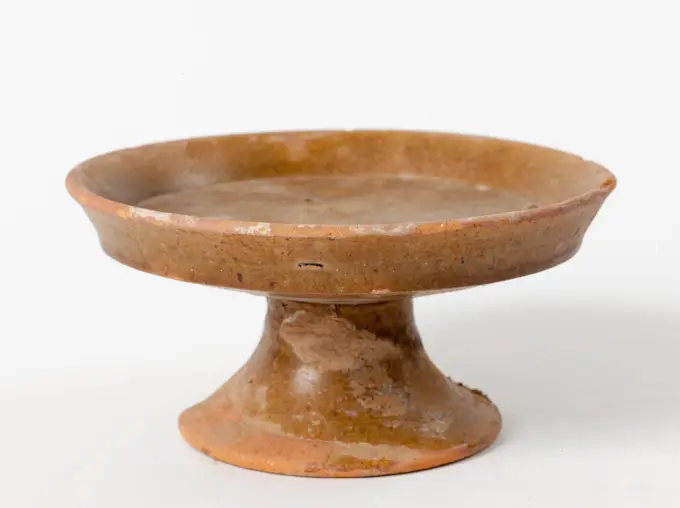
Antique and Ancient Bowls

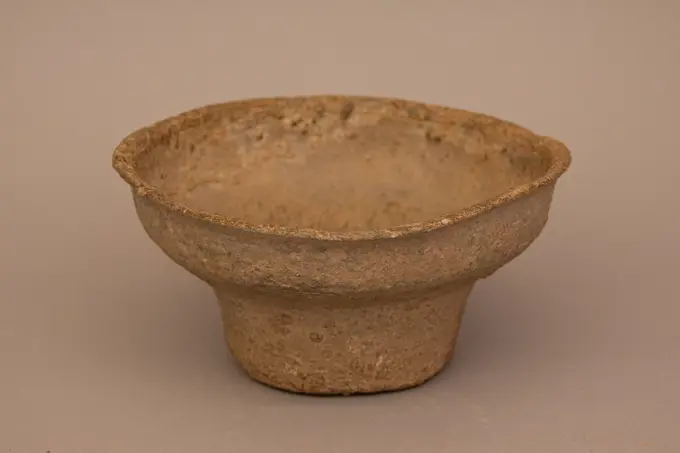
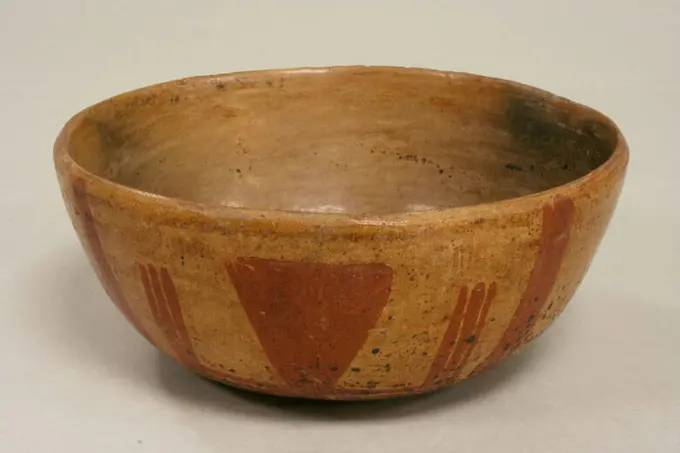
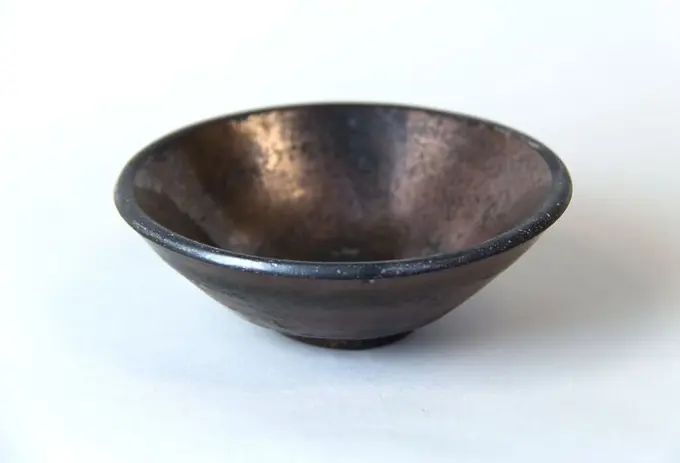
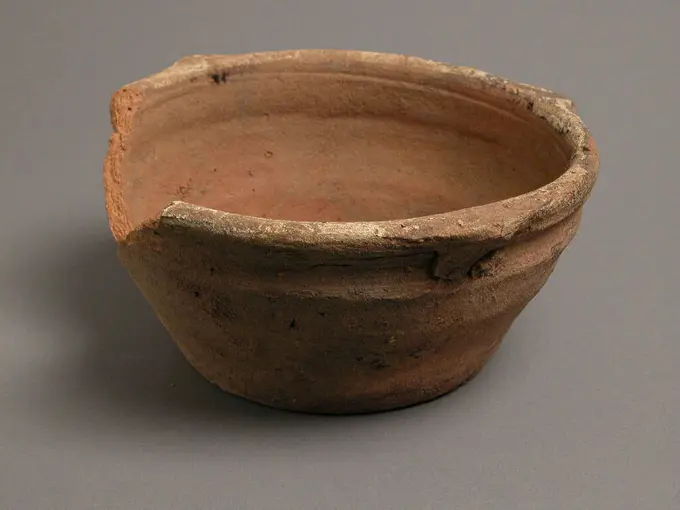
A collection of unique bowls from different cultures, including Roman glass and Asian ceramics, showcasing diverse colors and craftsmanship.

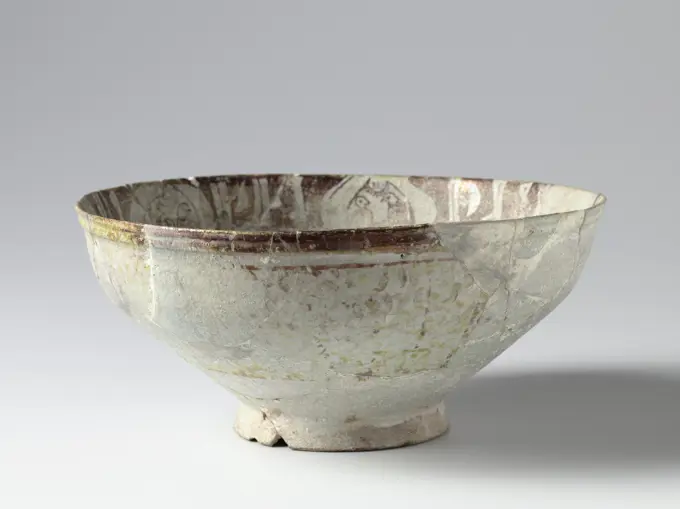
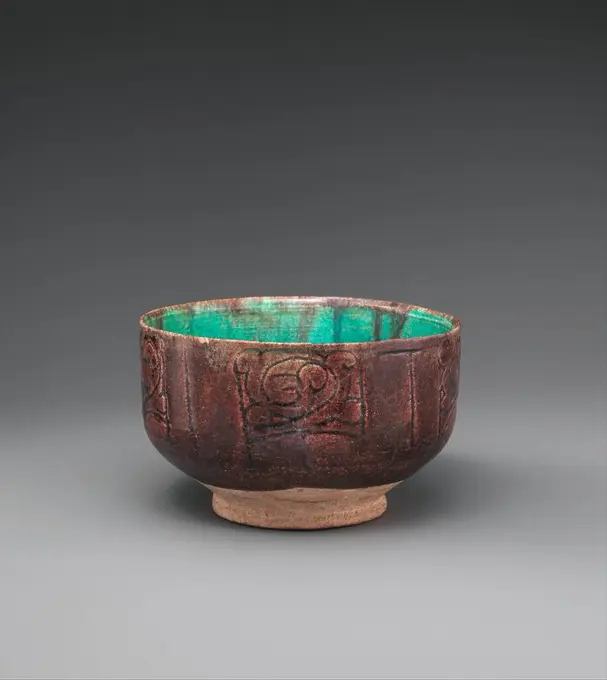
Bowl with floral scrolls, anonymous, c. 1275 - c. 1324 Come from quartz fritry, decorated with flower vines in sludge relief with turquoise and black under a transparent alarm laze. Kashan (possibly) earthenware. glaze painting / vitrification Come from quartz fritry, decorated with flower vines in sludge relief with turquoise and black under a transparent alarm laze. Kashan (possibly) earthenware. glaze painting / vitrification
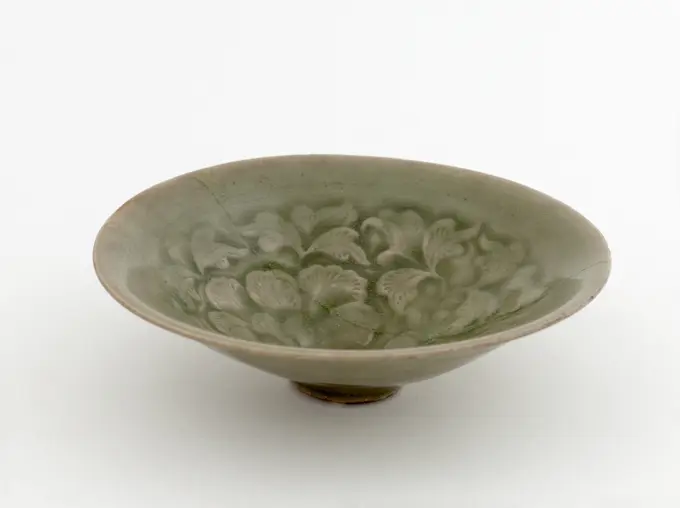
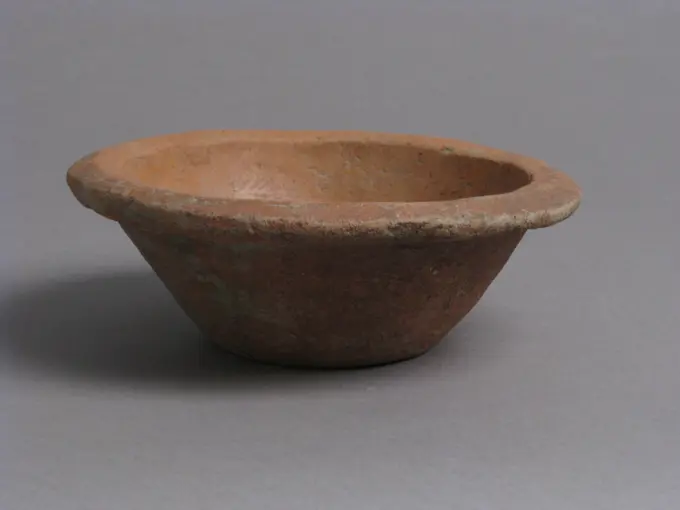
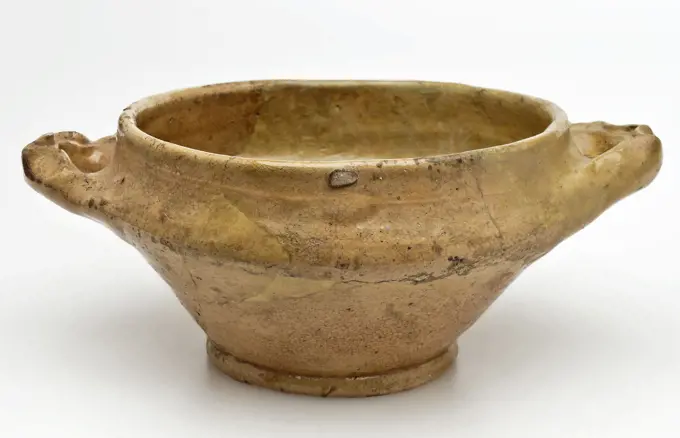
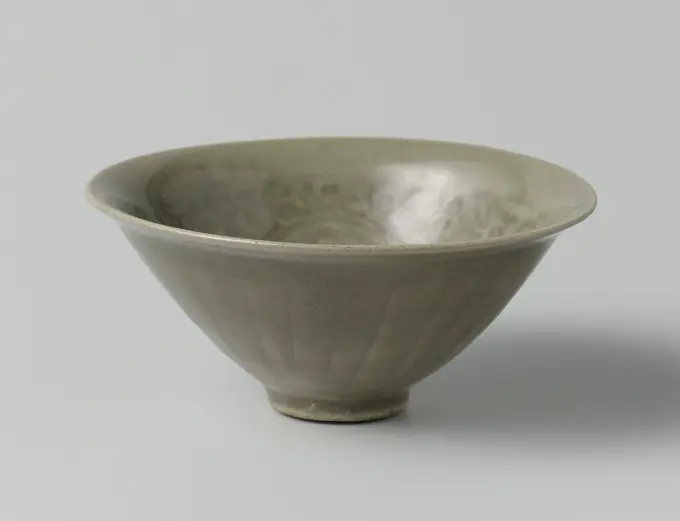
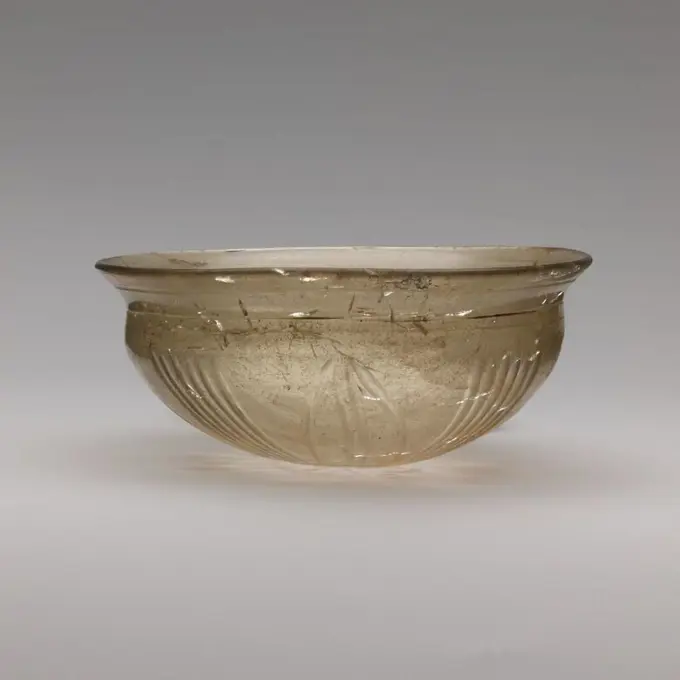
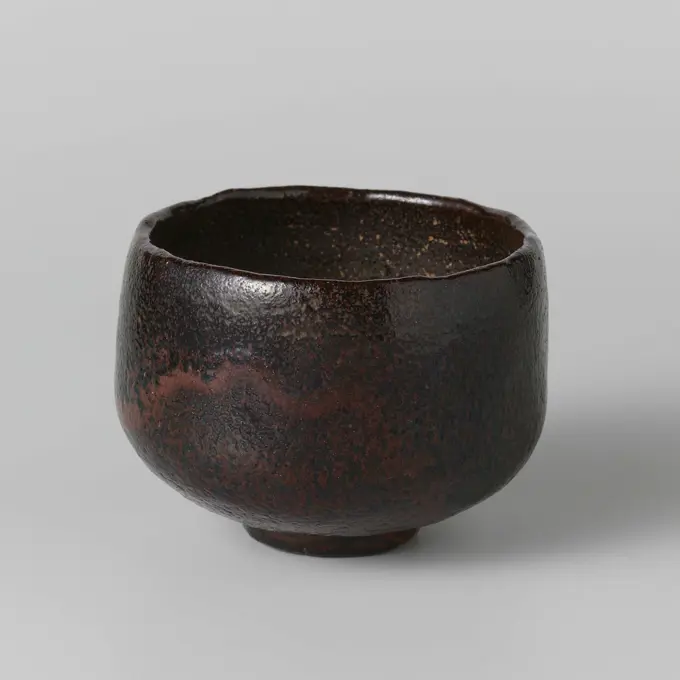
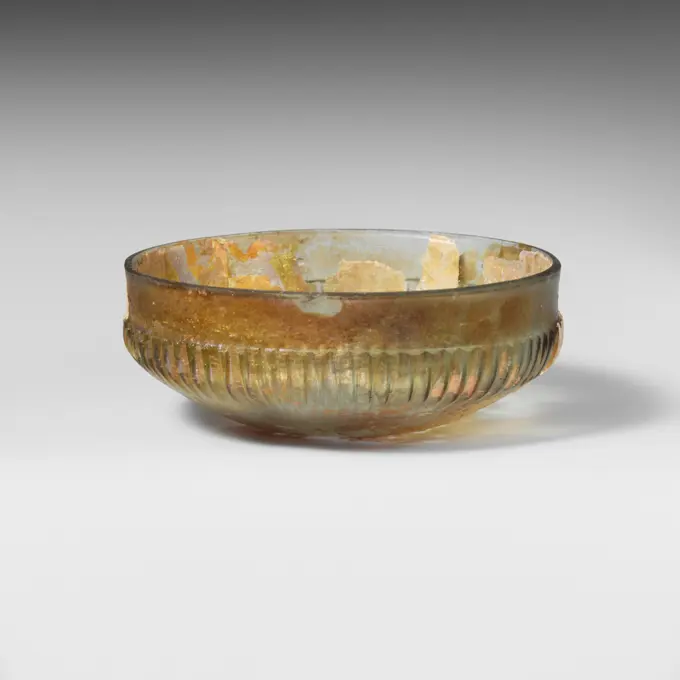
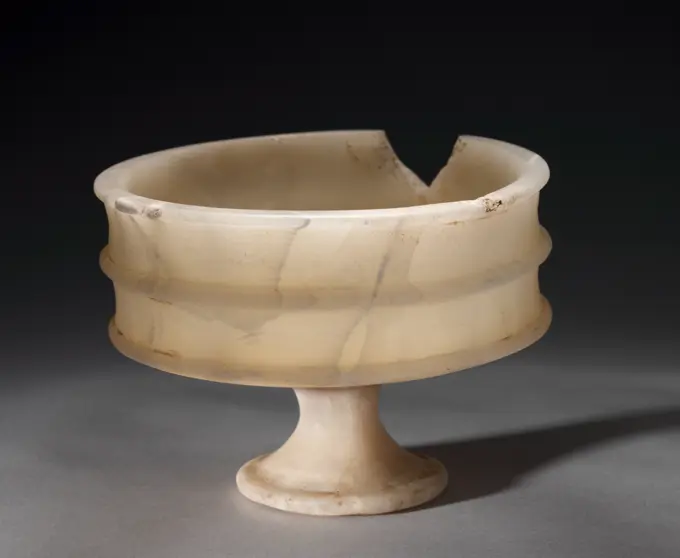
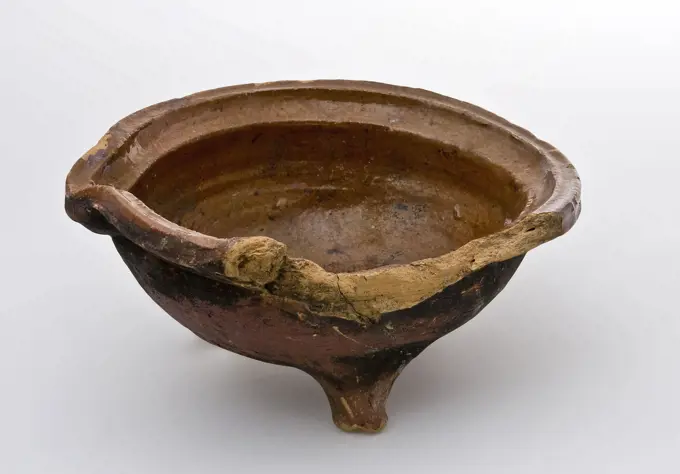
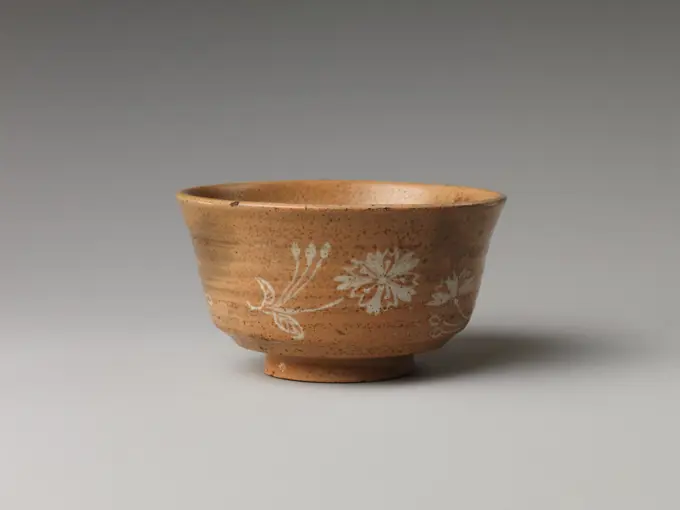
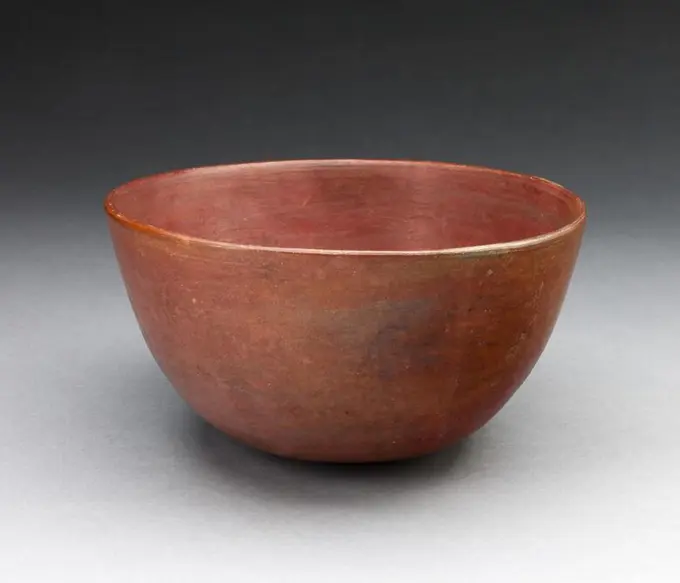
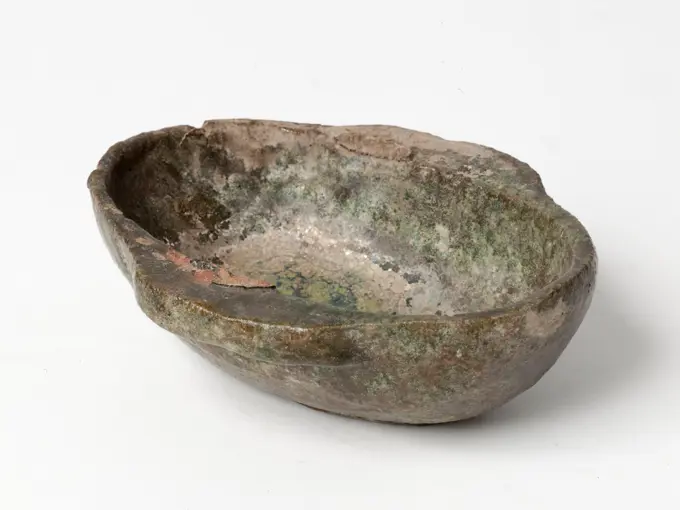
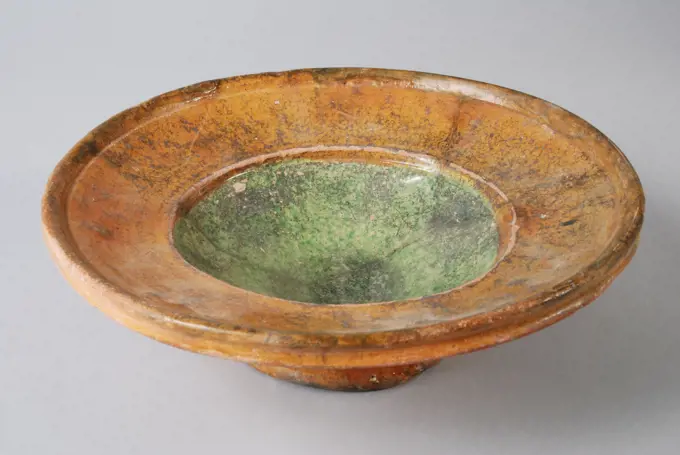
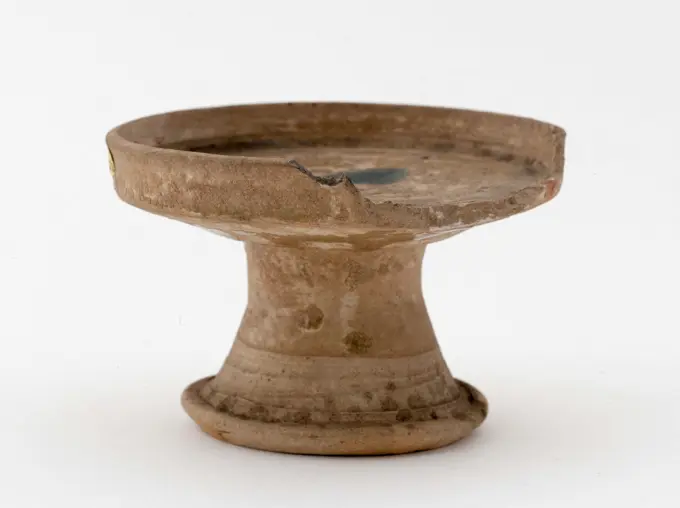
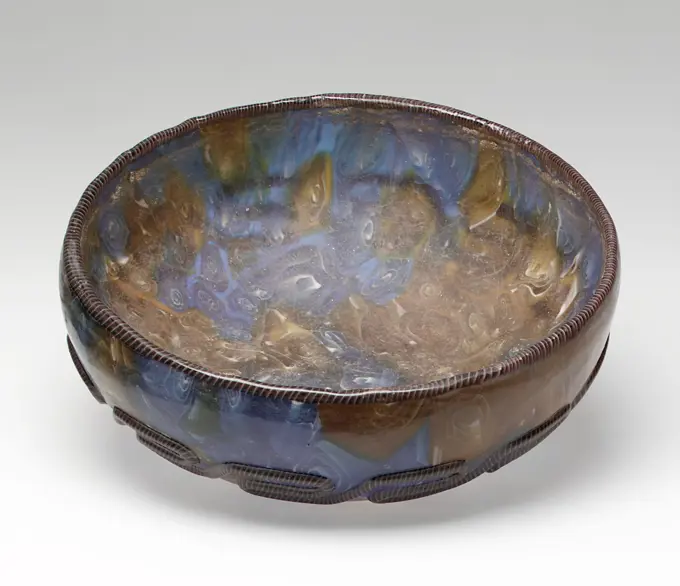
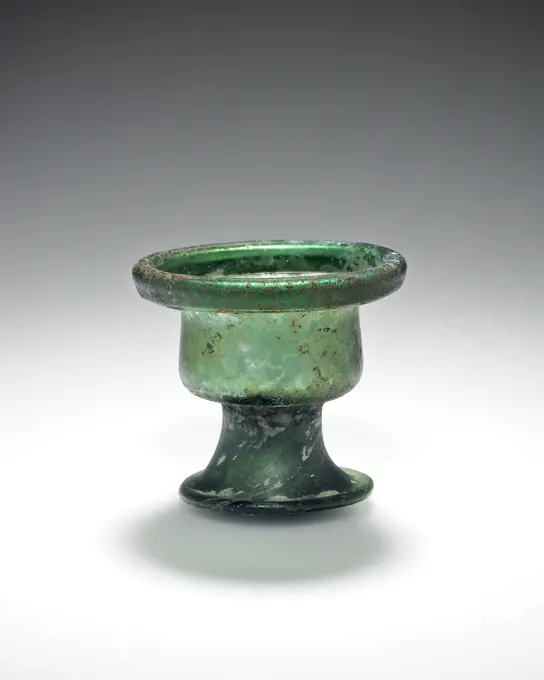
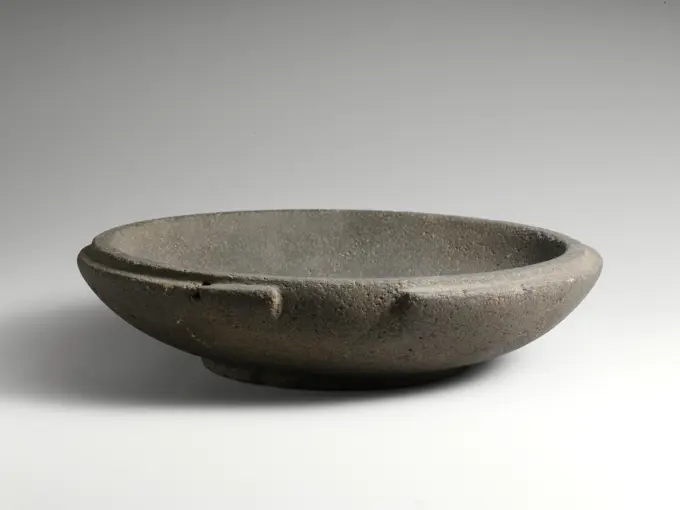
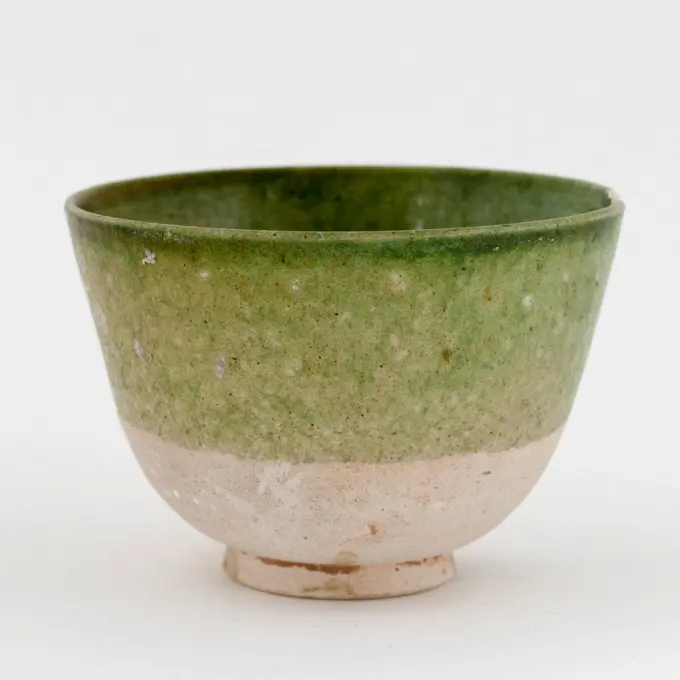
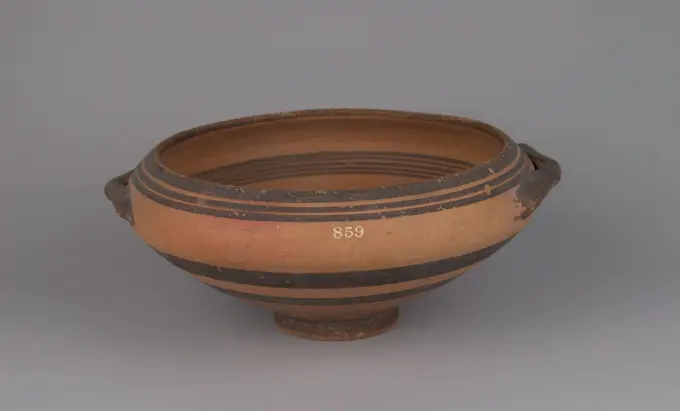
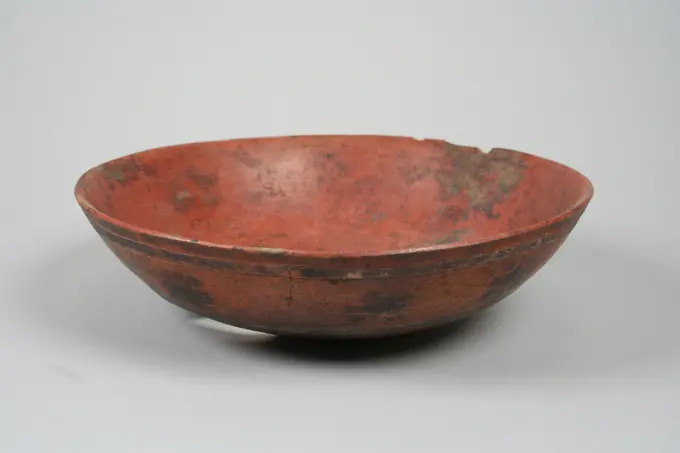
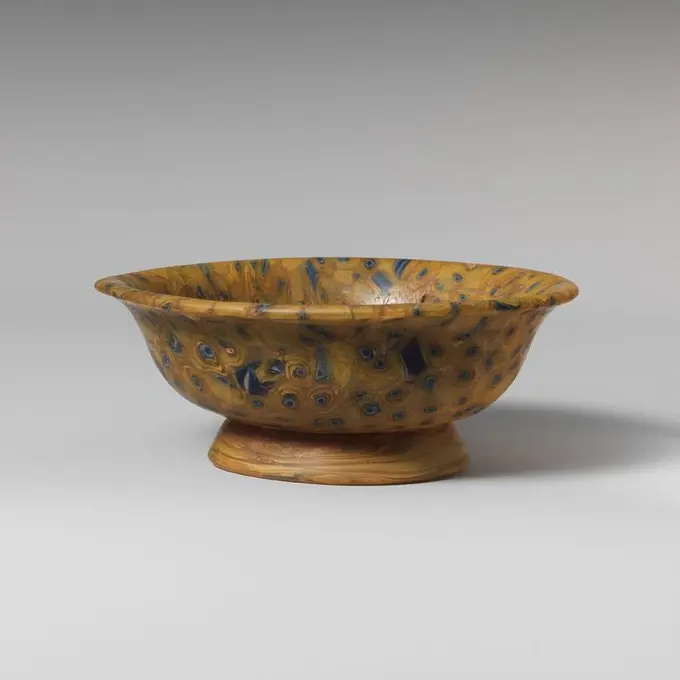
Glass ribbed bowl. Culture: Roman. Dimensions: H.: 2 7/8 in. (7.3 cm)Diam.: 4 5/8 in. (11.8 cm). Date: late 1st century B.C.-mid-1st century A.D..Translucent honey brown.Slightly outsplayed rim with almost pointed top edge and plain inward-sloping band below, deep convex side curving in to slightly concave bottom.On interior, a single broad and deep horizontal groove below rim, and a band of three () narrow, close-set shallow grooves around middle of body; on exterior, seventeen long, vertical ribs with flattened tops, tapering downwards, and extending to edge of bottom.Broken and repaired with numerous cracks and one chip missing from rim; many pinprick bubbles; dulling, deep pitting, and patches of brilliant iridescence.Rotary grinding marks on interior and on plain band below rim on exterior. Museum: Metropolitan Museum of Art, New York, USA.Bowl with floral scrolls, anonymous, c. 1275 - c. 1324 Come from quartz fritry, decorated with flower vines in sludge relief with turquoise and black under a transparent alarm laze. Kashan (possibly) earthenware. glaze painting / vitrification Come from quartz fritry, decorated with flower vines in sludge relief with turquoise and black under a transparent alarm laze. Kashan (possibly) earthenware. glaze painting / vitrificationBowl with a green glaze, anonymous, c. 1000 - c. 1200 Come of earthenware, covered with a green, crawlsed glaze. Vietnam earthenware. glaze vitrification Come of earthenware, covered with a green, crawlsed glaze. Vietnam earthenware. glaze vitrificationCup ". Ceramics. China, Dynasty of Song. Paris, Cernuschi Museum. 72685-35 Chinese, ceramic art, cut, song dynasty, leaf pattern, greenGlass bowl. Culture: Roman. Dimensions: Height: 2 1/8 in. (5.4 cm)Diameter: 4 x 2 1/8 in. (10.2 x 5.4 cm). Date: 2nd-3rd century A.D..Colorless with pale green tingeTubular rim, folded over and in; straight sides to body, flaring upwards; integral tubular base ring, flaring downwards with rounded bottom edge; thick, pushed-in bottom, slightly concave with traces of pontil scar.Intact; pinprick bubbles and blowing striations; some dulling and faint iridescence; patches of creamy brown and black weathering. Museum: Metropolitan Museum of Art, New York, USA.Bowl 4th-7th century Coptic. Bowl 478818Bowl 4th-7th century Coptic. Bowl 478675Bowl with PinchedSides.   Maker: Unknown. Bowl of pottery decorated with black brown sludge on Engobe of white sludge under a transparent lead glaze. A bond with dots on the outer edge.Glass conical bowl. Culture: Greek, Eastern Mediterranean. Dimensions: H.: 2 15/16 x 4 in. (7.5 x 10.2 cm). Date: mid-2nd-early 1st century B.C..Colorless with slight yellow tinge.Uneven, rounded rim; straight side, tapering diagonally downward; convex bottom.On interior, two horizontal grooves cut in a band below rim and another band of two broader grooves around middle of side; on exterior, a band of two concentric circles around bottom with a small central circle.Intact; pinprick bubbles; dulling, pitting, and iridescent weathering.Rotary grinding marks on interior; many surface scratches on exterior.Hemispherical and conical bowls were two of the most common and popular shapes of the Late Hellenistic period. They were fashioned not only in glass but also in metal and pottery. Those made of glass were later supplanted by deeply colored varieties and by bowls decorated with tooled ribs. Museum: Metropolitan Museum of Art, New York, USA.dish with two lying ears, decorated with lobes and wavy edge, yellow glazed, porcelain crockery holder earth finding ceramics earthenware glaze lead glaze, hand turned molded glazed baked Porring bowl of yellow and white earthenware internal and external yellow glazed two pinched gelobtegeschulpte ears one of which in gypsum rings. Double conical shape with curved upper edge archeology Valckensteyn Poortugaal Albrandswaard indigenous pottery kitchen food nutrition food porridge serving porridge Soil discovery: castle Valckensteyn in Poortugaal now Albrandswaard 1961-1962.Miniature basin ". Terracotta with green lead glaze. Han dynasty (206 BC-220 AD). Paris, Cernuschi museum. Chinese art, miniature basin, han dynasty, han time, terracottaTripod incense burner 13th-14th century China. Tripod incense burner 48372Bowl. Dimensions: H. 2 15/16 in. (7.5 cm)Diam. 6 9/16 in. (16.7 cm)Wt. 15 oz. (425.3 g). Date: 17th century. Museum: Metropolitan Museum of Art, New York, USA.Dish Roman Blackish dish with vertical sides.. Dish. Roman. Terracotta. VasesBowl with floral scrolls, anonymous, c. 1100 - c. 1279 Come from stoneware, covered with a dark green glaze. The inside with a grafted decoration of flower vines; the outside with lines in the lines. A crack in the edge. Celadon (Yaozhou). China stoneware. glaze engraving / vitrification Come from stoneware, covered with a dark green glaze. The inside with a grafted decoration of flower vines; the outside with lines in the lines. A crack in the edge. Celadon (Yaozhou). China stoneware. glaze engraving / vitrificationBowl with a foliate scroll border, anonymous, c. 1100 - c. 1299 Come of earthenware covered with a white sludge engobe from which a decoration is cut, under transparent alarm laze. On the inner wall a band with leaf vines. Garrus earthenware. glaze engraving / vitrification Come of earthenware covered with a white sludge engobe from which a decoration is cut, under transparent alarm laze. On the inner wall a band with leaf vines. Garrus earthenware. glaze engraving / vitrificationBowl 4th-7th century Coptic. Bowl 478496Cup (usual name), 1400. Covered sandstone. Cernuschi Museum, Asia Museum of Asia in the city of Paris.Bowl with geometrical motifs, anonymous, c. 1170 - c. 1200 Come from quartz fritry with a white tin-lood-alkalaplaze on which a decor in Luster. A star -shaped geometric motif on the inside. is the earthenware. glaze. luster (textile) painting / vitrification Come from quartz fritry with a white tin-lood-alkalaplaze on which a decor in Luster. A star -shaped geometric motif on the inside. is the earthenware. glaze. luster (textile) painting / vitrificationBowl 18th century Japan. Bowl 63116Terracotta brazier ca. 550 B.C. Etruscan The rim is stamped with a scene that depicts a man and two dogs chasing a hare into a net held by a second man.. Terracotta brazier 250786 Etruscan, Terracotta brazier, ca. 550 B.C., Terracotta, H. 6 in. (15.2 cm); diameter 17 in. (43.2 cm). The Metropolitan Museum of Art, New York. Rogers Fund, 1919 (19.192.53). Come of pottery decorated with (pseudo) script and three stains in green on Engobe of white tining acid, covered with a transparent lead glaze.Bowl probably 8th century. Bowl. probably 8th century. Lead; oxidized and encrusted. Possibly from Iran, Nishapur. MetalPainted Bowl. Culture: Michoacan. Dimensions: Height: 2 5/8in. (6.7cm)Diameter: 6in. (15.2cm). Date: 2nd-6th century. Museum: Metropolitan Museum of Art, New York, USA.Bowl. Culture: China. Dimensions: H. 1 5/8 in. (4.1 cm); Diam. 4 1/2 in. (11.4 cm). Museum: Metropolitan Museum of Art, New York, USA.Bowl: Ding ware, 12th-13th Century. China, Jin dynasty (1115-1234). Glazed white porcelain; diameter: 7 cm (2 3/4 in.); overall: 16.2 cm (6 3/8 in.).Bowl. Culture: Coptic. Dimensions: Overall: 2 13/16 x 6 9/16 in. (7.2 x 16.7 cm). Date: 4th-7th century. Museum: Metropolitan Museum of Art, New York, USA.. Bowl of quartz frites covered with a monochrome blue alkalilation.Nesting Bowl 4th-7th century Coptic. Nesting Bowl 478413Bowl Etruscan. Bowl. Etruscan. Bronze. BronzesWhite cross-lined bowl with geometric design ca. 3700-3650 B.C. Predynastic, Naqada I. White cross-lined bowl with geometric design. ca. 3700-3650 B.C.. Pottery, paint. Predynastic, Naqada I. From EgyptSugar Bowl. Black lacquered semicircular sugar bowl standing on a black lacquered foot with gold plated inside. The outside of the bowl is decorated with three lobby cartouches in relief, representing pagodas and a figure in a boat in the middle of a traditional Chinese landscape with trees and birds. The inside is plated.Glass cup 3rd century A.D. Roman Translucent pale blue green.Knocked-off, uneven rim; slightly bulging collar below rim; sides expanding downward, then angled in with bulge at top to join small bottom with deep central kick.Faint wheel-abraded horizontal lines on upper section of body.Intact; many pinprick bubbles; dulling, pitting, and patches of brilliant iridescence on exterior; soil encrustation and creamy weathering on interior.. Glass cup 239841Bowl with waving lines, dots and stripes, anonymous, c. 900 - c. 999 Come of earthenware decorated in manganese brown sludge with wavy lines, dots and stripes on white sludge Engobe under transparent lead glaze. Nishapur (possibly) earthenware. lead glaze painting / vitrification Come of earthenware decorated in manganese brown sludge with wavy lines, dots and stripes on white sludge Engobe under transparent lead glaze. Nishapur (possibly) earthenware. lead glaze painting / vitrificationBowl. unknown, craftsmanDisplay ". Red terracotta with Céladon covered. China, six dynasties (311-589). Paris, Cernuschi museum. Chinese art, Chinese Ceramic, containing, time six dynasty, presenting, container, terracottaGlass phiale (libation bowl). Culture: Greek, Eastern Mediterranean. Dimensions: H. 2 9/16 in. (6.5 cm); diameter 5 15/16 in. (15.1 cm). Date: late 4th century B.C..Colorless with light yellow-green tinge.Flaring rim with rounded edge; concave neck; curving side, tapering sharply to convex bottom.On exterior, one horizontal cut groove on underside of rim; another uneven groove around neck; on side, extending to bottom, a pattern of four pointed petals, each with two parallel vertical grooves extending from base to apex, alternating with four vertical bands of six parallel grooves; on bottom, a circle disk with an six-pointed rosette at center.Intact, but with many internal strain cracks; pinprick bubbles; slight dulling and patches of faint iridescent weathering on exterior, some retaining impression of a pattern resembling woven textile.Rotary grinding marks on interior. Museum: Metropolitan Museum of Art, New York, USA.Bowl. Dimensions: H. 3 3/4 in. (9.5 cm)Diam. 6 1/4 in. (15.9 cm). Date: late 11th-early 12th century. Museum: Metropolitan Museum of Art, New York, USA.Earthenware dish on three fins, bottom unglazed, dish crockery holder soil find ceramic earthenware glaze lead glaze, hand-turned glazed baked Red shard brown lead glaze three fins of which one restoration in plaster. Pretty shallow dish with cup shaped mirror and narrow flag thickened dish edge archeology Valckensteyn Poortugaal Albrandswaard indigenous pottery kitchen food nutrition cooking serving food preparation Soil discovery: canal at kitchen castle Valckensteyn at Poortugaal now Albrandswaard 1961.. Tea bowl of stoneware, covered with a black-brown glaze. Old label on the bottom with 'W687'. Raku (black).Glass ribbed bowl late 1st century B.C.-mid 1st century A.D. Roman Colorless with pale blue green tinge.Plain vertical rim with top edge ground flat; plain, slightly concave band around top of sides, then bulging outward before curving in sharply to slightly concave bottom.On interior, two concentric grooves around outer edge of bottom and small broader and deeper circle at center; on exterior, seventy-eight vertical ribs of slightly varying length, with tops ground off.Intact; pinprick bubbles; deep pitting and iridescent weathering on interior; similar pitting and iridescence on exterior.Rotary grinding marks on interior and on plain band around top of sides.. Glass ribbed bowl 239873Bowl with ornamental borders and scrolls, anonymous, c. 900 - c. 1099 Come of earthenware decorated with black and brown sludge on Engobe from white sludge. On the inner wall a band with curl. Above it a brown band and a bond with dots on the inner edge. The outer edge with hanging triangles. Iran earthenware. glaze painting / vitrification Come of earthenware decorated with black and brown sludge on Engobe from white sludge. On the inner wall a band with curl. Above it a brown band and a bond with dots on the inner edge. The outer edge with hanging triangles. Iran earthenware. glaze painting / vitrificationBowl 4th-7th century Coptic. Bowl 478848Teabowl with a red glaze, anonymous, anonymous, c. 1600 - c. 1699 Teaom van Steengoed, covered with a cracked red glaze. The wall has been broken. Raku (red). Japan stoneware. glaze vitrification Teaom van Steengoed, covered with a cracked red glaze. The wall has been broken. Raku (red). Japan stoneware. glaze vitrificationBowl - Cap Rouge Pottery Company Cap Rouge Pottery CompanyPottery test, square model with band ear, on stand ring, fire test test earth discovery ceramics earthenware glaze lead glaze, hand-turned glazed baked Earthenware test square model with band ear on stand ring Ear is attached in middle of side. On the shoulder on the outside thickened ring on the transition from round to square shape. Restoration is repainted archeology Rotterdam Overschie Kleinpolder Polderkade indigenous pottery food preparation kitchen cooking heating room food Soil discovery: Overschie 1979 De Lugt at the Polderkade.Bowl with an inscription border, anonymous, c. 1170 - c. 1200 Come from quartz-fritgoed covered with an Opaak Wit Tin-Lood-Alkiliglaze on which a decoration in Lustrer. On the outer wall a band with a (pseudo) inscription. is the earthenware. glaze. luster (textile) painting / vitrification Come from quartz-fritgoed covered with an Opaak Wit Tin-Lood-Alkiliglaze on which a decoration in Lustrer. On the outer wall a band with a (pseudo) inscription. is the earthenware. glaze. luster (textile) painting / vitrificationMiniature BowlCome van Tin, after 1810 - c. 1847 Come from Tin. The foot and transition from foot to bowl are profiled with a horizontal track. The top edge is slightly thickened and turned around. Utrecht tin (metal) Come from Tin. The foot and transition from foot to bowl are profiled with a horizontal track. The top edge is slightly thickened and turned around. Utrecht tin (metal)Escuintla IncensarioBowl 100 BCE-100 CE Syria. Glass, mosaic glass technique . Ancient RomanBowl. UnknownPlate with Birds; Attributed to the Heron Class (Etruscan, active 680 - 660 B.C.); Caere, Etruria; 680 - 670 B.C; Terracotta; 28 × 5 cm (11 × 1 15,16 in.)Jar, c. 5th-2nd century BCE, 5-3/16 x 6-11/16 x 6-11/16 in. (13.2 x 17.0 x 17.0 cm), Pottery, pigment, Vietnam, 6th-1st century BCEBowl 9th century This ceramic bowl was excavated at the site of Tepe Madrasa in Nishapur.Nishapur was a vital city in the early and middle Islamic periods, located along one of the main trajectories that connected Iran and West Asia Islamic lands with Central Asia and China. These itineraries are often referred by the term Silk routes but were in fact crucial to the movement of constellations of materials and objects, as well as people and ideas. The diverse population of Nishapur and its surroundings, from the better-researched elite groups of merchants, land-owning aristocracy, and literates, to the less-known artisans, farmers, miners, and servants, were instrumental in adapting global cultural trends to create their own distinctive visual languages. This is seen in the material remains of everyday life in medieval Nishapur - from pots and pans to lighting devices, inkwells, textiles and trimmings, jewelry, games and toys, talismanic devices, weapons, coins, and architectural fragmePlat, 1400. CERUNUSCHI Museum, Museum of Asia in the city of Paris.Ribbed Bowl (Tazza), 1391-1337 BC. Egypt, New Kingdom, Dynasty 18, reign of Amenhotep III to Akhenaten, 1391-1337 BC. Travertine; diameter: 18.5 cm (7 5/16 in.); overall: 14 cm (5 1/2 in.).Flared sided bowl, 3rd-8th century, 7 1/8 x 7 1/8 in. (18.1 x 18.1 cm), Polychromed earthenware, Mexico, 3rd-8th centuryGlass cup. Culture: Roman. Dimensions: Height: 2 1/2 in. (6.4 cm)Diameter: 3 1/2 x 2 7/8 in. (8.9 x 7.3 cm). Date: 2nd-3rd century A.D..Colorless with blue green tinge.Knocked-off, uneven rim; slightly bulging collar below rim; side expanding downward, then angled in to join convex bottom with deep, pointed kick at center.Band of faint wheel-abraded lines below bulge at top of body; two more horizontal lines on body above angle.Intact; bubbles and blowing striations; dulling, pitting, and brilliant iridescent weathering. Museum: Metropolitan Museum of Art, New York, USA.Pottery saucepan on three legs, pouring lip, cup-shaped with broken stem, saucepan casserole dishes holder utensils earthenware ceramics earthenware glaze lead glaze, hand-turned glazed baked Pottery saucepan on three legs One broken stem. Red shard internally glazed Top edge with lid groove and sneb schenklip. Hemisphere model bowl-shaped. Slightly oval in shape. Light touches on the outside archeology Landpoortstraat Geervliet Bernisse indigenous pottery cooking kitchen nutrition food preparation Soil discovery: Geervliet waste pit barn Landpoortstraat 1 September 1983.Teabowl ca. 1850 Kikkutei II Japanese. Teabowl 63163Glass dish 3rd-4th century A.D. Roman Colorless.Tubular rim, flaring up and outwards, and folded out and down; shallow S-shaped side to body; tubular foot ring, made by folding; almost flat bottom, pushed-in slightly with thick, prominent dome on interior at center and pontil scar on exterior. Intact; some pinprick and larger, elongated bubbles; pitting, dulling, creamy brown weathering, and iridescence.. Glass dish 245294Small globular pot vas "White terracotta. Paris, Muse Cernuschi. Small globular pot Vietnamese art, Col Evase, Vietnamese collection, globular pot, white terracotta, archeological vestigeBowl with Painted Rim. Tiwanaku-Wari; South coast Peru or northern Bolivia. Date: 600 AD-1000. Dimensions: 8.3 × 16.2 cm (3 1/4 × 6 3/8 in.). Ceramic and pigment. Origin: Bolivia. Museum: The Chicago Art Institute, Chicago, USA.Ear cut ". Terracotta with green lead glaze. Han dynasty (206 BC-220 AD). Paris, Cernuschi museum. Chinese art, ears cut, han dynasty, han time, terracottaEarthenware dish, red shard, green and brown glazed, on stand, plate crockery holder soil find ceramic earthenware glaze lead glaze clay, hand-turned glazed baked Pottery dish red shard green and brown glazed on stand ring Recessed piece on the inside is green glazed materials used: white clay and copper oxide Rupture lines his repainted archeology Rotterdam Stadscentrum Stadsdriehoek Oudehaven indigenous pottery food preparation cooking food kitchen serving room Soil discovery: Oude Haven Rotterdam.Prsentoir ". GRS covered green cracks. Paris, Muse Cernuschi. Prs. Vietnamese art, Vietnamese collection, ebrecher, gres, foot, presenting, archeological vestigeTripod Plate 15th-early 16th century Aztec. Tripod Plate. Aztec. 15th-early 16th century. Ceramic. Mexico, Mesoamerica. Ceramics-Containers. Come of pottery with white sludge and a painting in colored sludge under a transparent glaze. On the front a hare on flower drinks and dots. The inner edge with a decorative band.Bowl 12th-13th century China. Bowl 48443Bowl with Step Design 7th-4th century B.C. Paracas. Bowl with Step Design 308438Bowl 7th-10th century Nopiloa. Bowl 312164Large murrine bowl ca. 1880 Venezia-Murano Company Italian This unpolished bowl is similar to the mounted example displayed in 1881 in Milan, at Italys first Universal Exposition. It is characteristic of murrine decoration, a term coined by Abbot Zanetti in the nineteenth century to describe the imitation of ancient Roman mosaic glass. Venetian bead makers helped to perfect the technique.. Large murrine bowl 186194Bowl. Miniature with imperial Inca decoration. The pottery was a support to spread the imperial ideology. Inca culture. Late Horizon (1400-1532 AD). Peru. Museum of the Americas. Madrid, Spain.Miniature Cup; Roman Empire; 4th century; Glass; 4.5 x 5 cm (1 3,4 x 1 15,16 in.)Footed Shallow Bowl. Korea, Three Kingdoms period, Old Silla kingdom (57 B.C.-A.D. 668), 5th-7th century. Furnishings; Serviceware. Wheel-thrown and cut stoneware with natural ash glazeBowl with a stylized flowering plant and an inscription border, anonymous, c. 1200 - c. 1220 Come from quail fritry with an Opaak Wit Tin-Lood-Alkiliglaze on which a decoration in Luster. On the soil a medallion with a stylized flowering plant surrounded by curl. The inner edge with a bond with (pseudo) writing. is the earthenware. glaze. luster (textile) painting / vitrification Come from quail fritry with an Opaak Wit Tin-Lood-Alkiliglaze on which a decoration in Luster. On the soil a medallion with a stylized flowering plant surrounded by curl. The inner edge with a bond with (pseudo) writing. is the earthenware. glaze. luster (textile) painting / vitrificationRed -made earthenware ointment pot, with lead glaze on the inside, anonymous, 1500 - 1799   earthenware. glaze   earthenware. glazeBasalt mortar or plate ca. 1600-1050 B.C. Cypriot The lip of the vessel indicates that it had a lid.. Basalt mortar or plate. Cypriot. ca. 1600-1050 B.C.. Basalt. Late Bronze Age. Miscellaneous-Stone VasesPot. Terre to which. Vietnam. Paris, Muse Cernuschi. Asian art, art of extreme orient, art of Vietnam, Vietnamese art, terracotta, dishes. Bowl of Quartz Fritgoed high foot decorated with geometric and floral motifs in luster on surface of oprake white tin-lead-alkalilation. On the inside a medallion divided into eight compartments with varied wavy lines and leaf. The inner edge with a bond with curl work in boxes. The outside is also divided into compartments, filled with curl.. Come from Quartz Fritgoed covered with a monochrome turquoise glaze; Four modeled tires with braid on the outer wall.Miniature BowlTerracotta dish. Culture: Greek, South Italian, Campanian, Teano. Dimensions: Other: 1 7/8 x 6 3/8 in. (4.8 x 16.2 cm). Date: ca. 330-300 B.C..Shallow dish with ring base, decorated with stamped pattern. Museum: Metropolitan Museum of Art, New York, USA.Bowl. White porcelain. Paris, Cernuschi museum. 78842-3 Asian art, table art, bowl, old ceramic, container, dishesGobelet ". Terracotta with green glaze. China, Tang dynasty (618-907). Paris, Cernuschi museum. Chinese art, Chinese ceramic, container, tang dynasty, green glacure, goblet, container, terracottaVessel: Footed Base. Culture: Tellem peoples. Dimensions: H. 5 1/4 x Diam. 6 1/8 in. (13.3 x 15.6 cm). Date: 13th century.The Tellem are believed to have arrived at the rocky Bandiagara Escarpment in present-day southern Mali sometime during the eleventh century A.D. By the fifteenth to sixteenth centuries, the Tellem population was devastated, possibly due to famine caused by drought or Songhai and Mossi slave raids. Their cultural legacy, however, profoundly influenced the Dogon, a people who succeeded them and continue to populate the Bandiagara to this day. Although the origins of the Dogon remain unclear, they are not direct descendents of the Tellem, who appear to have left no distinct ancestors. The name by which they are remembered, "Tellem," is a Dogon word signifying "We found them."Three- and four-footed pottery bowls like this one have been found in caves directly below Tellem burial caves in the Bandiagara cliffs. Stylistically distinct from other forms of Tellem pottery, . Come of pottery decorated with manganese black, red-brown and greenish sludge, with some incisions through colors, on Engobe of white sludge. Flower branches styled on the inside.Bowl 850-750 B.C. Cypriot. Bowl. Cypriot. 850-750 B.C.. Terracotta. Cypro-Geometric III. VasesBowl -Vase. Bronze. Cernuschi Museum, Asia Museum of Asia in the city of Paris.Bowl. Proto-Grès. Cernuschi Museum, Asia Museum of Asia in the city of Paris.Bowl. Culture: Paracas. Dimensions: Overall: 2 5/8 in. (6.67 cm)Other: 8 3/4 in. (22.23 cm). Date: 7th-4th century B.C.. Museum: Metropolitan Museum of Art, New York, USA.Bowl. China. Date: 960 AD-1279. Dimensions: H. 6.5 cm (2 9/16 in.); diam. 12.6 cm (5 in.). Marbled earthenware with clear glaze. Origin: China. Museum: The Chicago Art Institute, Chicago, USA.Incised bowl with crosses 3rd-2nd century B.C. Paracas. Incised bowl with crosses 308333Bowl with an (pseudo-)inscription, anonymous, c. 900 - c. 999 Come of earthenware decorated in white sludge with (psuedo) writing on Engobe of black sludge. Nishapur earthenware. glaze painting Come of earthenware decorated in white sludge with (psuedo) writing on Engobe of black sludge. Nishapur earthenware. glaze paintingBowl - Portneuf potteryGlass mosaic bowl. Culture: Greek or Roman. Dimensions: diameter 4 11/16in. (11.9cm). Date: 2nd-1st century B.C..Colorless, translucent cobalt blue, opaque yellow, and opaque white.Outsplayed horizontal rim with rounded edge; S-shaped side tapering downwards to slightly convex bottom within applied outsplayed base ring with thick beveled edge, applied as a coil with join down one side.Composite mosaic pattern formed from polygonal sections of a composite cane in a colorless ground with a yellow spiral surrounding two small rings, one in blue, the other in white, and central dot in blue; interspersed with this cane are a number of irregular segments in blue with a central white stripe, and around the side and rim others in streaky yellow; the base ring is yellow streaked with blue and white threads.Intact; some bubbles; dulling, some patches of deep pitting, slight reddish brown soil encrustation, and faint weathering. Museum: Metropolitan Museum of Art, New York, USA.Miniature Pedestal Bowl 15th-early 16th century Aztec. Miniature Pedestal Bowl 316880