Antique and Decorative Jugs

A selection of antique jugs and pots crafted from porcelain and metal, showcasing intricate designs and historical significance across various eras.

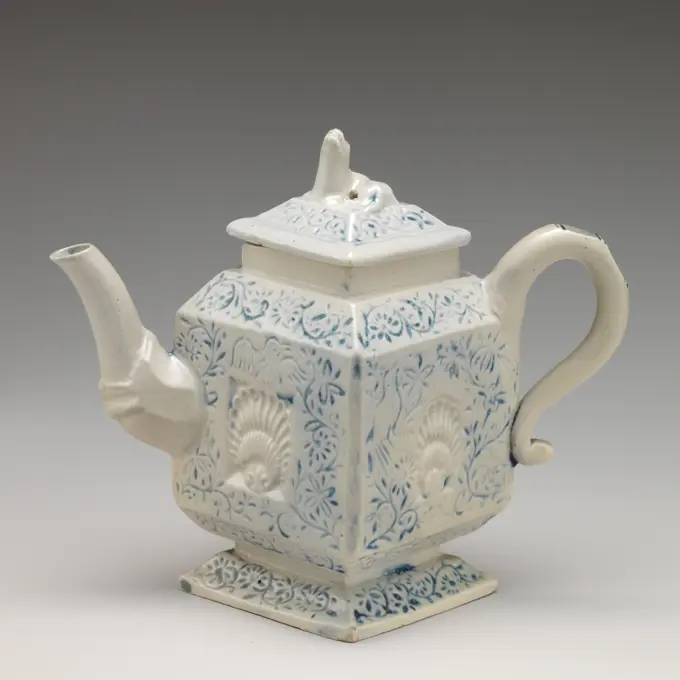
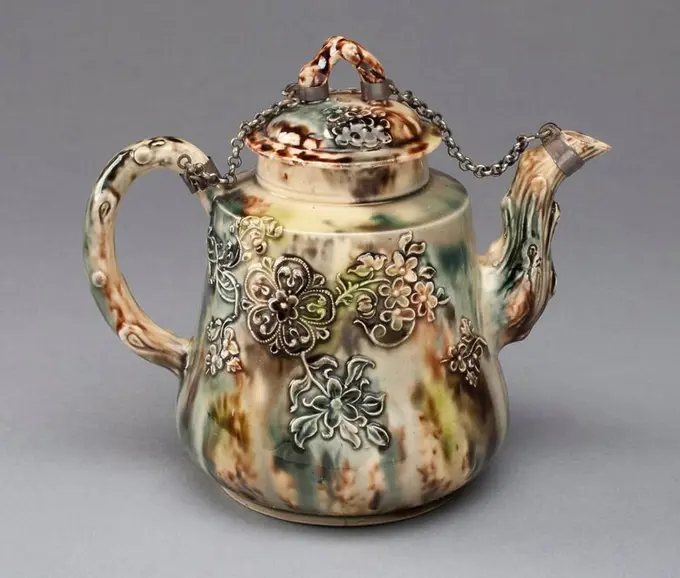
Teapot of stoneware with salt glaze; Staffordshire., Anonymous, c. 1740 - c. 1760 Teapot of stoneware with salt glaze. The teapot is octagonal and has relief decorations on the eight sides, consisting of trees, figures, animals and a weapon. The spout has a flower branch on both sides. England stoneware. salt glaze Teapot of stoneware with salt glaze. The teapot is octagonal and has relief decorations on the eight sides, consisting of trees, figures, animals and a weapon. The spout has a flower branch on both sides. England stoneware. salt glaze
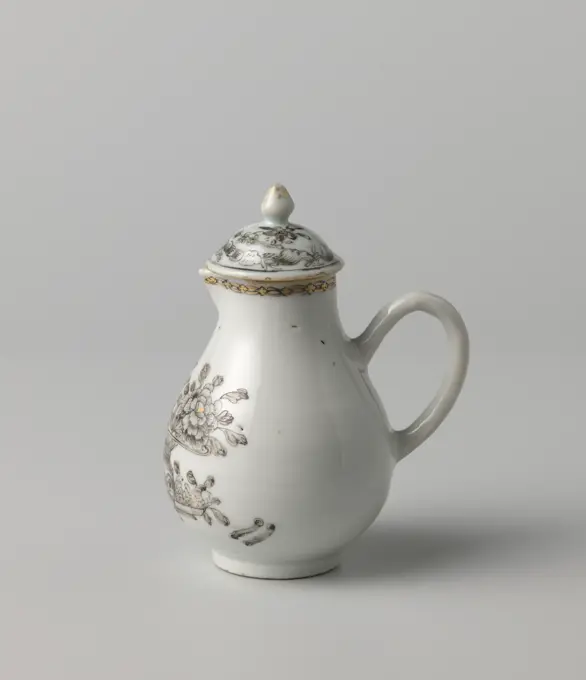
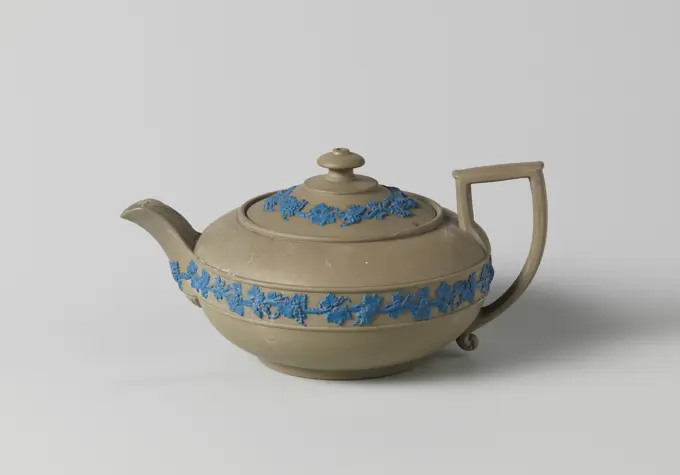
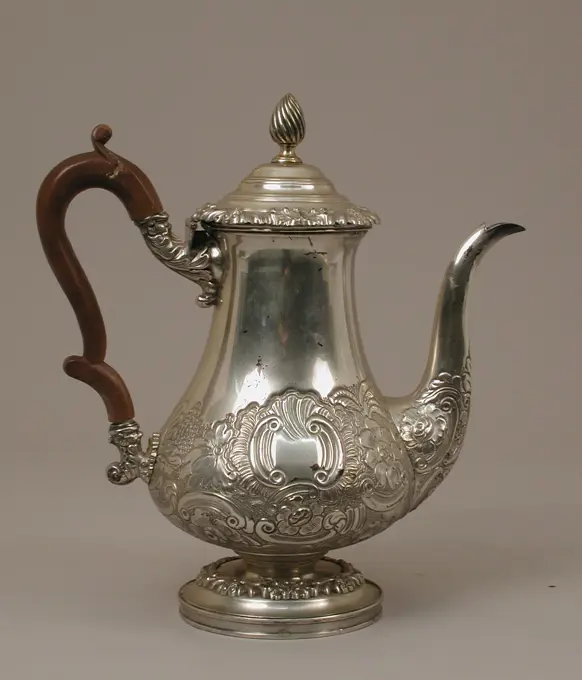
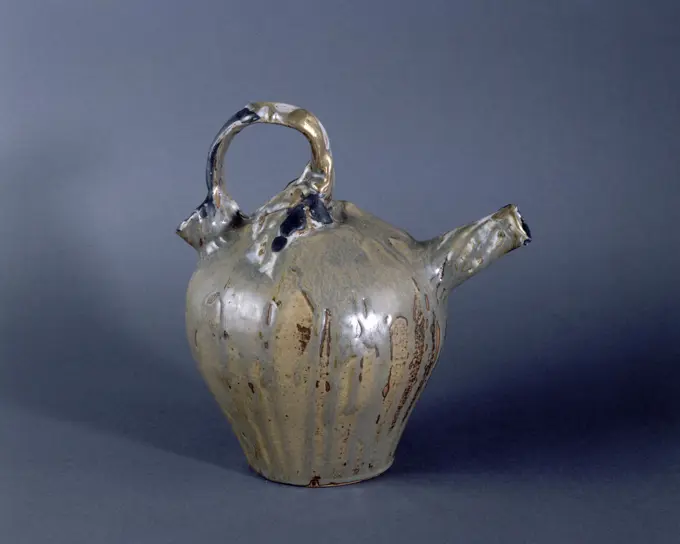
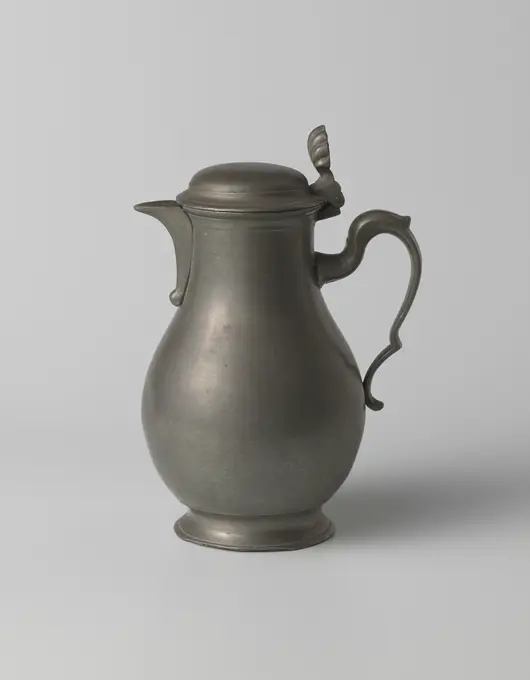
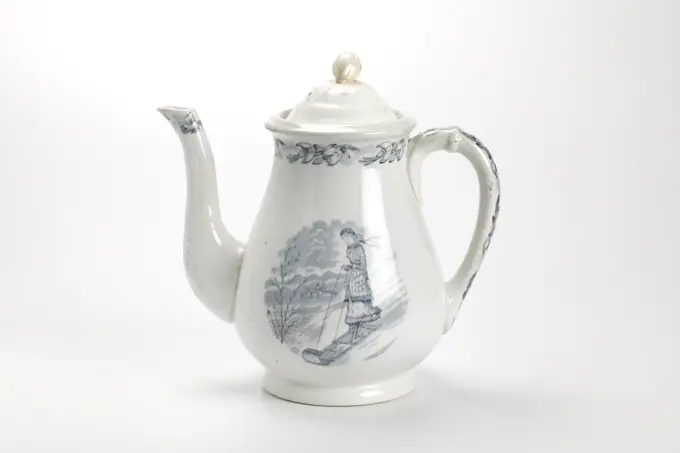
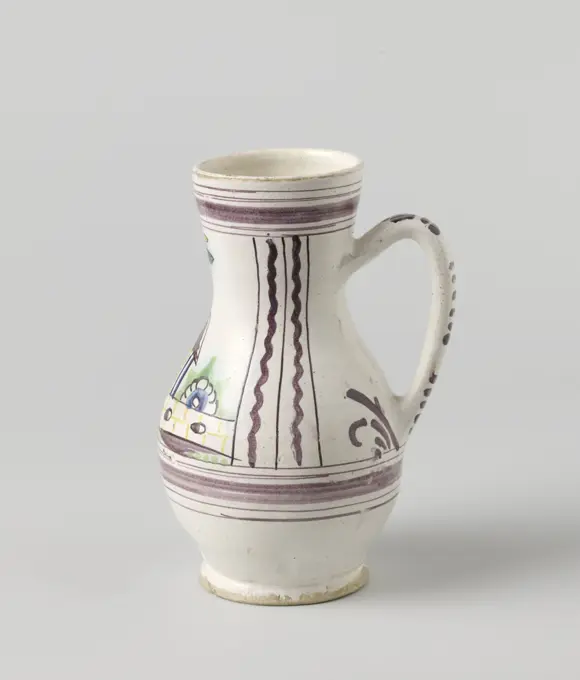
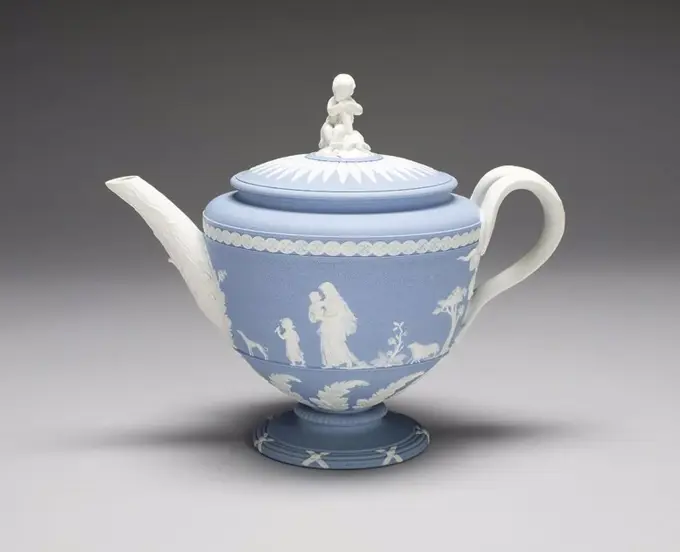
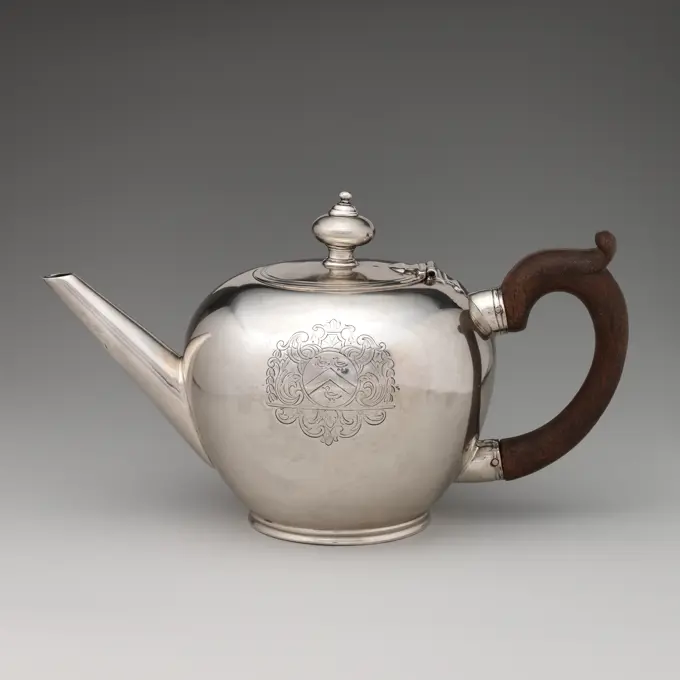
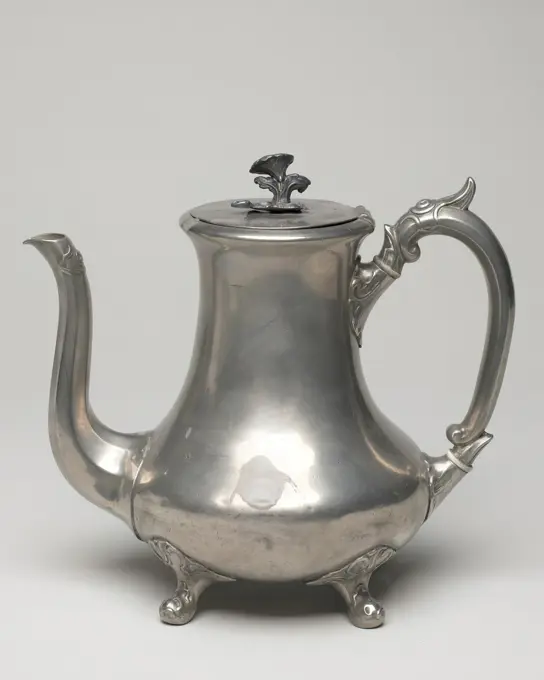
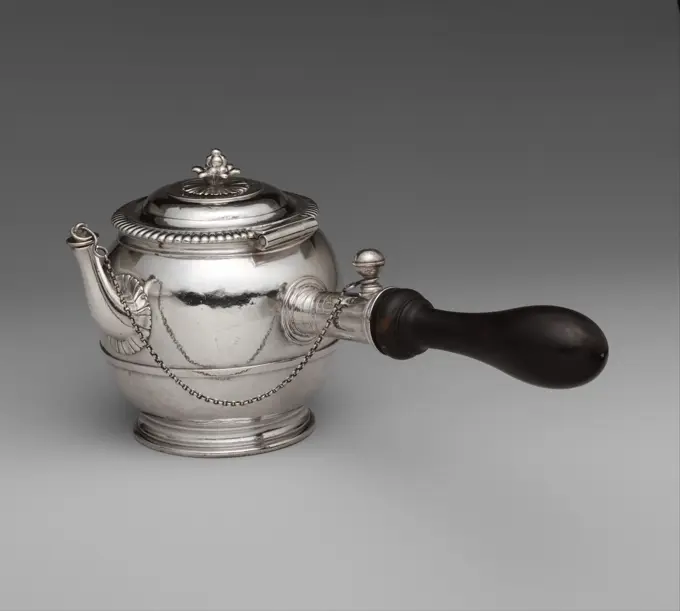
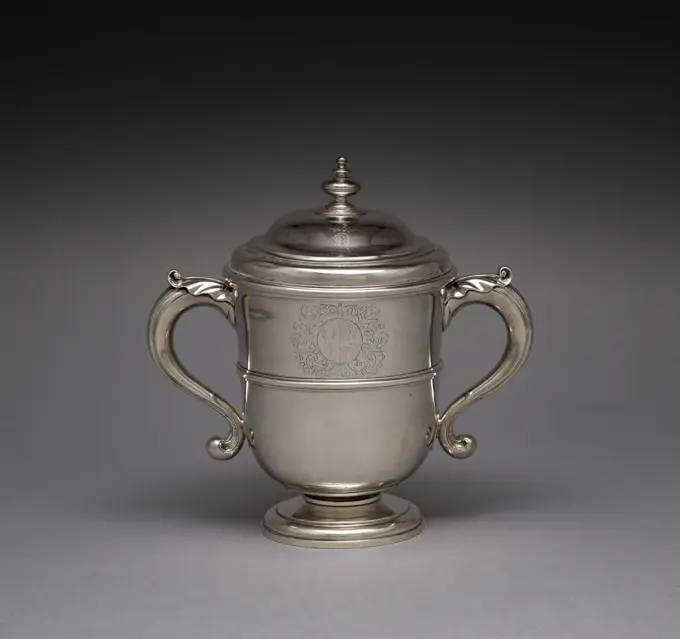
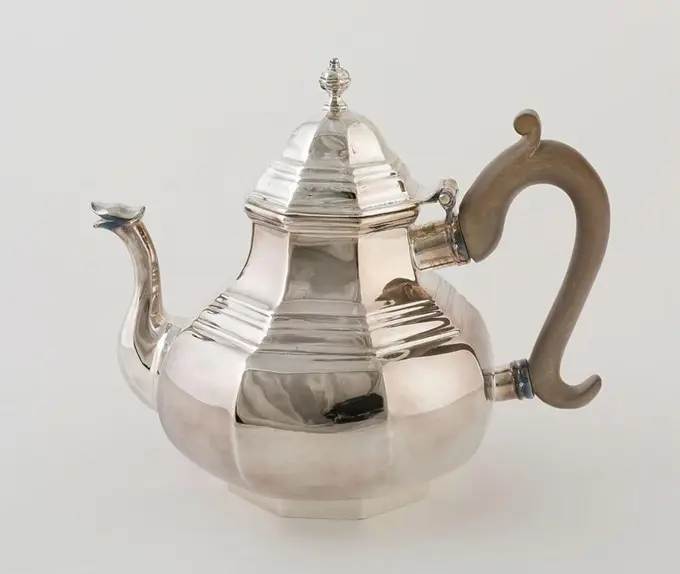
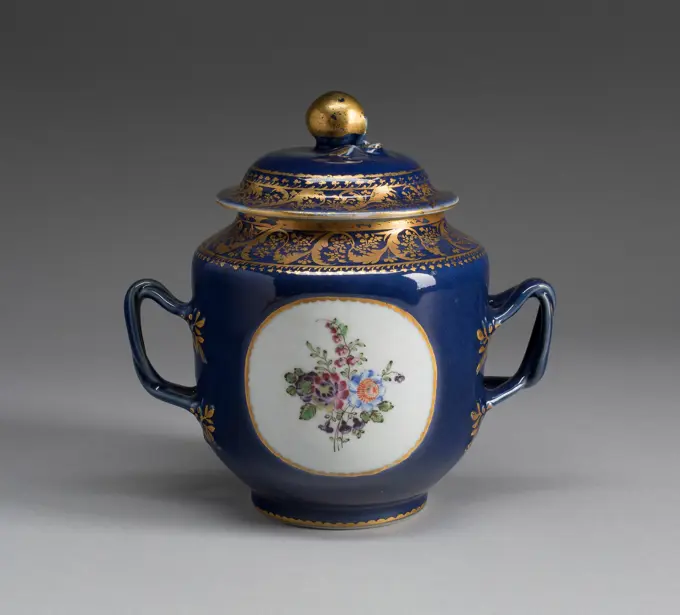
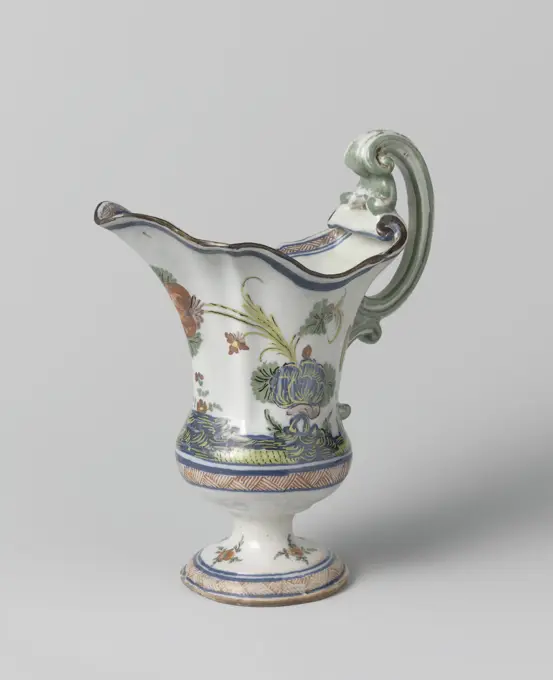
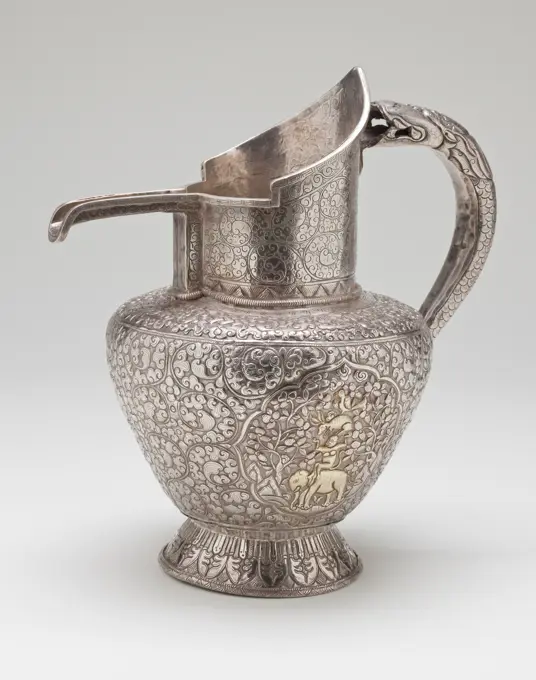
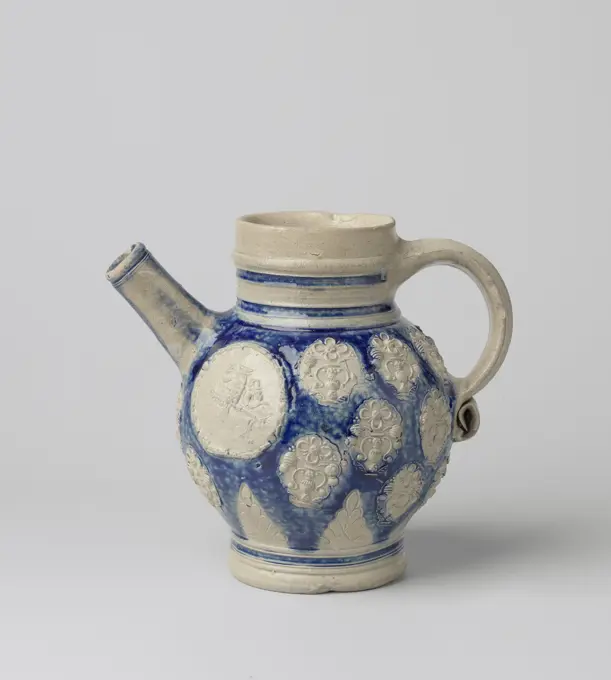
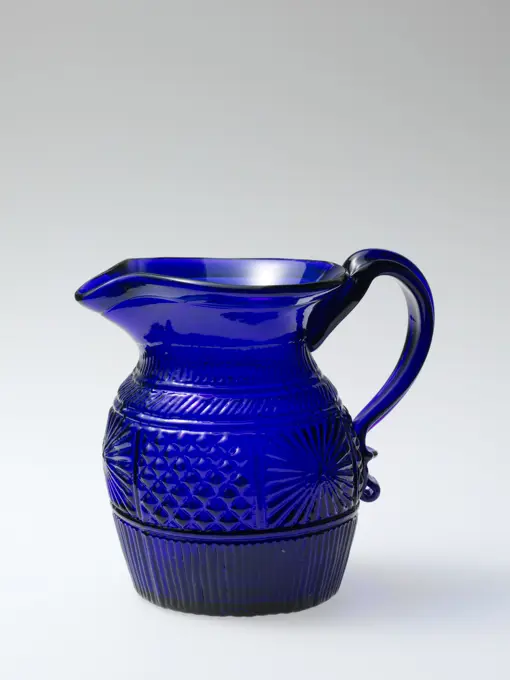
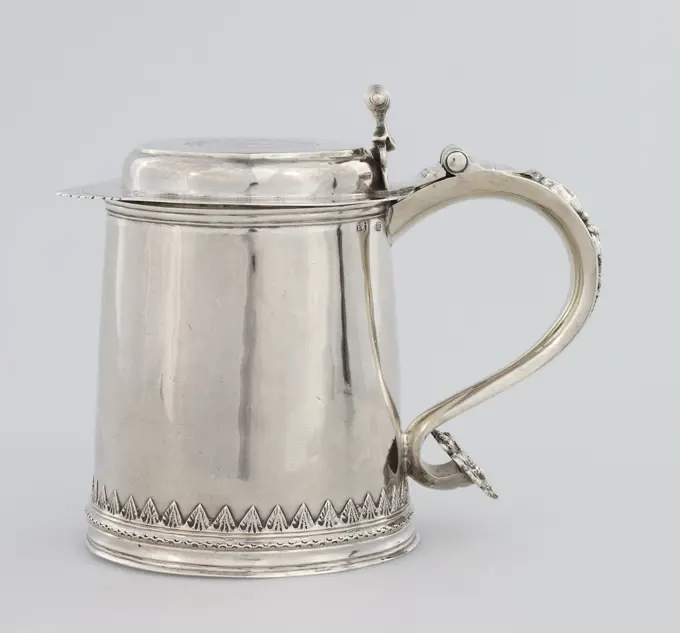
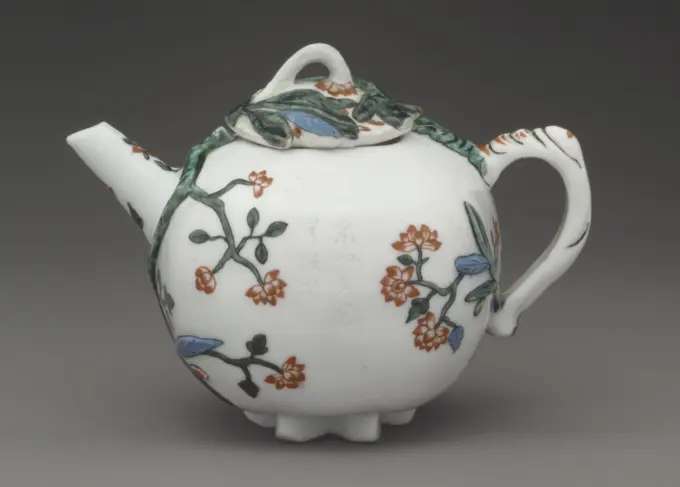
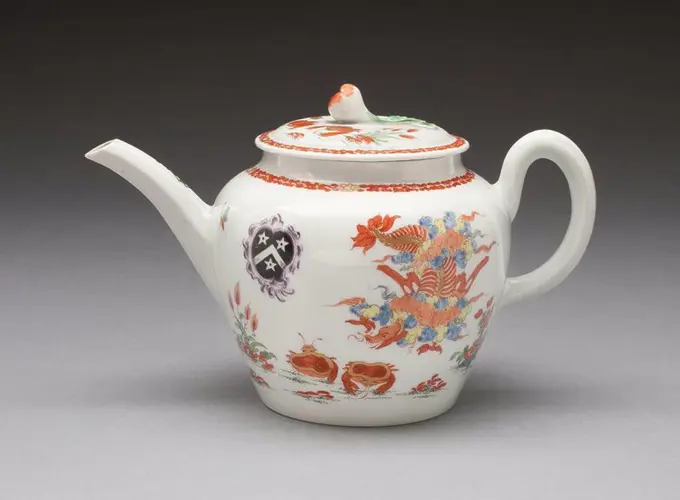
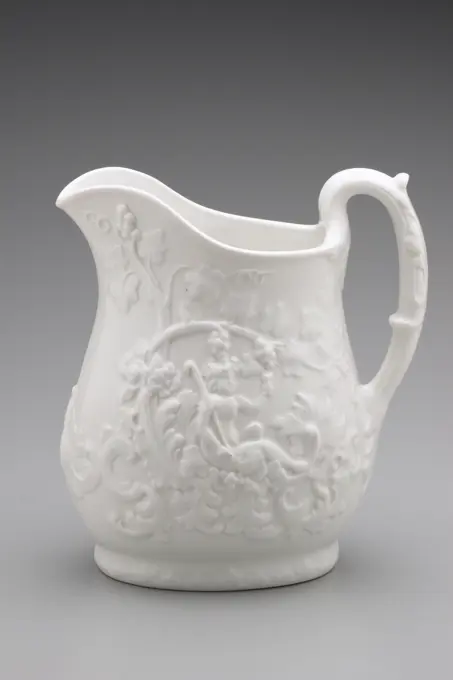
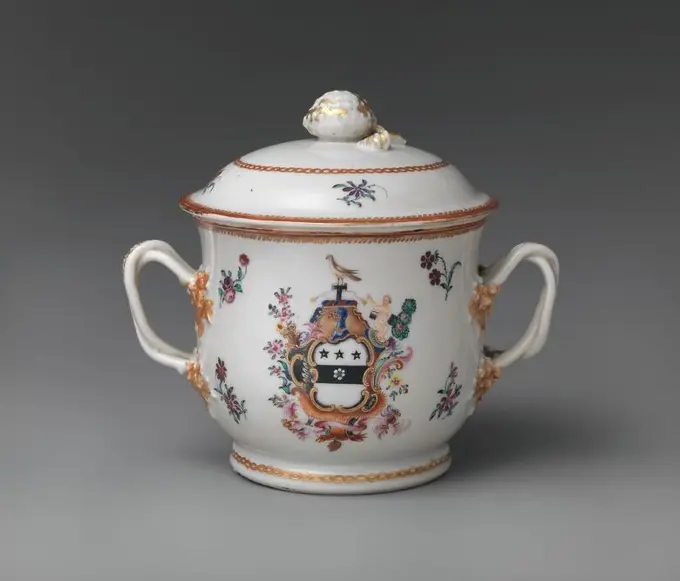
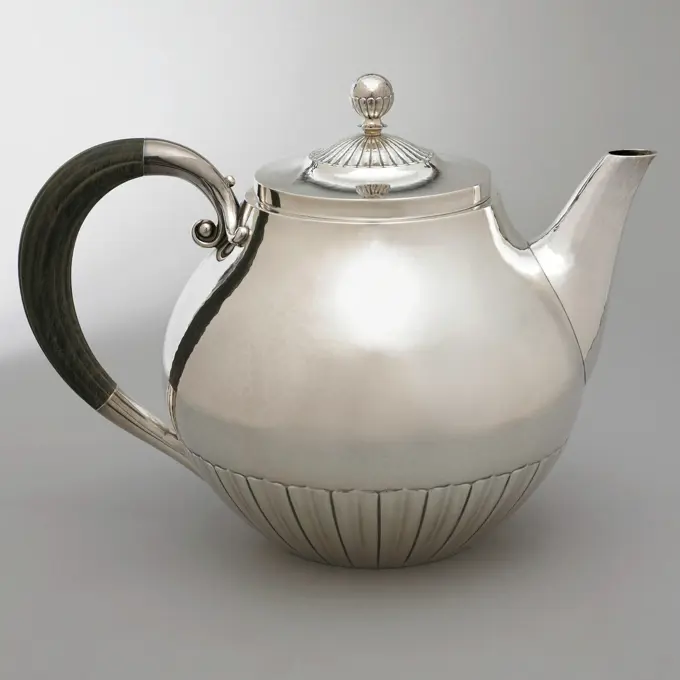
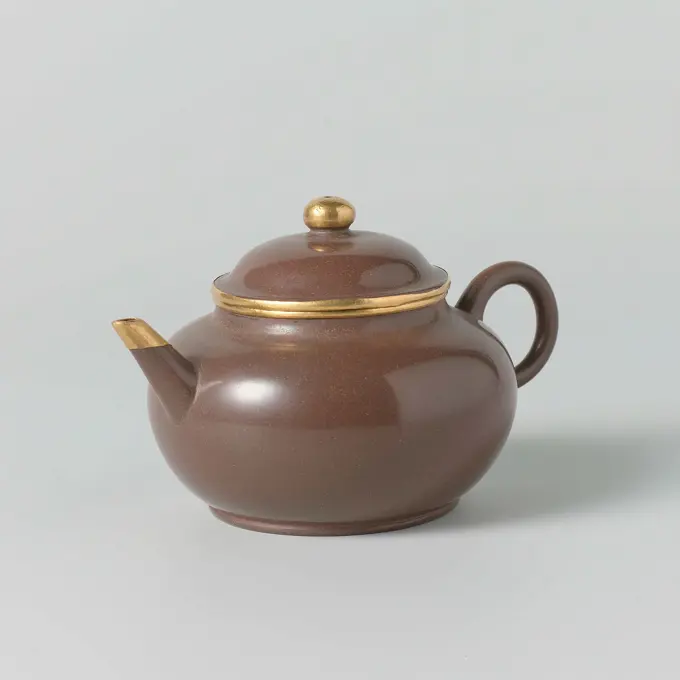
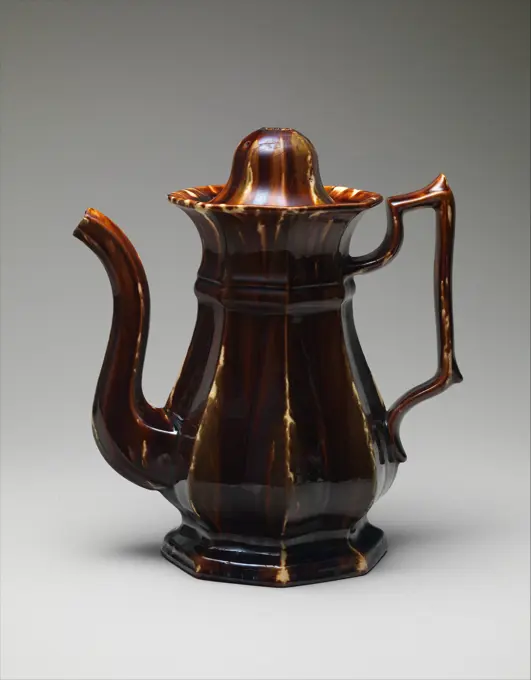
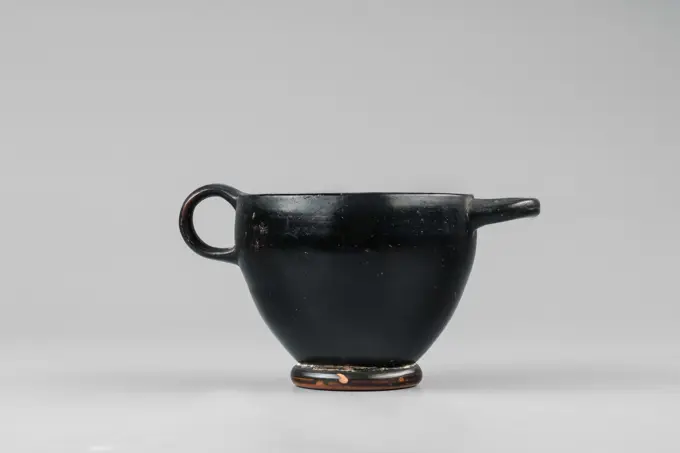
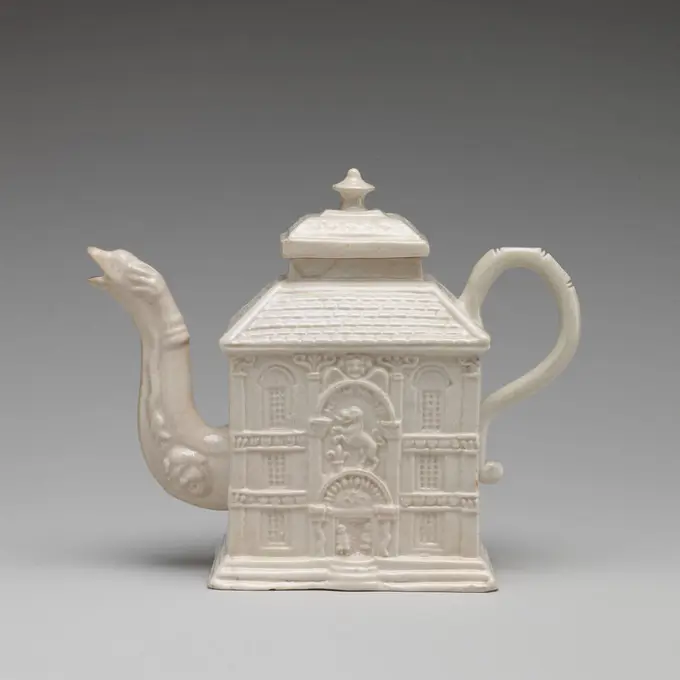
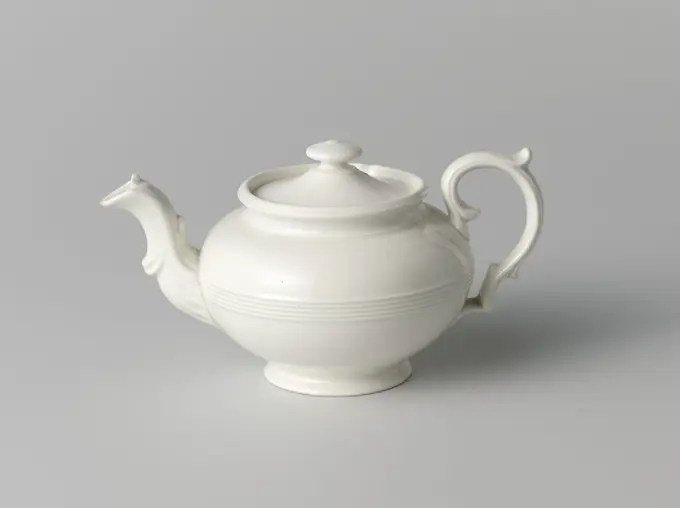
Cover of a ewer with flowers and floral scrolls, Würzburg, c. 1775 - c. 1780 Lid of a jug of porcelain with rocaille ear and triangular spout from the neck, painted on the glaze in red, green, yellow and black. Decorated with flower vines in light relief with painted flowers on it. Lid button in the shape of a pine cone. Würzburg porcelain. glaze. painting / vitrification Lid of a jug of porcelain with rocaille ear and triangular spout from the neck, painted on the glaze in red, green, yellow and black. Decorated with flower vines in light relief with painted flowers on it. Lid button in the shape of a pine cone. Würzburg porcelain. glaze. painting / vitrificationCoffee pot; Next, Ludwik II (Fl. Post 1854-1887); Years of the 19th century (1850-00-00-1859-00-00);Chocolate Pot 1700-1710 Edward Winslow American Chocolate pots are distinguished by a small hole in the lid where a stirring rod could be inserted while the cover remained closed, keeping the contents warm. The removable acorn finial, attached by a chain, provides the opening. The Hutchinson arms engraved on the side are probably those of Thomas Hutchinson, a Boston merchant and member of the Massachusetts legislature.. Chocolate Pot 2059Pear-Shaped Milk Jug with a Flower and Fruit Basket. Lid of pear-shaped porcelain milk jug, painted on the glaze in black and gold. On the lid with a band tendrils and two loose flowers. Lid not belonging to it. Encre the chine.Teapot with lid; Koenigliche Porcellain Fabrique, Meissen (1710-1763), Boettger, Johann Friedrich (1682-1719); around 1715 (1710-00-00-1715-00-00);Paul de Lamerie, Jug and Cover, 1723/24, silver.Gourd-Shaped Ewer with Twisted Handle. Korea. Date: 1135-1165. Dimensions: H. 24.0 cm (9 7/16 in.); diam. 16.1 cm (6 5/16 in.). Celadon-glazed stoneware with underglaze molded and incised decoration. Origin: Korea. Museum: The Chicago Art Institute, Chicago, USA.Tea teapot; Klimaszewski, Tomasz (Ca 1776-1839); 1920s (0-00-00-0-00-00);Teapot of stoneware with salt glaze; Staffordshire., Anonymous, c. 1740 - c. 1760 Teapot of stoneware with salt glaze. The teapot is octagonal and has relief decorations on the eight sides, consisting of trees, figures, animals and a weapon. The spout has a flower branch on both sides. England stoneware. salt glaze Teapot of stoneware with salt glaze. The teapot is octagonal and has relief decorations on the eight sides, consisting of trees, figures, animals and a weapon. The spout has a flower branch on both sides. England stoneware. salt glazeMiniature coffeepot (part of a set) ca. 1800 British. Miniature coffeepot (part of a set). British. ca. 1800. Soft-paste porcelain. Ceramics-PotteryTeapot of hard-baked pottery; Wedgwood .. teapot of hard-baked pottery. The belly has the shape of a lying ellipsch. The pot has a curved spout, a angular ear. The belly is decorated with a blue edge of grapes of grapes and vines in relief. The teapot includes a sugar bowl (BK-15430-B), a milk jug (BK-15430-C) and a rinsing bowl (BK-15430-D). The teapot has been marked.Bulier on the base; Klimowiczs (Warsaw; Złotnicza Factory; 1866-1914); 1899-1904 (1899-00-00-1904-00-00);Coffeepot ca. 1815-25 British. Coffeepot. British. ca. 1815-25. Sheffield plate, wood. Metalwork-SilverplateJean Carriès (1855-1894). Vase in the shape of a cider pot, ceramic in enameled sandstone, between 1875 and 1894. Museum of Fine Arts of the City of Paris, Petit Palais. 24072-4 Handle, ceramic, shape, emaille, cider pot, vaseGloves of tin with lid. Gloves of tin. The foot carries a pear-shaped body with sneb. The top is closed with a slightly vaulted lid, which can and sneb covered. The shell-shaped thumb trust has a double hopped hinge. The brace-shaped handle starts in the neck of the can and continues to the thickest point of the belly. The short, five-sided spout expression from a sphere.Mug 1750-1800 probably British. Mug. probably British. 1750-1800. Glass. Glass. Can of faience with gold-plated silver lid. White glazed.Coffeepot Coffeepot; pewterCoffeepot - John Marshall & Company, 1867-1895 John Marshall & Company, 1867-1895Miniature teapot (part of a set). Artist: Henry Flavelle. Culture: Irish, Dublin. Dimensions: 1 1/2 × 2 1/2 in. (3.8 × 6.4 cm). Date: 1827 and 1829.The production of miniature silver furniture and tea, coffee, and chocolate equipment was a specialty of goldsmiths known as "toy men." The miniatures were probably intended for dollhouses. From the mid-eighteenth century in England until the present, porcelain and fine earthenware miniatures have been made as well. Museum: Metropolitan Museum of Art, New York, USA.Teapot with lid of white stoneware with relief figures; Crouch true. Octagonal, spherical teaspot of white stoneware. The pot has a curved spout, a C-shaped ear, an octagonal stand ring and an octagonal lid. The pot has eight oval medallions in relation to which a figure embossed, the lid has a landscape animal (seal) As a button.Can of multi -colored fowence, anonymous, c. 1780 - c. 1840 Slim reversed Balus -shaped can of multi -colored painted faience. The jug has a stand ring and a C-shaped ear. On the jug, a house is painted in the color manganese, yellow, green and blue around which vertical and horizontal lines. Hungary earthenware. tin glaze. Slim reversed Balus -shaped can of multi -colored painted faience. The jug has a stand ring and a C-shaped ear. On the jug, a house is painted in the color manganese, yellow, green and blue around which vertical and horizontal lines. Hungary earthenware. tin glaze.Pear-shaped milk jug with a coat of arms and flower scrolls, anonymous, c. 1725 - c. 1749 Pear-shaped milk jug of porcelain with C-shaped ear and triangular spout, painted on the glaze in blue, red, black and gold. On the belly a family crest in a medallion twice. The upper part of the weapon with three flowers on a blue background and the lower part with a flower and seven loose leaves on a golden soil. The cover consists of flower vines and the helmet sign is a swan with a flower as a head. Between the weapons of flower vines; On the edge a Spearhead border and a band with flower vines. Lid is missing. Weapon porcelain with email colors. China porcelain. glaze. gold (metal) painting / gilding / vitrification Pear-shaped milk jug of porcelain with C-shaped ear and triangular spout, painted on the glaze in blue, red, black and gold. On the belly a family crest in a medallion twice. The upper part of the weapon with three flowers on a blue background and the lower part with a flower andMiniature kettle with stand. Culture: British, London. Dimensions: 5 1/4 × 3 1/4 in. (13.3 × 8.3 cm). Maker: W. H.. Date: 1795-96. Museum: Metropolitan Museum of Art, New York, USA.Coffee pot, 18th century, 10 x 7 1/2 x 4 1/2 in. (25.4 x 19.05 x 11.43 cm), Pewter, France, 18th centuryTeapot. Wedgwood Manufactory; England, founded 1759; Etruria, Staffordshire, England. Date: 1775-1780. Dimensions: 20 × 24.1 cm (7 7/8 × 9 1/2 in.). Stoneware (jasperware). Origin: Burslem. Museum: The Chicago Art Institute, Chicago, USA.Joseph Richardson, Jr. and Nathaniel Richardson, Coffeepot, c. 1780, silver and wood.Teapot 1723-24 David King. Teapot. Irish, Dublin. 1723-24. Silver, wood. Metalwork-SilverTeapot, 19th century, 8 1/2 x 9 x 5 3/4in. (21.6 x 22.9 x 14.6cm), Pewter, England, 19th centuryTeapot ca. 1740 British, Staffordshire Listen to experts illuminate this artwork's story Listen Play or pause #407. Teapots Supported by Bloomberg Philanthropies We're sorry, the transcript for this audio track is not available at this time. We are working to make it available as soon as possible.. Teapot. British, Staffordshire. ca. 1740. Salt-glazed stoneware with underglaze scratch blue” decoration. Ceramics-PotteryTeapot 1699-1700 I. C. Tea was still a relatively new beverage in France when this teapot was produced. As the leaves were not imported into France in significant quantities at the time, it was an expensive drink, available only to members of the upper strata of society, and the small size of this teapot reflects teas high cost. This example appears to be the only surviving Parisian teapot of the late seventeenth century. Tea never gained the popularity of either hot chocolate or coffee in France, and silver teapots do not seem to have been produced in large quantities even in the eighteenth century.In its design, the teapot corresponds closely to one in a drawing by the silversmith Nicolas-Ambroise Cousinet (active 1696-1715 ). An inscription indicates that the teapot in Cousinets drawing was made for Louis, duc dAumont (1667-1723 ), and it is known that the drawing was sent to the Swedish court in 1702. French silversmiths set the artistic standard for court silver throughout EuroMilk jug with monogram and ornamental borders, anonymous, c. 1775 - c. 1799 Porcelain milk jug, entangled C-shaped ear and small, triangular spout, painted on the glaze in red, pink, green, purple, black and gold. On the abdomen the monogram 'WSD' in a decorated medallion with garlands, a flower branch on either side of the monogram; Above the foot and on the edge decorative tires. The ear consists of two entangled parts on the basis of modeled leaves. European form and representation in email colors. China porcelain. glaze. gold (metal) painting / gilding / painting Porcelain milk jug, entangled C-shaped ear and small, triangular spout, painted on the glaze in red, pink, green, purple, black and gold. On the abdomen the monogram 'WSD' in a decorated medallion with garlands, a flower branch on either side of the monogram; Above the foot and on the edge decorative tires. The ear consists of two entangled parts on the basis of modeled leaves. European form and representation in email colSugar bowl, brown with light spots, Peter Regout, c. 1801 - c. 1879 Sugar pot of earthenware with brown lust glaze. Light spots on the belly. Maastricht earthenware. luster glaze vitrification Sugar pot of earthenware with brown lust glaze. Light spots on the belly. Maastricht earthenware. luster glaze vitrificationSaucepot 1200-1399 China. Qingbai ware; glazed porcelain .Teapot.  Maker: Joseph DuBois, 1767-1798 Maker: Teunis D. DuBois, 1773-1843Retailer: William Garret Forbes, American, 1751-1840Teapot. Staffordshire, England. Date: 1760-1770. Dimensions: 14.3 x 16.2 x 10.8 cm (5 5/8 x 6 3/8 x 4 1/4 in.). Lead-glazed earthenware (creamware). Origin: Staffordshire. Museum: The Chicago Art Institute, Chicago, USA.Two-Handled Cup, 1712. Anthony Nelme (British). Silver; overall: 25.4 x 26.1 cm (10 x 10 1/4 in.). Nelme was one of the most famous and successful native English silversmiths of a time when Huguenots (French Protestants) dominated the creation of richly decorated pieces for the most fashionable market.Teapot. Korzec (manufaktura porcelany ; 1790-1832), factoryTeapot, belonging to a tea service (déjeuner Bolvry), Manufacture de Sèvres, FallotMiniature child's mug 1680 Simon Mackenzie Scottish. Miniature child's mug. Scottish, Inverness. 1680. Silver. Metalwork-Silver-MiniatureTea teapot; Wellby, Daniel & John, Ltd (London; company Z Otnicz; Fl. 1863-1973/74); 1926 (1926-00-00-1926-00-00);Teapot Made 1745-1750 Chelsea. Soft-paste porcelain . Chelsea Porcelain FactoryCoffeepot with lid, multicolor painted with chinoiserie and the arms of the Venetian family MorosiniCoffeepot with a woman in a medallion, Fürstenberg, c. 1785 - c. 1795 Coffee pan of porcelain with a cylindrical body, triangular spout from the wall and angular ear, painted on the glaze in sepia and gold. On the belly twice a medallion with a classically dressed woman with a flower garland at a pillar or column. Above the medallions a garland with a bond with a leaf shelf above it. The base of the spout is modeled in a flower, with a painted rosette above it. The ear with golden lines, dots and floral motifs. Golden line on the neck. Marked on the underside with F-I and Bö and D1. Fürstenberg porcelain. glaze. gold (metal) painting / gilding / vitrification Coffee pan of porcelain with a cylindrical body, triangular spout from the wall and angular ear, painted on the glaze in sepia and gold. On the belly twice a medallion with a classically dressed woman with a flower garland at a pillar or column. Above the medallions a garland with a bond with a leaf shelf above it. The base of theTeapot. Joseph Ward; American, active 1860s; London, England. Date: 1713. Dimensions: 6.6 x 11.7 x 18.5 cm (2 5/8 x 4 5/8 x 7 1/4 in.). Sterling silver and fruitwood. Origin: London. Museum: The Chicago Art Institute, Chicago, USA.Coffee Pot (France); tin-glazed earthenware with cobalt decorationCoffee Can, painted with sprinkling flowers, Manufactuur Oud-Loosdrecht, c. 1784 Parts of a coffee and tea set consisting of a coffee pot, a teapot, a milk jug and a sugar bowl ribbed with a blue spray pattern of flowers under the enamel. Marked: coffee pot Amstel in blue, teapot m: o l in blue and inggrift, milk can be mole and amstel in blue and sugar bot * m: ol in blue and inggrift m: ol l80. Porcelain Company: Loosdrecht-Porcelain Company: Ouder-Amstel porcelain Parts of a coffee and tea set consisting of a coffee pot, a teapot, a milk jug and a sugar bowl ribbed with a blue spray pattern of flowers under the enamel. Marked: coffee pot Amstel in blue, teapot m: o l in blue and inggrift, milk can be mole and amstel in blue and sugar bot * m: ol in blue and inggrift m: ol l80. Porcelain Company: Loosdrecht-Porcelain Company: Ouder-Amstel porcelainCreamer 1810-20 John W. Forbes American. Creamer 2673Water Pitcher c 1798-1818 United States. Silver . Joel SayreLid of hard-baked pottery; Whelft Ware, Cauliflower. A lid with a button.Pitcher 1828-38 Tucker Factory. Pitcher 5853Miniature coffeepot with cover (part of a set) late 17th-early 18th century David Clayton British. Miniature coffeepot with cover (part of a set). British, London. late 17th-early 18th century. Silver. Metalwork-Silver-MiniatureCover of earthenware with black -covered glaze., Anonymous, c. 1740 - c. 1770 Cover of earthenware with black -covered glaze. . Staffordshire earthenware Cover of earthenware with black -covered glaze. . Staffordshire earthenwareSugar Bowl with Cover 1795-1805 China. Porcelain, polychrome enamels, gilding . Chinese export porcelainHot water jug. Culture: British, London. Dimensions: Overall: 11 3/4 × 6 1/2 in. (29.8 × 16.5 cm). Maker: Paul Storr (British, 1771-1844). Date: 1807-8. Museum: Metropolitan Museum of Art, New York, USA.Can of hard-baked pottery; Whellow Ware, Pineapple Ware. Pear-shaped can of hard-baked pottery, the can have a sneb, a C-shaped ear and a lid. The appearance of a pineapple by the decoration can be relieved and the colors yellow and green.Cann ca. 1760-1785 Edmond Milne. Cann 5353Jug. Jug of stoneware with a pewter lid. The jug is decorated with three times the Amsterdam weapon, circles and stripes. The lid is marked with a crowned rose in which the letters Alb.. Originally made in China, these gourd vases were fitted in Paris with fashionable gilt-bronze mounts, with pagoda-shaped lids. In this way the French craftsman adapted an exotic object to Western taste. With their gilding, the vases matched the other furnishings in a luxuriously appointed interior.Cream jug, from a tea service, c. 1770, Worcester Porcelain Works (a.k.a. Royal Worcester Porcelain Company), Worcester, England, est. 1751, Porcelain, England, 18th centuryCan, on the abdomen painted with a soil with fence and flower branches, anonymous, c. 1740 - c. 1770 Can of multi -colored flowing. The jug has a corrugated mouth opening with a wide spout and stands on a foot. The belly is half spherical at the bottom and painted with horizontal tires on which a soil with a fence and flower branches. The ear is double C-shaped. Four flower branches were painted on the foot. Italy earthenware. tin glaze. Can of multi -colored flowing. The jug has a corrugated mouth opening with a wide spout and stands on a foot. The belly is half spherical at the bottom and painted with horizontal tires on which a soil with a fence and flower branches. The ear is double C-shaped. Four flower branches were painted on the foot. Italy earthenware. tin glaze.'Monk's Hat' Ewer. Tibet, late 19th century. Furnishings; Serviceware. Parcel-gilt silver repousséWorcester Porcelain Manufactory, Teapot and Cover, c. 1760, soft-paste porcelain.Koffiekan, Royal Porcelain Factory Dommer & Co., 1809 - 1814 Coffee pan, pear -shaped and multi -colored painted with figures in a landscape. Marked: Amstel in brown above the glaze. Nieuwer-Amstel porcelain Coffee pan, pear -shaped and multi -colored painted with figures in a landscape. Marked: Amstel in brown above the glaze. Nieuwer-Amstel porcelainJug early 19th century British, Staffordshire. Jug. British, Staffordshire. early 19th century. Pottery. Ceramics-PotteryJug with lions, flower vazes and stylized leaves, anonymous, c. 1650 - c. 1699 Can be made of stoneware on high foot with a spherical abdomen, short neck and straight spout from the shoulder. The C-shaped ear is attached to the neck and belly. A few profiles and lines in the foot and neck. Partly covered with cobalt blue. The belly is covered with a relief decoration with a printed and imposed medallion with a lion on either side of the spout. Around three rows of small, imposed flower vases. Three stamped stamped leaf motifs above the foot. Westerwald. Westerwald stoneware. glaze. cobalt (mineral) vitrification Can be made of stoneware on high foot with a spherical abdomen, short neck and straight spout from the shoulder. The C-shaped ear is attached to the neck and belly. A few profiles and lines in the foot and neck. Partly covered with cobalt blue. The belly is covered with a relief decoration with a printed and imposed medallion with a lion on either side of the spout. Around threPitcher 1820-40 American. Pitcher. American. 1820-40. Blown-molded glass. Made in United StatesCoffee lid, Royal Porcelain Factory Dommer & Co., 1809 - 1814 Coffee lid, pear -shaped and multicolored painted with man leaning on a stick in a landscape. Golden edge and button. Nieuwer-Amstel porcelain Coffee lid, pear -shaped and multicolored painted with man leaning on a stick in a landscape. Golden edge and button. Nieuwer-Amstel porcelainCover of soup turbine, Petrus Regout, 1867 Cover of earthenware lid with blue continuous flower decor, belonging to a children's service. The vaulted lid has leaf work in relief and a flower -shaped lid button at the top. Maastricht . Cover of earthenware lid with blue continuous flower decor, belonging to a children's service. The vaulted lid has leaf work in relief and a flower -shaped lid button at the top. Maastricht .Cream jug ca. 1750 British, Staffordshire. Cream jug. British, Staffordshire. ca. 1750. Salt-glazed stoneware. Ceramics-PotteryTankard, c. 1710, Peter van Dyck, American, 1684-1750, 6 7/8 x 5 in. (17.46 x 12.7 cm), Silver, United States, 18th century, The English form of this tankard is overlayed with Dutch and Northern European inspired decoration, namely the stamped foliate banding and the applied mask with pendant fruit and flowers on the handle.Wine pot mid-19th century Chinese with European decoration, for European market The gift of the Hans Syz Collection in 1995 endowed the Museum with nearly three hundred examples of European and Asian ceramics meticulously acquired by Swiss-born collector Dr. Syz (1894-1991) to chart the migration of models and patterns from East to West. Documenting a continuous process of influence and adaptation, these pieces provide a discriminating review of the nuances of stylistic change resulting from three centuries of trade.. Wine pot 208395Soup turbine with lid, oval, cream -colored, with a button in the shape of a flower, Peter Regout, c. 1860 - c. 1890 Pottery soup tough, cream -colored glazed. The convex, oval body in itself widening down, oval foot. Two handles in the form of stylized leaves on the body. The vaulted lid is decorated at the top with leaves in relief and is crowned by a button in the shape of a flower. Maastricht . vitrification Pottery soup tough, cream -colored glazed. The convex, oval body in itself widening down, oval foot. Two handles in the form of stylized leaves on the body. The vaulted lid is decorated at the top with leaves in relief and is crowned by a button in the shape of a flower. Maastricht . vitrificationLid of hard-baked pottery .. lid of hard-baked pottery, covered with lead glazing in green, yellow, blue and manganese and decorated with grape roses and leaves in relief. The surface is vertically ribbed. The button in the shape of a flower.Teapot and Lid. India, Gujarat, Kapadwanj, circa 1750-1800. Furnishings; Serviceware. Peacock blue glassCup, purple red fond with golden piping and ear. Cup of porcelain, part of a coffee set, with purple red fond and golden piping and ear. On top of a broad golden trim in which engraved leaf drink. No brand.Coffee pan lid. Coffee pan lid painted in purple and gold with asterisks and necklaces.Mustard pot of silver, round and upwards with sawn grid with flower stoves and appliqued Garlandes, Johannes Andringa, 1787 Silver mustard pot with lid. The round, upwards wandering wall consists of sawn grid with flower rosettes, on which appliqued garlands. With loose inner box of blue glass. Franeker silver (metal) Silver mustard pot with lid. The round, upwards wandering wall consists of sawn grid with flower rosettes, on which appliqued garlands. With loose inner box of blue glass. Franeker silver (metal)Teapot. Worcester Porcelain Factory; Worcester, England, founded 1751. Date: 1755-1765. Dimensions: H. 12.7 cm (5 in.); diam. 8.6 cm (3 3/8 in.). Soft-paste porcelain with polychrome enamels and gilding. Origin: Worcester. Museum: The Chicago Art Institute, Chicago, USA. Author: Worcester Royal Porcelain Company.Syllabub Cup 1750-1850 England. Glass .Teakettle onStand.  Maker: Joseph Richardson, Sr., American, 1711-1784Coffee pan. Coffee pan, pear-shaped and multi-colored painted with figures in a landscape. Signature: Amstel in brown above the glaze.Pitcher. Manufacturer: William Boch and Brothers, American, 1844-1857Covered Two-handled Bowl. Culture: Chinese, for American market. Dimensions: H. 5 1/2 in. (14 cm). Date: 1785-90.This object belongs to a large dinner service (10.149.1-.248) bearing the Townley family coat-of-arms. The service, probably ordered by Justice Samuel Chase (1741-1811) of Annapolis, Maryland, displays the enamel-painted arms of Margaret Townley, Chase's aunt. Museum: Metropolitan Museum of Art, New York, USA.Cosmos Teapot And Lid; Designed by Johan Rohde (Danish, 1856 - 1935); Manufactured by Georg Jensen Sølvsmedie (Denmark); Denmark; silver, ebony; Overall: 17.6 x 21.8 x 16 cm (6 15/16 x 8 9/16 x 6 5/16 in.); 1982-41-1-a,b. Teapot of red stoneware with a straight spout, C-shaped ear and gold frame. The walls of the pot are polished. Marked on the bottom and under the ear with unidentified brands. Yixing.Coffeepot ca. 1849-58 Lyman, Fenton & Co.. Coffeepot 2143Ewer and Basin. Manufacturing former loose ruderecht, c. 1778-1782Hard-Paste PorcelainLid of hard baked earthenware., Anonymous, c. 1760 - c. 1765 The lid has a rosette with a leaf in relief. Burst earthenware. lead glaze The lid has a rosette with a leaf in relief. Burst earthenware. lead glazeSkyfos czarnofirnisowany. unknown, authorDouble gourd-shaped ewer with grapevines, anonymous, c. 1700 The lid with grape vines in relief. Yixing. China stoneware The lid with grape vines in relief. Yixing. China stonewareTeapot. Culture: probably British, Staffordshire. Dimensions: Overall: 5 1/4 × 6 1/4 × 2 5/8 in. (13.3 × 15.9 × 6.7 cm). Date: ca. 1740-50. Museum: Metropolitan Museum of Art, New York, USA.Teapot with lid, blue, with scalloped wall, interrupted by a smooth horizontal band. Teapot with lid of pottery, bluestone. The scalloped wall is interrupted by a smooth horizontal tire. The S-shaped spout is decorated with full-shaped relief. The C-shaped ear ends at the bottom in a stylized sheet. The spherical, scalloped lid has a glans-shaped button in which an air hole is.Trekpot. Round draw pot with a wide base and upwards sloping. The wall is six-spempety in clamps. The handle is S-shaped and edited. The lid is decorated with leaf motifs and the button of the lid has the shape of a flower bud. The boiler has been labeled: STK. = Amsterdam, Mt. = Attributed to Frederik from STRANT I and an ax. See also Invnr. BK-1977-56 and BK-NM-11177-123.Teapot with lid, cream -colored, with a band with horizontal ridges on the belly, Peter Regout, c. 1834 - c. 1879 Teapot of earthenware, creamware, with a band with horizontal ridges on the belly. Maastricht earthenware Teapot of earthenware, creamware, with a band with horizontal ridges on the belly. Maastricht earthenwareHenri Husson / Adrien-Aurélien Hébrard. Coffee maker. Silver repelled and chopped, ivory. 1909-1914. Museum of Fine Arts of the City of Paris, Petit Palais. 75296-11 Money regrowth, coffee maker, ivory chiselCylindrical can of blue painted majolica. The can have a short spout, a C-shaped ear and a slightly narrowed upper edge. The can be painted with a bird and two geese between plants, in a continuous Frisian, to a WAN-LI example.Teapot, painted with a landscape with cattle. Teapot with loose lid painted with landscape with cattle. Signature: Amstel in blue.Pitcher, W. Ridgway & Company, Hanley and Shelton, Staffordshire, England, active ca. 1830 - 1854, Molded and glazed stoneware, nickel (mount), Bulbous circular body with narrow neck and circular foot. Nickle lid and rim. Molded relief decoration of grapes, volute scrolls and satyr masks. Half figure on handle. Light blue glaze., Staffordshire, England, ca. 1840, ceramics, Decorative Arts, PitcherTeapot ca. 1765 British, Staffordshire Listen to experts illuminate this artwork's story Listen Play or pause #407. Teapots 00:00 / 03:24 Supported by Bloomberg Philanthropies We're sorry, the transcript for this audio track is not available at this time. We are working to make it available as soon as possible.. Teapot. British, Staffordshire. ca. 1765. Salt-glazed stoneware with enamel decoration. Ceramics-Pottery