Antique And Vintage Chairs

Various ornate chairs featuring intricate woodwork and upholstery, reflecting historical styles from different periods.
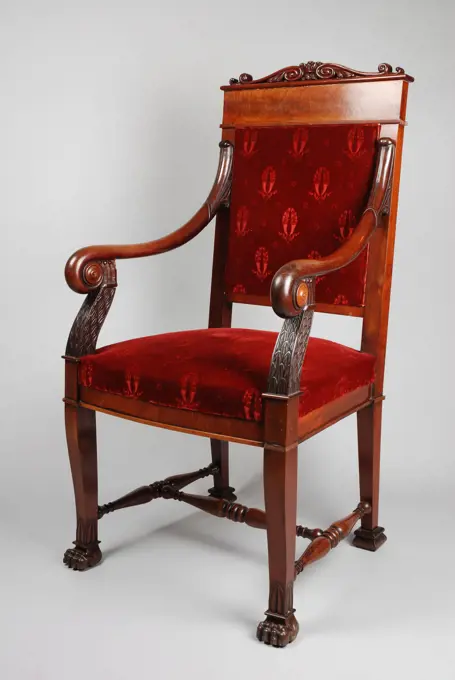
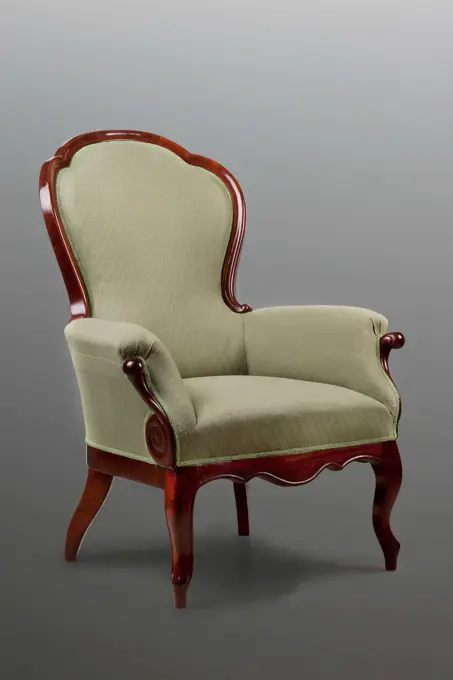
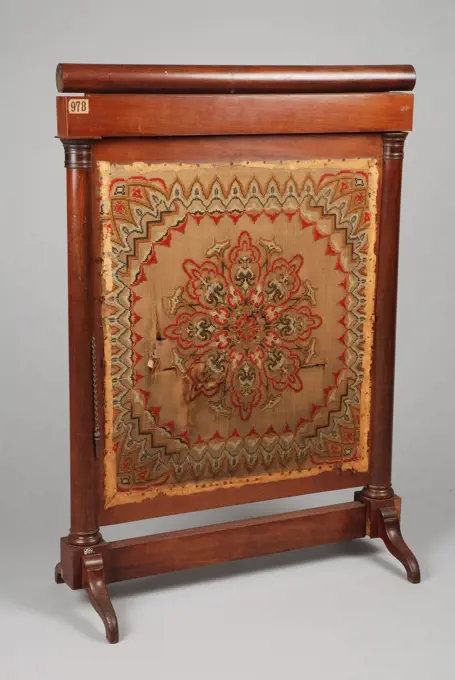
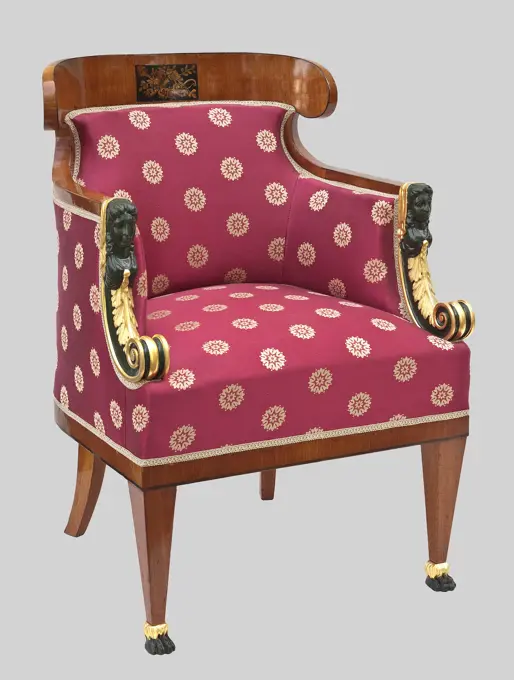
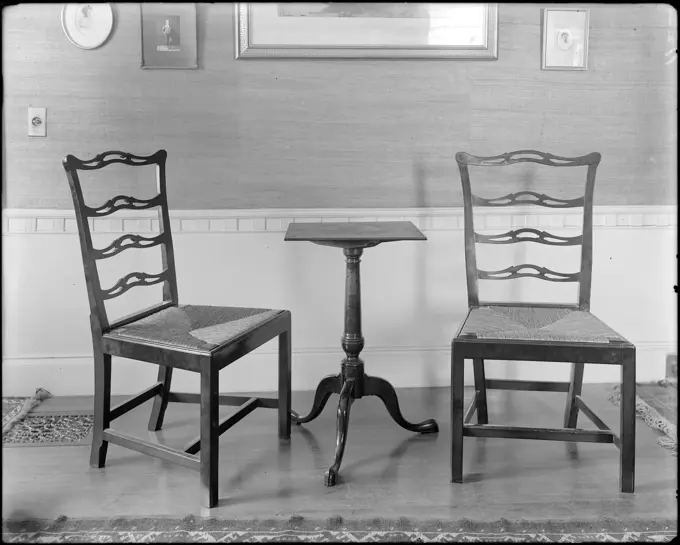
Mahogany armchair in late Empire style, armchair seat seating furniture interior furniture wood mahogany oak velvet, Council seat Empire inclined towards Biedermeier; mahogany veneer over oak core Front legs standing on stabbed claw transition to armrest with inserted ornament same ornament on transition armrest to back. Twisted lines under the seat Tapestry on the topside red velvet upholstery Empire town hall town hall administration Rotterdam City Triangle Cheese Market Hoogstraat Originating from the old Town Hall on the Cheese Market Rotterdam The chairs remained in use until 1851.
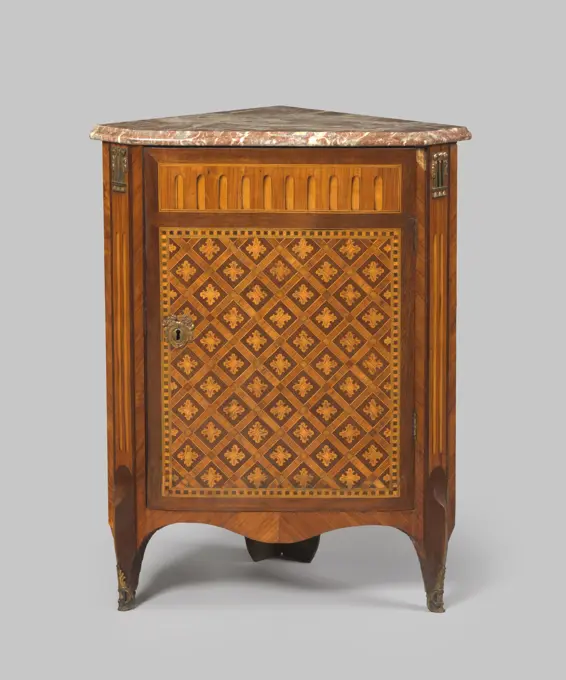
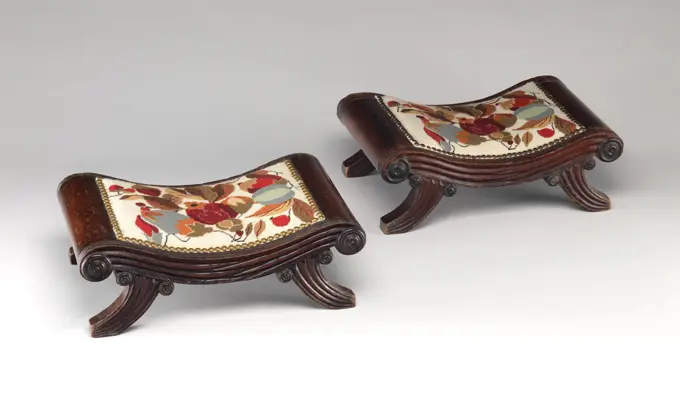
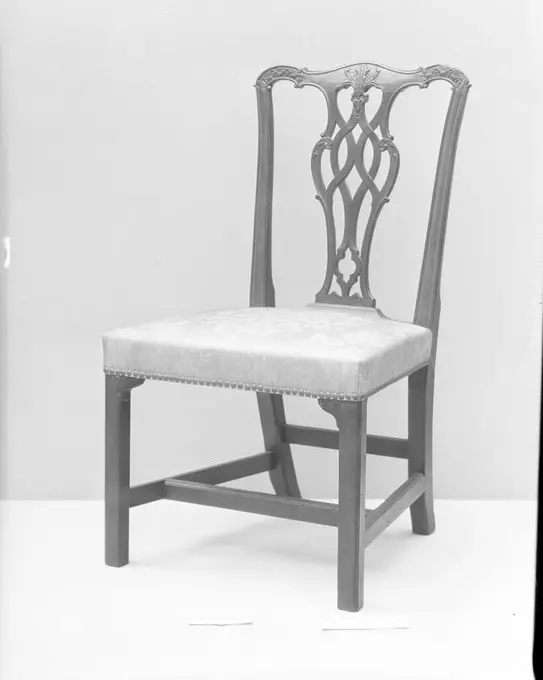
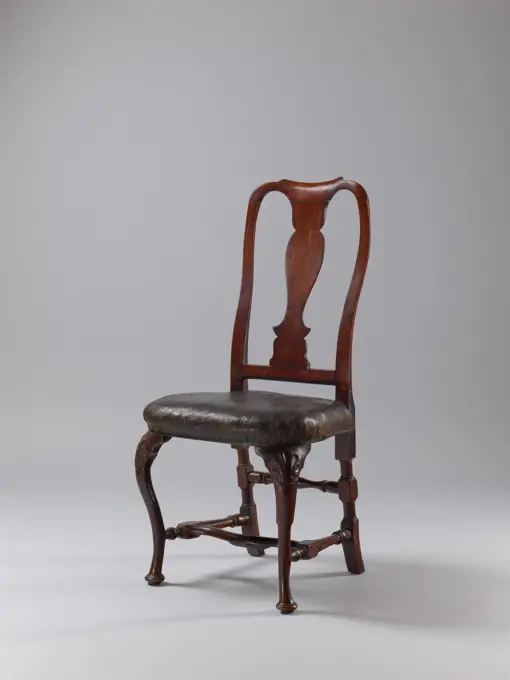
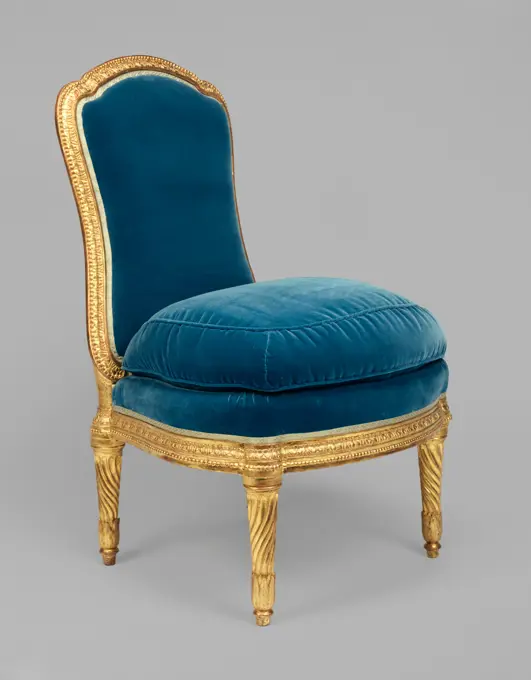
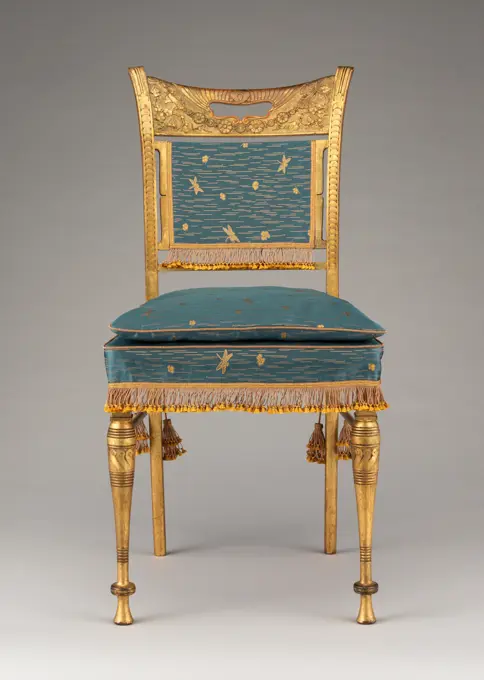
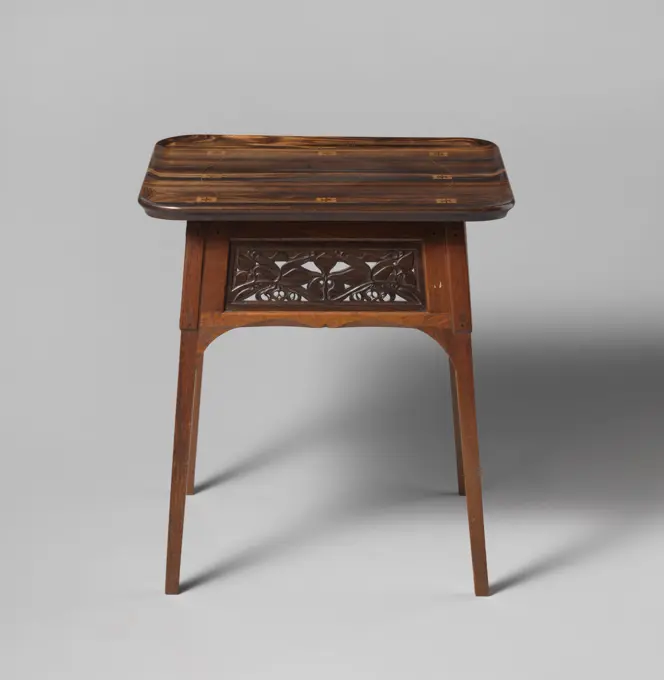
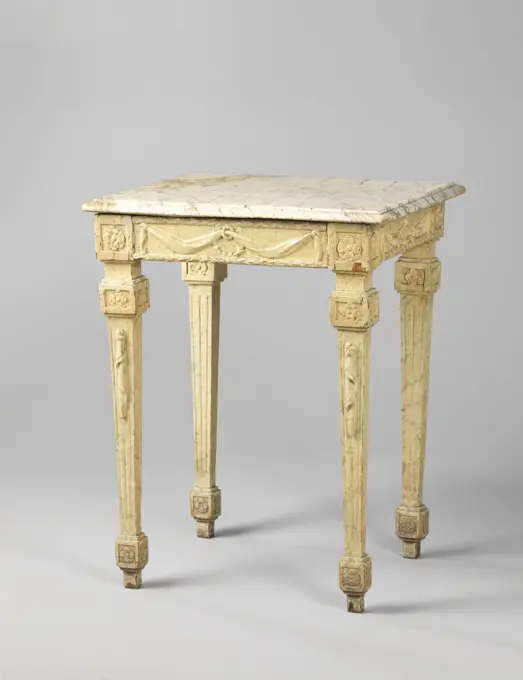
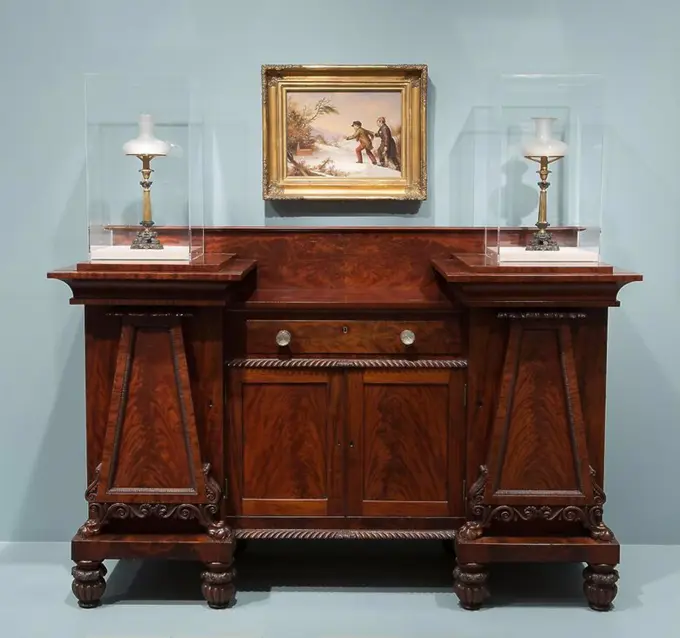
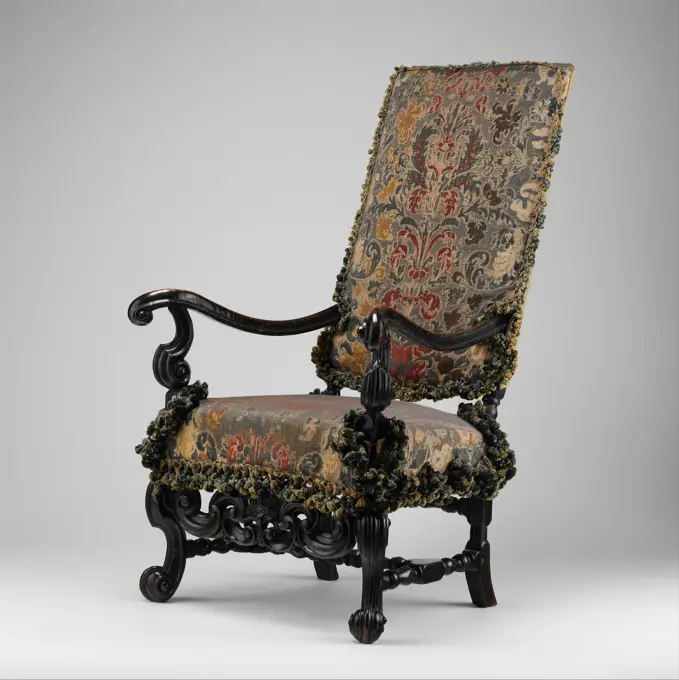
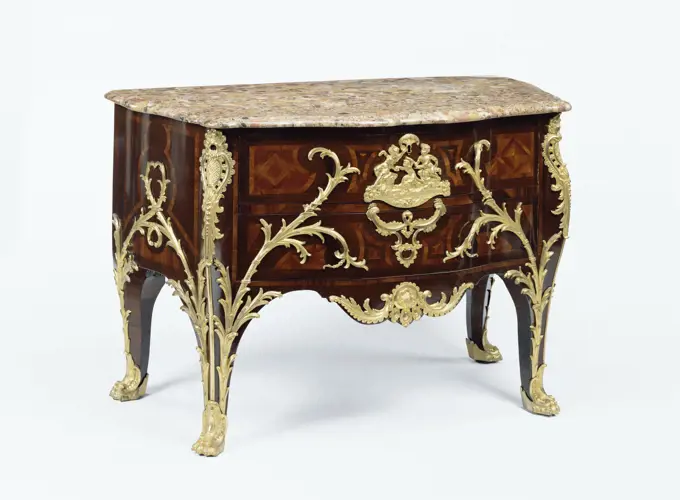
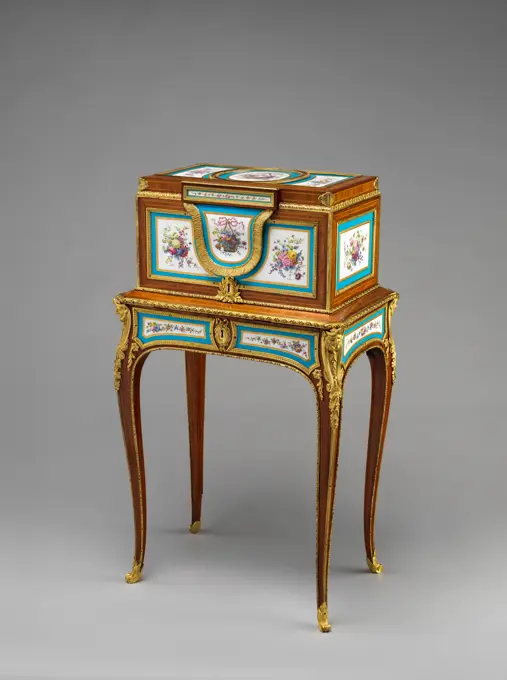
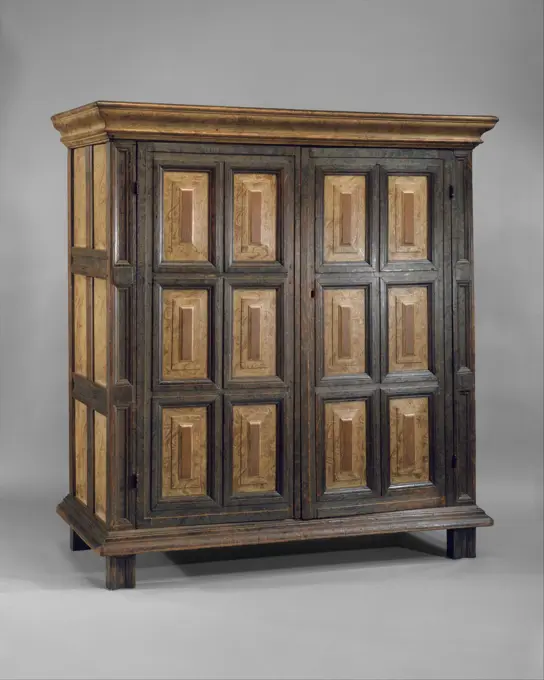
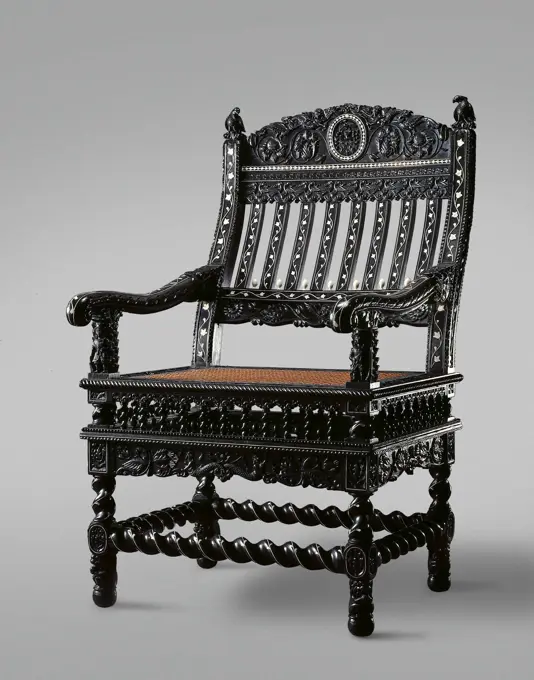
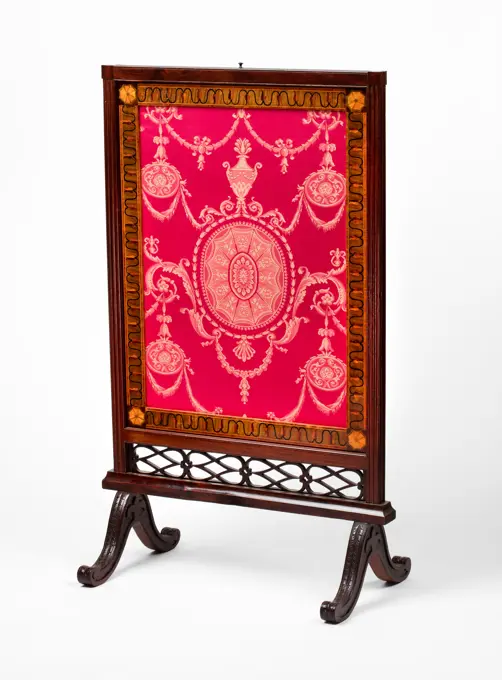
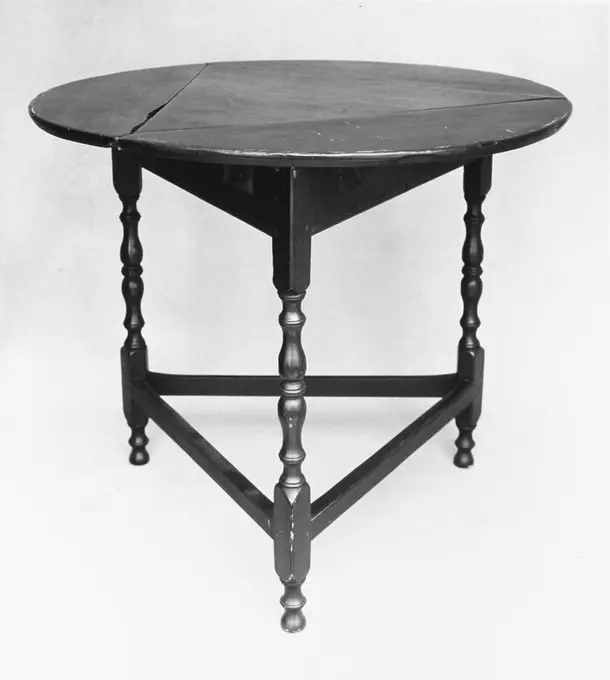
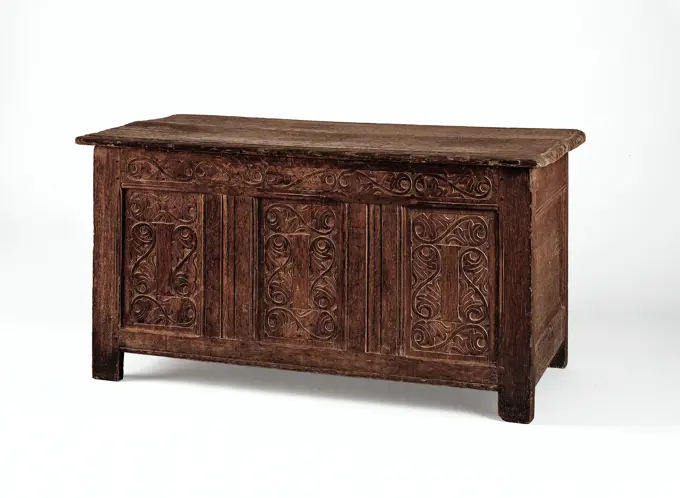
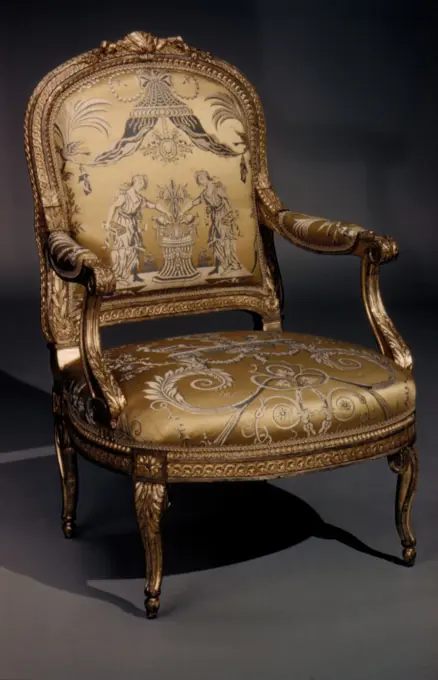
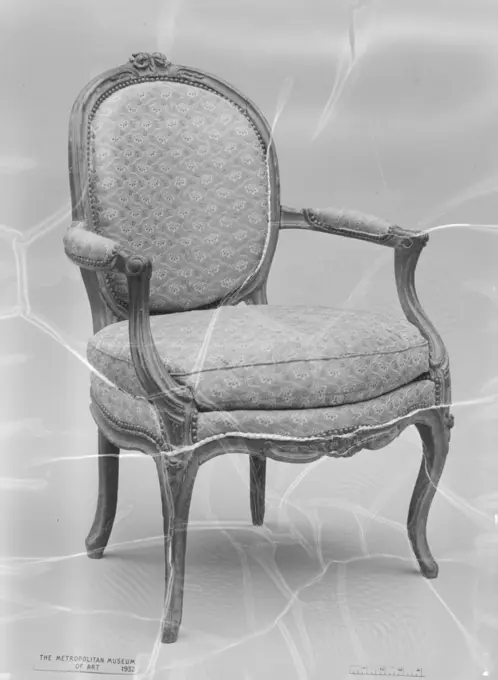
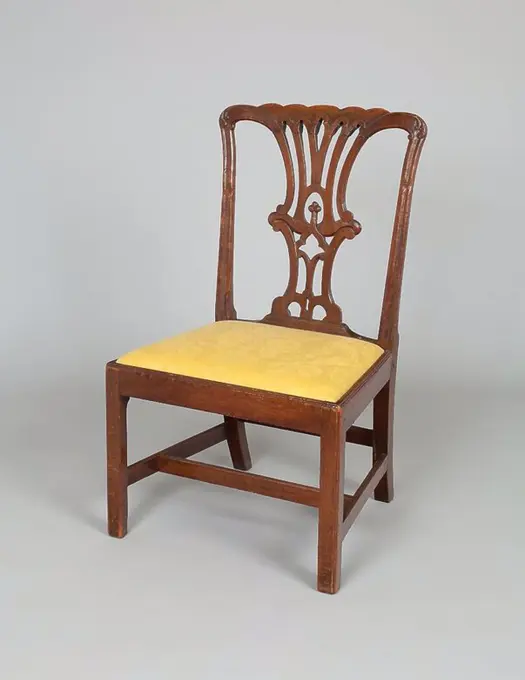
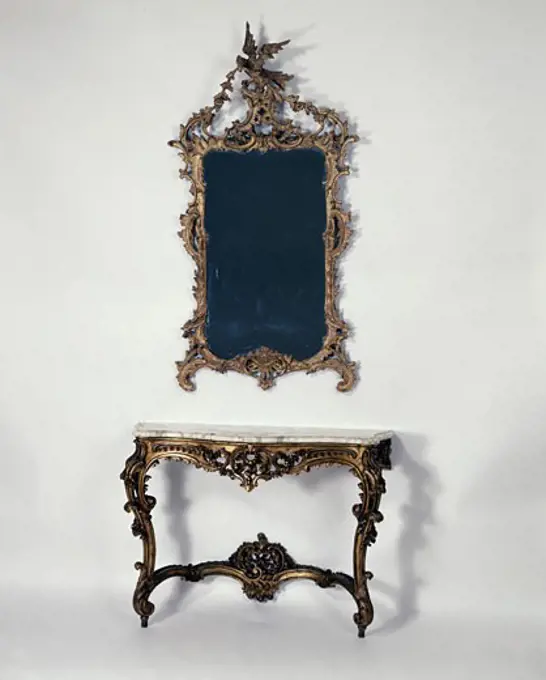
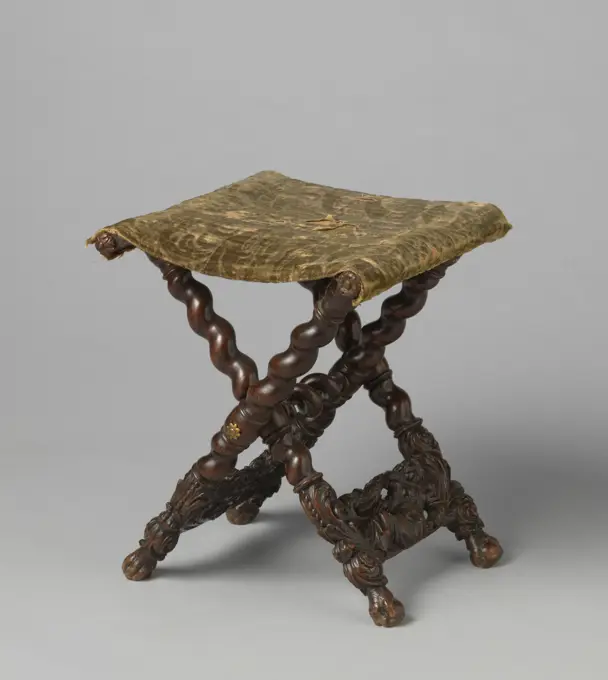
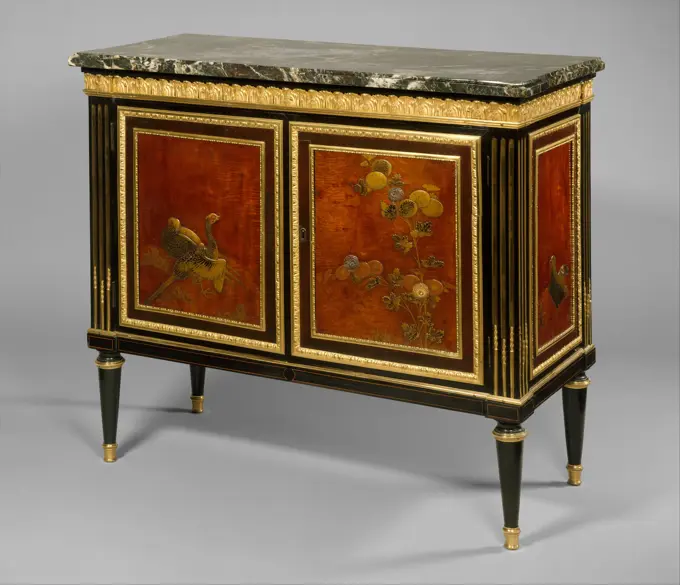
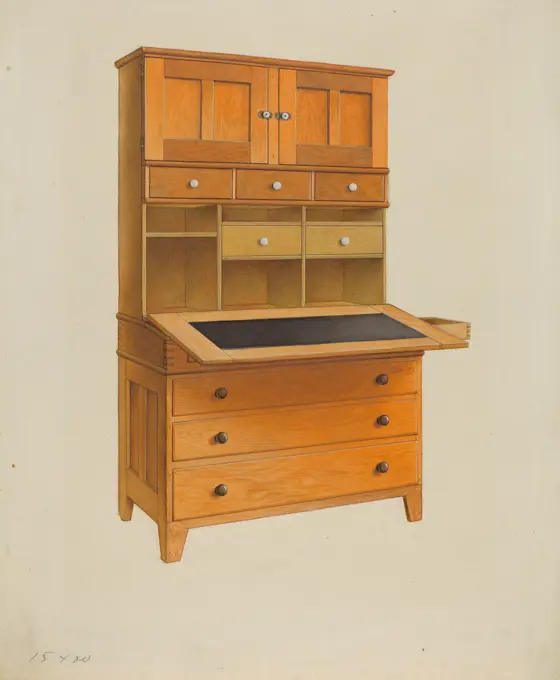
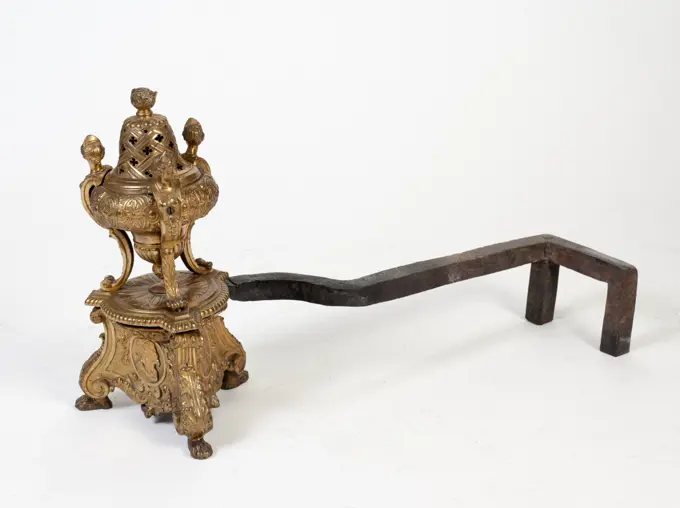
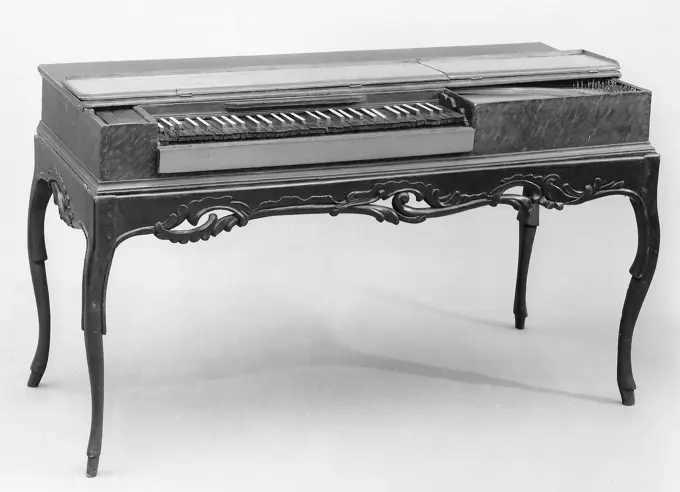
. In the early 18th century, Dutch furniture was strongly influenced by England, so much so that it is unclear in which of the two countries this chair was made. In any case, this type - with a tall, unupholstered back - came from England and was known here as an English chair’. The curved back was designed to make sitting more comfortable.Card table, c. 1780, Hepplewhite, 30 1/2 x 35 3/8 x 35 3/8 in. (77.47 x 89.85 x 89.85 cm), Mahogany, white oak, and pine, United States, 18th centuryScandinavia. Carved wooden  chair. Wood. Blakar, Lom, Oppland, Norway. 13th century. Historical Museum. Oslo. Norway.Chair. unknown, authorArmchair (one of a set of six) 1769-71 John Mayhew British This is one of six armchairs supplied by Mayhew and Ince described in their 1769 invoice as "large Antique Elbow Chairs with oval backs carv'd with Double husks and ribbon knot on top.". Armchair (one of a set of six). British and French. 1769-71. Gilded fruitwood; wool and silk (22-24 warps per inch, 9-10 per centimeter)Chair. unknown, creatorCorner cupboard with marquetery in diamond pattern with rosettes. Leaf of brown-white-gray veined marble. Batter of copper., Anonymous, 1750 - 1800 Small corner cupboard, resting on a support piece at the back and on the front on two slightly bent legs, decorated with copper batter with rocaille motifs. The door at the front shows a diamond pattern in Marqueterie, in which rosettes. A frieze -shaped decoration with sham scannelures has been applied above this field; The same decoration also adorns the corner styles, crowned by copper batter. The brown-gray-white-veined marble leaf is profiled at the front. Key plate with wreath and strik motif. France wood (plant material). copper (metal). marble (rock). oak (wood). purpleheart (wood). maple (wood). rosewood (wood) Small corner cupboard, resting on a support piece at the back and on the front on two slightly bent legs, decorated with copper batter with rocaille motifs. The door at the front shows a diamond pattern in Marqueterie, in whPair of foot stools 1825-30 American. Pair of foot stools. American. 1825-30. Mahogany with white pine seat rails. Made in New York, New York, United StatesSide Chair. Culture: American. Dimensions: 37 1/8 x 21 x 20 3/4 in. (94.3 x 53.3 x 52.7 cm). Date: 1760-90. Museum: Metropolitan Museum of Art, New York, USA.Side table 17th century China. Side table 39613Crook-back Side Chair with Compass Seat and Trifid Feet. United States, Pennsylvania, Philadelphia, circa 1735-1755. Furnishings; Furniture. Walnut and replaced upholsteryChair. unknown, creatorSide Chair. Culture: American. Dimensions: 37 x 22 in. (94 x 55.9 cm). Maker: Attributed to Thomas Howard Jr. (active ca. 1790-1833). Date: ca. 1795. Museum: Metropolitan Museum of Art, New York, USA.. Armchair of gold-plated beech wood, resting on conical-shaped legs. The armchair belongs to an amele. On the coated curved sitting window and the coated oval back window are applied to a pink-part shows within flower wreaths (Tapisserie de Beauvais). See also: BK-16657-B / f.Armchair with blue upholstery and straight back with open edited middle style. Armchair from mahogany with a straight back, straight open edited middle style and tight tapered legs. The loose seat is covered with blue silk damask.brown rattan chair isolated on white backgroundMahogany Empire fire screen, fire screen fire screen furniture wood mahogany oakwood textile wool silk, With embroided panel backside with pleated green silk extendable registration number from 1905: 978 Empire. Coated chair, part of the cup-amicublement, from white and blue gray painted beech wood and resting on conical legs. The rules and sills of the back window, with Tuscan fluted columns as back styles, exhibit stroke braid with rosettes. Finish with rosettes and acanthus leaves. The upholstery shows on light blue satin ground floral motifs, held by griffones. Ordered for the new landscape 74, Haarlem. See: BK-15615-a / p; BK-15614; BK-15616-A / b.Side chair first half 17th century French. Side chair 195163Pair of Side Chairs (chaises à la reine). Jean Boucault (French, 1705 - 1786, master 1728)Chair of Willem Bilderdijk, Anonymous, 1750 Bergère van Notenhout, covered with green boring and with a loose pillow and leading role. The furniture rests on S-shaped legs, which turn into the sitting window without interruption. The semicircular sitting window is sculpted at the front. The armresters have pillows and end in volutes. The armrest stars are placed backwards, come from the sitting window and cross the armrests. These pass through the back window again without interruption. Upper sill is scalloped. Profile lists around. France wood (plant material). walnut (hardwood). serge   Netherlands Bergère van Notenhout, covered with green boring and with a loose pillow and leading role. The furniture rests on S-shaped legs, which turn into the sitting window without interruption. The semicircular sitting window is sculpted at the front. The armresters have pillows and end in volutes. The armrest stars are placed backwards, come from the sitting window and cross the armrests. These pSide Chair 1879-82 Herter Brothers. Side Chair. American. 1879-82. Gilded maple. Made in New York, New York, United States. Chests were important items of furniture for employees of the Dutch East India Company (VOC), since they would often travel and relocate. With its multiple drawers and large upper compartment, this chest was especially practical. In addition to being useful, it is also decorative, with its various exotic woods. Plain, lighter furniture was also in vogue alongside the carved ebony pieces such as the childs cot shown here.Table with square table top, Theo Nieuwenhuis, c. 1900 - c. 1915 Table of oak and coromandel wood resting on four outstanding legs. The legs at the top, under the table top, are interconnected by panels in lines. The rules on the underside contain cut semicircular motifs. The panels that are located between the lines are open in a leaf motif. The square table top OS is delayed and is inlaid with geometric motifs from Palmhout. Amsterdam oak (wood). Table of oak and coromandel wood resting on four outstanding legs. The legs at the top, under the table top, are interconnected by panels in lines. The rules on the underside contain cut semicircular motifs. The panels that are located between the lines are open in a leaf motif. The square table top OS is delayed and is inlaid with geometric motifs from Palmhout. Amsterdam oak (wood).Wall table on square canneted legs with stabbed houses in the rosettes. Draperies and wreaths stabbed along the rules. White marbled wood with marble leaf, anonymous, 1700 - 1800 Wall table made of white marbled wood with marble top. The table rests on four downwards, in diameter square legs with cannelures. In the bottom and at the top of the legs are houses with stuck rosettes. The front and side rules are decorated with stabbing consisting of draperies with a wreath in the middle. Northern NetherlandsNetherlands wood (plant material). pine (wood). marble (rock) Wall table made of white marbled wood with marble top. The table rests on four downwards, in diameter square legs with cannelures. In the bottom and at the top of the legs are houses with stuck rosettes. The front and side rules are decorated with stabbing consisting of draperies with a wreath in the middle. Northern NetherlandsNetherlands wood (plant material). pine (wood). marble (rock)Writing table, David Roentgen, c. 1780 - c. 1785 Table decorated with marqueterie in multiple woods on oak core. The oval furniture rests on four downwards square legs with Tuscan capitals and decorated with a lane within a breach. The rules with beaded edges are above the legs and decorated with triglyphen and round plates. The leaf with profiled edge shows in Marqueterie the flight of Aeneas from burning Troy. The other decorations are made of gilded bronze. Drawer for; Storage spaces aside. Neuwied wood (plant material). oak (wood). satinwood (wood). maple (wood). bronze (metal). gilding (material) gilding Table decorated with marqueterie in multiple woods on oak core. The oval furniture rests on four downwards square legs with Tuscan capitals and decorated with a lane within a breach. The rules with beaded edges are above the legs and decorated with triglyphen and round plates. The leaf with profiled edge shows in Marqueterie the flight of Aeneas from burning Troy. The other decoraSideboard. American; Philadelphia, Pennsylvania or Baltimore, Maryland. Date: 1825-1835. Dimensions: 124.5 × 186.4 × 59.7 cm (49 × 73 3/8 × 23 3/4 in.). Mahogany, mahogany veneer, poplar, and eastern white pine. Origin: Philadelphia. Museum: The Chicago Art Institute, Chicago, USA.Commode.Chest of drawers -Upholstered armchair, originally from a set of eight, from Burley-on-the-Hill, Rutland (one of a pair) ca. 1689 Attributed to Thomas Roberts These two armchairs are from a large suite of furniture comprising a bed, eight armchairs, four side chairs, and a pair of stools made about 1689 for Daniel Finch, second earl of Nottingham and seventh earl of Winchelsea (1647-1730), for the state bedroom and dressing room of his country seat, Burley-on-the-Hill in Rutland. Finch was secretary of state and privy counsellor to William III. He commissioned this set probably from Thomas Roberts, the prominent London chair maker who provided much of the seat furniture for the royal household. The tall raked backs and sinuously scrolled arms and legs reflect the style of Daniel Marot (1663-1752), the Frencharchitect and designer who worked closely with William and Mary both in Holland and England. The chairs retain their original and exceedingly rare Genoese cut-velvet covers, woven in several shades oCommode; Charles Cressent (French, 1685 - 1768 (master 1719)); Paris, France; about 1745 - 1750; Fir, oak, and Scots pine veneered with bloodwood and amaranth; drawers of walnut; gilt-bronze mounts; brèche d'Alep top; 90.2 x 136.5 x 64.8 cm (35 1,2 x 53 3,4 x 25 1,2 in.)High Chest of Drawers. Dated: c. 1936. Dimensions: overall: 28.4 x 22.8 cm (11 3/16 x 9 in.) Original IAD Object: 62"high; 41"wide; upper section 31"high. Medium: colored pencil and graphite on paper. Museum: National Gallery of Art, Washington DC. Author: CARL WEISS.Jewel coffer on stand (petit coffre à bijoux) ca. 1775 Attributed to Martin Carlin French Marie-Antoinette (1755-1793) received a jewel coffer on stand by Martin Carlin in 1770, the year of her marriage to the future Louis XVI (1754-1793), which was probably the prototype of the eight other examples known. Madame Du Barry (1743-1793) ordered one the same year, and others were in the possession of Louis-Joseph de Bourbon, prince de Condé (1736-1818), and Marie Louise Josephine de Savoie, comtesse de Provence (1753-1810). One of the few coffers with blue borders belonged tot he Louise-Jeanne de Durfort de Duras, duchesse de Mazarin (1735-1781), which was sold after her death.. Jewel coffer on stand (petit coffre à bijoux). French, Sèvres. ca. 1775. Oak veneered with tulipwood, sycamore, holly, and ebonized holly; gilt bronze, soft-paste porcelain, velvet (not original). Woodwork-FurnitureKast 1650-1700 American A kast is a distinctive type of cupboard that was made in the New YorkNew Jersey area settled by the Dutch. Strongly architectural in design, the kast derived from Dutch prototypes and was made in America until the early 1800s. The most important piece of furniture in the home, it was probably often a dowry gift. The striking painted surface on this kast simulates stone and is highly unusual. Certain features of the construction and design details reflect, as does the form of the kast itself, Continental rather than English influences. This kast, one of a small number in the seventeenth-century style to have survived, is a rare example of joined oak furniture from the New York area.. Kast. American. 1650-1700. Painted white oak, red oak. Possibly made in New York, New York, United StatesArmchair of ebony, inlaid with ivory and decorated with Nereïden, flowers and birds. Arms are committed by figure of a European soldier. Back with oval weapon: Child.armchair or Ebony with Ivory Insert. Richly decorated with Nereïden, Flowers and Birds. Under the Armrests a Standing European Soldier. On the back the coat of arms of the English Family Child, Probably Josiah Child (1630-1699), Governor of the Eic in the 80s and According to Horace Walpole Owner of 20 Ebben Chairs on His Landgoed Wanstead (Friendly Announcement Jan Veenendaal, 9 May 2012).Firescreen. unknown, creatorSideboardCasket;  around 1750 (1740-00-00-1760-00-00);Baroque (style), chinoiserie, oriental motifs, rocaille (ornament), rococo (style), park scenes with architecture, shepherds, genre scenesDrop-leaf Table. Culture: American. Dimensions: 25 1/2 x 28 3/4 x 28 3/4 in. (64.8 x 73 x 73 cm). Date: 1725-50. Museum: Metropolitan Museum of Art, New York, USA.Cardtable. Maker, attributed to: Duncan Phyfe, American, 1768-1854Chest 1650-1700 American. Chest 1992Armchair ca. 1770-80 Georges Jacob French. Armchair 196379CardtableBasin Stand Attributed to the Workshop of Duncan Phyfe American, born Scotland 1810-20 View more. Basin Stand. American. 1810-20. Mahogany, white pine, tulip poplar. Made in New York, New York, United StatesArmchair (ber Era);  1815-1820 (1815-00-00-1825-00-00);Administration of imperial palaces in Warsaw - Equipment of buildings, Representative buildings of the Republic of Poland (1918-1939) - equipment, empire (style), women's heads (ornament), quarrels, lion paws, torches, vegetable decoration, roses, arrowsUnknown, Armchair (Fauteuil en Cabriolet) (one of pair), 18th century, wood.Table. Culture: American. Dimensions: Dimensions unavailable. Date: ca. 1780. Museum: Metropolitan Museum of Art, New York, USA.Armchair 18th century Charles Vincent Bara. Armchair. French, Paris. 18th century. Carved beechwood. Woodwork-FurnitureAnonymous, Louis XV style dresser (subtitle). Wood and bronze. House of Victor Hugo - Hauteville House.Side Chair. American; New York City, New York. Date: 1770-1790. Dimensions: 93.3 × 57.8 × 45.7 cm (36 3/4 × 22 3/4 × 18 in.). Mahogany, tulip, and white pine. Origin: New York City. Museum: The Chicago Art Institute, Chicago, USA.Side Chair 1690-1710 British. Side Chair 1545Square piano, 1810 - 1820  Austria (possibly) wood (plant material). bone (material)  Austria (possibly) wood (plant material). bone (material)VESTIBULO - MESA REDONDA CON MARMOL. Location: MUSEO DEL ROMANTICISMO-OBJETOS VARIOS. MADRID. SPAIN.Armchair; unknown, Oudry, Jean-Baptiste (1686-1755); 3. W. 18th century (1750-00-00-1775-00-00);Chest-on-ChestMartin Partyka, Two Drawer Sunflower Chest  front view, 1936 Two Drawer Sunflower Chest - front viewSettee c 1815-1820 New York City. Mahogany with caning . Artist unknownChinese Chippendale Style Pier Mirror & Louis XV Style Giltwood Console Antiques Pair of Armchairs; Jean Avisse (French, 1723 - after 1796 (master 1745)); Paris, France; about 1750 - 1755; Gilded beechwood; modern silk upholstery;Easy Chair 1760-90 American The 1772 Philadelphia list of prices describes a chair like this as Easy Chair frame plain feet and knees without Casters.” The pad foot with raised tongue, as here, is frequently found on Philadelphia side chairs.. Easy Chair 3489Table 1700-1750 American. Table 8052Microscope, 1780. Microscope consisting of turned boxwood base on three small turned feet; three turned spindles supporting three tubes, one sliding within the other, over a pivoting mirror. Probably intended for recreational purposes rather than scientific study... Purchased from Edward H Pinto, 1965. .Table. Michiel Verbiest may well have been the most important cabinetmaker in Antwerp between 1680 and 1690. He made this tabletop together with Pieter de Loose, who was probably responsible for the marquetry or the engraving. Incorporated in the decoration on the top are the coats of arms of Simon de Neuf and Jacoba van Eversdijck, who were married in Antwerp in 1686.Commode. Jean-François Oeben (French, born Germany, 1721 - 1763, master 1761)Taboo with protruded cross script. Taboeret Van Notenhout. The furniture is foldable and tranquility raised transverse strips, which are connected down by wide, rich exercise. These exercise exhibit lying women's figures, one with bird and one with book, between Acanthus leaves that pass into the coats. The stringing legs stand on bird claws that clamp balls. The copper spindle, around which the two tricks run, is surrounded by a cut-away-pulled sport. The upholstery has been updated. Second copy exchanged in 1921.Chest wtih twodrawers. Maker, attributed to: Daniel White, Jr.,Commode ca. 1780-90 Claude-Charles Saunier The Japanese lacquer dates to about 1690 and has been reused as veneer for this commode.. Commode. French. ca. 1780-90. Oak veneered with ebony, mahogany, rosewood, Japanese lacquer panels, rosso levanto marble, gilt bronze. Woodwork-FurnitureClose-up of an old Chinese traditional chairchair behind Alter Reis magoo church, goa, india Copyright: xHarixMahidhar/DinodiaxPhotoxJohn W Kelleher, Shaker Secretary Desk, c 1937 Shaker Secretary DeskSide Chair 1795-1805 American. Side Chair 1751Etruscan throne. 8th c.-3rd c. BC. Etruscan art. Furniture. VATICAN CITY. Vatican Museums.Chest of drawers still bank, late 19th-early 20th century, Leonard Silver Manufacturing Company, Boston, est. 1969, 9 5/16 x 4 7/8 x 3 1/8 in. (23.65 x 12.38 x 7.94 cm), Wood, pigment, paper, glass, 19th-20th centuryLight fixture in the form of woman with bowl, Jan de Meijer, c. 1930 A metal light arm in the form of a woman who holds a glass bowl up designer: Northern NetherlandsNetherlands metal. glass A metal light arm in the form of a woman who holds a glass bowl up designer: Northern NetherlandsNetherlands metal. glassFireplace and Fire Screen on Fire Plate, Arnoldus Van Geffen, 1760 Rectangular horizontal fireplace on four profiled, bent legs, a standing fireplace with round top on a long side and a fire screen on a short side. In the standing fireplace and the fireplace screen, a six -pointed star is engraved in a circle. The standing and lying fireplace is marked: stk. = Amsterdam, Jrl. = A (1760), Mt. = A. van Geffen. The fire screen is marked: stk. = Amsterdam, Jrl. = Z (1759), Mt. = A. van Geffen. On all an ax. Belongs to BK-NM-11177-157. Amsterdam silver (metal) Rectangular horizontal fireplace on four profiled, bent legs, a standing fireplace with round top on a long side and a fire screen on a short side. In the standing fireplace and the fireplace screen, a six -pointed star is engraved in a circle. The standing and lying fireplace is marked: stk. = Amsterdam, Jrl. = A (1760), Mt. = A. van Geffen. The fire screen is marked: stk. = Amsterdam, Jrl. = Z (1759), Mt. = A. van Geffen. On all an Spit ves. Pricho nr 58.Table Model. Dimensions: 6 3/8 x 6 3/4 x 4 3/8 in. (16.2 x 17.1 x 11.1 cm). Date: 1770-1800. Museum: Metropolitan Museum of Art, New York, USA.Brown Royal classical style Armchair sofa couch in vintage room Settee. unknown, authorChair. unknown, authorChair (Savonarola)Settee, before 1717. Royal Savonnerie Manufactory, Chaillot Workshops (French, est. 1627). Carved wood, Savonnerie knotted-pile (symmetrical rug knot) upholstery; wool, hemp ; overall: 120 x 201.3 x 55.9 cm (47 1/4 x 79 1/4 x 22 in.).CONSOLA DE ESTILO ISABELINO - SIGLO XIX. Location: MUSEO DEL ROMANTICISMO-OBJETOS VARIOS. MADRID. SPAIN.GAVETA. Author: ANTONIO GAUDI. Location: CASA MUSEO GAUDI. Barcelona. SPAIN.Egyptian Chair, 1857. Designer: William Holman Hunt. Manufacturer: J G CraceFire. Chenet. Chiseled and gilded bronze. 1720. Paris, Carnavalet museum. Bronze chisel, cheminee, chenet, dore, 18th 18th 18th 18th 18th 18th 18 century, fire,Table. unknown, authorSalem, objects, chairs and table, owned by Richard Harrington , Chairs, Tables. Frank Cousins Glass Plate Negatives CollectionSide Chair ca. 1860 Léon Marcotte French This side chair is part of a suite of Louis XVI-style furniture that John Taylor Johnston (1820-1893) purchased from the firm of Ringuet-Leprince and L. Marcotte in about 1856. This international firm had showrooms in both Paris and New York, and it is believed that at least some of the pieces of the suite were made in Paris for the New York commission. Johnston, a railroad executive and the first president of The Metropolitan Museum of Art, used the furniture in the music room of his residence at 8 Fifth Avenue. The suite (68.69.1-68.69.11, 68.165.1-68.165.6) includes two sofas, two armchairs, a table, two matching cabinets, a third large cabinet, six matching side chairs, a pair of lyre-back side chairs, and a firescreen. After Ringuet-Leprince retired in 1860, the firm became known as L. Marcotte and Company. Léon Marcotte was New York's most noted cabinetmaker and interior decorator during the 1860s.. Side Chair 1773dresser table Fireplace and fireplace on a fireplace. Rectangular lying fireplace on four profiled, outwardly bent legs, on a long side a standing fireplace with round top and on a short side a fire screen. A six-lasting star is engraved in a circle in the standing fireplace and the fireplace screen. The standing and lying fireplace are labeled: STK. = Amsterdam, JRL. = A (1760), Mt. = A. van Geffen. The fire screen is labeled: STK. = Amsterdam, JRL. = Z (1759), Mt. = A. van Geffen. A tilt on all. Belongs to BK-NM-11177-157.Stool possibly 19th or first half 20th century Northern European. Stool 460649Console table. unknown, author. Coromandany sewing table with tin, blood coral, mahogany, red leather and pickled oak. The profiled legs are, just like the table rules, inlaid with tin strips in a geometric pattern, and at the bottom of a leaf. The tabletop consists of two lids with a blood corals cabochon, carving in relief, inlay in tin and has two butterflies with blood corals cabochons as handles. Under the leaf there is a box with vaulted surface and openworked sides with red leather.Eiffel Tower Chair. Carlo Bugatti; Italian, 1856-1940; Italy. Date: 1902. Dimensions: H. 88.3 cm (34 3/4 in.). Wood frame covered with parchment, painted and gilded, applied brass mounts. Origin: Italy. Museum: The Chicago Art Institute, Chicago, USA.. Cradle of split wilengen, fine shabs, resting on two pupils with nuts of walnut, at the cradle associated with four screws and rings ('reverse') from inside. Oval crib with a fixed cap, shabs decorated with ridges; Four handles, one is a fluctor cord knotted from braided yellow and blue silk, ending in a yellow and blue silk brush.Sideboard, known as The Pericles Dressoir. Culture: British, London. Designer: Bruce J. Talbert (British, Dundee, Scotland 1838-1881 London). Dimensions: Overall: 128 × 113 × 30 in. (325.1 × 287 × 76.2 cm). Manufacturer: Holland & Sons (British, 1843-1942). Date: 1866.An ambitious example of British craftsmanship, this so-called Pericles dressoir or sideboard was specifically designed by Talbert as the centerpiece for the stand of Holland & Sons at the Paris International Exhibition of 1867. Talbert, known for his work in the reformed Gothic style, included a scene from Shakespeare's Pericles, Prince of Tyre in the central gable as well as several quotations from this and two other Shakespeare plays, allusions to dining and the grace before a meal. Both the references to Shakespeare as well as the use of oak, a British native wood, are manifestations of immense national pride. Museum: Metropolitan Museum of Art, New York, USA.Furniture, 't Binnenhuis, 1900 - 1925 Fireplace with three strokes; The two wings are each slightly narrower than half of the middle part. There are galleries with bars on the top and bottom. Below the upper gallery is a wide strip of wood inlaid with four stars within a hexagon and circle of ivory () And light and dark brown colored wood. The screen is stretched with yellow fabric. Amsterdam wood (plant material). oak (wood). ebony (wood). walnut (hardwood). bone (material). brass (alloy). textile materials Fireplace with three strokes; The two wings are each slightly narrower than half of the middle part. There are galleries with bars on the top and bottom. Below the upper gallery is a wide strip of wood inlaid with four stars within a hexagon and circle of ivory () And light and dark brown colored wood. The screen is stretched with yellow fabric. Amsterdam wood (plant material). oak (wood). ebony (wood). walnut (hardwood). bone (material). brass (alloy). textile materialsClavichord 1765 Johann Christoph Jesse German The builder of this instrument, Johann Christoph Jesse, was organist for Saint Matin's in Halberstadt in the German state of Saxony-Anhalt. Clavichords were built as far back as the early fifteenth century, and perhaps earlier. This most personal, simplest, and quietest of European keyboard instruments was the perfect vehicle for music pedagogy, keyboard practice, and composition throughout its 400-year history. The action of the clavichord is relatively simple: the finger depresses a key which, working as a lever, causes its opposite end to rise so that a metal tongue (or tangent) hits a metal string, causing it to resonate. When the key is released, the string is damped. The clavichord is very quiet compared to the harpsichord or piano because of the inefficiency of its sound production, with the tangent hitting the string at the end of its resonating length, rather than in the middle. The tangent mechanism, however, allows a player to ac