Antique and Vintage Spoons

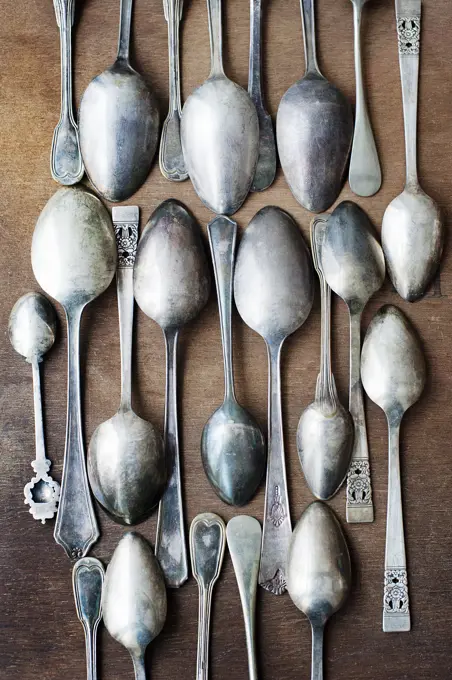
A collection of various antique and vintage spoons, showcasing diverse designs and engravings, ideal for tableware enthusiasts.

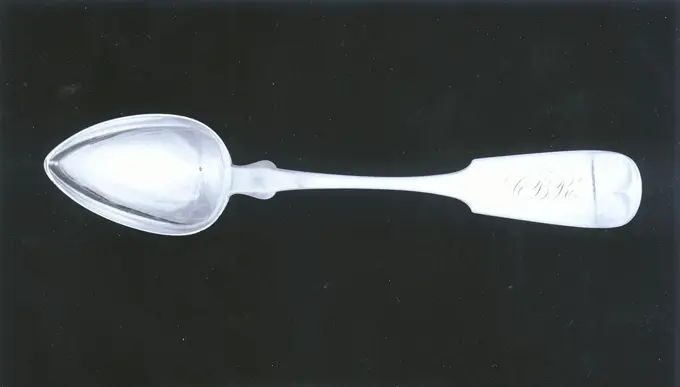
Spoon, 1800 - 1900 Spoon with egg -shaped container and a scanning stem ending in a hoof. The handle makes a bend before the attachment to the container.  silver (metal) Spoon with egg -shaped container and a scanning stem ending in a hoof. The handle makes a bend before the attachment to the container.  silver (metal)
Spoon, 1800 - 1900 Spoon with egg -shaped container and a scanning stem ending in a hoof. The handle makes a bend before the attachment to the container. silver (metal) Spoon with egg -shaped container and a scanning stem ending in a hoof. The handle makes a bend before the attachment to the container. silver (metal)
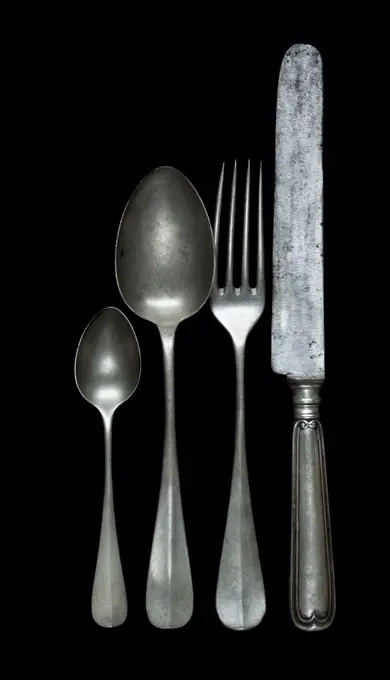
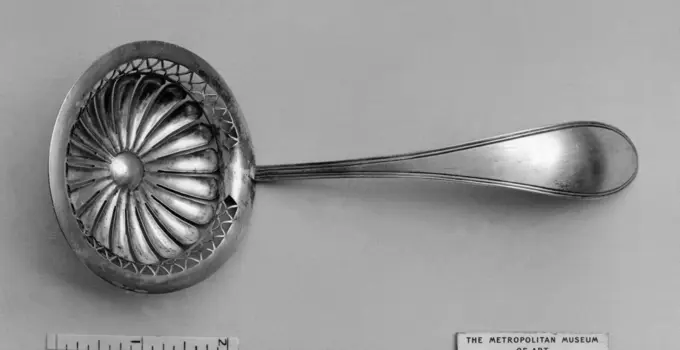
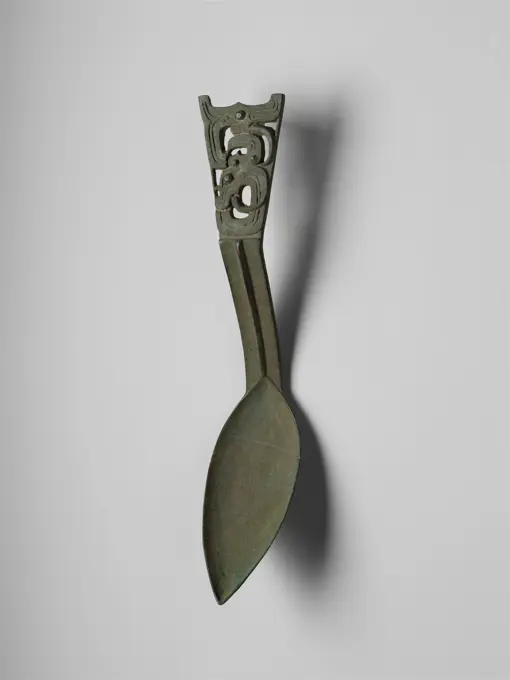
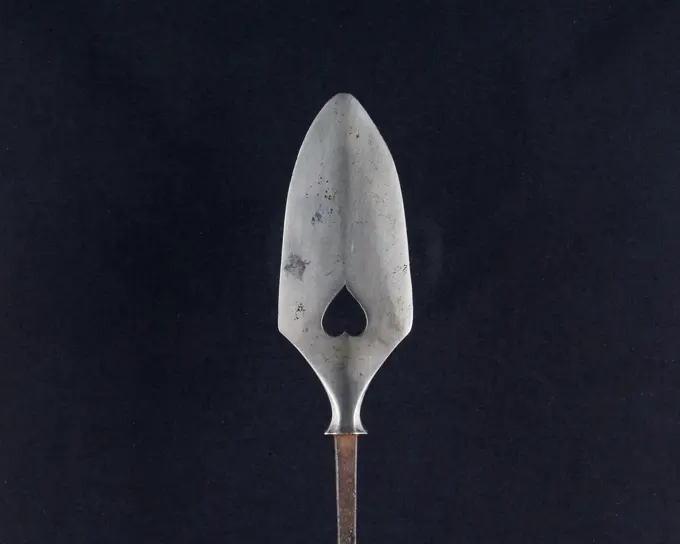
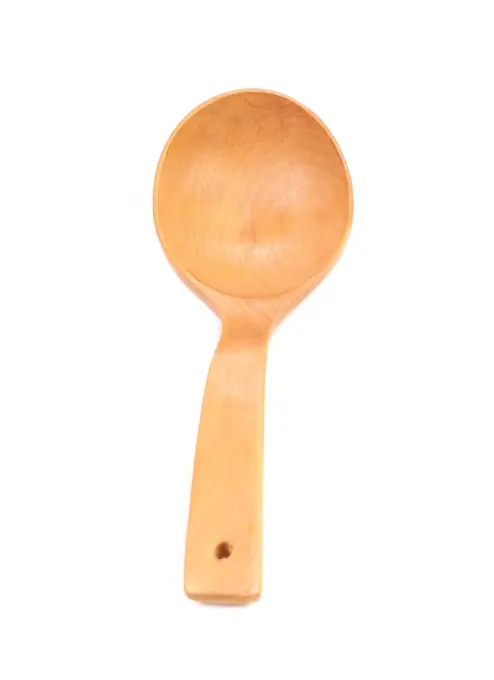
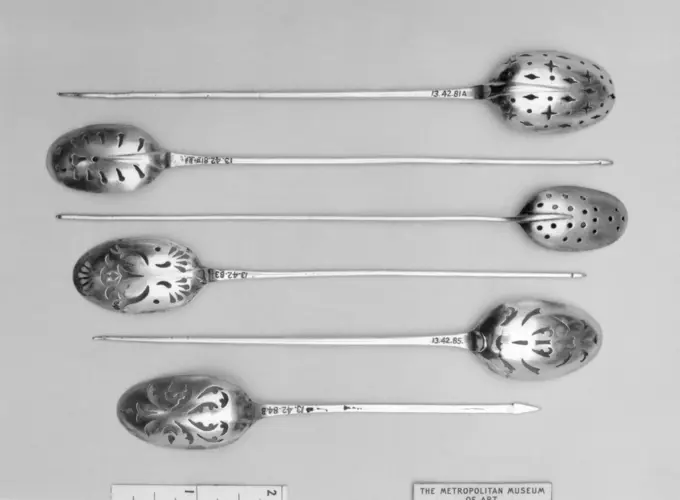
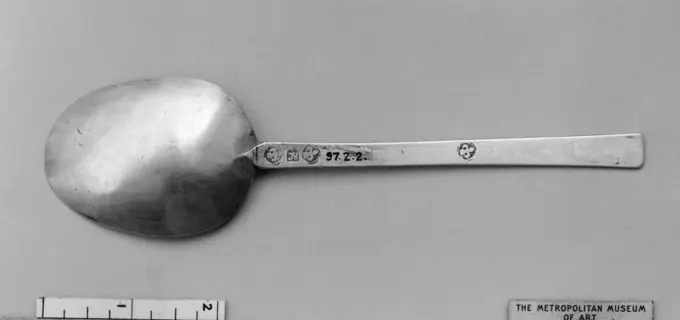
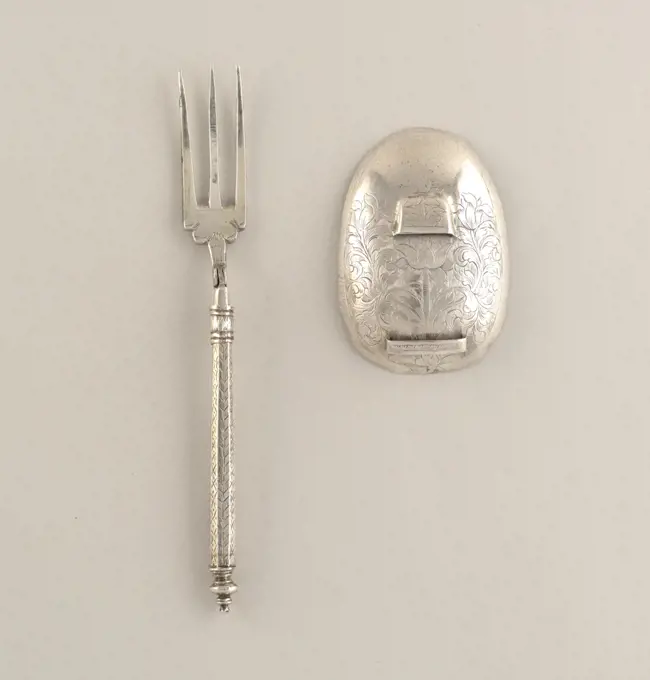
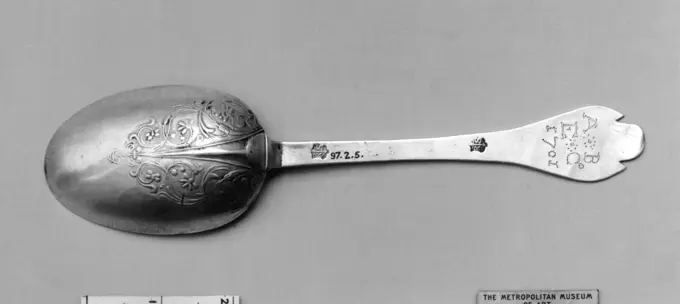
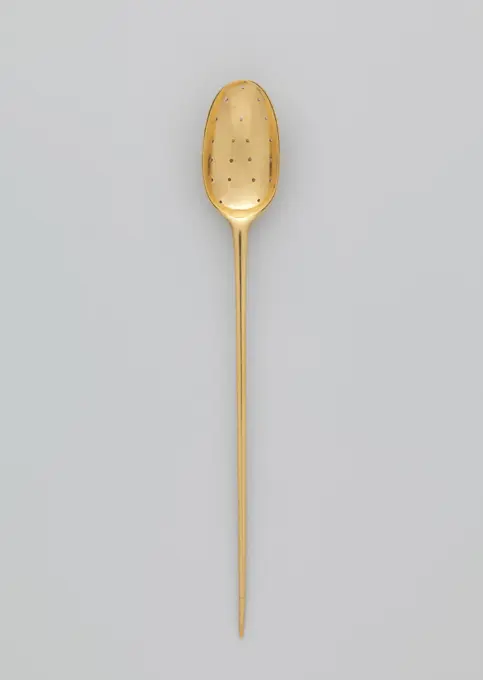
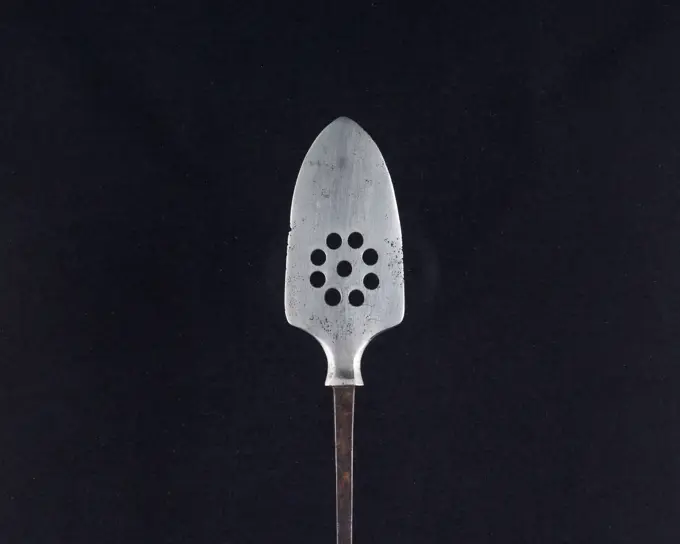
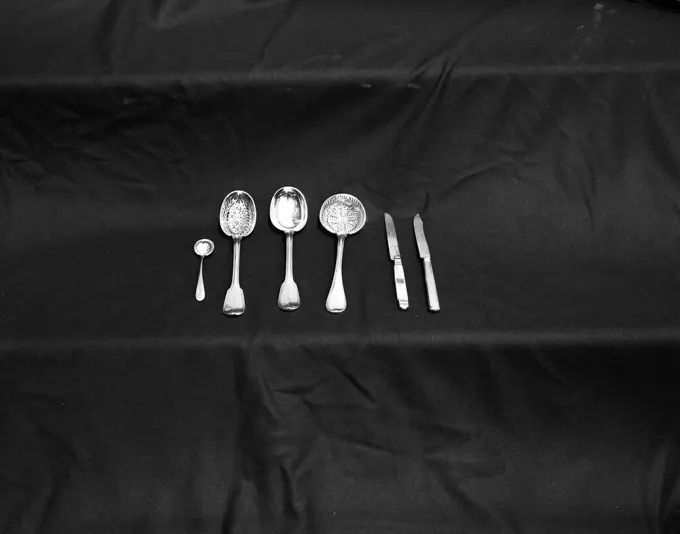
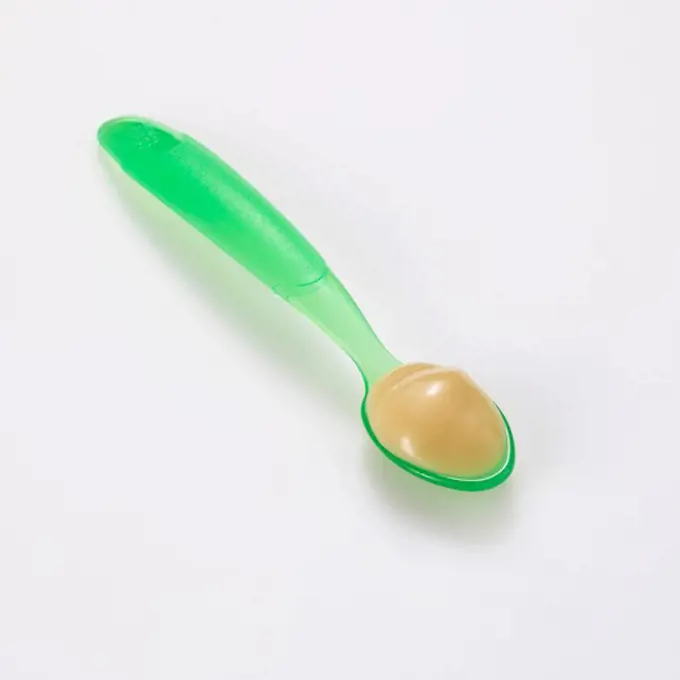
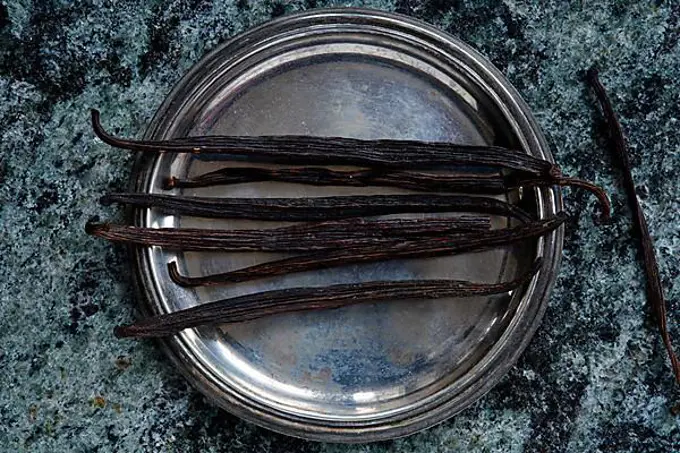
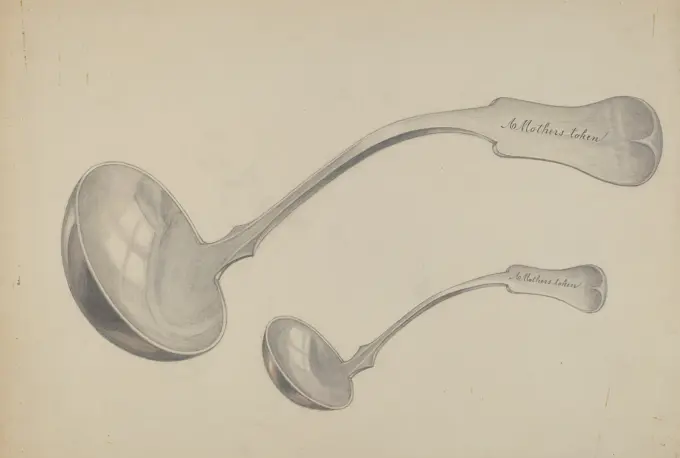
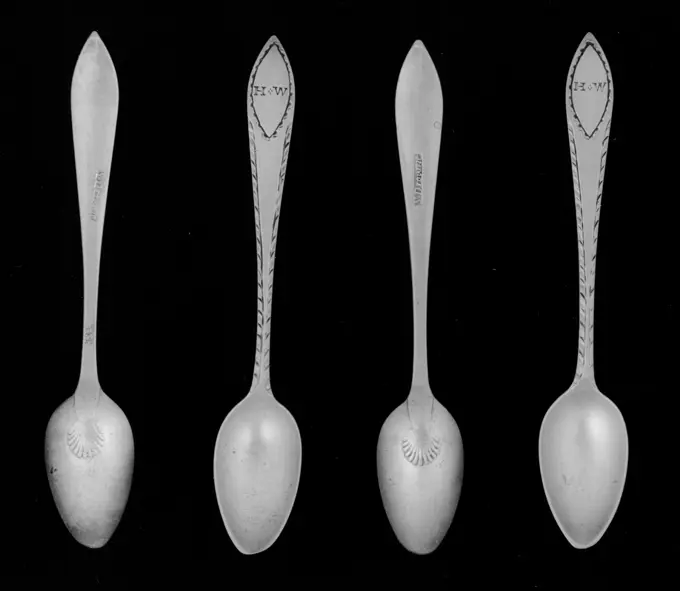
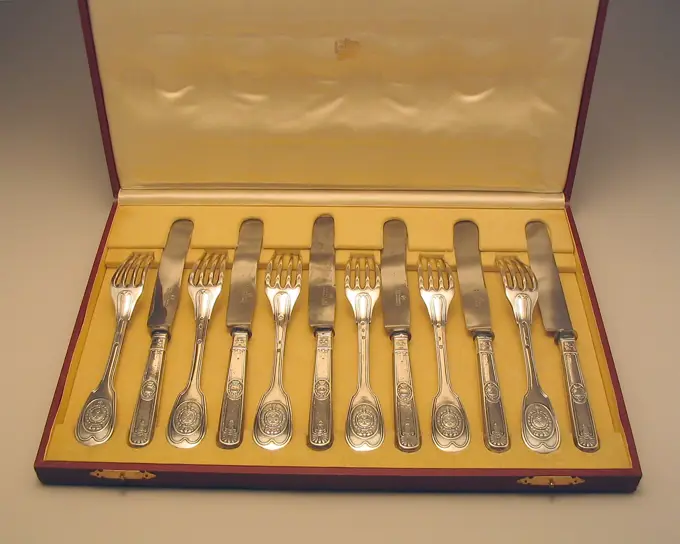
Pair ofTablespoons.   Maker: Joseph Richardson, Sr., American, 1711-1784J. Erwin, Tea Spoon, c. 1815, silver.Apostle spoon probably second half 19th century German or Dutch. Apostle spoon 188132Row of vintage pewter knife, fork and spoons are isolated on a black backgroundFiveteaspoons.   Maker: Hall, Hewson and Brower, active ca. 1846 - 1852DessertSpoon.  Artist: Erastus Cook, American, 1793-1864FiveteaspoonsSpoon 1698-99 British, London. Spoon 192244PALMATORIA EN PLATA S XVIII. Location: CONVENTO DE SAN CLEMENTE-MUSEO. Toledo. SPAIN.Sugar sifter 19th century Dutch. Sugar sifter. Dutch. 19th century. Silver. Metalwork-SilverSpoonSpoon (Bi) late 9th-early 8th century B.C. China. Spoon (Bi). China. late 9th-early 8th century B.C.. Bronze. Western Zhou dynasty (1046-771 B.C.). MetalworkNineTeaspoons.   Maker: James H. Warfield, active ca. 1827Twisted-stem spoon early 18th century Italian, Padua. Twisted-stem spoon 188108 Italian, Padua, Twisted-stem spoon, early 18th century, Silver, 6 1/8 in. (15.6 cm). The Metropolitan Museum of Art, New York. Gift of Mrs. Samuel P. Avery, 1897 (97.2.73)Fork lying on a white egg on a white backgroundSamuel Drowne, Two Tea Spoons, c. 1770, silver.Arrowhead (Yanone) 18th century Japanese Although today Japanese warriors are renowned most for their swordsmanship, archery, especially from horseback, has been an essential part of samurai warfare and culture for centuries. Arrows were fitted with heads of varying shape according to their intended use in war, the hunt, or target practice. Arrowheads made for use on the battlefield incorporated different designs intended for specialized purposes such as the piercing of armor or to cause maximum damage to horses and unarmored personnel.Large arrowheads, pierced and elaborately chiseled with landscapes, birds, flowers, dragons, and Buddhist divinities, were created to be admired for the beauty of their metalwork and design rather than for use in archery. Such highly elaborate examples may have been made for presentation or as a votive offerings to a shrine.. Arrowhead (Yanone). Japanese. 18th century. Steel. Archery Equipment-ArrowheadsSpa water bottle with flattened, spherical body, anonymous, c. 1600 - c. 1699 Spherical flat body, transfer to a high slender neck. Southern Netherlands glass glassblowing Spherical flat body, transfer to a high slender neck. Southern Netherlands glass glassblowingPoll photo collection. Advertising for Wade & Butcher. Knife, fork and spoon of stainless steel. 1936silver spoons small and big vintage silver spoons over yellow tablecloth Copyright: xZoonar.com/YuryxZapx 6879836Wooden spoon on white background. Wooden spoon on white background. Close up Copyright: xZoonar.com/OlegxBegunenkox 5800557Strainer spoon 18th century Possibly by John Perry. Strainer spoon 192219Puritan spoon ca. 1670-90 British, provincial or Welsh. Puritan spoon. British, provincial or Welsh. ca. 1670-90. Silver. Metalwork-SilverSpoon late 17th century Dutch or German. Spoon 188102 Dutch or German, Spoon, late 17th century, Silver, Length: 7 1/8 in. (18.1 cm). The Metropolitan Museum of Art, New York. Gift of Mrs. Samuel P. Avery, 1897 (97.2.67)Parcel Gilt Spoon, one of four, 1883, Frederick Elkington, British, 8 7/16 x 1 3/4 in. (21.43 x 4.45 cm), Sterling silver and gilding, England, 19th centuryTwoTablespoons.  Artist: Jonathan Simpson, American, 1820-1863Arrowhead (Yanone). Culture: Japanese. Dimensions: L. 8 7/8 in. (22.6 cm); L. of head 2 5/8 in. (6.7 cm); W. 1 1/4 in. (3.2 cm); Wt. 1.1 oz. (31.2 g). Date: 18th century. Museum: Metropolitan Museum of Art, New York, USA.Set of six knives. Culture: French, Paris. Dimensions: Length (each): 8 7/16 in. (21.4 cm). Maker: Louis-Joseph Lenhendrick (master 1747, died 1783). Date: 1767-71.The tooled leather box contains six couverts--the French term for two or more matched pieces of flatware--which in this instance each comprise a fork, spoon, and knife. Six identical couverts housed in a similar box are also in the Museum's collection. It is not known for whom these thirty-six pieces of flatware were made because the coats of arms that decorated each fork, knife, and spoon have been erased. However, the two boxes are decorated on the lids with the Noailles arms, suggesting that a member of that distinguished aristocratic family owned the cutlery in the eighteenth century.The designs of the flatware are unusually elaborate and ambitious, especially in the use of openwork in the stems of the fork and spoon, and in the molded and chased decoration of the knife blades. The amount of work required by the compleHester Bateman, Teaspoon, c. 1776, silver.SixTeaspoons.   Maker: R. Merrick, American, active 1814-1815Folding fork and spoon bowl, Silver, Fork has three curved tines, shoulders scrolled. Hinged at neck, faceted sliding lock bar. Octagonal handle with engraved fishbone decoration, baluster-shaped top., Large oval spoon bowl with three rings on the back to hold the tines of the fork. Simple engraved decoration on the bowl of the spoon., Germany or Netherlands, ca. 1640, cutlery, Decorative Arts, Folding fork and spoon bowlTrifid spoon ca. 1680 British. Trifid spoon 188041 British, Trifid spoon, ca. 1680, Silver, Length: 8 1/4 in. (21 cm). The Metropolitan Museum of Art, New York. Gift of Mrs. Samuel P. Avery, 1897 (97.2.5)Snuff Bottle (stopper), 1644-1911. China, Qing dynasty (1644-1911). Glass and jade; overall: 7.7 cm (3 1/16 in.).Chrysanthemum Oyster Fork, 1880-91; Manufactured by Tiffany and Co. (United States); USA; silver; L x W x D: 15 x 2 x 1 cm (5 7/8 x 13/16 x 3/8 in.)Dish.   Maker: Edward Danforth, American, 1765-1830A set of articles -a nór, Fork; Hafner, Michael (Fl. 1665-1700); around 1670 (1665-00-00-1675-00-00);Albert Geuppert, Fishing Spear, 1938 Fishing SpearTablespoon.   Maker: Peter Vergerau, 1700-1755Strainer spoon (part of a set) ca. 1730-35 Possibly by Francis Williamson In the first half of the eighteenth century, tea was a luxury item, an expensive imported commodity. Although most vessels made for the tea serviceusually of silver or porcelainwere also expensive, this set of gold implements must have seemed impossibly lavish. The pierced spoon was used to skim stray tea leaves from the cup.. Strainer spoon (part of a set) 195724Spatula, 19th century, 10 3/4 x 2 1/2 x 1 5/8 in. (27.31 x 6.35 x 4.13 cm), Wood, pigment, Papua New Guinea, 19th centurysalatbesteck ** salad servers ktn-jw4Arrowhead (Yanone) 18th century Japanese Although today Japanese warriors are renowned most for their swordsmanship, archery, especially from horseback, has been an essential part of samurai warfare and culture for centuries. Arrows were fitted with heads of varying shape according to their intended use in war, the hunt, or target practice. Arrowheads made for use on the battlefield incorporated different designs intended for specialized purposes such as the piercing of armor or to cause maximum damage to horses and unarmored personnel.Large arrowheads, pierced and elaborately chiseled with landscapes, birds, flowers, dragons, and Buddhist divinities, were created to be admired for the beauty of their metalwork and design rather than for use in archery. Such highly elaborate examples may have been made for presentation or as a votive offerings to a shrine.. Arrowhead (Yanone). Japanese. 18th century. Steel. Archery Equipment-Arrowheads. Brush consists of a short and a long leg with oval-shaped eyes. At the straight part of the short leg is a bell-shaped valve with a scalloped bottom edge, which fits into the muzzle room, which is attached to the long leg, which ends in a bottle form. This includes a blaker inv. Nr. (BK-15629-a) and a damper inv. Nr. (BK-15629-B).White House furnishings, artifacts, and conservator cleaning busts. Four silver and vermeil serving spoons and two knives, one bone-handled, purchased in 1817 by President James Monroe. White House, Washington, D.C.Green Plastic Spoon With Baby FoodVanilla pods (Vanilla planifolia) in a bowl, India, AsiaGlove stretcher 1874-75 British, London. Glove stretcher. British, London. 1874-75. Silver. Metalwork-SilverA collection of vintage spoons arranged on a wooden surfaceBamboo whiskEdith Towner, Spoon, c 1937 SpoonPLATO REPUBLICANO DE PEÑAFLOR 1936. Location: ALCAZAR / MUSEO DEL EJERCITO-COLECCIÓN. Toledo. SPAIN.Samuel Drowne, Four Tea Spoons, c. 1775, silver.Dental Pliers and LeverColoured light interference pattern of knives and forks. When photographed through cross-polarised white light some transparent plastics display colou...Fork (France); Made by Jean-Charles Cahier; silver; L x W: 21.3 x 2.5 cm (8 3/8 x 1 in.)