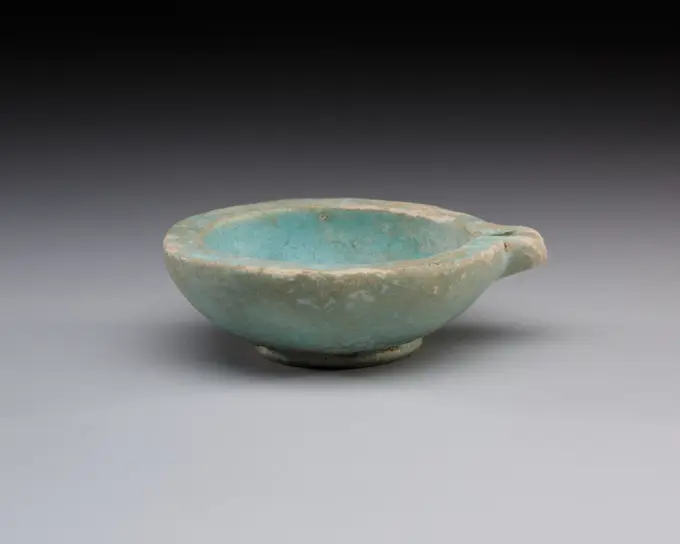
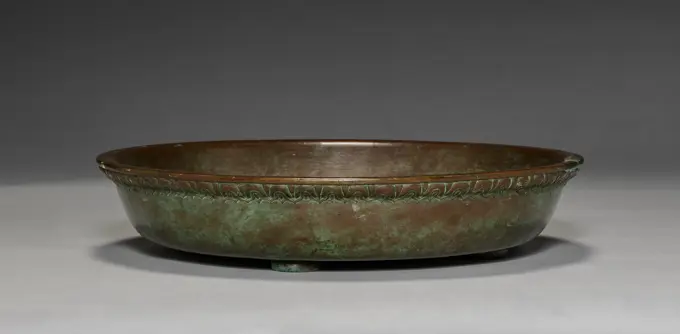
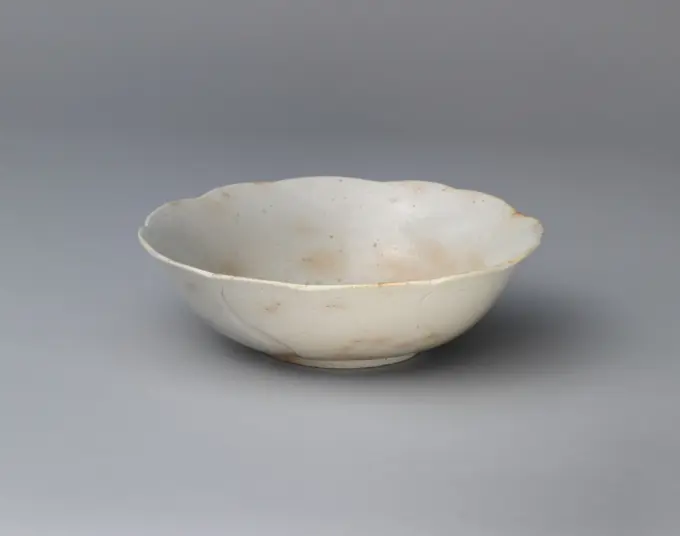
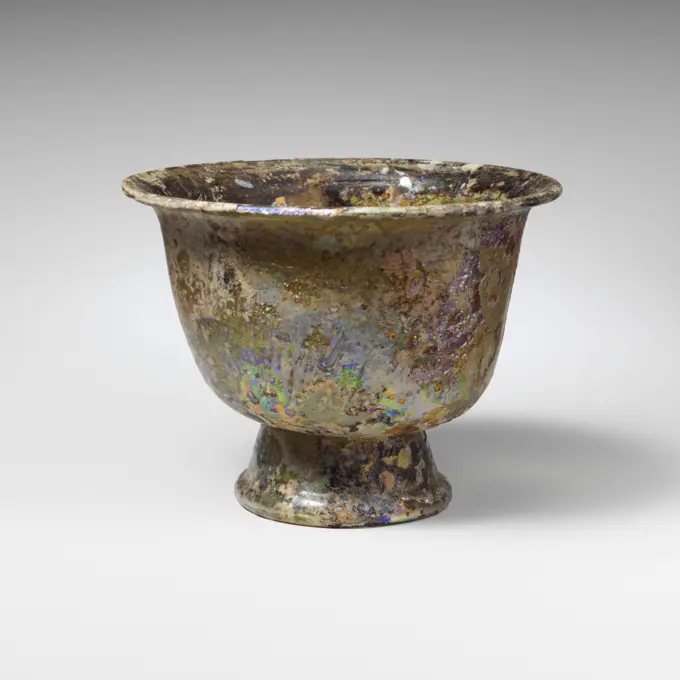
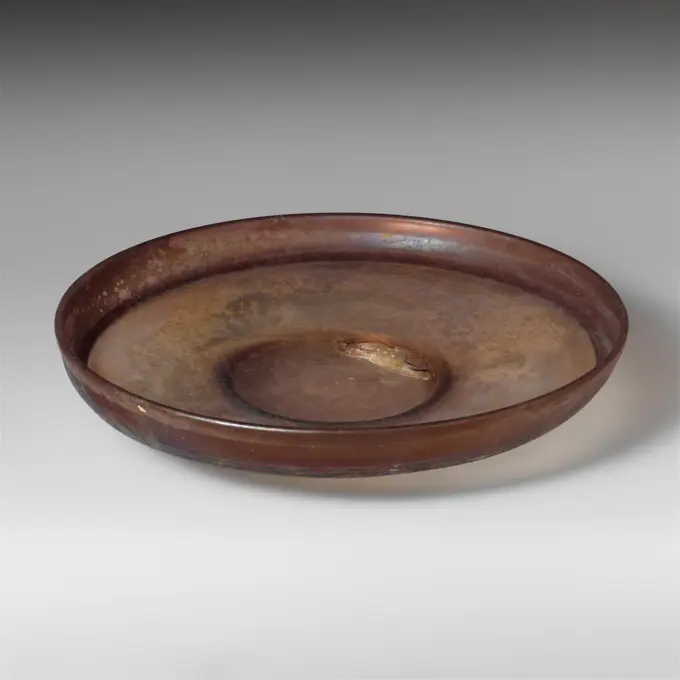
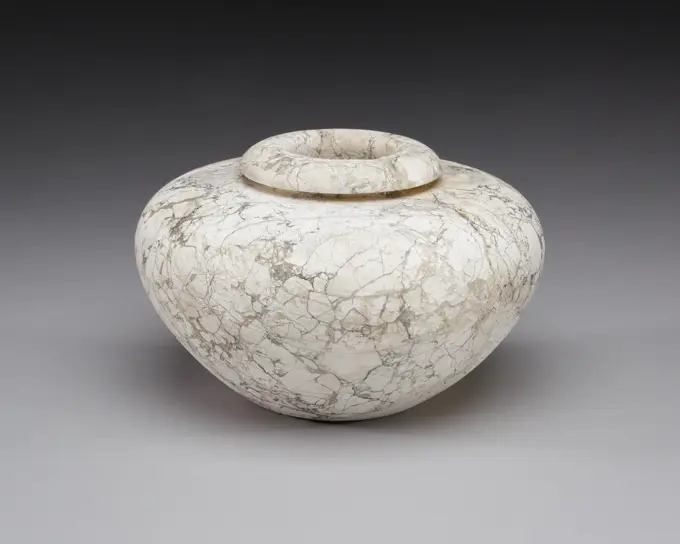
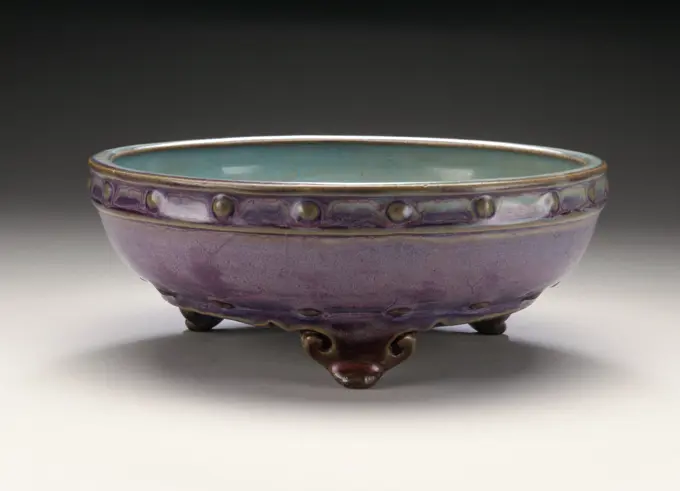
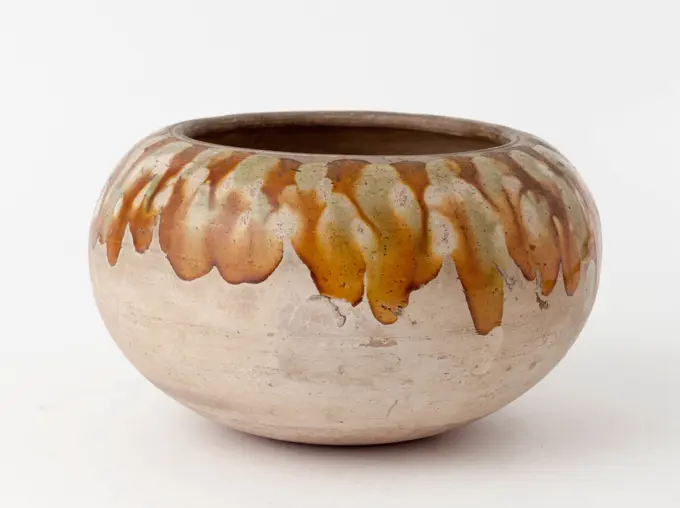
Antique Bowls and Ceramics

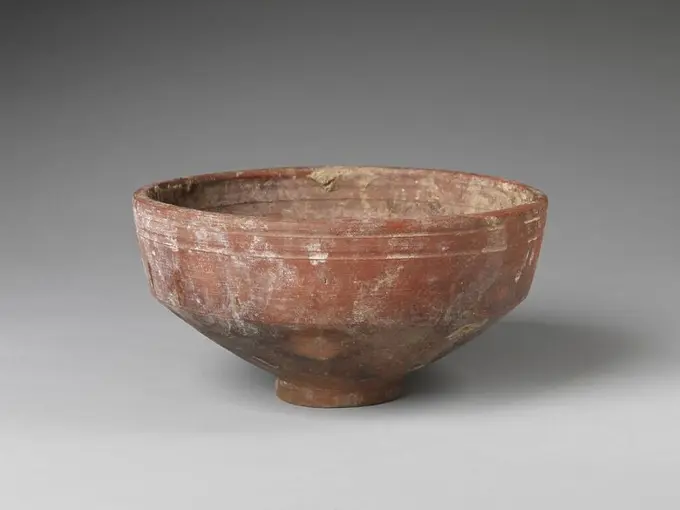
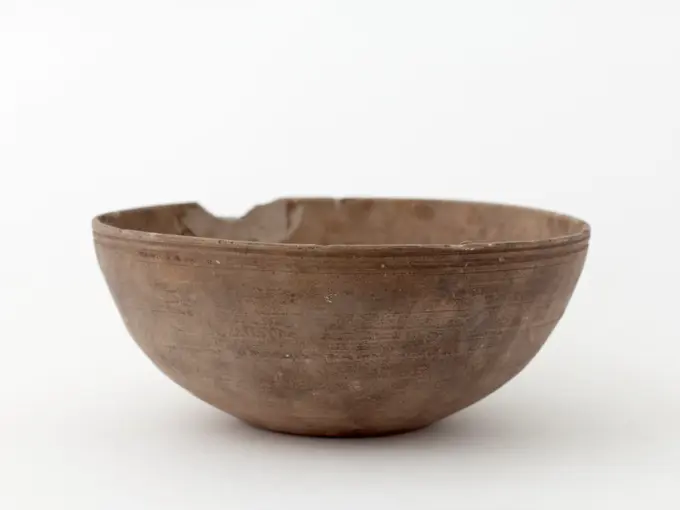
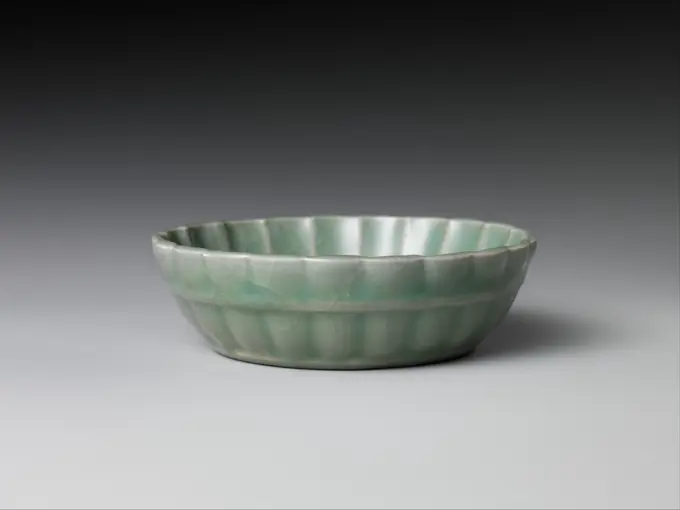
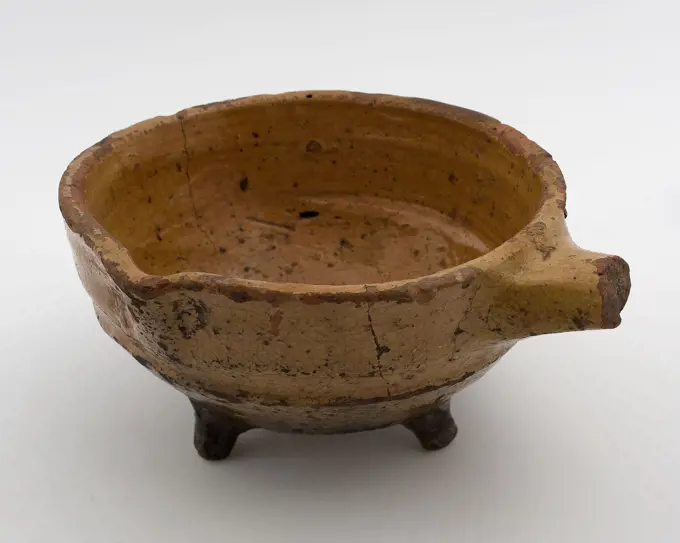
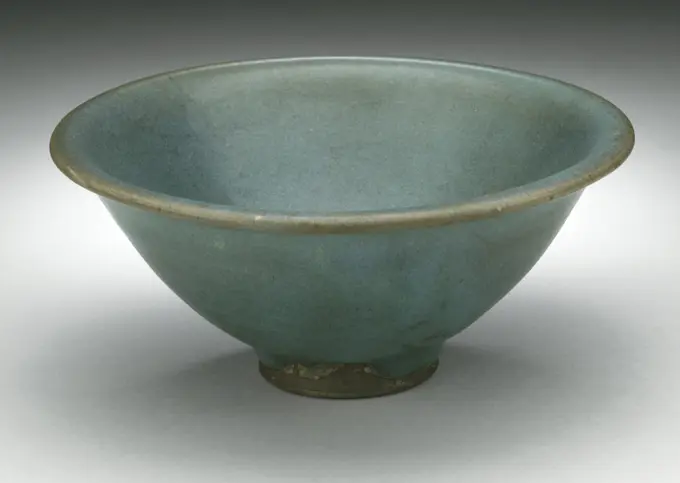
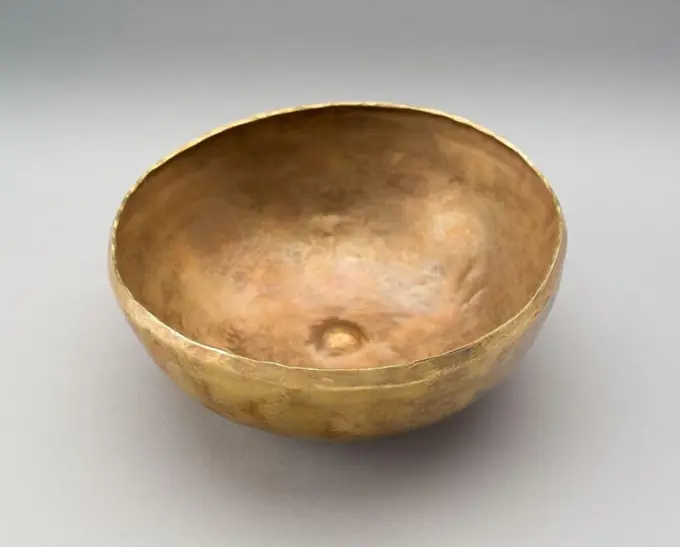
Elegant antique bowls made of stoneware and porcelain with intricate glazes and designs, conveying a sense of history and craftsmanship.
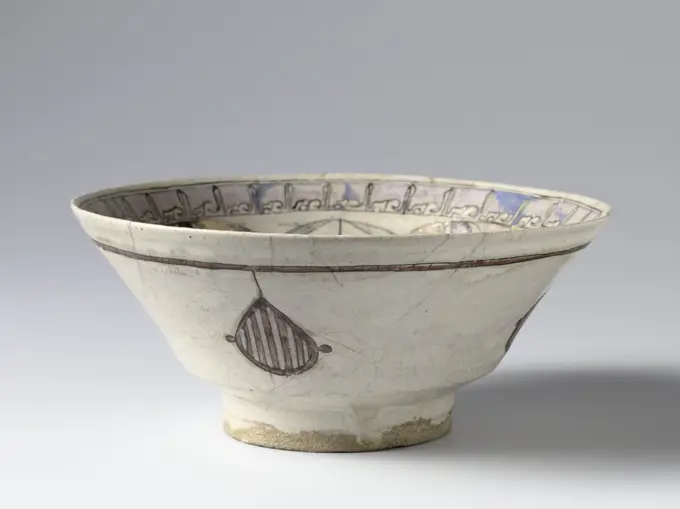
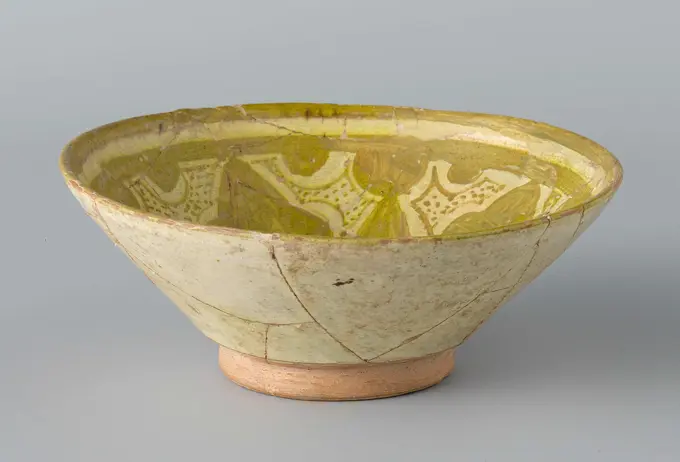
Bowl with horsemen in medallions, anonymous, c. 1175 - c. 1224 Come from quail fritry with a polychrome decoration. On the bottom a rider in a medallion. The inner wall with four oval cartouches with horsemen, connected by a drop -shaped medallion. is the earthenware. glaze. gold (metal) painting / vitrification Come from quail fritry with a polychrome decoration. On the bottom a rider in a medallion. The inner wall with four oval cartouches with horsemen, connected by a drop -shaped medallion. is the earthenware. glaze. gold (metal) painting / vitrification
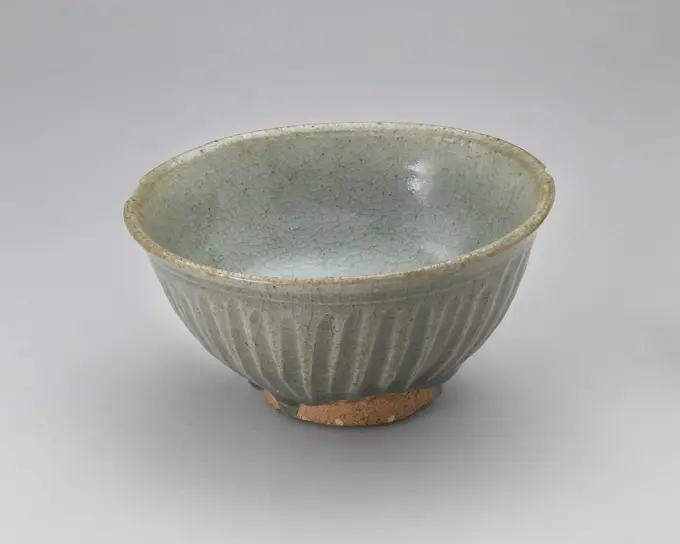
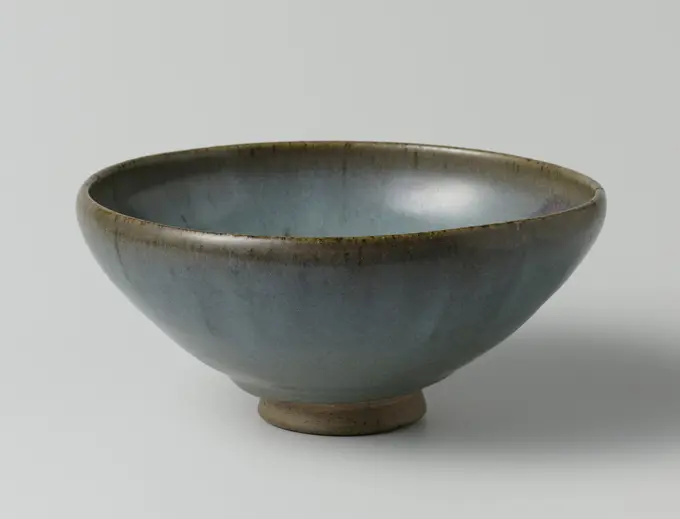
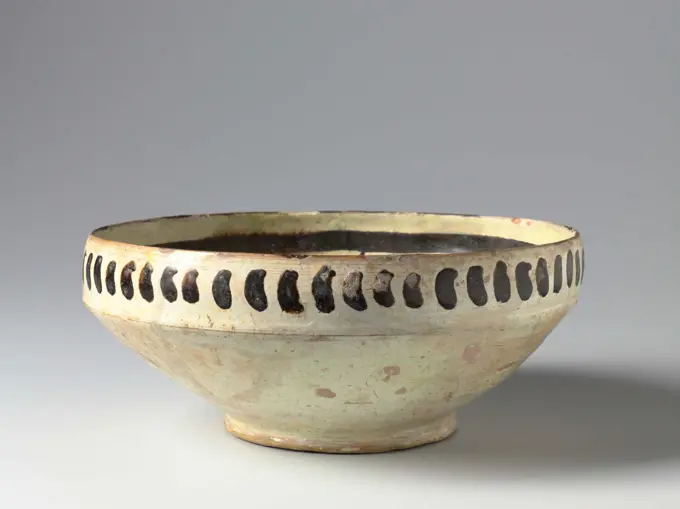
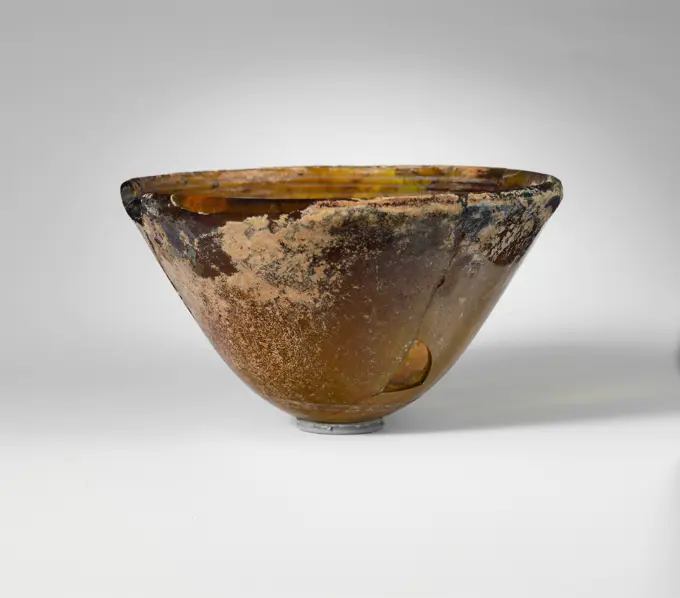
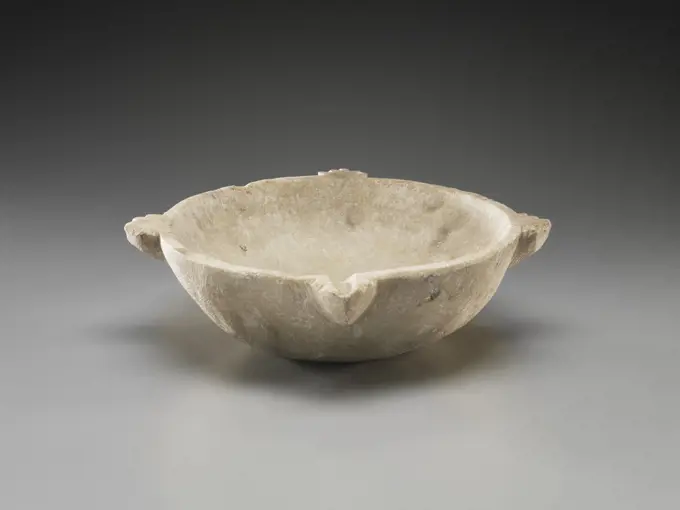
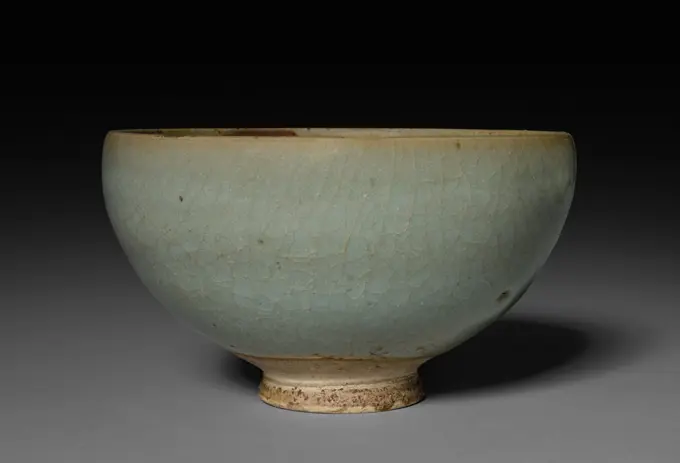
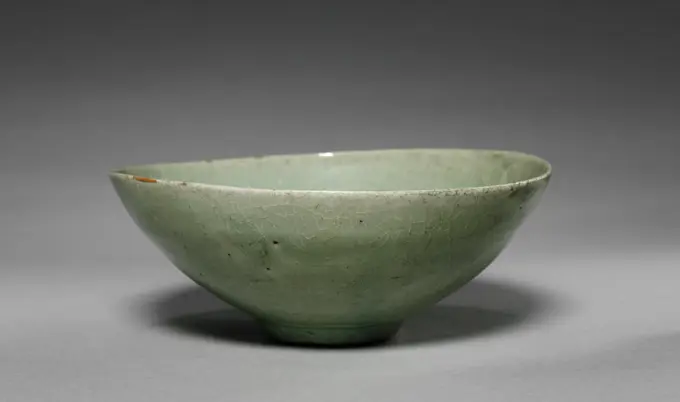
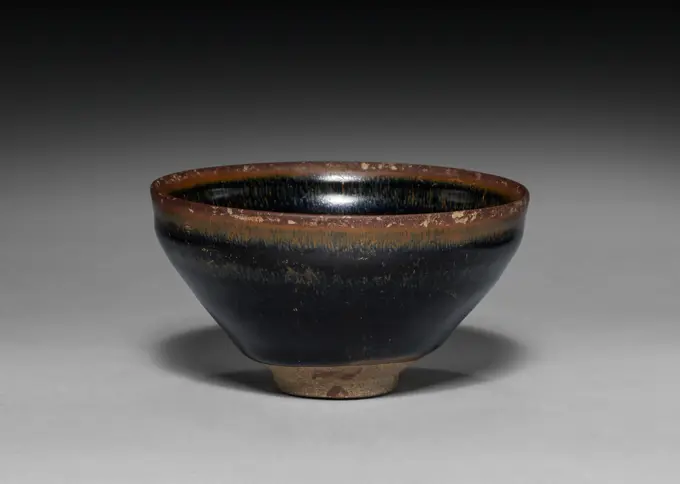
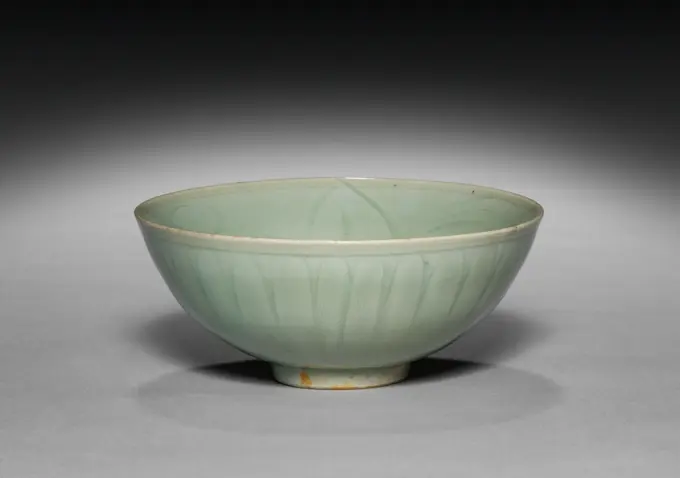
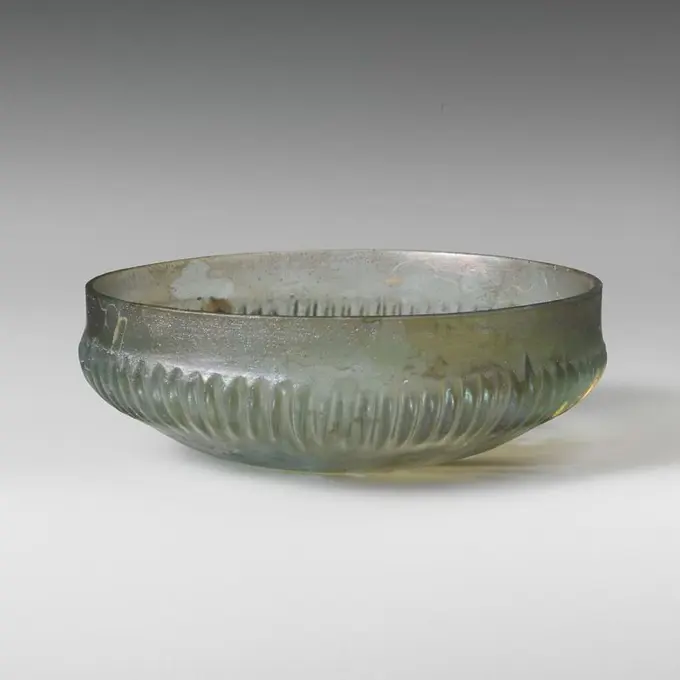
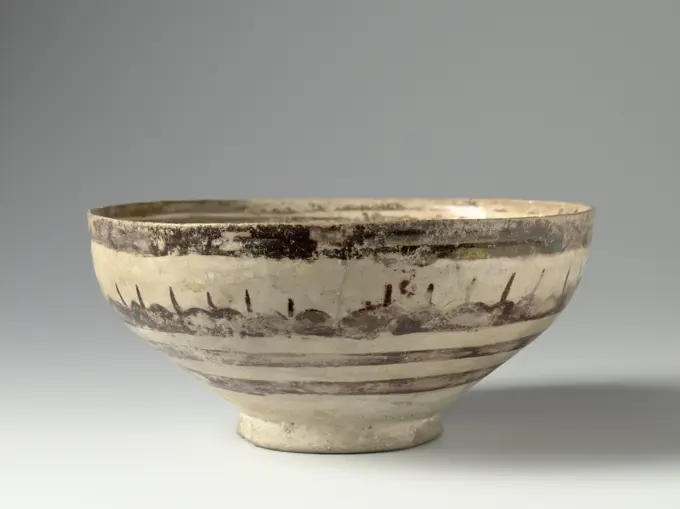
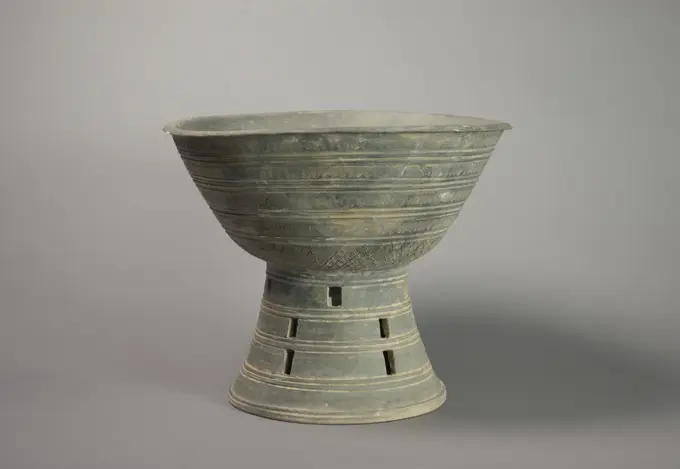
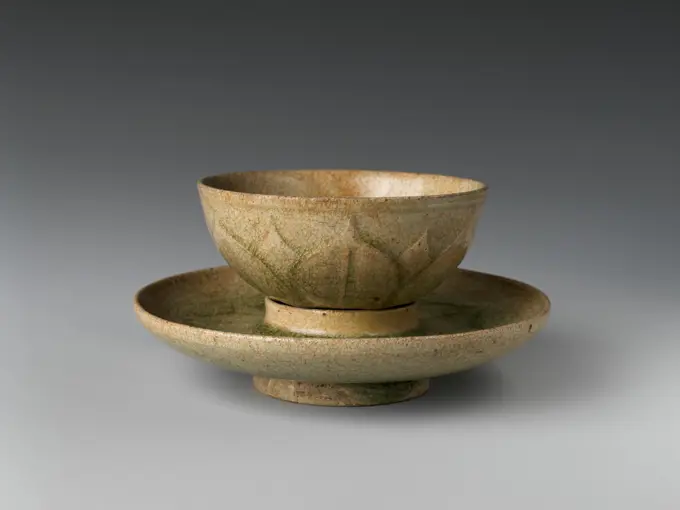
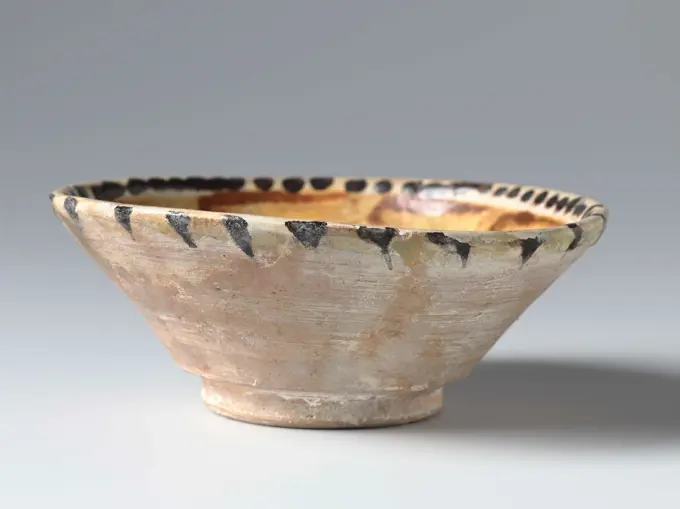
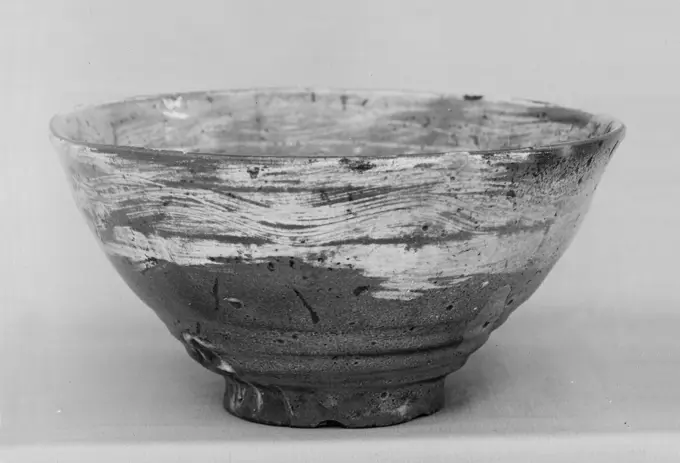
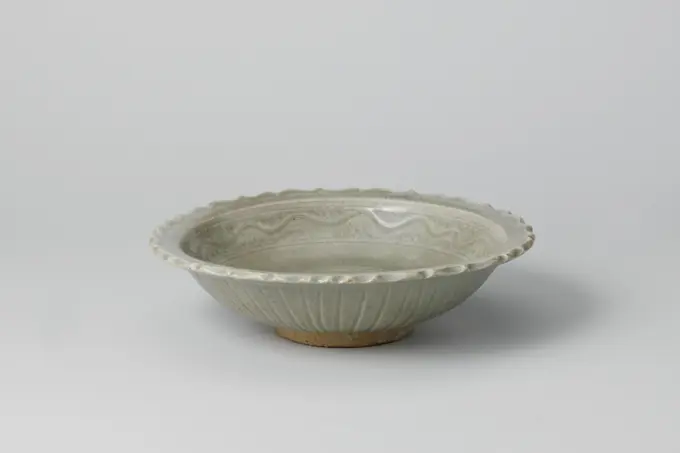
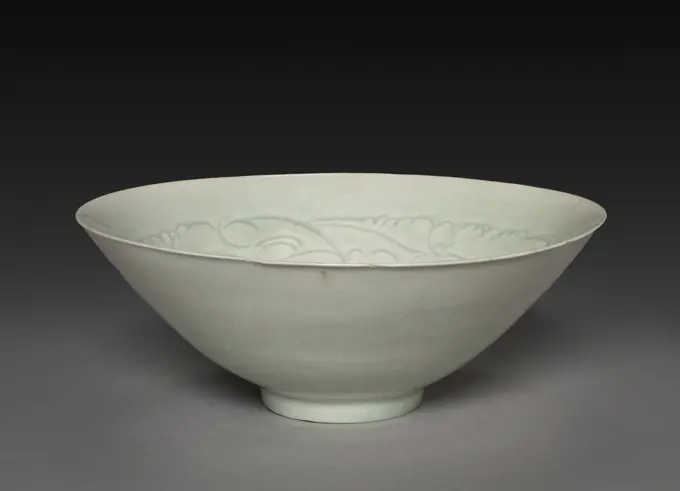
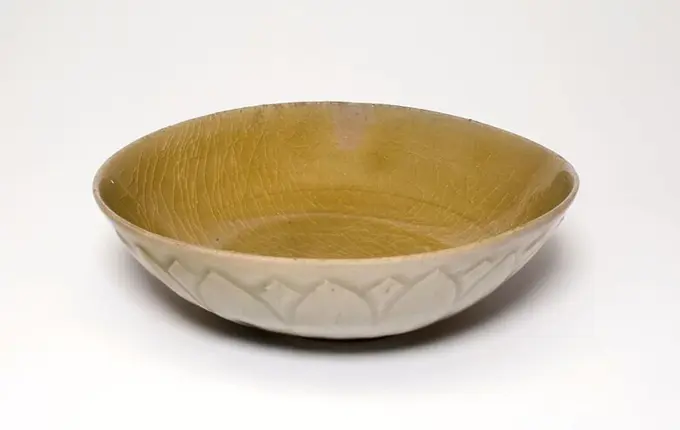
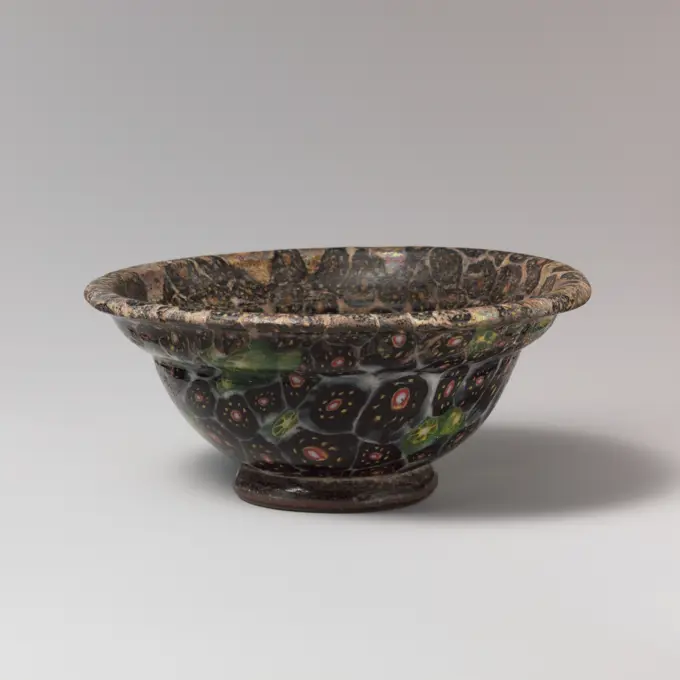
Tea bowl with a bluish brown glaze, anonymous, c. 960 - c. 1279 Theekom of stoneware, partially covered with a brown enamel with dark blue spots. The lower half of the bowl is unglazed. China stoneware. glaze vitrification Theekom of stoneware, partially covered with a brown enamel with dark blue spots. The lower half of the bowl is unglazed. China stoneware. glaze vitrificationBowl (common name). Celadon coverage sandstone. Cernuschi Museum, Asia Museum of Asia in the city of Paris.Conical bowl with incised prunus and cloud motif, anonymous, c. 1200 - c. 1299 Conical bowl of porcelain, covered with a green glaze. On the inner wall a Punus and Cloud motifs. On the inner edge a decorative band with two stylized leaf vines. Celadon. China porcelain. glaze engraving / vitrification Conical bowl of porcelain, covered with a green glaze. On the inner wall a Punus and Cloud motifs. On the inner edge a decorative band with two stylized leaf vines. Celadon. China porcelain. glaze engraving / vitrificationBowl with a lavender blue glaze, anonymous, c. 1100 - c. 1299 Come from stoneware, covered with a lavender blue, slightly crawling glaze. To the edge the color changes to a yellow -brown tint. Jun. China stoneware. glaze vitrification Come from stoneware, covered with a lavender blue, slightly crawling glaze. To the edge the color changes to a yellow -brown tint. Jun. China stoneware. glaze vitrificationTeabowl with a green black glaze, anonymous, anonymous, c. 1500 - c. 1699 Theekom van Steengoed, partially covered with a green -black glaze. The edge is caught in a metal band. The bottom and the foot ring are unglazed. Imitation of a Chinese Temmoku. SETO. Japan stoneware. glaze. rand: metal vitrification Theekom van Steengoed, partially covered with a green -black glaze. The edge is caught in a metal band. The bottom and the foot ring are unglazed. Imitation of a Chinese Temmoku. SETO. Japan stoneware. glaze. rand: metal vitrification. Bowl of pottery with white sludge and a painting in black sludge under a transparent glaze. On the front a stylized bird surrounded by leaf rights. The outer edge with a decorative tire.Tea bowl, anonymous, c. 1100 - c. 1299 Theekom van Steengoed, partially covered with a blue -black glaze with golden brown stripes (hare sheet). The lower half of the bowl is unglazed. The edge is caught in a metal band. Jian. China stoneware. glaze. rand: metal vitrification Theekom van Steengoed, partially covered with a blue -black glaze with golden brown stripes (hare sheet). The lower half of the bowl is unglazed. The edge is caught in a metal band. Jian. China stoneware. glaze. rand: metal vitrificationCup (usual name), 1400. Sandstone with brown under cover. Cernuschi Museum, Asia Museum of Asia in the city of Paris.Bowl with horsemen in medallions, anonymous, c. 1175 - c. 1224 Come from quail fritry with a polychrome decoration. On the bottom a rider in a medallion. The inner wall with four oval cartouches with horsemen, connected by a drop -shaped medallion. is the earthenware. glaze. gold (metal) painting / vitrification Come from quail fritry with a polychrome decoration. On the bottom a rider in a medallion. The inner wall with four oval cartouches with horsemen, connected by a drop -shaped medallion. is the earthenware. glaze. gold (metal) painting / vitrificationFooted Bowl with Marvered Decoration in White and Turquoise. Dimensions: H. 1 3/16 in. (3 cm) Diam. 3 in. (7.6 cm)Wt. 1.4 oz. (39.7 g). Date: 12th-14th century.In the 12th-14th centuries the manufacture of marvered glass was among the many shared features in the artistic creation and material culture of Syria and Egypt, ruled at the time by the Ayyubids and then the Mamluks. The deep-purple glass and white trail combination is the most commonly one found in Syria, and is attested on a variety of shapes, also including kohl bottles, flasks, bottles, beakers, and perfume sprinklers. Museum: Metropolitan Museum of Art, New York, USA.. Earthen works bowl, decorated with manganese brown and yellow, green and red sludge on a white sludge engine under transparent lead glaze. A deer and a band pseudo script on the inner wall.Glass conical bowl mid-2nd to early 1st century B.C. Greek Translucent honey brown.Upright rounded rim with almost pointed upper edge; straight side, tapering diagonally downward; convex bottom.On interior, three horizontal grooves cut in a band below rim; on exterior, two lightly abraded grooves in a band around lower body.Broken and repaired, with two holes in side and large chip in rim; few bubbles; patches of deep pitting and weathering with brilliant iridescence on exterior, and thick creamy weathering on interior.. Glass conical bowl 245789Bowl. Qingbai covered porcelain. Paris, Cernuschi museum. 78846-7 Asian art, table art, bowl, old ceramic, container, dishesThree-HandledBowl, ca. 1st-3rd century A.D., Alabaster, 7.62 × 25.4 × 25.4 cm (3 × 10 × 10in.), Yale-French Excavations atDura-Europos, Excavated in Dura-Europos, Syria, Syrian,Dura-Europos, Greco-Roman orParthian, Containers -Other. Scale of porcelain, covered with a translucent white glaze. A chip in the edge.Bowl: Jun ware, 13th - 14th century. Northern China, Jin dynasty (1115-1234) - Yuan dynasty (1271-1368). Glazed buff stoneware; diameter: 14.6 cm (5 3/4 in.); overall: 8.5 cm (3 3/8 in.).. Come from Quartz Fritgoed covered with an opaque white tin-lead-alkalilation on which a decoration in luster. On the outer wall a tire with a (pseudo) inscription.Bowl with a pseudo-inscription, anonymous, c. 900 - c. 999 Come from earthenware decorated with black -brown sludge on Engobe from white sludge under a transparent lead glaze. A bond with dots on the outer edge. Nishapur earthenware. glaze painting / vitrification Come from earthenware decorated with black -brown sludge on Engobe from white sludge under a transparent lead glaze. A bond with dots on the outer edge. Nishapur earthenware. glaze painting / vitrificationBowl with Fish and Waves in Relief, 1100s-1200s. Korea, Goryeo period (918-1392). Celadon; overall: 6.3 cm (2 1/2 in.).Black Glazed Tea Bowl with incised characters "gongyu", 1100s-1200s. China, Fujian Province, Southern Song dynasty (1127-1279). Stoneware with opaque dark brown glaze, Jian ware; overall: 6.5 x 12 cm (2 9/16 x 4 3/4 in.).Glass dish. Culture: Roman. Dimensions: Overall: 2 5/8 x 8 11/16in. (6.6 x 22cm). Date: 4th century A.D..Colorless with very pale green tinge.Rounded rim folded out and down; straight side to body, tapering downwards then curving slightly outward; tall, integral, tubular foot ring, made by folding with deep creease on interior; almost flat bottom with thickened dome and pontil scar at center.Intact; pinprick and some elongated horizontally bubbles; dulling, pitting, iridescence, and yellowish brown weathering on exterior, with some whitish iridescent weathering on interior.Thick yellowish shallow blown glass bowl with base. Museum: Metropolitan Museum of Art, New York, USA.Bowl China. Bowl 48326Bowl 101 CE-600 CE Syria. Glass, blown technique . Ancient RomanBowl with Carved Lotus Design, 1100s-1300s. China, Southern Song (1127-1279) to Yuan dynasty (1279-1368). Stoneware with pale green (celadon) glaze; overall: 6.6 x 15.5 cm (2 5/8 x 6 1/8 in.).Bowl 4th-7th century Coptic. Bowl 478826Tripod Bowl 25 CE-220 CE China. Earthenware with lead green glaze .Glass cup. Culture: Roman. Dimensions: H.: 1 15/16 in. (4.9 cm)Diam.: 3 1/4 x 1 9/16 in. (8.3 x 4 cm). Date: 2nd-3rd century A.D..Colorless with blue green tinge.Outsplayed rim with rounded, thickened outer lip; convex side tapering downwards; thick base ring made by folding; low kick in bottom and circular pontil scar.Intact; many bubbles; patches of thick creamy weathering, dulling, pitting, and brilliant iridescence. Museum: Metropolitan Museum of Art, New York, USA.Earthenware cooking pot, barley pan, on three legs, two lying ears, flat lid edge, cooking pot tableware holder utensils earthenware ceramics earthenware glaze lead glaze, hand turned set glazed baked Pot of red earthenware two ears three legs of which one in gypsum lid edge on the outside of the wall internal brown red glazed turnings glaze wipe left from one of the ears Low and wide model with straight side wall and slightly curved bottom. Two reclining sausage tower low on the side wall attached archeology Valckensteyn Poortugaal Albrandswaard indigenous pottery kitchen cooking stew food nutrition food food preparation Soil discovery: canal at kitchen castle Valckensteyn at Poortugaal now Albrandswaard 1961.. Come from pottery, painted with large scriptures in brown black sludge on yellow-white sludge under transparent lead glaze on the inner wall. Along the edge a black sawtooth list. A small bird on the bottom (stork). The inscription can probably be read if "Al Mulku Li [Llah," "The Supreme Authority belongs to God."Cup ". Terracotta. Vietnam-Xe-Xive s. Paris, Cernuschi museum. 72185-44 Cup, Vietnamese object, terracottaGlass ribbed bowl. Culture: Roman. Dimensions: 1 3/4 × 4 15/16 in. (4.4 × 12.5 cm)Diam. of rim: 4 7/8 in. (12.3 cm). Date: early 1st century A.D..Translucent pale blue green.Vertical rim with rounded top edge; plain, vertical band of irregular height around top of side, then bulging outward before curving in sharply to concave bottom.On interior, two concentric grooves around outer edge of bottom and small, broader circle at center; on exterior, eighty vertical ribs of slightly varying length and width, with tops ground off, arranged around bulging middle section of body.Intact; pinprick bubbles; pitting, dulling, and iridescence with small patches of creamy weathering.Rotary grinding marks on interior and on band around top of exterior. Museum: Metropolitan Museum of Art, New York, USA.Deep bowl, Jun ware. Culture: Chinese. Dimensions: Diameter: 7 5/8 in (19.4cm.). Date: 11th-12th century. Museum: Metropolitan Museum of Art, New York, USA.Bowl with a horsemen and an inscription border, anonymous, c. 1200 - c. 1220 Come from Kwartsfritgoed with a white tin-lood-alcoholic laze on which a decor of luster. A medallion with a rider on the bottom. The inner wall with a band with a (Arabic) inscription and a decorative band. The outer wall with decorative tires. is the earthenware. glaze. luster (textile) painting / vitrification Come from Kwartsfritgoed with a white tin-lood-alcoholic laze on which a decor of luster. A medallion with a rider on the bottom. The inner wall with a band with a (Arabic) inscription and a decorative band. The outer wall with decorative tires. is the earthenware. glaze. luster (textile) painting / vitrificationBowl Shaped Pedestal 5th-6th century Korea. Bowl Shaped Pedestal. Korea. 5th-6th century. High fired pottery. Silla Kingdom (57 B.C.-A.D. 676). CeramicsTeabowl with three panels with characters, anonymous, c. 960 - c. 1279 Theekom van Steengoed, partially covered with a brown glaze with cream -colored spots on the outside (tortoisehell). On the inner wall three cartouches saved with four Chinese characters each. Jizhou. China stoneware. glaze vitrification Theekom van Steengoed, partially covered with a brown glaze with cream -colored spots on the outside (tortoisehell). On the inner wall three cartouches saved with four Chinese characters each. Jizhou. China stoneware. glaze vitrificationBowl. Culture: Coptic. Dimensions: Overall: 2 1/16 x 5 11/16 in. (5.3 x 14.4 cm). Date: 4th-7th century. Museum: Metropolitan Museum of Art, New York, USA.Bowl, used as lid. Dimensions: H. 11.5 cm (4 1/2 in.); Diam. 22.4 cm (8 13/16 in.). Date: 3rd-late 2nd century B.C..This bowl served as the lid for the large jar 13.180.34b. Analysis of residue indicates the bowl probably once held broth. Museum: Metropolitan Museum of Art, New York, USA.Tea bowl and saucer with lotus decoration 5th-6th century China This elegant set may represent one of the first examples anywhere in the world of a cup and saucer used for drinking tea. It is decorated with carefully carved lotus leaves. Originally symbolic of love in early folk songs, lotuses are associated with purity in Buddhist art.. Tea bowl and saucer with lotus decoration. China. 5th-6th century. Stoneware with carved decoration under celadon glaze. Liang (502-557) or Chen (557-589) dynasty. CeramicsBol ". Terracotta. Vietnam-Xe-Xive s. Paris, Cernuschi museum. 72186-6 Bowl, Vietnamese object, terracotta. Bowl of earthenware decorated with black and brown sludge on Engobe of white sludge. On the inner wall a band with curl. Above a brown band and on the inner edge a tire with dots. The outer edge with dependent triangles.Lekanis;  1. PO. 5th century BC (-500-00-00--451-00-00);Bowl, 11th-12th century, 3 9/16 x 8 7/16 x 8 7/16 in. (9.1 x 21.43 x 21.43 cm), Jun ware Stoneware with pale blue glaze, China, 11th-12th century, Of all the major ceramic types produced in north China during late Northern Song (11th-early 12th centuries), zhun ware from Henan province is unique for its color suffused blue glazes. The depth and color of zhun glaze varies considerably. This bowl has a relatively thin pale blue glaze with a subtle crackle pattern.Wine Cup, unassigned. North Korea, Yochon, unassigned. Brass; overall: 2.9 x 6.2 cm (1 1/8 x 2 7/16 in.).Bowl. Culture: Coptic. Dimensions: Overall: 2 1/4 x 2 5/8 in. (5.7 x 6.6 cm). Date: 4th-7th century. Museum: Metropolitan Museum of Art, New York, USA.Bowl. Probably Iran, 11th century. Glass. Glass, mold-blownBowl (common name). Enamelled coverage sandstone, Tenmoku type glaze. Cernuschi Museum, Asia Museum of Asia in the city of Paris.Mosaic Bowl. UnknownBrush washer with lotus 13th-14th century China This is a rare example of a work produced at the prolific Longquan kilns for domestic, specifically scholarly, use. Exported for over five hundred years, Longquan wares have been found in Japan, Southeast Asia, the Islamic world, and Europe.. Brush washer with lotus. China. 13th-14th century. Stoneware with incised decoration under a celadon glaze (Longquan ware). Yuan dynasty (1271-1368). CeramicsBowl 4th-7th century Coptic. Bowl 478431Pottery saucepan, red shard with lead glaze, short handle and pouring lip, on three legs, saucepan pan crockery holder kitchenware earth discovery ceramics earthenware glaze lead glaze, hand-turned baked glazed Pottery saucepan red shard with lead glaze short handle and shank three legs lower part partly unglazed with soot spores. Slit to accentuate transitional shoulder abdomen archeology indigenous pottery food prepare cooking eat cuisineBowl 4th-7th century Coptic. Bowl 477744Conical Bowl with Peonies. China. Date: 960 AD-1279. Dimensions: H. 4.6 cm (1 13/16 in.); diam. 10.3 cm (4 1/16 in.). Celadon-glazed stoneware with underglaze molded decoration. Origin: China. Museum: The Chicago Art Institute, Chicago, USA.Bowl (Wan) Glazed in Imitation of Song Dynasty (960-1279) Jun WareCup and Saucer With Flowering Plants Near a Rock. Cup and saucer of porcelain, partially covered with a brown glaze, painted in underglaze blue and on the glaze in red and gold. On the flat of the dish flowering plants at a rock; The edge with napkin interspersed with a flower branch in a cart shower; The outside is covered with a brown glaze; Cup with donated decoration. A chip in the edge of the dish. Chinese Imari with monochrome brown.Bowl. Syria, 13th-14th century. Ceramics. Earthenware, incised and glazedTwo-eared jar, Jun ware. Artist: Chinese , Jin/Yuan Dynasty. Culture: Chinese. Dimensions: Height: 4 15/16 in. (12.5cm.). Date: ca. 13th century. Museum: Metropolitan Museum of Art, New York, USA.Bowl with a pseudo-inscription border, anonymous, c. 1200 - c. 1299 Come from quartz fritry with a black painting under a transparent turquoise alternal laze. On the inner edge a bond with pseudo-writing. The inner wall with five stylized birds . Gorgan earthenware. glaze painting / vitrification Come from quartz fritry with a black painting under a transparent turquoise alternal laze. On the inner edge a bond with pseudo-writing. The inner wall with five stylized birds . Gorgan earthenware. glaze painting / vitrificationBowl - Portneuf potteryMiniature Bowl. Inca; South coast, Peru. Date: 1200-1450. Dimensions: 5.4 x 12.7 cm (2 1/8 x 5 in.). Gold. Origin: South Coast. Museum: The Chicago Art Institute, Chicago, USA.Bowl. Iran, first half of 14th century. Ceramics. Composite body, molded and glazedSpouted dish with rosette in the center, traces on the rim where two lions were attached 3rd century BC Ptolemaic Period This cup was originally decorated with two couchant lions whose outlines may be seen on its edge. A branch with pointed leaves decorates the area between the lions, and in the bottom of the cup is a rosette with round petals. The lip indicates the cup was made for pouring, and findings in funerary contexts indicate such cups were intended for libations.. Spouted dish with rosette in the center, traces on the rim where two lions were attached. 3rd century BC. Faience. Ptolemaic Period. From EgyptBasin, early 1900s. Gorham Manufacturing Company (American, founded 1831). Bronze, greenish black artificial patina; diameter: 7.4 x 37.8 cm (2 15/16 x 14 7/8 in.).Flower-shaped dish, 15th-16th century, Unknown Korean, 1 3/4 × 5 9/16 × 5 1/2 in. (4.45 × 14.13 × 13.97 cm), Porcelain, Korea, 15th-16th century, Although it was originally intended only for elite patrons, the increasing popularization of porcelain over the fifteenth and sixteenth centuries led to the eventual decline and end of Buncheong ware. Carved lines on the exterior of this bowl and its lobed rim suggest the shape of a flower.Black -of -core kylix with animal frieze; Painter of a bird hairstyle (approx. 570-560 BC); 570-560 BC (-570-00-00--560-00-00);Late Correctional period, transmission (provenance), images of birds, images of animalsGlass footed bowl 3rd-4th century A.D. Roman Translucent pale blue green.Outsplayed, rounded rim; convex sides tapering downward, then turned in to flat bottom with pontil scar; added ring base with flaring sides and thick, rounded edge.Intact; pinprick bubbles; heavily weathered and pitted, with patches of brilliant iridescence and black enamel-like weathering.. Glass footed bowl 239843Bronze mortar, auger equipment bronze, cast Round body built from raised foot with ascending profile edges smooth wall with ribbed edge in the middle profiled. Ribbed on transition cantilever and middle part. On foot wall and coronation around parallel lines of bombardment 14 May 1940 May days war World War I grind health care pharmacy municipal pharmacy city pharmacy GGD GG and GD Rotterdam City Center Stadsdriehoek Hoogstraat Baan Schiedamsedijk Building for Public Health The municipality pharmacy in Rotterdam (1603-1993) was part of the GG and GD from 1938 until privatization in 1993 (later GGD) of the municipality of Rotterdam. In 1940 the building of the municipality pharmacy on the Hoogstraat was destroyed during the bombing. Only several jacks have been saved from the rubble according to the sources. In 1941 new pharmacy was involved in the Building for Public Health on the Baan (and later on Schiedamsedijk).Bowl 4th-7th century Coptic. Bowl 478876Bowl with FoliateRimDish from Saucers with Matching Shells, 1893-1914. Seifū Yohei III (Japanese, 1851-1914). Porcelain with molded design and green crackled glaze; overall: 3 x 12 x 8.5 cm (1 3/16 x 4 3/4 x 3 3/8 in.).Earthenware dish with raised edge and flat bottom, dish crockery holder soil find ceramic earthenware glaze lead glaze high 6.8, hand-turned glazed baked Red shard brown lead glaze flat bottom Obliquely upright side wall and thickened saucer edge. Completely glazed archeology Valckensteyn Poortugaal Albrandswaard indigenous pottery kitchen food nutrition cooking serving food preparation Soil discovery: canal at kitchen castle Valckensteyn at Poortugaal now Albrandswaard 1961.Teabowl 18th century Japan. Teabowl. Japan. 18th century. Clay with inlaid mishima design under transparent glaze (Karatsu ware). Edo period (1615-1868). CeramicsBowl 19th century Japan. Bowl. Japan. 19th century. Clay covered with a crackled glaze and polychrome overglazes (Karatsu ware). Edo (1615-1868) or Meiji period (1868-1912). CeramicsCup. Dimensions: H. 9.3 x dia. 13 cm (3 11/16 x 5 1/8 in). Date: 500-200 B.C..Faience cups of this type are frequent in the Late Period. A recent study of faience vessels notes that examples were found in the western dump at the Sacred Animal Necropolis at Saqqara, where datable documents belong to the 5th-4th centuries B.C. The cups vary in size; examples are known that were inscribed and found in sets of 7 for the 7 sacred oils. The type may have continued to be produced during the Graeco-Roman period, but the quality of the glaze here - very thick and most often with craquelure in a regular manner - is considered characteristic of the Late Period. Museum: Metropolitan Museum of Art, New York, USA.Cut. Qingbai covered porcelain. Paris, Cernuschi museum. 78845-2 Asian art, ancient ceramic, container. Come from pottery at fairly high flat foot and with straight wall, red shard with white sludge layer on both sides. The inside is painted in green yellow sludge with standing leaf motifs between stipched compartments. Along the mouth edge another trick in manganese sludge. On the bottom a stylized flower in green yellow sludge with dark green dots under transparent lead glaze.Bowl ca. 1840 Mexican. Bowl. Mexican. ca. 1840. Tin-glazed earthenware. Made in MexicoPLATO VIDRIADO Y DECORADO EN VERDE Y AZUL-S XX ARTE POPULAR. Location: ALFARERIA. SPAIN.Bell-shaped bowl with a bird on a tree and wisteria on a yellow ground, c. 1875 - c. 1894 Bell -shaped bowl of porcelain, covered with a yellow glaze and painted in red and black. The outside of the bowl is covered with a yellow enamel with a bird on a branch with flowering blue rain in shades of gray; On the edge The seal brand of Empress Regent Cixi with the inscription 'Tiandi Yijia Chun', 'Heaven and Earth celebrate spring as a family', besides the seal three characters reading 'Daya Zhai', 'The studio of High Culture'. Marked on the bottom with a four-character brand 'Yongqing Changchun', 'Eternal Happiness and Continuous Spring'. Porcelain with email colors. China porcelain. glaze. painting / vitrification Bell -shaped bowl of porcelain, covered with a yellow glaze and painted in red and black. The outside of the bowl is covered with a yellow enamel with a bird on a branch with flowering blue rain in shades of gray; On the edge The seal brand of Empress Regent Cixi with the inscrGlass bowl with cut decoration. Culture: Roman. Dimensions: H.: 2 5/16 in. (5.9 cm)Diam.: 3 7/8 in. (9.8 cm). Date: 2nd-3rd century A.D..Colorless.Plain vertical rim with thickened, rounded lip; vertical side to body, curving in to flat bottom, slightly domed on interior.Below rim, one horizontal rounded trail; two more finer trails applied as concentric circles around bottom; on body, two rows of vertical, short, wheel-cut lines, twenty-two in upper row, twenty-one in lower; on bottom, central round cut indent.Broken and repaired, with tiny chips missing; almost all of surfaces covered in dulling, creamy weathering, and iridescence. Museum: Metropolitan Museum of Art, New York, USA.Bowl. Byzantine, 11th-13th century. Furnishings; Serviceware. CeramicLarge Cup (username), 1400. CERUNUSCHI museum, Asia Museum of Asia in the city of Paris.Stemmed Bowl 8th century B.C. China. Stemmed Bowl 58550Bronze bowl and oinochoe (jug) late 6th-early 5th century B.C. Etruscan The shallow bowl is said to have been found together with the jug, 21.88.126. The bowl, in fact, preserves the imprint of the base of the jug.. Bronze bowl and oinochoe (jug) 251119 Etruscan, Bronze bowl and oinochoe (jug), late 6thearly 5th century B.C., Bronze, H. 9 7/16 in. (24 cm). The Metropolitan Museum of Art, New York. Rogers Fund, 1921 (21.88.126)Jar with Lid Bearing Stamp Design. Korea, Unified Silla Kingdom (676-935), 9th-early 10th century. Furnishings; Accessories. Wheel-thrown stoneware with incised and stamped decoration and ash glazeCup. unknown, craftsmanDish (usual name). Sandstone, cookie, celadon, reported decor. Cernuschi Museum, Asia Museum of Asia in the city of Paris.Floral-shaped Cup Stand, 1200s. Korea, Goryeo period (918-1392). Pottery; outer diameter: 16.9 cm (6 5/8 in.); overall: 6.2 cm (2 7/16 in.).Cup. UnknownDish, anonymous, c. 1400 - c. 1499 Scale of stoneware with a ribbed wall and scalloped edge, covered with a green glaze. The front with entry circles and a band with a wavy line. The outside wall is ribbed. The foot is unglazed. Celadon. Sawankhalok stoneware. glaze engraving / vitrification Scale of stoneware with a ribbed wall and scalloped edge, covered with a green glaze. The front with entry circles and a band with a wavy line. The outside wall is ribbed. The foot is unglazed. Celadon. Sawankhalok stoneware. glaze engraving / vitrificationConical Bowl with Carved Babies and Floral Motif, 960-1279. China, Song dynasty (960-1279). Porcelain with pale bluish-white glaze, qingbai ("blue-white") ware; overall: 7.8 x 20.3 cm (3 1/16 x 8 in.); diameter: 21.6 cm (8 1/2 in.). The conical shape of this bowl is especially suitable for whipping powdered tea, which became popular at court, in monasteries, and in scholarly elite circles during the Southern Song dynasty. The decoration of this bowl was cut with a wooden instrument into the dried clay. This type of white porcelain with a translucent bluish glaze was the direct predecessor of the later blue-and-white porcelains.Bowl with Lotus Design. Korea. Date: 918 AD-1392. Dimensions: H. 5.8 cm (2 1/4 in.); diam. 17.9 cm (7 1/16 in.). Celadon-glazed stoneware with underglaze carved decoration. Origin: Korea. Museum: The Chicago Art Institute, Chicago, USA.High Col Vas "Pot". Terracotta Blanche Transparent. Paris, Muse Cernuschi. Asian art, extreme-East art, Vietnamese art, ceramic, terracotta, dishesGlass mosaic carinated bowl late 1st century B.C.-early 1st century A.D. Roman Semi-opaque deep purple, appearing black, translucent light blue green, opaque white, opaque yellow, and opaque red; color(s) of base ring uncertain, but including trail of opaque yellow.Outsplayed rim with slightly pointed edge; carinated side, with two convex curves, the upper being shallow and the lower deep; slightly convex bottom within applied outsplayed base ring with rounded edge.Composite mosaic pattern formed from polygonal sections of two canes: one in a purple ground outlined in white, each with a ring of yellow rods and a central white dot outlined in red and yellow; the second in a blue green ground with a spoked circle of yellow rods and a central white dot.Intact; dulling and slight iridescent weathering on interior; pitting on polished exterior.. Glass mosaic carinated bowl. Roman. late 1st century B.C.-early 1st century A.D.. Glass; cast. Early Imperial. GlassGlass dish 4th-5th century A.D. Roman Translucent purple.Tubular rim, folded out and down, forming flange covering side, with an inward fold at base; low convex curving side and broad floor to body, sloping gently downwards to tubular, inward-sloping foot ring, made by folding; flat bottom.One large hole in bottom, but complete otherwise; some pinprick bubbles; dulling and iridescent weathering.Violet, plain blown glass.. Glass dish 249341Globular jar ca. 2750-2649 B.C. Early Dynastic Period. Globular jar. ca. 2750-2649 B.C.. Magnesite. Early Dynastic Period. From Egypt, Memphite Region, Saqqara, Tomb 2322, Egyptian Antiquities Service/Quibell excavations, 1910-11. Dynasty 2, second halfBowl 1650 Japan. Bowl. Japan. 1650. Clay covered with a transparent crackled glaze with streaks (Seto ware, Ofuke type). Edo period (1615-1868). CeramicsBulb Bowl (Shuixian Pan). China, Henan Province, Linru County, late Jin dynasty or early Yuan dynasty, about 1200-1300. Furnishings; Serviceware. Jun ware, molded stoneware with blue glaze and purple splashesPot ". Terracotta with yellow and green glaze (Sancai). China, Tang dynasty (618-907). Paris, Cernuschi museum. Chinese art, Chinese ceramic, container, tang dynasty, oval shape, pot, container, terracottaBowl, spherical vessel, basket;  around 2345-2323 BC ; Old Pa 6 Dynasty (-2345-00-00--2323-00-00), approx. 2494-2345 BC ; Old PAIzi, private name, collection of ancient Egypt, Polish-French excavations in Edfu (Egypt)Misa unknown