Antique Brooches and Pins

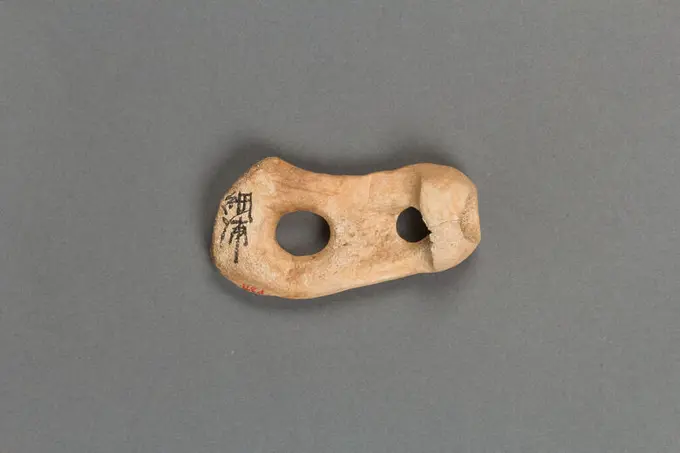
Historic metal artifacts including fibulas, brooches, and a unique phallic amulet, reflecting ancient craftsmanship.

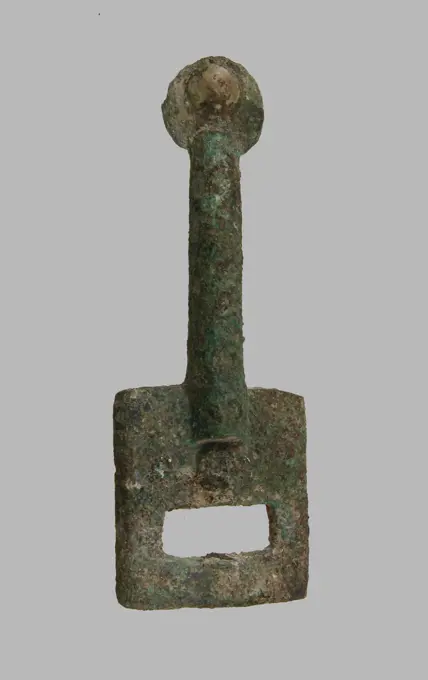
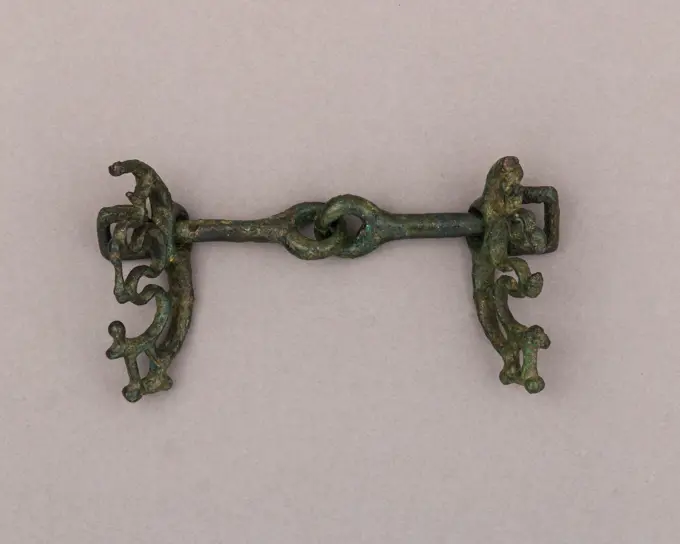
Bronze fittings with stud and hook, batter clothing accessory clothing soil find bronze copper metal, cast bronze batter leather fitting with stud including square plate with round hole in it. Possible frame for belt hanger archeology Rotterdam rail tunnel belt belt to carry rugs Soil discovery: trajectory rail tunnel Rotterdam.
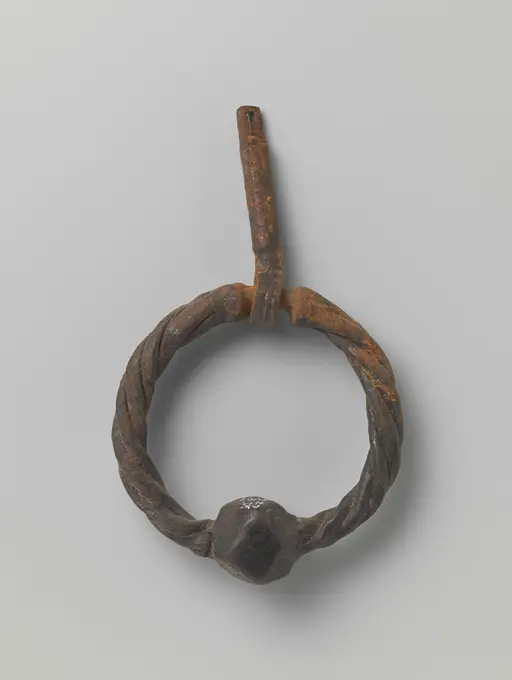
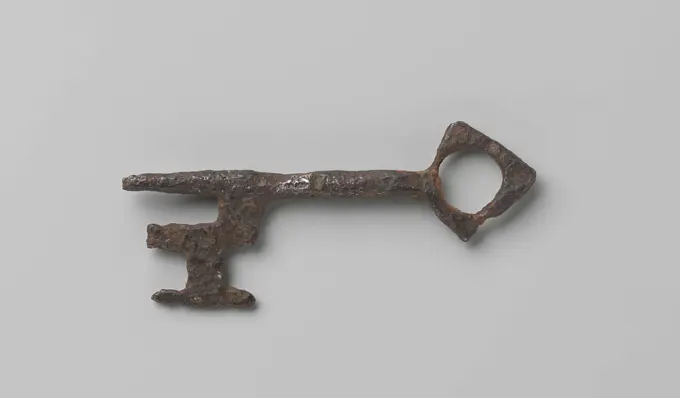
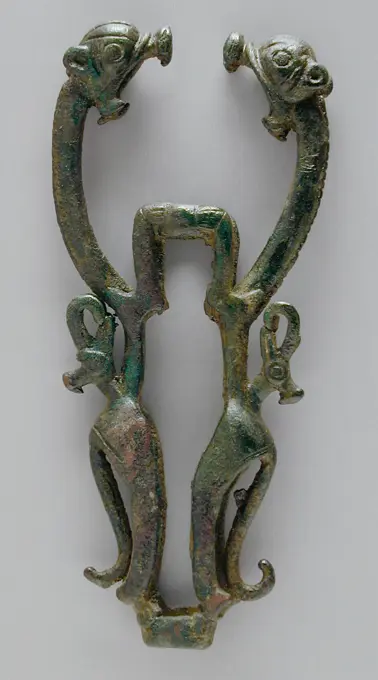
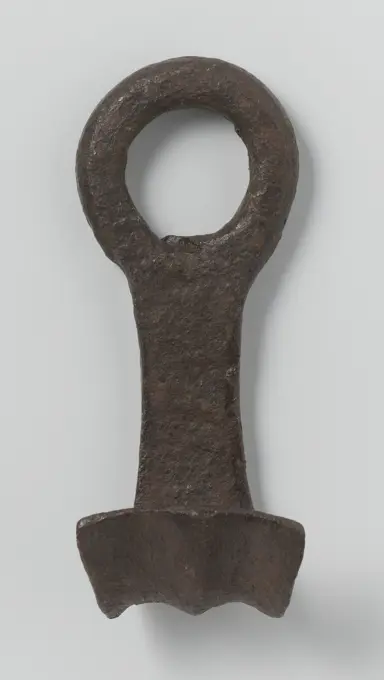
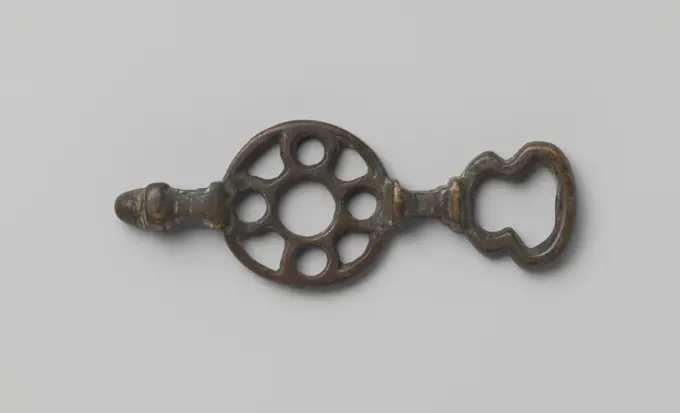
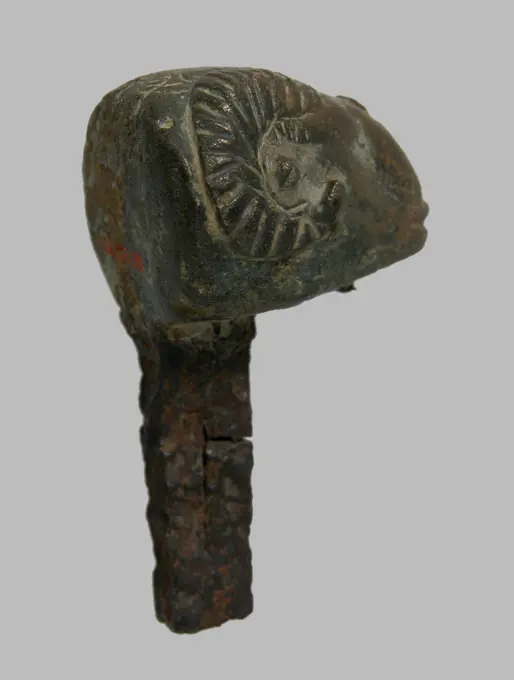
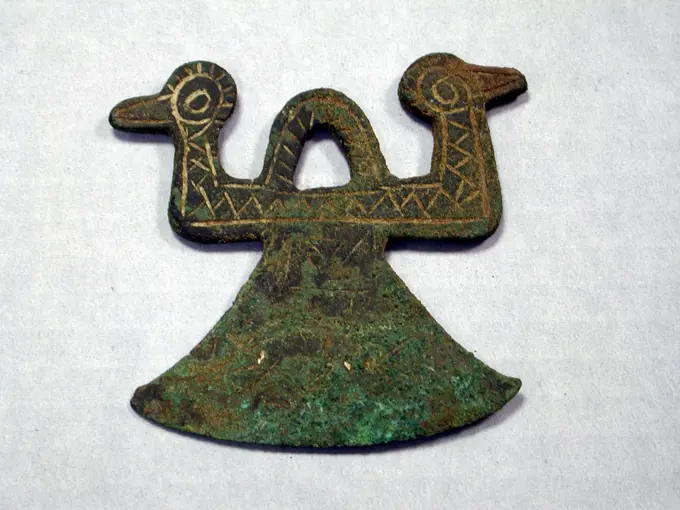
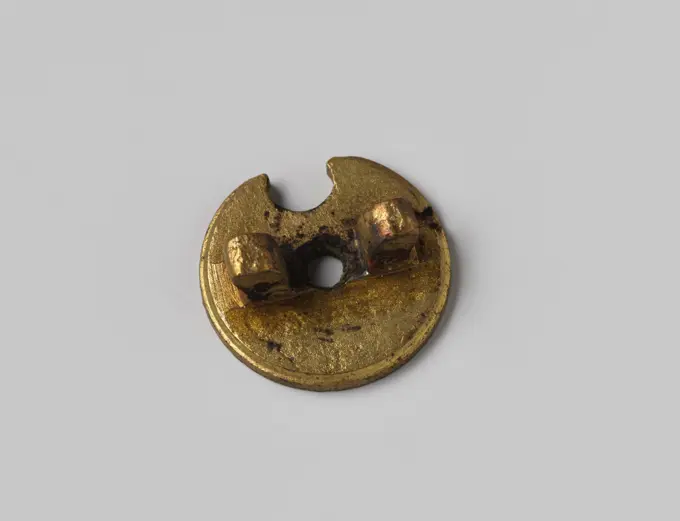
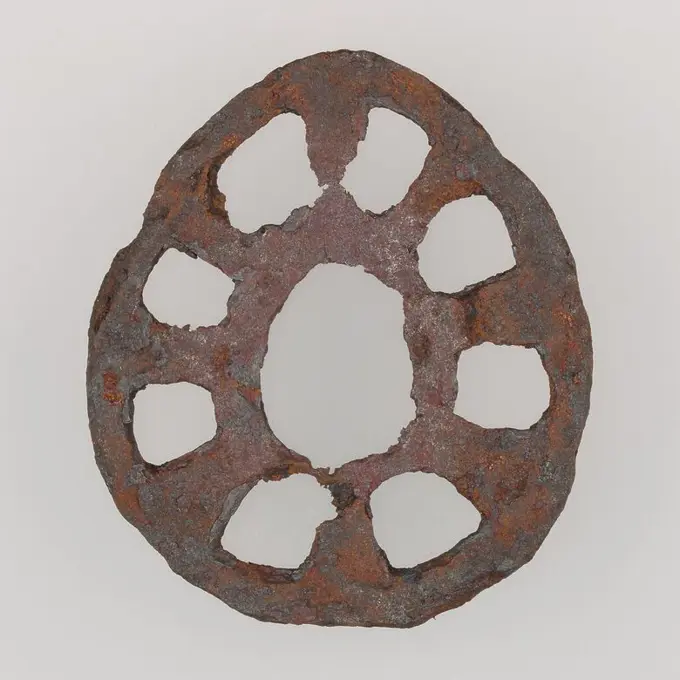
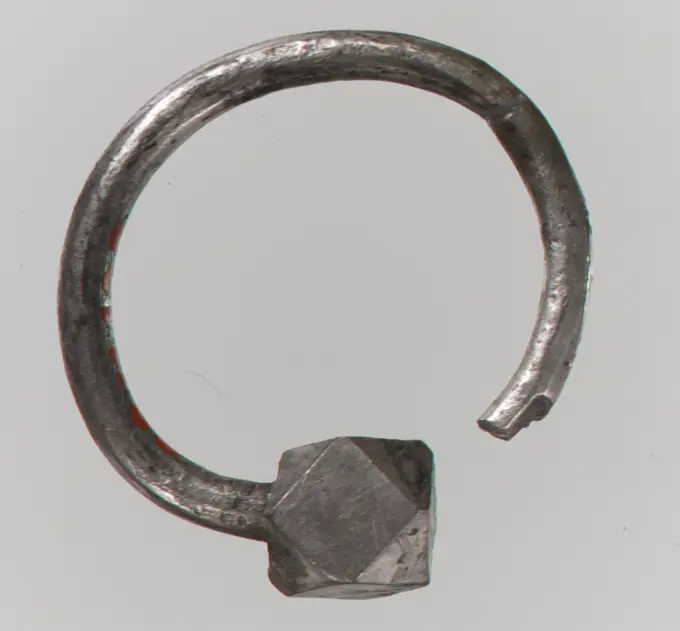
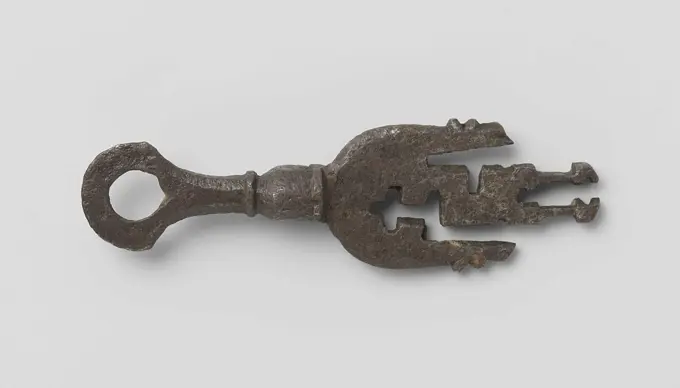
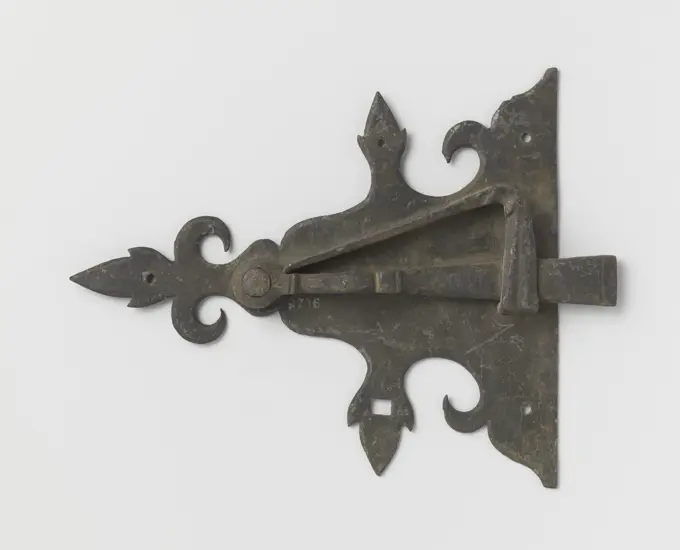
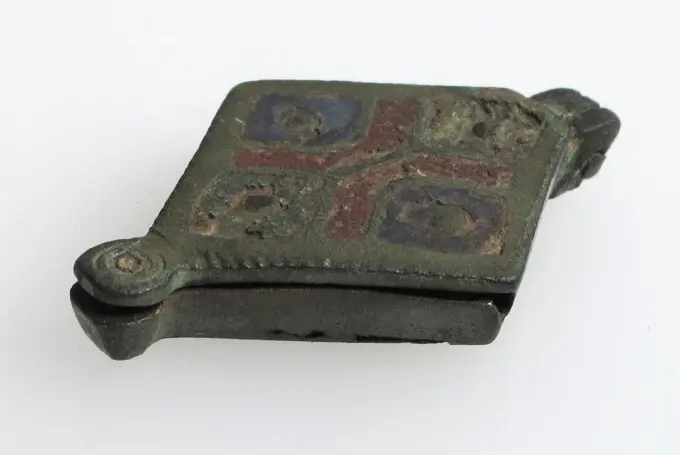
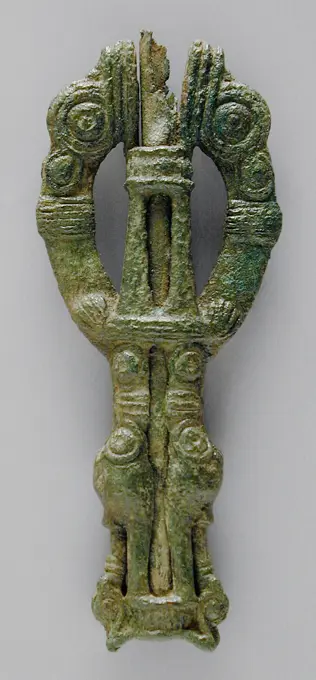
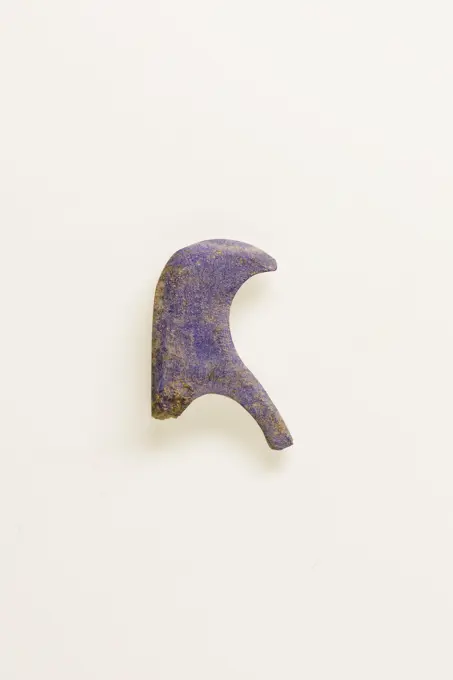
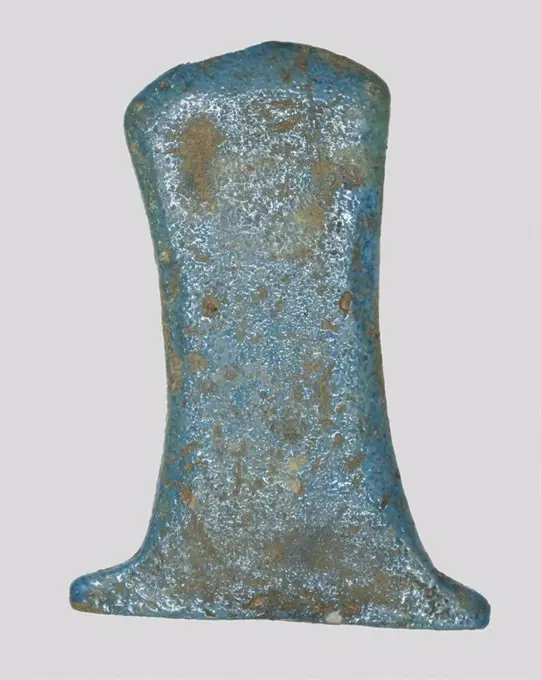
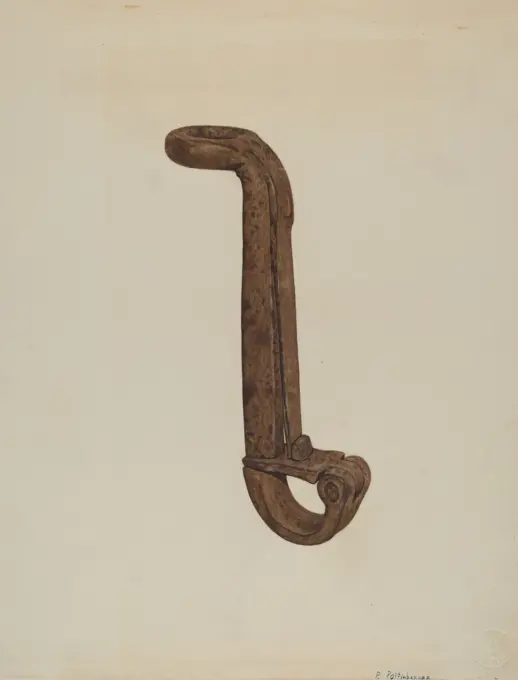
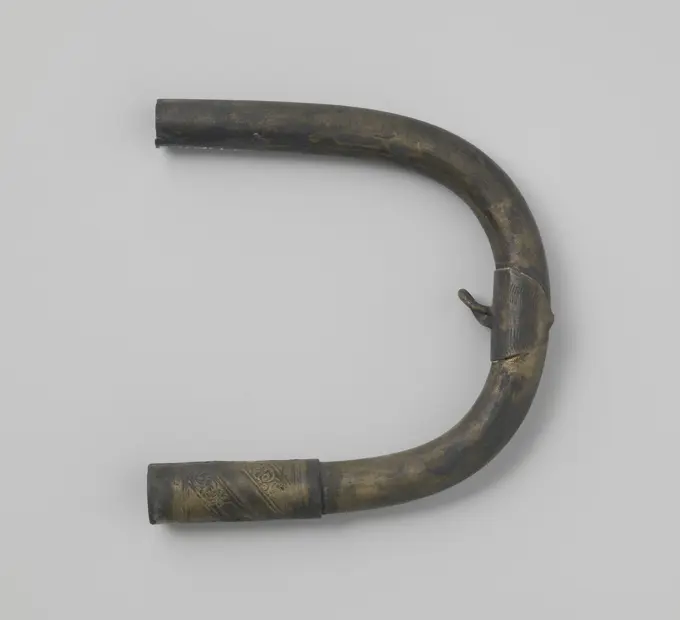
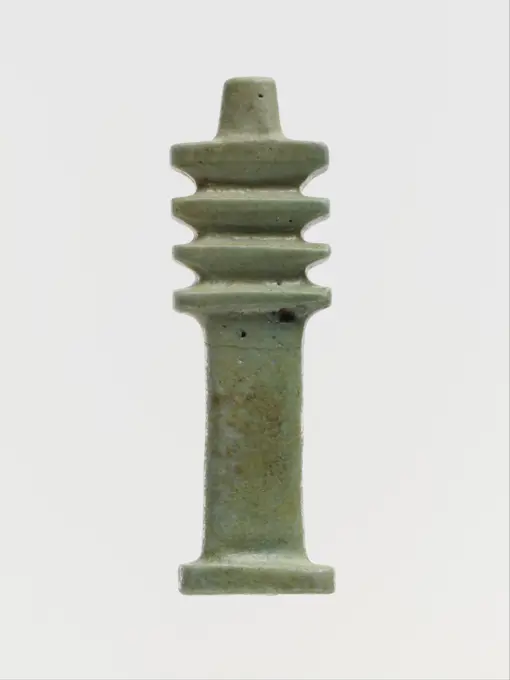
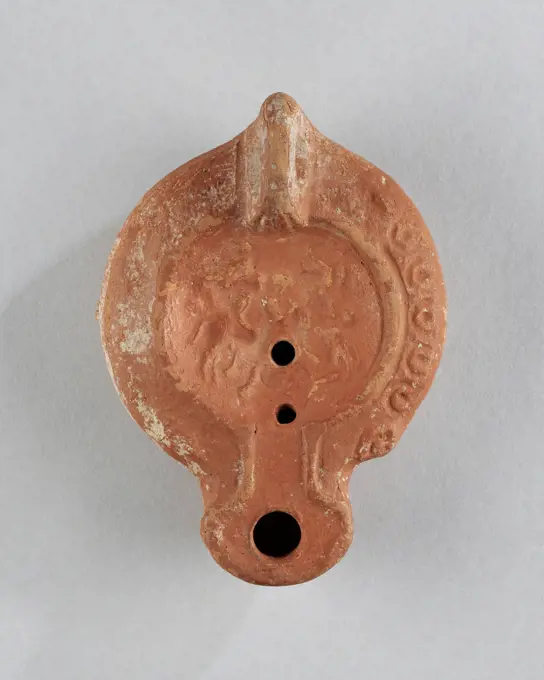
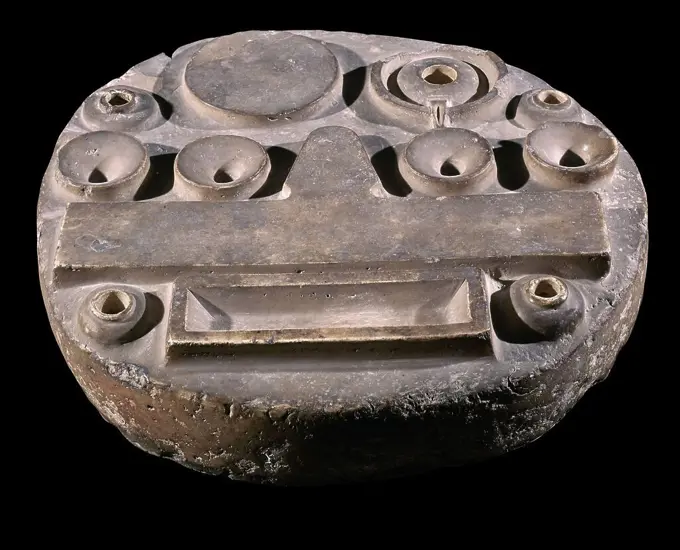
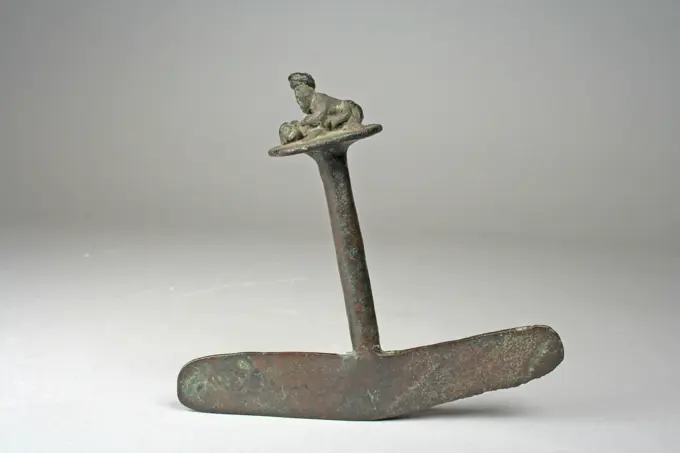
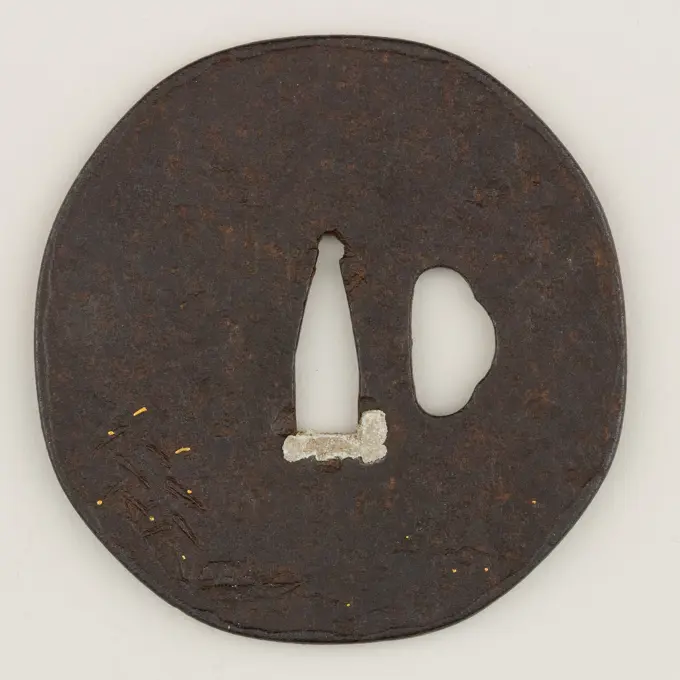
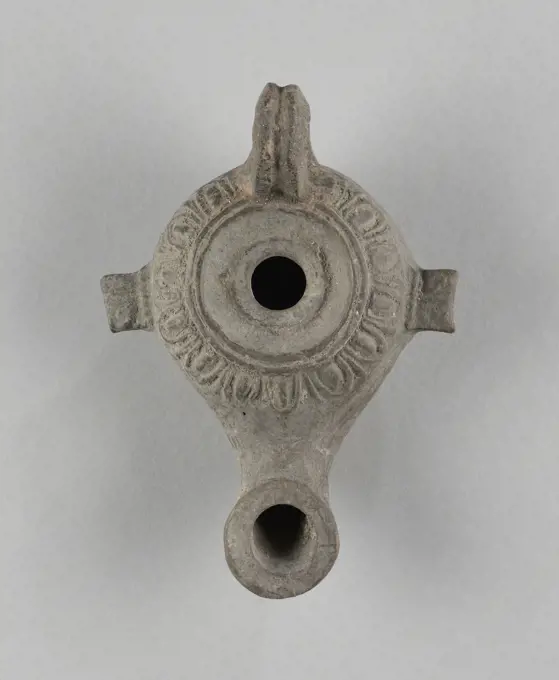
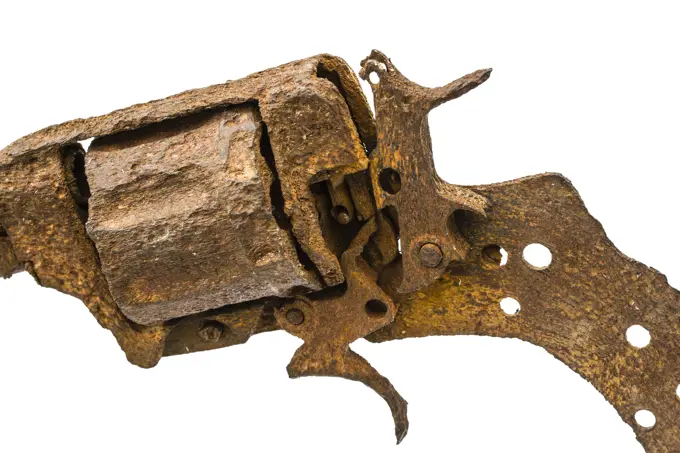
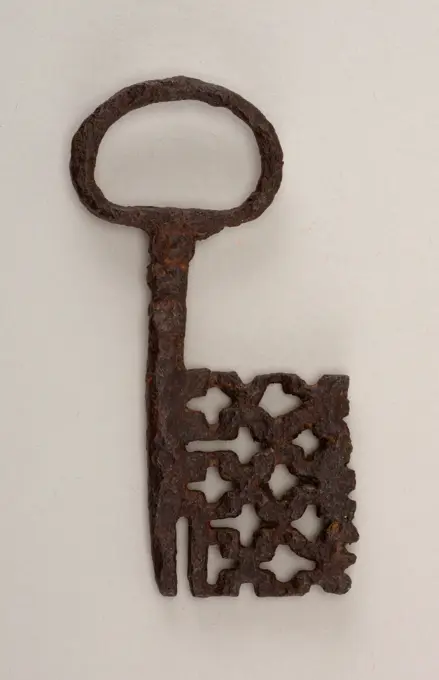
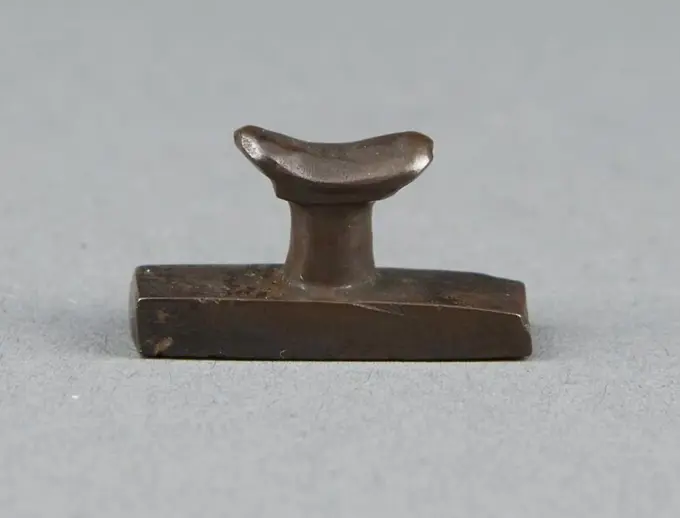
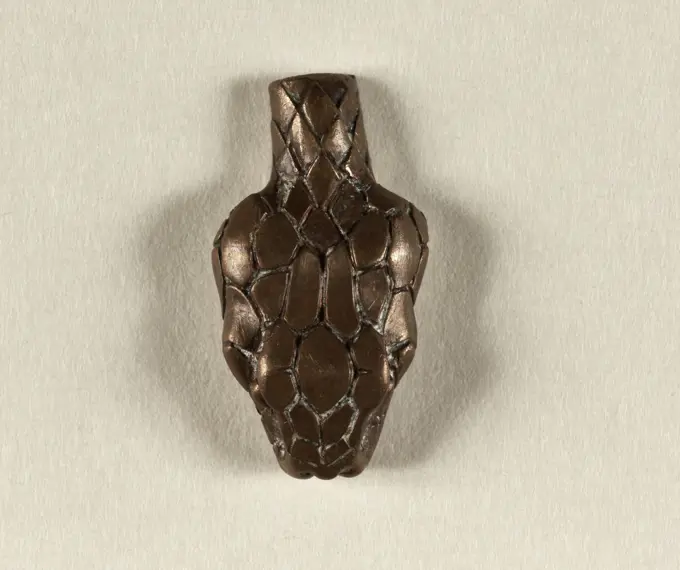
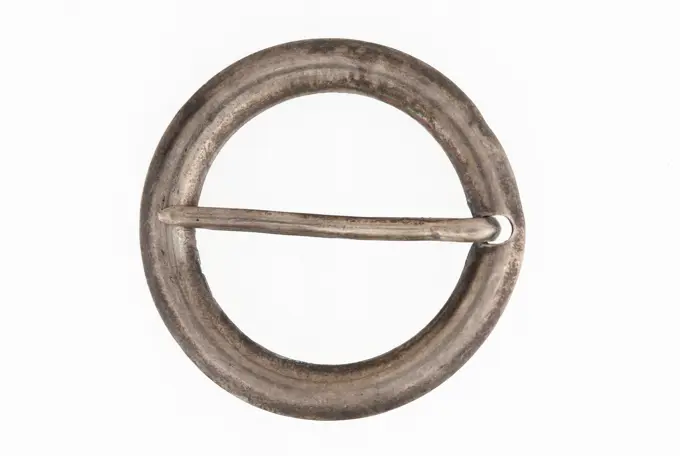
Bronze sanguisuga-type fibula (safety pin) 7th century B.C. Etruscan The bow is solid and decorated on its upper surface with a series of ridges. The head is formed by a spiral of two turns.. Bronze sanguisuga-type fibula (safety pin) 246349Flat Brooch 3rd century Late Roman. Flat Brooch 464942 Late Roman, Flat Brooch, 3rd century, Copper alloy, glass cabochon, Overall: 1 5/8 x 1 x 1/2 in. (4.1 x 2.6 x 1.2 cm). The Metropolitan Museum of Art, New York. Gift of J. Pierpont Morgan, 1917 (17.191.239)Key, 1200 - 1400 Key with whimsically shaped, diamond -shaped handle in which an oval eye and a shaft ending beyond the beard.  iron (metal) Key with whimsically shaped, diamond -shaped handle in which an oval eye and a shaft ending beyond the beard.  iron (metal)Bronze phallic amulet 1st century A.D. Roman The form of this phallic amulet is unique. Commonly, the phallus and arm project from a central pubis or scrotum. On this unusual pendant, the two extensions meet at a central cylinder, creating the appearance of arms extending from a torso.. Bronze phallic amulet 255090 Roman, Bronze phallic amulet, 1st century A.D., Bronze, W. 1 3/16 in (5.6 cm.). The Metropolitan Museum of Art, New York. Gift of A. Hyatt Mayor, 1960 (60.117.5)Fibula Cypriot. Fibula 244434Door knocker. A door knocker.Ax in Two Pieces 500 B.C.-A.D. 300 Thailand. Ax in Two Pieces. Thailand. 500 B.C.-A.D. 300. Bronze. Bronze and Iron Age period. MetalworkBuckle With broad, rounded rim.. Buckle 246788Bronze fittings with stud and hook, batter clothing accessory clothing soil find bronze copper metal, cast bronze batter leather fitting with stud including square plate with round hole in it. Possible frame for belt hanger archeology Rotterdam rail tunnel belt belt to carry rugs Soil discovery: trajectory rail tunnel Rotterdam.Sleutel met ruitvormige greep.Key with diamond-shaped handle, in which a large hole is saved. The pointed shaft ends under the deeply incised beard.Fragment of an Appliqué. UnknownKey. Key with loose ring, which widens below. The square beard has two openings.Amulet. Western Inner Mongolia, 5th-3rd century B.C.. Jewelry and Adornments; amulets. Bronze, castSword Guard (Tsuba). Culture: Japanese. Dimensions: Diam. 3 in. (7.6 cm); thickness 3/16 in. (0.5 cm); Wt. 3.9 oz. (110.6 g). Date: 18th century. Museum: Metropolitan Museum of Art, New York, USA.Brooch 3rd century Roman. Brooch 465844 Roman, Brooch, 3rd century, Champlev enamel, bronze, Overall: 2 1/8 x 1 x 7/8 in. (5.4 x 2.5 x 2.3 cm). The Metropolitan Museum of Art, New York. Gift of J. Pierpont Morgan, 1917 (17.194.1918)Copper or bronze belt tongue with three-lobed end, fitting belt accessory soil finding copper bronze metal, Double fitting narrow tapering and ending in stylized acorn . Two holes for nails and two openwork circles and an oval archeology. Rotterdam rail tunnel confirm Soil discovery: route Rotterdam rail tunnel.Portion of bag clip, brace belt bag bag holder soil find brass bronze metal, cast bracket of bag with oval hanging loop for attachment to belt Hinged frame. Fully decorated archeology store carry transportStandard Finial. Iran, Luristan, Luristan bronzes, circa 1350-800 B.C.. Architecture; Architectural Elements. Bronze, castShips essentials, anonymous, c. 1590 - c. 1596  Ship section, a Schinkelhaak, loose.  iron (metal) forging  Nova Zembla. Saving HuysBronze tweezers ca. 2900-1050 B.C. Minoan Tweezers.. Bronze tweezers 252407 Minoan, Bronze tweezers, ca. 29001050 B.C., Bronze, L. 2 /38 in. (6 cm). The Metropolitan Museum of Art, New York. Bequest of Richard B. Seager, 1926 (26.31.487)Arrowheads, needles, hooks and harpoons. Culture: Japan. Dimensions: W. 1 3/8 in. (3.5 cm); L. 2 1/2 in. (6.4 cm). Museum: Metropolitan Museum of Art, New York, USA.Solid Open Bangle with Attached Scrolls at Ends 500 B.C.-A.D. 300 Thailand. Solid Open Bangle with Attached Scrolls at Ends 53870Amulet of the Goddess Tawaret (Thoeris). Egyptian. Date: 1550 BC-1069 BC. Dimensions: 2.5 × 1.3 × 0.3 cm (1 × 1/2 × 1/8 in.). Faience. Origin: Egypt. Museum: The Chicago Art Institute, Chicago, USA. Author: Ancient Egyptian.Lamp, South Anatolia, Anatolia; 2nd century; Bronze; 13 × 8.4 × 7.8 cm (5 1,8 × 3 5,16 × 3 1,16 in.)Fibula, boat-shaped type 8th-6th century B.C. Italic The bow is hollow and broken on its underside. The outer side is decorated with incised lozenges.. Fibula, boat-shaped type. Italic. 8th-6th century B.C.. Bronze. BronzesFragment of a buckle (), C. 1400 - c. 1950 Fragment of a bronze buckle (). Roman () unknown bronze (metal) casting Fragment of a bronze buckle (). Roman () unknown bronze (metal) castingShoe spacer from the wreck of the East Indies Hollandia, Anonymous, 1700 - in Or Before 1743  Schoengesp. Buckle, chape buckle, shoe buckle; (4)fragm(1): (1) ring (5.9x4.1, 0.3t) squashed, moulded, (1) spindle, (1) tongue, (1) single-pronged loop. Netherlands tin (metal)   SecondFragment from the wreck of the East Indies Hollandia, Anonymous, 1700 - in or Before 1743 fragment Varied parts or fragments, sheet metal fragments: worked, with circular, rectangular or square holes; (1) fragm, eroded; flat, semicircular side (4.7l, 2.5w, 0.15t), 1 circular hole (1.2d). Netherlands copper (metal)   SecondMiniature Silver Double Spout Bottle 11th-late 15th century Chimú or Chancay. Miniature Silver Double Spout Bottle 308927Top of Key Handle 1st-7th century Roman. Top of Key Handle 462922Amulet of a Djed Pillar 664 BCE-332 BCE Egypt. Faience . Ancient EgyptianBrooch -Musketvork, anonymous, c. 1590 - c. 1596  Muskulevolk.  iron (metal) forging  Nova Zembla. Saving HuysTap, c. 1400 - c. 1950 Bronze crane, belonging to a crane with invnr. BK-NM-1580-B.  bronze (metal) Bronze crane, belonging to a crane with invnr. BK-NM-1580-B.  bronze (metal)Ceremonial Knife (Tumi) 3rd century B.C.-A.D. 2nd century Vicús. Ceremonial Knife (Tumi) 315385Excerpt of copper from the wreck of the East Indians Hollandia, 1700 - in or before 1743 fragment Varied parts or fragments; unidentified and miscellaneous parts or fragments. Netherlands copper (metal)   SecondSword Guard (Tsuba). Culture: Japanese. Dimensions: H. 3 5/8 in. (9.2 cm); W. 3 1/4 in. (8.3 cm); thickness 1/4 in. (0.6 cm); Wt. 2.8 oz. (79.4 g). Date: ca. 3rd century-538. Museum: Metropolitan Museum of Art, New York, USA.. .Rectangular Plaque ca. middle of the 6th century Frankish. Rectangular Plaque 465526 Frankish, Rectangular Plaque, ca. middle of the 6th century, Copper alloy, Overall: 2 3/16 x 13/16 x 1/4 in. (5.5 x 2 x 0.7 cm). The Metropolitan Museum of Art, New York. Gift of J. Pierpont Morgan, 1917 (17.193.207)Fibula ca. 7th-5th century B.C. Iran. Fibula 325784Bracelet 9th-17th century Mali. Bracelet. Mali. 9th-17th century. Copper alloy. Mali, Inland Niger Delta region. Metal-OrnamentsDouble cut. A double cut (undisturbed).Fragment Tobacco Pipe, Johannis Lammoree, 1750 - 1770 Fragment tobacco pipe with a fish, a crown and the letters hl r on the head. Of the excavations on the Hofstede Arentsburg 1827-1831 under the supervision of Professor Reuvens. Schoonhoven pipe clay Fragment tobacco pipe with a fish, a crown and the letters hl r on the head. Of the excavations on the Hofstede Arentsburg 1827-1831 under the supervision of Professor Reuvens. Schoonhoven pipe clayPendant 15th-17th century European. Pendant. European. 15th-17th century. Bronze. Miscellaneous-Buckles & OrnamentFigurine. UnknownSilver Earring Ostrogothic 5th-6th century View more. Silver Earring. Ostrogothic. 5th-6th century. Silver. Metalwork-SilverSword Guard (Tsuba) 17th century Japanese A tsuba is a sword guard and part of a sword mounting. It is mounted between the swords blade and grip to protect the users hands.. Sword Guard (Tsuba) 34916Axe Grip Of A Shepherd's Staff. Hungary, 19th century. Arms and Armor; axes. Bronze, castForehead Plaque for a Horse. Western Iran, circa 1000-650 B.C.. Tools and Equipment; horse trappings. Bronze, hammeredStaff Finial with Two Projecting Animal Heads. Egypt, probably Roman Period (100 - 300 CE) or later. Architecture; Architectural Elements. BronzeThe Amsterdam apothecary and art collector Emmanuel Vita Israël. He donated his collection, comprising keys dating from Roman antiquity to the 19th century, to the Koninklijk Oudheidkundig Genootschap (Royal Antiquarian Society) in 1937. Vita Israël claimed that his key collection had grown more or less by accident: being one of the few collectors of keys, dealers automatically made their way to him.Knip, anonymous A sorner single cut. A sorner single cut.Door guide or lock plate. Handle from tinned iron. At the bottom of a large, round opening of a hinge. From there, two symmetrical leaf motifs, which split to the end. On both sides, a leaf motif curls into a volute.Socket wrench of steel. Steel scratch key with open beard, ring on the top right.Purse handle, Engraved silver, Shaped purse frame with inner frame, pivoting on two pins. Engraved with scrolls and oval medallions, front and back., The Netherlands, early 19th century, metalwork, Decorative Arts, Purse handleSeal Box 100-300 Roman. Seal Box 465842 Roman, Seal Box, 100300, Champlev enamel, bronze, Overall: 1 1/4 x 7/8 x 1/4 in. (3.2 x 2.3 x 0.6 cm). The Metropolitan Museum of Art, New York. Gift of J. Pierpont Morgan, 1917 (17.194.1916)Finial or Stand. Iran, Luristan, Luristan bronzes, circa 1350-800 B.C.. Architecture; Architectural Elements. Bronze, castDecorative batter from the wreck of the East Indies Hollandia, Anonymous, 1700 - in or Before 1743  Fitting, decorative fitting or fragment; fragm, id. NG 1980-27H1133, central excutcheon, eroded. Netherlands lead (metal)   SecondFragment of wing inlay Late Period 522-343 B.C. View more. Fragment of wing inlay. 522-343 B.C.. Lapis. Late Period. From Egypt, Upper Egypt, Thebes, Southern Asasif, Unfinished Temple Site, MMA excavations, 1920-22. Dynasty 26Amulet of an Axe Blade. Egyptian. Date: 1550 BC-1069 BC. Dimensions: 4.8 × 3.5 × 0.5 cm (1 7/8 × 1 3/8 × 3/16 in.). Faience. Origin: Egypt. Museum: The Chicago Art Institute, Chicago, USA. Author: Ancient Egyptian.Paul Poffinbarger, Bucket Hooks, c 1938 Bucket HooksBuckle dated 1575 Italian, Pisa. Buckle. Italian, Pisa. dated 1575. Brass. Tuscany. Miscellaneous-Buckles & OrnamentBrooch -Pyramidal Hollow Boss Middle of the 6th Century Frankish. Pyramidal Hollow Boss 465471 Frankish, Pyramidal Hollow Boss, Middle of the 6th Century, Copper alloy, Overall: 13/16 x 13/16 x 9/16 in. (2.1 x 2 x 1.4 cm). The Metropolitan Museum of Art, New York. Gift of J. Pierpont Morgan, 1917 (17.193.159)Brooch -Part of a natural trumpet from the wreck of the Dutch East India ship Hollandia, made by Georg Friedrich Steinmetz, Georg Friedrich Steinmetz, 1700 - 1735 musical instrument. wind instrument. trumpet. natural trumpet Trumpet from the wreck of the East Indies' t Vliegend Hart. See NG-1986-46-6 and -7.  brass (alloy)Lazio Roma Grottaferrata Museo18. Hutzel, Max 1960-1990 German-born photographer and scholar Max Hutzel (1911-1988) photographed in Italy from the early 1960s until his death. The result of this project, referred to by Hutzel as Foto Arte Minore, is thorough documentation of art historical development in Italy up to the 18th century, including objects of the Etruscans and the Romans, as well as early Medieval, Romanesque, Gothic, Renaissance and Baroque monuments. Images are organized by geographic region in Italy, then by province, city, site complex and monument.Snaffle Bit 8th century B.C. Villanovan, possibly Bologna The snaffle bit is the simplest type of horse bit, and has an effect on the bars (part of the horses jaw without teeth) and the corners of the lips. The mouthpiece of this bit consists of two articulated straight canons passing through the eyelets of the cheekpieces. The latter, crescent-shaped, is decorated with an abstract geometrical pierced decoration forming two square loops at each point of the crescent (one is broken off on both cheekpieces), used for hanging it on the bridle. The reins would hang from the square rings attached to each side of the mouthpiece. When they were pulled, the cheekpieces would compress the corners of the lips, forcing the horse to stop. They would also help indicate the direction to the horse and keep the rings from pulling through the mouth.Horses had a great value among Villanovan and Etruscan societies. They were used for military and leisure purposes, and possessing them was an indicator ofFaience djed-pillar amulet 664-30 B.C. Egyptian Symbolic objects used for amulets include a menat-pendant, the djed-sign, and a papyrus capital, all common in Egyptian architecture. A pectoral used on mummies, a bunch of grapes or other clusters of fruit, and an inscribed bead are also represented.. Faience djed-pillar amulet 243781Oil Lamp Alexandrian workshopPrehistory, Italy, Iron Age. Bridge type fibula from the funeral objects found at San Marco dei Cavoti, province of Benevento.Plain Ring 7th century Frankish. Plain Ring 465498 Frankish, Plain Ring, 7th century, Copper alloy, Overall: 11/16 x 1/16 in. (1.8 x 0.2 cm). The Metropolitan Museum of Art, New York. Gift of J. Pierpont Morgan, 1917 (17.193.182)Drain pipe with a 'fastening ring' with five holes. Drain tube with a 'fastening ring' with five holes for nails or screws at one end. Originally round tube with seam.Lamp, North Africa; 1st - 4th century; Terracotta; 2.7 x 7.9 x 11 cm (1 1,16 x 3 1,8 x 4 5,16 in.)Ancient Egyptian ibex-shaped spoon, New Kingdom, XVIII DynastyDagger Pommel possibly 9th-11th century probably Northern Europe. Dagger Pommel. probably Northern Europe. possibly 9th-11th century. Ivory. DaggersCanosan Oinochoe Fragment. UnknownCanosan Oinochoe Fragment. UnknownLeech Fibula. UnknownMESA DE OFRENDAS - IMPERIO ANTIGUO - V DINASTIA - ALABASTRO - PROCEDE DE SAQQARA - 50 CMS DIAMETRO. Location: EGYPTIAN MUSEUM. KAIRO. EGYPT.Copper Mace Head with Birds 3rd century B.C.-A.D. 2nd century Vicús (). Copper Mace Head with Birds 315282Copper Knife with Figure Handle 14th-15th century Inca. Copper Knife with Figure Handle 310566Sword Guard (Tsuba) 16th-19th century Japanese A tsuba is a sword guard and part of a sword mounting. It is mounted between the swords blade and grip to protect the users hands.. Sword Guard (Tsuba) 34911Spiked axe head ca. 1200-900 B.C. Iran. Spiked axe head 327326Lamp, Anatolia; 1st century; Terracotta; 3.6 × 8.1 × 12.2 cm (1 7,16 × 3 3,16 × 4 13,16 in.)Hand guard, anonymous, 1700 - 1900 Tsuba for a dagger with at the front in Iroe-Taka-Zogan geese and the moon above waves; Waves at the rear. Japan iron (metal). gold (metal). silver (metal) Tsuba for a dagger with at the front in Iroe-Taka-Zogan geese and the moon above waves; Waves at the rear. Japan iron (metal). gold (metal). silver (metal)Sword Guard (Tsuba) 17th century Japanese A tsuba is a sword guard and part of a sword mounting. It is mounted between the swords blade and grip to protect the users hands.. Sword Guard (Tsuba) 29966Four brass round buttons, connected together (semi-finished), knot clothing accessory semi-finished clothing soil find brass copper metal, cast Four brass (brass) knots The knots are connected and not cut off. At the edges traces of casting remaining archeology dress close knot maker knotting craft guildOld rusty pistol close-up, Isolated on white background Old rusty pistol close-up, Isolated on white background Copyright: xZoonar.com/OleksandrxKostiuchenkox 8905701Key; 1909-2-241Parts faucet from the wreck of the East Indieschief Hollandia. Tap: Fragm or Tap ID. NG 1979-521H, Spout and End Missing; Spigot, ID. NG 1980-27H903, Arrester Lug Missing, Marks Partly Legible.Hollow, profiled metal object, possible cord hanger or spout, part artifact foundations copper metal h 6,5, cast Hollow elongated object with five constricted parts and five pronounced parts archeology Rotterdam railway tunnel Soil discovery: trajectory rail tunnel Rotterdam.Amulet of a Headrest. Egyptian. Date: 664 BC-525 BC. Dimensions: 1.3 x 2.2 x 0.6 cm (1/2 x 7/8 x 1/4 in.). Hematite. Origin: Egypt. Museum: The Chicago Art Institute, Chicago, USA. Author: Ancient Egyptian.Leather carrier, anonymous, c. 1400 - c. 1950  Carrying band of leather.  leather. copper (metal)Horse Harness 10th-11th century. Horse Harness. 10th-11th century. Bronze; cast, silvered. Found Iran, Nishapur. MetalFibula 7th-6th century B.C. Etruscan. Fibula 245950Deraisme, Pierre-Georges (n.1859-D.1932), serpent head (main title), 1900. Petit Palais, Museum of Fine Arts of the City of Paris.Brooch -Buffe. Culture: Italian. Date: late 16th century. Museum: Metropolitan Museum of Art, New York, USA.Chimu vessel depicting a dwelling. This object illustrates the conquest of the kingdom of Chimor, whose most skilled craftsmen were taken to Cuzco. Ceramic. Chimu Culture (1100-1400 AD). Peru. Museum of the Americas. Madrid, Spain.