Antique Brooches and Pins

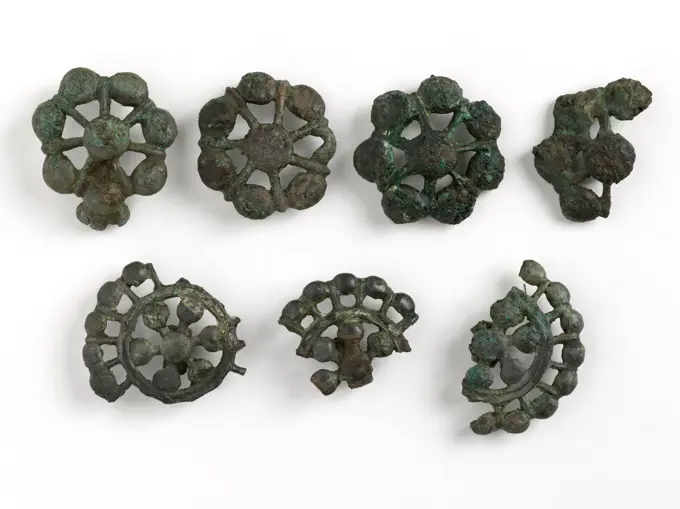
Historic metal artifacts including fibulas, brooches, and a unique phallic amulet, reflecting ancient craftsmanship.

Bronze fittings with stud and hook, batter clothing accessory clothing soil find bronze copper metal, cast bronze batter leather fitting with stud including square plate with round hole in it. Possible frame for belt hanger archeology Rotterdam rail tunnel belt belt to carry rugs Soil discovery: trajectory rail tunnel Rotterdam.
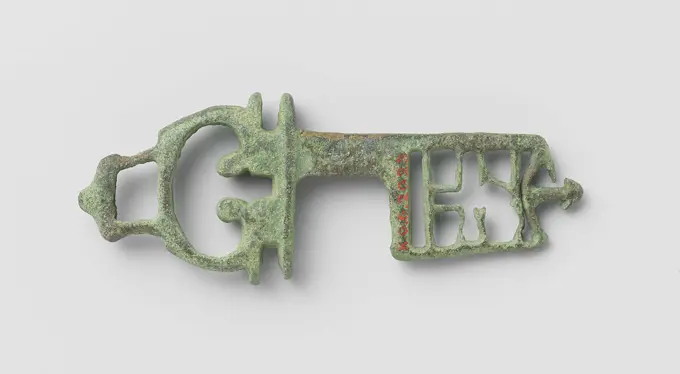
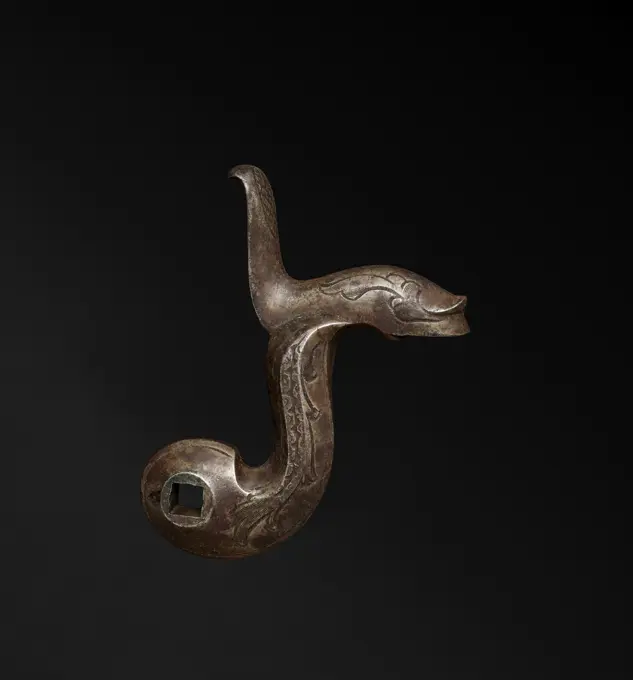
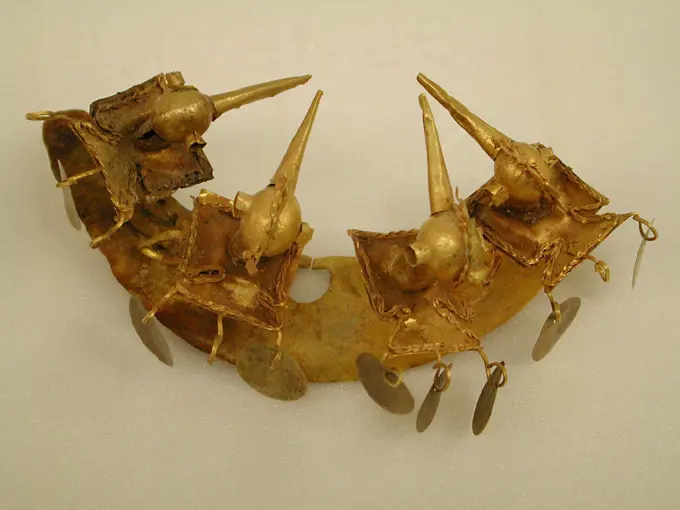
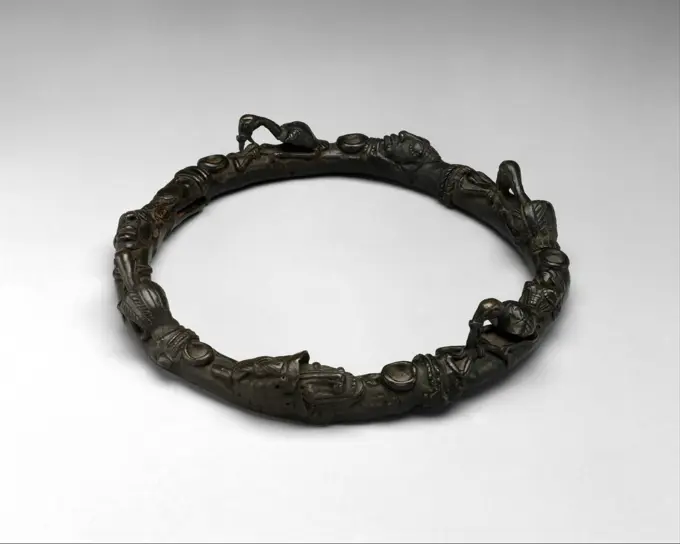
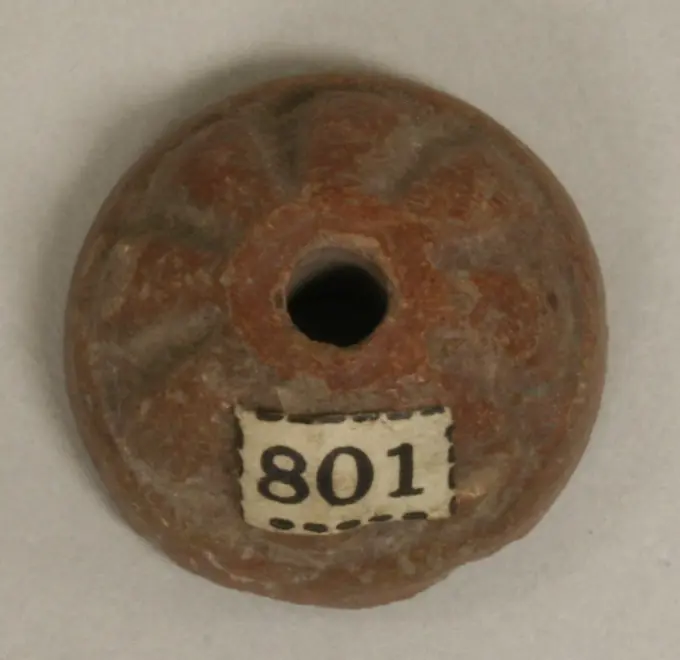
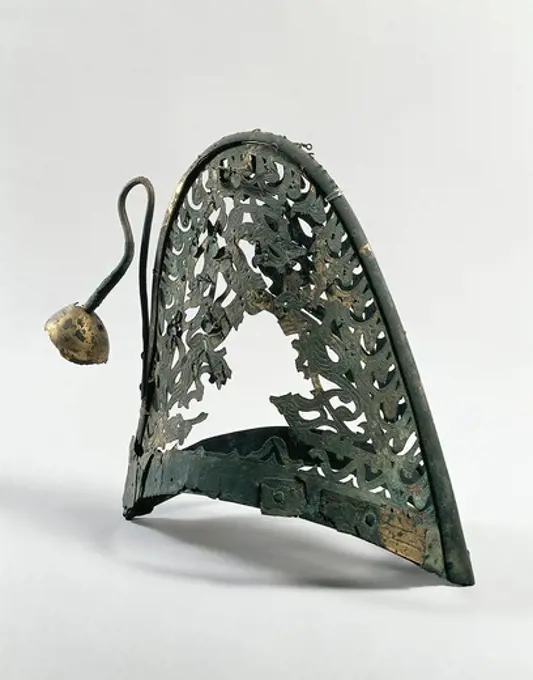
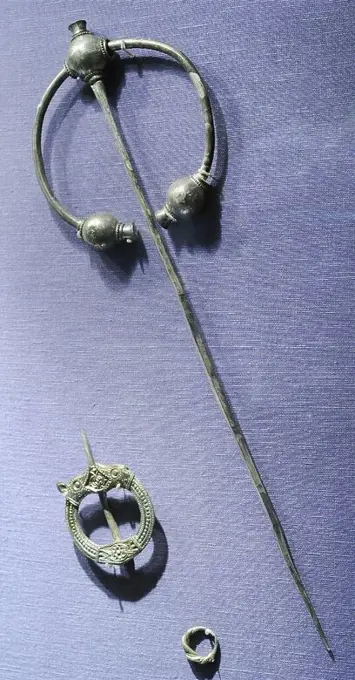
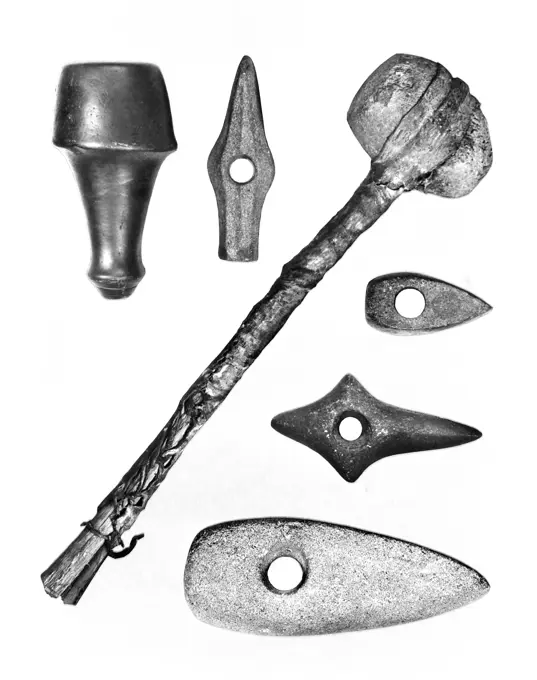
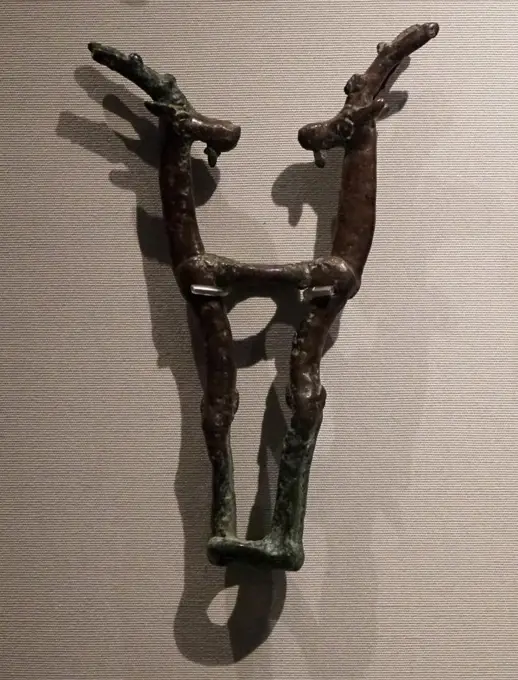
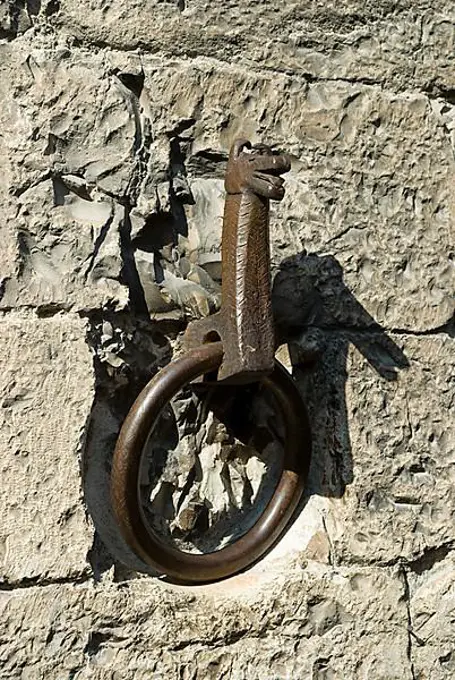
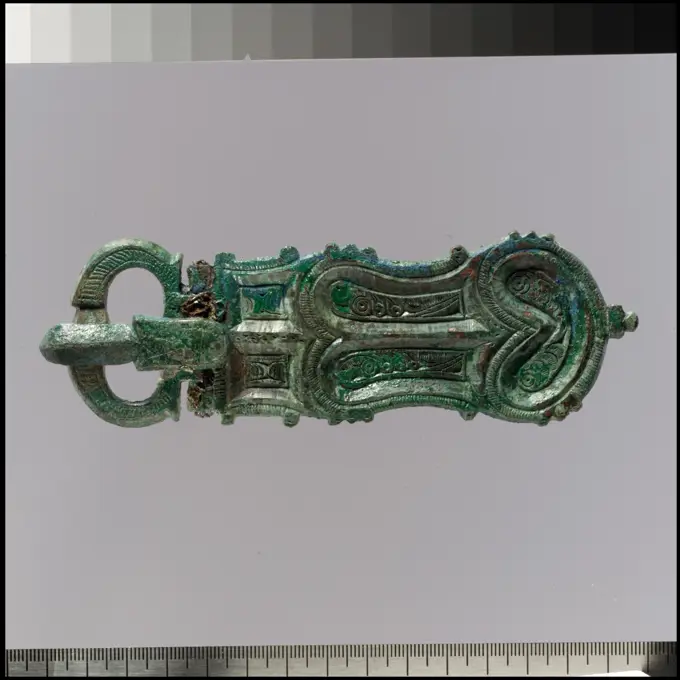
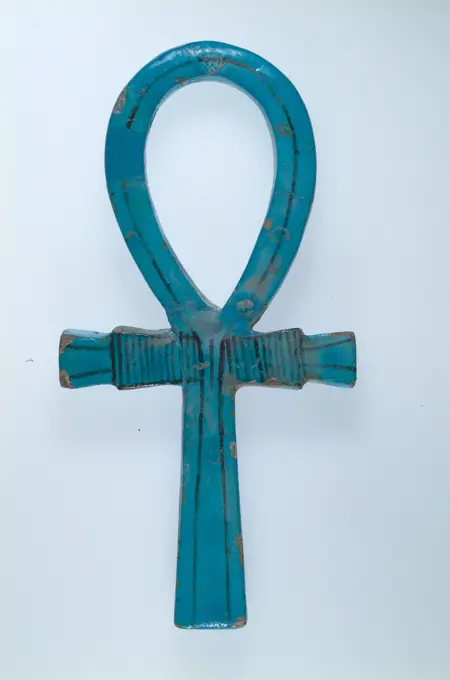
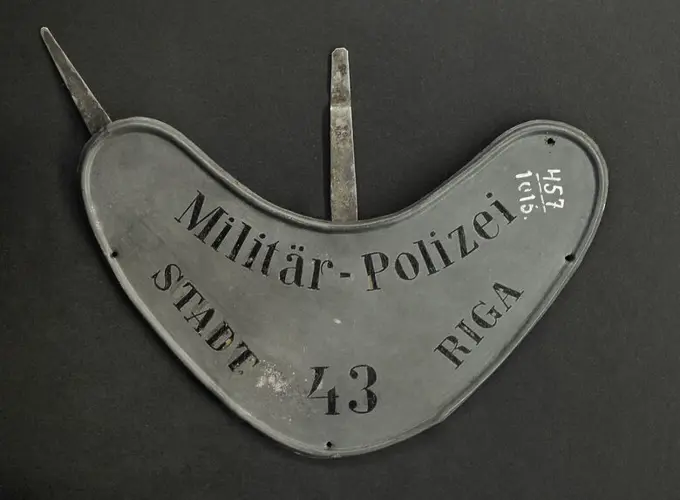
Snake, lizard, frog and mouse, c. 1550 - c. 1599 A dice snake (natrix tessellata), western emerald hhapedis (Laverta Bilineata), a brown or green frog and a mouse that bite or are bitten each other and are formed into an elegant, oval composition. Italy bronze (metal) A dice snake (natrix tessellata), western emerald hhapedis (Laverta Bilineata), a brown or green frog and a mouse that bite or are bitten each other and are formed into an elegant, oval composition. Italy bronze (metal)Spindle Whorl 10th-early 16th century Mexican. Spindle Whorl 307698Gun-Lock Hammer, c. 1800-1825. England, early 19th century. overall: 6.4 x 3.8 cm (2 1/2 x 1 1/2 in.).Bracelet ca. 8th-7th century B.C. Iran. Bracelet 324419Fibula ca. 7th century B.C. Edomite. Fibula. Edomite. ca. 7th century B.C.. Bronze. Iron Age. Levant, TawilanPilgrim's Badge 15th century French. Pilgrim's Badge. French. 15th century. Lead. Metalwork-LeadSolomons, Maryland, USA Small pieces of a jigsaw puzzle.Double ointment bottle. Roman art. Jewelry. SPAIN. CATALONIA. BARCELONA. Barcelona. Archaeology Museum of Catalonia.Bell 11th century. Bell 453182Old key nut isolated on whiteVintage rusty padlock locked isolated on white background with clipping pathPendant or Jar-Top 3rd-12th century. Pendant or Jar-Top 446062Retro cartoon with texture. Isolated on White.Votive Container (Canopa) 15th-16th century Inca. Votive Container (Canopa) 315771Nose Ornament 2nd-3rd century Moche (). Nose Ornament 313407Altar Ring 17th-19th century Edo peoples The imagery of this brass ring relates to human sacrifice. Arrayed along the ring's circumference are three gagged and severed heads and four bound, decapitated bodies; vultures are depicted eating the remains. A much larger head, covered in vertical striations and wearing an elaborate, conical hat, is not gagged and likely represents a ruler rather than a sacrificial victim. Interspersed among these figurative elements are depictions of round pots meant to hold water and herbal medicines. Performed infrequently, such sacrifices were momentous occasions designed to strengthen and protect an entire community or kingdom.Rings of this kind have been found throughout the Benin kingdom, as well as at Yoruba capitals such as Owo, Ife, and Ijebu. Although largely similar to one another in form and function, such altar rings may be attributed to various brass-casting centers by virtue of their stylistic characteristics. This ring probably derives from aBracelet, Bronze, 1 Half of the 2nd millenium BC, Russia, St. Petersburg, State Hermitage, D 16Oval bag bracket, broken into two pieces, bracket belt bag bag holder soil find brass copper metal, die-cast stamped Short horizontal bar with oval loop for belt fastening and oval single arm with L-section. At the rear six holes for bag attachment. On the front side of this circle motifs and leaf motifs in wells archeology Rotterdam City Triangle Oostplein Newport store storage transport store Earthfreight: Oostplein end Nieuwe Haven 1985.Hafted Ax ca. 500 B.C.-A.D. 300 Indonesia. Hafted Ax. Indonesia. ca. 500 B.C.-A.D. 300. Bronze. Bronze and Iron Age period. MetalworkSpindle Whorl 10th-early 16th century Mexican. Spindle Whorl 307577Crown, Kofun periodScandinavia. Penannular brooch. As, tonsberg, Vestfold. 10th-11th century. Penannular brooch, Dymes, Eigersund, Rogaland, 10th century. Finger ring, Nesseby, Finnmark, 10th-11th century. Norway. Historical Museum. Oslo. Norway.Primitive Stone Hand ToolsPins, ornaments. Bronze. Caucasus. Second half of the 2nd millennium BC. Paris, Cernuschi museum. 35407-7 Spindle, bronze, ornamentInkstand 18th century German, Westerwald. Inkstand 191295Metal idol-standards decorated with animal scenes from Lorestan Province. Dated 9th Century BCFragment of a Bowl 14th-15th century. Fragment of a Bowl 445444Helmet. from Pomeroy Castle. England. from the 12th century. from the book The British Army. 1868. Historical. digitally restored reproduction from a 19th-century originalSweden, Blekinge, Blekinge, Karlskrona, Karlskrona, external marina (depicted, town).Sweden, Blekinge, Blekinge, Karlskrona, Karlskrona, External War Gogs (depicted, City)Stone Pendant before 16th century Mexican. Stone Pendant 317390Ring used to tie up horses, Gubbio, Umbria, Italy, EuropeGlass Fragment. Culture: European. Dimensions: Overall: 6 x 4 in. (15.2 x 10.2 cm). Date: 15th-16th century. Museum: Metropolitan Museum of Art, New York, USA.Old rusty gear Old rusty gear, isolated on white background Copyright: xZoonar.com/OleksandrxKostiuchenkox 4032157Lyre-Shaped Belt Buckle 600-700 Hispano-Visigothic Composed of three separately cast elementstongue, loop, and plaquethis buckle's configuration evokes the designation "lyre shaped." Aside from the tongue, the borders of the lyre design are in the highest relief, and portions of them are chased with diagonal striations. The smooth inner edges of the borders slope down to the depressed areas, which are filled with deeply engraved lines and punched circles that represent highly abstracted foliate designs. The loop is chased with hatching and the end of the tongue with cross-hatching. The recessed reverse of the plate is fitted with five cast lugs for attachment to a now-lost belt.. Lyre-Shaped Belt Buckle 466177Ceremonial Implement in the Shape of an Ankh ca. 1400-1390 B.C. New Kingdom. Ceremonial Implement in the Shape of an Ankh 544840copper ring on the grave of the old cemeteryCollar, 1800s. France or Switzerland, 19th century. Embroidery; cotton on linen; overall: 87.6 x 8.9 cm (34 1/2 x 3 1/2 in.).The Amsterdam apothecary and art collector Emmanuel Vita Israël. He donated his collection, comprising keys dating from Roman antiquity to the 19th century, to the Koninklijk Oudheidkundig Genootschap (Royal Antiquarian Society) in 1937. Vita Israël claimed that his key collection had grown more or less by accident: being one of the few collectors of keys, dealers automatically made their way to him.First World War (1914-1918). German 8th Army's military police gorget of Riga's 43rd district (Latvia). Latvian War Museum. Riga. Latvia.