Antique Cabinets and Wardrobes

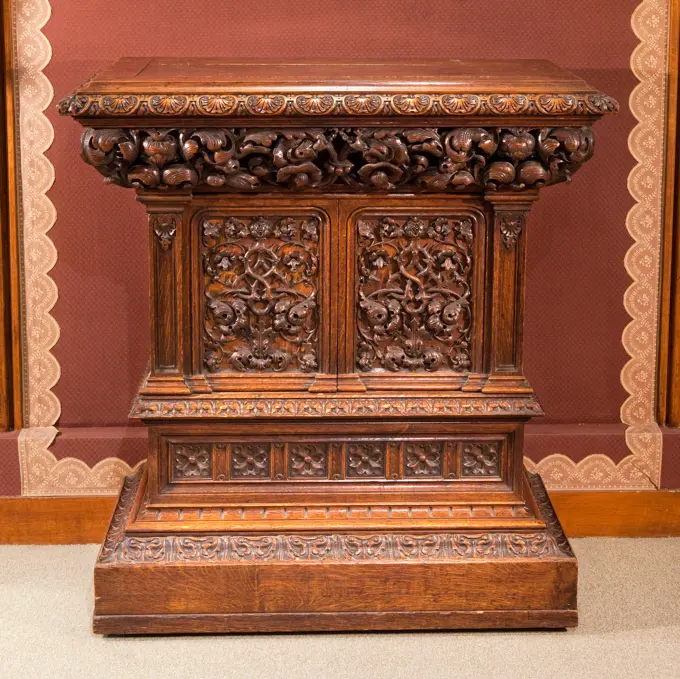
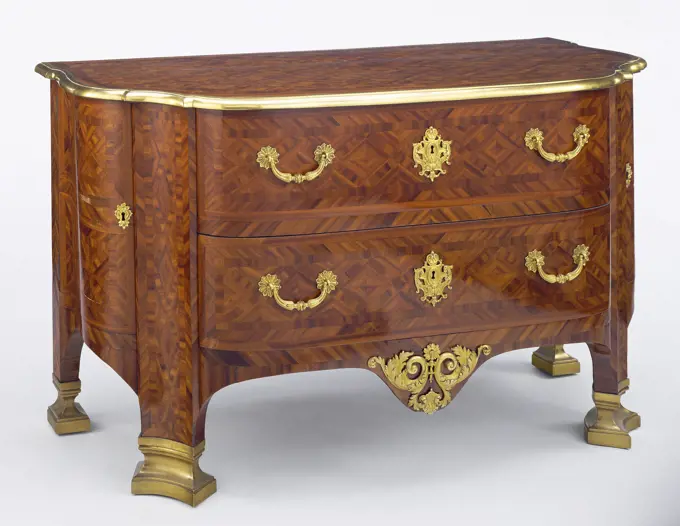
Images of vintage wooden cabinets and wardrobes showcasing craftsmanship and decorative styles from different eras, featuring intricate carvings and finishes.

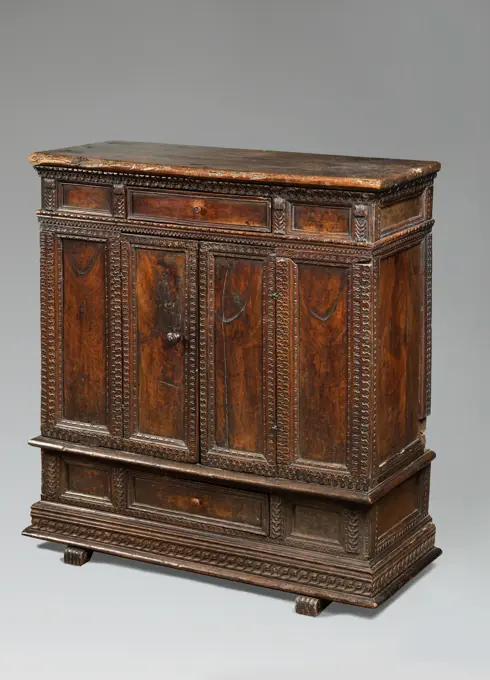
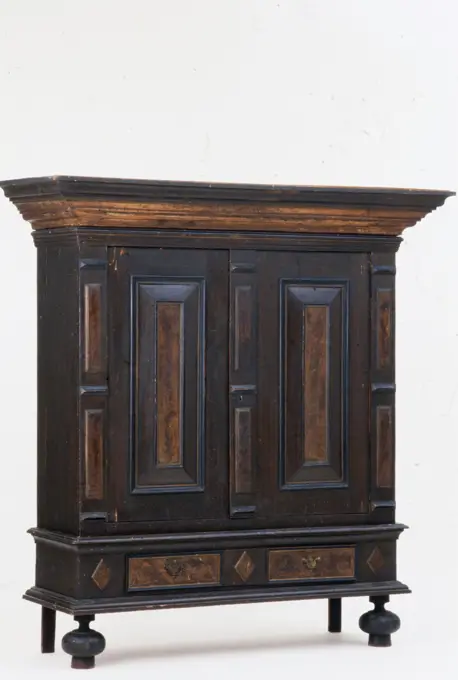
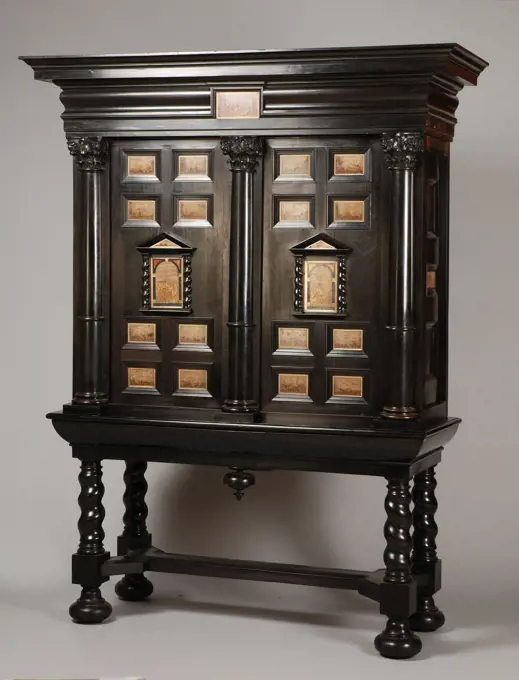
Zeeland cabinet, Anonymous, 1650 Zeeland cabinet of egg, ebbbe, palm and rosewood. The upper cabinet has two doors with panels with cartouches and grotesken, between three lion heads with ring. The middle rule consists of blocks with inserting between diamond heads. The doors of the higher base cabinet wear cornis panels. The central and corner styles each show a spurs, dripping, cannelure forces, diamond head and insert. Sides with corned upper panels and bottom panels with wide frames and billioned sills. Northern NetherlandsZeeland (possibly) wood (plant material). oak (wood). ebony (wood). boxwood. rosewood (wood) cutting Zeeland cabinet of egg, ebbbe, palm and rosewood. The upper cabinet has two doors with panels with cartouches and grotesken, between three lion heads with ring. The middle rule consists of blocks with inserting between diamond heads. The doors of the higher base cabinet wear cornis panels. The central and corner styles each show a spurs, dripping, cannelure forces
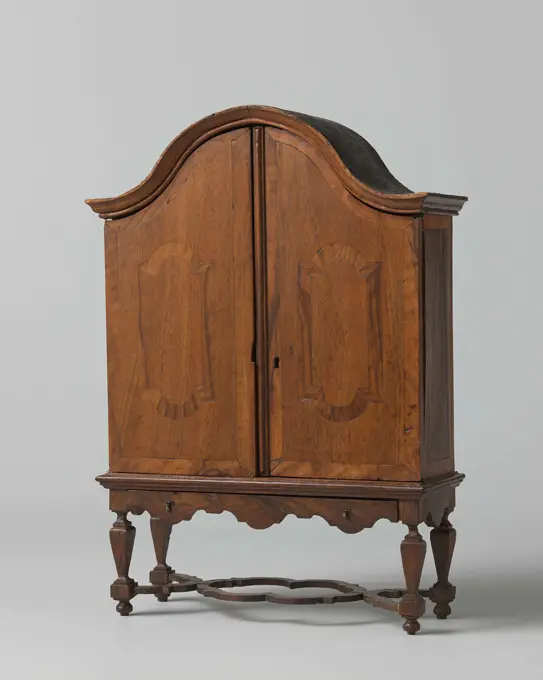
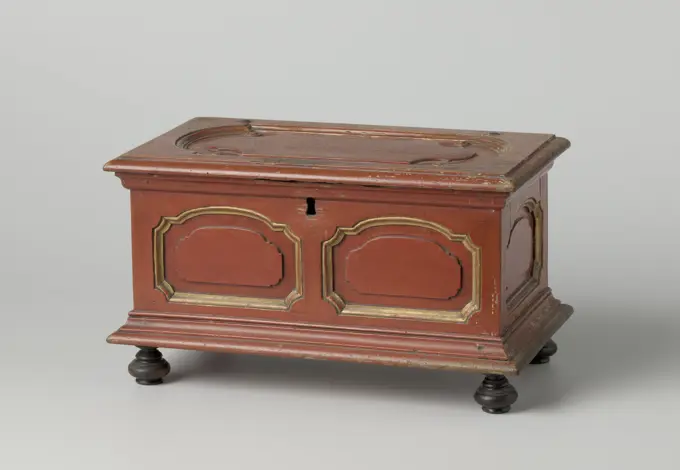
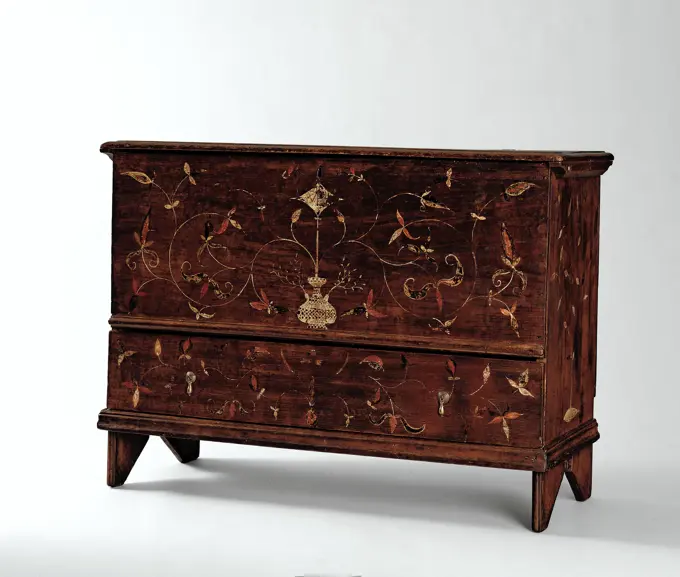
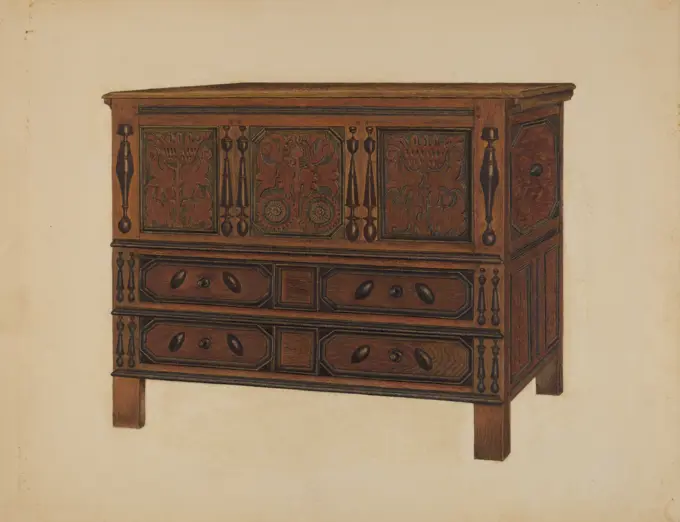
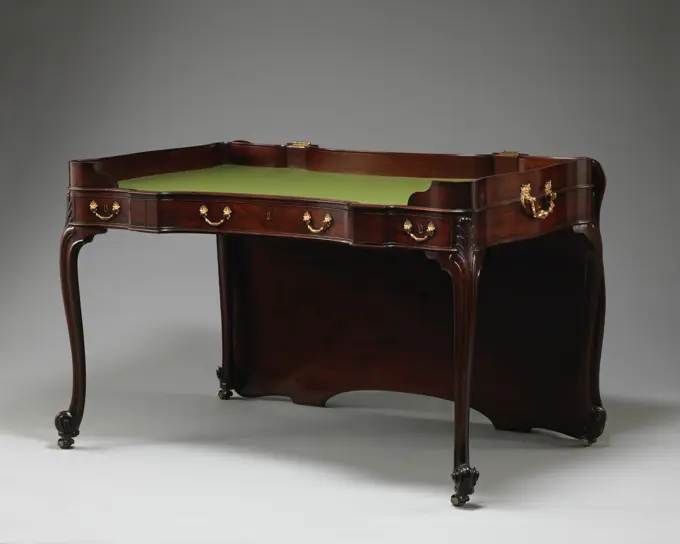
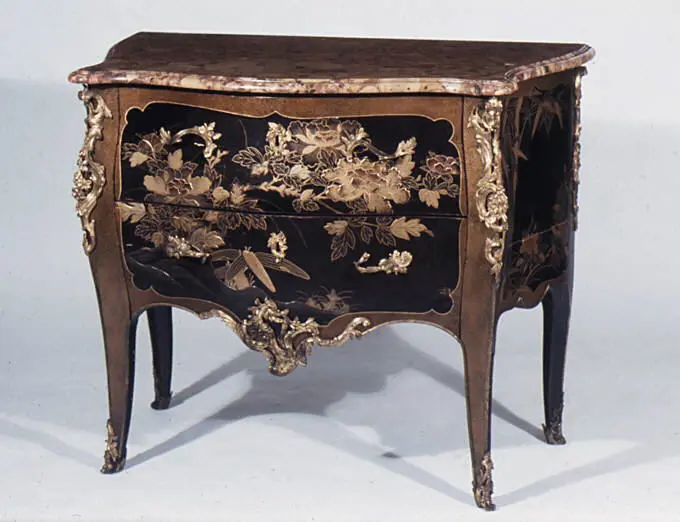
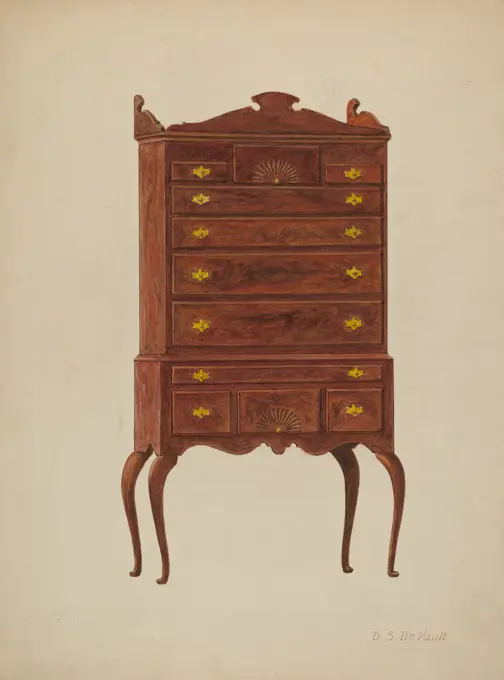
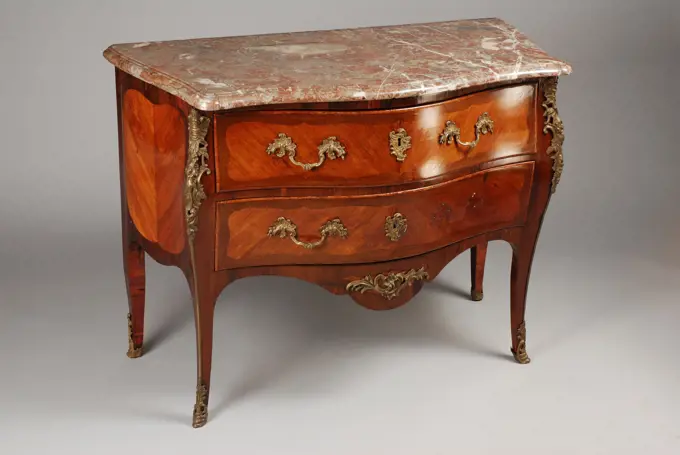
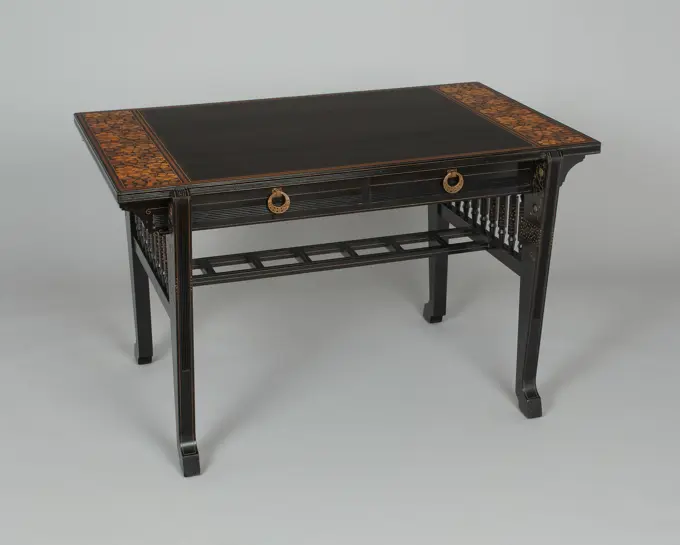
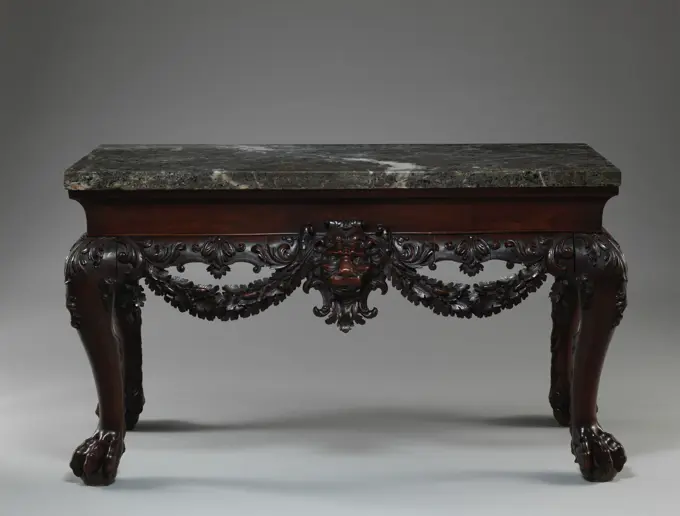
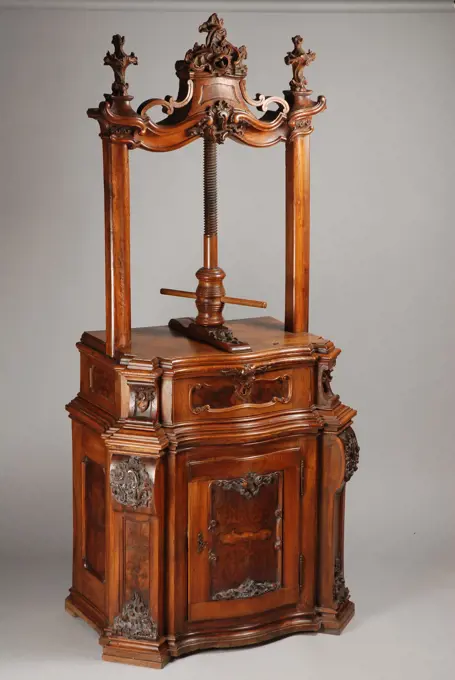
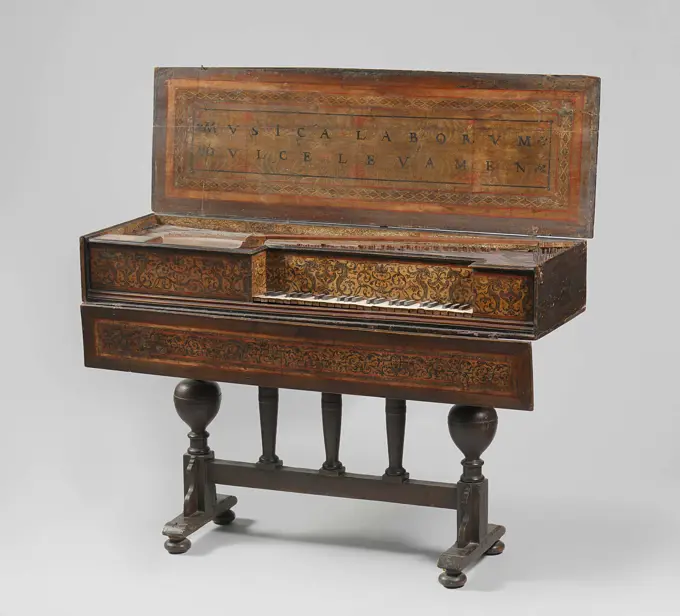
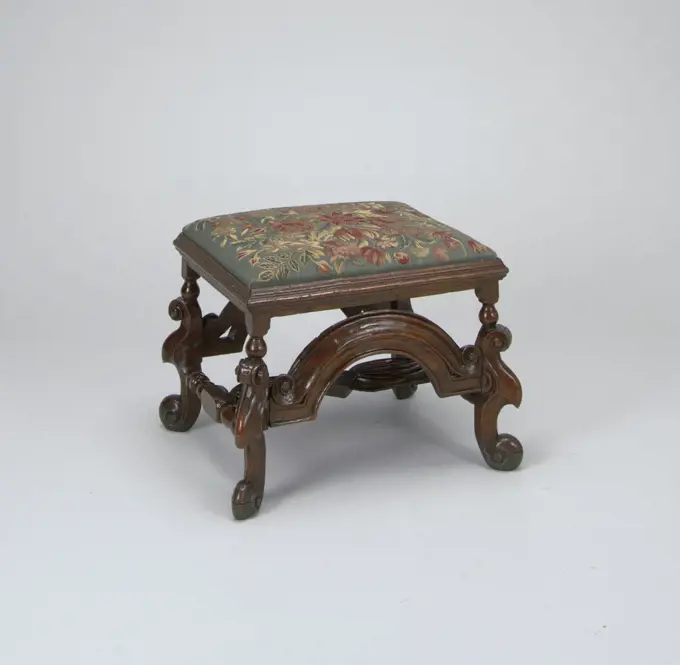
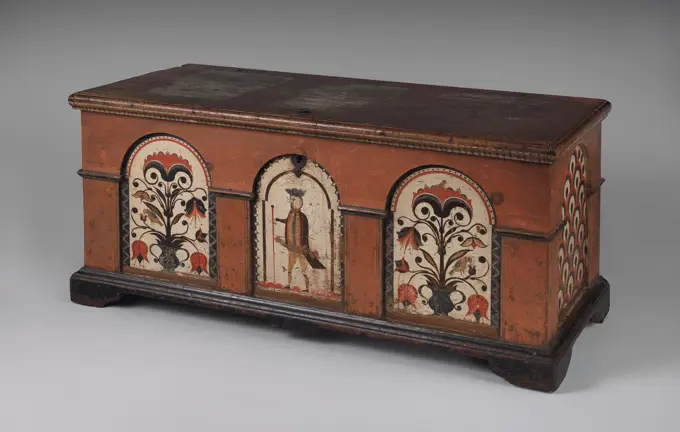
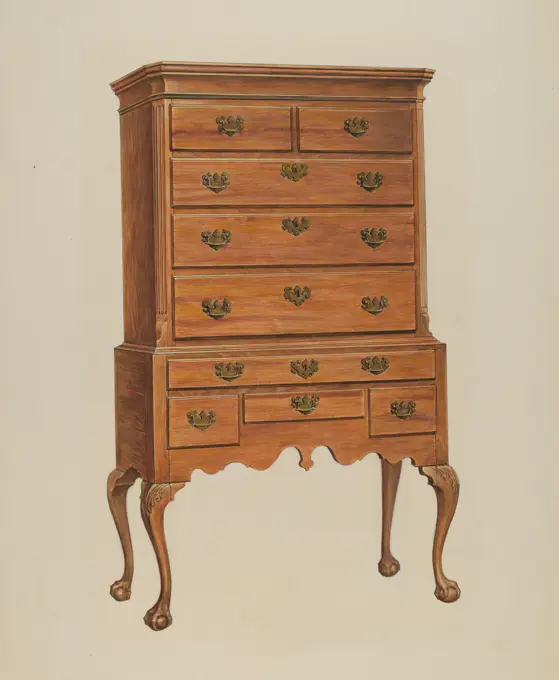
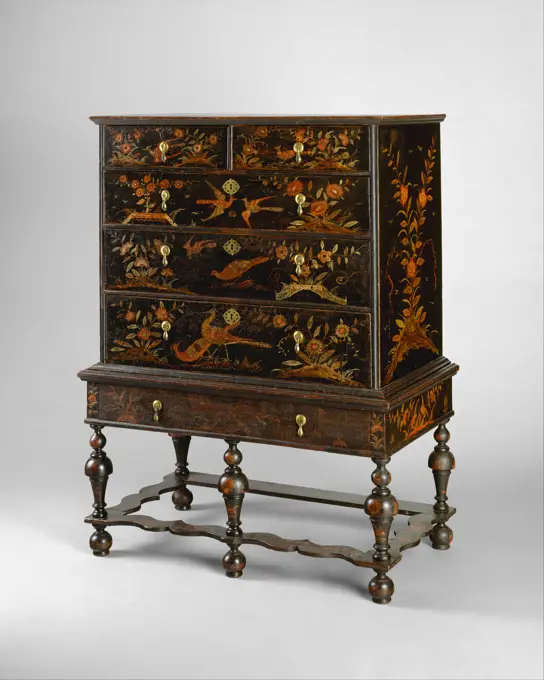
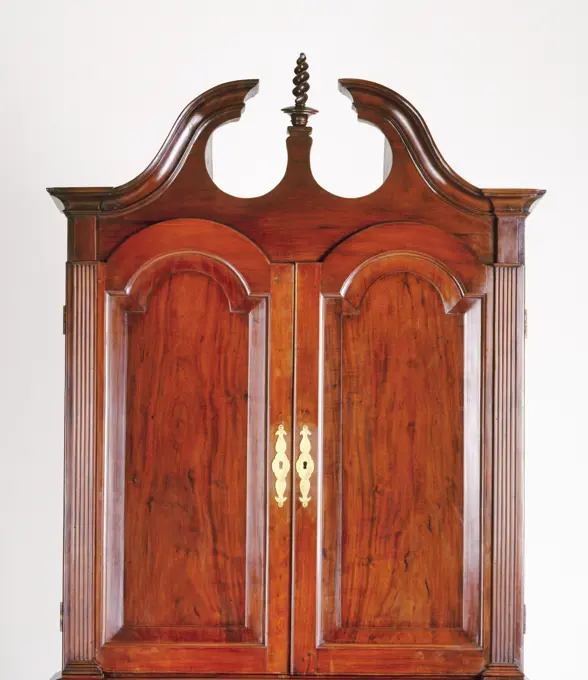
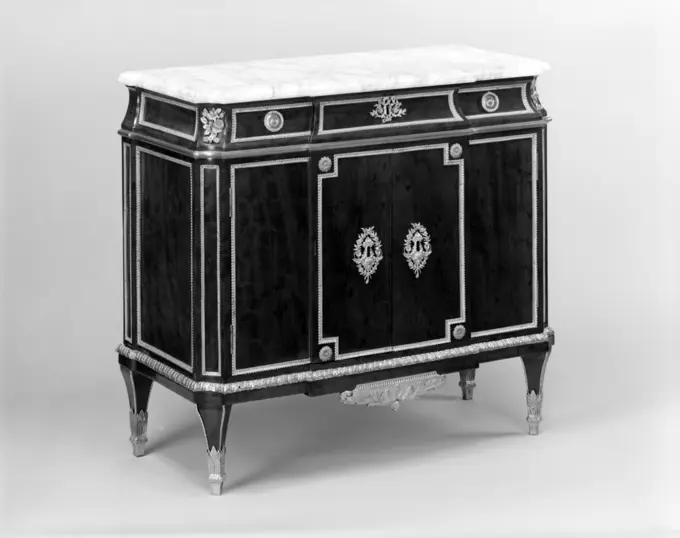
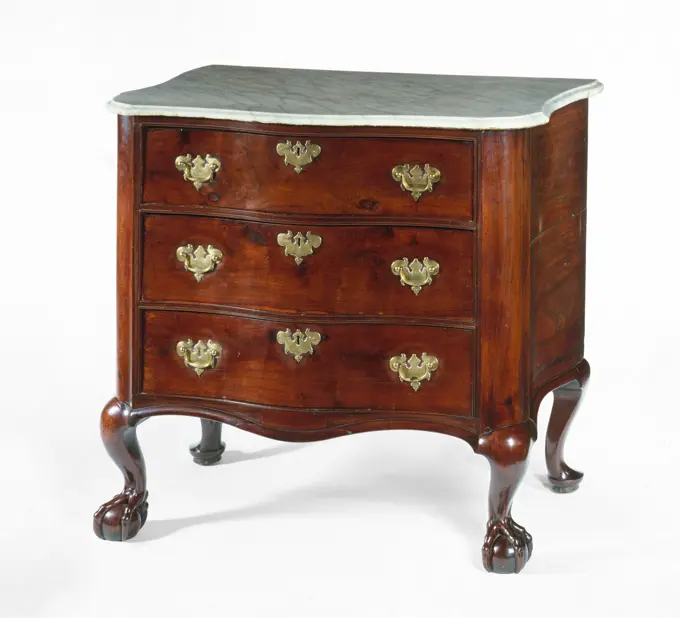
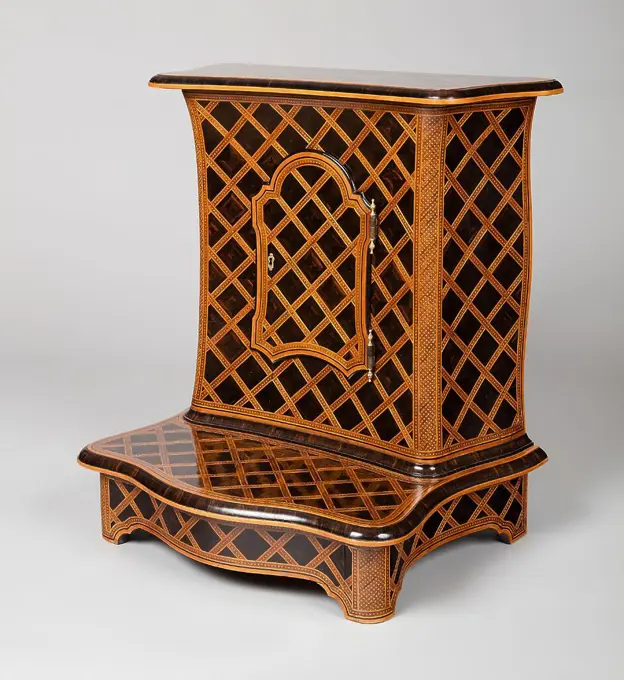
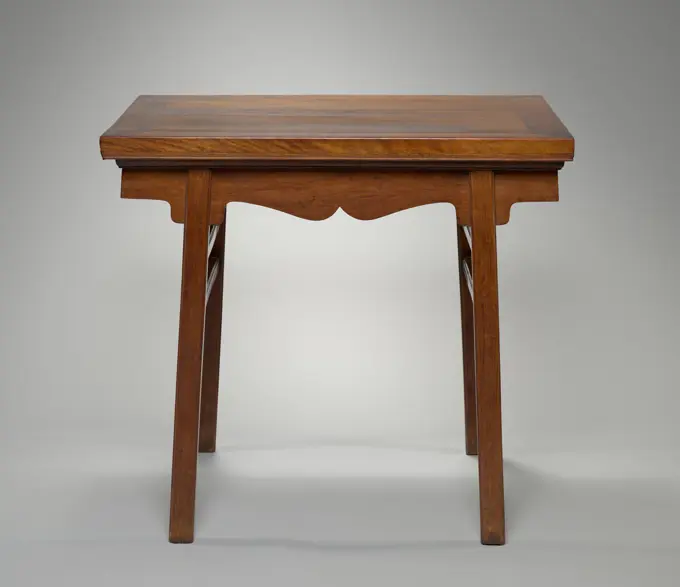
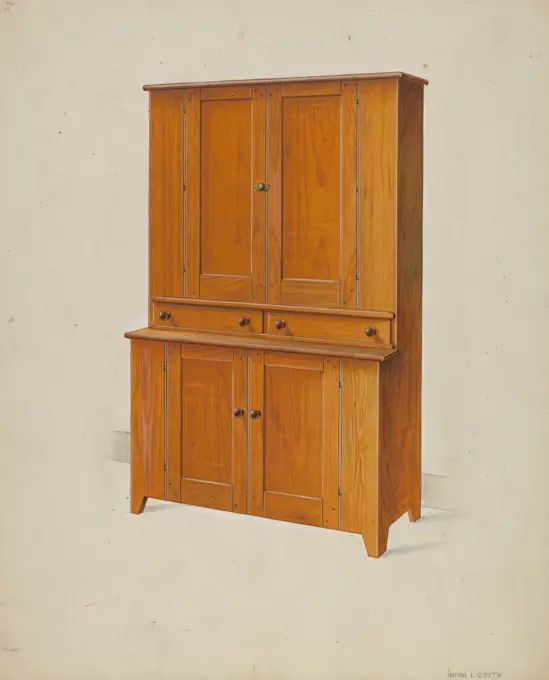
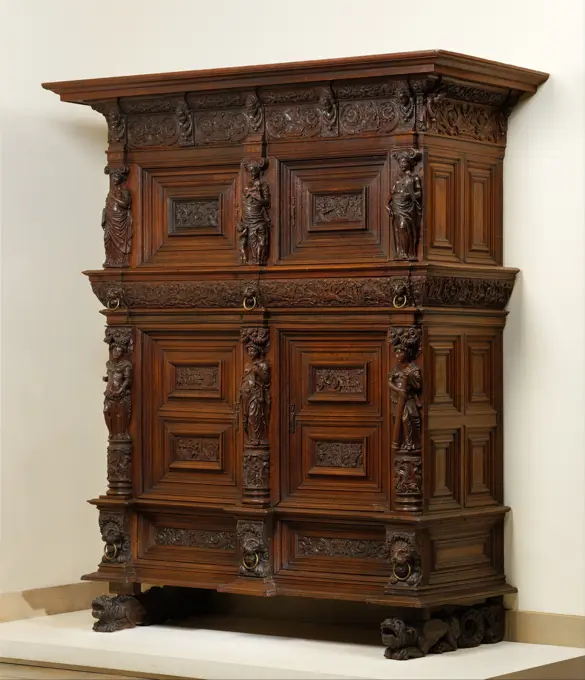
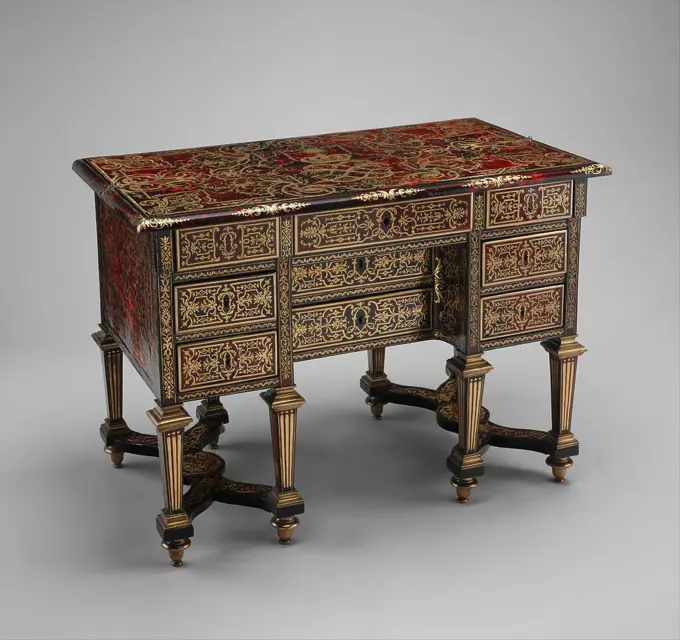
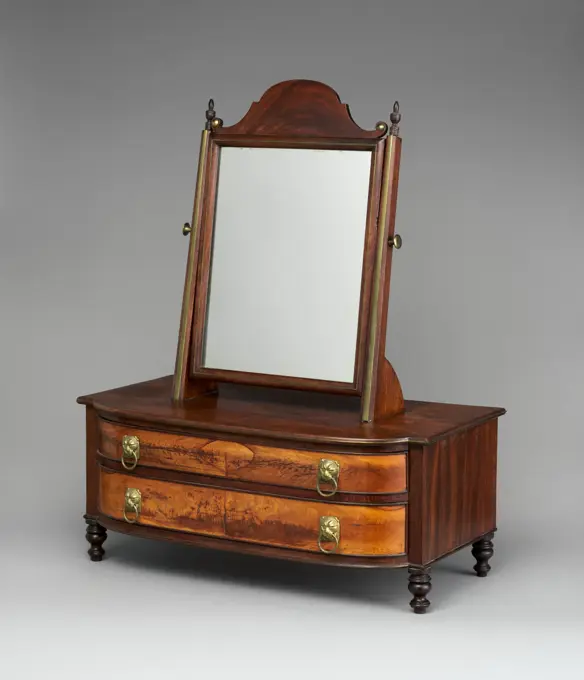
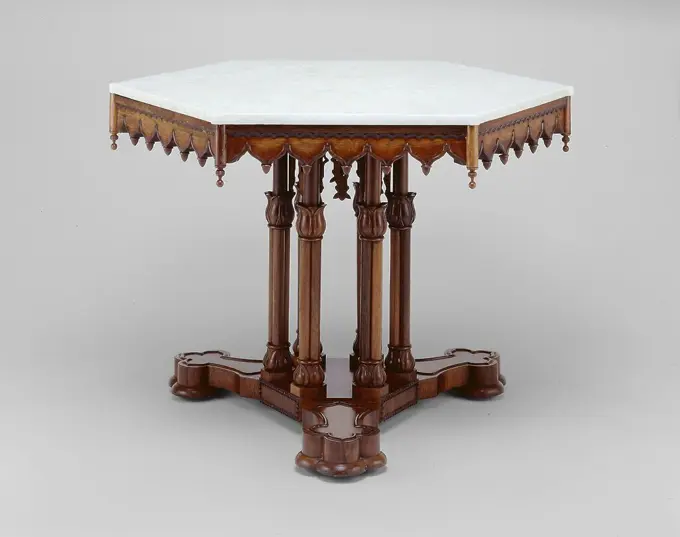
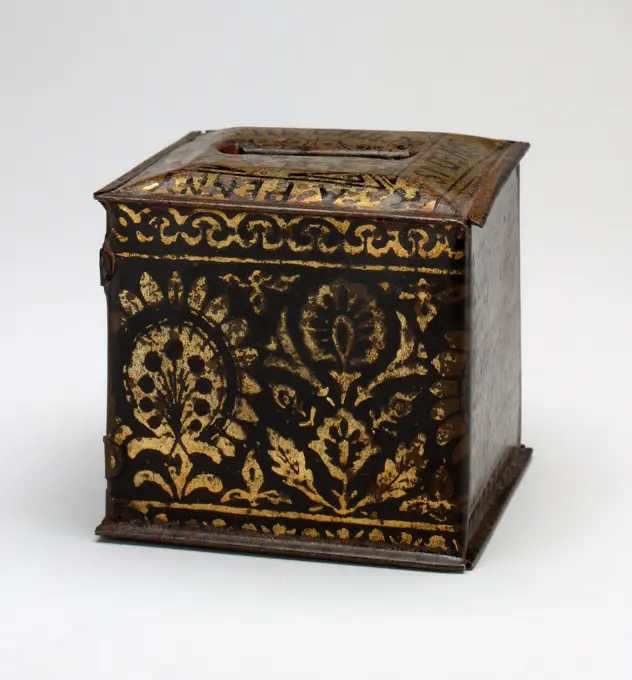
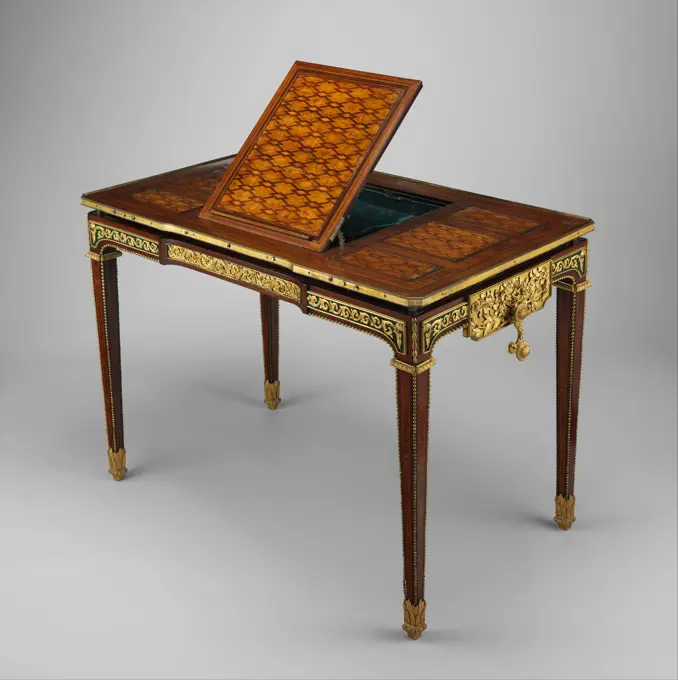
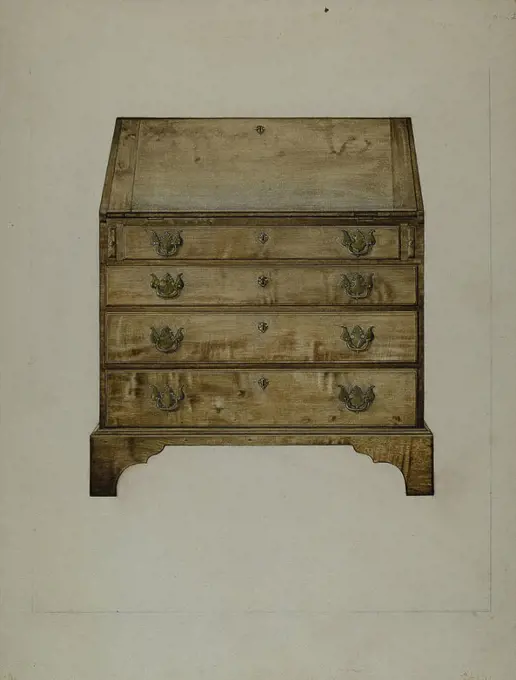
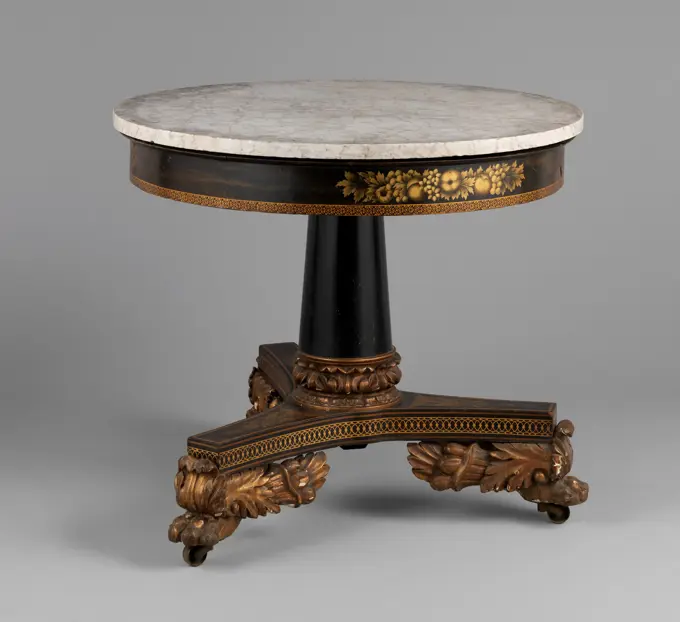
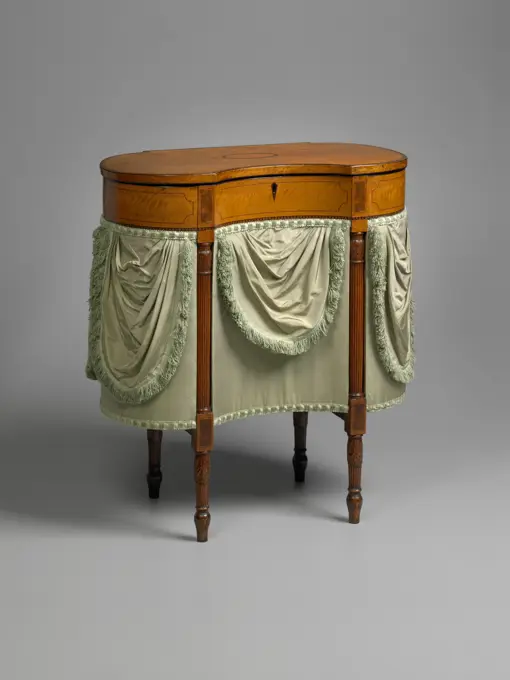
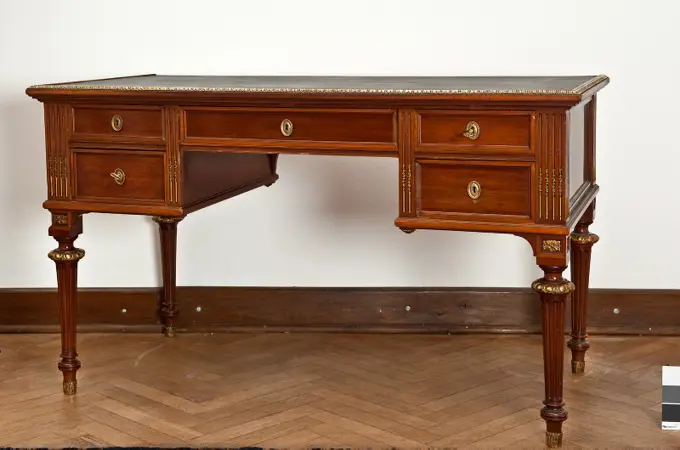
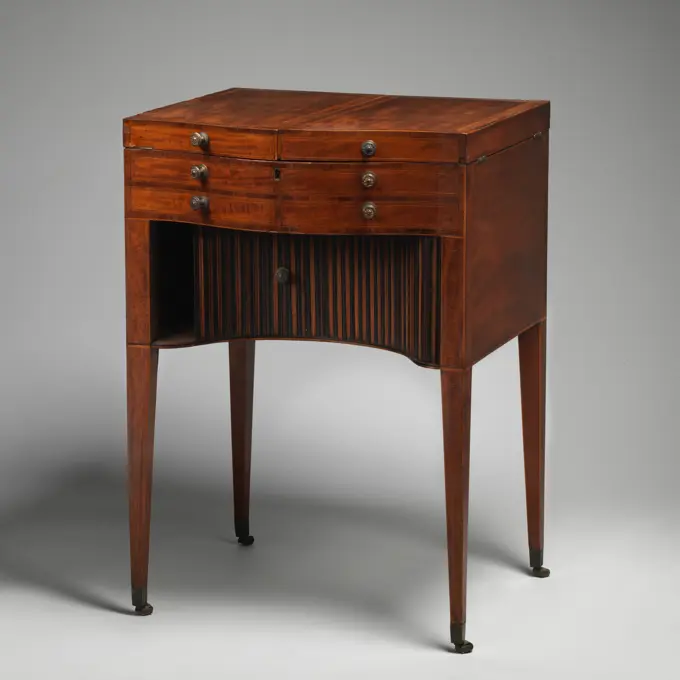
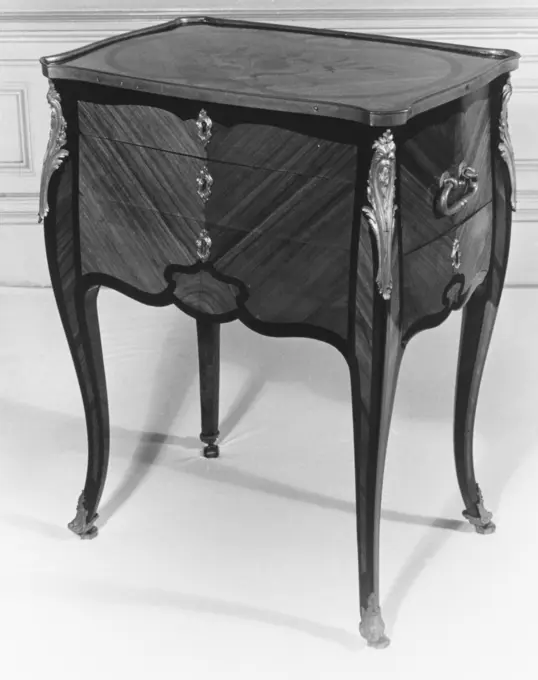
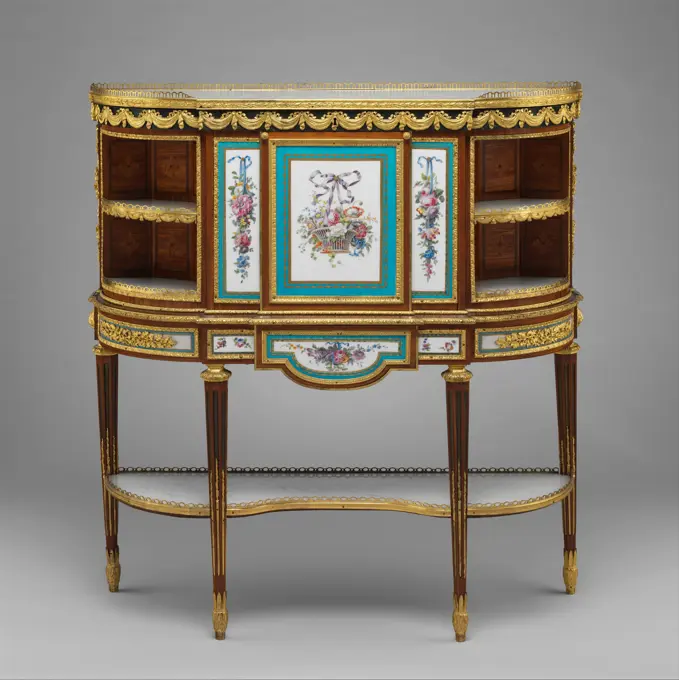
Cabinet. unknown, creatorSienia wardrobe;  1730-1750 (1730-00-00-1750-00-00);. German-born Blechschmidt worked for leading Paris cabinetmakers and specialized in colourful marquetry (inlaid work) in various materials. He used an Italian Renaissance style for the marquetry here. Friedrich Frickhinger, one of his pupils and also a German active in Paris, made the furniture. He placed his signature and the date, 1834, on the inside of the secretary.Cabinet. Oak cabinet glued with walnut, with two doors and a semicircular, profiled excellent hood. The cabinet stands on a chassis with tray and rest on four baluster-shaped legs with a wavy cross connection.Table. unknown, creator. Cabinet of walnut, decorated with carrot nut wood. The pedestal, the center of the door, the two angle styles and the upper rule, with a load in the middle, exhibit smooth, root nutwood-glued fields within profile lists. The leaf has a profiled edge, the sides smooth fields within profile lists. The door runs on rings and has a copper button, as well as the tray. The footballs are partially renewed.Secretary, commode and table, 1834  Paris oak (wood). rosewood (wood). mahogany (wood). satinwood (wood). purpleheart (wood). brass (alloy). copper (metal). ivory. marble (rock)  Paris oak (wood). rosewood (wood). mahogany (wood). satinwood (wood). purpleheart (wood). brass (alloy). copper (metal). ivory. marble (rock)Eikhout box, red and gold painted ,, 1700 Eaky chest, red and gold painted. The hol -shaped profiled plinth rests on four profiled bol feet. The front board shows two, the side plates one panel with profiled scalloped sides. The rear board shows and rectangularly profiled panel. Within a profiled list, the lid shows a rectangular flood with scalloped short sides. All drains and panels show similar areas. The cornice has an ogic profile. Internally sawn -out copper clamps. Northern Netherlands wood (plant material). oak (wood). copper (metal) Eaky chest, red and gold painted. The hol -shaped profiled plinth rests on four profiled bol feet. The front board shows two, the side plates one panel with profiled scalloped sides. The rear board shows and rectangularly profiled panel. Within a profiled list, the lid shows a rectangular flood with scalloped short sides. All drains and panels show similar areas. The cornice has an ogic profile. Internally sawn -out copper clamps. Northern NetherlaZeeland cabinet, Anonymous, 1650 Zeeland cabinet of egg, ebbbe, palm and rosewood. The upper cabinet has two doors with panels with cartouches and grotesken, between three lion heads with ring. The middle rule consists of blocks with inserting between diamond heads. The doors of the higher base cabinet wear cornis panels. The central and corner styles each show a spurs, dripping, cannelure forces, diamond head and insert. Sides with corned upper panels and bottom panels with wide frames and billioned sills. Northern NetherlandsZeeland (possibly) wood (plant material). oak (wood). ebony (wood). boxwood. rosewood (wood) cutting Zeeland cabinet of egg, ebbbe, palm and rosewood. The upper cabinet has two doors with panels with cartouches and grotesken, between three lion heads with ring. The middle rule consists of blocks with inserting between diamond heads. The doors of the higher base cabinet wear cornis panels. The central and corner styles each show a spurs, dripping, cannelure forcesAnonymous, bedside table (dummy title). ; House of Victor Hugo - Hauteville House.Calling table. Current table or payment table from oak with a shifting leaf. The box-shaped top has flushed corner styles, a profiled base and rests on four legs with houses and vase-shaped sections. The legs are connected by profiled undercuts, which are decorated on the inside and outside with a stained braid. The lock is located in the front of the coffin. Inside against each of the side walls a hanging container with shifting lid; Below three states.Worktable. Maker, possibly by: William Hawkes Jr., AmericanDisplay cabinet with marquetry in floral motifs, Émile Gallé, c. 1900 Dis window of oak and fruit wood, glued with elm root, rosewood and maple wood, including four high legs. The cabinet consists of a lower and upper cupboard that are separated from each other by means of a leaf protruding on both sides. The base cabinet consists of an open block with three drawers at the bottom, in the middle of an open part and a drawer at the top. The three drawers contain marquetteria in the form of Lissen and Waterdrieblad and have tractors of gilded bronze in the form of butterflies. The drawer at the top has a keyhole in the middle. The legs, cut into stylized leaf shapes, overflow into the scanned side styles. A second style has been installed along the side styles. This is parallel to the side style, but bends from the center to the ends of the leaf. The gull -in space is filled with sculpture in the form of a flower on a handle with leaves. The upper cabinet consists of a display cabinet witLayette Cupboard, anonymous, c. 1660 - c. 1670 Diaper mood cabinet of oak and walnut. The legs of the chassis consist of large volutes, decorated with cherub heads and lobe ornament. The sculpted rules in between show a mask-like lobe motif with leaf and flower vines. The cabinet contains two doors of uneven width. The cropped corners contain niches, with a shell motif at the top. Around the niches, on the ends of the sides and in the middle of the front, festons with fruits, flowers and leaves are sculpted. Amsterdam (possibly) wood (plant material). oak (wood). walnut (hardwood) Diaper mood cabinet of oak and walnut. The legs of the chassis consist of large volutes, decorated with cherub heads and lobe ornament. The sculpted rules in between show a mask-like lobe motif with leaf and flower vines. The cabinet contains two doors of uneven width. The cropped corners contain niches, with a shell motif at the top. Around the niches, on the ends of the sides and in the middle of the front,Chest with drawer 1720-35 American The painting technique employed on this chest is that of the Guilford-Saybrook, Connecticut school of painted furniture. Originally painted on yellow grounda bit of which is still visible at the top of the left sidethe floral elements are more limited and the compositions more formulaic than in earlier examples, (10.125.15; 10.125.16) suggesting a waning tradition.. Chest with drawer 2037Hoekkast, anonymous, c. 1750 - c. 1775 Corner cabinet of oak, cedar and cubamahonia wood with a vertically curved front. The base cabinet with scalloped bottom line and two doors, above which one drawer with two tractors, has wide accolade -shaped corner styles. From the upper cabinet, with two doors, the right corner styles are burned from below. The legs, bottom line, top and top of the corner styles, profile frames of the doors and the corrugated hood show rocaille ornaments with leaf vines; A flower basket in the crown. Seizure. See: BK-1985-50-A. Northern Netherlands wood (plant material). oak (wood). cedar (wood). mahogany (wood). copper (metal) Corner cabinet of oak, cedar and cubamahonia wood with a vertically curved front. The base cabinet with scalloped bottom line and two doors, above which one drawer with two tractors, has wide accolade -shaped corner styles. From the upper cabinet, with two doors, the right corner styles are burned from below. The legs, bottom line, top anWall cabinet of nuthout, anonymous, 1500 - 1600 Wall cabinet made of walnut, resting on a profiled bottom. The cupboard has a drawer at the bottom, above which two doors, all panels with beveled corners. Both the drawer and the doors are flanked by a similar narrower panel. The panels from and next to the drawer have a draw button. The doors show bronze buttons in the form of winged cherub heads in the middle; In the lock an old key with ajour edited handle. The upper has many profiles and protrudes. Bologna wood (plant material). walnut (hardwood). bronze (metal) Wall cabinet made of walnut, resting on a profiled bottom. The cupboard has a drawer at the bottom, above which two doors, all panels with beveled corners. Both the drawer and the doors are flanked by a similar narrower panel. The panels from and next to the drawer have a draw button. The doors show bronze buttons in the form of winged cherub heads in the middle; In the lock an old key with ajour edited handle. The upper has CupboardMeyer Goldbaum, Chest, probably 1937 ChestSutra TableTable of oak. Table of oak, decorated with ebony, in four legs that show houses and widely strangled vase-shaped sections, connected by a Y-shaped cross. The support pieces have been opened. The rules have chain shapes. The houses have bleed screws from the buyer's short sides. The furniture has two pull leaves; The top has ebony tires in the form of a rectangle, within which a window.Kas (wardrobe), c. 1740, Roelof D. Demarest, American, 1769 - 1845, 77 3/4 x 72 1/2 x 26 1/2 in. (197.49 x 184.15 x 67.31 cm), Sweet gum with painted decoration, United States, 18th century, Derived from the Dutch kast, a kas describes a large upright cupboard or wardrobe with panelled facades, heavy overhanging cornices and large bun feet. These features are derived from Dutch 17th century prototypes, and in this country they are found exclusively on pieces made in the Hudson River Valley by descendants of settlers from Holland.. Chapter on four bolts, glued with carrot nut wood on an oak core. The front scalloped in the middle has four drawers with copper key plates and handles. Calculated from bottom to top every tray is lower than the previous one. The vaccinated corners have doors with copper lock plates, behind which five stitches with copper buttons; The slot holes are in the pounded front corner styles. A walnut band placing in the leaf follows the contour of the scalloped sheet with profile list.Slate-top Table. Dated: 1936. Dimensions: overall: 22.9 x 29 cm (9 x 11 7/16 in.) Original IAD Object: none given. Medium: watercolor, colored pencil, pen and ink, graphite,and heightening on paperboard. Museum: National Gallery of Art, Washington DC. Author: M. Rosenshield-von-Paulin.Writing table ca. 1761 Attributed to William Vile With its unusual top, folding back to reveal a writing surface, this elegant table is attributed to the highly successful London furniture maker William Vile (1715-1767). The sparing use of carved ornament shows a great appreciation for the lustrous figured mahogany and the serpentine outline is the embodiment of the Rococo style stripped down to its very essence.. Writing table. British. ca. 1761. Mahogany and oak; lacquered brass; green baize (modern). Woodwork-FurnitureTable. Culture: British. Dimensions: Overall: 29 3/4 × 32 × 19 1/2 in. (75.6 × 81.3 × 49.5 cm). Date: ca. 1690. Museum: Metropolitan Museum of Art, New York, USA.Drawing table on sterling legs. Tractor table of oak with exported rules. The table rule is equipped with substantially dense support pieces. The houses at the top of the vase-shaped legs are channeled.PiertableCabinet with two doors, decorated with festons hung on bows and on the panels with leaf vines and grape bunches.fries with two crowned winged putti, anonymous, 1650 - 1700 Eikhout cupboard, gilded, with two doors. Decorated on the corners and in the middle with festons hung on bows and on the panels with leaf vines and grape bunches. The Frisian has leaf vines and two winged putti in the middle, which wear a crown. The decorations are stabbed and opened. The gilding was probably applied later and the furniture originally probably served as a wall cupboard. Northern Netherlands wood (plant material). oak (wood). gilding (material) gilding Eikhout cupboard, gilded, with two doors. Decorated on the corners and in the middle with festons hung on bows and on the panels with leaf vines and grape bunches. The Frisian has leaf vines and two winged putti in the middle, which wear a crown. The decorations are stabbed and opened. The gilding was probably applied later and the furniture originallyCommode ca. 1745-49 Jacques Dubois French. Commode 205762Chest-on-frame 1705-25 American The painted ornament on the upper front of this chest, with its crowned Tudor rose, Scottish thistle, and French fleur-de-lis, is typical of designs on furniture produced in the Guilford-Saybrook area of coastal Connecticut. The painted borders on the top recall the inlaid-veneer crossbanding found on high-style English furniture of the seventeenth century.. Chest-on-frame 2029Clothes press ca. 1760 William Vile British. Clothes press 201900CardtableWriting DeskTable. Table decorated with marquetery of rosewood, palm, olive wood and other woods and leg, on oak, and pine core. The raised legs are connected by a hurled cross that has an oval thickening at the intersection. The rule has a tray on the front. The furniture has been decorated with marquetics of floral motifs stealed from acanthus leaf volutes. On the leaf, a carved vase decorated with maskarons is shown on a pedestal.Cardtable. Retailer: William Leverett, American, 1760-1811Cardtable. Maker, possibly by: Duncan Phyfe, American, 1768-1854Piano; Rosenkrantz, Ernst (Dresden; Piano Factory; 1797-1945); 1840-1850 (1840-00-00-1850-00-00);Bonheur du Jour with under and middle leaf and with recoiled attachment with two doors. Openwork cornice. Leaf of white marble. Adhesive with different types of wood. Bonheur du jour glued with satin and amaranthood, with gold-plated bronze pearl, braid, egg and profile bands. The chassis consisting of a lower and middle leaf and a tray, rest on conical legs, at the top of decorated with a coach-shaped batter. The recovery attachment has two doors, with curtains behind the windows, and separate plated bronze articulated columns as angle styles. The hole bent corn list, as well as the two sheets, wears a rounded openworking gallery; White marble top.David S De Vault, Highboy, c 1941 HighboyAccessory caseRococo chest of drawers, chest of drawers chest of drawers cupboard furniture furniture interior design wood oak wood coniferous purple heartwood rosewood brass marble stone, Rococo chest of drawers with two wide drawers and gray red marble top front high S-legs brass fittings drawers and legs veneered with rosewood and purple heart. stamps CRIAERD and JME (JMA = jurande des menuisiers ébénistes (guild stamp)) on the left forefoot guild rococoTable c 1878 New York City. Herter Brothers was one of the leading firms that designed furniture and interiors for the American upper class during the Aesthetic movement. In the late 1870s, the firm began to experiment with Japanese-influenced elements in their designs, reflecting the great fascination with that countryóknown as Japanismóprevalent in American culture at the time. The ebonized surfaces of this table emulate Japanese lacquerware, while the floral ornamentation is drawn from Japanese lacquerware, paintings, prints, and textiles. However, the overall forms are Western and include elements derived from other cultures, such as the cabinetís (1986.26) Egyptian Revival paw feet. Aesthetic-movement designers such as Herter Brothers readily combined such eclectic motifs as long as they could still achieve a sense of visual harmony.. Ebonized maple and various inlaid woods . Herter BrothersSide table (one of a pair) ca. 1740 British This table and its mate (55.141.1a, b) were formerly at Conington Castle, Huntingdonshire.. Side table (one of a pair). British. ca. 1740. Mahogany, pine, verde antico marble. Woodwork-FurnitureARCA DE NOVIA CATALANA - SIGLO XVII. Location: MUSEE D'ARTS DECORATIFS. Barcelona. SPAIN.Walnut rococo linen press, linen press equipment walnut burr walnut pine wood, With drawer and door on sides and door panels with carrot walnut veneer with very rich carvings Erasmus foundation Rotterdam furniture rococo Long-term loan from Erasmus Foundation.Martin Partyka, Guilford Painted Chest, c 1936 Guilford Painted ChestVirginal. The virginal, like the harpsichord, is a keyboard instrument the strings of which are plucked by plectra. Used mostly in domestic contexts, virginals were smaller and usually less costly than harpsichords. These instruments were often played by young girls, giving rise to the namevirginal’. The decoration of this instrument is not painted, but consists of printed paper.Iron Kist, 1500 - 1600 A square iron box with double hidden lock and two handles. The keys are missing.  iron (metal) A square iron box with double hidden lock and two handles. The keys are missing.  iron (metal)Antique Sheraton desk, circa 1800Foot stool, Walnut, blue flowered tapestry covered seat, In William and Mary Style. Scroll legs and feet, carved back and front stretchers. Turned stretchers at sides are united by shaped and pierced stretcher of unusual design, probably a modern replacement. Slip seat covered with tapestry with flowers in natural colors., England, ca. 1685-95, furniture, Decorative Arts, Foot stoolGaming Table with Marble Gameboard and Reeded LegsHigh Chest of Drawers. American; Philadelphia, Pennsylvania. Date: 1700-1730. Dimensions: 153.2 × 108 × 59.1 cm (60 1/4 × 42 1/2 × 23 1/4 in.). Black walnut, walnut veneer, Southern yellow pine, and Atlantic white cedar. Origin: Philadelphia. Museum: The Chicago Art Institute, Chicago, USA.Dower Chest ca. 1780 American. Dower Chest 3399DressingtableFire screen from Notenhout, Anonymous, 1700 Fire screen made of walnut with extendable plate and with valve leaf, hanging on hinges and bronze folding carriers. The styled styles are decorated on the sides with animals on branches and female figures that symbolize the four seasons; Shell and floral motifs on the other sides. The scalloped sills carry similar decorations. The sloring legs, between which a leaf, wear decorated lion's legs on flat foot bobbins. Styles crowned with bronze morore heads. At the top decorated handle. France wood (plant material). walnut (hardwood). bronze (metal). textile materials Fire screen made of walnut with extendable plate and with valve leaf, hanging on hinges and bronze folding carriers. The styled styles are decorated on the sides with animals on branches and female figures that symbolize the four seasons; Shell and floral motifs on the other sides. The scalloped sills carry similar decorations. The sloring legs, between which a leaf, wear decorated'An Oak Court Cupboard of James I's Reign', c1615, (1936). Artist: Unknown.Charles Squires, Highboy, c 1936 HighboyLibrary Table ca. 1855 Possibly designed by Alexander Jackson Davis American. Library Table. American. ca. 1855. Oak, walnut, cherry, poplar. Made in New York, New York, United StatesHigh chest of drawers 1710-25 American The decoration on this chest, with its motifs and palette of red, orange, and what was originally bright yellow on a black ground, was meant to imitate a technique known as japanning. Beginning in the mid-seventeenth century, imported Japanese and Chinese lacquer cabinets and screens became extremely popular in England. This lacquer work was much imitated in London on furniture and wall paneling. The technique eventually spread to Boston by about 1700.. High chest of drawers 4281Bernard Gussow, Tambour Desk, c 1936 Tambour DeskCommode ca. 1760 British. Commode 206761Bookcase Section of a Desk and Bookcase, c. 1780. America, Massachusetts, Boston or vicinity. Mahogany and pine, brass hardware, gilding; overall: 241.9 x 106 x 56.5 cm (95 1/4 x 41 3/4 x 22 1/4 in.). During the 1700s, a desk and bookcase, sometimes called a bureau in early inventories, was among the largest and most expensive pieces of furniture in a household. Their owners were chiefly businessmen and community leaders, and because of their function as repositories for personal letters and documents, they were usually placed downstairs in a back parlor or hall. A desk and bookcase consisted of two parts: usually a slant-top desk below and a cabinet above that sat within moldings applied to the desktop to hold it in place. The form often included elements derived from contemporary architecture. Like much New England furniture of the later 1700s, the lower section of this example is block-fronted, in which the profile recedes in the center and protrudes at either side. Though some EurCommode ca. 1780-90 Jean Henri Riesener French The front is formed by a single wide drawer across the top above two front doors, which open to reveal a cupboard divided by a shelf. The breakfront design is treated so as to give the illusion that the central section is superimposed over the front. The projecting central section on the doors is framed as a single panel with a gilt-bronze molding chased with water leaves, indented at the corners to accommodate four rosettes (modern replacements); the same framing on the flanking areas ends at the edges of the projecting panel as though it continued behind it. The drawer is similarly designed. Riesener employed the breakfront throughout his career and repeated this particular treatment of it with variations on a number of commodes, corner cupboards, and secretaries from about 1780 to 1790 (examples are in the Louvre, Versailles, Waddesdon Manor, the Wallace Collection, London, the Metropolitan Museum, the Philadelphia Museum of Art, the DeDressing Table made for Robert Dick at the Time of his Marriage to Mary Kay Woodrow, November 12, 1902Chest of Drawers 1755-85 Attributed to John Goddard This chest is one of a group of Newport pieces distinguished by their bold serpentine shapes and solid forms. The serpentine corner posts, raised-pad rear feet, and claw-and-ball front feet are similar to those on documented pieces by the cabinetmaker John Goddard (1724-1785). The curvilinear case and conforming marble top are unusual for eighteenthcentury American furniture and resemble those of French Louis XV-style commodes.. Chest of Drawers 2020Slant-Top Desk. Dated: c. 1953. Dimensions: overall: 23.1 x 30.5 cm (9 1/8 x 12 in.). Medium: watercolor, pen and ink, and graphite on paper. Museum: National Gallery of Art, Washington DC. Author: Nicholas Gorid.Display table consisting of a table-shaped frame coated with red velor and a mounted piece with mirror. Display table of walnut and bird eye diary consisting of a chassis and a attachment. The table rests on four curved and profiled legs that end up at the top in floral motifs. The tabletop has profiled sides and ears and is covered with red velor. A smaller leaf has been placed under the tabletop whose support pieces are sculpted in the form of branches. The space between the two sheets has been divided into three. In the middle there is a tray that contains imposed whipping motifs with two open spaces on either side. The loose attachment consists of a mirror with a sculpted flower-awarded mirror with claw pieces with an open space in the middle below which is flanked by two drawers including open compartments. The attachment contains bird motives imposed on nutshells from walnut.Prie-Dieu. Pietro Piffetti; Italian, c. 1700-1777; Turin, Italy. Date: 1759. Dimensions: 87 × 78 × 58 cm (34 1/4 × 30 3/4 × 22 1/3 in.). Boxwood and ebony. Origin: Turin. Museum: The Chicago Art Institute, USA.Ebony art cabinet with inlaid rectangles landscape marble, art cabinet cabinet cupboard cabinet furniture furniture interior design wood ebony oak marble stone, Ebony art cabinet with inlaid rectangles landscape marble wall cabinet with three half-columns wide cornice on frame with spun down legs and H-shaped bottom line Ruinenmarmor pietra paesinaJardinière of oak and mahogany, on rectangular basement, anonymous, 1820 - 1830 Jardinière van Eikenhout and Cuba-Mahoniehout, partly solid, partially veneered. The furniture has a low rectangular base with concave sides and beveled corners. Four transferred horn -shaped sculpted legs, placed on the bottom, rested on this in a palm with full crowd and crowned by a palmmelkelk, the front leaf of which a standing acanthus leaf is wearing. The oval container has a wailing wall upwards, crowned by a slightly welfare edge, with leaf frame decorated. Northern Netherlands wood (plant material). oak (wood). mahogany (wood). zinc Jardinière van Eikenhout and Cuba-Mahoniehout, partly solid, partially veneered. The furniture has a low rectangular base with concave sides and beveled corners. Four transferred horn -shaped sculpted legs, placed on the bottom, rested on this in a palm with full crowd and crowned by a palmmelkelk, the front leaf of which a standing acanthus leaf is wearing. The oval cGame Table, 1600s. China, Ming dynasty (1368-1644) - Qing dynasty (1644-1911). Rosewood (huanghuali); overall: 82 x 72.2 cm (32 5/16 x 28 7/16 in.).Manufactureration with Bedstede, O.A. Sky, Wall shot, side shot and panels. Manufacturing of oak, consisting of a bedstead and wall shot. The bedstead has corner styles with a plinth, on the left a hermatant, on the right a hermcaryatide. The shaft rejuvenated to the bottom shows Schubsteek. The figures appear halfwayed naked, an arm on the back, with the other their drug-beaten robe loving. On the heads resting ionic capitals, which bear the main gear. This has a frieze, divided into courses, divided into courses, within which a Moresk cartouche with ebony caps to oak pillows. The consoles were treated with shell decoration as lion's heads. The frieze is closed above with a flat edge list, which is crocked over the consoles. The ogief-shaped crown table rests on small consoles. In the porch, the upper spray (bottom of the architraph) has a healed tooth list with support pieces in the corners. The side shot has styles and head frame on the outside as at the front and two panels placed Manufactureration with Bedstede, O.A. Sky, Wall shot, side shot and panels. Manufacturing of oak, consisting of a bedstead and wall shot. The bedstead has corner styles with a plinth, on the left a hermatant, on the right a hermcaryatide. The shaft rejuvenated to the bottom shows Schubsteek. The figures appear halfwayed naked, an arm on the back, with the other their drug-beaten robe loving. On the heads resting ionic capitals, which bear the main gear. This has a frieze, divided into courses, divided into courses, within which a Moresk cartouche with ebony caps to oak pillows. The consoles were treated with shell decoration as lion's heads. The frieze is closed above with a flat edge list, which is crocked over the consoles. The ogief-shaped crown table rests on small consoles. In the porch, the upper spray (bottom of the architraph) has a healed tooth list with support pieces in the corners. The side shot has styles and head frame on the outside as at the front and two panels placed Penant table with fluted legs and acanthus and draperievers along the rules. Penant table of oak with renovated marble top. The channeled conical legs are decorated from below with leafwork. The houses above the legs have a rosette. The front and side rules have embossed symmetrical acanthus blade drinks and a drapery put on the bottom. The table was originally painted blue and white.Pembroketable.   Maker: James Stokes, American, active ca. 1820-1840Irving I Smith, Shaker Cupboard, c 1937 Shaker CupboardDressingtableCommode ca. 1755 British. Commode 203851Cupboard (Beeldenkast) 1622 Dutch Monumental cabinets such as this example were amongst the most expensive and impressive pieces of furniture made in the Northern Netherlands during the first half of the seventeenth century.This four-door example consists of a base and two main sections topped by a broad frieze and a protruding cornice. The upper and lower sections are separated by a large drawer with a convex front. Richly decorating the cabinets façade and frieze, the extraordinary carving includes references to the Theological Virtues, Faith, Hope and Charity, to three of the Cardinal Virtues (Prudence, Justice and Fortitude), the Four Evangelists as well as Biblical scenes.This is one of the few beeldenkasten which is dated (April 27, 1622, carved on the left drum of the cupboard and showing King David playing his harp; the table beside him indicating the date). This date possibly denotes special significance, perhaps a wedding, since large cupboards were often commissioned for, oDressingtableAnonymous. "Neo-Renaissance convenience with two sculpted leaves". Sculpted wood (oak), metal (hinges, locks). 1801-1900. Paris, Museum of Romantic Life. Charniere, oak, furniture, metal, neo-renaissance, sculpts, lock, leaves, 19th XIXth 19th 19th 19th 19th century, wood, chest of drawers, furnitureCommode; Paris, France; about 1710 - 1715; Fir and oak veneered with bloodwood and walnut; drawers of fir, oak and walnut; gilt-bronze mounts; 84 x 140.3 x 59.7 cm (33 1,16 x 55 1,4 x 23 1,2 in.)Doll chest of drawers -Small desk with folding top (bureau brisé). Culture: French, Paris. Designer: Designed and possibly engraved by Jean Berain (French, Saint-Mihiel 1640-1711 Paris) (1638/9-1711). Dimensions: 30 5/16 x 41 3/4 x 23 3/8 in. (77 x 106 x 59.4cm). Maker: Marquetry by Alexandre-Jean Oppenordt (Dutch, 1639-1715, active France). Date: ca. 1685.With a folding top that lifts up to reveal a narrow writing surface, this desk is known in French as a bureau brisé ( literally, "broken desk"). Introduced about 1669, this type of writing table remained fashionable until the early years of the eighteenth century, when it was replaced by the more practical, flat-topped bureau plat. The Museum's desk was commissioned with another almost identical example or Louis XIV's Petit Cabinet, a small private room in the north wing of the Château de Versailles, and is one of the few extant pieces of furniture made for the personal use of the Sun King.The exterior is embellished with marquetry of tortoiseshell and engDressing glass 1810-15 Attributed to Thomas Seymour Dressing tables often featured a built-in mirror, either mounted to the back of the piece or incorporated into a drawer. When no mirror was included, a dressing glass such as this one would be placed on top of the table. The elliptical front and book-matched crotch-veneer panels suggest the talents of Bostons specialty cabinetmaking trade.. Dressing glass. American. 1810-15. Mahogany, mahogany and birch veneers, and glass with white pine. Made in Boston, Massachusetts, United States"Belmead" Center table. Alexander Jackson Davis; American, 1803-1892; Probably made by Alexander Roux; American, born France, c.1813-1886. Date: 1841-1851. Dimensions: 72.4 × 104.1 × 90.2 cm (28 1/2 × 41 × 35 1/2 in.). Rosewood, oak, walnut, marble. Origin: New York City. Museum: The Chicago Art Institute, USA.The Child's Bank' still bank, 19th century, 2 1/2 x 2 5/8 x 2 5/8 in. (6.35 x 6.67 x 6.67 cm), Tin, pigment, England, 19th centuryMechanical table (Table mécanique) 1778 Jean Henri Riesener French The number 2964 painted underneat the top of this table corresponds to an entry in the Journal du Garde-Meuble de la Couronne (a ledger listing new furniture for the royal residences) and identifies this multipurpose table as one of the first pieces ordered by Marie-Antoinette from her favorite cabinetmaker, Jean-Henri Riesener. A native of Westphalia, Riesener had a successful career in Paris and made many sumptuous pieces for the queen. This table was delivered to Versailles on December 12, 1778, exactly a week before the long-awaited birth of her first child, Marie-Thérèse-Charlotte. To alleviate Marie-Antoinettes discomfort during the advanced state of her pregnancy, this table was fitted by Mercklein, a mécanicien in her service, with a special mechanism. Hidden behind a finely decorated gilt-bronze plaque at either end, this mechanism allowed the queen to use the table in either a seated or a standing position. BShaker Cupboard. Dated: c. 1937. Dimensions: overall: 27.9 x 22.9 cm (11 x 9 in.) Original IAD Object: 82" high, 48" wide and 20" deep. Medium: watercolor, graphite, and pen and ink on paperboard. Museum: National Gallery of Art, Washington DC. Author: Irving I. Smith.The 'Dolling' Tool Chest, 1780-1790. Pinto Collection. Large tool chest with hinged lid to top. pine carcass, the interior fitments of oak & pine, veneered with Spanish mahogany, inlaid with various woods.Cabinet; Roussel, Pierre (1723-1782); 18th century (1701-00-00-1800-00-00);Writing Desk. Dated: 1935/1942. Dimensions: overall: 30.8 x 23.3 cm (12 1/8 x 9 3/16 in.) Original IAD Object: none given. Medium: watercolor, colored pencil, graphite, and some heightening on paperboard. Museum: National Gallery of Art, Washington DC. Author: Robert Birrell.Center Table 1825-30 American. Center Table 20110Worktable.   Maker: Robert McGuffin, American, active ca. 1806-11Retailer: Henry Connelly, American, 1770-1826Desk. unknown, authorCarriage, wooden rear crate of farm wagon with cut flowers and leaves, rear crate part wood carving sculpture footage wood paint, Trapezoidal rear crate of farm wagon with frame of carved floral motifs. Openwork corrugated edge at top cart cart wagonDressing table ca. 1790 British. Dressing table. British. ca. 1790. Mahogany and boxwood. Woodwork-FurnitureRectangular table ca. 1765 Bernard II van Risenburgh. Rectangular table. French, Paris. ca. 1765. Tulipwood, purplewood and kingwood, gilt bronze, leather, brass. Woodwork-FurnitureDrop-front desk (secrétaire à abattant or secrétaire en cabinet) ca. 1776 Attributed to Martin Carlin French Attributed to the cabinetmaker Martin Carlin, who was known for his graceful furniture mounted with Sevres porcelain, this exquisite two-piece desk was made about 1776. A date letter for that year is painted on the back of the central porcelain plaque, together with the mark of Edme-Francois Bouillat (1739/40-1810), a painter at the Sevres manufactory. A specialist in different kinds of floral ornament, Bouillat decorated the main plaque with a flower basket suspended from a large bowknot. The history of this secretary is well documented. During the eighteenth century it graced the collections of two remarkably different women. Its first owner was the popular soprano Marie-Josephine Laguerre (1755-1783), who as a fille d'Opera enjoyed a luxurious and dissolute existence made possible by her wealthy lovers. Her personal property was publicly sold in April 1782, less than a year b