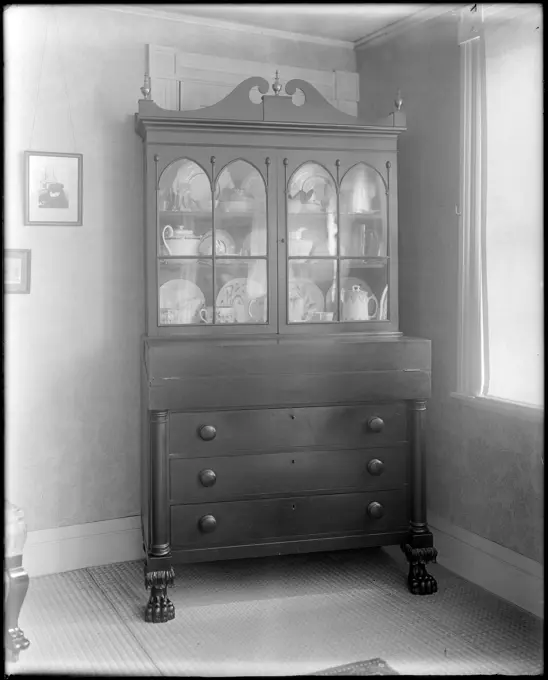
Antique Cabinets and Wardrobes

Images of vintage wooden cabinets and wardrobes showcasing craftsmanship and decorative styles from different eras, featuring intricate carvings and finishes.

Zeeland cabinet, Anonymous, 1650 Zeeland cabinet of egg, ebbbe, palm and rosewood. The upper cabinet has two doors with panels with cartouches and grotesken, between three lion heads with ring. The middle rule consists of blocks with inserting between diamond heads. The doors of the higher base cabinet wear cornis panels. The central and corner styles each show a spurs, dripping, cannelure forces, diamond head and insert. Sides with corned upper panels and bottom panels with wide frames and billioned sills. Northern NetherlandsZeeland (possibly) wood (plant material). oak (wood). ebony (wood). boxwood. rosewood (wood) cutting Zeeland cabinet of egg, ebbbe, palm and rosewood. The upper cabinet has two doors with panels with cartouches and grotesken, between three lion heads with ring. The middle rule consists of blocks with inserting between diamond heads. The doors of the higher base cabinet wear cornis panels. The central and corner styles each show a spurs, dripping, cannelure forces
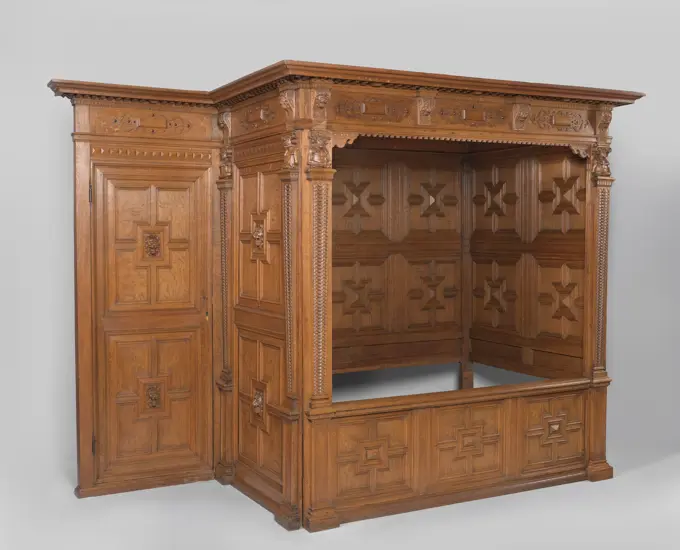
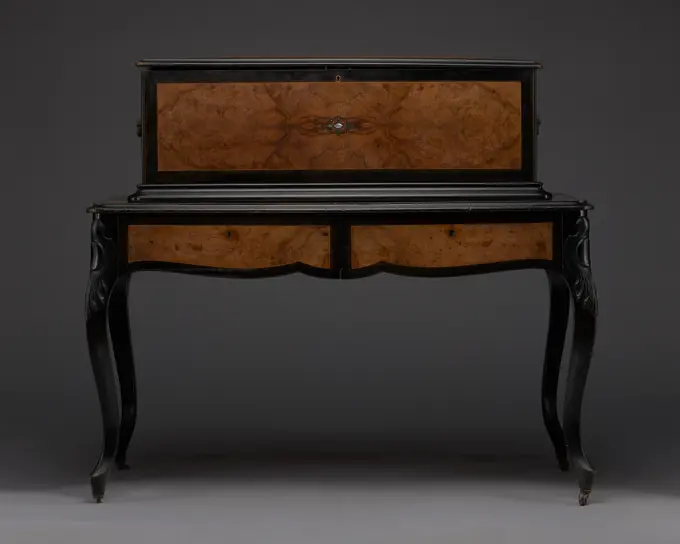
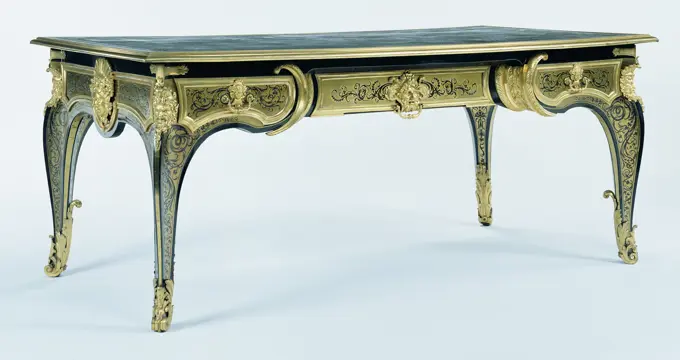
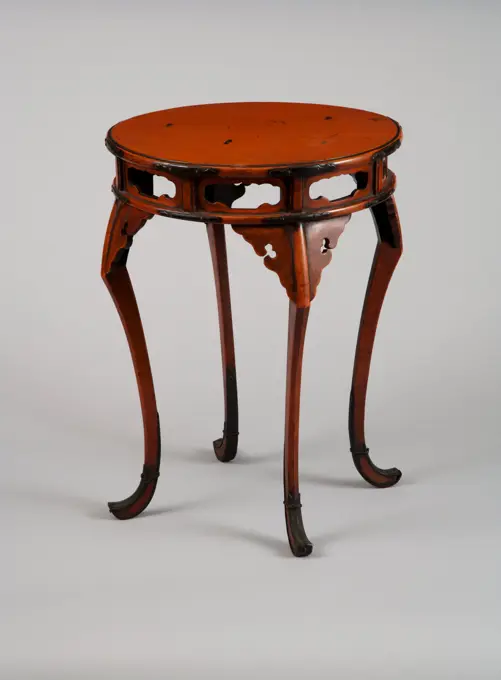
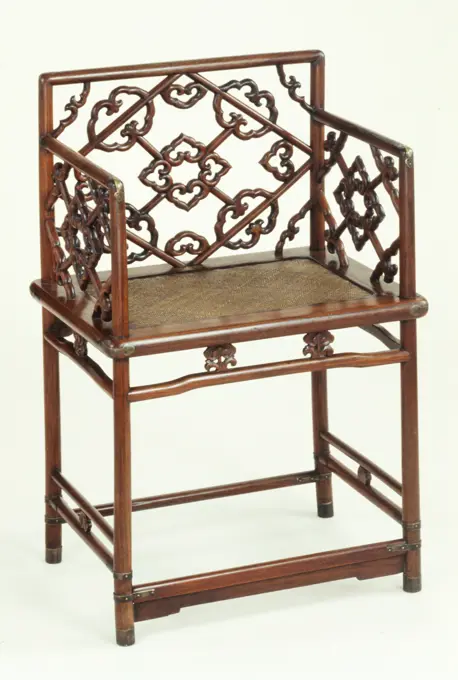
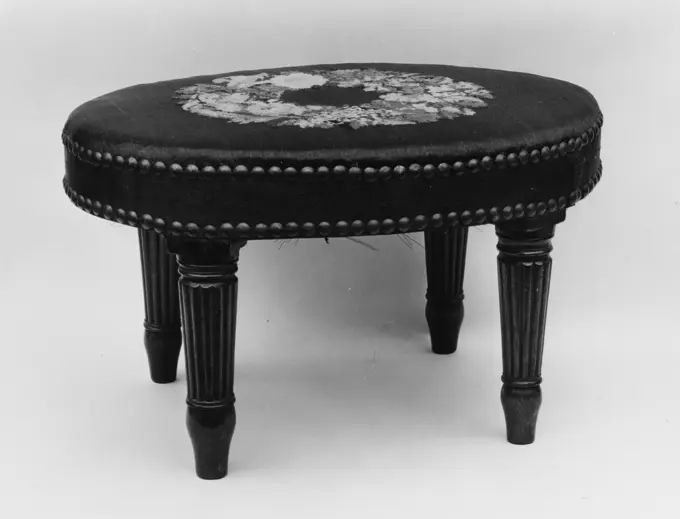
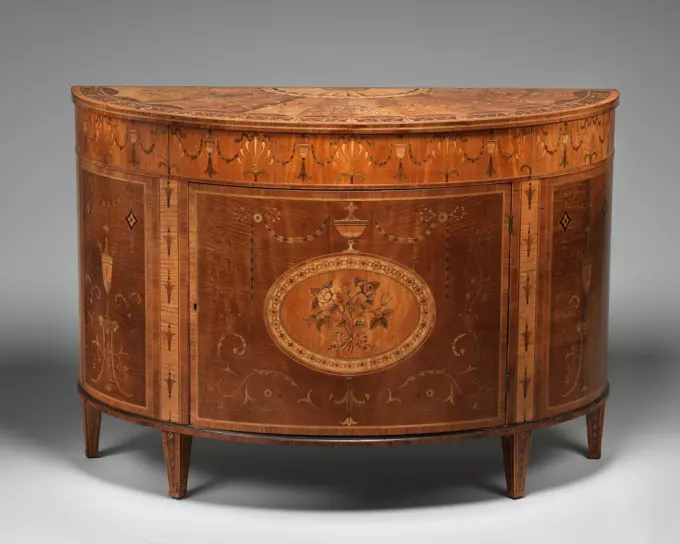
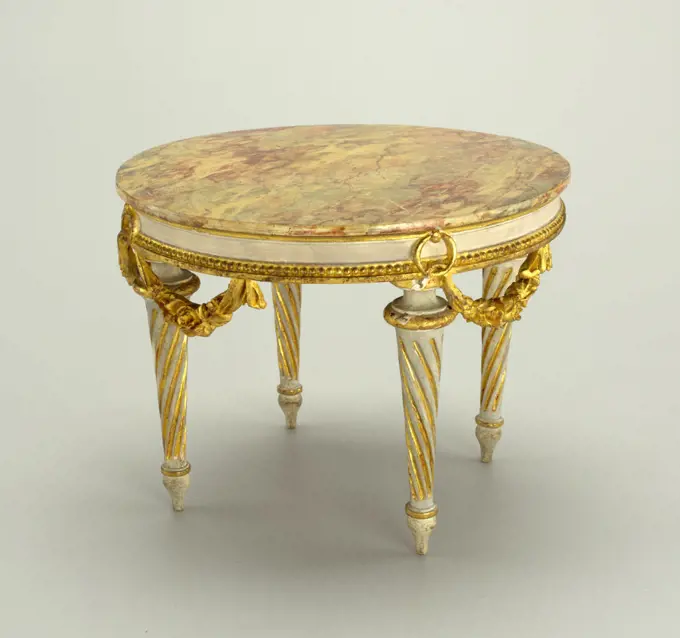
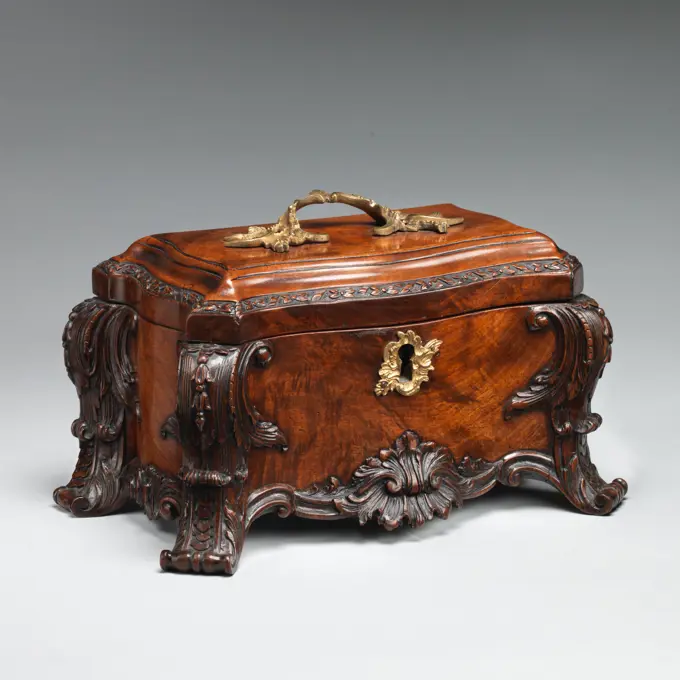
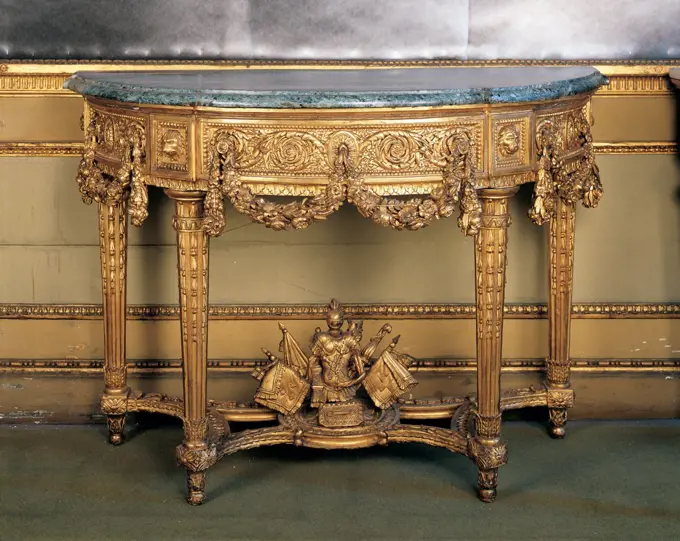
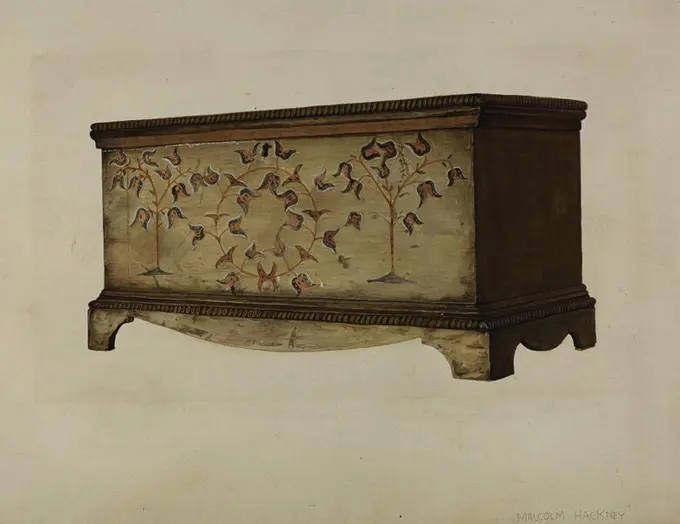
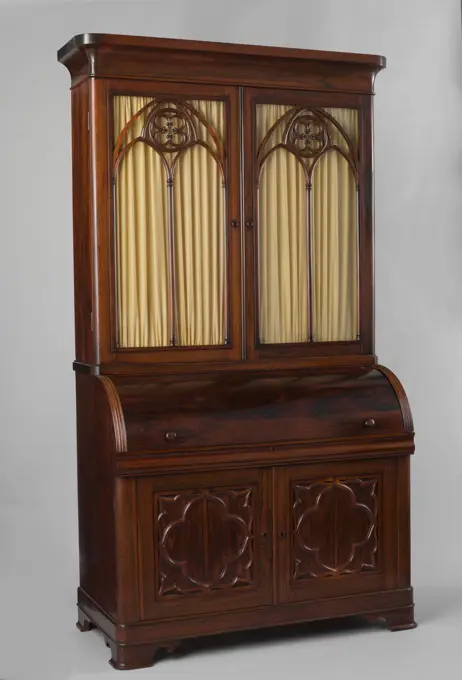
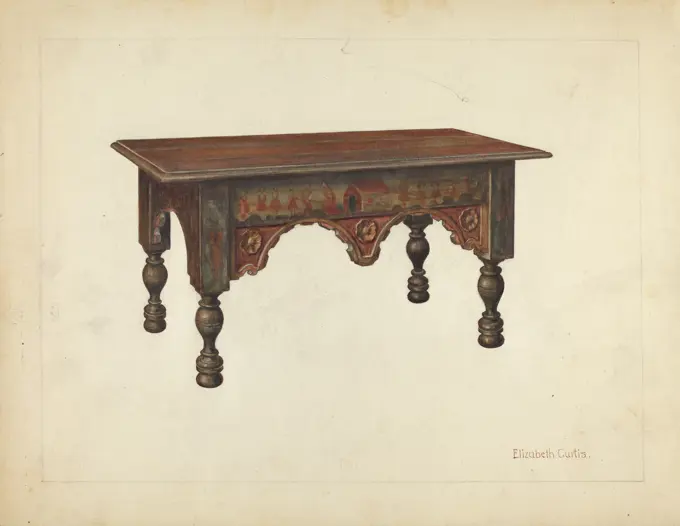
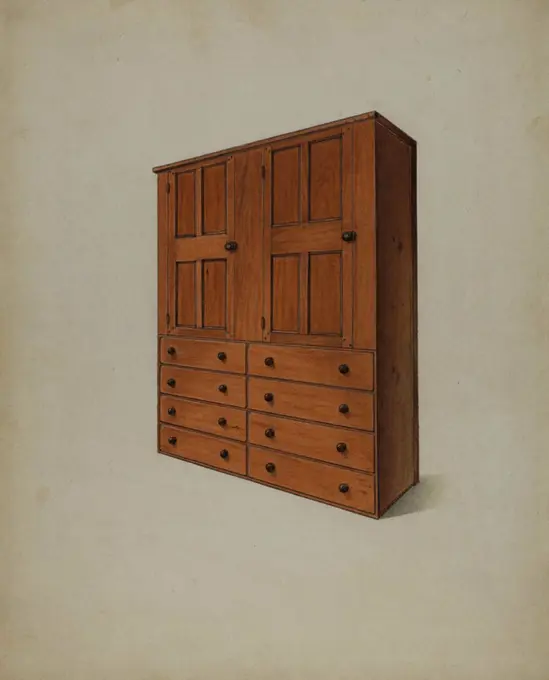
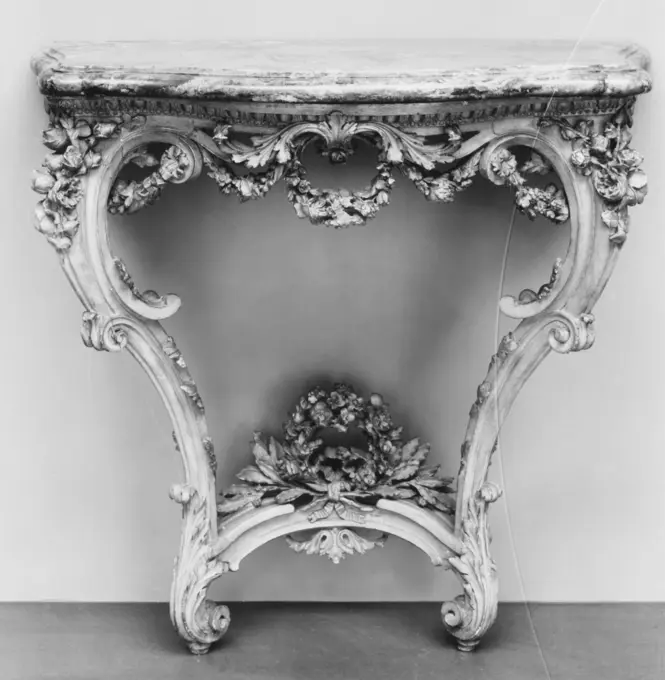
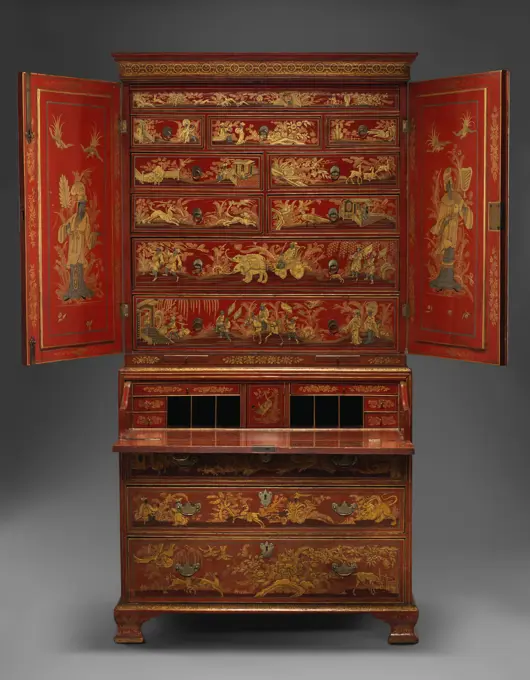
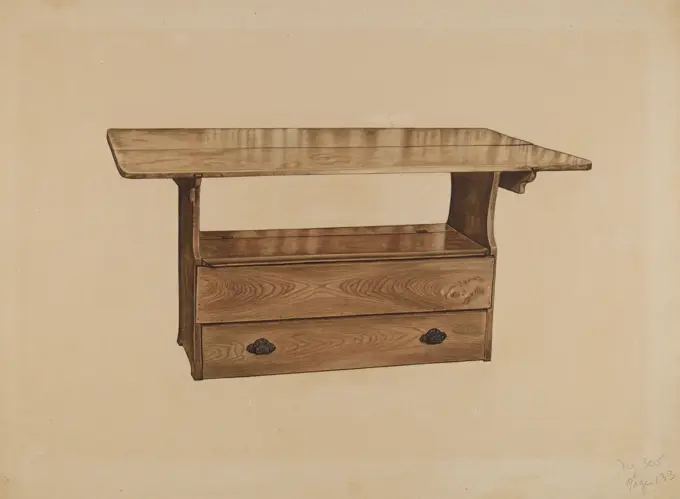
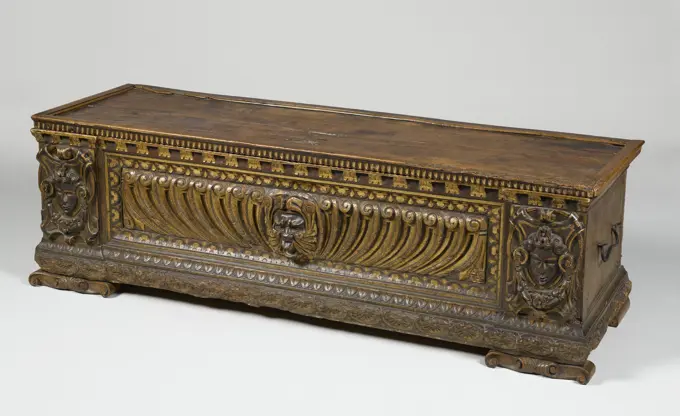
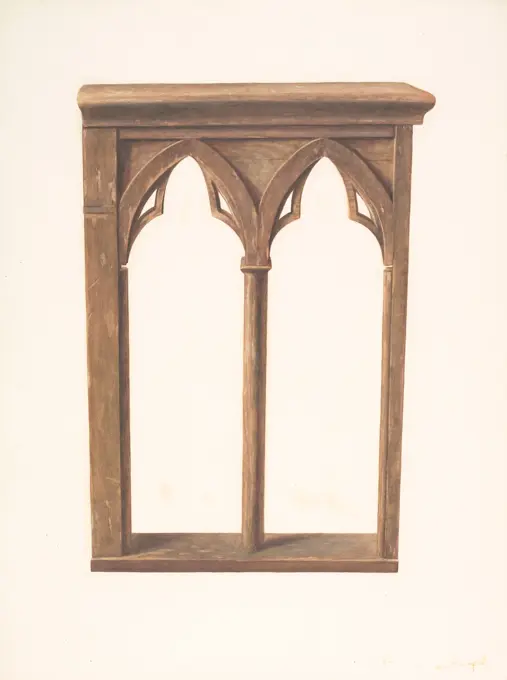
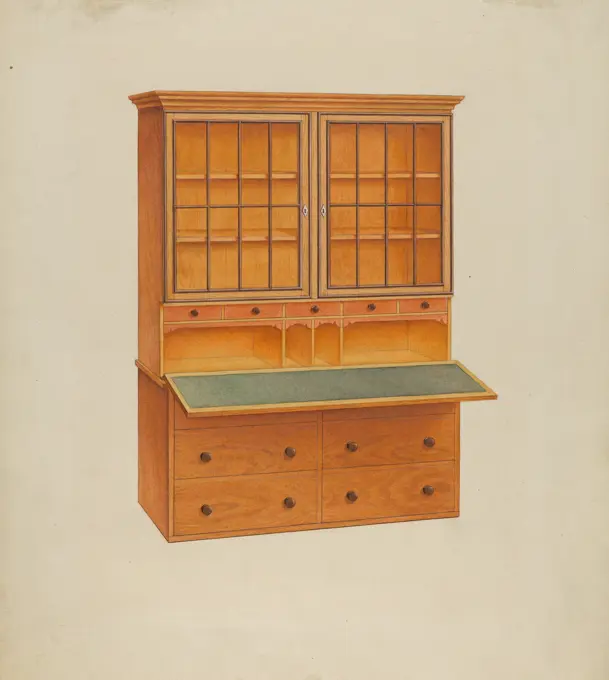
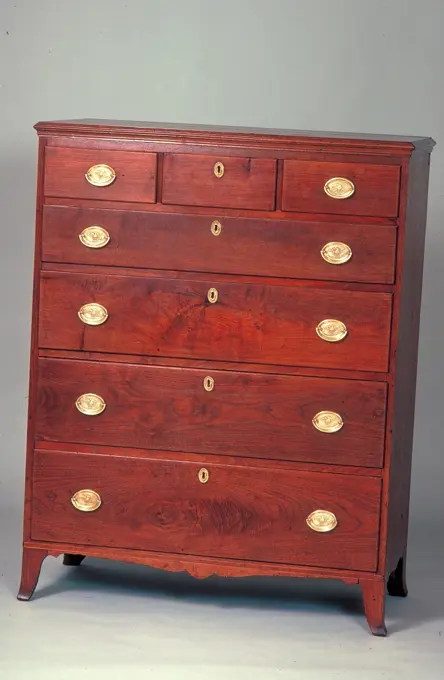
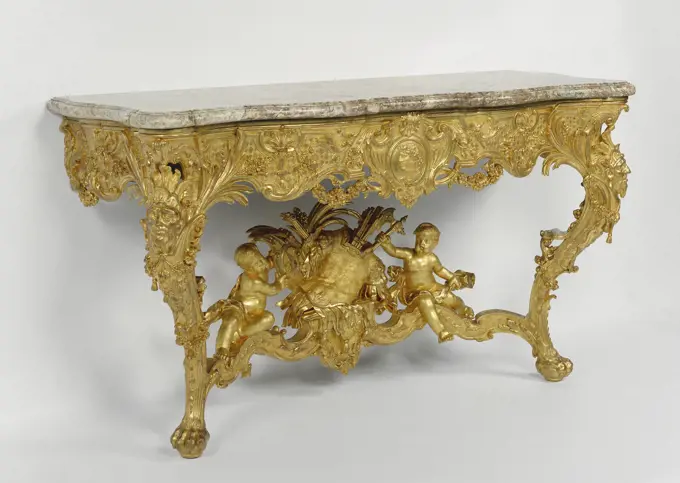
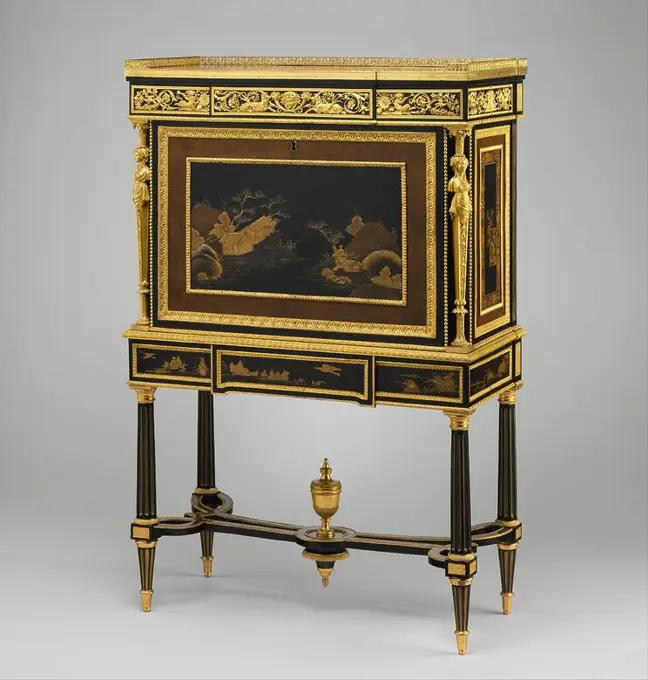
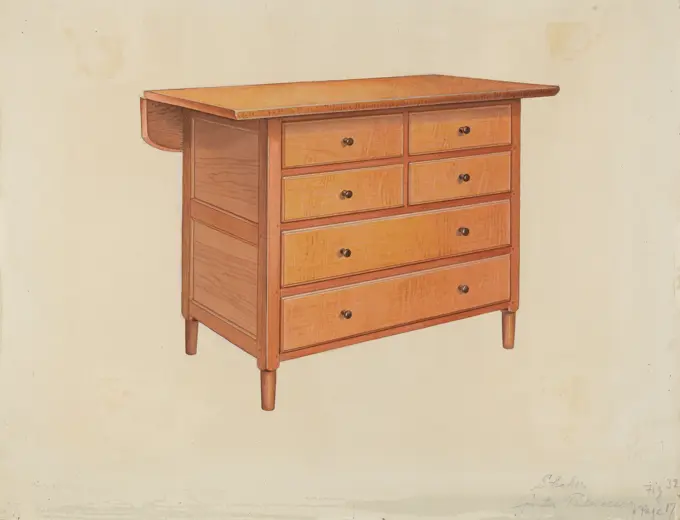
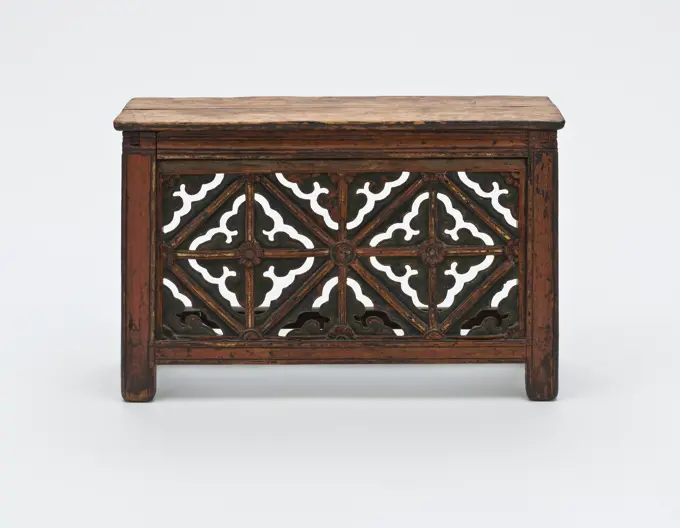
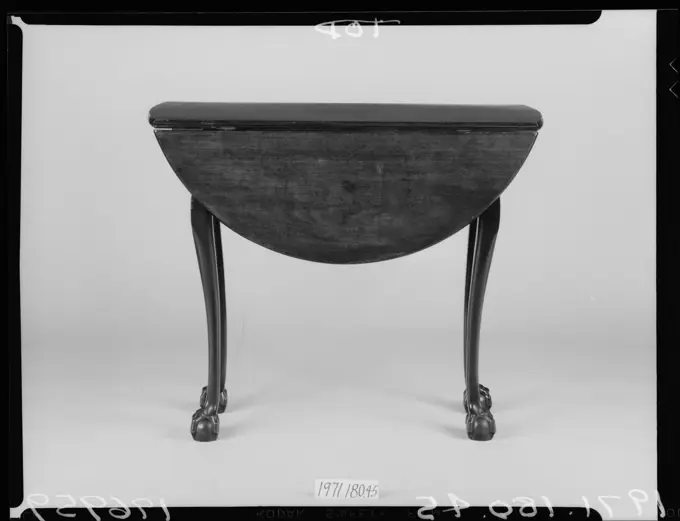
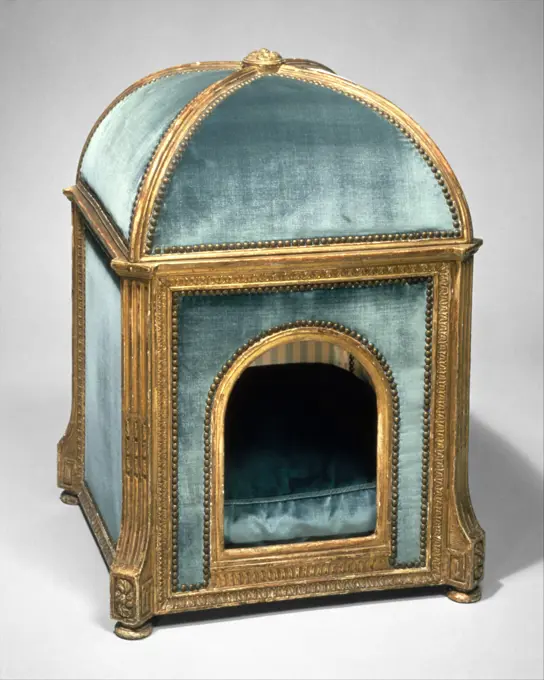
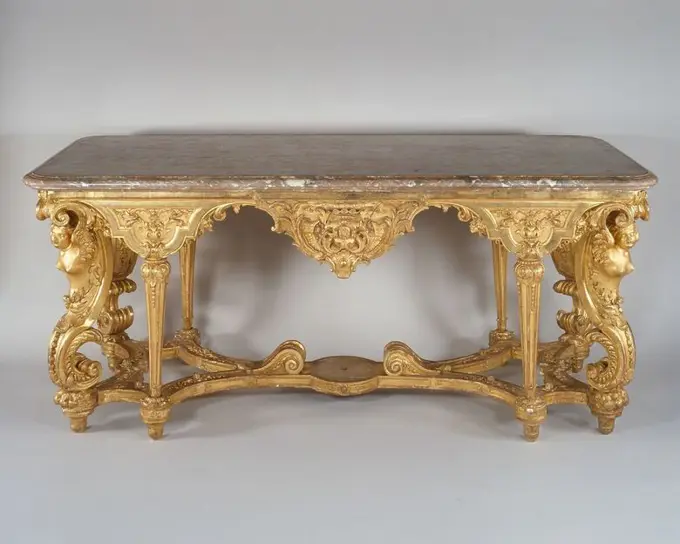
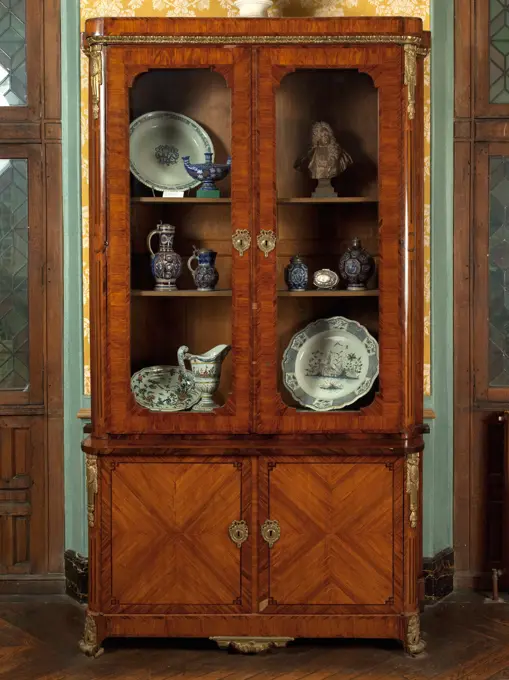
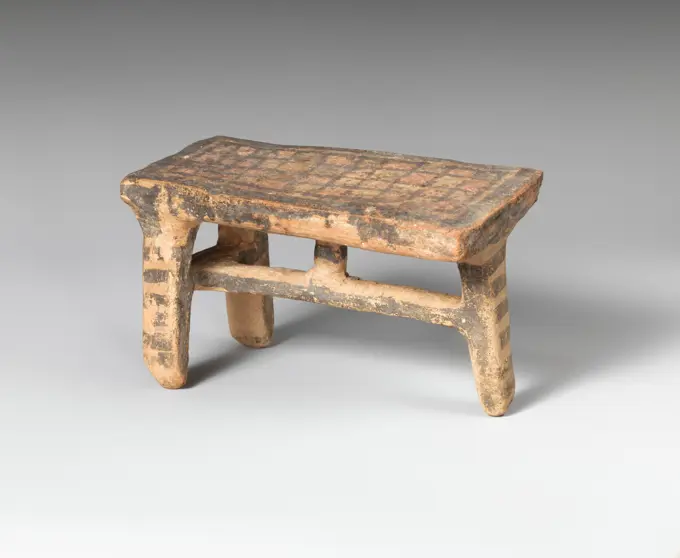
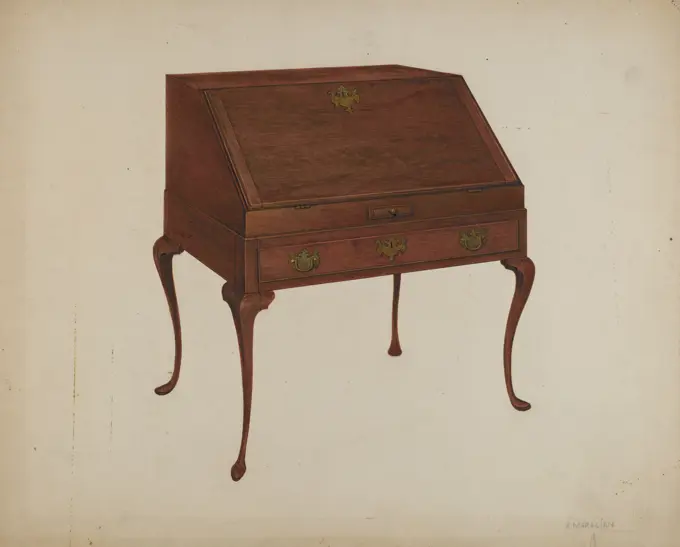
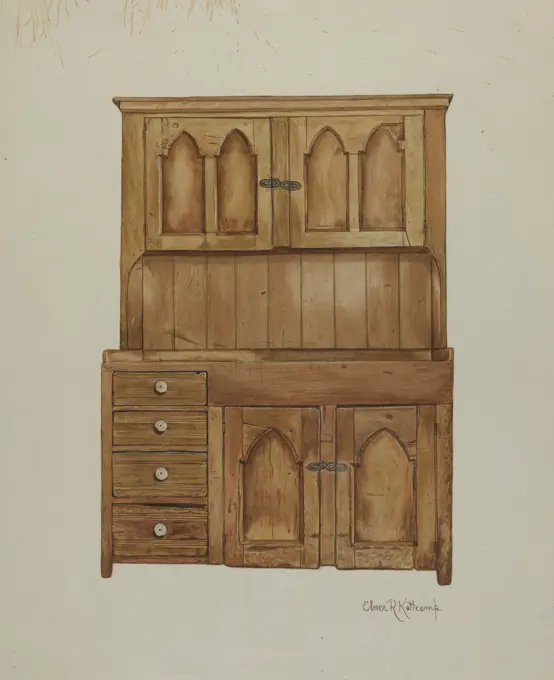
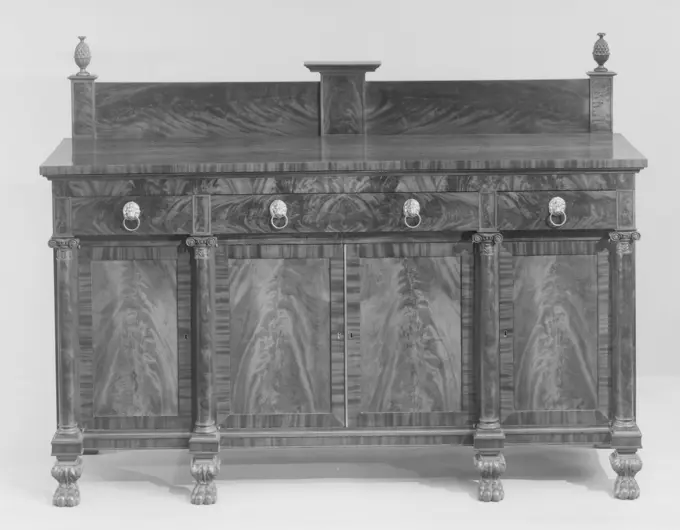
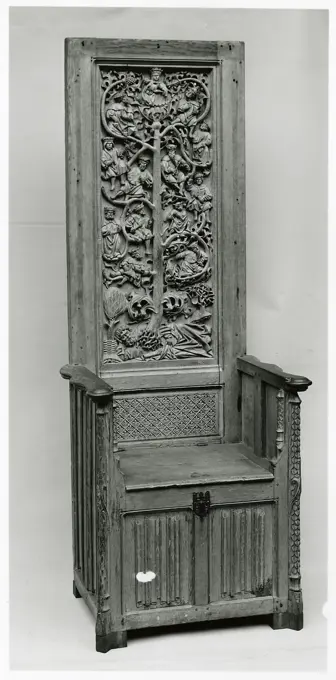
Hadley Chest. Dated: c. 1937. Dimensions: overall: 27.9 x 35.6 cm (11 x 14 in.) Original IAD Object: 41 1/4"long; 19"wide; 35 1/4"high. Medium: watercolor, colored pencil, pen and ink, graphite and some heightening on paperboard. Museum: National Gallery of Art, Washington DC. Author: Martin Partyka.Crib of mahogany. Crib of mahogany () And rosewood, with swallowed columns, decorated with braided straps, disk cords, laurel strips and rankfriezen. The claw pieces on the long side are scalloped and inserted with acanthus volutes, as well as the concussions to head and foot ends. At the head end, six balusters carry a deck frame. The basements of angle styles exhibit longer man's figures and corner styles are awarded bulbs. The bed is on spaws. A bed deckwashed to heaven. With mattress.Godefroy Dester (1768-1805). "Small secretary in drawers, says a ragpic table". Built in oak and fir, plating of holly, ebony, green leather, golden bronzes. Around 1775. Paris, Cognacq-Jay museum. 123782-8Betimation Met Bested, Anonymous, 1600 - 1650 Payment of oak wood, consisting of a bedstead and wall shot with door. The Bedstede has corner styles with a plinth on the tinted pedestal, a hermatlant on the right, a hermcaryatide on the right. The shaft is shouting downwards. The figures appear naked naked, an arm on the back, with the other theirs killed around the waist. Ionian capitals resting on the heads that carry the main frame. This has a Frisian, divided into courses by consoles, in which a moresk cartouche with ebb caps around oak cushions. The consoles are treated with shell decorations as lion heads. The Frisian is closed upstairs with a flat toothlist, which has stopped over the consoles. The ogief -shaped profiled cornice rests on small consoles. In the porch, the upper sill (bottom of the architraaf) has a held toothlist with support pieces in the corners. The advance consists of three panels with cornis decorations around a rectangle with diamond head. The side shot has Music box. unknown, creatorClose-up of a wooden cabinetDressingtableBasic of everybody;  P.Xixw. (1801-00-00-1810-00-00);High chest ofdrawersWriting Table (Bureau Plat). Attributed to André-Charles Boulle (French, 1642 - 1732, master before 1666)Cabinet. Bernard II van Risenburgh (French, after 1696 - about 1766, master before 1730)Lacquer table, 16th century, Unknown Japanese, 15 5/16 × 11 1/4 × 11 5/16 in. (38.89 × 28.58 × 28.73 cm), Negoro ware; red lacquer; metal fittings, Japan, 16th century, This elegant table originally would have held an incense burner or other ritual object placed before icons within a Buddhist temple. This type of red lacquer, known as Negoro ware, reflects Chinese influence in its overall shape and carved decor. Negoro is made by covering a base of black lacquer with red lacquer. Eventually, areas of red are rubbed away from repeated use, revealing the black beneath. The random pattern of red and black is highly valued by connoisseurs.Table with marquetery and porcelain plaques. Table decorated with marquetery of multiple wood types, porcelain and gold-plated bronze. The round table top with gallery rests on a trunk with a pedestal with three volutes, placed on a round leaf, resting on three conical fluted legs. The top is decorated with two large, between which six small, circles; All with gold-plated bronze tires trimmed and filled with porcelain plaques, showing on white ground flower bouquets with blue edges. The rules and the lower leaves wear windows-marquetery.Low-Back Armchair, 18th century, 31 5/16 x 20 5/16 x 15 3/16 in. (79.54 x 51.6 x 38.58 cm), Huang-hua-li hardwood, China, 18th century, Although widely used by both genders, the so-called 'rose chair' because of its small size and evocative name has traditionally been associated with women and the women's quarters. Comprised of slender sections of huanghuali, this petite armchair evokes a delicacy that does in fact have feminine overtones.Pier Table 1740-70 European, probably British. Pier Table. European, probably British. 1740-70. Mahogany, marble. Made in New York, United StatesRococo buffet cabinet. Buffet cabinet with sculpture.Footstool ca. 1800 Attributed to the Workshop of Duncan Phyfe Scottish. Footstool. American. ca. 1800. Mahogany. Made in New York, New York, United StatesLookingGlass.  Maker: Thomas Aldersey, British, active 1754-81Chest of Drawers. Dated: c. 1938. Dimensions: overall: 28 x 35.5 cm (11 x 14 in.) Original IAD Object: 40 5/8"high; 43 3/4"wide (max.); 20 1/8"deep.. Medium: watercolor, colored pencil, pen and ink and graphite on paperboard. Museum: National Gallery of Art, Washington DC. Author: Ferdinand Cartier.Slant-top desk mid-18th century Jean-Baptiste I. Tuart. Slant-top desk 195471DeskCommode (one of a pair) ca. 1780 Attributed to William Moore Moore trained in the London firm of John Mayhew and William Ince (act. 1759-1804) before setting up business in Dublin, where he continued the Mayhew and Ince Neoclassical style of finely engraved marquetry.. Commode (one of a pair). Irish. ca. 1780. Harewood and satinwood, inlaid with various woods, carcass of pine. Woodwork-FurnitureDrop-leaf Table 1700-1800 American. Drop-leaf Table 3443table, wood, carved, painted, gilded, Miniature table made of chestnut with a near circular top marbleized and carved in one piece with frieze rail which has beading on lower edge and free hanging flower garlands suspended by rings. Four tapering, spirally fluted legs terminating in baluster feet. Painted grayish white and gilt in parts., France, late 18th century, miniatures, Decorative Arts, Miniature, MiniatureHundred banking;  2. PO. XVII century (1650-00-00-1700-00-00), 2. PO. 19th century (1850-00-00-1900-00-00);baroque (style), money, plant decoration, fantastic animalsCabinet or Double Hutch. Culture: British. Dimensions: 49 1/4 × 48 3/4 × 20 1/2 in. (125.1 × 123.8 × 52.1 cm). Date: probably 19th or 20th century (15th century style). Museum: Metropolitan Museum of Art, New York, USA.Tea chest ca. 1760 British The English satirist Jonathan Swift (1667-1745) wrote in his Directions to Servants (1729) about "small chests and trunks with lock and key, wherein they keep the tea and sugar." Executed in a late Rococo style, this example, with its serpentine sides, scroll feet, and crisp carving on front and sides, displays some similarities to designs in the first and third editions of Thomas Chippendales Gentleman and Cabinetmakers Director (1754, 1762).. Tea chest. British. ca. 1760. Mahogany, gilt brass. Woodwork-FurnitureConsole table, by Piedmont Work, 1780, 18th Century, wood carved and gilded. Italy, Piemonte, Turin, Royal Palace. Whole artwork. Console table wall table gold oval phytomorphic motifs garlands banners: standards armor.Pa. German Chest. Dated: c. 1936. Dimensions: overall: 27.2 x 35.8 cm (10 11/16 x 14 1/8 in.) Original IAD Object: 20 1/2" long; 10 1/2" high; 10" wide. Medium: watercolor, graphite, and gouache on paper. Museum: National Gallery of Art, Washington DC. Author: Malcolm Hackney.Isadore Goldberg, Desk, c 1936 DeskSILLON DE LOS ENRIQUEZ-CONJUNTO. Location: INSTITUTO VALENCIA DE DON JUAN-COLECCION. MADRID. SPAIN.ARMARIO DEL DESPACHO DEL MARQUES. Location: MUSEO DEL ROMANTICISMO-OBJETOS VARIOS. MADRID. SPAIN.Painted Cabinet decorated with Scenes from the Life of the Virgin., Anonymous, c. 1630 - c. 1650Secretary 1836-50 John and Joseph W. Meeks In the mid-nineteenth century traditional furniture forms were often updated with ornament referencing popular romantic styles. This cylinder-front secretary (or desk and bookcase) is embellished with Gothic Revival motifs such as pointed-arch windows and quatrefoils. Broad expanses of figured rosewood - which replaced mahogany as the preferred wood at the time - complete the decorative statement.. Secretary 3157Photograph, Cassone in Renaissance Style; Designed by A.N. Davenport Co.; photograph; 15.9 x 21.0 cm (6 1/4 x 8 1/4 in. )Elizabeth Curtis, Bench, c 1953 BenchBlanket Chest 1835-75 United Society of Believers in Christs Second Appearing (“Shakers”), Mount Lebanon, New York This "heavenly blue" Shaker blanket chest has one deep drawer. The blanket chest was a familiar furniture form in colonial New England that the Shakers borrowed and adapted to their own taste. Close examination of the finish reveals a number of coats of paint, varying slightly in tint, providing rare evidence of original painted Shaker furniture. Very early Shaker furniture may have been given a heavy coat of paint to act as a wood preservative. Later furniture was embellished with thinned paint, in order for the natural grain of the wood to remain visible.. Blanket Chest 1996Howard Weld, Shaker Low Table, c 1936 Shaker Low TableChest;  1st half 16th century () (1501-00-00-1550-00-00);Built-In Drawers. Dated: 1937. Dimensions: overall: 28 x 22.9 cm (11 x 9 in.) Original IAD Object: 88" high; 75" wide; 24" deep. Medium: watercolor and graphite on paperboard. Museum: National Gallery of Art, Washington DC. Author: John W. Kelleher.Wall lantern. Culture: British. Dimensions: 24 × 12 1/2 × 24 in. (61 × 31.8 × 61 cm). Date: ca. 1750. Museum: Metropolitan Museum of Art, New York, USA.Console table ca. 1760-70 Style of Jean-Baptiste Joseph Delafosse. Console table 194840Secretary cabinet ca. 1735 British Japanning, a fashionable European technique intended to imitate Asian lacquer, was very popular in England beginning in the last quarter of the seventeenth-century. Special manuals were published such as John Stalker and George Parkers A Treatise of Japanning and Varnishing (London, 1688), which contained technical information on how to make lacquer-like varnishes as well as useful designs for the decoration of furniture. The vogue for japanning remained strong during the eighteenth century as is evidenced by the 1732 publication of The Method of Learning to Draw in Perspective…Likewise a New and Curious Method of Japanning…so as to imitate China: and to make black or gilt Japan-Ware as Beautiful and Light as any brought from the East-Indies. A large number of extant pieces of japanned furniture also underscore their one time popularity.. Secretary cabinet. British. ca. 1735. Oak, pine, and walnut decorated in red, gold, and silver japanning; brass; Chest 1650-1700 British. Chest. British. 1650-1700. Red pine, elm, willow. Made in EnglandPaul Poffinbarger, Seat Table, c 1939 Seat TableNotenhout box, Anonymous, c. 1500 - c. 1600 Case of partially gilded walnut with interior of pine. The cropped corner styles are decorated with a cartouche with women's mask and Festoen. The front panel shows, within a frame, wandering grinds with a mascaron as a middle part. The pedestal has an edge of framed, reverse palmets. The lid edge has shalms and is carried by a series of leaf consoles. The sides are unadorned and provided with iron handles. Italy wood (plant material). walnut (hardwood). spruce (wood). gilding (material). iron (metal) gilding Case of partially gilded walnut with interior of pine. The cropped corner styles are decorated with a cartouche with women's mask and Festoen. The front panel shows, within a frame, wandering grinds with a mascaron as a middle part. The pedestal has an edge of framed, reverse palmets. The lid edge has shalms and is carried by a series of leaf consoles. The sides are unadorned and provided with iron handles. Italy wood (plant material). wManuel G Runyan, Altar Rail Gate, c 1939 Altar Rail GateWinslow Rich, Shaker Table, 1938 Shaker TableJohn W Kelleher, Shaker Secretary Desk, c 1937 Shaker Secretary DeskWall cupboard, the door decorated with stabbed lion's head, anonymous, c. 1600 - c. 1650 Wall cabinet of oak. The door is decorated with a lion's head. Netherlands oak (wood). paint (coating) Wall cabinet of oak. The door is decorated with a lion's head. Netherlands oak (wood). paint (coating)Paneling, with Corinthian columns on Piedestals, between which a border arch worn by pilasters, filled with shell (fragment), anonymous, c. 1500 - c. 1600 Payment of walnut, consisting of two panel frames. These consist of a main frame, resting on two overhoeks -placed Corinthian -canaled columns on Piedestals. In between there is a border arch worn by pilasters and filled with a shell. France wood (plant material). walnut (hardwood) Payment of walnut, consisting of two panel frames. These consist of a main frame, resting on two overhoeks -placed Corinthian -canaled columns on Piedestals. In between there is a border arch worn by pilasters and filled with a shell. France wood (plant material). walnut (hardwood)Kussenkast, Anonymous, c. 1650 - c. 1670 Cabinet on Bolpoten, glued with ebony on oak core. The, on the corners and in the middle with masks decorated, drawer makes a dichotomy. The base cabinet has two drawers and two high doors with pillows, decorated with festons; The cushions of the low upper doors with cherub heads. Corner styles and central style -set columns on the overhoeks, upstairs with Corinthian and below with ionic capitals. Braoping at the columns. Double ojief -shaped Frisian with cartouches. Robbellists. Netherlands wood (plant material). oak (wood). ebony (wood). kingwood (wood) Cabinet on Bolpoten, glued with ebony on oak core. The, on the corners and in the middle with masks decorated, drawer makes a dichotomy. The base cabinet has two drawers and two high doors with pillows, decorated with festons; The cushions of the low upper doors with cherub heads. Corner styles and central style -set columns on the overhoeks, upstairs with Corinthian and below with ionic capitaTable with oval leaf, on hexagonal baluster trunk. Oval table of mahogany. The leaf has a slightly sloping edge and rests on a hexagonal baluster trunk, ending in a sharp triangular tip and three S-shaped legs.Chest ofdrawersHandcrafted wooden frame Handcrafted Moroccan mirror with decorative wooden frame Copyright: xZoonar.com/Baloncicix 7095133Work Table 1800-1810 American. Work Table. American. 1800-1810. Mahogany, satinwood, rosewood, ebony, white pine. Made in Boston, Massachusetts, United StatesDressing table ca. 1775 Attributed to David Roentgen German. Dressing table 205796Cabinet;  1720-1740 (1720-00-00-1740-00-00);Console Table; Attributed to Joseph Effner (German, 1687 - 1745), and Johann Adam Pichler (German, active about 1716,1717 - 1761); Münich, Germany; about 1730; Limewood, with a slab of Tegernsee marble; 85.7 x 156.2 x 64.1 cm (33 3,4 x 61 1,2 x 25 1,4 in.)Corner Cupboard. Dated: c. 1938. Dimensions: overall: 35 x 23.8 cm (13 3/4 x 9 3/8 in.) Original IAD Object: Approx. 7' high. Medium: watercolor, colored pencil, and graphite on paperboard. Museum: National Gallery of Art, Washington DC. Author: Michael Riccitelli.Glazed displaycase; Radziwi , Micha Piotr (1853-1903); II.Antique wooden almira ceramic handle, Jodhpur, Rajasthan, India Copyright: xSafatxAli/DinodiaxPhotoxDrop-leaf table ca. 1800 British. Drop-leaf table 202711Ruffier des Aimes, Cyrille (n.1844-01-29-D.1916-04-13), shelf-vitrine (usage name). Wood, inlaid of mother -of -pearl and ivory, incisions, gilded bronze. Petit Palais, Museum of Fine Arts of the City of Paris.Dressing table 1730-60 American In the 1730s, Boston cabinetmakers transformed the traditional flat-top, turned-leg William and Mary-style high chest into the scroll-top, cabriole-leg Queen Anne version. The best examples of this uniquely American design, such as this dressing table and its related high chest (10.125.62), have carved and gilded shells and delicate inlaid compass stars on the pediment and case sides.. Dressing table. American. 1730-60. Walnut, walnut veneer, white pine. Made in Boston, Massachusetts, United StatesCandlestick -South choir tower, archive, old safe, safe deposit box, strongbox Church of St., Church of St., St., St., SaintDrop-front secretary on stand (secrètaire à abattant or secrétaire en cabinet) (one of a pair) (part of a set). Culture: French, Paris. Dimensions: H. 52-3/8 x W. 34 x D. 16-1/2 in. (133.0 x 86.0 x 41.9 cm). Maker: Adam Weisweiler (French, 1744-1820). Date: ca. 1790.On October 7, 1790, many European royals and aristocrats were gathered in Frankfurt to attend the coronation of Leopold II as Holy Roman Emperor. Ferdinand IV (1751-1825), king of Naples, was among those present for this solemn event. Married to the new emperor's sister, Maria Carolina, Ferdinand was the brother-rin-law of both Leopold and Marie-Antoinette. At this time of social and political instability caused by the French Revolution, the Parisian marchand-mercier Dominique Daguerre and his business partner, Martin-Eloi Lignereux, traveled to Frankfurt as well. They were looking for new clients and lucrative commissions. This secretary (or its pair) and a matching commode were among the luxury goods they brought along wConsole Table, c. 1765. Attributed to Ferdinand Tietz (Austrian, 1708-1777). Carved and gilded wood; overall: 85.8 x 132.1 x 82.5 cm (33 3/4 x 52 x 32 1/2 in.).Rosa Rivero, Bureau, c 1940 BureauAnne Ger, Shaker Dressmaker's Counter, c 1936 Shaker Dressmaker's CounterChest. Dimensions: H. 35 1/2 in. (90.2 cm)W. 59 in. (149.9 cm)D. 21 5/8 in. (54.9 cm). Date: 18th century. Museum: Metropolitan Museum of Art, New York, USA.Extension Table 1877-80 American. Extension Table. American. 1877-80. Mahogany. Made in New York, United StatesTable with Openwork Auspicious SymbolsDrop-leaf Dining Table 1760-90 American. Drop-leaf Dining Table. American. 1760-90. Mahogany, white pine, tulip poplar. Made in Massachusetts, United StatesShaker Chest of Drawers. Dated: 1937. Dimensions: overall: 50.3 x 23.2 cm (19 13/16 x 9 1/8 in.) Original IAD Object: 36 1/2" high; 30 1/4" wide; 17 1/2" deep. Medium: watercolor and graphite on paperboard. Museum: National Gallery of Art, Washington DC. Author: Winslow Rich.Dog kennel ca. 1775-80 Claude I Sené Claude I Senés talents as a chair maker were not limited to seat furniture for humans (see also Gallery 541). Among one of the most charming pieces in the Wrightsman collection is this niche de chien created for Marie-Antoinette. Considered a part of domestic furnishings, dog kennels were typically comprised of a small case or basket open on one or two sides to allow the dog to enter. More elaborate models resembled diminutive canopied beds or tabouret-shaped chairs with a recessed niche below. The Wrightsmans example is constructed from gilded beech and pine and covered with luxurious velvet. The interior is lined in a striped blue and beige silk. The usage of acanthus leaves and Greek keys throughout comprise popular Neoclassical motifs fashionable in France at the end of the eighteenth century. Marie-Antoinette, like Madame de Pompadour before her, was a lover of canines. Her pets seemed to return the affection: tradition has it that her beloveCabinet (yuanjiaogui), 17th century, 47 5/16 x 28 1/2 x 16 3/4in. (120.2 x 72.4 x 42.5cm), Huang hua-li, metal hardware, softwood, China, 17th centurySide table. Culture: French. Designer: after a design by Charles Lebrun (1619-1690). Dimensions: Overall: 31 1/2 × 77 × 32 1/4 in. (80 × 195.6 × 81.9 cm). Date: ca. 1685.Lavishly carved side supports are distinguishing elements of this remarkable table acquired by the Museum in 1987. Taking the form of elongated S's, the legs are carved with fantastic female herm figures, their wings springing up in place of arms and their torsos ending in leafy fringes. The convoluted shape of these supports as well as their sculptural decoration relate them to the legs of tables in ornament drawings by Charles Le Brun (1619-1690). Museum: Metropolitan Museum of Art, New York, USA.René Dubois. Two -body library. Oak, veneer, around 1770. Paris, Carnavalet museum. 50574-20 Library, bust, oak, jug, two bodies, furniture, plating, dishes, furniture, dishTerracotta table ca. 600-480 B.C. Cypriot This is one of three known Cypriot models of tables. The rectangular top is supported on three legs, a convention familiar from the Aegean region and the Near East as well. The checkerboard pattern on the top is interesting; it recalls the shrouds of Attic geometric funerary vases and raises the question whether these tables might have been used as biers.. Terracotta table 241345Emile Cero, Wooden Chest, c 1938 Wooden ChestArsen Maralian, Desk, 1938 DeskShaker Cupboard with Drawers. Dated: c. 1936. Dimensions: Original IAD Object: 81 1/2" high; 35 1/2" wide; 17" deep. Medium: watercolor and graphite on paperboard. Museum: National Gallery of Art, Washington DC. Author: Howard Weld.Elmer R Kottcamp, Sink Bench, 1935 1942 Sink BenchSideboard Table 1812-19 Charles-Honoré Lannuier Flame-grain mahogany veneers contrast with straight-grain mahogany crossbanding to enliven the facade of this massive architectural sideboard from the shop of the Parisian émigré cabinetmaker Charles-Honoré Lannuier. The "French" sideboard, first made in the United States around 1810, became the predominant dining room storage and display furniture form in American homes in the first half of the nineteenth century. The sideboard's name derives from its close relationship to the French Empire desserte, a similarly massive form with four cupboard doors, a frieze of drawers, and columns terminating in lion's-paw feet.. Sideboard Table. American. 1812-19. Mahogany, tulip poplar, white pine. Made in New York, New York, United StatesPair of Double Salts 1798-1809 Paris. This pair of double salts is part of a vast service made for Emperor Napoleon Bonaparteís sister Pauline on the occasion of her marriage to the Roman nobleman Camillo Borghese, Sixth Prince of Sulmona.In the years after the French Revolution, architects and designers adopted the visual language of ancient Greece and Rome to express the new imperial order. Napoleon, hoping to promote Parisís luxury trades, commissioned several silver dinner services as gifts to be sent abroad. The slender outlines and smooth surfaces of the vessels in the Borghese service contrast with the rich decoration.. Silver gilt . Martin-Guillaume BiennaisTabernakelkast, anonymous, c. 1650 - c. 1675 Tabernakelka cabinet of Ebony with silver battle. The three protruding columns are covered with silver. On the doors and cornices, openwork, driven silver battle. Friesland (possibly) silver (metal). brass (alloy). oak (wood). pine (wood). ebony (wood) Tabernakelka cabinet of Ebony with silver battle. The three protruding columns are covered with silver. On the doors and cornices, openwork, driven silver battle. Friesland (possibly) silver (metal). brass (alloy). oak (wood). pine (wood). ebony (wood)Center Table c 1847-1857 Boston. Mahogany and marble . Doe, Hazelton and Company (Manufacturer)Tilt-top Tea Table ca. 1800 American. Tilt-top Tea Table 8660Dorothy Handy, Tilt Top Table, c 1937 Tilt Top TableBOY;  XVIII/19th century (1790-00-00-1810-00-00);Staircase Model (France); oakHigh-Backed Chair with the Tree of Jesse late 15th century Lower Rhenish. High-Backed Chair with the Tree of Jesse. Lower Rhenish. late 15th century. Oak. Woodwork-FurnitureObjects, furniture, secretary desk, Doyle mansion, Salem, 33 Summer Street , Mansions, Interiors, Desks. Frank Cousins Glass Plate Negatives Collection. Coated chair, part of the cup-amicublement, from white and blue gray painted beech wood and resting on conical legs. The rules and sills of the back window, with Tuscan fluted columns as back styles, exhibit stroke braid with rosettes. Finish with rosettes and acanthus leaves. The upholstery shows on light blue satin ground floral motifs, held by griffones. Ordered for the new landscape 74, Haarlem. See: BK-15615-a / p; BK-15614; BK-15616-A / b.Secretary. Dated: 1937. Dimensions: overall: 22.9 x 30 cm (9 x 11 13/16 in.) Original IAD Object: 51 1/2"high; 47 3/4"wide; 22 1/8"diameter. Medium: watercolor, colored pencil, gouache, and graphite on paperboard. Museum: National Gallery of Art, Washington DC. Author: Bernard Krieger.Square piano. Meyers square pianos show English influence in their exterior and through three of the pedals: pizzicato, forte and crescendo. The round legs and the fourth pedal - a moderator that inserts leather tabs between the hammers and the string - are typically French. The Meyer brothers flourished in Amsterdam under French rule; three Meyer pianos were acquired for the royal residences.Rocaille console. Drink. House of Victor Hugo - Hauteville House.Jacket, Anonymous, 1600 - 1650 Oak coat rack consisting of a channeled post on cross foot, at the top with four arms on loose, open -sawn support pieces. The transition between mail and foot is formed by openwork claw pieces. The cannelures are alternated by rosettes and flat stabbing. The cross foot is decorated with egg lists. Northern Netherlands wood (plant material). oak (wood) Oak coat rack consisting of a channeled post on cross foot, at the top with four arms on loose, open -sawn support pieces. The transition between mail and foot is formed by openwork claw pieces. The cannelures are alternated by rosettes and flat stabbing. The cross foot is decorated with egg lists. Northern Netherlands wood (plant material). oak (wood)