Antique Carpets and Fabrics

A collection of exquisite carpets and textile fragments featuring elaborate patterns and historical significance, showcasing traditional craftsmanship.

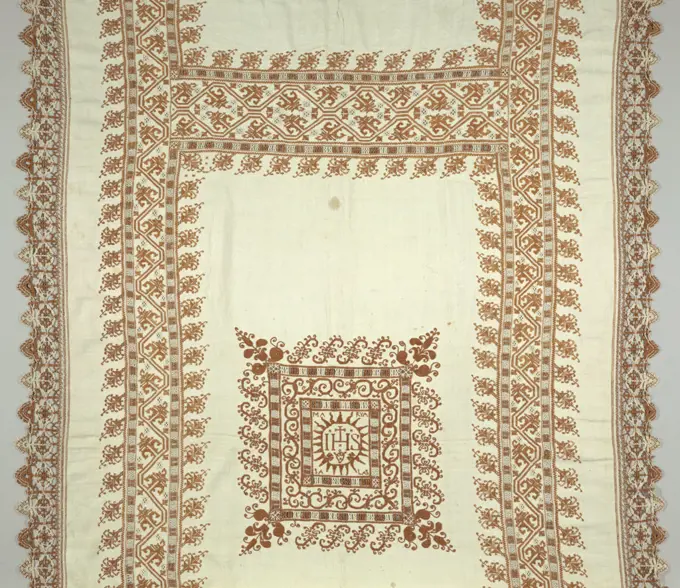
Pillow cover, Medium: silk on linen Technique: embroidered on plain weave, Embroidered cushion cover showing a diamond lattice with symmetrical flowering vine in red silk on linen., Italy, 16th-17th century, embroidery & stitching, Pillow cover
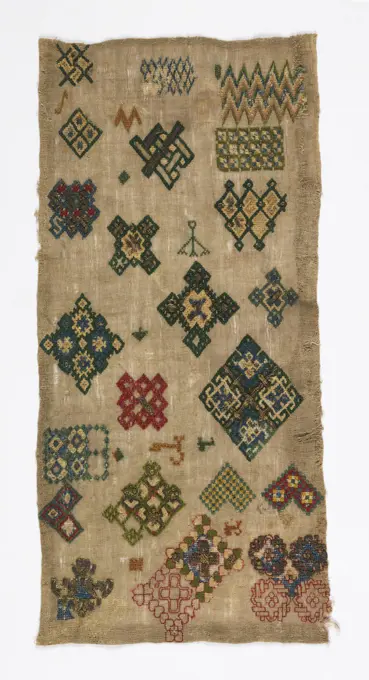
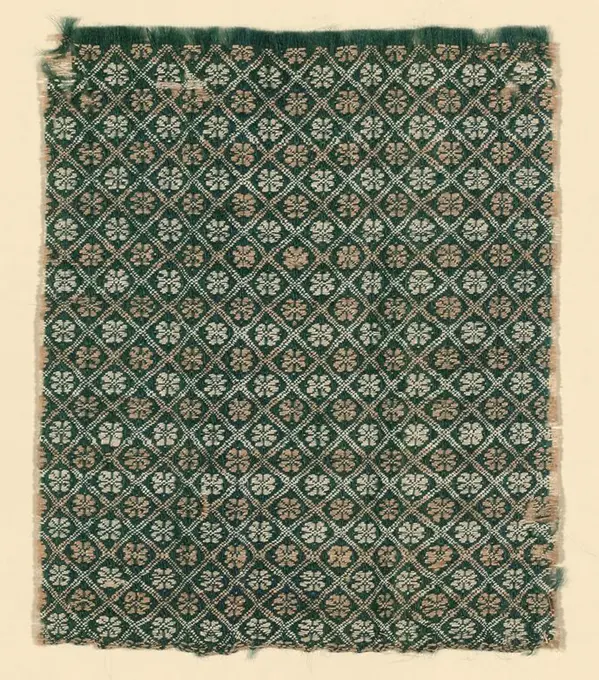
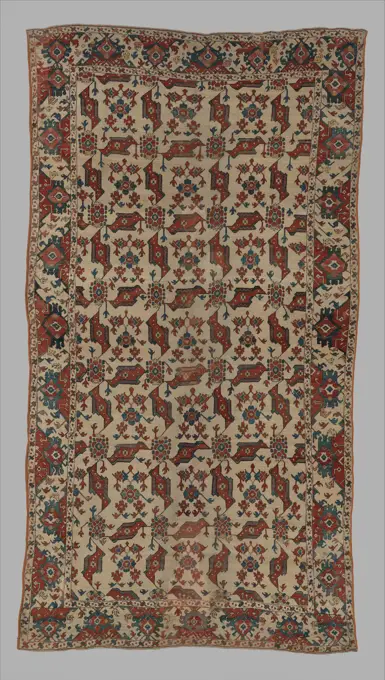
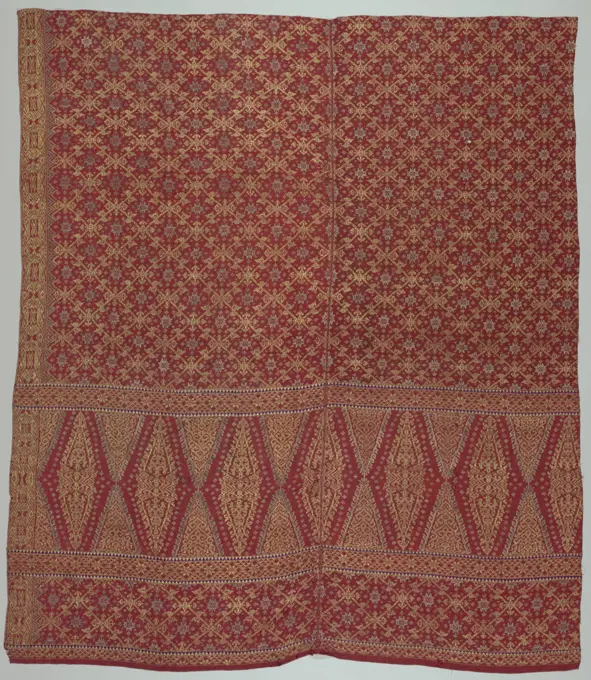
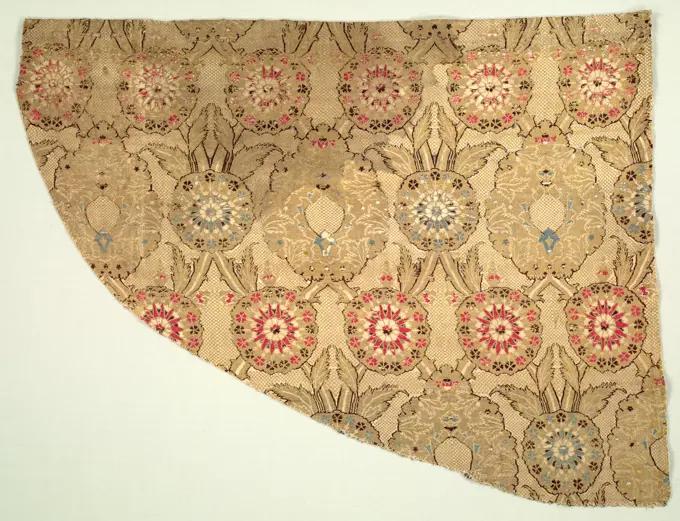
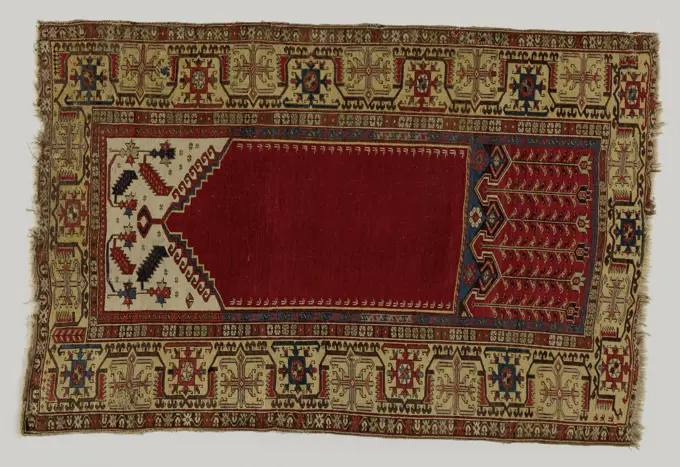
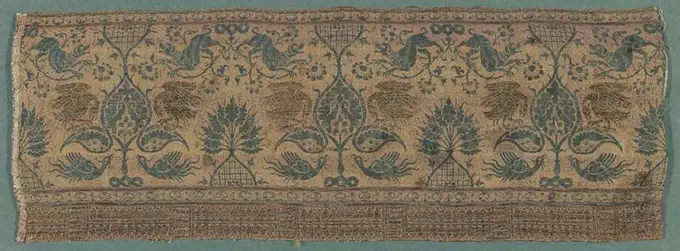
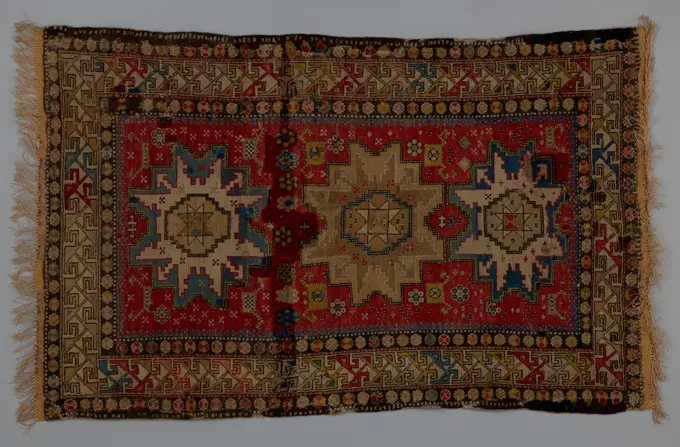
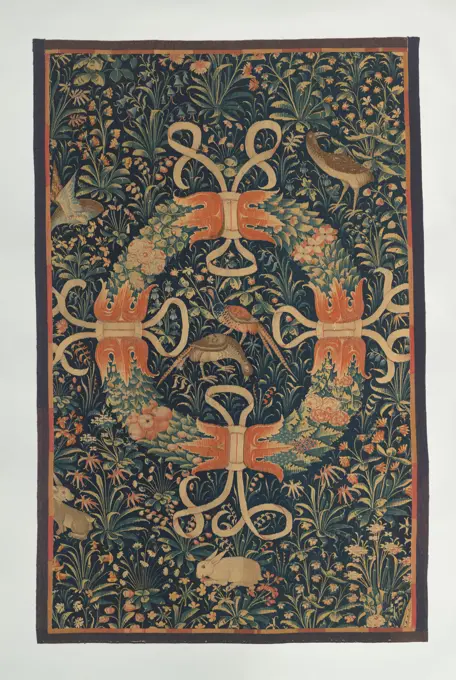
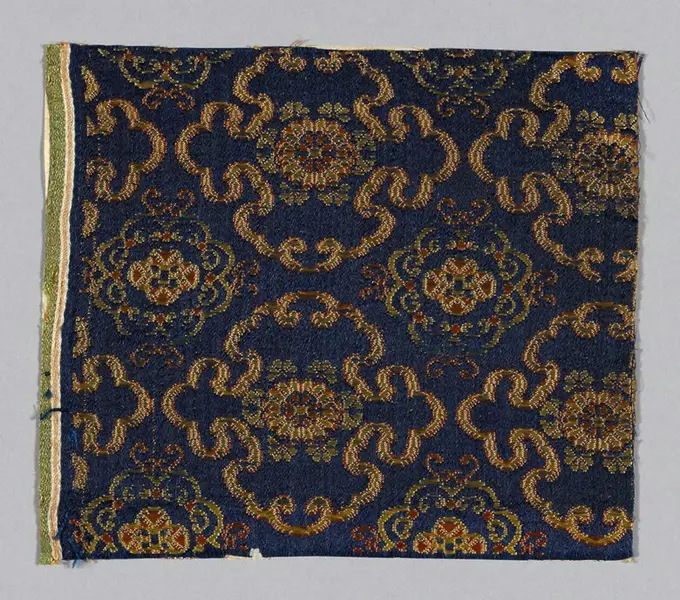
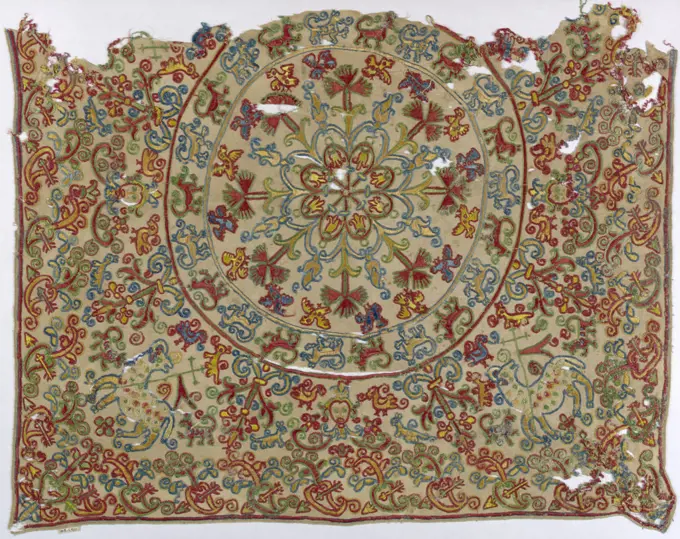
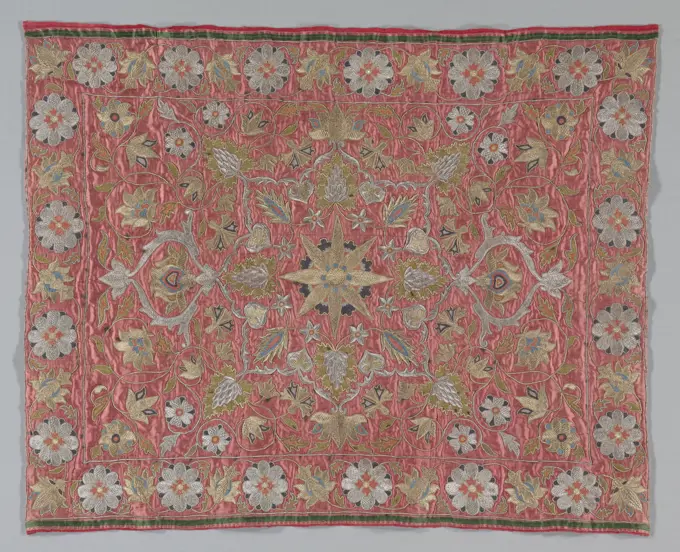
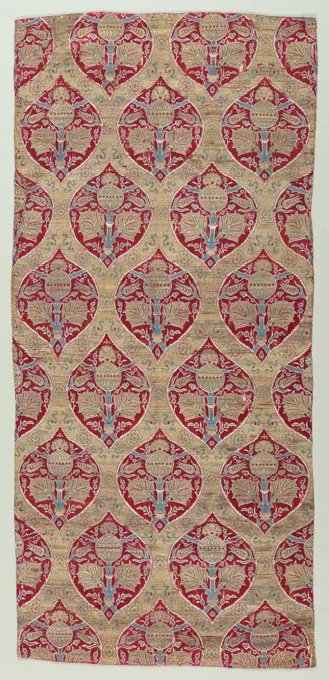
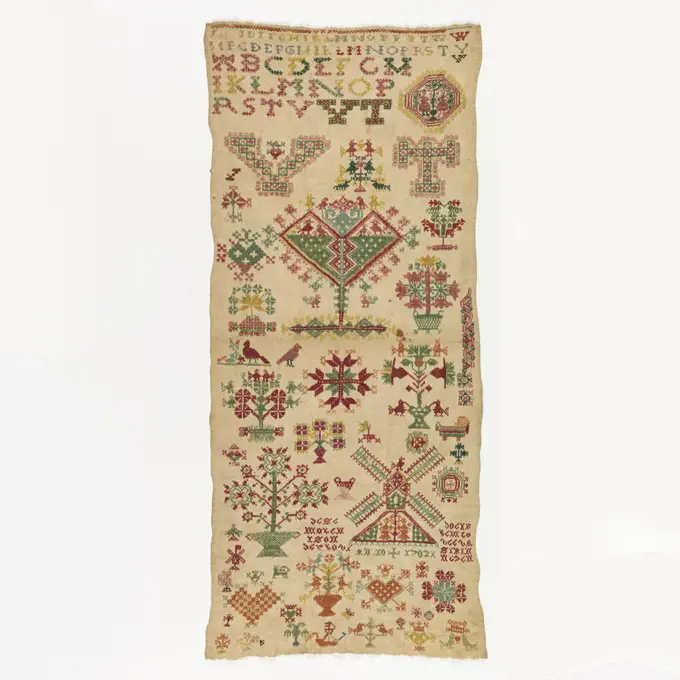
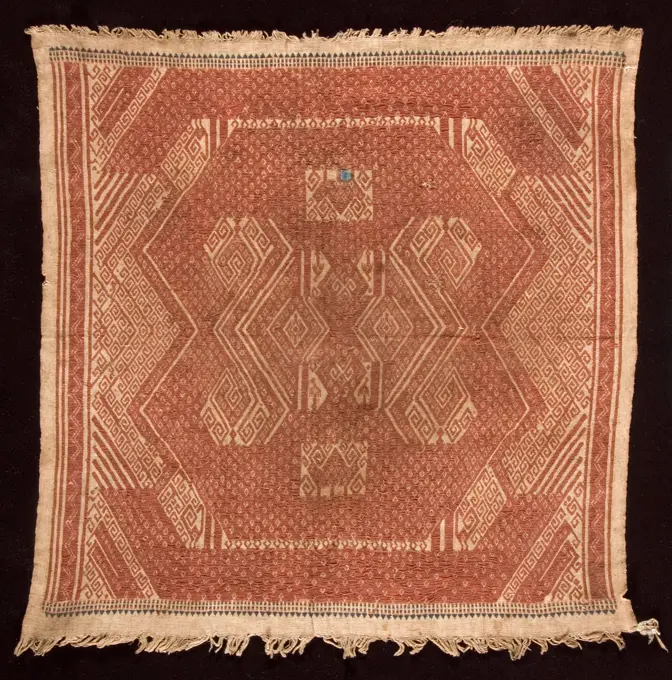
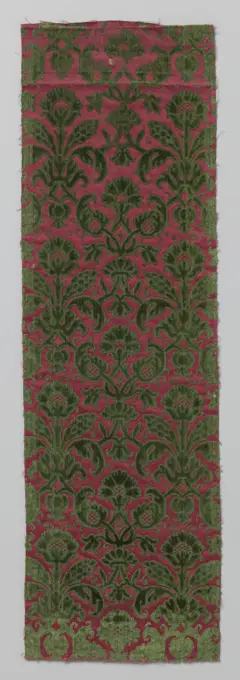
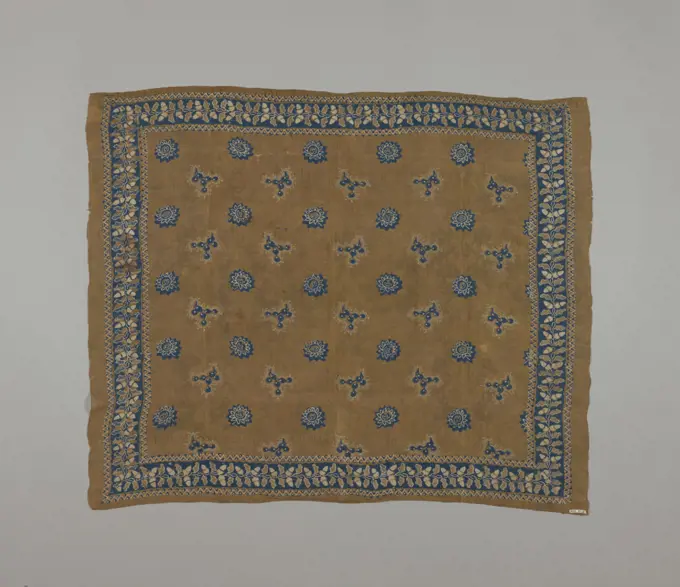
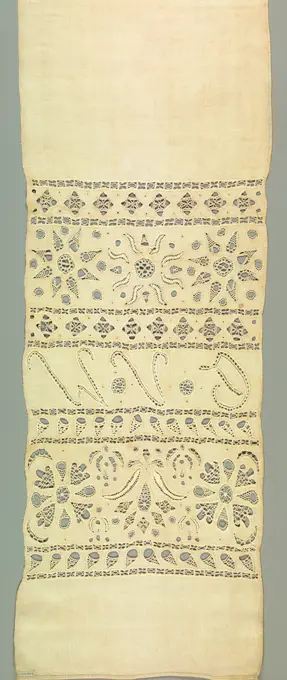
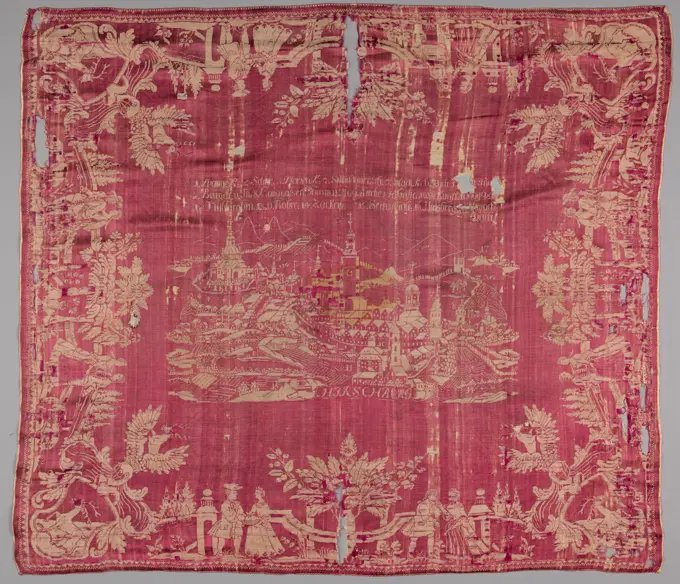
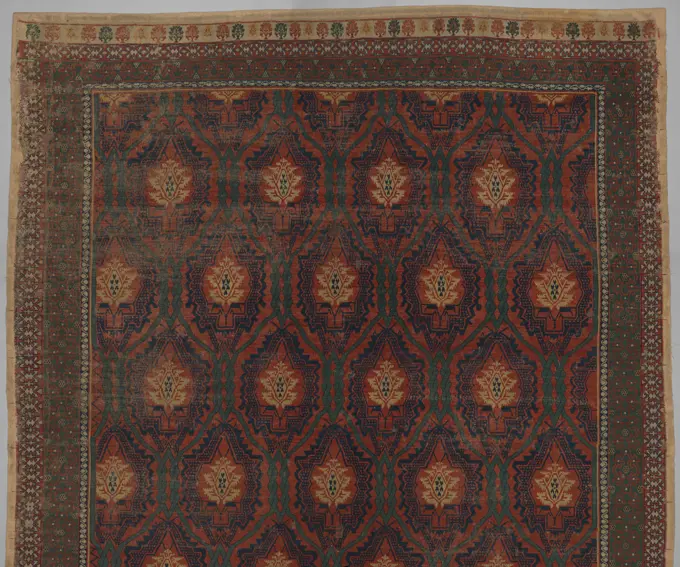
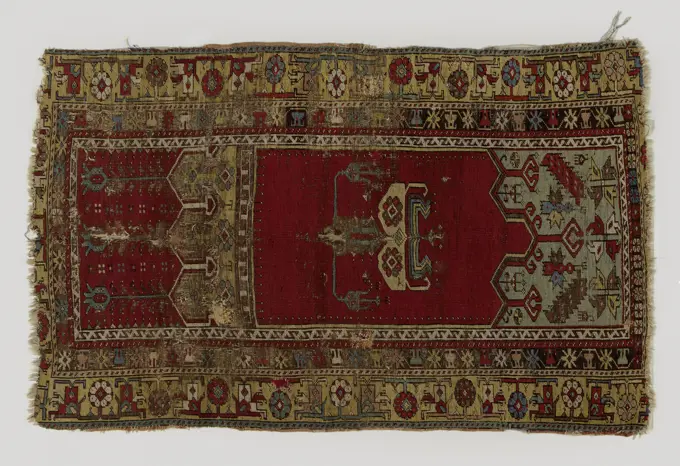
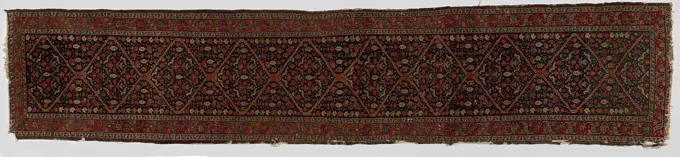
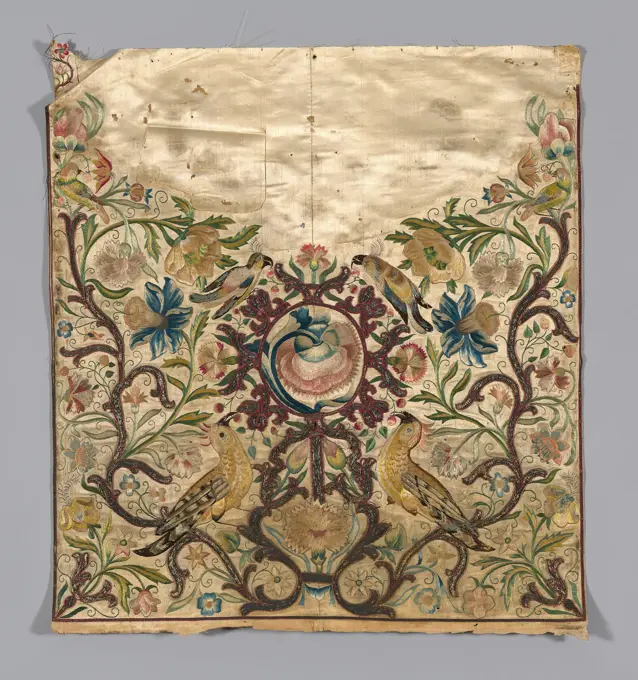
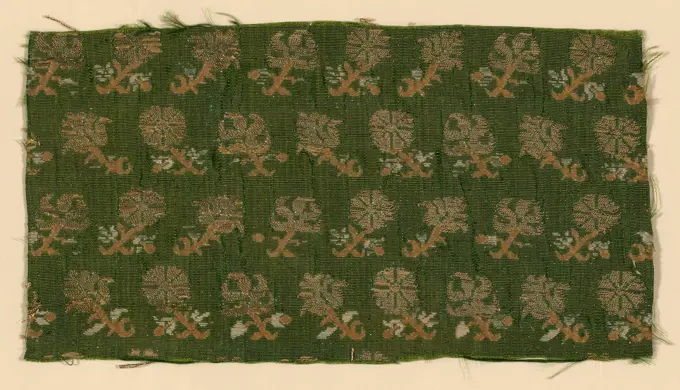
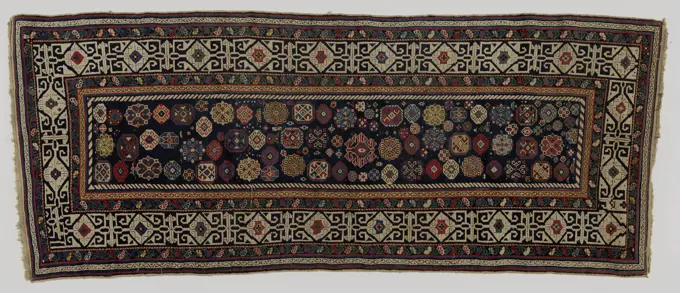
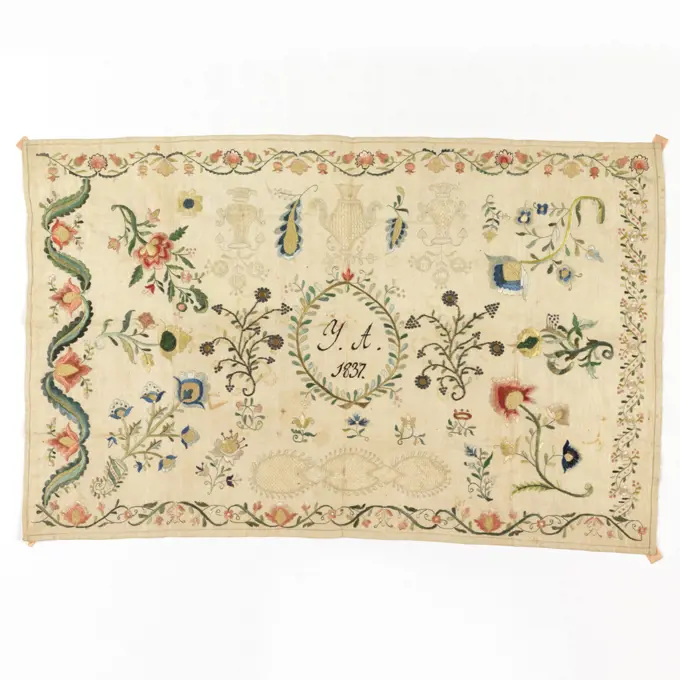
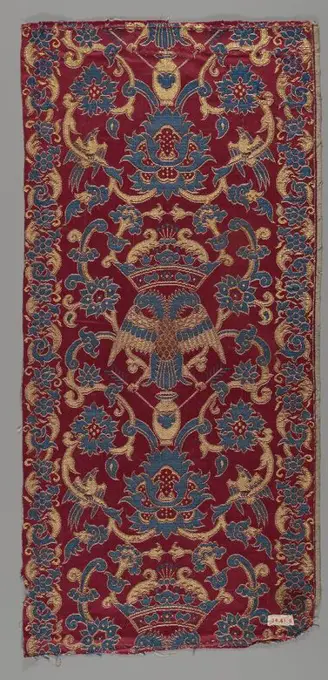
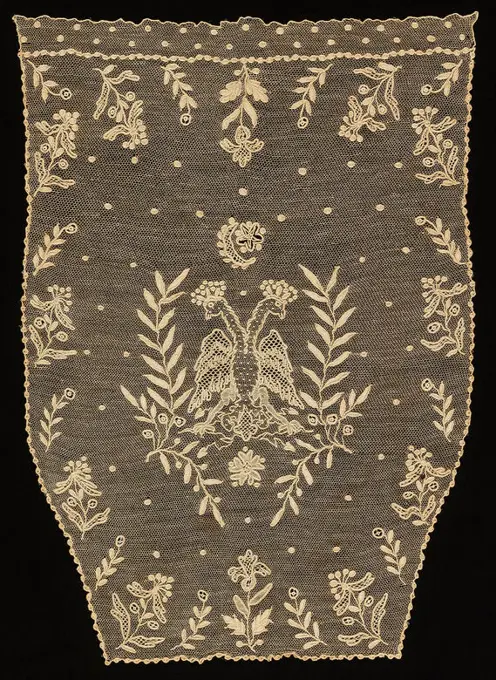
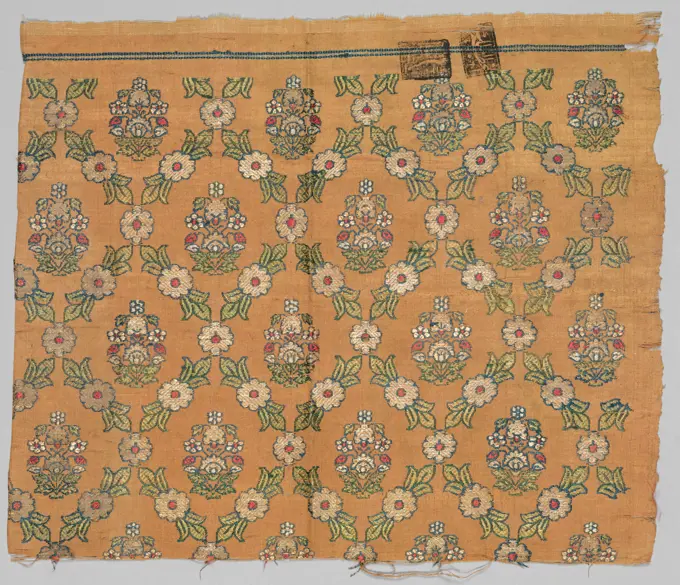
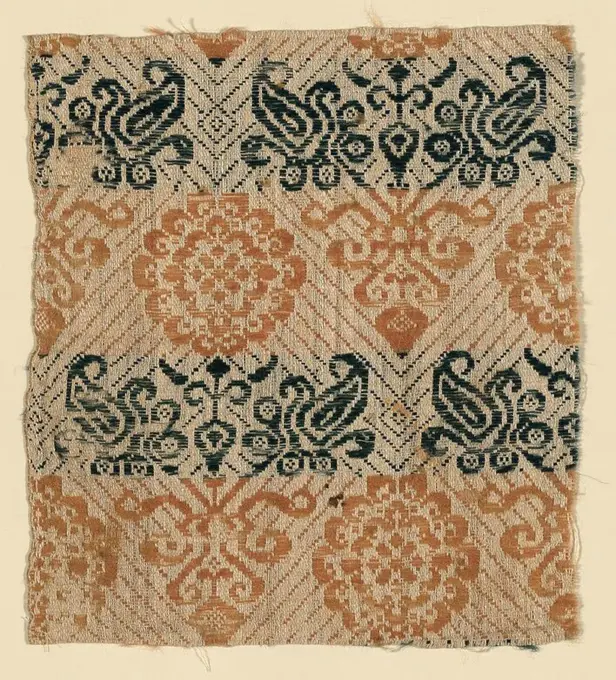
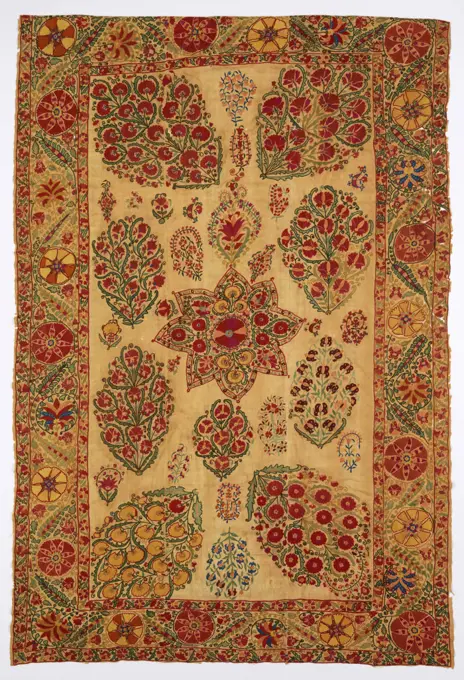
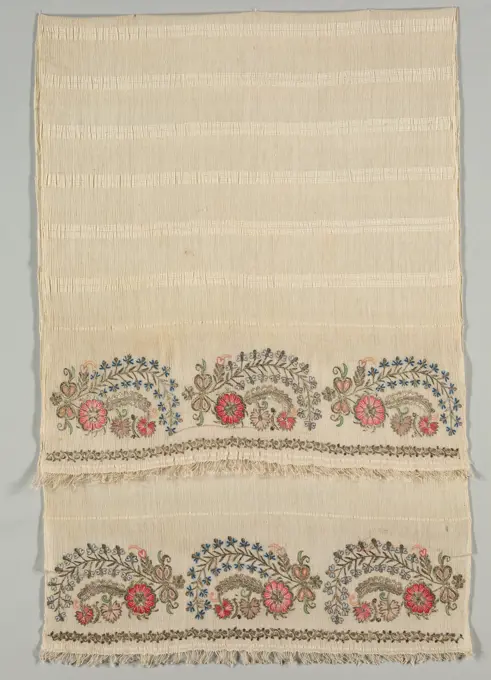
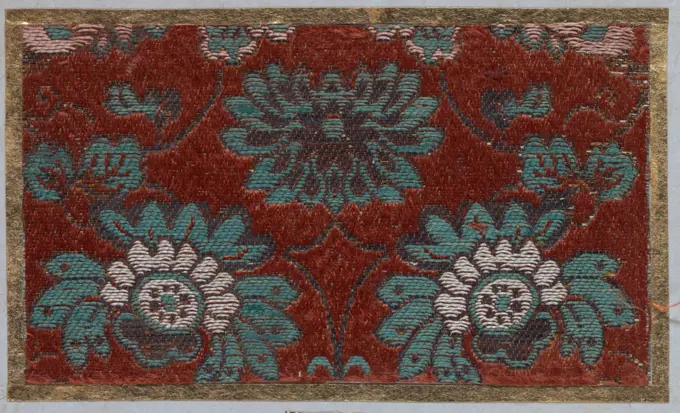
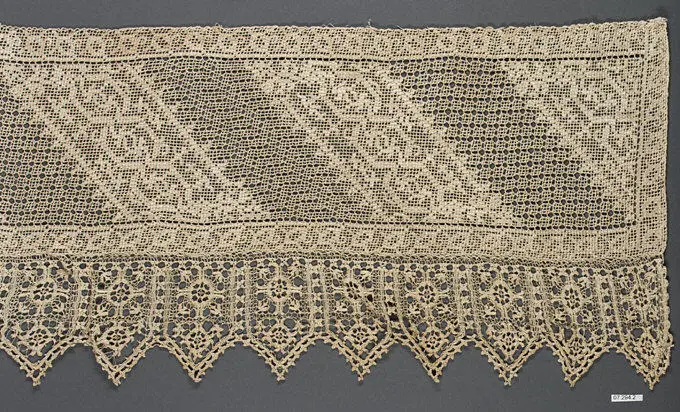
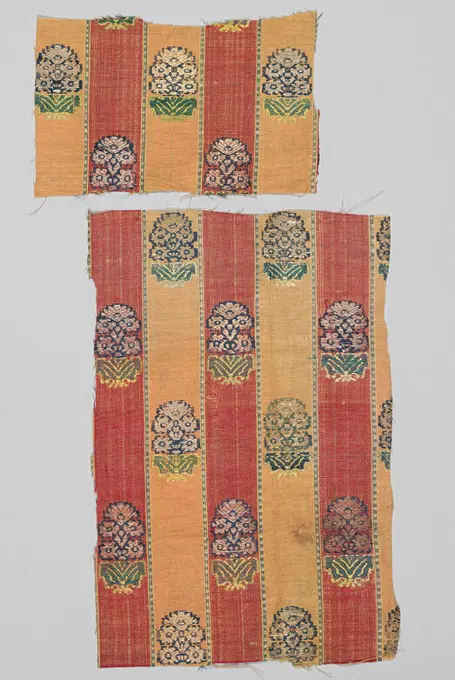
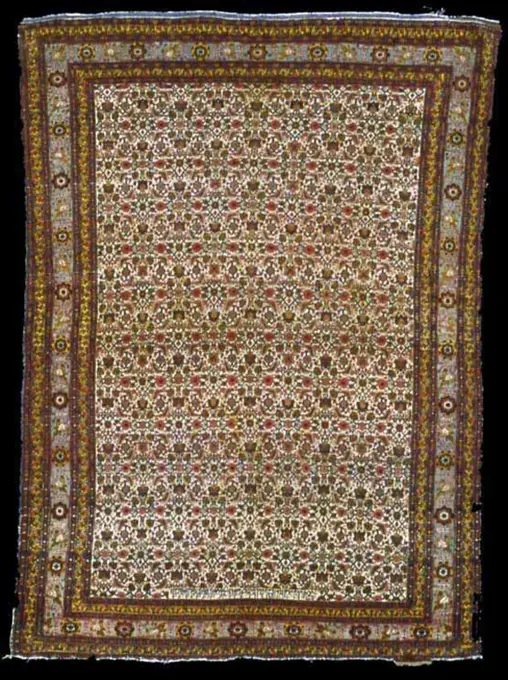
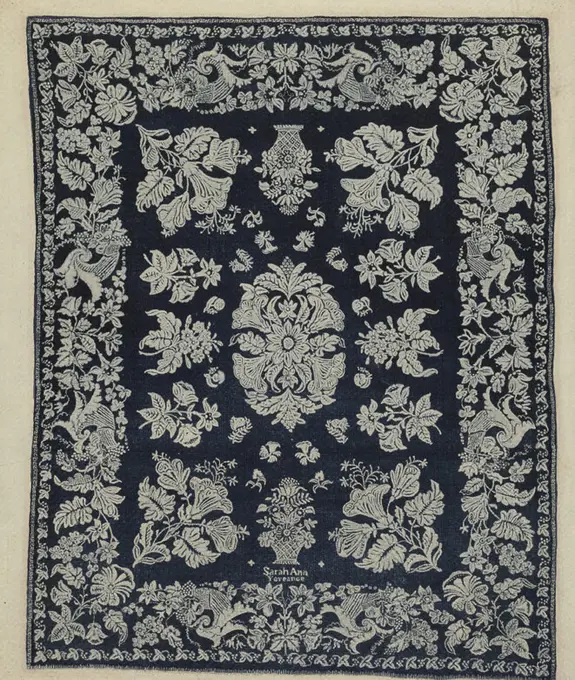
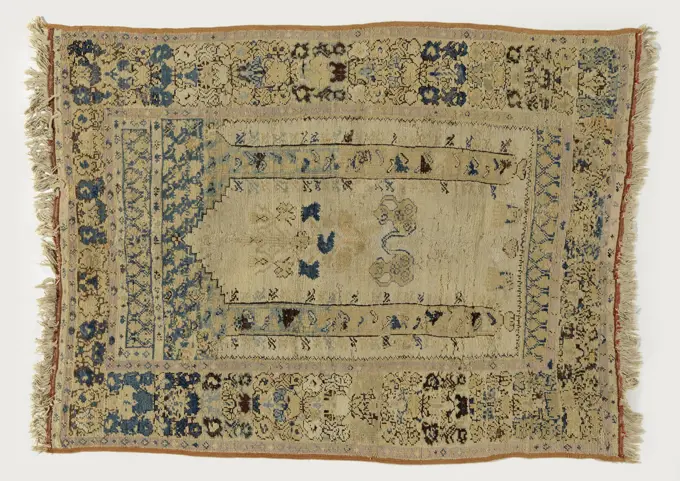
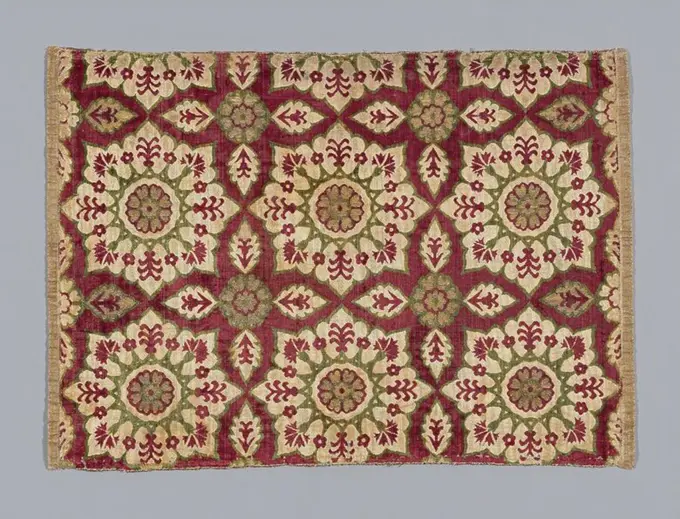
Panel. Turkey, Bursa. Date: 1550-1600. Dimensions: 48 x 66.6 cm (18 7/8 x 26 1/8 in.)Repeat: 21.3 x 21.7 cm (8 3/8 x 8 9/16 in.). Silk, cotton, metal-wrapped silk threads, warp-float faced satin weave with supplementary brocading wefts, supplementary binding wefts, and supplementary warps forming voided and cut velvet. Origin: Turkey. Museum: The Chicago Art Institute, Chicago, USA.Sampler, Medium: silk and metallic thread embroidery, linen foundation Technique: embroidery, Random spot sampler, detached motifs embroidered with colored silks and metallic thread in interlacing and geometric designs., England, 17th century, embroidery & stitching, SamplerTable Mat (Iran); silkFragment. Netherlands. Date: 1601-1625. Dimensions: 18.2 x 21.8 cm (7 1/8 x 8 1/2 in.). Linen and wool, point combined twill weave. Origin: Netherlands. Museum: The Chicago Art Institute, Chicago, USA."Bird" Carpet 17th century In contrast to most Anatolian rugs, which tend to feature brilliant red and blue tones, the type known as a "bird" carpet is dominated by white undyed wool in both the center field and border. Against this background is a continuous pattern based on a grid of abstract leaf forms that resemble birds (the feature that lends the type its name) and floral rosettes. "Bird" and other white-background carpets woven in Ushak and elsewhere in Western Anatolia were usually made in large sizes. The "bird" carpet group was intended for export to Europe.. "Bird" Carpet 451722Pillow cover, Medium: silk on linen Technique: embroidered on plain weave, Embroidered cushion cover showing a diamond lattice with symmetrical flowering vine in red silk on linen., Italy, 16th-17th century, embroidery & stitching, Pillow coverTextile Fragment late 17th century. Textile Fragment 454514Sarong fragment, Medium: silk, metallic threads Technique: plain weave with discontinuous supplementary weft patterning (brocade), Red silk brocaded cloth (kain songket) with all-over geometric pattern of stars and rosettes in gold brocade, with wide panel at one end showing the 'tumpal' motif (row of isosceles triangles). Geometric border in gold., Bali, Indonesia, 19th century, woven textiles, Sarong fragmentOrphrey Band Fragment; silk, linen, metallicTapestry. Bończa (fl. ca 1920-1930), authorLampas with double ogival floral pattern on checkered ground, 1550-1575. Turkey, Istanbul. Lampas: silk and gilt-metal thread; average: 49 x 62.3 cm (19 5/16 x 24 1/2 in.).Samples, Orinoka Mills, (Philadelphia, Pennsylvania, USA), Technique: woven, a. rust color ground with blue/grey and metallic gold motif of a carnation in an ogival framework, b. gold color ground with blue/grey and metallic gold motif, c. dark red ground with blue/grey and metallic gold motif, d. same as above, e. green ground with rust color and metallic gold motif, USA, ca. 1910, woven textiles, SamplesOriental carpet, Anonymous, 1700 - 1800 Oriental carpet, prayer rug, knotted wool, decorated with a red mihrab, with a blunt stepped gable. White swing with saw blade. A large red below field on which tulips hang down. Around three edges. Little Asia wool Oriental carpet, prayer rug, knotted wool, decorated with a red mihrab, with a blunt stepped gable. White swing with saw blade. A large red below field on which tulips hang down. Around three edges. Little Asia woolRussian sash unknownFragment. Italy. Date: 1325-1375. Dimensions: 20.5 x 57.4 cm (8 1/8 x 22 5/8 in.)Weft repeat: 18.9 cm (7 1/2 in.). Silk, gilt-animal-substrate-wrapped linen, warp-float faced 2:1 'S' twill weave with supplementary patterning weft and brocading wefts tied by secondary binding warps in plain and twill interlacings. Origin: Italy. Museum: The Chicago Art Institute, Chicago, USA.Floor Covering (Iran); wool, silkShoulder Cloth(Selendang)Caucasian Shirvan carpet unknownWreath on a Ground of Flowers, Birds, and Rabbits South Netherlandish ca. 1490-1550 View more. Wreath on a Ground of Flowers, Birds, and Rabbits. South Netherlandish. ca. 1490-1550. Wool warp, wool wefts. Textiles-TapestriesSleeve late 18th-early 19th century Hungarian, Slovakia. Sleeve. Hungarian, Slovakia. late 18th-early 19th century. Cotton on linen. Textiles-EmbroideredFragment. Japan. Date: 1775-1800. Dimensions: 15.9 × 18.1 cm (6 1/4 × 7 1/8 in.). Silk, satin weave with self-patterning wefts. Origin: Japan. Museum: The Chicago Art Institute, Chicago, USA.Chalice veil, Medium: silk embroidery on linen foundation Technique: embroidered on plain weave, Fragment of linen square embroidered in tan, blue, red and green. Central star with radiating branches of carnations, rose buds and birds, procession of animals. In corners Agnus Dei and Sacred Heart., Crete, Greece, 18th century, embroidery & stitching, Chalice veilRitual Textile (PuaKumbu)Textile, Medium: silk, metallic thread Technique: compound satin weave with supplementary weft, Continuous symmetrical design, vertical and horizontal, of a decorated urn shape rising out of a bunch of flowers and joined to next by dropped handle with 'bizarre-type' animal face. Various chinoiserie fillings, 'bizarre-style' details. In bright green, yellow, and various metal threads on a red ground. One narrow cloth selvage., Italy or Spain, early 18th century, woven textiles, TextileRug;  1. PO. 19th century (1801-00-00-1850-00-00);Kilimy, purchase (provenance)Rug;  1. PO. 19th century (1835-00-00-1860-00-00);KilimyTwo Borders Made 1600-1625 Italy. .Shoulder Cloth(Limar)Textile Fragment 17th century. Textile Fragment 442971Sampler(Limar)Embroidered Textile, 18th century. Turkey , 18th century. Embroidery: silk, and gold and silver filé on silk ground; cotton backing; average: 113.7 x 89.5 cm (44 3/4 x 35 1/4 in.).Embroidered Panel, 1700s. India, 18th century. Embroidery; silk and gold and silver filé; overall: 28 x 18.4 cm (11 x 7 1/4 in.).Textile Fragment 17th century. Textile Fragment 446826Sampler (Spain); silk and linen embroidery on linen foundationBand, 17th century, woven textiles, BandFragment; velvet; Bequest of Richard Cranch Greenleaf in memory of his mother, Adeline Emma Greenleaf; 1962-56-99Arras. unknown, authorFragment, Medium: silk, metallic thread Technique: plain satin weave with supplementary weft, Magenta satin ground with horizontal rows of a floral cone with a bird perching on the stem. Motif alternately turns left and right and is brocaded in blue, green, white, taupe and gold metallic thread., Iran, 18th century, woven textiles, FragmentFragment (Japan)Border 17th century Italian. Border 222725Silk and Gold Brocade Fragments, 1600-1650. Turkey, Bursa, first half of 17th century. Silk and gold: brocade; average: 134.7 x 64.2 cm (53 1/16 x 25 1/4 in.).Sampler, Medium: wool embroidery on linen foundation Technique: embroidered in cross and back stitches on plain weave foundation, Alphabets, heart on stem, isolated motifs including windmill and cradle., Friesland, Netherlands, 1724, embroidery & stitching, SamplerCeremonial Textile (Tampan). Indonesia, South Sumatra, Lampung, Pasisir people, late 19th century. Textiles. Cotton plain weave and supplementary weft patterningHeupdoek, anonymous, 1900 - 1949 Hip cloth with geometric motifs. Sarawak cotton (textile) Hip cloth with geometric motifs. Sarawak cotton (textile)Dress of Eastern textile with multi -colored embroidery ,, c. 1800 - c. 1899 Dress of multi -colored tambourized cotton, decorated with flower vines and ornament, lined with cotton. India cotton (textile). silk embroidering Dress of multi -colored tambourized cotton, decorated with flower vines and ornament, lined with cotton. India cotton (textile). silk embroideringFragment Silk flows with stylized floral motif ,, c. 1550 - c. 1599 A fragment polychrome silk peluwe with on a cherry red in green velvet, horizontally riped palmets, leaves and pomegranates. Italy (possibly) silk. velvet (fabric weave). ciselé velvet A fragment polychrome silk peluwe with on a cherry red in green velvet, horizontally riped palmets, leaves and pomegranates. Italy (possibly) silk. velvet (fabric weave). ciselé velvetFragments, Medium: silk, metallic Technique: cut supplementary warp in plain weave foundation (velvet) with supplementary wefts., Two fragments, each with both selvages present. Large scale pomegranate design in green and gold., Spain, 15th century, woven textiles, FragmentsFragment, 1100s - 1300s. India, 12th-14th century. Plain cloth, resist dyed; cotton; overall: 16.9 x 12.7 cm (6 5/8 x 5 in.).Fragment, Medium: silk Technique: printed on plain weave, Silk square with tan ground and blue and white design imitating Javanese batik. Border of chevrons and dots enclosing acorns. Scattered floral motifs of twelve-petaled rosettes and detached bulbous springs of vine in central area., India, 19th century, printed, dyed & painted textiles, FragmentChasuble made of silk fabrics unknownTowel; linenSquare of Silk Damask, 1700s. Germany, Silesia , 18th century. Satin weave; silk; overall: 93.3 x 107.3 cm (36 3/4 x 42 1/4 in.).Rug ca. 1470-80 Spanish. Rug 468579Fragment Made 1501-1600 Italy. plain compound cloth .Eastern carpet ,, 1800 - 1900 Oriental carpet, prayer rug, with red mihrab with three -rise façade. Light blue corner pieces with saw blade motifs. Widest edge is decorated with rosette and arabeskbloemen. Ladik wool Oriental carpet, prayer rug, with red mihrab with three -rise façade. Light blue corner pieces with saw blade motifs. Widest edge is decorated with rosette and arabeskbloemen. Ladik woolALFOMBRA TURCA DE USHAK O KONYA"TIPO LOTTO-SIGLO XVI/XVII. Location: INSTITUTO VALENCIA DE DON JUAN-COLECCION. MADRID. SPAIN.Oosters tapijt versierd met lotussen, palmetten, rozetbloemen en vogels.Oriental carpet, runner format, of knotted wool. Midfield: Broken zigzag ties are nine and a half diamond on a dark blue floor. The fence shows a very finely sprinkled pattern of small lotuses and palmets, rosette flowers and pair of tangles and thrown birds in white, red, rose, light blue and yellow. Three edges: the middle and widest is red with lotus flowers in Rose, lilac and bleu, connected by a tinned garland tie. The inner and outer edges are right: narrow white with running rank with turns inside and outwardly aimed chali flower. At one end is approximately 35 cm from the surface light blue in color. Here and there the pole has been worn down to the knot, further the rug is in quite good condition.Textile, Medium: silk Technique: 3/1 twill patterned by continuous and discontinuous supplementary wefts bound on the front in 1/3 twill and bound on the back in the same twill, Long narrow panel designed to give the effect of arches in a garden. Pillars flank either side, a lamp hangs from an arch between the pillars, flowers are in a frieze at top and bottom, and flowers inside scrolling vines fill the ground between the pillars. Red ground., possibly Turkey, 18th-19th century, woven textiles, TextileMedalleled, Kazak. Medalleled, Kazak. Midfield: Dark Terraroid Fond with a double medallion in green / blue and blue of a rubbed rectangle with dots to cup and tail. Inside BWee blocks with t-hooks in uneven colors, blue and green / blue. Field filling of asterisks. Borders: two-fold. The outer edge is made of ultramarin blue with a saw blade with slightly white and yellow and the wine glass motif in green / blue and red. The inner edge is a tilting edge in brown and terra.Fragment. Turkey. Date: 1601-1700. Dimensions: 15.2 x 51.4 cm (6 x 20 1/4 in.). Linen(), plain weave; embroidered with silk in regular surface darning and surface darning on the diagonal. Origin: Turkey. Museum: The Chicago Art Institute, Chicago, USA.Flower rug with stylized flower vines against dark brown stock with a white border with so -called crab ornament, anonymous, c. 1850 - c. 1900 Oriental carpet, flower rug. In midfield there are stylized flower vines against a dark brown stock. White edge with the so -called scratch ornament. Hamadan (possibly) ketting: wool Oriental carpet, flower rug. In midfield there are stylized flower vines against a dark brown stock. White edge with the so -called scratch ornament. Hamadan (possibly) ketting: woolChalice Cover. Spain. Date: 1701-1725. Dimensions: 72.5 x 74 cm (28 1/4 x 29 1/4 in.). Silk, warp-faced plain weave; edged in bobbin lace of metal thread; embroidered in silk floss, gold-metal-strip-wrapped on silk core (paired in twisted into cord, as well as lace) in long and short, block shading, satin, couching, knot, stem, and line stitches; "purl," spangles. Origin: Spain. Museum: The Chicago Art Institute, Chicago, USA.Fragment 15th-early 16th century Italian, Venice or Turkish. Fragment 230494Panel (formerly Cover from a Sedan Chair) 1710-1730 France. silk compound weave, brocaded .Kesa. Japan. Date: 1781-1801. Dimensions: 106.8 x 176.8 cm (42 x 69 5/8 in.)Repeat: 3.8 x 4.5 cm (1 1/2 x 1 3/4 in.). Hiri, yô, jô: silk and gold-leaf-over-lacquered-paper strip, satin weave with twill interlacings of secondary binding warps and patterning wefts; shiten: silk and gold-leaf-over-lacquered-paper-strip, twill weave with plain interlacing of secondary binding warps and patterning wefts; lining: silk, satin damask weave. Origin: Japan. Museum: The Chicago Art Institute, Chicago, USA.Fragment, Medium: silk, metallic thread Technique: plain compound weave, Border fragment with five disk motifs between narrow bands of floral ornament of white, blue and silver., India, 19th century, woven textiles, FragmentVelvet Fragment, late 1600s - early 1700s. Italy, late 17th - early 18th century. Velvet; overall: 25 x 41.9 cm (9 13/16 x 16 1/2 in.).Fragment Made 1625-1675 Italy. brocaded plain compound cloth .Oriental carpet, Anonymous, 1850 - 1900 Oriental carpet of knotted wool, of which the long narrow dark blue midfield is decorated with a scattered pattern of geometric rosettes. The midfield is lined with a white bright tape. Around five edges of which the middle is decorated with kufic ornaments. Caucasus wool Oriental carpet of knotted wool, of which the long narrow dark blue midfield is decorated with a scattered pattern of geometric rosettes. The midfield is lined with a white bright tape. Around five edges of which the middle is decorated with kufic ornaments. Caucasus woolSmall Skoutari” carpet unknownOriental carpet. Oriental carpet, floral rug. In the middle gold angular vase forms, composed of Arabesken, with flower bouquets. Triple border whose widest is decorated with palmets and leaf motifs along S-tanks.Square (USA); cottonSampler, Medium: linen, silk, metal-wrapped silk core, glass beads Technique: embroidered using satin, overcasting, knot, stem and drawnwork stitches on plain weave, Rectangular sampler with a central wreath enclosing text that reads 'Y. A. 1837'. Embroidered flowers and drawnwork designs fill the remaining area. Different patterns of floral garlands are worked along the four edges., Mexico, 1837, embroidery & stitching, SamplerPiece. Culture: Chinese, Macao, for Iberian market. Dimensions: L. 22 1/4 x W. 10 3/8 inches (56.5 x 26.4 cm). Date: second half 16th century. Museum: Metropolitan Museum of Art, New York, USA.Bag face. Date/Period: Ca. 1810. Bag face. Medium: linen. Technique: needle lace with a six sided, reworked ground. Author: UNKNOWN.Textile Fragment 19th century. Textile Fragment. 19th century. Silk and metallic thread; brocaded. Country of Origin India or Iran. Textiles-BrocadesFragment. Europe. Date: 1650-1700. Dimensions: . Linen and wool, plain weave with supplementary weft floats. Origin: Europe. Museum: The Chicago Art Institute, Chicago, USA.Oriental carpet. Oriental carpet, octive rug. In midfield Achtken, Guls, in three jobs of six. Secondary motifs: windows. Triple edge. At the top and bottom of a beard.Fragment (Egypt); linen, silk; 1939-11-19Piece 18th century Japan. Piece 71775Fragment, Medium: silk Technique: plain compound weave, Geometrical design in green, tan, yellow and blue., China, 18th century, woven textiles, FragmentTable cover, Medium: linen Technique: embroidered, Oblong panel of hand woven white linen embroidered in brown linen. Trimmed with wide borders of brown and white needle lace. Central square is surrounded by a series of border designs. The outermost border is made up of feather-shaped elements. Moving toward the center, there is a border of drawn and overcast work followed by a border of S-shaped scrolls, and another one of drawn work. In the center is a radiating disc framing a cross, IHS, and a heart. The name 'Marya Salas' appears in the square wide borders of stylized leaf and vine pattern at the side. Ends are crossed by a wider border in a similar design., Spain, 18th century, embroidery & stitching, Table coverTextile with Flower Motif 15th century German. Textile with Flower Motif 463255Afghan carpet unknownPillow Cover Made 1601-1700 Skíros. Linen, plain weave; embroidered with silk in running (pattern darning), satin, and stem stitches; border of cut and drawn work embroidered with silk in darning stitches and overcast bars; edged with silk in buttonhole picots with attached tassels; backed with linen, plain weave .Piece 18th century Japan. Piece 67931Fragment Made 1701-1800 Japan. Plain compound twill, silk and gilt paper; 3 strips to m.m. .Guilloche band, from a dalmatic of San Valero, 1200s. Spain, probably Almeria. Tapestry weave: silk and gold thread; overall: 6.1 x 26.1 cm (2 3/8 x 10 1/4 in.).Hanging, Medium: silk embroidery on cotton foundation Technique: embroidered, Large embroidered panel with a field filled with floral boteh forms and a deep border with open flower heads and curving vines and leaves. The field has an eight-pointed star in the center, surrounded by botehs composed of clusters of carnations, irises, roses and lilies. Strips of off-white hand-woven cotton are seamed together and heavily embroidered in blue, green, yellow, red, violet and taupe silks., Bokhara, 18th century, embroidery & stitching, HangingCarpet Fragment (England); cottonEmbroidered Towel (Havlu), 19th century. Turkey, 19th century. Embroidery: silk, gold and silver filé, and gold strip pushed through silk, bent and pressed into place, on cotton tabby ground; average: 150.9 x 68.6 cm (59 7/16 x 27 in.).Fragment (Japan)Fragment; silk, metallicsBorder 17th century Italian. Border 213260Fragment (China); silk; Warp x Weft: 60.3 x 62.5 cm (23 3/4 x 24 5/8 in.)Textile 1700-1899 Russian. Textile 173410Two Textile Fragments. Dimensions: Largest fragment: L: 9.5 in (24.1 cm) x W: 6.5 in (16.5 cm). Date: 18th century. Museum: Metropolitan Museum of Art, New York, USA.Prayer Carpet Made 1884-1904 Iran. Silk and wool, plain weave with supplementary wrapping wefts forming cut pile through a technique known as Persian (Sehna) knots .Woven Coverlet. Dated: c. 1936. Dimensions: overall: 33.6 x 28.5 cm (13 1/4 x 11 1/4 in.). Medium: watercolor and gouache on paper. Museum: National Gallery of Art, Washington DC. Author: Dorothy Lacey.Bid rug with two cross panels, Kula ,, 1890 - 1900 Bid rug with two cross panels, Kula. Midfield: Gray -white Mihrab with columns in beige, two oil tans and a tree motif standing in the middle. The you are pink with rows of beige Anjelieren. One top and one underwar panel with zigzag lines in blonde and blue shades. Rand: a wide edge with a blond -colored stock, on which flower branches are suitable in square shape, in the same shades. Narrow side lists in lavender gray. Care wool Bid rug with two cross panels, Kula. Midfield: Gray -white Mihrab with columns in beige, two oil tans and a tree motif standing in the middle. The you are pink with rows of beige Anjelieren. One top and one underwar panel with zigzag lines in blonde and blue shades. Rand: a wide edge with a blond -colored stock, on which flower branches are suitable in square shape, in the same shades. Narrow side lists in lavender gray. Care wool