Antique Carpets and Fabrics

A collection of exquisite carpets and textile fragments featuring elaborate patterns and historical significance, showcasing traditional craftsmanship.

Pillow cover, Medium: silk on linen Technique: embroidered on plain weave, Embroidered cushion cover showing a diamond lattice with symmetrical flowering vine in red silk on linen., Italy, 16th-17th century, embroidery & stitching, Pillow cover
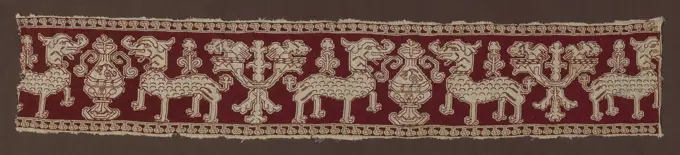
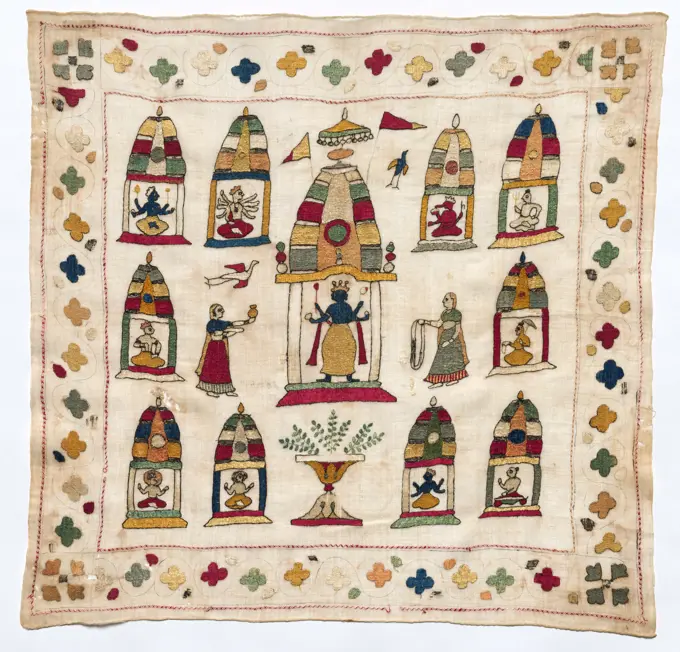
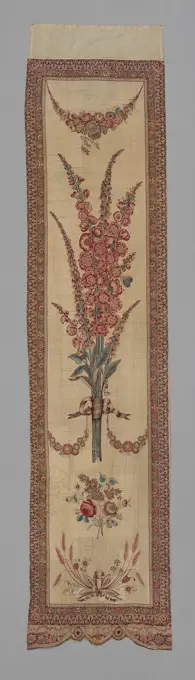
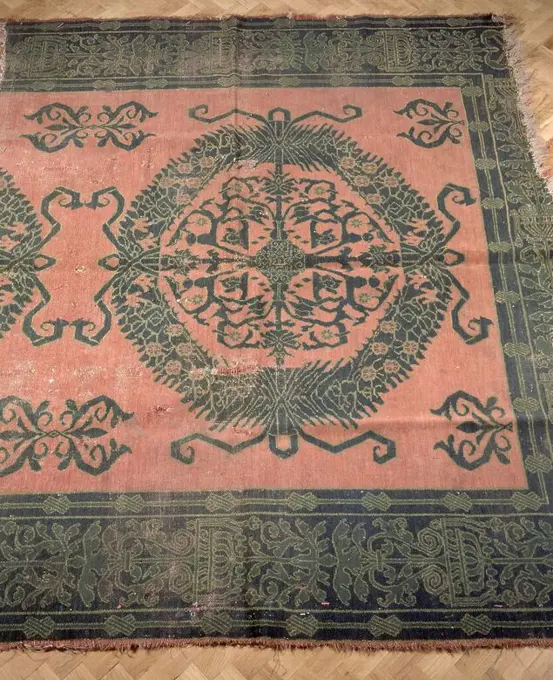
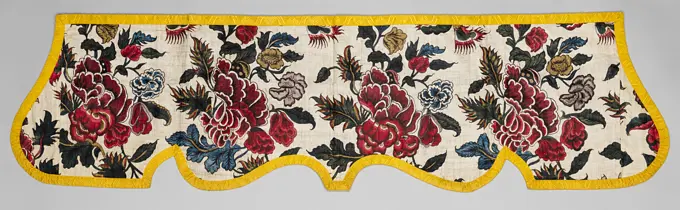
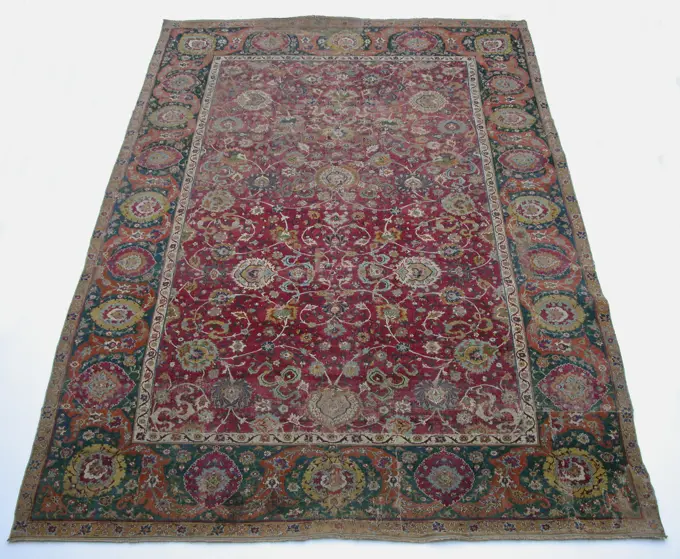
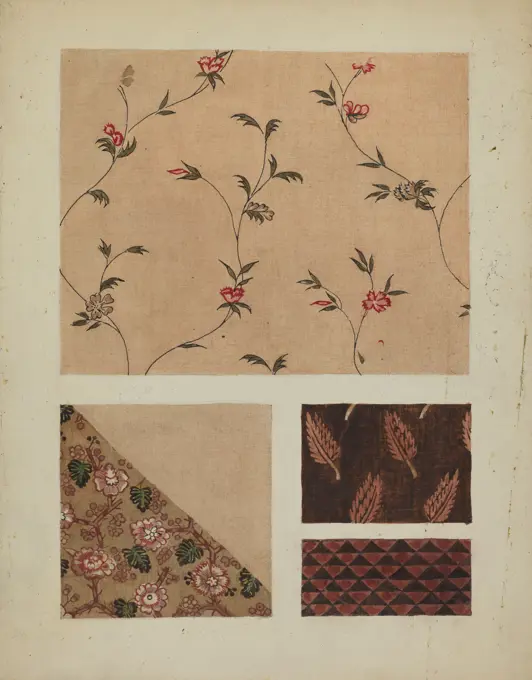
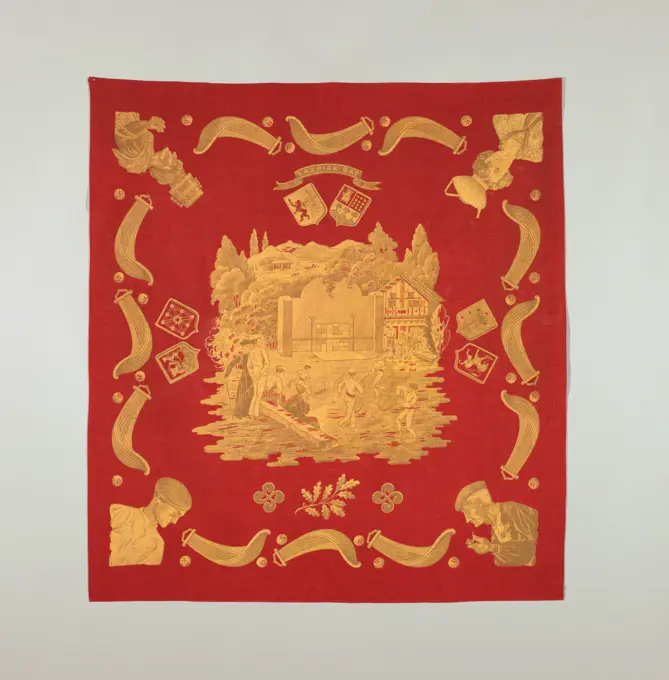
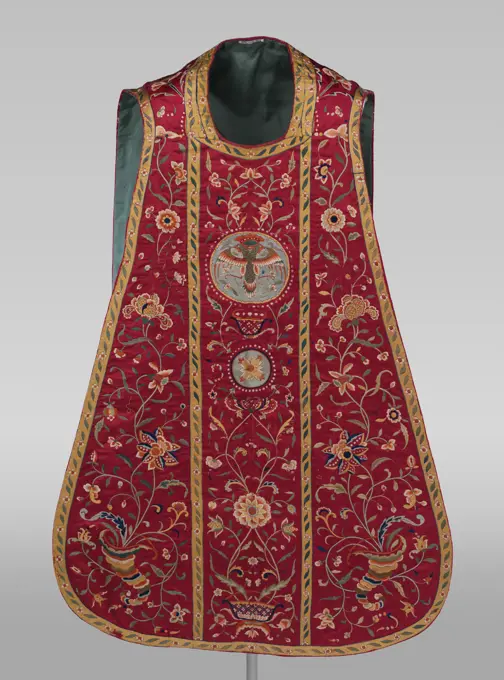
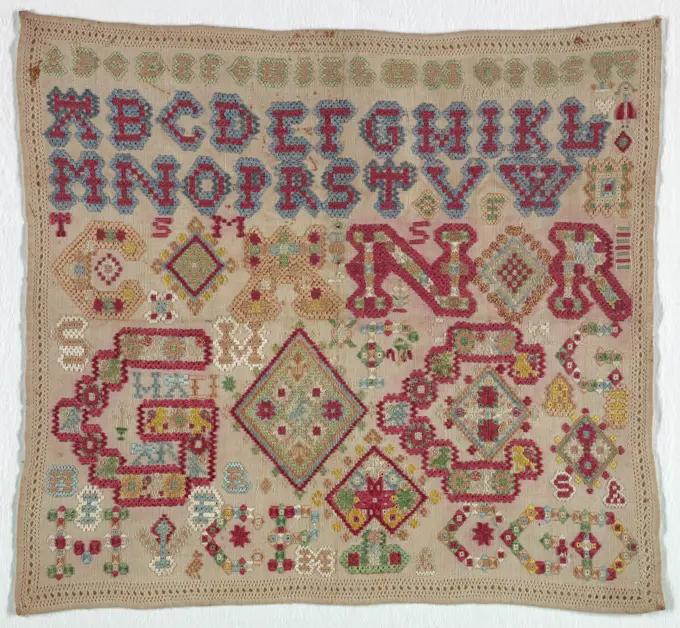
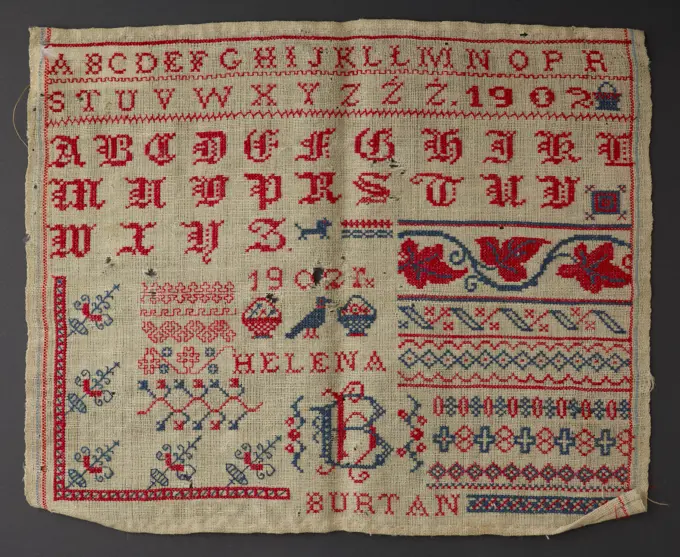
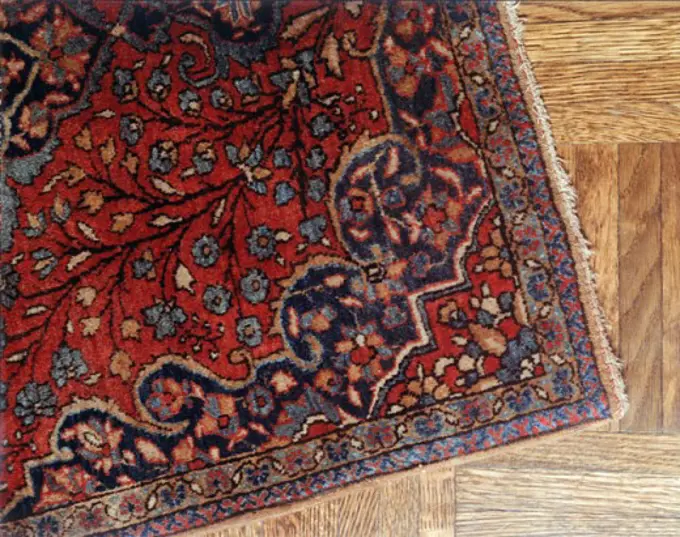
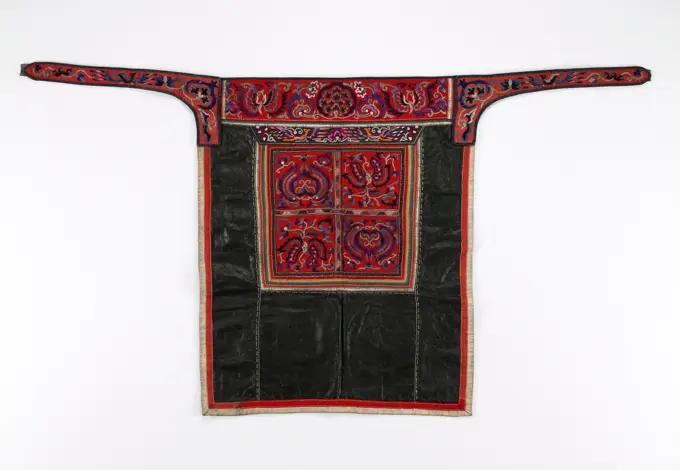
Baby Carrier, 58 3/4 x 31 in. (149.23 x 78.74 cm), Cotton, wool, silk; needlework, ChinaEleanor Alexander, Crewel Purse, c 1939 Crewel PurseBorder Made 1601-1700 Italy. Linen, plain weave; pulled thread work with silk floss in two-sided Italian cross stitch; embroidered in back stitch .Fragment of embroidery  pomegranate twig motif unknownThe George Cowper Album Made 1849-1860 England. Victorian album of albumen silver prints from wet-collodion glass negatives in red leather cover with fleur de lys and embossed initials G.C. (122) . UnknownCurtain from a four-poster bed. Curtain of a four-poster bed of machine tulle in white embroidered with chain and feston stitch with openworks in the way of richelieu embroidery. Flower and leaf motif in cartouche.Textile Fragment 8th-9th century Byzantine. Textile Fragment 474217Rumal (Handkerchief), 1700s. India, Punjab, Chamba, 18th century. Embroidery: silk on cotton tabby ground; overall: 62.2 x 63.5 cm (24 1/2 x 25 in.).Sampler (Germany); silk embroidery on wool foundation; 1976-100-62Sampler (possibly Sweden); silk embroidery on wool foundationCurtain for Bed Set Made 1701-1800 France. Cotton, plain weave; block printed and painted .Window shade, Split bamboo, silk fabric and thread, paint, Red/orange flowers growing on stem at bottom. Smaller yellow flowers on branch in center section. Greek key along right side and bottom edge., China, Japan, 1880-1900, Wallcoverings, Window shadeLampas wall covering with lovebird pattern, c. 1770 - c. 1790 Wall extension, consisting of a lane Lampas. Lovebird pattern. Lyon (possibly) lampas (textile material) Wall extension, consisting of a lane Lampas. Lovebird pattern. Lyon (possibly) lampas (textile material)Sampler, Medium: silk embroidery on linen foundation Technique: embroidered in cross, back, satin, and eyelet stitches on plain weave foundation, Seven alphabets with stylized bouquet and prominent initials (D H) at bottom., Netherlands, 1764, embroidery & stitching, SamplerDarning sampler, Medium: silk embroidery on cotton foundation Technique: embroidered in running, cross, eyelet, and chain stitches on plain weave foundation, Central square with inner borders surrounded by darning crosses and squares of embroidery. Square at upper left unfinished., Netherlands, 1810, embroidery & stitching, Darning sampler. Bag in rectangular model of ivory-colored satin, on winding flour branches on the front in which the intimal 'c' and 'w' are applied in green-white velvet wire. In the openings of the letters circles of silver thread. In the medallion, embroidered on the center of the bag, a bouquet of flowers that tied together with a ribbon. The medallion hangs on four of each other, in silver thread. At the bottom of the bag, the year 1786 with pink stitches is detained in white velvet, defined with a silver thread. The bag can be closed by means of a ribbon of ivory-colored satin, the portion of which is pink in the bag is painted - the same color as the lining. A (astonished pink) satin ribbon, which is the centimeter, stuck with a stitch, creating a bulging, decorates the edge of the bag. The back of the bag is decorated with multicolored floral motifs and branches in flossy, velvet and ribbon.Surcoat (Jinbaori). Culture: Japanese. Dimensions: H. 38 3/8 in. (97.3 cm); W. 25 in. (63.3 cm). Date: 17th century.A high-ranking samurai would have worn a jinbaori like this over his armor for protection against the elements and as a display of his status and his mon (family crest). The mon on the back of this example, three oak leaves within a circle, belongs to the Makino family, who were daimyo (feudal lords) of Tanabe (modern day Kyoto Prefecture). The elaborate lining, high quality of the materials and fine workmanship distinguish this example as one of the finest of its period. Museum: Metropolitan Museum of Art, New York, USA.Sampler (England); Embroidered by Elizabethann Luck; silk and metal wrapped silk embroidery, linen foundation; 38.5 x 35.5 cm (15 3/16 x 14 in.); Bequest of Mrs. Henry E. Coe; 1941-69-101Sampler (USA); Embroidered by Elizabeth Miskey, American (b. 1811); silk and wool embroidery, linen foundationALFOMBRA DE LA SERIE DE CORONAS O LAUREAS-ALCARAZ-S XVI. Location: INSTITUTO VALENCIA DE DON JUAN-COLECCION. MADRID. SPAIN.Lambrequin van veelkleurige sits.Cotton lambrequin in multicolor sits, painted with a design of large and smaller red flowers and smaller flowers in Écru and yellow and with leaves in blue and green on a white fond; Lined with light brown coarse linen and blue-white checkered cotton, ommered with yellow silk passion. Note: The design is inspired by French silk tissues from the time.Darning Sampler (Netherlands); silk embroidery on linen foundation; Frame H x W x D: 52.1 × 51.4 × 1.9 cm (20 1/2 × 20 1/4 × 3/4 in.)Piece 18th century China. Piece 71431Turkey,Istanbul,Sultanahmet,Grand Bazaar,Carpet DisplayBook with embroidered cover, Medium: paper, silk, metallic thread Technique: embroidered on satin weave, 'The Psalmes' covered in cream satin embroidered with a tulip design embossed in an oval frame using multicolored silks and metallic thread. Title page is missing., London, England, 1635, embroidery & stitching, Book with embroidered coverCarpet mid-16th century. Carpet. mid-16th century. Cotton (warp and weft), wool (pile); asymmetrically knotted pile. Attributed to Iran. Textiles-RugsBorder Fragment Made 1775-1825 France. Silk, satin weave; embroidered .Frances Lichten, Materials from Patchwork Bedspread, c 1936 Materials from Patchwork BedspreadHandkerchief (possibly Spain); cottonConciliate belt;  2nd half 18th century (1751-00-00-1800-00-00);Chasuble mid-18th century China, for European, possibly Spanish, market This deep red satin chasuble was embroidered in China. Its slender, A-line shape was common in chasubles of eighteenth-century Spain, where it may have been used.¹ The focal point of the embroidered design is the roundel with a double-headed eagle at the center of the vestments front and back. Although the double-headed eagle surmounted by a crown was a symbol of the Habsburg monarchy, here it is purely decorative and tinged with an auspicious Chinese flavor.² Instead of grasping arrows in their talons, as they would in the Habsburg motif, the birds dangle flowering and leafy stems from their beaks. In Chinese textiles auspicious birds frequently hold symbolic flora: a rank badge in the Metropolitan Museums collection features a crane that grips a branch bearing both a peach and a peach blossom.³ The front and back of the chasuble are each divided into three vertical sections, separated by narrow embroidered florBag 1840-60 Mexican The knitted beadwork on this unfinished bag displays a high level of execution. Using two sizes of extremely small beads, the maker depicts detailed and realistic animals and flowers. The small female figure on the flap is flanked by the initials "VZ" and may represent the bag's owner. The bag is part of the Mexican beadwork collection of over 600 pieces assembled by Elizabeth Morrow (1873-1955), mother of writer Anne Morrow Lindbergh, the wife of renowned aviator Charles Lindbergh. Morrow collected the objects between 1927 and 1930, when her husband, Dwight Morrow, Sr., served as U.S. ambassador to Mexico. She lent the collection to the Brooklyn Museum in 1938 and upon her death, her children donated it. A collection of 155 pieces of Mexican ceramics and other decorative arts were given to Amherst College, her husband's alma mater. Mrs. Morrow collected Mexican beadwork, along with other examples of colonial and native arts, to decorate their country home in CuernaBasket. 1845. Gal1952.5.100Sampler (Netherlands); silk embroidery on linen foundationKerchief ca. 1820 Spanish. Kerchief. Spanish. ca. 1820. silkChair cover, 19th century, Di.63-5/8 x 20-1/4 in., silk velvet, China, 19th centurySampler late 18th century English or Scottish. Sampler. English or Scottish. late 18th century. Wool and silk on hemp canvas. Textiles-EmbroideredBedcover Made 1844-1854 Massachusetts. Wool, broken twill weave; fulled; embroidered with wool and silk in back, individual back, looped back (cut to form pile), chain, feather, fly, long-armed cross, satin, individual satin, and stem stitches; lined with cotton, plain weave; roller and possibly block printed; glazed . Rebecca C. HaywardSample for embroidery on canvas Burtan, HelenaHigh angle view of a rug on the floorQuilt with Buildings, Animals, and Coats of Arms. United States, New York, or Great Britain. Date: 1880-1900. Dimensions: 261.3 x 261 cm (102 7/8 x 102 3/4 in.). Appliquéd and embroidered quilt; dyed and printed cotton, wool and silk plain, twill, satin, velvet and patterned weave fabrics; silk embroidery threads. Origin: New York. Museum: The Chicago Art Institute, Chicago, USA.Turkey, Istanbul. Traditional Turkish carpet showroom.