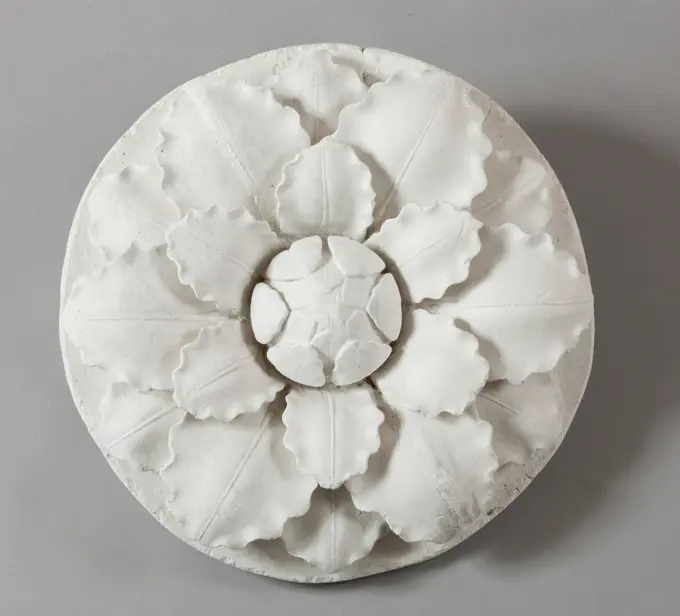
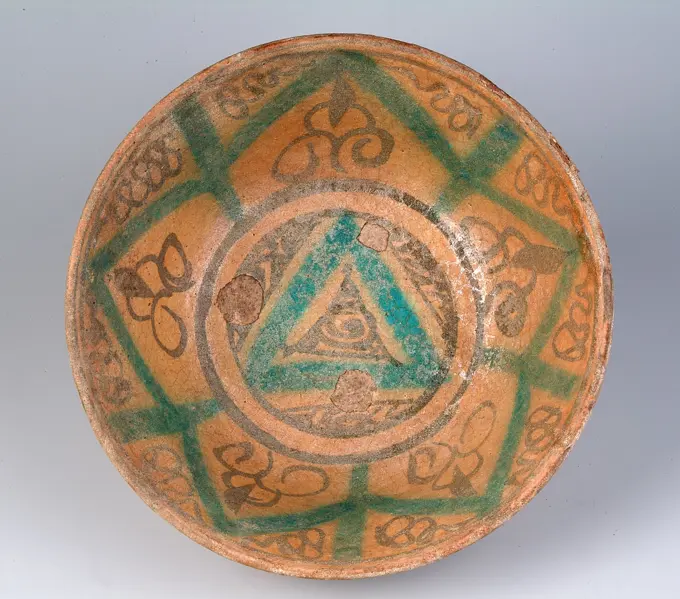
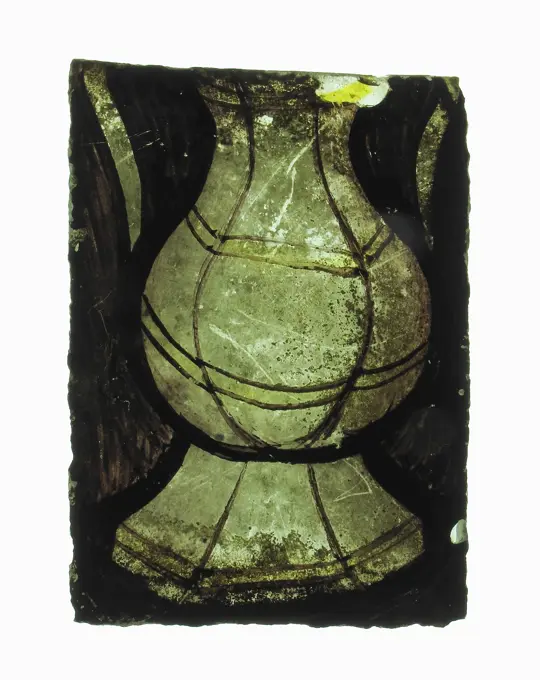
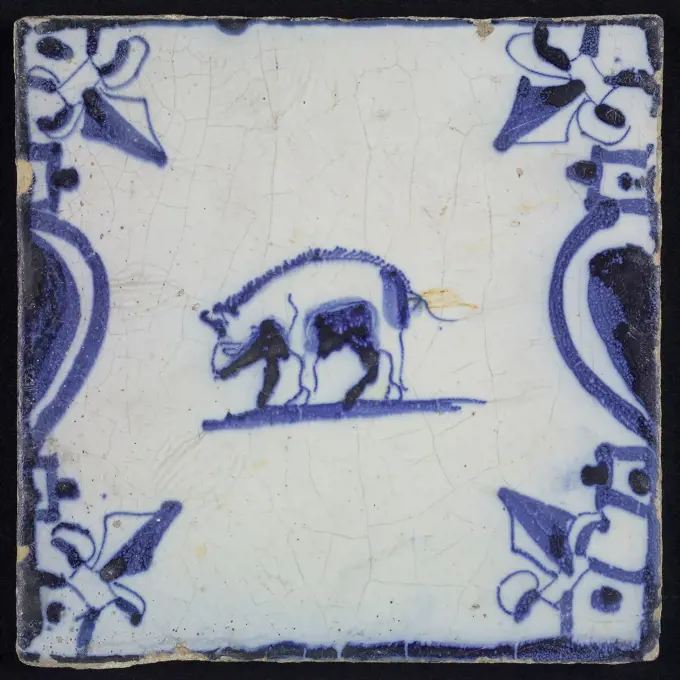
Antique Ceramics and Pottery

Fragments and complete pieces of antique pottery demonstrating rich patterns and glazes from different historical periods and regions.

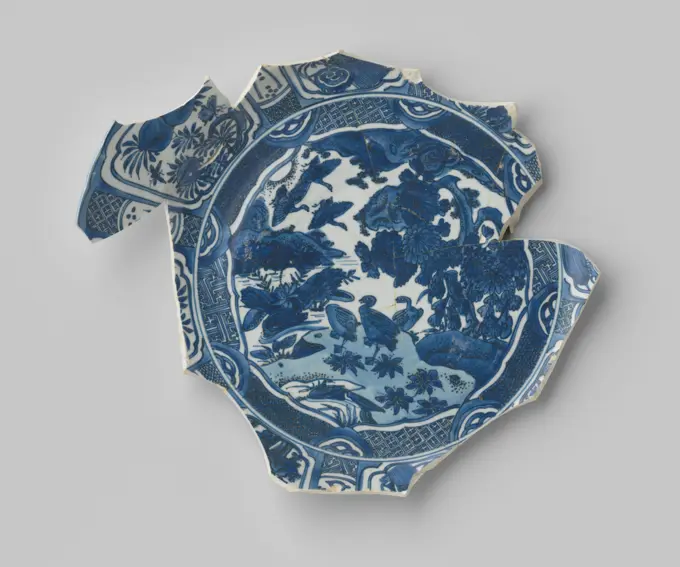
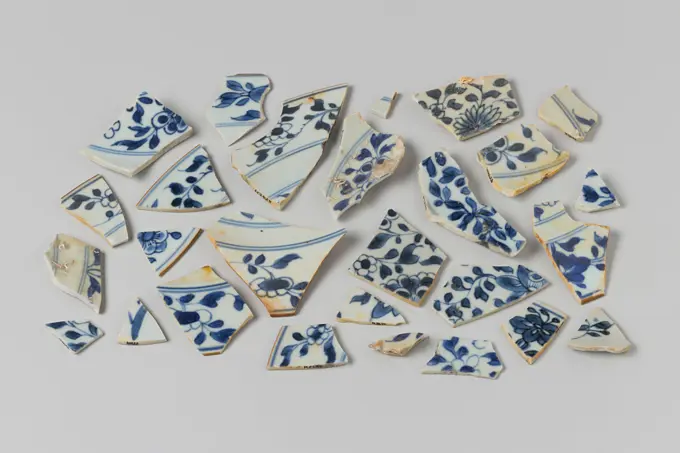
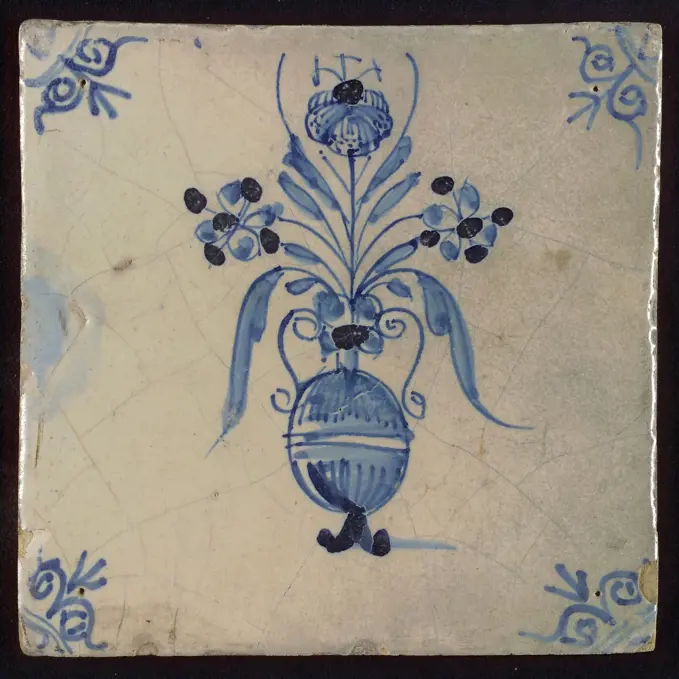
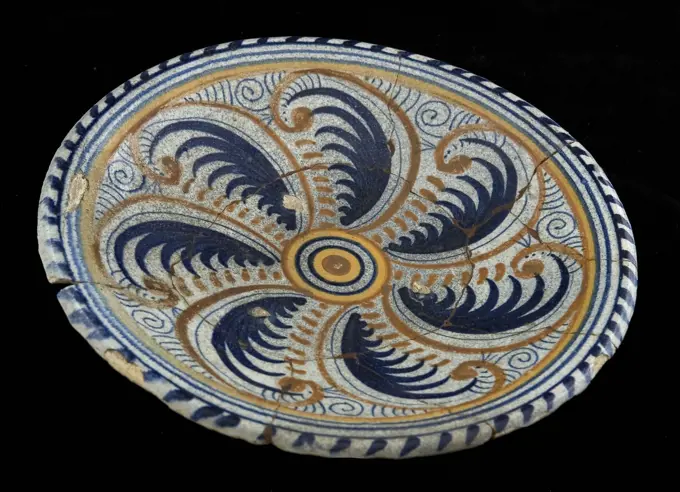
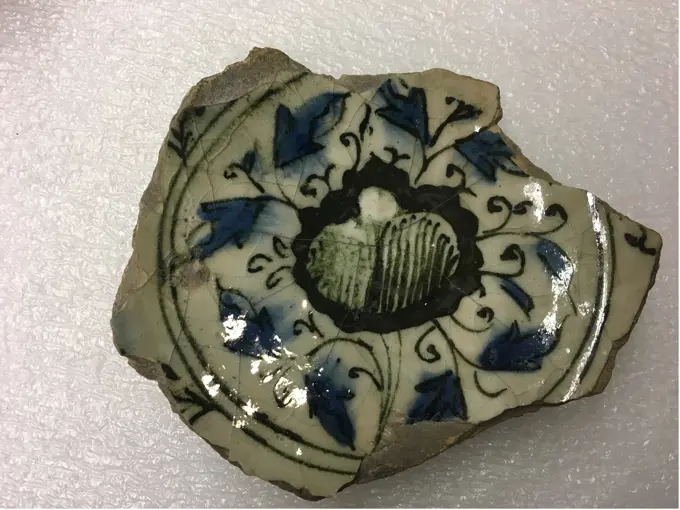
Sharf of a white -baking earthenware, with decoration of flower shapes and circles in blue, c. 1500 - c. 1899 fragment   earthenware. glaze
Sharf of a white -baking earthenware, with decoration of flower shapes and circles in blue, c. 1500 - c. 1899 fragment earthenware. glaze
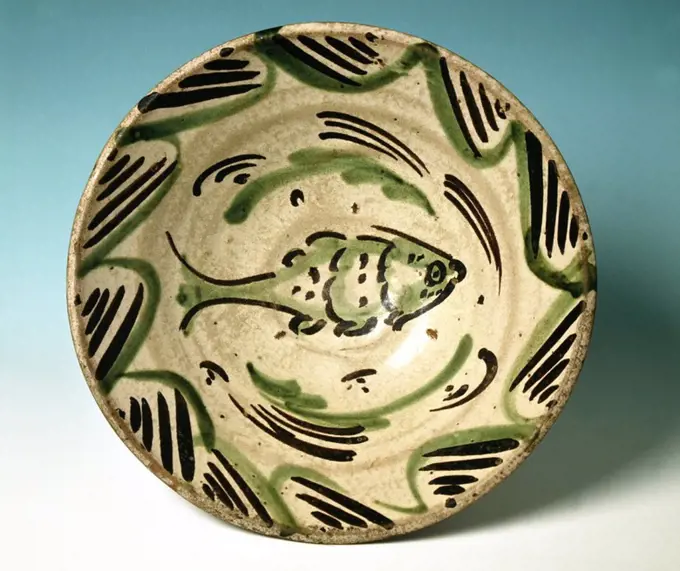
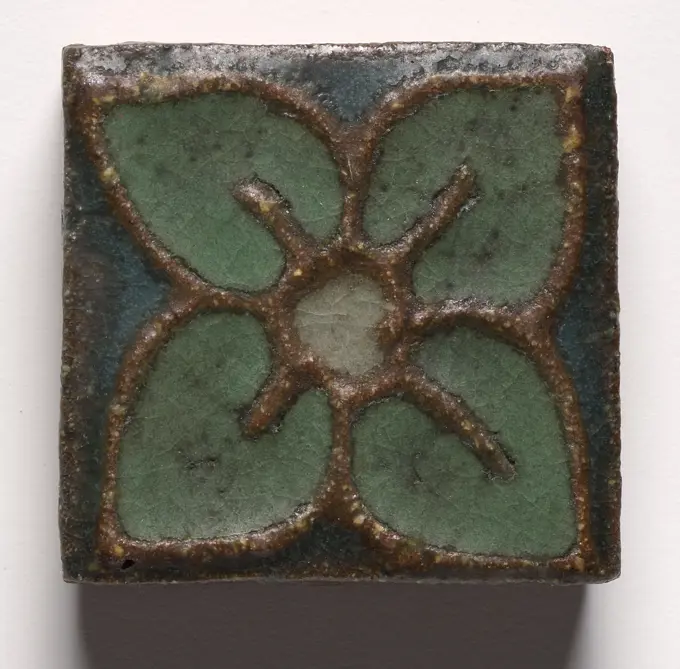
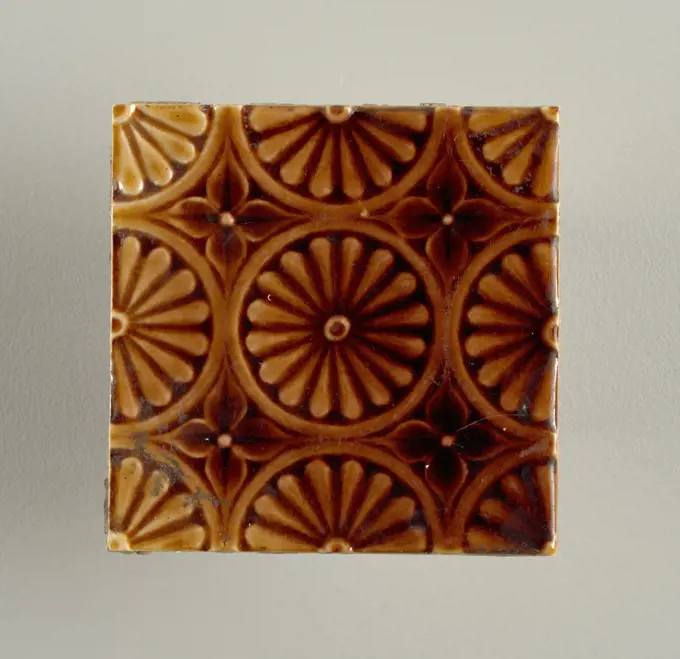
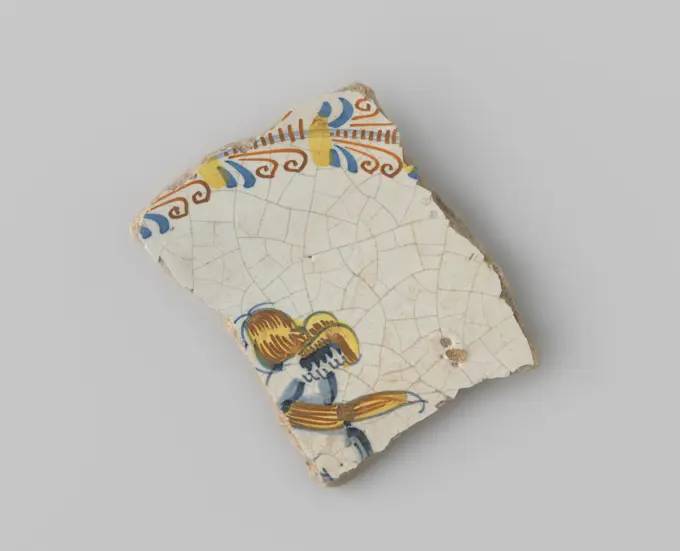
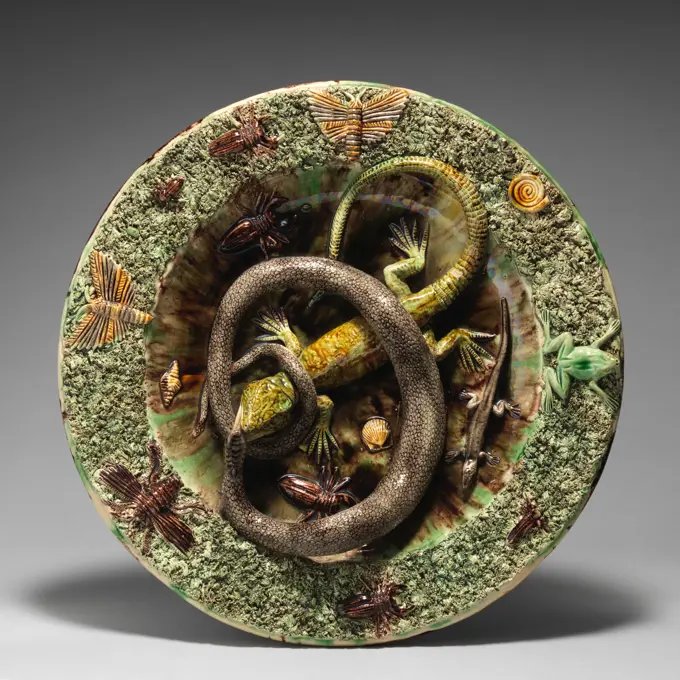
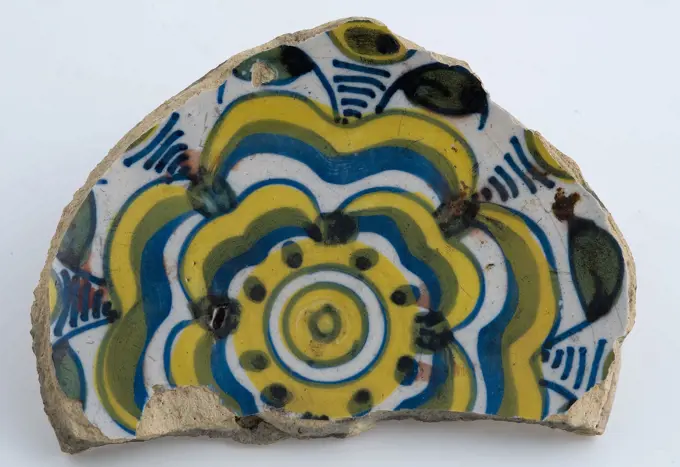
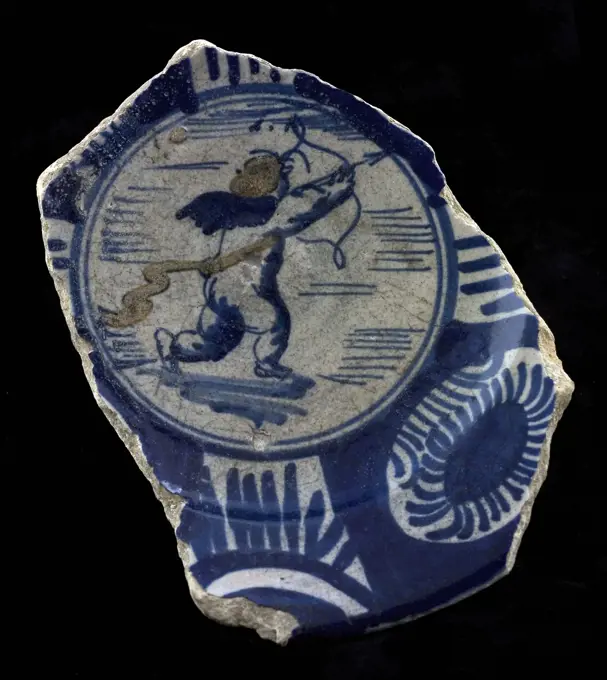
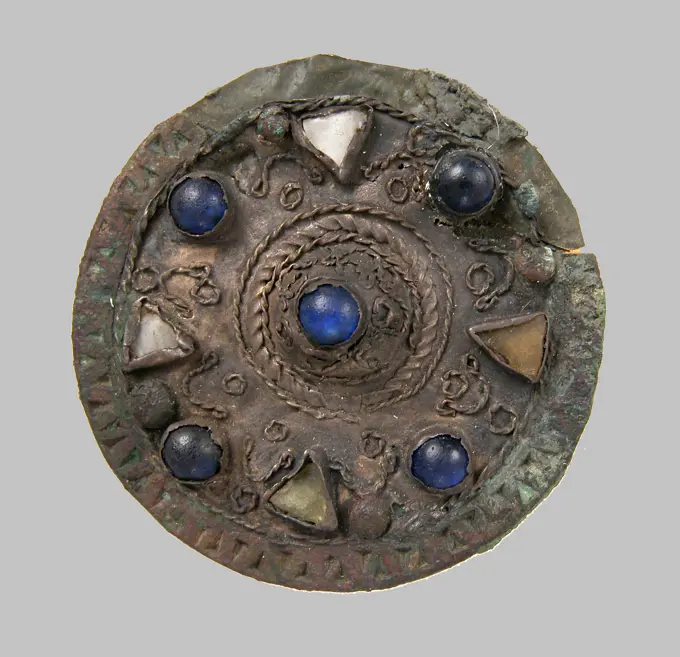
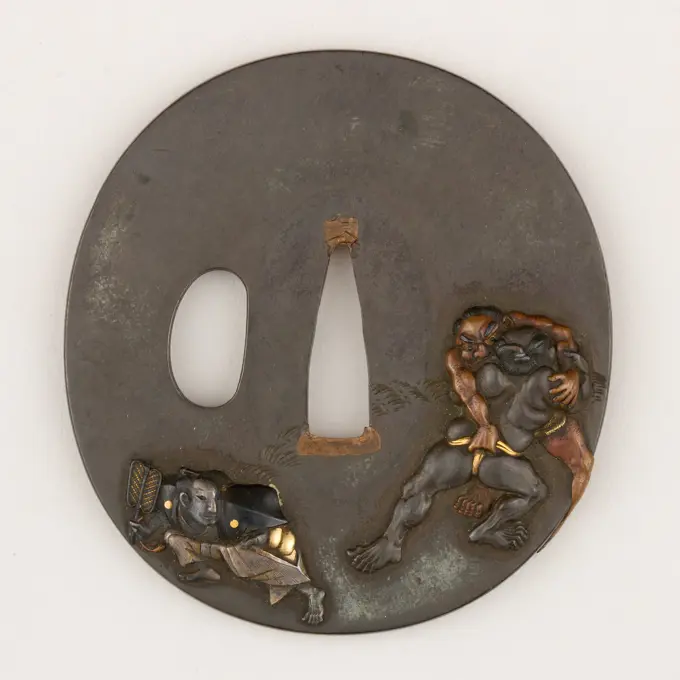
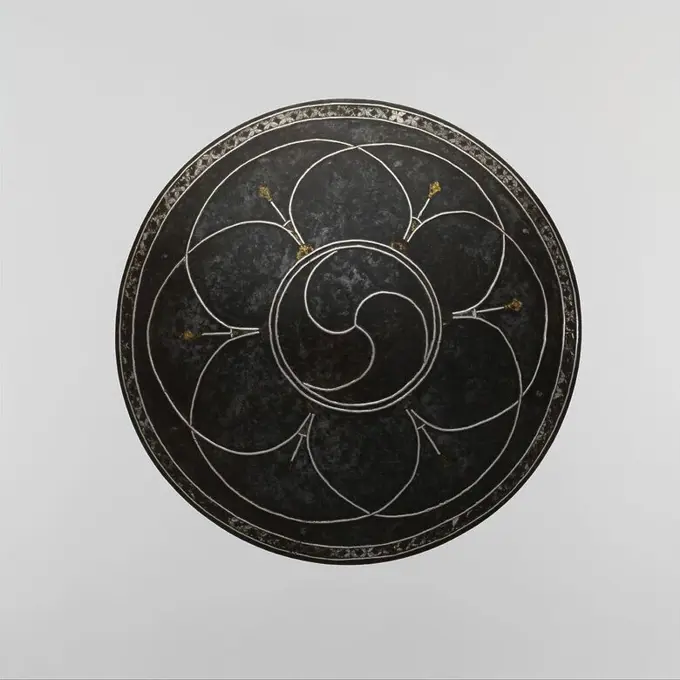
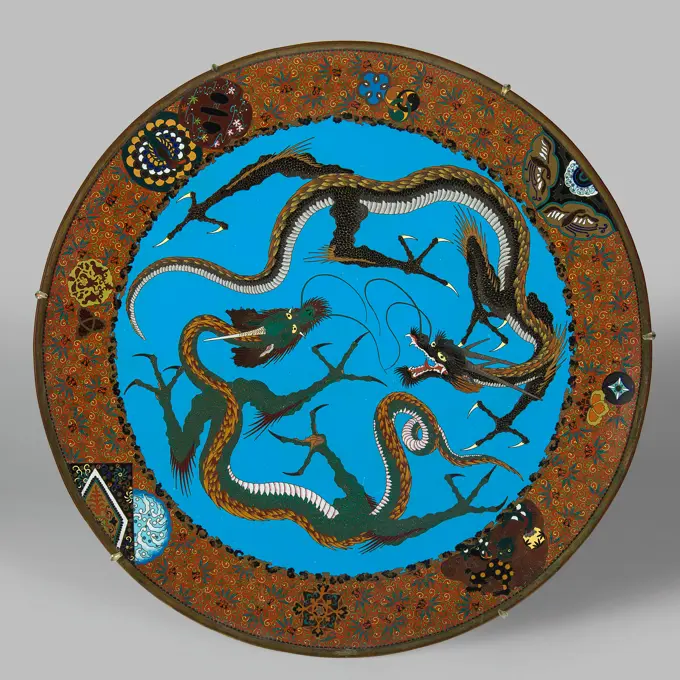
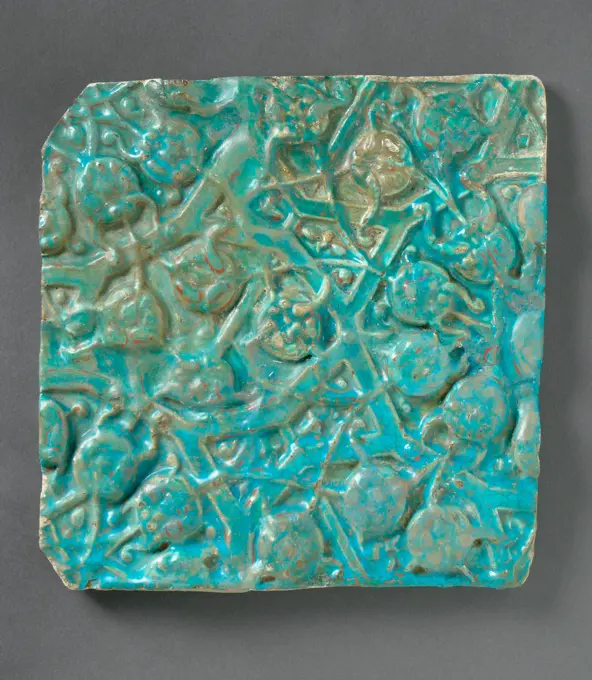
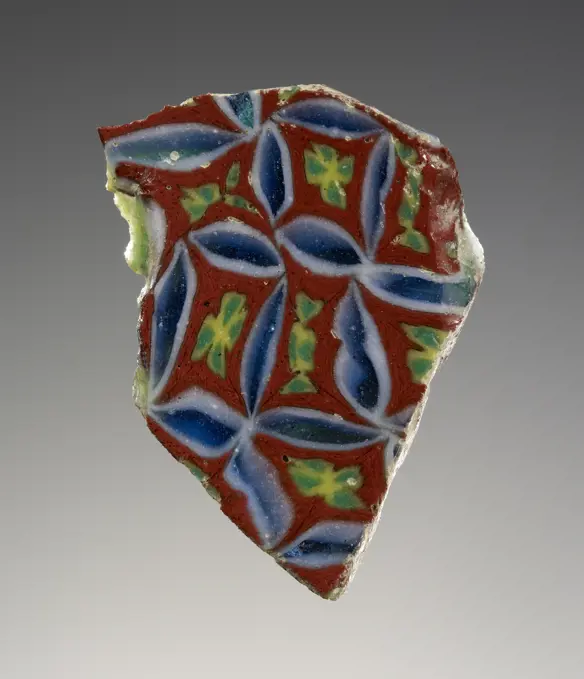
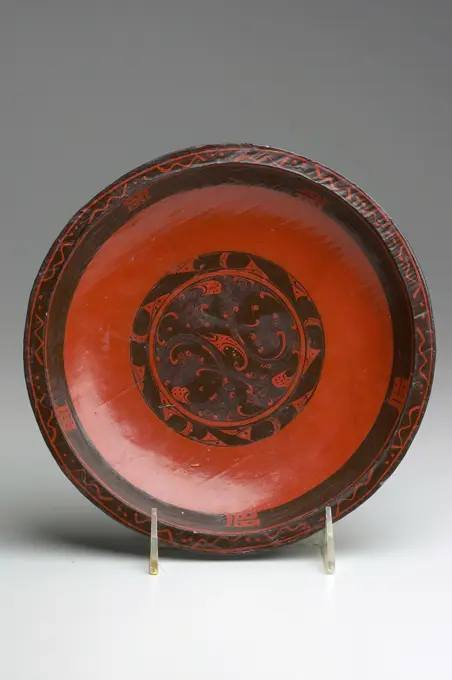
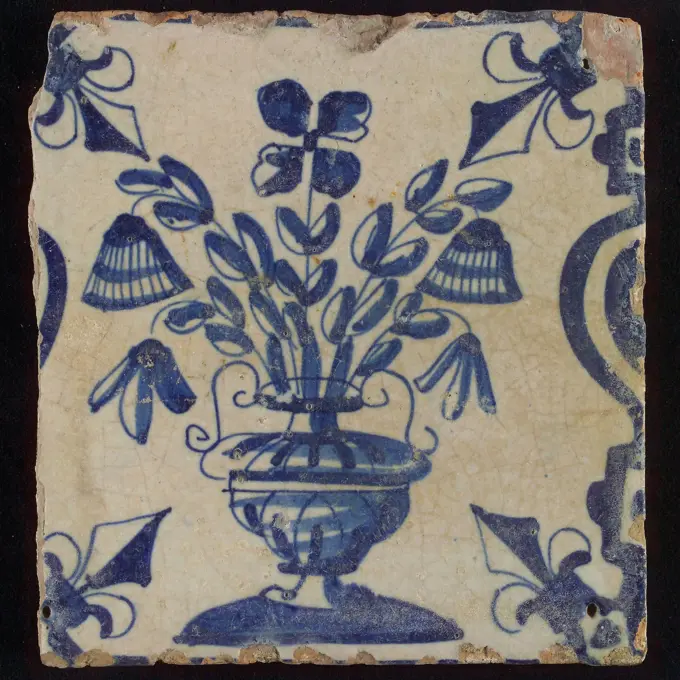
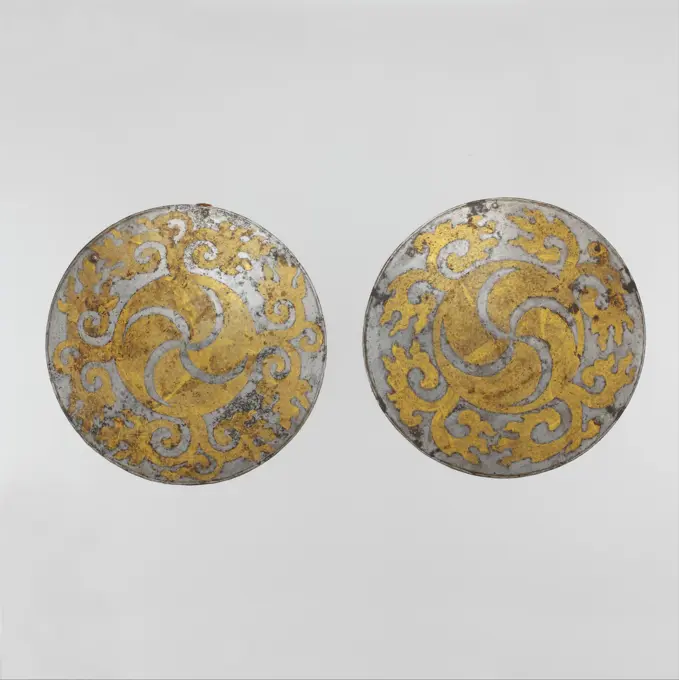
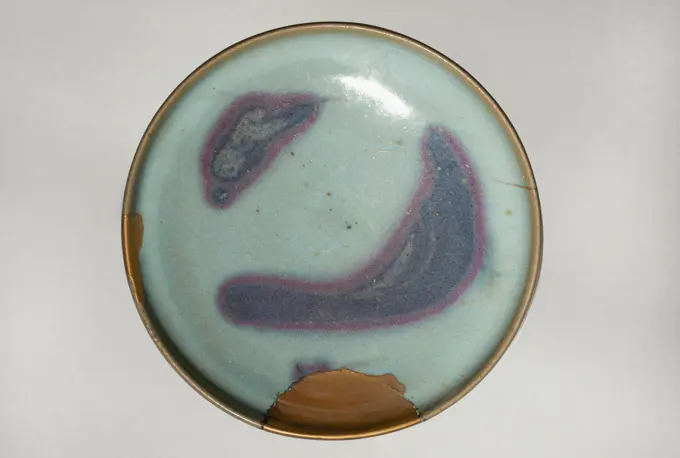
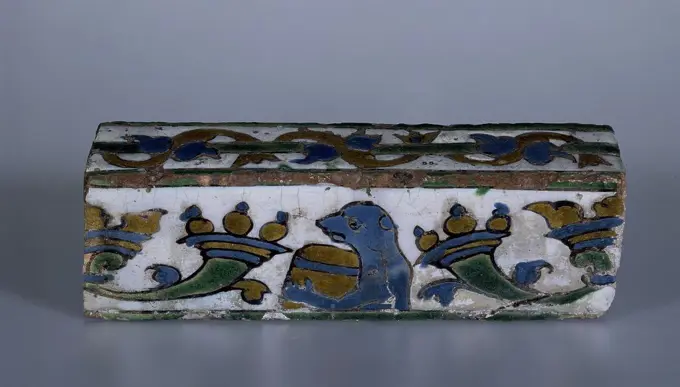
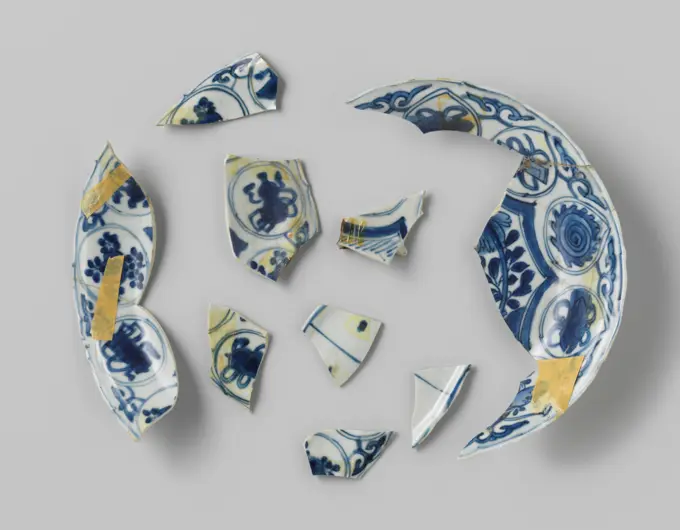
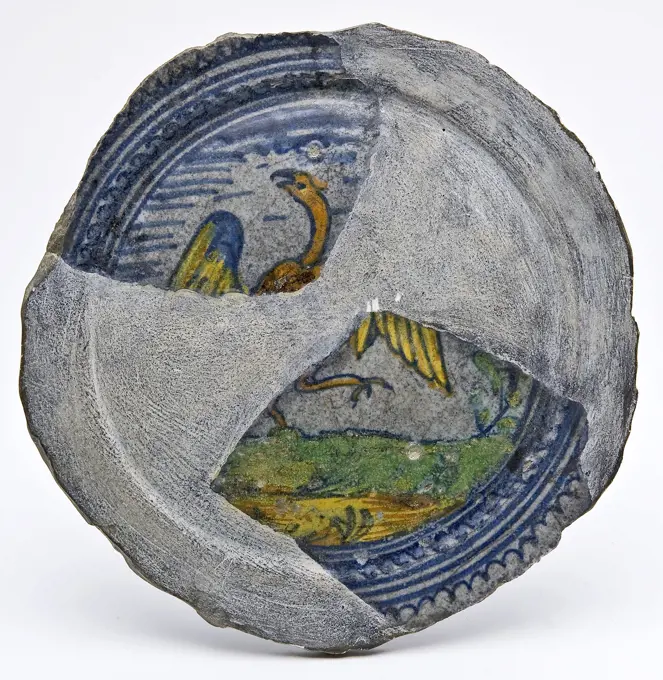
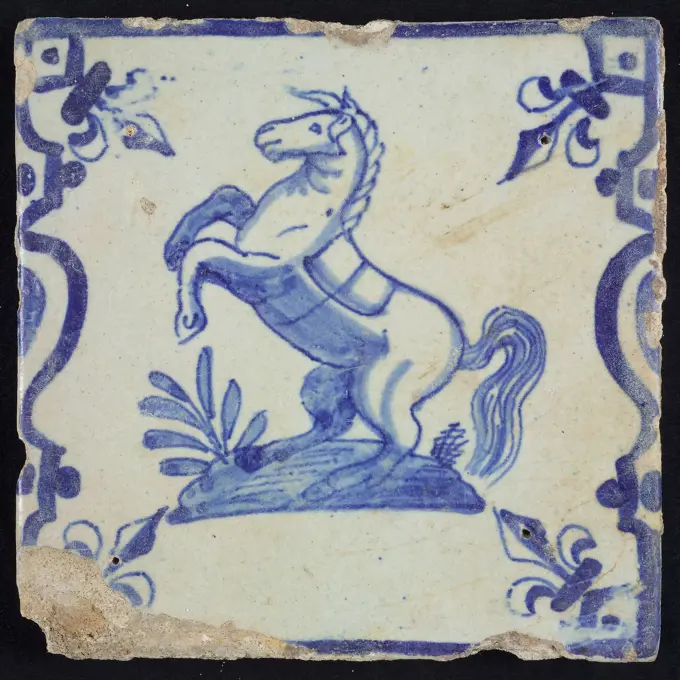
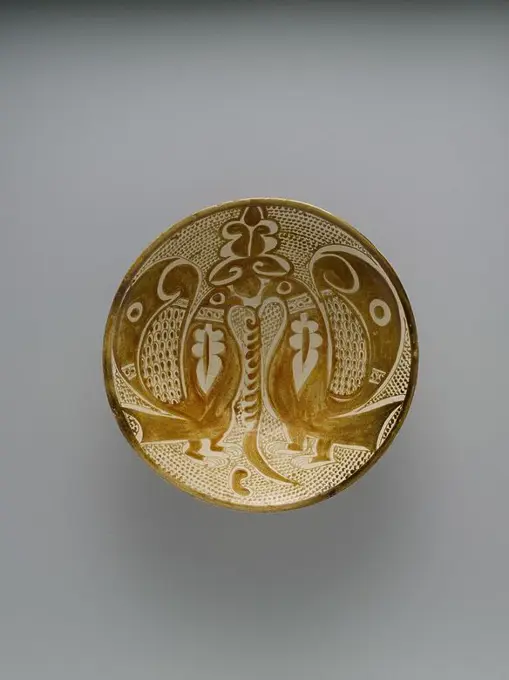
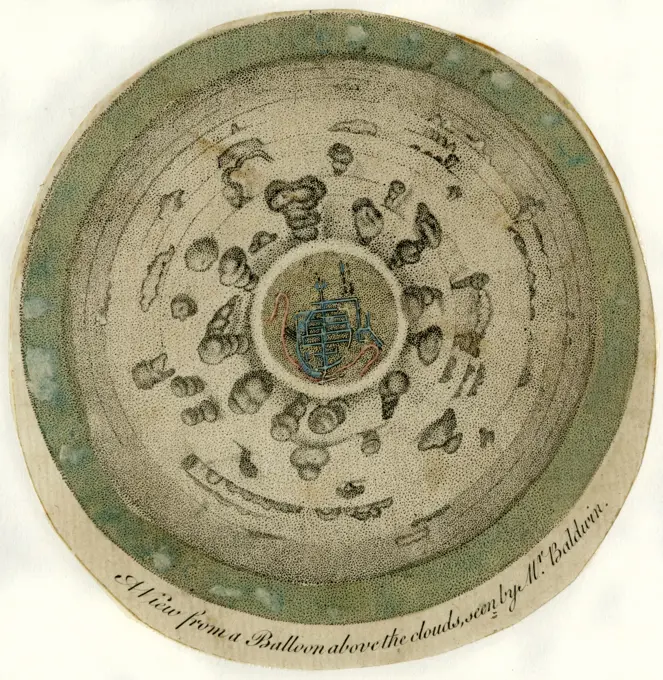
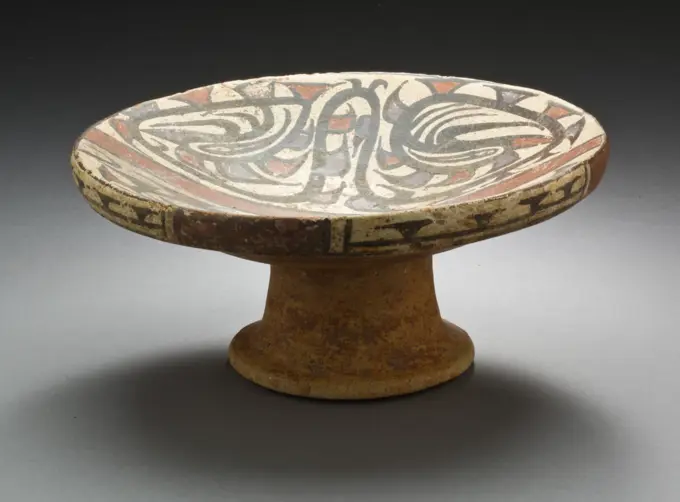
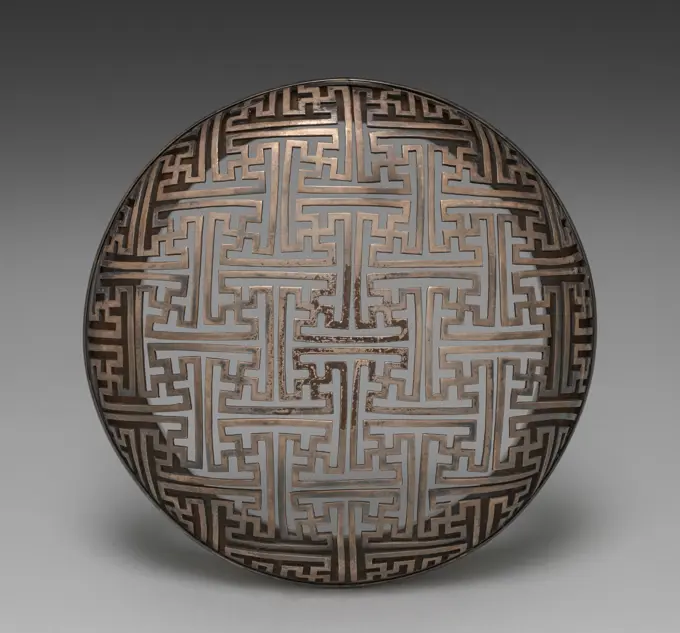
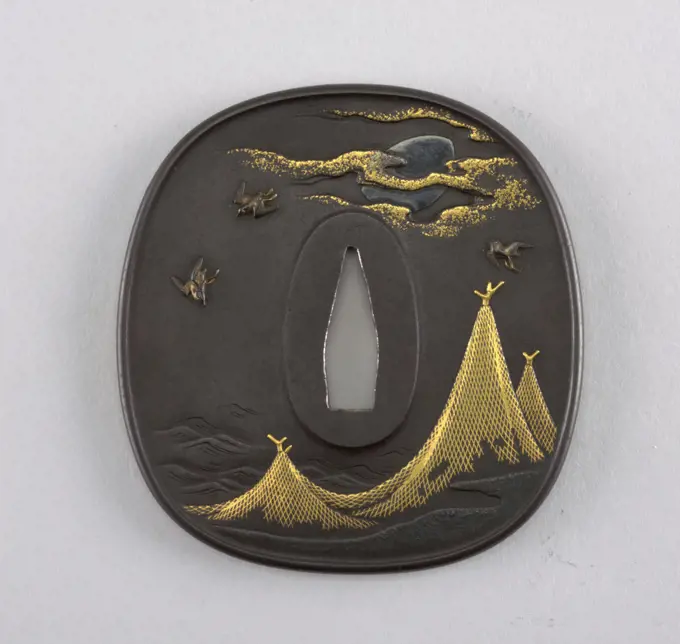
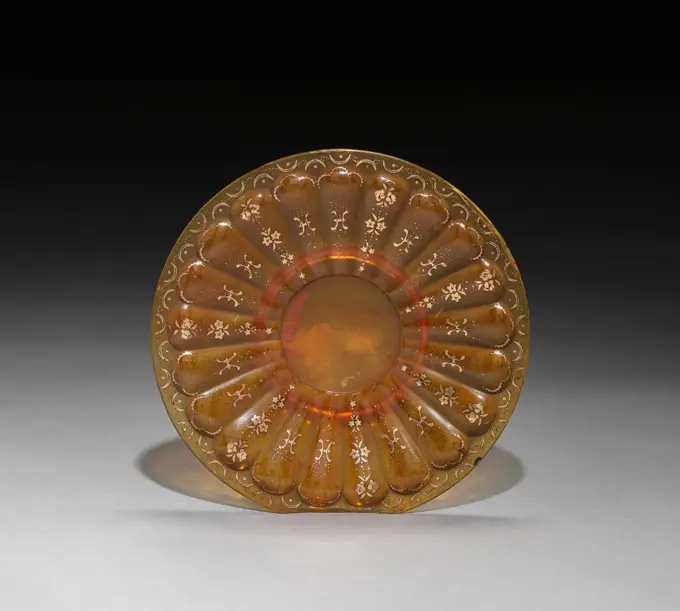
Fragment dish from v.o.c.-ship De 'Witte Leeuw', Anonymous, Before 1613  Fragment dish from V.O.C. ship De 'Witte Leeuw', 55 present. The shard is glassy white and has little ingrained dirt. The glaze is blue -tinted and peels over parts of the lip edge. The bottom is unglazed. The foot ring is V-shaped, faceted and stands inside. More than 20 grains of oven sand have been found. The lip is scooped. Lampet dish. Six fragments glued together. Jingdezhen bone china (material). glaze   Sint-HelenaSign from V.O.C.-ship De 'Witte Leeuw', Anonymous, Before 1613 plate (dishes) Porcelain board from V.O.C. ship De 'Witte Leeuw', 95 present; Part of the wall is missing. The shard is white, the glaze colorless. The dish has Pinholes and baking cracks. The bottom is glazed, the foot ring is rounded and a lot of oven sand has been found. Swatow porcelain   Sint-HelenaSword Guard (Tsuba). Culture: Japanese. Dimensions: H. 2 13/16 in. (7.1 cm); W. 2 5/8 in. (6.7 cm); thickness 1/4 in. (0.6 cm); Wt. 5.5 oz. (155.9 g). Date: ca. 1615-1868. Museum: Metropolitan Museum of Art, New York, USA.Plate of multi -colored hard baked pottery; Staffordshire, Anonymous, c. 1750 - c. 1780 Plate of multicolored hard baked pottery, with a scalloped edge. The edge is decorated in relief with six fields of Gololfd Spaliewerk. The board is covered with blue -gray lead glaze with stains in green, yellow and manganese. The back is dotted in manganese. The board includes four plates (BK-1987-41-A to BK-1987-41-E). England earthenware. lead glaze Plate of multicolored hard baked pottery, with a scalloped edge. The edge is decorated in relief with six fields of Gololfd Spaliewerk. The board is covered with blue -gray lead glaze with stains in green, yellow and manganese. The back is dotted in manganese. The board includes four plates (BK-1987-41-A to BK-1987-41-E). England earthenware. lead glazeSharf of white -baking earthenware, with stand ring, with white glaze, just at the rear rings and a fish in blue, and at the front a seven -member animal in a landscape, anonymous, 1600 - 1650  Northern Netherlands earthenware. glaze majolica  Northern Netherlands earthenware. glaze majolicaFlower tile, flowerpot in blue on white, corner motif large ox head, wall tile tile sculpture ceramic earthenware glaze, baked 2x glazed painted Red shard square Two double nail holes. Two-tone. Blue blue pull on white fond in blue paint on the back: roemerTile with Geometric Design 16th century Spanish. Tile with Geometric Design 467574Chair back and seat cover 1780-90 French or Italian. Chair back and seat cover 226507PLATO DE TERUEL. Nº INV. 2392. PROCEDENCIA TERUEL. DIAMETRO 20 CM. MUSULMAN. (EXPOSICION :ARTE ISLAMICO ESPAÑOL)(DEPOSITO: MUSEO NACIONAL DE ARTES DECORATIVAS).Floor tile, brown draft, green and yellow on white ground, central green oblique glass in which white flower with yellow heart, half yellow diamonds, half green diamonds, floor tile tile sculpture ceramic earthenware glaze, d 2.3Tile- Flower, before 1920. Grueby Pottery Company (American). Glazed ceramic; overall: 5.1 x 5.1 cm (2 x 2 in.).Tile, blue draft, orange, brown and green on white, centrally diagonally placed bunch of grapes, half rosette, corner motif lily, wall tile tile sculpture ceramic earthenware glaze, baked 2x glazed painted Rudy and yellow shard square Two nail holes.Tile, J. & J. G. Low Art Tile Works, 1877 - 1883, Glazed stoneware, Square molded tile made of white clay, impressed and inscription: 'J. & J.G. Low, Patent Art Tile Works, Chelsea Mass. U.S.A., copyright 1881 by J. & J.G. Low'. Tile face has all-over design of daisies framed in plain circles separated by four-pedaled flower; cropped design indicate piece id part of larger tile scheme; dark brown crackle glaze., Chelsea, Massachusetts, USA, late 19th century, tiles, Decorative Arts, TileSharf of white -baking earthenware, with a painting of a putto inside a leaf wreath in blue, yellow and orange on a white surface within a white surface, c. 1500 - c. 1899 fragment   earthenware. glazeThirteen hexagonal floor tiles. Thirteen hexagonal floor tiles decorated with stylized petal motifs. The edges are deposited with wide piping. In the middle of a long side the coat of arms of the Montmorency family.Round dish with fighting lizard and snake 1865-87 Manuel Mafra Portugese Palissy ware differs considerably from French examples, thanks to the work of Manuel Cipriano Gomes Mafra. Originally working as a waiter, Mafra moved to the town of Caldas da Rainha to work at the famed factory of Maria dos Cacos, which he soon took over. At Caldas, Mafra pioneered a style of Palissy ware that featured a distinctive usage of moss as a decorative bed for fish, lizards, and insects, a style quickly adopted by other Portuguese manufacturers of Palissy ware.. Round dish with fighting lizard and snake. Portugal, Caldas de Rainha. 1865-87. Glazed earthenware. Ceramics-PotteryHispano-Moresque Lusterware Plate with Griffin. Spanish; Valencia (probably Manises). Date: 1475-1500. Dimensions: Diameter: 44.8 cm (17 5/8 in.). Tin-glazed earthenware with copper luster. Origin: Valencia. Museum: The Chicago Art Institute, Chicago, USA. Author: Valencia Potteries.Shards of plates from the wreck of the East India Hollandia.Porcelain, Plate, Type 3; Fragm: Fragm or base; Fragm or Rim, SIM. NG 1980-27H3202C.Tile with blue decorated folds, tile pilaster footage fragment ceramics pottery glaze, d 1.1Dish belonging to lid pot, painted with flowers in pink and gold, anonymous, c. 1775 - c. 1800 Dish painted with flower branches in pink and gold and with tires with geometric patterns. Belongs to lid pot. India glass. gilding (material) glassblowing / glassblowing Dish painted with flower branches in pink and gold and with tires with geometric patterns. Belongs to lid pot. India glass. gilding (material) glassblowing / glassblowingShards of scales from V.O.C. ship De 'Witte Leeuw', Before 1613 dish Shards Kraakporcelain from V.O.C. ship De 'Witte Leeuw'. Jingdezhen bone china (material)   Sint-HelenaMirror fragment of majolica dish with yellow and blue stylized flower decoration, plate dish crockery holder soil find ceramic earthenware glaze tin glaze lead glaze, hand turned fried glazed fried Mirror fragment of majolica dish. Flower decor as representation in yellow green and blue Possible passion flower. Unevenly shaped wide stand ring. Yellow shard at the back lead glaze archeology underground pit Rotterdam City center Stadsdriehoek Groenendaal indigenous pottery serve serving food decorate the table Soil discovery of the Groenendaal (from canal-dredging) August 1976.Fragment majolica plate, polychrome, amor shooting with bow and arrow, rim in Wanli style, plate crockery holder soil find ceramic earthenware glaze, majolica baked underside covered with lead glaze. Polychrome archeology adorn serving food ChinaTile, flower on spot in yellow, orange, green and blue on white, inside serrated square, corner pattern french lily, wall tile tile sculpture ceramic earthenware glaze, baked 2x glazed paintedDisk Brooch ca. 600-650 Frankish or Northern French. Disk Brooch 465393 Frankish or Northern French, Disk Brooch, ca. 600650, Silver, wire, glass paste, copper alloy core, cabochons, Overall: 1 7/16 x 9/16 in. (3.7 x 1.5 cm). The Metropolitan Museum of Art, New York. Gift of J. Pierpont Morgan, 1917 (17.192.9)Spindle Whorl, 700s - 900s. Iran, early Islamic period, 8th - 10th century. Bone, incised; overall: 0.4 x 2.3 x 2.3 cm (3/16 x 7/8 x 7/8 in.).Tile, flowerpot in blue on white, corner motif lily, wall tile tile sculpture ceramic earthenware glaze, baked 2x glazed paintedSword guard (Tsuba) With Sumō Wrestling Motif (撲図鐔) ca. 1615-1868 Japanese This polished shibuichi tsuba shows on its obverse two Sumō wrestlers and a referee. The reverse is apart from the straw enclosure of the ring and the bucket with "power water" (chikara-mizu, 力水), from which a wrestler ceremonially rinses out his mouth prior to a bout, undecorated.. Sword guard (Tsuba) With Sumō Wrestling Motif (撲図鐔) 25715Breastplate from a Set of "Four Mirrors" (me long bzhi). Culture: possibly Mongolian or Central Asian. Dimensions: Diam. 8 5/8 in. (21.9 cm); D. 1 1/4 in. (3.2 cm); Wt. 1 lb. 12.3 oz. (802.3 g). Date: 15th-17th century. Museum: Metropolitan Museum of Art, New York, USA.Table screen (username). Cernuschi Museum, Asia Museum of Asia in the city of Paris.wall tile tile sculpture ceramics pottery glaze, baked 2x glazed painted Rudy and yellow shard square Two nail holes.For a long time (ôzara);  around 1880-1900 (1880-00-00-1900-00-00);Cloisonné, Japanese (culture), platters, dragons (iconogr.), Japanese art, platesTile. Iran, second half of 13th to 14th century. Ceramics. Fritware, molded and overglaze-paintedCast Fragment; Workshop in the Eastern Mediterranean, Eastern Mediterranean; 2nd century B.C. - 1st century A.D; Glass; 2.5 cm (1 in.)Round plate of hard baked pottery; Staffordshire, Anonymous, c. 1756 Round plate of hard baked earthenware, covered with blue-black lead glaze with spots in light blue, green, yellow-brown and manganese. The edge is decorated in relief with fields alternately smooth and filled with grille. On the razes alternately an eagle, a trophy and the portrait of Frederik the Great. On the slippery fields, the inscriptions are successful to the king, king of prussia, and his forces. The sign is part of five plates (BK-1987-40-A to BK-1987-40-F). England earthenware. lead glaze Round plate of hard baked earthenware, covered with blue-black lead glaze with spots in light blue, green, yellow-brown and manganese. The edge is decorated in relief with fields alternately smooth and filled with grille. On the razes alternately an eagle, a trophy and the portrait of Frederik the Great. On the slippery fields, the inscriptions are successful to the king, king of prussia, and his forces. The sign is part ofFragment 14th century French. Fragment 467084CERAMICA IRANI-CUENCO DE BARRO ROSADO S IX. Location: MUSEO ARQUEOLOGICO NACIONAL-COLECCION. MADRID. SPAIN.Dish, 3rd-2nd century BCE, 1 3/8 x 8 3/4 in. (3.49 x 22.23 cm), Lacquer over wood core, China, 3rd-2nd century BCE, Lacquerware vessels were widely used for food and drink in the palaces and households of the Han aristocracy. Made from the sap of a type of sumac, lacquer was difficult and expensive to produce, but greatly treasured. Light, durable, impervious to water, and conducive to painted decoration, it had nearly replaced inlaid bronze and gilt vessels by the end of Han (206 B.C.-A.D. 220).Flowerpot flowerpot, flowerpot between balusters in blue on white, corner pattern french lily, wall tile tile sculpture ceramic earthenware glaze, baked 2x glazed painted Square.Ornament tile, blue on gray, with light blue brushed check pattern and dark blue frame, as checkerplate, small windows, floor tile tile sculpture ceramic earthenware glaze, d 1.2Five fragments of a dish decorated with apples and grapes, anonymous, c. 1620 - c. 1650 Five fragments of a dish of earthenware, at the top with tinglaze, covered at the rear with lead glaze, decorated in blue, green, orange and yellow with apples and grapes. A rosette and chalice on the edge. Excavated in London, Middlesex Street. England (possibly) earthenware. tin glaze majolica Five fragments of a dish of earthenware, at the top with tinglaze, covered at the rear with lead glaze, decorated in blue, green, orange and yellow with apples and grapes. A rosette and chalice on the edge. Excavated in London, Middlesex Street. England (possibly) earthenware. tin glaze majolicaTile, flower vase, blue decor white ground, corner filling oxen head, wall tile tile sculpture ceramic earthenware enamel tinglage h 12.4, potteryBreastplate and Backplate from a Set of "Four Mirrors" 17th-18th century probably Tibetan. Breastplate and Backplate from a Set of "Four Mirrors" 26841Dish (usual name). Cernuschi Museum, Asia Museum of Asia in the city of Paris.Shallow Dish with Rosette Design 700 CE-750 CE China. Slip-coated earthenware with three-color (sancai) lead glazes and underglaze mold-impressed decoration .Small bowl. unknown, craftsmanInlay fragment, conventional floral pattern. Dimensions: H. 2.9 × W. 2.9 cm (1 1/8 × 1 1/8 in.). Date: 1st-3rd Century A.D..A mosaic glass technique allowed multiples of an image to be created: a figural or design composition was made by bundling colored glass canes, which were then drawn out into a long bar. The bar was then sectioned at right angles, probably by striking the bar with appropriate tools, to produce small inlay tiles. The tile would then be smoothed and polished on the face intended to appear outwards. Museum: Metropolitan Museum of Art, New York, USA.ALIZAR TOLEDANO DE CUERDA SECA DECORADO CON CORNUCOPIAS QUE ENMARCAN A UN OSO CON UN PANAL DE MIEL - SIGLO XVI. Location: INSTITUTO VALENCIA DE DON JUAN-COLECCION. MADRID. SPAIN.Fragment of majolica dish on which plant, dish plate crockery holder soil find ceramic earthenware glaze lead glaze tin glaze, majolica baked 2x painted glazed Fragment of majolica dish What remains of the image is part of the rear winding plant with racemic vegetation. Yellowish sheen soft and porous earthenware scraped. Wood-baked archeology Rotterdam Stadscentrum Stadsdriehoek Schielandshuis decorate serving food Soil discovery: Schielandshuis Pappegay garden.Fragment faience pleated dish, blue on white, on convex mirror chinese landscape, folding dish plate dishware holder earthenware foundry pottery glaze tin glaze, Cooked archeologyTile with weapon family Ordelaffi with climbing lion in an oval, anonymous, 1480 - 1490 Tile with a multicolored (blue, green and orange) overhoek decorative of the coat of arms of the Ordelaffi family with climbing lion in an oval. Faenza earthenware. tin glaze majolica Tile with a multicolored (blue, green and orange) overhoek decorative of the coat of arms of the Ordelaffi family with climbing lion in an oval. Faenza earthenware. tin glaze majolicaRosette from the sky of the dome of the Zygmuntów chapel  Wawel Cathedral, Krakowpot in ceramic, india Copyright: xSatishxParashar/DinodiaxPhotoxShards of a sign from V.O.C. ship De 'Witte Leeuw', Before 1613 plate (dishes) Shards of a sign from V.O.C. ship the 'Witte Leeuw'. Jingdezhen bone china (material)   Sint-Helenaceramics, gift (provenance), geometric motifs, bowls, Islamic artFragment majolica dish with polychrome bird, dish plate crockery holder soil find ceramic earthenware glaze tin glaze lead glaze, ring 9.2 hand-turned baked 2x majolica glazed Completed fragment of majolica dish pancake dish with light soul in the mirror. Small prune prints pierced in the performance Standring. Polychrome decor bird or mythological animal on ground staggered yellow and blue wings archeology Rotterdam City center Stadsdriehoek Schielandshuis indigenous pottery food serving table serve decorate Soil discovery: Schielandshuis during restoration.Disk. Jade, China, Han dynasty (206 BC AP.J.-C.). Paris, Cernuschi museum. Asian art, Chinese art, circle, disc, han, jade dynastyDish. Culture: Italian, Deruta. Dimensions: Overall (confirmed): 2 7/8 × 16 1/4 in. (7.3 × 41.3 cm). Date: ca. 1510-20. Museum: Metropolitan Museum of Art, New York, USA.Copper gilded gorget from the collection of Antoni Strzałecki ; drawing for the publication: Dominika Jeżewskiego Skarbiec Zabytków Polskich znajdujących się w prywatnych zbiorach Warszawy, malował z natury Władysław Sztolcman od r. 1909` Treasure of Pol???????????????????. Sztolcman, Władysław Roman (1873-1950), painterMajolica dish with polychrome decor of rotating grotesques, plate dish crockery holder soil find ceramic earthenware glaze tin glaze lead glaze, ring 10.1 hand turned fried glazed painted fried Dish with rotating grotesques in the mirror rope decor along the saucer. Reverse glaze. Glued with thick brown adhesive. Erosionate archeology decorate home interior serving food RotterdamTile with blue twisted curl, tile pilaster footage fragment ceramics pottery glaze, d 1.3Low Bowl with Dragons amid Clouds Chasing Flaming Pearls 1368-1644 China. Porcelain with royal blue glaze .Buckle, 1800s-1900s. China, 19th-20th century. White jade; overall: 5.4 cm (2 1/8 in.).Ornament tile, light blue on gray, with brushed check pattern, as checkerplate, large windows, floor tile tile sculpture ceramic earthenware glaze, d 1.1Textile Fragment 4th-5th century. Textile Fragment 444139Bliżej KulturyOpenwork Plaque China. Openwork Plaque 61093Cup plate. American; Midwest. Date: 1830-1835. Dimensions: diam. 9.1 cm (3 9/16 in.). Pressed glass. Origin: Midwest. Museum: The Chicago Art Institute, Chicago, USA.Close-up of a stone, Caltagirone, ItalyMolded Dish with Stylized Keyfret Design, mid-1600s. Japan, Edo period (1615-1868). Porcelain with colored enamels (Hizen ware, Matsugatani type); 12 x 16.2 cm (4 3/4 x 6 3/8 in.).HatTeapot (lid), c. 1745. Staffordshire Factory (British). Salt-glaze earthenware;Bowl late 10th century. Bowl 449092Animal tile, rearing horse to the left on plot between balusters, in blue on white, corner pattern french lily, wall tile tile sculpture ceramic earthenware enamel, baked 2x glazed painted Square. Blue rearing horse on blue ground. Baluster ornament with french lilies.Crushing pottery with green glaze, with ribbed surface and, among other things, a relief of a fabulous. .Round Plaque. Culture: Vicús. Dimensions: Diameter 1-5/8 in. (4.1 cm). Date: 3rd century B.C.-A.D. 2nd century. Museum: Metropolitan Museum of Art, New York, USA.Ornament tile, blue on gray, with dark blue brushed diamond pattern as checkerplate, small windows, floor tile tile images ceramic earthenware glaze, d 1.2Dish 19th century Japan. Dish. Japan. 19th century. Iron repoussé and decorated with lacquer. Edo (1615-1868) or Meiji period (1868-1912). MetalworkModel of a house. unknown, craftsmanCeramic Fragment 13th-16th century. Ceramic Fragment 452474Bowl with Two Facing Peacocks. Dimensions: H. 3 3/4 in. (9.5 cm)Diam. 12 1/8 in. (30.5 cm). Date: second-third quarter 10th century.Birds were a particularly popular subject in the Abbasid period, as artists in many media transformed the creatures' beaks and wings into increasingly abstracted designs. The symmetrical pattern of two peacocks facing each other finds iconographic precedents in examples dating from the late antique and Byzantine periods, where it often carried paradisiacal connotations. The exterior is painted with a simple pattern of circles and lines. The underside of the foot is glazed and bears an Arabic inscription. Monochrome luster examples such as this were characteristic of the "second phase" of Abbasid lusterware, which developed in centers in Iraq in the tenth century. Museum: Metropolitan Museum of Art, New York, USA.Tripod Plate with Supernatural Birds. Mexico, Campeche or Yucatán, Maya, 550-700 CE. Ceramics. Slip-painted ceramic'A View from a Balloon   above the clouds, seen  by Mr Baldwin'        Date: 1790sDisk (Shield Cover) 14th-15th century Chimú This disk, most likely a ceremonial shield cover (see 66.196.44), is one of at least eleven said to have been found in one or more burials on Perus north coast. All eleven share a similar composition of four concentric bands encircling a central convex boss. The relief decoration was achieved by working the sheet metal from the back, pressing the metal into a pliant material such as pitch. The designs were further enhanced by working the disk from the front using tracing tools to delineate forms. The eleven disks follow one of four distinct iconographic patterns featuring figures with crescent headdresses, marine animals, and mythological creatures (see also object number 66.196.44 in the Met's collection). The present disk is the sole example in which the outer register is defined by a wave-like, undulating band with what looks to be a tassel or cord motif in its interior. A shore bird is depicted in the interstices below the undulating banMajolica dish with polka dot, dark blue background, on the mirror running swan, plate crockery holder soil find ceramic earthenware glaze tin glaze lead glaze, total, hand turned hand shaped fried glazed decorated baked Layer plate on stand ring with studs in the flag and corrugated outer edge. Dark blue long distance polychrome representation of running swan and cane stalks in white brown and yellow. Lead glaze on the bottom. In the flesh baked glaze error in the shoulder Italian Dutch decor archeology indigenous pottery food garnish serve serving table ItalyField of four tiles. Field of 4 tiles (2 x 2) each with a blue painted landscape, flour or insect within a wreath with feather pour. In the corners, a fortone.Animal tile, standing dromedary to the left on plot between balusters, in blue on white, corner pattern french lily, baking error, wall tile tile sculpture ceramic earthenware glaze, baked 2x glazed painted Square. Blue camel standing on white background. Baluster ornament with french lilies.Majolica plate, dark blue on white, chessplate decor, plate crockery holder soil find ceramic earthenware glaze, total, baked underside covered with clear lead glaze green tinted where it is thickly applied Polychrome. Italian Dutch decor. Monochrome archeology food decorate serving ItalyPedestal Plate. Panama, Macaracas or Joaquin style, Los Santos, 600-800 CE. Ceramics. Slip-painted ceramicKyoto-based Japanese ceramist Seif Yohei III (1851-1914) admired the glaze colors found on Chinese porcelain and tried to replicate them through intensive experimentation. His green and creamy white glazes were particularly well received. The combinations of colors with subtle molded and incised decorations in his ceramics respond powerfully to changes in light, creating a dynamic viewing experience. Names for the glazes, written in ink with a brush on the lids of the custom-made storage boxes for the works, often indicate a specific glaze or ware that had inspired him, even when the resulting color was distinctively his own. Lid for an Incense Burner, c. 1893-1914. Seifū Yohei III (Japanese, 1851-1914). Geometric openwork silver lid;Glass base fragment of a cylindrical bottle 2nd-3rd century A.D. Roman Translucent light blue green.Fragment with only small parts of sides of cylindrical body remaining; round bottom with central pontil scar.Base stamp comprising Latin inscription between two concentric lines and raised circular band around hollow center.Complete bottom, broken from body with jagged edges; pinprick and larger bubbles; faint iridescent weathering.The fragment bears a stamp with the name of the maker, Q(uintus) Casius Nocturnus. All of the recorded bottles with his stamp have been found in northeastern France (Côte-dOr), except for this piece, which would appear to have come from Cyprus.. Glass base fragment of a cylindrical bottle. Roman. 2nd-3rd century A.D.. Glass; mold-blown. Mid Imperial. GlassTsuba, Iron, gold and silver inlay, This iron tsuba is aori (oval) in shape and has a koniku mimi (slightly raised square outer rim). Chunikubori (medium high relief) carving with Kin nunome zogan (hatching inlaid with gold) shows a design with hoshiami (drying fish nets). Birds fly under the moon., At the center is the nakago-ana, an opening through which the sword passes. Surrounding this is the seppadai, a flat oval area that is migaki (burnished)., Japan, mid- 19th century, metalwork, Decorative Arts, TsubaField of four tiles with fruit bowl. Four tiles (2 x 2) with a blue painted fruit bowl.Saucer, c. 1730. France, 18th century. Amber decorated with inlaid gold and mother-of-pearl; diameter: 8.9 cm (3 1/2 in.).Fragment European 13th-14th century View more. Fragment. European. 13th-14th century. Pot-metal glass and vitreous paint. Glass-StainedTERRIZO O LEBRILLO DECORADO CON UNA INSCRIPCION ARABE Y TRAZOS CONTRAPEADOS EN EL BORDE - TERUEL - SIGLO XV. Location: MUSEO DE CERAMICA-CERAMICA ARAGONESA. Barcelona. SPAIN.Paperweight, 1870, Boston and Sandwich Glass Company, American, Sandwich, Massachusetts, 1825-1888, 1 7/8 x 3 in. (4.8 x 7.62 cm), Glass, United States, 19th centuryAntique round wooden plate, Jodhpur, Rajasthan, India Copyright: xSafatxAli/DinodiaxPhotoxAnimal tile, standing boar to the left between balusters, in blue on white, corner pattern french lily, wall tile tile sculpture ceramic earthenware glaze, baked 2x glazed painted Square. Blue pig standing on white ground. Baluster ornament with french lilies.Smile