Antique Chalice Glassware

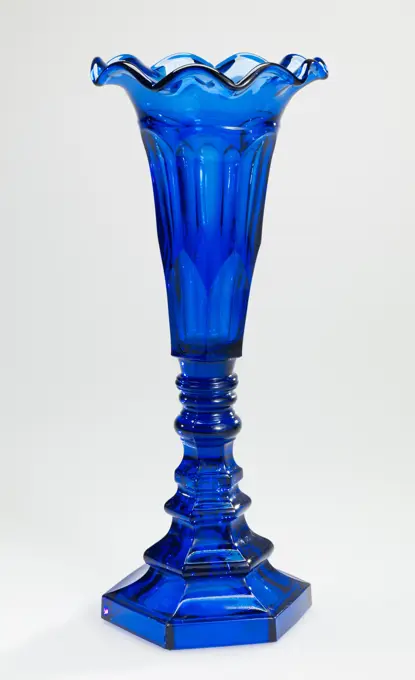
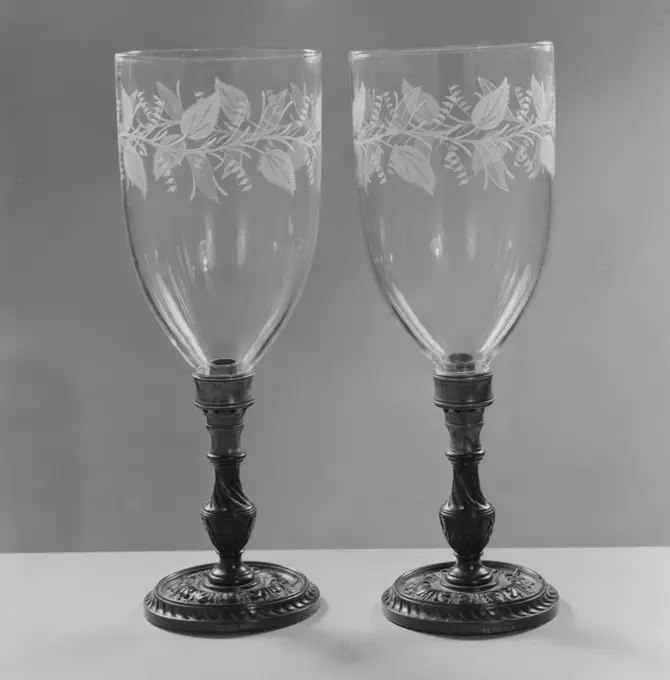
A collection of handcrafted chalice glasses, showcasing intricate designs with historical motifs, crafted between the 18th and 19th centuries.

Chalice glass with a three -mast and the coat of arms of the city of Amsterdam, c. 1725 - c. 1750 Vaulted foot with turned around. The trunk made up of a ring and a facet -cut knot with bubble. Conical chalice with facet cut, rounded underside. On the chalice a three -mast with the inscription S.lands.welvardt. On the downside the coat of arms of the city of Amsterdam on a banderole with the text Amsteldam, flanked by two lions. glassblower: BohemenNorthern Netherlands glass grinding / glassblowing  Amsterdam Vaulted foot with turned around. The trunk made up of a ring and a facet -cut knot with bubble. Conical chalice with facet cut, rounded underside. On the chalice a three -mast with the inscription S.lands.welvardt. On the downside the coat of arms of the city of Amsterdam on a banderole with the text Amsteldam, flanked by two lions. glassblower: BohemenNorthern Netherlands glass grinding / glassblowing  Amsterdam
Chalice glass with a three -mast and the coat of arms of the city of Amsterdam, c. 1725 - c. 1750 Vaulted foot with turned around. The trunk made up of a ring and a facet -cut knot with bubble. Conical chalice with facet cut, rounded underside. On the chalice a three -mast with the inscription S.lands.welvardt. On the downside the coat of arms of the city of Amsterdam on a banderole with the text Amsteldam, flanked by two lions. glassblower: BohemenNorthern Netherlands glass grinding / glassblowing Amsterdam Vaulted foot with turned around. The trunk made up of a ring and a facet -cut knot with bubble. Conical chalice with facet cut, rounded underside. On the chalice a three -mast with the inscription S.lands.welvardt. On the downside the coat of arms of the city of Amsterdam on a banderole with the text Amsteldam, flanked by two lions. glassblower: BohemenNorthern Netherlands glass grinding / glassblowing Amsterdam
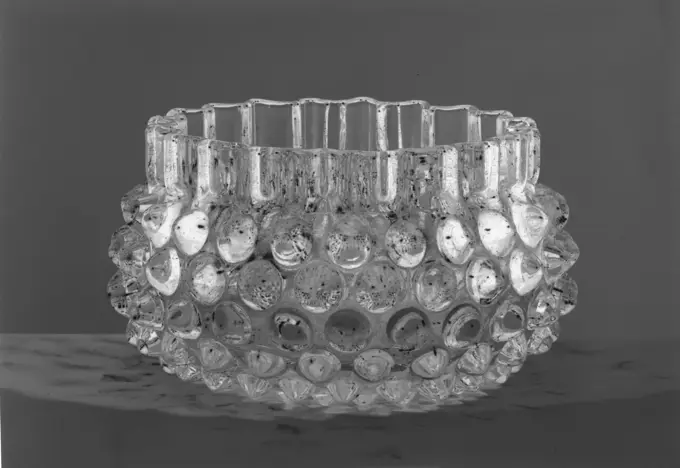
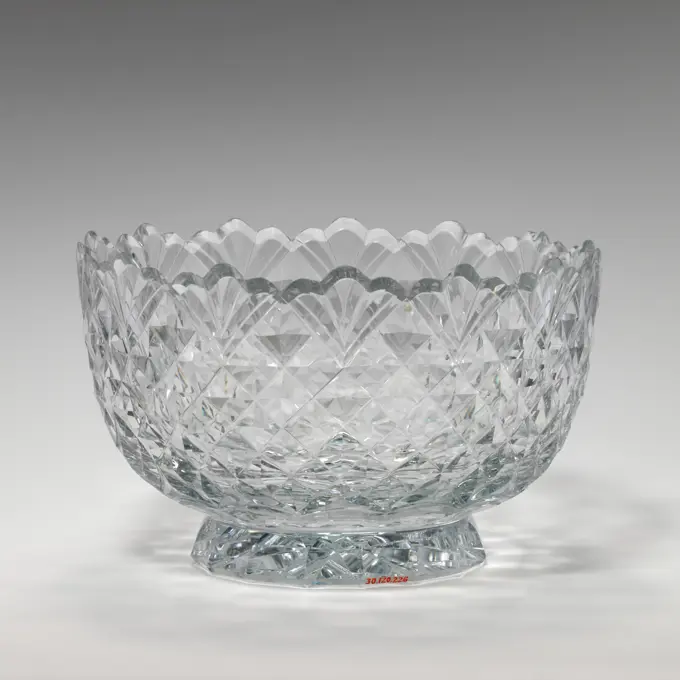
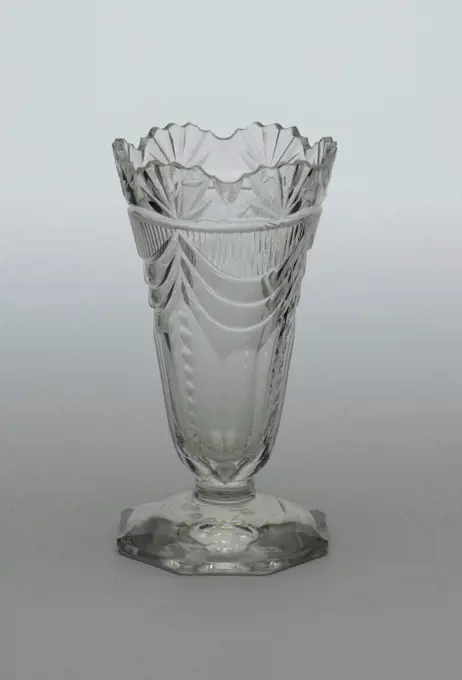
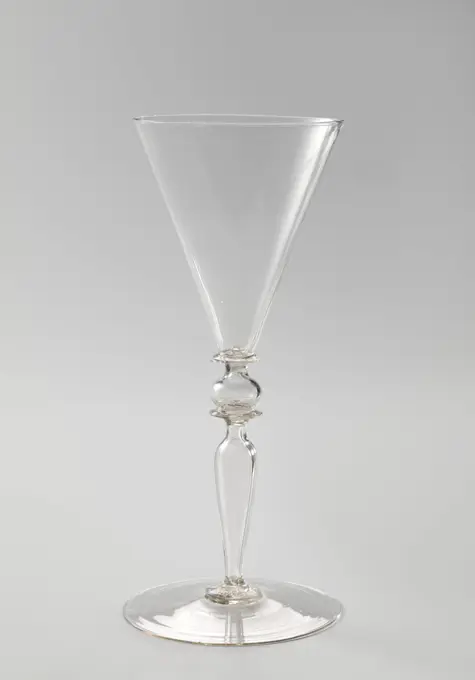
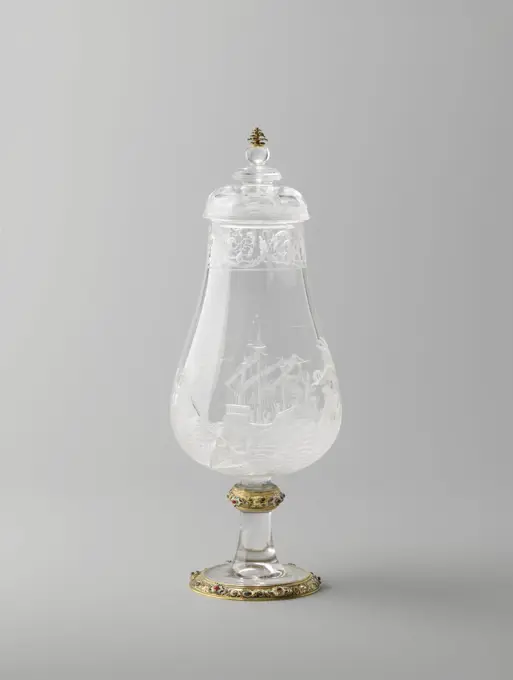
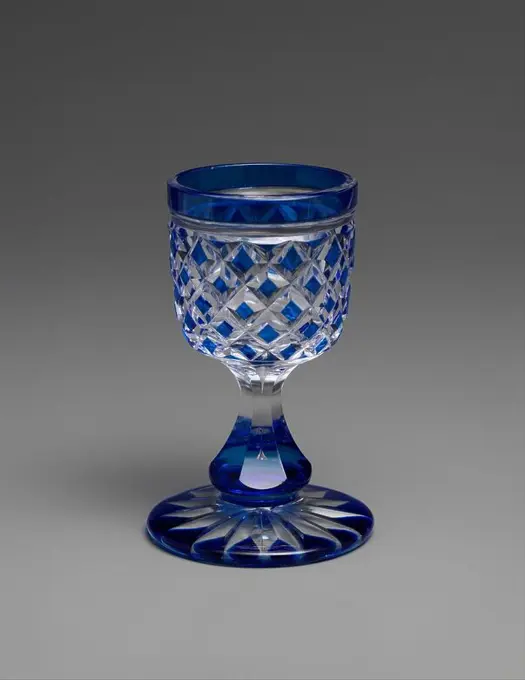
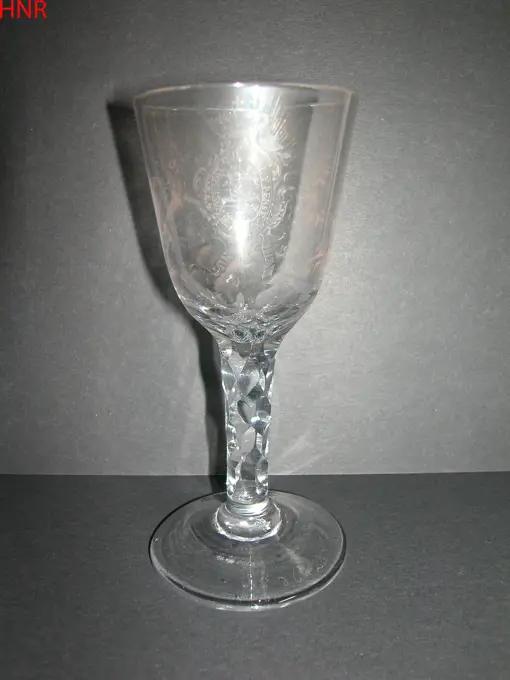
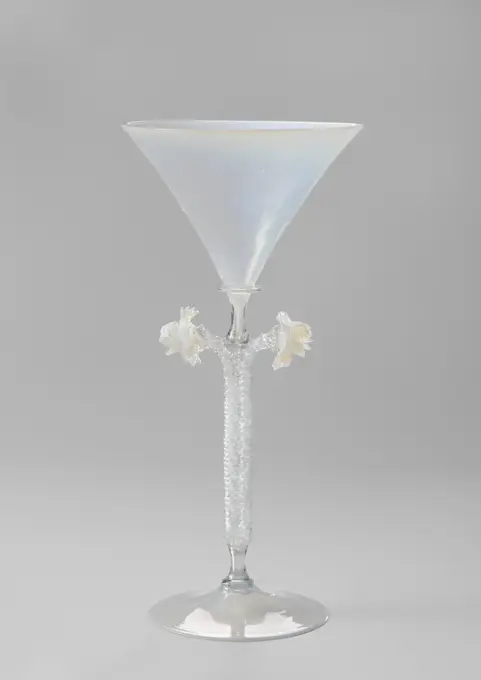
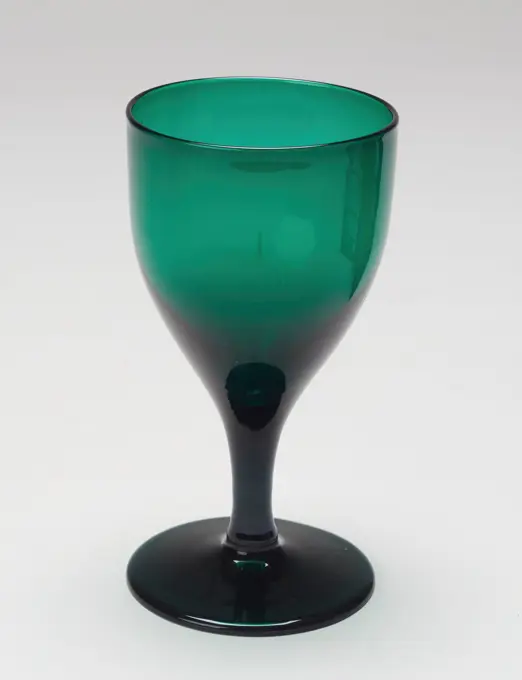
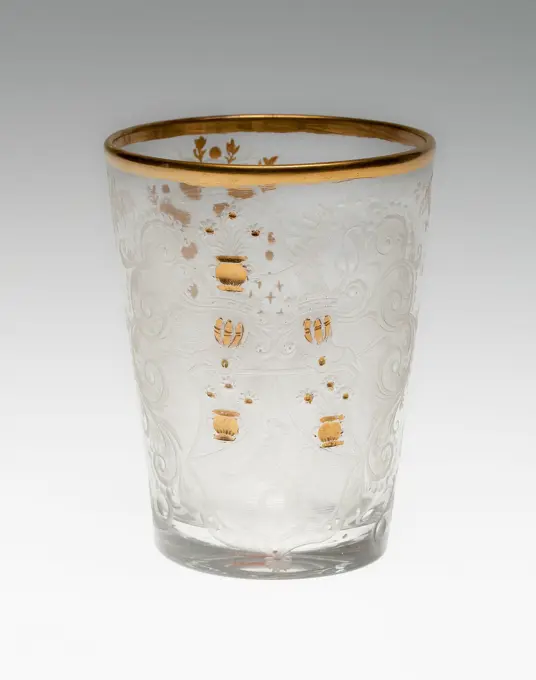
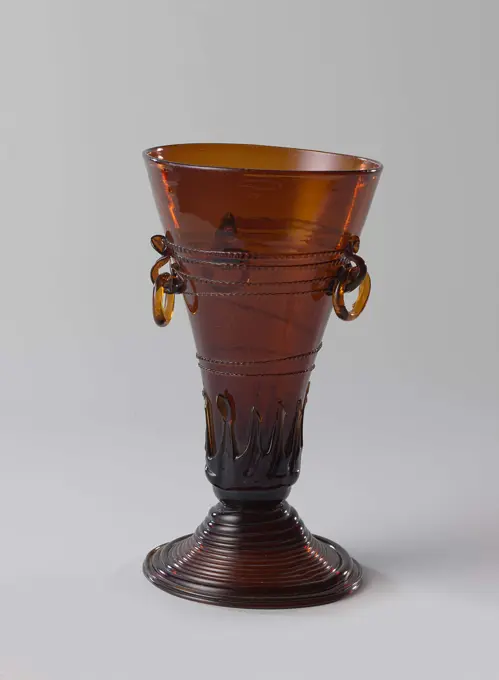
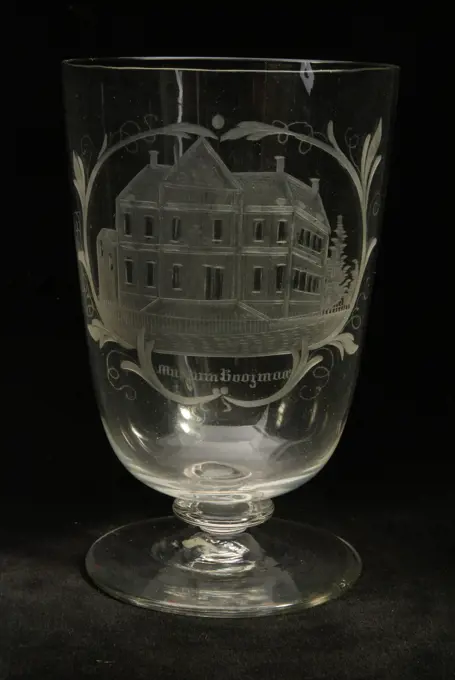
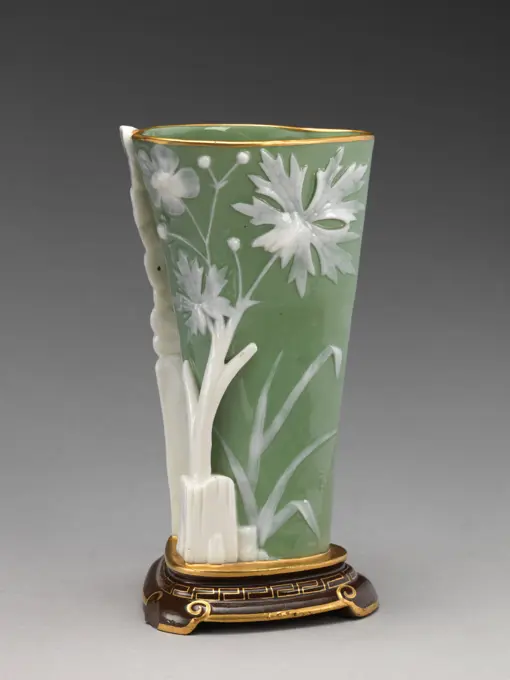
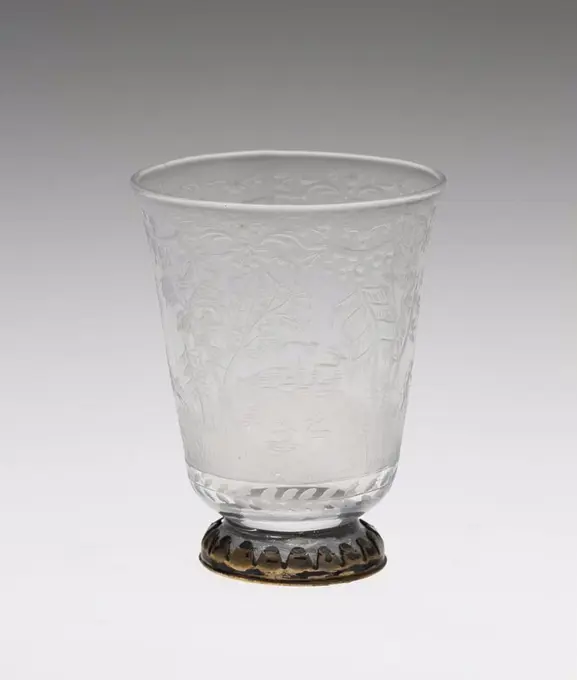
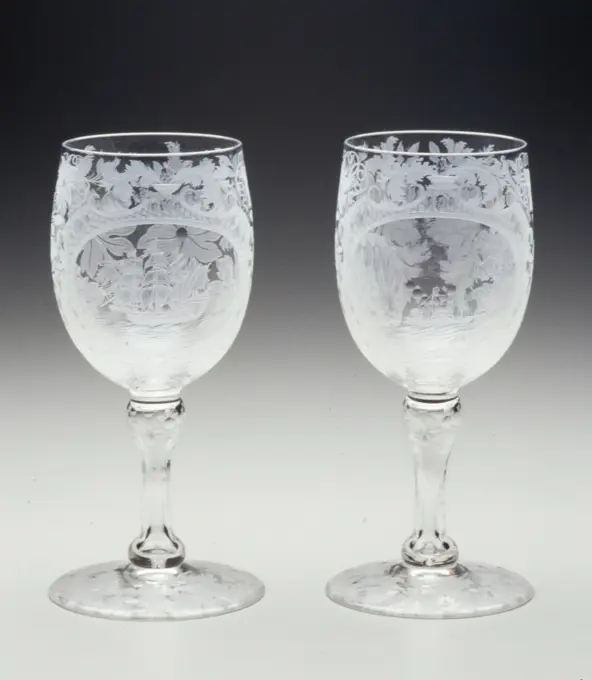
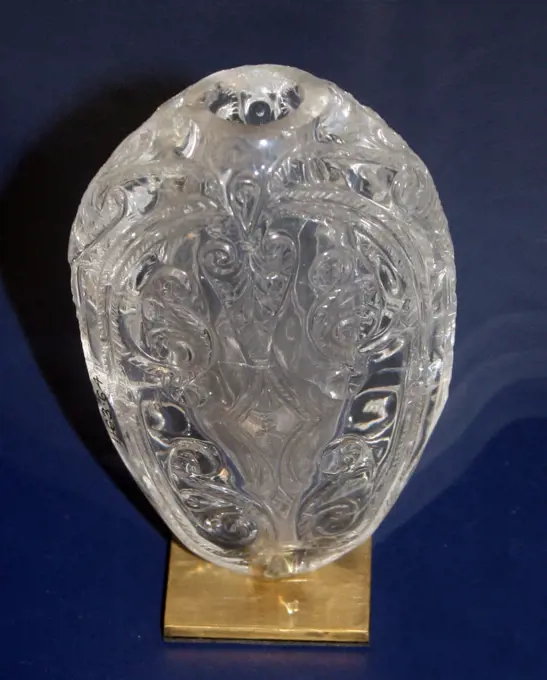
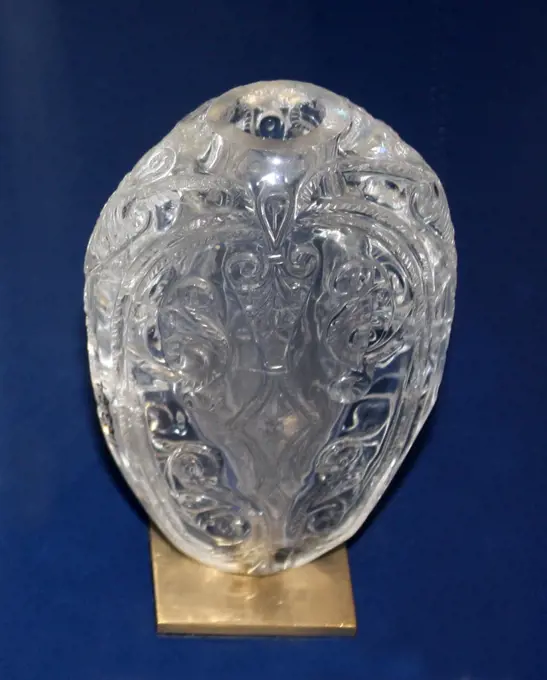
Candlestick ca. 1775 British. Candlestick 1351Hobnail Finger Bowl after 1886 Probably Hobbs, Brockunier and Company. Hobnail Finger Bowl. American. after 1886. Pressed colorless and cranberry glass. Made in Wheeling, West Virginia, United StatesBowl late 18th century British or Irish. Bowl. British or Irish. late 18th century. Glass. GlassBokaal with deer and dogs, anonymous, c. 1725 - c. 1750 Vaulted foot with turned around. Baluster tribe with red spirals, three knots and an elongated bubble. On the chalice ovals in which deer and dogs between leaf ornament. Bohemia glass glassblowing Vaulted foot with turned around. Baluster tribe with red spirals, three knots and an elongated bubble. On the chalice ovals in which deer and dogs between leaf ornament. Bohemia glass glassblowingGoblet. Nieokreślona huta, factoryProbably the Workshop of James Giles, Pair of Wineglasses, c. 1760-70, colorless glass with gilding.Drinking glass. Funnel-shaped drinking glass on a high baluster-shaped strain. The foot is round and vaulted. The drinking glass is equal to five other specimens (BK-NM-11177-181-B-IV, BK-NM-11177-181-BV, BK-NM-11177-181-B-VI, BK-NM-11177-181 -B-VII, BK-NM-11177-181-B-VIII). The ddrink glasses are on a tray (BK-NM-11177-181-B-i) with a ditch glass (BK-NM-11177-181-B-II). The tray is on a folding table (BK-NM-11177-181-A).Cup Huta Uarzecko NalibockieGlass;  1. W. 19th century (1800-00-00-1825-00-00);Ointment jar of Sithathoryunet. Dimensions: h. with lids 9.3- 9.7 cm (3 11/16- 3 13/16 in); diam. of lids 6- 7 cm (2 3/8- 2 3/4 in);diam. of bases 3.9- 4.4 cm (1 9/16- 1 3/4 in). Dynasty: Dynasty 12. Reign: reign of Senwosret II-Amenemhat III. Date: ca. 1887-1813 B.C.. Museum: Metropolitan Museum of Art, New York, USA.Sweetmeat Compote 1850-70 Bakewell, Pears and Company. Sweetmeat Compote 2530Tumbler 1770-1820. Tumbler. 1770-1820. Non-lead glass with engraved decoration. Probably made in Bohemia, Czech RepublicWineglass first half 18th century German. Wineglass. German. first half 18th century. Glass. GlassNo. 237 Red Wine Glass; Designed by Otto Prutscher (Austrian, 1880 - 1949); Manufactured by J. & L. Lobmeyr GmbH (Austria), Meyr's Neffen; Austria; mouth-blown crystal, facet-cut and polishedRoemer, 17th century, 7 x 4 x 4 in. (17.78 x 10.16 x 10.16 cm), Glass, Netherlands, 17th centurySalt (Ireland); glass; 7.5 x 8 x 6 cm (2 15/16 x 3 1/8 x 2 3/8 in.); Bequest of Walter Phelps Warren; 1986-61-195Sweetmeat glass, Glass, Deep flute-shaped bowl, short tapered stem, slightly domed 8-sided foot; lip scalloped with fan cutting, below that cut drapery swags with narrow vertical flutes above and wider flutes below, foot cut with facets at edges, Ireland, ca. 1800-20, glasswares, Decorative Arts, Sweetmeat glassChalice glass with funnel -shaped chalice, anonymous, c. 1575 - c. 1600 Flat base, hollow baluster -shaped trunk with a nodus between two discs and a funnel -shaped chalice. Venice glass glassblowing Flat base, hollow baluster -shaped trunk with a nodus between two discs and a funnel -shaped chalice. Venice glass glassblowingTwo Vases, Saracchi (workshop of), c. 1570 - c. 1585 Pear -shaped vase of rock crystal with curved lid and standing on a high base. Gold and email frame. Decorated with tritons in the middle of waves, ships and dragons in grinding work. Malib frame: Gold (Metal). frame: Pear -shaped vase of rock crystal with curved lid and standing on a high base. Gold and email frame. Decorated with tritons in the middle of waves, ships and dragons in grinding work. Malib frame: Gold (Metal). frame:Standing cup with cover ca. 1760 German, Silesia. Standing cup with cover. German, Silesia. ca. 1760. Glass. GlassCordial. Culture: American. Dimensions: Height: 4 in. (10.2 cm). Engraver: Possibly cut by Joseph Stouvenel and Company (1851-1857). Manufacturer: Brooklyn Flint Glass Company (American, Brooklyn, New York, 1824-1868). Date: 1850-55.New York City was an important center for machine-cut luxury glass in the middle of the nineteenth century. This partial group (2014.626.1a,b -.7) of blue-cut-to-clear glass is extraordinarily rare and perhaps even experimental when it was made in the 1850s. This is the only known blue plated cut glass attributed to the Brooklyn Flint Glass Works. The diamond pattern is thought to have been executed by Joseph Stouvenel, a highly skilled glass cutter whose works were exhibited at the New York Exhibition of 1853-54 and published during the period. Museum: Metropolitan Museum of Art, New York, USA.Sauce Dish 1870-90 Adams and Company. Sauce Dish 7162Sweetmeat glass, from a set of four, c. 1830, 4 1/8 x 2 3/8 x 2 3/8 in. (10.48 x 6.03 x 6.03 cm), Cut glass, France (), 19th centuryFlip Glass, late 1700s. America, late 18th century. Glass; overall: 33.7 x 16.5 cm (13 1/4 x 6 1/2 in.).Wine Glass 1770-1820. Wine Glass 9912Chalip glass with the weapon of Willem V, Anonymous, c. 1760 - c. 1780 Conical foot. Broadening, facet -cut trunk, transferring to a curved chalice. On the chalice, in a jet wreath, the coat of arms of Stadholder Prince Willem V with the garter and the text: Honi soit qui mal y Pense. Two crowned lions as shield carriers. Under the weapon in a banderolle the text: your main ten dray. glassblower: EnglandThe Hague glass grinding / glassblowing Conical foot. Broadening, facet -cut trunk, transferring to a curved chalice. On the chalice, in a jet wreath, the coat of arms of Stadholder Prince Willem V with the garter and the text: Honi soit qui mal y Pense. Two crowned lions as shield carriers. Under the weapon in a banderolle the text: your main ten dray. glassblower: EnglandThe Hague glass grinding / glassblowingGlass; Lobmeyr, J. & L. (Vienna; 1823-); 1920-39 (1920-00-00-1939-00-00);Communion Chalice. Stephen Maxwell & Co.; Scotland, active c. 1781-c. 1800; Glasgow, Scotland. Date: 1789-1801. Dimensions: 22.9 x 10.8 x 10.8 cm (9 x 4 1/4 (top) x 4 1/4 (base) in.). Pewter. Origin: Glasgow. Museum: The Chicago Art Institute, Chicago, USA.Wineglass 17th century Italian, Venice (Murano) During the Renaissance, Venetian glassmakers, working on the island of Murano, were celebrated across Europe for their fine and sparkling work. Called cristallo” emulating the clarity of rock crystal, in the hands of the most skilled glassblowers the medium could be delightfully manipulated, variously stretched paper-thin flat, or playfully twisted, or blown into molds with spectacular patterns.. Wineglass. Italian, Venice (Murano). 17th century. Glass. GlassBeaker 1725-1735 Bohemia. Glass with engraved gold leaf decoration .Two Wine Glasses 1800-1899 England. Glass .Vase (Ruby Glass). Dated: c. 1936. Dimensions: overall: 30.5 x 22.8 cm (12 x 9 in.). Medium: watercolor, graphite, and gouache on paper. Museum: National Gallery of Art, Washington DC. Author: Ralph Atkinson.Water pitcher - Starflower pattern Burlington Glass Works Burlington Glass WorksWorkshop of the Sarachi / 'Vase in the shape of a cockerel'. Ca. 1610. Rock crystal / Hyaline quartz, Enamel, Gold. Museum: Museo del Prado, Madrid, España. Author: TALLER DE LOS SARACHI.Amphu; ka;  the beginning of the 20th century (1900-00-00-1910-00-00);Matthew Boulton, Set of Four Candlesticks, 1787/88, silver.Filigrana Umbo Vase. UnknownFooted Cup with handle: Scheuer ca. 1500-1525 German The shape of this drinking glass, with its forked handle, imitates that of more expensive cups of gold or silver. In metalwork, the protruding element was conceived as a thumb rest, allowing the drinker to steady the cup; the use of this same design for glass seems almost reckless. It is extraordinary that this fragile cup has survived.. Footed Cup with handle: Scheuer 479800Beaker. Bohemia, Czech Republic. Date: 1698. Dimensions: H. 12.1 cm (4 3/4 in.). Glass. Origin: Bohemia. Museum: The Chicago Art Institute, Chicago, USA.Candlestick with Madonna and Child. Bohemia, Czech Republic; Harrachov Glassworks (founded 1831). Date: 1830-1845. Dimensions: H. 23.9 cm (9 3/8 in.). Glass with gilt bronze mounts. Origin: Bohemia. Museum: The Chicago Art Institute, Chicago, USA.Vessel in the form of a goose, anonymous, Johann Seutter (I), c. 1640 - c. 1660 Born -crystal ornamental vessel in a frame of gilded silver. The barrel has the shape of a goose. The body with lid has a decoration of grotesks and tendrils in matt grinding work. Maker: Milanmaker: Augsburg frame: Silver (Metal). frame: Gilding (Material) gilding Born -crystal ornamental vessel in a frame of gilded silver. The barrel has the shape of a goose. The body with lid has a decoration of grotesks and tendrils in matt grinding work. Maker: Milanmaker: Augsburg frame: Silver (Metal). frame: Gilding (Material) gildingTulip Vase, 1835-1845, 11 1/8 x 4 1/2 x 4 1/2in. (28.3 x 11.4 x 11.4cm), Glass, United States, 19th centuryLid of a jar with a button that ends in a ribbed globe and two volutes. Lid of a jar, vaulted, with a high button, ending in a ribbed sphere of whose times of which two volutesGoblet, Francesco Salviati, c. 1875 Chalice glass made of Opaak white and blue glass with double, twisted strain ending in two roses. Venice glass glassblowing Chalice glass made of Opaak white and blue glass with double, twisted strain ending in two roses. Venice glass glassblowingWine glass, one of a set of twelve, 1780-1800, 5 x 2 5/8 x 2 5/8 in. (12.7 x 6.67 x 6.67 cm), Green glass, England, 18th-19th centuryBeaker 1735-1745 BohemiaMiniature Bowl ca. 1835 American. Miniature Bowl 5186Beaker ca. 1725 Bohemian. Beaker. Bohemian. ca. 1725. Zwischengold glass. GlassPunch Bowl ca. 1846 Eoff and Phyfe. Punch Bowl 795Wing glass with landscape. Flat foot. Straight stem made up of four grinding glass threads. On both sides wings with pinched waffles. Funnel-shaped chalice, on which a landscape has been depicted on the underside with fine-lubricated glass grains.Tumbler. Culture: American. Dimensions: H. 3 3/4 in. (9.5 cm); Diam. 3 7/16 in. (8.7 cm). Date: 1830-70.With the development of new formulas and techniques, glass-pressing technology had improved markedly by the late 1840s. By this time, pressed tablewares were being produced in large matching sets and innumerable forms. During the mid-1850s, colorless glass and simple geometric patterns dominated. Catering to the demand for moderately-priced dining wares, the glass industry in the United States expanded widely, and numerous factories supplied less expensive pressed glassware to the growing market. At the Exhibition of the Industry of All Nations at New York's Crystal Palace in 1853, for example, the New England Glass Company exhibited 130 pieces of one design, "consisting of bowls, tumblers, champagnes, wines, and jelly glasses." This object belongs to one such service. Although the glass manufactory is not known, the glassware is very typical of the large services that were very popRingel cup. Concave, spun base from a wire. Funnel-shaped chalice, which is spiraling a ribbed wire. At the bottom of the chalice drip-shaped ornaments, on two-thirds of three eyes with a ring.Cup engraved with Schielandshuis and Museum Boojmans, cup drinking glass drinking utensils tableware holder glass, gram free blown and shaped radgraving cup in clear colorless glass. Road-cut pontilemark under slightly ascending flat foot Very short solid trunk with sharp knot. Flattened, slightly flared cylindrical chalice with cut edge. To chalice radar engraving: surrounded by four duo roofs Schielandshuis (situation 1847 - 1864 ie before the fire) above Museum Boojmans. Museum Boojmans Schielandshuis Rotterdam City Center Stadsdriehoek Museum BoijmansSalt. Culture: American. Dimensions: H. 2 1/2 in. (6.4 cm); Diam. 2 1/4 in. (5.7 cm). Maker: Attributed to New Bremen Glass Manufactory (1784-1795); Attributed to John Frederick Amelung (active 1784-ca. 1791). Date: 1784-95. Museum: Metropolitan Museum of Art, New York, USA.Triangular shaped vase 1870s Minton(s) Minton was the most important ceramics factory during the Victorian period and began exhibiting products at the first Great Exhibition of 1851. Founded in 1793 by Thomas Minton at Stoke-on-Trent, the firm initially specialized in transferware pottery before expanding under the ownership of Thomass son Herbert Minton, beginning in 1836. Under the ownership of Colin Minton Campbell, who succeeded his uncle in 1858, the factory became recognized as a specialist producer of Aesthetics movement porcelain, which were inspired by a rich array of exotic and eclectic decorative motifs.. Triangular shaped vase. British, Stoke-on-Trent, Staffordshire. 1870s. Porcelain, decorated with pte-sur-pte technique. Ceramics-PorcelainFlute bowl; Non -like Lona Huta; Ok. PO. 18th century (1740-00-00-1760-00-00);Beaker. Bohemia, Czech Republic. Date: 1700-1725. Dimensions: 11.4 × 8.6 cm (4 1/2 × 3 3/8 in.). Glass. Origin: Bohemia. Museum: The Chicago Art Institute, Chicago, USA.Cologne decanter. Culture: American. Dimensions: H. 9 in. (22.9 cm). Maker: Louis Friedrich Vaupel (1824-1930). Manufacturer: New England Glass Company (American, East Cambridge, Massachusetts, 1818-1888). Date: 1876.Louis Vaupel was one of the most skilled glass engravers working in the United States during the third quarter of the nineteenth century. Trained in Germany, Vaupel immigrated to America in 1850, and began work at the New England Glass Company where he quickly became designer and head of the engraving shop. The engraving on this pair (2015.256.1,.2) of cologne bottles depicting an arrangement of fruit in a basket must be among the finest engraving in America at that time. Vaupel was able to achieve an astonishing degree of naturalism, especially conveying the plumpness of the pears, plums and apples, a feat exceedingly difficult to achieve with a copper engraving wheel. The pair of stags on the opposite side similarly exhibit the engraver's skill, especially in the renderGoblet, One of a Pair, 19th century, Unknown Bohemian / Czechoslovakian, H.8-3/4 x W.3-7/8 x D.3-7/8 in., Etched glass, Czechoslovakia, 19th centuryStabaeus, Lorens, Pikari, 1755, arts and crafts, h. 16 cmPlate (one of a set of twelve) 1715/16 Thomas Farren British. Plate (one of a set of twelve) 239016Beaker ca. 1805 Benjamin Halsted. Beaker 19087Water goblet ca. 1845 Probably made at Compagnie des Cristalleries de Saint-Louis. Water goblet 208011Vase. Seto, factoryBeaker, c. 1710, Daniel (Mansson) Ekman, Swedish, 1664-1715, 3 1/4 x 3 1/2 in. (8.3 x 8.89 cm), Silver, Sweden, 18th centuryBeaker. Bohemia, Czech Republic. Date: 1700-1725. Dimensions: 11.4 × 8.6 cm (4 1/2 × 3 3/8 in.). Glass. Origin: Bohemia. Museum: The Chicago Art Institute, Chicago, USA.Cup;  1736-1757 (1736-00-00-1757-00-00);Antoni (1881-1962), Maria Józefa (Queen of Poland-1699-1757), Wołk-Odniewski, Portraits, rulersPair of candlesticks (part of a toilet service) 1765-66 Antoine Plot. Pair of candlesticks (part of a toilet service) 200257DecanterTwo salt-cellars, one with Cain and Abel, and one with the Sacrifice of Isaac, Adam van Vianen (I) (possibly), 1621 Figural salt barrel of driven silver, consisting of a pedestal, a group of load -bearing figures and the barrel. Imaginative: Abraham's sacrifice. Netherlands silver (metal) Figural salt barrel of driven silver, consisting of a pedestal, a group of load -bearing figures and the barrel. Imaginative: Abraham's sacrifice. Netherlands silver (metal)Joseph Richardson Jr., Tea Service, c. 1795-1800, silver, wood, and ivory.Nappy - Queen Victoria pattern Burlington Glass Works Burlington Glass WorksJugView 1 of 2. Vase, 1860-1890. Made by Barnes & CoLarge Beaker (Humpen); Bohemia, Czech Republic; 1614; Free-blown colorless (pale blue-green) glass with diamond-point engraving; 26.4 cm (10 3,8 in.)Rock crystal containers, Egypt, probably Cairo 975-1050. Many rock crystals objects were small containers for precious substances such as perfumes. Some are cylindrical, others have a flattened, egg shaped form. The plant designs were inspired by earlier work done in Iraq under the Abbasid dynasty, probably at Basra.. Carafe with cap and two cups of glass, with flat bottom with stretched star.Cup with vertical optically blown ribs, anonymous, c. 1600 - c. 1699 Cup on a smooth position ring. Cylindrical body with vertical optically blown ribs that continue in the soil. Wave Low Countries glass glassblowing Cup on a smooth position ring. Cylindrical body with vertical optically blown ribs that continue in the soil. Wave Low Countries glass glassblowingBeaker 9th-10th century. Beaker 449910Rock crystal containers, Egypt, probably Cairo 975-1050. Many rock crystals objects were small containers for precious substances such as perfumes. Some are cylindrical, others have a flattened, egg shaped form. The plant designs were inspired by earlier work done in Iraq under the Abbasid dynasty, probably at Basra.Tumbler, c. 1730. Bohemia, 18th century. Zwischengoldglas (glass); diameter: 9 x 7.7 cm (3 9/16 x 3 1/16 in.).FLOCON WITH BRAMNOTES. Flat foot. Baluster-shaped, ribbed stem. The body has been nosed in the middle and has blown rows of colorless and blue root-shaped ornaments, which are covered on the outside with a bramnop. The slightly curved neck ends in a wide mouth, trimmed with a blue borderGiacinto Capelli, Salt Cellar, 1935 1942 Salt CellarCandlestick second half 18th century British. Candlestick. British. second half 18th century. Glass. GlassKurfürstenhumpen. Niemcy Południowe, creator, Czechy, creator. Light inserted soil. Smooth, mounted stand ring. On the cylinder-shaped, at the top of slightly handing body the black, double-headed empire with yellow crown and Nimbus. For the chest a crucifix with wide fanning loincloth. On the wings at the top, in a horizontal row, the weapons of the Keurvorstendommen: to Christ's right hand the spiritual, Trier, Coln (Cologne) and Mentz (Mainz), because of the symmetry supplemented with the weapon of Rome; On his left hand the worldly, Behemen (Bohemia), Pfaltz, Sachssen and Brandenburg. Below, in twice six vertical rows, each with a banderole with explanatory inscription, the shields of the Quaterniones Imperii - read from left to right, so at the rear starting - De Bauern, represented by Coln, Regensburg, Cosenitz (Konstanz) , and Salzburg; Then Augsburg, Metz, Ach (Aachen), and Lubeck for the Stett, the cities; Lundburg (Limburg), Westerburg, Thussis and Alwalden for the Semperphreien, the Freiherren; Meidburg, Nurmberg, Remeck (Reineck) andBeaker with a view of Dresden 1816 Germany. Glass; colorless, blown, cut, stained and painted in transparent and opaque enamels and gilding . Samuel Mohn