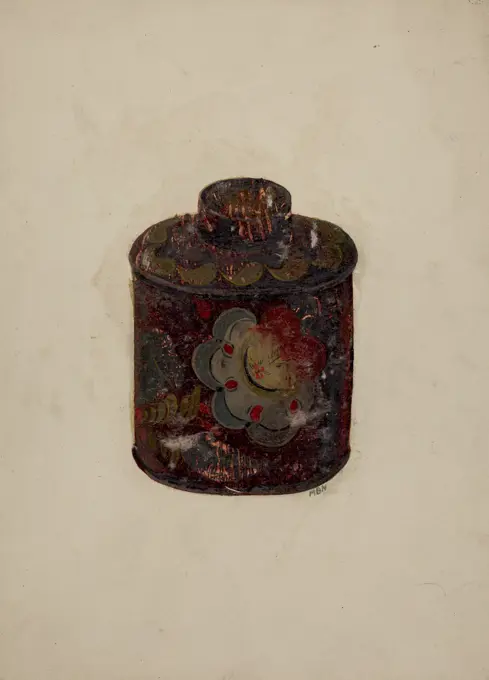
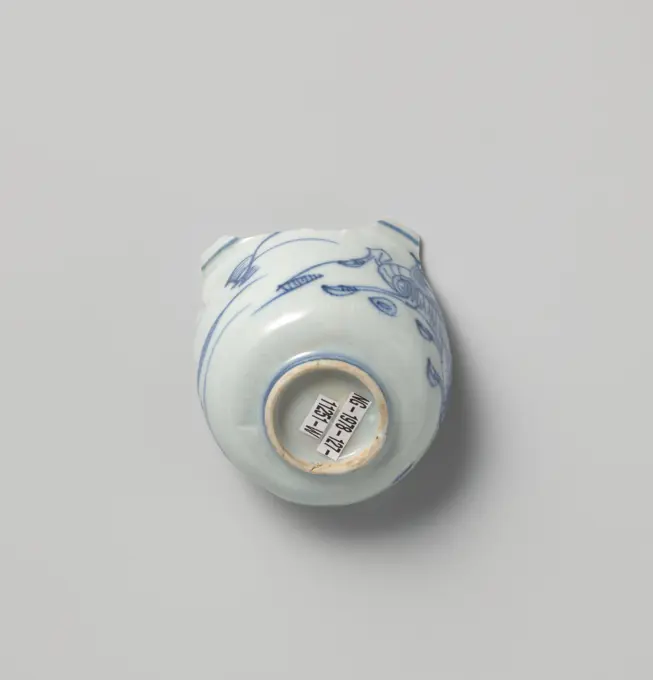
Antique Decorative Boxes

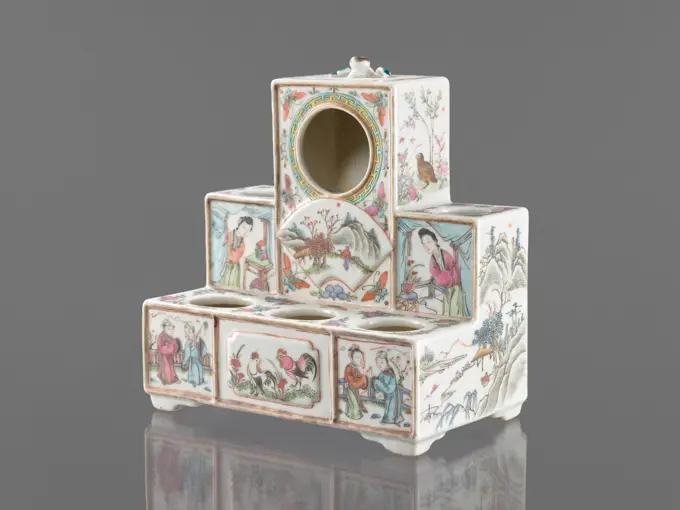
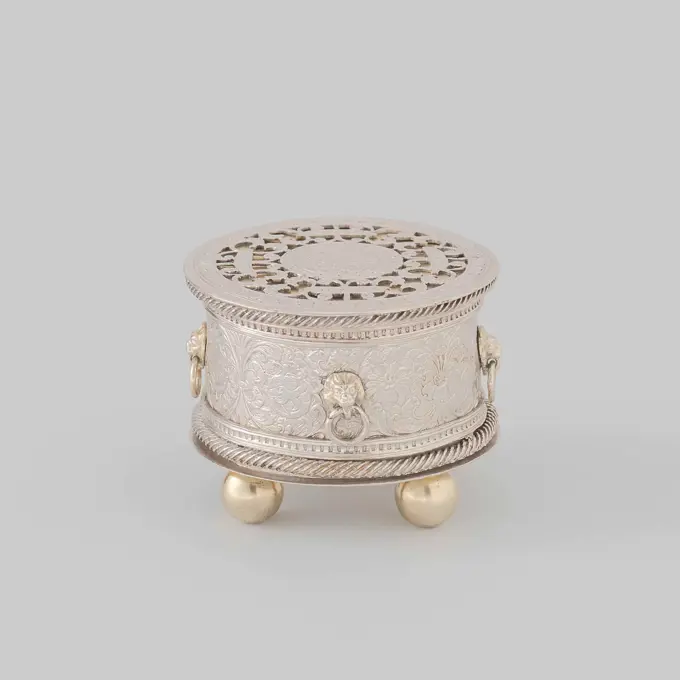
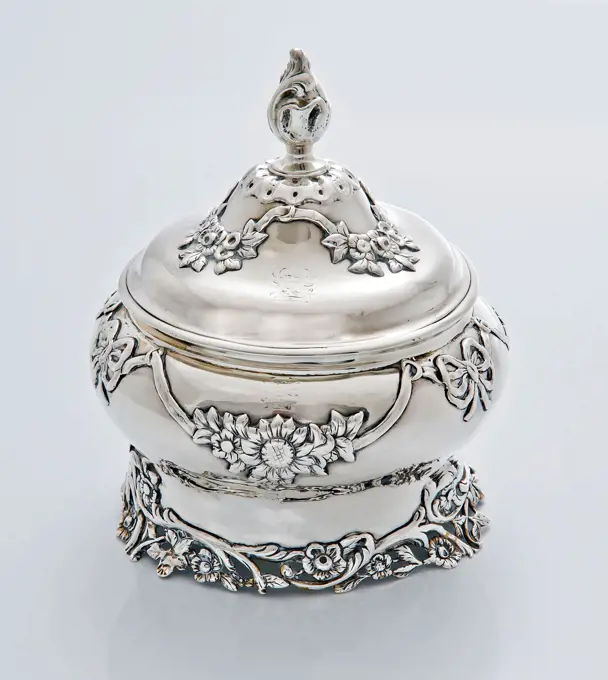
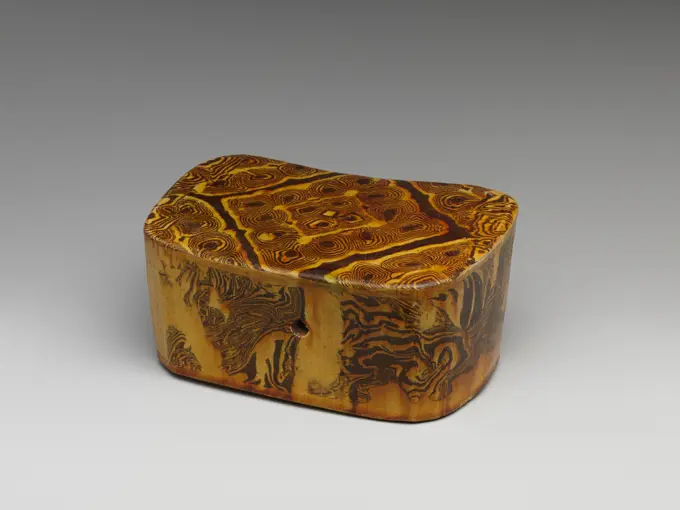
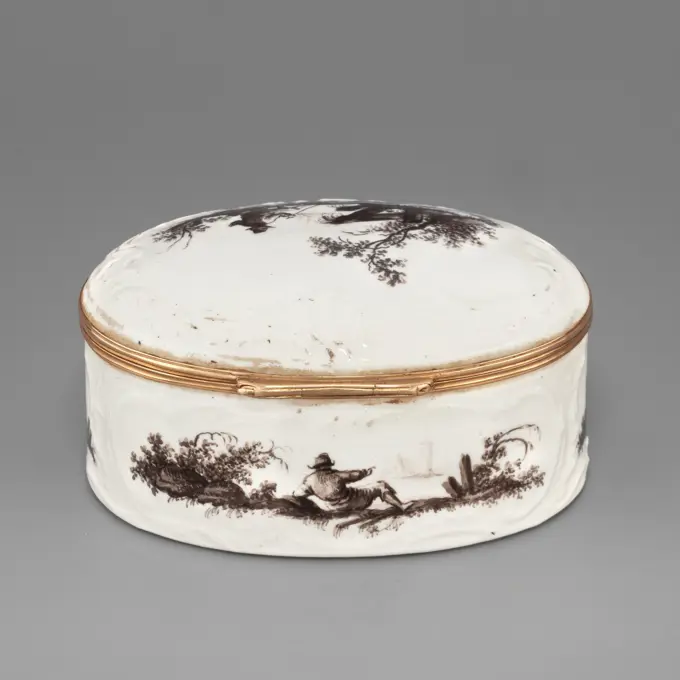
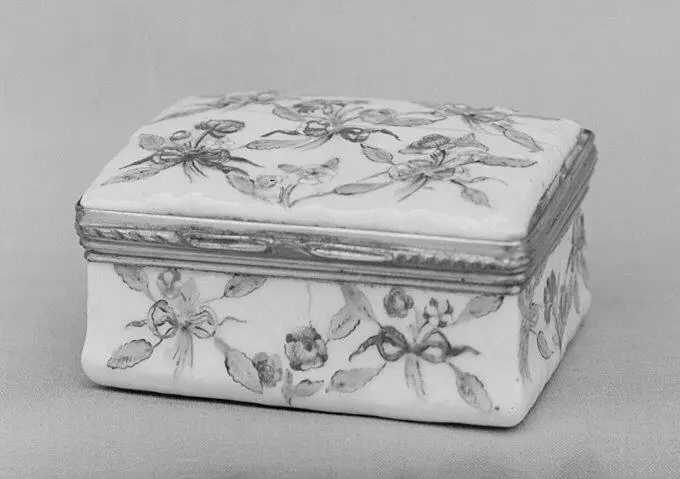
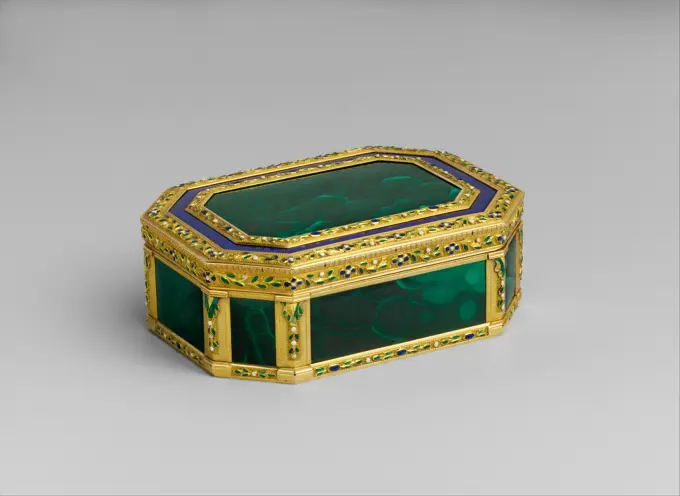
Elegant antique boxes in various styles, including intricate designs and gilded details, reflecting historical craftsmanship in ceramics and metals.
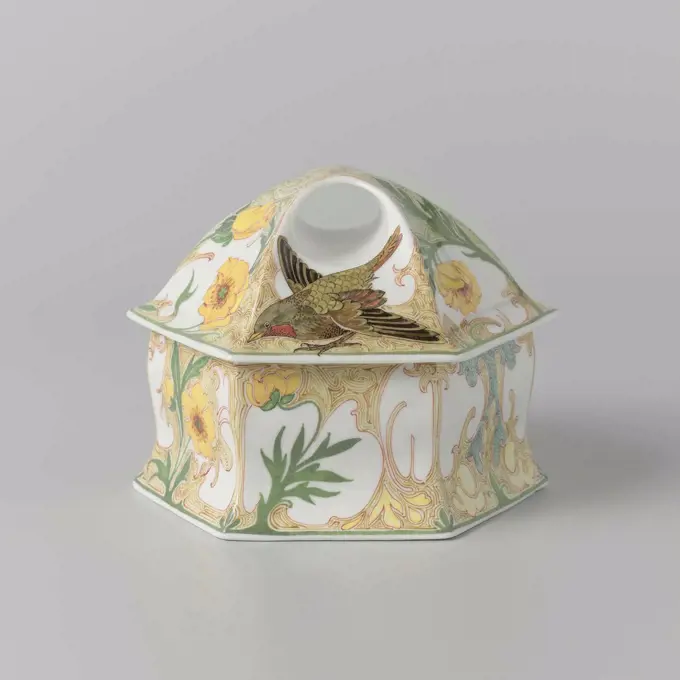
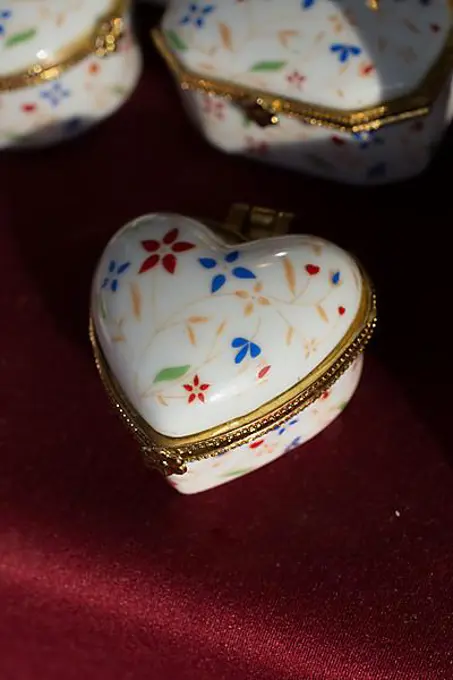
Bonbonnière painted with flowers, N.V. Haagsche Plateelfabriek Rozenburg, Sam Schellink, 1914
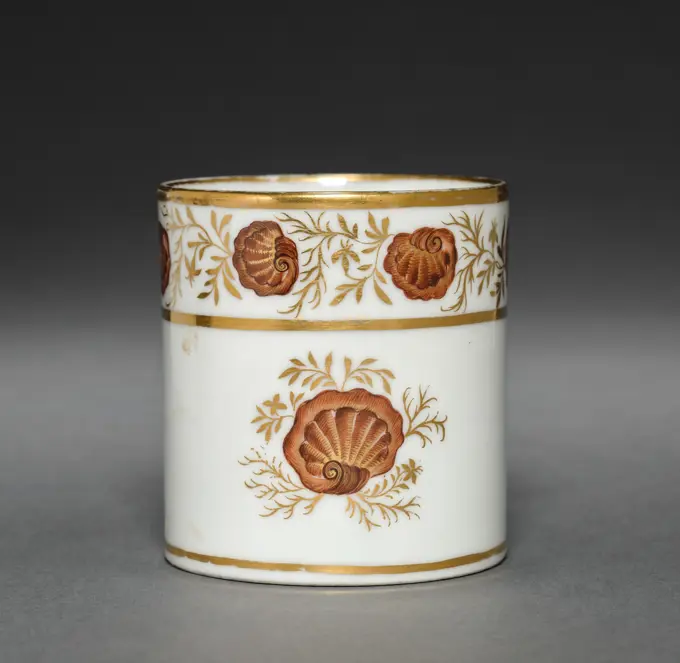
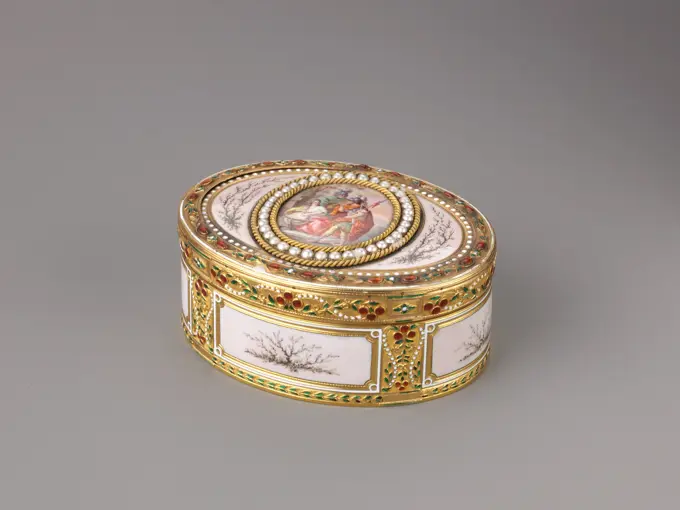
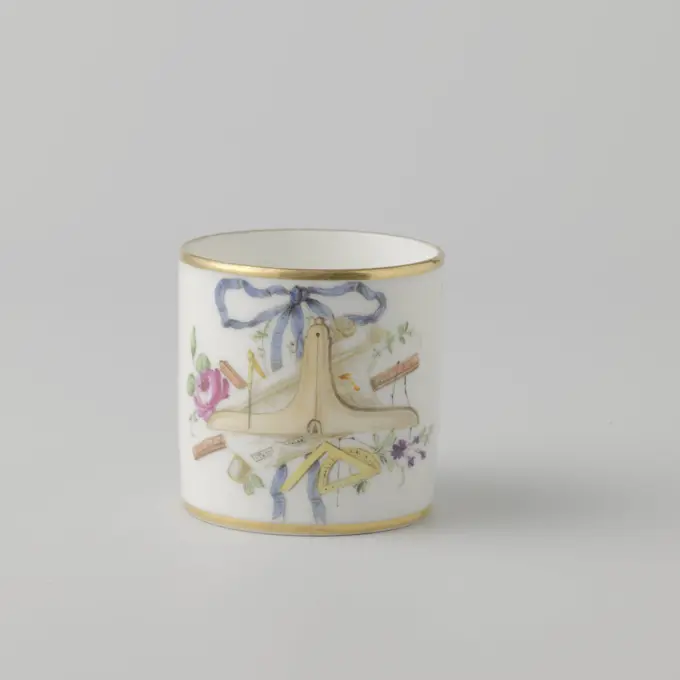
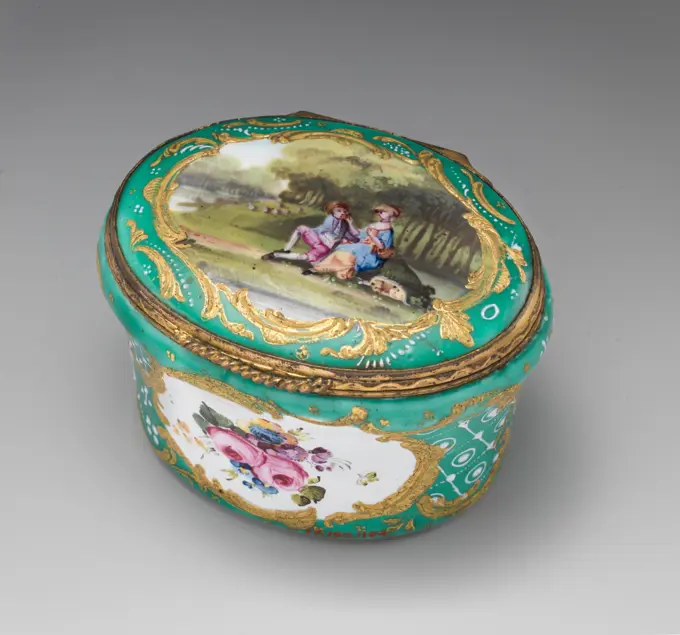
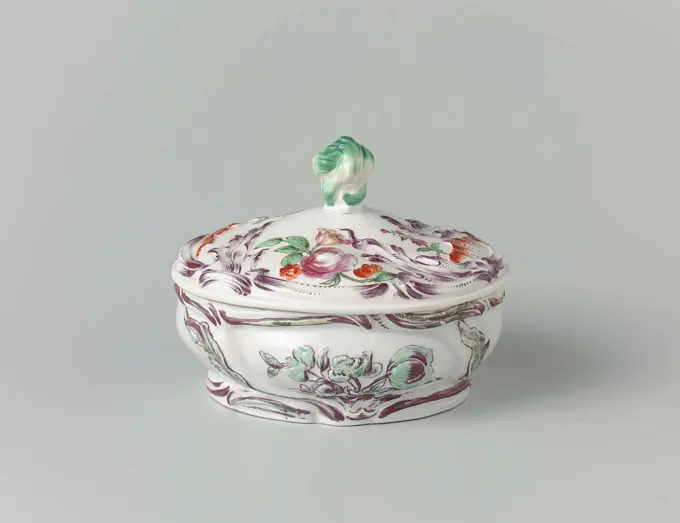
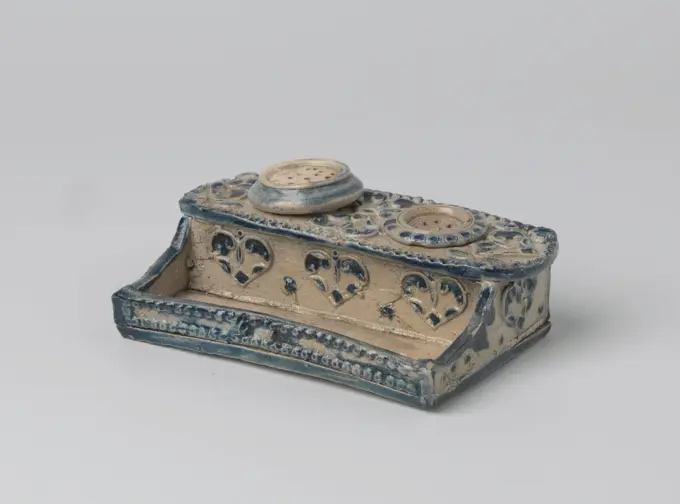
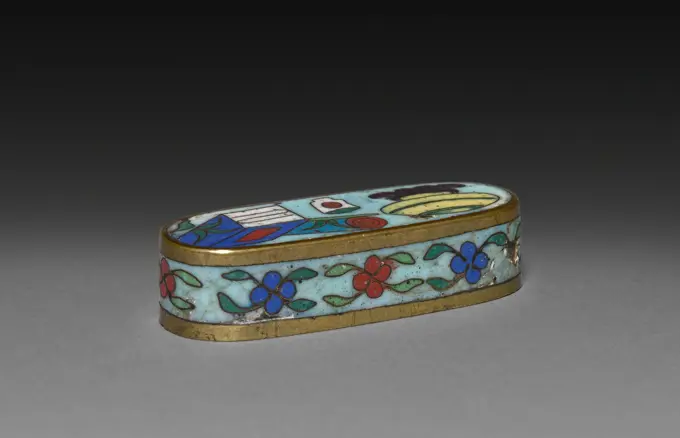
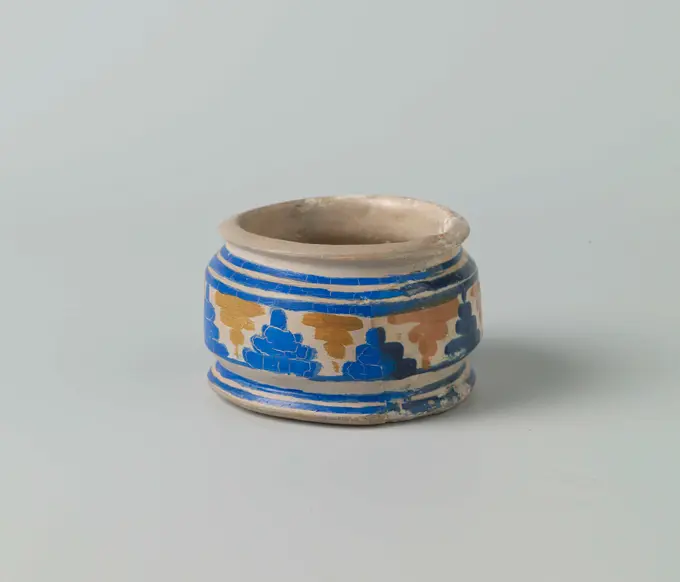
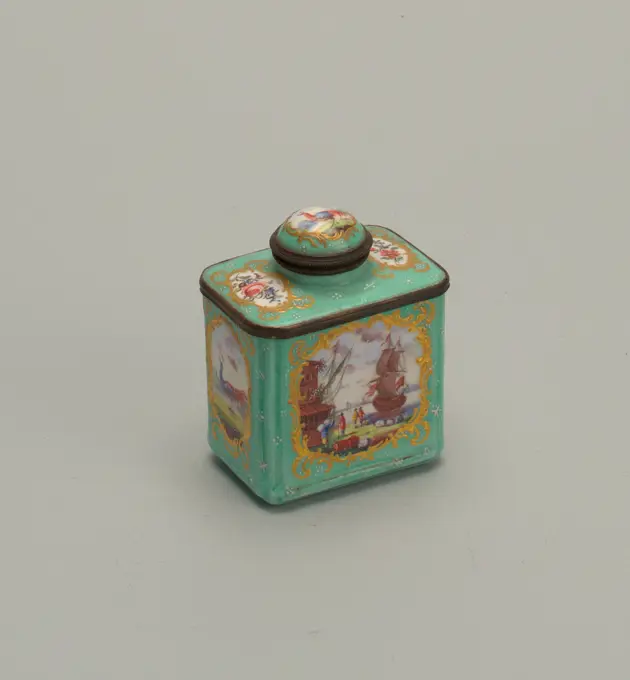
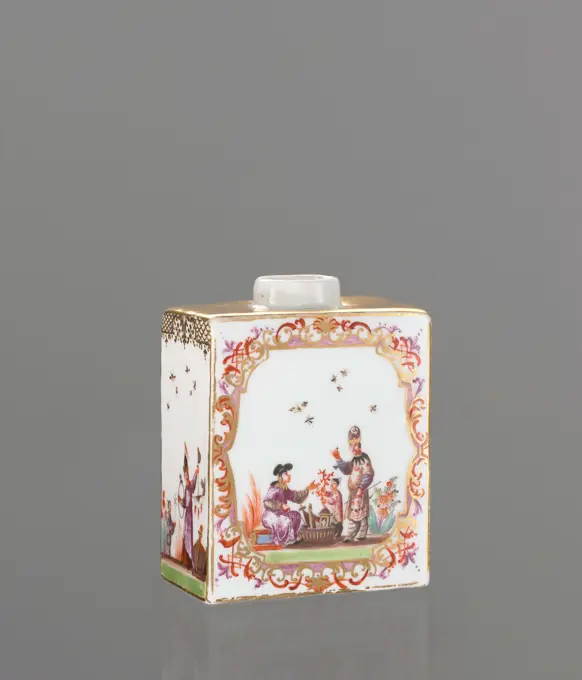
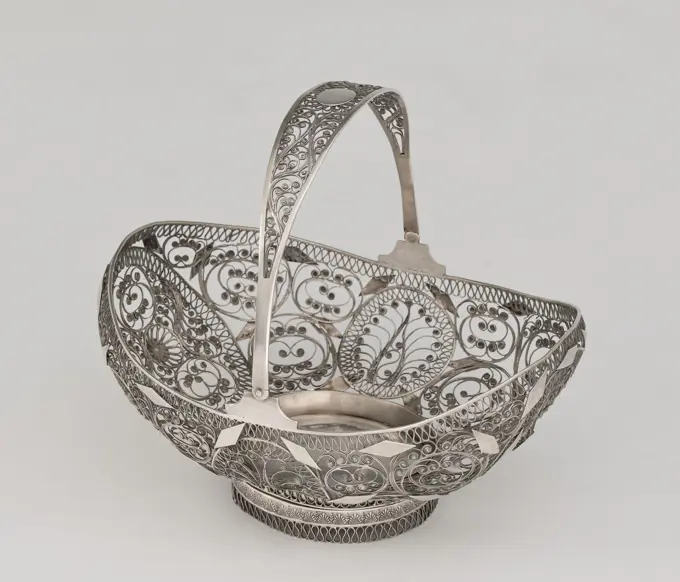
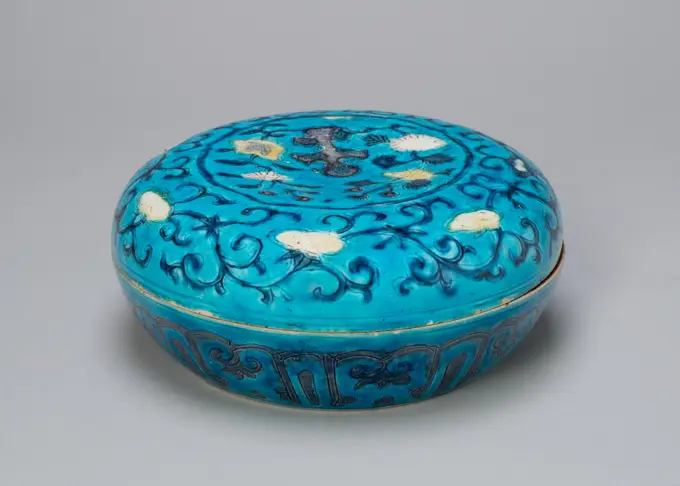
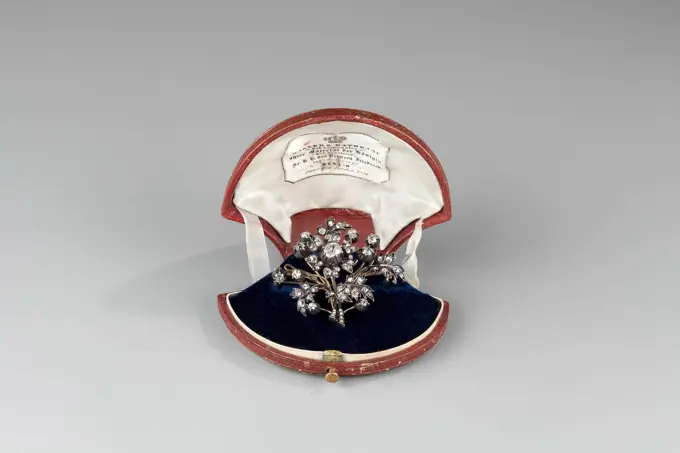
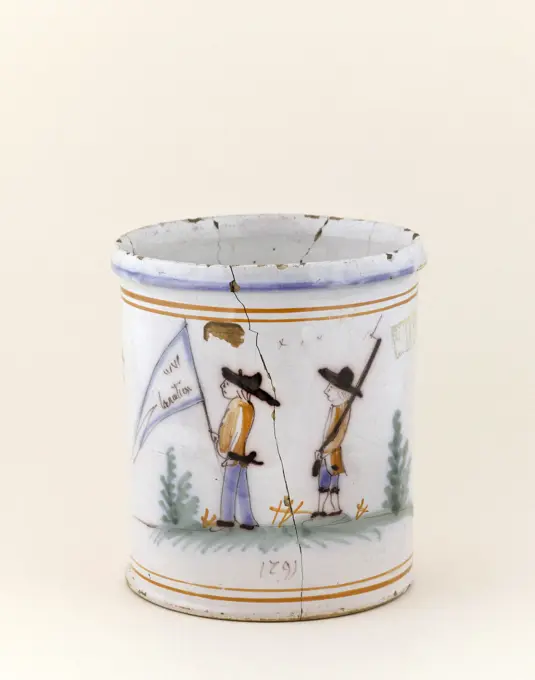
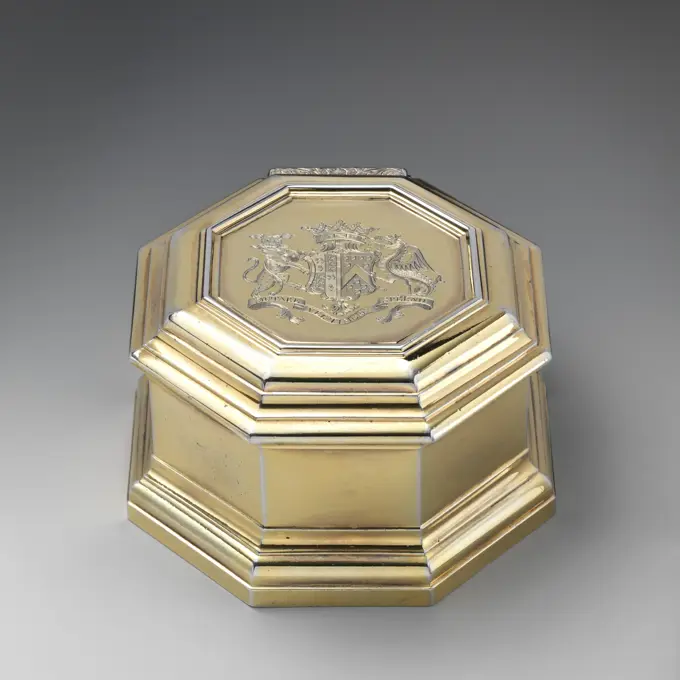
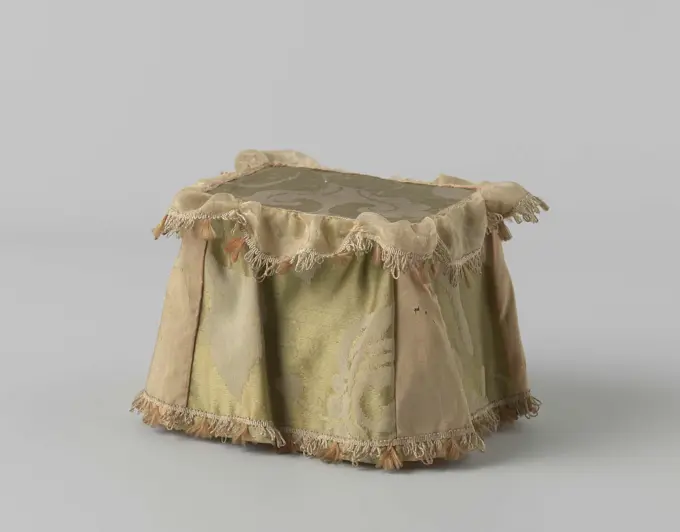
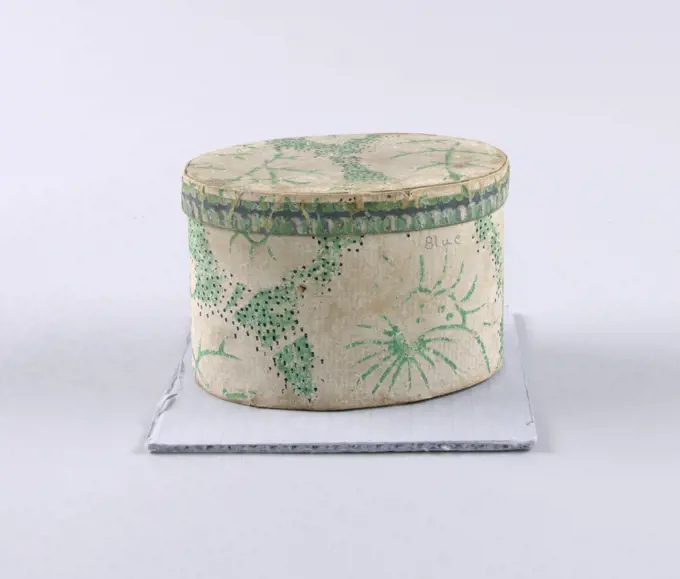
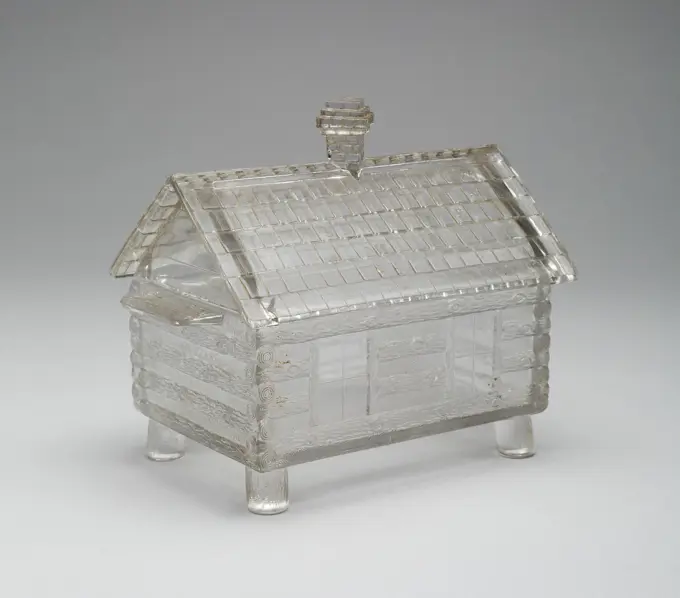
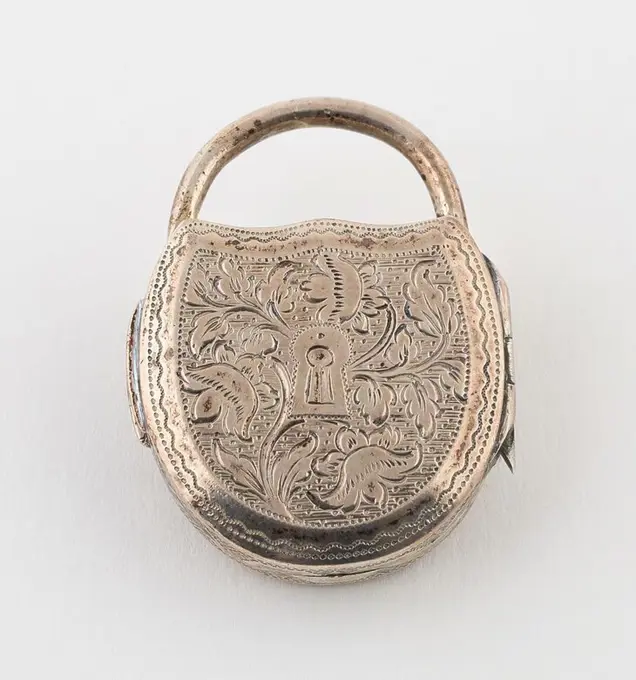
Round box with figures, anonymous, anonymous, c. 1870 - c. 1920 Round box of stoneware on three short legs, painted on the glaze in blue, red, green, purple, brown, black and gold. On the wall three courses with: five sitting court ladies of which one plays a koto (citer); Four court parts sitting in front of a porch with a mountain landscape with water; Four disciples with a servant sitting in a mountain landscape. The legs are gilded and modeled from the wall; Around the legs a compartment with service. The lid with a modeled, lobed cartouche with a parade of men with a carrier, walking for a pavilion. For the cartouche and on the edge of servetwork. A sitting pair on the bottom. Marked on the underside in gold and red with the clan weapon of the Shimazu from Satsuma, a circle with a cross, and a rectangular cartouche with the characters '', 'Maruji ()'. Satsuma. Japan stoneware. glaze. gold (metal) painting / gilding / vitrification Round box of stoneware on three short legs, painteTeabus of "Kanton Email" with the coat of arms of the De Wendt, Anonymous, c. 1750 Rectangular tea bus with a drum -shaped cap with the coat of arms of the De Wendt family on the belly; Decorated in blue, pink -red, iron red, white and gold. A fleur-de-lis and a red rose or flower bud on a blue background are depicted on an asymmetrical shield. The helmet sign is also a fleur-de-lis and the cover consists of shell ornaments in rococo style and leaf work. On the rest of the tea box are cartouches with flowering (peony) plants in Chinese style. On all sides is a decoration of leaf vines and four (half) flowers on a green -yellow background per side. On the top a decoration of leaf vines. China copper (metal). Rectangular tea bus with a drum -shaped cap with the coat of arms of the De Wendt family on the belly; Decorated in blue, pink -red, iron red, white and gold. A fleur-de-lis and a red rose or flower bud on a blue background are depicted on an asymmetrical shield. The helmet sign is Box confectioner; Malcz, Karol (1797-1867); 1930s (1830-00-00-1839-00-00);Confectioner; Popiel, Jan (fl. 1920s 1850); 1825-1830 (1825-00-00-1830-00-00);Cup from Oliver Wolcott, Jr. Tea Service (6 of 6), 1785-1805. Chinese Export porcelain, late 18th-early 19th century. Porcelain, sepia enamel, gold leaf; overall: 7 x 9 x 6 cm (2 3/4 x 3 9/16 x 2 3/8 in.).Flower Pot And Cover; tin-glazed earthenware, hand-painted polychrome overglaze decoration; L x W x D: 10.6 × 11.8 × 20 cm (4 3/16 × 4 5/8 × 7 7/8 in.) L x W x D: 2.7 × 9.7 × 17.7 cm (1 1/16 × 3 13/16 × 6 15/16 in.)Vessel for betel (kun it). unknown, craftsmanSquare bottle with the 'three friends', birds and floral scrolls, anonymous, c. 1670 - c. 1690 Square bottle of porcelain, painted on the glaze in blue, red, green, yellow, brown, black and gold. On each wall two birds (including crane) on or with a flowering tree near a rock, one of which one of the 'three friends of winter' (pine, bamboo, prunus) and on the fourth a chrysanthemum on three sides. On the shoulder flower vines with a bird. Old label on the bottom with 'Collection Westendorp/ 139'. Inscription on the bottom with 'A'. Some cracks in the wall; The neck is ground. Arita, Kakiemon. Japan porcelain. glaze. gold (metal) painting / gilding / vitrification Square bottle of porcelain, painted on the glaze in blue, red, green, yellow, brown, black and gold. On each wall two birds (including crane) on or with a flowering tree near a rock, one of which one of the 'three friends of winter' (pine, bamboo, prunus) and on the fourth a chrysanthemum on three sides. On the shoulder flowerBonbonnière painted with flowers, N.V. Haagsche Plateelfabriek Rozenburg, Sam Schellink, 1914Snuffbox with An Allegory of Geography 1777-78 Joseph Etienne Blerzy French. Snuffbox with An Allegory of Geography 460517Tea head with decoration of trophies on tied ribbons, Royal Porcelain Factory Dommer & Co., 1809 - in Or Before 1814 Tea set consisting of a teapot, a sugar bowl, a coil and twelve cups and saucers multicolored painted with trophies hanging on blue bows. The trophies relate to various professions. Marked in black: Amstel (the sugar bowl Amstel N. 805 and Inganglift A). Various entry brands in the heads and saucers. Nieuwer-Amstel porcelain Tea set consisting of a teapot, a sugar bowl, a coil and twelve cups and saucers multicolored painted with trophies hanging on blue bows. The trophies relate to various professions. Marked in black: Amstel (the sugar bowl Amstel N. 805 and Inganglift A). Various entry brands in the heads and saucers. Nieuwer-Amstel porcelainModel of an Inkstone. China. Date: 618 AD-907 AD. Dimensions: H. 2.8 cm (1 1/8 in.); diam. 5.0 cm (2 in.). Earthenware with three-color (sancai) lead glazes. Origin: China. Museum: The Chicago Art Institute, Chicago, USA.Two-segment casket. unknown, craftsmanHexagonal tea bus, painted enamel. Hexagonal tea bus with oscenips corners on three very low unglazed legs and with flat shoulders and round, flat cap. On the six sides three different performances, painted in pink, blue, green (2 shades), brown, orange and yellow email: a water landscape, two birds in blooming plants and a rock, a woman with a bare chest and a child on shot at The waterfront (Maria). Between the black tendrils with golden details on a very light blue surface. A European flower rank in blue on the bottom.Pedestal to the writing set (three hundred);  End of the 19th century (1891-00-00-1900-00-00);Tobacco spot, Anonymous, 1780 Oval tobacco spot on four legs. The bottom edge of the pot is open and has leaves, flowers and garlands. A flower and four leaves are attached to the highly skinned lid. The tobacco spot is marked: stk. = Amsterdam, Jrl. = V (1780) and an unknown Mastert sign. Amsterdam silver (metal) Oval tobacco spot on four legs. The bottom edge of the pot is open and has leaves, flowers and garlands. A flower and four leaves are attached to the highly skinned lid. The tobacco spot is marked: stk. = Amsterdam, Jrl. = V (1780) and an unknown Mastert sign. Amsterdam silver (metal)Roompot, painted with flower branches. The lid knob is decorated in beet red and gold. Golden piping along ear and mouth and lid edge.Knottekist. Round Knottekist from partially gold-plated silver on 4 gold plated bolts. The lid is openwork against a gold-plated background. The walls are decorated with scilated figures.Box And Cover; molded unglazed, tinted stoneware (jasperware); 7 x 6.3 cm (2 3/4 x 2 1/2 in.)Box, Tin-glazed earthenware, metal (mount), Short, cylindrical form with hinged, slightly domed circular lid; polychrome decoration on white ground, lid with scene of blue-robed maiden flanked by two putti; sides decorated with ochre and green flower garlands., Moustiers-Sainte Marie, France, 18th-19th century, ceramics, Decorative Arts, BoxTheBus, Theodorus Huigen, 1675 - 1700 Silver tea. Rectangular on four Bolpootjes. Decorated with engraving. Harlingen silver (metal) Silver tea. Rectangular on four Bolpootjes. Decorated with engraving. Harlingen silver (metal)Silversmith: Johannes Jansen, Silver tobacco pot with lid, tobacco pot pot holder metal silver gold, cast driven engraved Round wide baluster-shaped pot openwork applied bottom edge as foot arched lid with strong flame-shaped knob. Pot and lid inside traces of gilding bottom underside (smashed) smoking store tobacco tobacco boxRectangular censer on four legs with dragons. Rectangular porcelain incense burner on four legs with two handles in the shape of a lion head, painted in underglaze blue with dragons and pearls. Marked on the underside with the six character mark of Emperor Wanli in a double rectangle. Two holes in the soil. Blue White.Beaker. London, England. Date: 1692-1693. Dimensions: H. 8.3 cm (3 1/4 in.). Silver. Origin: London. Museum: The Chicago Art Institute, Chicago, USA. Author: I. G.Pillow ca. 8th century China. Pillow. China. ca. 8th century. Marbled earthenware with yellow glaze. Tang dynasty (618-907). CeramicsBox ca. 1760-1800 British, Staffordshire. Box. British, Staffordshire. ca. 1760-1800. Enameled copper. Enamels-PaintedLiqueur chest with two liqueur bottles with stop and eight liqueur glasses, anonymous, c. 1800 - c. 1900 Black lacquered rectangular liqueur cabinet with faintly bent front. On the hinged lid and on the front a vignette of stylized ornaments in copper and turtle. Two square liqueur bottles with stop on either side of the handle. Left and right of the bottles are two rows of four liqueur glasses. Netherlands (possibly) lacquer (coating). rosewood (wood). ebony (wood). brass (alloy). copper (metal). Black lacquered rectangular liqueur cabinet with faintly bent front. On the hinged lid and on the front a vignette of stylized ornaments in copper and turtle. Two square liqueur bottles with stop on either side of the handle. Left and right of the bottles are two rows of four liqueur glasses. Netherlands (possibly) lacquer (coating). rosewood (wood). ebony (wood). brass (alloy). copper (metal).Small tureen. Weesper porseleinfabriekWeesp, c. 1760hard-paste porcelainSand shaker with pierced top, anonymous, c. 1750 - c. 1799 Sand spreader of stoneware with a cylindrical body, flared edge to place in the holder and openwork top. The edge with stamped circles in cobalt blue. Westerwald. Westerwald stoneware. glaze. cobalt (mineral) vitrification Sand spreader of stoneware with a cylindrical body, flared edge to place in the holder and openwork top. The edge with stamped circles in cobalt blue. Westerwald. Westerwald stoneware. glaze. cobalt (mineral) vitrificationBox with Scholar's Accoutrements (lid), late 1800s. Japan, Meiji period (1868-1912). Cloisonne enamel; overall: 4.5 x 1.9 cm (1 3/4 x 3/4 in.).Incense box with tray 18th century Japan. Incense box with tray 58184Box, enamel, metal (gilded), England, ca. 1765, containers, Decorative Arts, BoxBox with lid and openwork decoration, anonymous, 1700 - 1800 Box with lid, openwork decoration consisting of floral motifs, dragons, etc. Kham iron (metal). gilding (material) gilding Box with lid, openwork decoration consisting of floral motifs, dragons, etc. Kham iron (metal). gilding (material) gildingSquare dish (one of a pair) 1775 French, Paris. Square dish (one of a pair). French, Paris. 1775. Silver. Metalwork-SilverCover (Japan)Thimble and Container (Thimble), mid-18th century. England, mid-18th century. Enamel on metal; overall: 3 x 2.3 cm (1 3/16 x 7/8 in.); thimble: 1.8 x 1.6 cm (11/16 x 5/8 in.).Terrine, sprinkled with spreading flowers. Terrine of faience. Blue painted with spreader flowers.Cover of a pot with flowering plants, Chantilly, c. 1730 - c. 1750 Cover of a pot of soft-paste porcelain (pâte tendre), painted on the glaze in blue, red, green, yellow and black. Decorated with two birds and flowering plants (Prunus, bamboo). The lid is in the style of the Japanese Kakiemon porcelain. Chantilly porcelain. soft-paste porcelain. glaze. painting / vitrification Cover of a pot of soft-paste porcelain (pâte tendre), painted on the glaze in blue, red, green, yellow and black. Decorated with two birds and flowering plants (Prunus, bamboo). The lid is in the style of the Japanese Kakiemon porcelain. Chantilly porcelain. soft-paste porcelain. glaze. painting / vitrificationCap; silk, silver-wrapped silk threadOilfot, painted with geometric ornaments. Low, cylindrical ointment of multicolored painted majolica. The pot has a squeezed foot and top edge and is painted with geometric ornaments in blue and orange.Box and cover, Molded unglazed, tinted stoneware (Jasperware), Cylindrical body on spreading foot. Green ground with sprig decoration showing off-white relief decoration of classical figure groups., England, 19th century, ceramics, Decorative Arts, Box and coverWine Bottle Cooler Stand. Robert Garrard II; English, 1793-1881; London, England. Date: 1845-1846. Dimensions: Diam. 23.2 cm (9 1/8 in.). Silver on wooden support. Origin: London. Museum: The Chicago Art Institute, Chicago, USA.. Facial box, oval, with batteriesea émail. On the vaulted lid a flower wreath within a square two rose buds.Tea caddy. Even though more and more people began drinking tea at the end of the century, it was still considered a luxury. Hence, the exotic and costly tortoiseshell - against which the silver stands out handsomely - used for this caddy was a fitting choice. The silver inlay decoration is freelyconceived and refers only distantly to Asia. Eusebius Voet, or his brother Hendrik, was probably responsible for this design.Saucer with a crowned, illegible monogram surrounded by two flower sprays, anonymous, c. 1750 - c. 1774 Porcelain dish, painted on the glaze in blue, red, pink, green, yellow, black and gold. On the flat a crowned, illegible monogram surrounded by two flower branches; The wall with flower vines with four cartouches with a landscape and four medallions with plants. European performance in email colors. China porcelain. glaze. gold (metal) painting / gilding / vitrification Porcelain dish, painted on the glaze in blue, red, pink, green, yellow, black and gold. On the flat a crowned, illegible monogram surrounded by two flower branches; The wall with flower vines with four cartouches with a landscape and four medallions with plants. European performance in email colors. China porcelain. glaze. gold (metal) painting / gilding / vitrificationTea caddy with prunus blossoms and an ornamental border, anonymous, c. 1800 - c. 1899 Cylindrical dust bar or Chare of stoneware with an ivory lid, painted in red, green and gold. On the wall loose cherry blossoms; On the shoulder a band with a stylized flower pattern in windows. The underside is unglazed. Awata (satsuma). Japan stoneware. glaze. gold (metal). deksel: ivory painting / gilding / vitrification Cylindrical dust bar or Chare of stoneware with an ivory lid, painted in red, green and gold. On the wall loose cherry blossoms; On the shoulder a band with a stylized flower pattern in windows. The underside is unglazed. Awata (satsuma). Japan stoneware. glaze. gold (metal). deksel: ivory painting / gilding / vitrificationJar TopKałarz; De Twee Scheepjes (Fiansusu Factory; 1635-1796), Pennis, Antony (1759-1782); 2. PO. 18th century (1750-00-00-1800-00-00);Glass beaker with inscription. Culture: Roman. Dimensions: H. 2 3/4in. (7cm)Other: 2 3/8in. (6.1cm). Date: 1st half of 1st century A.D..Colorless with pale yellow green tinge.Outsplayed unworked rim; cylindrical body with vertical sides; uneven, flat bottom. Two vertical mold seams run down sides from rim to edge of bottom through palm fronds, with a separate disk-shaped base section.On body, three friezes separated and bordered by single horizontal ridges, and divided vertically by two palm fronds: the central narrower frieze contains an inscription in Greek capitals; the upper and lower friezes each contain six stylized wreaths, comprising two concentric circles joined by radial lines, and with wavy lines below indicating ribbons. The inscription translates as"Take the victory!" On bottom, projecting rounded ring and central dot.Complete except that part of rim is missing; pinprick and some larger bubbles; dulling, pitting, creamy brown weathering, and iridescence. Museum: MetroIncense Burner late 18th-first half of the 19th century China. Incense Burner 47690Sugar box. Spitsoval snuff box made of silver, with a flame, hinged lid. On the lid a monogram of the letters a r o is engraved inside an edge with geometric motifs.Snuff box of gold, rectangular, decorated with six inns in Émail. Rectangular box of gold, with six inn scenes in Émail. At the front of the lid a flower festiv of gold, emeralds and rubies.Two tea caddies and a mixing caddy, Willem van den Goorberg, 1787 Rectangular mixer with a flat lid with a button. The edge of the lid is decorated with a stabbed cable edge. The mixer is noticed: Mt. = Willem van den Goorberg and a small Keur van Leiden for 1787. The tea bus is part of the inventory nos. BK-NM-11177-27 and BK-NM-11177-28. Leiden silver (metal) Rectangular mixer with a flat lid with a button. The edge of the lid is decorated with a stabbed cable edge. The mixer is noticed: Mt. = Willem van den Goorberg and a small Keur van Leiden for 1787. The tea bus is part of the inventory nos. BK-NM-11177-27 and BK-NM-11177-28. Leiden silver (metal)Snuffbox. Manufacturing former loose ruderecht, c. 1778-1782Hard-Paste Porcelain, Silver GiltBox with Floral Scrolls 18th century China. Box with Floral Scrolls 42066Four-sided tea box with Hoeroldt malerei miniatures. Hoeroldt, Johann Gregorius (1696-1775), painter, Koenigliche Porcellain Fabrique, Meissen (1710-1763), factoryTea box. Ceramic. Paris, Cernuschi museum. 78847-22Johann Christian Neuber (1736-1808). Box. Hard stones, gold, half-pales, enamel. Around 1750. Paris, Cognacq-Jay museum. 101701-26Tea Caddy 1896 Baltimore. Silver . Jacobi and JenkinsFiligree basket with a panel;  1920s (0-00-00-0-00-00);Drinking Vessel. Guatemala, Northern Petén, Maya, 650-800 CE. Ceramics. Slip-painted ceramicBrander, belonging to Komfoor, Wijnand Warneke (attributed to), 1778 A low, round holder has been installed in the middle of the bowl of the bowl, in which the printed spherical burner fits. Amsterdam silver (metal) A low, round holder has been installed in the middle of the bowl of the bowl, in which the printed spherical burner fits. Amsterdam silver (metal). Box of golden lacquer decorated with purple irises.Box, 1700s. Italy or Germany, 18th century. Enamel on copper, metal mounts with traces of gilding; overall: 4.3 x 7.4 cm (1 11/16 x 2 15/16 in.).Circular Covered Box with Floral and Lingzhi Mushroom Scrolls 1500-1599 China. Fahua-type ware; porcelain with underglaze incised decoration .Brooch in the form of a bouquet in an original case. Haller und Rathenau (Berlin ; firma jubilerska ; fl. 1832-1869), goldsmiths companySnuffbox;  3 XVIII W (1751-00-00-1775-00-00);rural landscapes, relayBox 1832-33 Probably by John Lacy. Box. British, London. 1832-33. Silver, tortoiseshell. Metalwork-Silver In CombinationBox ca. 1745 Doccia Porcelain Manufactory Italian. Box 187213Anonymous. Flap cover at the standard bearer. Earthenware. 1791. Paris, Carnavalet museum. 72437-37 Coach, Decoration, Faience, Nation, Revolutionary Periode, Drapeau Rabbet, French Revolution, ViveEmbossing on antique wooden box, Jodhpur, Rajasthan, India Copyright: xSafatxAli/DinodiaxPhotoxSnuffbox 1782-83 Adrien Jean Maximilien Vachette French In eighteenth-century Europe, Paris led the production of high-quality luxury goods. Parisian goldsmiths made a wide range of small, personal articles such as snuffboxes; étuis to hold sealing wax, tweezers, or utensils for sewing; souvenirs, which contained thin ivory tablets for note taking; and shuttles for knotting lace. Gold snuffboxes and boxes decorated with portrait miniatures were prized and frequently given as royal gifts, often to ambassadors or members of the court in lieu of cash payments for their services. Coveted and admired, these boxes were produced from a variety of materials. The best were skillfully made of gold and embellished with diamonds, enameled decoration, lacquer, and other luxurious materials. By the middle of the century, the taking of snuff had become an entrenched social ritual, and the snuffbox, too, had become an important social prop. Snuffboxes were considered highly fashionable accessories, wiDrinking cup in the shape of a book. Multicolored painted and with year: Anno 1651 .. Drinking cup made of multi-colored majolica, in the shape of a book. A cartouche has been painted on the front and rear in which the dating: Anno 1651 and above the coat of arms of Amsterdam. Four rosettes have been painted on the back.Samuel Edwards, Mug, c. 1735, silver.Kist, anonymous, 1821 Silver box. Netherlands silver (metal) Silver box. Netherlands silver (metal). Geelkoping Content knap for wet goods with matte cover glass. Together with seven other content moles in gray painted coffin.Box with Koningin Wilhelmina portrait in Frisian traditional costume (1892). .Bird Motif, Huntley, Boorne, & Stevens, Plated tin, printed , gilded, Rectangular, curved sides, snuff-box style container, featuring cover of black printed decoration on gold ground of bird with long feathered tail perched on flowered branch; thumb catch to right inscribed 'Bryant & May's Wax Vetsas, Made in England', small cross design on rest of body. Striker on reverse., 1870-80, containers, Decorative Arts, Matchsafe, MatchsafeSmall vase with Imari decoration. Kaiserliche Porzellanmanufaktur in Wien (1744-1864), factoryOctagonal box with arms of Henry Somerset-Scudamore, 3rd Duke of Beaufort (1707-1745) 1729 John White This octagonal silver-gilt box with the arms of Henry Somerset-Scudamore, 3rd Duke of Beaufort (1707-1745). It was made by London silversmith John White in 1729 and formed part of the larger 'Beaufort Toilet Service', which included further boxes, a basin, and an ewer. Beaufort is best known for having commissioned the Badminton cabinet, an enormous pietre dure piece of furniture made in Florence and now in the Gartenpalais Liechtenstein in Vienna. Margaret Burr, Beaufort's illegitimate daughter, married Thomas Gainsborough, one of Britain's most significant portrait painters.. Octagonal box with arms of Henry Somerset-Scudamore, 3rd Duke of Beaufort (1707-1745). British, London. 1729. Gilded silver. Engraving attributed to Charles Gardiner (British). Metalwork-SilverDouble salt or pepper box 1766-68 Edme-Pierre Balzac. Double salt or pepper box 200153Cylindrical vase; Manufaktura Majoliki in Nieborów (Nieborów; Wytwórnia; 1881-1899), Hy Ycka, Jadwiga (1856-1922); 1881-1886 (1881-00-00-1886-00-00);Fire basin. Fire basin with garment of (original) green damask. With coasts (CC-NM-10979-1).Kop, painted with the letters of the alphabet and the text: Mon Nom S'y Trouve, Meissener Porzellan Manufaktur, c. 1800 - c. 1825  Cylindrical head of painted porcelain. The head has a straight ear and is painted with a rectangular blue field with beveled corners and a golden edge. On the field the alphabet is painted in gold and a circle in which the text: Mon Nom S'y Trouve. A golden band is painted along the edge of the head. The head is marked. Float porcelainBeaker 1806 Robert Breading. Beaker 197375Bandbox, Block-printed on handmade paper, cardboard support, Very small oval-shaped bandbox. Paper is probably wallpaper: chalky-white flowers and leaves picked out in bright green. Small black dots are sprinkled over a portion of the design. The cover is edged with a fluted design, shaded with dark gray., 1801-11, Wallcoverings, BandboxVase with Porcelain Flower Appliqués Vase; possibly England; porcelain, vitreous enamel, gold; Bequest of Mrs. John Innes Kane; 1926-22-466-aLog Cabin pattern covered dish c 1875 Wheeling. Pressed glass . Central Glass Company (Manufacturer)Vinaigrette in the Form of a Padlock. John Lawrence and Company; Birmingham, England. Date: 1818-1819. Dimensions: 3.8 × 3.2 cm (1 1/2 × 1 1/4 in.). Silver and silver gilt. Origin: Birmingham. Museum: The Chicago Art Institute, Chicago, USA.Colorful decorative objects in the shape of a heartFragment sign from V.O.C. ship De 'Witte Leeuw', Before 1613 plate (dishes) Fragment sign from V.O.C. ship the 'Witte Leeuw'. 30 present.  porcelain   Sint-Helena. This chamber candlestick looks as though it belongs on an 18th-century table. A stick of red sealing wax, a seal and pair of scissors, possibly for trimming the wick of the candle, are ready for use. However, this candle could never actually be lit. All of these objects are made of Ansbach porcelain and were very realistically decorated in The Hague.Golden snore, engraved mother -of -pearl, colored pearls and shells, cage frame, decor of Chinese children's games. Detail of one of the faces. 1747-1748. Paris, Cognacq-Jay museum. 35597-11 Chinese, shell, color, decor, child game, cage frame, serious mother -of -pearl, gold, smokerBandbox, Walking Beam Sidewheeler; USA; block printed paper on pasteboard support; 39.5 x 29 x 26 cm (15 9/16 x 11 7/16 x 10 1/4 in.)Myra Newswanger, Toleware Canister, 1935 1942 Toleware CanisterSilversmith: Rudolph Sondag, Square silver tray on legs, tray tray holder silver, cast Square smooth blade with involuted corners applied profiled outer edge and four smooth legs bottom bottom (debossed) servingBoxColorful decorative objects in the shape of a heartTea head with decoration of trophies on tied ribbons, Royal Porcelain Factory Dommer & Co., 1809 - in Or Before 1814 Tea set consisting of a teapot, a sugar bowl, a coil and twelve cups and saucers multicolored painted with trophies hanging on blue bows. The trophies relate to various professions. Marked in black: Amstel (the sugar bowl Amstel N. 805 and Inganglift A). Various entry brands in the heads and saucers. Nieuwer-Amstel porcelain Tea set consisting of a teapot, a sugar bowl, a coil and twelve cups and saucers multicolored painted with trophies hanging on blue bows. The trophies relate to various professions. Marked in black: Amstel (the sugar bowl Amstel N. 805 and Inganglift A). Various entry brands in the heads and saucers. Nieuwer-Amstel porcelainExcerpt head from v.o.c. ship De 'Witte Leeuw', Anonymous, Before 1613  Fragment head from V.O.C. ship De 'Witte Leeuw', 60 present. Jingdezhen porcelain   Sint-Helena