Antique Decorative Boxes

Elegant antique boxes in various styles, including intricate designs and gilded details, reflecting historical craftsmanship in ceramics and metals.
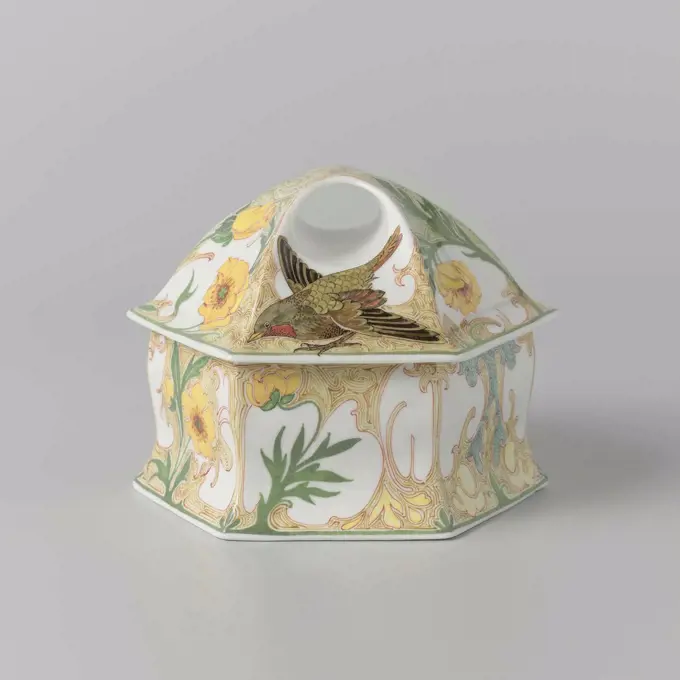
Bonbonnière painted with flowers, N.V. Haagsche Plateelfabriek Rozenburg, Sam Schellink, 1914
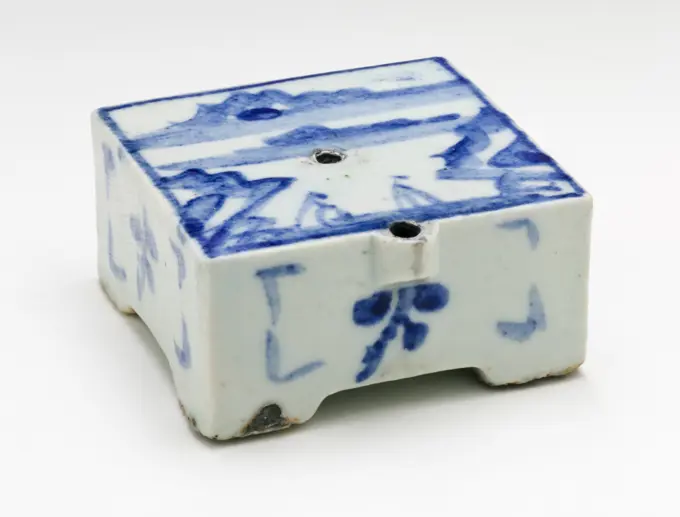
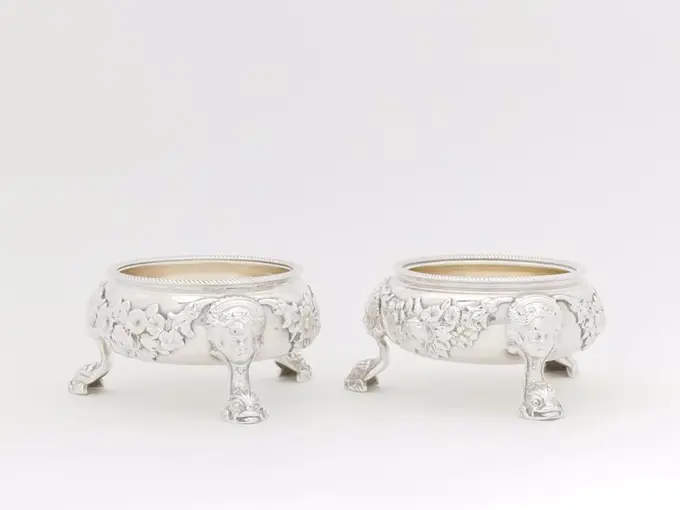
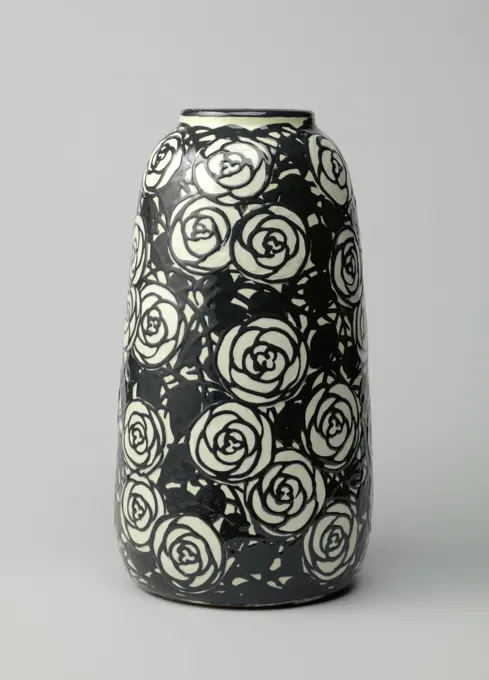
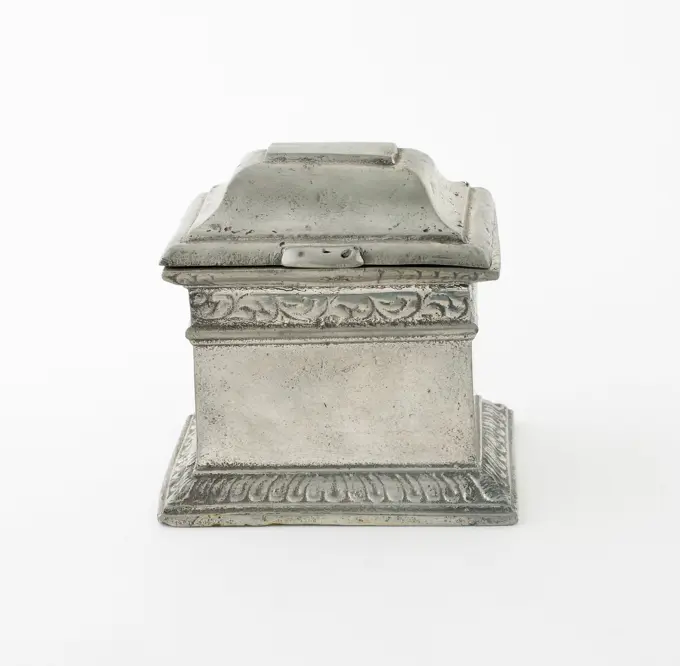
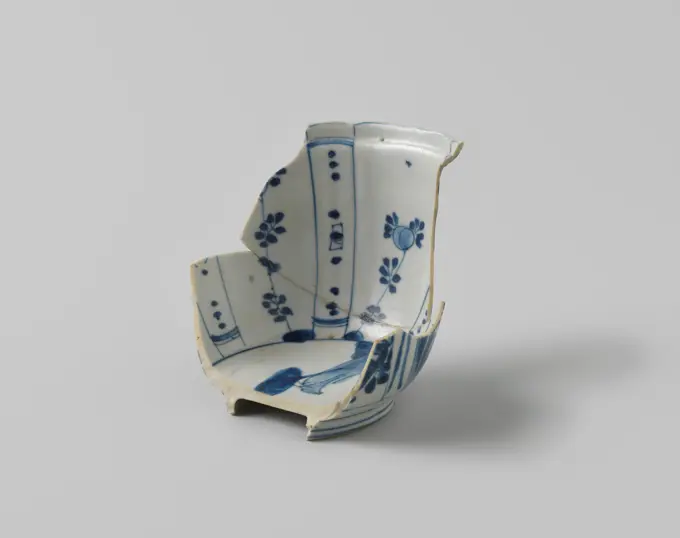
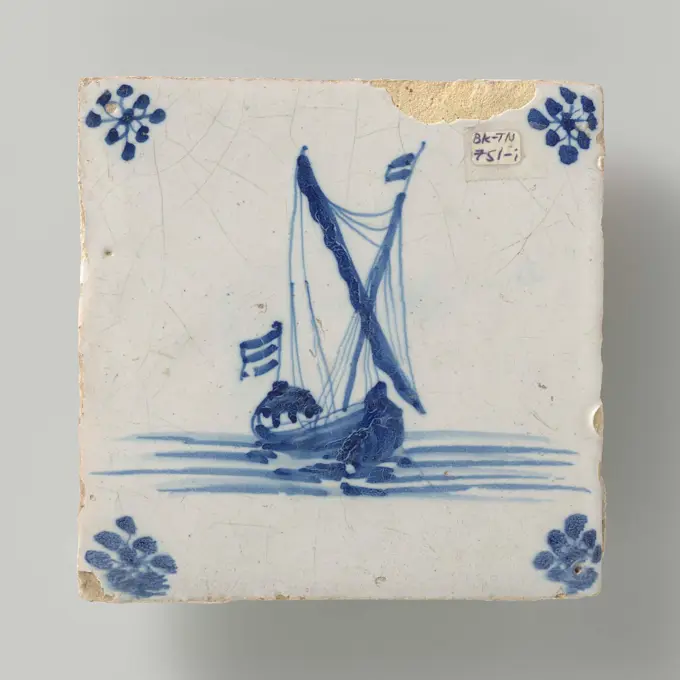
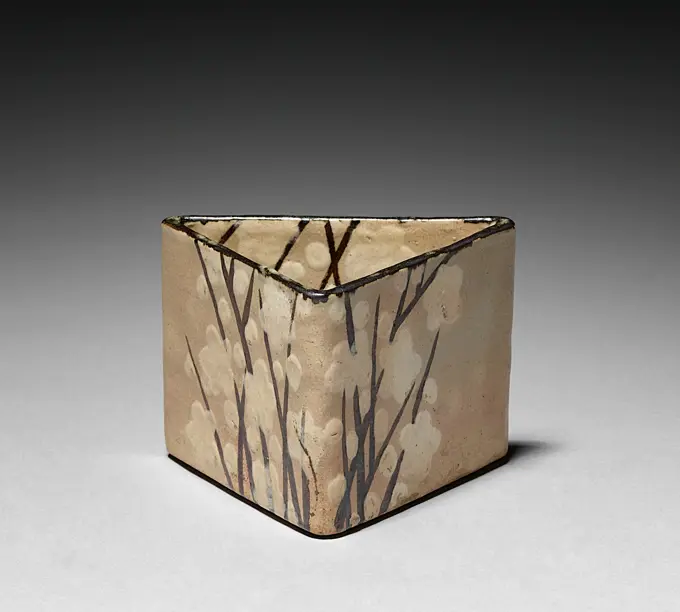
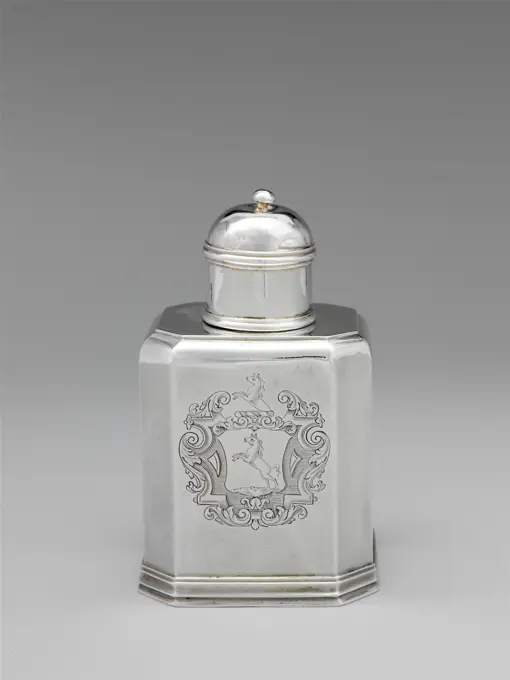
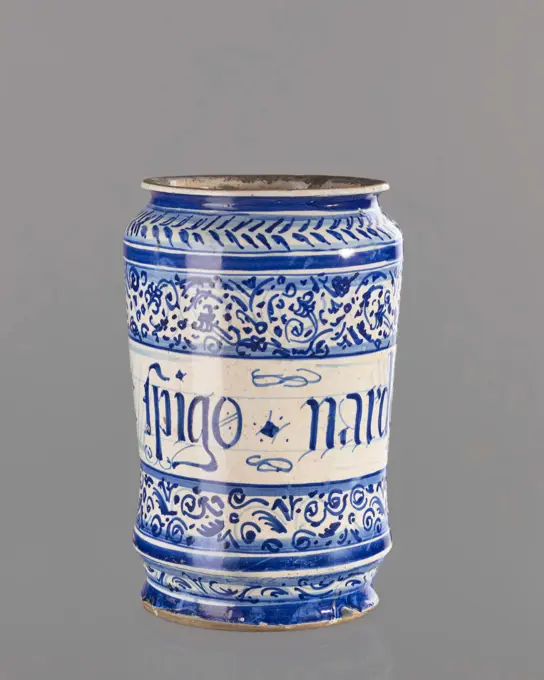
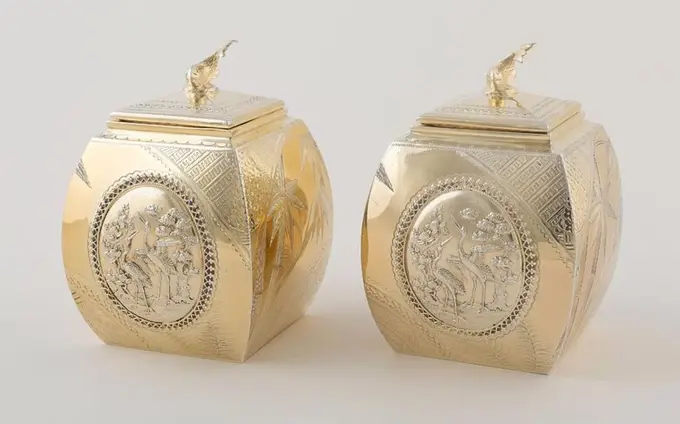
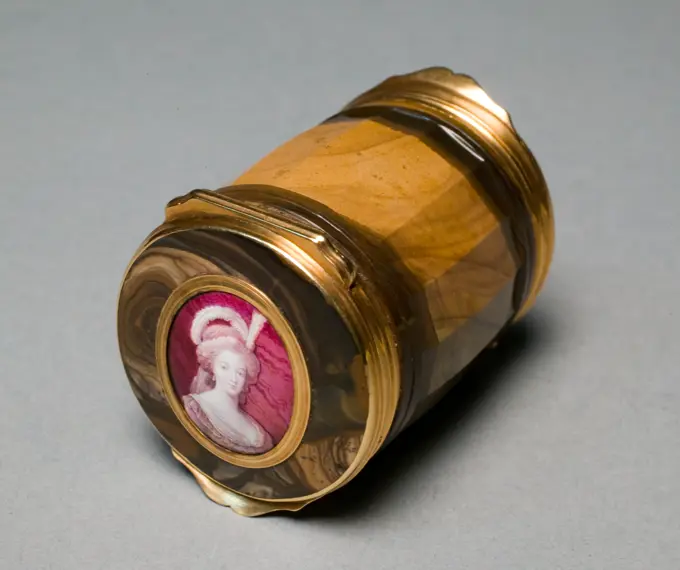
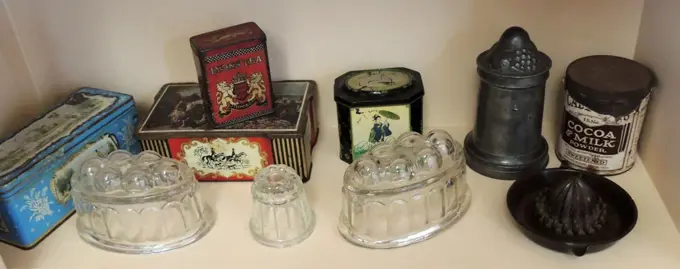
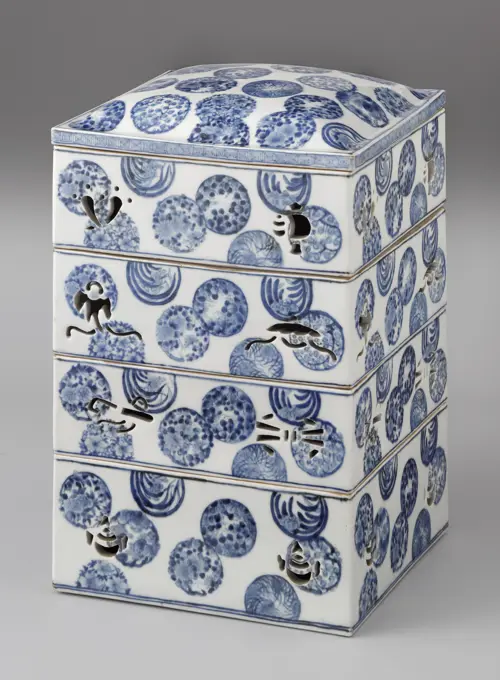
Square tiered box with cover with medallions, anonymous, c. 1775 - c. 1824 Third box of square stacking box (Jubako) with lid of porcelain consisting of four layers with openwork walls in various shapes, painted in underlaze blue. On the walls, medallions formed from different flower vines (Prunus, Chrysanthemum, peony, orchid, lily, etc.). A meander pattern on the edge of the lid. Blue White. Japan porcelain. glaze. cobalt (mineral) painting / vitrification Third box of square stacking box (Jubako) with lid of porcelain consisting of four layers with openwork walls in various shapes, painted in underlaze blue. On the walls, medallions formed from different flower vines (Prunus, Chrysanthemum, peony, orchid, lily, etc.). A meander pattern on the edge of the lid. Blue White. Japan porcelain. glaze. cobalt (mineral) painting / vitrificationTea caddy with flowers late 18th-early 19th century China. Tea caddy with flowers. China. late 18th-early 19th century. Porcelain with polychrome enamels over a blue ground (Jingdezhen ware). Qing dynasty (1644-1911), Jiaqing period (1796-1820). CeramicsWater Dropper with Landscape Design. Korea, Joseon dynasty (1392-1910), 19th century. Tools and Equipment; water droppers. Slab-built porcelain with cobalt painted decoration under clear glazePair of Salt Dishes. David Hennell; English, 1712-1785; London, England. Date: 1751. Dimensions: 4.5 × 7 cm (1 3/4 × 2 3/4 in.). Silver. Origin: London. Museum: The Chicago Art Institute, Chicago, USA.High angle view of steamed dumplings in a basketVase of earthenware, decorated in relief with roses and leaves in black and white on a yellow -white stock, tonwerke kanernn, c. 1910 Vase of earthenware, decorated in relief, in sludge technology, with a backdrop of roses and leaves in black and white on yellow -white stock. Maker: Canern Designer: Karlsruhe earthenware Vase of earthenware, decorated in relief, in sludge technology, with a backdrop of roses and leaves in black and white on yellow -white stock. Maker: Canern Designer: Karlsruhe earthenwareCandy dish -Sake Bottle with Dutchmen, 18th century, Unknown Japanese, 8 3/16 × 4 9/16 × 4 7/16 in. (20.8 × 11.59 × 11.27 cm), Imari ware; porcelain with underglaze cobalt blue, Japan, 18th century, Early forms of sake (fermented rice wine) emerged in Japan over 2,000 years ago. Among naturally fermented beverages, sake ranks at the top in terms of alcohol content (18-20%; grape wine by comparison averages 12-14%).Tote bag. Around 1880. Gal1957.67.2. Pewter .Brass design fitting on antique wooden pot with cap , Jodhpur, Rajasthan, India Copyright: xSafatxAli/DinodiaxPhotoxFragment Kraaikop from V.O.C. ship De 'Witte Leeuw', Anonymous, Before 1613 bowl Fragment Kraaikop from V.O.C. ship De 'Witte Leeuw', 50 present. Jingdezhen bone china (material)   Sint-HelenaBasket, Manufactuur Oud-Loosdrecht, c. 1778 - c. 1782 Porcelain basket. Round, with open work. The partly gilded ears consist of two intertwined stems with multicolored flowers and leaves, which fix themselves on the edge. The outer wall is completely painted in light and dark pink. A multi -colored flower bouquet on the bottom of the basket. Golden piping along mouth and foot edge. Loosdrecht porcelain Porcelain basket. Round, with open work. The partly gilded ears consist of two intertwined stems with multicolored flowers and leaves, which fix themselves on the edge. The outer wall is completely painted in light and dark pink. A multi -colored flower bouquet on the bottom of the basket. Golden piping along mouth and foot edge. Loosdrecht porcelainTile, blue painted with a ship. Tile, blue painted with a ship, so-called farmer's throw. A spinning head in the corners.Rectangular tea caddy covered with a light blue glaze and antiquities in panels, anonymous, c. 1760 - c. 1770 Cover of rectangular porcelain tea, covered with a light blue/ turquoise glaze and painted on the glaze in blue, red, green, yellow, purple and black. A saved medallion with a stylized flower depicted on the top. European forms with email colors. China porcelain. glaze. painting / vitrification Cover of rectangular porcelain tea, covered with a light blue/ turquoise glaze and painted on the glaze in blue, red, green, yellow, purple and black. A saved medallion with a stylized flower depicted on the top. European forms with email colors. China porcelain. glaze. painting / vitrificationWater jar with five dancing figures and inscriptions, anonymous, c. 1800 - c. 1899 Flat, wooden lid from water pot (mizusashi) of stoneware. Japan wood (plant material) painting / vitrification Flat, wooden lid from water pot (mizusashi) of stoneware. Japan wood (plant material) painting / vitrificationBoxes. Culture: Japan. Dimensions: H. 7 1/2 in. (19.1 cm); W. 5 in. (12.7 cm); L. 6 in. (15.2 cm). Date: 20th century. Museum: Metropolitan Museum of Art, New York, USA.Roll with white satin ribbon with one frayed side, c. 1935 Roll with white satin ribbon with one frayed side. Nijmegenfrance textile materials. paper. cardboard Roll with white satin ribbon with one frayed side. Nijmegenfrance textile materials. paper. cardboardOne of Five Serving Bowls (Mukozuke) with Prunus Design, 1700s to mid-1800s. School of Ogata Kenzan (Japanese, 1663-1743). Kyoto Ware: stoneware with underglaze iron oxide and slip decoration; overall: 6.9 cm (2 11/16 in.); each side: 9 cm (3 9/16 in.). Note the rough, tan, clay bodies of these bowls with their deliberate irregularities. The design of branches was first painted in a black iron oxide, then the blossoms and buds in a white slip, followed by the application of a very thin transparent overglaze.Flask And Stopper (Switzerland); glassBox with photo of the Town Hall of Bolsward. .Wright Flyer, Plated metal, celluloid, Rectangular, curved top and bottom, featuring raised decoration of biplane in flight over countryside scene with hills, trees, and houses in background; reverse features stylized floral and leaf frame, beneath which is piece of celluloid, and empty reserve. Lid hinged on side. Striker on bottom., ca. 1905, containers, Decorative Arts, Matchsafe, MatchsafeInro, Black lacquer with a river landscape in Makie, Anonymous, 1700 - 1800 Five -part Inro covered with black paint on which a river landscape in Makie and with mother -of -pearl insert. The inside Nashiji. Japan whole: Wood (plant material). whole: Lacquer (coating). whole: Gold (metal). Mother of Pearl lacquering Five -part Inro covered with black paint on which a river landscape in Makie and with mother -of -pearl insert. The inside Nashiji. Japan whole: Wood (plant material). whole: Lacquer (coating). whole: Gold (metal). Mother of Pearl lacqueringTureen set - Thomas Furnival & Sons Thomas Furnival & SonsGuz do półoficjalnej czapki urzędnika szóstej rangi. unknown, craftsmanSeif Yohei I made both blue and white porcelains after Ming dynasty (1368-1644) Chinese wares fired in the kilns at Jingdezhen for export. He also made colorful stoneware in the style of his teacher, Nin’ami Dhachi (Takahashi Dhachi II) (1783-1855). Lid for a Box with Butterfly, c. 1855. Seifū Yohei I (Japanese, 1801-1861). Porcelain with underglaze blue;John Heath, Pair of Salts, c. 1765-75, silver and blue glass.Cylinder still bank, early 20th century, 3 3/4 x 2 11/16 x 2 11/16 in. (9.53 x 6.83 x 6.83 cm), Tin, pigment, United States, 20th centuryRibbon on roll, striped, brown with lilac, black, light green and orange, in or before 1926 Ribbon on roll, striped, brown with lilac, black, light green and orange. NijmegenFrance (possibly) textile materials. cardboard. paper Ribbon on roll, striped, brown with lilac, black, light green and orange. NijmegenFrance (possibly) textile materials. cardboard. paperTea Caddy 1725-40 Simeon Soumaine Rare survivals in early American silver, this pair of octagonal tea caddies and matching sugar box emulate contemporary English design. They also evoke the passion for tea-drinking and its costly accessories that became as fashionable in the Colonies as they were abroad. Each vessel is engraved with the arms and crest of the Bayard family of New York. Although only one tea caddy entered the Metropolitans collection in 1964 (64.249.5a,b), the set was reunited in 2015 with the purchase of the matching caddy and sugar box (2015.93.1a,b-2a,b).. Tea Caddy 8263Tiered Food Box (Jūbako) with Garland of Azaleas early 20th century Yamamoto Shunshō School. Tiered Food Box (Jūbako) with Garland of Azaleas 56528Cabinet, with concave cushion outline, from a set of model furniture, 17th century, 8 1/8 x 5 7/8 x 3 3/16 in. (20.6 x 14.9 x 8.1 cm), Glazed ceramic, China, 17th centuryApothecary jar (albarello). unknown, authorPair of Tea Caddies. William Barnard; English, active 1767-1818; London, England. Date: 1878-1879. Dimensions: 11.4 x 8.3 x 8.9 cm (4 1/2 x 3 1/4 x 3 1/2 in.). Silver gilt. Origin: London. Museum: The Chicago Art Institute, Chicago, USA.Close-up of decorative tin lampshadeMedallion, probably Margaret of Lorraine (recto); the Virgin Seated on a Throne Before Two Widows (verso) 1525-1545 Limoges. Widowhood was an uncertain social state in the sixteenth century; it could be either liberating or severely restrictive. For these women, adopting the lifestyle of a nun and living in a convent was a common occurrence. This medallion with a portrait of a noble widow, perhaps Saint Margaret of Lorraine, was used by such courtly widows as an aid to meditation and spiritual support.The back side of the medallion depicts a heavenly vision with two widows praying the rosary before the Virgin and Child. The Latin inscription along the rim is the opening to their prayer asking the Virgin to intercede to God on their behalf. The painterís delicate handling of color and perspective seems to acknowledge the spiritual nature of the subject.. Painted enamel on copper . Léonard LimosinTea caddy, Silver, Ovoid body (a) with cylindrical neck; domed cylindrical lid (b) with flame finial. Caddy and lid decorated with repousse spiraling ears of grain., Birmingham, England, 19th century, metalwork, Decorative Arts, Tea caddybirch-bark box isolated on white backgroundBracelet, one of a pair, 1 7/16 x 3 x 2 3/4 in. (3.65 x 7.62 x 6.99 cm), Silver, ChinaBeautiful Christmas toy of hand-worked for festive decoration, isolated on white background Beautiful Christmas toy of hand-worked for festive decoration, isolated on white background Copyright: xZoonar.com/OleksandrxKostiuchenkox 8911465Illustration vintage label for packing coffee, isolated on white background - vectorDouble Snuff Box, c. 1775-80. England, mid-18th century. Gold-mounted agate, enamel rose camaïeu;Selection of tins containing cocoa and tea together with a lemon juice squeezer and jelly moulds dated to 1920sTankard -Cup and its saucers decorated with the effigy of Necker. Earthenware. Around 1789. Paris, Carnavalet museum. 76184-2 Decoration, effigy, Revolutionary Faience, Swiss financial, State Man, Revolutionary Periode, Portrait, French Revolution, CupLittle colorful toy drums on a white backgroundBlack ceramic pot with golden coins isolated on whiteInk well with a N and insects, Manufacture de Sèvres, c. 1800 - c. 1824 Square ink pot made of porcelain, painted on the glaze in green and gold. The ink pot consists of a wide base, which narrows to a square holder. This contains the cylindrical ink jar. The lid is round with a square top. The wide part of the holder is decorated with a continuous leaf vank. The narrower wall with a n in a leaf wreath, saved in the green. The three other sides with insects. The ink pot has a golden edge and the lid is green with gold lines. Marked on the bottom with 'm.imp.le de Sevres' and a clover four. Sèvres porcelain. glaze. gold (metal) painting / gilding / vitrification Square ink pot made of porcelain, painted on the glaze in green and gold. The ink pot consists of a wide base, which narrows to a square holder. This contains the cylindrical ink jar. The lid is round with a square top. The wide part of the holder is decorated with a continuous leaf vank. The narrower wall with a n in a leaf wreCup Korzec