Antique Decorative Boxes

An array of ornate antique boxes and caskets from various cultures and centuries, featuring intricate carvings and historical significance, rich in detail and craftsmanship.
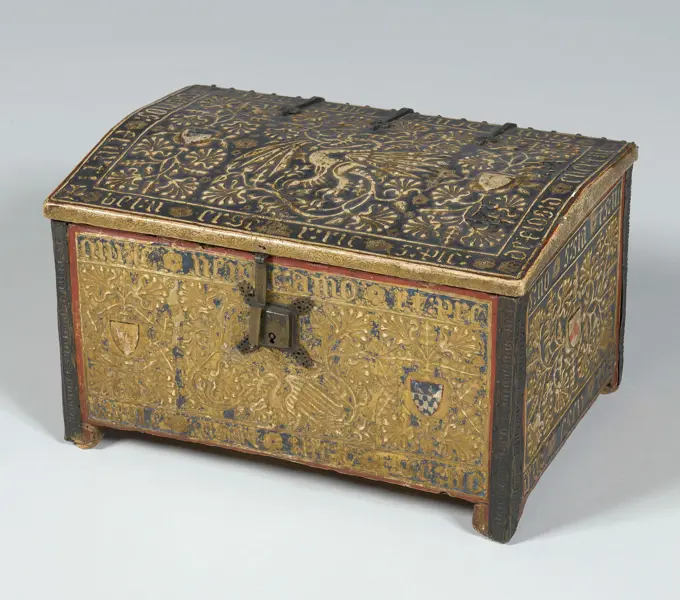
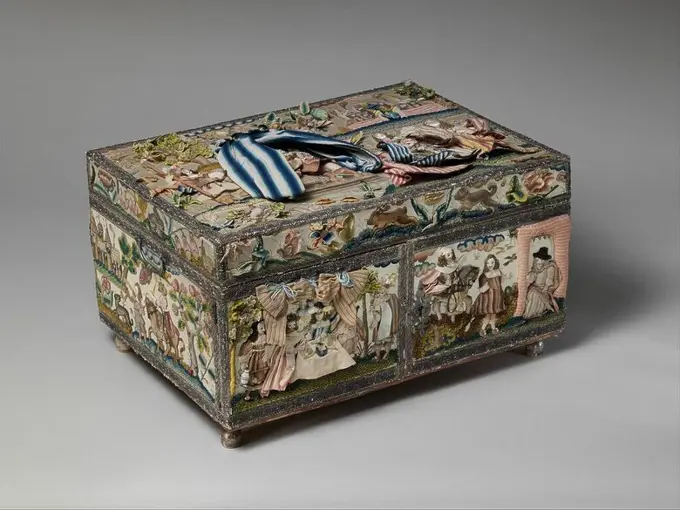
. Small casket of polychromed poplar wood, with decorations in gold-plated stucco consisting of leaf drinks with a dragon flanked in the middle and on the lid, flanked by coats of arms with inscriptions in Latin. At the rear four standing fields with leaf raft, including inscriptions. The batter on the corners formed by thin copper plates also shows inscriptions. The lock and handles are copper. The green upholstery inside is partially worn out.
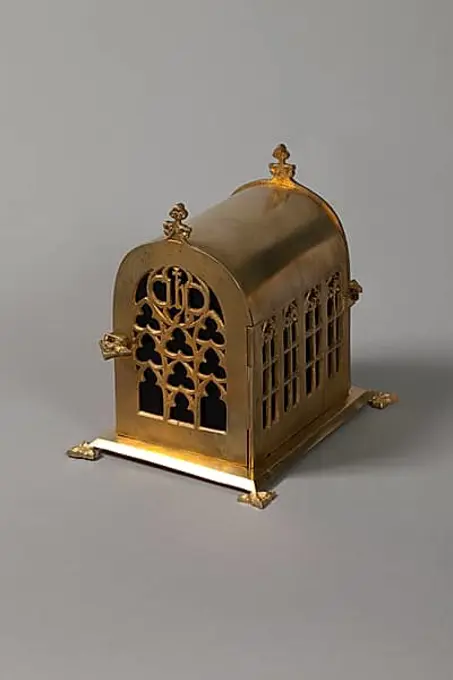
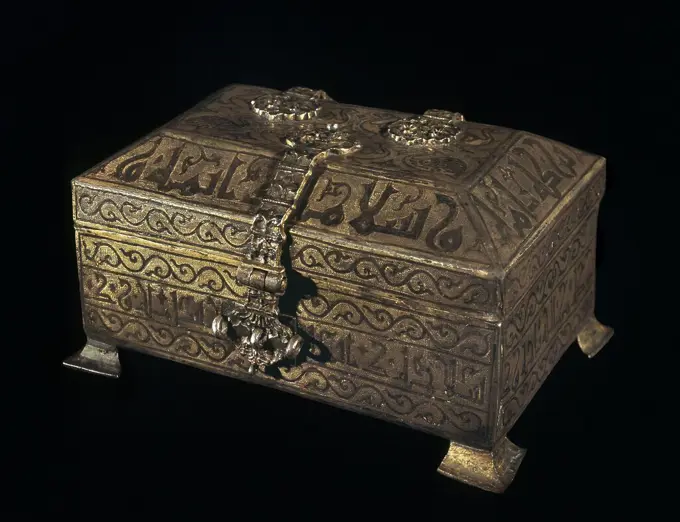
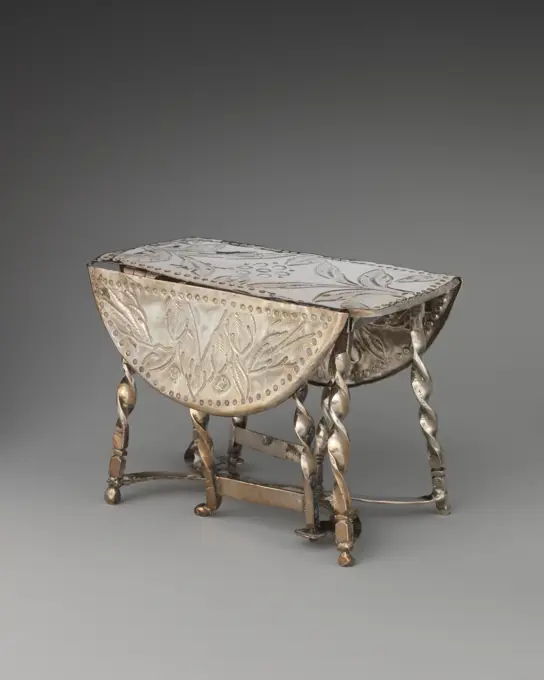
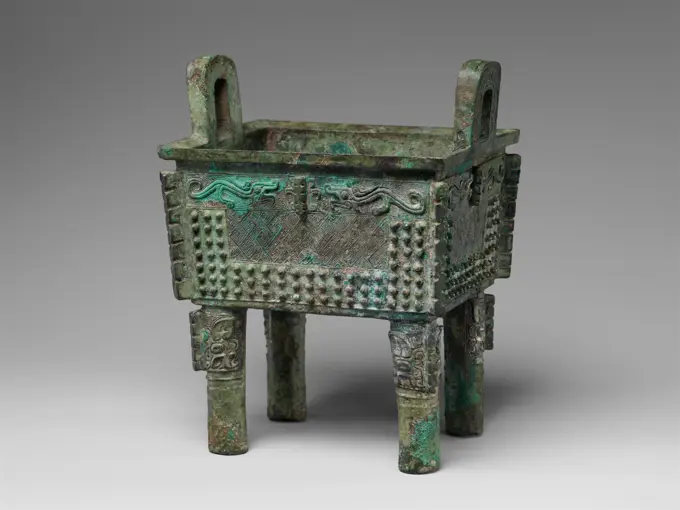
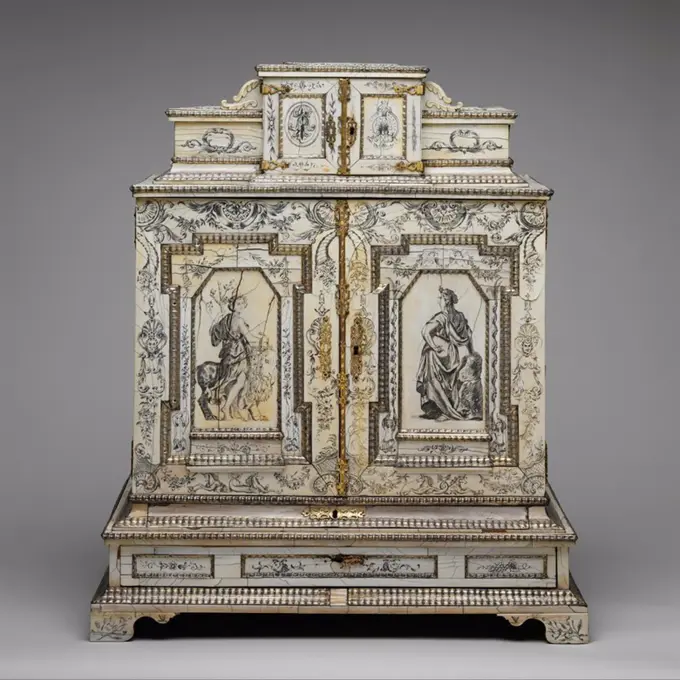
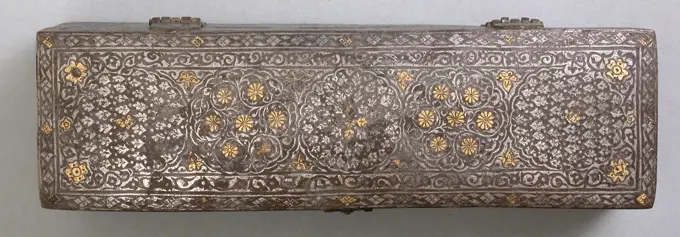
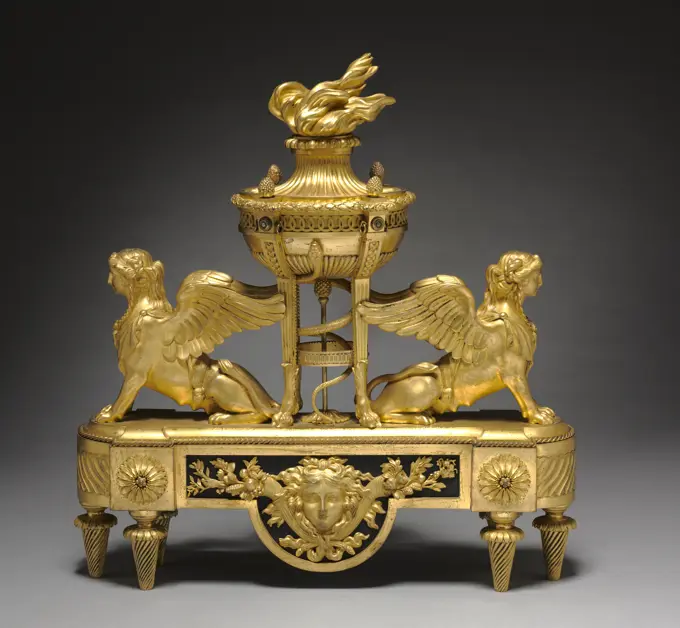
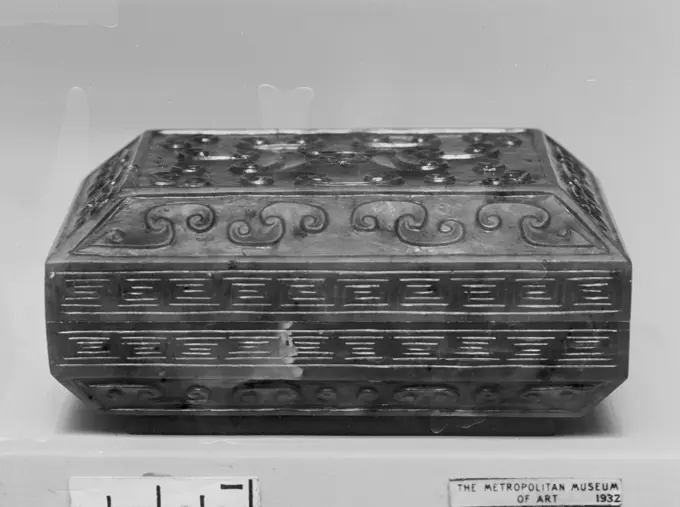
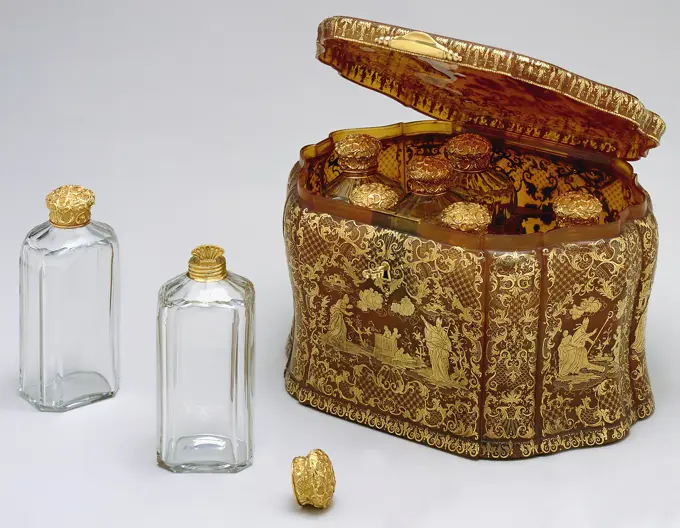
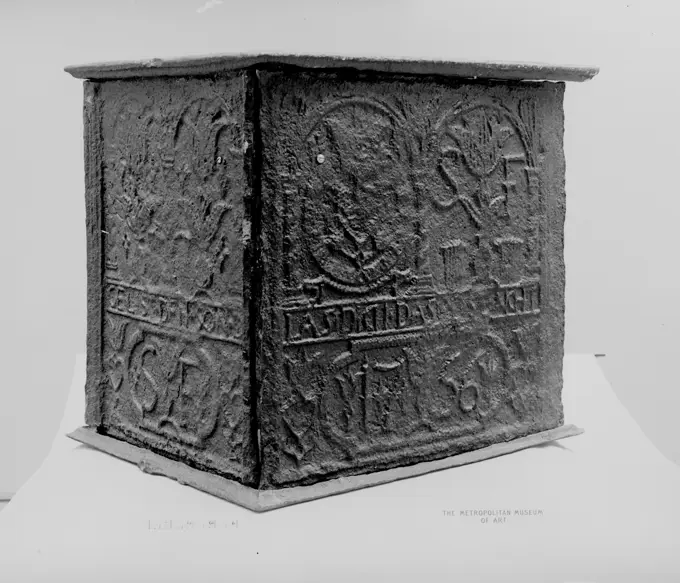
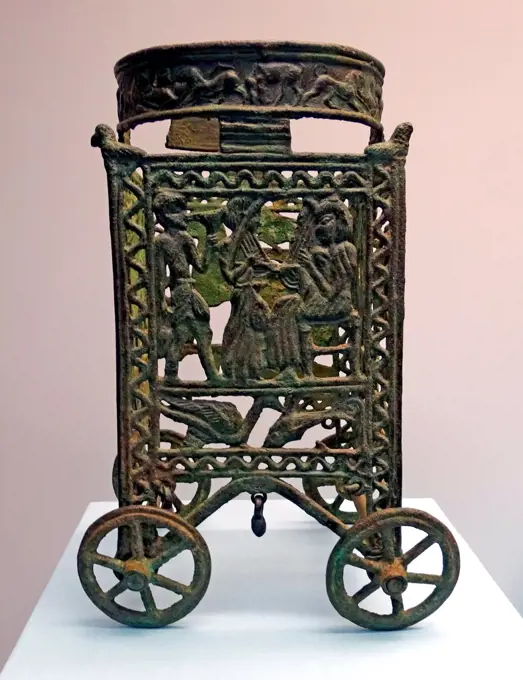
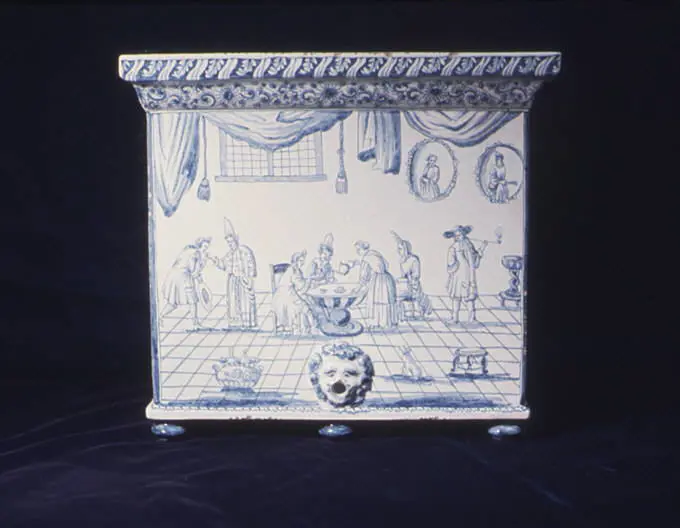
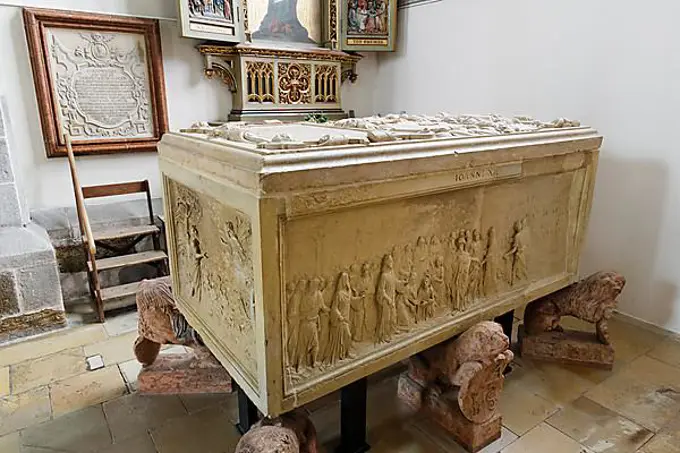
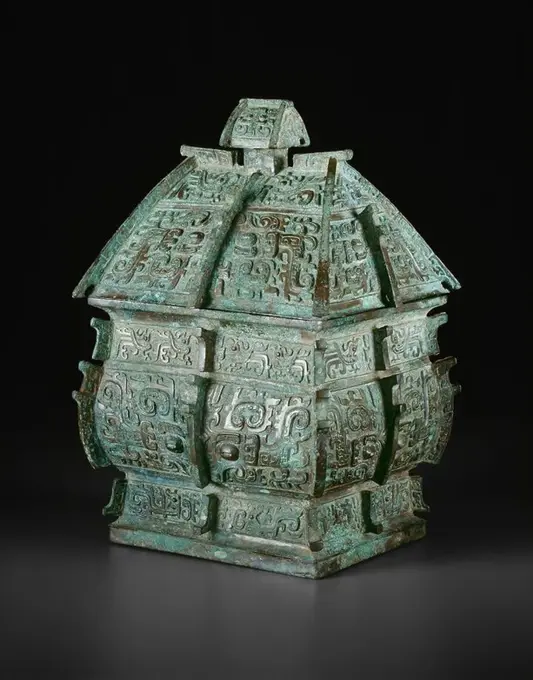
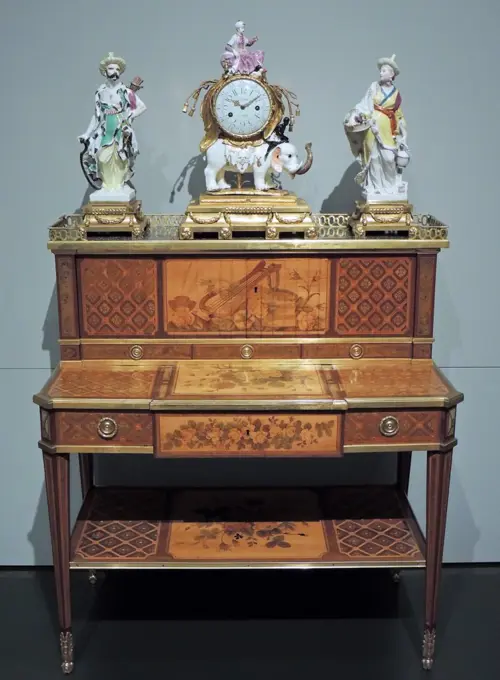
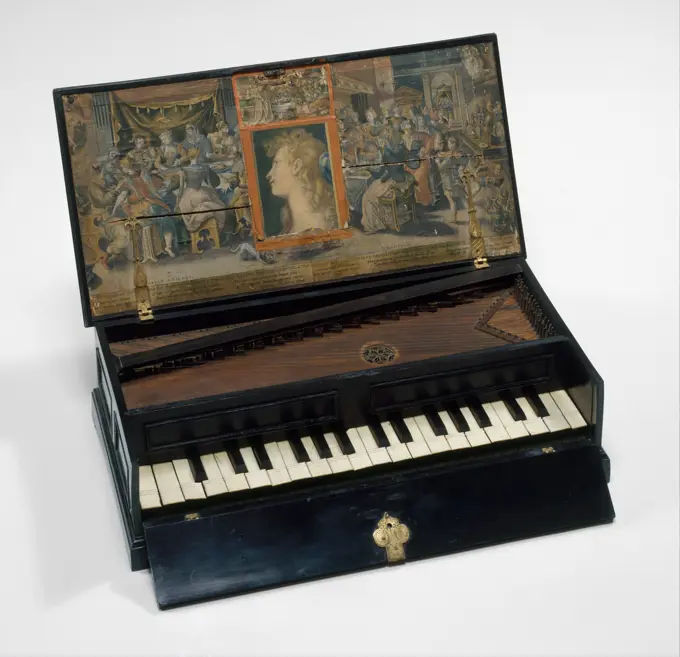
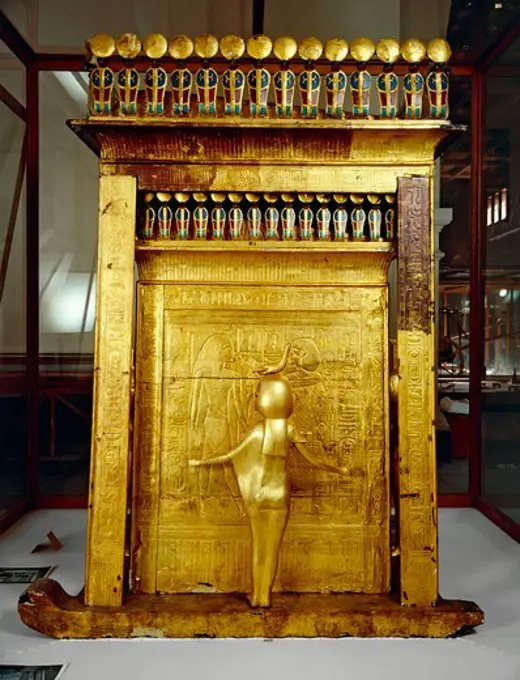
Cabinet with scenes from the Story of Esther. Culture: British. Dimensions: Overall: 9 1/4 × 16 × 11 1/4 in. (23.5 × 40.6 × 28.6 cm). Date: after 1665.During the seventeenth century biblical stories featuring heroines such as Esther, who courageously interceded on behalf of her people with her husband, the Persian king Ahasuerus (depicted on the lid), were popular as instructive examples for young women. Enclosing a mirror, the lid of this cabinet opens to reveal a tray with writing implements. The central compartment is lined with a landscape drawing, which is reflected in tiny mirrors placed at an angle, offering perspective views not unlike the interior of contemporary collectors' cabinets. The front panels give access to tiny drawers. Museum: Metropolitan Museum of Art, New York, USA.Cigar chest. Diehl and Fremiets eccentric furniture created a great stir at the Exposition Universelle of 1867 in Paris. This cigar box consists of quasi-medieval masonry in wood, and monster heads, dragons and snakes in silvered bronze. The crowned salamander withstanding the flamesrefers to another period: it was a personal emblem of the 16th-century French king François I.Sword Rack (Katana Kake) ca. 1615-1868 Japanese A katana is a sword with a curved blade longer than 60 cm fitted with an uchigatana-style mounting and worn in a waist sash with the cutting edge facing up.. Sword Rack (Katana Kake). Japanese. ca. 1615-1868. Wood, lacquer, iron, gold. Swords-AccessoriesPa. German Chest. Dated: 1935/1942. Dimensions: overall: 35.1 x 44.5 cm (13 13/16 x 17 1/2 in.). Medium: graphite and colored pencil on paper. Museum: National Gallery of Art, Washington DC. Author: American 20th Century.ARQUETA HISPANOMUSULMANA DEL TESORO DE SAN ISIDORO DE LEON - SIGLO X. Location: MUSEO ARQUEOLOGICO NACIONAL-COLECCION. MADRID. SPAIN.Miniature gateleg table (one of a pair) 1699-1700 George Manjoy British. Miniature gateleg table (one of a pair). British, London. 1699-1700. Silver. Metalwork-Silver-MiniatureChest, rectangular, on four legs, with vaulted lid and double lock, anonymous, c. 1400 - c. 1500 Iron box with bent lid and supported on four legs. With double lock and handle. The keys are missing.  iron (metal) Iron box with bent lid and supported on four legs. With double lock and handle. The keys are missing.  iron (metal)Secretary cabinet ca. 1760 British. Secretary cabinet 203841Ritual Rectangular Cauldron (Fangding) 13th-11th century B.C. China. Ritual Rectangular Cauldron (Fangding) 61326America Plaque; Germany; brassFootWarmerCasket with scenes from the Story of Solomon and the Queen of Sheba. Culture: British. Dimensions: Overall: 8 × 16 × 14 1/2 in. (20.3 × 40.6 × 36.8 cm). Date: 1670s.This casket, the largest in the Metropolitan Museum's collection of embroidered boxes, contains a multitude of objects, from glass bottles, which were typically fitted into boxes of the period, to a large array of sewing implements and materials, including 25 paper thread winders made from folded playing cards, several ivory thread winders, a bodkin, three ivory embroidery tools, a spool of gold filé thread, a silk tassel, several loose skeins of silk thread, a silk needle case, and a piece of detached buttonhole stitch fabric. Some of the objects clearly do not match the casket's seventeenth-century date. Thread, both dyed silk and metal varieties, was purchased by weight, and the number of objects devoted to the organization of threads speaks to the value of this material. Decorated boxes intended to store sewing implemenGilbert Sackerman, Bandbox, c 1939 BandboxCabinet. Culture: German, Augsburg. Dimensions: 28 1/4 x 24 1/2 x 15 3/4 in. (71.8 x 62.2 x 40 cm). Maker: Cabinetry by the workshop of Melchior Baumgartner (German) (1621-1686); Silver plaques possibly by a member of the Lencker family. Silversmith: Jeremias Sibenbürger (ca. 1583-1659). Date: ca. 1655-59, engraved decorations ca. 1825-50.The outside of this cabinet was originally veneered with plain ivory (the engraved ornament is a later addition), which strongly contrasted with the dazzling display of silver and gilt-silver decoration in the interior. The three central plaques depict the Roman gods of agriculture (Ceres, at left), wine (Bacchus, at center), and love (Venus with Cupid, at right). They illustrate a maxim of the Roman dramatist Terence, Sine Cerere et Libero friget Venus ("Without food and wine, love would grow cold"), which appears in his comedy The Eunuch (161 B.C.). Furnished with multiple drawers and secret compartments for the storage of valuables, writing equipmWriting Box 17th-18th century. Writing Box 444541Shang ritual vessel, fang yi type for wine. Bronze. 11-13th cent. BC.Furniture, Georges Jacob, c. 1787 Covered Bank of Gilded Beukenhout. The conical legs consist of arrows bundled by rings. Ornamental edges on the sills and on three sides of the sitting window. The scanned vase -shaped armrest stars rest on houses, visible on one side. The armrests walk with Acanthus leaf in the back window; On the ends a Hondekop, among other things. The scanned backstyles are decorated. The upper sill shows, between the upper parts of a flame building with flame, an openwork arch, wreath and ribbon. BK-16656-A/B. France wood (plant material). beech (wood). gilding (material). textile materials gilding Covered Bank of Gilded Beukenhout. The conical legs consist of arrows bundled by rings. Ornamental edges on the sills and on three sides of the sitting window. The scanned vase -shaped armrest stars rest on houses, visible on one side. The armrests walk with Acanthus leaf in the back window; On the ends a Hondekop, among other things. The scanned backstyles are decorateCinerary Urn and Lid, 6th-5th century BCE, 9 1/4 x 13 1/2 x 9 3/4 in. (23.5 x 34.29 x 24.77 cm), Polychromed terracotta, Italy, 6th-5th century BCETable Clock 1670-1680 France. Walnut, ebony, gilt brass, enamel, red-stained tortoiseshell, pewter, brass, glass, steel, and various metals . André Charles Boulle (Cabinetmaker)Andiron (Chenet), c. 1785. France, 18th century. Gilt bronze; overall: 50.3 x 46.3 x 14 cm (19 13/16 x 18 1/4 x 5 1/2 in.).Covered Box China. Covered Box. China. Nephrite. Qing dynasty (1644-1911), Qianlong period (1736-95). JadeBook entitled core of bibles. Book, bound in brown silk velvet with golden closure middle plate and corner fittings, decorated with rocaille motifs; Cut gold-plated, shackles of pink silk. Miniature booklet published in The Hague at A. de Groot and Zoonen. MDCCL (1750). Ten booklet of four sheets, eighty pages.Glass bottle, one of eight, c. 1745, Glass bottle with gold stopper and top, Germany, 18th century, The box is decorated with scenes from the life of St. Nicholas of Myra. This fourth century Greek bishop, who was the patron saint of children, sailors and travelers and the guardian of young women, was the forerunner of St. Nicholas or Father Christmas.Jamb stove 1756 Samuel Flower Jamb stoves were fed from an opening in the fireplace of an adjoining room. The form originated in Germany around 1500 and was later popular with German settlers in Pennsylvania. Befitting its role as the focal point of a room, this stove is highly ornamented, with stylized tulips contained within arches. It also displays a moralizing verse in German about the dangers of evil.. Jamb stove. American. 1756. Iron. Made in Chester County, Pennsylvania, United StatesContainerClock. Culture: American. Dimensions: 18 1/8 x 20 1/8 x 7 3/4 in. (46 x 51.1 x 19.7 cm). Maker: Tiffany & Co. (1837-present). Date: ca. 1885.Tiffany & Co. marketed this ormolu and marble mantel set in about 1885. The set, consisting of a clock and a pair of decorative obelisks, represents a popular rather than an archaeological idea of Egyptian art: the hieroglyphs on the obelisks and on the sphinxes of the clock would not bear the scrutiny of an Egyptologist. Museum: Metropolitan Museum of Art, New York, USA.Pen Box (qalamdan). India, Jammu and Kashmir, Srinagar, circa 1800-1850. Furnishings; Accessories. Papier-maché with paint and gold leaf17th century ancient gilded table clock by Johann Kleinschmidt 17th century Antiquity gilded table clock by Johann KleinschmidtBell 18th century China. Bell. China. 18th century. Jade. Qing dynasty (1644-1911). Jadebronze wheeled stand, designed to support a bowl or incense burner used in a ceremony or feast. decoration includes musicians and revellers, a hunting lion, a sphinx, a charioteer and other wildlife. Cyprus, 1250-1100 BC Bronze AgeCharlemagne's Chess set from the 14th century. Stamps of Montpellier. Museum at Roncesvalles. Navarre. Spain.Cistern Dutch, Delft probably 19th centuryBliżej Kultury unknownArqueta, siglo XIII. Museu-Tresor de la Catedral de Girona / Museo Tesoro de la Catedral de Gerona.Corner Chimneypiece most likely from the house of one of William III's courtiers in the Hague. Dated 18th CenturyFragment of a door wing. unknown, creatorCustodia, 1870, Goldsmith's art and textile art from the 16th to the 20th century, St., Saint, SaintCAJA DE MARFIL-ARTE ITALIANO S XV. Location: CATEDRAL-INTERIOR. Toledo. SPAIN.Tbl tomb of Wolfgang von Schauberg, Parish Church of Eferding or Eferdinger Cathedral, Eferding, Hausruckviertel region, Upper Austria, Austria, EuropeTabernakel van Steen (possibly marble) with metal door, anonymous, 1400 - 1499 Tabernakel van Steen (possibly marble) to the storage of the host or sacred oil with iron door.  marble (rock) Tabernakel van Steen (possibly marble) to the storage of the host or sacred oil with iron door.  marble (rock)Wine Container. China. Date: 1099 BC-1000 BC. Dimensions: 32.8 × 18.4 × 14.4 cm (12 7/8 × 7 1/8 × 5 5/8 in.). Bronze. Origin: China. Museum: The Chicago Art Institute, Chicago, USA.Baúl gótico, siglo XV. Museu del Cau Ferrat de Sitges.Two Chinese figures. Meissen, c 1748 modelled by Johann Joachim Kandler (1706-1775) and Johann Friedrich Eberlein (1695-1749), bases : Paris, c.1765 painted hard-paste porcelain, gilt bronze. These porcelain figures were made in Meissen and mounted in Paris on gilt-bronze (ormolu) bases. The design on the bases corresponds with that of the base of the clock with the elephant also on display here. This was a way of creating a cohesive ensemble.Rectangular Octave Virginal ca. 1600 German The small virginal was for a ladys parlor, serving both as sewing box and as instrument for casual music making and to accompany singing. The ebony, casketlike case is in the style of Samuel Biedermann the Elder, probably made in Augsburg about 1600, and is decorated with engravings by Hans Sebald Beham and the elder Crispijn van de Passe. A delicate parchment rosette adorns the sound hole. Two shallow drawers, perhaps for sewing equipment, fit into the top of the lid. Sounding an octave above normal pitch, this virginal was not intended for serious music-making, but the three octave keyboard compass of f-f” (omitting f-sharp and g-sharp in the low octave) approximately covers the range of womens and childrens voices. Such instruments, fashionable in the first half of the seventeenth century, were a specialty of Augsburg cabinet and instrument makers. The instrument, having neither makers name nor the Augsburg hallmark, was probably builPin Holder; cold painted and gilt brassTreasure of Tutankhamen, gilded shrine of canopic jars or canopic chest from New Kingdom