Antique Decorative Containers

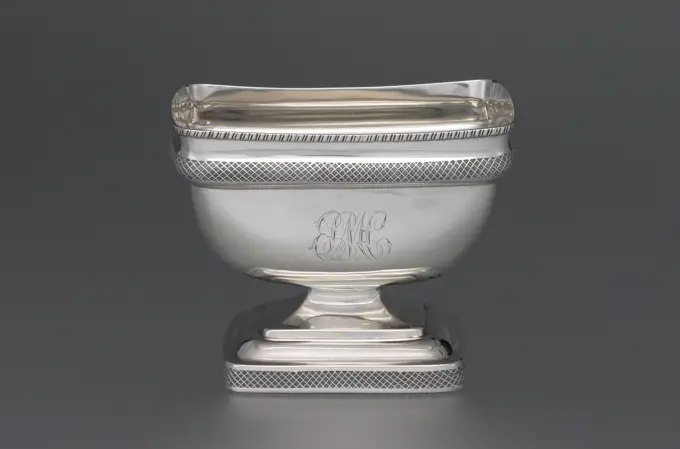
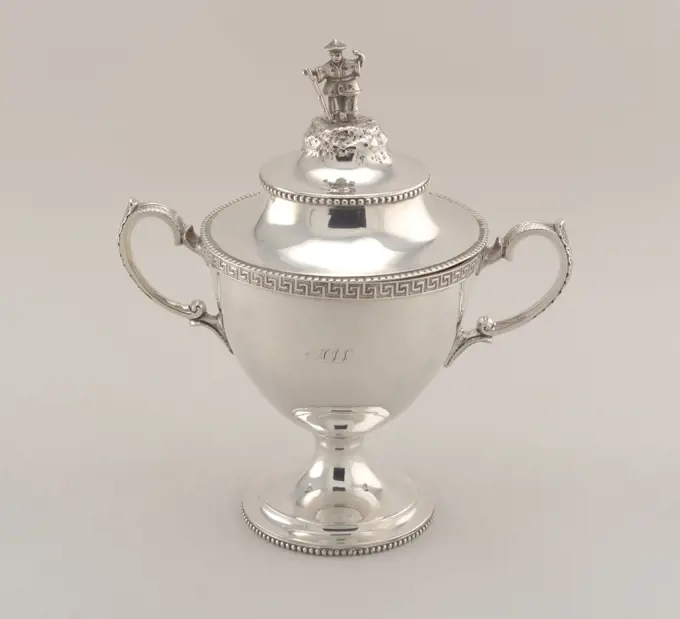
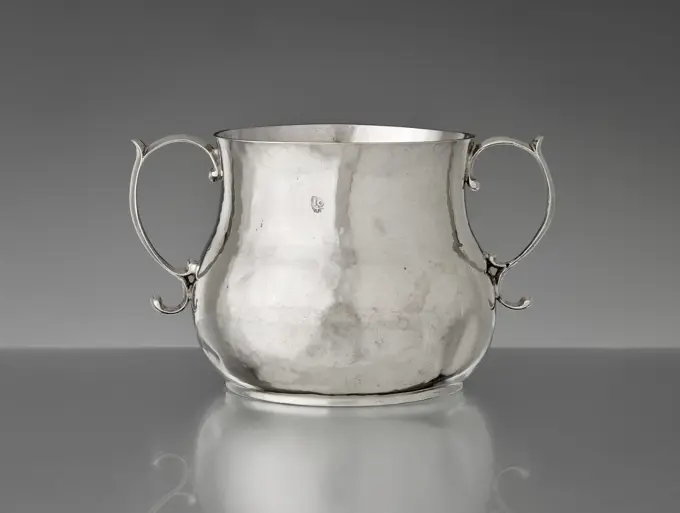
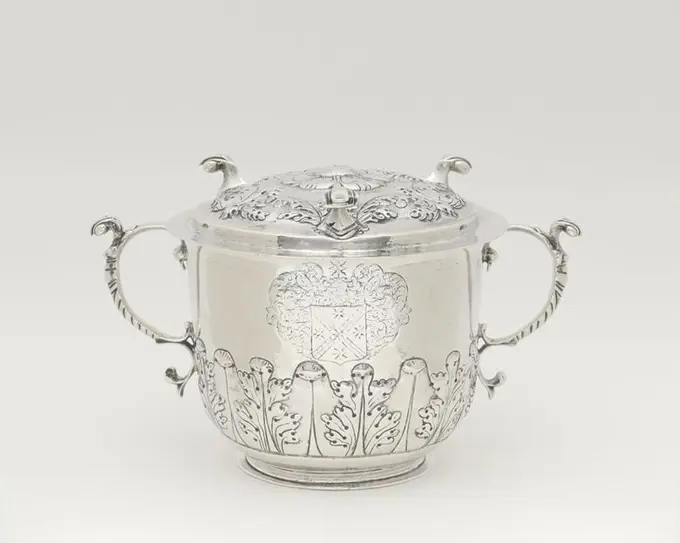
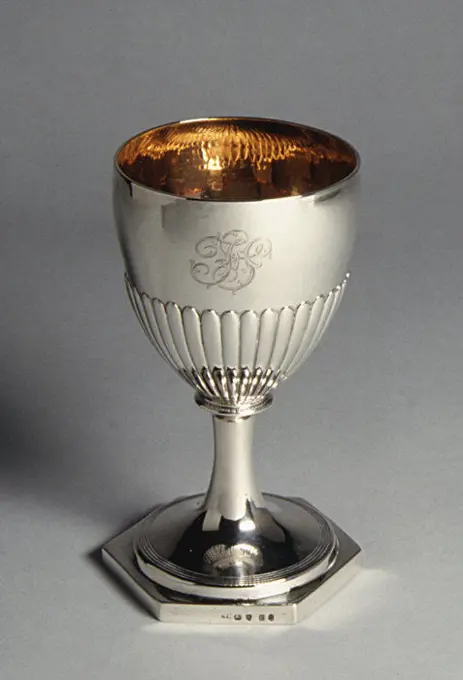
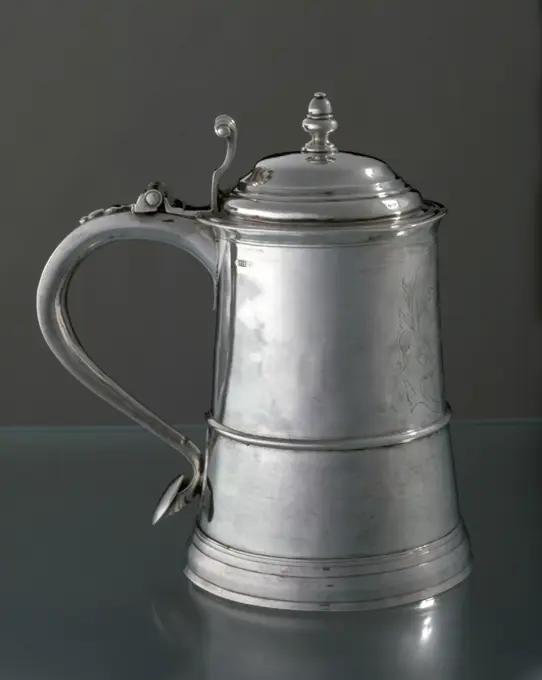
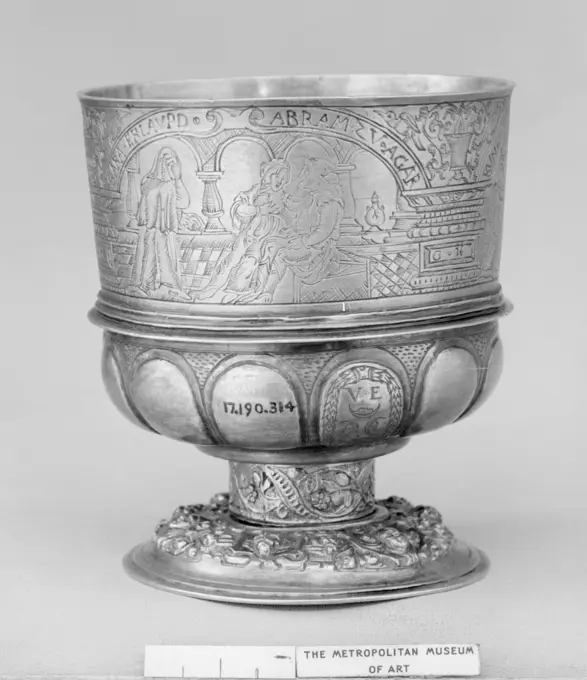
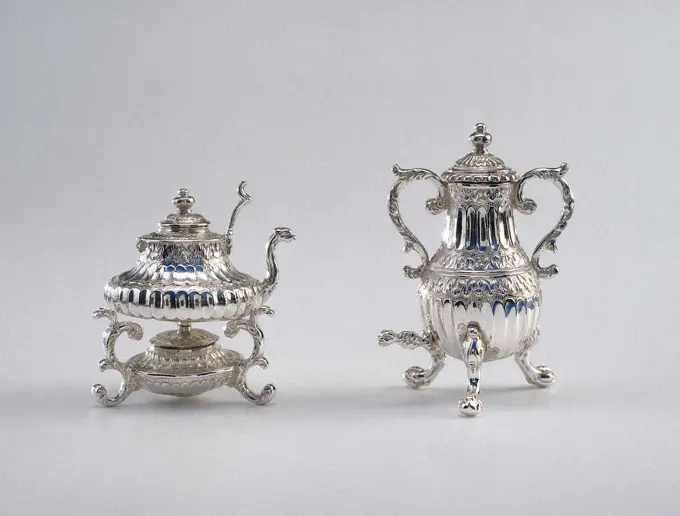
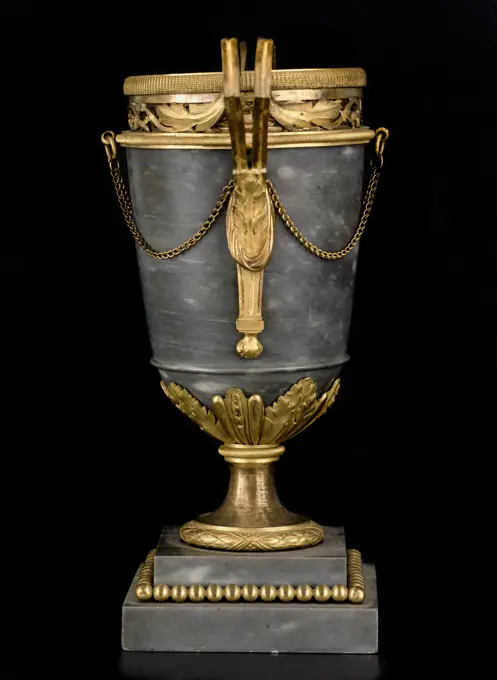
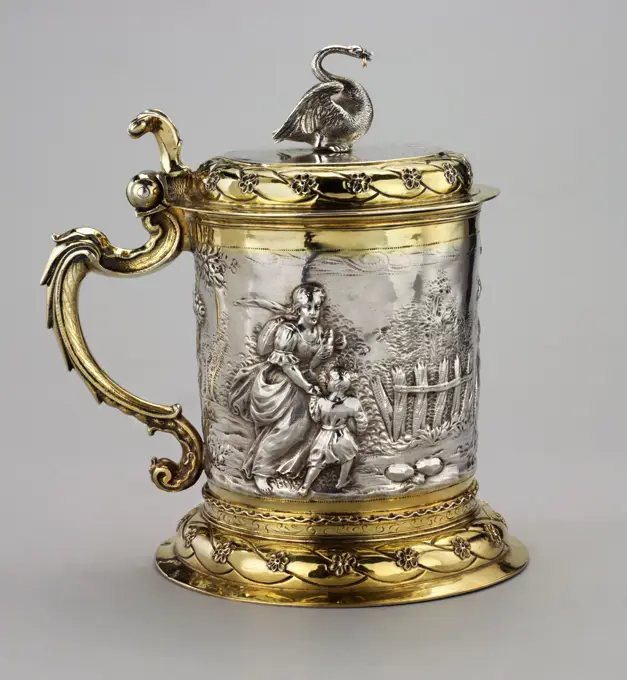
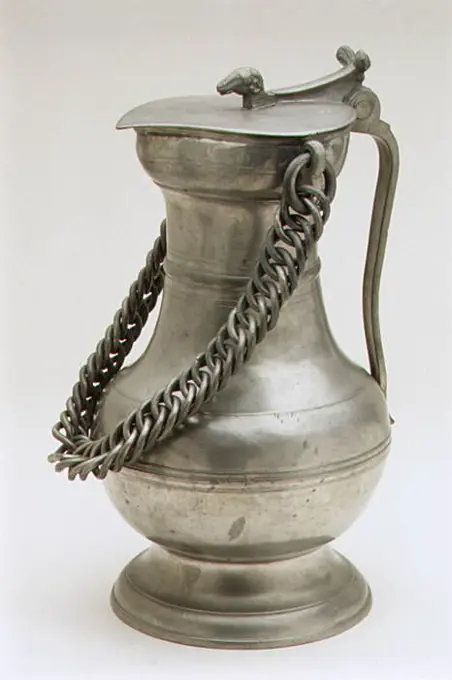
A collection of ornate glass and silver jars, featuring intricate designs and shapes, showcasing historical craftsmanship and elegant materials.

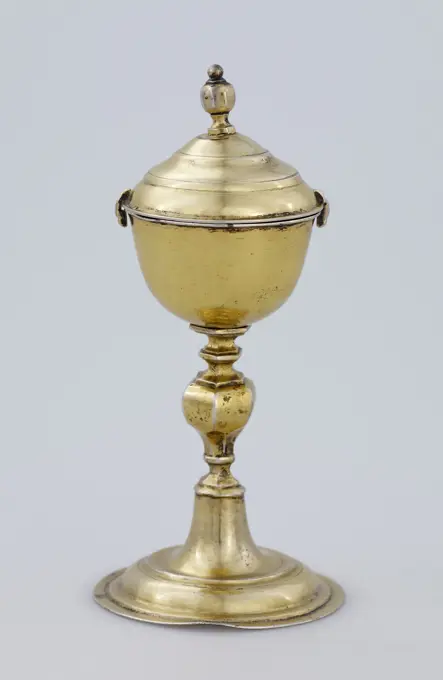
Cup with cover; Zchlin (glassworks; 1736-1890); 1740-1750 (1740-00-00-1750-00-00);dewizy
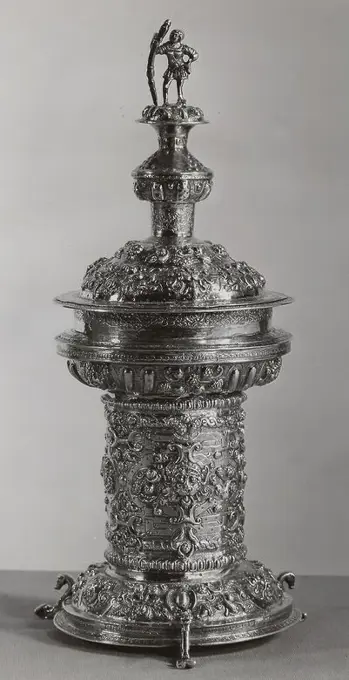
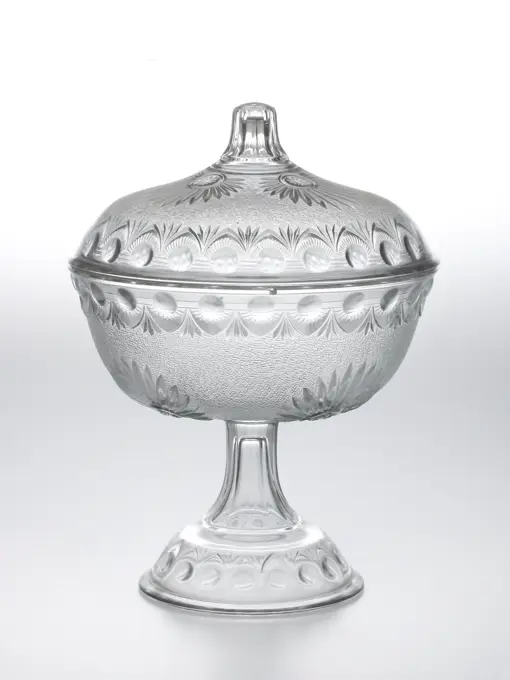
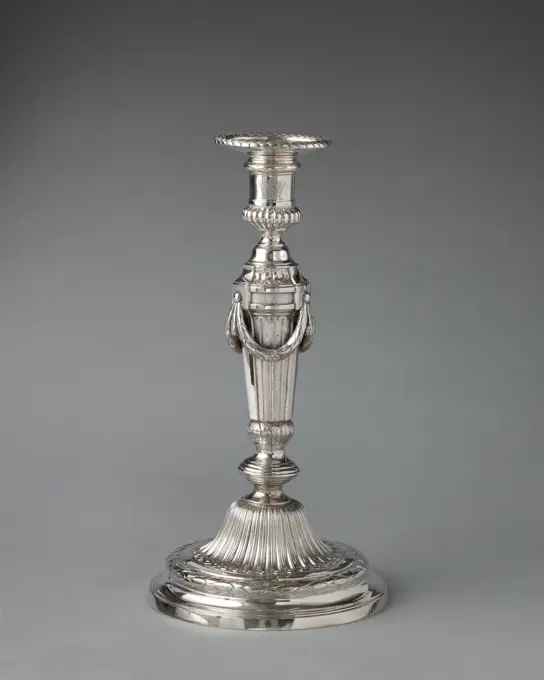
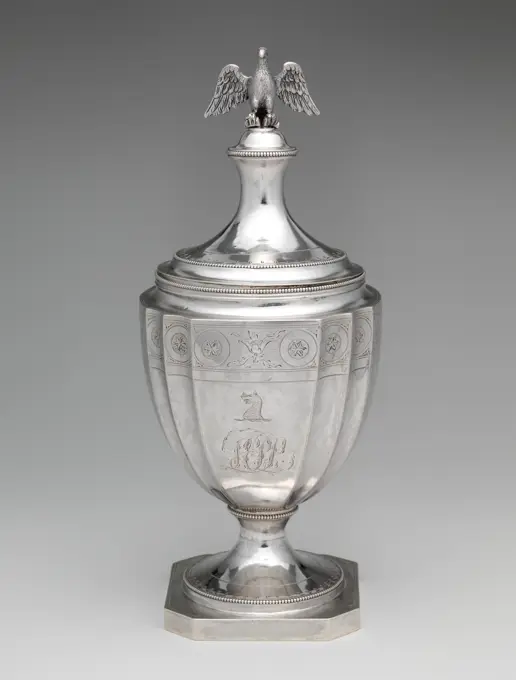
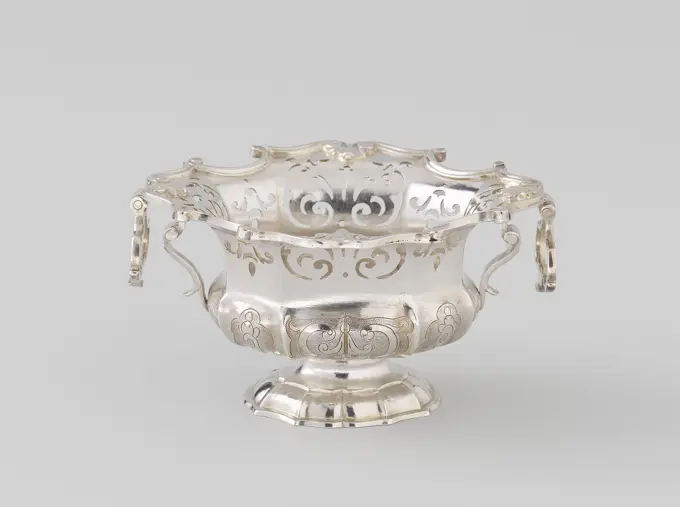
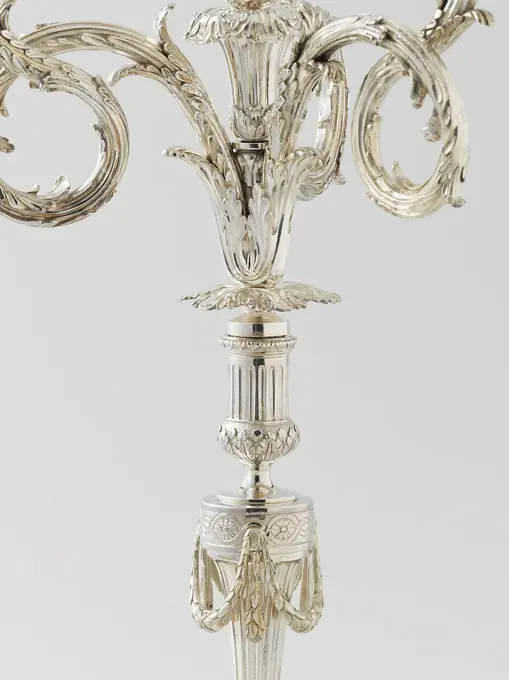
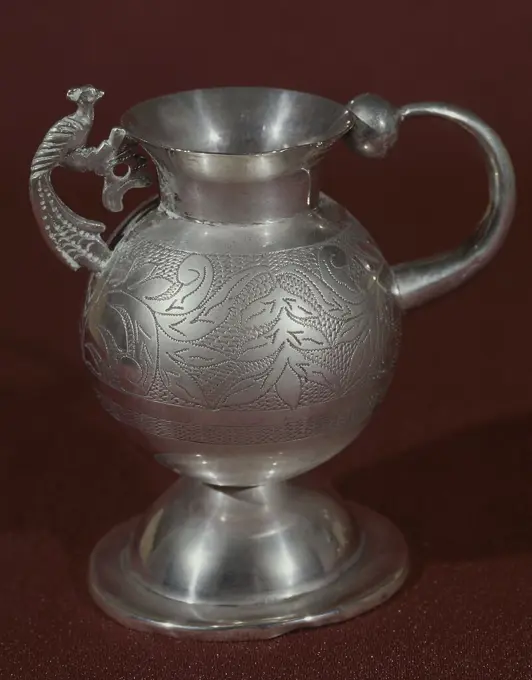
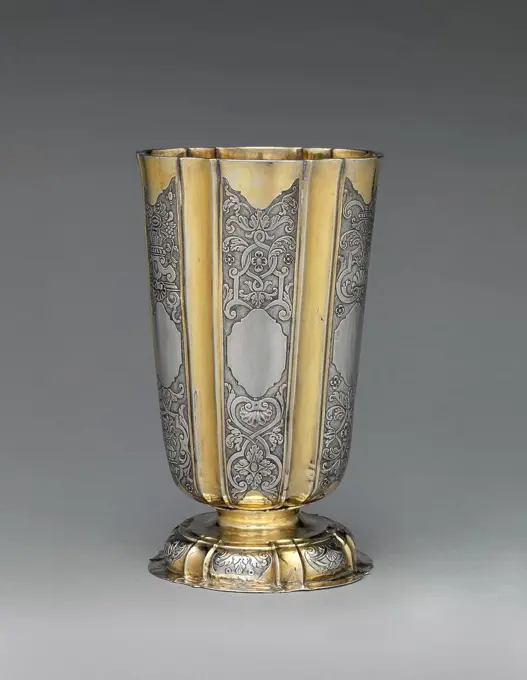
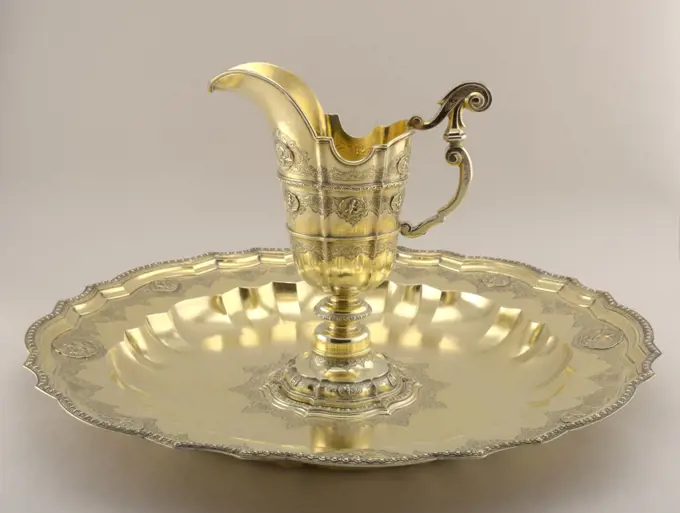
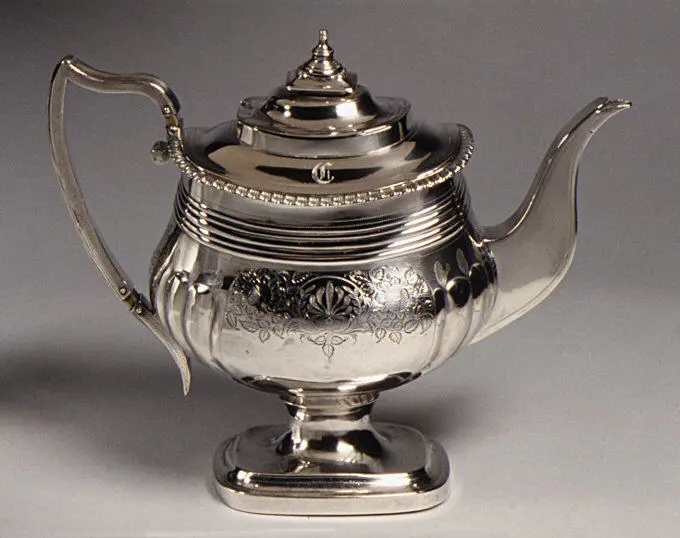
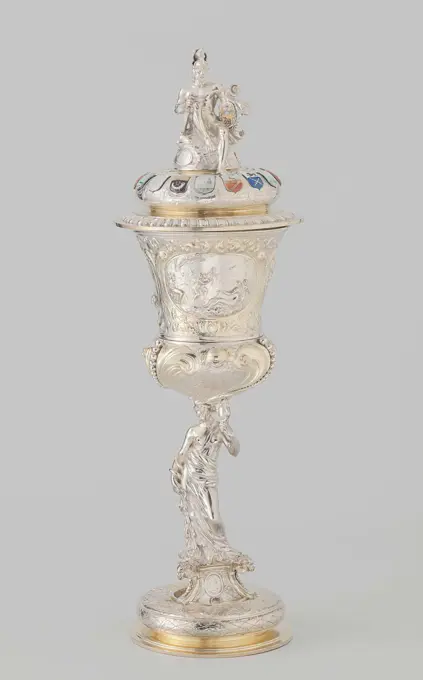
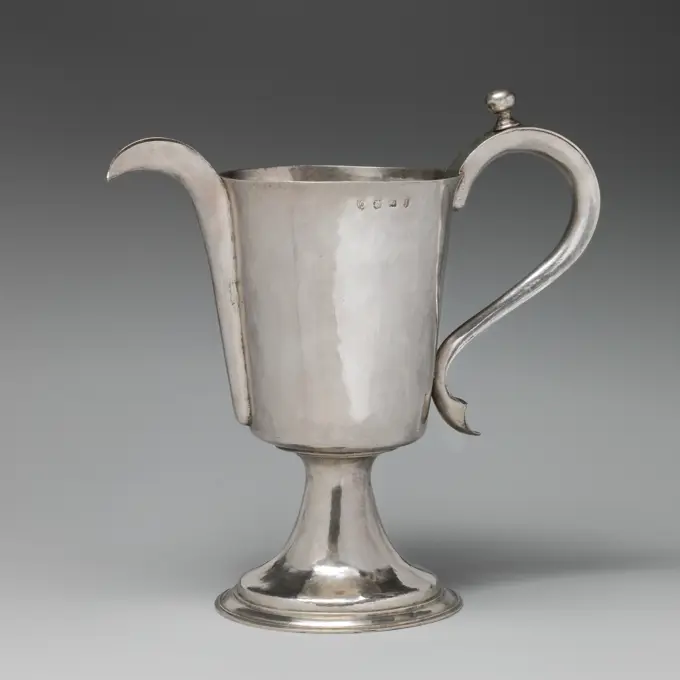
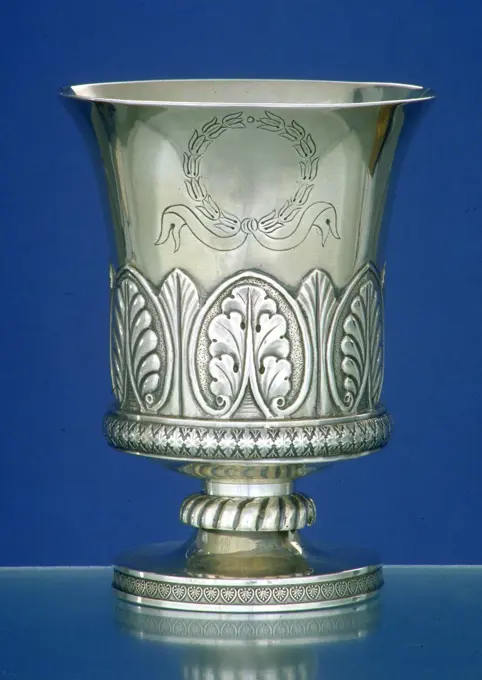
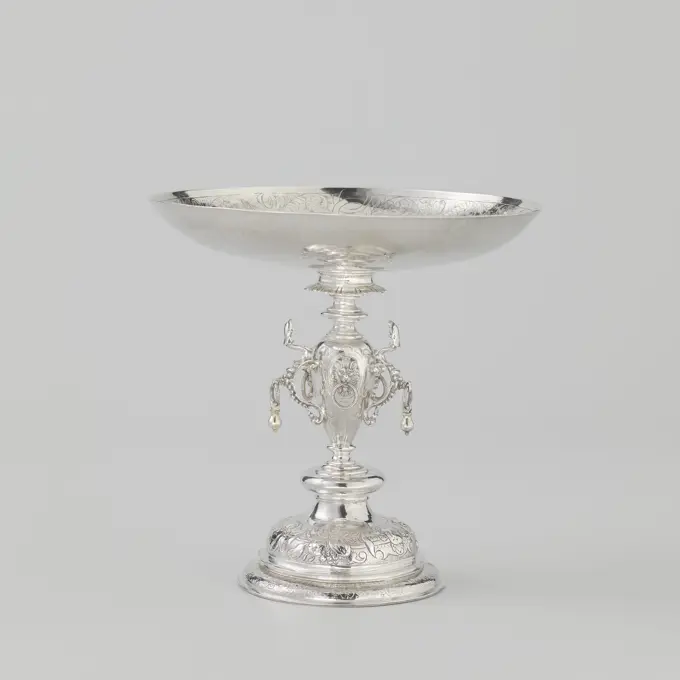
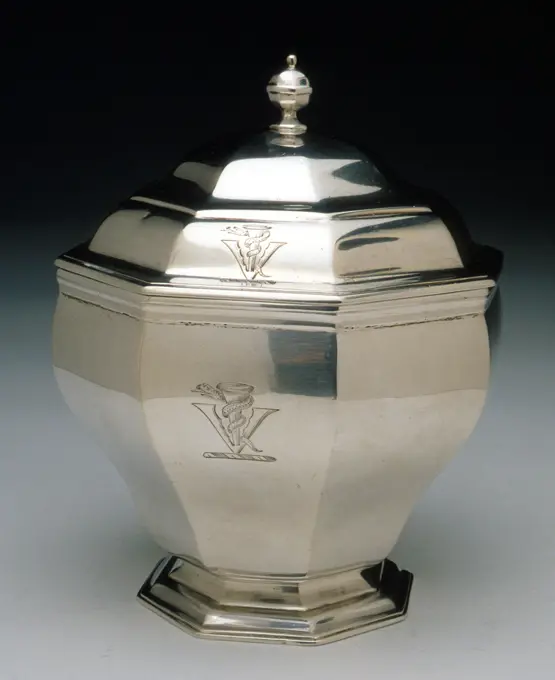
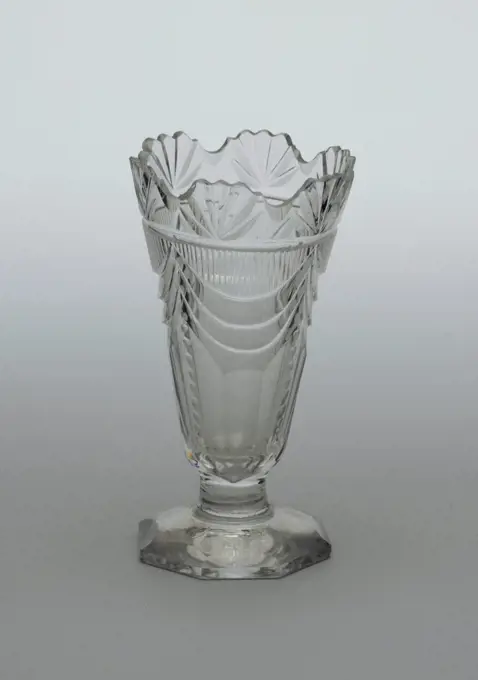
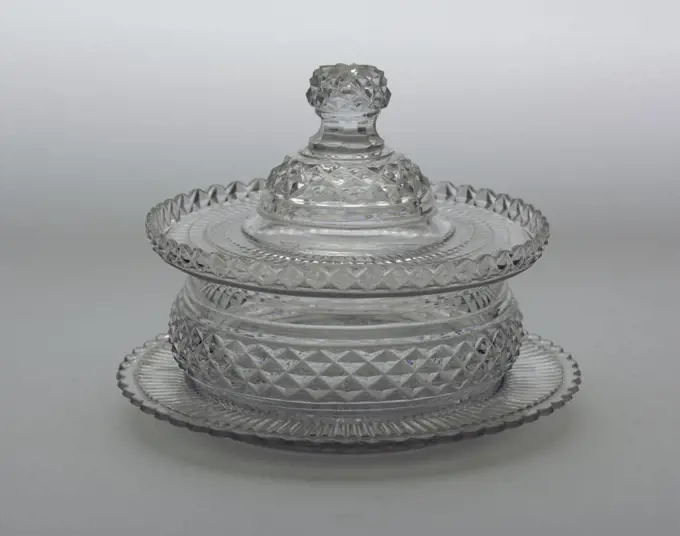
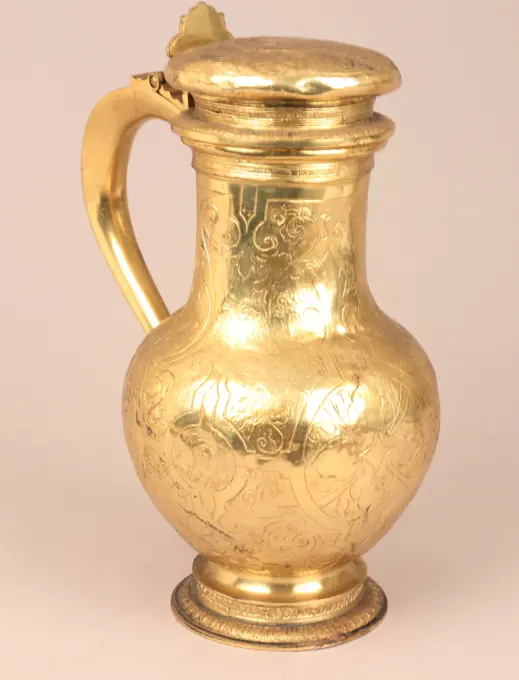
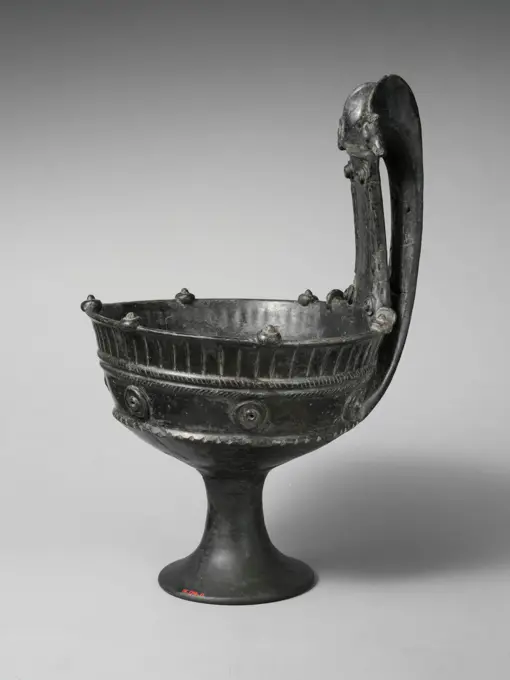
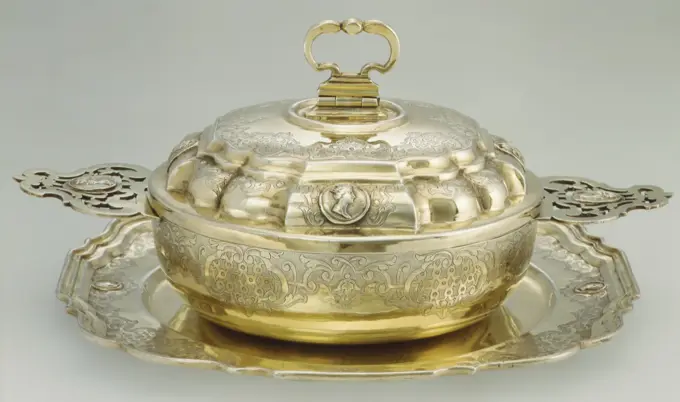
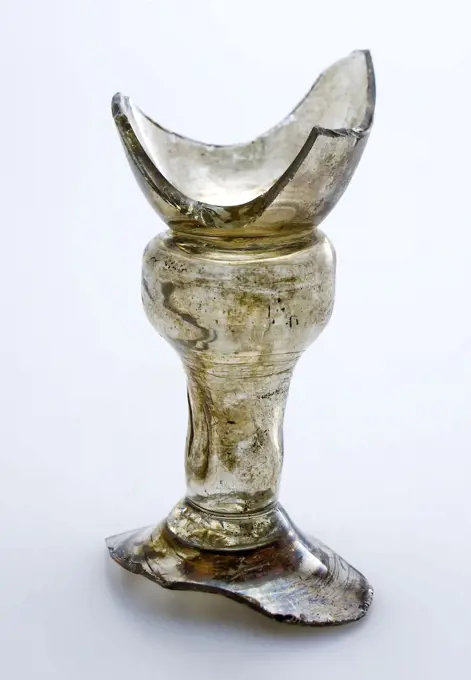
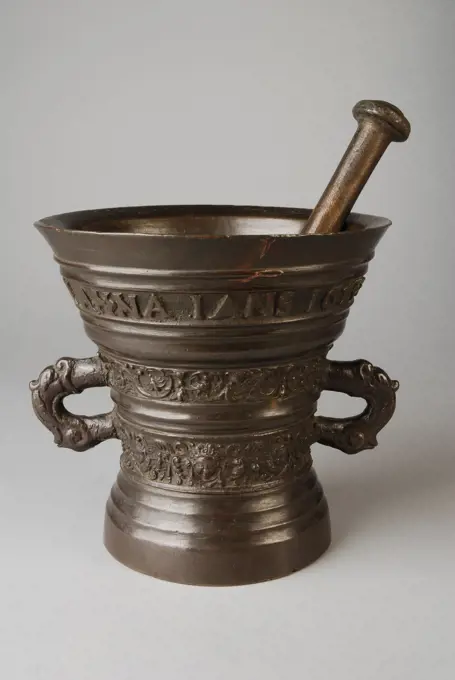
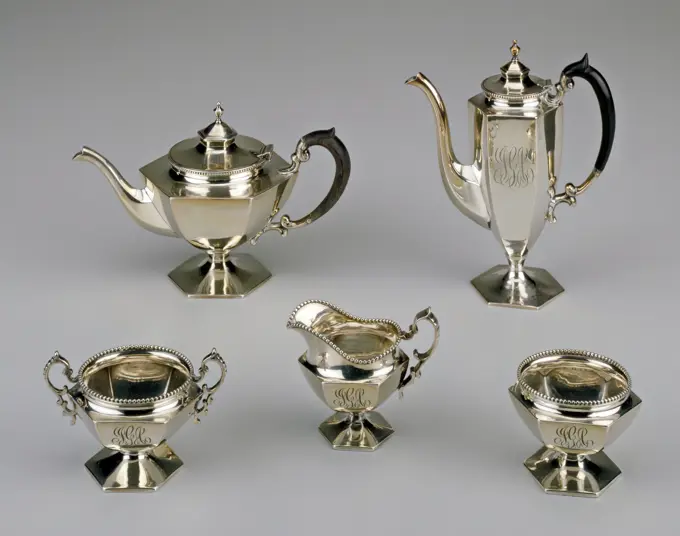
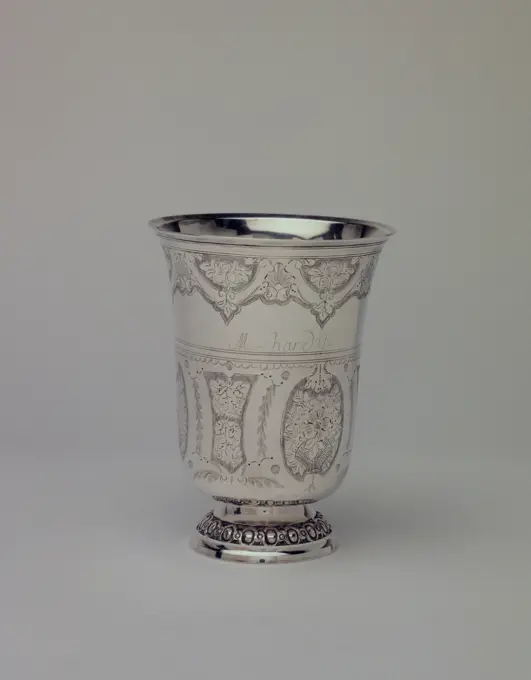
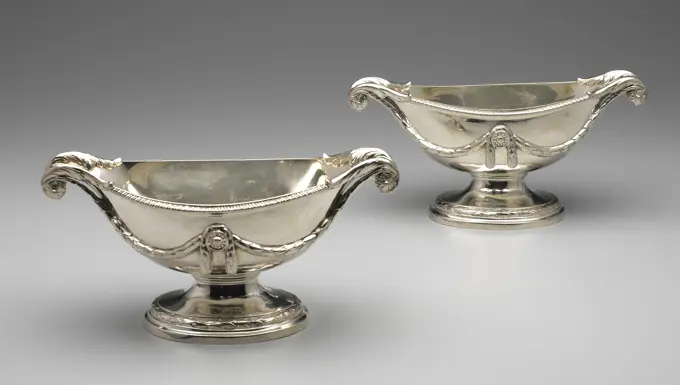
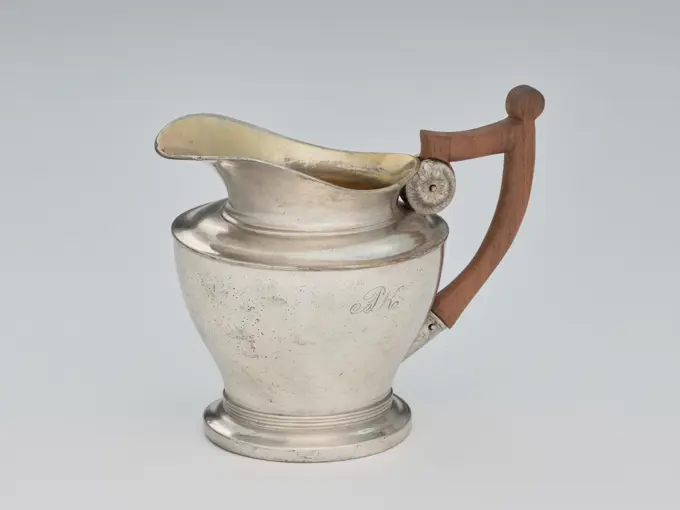
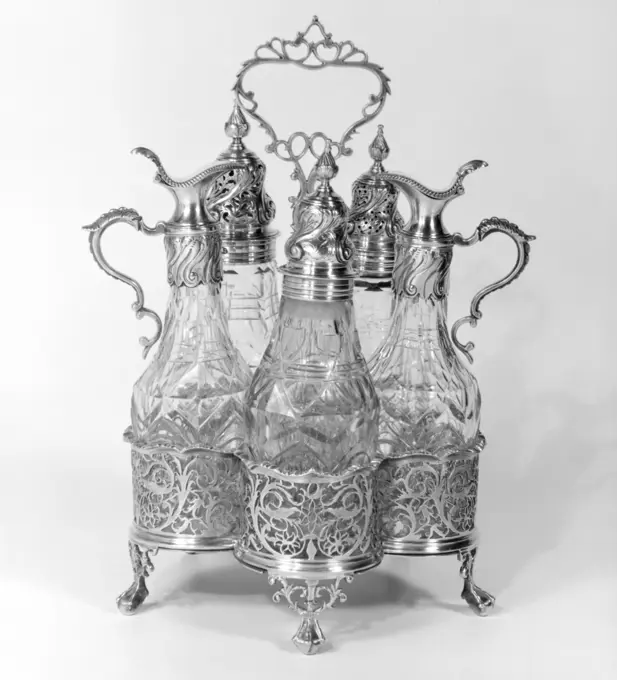
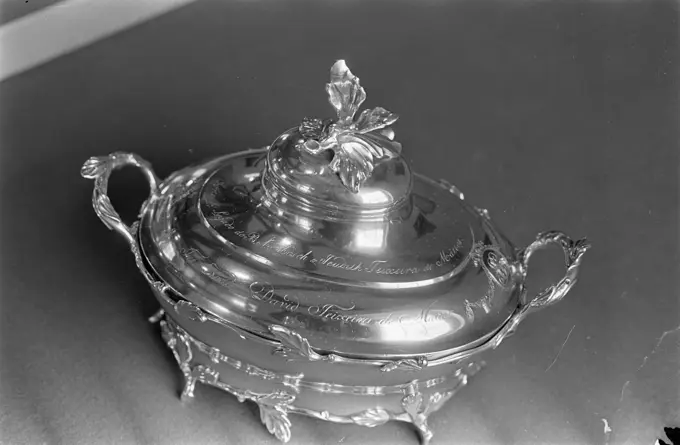
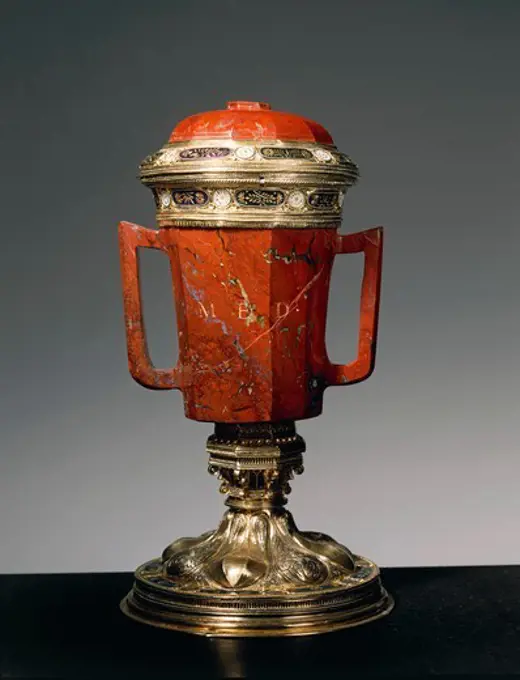
Jar and cover, Henry Chawner, 1764 - 1851, glass, silver, Flattened urn-shaped body on tall faceted flaring foot with scalloped edge;sides of body fluted, a band of diamonds above, above that a band of silverwith slightly everted lip; high domed cover with faceted sides and finial cut with diamonds, notch cut out of rim for spoon., London, England, ca. 1795, glasswares, Decorative Arts, Jar and cover. Bokaal or Superscase of silver, on a baluster-shaped strain with lid. The egg-shaped Cuppa is engraved with cartouches in which spoes, fides and charitas (belief, hope and love).Cup with cover; Zchlin (glassworks; 1736-1890); 1740-1750 (1740-00-00-1750-00-00);dewizyStanding Salt with Cover. English, London. Date: 1583-1584. Dimensions: H: 31.1 cm (12 1/4 in.). Silver gilt. Origin: London. Museum: The Chicago Art Institute, Chicago, USA.Silversmith's Art, Italy 19th century. Silver sugar bowl with cover. Milan, approximately 1810.Flagon (USA); Made by Peter L Krider (American, 1821 - 1895); spun, cast and engraved silverSamuel Williamson, Sugar Bowl and cover, c. 1794, silver.. This silver ewer was part of the cargo of the Spanish Silver Fleet that Piet Heyn captured by order of the Dutch West India Company in 1628. This ewer comes from the Silver Fleet that Sir Lieutenant-Admiral Piet Heyn captured on 6 September 1618’ was later engraved under the base.The year 1618 is a mistake: it should read 1628.Compote - Late Nugget Pattern Jefferson Glass Company, Limited Jefferson Glass Company, LimitedCandlestick (one of a set of eight) 1774/75 Andrew Fogelberg British. Candlestick (one of a set of eight). British, London. 1774/75. Silver. Metalwork-SilverSugar Bowl ca. 1800 Attributed to Christian Wiltberger American This handsome tea and coffee service (1980.503.1--.4), although unmarked, has been attributed to the Philadelphia silversmith Christian Wiltberger on the basis of style. Stately and dignified, with its fluted forms and generous proportions, it represents the fully matured Neoclassical style. The service belonged to Eleanor Parke (Nelly) Custis (1779-1852), granddaughter of Martha Washington, who married George Washington's nephew Lawrence Lewis (1767-1839) on February 22, 1799. Family tradition holds that the service was a gift from General Lafayette and his son, who were close friends of the family. In addition to the matching bands of bright-cut ornament, each piece is engraved with the Lewis crest and with the script monogram "LEPL" for Lawrence and Eleanor Parke Lewis. In place of the customary urn or flame-shaped finial, cast eagles surmount three of the pieces, especially appropriate for America's first family.. SugaKandijbakje, Gerrit Boverhof (attributed to), 1746 The elongated octagonal container has two ears with hinged handles. The foot is made up of a scalloped, vaulted, rejuvenating part, resting on a low base, and a smooth, constricted part that forms the connection with the vessel, which is chopped again. The wall of the barrel is first convex and then hollow vaulted. The convex part has a engraved decoration of flower clocks and volutes on scalloped, ranned fields. The hollow part has a sawn -out decoration of symmetrical patterns, made up of volutes, fan shapes and other elements. Both the engraved and the sawn -out decorations are always the same on both long sides, on the two short sides and on the four sides on the corners. The outer edge has interrupted an imposed, cast decoration of volutes, interrupted in the middle of each of the four sides by a curly leaf motif. The ears and the hanging handles, all cast, are made up of volutes with curling lips. Amsterdam silver (metal) The eloSugar Bowl with Cover. Robert Swan (United States, Philadelphia, circa 1795-1815). United States, circa 1800. Furnishings; Serviceware. SilverKandelaber, Cornelis Knuysting (possibly), 1789 - 1791 Silver candelabar, on round base and decorated with pearl and palm triles. The three arms are hurled. The trunk is crowned by a pineal. Rotterdam silver (metal) Silver candelabar, on round base and decorated with pearl and palm triles. The three arms are hurled. The trunk is crowned by a pineal. Rotterdam silver (metal)Bokaal with lid of silver, C.E. Jedeloo, 1863 Cup with lid of silver, gilded on the inside. Decorated with grape vines around the foot and on the lid. Delft silver (metal). gilding (material) gilding Cup with lid of silver, gilded on the inside. Decorated with grape vines around the foot and on the lid. Delft silver (metal). gilding (material) gildingNutmeg Grater 1775-ca. 1800 American. Nutmeg Grater 5414MATE - RECIPIENTE DE PLATA CINCELADA ARGENTINA - SIGLO XIX. Location: MUSEO DE AMERICA-COLECCION. MADRID. SPAIN.Beaker. Culture: Hungarian. Dimensions: Overall: 7 7/8 x 4 13/16 in. (20 x 12.2 cm). Maker: Georgius Olescher Jr. (master in 1721, died 1761). Date: ca. 1730-50.An elegant rhythm is created in this beaker by alternating gilded vertical concave flutes with silver panels containing finely embossed and chased ornament on a matte ground. Georgius Olescher Jr., the maker here, was probably inspired by the work of Michael II May, who spent several years in France becoming familiar with Regence ornaments, returning to Brass by December 1731. Other Transylvanian beakers are similarly decorated, including examples with this typical bell-shaped form. And it was May who produced several such large beakers, all of which are similarly ornamented (Istvn Heller. Ungarische und siebenbrgische Goldschmiedearbeiten: Vom Ende des 16. Jahrhunderts bis zum Ende des 19. Jahrhunderts. Munich, 2000, pp. 106-8, nos. 31 and 32). Some were produced with a lid. The Regence strapwork is an adaptation ofBRASERO DEL SIGLO XVII. Location: CONVENTO DE LAS CARMELITAS. Toledo. SPAIN.Robert Peake, Monteith, 1701/2, silver.Cuppa van Kastanjevaas decorated with griffins, Porceleinfabriek aan den Amstel, c. 1810  Cuppa of Kastanjevaas decorated golden edges and sprinkling flowers and flower branches. Netherlands porcelainInner box of blue glass, Nathanael Teuter, 1805 Inner box of blue glass. Amsterdam glass Inner box of blue glass. Amsterdam glassTureen with Cover. John Wakelin and William Taylor; English, in partnership 1776-c. 1792; London, England. Date: 1783-1784. Dimensions: 26 x 14.3 x 22.8 cm (10 1/4 x 16 1/4 x 9 in.). Silver. Origin: London. Museum: The Chicago Art Institute, Chicago, USA.Coffee Pot (part of a set). J.T. and E.M. Edwards; American, 1852-1864; Chicago, Illinois. Date: 1852-1864. Dimensions: 28.4 × 13.3 cm (11 3/16 × 5 1/4 in.). Silver. Origin: Chicago. Museum: The Chicago Art Institute, Chicago, USA.Silver coffee pot from a coffee and tea set of 11 parts that belonged to J.D. Preuijt (1801-1887) Given to him at his anniversary in 1873 .. Silver round coffee pot with scalloped and engraved ornaments with floral motifs. A golden medal has been placed in the lid and can hinge on it. The medal is of the Hollandse Maatschappij for Agriculture (1847): '1st prize wormy heifers',' J.D. Preuijt 's Gravenhage 1872'. Ivory rings in the handle. In the pot loose a filter with handle and loose a coffee tamper. Two leaves are attached between handle and lid. The pot stands on four legs.Footed Bowl; Venice, Veneto, Italy; early 16th century; Free- and mold-blown colorless (slightly purple) glass with gold leaf and enamel decoration; 24.1 x 21 cm (9 1,2 x 8 1,4 in.)Cup. Moses Morse; American, active 1813-1830; Boston, Mass. Date: 1813-1830. Dimensions: 17.5 × 12.4 cm (6 7/8 × 4 7/8 in.). Silver. Origin: Boston. Museum: The Chicago Art Institute, Chicago, USA.Sugar bowl with cover 1820-30 French, Sarreguemines. Sugar bowl with cover 238825Brandewijnkom. Brandy bowl of silver, with a high, octagonal, engraved cuppa and two horizontal ears as French lilies. The male weapon is from the Botma family. The initials A G R and S G B stand for Aukje Gerrits Roorda and Sake Gerrits Botma.Sponge Box. Netherlands. Date: 1857. Dimensions: 5.1 x 3.8 cm (2 x 1 1/2 in.). Silver. Origin: Netherlands. Museum: The Chicago Art Institute, Chicago, USA.Ewer, Silver gilt, Helmet-shaped ewer on domed foot, engraved with strapwork, and bearing lobed medallions in two sizes, the larger representing Asia and America, the smaller Geometry, Music, etc. Double-scrolled handle., The basin is marli alternately lobed and straight, with guilloche band, strapwork engraving, and four large relief medallions representing the Four Elements, and four smaller medallions of the Four Continents. Gadrooned well; raised center with relief medallion of Hercules crowned by Victory, framed in guilloche border and strapwork., Augsburg, Germany, ca. 1730, metalwork, Decorative Arts, EwerCoffeepot 1817-18 Probably by Henry Nutting. Coffeepot 197417Bowl with cover late 18th century British. Bowl with cover. British. late 18th century. Glass. GlassWastebowl.  Maker: Samuel Williamson, American, 1772-1843Sugar bowl and lid, Silver, Ovoid body on spreading foot, with bead edging and fret band; two scrolled handles. Cover in concave tiers, with figure of standing Chinese holding a bamboo staff. Engraved on one side: 'Gussie from Father and Mother.' Monogram on opposite side: 'A J()S().' Top of foot dented all the way around. Dent on side below spout., Philadelphia, Pennsylvania, USA, 1825-50, metalwork, Decorative Arts, Sugar bowl and lidSugar Bowl and Lid (part of a set). Gorham Manufacturing Company; American, founded 1831; Providence, Rhode Island. Date: 1900. Dimensions: 16.5 × 18.4 × 16.5 cm (6 1/2 in. h. × 7 1/4 in.). Silver. Origin: Providence. Museum: The Chicago Art Institute, Chicago, USA.Caudle Cup, one of apair.   Maker: John Coney, American, 1655-1722Vase with Sacrifice Scene 1800-1850 France. Gilt bronze . Ferdinand BarbedienneTwo-Handled Covered Cup. Cornelius Kierstede; American, 1674-1757; New York, New York. Date: 1698-1720. Dimensions: 12.7 × 20.3 × 12.7 cm (5 3/8 × 8 5/8 × 5 3/4 in.); 677.4 grams. Silver. Origin: New York. Museum: The Chicago Art Institute, Chicago, USA.Ewer and basin with the arms of Vlissingen, Jacques Bogaert (attributed to), 1608 The base of the round can be made up of a slightly vaulted part decorated with a pattern of godrons, a profiled straight edge, a flat, slightly overhanging edge decorated with a stamped, repeating pattern of fruits and leaves, and a diabolo -shaped part of which the upper edge Also decorated with a stamped pattern of fruits and leaves. The slightly sunken top edge of the egg -shaped body is decorated with a stamped, repetitive pattern of Godrons. The vaulted, rejuvenating, interrupted neck interrupted by a double profile edge turns into the high, wide pour. An excellent edge has been set to this, which is decorated at the top with a stamped, repetitive pattern of Godrons. The pour on the back turns into two in rotating, curved edges, the rear of which ends in a spiral. A cast ramskop has been applied to the back of the body, in which the underside of the also cast, high -bent ear sticks. This is made up oTea kettle;  19th century (1800-00-00-1900-00-00);Cup honouring the captaincy of Jan Berewout Jan Lanckhorst (1668-1742).This cup contains references to war and peace. Stories from Classical antiquity are combined with the freestanding allegorical figures of Prudentia (prudence) and Mars (power). The showpiece was commissioned by one of the sixty Amsterdam civic guard companies. Its exceptionally splendid execution speaks volumes about the competition among the militia companies.Can, terry model. Can of tin, terry model. The foot goes up narrow up to the can. Halfway through the can be a horizontal band. The top edge is slightly scalloped and runs out in a wide. High spout. The switched handle in the form of two curls runs from just below the horizontal belt to the opening at the top of the can.Ewer 1635 Probably Peter Bettesworth This austere and minimally-decorated silver ewer is remarkable for its clean outline and its energetic, sculptural profile. The dramatic sweep of the elongated spout is balanced by an ear-shaped handle fitted with a thumb piece allowing a grip that balances the weight of the filled vessel. The construction may be simpleit is formed of uncomplicated raised components but it is composed with a sure sense of proportion and function. The ewer would have been displayed with a matching basin on a sideboard or cupboard and brought to the table for the washing of hands during a meal. The form of this ewer, with its slightly everted rim, trumpet-shaped foot and flaring spout was employed at least until the 1670s. Only a few examples survive with their basins, which have a broad, plain rim and raised boss at center to accommodate the foot of the ewer when not in use.The absence of decoration on early seventeenth century silver has traditionally been ascribeWorkshop of the Miseroni / 'Heliotrope jug with spout'. Ca. 1610. Gilt-copper, Enamel, Bloodstone, Gold, Pearls, Silver-gilt, Brass. Museum: Museo del Prado, Madrid, España. Author: TALLER DE LOS MISERONI.Goblet.   Maker: Anthony Rasch & Co., American, 1809-1819Drinkschaal, anonymous, 1635 dish Drinking scale on the foot of driven silver. Three volute -shaped dragons are attached to the trunk. The basin is engraved with tire work, tibs and birds. An inscription runs along a medallion. Amsterdam silver (metal)  banquet of elegant company. ornament derived from plant forms CitizenPurportedly by Samuel Courtauld, I, Sugar Bowl and Cover (spurious), 20th century, silver.Chalice, Molded and gilt copper, engraved pewter, Cup rests on star-shaped foot. Stem composed of bulbous section with framed rhomboids, and bell-shaped cup with thin flaring sides., possibly France, late 15th-16th century, metalwork, Decorative Arts, ChaliceCoffeepot 1769-70 William Priest. Coffeepot. British, London. 1769-70. Silver. Metalwork-SilverCup; Weissbach (Huta Szk A; 1617-1754), Weiberge (Huta Szk 1740-1750 (1750-00-00-1750-00-00);Sweetmeat glass, Glass, Deep fluted-shaped bowl, short tapered stem, slightly domed 8-sided foot; lip scalloped with fan cutting, below that cut drapery swags with narrow vertical flutes above and wide flutes below, foot cut with facets at edges., Ireland, ca. 1800-20, glasswares, Decorative Arts, Sweetmeat glassTwo glass holders. The foot of a wine glass could be secured in the four clamps (shaped like sea creatures) at the top of thisholder. Together, the glass and its holder make an impressive drinking vessel, which was probably brought out only on ceremonial occasions. The two glass holders belong to a set of five that was commissioned in 1606 by the treasurers of the Amsterdam City Council.Sugar bowl (part of a set) 1860-80 Anglo-Indian Part of a set that includes a teapot (1972.116.1) and cream jug (1972.116.3). The decoration combines Indian festival scenes amid palms and temples with domestic ones in European-style interiors.. Sugar bowl (part of a set) 205466SamovarDish with lid and stand, Glass, Circular waisted bowl has wide rim to hold cover. Diamond cutting edges rim and surrounds body dome of cover, and finial. Cover has flat, radial cutting on underside with flat steps on top. Radial cutting on bottom of bowl, and on stand with scalloped edge., possibly Cork, Ireland, ca. 1800-10, glasswares, Decorative Arts, Dish with lid and standFlagon 19th century, after 1596-97 original Elkington & Co. British This electrotype is after a seventeenth-century original (1596-97), at time of reproduction a treasure of the Patriarch, Moscow.. Flagon. British, Birmingham, after British, London original. 19th century, after 1596-97 original. Silver on base metal. Metalwork-ElectrotypeTankard 1750-51 William Shaw. Tankard 197368Pair of casters 1733-34 Paul de Lamerie British. Pair of casters 202050Coffeepot 1827 Harvey Lewis. Coffeepot. American. 1827. Silver. Made in Philadelphia, Pennsylvania, United StatesKetel, anonymous, c. 1704 - c. 1734 Round, wide -ranging boiler with lid and handle. The handle is fixed and bent in two places at the top. The top of the lid has a driven floral pattern and a smooth button. The side wall of the boiler is lobed by vertical lines. The boiler is marked: stk. = Amsterdam, Mt. = Citroen 1975, no. 970. The boiler is kept at a Komfoor (invnr. BK-NM-11177-128-B). Amsterdam silver (metal) Round, wide -ranging boiler with lid and handle. The handle is fixed and bent in two places at the top. The top of the lid has a driven floral pattern and a smooth button. The side wall of the boiler is lobed by vertical lines. The boiler is marked: stk. = Amsterdam, Mt. = Citroen 1975, no. 970. The boiler is kept at a Komfoor (invnr. BK-NM-11177-128-B). Amsterdam silver (metal). A large (A) and two small (B and C) oval terrines, in Louis XVI style decorated with driven cannelures, garlands wrapped with ribbons, appliqued festans and pearl edges. Each terrine has a lid with button and stands on four legs. All terrines labeled under soil: Middelburg; annual letter k = 1773; Mt. P above prie = philippus prié; Crowned o = release sign; Bijl = tax fee. NOTE: All Terrines are equipped with an inner box.Chalice with cover, c. 1698, 6 1/4 x 2 1/8 x 2 1/8 in. (15.88 x 5.4 x 5.4 cm), Silver, gilt, Germany, 17th-18th centuryStanding cup 1800-1801 Possibly by Naphtäli Hart This stately ceremonial goblet was a gift to Frederica Sayers from her godmother for whom she was named, Princess Frederica of Prussia, wife of Prince Frederick Augustus, duke of York, the second son of King George II of Great Britain. Their coat of arms upon oval shields, with a prince's coronet above, face the viewer. The lion of England and the unicorn of Scotland support the royal arms. On the opposite side are engraved the initials F S, for Frederica Sayers, whose granddaughter gave the goblet to the Museum.The deep color of the gilding that covers the interior of the goblet is due to the presence of copper in the gold as an alloy. It was called "red gold" and was particularly popular in the nineteenth century. While the vase form of the goblet, with its calyx of convex flutes enclosing the lower half of the body, and the scoop-sided stem are Neoclassic features, the sharp curve of the bowl and the hexagonal base convey also a suggeCovered Urn ca. 1816-23 French. Covered Urn 2551Andrew Tyler, Tankard, 1732, silver.Cup 17th century Possibly by Hans Heinrich Holzhalb I. Cup 193463Tankard ca. 1780-90 Andrew Underhill. Tankard 8228Terracotta stemmed kyathos (single-handled cup) ca. 575-550 B.C. Etruscan Oversized, elaborately decorated wine cups of this type are popular products of bucchero workshops at Vulci. Some are too large and heavy, especially when filled, to have been used by living banqueters. They may have been made expressly for the dead.. Terracotta stemmed kyathos (single-handled cup). Etruscan. ca. 575-550 B.C.. Terracotta; bucchero pesante. Archaic. VasesBowl with cover (écuelle) and plate 1713-15 Ludwig Schneider The écuelle is a French form.. Bowl with cover (écuelle) and plate. German, Augsburg. 1713-15. Silver gilt. Metalwork-SilverGoldsmith's art, Italy, 16th century. Gasparo Miseroni (active about 1550-1575), Cup in rock crystal and enamelled gold. Height 22.5 cm. Openwork gold lid.Sugar vas with lid, vase -shaped, with openwork wall, fa. Diemont, 1807 The foot of the round vase, which is made up of two curved parts, rests on a right -wing base. Above is the vase -shaped body, which is opened with stylized arrows, connected by circles. At the top of the body, a wide, excellent, slightly rising edge has been applied, opened with lying pointed soils. On the edge is the handle that is slightly widened towards the center. The lid consists of two vaulted parts as well as the foot. It is crowned by a spherical button. Above the base, on the foot, on the top edge, on the lid and on the handle, traffic jams are applied. Along the top and bottom edge of the base, on the outside of the upper edge and on the lid button, fine pearl edges run. Amsterdam silver (metal) The foot of the round vase, which is made up of two curved parts, rests on a right -wing base. Above is the vase -shaped body, which is opened with stylized arrows, connected by circles. At the top of the body, Fragments of part of foot, trunk and part of chalice of chalice, drinking glass drinking utensils tableware holder soil find glass, hand-blown Fragment of part of foot of stem and part of chalice of chalice in clear colorless glass. Pontil mark under slightly ascending hollow foot. Hollow baluster-shaped trunk. Bell-shaped smooth calyx archeology Rotterdam City center C.S.-Kwartier Schiekade Soil discovery cesspool Schiekade 31-03-1977.Claughter with ablaimant members unknownPepper Mill (USA); Manufactured by Gorham Manufacturing Company (United States); silver, ivory, metalPeter van Trier III, Johan van Trier V, Peter van Trier IV, Henrick van Trier II, Bronze mortar with WILLEM ARISEN VERSTEGH ANNA IANS 1651, with pestle, mortar pestle equipment bronze lacquer tin auger, poured auger (): cylindrical upwardly widening body built from wide round foot with three ridges wall with two decorative frieze high cantilever top edge with inscription. The upper frieze is narrower than the lower one. The separation between the two friezes is formed by two ridges. The inscription is bordered at the top and bottom by ridge. Two ears in the shape of dolphin are attached to the wall. Paint layer on the outside of the mortar In Latin majusels poured in the upper edge: WILLEM ARISEN VERSTEGH ANNA IANS 1651 closed by flower metalworker health care pharmacy grinding Rotterdam education Academy of Fine Arts and Technical Sciences Cool Coolvest Dijkzigt G.J. de Jonghweg City Triangle Blaak Academy of Fine Arts and Technical Sciences Rotterdam.Sugarbowl.   Maker: Daniel Dupuy, Sr., American, 1719-1807Miskelk, Johannes Lutma (1624-1689) (attributed to), 1663 The Ronde Mandkelk has a cast, curved foot on which an ox, an eagle, an angel and a lion, the symbols of the four evangelists in high relief. These are interspersed with scenes executed in low relief from the life of Christ on a punched ground: the birth, crucifixion, the resurrection and ascension. The foot has a flat lower edge that is surrounded by curling, flame -like ornaments. These ornaments are repeated in more powerful version and mirrored, at the bottom of the foot. The narrow tapered upper part of the foot is decorated with acanthus leaves all around. The trunk consists of a reverse pear -shaped nodus between two narrow, articulated nodes. These components are decorated with vineyards and corn sheaves, the lower part of the large nodus with acanthus leaves, all on a ran ground. The low, smooth cuppa is caught in a countercuppa on which four angels are driven between vineyards, three of which bear the sufferers and theMustardPot.   Maker: Peter Van Dyck, American, 1684-1751Jug with cover 1566-67 British, London. Jug with cover 204989Tea pot, from a five-piece children's tea service, c. 1863-1912, Bigelow, Kennard & Co., 4 1/4 x 6 1/2 x 3 1/4in. (10.8 x 16.5 x 8.3cm), Sterling silver, United States, 19th-20th centuryCreamer, from a five-piece children's tea service, c. 1863-1912, Bigelow, Kennard & Co., 2 5/8 x 3 x 1 7/8in. (6.7 x 7.6 x 4.8cm), Sterling silver, United States, 19th-20th centuryLouis-Jacques Berger. "Cup". Money. 1807-1809. Museum of Fine Arts of the City of Paris, Petit Palais. 74382-12 Money, silverware, gobletSauce boat, one of a pair, 1768, Sir William Chambers, English, 1723-1796, 4-3/4 x 4-5/16 x 9-11/16 in. (12.1 x 11.0 x 24.6 cm), Silver, England, 18th centuryMilk jug. Lilpop, Karol Jerzy (fl. 1820-1833), goldsmithJug  milk Berndorf metal goods factoryCruet frame with five cruets 1770-71 British, London. Cruet frame with five cruets 199703Anefo photo collection. Exhibition Jewish marriage, scale with lid of silver. April 19, 1966. Komfoor with three S-shaped supports, the container decorated with knerring and rosette on bottom, loose lid with button.Collection of religious silverware at the Ten Duinen museum at Koksijde, Belgium, EuropePepper Box ca. 1725 William Pollard. Pepper Box. American. ca. 1725. Silver. Made in Boston, Massachusetts, United StatesAnonymous. Vase mounted. Marble, gilded bronze, 1760-1770. Paris, Cognacq-Jay museum. 79737-30 Anse, decorative art, bronze gilded, chain, gilding, marble, vase monte, 18th 18th 18th 18th 18th 18th 18 centuryPort of cover; Ditloff, Nathaniel (Fl. 1690-1696); 1690-96 (1690-00-00-1696-00-00);Abraham (Bible), Bible, Hagar (Bible), Isaac (Bible), Izmael (Bible), Sara (Bible), Old Testament, exile Hagar (iconogr.), Baroque (style), purchase (provenance), swanUrn ca. 1830 probably French, Paris. Urn 195013Flagon ca. 1750 Probably by Pier Antoin Simaval. Flagon 207858Teaset.   Maker: Abraham Dubois, American, 1751-1811Lidded vase (with reserve scene of a female figure).. Mustard pot, round, with a loose lid and a loose inner container made of blue glass. The vaulted body rests in a strong rejuvenating foot on a straight-handed, stuffed base decorated with crosslines executed in trembling stitch. Where the basics involve, a pearl edge has been applied. The body is opened with a pattern of laurel leaves decorated in various engraving stitches, from which crossing tires and open circles, closed on the top by a wide tire, decorated with a continuous pattern of a wavy tape, bragged with a laurel wreath, on a roughened fond . The pot has high wing-shaped ears with straight tops. The vaulted lid is openworked with trembled butt and is closed on the top by bay leaves. The lid is crowned by a flame-shaped button. In the bottom edge of the lid, also decorated with a trembling stitch is a rectangular recess in which the (lost) mustard spoon could be inserted.Silversmith's art, Italy, 15th century. Jasper, enamelled gilded silver vase with two handles and lid. Height cm. 27. Signed LAV.R.MED.Wine pot early 18th century China. Wine pot. China. early 18th century. Porcelain painted in polychrome enamels over the biscuit (Jingdezhen ware). Qing dynasty (1644-1911), Kangxi period (1662-1722). Ceramics