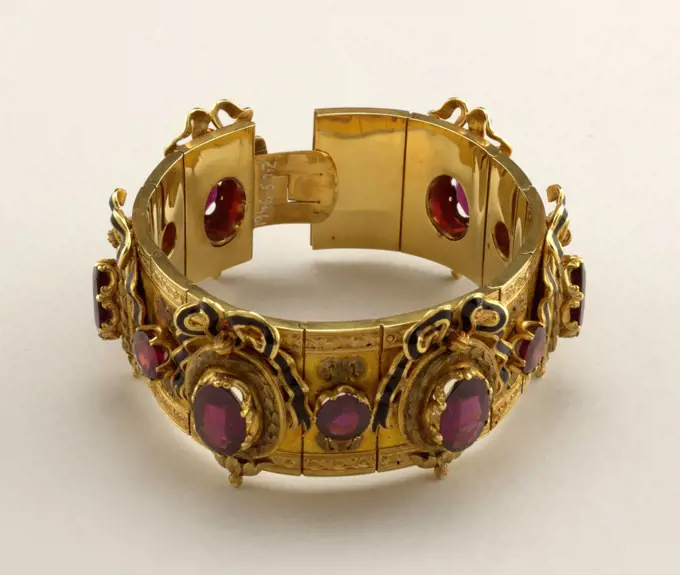
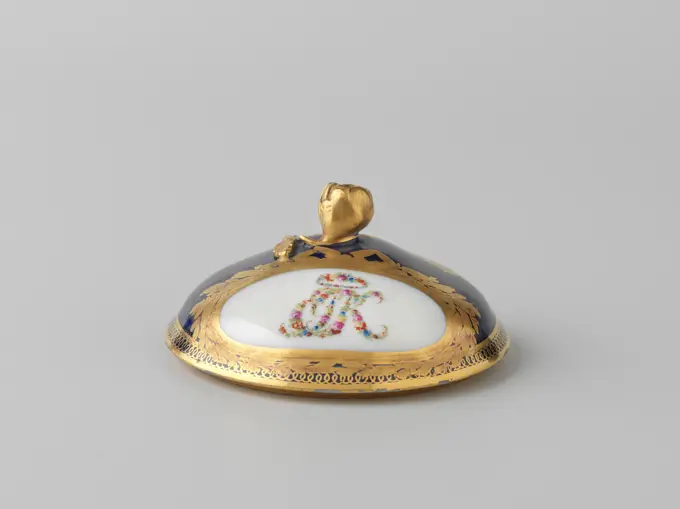
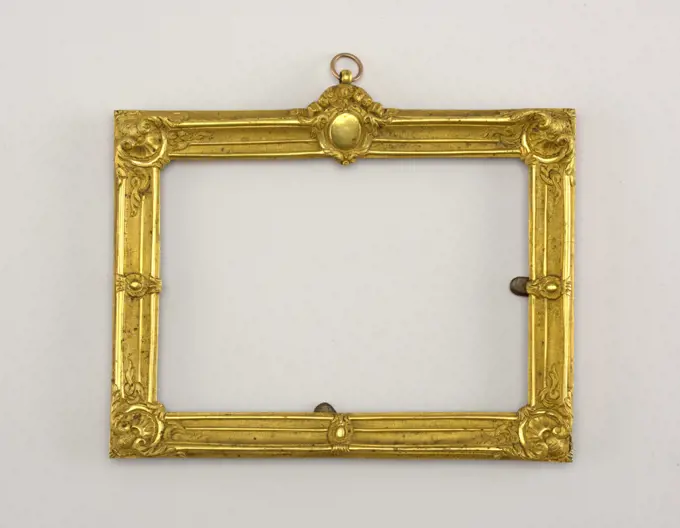
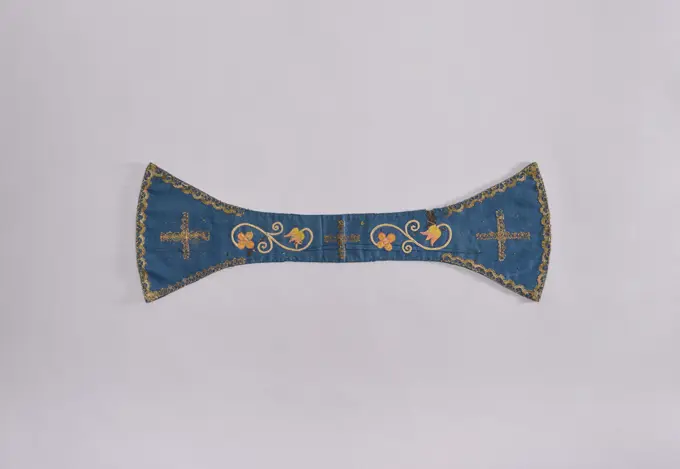
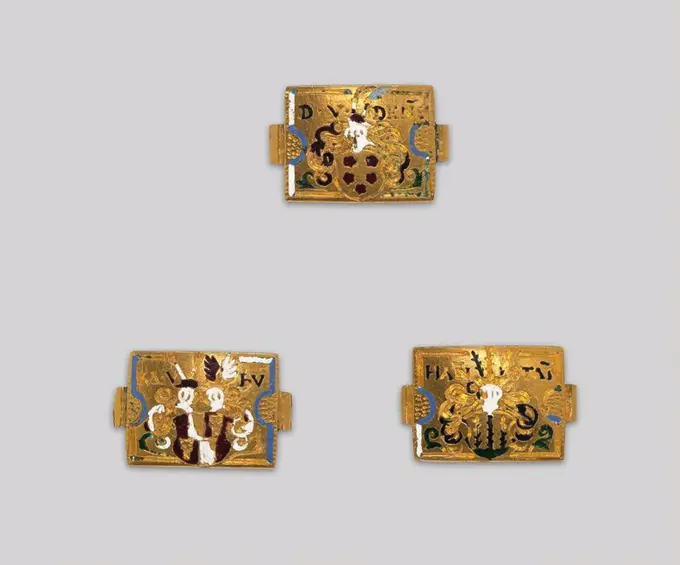
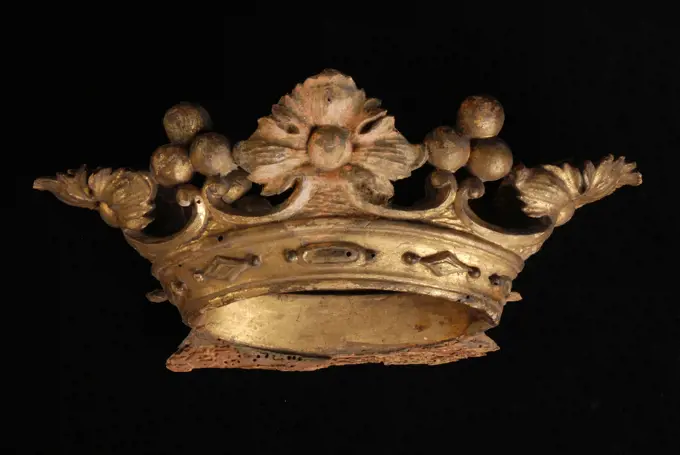
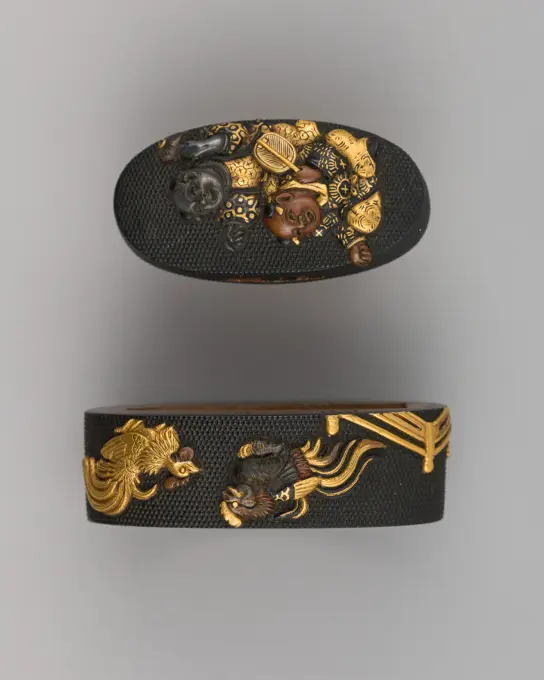
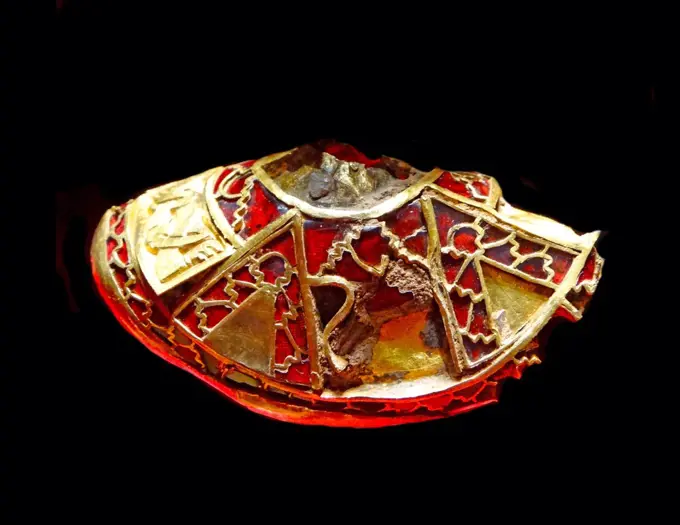
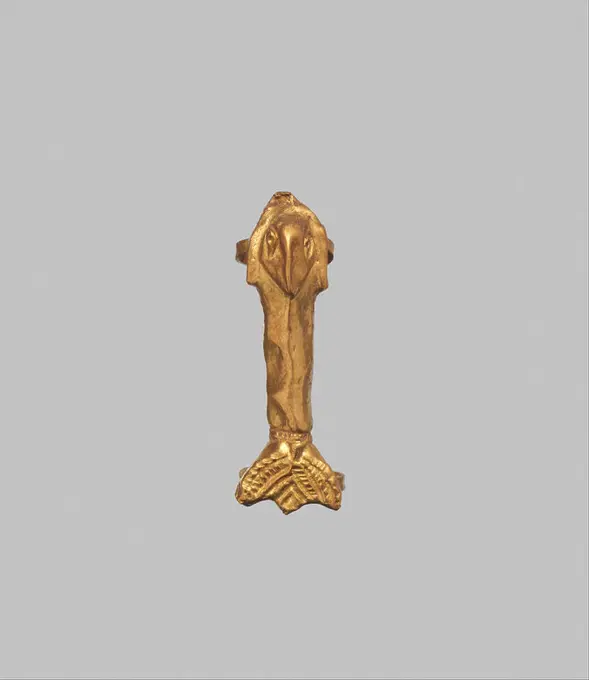
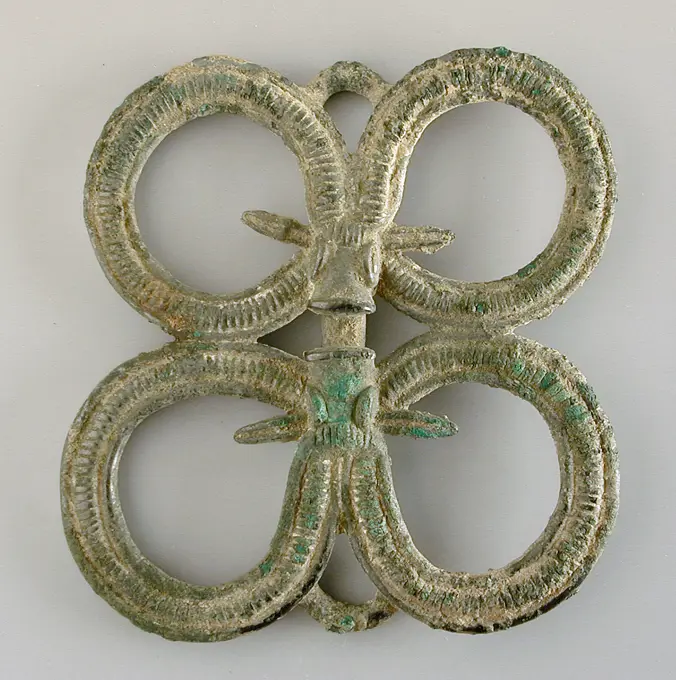
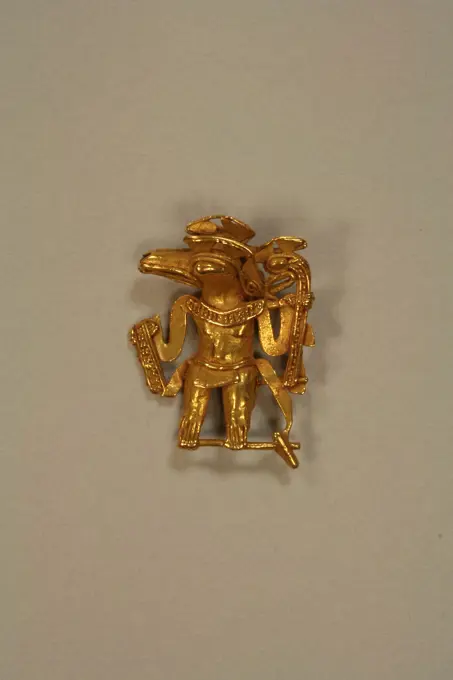
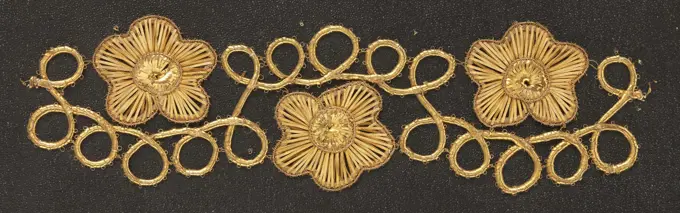
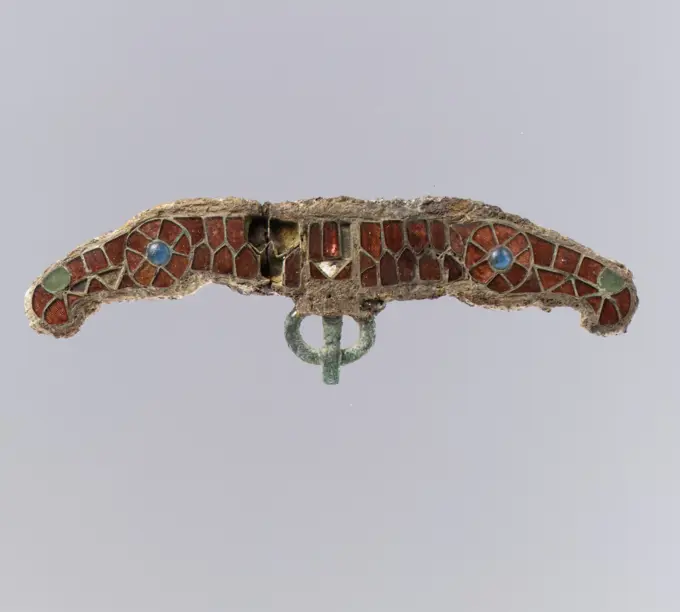
Antique Decorative Metalwork

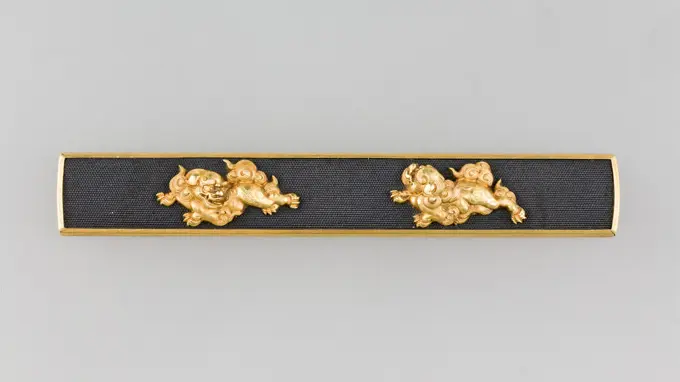
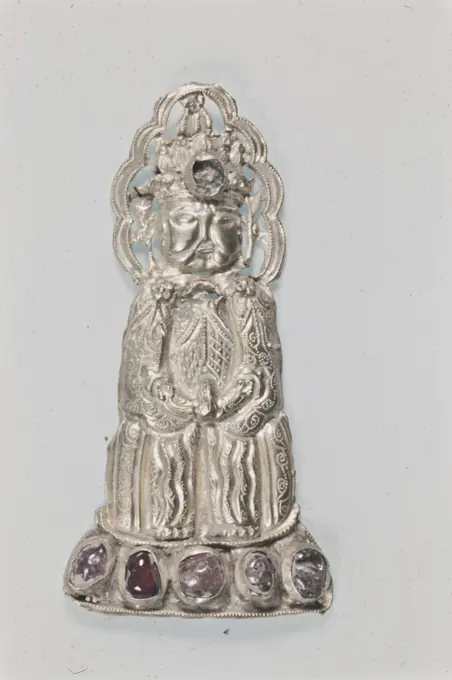
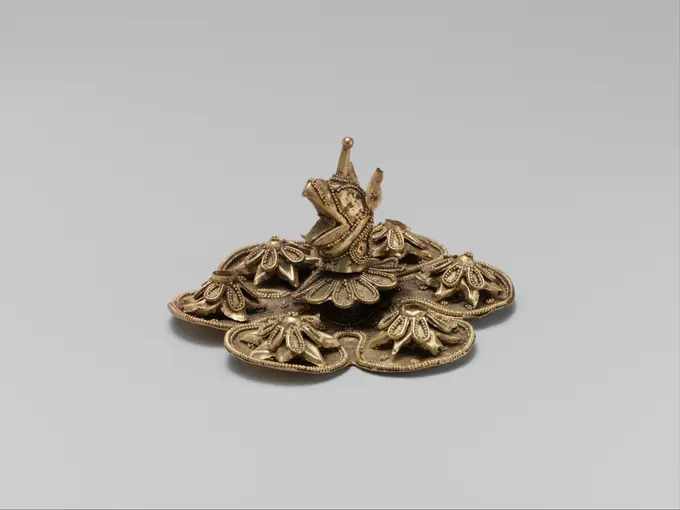
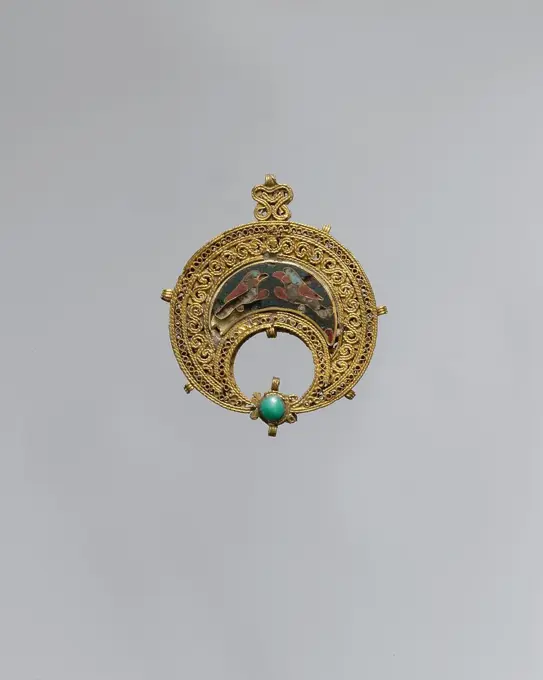
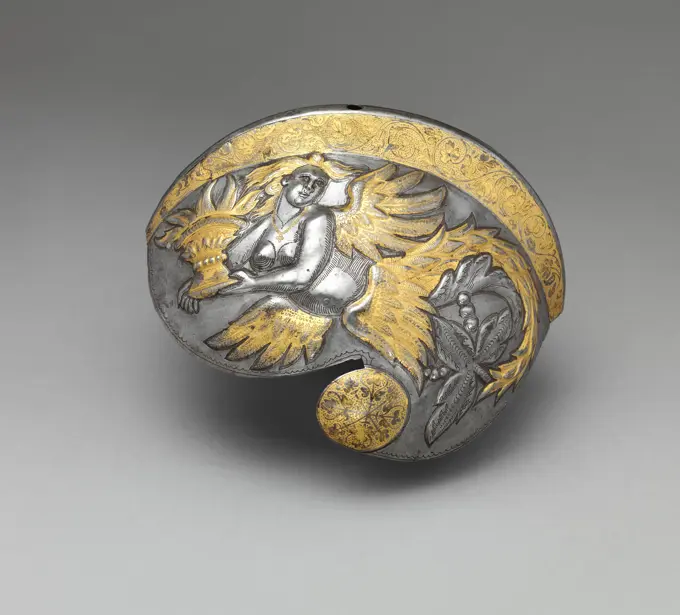
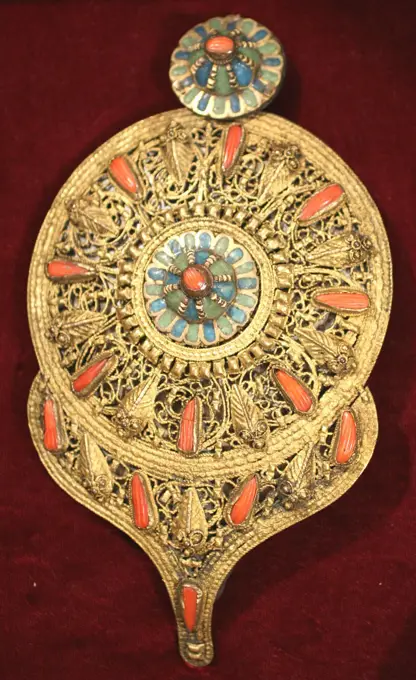
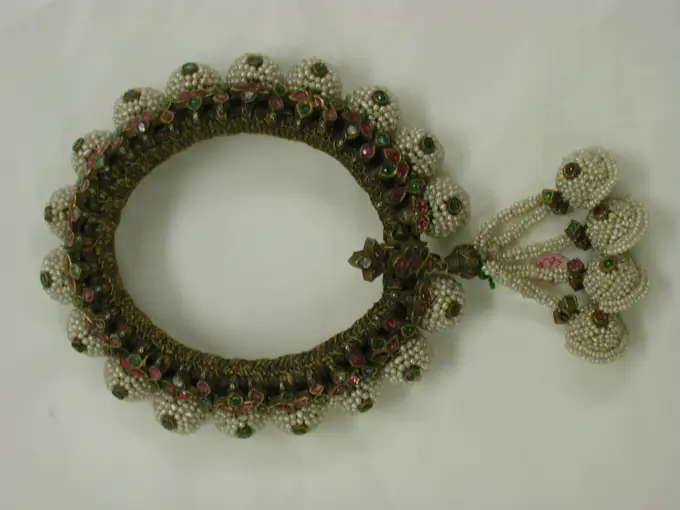
A collection of ornate brass objects, including a chatelaine, wall light, decorative mounts, and jewelry parts, showcasing intricate designs from historical periods.
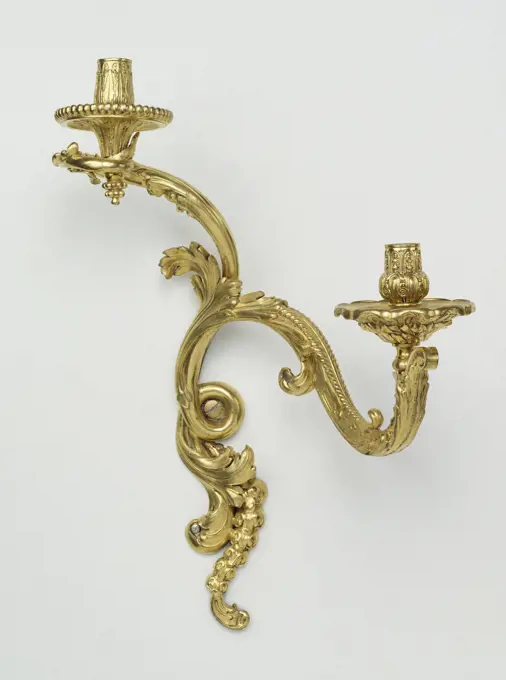
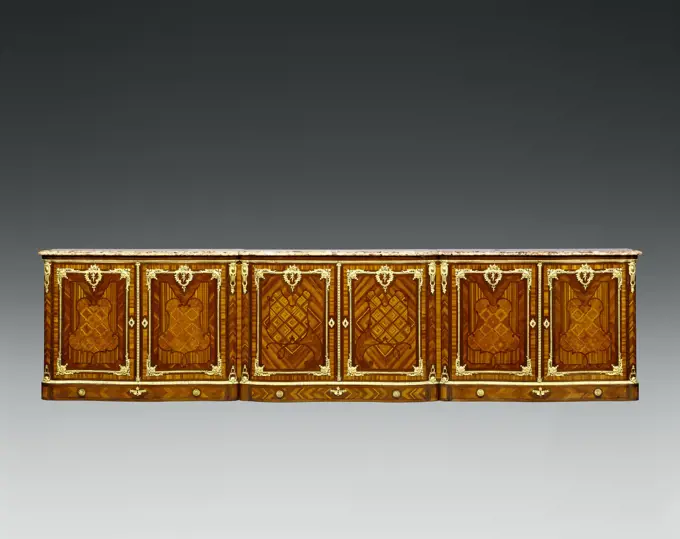
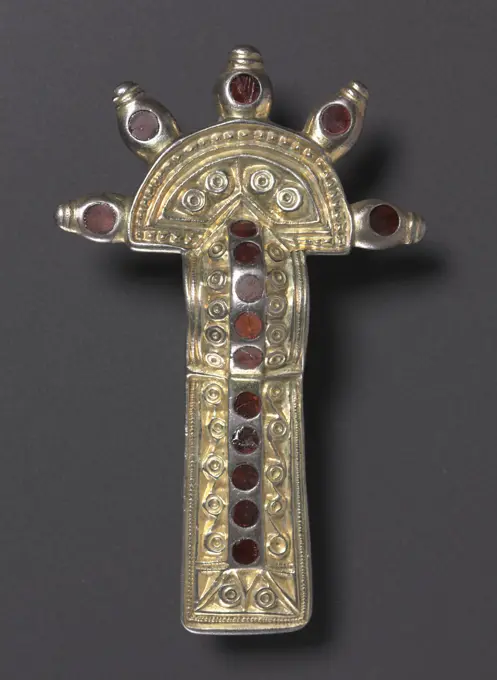
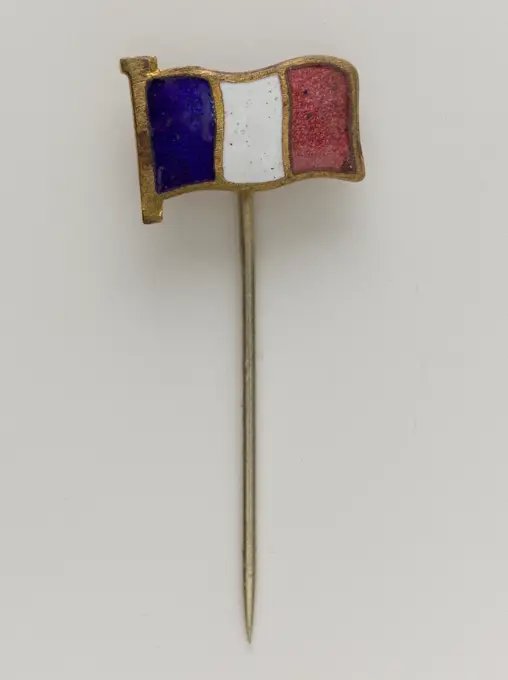
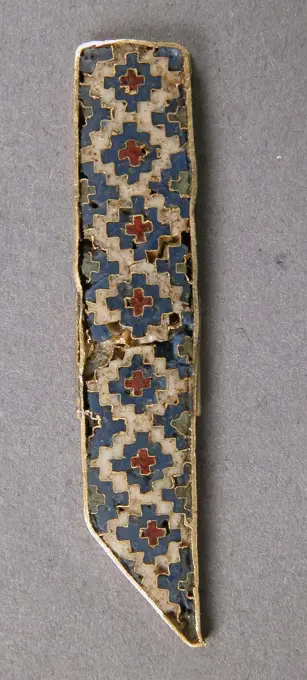
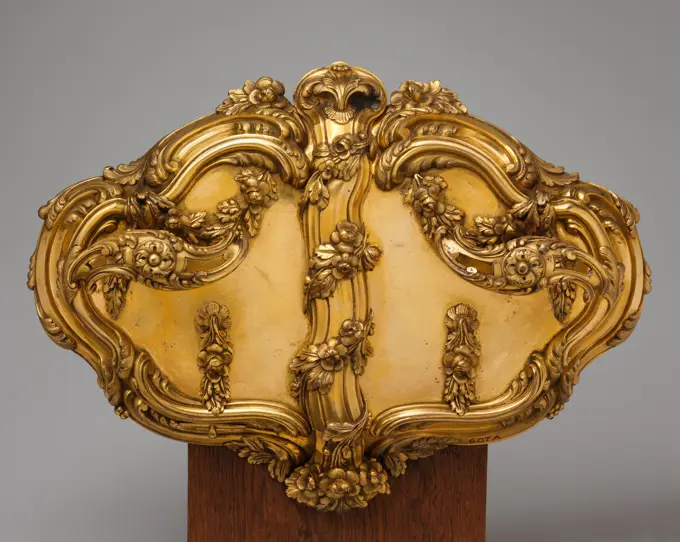
Wall Light (Bras de lumière); André-Charles Boulle (French, 1642 - 1732, master before 1666); Paris, France; about 1700 - 1715; Gilt bronze; 55.2 x 37.5 x 17 cm (21 3,4 x 14 3,4 x 6 11,16 in.)
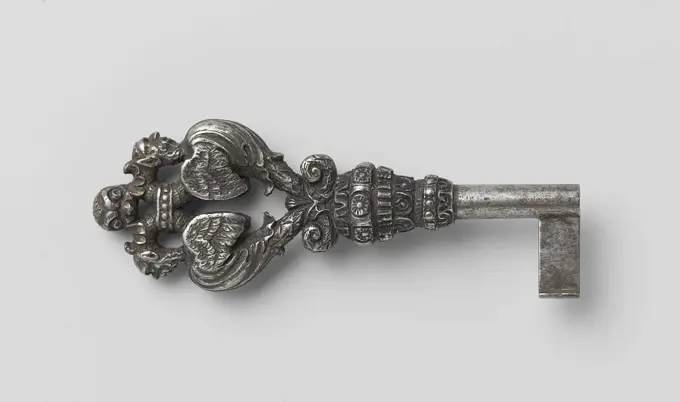
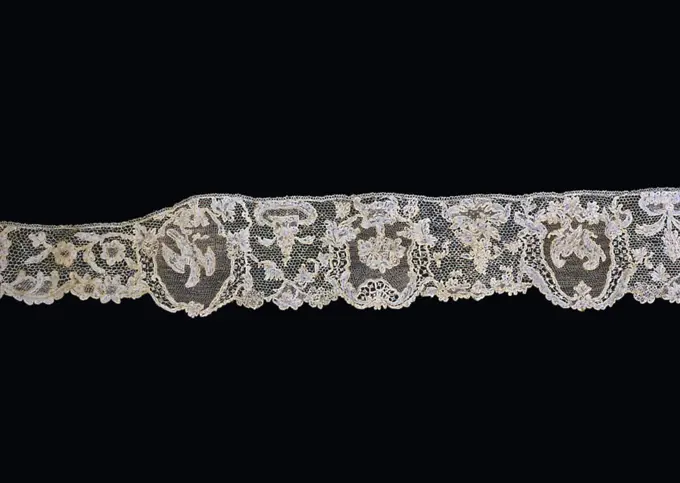
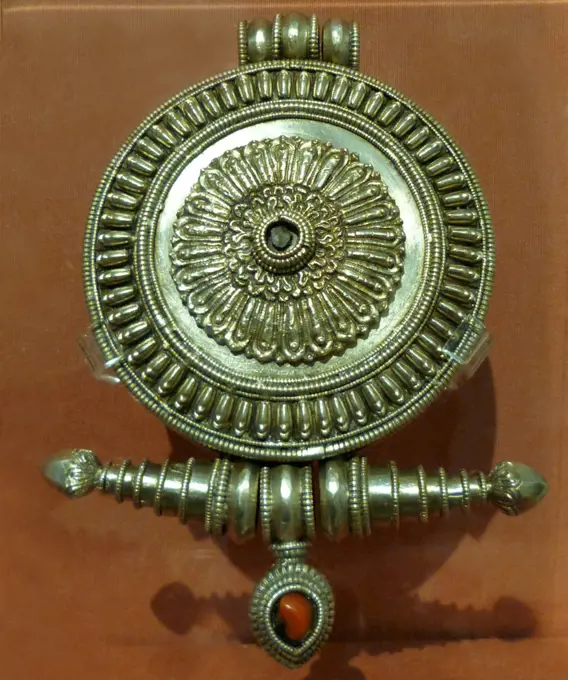
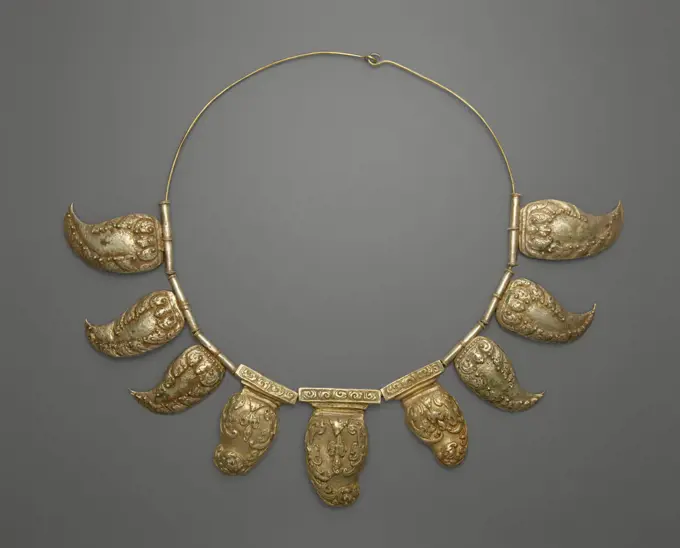
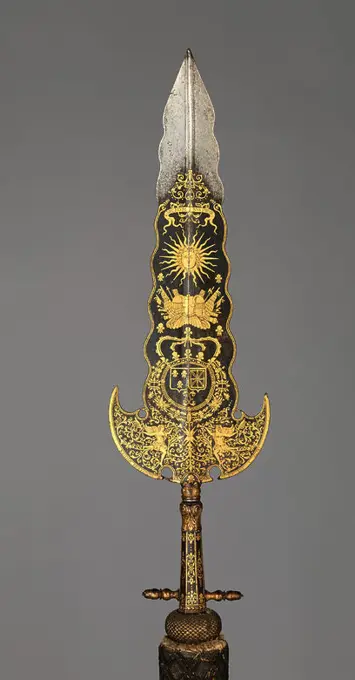
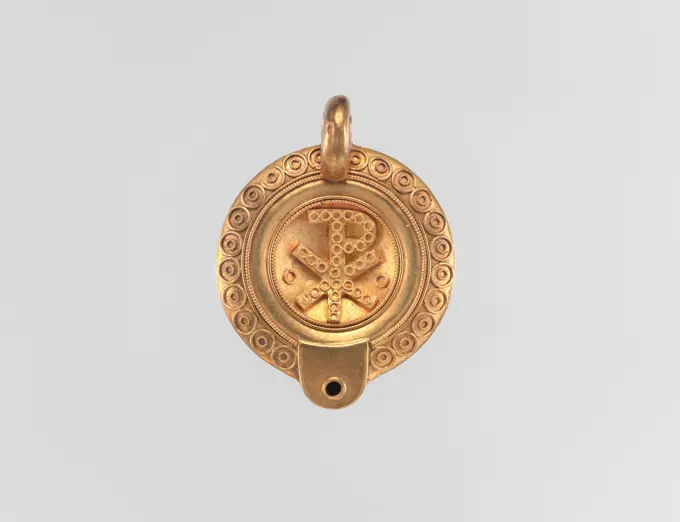
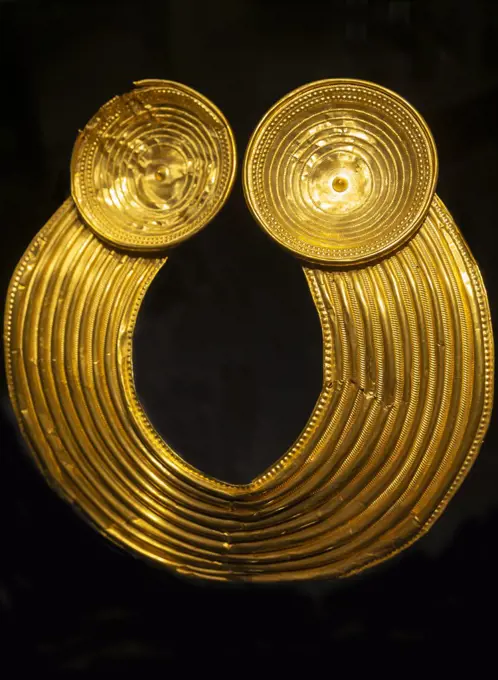
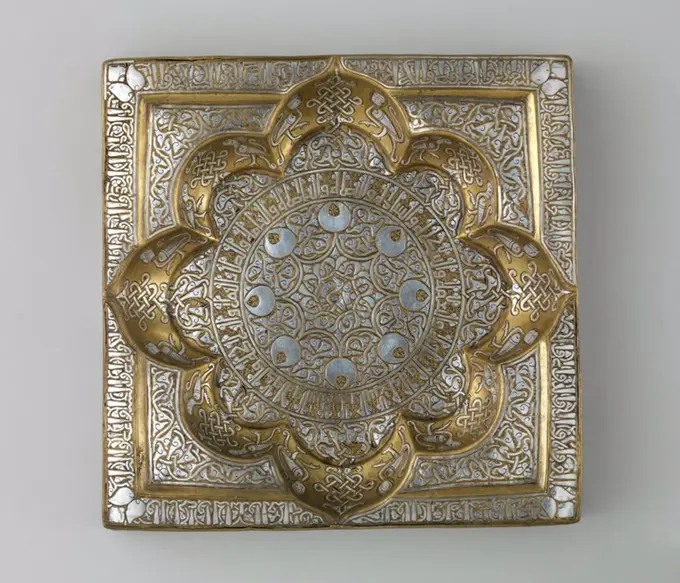
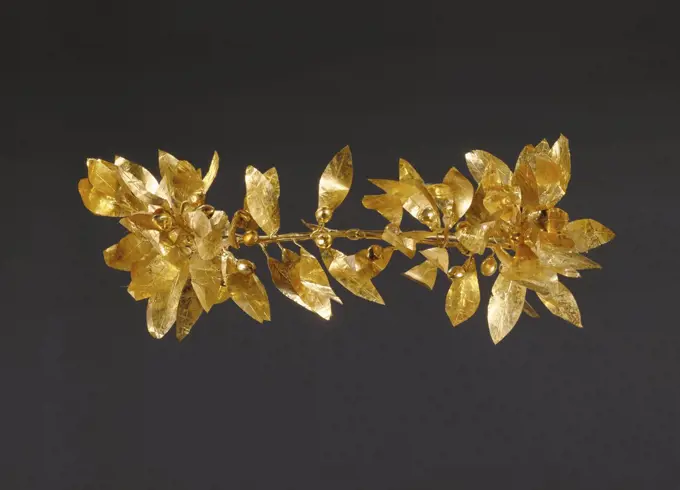
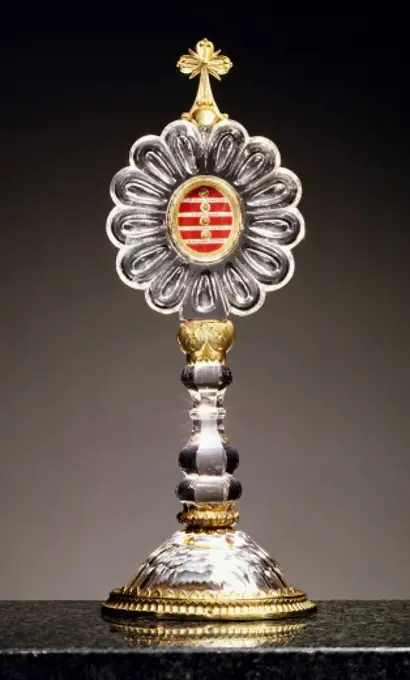
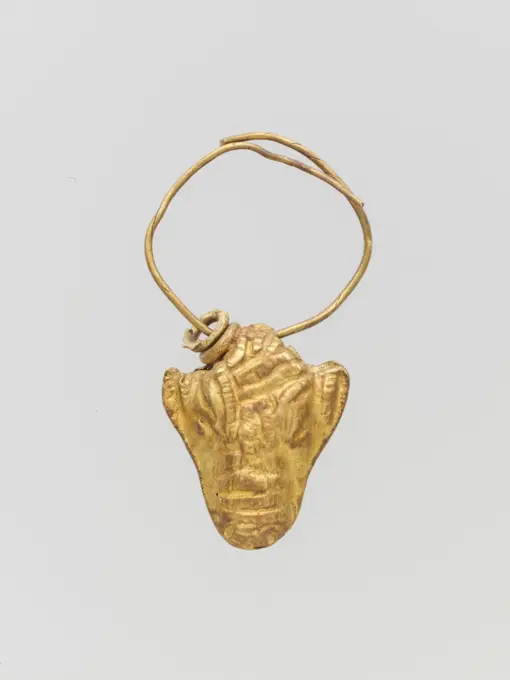
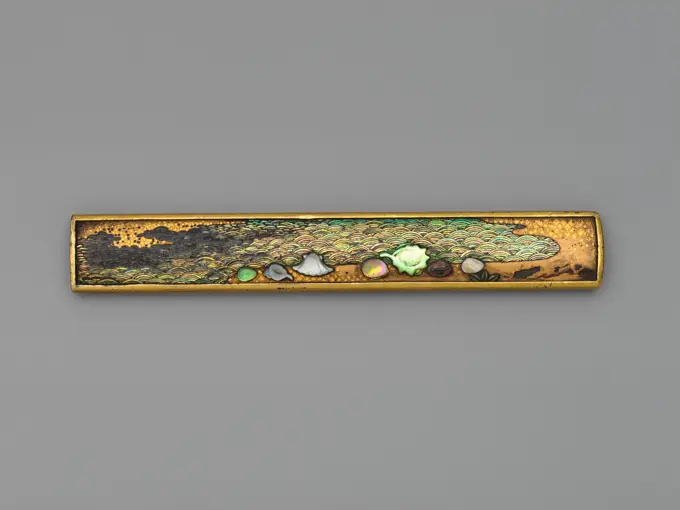
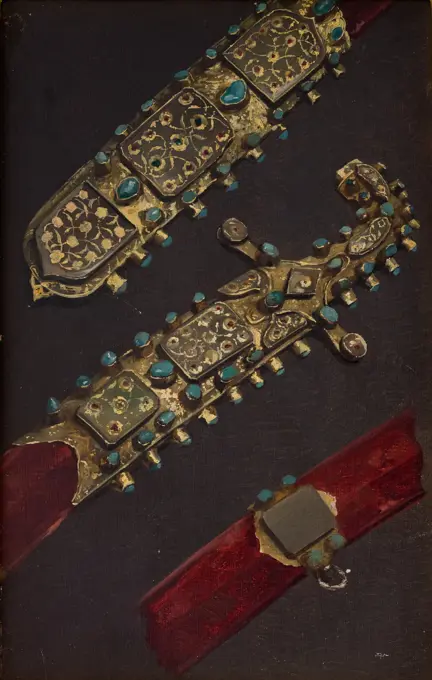
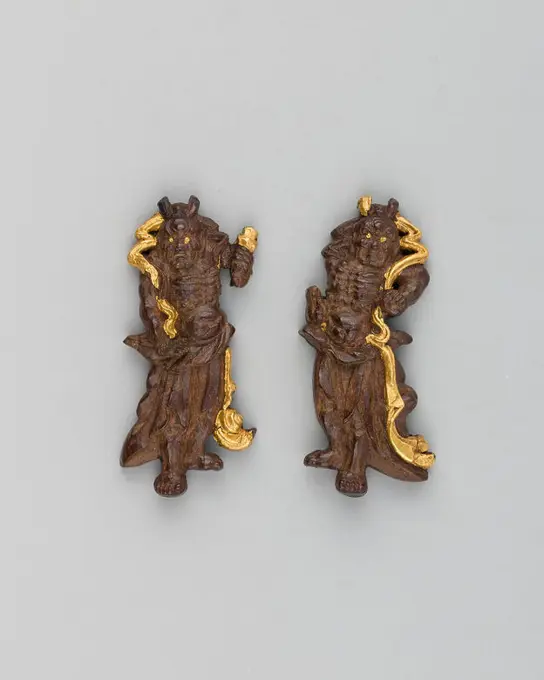
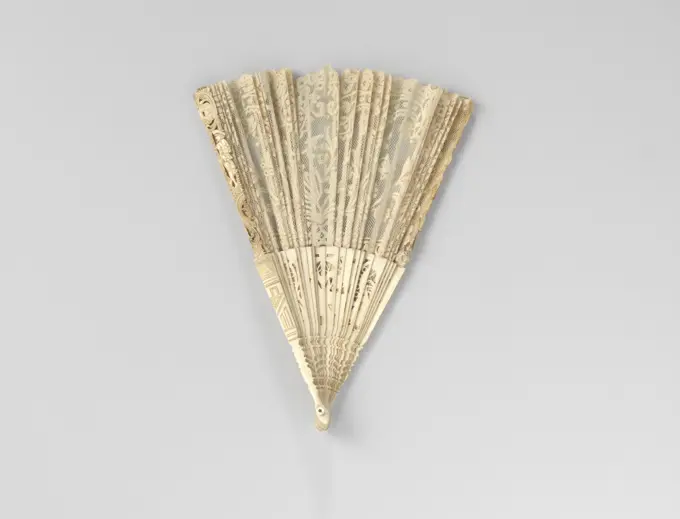
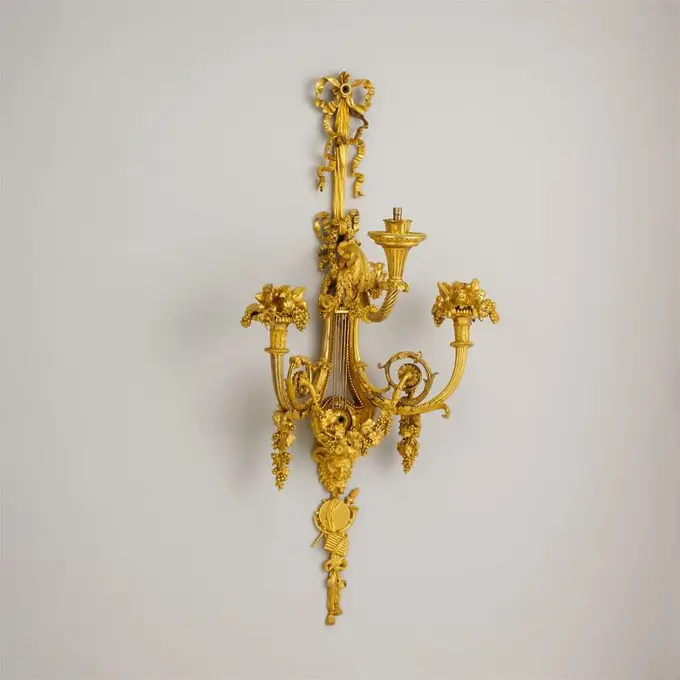
Set of four three-light sconces (bras de lumière). Culture: French, Paris. Dimensions: Each: H. 32 x W. 15 x D. 10 1 /4 in. (81.3 x 38.1 x 26.0 cm). Date: ca. 1787-88.Music was one of Marie-Antoinette's lifelong diversions. She was taught to perform and sing when young in Vienna, where the opera composer Christoph Willibald Gluck (1714-1787) was her tutor. She amused herself with music several hours a day at the French court and was a devotee of the opera. The queen's enjoyment of music is reflected in the design of these wall lights, which were ordered probably in 1787 or the following year for her use at the Chteau de Saint-Cloud. Although no precise date or authorship have been established for them, they can easily be recognized among the furnishings listed as in the queen's Cabinet Intérieur in the detailed inventory description of the summer castle drawn up in 1789. Suspended from a gilt-bronze ribbon tied in a bowknot, the back plate of the sconces is shaped like a lyre with aMount; 1904-21-30The Amsterdam apothecary and art collector Emmanuel Vita Israël. He donated his collection, comprising keys dating from Roman antiquity to the 19th century, to the Koninklijk Oudheidkundig Genootschap (Royal Antiquarian Society) in 1937. Vita Israël claimed that his key collection had grown more or less by accident: being one of the few collectors of keys, dealers automatically made their way to him.EscutcheonBorder Made 1725-1775 France. Linen, needle lace of a type known as Point d'Argentan with buttonholed mesh ground .Three Amulet Cases 1800-79 Amulet cases were used to hold holy objects or written prayers, believed to protect the wearer from evil.Six-light chandelier (one of a pair) ca. 1740 probably French Despite the chandelier's curvilinear outline and its scrolling branches that full-heartedly embrace the Rococo, the trelliswork pattern on the shaft is a remnant of the Régence period, dating this piece to about 1740.. Six-light chandelier (one of a pair). probably French. ca. 1740. Gilt bronze. Metalwork-Gilt BronzeBustle cage crinoIIne unknownA north -tanthed far for fish; Werner and S-ka (Warsaw; Wytwórnia Z Otnicz; 1864-1939); 1896 (1896-00-00-1896-00-00);Tiger Claw Necklace on aTorque, 9th-10thcentury, Gold, 24.5 cm, 86 g (9 5/8 in., 86g), Made in Java, Indonesia, Java, Early Classic Period(650-1000), JewelryPartisan Carried by the Bodyguard of Louis XIV (1638-1715, reigned from 1643). Culture: French, Paris. Dimensions: L. 94 1/8 in. (239 cm); L. of head 22 9/16 in. (57.3 cm); W. of head 6 1/2 in. (16.5 cm). Sword cutler: Inscription probably refers to Bonaventure Ravoisie (French, Paris, recorded 1678-1709). Date: ca. 1678-1709.This partisan, along with two like it also in the Metropolitan Museum's collection (acc. nos. 14.25.454, 04.3.64), are thought to have been carried by the Gardes de la Manche (literally, "guards of the sleeve," indicating their close proximity to the king), an elite unit of the bodyguard of Louis XIV. This example (along with 04.3.64) bears the king's motto and sunburst above the crowned arms of France and Navarre, which are encircled by the collars of the royal orders of the Holy Spirit and Saint Michael. It is inscribed RAVOISIE FOVRBISSEVR DV ROY A PARIS, probably referring to Bonaventure Ravoisie, a royal cutler recorded between 1678 and 1709.The other partByzantine-revival pendant in the form of an oil lamp ca. 1870 Castellani This gold pendant is in the form of an oil lamp, the center decorated with the monogram of Christ, with filigree decoration on the monogram and along the outer rim of the lamp. The Castellani firm was the leading producer of archaeological-revival jewelry in the second half of the nineteenth century, and this pendant in the form of a Roman oil lamp from antiquity embodies, albeit on a small scale, the firms focus on antique forms and styles of decoration.. Byzantine-revival pendant in the form of an oil lamp. Italian, Rome. ca. 1870. Gold; glass; fabricGold Collar, Late Bronze Age, 700-800 BC,Scythian gold plate showing a winged panther attacking a goat. Artist: UnknownKnife Handle (Kozuka) early 19th century Japanese A kozuka is a handle of a by-knife that is part of a sword mounting. It is kept in a slot on the reverse of a katana scabbard, often with a matching kōgai (hairdressing tool).. Knife Handle (Kozuka) 29751MountSuite Of Micro-mosaic Jewelry (Italy)Corsage ornament 18th century Portuguese. Corsage ornament 206841Boddhisattva Seated on Lotus Throne, 17th-19th century, 3 3/4in. (9.5cm), Gold, China, 17th-19th centuryGalloon 18th century Italian. Galloon. Italian. 18th century. Silk. Textiles-TrimmingsBracelet (one of a pair). Culture: Byzantine. Dimensions: Overall: 2 3/4 x 2 5/16 x 1 7/8 in. (7 x 5.9 x 4.8 cm)strap: 6 1/8 in. (15.5 cm)weight: 5.7oz. (162g). Date: ca. 400.The medallions and hoops of these handsome bracelets were worked by tracing the design onto a gold sheet and then punching holes in the background to reveal the pattern of small doves. Museum: Metropolitan Museum of Art, New York, USA.MountBadge or Harness Pendant 14th century Spanish Heraldry, or coat-of-arms, were vitally important in Europe throughout the Middle Ages and the Renaissance. Heraldic emblems were used to identify noble families, cities, regions, and even countries. In addition to being displayed on shields and flags, heraldry was incorporated into architectural decoration on the interior and the exterior of buildings, on furniture, works of art, clothing, and horse equipment. Harness pendants, like this example, would have been attached to a headstall, bridle, or other straps making up the tack of a horse ridden by a nobleman or noblewoman, or a member of their household. Many harness pendants also have decoration that is simply ornamental, or have symbols that are not specifically heraldic in nature.. Badge or Harness Pendant. Spanish. 14th century. Copper. Miscellaneous-BadgesWatch in the shape of a star. Star-shaped crystal watch with a gold-plated silver frame and an enamelled hook.Book clasp late 18th century possibly British. Book clasp 197442Pair of Ear Ornaments in TwoPartsGold rosette with the head of a griffin ca. 630-620 B.C. Greek, Rhodian  This is one of a half-dozen ornaments of special shapes still in existence; four belong to a group found on the island of Melos. All bear a combination of figural heads and rosettes embellished with granulation and filigree. Their purpose is unclear. They may have been sewn to a cloth or leather backing.. Gold rosette with the head of a griffin 248696Crescent-Shaped Pendant with Confronted Birds. Dimensions: H. 1 3/4 in. (4.5 cm)W. 1 3/8 in. (3.5 cm). Date: 11th century.Few works with enamels have survived from the early Islamic period. The fabrication of this pendant is typical of Fatimid goldsmiths' craftsmanship: boxlike construction, gold stringing loops, openwork design with a strip support, S-shaped filler elements, and paired twisted wires. The enamels had to be secured to the back with an adhesive after the object was finished. Museum: Metropolitan Museum of Art, New York, USA.Badge (probably Mounting from Horse Harness). Culture: Spanish. Dimensions: H. 4 3/8 in. (11.1 cm); W. 4 3/8 in. (11.1 cm); Wt. 3 oz. (85 g). Date: 14th century. Museum: Metropolitan Museum of Art, New York, USA.Gold earring late 4th-3rd century B.C. Cypriot Circlet of twisted gold wire, which tapers from the bull's head at the front end to a hooked point which passes through a loop below the animal's throat.. Gold earring 242864MountMountKnife Handle (Kozuka). Culture: Japanese. Dimensions: L. 3 13/16 in. (9.7 cm); W. 9/16 in. (1.4 cm); thickness 1/4 in. (0.6 cm); Wt. 1.3 oz. (36.9 g). Date: 18th century. Museum: Metropolitan Museum of Art, New York, USA.Amulet, sheet gold, bracelet 664-380 B.C. Late Period. Amulet, sheet gold, bracelet 561522Szambel key;  1770-1794 (1775-00-00-1800-00-00);Brooch.   Maker: Jules Brenner, American, 1917-1991Gold Armlets, 4th-5th Century BC, Achaemenid Metalwork, Oxus Treasure, British Museum, London, England, UK,RosettePadlock probably 18th century. Padlock 446007Chatelaine with a small chain watch, stamps and trinkets. Moilliet, Jean-Jacques (fl.ca 1790), watchmakerSquare Tray with Recessed Medallion. Dimensions: H. 1 7/8 in. (4.76 cm)W. 8 1/2 in. (21.59 cm)L. 8 3/8 in. (21.27 cm). Date: early 13th century.By the early thirteenth century, the new approach to the decoration of metalwork was fully developed. Now, intricate inlaid designs enliven the entire surface. The motifs on this tray reflect the extensive decorative repertoire of this period, including a central duck-and-fish composition, human-headed harpies in the lobes, and seated figures on the sides. Against a ground of spiraling scrolls, the foliated kufic inscription conveys lengthy benedictions in Arabic to an anonymous owner. Museum: Metropolitan Museum of Art, New York, USA.Wreath with detached stem including leaves and detached berries; Unknown; Greece, Europe; 300 - 100 B.C.; Gold; Object: Diam. (circlet): 19.5 - 21.7 x Circumference (of wire, approx.): 64.5 cm (7 11/16 -  9/16 x 25 3/8 in.), Object (greatest extent from front to back): 26.3 cm (10 3/8 in.), Object (greatest extent from side to side): 34 cm (13 3/8 in.), Greatest height of leaves: 13 cm (5 1/8 in.), Approx. length of berries: 1.3 cm (1/2 in.)Reliquary in gilded metal and rock crystal, Basilica of Sant'Eustorgio, Milan. Italy, 19th century.Gallon;  beginning of the 19th century (1801-00-00-1810-00-00);Gold pendant in the form of a bull's head ca. 1400-1050 B.C. Cypriot Most of the raw materials for Cypriot jewelry came from the East. Gold became plentiful in the Late Bronze Age, when Syria and Egypt were the primary sources. These earrings are a Cypriot creation, an ornament in the form of a bull's head.. Gold pendant in the form of a bull's head. Cypriot. ca. 1400-1050 B.C.. Gold. Late Bronze Age. Gold and SilverPedestal, late 17th century, attributed to Filippo Pavodi, Italian, 1630 - 1702, 53 1/4 x 19 x 18 in. (135.26 x 48.26 x 45.72 cm), Wood, gilt, Italy, 17th centuryLoop . 2 simple openwork strips, garnished with stonesBracelet, Gold, black enamel, garnets, Articulated bracelet with clasp; design of oval garnets set in frames with ornament belwo and bow knot above, alternating with round garnets and gold ornaments, bands engraved in leaf-design at either side of the bracelet., France, 1850-75, jewelry, Decorative Arts, BraceletCarnavalet museum, medal collectionLid, painted multi-colored with representations and monogram EPK in medallion. Lid of painted porcelain. The lid shows two winged hearts on one side in the same way on the other side.Frame, Cast and gilt bronze, Horizontally oriented rectangular form, shells at the corners and cabochons in the center of each side; small circular ring at top., France, ca. 1760, metalwork, Decorative Arts, FrameBrooch (USA); hair, goldWilliam IV, Prince of Oranje -Nassau, Anonymous, 1747 - 1751  One -sided, oval carrying sign hanging with two orange branches bound together under the crown to carrying and carrying ring. Front: breastpiece man. Reverse: Blanco Netherlands metal striking (metalworking) / gildingManiple. unknown, authorFitting for leather decorationsPair of bracelets (pahunchi), anonymous, c. 1750 A few switch bracelets (Pahunchi) of gold. Consisting of a series of hinge -shaped crocheted links. With hinge closure. Surat gold (metal) A few switch bracelets (Pahunchi) of gold. Consisting of a series of hinge -shaped crocheted links. With hinge closure. Surat gold (metal)Knife Handle (Kozuka) Depicting Shells on Beach () 18th-19th century Japanese The motif plate of this kozuka shows a beach with an arrangement of shells which are decorated with a differently colored abalone and mother-of-pearl inlay. The waves are decorated with a shell inlay as well. The areas that represent the beach show a sunago-zgan inlay (lit. "sand inlay").A kozuka is a handle of a by-knife that is part of a sword mounting. It is kept in a slot on the reverse of a katana scabbard, often with a matching kgai (hairdressing tool).. Knife Handle (Kozuka) Depicting Shells on Beach (). Japanese. 18th-19th century. Copper-gold alloy (shakud), gold, brass, abalone shell. Sword Furniture-KozukaHandscreen, Painted paper leaf, turned and gilded wood handle, Obverse: a fanciful Chinoiserie river scene with three musicians perched on different architectural follies, enclosed by c-scroll border. Reverse: painted flower and three printed verses pasted on to back. Turned and gilded wood handle., France, mid- 18th century, costume & accessories, HandscreenOrnamental Detail, c. 1800. France, 19th century, Empire Style. Gilt bronze; overall: 4.5 x 5.4 cm (1 3/4 x 2 1/8 in.).Pair of Disk Ear Studs. UnknownBadge (probably Mounting from Horse Harness). Culture: Spanish. Dimensions: Diam. 1 1/2 in. (3.8 cm); Wt. 0.5 oz. (14.2 g). Date: ca. 1400. Museum: Metropolitan Museum of Art, New York, USA.Shield Boss, 1800s. Italy, Renaissance Style. Brass, gilded; diameter: 9.6 cm (3 3/4 in.).Parrier fishing boat in Krans ,, 1800 - 1900 history medal Casted tin carrier with rectangular bearing eye, representing a fishing boat between branches with open -worked field.  tin (metal) castingMount (France); bronze (gilt), goldStudy of a Turkish Sabre from the 17th C. Chlebowski, Stanis Aw von (1835 1884)Pair of Sword-Grip Ornaments (Menuki). Culture: Japanese. Dimensions: L. of each 1 1/2 in. (3.8 cm); W. of each 5/8 in. (1.6 cm); Wt. of each 0.2 oz. (5.7 g). Date: probably 18th century. Museum: Metropolitan Museum of Art, New York, USA.Gold earrings from Tombs Alpha and Isis, in Elefsis (Greece). Goldsmith art, Greek Civilization.Dish early 16th century German. Dish. German. early 16th century. Brass. Metalwork-BrassBelt Buckle Plaque, anonymous, c. -200 - c. -100 Applique for a belt with the presentation of a mule that is attacked by a predator. Sarmatia bronze (metal) Applique for a belt with the presentation of a mule that is attacked by a predator. Sarmatia bronze (metal)Folding range with leaf from Kloskant (Valenciennes) on a frame of cut ivory, anonymous, c. 1750 - c. 1799 Ivory frame with mother -of -pearl disc at the closing pin; 22 Competent legs, representing a symmetrical representation with five cartouches alternating with houses in a landscape and a man and woman. Kloskant leaf, Valenciennes, with flowers and tendrils. Along the three edges of palm motifs interrupted by tulips; Along the scalloped top edge rosette -shaped flowers and fern leaves. The leaf was probably added to the frame later. Valenciennesivory carver: France (possibly) sheet:. frame: Ivory. Disc: Mother of Pearl. closing pin: Iron (metal) Valenciennes lace / cutting Ivory frame with mother -of -pearl disc at the closing pin; 22 Competent legs, representing a symmetrical representation with five cartouches alternating with houses in a landscape and a man and woman. Kloskant leaf, Valenciennes, with flowers and tendrils. Along the three edges of palm motifs interrupted by tuliFire buck of gold-plated bronze with putti that warms up at a flame. Gold plated bronze firebox. The scooped part of the basement carries a cylinder base on which an oil lamp with flame. Two leaf volutes and Bovelaan escaped at the pedestal and Bovelaan two acanthus leaves, as a seat for putti that warms up at the flame. A right piece with openwork leaf and floral motifs leads to a small square part, decorated with leaf rosettes and tendrils, wearing upstick acanthus leaves. Finish with rosettes, egg list and leaf motifs.Cabinet; Attributed to Bernard II van Risenburgh (French, after 1696 - about 1766, master before 1730); Paris, France; about 1735 - 1740; Oak veneered with bloodwood, cherry, cururu, and amaranth; gilt bronze mounts, bréche d' Alep top; 115.9 x 468.6 x 54.6 cm (45 5,8 x 184 1,2 x 21 1,2 in.)One square with hook attachment. UnknownBow Fibula, 500s. Frankish, 6th century. Silver gilt with garnets; overall: 9.1 x 5.7 x 2.7 cm (3 9/16 x 2 1/4 x 1 1/16 in.).Souvenir spoon with arms of Naples European late 19th centuryWar 1939-1945. Patriotic Epingle Tricolor Flag. Enamelled metal. 1944-1945. General Leclerc Museum of Hauteclocque and the Liberation of Paris, Jean Moulin Museum. Epingle, war 1939-1945, war 39-45, Second World WarElement of a Border for an Icon Frame 10th century Byzantine. Element of a Border for an Icon Frame 464527 Byzantine, Element of a Border for an Icon Frame, 10th century, Cloisonn enamel, gold, Overall: 1/4 x 1 7/16 x 1/16 in. (0.7 x 3.7 x 0.2 cm). The Metropolitan Museum of Art, New York. Gift of J. Pierpont Morgan, 1917 (17.190.656)Conical Ear Ornament withGemThree plaques. German; probably Saxony. Date: 1625-1675. Dimensions: 1.4 × 2.3 cm (9/16 × 7/8 in.). Gold and enamel. Origin: Germany. Museum: The Chicago Art Institute, Chicago, USA.Carved wooden gilded crown, broken off from coat of arms, fragment woodcarving sculpture footage wood gold, heraldry regent Rotterdam City Center Stadsdriehoek Hoogstraat Gasthuis Rotterdam.Metal Age. Gold ornaments with lions' head. Woman's grave from Arsley, Funen, 4th century. National Museum of Denmark.Sword-Hilt Collar and Pommel (Fuchigashira) 18th century Japanese A fuchigashira is a pair of matching sword fittings comprising the fuchi (collar at the base of the grip of the sword hilt) and kashira (pommel cap at the end of a sword hilt).. Sword-Hilt Collar and Pommel (Fuchigashira). Japanese. 18th century. Copper-gold alloy (shakud), copper-silver alloy (shibuichi), copper, gold. Sword Furniture-Fuchi-Kashirapart of the boss from a shield, the lid to a Christian chalice, or the stopper to a drinking horn. from the Staffordshire Hoard. decorated with very fine cloisonnÈ garnet work, small gold panels with pairs of biting beasts and, at the top, a glass gemí. The Staffordshire Hoard is a collection of Anglo-Saxon. Discovered in a field near the village of Hammerwich, near Lichfield, in Staffordshire, England, in 2009. it consists of over 3, 500 items, dated to the 7th or 8th centuries, placing the oriReinforce for a Helmet (Gupfe) 1549-50 Mattheus Frauenpreis the Elder German This exquisitely decorated plate fit as a reinforce over the bowl of a helmet for the tournament on foot. It belongs to an armor made for Maximilian II (1527-1576, emperor from 1564) upon his election as king of Bohemia in 1549. The major elements of the armor, a garniture for field and tournament use, are in the former imperial armory in Vienna.. Reinforce for a Helmet (Gupfe). German, Augsburg. 1549-50. Steel, gold. Augsburg. HelmetsDoor lock and key ca. 1770 probably Austrian, Vienna Designed for a double door, this splendid object is as decorative as it is practical. Long thought to be French, this lock was probably made in Vienna by an Austrian locksmith for one of the rooms of Palais Paar, an impressive Baroque residence that was renovated between 1765 and 1772 by the French-born architect Isidor Canevale (active 1760-1788). Paneling in a late Rococo style, assembled from two separate rooms of Palais Paar, is installed in the Wrightsman Galleries of French Decorative Art.. Door lock and key 205435Goldsmith's art, Netherlands, 17th century. Enamelled gold and pearls pendant depicting Cupid riding a marine horse, 1650, mm. 55x65Gold Objects Pre-ColumbianPair of Sword-Grip Ornaments (Menuki). Culture: Japanese. Dimensions: L. of each 2 1/16 in. (5.2 cm); Wt. of each 0.6 oz. (17 g). Date: 18th century. Museum: Metropolitan Museum of Art, New York, USA.Torque, 18 x 12 1/2 x 1 in. (45.72 x 31.75 x 2.54 cm), Silver, ChinaGirdle Clasp 18th-19th century. Girdle Clasp 444639Anklet 18th century. Anklet. 18th century. Seed pearls, rubies, diamonds, emeralds, gold. Attributed to India, Punjab. JewelryDolphin pendant. Dimensions: H. 3.9 × W. 1 cm (1 9/16 × 3/8 in.). Date: 2nd-3rd century.The dolphin motif is frequent in Hellenistic and Roman iconography. This hollow element has two loops on the underside at right angles to the direction of its body. It may have been part of a necklace of linked elements, a style that belongs in the later Roman Period. Museum: Metropolitan Museum of Art, New York, USA.Harness RingBird Headed Pendant. Culture: Diquís. Dimensions: H. 1 1/2 x W. 1 1/4 x D. 1/2 in. (3.8 x 3.2 x 1.3 cm). Date: 13th-16th century. Museum: Metropolitan Museum of Art, New York, USA.Badge or Harness Pendant 14th century Spanish Heraldry, or coat-of-arms, were vitally important in Europe throughout the Middle Ages and the Renaissance. Heraldic emblems were used to identify noble families, cities, regions, and even countries. In addition to being displayed on shields and flags, heraldry was incorporated into architectural decoration on the interior and the exterior of buildings, on furniture, works of art, clothing, and horse equipment. Harness pendants, like this example, would have been attached to a headstall, bridle, or other straps making up the tack of a horse ridden by a nobleman or noblewoman, or a member of their household. Many harness pendants also have decoration that is simply ornamental, or have symbols that are not specifically heraldic in nature.. Badge or Harness Pendant. Spanish. 14th century. Copper, gold, enamel. Miscellaneous-BadgesPlaque (Saddle Saint), 20th century, 5 1/2 x 4 1/2 x 1/2 in. (14 x 11.4 x 1.3 cm), Silver, Mexico, 20th centuryOval Dish with Daniel in the Lion's Den. Palissy (after), Bernard (France, 1509-1590). France, circa 1560-1600. Furnishings; Serviceware. Lead-glazed earthenware, Palissy wareKnife Handle (Kozuka). Culture: Japanese. Dimensions: L. 3 13/16 in. (9.7 cm); W. 9/16 in. (1.4 cm); thickness 1/4 in. (0.6 cm); Wt. 1.1 oz. (31.2 g). Date: ca. 1615-1868. Museum: Metropolitan Museum of Art, New York, USA.Fragment goudgalon.Fragment gold galon, decorated with garlands with flowers and a branch with leaves and flowers.Purse Clasp 500-600 Frankish. Purse Clasp 465349 Frankish, Purse Clasp, 500600, Copper alloy, garnets and green glass with patterned foil backings, Overall: 4 3/8 x 1 5/16 x 1/4 in. (11.1 x 3.4 x 0.7 cm). The Metropolitan Museum of Art, New York. Gift of J. Pierpont Morgan, 1917 (17.192.42)