Antique Decorative Metalwork

A collection of ornate brass objects, including a chatelaine, wall light, decorative mounts, and jewelry parts, showcasing intricate designs from historical periods.
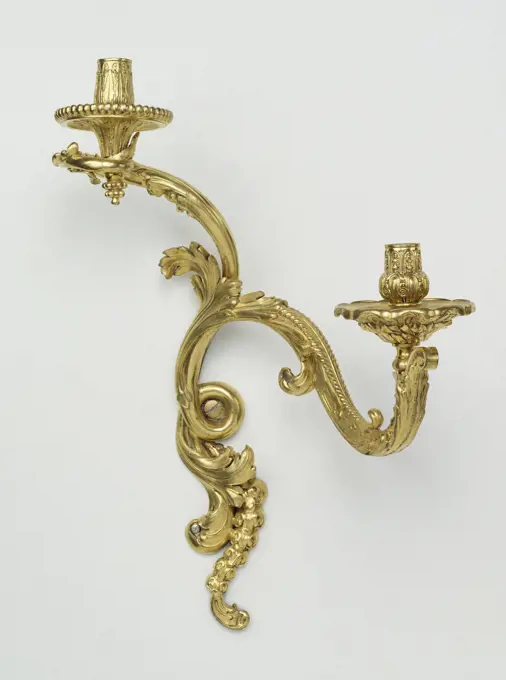
Wall Light (Bras de lumière); André-Charles Boulle (French, 1642 - 1732, master before 1666); Paris, France; about 1700 - 1715; Gilt bronze; 55.2 x 37.5 x 17 cm (21 3,4 x 14 3,4 x 6 11,16 in.)
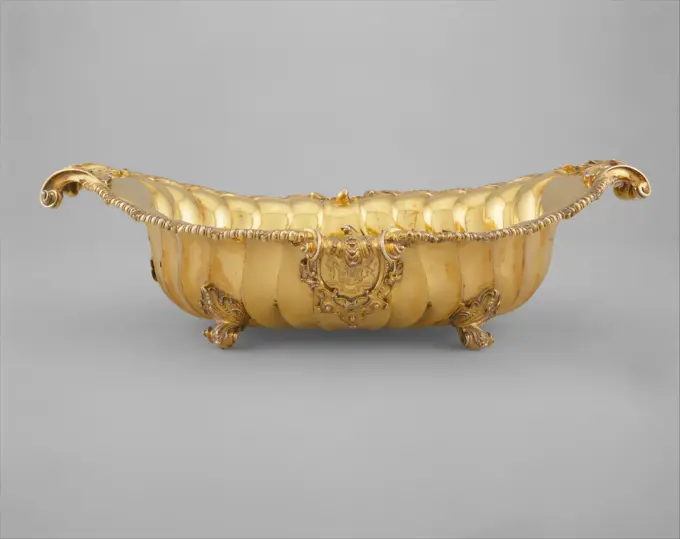
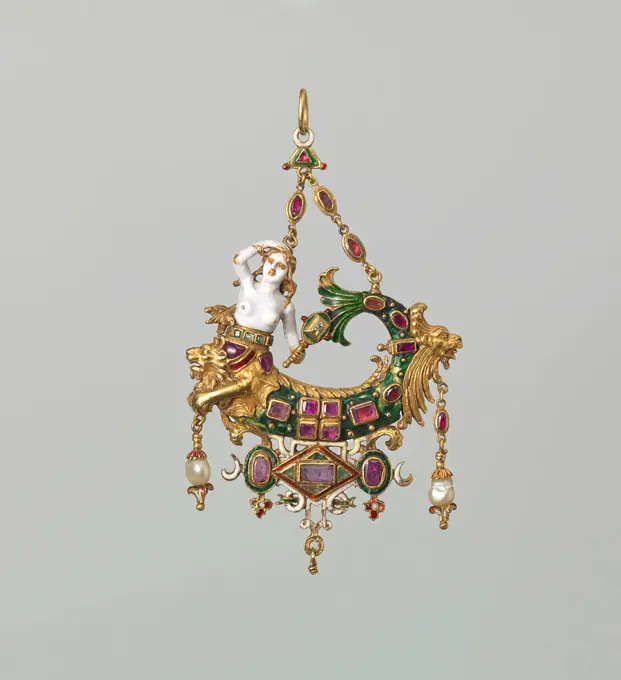
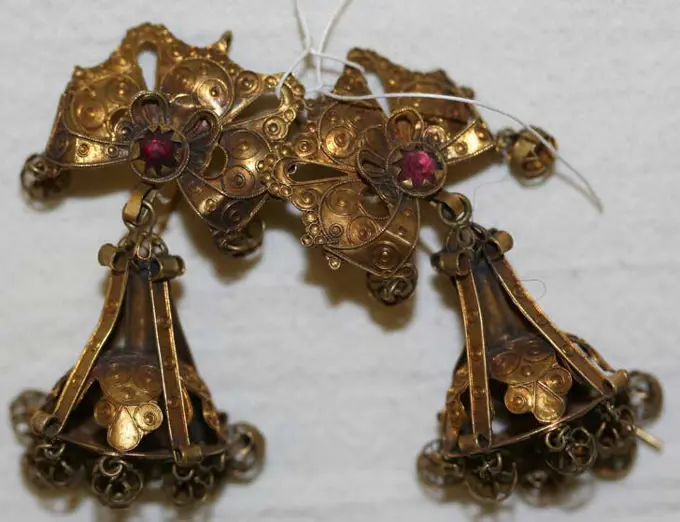
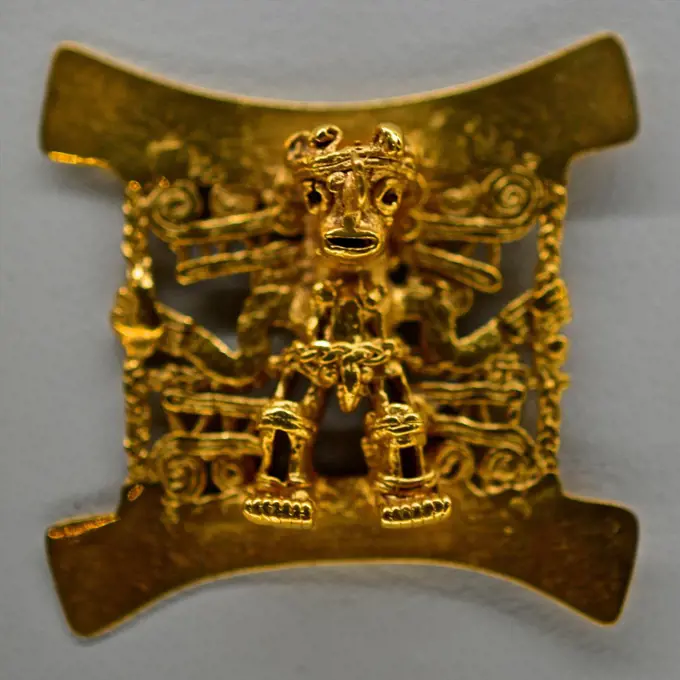
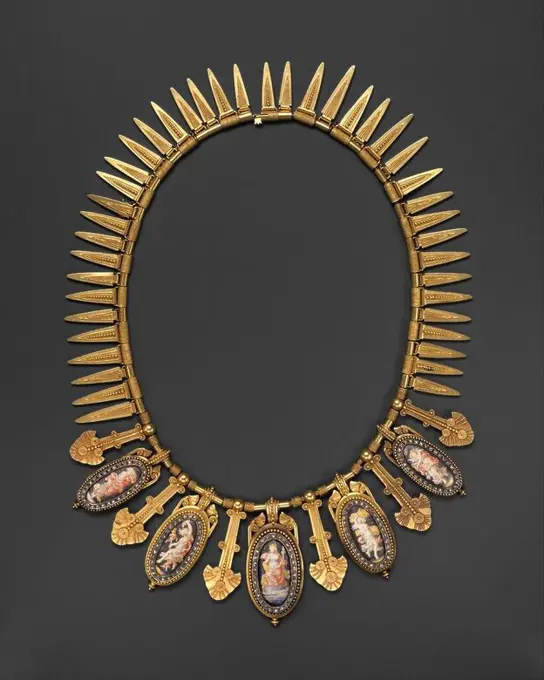
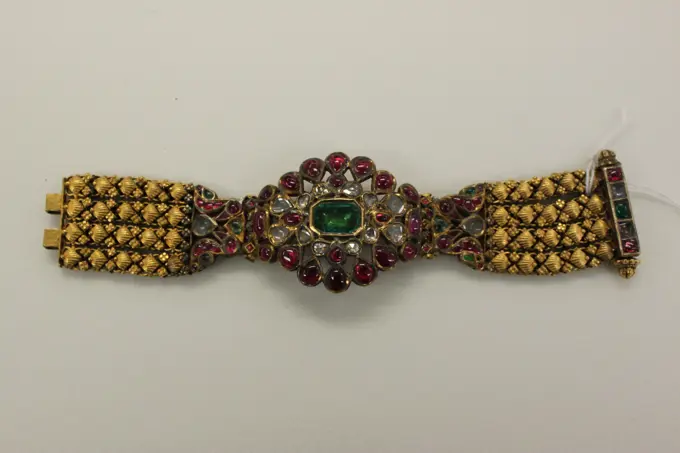
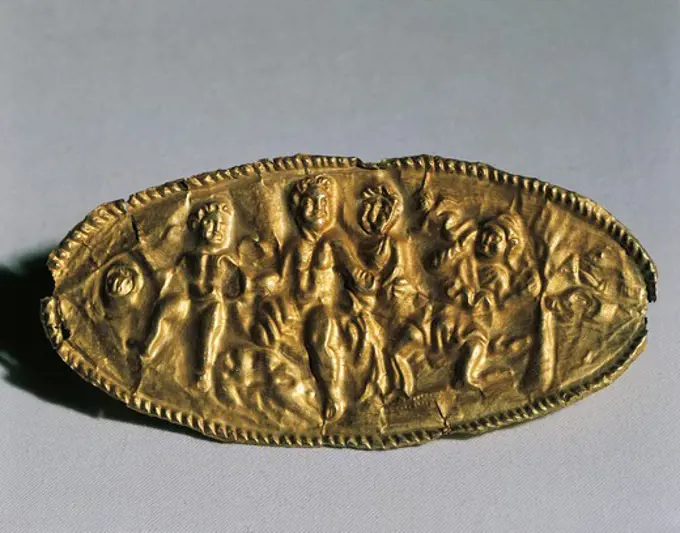
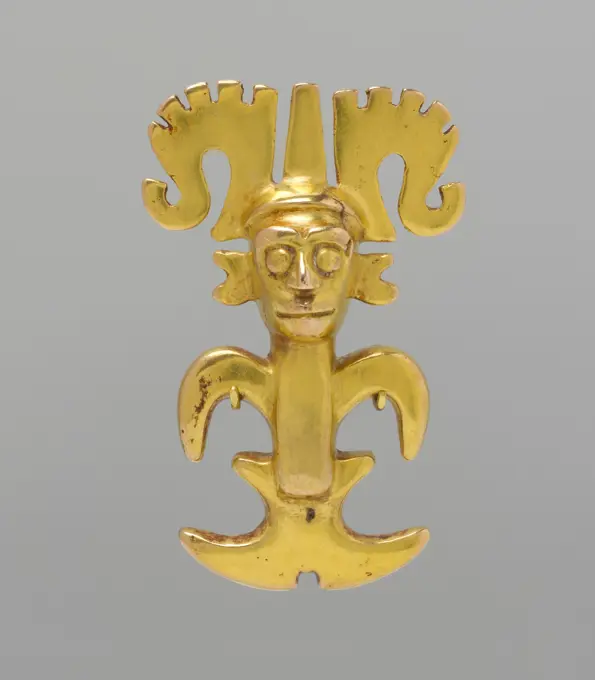
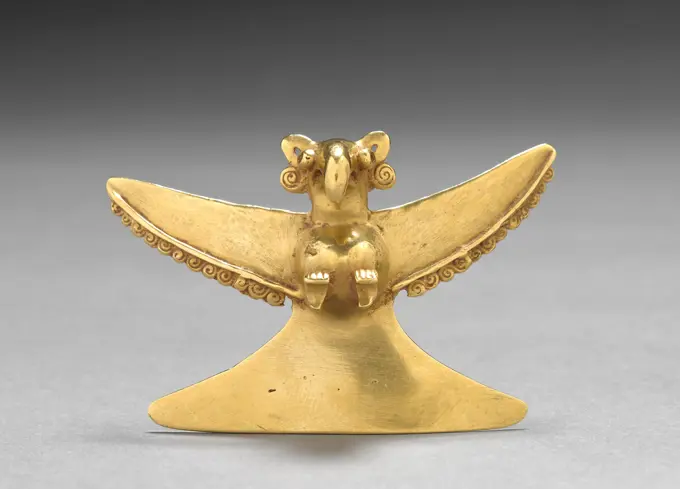
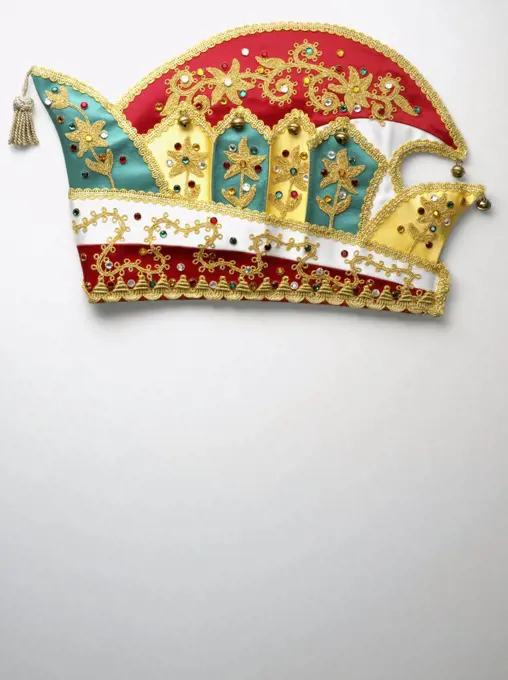
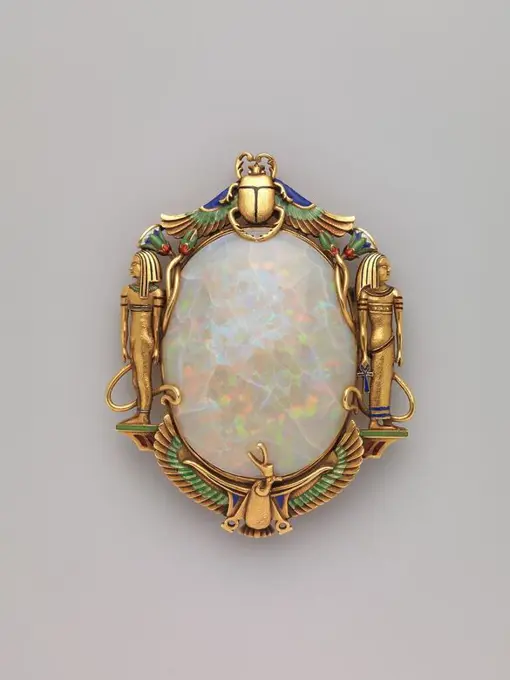
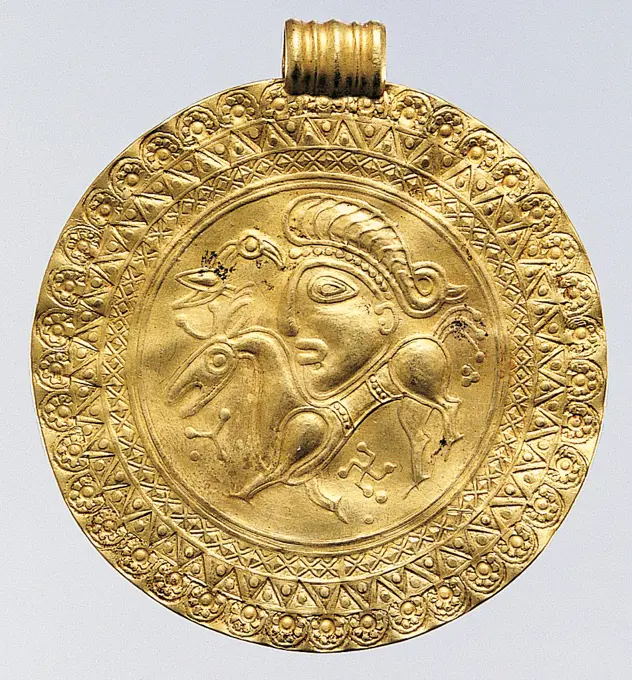
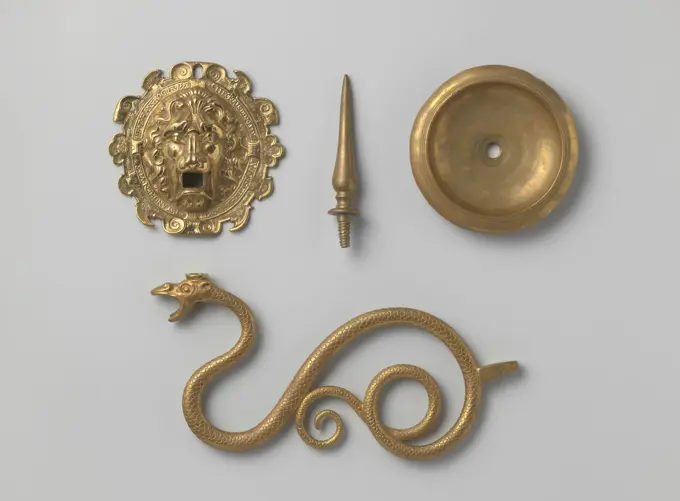
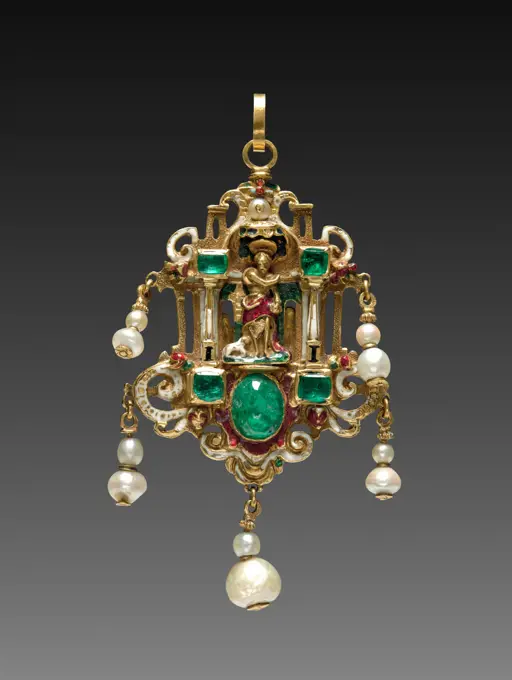
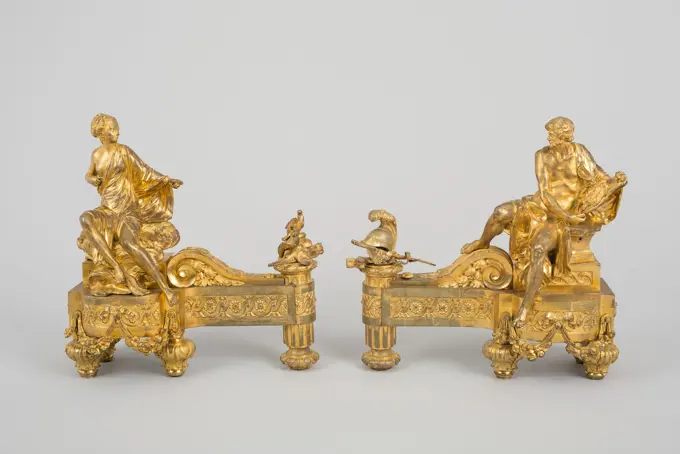
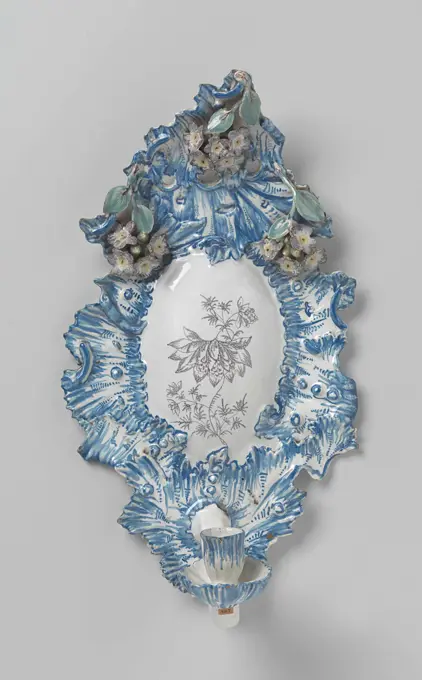
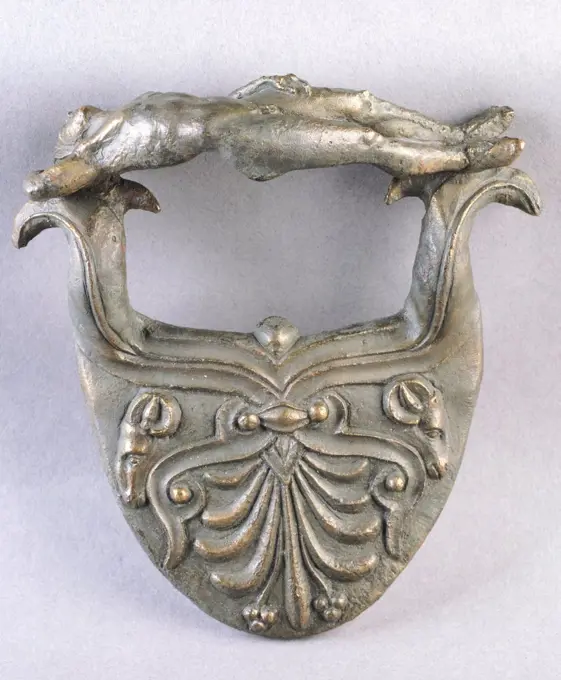
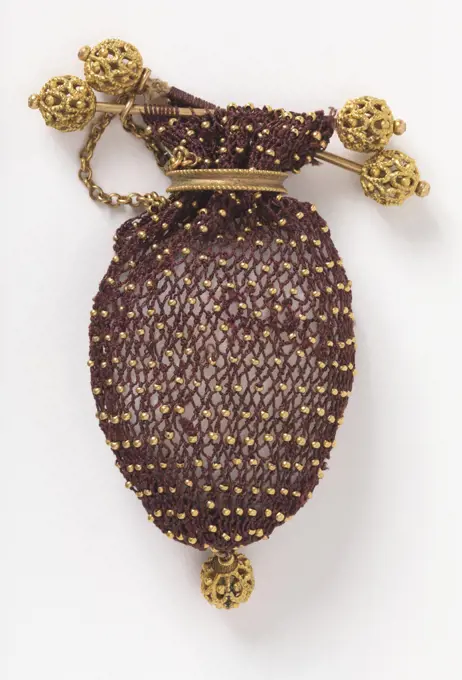
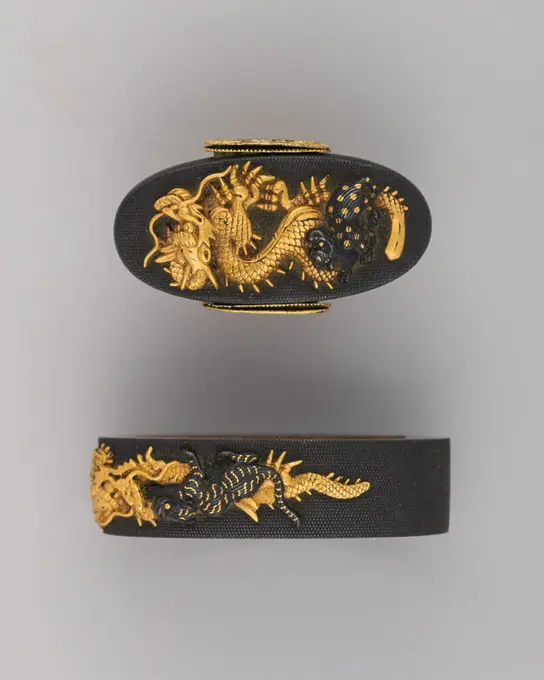
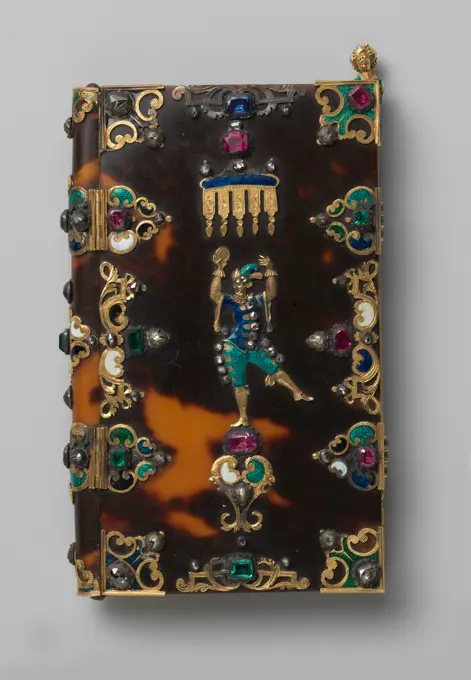
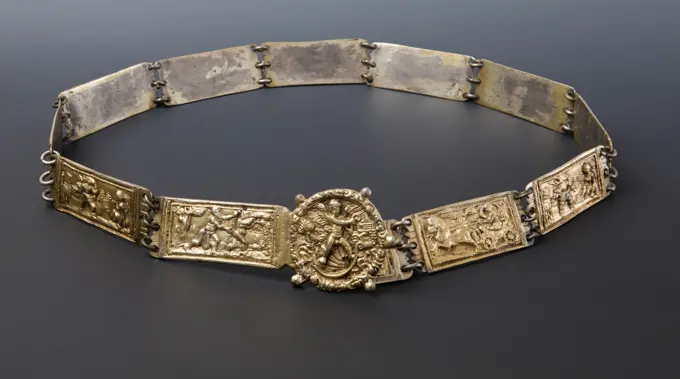
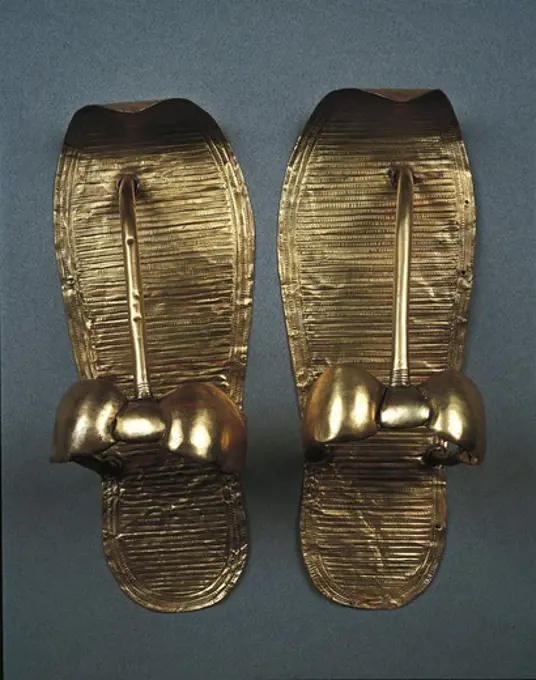
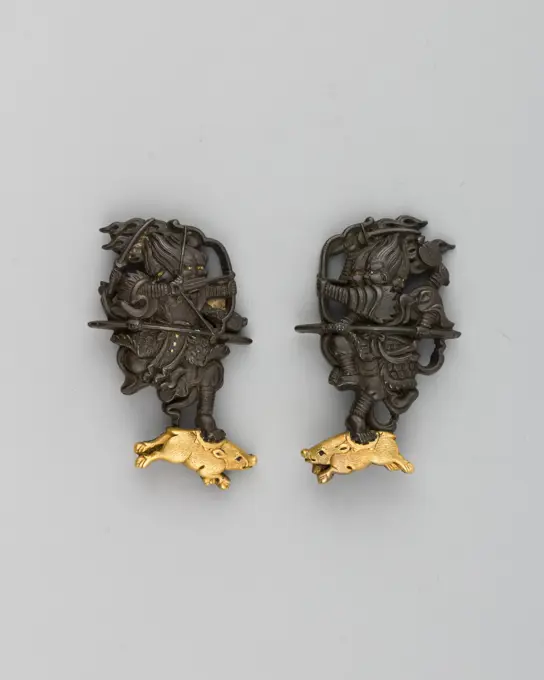
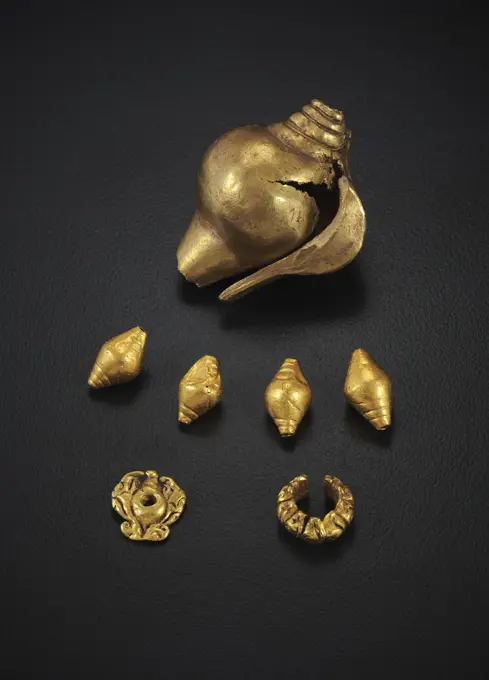
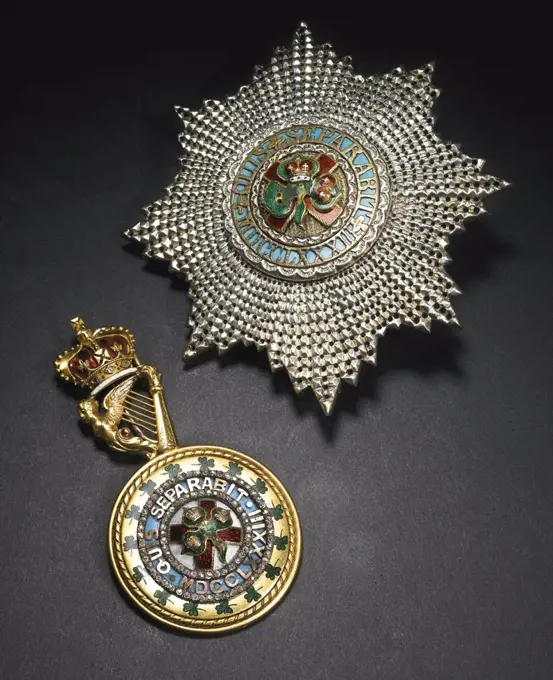
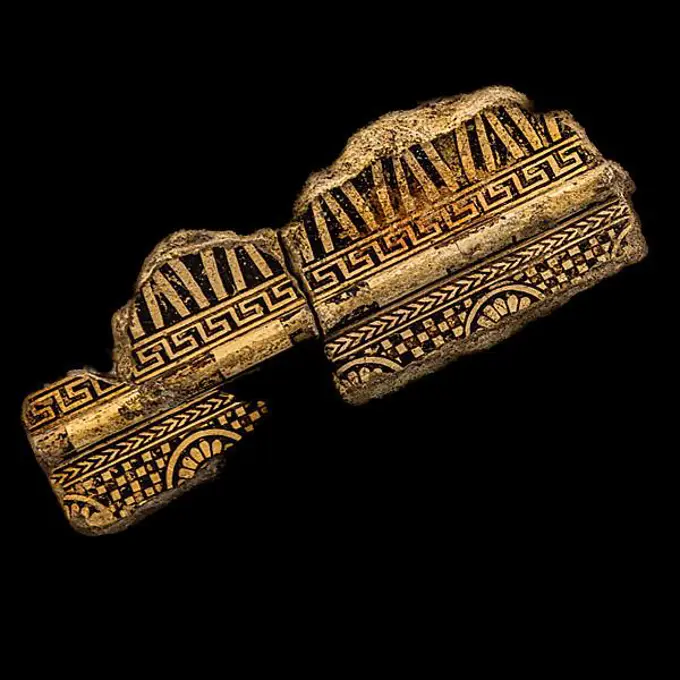
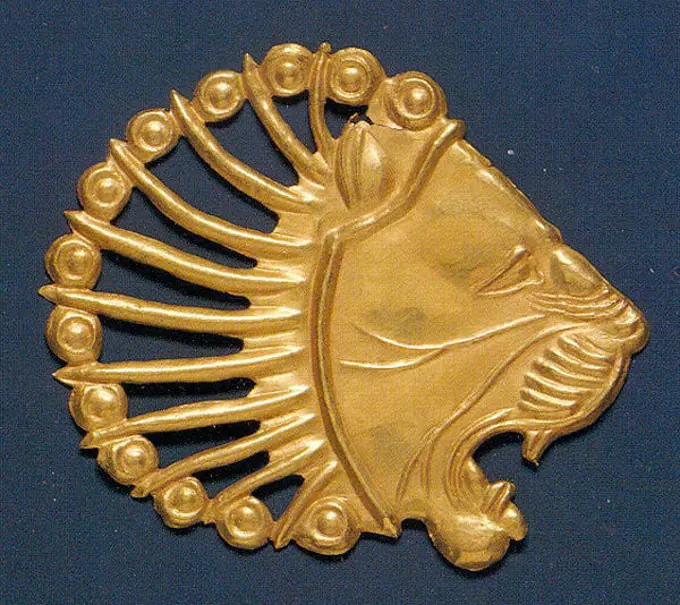
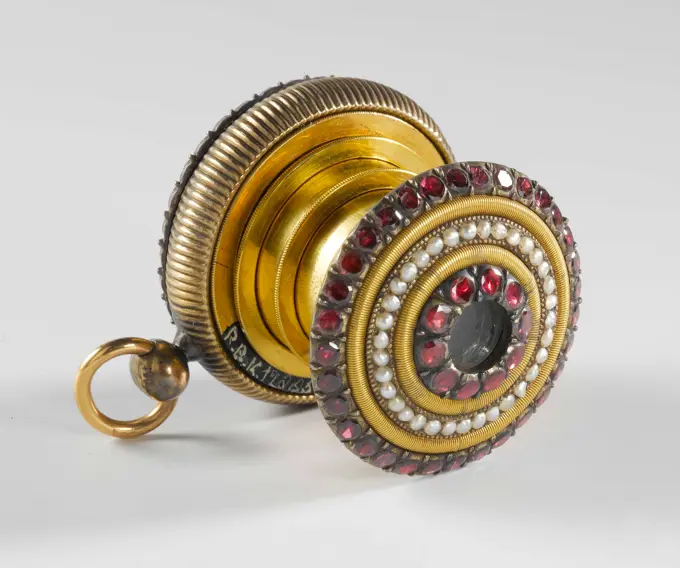
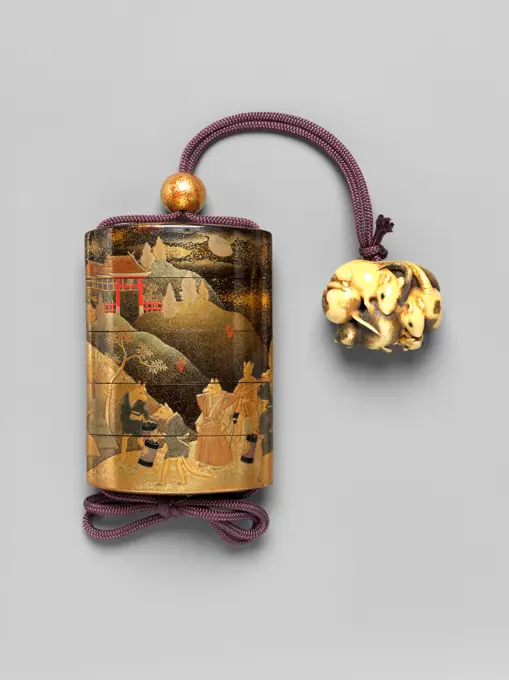
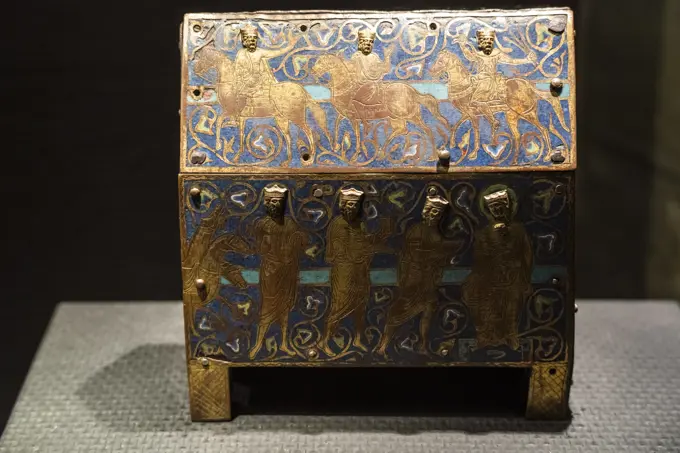
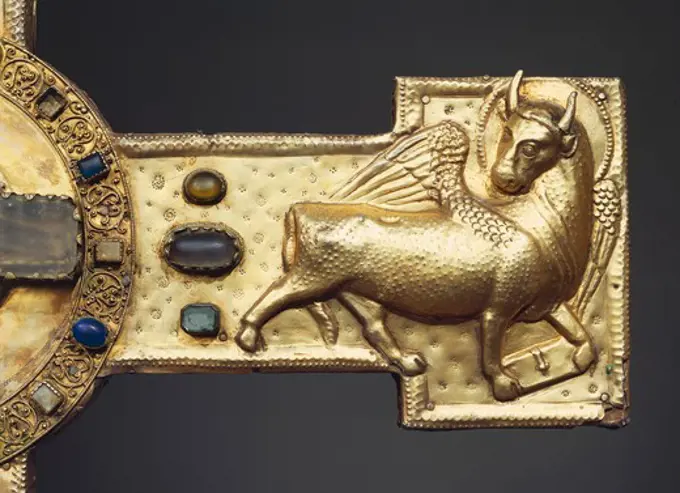
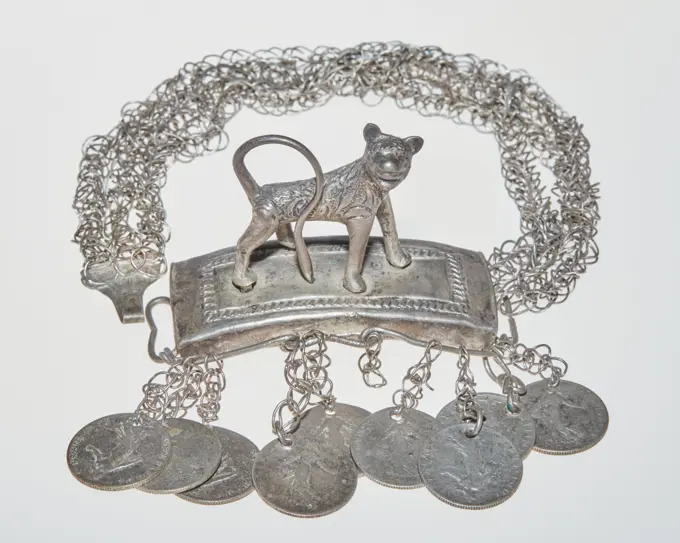
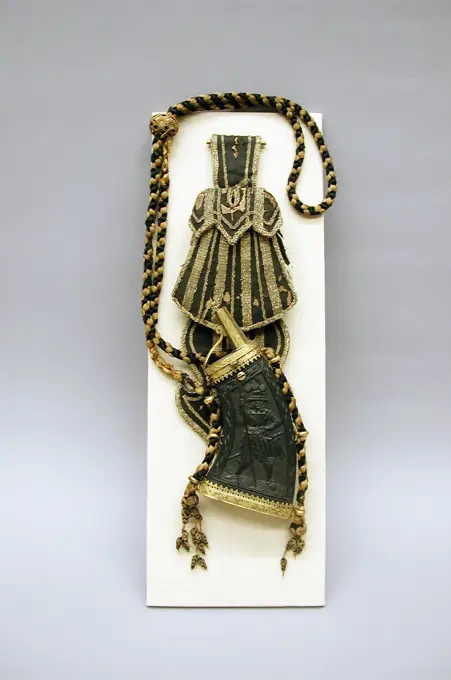
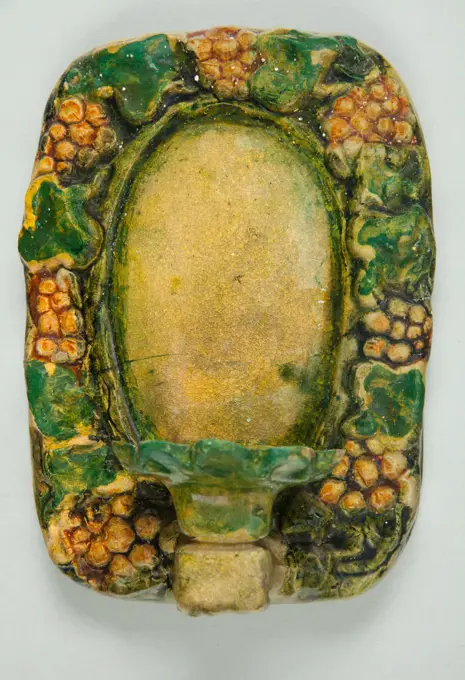
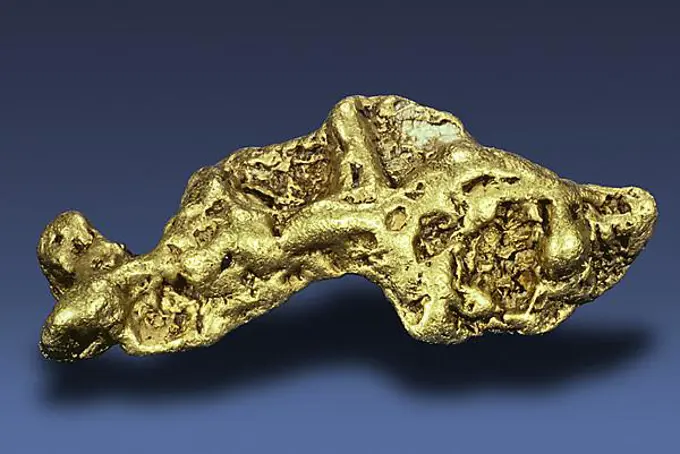
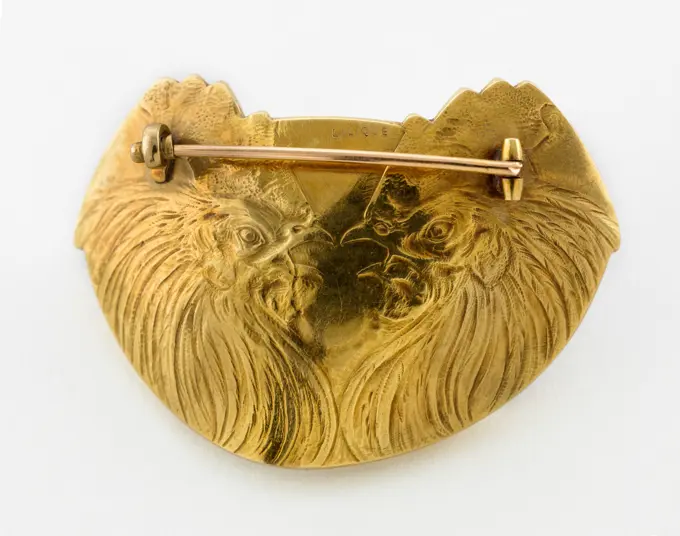
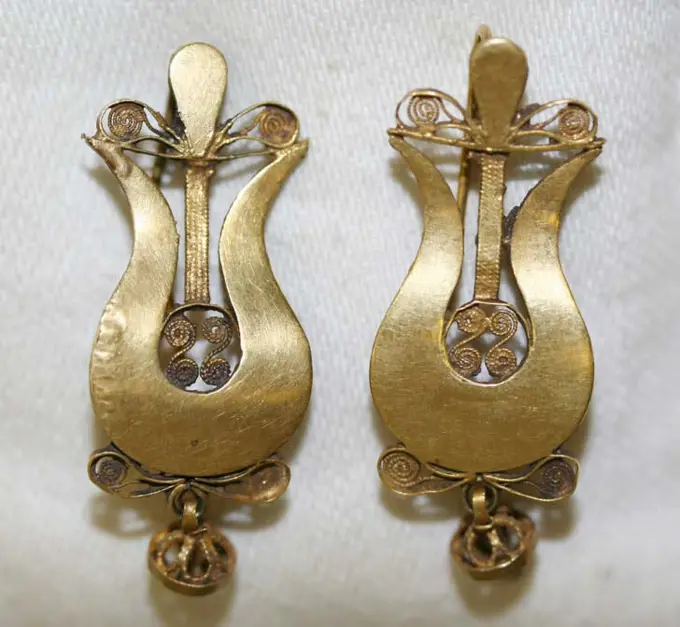
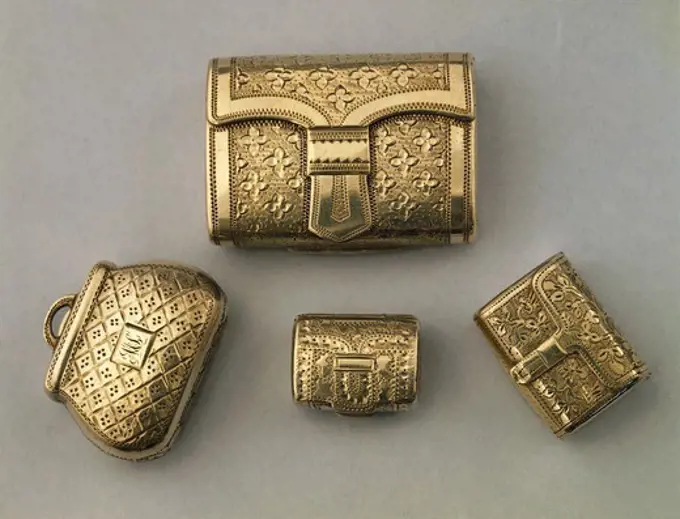
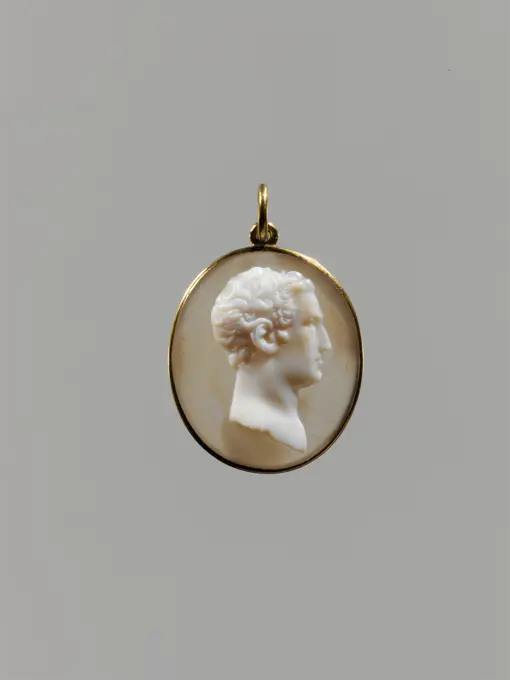
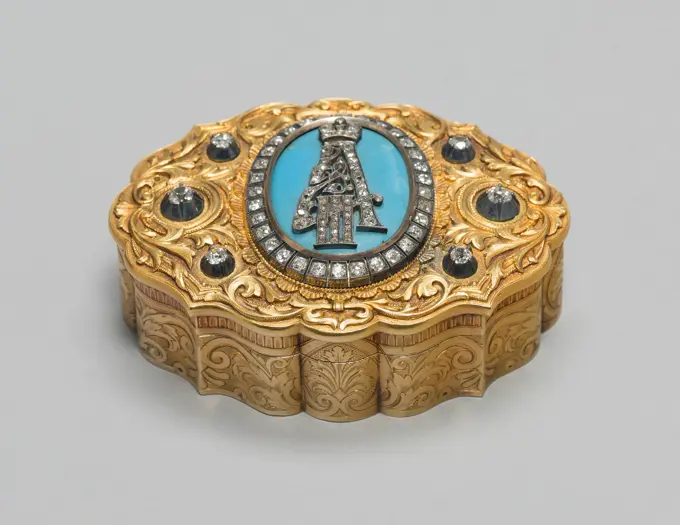
Romania - Bronze Age. Gold platesDoor Plate 15th-17th century European. Door Plate 468503Wallet. 1850. GAL1948.11.32Pair of Star EarOrnamentsFruit dish (one of a pair) 1766-67 Thomas Heming The serene symmetry and light, elegant decoration of these boat-shaped fruit bowls, representative of goldsmith Thomas Heming's best work for the crown, make a striking contrast to the Rococo style popular at the time. The arms engraved in the cartouches placed at the center of each side are those of James, second earl of Fife, and his wife, Lady Dorothea Sinclair. They were married in the year the bowls were made, and thus were probably a wedding gift.. Fruit dish (one of a pair) 833989. Hair comb from Galaflith with half round back, on which an ajour carved dragon in the middle with a lotus flower on both sides. Six teeth.Pilgrim's Badge 14th-16th century French. Pilgrim's Badge. French. 14th-16th century. Lead. Metalwork-LeadEarring, 1800s. Russia, 19th century. Silver gilt; overall: 2.9 cm (1 1/8 in.).Bull's-Head Attachment. Greece, Hellenistic period, 3rd-2nd century B.C.. Sculpture. Bronze, castMountPendant in the shape of a mermaid. Pendant in the shape of a mermaid, from gold, email, rubies, emeralds and pearls.Ceremonial Uniform: Left Shoulder Flap, 1644-1911. China, Qing dynasty (1644-1911). Satin weave silk with gold metal thread embroidery; supplementary weft; black velvet; metal (brass); lined in blue silk; overall: 41.9 x 50.2 cm (16 1/2 x 19 3/4 in.).Mount (France); gilt bronzeEarring 8th-early 9th century or earlier Indonesia (Java). Earring 50081Bliżej Kultury Szulecki, BronisławWatch 1822-38 French, Lyon. Watch 195579Pair of Sword-Grip Ornaments (Menuki) 18th century Japanese Menuki are a pair of ornamental sword fittings attached to either side of a sword hilt.. Pair of Sword-Grip Ornaments (Menuki). Japanese. 18th century. Copper-gold alloy (shakud), gold, copper. Sword Furniture-MenukiEarrings 18th century-19th century European, Eastern. Earrings 90371KrisRingStar of the Order of Saint Stanislaus, left by Francszek Bukaty, the last member of the PoIIsh RepubIIc in EnglandBadge or Harness Pendant 14th century Spanish Heraldry, or coat-of-arms, were vitally important in Europe throughout the Middle Ages and the Renaissance. Heraldic emblems were used to identify noble families, cities, regions, and even countries. In addition to being displayed on shields and flags, heraldry was incorporated into architectural decoration on the interior and the exterior of buildings, on furniture, works of art, clothing, and horse equipment. Harness pendants, like this example, would have been attached to a headstall, bridle, or other straps making up the tack of a horse ridden by a nobleman or noblewoman, or a member of their household. Many harness pendants also have decoration that is simply ornamental, or have symbols that are not specifically heraldic in nature.. Badge or Harness Pendant. Spanish. 14th century. Copper, gold, enamel. Miscellaneous-BadgesCosta Rica, San Jose, Pre-Columbian Gold Museum, Gold metalworkingNecklace. Artist: Eugêne Fontenay (French, 1823-1887). Culture: French, Paris. Dimensions: L. 16-3/8 in. (41.6 cm.). Date: ca. 1870.This gold chain has five oval enameled pendants depicting personifications of Europe and the Seasons. Each oval is framed in diamonds interspersed with long stylized palmette-shaped pendants, and forty-one leaf-shaped pendants, decorated with granulation and wirework suspended from alternately plain and coiled tubular links.The use of granulation and images of classical maidens, as well as the overall organization, demonstrate the designer's dependence upon ancient Greek gold jewelry for inspiration. Like the Castellani firm in Rome, Eugène Fontenay reproduced jewelry in ancient Greek, Roman, and other historical styles. However, not only did Fontenay copy period originals, he also took motifs from these styles and, with them, created original designs. Museum: Metropolitan Museum of Art, New York, USA.Ghanta's bell;  19th century (1801-00-00-1900-00-00);Armlet 18th century. Armlet. 18th century. Gold, set with rubies, emeralds, diamonds. Attributed to India. JewelryWatch. Culture: British, London. Dimensions: Diameter: 2 1/8 in. (5.4 cm). Maker: Watchmaker: Daniel Quare (British, 1647/49-1724). Date: ca. 1690. Museum: Metropolitan Museum of Art, New York, USA.Order sign of the Royal Order of the Union of I.J.A. Gogel, Jean Baptiste Isabey, 1808  Ordet mark consisting of an 8-pointed star with white enamelled points on which gem; In between 8 bees. In the middle a blue circle with edge scriptures, inside in gold in relief at the front, a bundle of arrows with scepter tied together by ribbon; Drowned lion in water. One point demolished: Loosen an open -up crown on hinge with top -hand and carrying ring. Netherlands gold (metal). casting / striking (metalworking) / forgingBulgaria, Nesebar, Clasp depicting Cepheus, Cassiopaea and other mythological figures, embossed goldStylized Figure Pendant 5th-10th century International Style. Stylized Figure Pendant 316681Beijing, Temple of Heaven, Gate DetailEagle Pendant, c. 1000-1550. Western Panama, Veraguas-Gran Chiriquí Style, 11th-16th century. Cast and hammered gold; overall: 6.4 x 9.9 cm (2 1/2 x 3 7/8 in.).Carnival hatBrooch. Culture: American. Dimensions: 3 1/8 × 2 3/4 in. (7.9 × 7 cm). Maker: Marcus and Co. (American, New York, 1892-1942). Date: ca. 1900. Museum: Metropolitan Museum of Art, New York, USA.Gold Bracteate 400-600 Scandinavian This thin gold pendant, known as a bracteate, displays a deft and spirited design defined by bold, sweeping lines. The central face exemplifies the exuberant, highly abstact style of early medieval Scandinavian artists. The border zone, formed by intricate and orderly rows of repeated punchwork, reveals the great technical competency of goldsmiths working in northern Europe during the fifth and sixth centuries.The manufacture of bracteates probably originated with Roman and Byzantine portrait medallions, presented by the emperor as gifts to important figures. Here, however, the imperial image has been transformed into the depiction of a god, perhaps Odin, chief of Nordic pantheon; his oversize face is balanced atop a galloping horse with horns. With their fine workmanship and allusions to the Roman and Byzantine worlds, gold bracteates conveyed both the sophisticated taste and the high social status of their owners, who wore them as fine jewerly and 16th century BC gold death mask from Grave IV, Grave Circle A, Mycenae, Cat. No. 253 Athens Archaeological Museum, Athens, Greece, EuropeBadge Collection for the School Construction FundWall Alder with Leeuwenkop and Snake, Hans Rogiers van Harelbeke, 1599 The object consists of four cast parts: the wall plate, the arm, the fat catcher, the candle pin. The wall plate is cast from the same shape as that of BK-BR-946-S, has the shape of a lion's head with opened mouth, in which a square hole. Around it a spell tape shared in four with the name and the inscription .sterck.alsden.leev. / VoorSictich.voort. / .Tslanghen.vier. / .Fe.hans.rogier.1599. Around a roll work ornament, on which various decorations are punched, including four -leaf roses. A hole has been applied at the top. An eye is soldered at the back. The arm is executed as a scaly-wrinkled snake. This is equipped with a protrusion in the tail part that fits in the mouth of the lion of the wall plate. A hole has been applied in the head with open mouth, in which the candle pin can be screwed. The round fat catcher has a profiled edge and bottom. The candle pin has the shape of a baluster looped in a point. AmstAccurate replica treasure from Cairo national museum in CAiro , Egypt.Cordlas with a vaginaPair of frames, Cast and gilt bronze, Each frame a horizontally oriented rectangle; cast decoration of rocaille scrolls ornamented with flowers and fruit., France, ca. 1745, metalwork, Decorative Arts, Pair of framesPendant with Saint John the Evangelist (reverse), late 1500s. Italy, late 16th century. Enameled gold with pearls and emeralds; overall: 7.3 cm (2 7/8 in.).Female belt, Cubeo culture, Amazonia, Brazil and Colombia, collected in 1933-34, seeds and plant fiber, Anthropology National Museum, Madrid, Spain.Necklace, 1700s-1800s. East India, Rajputana or Malwa, 18th-19th Century. Gold filagree and granulation; overall: 63.5 cm (25 in.); cord: 39.4 cm (15 1/2 in.).MountArrowhead (Yanone). Culture: Japanese. Dimensions: L. 21 3/8 in. (54.3 cm); L. of head 5 3/4 in. (14.6 cm); W. 3 in. (7.6 cm); Wt. 7.4 oz. (209.8 g). Date: ca. 1615-1868. Museum: Metropolitan Museum of Art, New York, USA.Silver Silver Buckle 1st title 950/1000th 1797.Pair of Firedogs Representing Venus and Mars 1764-1774 Paris. Gilt bronze, iron supports . Quentin-Claude Pitoin (Designer)Ovale applique met wandarm van veelkleurig beschilderde faïence.Oval wall arm of multi-colored painted faïence. A flower rank is painted in the middle with a scalloped edge with flowers in Relief. A candle holder is attached at the bottom of the wall arm. The wall arm includes an identical copy.Corpus from a Processional Cross Made 1370-1430 . Gilt bronze . Sienese SchoolBronze handle with a sleeping youth, probably Endymion. Etruscan civilization, 4th-3rd Century BC.Purse, Medium: silk, metal Technique: beaded crochet, Small sac of dark red crocheted silk with gilt beads, with a ring of plain gold to open or close. Top finished with two gold bars with gold knobs, single gold drop at bottom., France, early 19th century, costume & accessories, PurseMount; bronze, giltSword-Hilt Collar and Pommel (Fuchigashira). Culture: Japanese. Dimensions: Kashira (a); H. 1 5/16 in. (3.3 cm); Wt. 0.4 oz. (11.3 g); fuchi (b); H. 1 1/2 in. (3.8 cm); Wt. 0.6 oz. (17 g). Date: 19th century. Museum: Metropolitan Museum of Art, New York, USA.Retro style metal keys form a heart shape on blackNotebook from turtle with imposed decorations of gold, email and precious stones. In the closure a pencil decorated with enamelled bust. Notebook from turtle with imposed decorations of gold, email and precious stones. A pencil with enamelled bust is inserted by the closure.NotGold sandals, from Treasure of TutankhamenPair of Sword-Grip Ornaments (Menuki) 1750-87 Japanese Menuki are a pair of ornamental sword fittings attached to either side of a sword hilt.. Pair of Sword-Grip Ornaments (Menuki). Japanese. 1750-87. Copper-silver alloy (shibuichi), gold. Sword Furniture-MenukiDetail of animal-style decoration on a gold Viking bracelet. Artist: UnknownConch-shapedOrnamentOrder of Saint Patrick, Grand Master's set of insignia, Orders, decorations and medals  Bell pull, Medium: silk, wool, linen, cotton, brass handles Technique: counted stitch embroidery in silk and wool on linen canvas, cotton plain cloth, brass handles, Bell pull made of canvas with embroidery, arranged as cross borders, in floral and geometric designs; brass handles at either end, pierced in design of Chinese type. Embroidery in canvas stitches. Backed with yellow cotton plain cloth., Germany, 19th century, embroidery & stitching, Bell pullItaly, 18th century. Three branch gilded bronze candelabras.Watch. Culture: British, London. Dimensions: Diam.: 1-3/8 in. (3.5 cm). Maker: Watchmaker: Windmill. Date: early 18th century. Museum: Metropolitan Museum of Art, New York, USA.Sword-Hilt Collar (Fuchi), 1700-1850. Japan, Edo period (1615-1868). Shakudo; average: 3.9 x 2.3 cm (1 9/16 x 7/8 in.).Temple Fragments, Museo Archeologico Regionale Antonino Salinas, Collection of Etruscan, Roman, Egyptian and Greek Works, Palermo, Palermo, Sicily, Italy, EuropeFrame (Italy); wood, carved, gilded, paintedApplique in the shape of a lion's head ca. 6th-4th century B.C. Achaemenid This gold applique is in the form of a lions head, facing to the left with its mouth open in a roar. The eye is shown in profile with the lid outlined. Its snout is indicated by a series of raised horizontal lines between the nose and the mouth and above the nose, and two forked whiskers are shown on the cheek. The mouth has two canine teeth, one in the upper jaw and one in the lower, both with a vertical groove. The lions tongue is visible behind the lower tooth, and the lips are rendered with two thick lines around the edge of the mouth. The face is separated from the mane by a thick, raised line. Above the line is a pointed ear with two vertical grooves. The openwork mane consists of eleven thick lines radiating from the back of the lions head, interspersed with raised dots. The back side of the applique has five rings for attaching it to fabric.This applique was made by hammering a single sheet of gold anImpression Of Seal Cylinder; 1902-20-22. Golden retractable theater viewer with a sight glass in the shape of a pendant (medallion), decorated with pearls and red polished stones.Tassel 17th century Italian. Tassel 221218Inr with Fox's Wedding (Kitsune no yomeiri) late 18th-early 19th century Japan. Inr with Fox's Wedding (Kitsune no yomeiri). Japan. late 18th-early 19th century. Five cases; lacquered wood with gold, silver takamaki-e, hiramaki-e, togidashimaki-e, irokomaki-e, kirikane (cut out gold foil) on nashiji ("pear skin") and black lacquer background. Edo period (1615-1868). Inr. The Hanukkoekalamp has a bow-shaped back plate with corrugated border, decorated with a flower bouquet and a cartouche with the alliance weapon Keyser-Norden with helmet sign, under a crown with flowers. In the middle of the crown is an opening, faced in a frame of soft tissue. A smooth drip tray is attached to the underside of the back plate. Above a plate hangs in which eight oval trays are driven with tangles. A single same container has been applied under the weapon. Drip tray and back plate are connected to each other by means of voluntary side pieces.Reliquienschrein Reliquary casket, gilded copper on wood with enamels, 13th century, Limoges workshops, Huesca Diocesan Museum, Aragon community, Spain Copyright: xZoonar.com/Tolox 22307864Silversmith's art, 13th century. Silver gilt processional cross, made by a goldsmith from Casamari Abbey (Lazio Region) under Abbot Giovanni Bove, 1291. Back side. Detail: the ox, symbol of Saint Luke the Evangelist.Bracelet with animal ornament and coin pendants, late 19th century, 1 3/4 × 2 5/8 × 2 1/8 in. (4.45 × 6.67 × 5.4 cm) (ornament only), Silver, Benin, 19th century, More than one hundred years ago, the elite of the Danhomé Kingdom in West Africa would have worn these silver ornaments to adorn themselves and show off their wealth, and also to protect themselves from harm and evil. Fashioned by jewelers from imported silver coins, the ornaments were embellished with tiny sculptures that refer to past kings, heroic wars, and the Vodun religion. The coins attached to the ornaments date from between 1873 and 1910, bridging the last decades of the independent Kingdom and the first 15 years of French colonial rule.Belt Carrier with Powder Flask and Pouch for Chargers early 17th century German, Saxony This flask is of the type carried by the guard (Trabantenleibgarde) of the Elector of Saxony. Carved in relief with a pikeman dressed in early seventeenth-century costume, the boxwood flask retains its gilt bronze mountings as well as a velvet-covered chamois pouch, silk braided carrier, and belt hook. The pouch features three compartments for paper cartridges and additional pockets for bullets and buckshot.. Belt Carrier with Powder Flask and Pouch for Chargers. German, Saxony. early 17th century. Velvet, metallic thread, leather, boxwood, bronze, gold. Saxony. Firearms Accessories-Flasks & PrimersDragonflyBorder (USA); block-printed; c) Overall: 33.5 x 4.5 cm (13 3/16 x 1 3/4 in.) d) Overall: 36.5 x 4.5 cm (14 3/8 x 1 3/4 in.)Sconce Stromy 5 team (Żygulska, Żątowska, Karbowska)Necklace probably 19th century Moroccan This collection of largely ethnographic jewelry includes examples from cultures in South America, North America, Europe, Asia, and Africa and dates from the Pre-Columbian period to the twentieth century. Owned by renowned art collector and fashion enthusiast Muriel Kallis Newman, the collection represents her knowledge and appreciation of a wide range of jewelry design and making traditions. Numerous items in her collection are composite artifacts made from various cultures and time periods reappropriated as modern jewelry creations by or for Muriel. It is important to note that Newman wore many of the pieces in the collection, interpreting them to suit and express her own singular, often avant-garde style.. Necklace 141593Chair Cover Made 1800-1825 China. .Parure, J.M. van Kempen & Son, c. 1854 - c. 1858 Gold and Email bracelet, with an image of Amalia van Solms. Voorschoten gold (metal). Gold and Email bracelet, with an image of Amalia van Solms. Voorschoten gold (metal).Golden Filigree Earrings From Tradicion Zenu Tribe In The Gold Museum In La Candelaria, The Old Town Of Bogota, ColombiaGoldsmith's art, 18th century. Victorian bracelet with cameo.82 Ounce Gold Nugget, Greenville, CAWatch ca. 1835 Watchmaker: Firm of Moricand & Degrange. Watch 195578Earrings 18th century-19th century European, Eastern. Earrings 102409Jeweled CrownRené Lalique (1860-1945). Pin. Now, pearl, oyster shell. Around 1900. Museum of Fine Arts of the city of Paris, Petit Palais. Fashion accessory, jewelryCollar (USA); cottonTraditional style, Brass, incense dish with a Ganesha motif, Indian 21st centuryASTROLABE (NO. 18 OF THE CATALOG OF EXISTING ASTROLABLES IN SPAIN). (EXHIBITION THE SCIENTIFIC LEGACY OF AL-ANDALUS) (LOCATION: INSTITUTO VALENCIA DE DON JUAN).Earrings 18th century-19th century European, Eastern. Earrings 90121Silversmith's Art, Great Britain 19th century. Series of vinaigrettes, silver fragrance tins with hinged cover.William Ponsonby, Viscount Duncannon, Future Second Earl of Bessborough 1750 Johann Lorenz Natter German His lapidary excellence lead the German medalist Johann Lorenz Natter to Switzerland, Venice, Florence, England, Denmark, Sweden, Holland, and Russia, where he died. William Ponsonby (1704-1793), an influential parliamentary politician, was an original member of the band of aesthetes known as the Dilettanti Society. Natter presented him sparely, with cropped hair, in the neo-Roman style of budding Neoclassicism. The ground stratum is carved so thin as to be transparent, allowing a delicate play of light. A companion cameo dated 1750 of Ponsonbys wife, Lady Caroline, née Cavendish, was auctioned at Christies in London in 1923 but has left no subsequent trace.. William Ponsonby, Viscount Duncannon, Future Second Earl of Bessborough. Johann Lorenz Natter (German, 1703-1765). British, probably London. 1750. Onyx, mounted in gold as a pendant. Lapidary Work-GemsSnuff Box 1881-1894 Russia. Gold, paste stones and metal setting .Panel ornament French 19th centuryPair of corner mounts for a commode French 1745-49 View more. Pair of corner mounts for a commode. French. 1745-49. Gilt bronze. Metalwork-Gilt BronzeBrooch 18th century Portuguese. Brooch 206846