Antique Furniture Pieces

A selection of elegant, vintage furniture including chests and tables, highlighting rich woods, intricate carvings, and stylish designs typical of past eras.
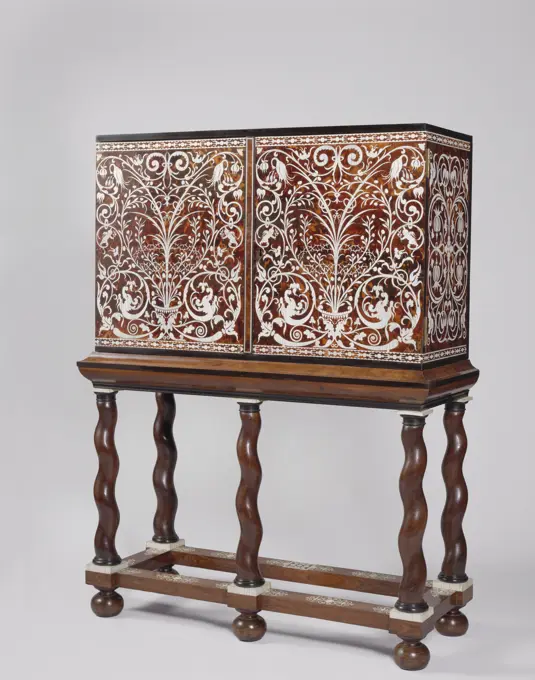
Cabinet of Amalia from Solms, c. 1652 - c. 1657 Cabinet, completely covered with turtle and ivory with the monogram of Amalia van Solms (1602-1675) and Frederik Hendrik (1584-1647). The rectangular cabinet has two doors, behind which an interior with ten drawers and a small door in the middle. The doors show a turtle on the front at the front, in which various symbols are incorporated, such as a heart of orange branches, a thorns, samples and snakes, angels and pelicans who open the breast to feed their young. The same pattern in turtle is applied to ivory on the inside of the doors. The sides and top show a pattern of stylized flower vines, in ivory on turtle on the sides and vice versa on the top. On the drawer front, the crowned monogram Havo, for Hendrik and Amalia van Oranje, is placed under a canopy, placed behind a balustrade with bins with orange trees. The monogram is located in a column architecture with a checkered floor, with left and right perspectives through open doors.
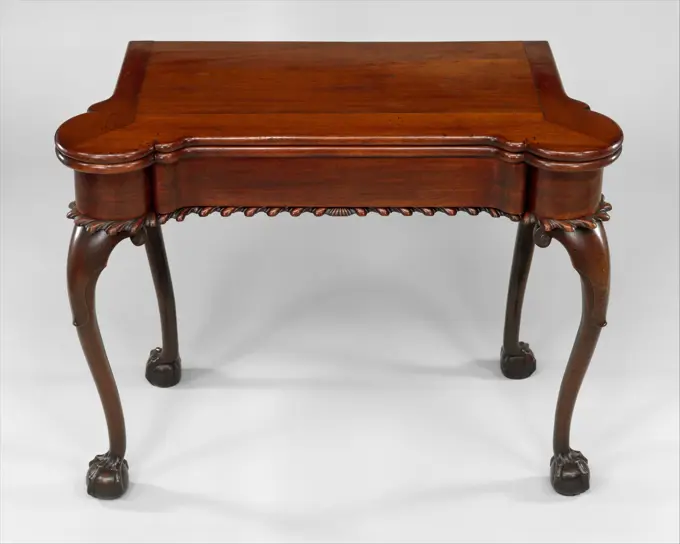
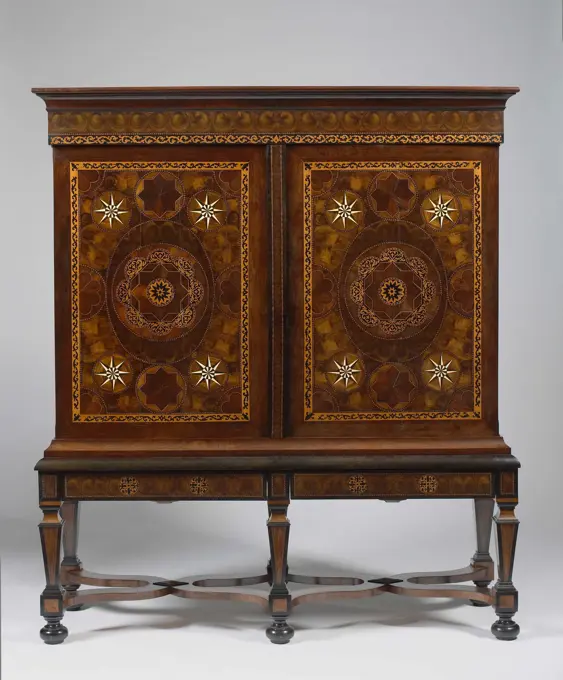
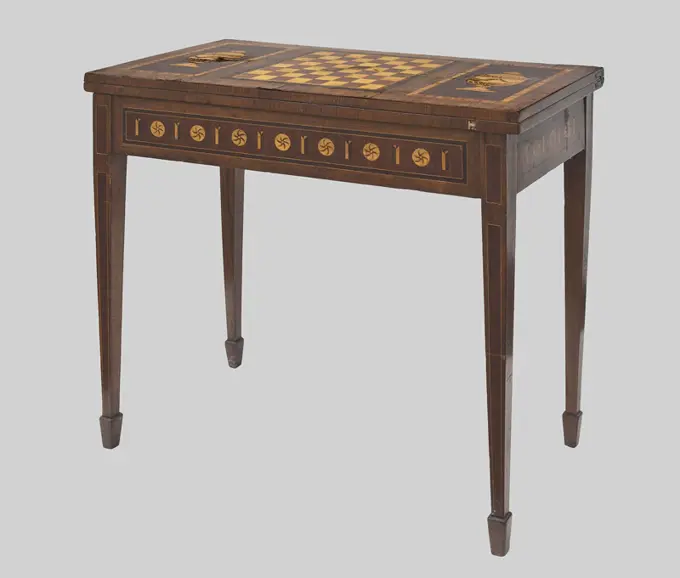
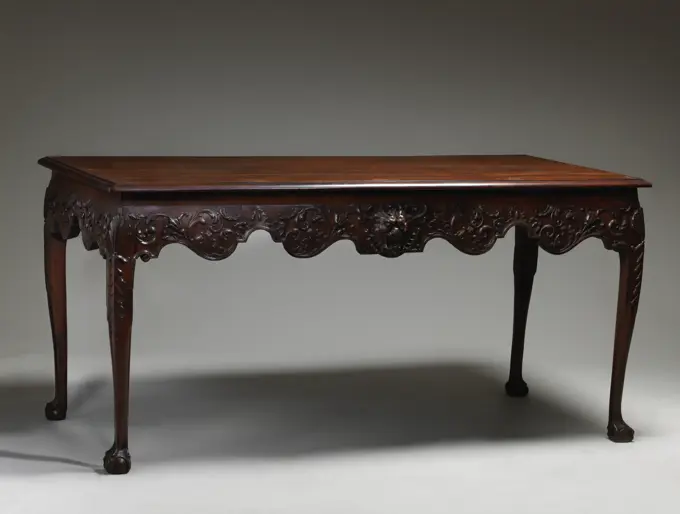
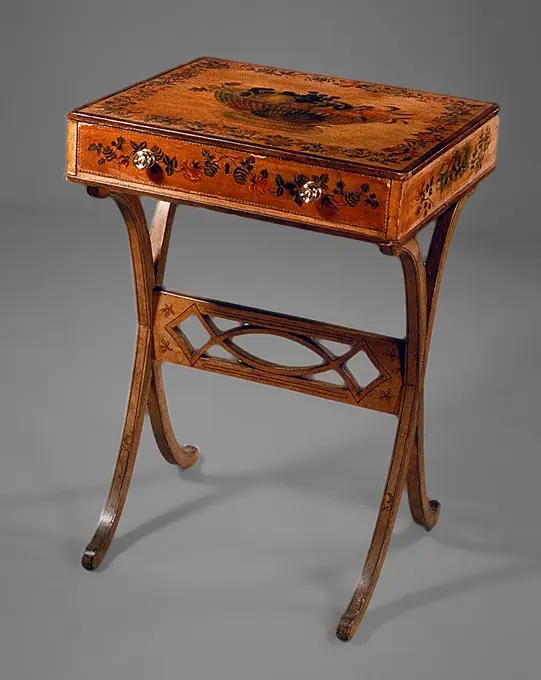
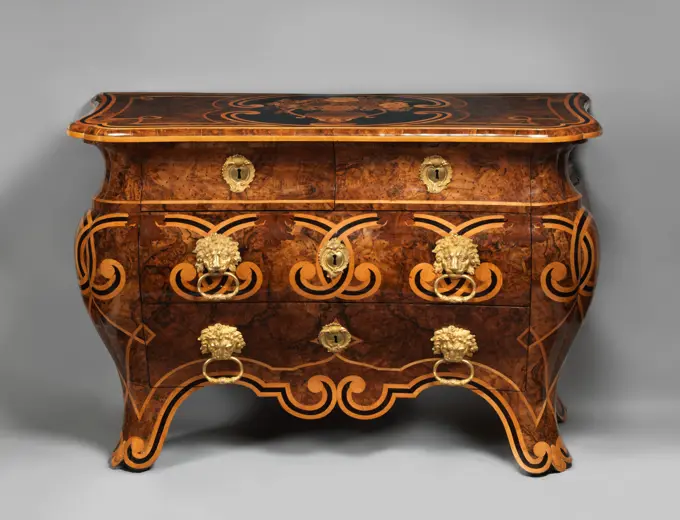
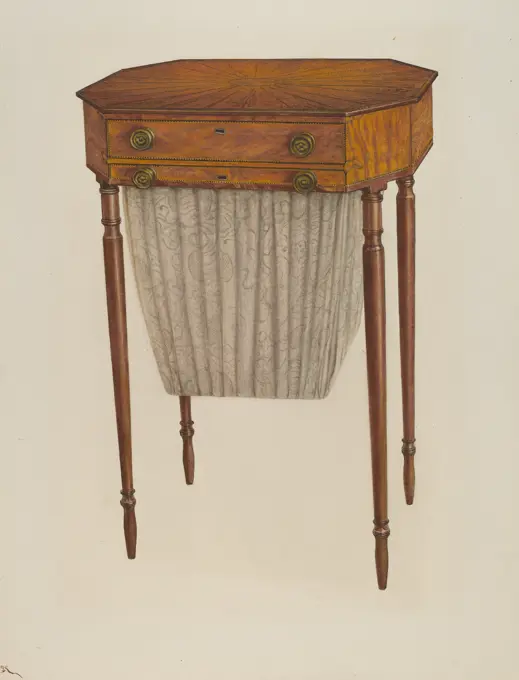
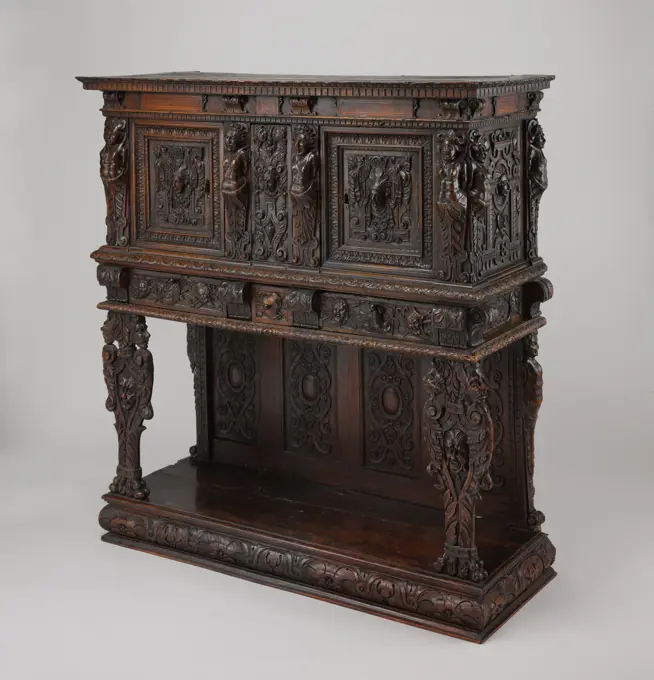
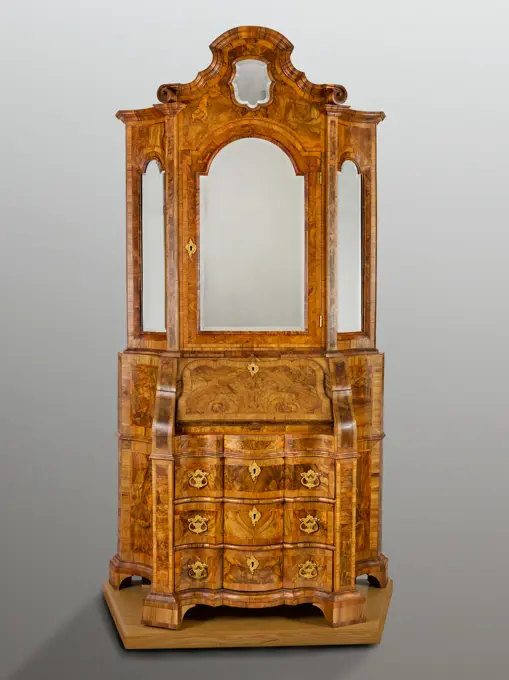
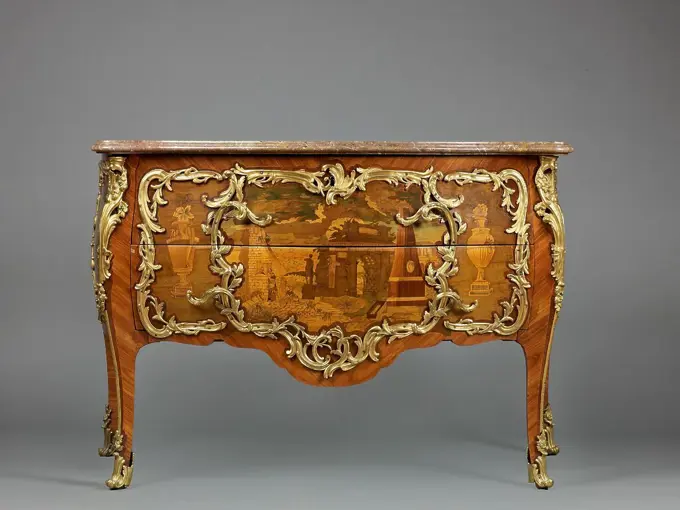
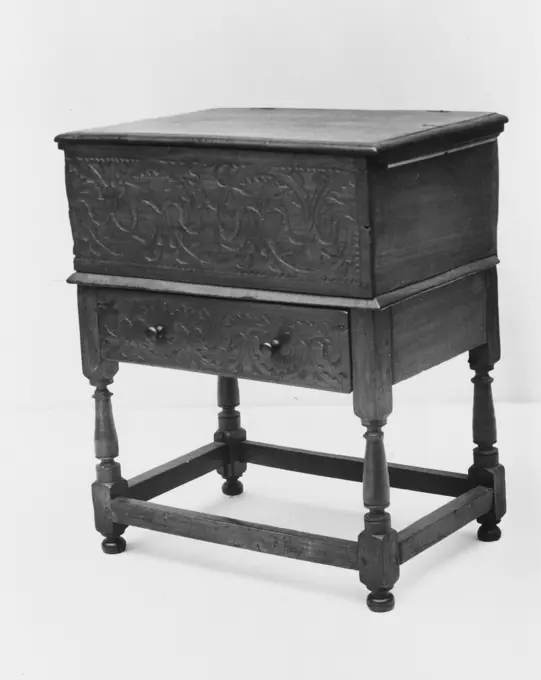
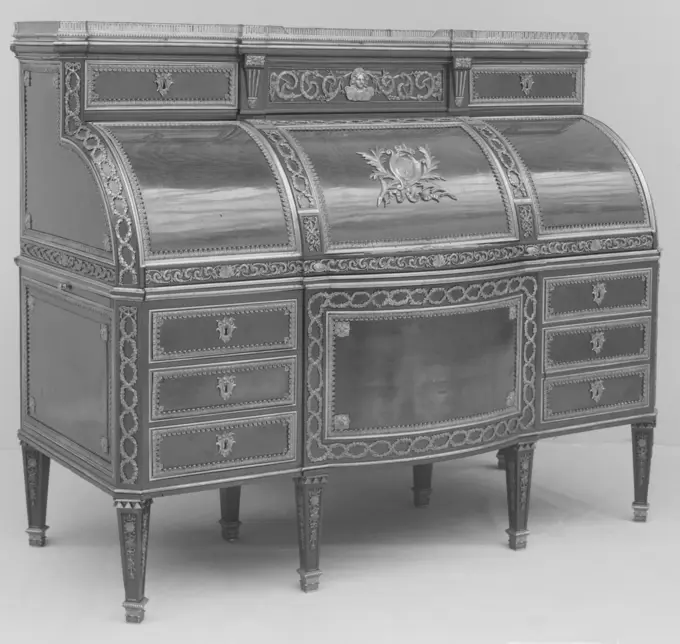
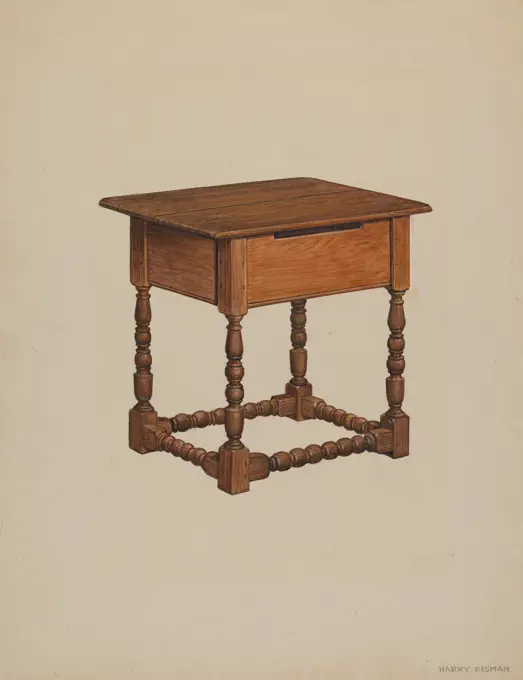
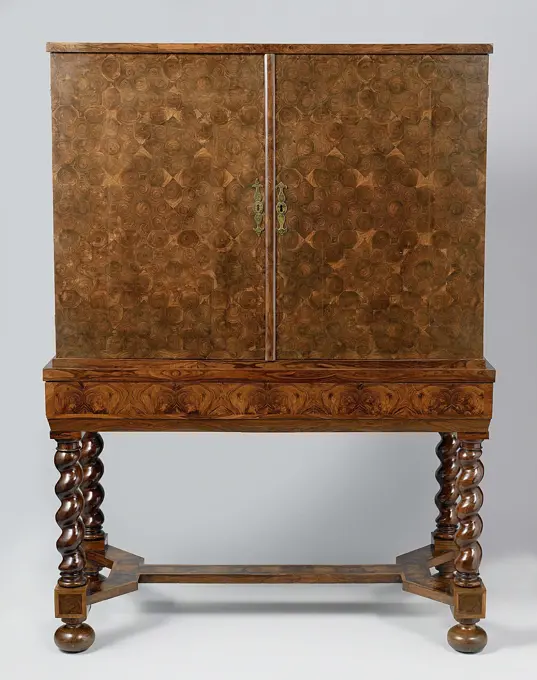
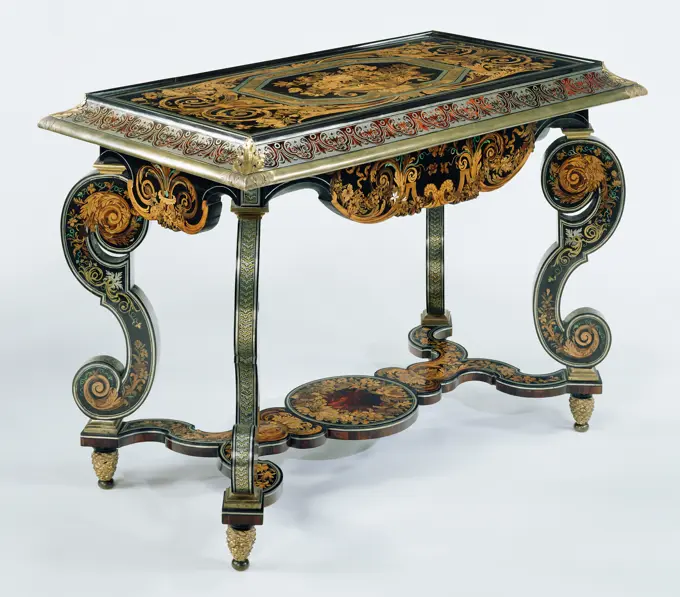
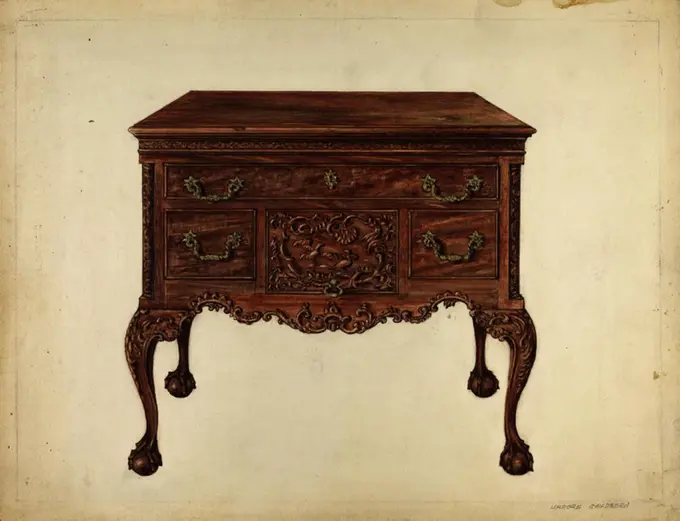
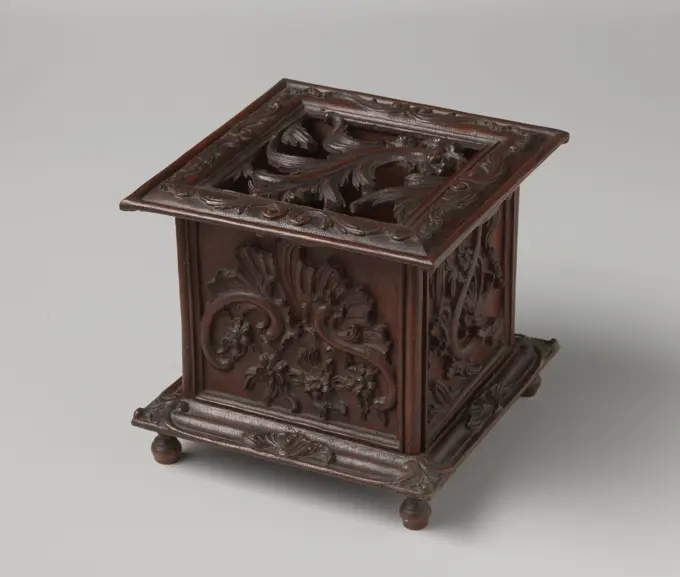
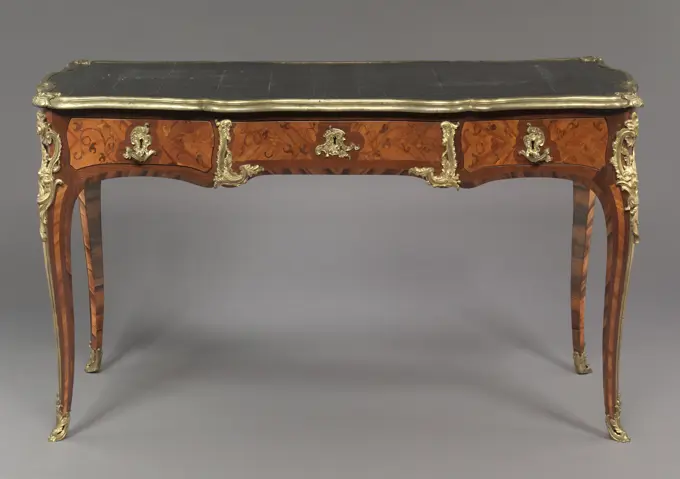
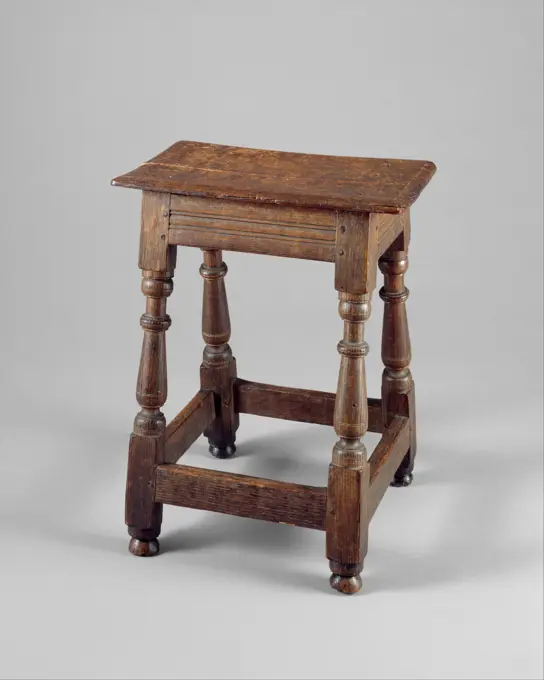
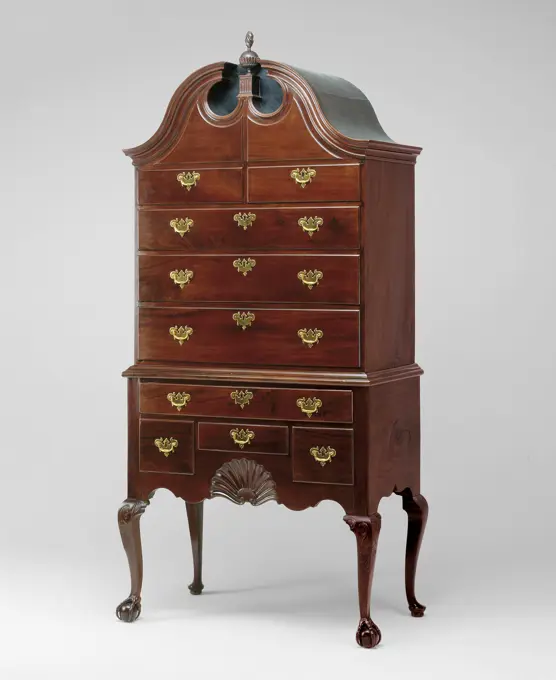
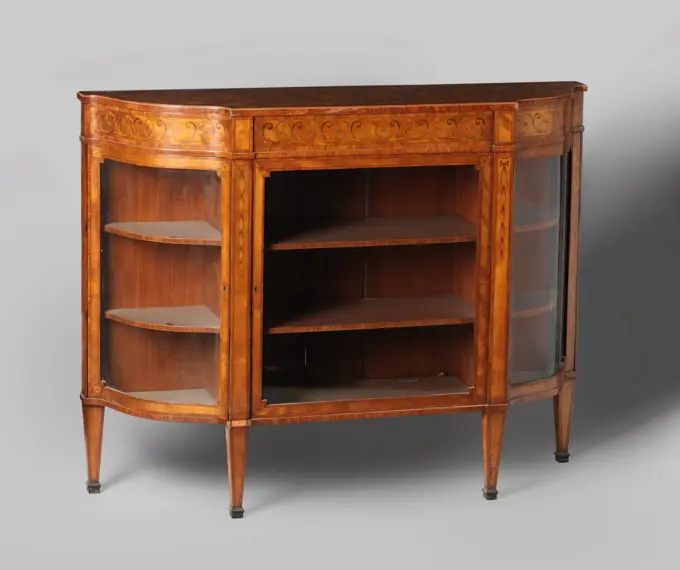
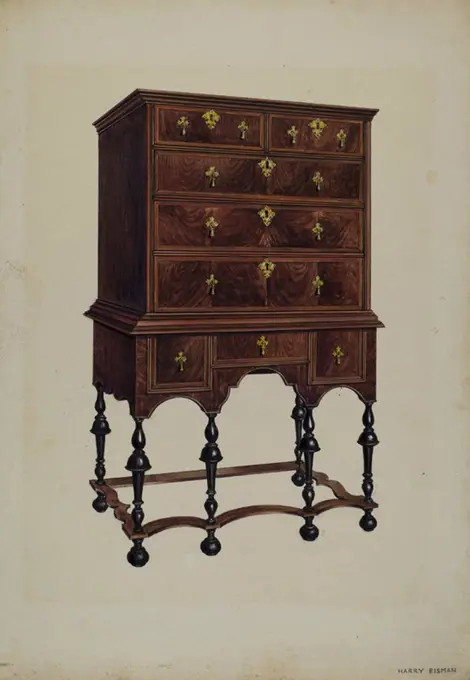
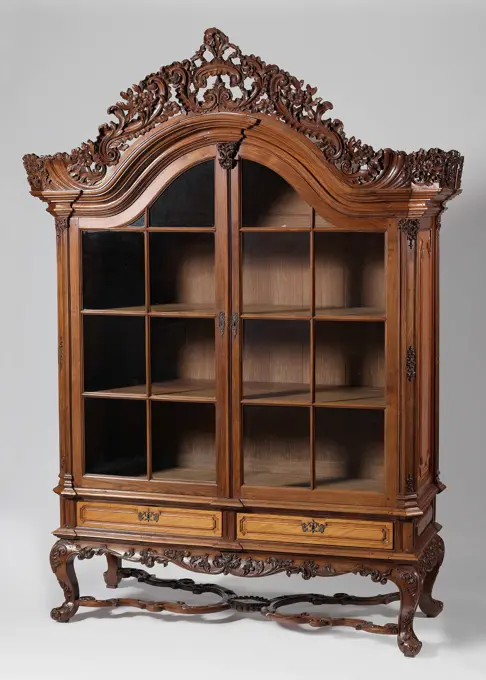
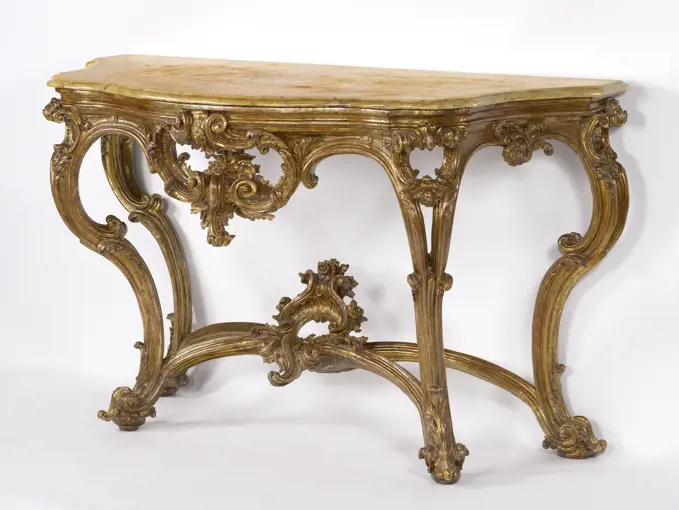
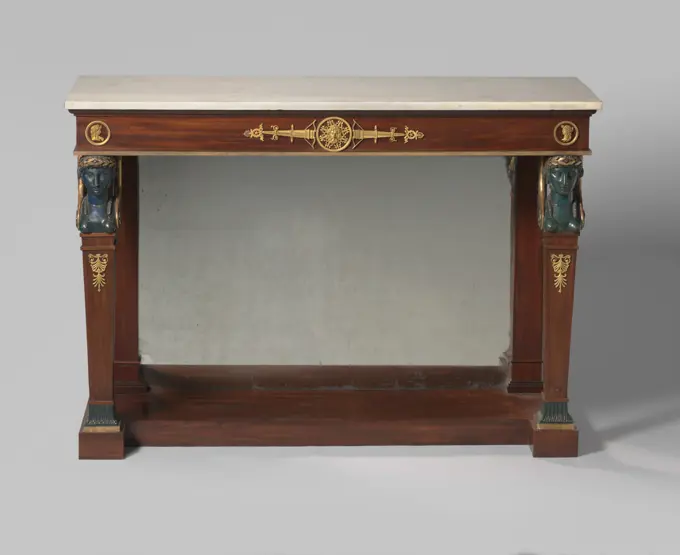
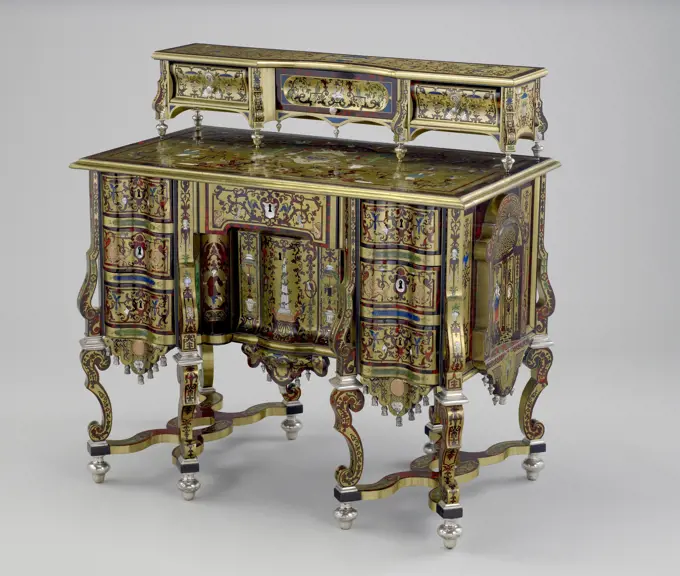
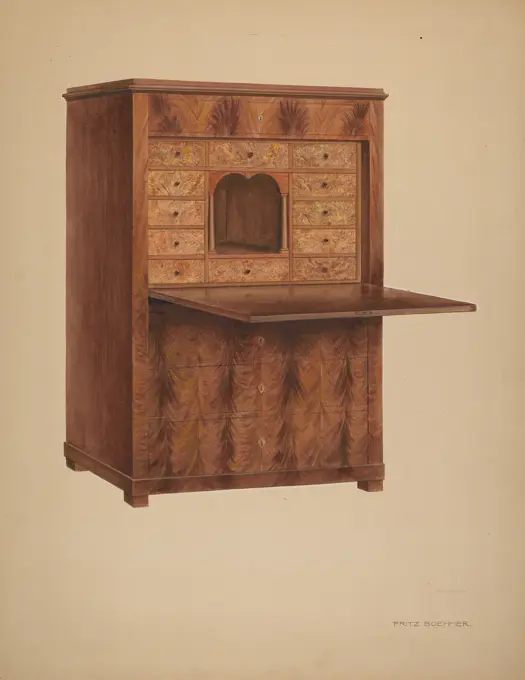
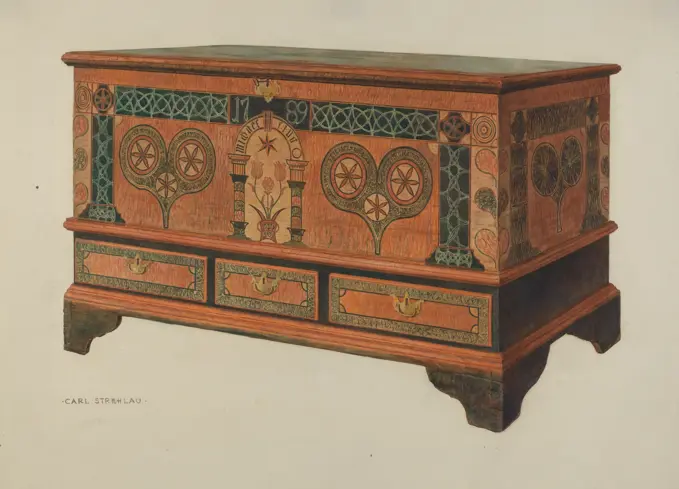
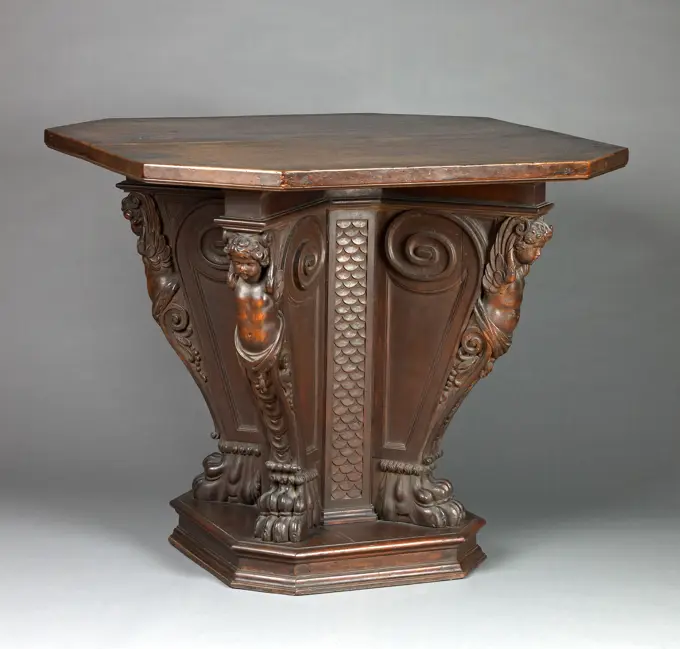
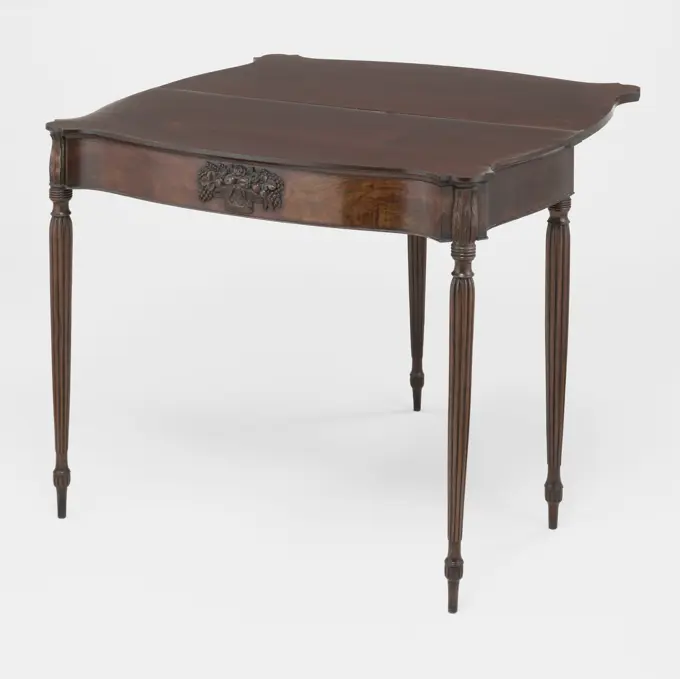
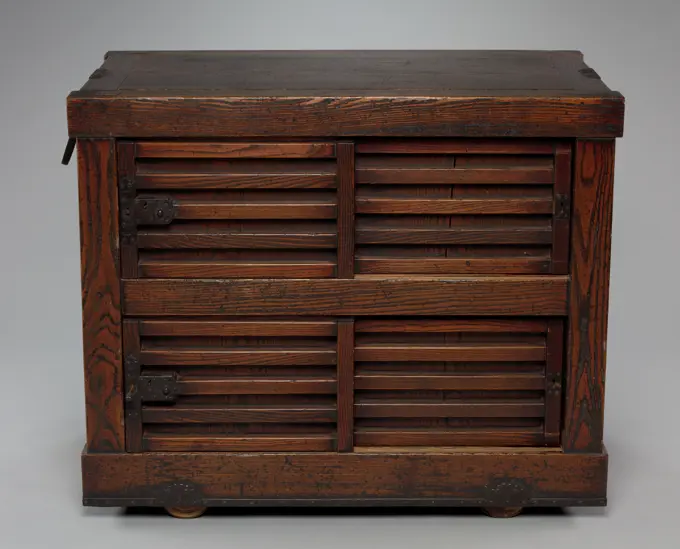
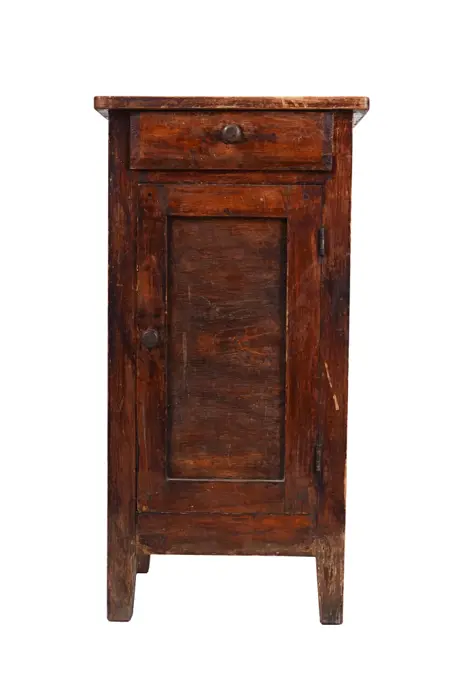
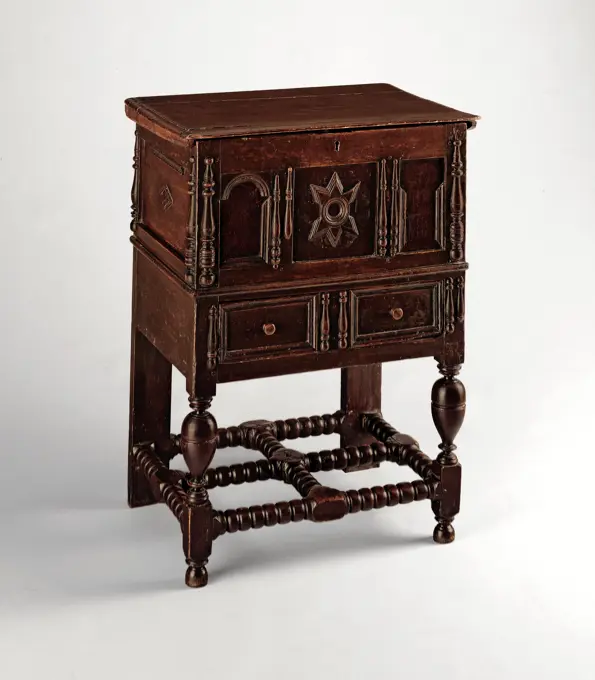
Chest-on-frame 1670-1700 American What purpose this small lift-top chest with a drawer on high legs was intended to serve is not entirely clear. It may have been what is designated in period inventories as a chamber table,” used in a bedroom as a washstand or possibly to store chamber pots.. Chest-on-frame 2030Chest. Dated: 1935/1942. Dimensions: overall: 57.4 x 49.2 cm (22 5/8 x 19 3/8 in.). Medium: watercolor, gouache, and graphite on paper. Museum: National Gallery of Art, Washington DC. Author: Rolland Livingstone.Card table ca. 1765 American This turret-top card table, so called for its projecting rounded corners, descended in the Verplanck family along with four side chairs (39.184.3-.6), a tea table (39.184.11), and an upholstered settee (39.184.2) in the collection. As is typical of New York-made tables, this example has pronounced gadrooned edging that continues above the legs; cabriole legs with rounded, powerfully curved knees and ankles; and somewhat squashed claw-and-ball feet with small back talons.. Card table 1427Tea table with a large and a small drawer, on four curved claw legs, decorated with rocailles at the top. Sculpted leaf with leaf and flower vines. Scalloped underright with gold -plated bronze attachment in the form of recorded draperies, anonymous, 1750 Tea table of walnut resting on four curved claw legs, which are decorated with rocaillework at the top. The profiled edge of the scalloped leaf is provided with leaves and flower vines at the front and on the corners. For the curved front is a large one underneath a smaller drawer. The front line at the front is sculpted. The gilded bronze seizure shows recorded draperies. Northern NetherlandsNetherlands wood (plant material). walnut (hardwood). bronze (metal) gilding Tea table of walnut resting on four curved claw legs, which are decorated with rocaillework at the top. The profiled edge of the scalloped leaf is provided with leaves and flower vines at the front and on the corners. For the curved front is a large one underneath a smalOak chest of drawers with rosewood, amaranth and maple and equipped with gold-plated bronze fittings.OAK Chest of Drawers Were Glued With Rosewood, Amaranth and Maple and Provided With Gold-Plated Bronze fittings. France, Third Quarter 18th Century.Secretary Lurred with pink and maple wood and with blue-gray-veined leaf from marble. Two underneaths, a folding leaf and a drawer. Seizure of gilded copper or bronze, Pierre Roussel, 1770 Eikhouten Secretary Lushed with pink and maple wood. The ornaments are of gilded copper or bronze. The front legs that are placed are wearing lion's claws with leaf work, the corner styles at the top of a Leeuwekop with Garlandland and the double accolade sill a vase shape with garland and leaf work. The two underlines, the folding leaf, the drawer above and the sides show rectangular fields within a band with braided corners. Blue-gray veined marble leaf; Decorated key plates. France wood (plant material). oak (wood). rosewood (wood). maple (wood). kingwood (wood). bronze (metal). copper (metal). marble (rock). gilding (material) gilding Eikhouten Secretary Lushed with pink and maple wood. The ornaments are of gilded copper or bronze. The front legs that are placed are wearing lion's claws with leaf. This cabinet is inlaid with marquetry forming geometrical patterns and stars fashionable among an earlier generation of Dutch cabinetmakers. A new feature is the narrow borders built up of minuscule pieces of wood. Quite a few comparable cabinets are known, all featuring these curious borders. Perhaps they were all made in the same large workshop.Game table. unknown, contractorCabinet of Amalia from Solms, c. 1652 - c. 1657 Cabinet, completely covered with turtle and ivory with the monogram of Amalia van Solms (1602-1675) and Frederik Hendrik (1584-1647). The rectangular cabinet has two doors, behind which an interior with ten drawers and a small door in the middle. The doors show a turtle on the front at the front, in which various symbols are incorporated, such as a heart of orange branches, a thorns, samples and snakes, angels and pelicans who open the breast to feed their young. The same pattern in turtle is applied to ivory on the inside of the doors. The sides and top show a pattern of stylized flower vines, in ivory on turtle on the sides and vice versa on the top. On the drawer front, the crowned monogram Havo, for Hendrik and Amalia van Oranje, is placed under a canopy, placed behind a balustrade with bins with orange trees. The monogram is located in a column architecture with a checkered floor, with left and right perspectives through open doors. Chest with Two Drawers. Dated: c. 1939. Dimensions: overall: 45.5 x 35.4 cm (17 15/16 x 13 15/16 in.) Original IAD Object: 37"high; 38"wide; 20 1/4"deep. Medium: watercolor, colored pencil, pen and ink, and graphite on paperboard. Museum: National Gallery of Art, Washington DC. Author: Charles Squires and Harry Eisman.Stool. Culture: British. Dimensions: 21-1/8 x 24-5/8 x 10-3/4 in. (53.7 x 62.5 x 27.3 cm). Date: ca. 1600. Museum: Metropolitan Museum of Art, New York, USA.Table 1700-1730 American. Table 8058Side table ca. 1730-40 Irish. Side table. Irish. ca. 1730-40. Mahogany. Woodwork-FurnitureCrib of oak, with corner styles and decorations on Frisian and panels. Crib of oak. The corner styles are formed on the front by corintic columns and on the back by channeled pilasters. The main frame has a frieze, classified by consoles with lions. They wear coat of arms on the corners at the front, the other festivals or a weapent probey. Grotesken stabbed on the panels. The wide batches and the panels of the front and end bulkes are decorated with perspective cartouches.Mahony wood wall or consolet table with mirror in the back wall, anonymous, c. 1840 Wall table glued with mahogany on an oak core. Two lying volutes have been placed on the rounded corners of the base -running base, on which two large broken volutes that co -support the table rule; All decorated with acanthus leaf. The back wall contains a mirror. The bottom of the table rule, which contains a drawer in the front, is trimmed with a pearl edge. Cover frame with a border with a slamming grunts; There is a draw blade on the short sides. White and gray veined marble leaf. Northern Netherlands wood (plant material). oak (wood). mahogany (wood). marble (rock). looking glasses Wall table glued with mahogany on an oak core. Two lying volutes have been placed on the rounded corners of the base -running base, on which two large broken volutes that co -support the table rule; All decorated with acanthus leaf. The back wall contains a mirror. The bottom of the table rule, which contains a drawer iHigh Chest ofDrawers. Maker, possibly by: Samuel Henszey, active 1767Cabinet with two doors and below that load with a whimsically sculpted ornament, Michel de Klerk, c. 1911 - c. 1920 Cabinet of triplex, birch and poplar wood resting on wide feet that run into three styles. The wide cupboard has two doors with two drawers underneath that make something back. There is a wide round center style in the middle. The two corner styles contain a whimsically carved serrated motif. The wavy frame on the top of the cabinet devises and contains sculpted elements. The middle style is connected to the top with the frame by means of slanted bulkheads that run into a pointed V-shape at the front. Both on the drawers and on the doors there are large round black painted buttons. The doors contain key plates in a pointed V-shape and hinges with an oblique serrated silk. Amsterdam plywood. poplar (wood). birch (wood) Cabinet of triplex, birch and poplar wood resting on wide feet that run into three styles. The wide cupboard has two doors with two drawers underneath that Box ontableCard table, c. 1790, 27 3/4 x 36 x 36 in. (70.49 x 91.44 x 91.44 cm), Mahogany with light wood inlays, United States, 18th centuryCommode ca. 1760 Pietro Piffetti One of a pair made by Pietro Piffetti (royal cabinetmaker to King Carlo Emanuele III) to furnish his private apartment at the Turin School of Ebanisti e Minusieri, this sumptuous commode is a superior example of its makers skill, as well as of his personal taste in decorative art. Its serpentine form references the established rococo style, while the stripes in the back corners offer a touch of quietness at the dawn of neoclassicism. The ormolu mounts were likely contributed by Francesco Ladatte (1706-1787), an Italian sculptor with whom Piffetti frequently collaborated. The dots of darker colored wood that pepper the walnut briar veneer are not simply an element of the commodes design; they are wooden nails that secure the veneer to the commodes dramatically curved form, a technique invented by Piffetti and employed here for the first time. Given that Piffetti made the commode to furnish his own apartments, it may be an important example of the artiRolland Livingstone, Sewing Table, 1941 Sewing TableBookcase, c. 1870-80. France, 19th century. Bamboo with Japanese lacquer panels; overall: 101 x 103.5 x 38 cm (39 3/4 x 40 3/4 x 14 15/16 in.).Card Table. American; Rutland, Vermont. Date: 1805-1815. Dimensions: 74.9 × 92.1 × 44.8 cm (29 1/2 × 36 1/4 × 17 5/8 in.). Birch, white pine, rosewood, walnut, maple, and mahogany. Origin: Rutland. Museum: The Chicago Art Institute, Chicago, USA.Table;  End of the 18th century (1790-00-00-1800-00-00);Chest. Culture: American. Dimensions: 40 x 50 1/4 x 23 in. (101.6 x 127.6 x 58.4 cm). Date: 1650-1700. Museum: Metropolitan Museum of Art, New York, USA.Dresser (Dressoir aux harpies) ca. 1570-90, and 19th century French (Ile-de-France or Burgundo-Lyonnais) Listen to experts illuminate this artwork's story Listen Play or pause # Supported by Bloomberg Philanthropies We're sorry, the transcript for this audio track is not available at this time. We are working to make it available as soon as possible.. Dresser (Dressoir aux harpies). French (Ile-de-France or Burgundo-Lyonnais). ca. 1570-90, and 19th century. Carved walnut with interior elements of oak, pine; iron locks and hinges.. Woodwork-FurnitureDressing table 1760-90 American. Dressing table 20597Secretary Cabinet 1732 Ireland. 18th-century Dublin was a booming city, attracting furniture makers and customers from England and the rest of Europe. Among the former were the Kirkhoffer family, German Protestants who had fled the area of Germany known as the Rhineland-Palatinate to escape religious persecution. The family included John Kirkhoffer, who has been identified as the maker of this secretary desk thanks to modern technology, which revealed his signature inside the base of one of the small drawers, along with facitt / 1732 (made in 1732). It is fairly rare to find craftsmenís names on their work during this time period.The Art Instituteís piece is one of a group of five similar secretary bookcases, one of which is in the Victoria and Albert Museum in London. The Victoria and Albertís cabinet is probably most similar to the Art Instituteís; it shares the same bold setback, with the upper portion of the secretary literally moved back in relation to the bottom half and sides.. Cabinet, Anonymous, c. 1690 - c. 1700Writing cabinet. unknown, creatorCommode. Artist: Attributed to Léonard Boudin (French, 1735-1807) ,; Pierre-Antoine Foullet (French, 1746-1809). Dimensions: H. 87 cm, W. 128.3 cm, D. 62.2 cm. Date: ca. 1765-70.This chest of drawers, veneered in marquetry and ornamented with gilt-bronze mounts, may be the work of the French cabinet-maker Pierre-Antoine Foullet. He was known for elaborate case pieces embellished with classical urns or floral ornament, and landscape scenes with architectural ruins. In the late 1760s Foullet often worked in collaboration with Leonard Boudin, who supplied him with furniture to be veneered. Museum: Metropolitan Museum of Art, New York, USA.Desk-on-frame 1670-1700 American. Desk-on-frame 1930Cabinet glued with carrot nut wood, anonymous, c. 1675 - c. 1700 Cabinet glued with root nut wood on oak core, divided into upper and upper cabinet, decorated with lock plates, corner pieces, hinges and tractors with sheets of etched, gilded copper. Copper handles also with plates on the sides. The upper cabinet has two front doors, behind which 12 drawers of different width, with tractors and plates as on the outside. The chassis has three drawers over the entire width and three narrower drawers at the top. The feet are cut on the corners. Great Britain wood (plant material). oak (wood). copper (metal). gilding (material) gilding Cabinet glued with root nut wood on oak core, divided into upper and upper cabinet, decorated with lock plates, corner pieces, hinges and tractors with sheets of etched, gilded copper. Copper handles also with plates on the sides. The upper cabinet has two front doors, behind which 12 drawers of different width, with tractors and plates as on the outside. TheCylinder-fall desk and chair ca. 1785-90 French or German. Cylinder-fall desk and chair. French or German. ca. 1785-90. Mahogany and ebony, gilt-bronze mounts. Woodwork-FurnitureChest of Drawers with Dressing Glass c 1815 Boston. Mahogany with mahogany veneer, maple veneer, and white pine . Thomas SeymourHarry Eisman, Tavern Table, 1936 Tavern TableCommode, Walnut, Holland, late 18th century, Decorative Arts, CommodeTable, oval, glued with different types of wood, decorated on conical legs each with three triangles including a piping. Leaf with central oval motif with musical instruments, anonymous, 1780 Oval Table Leamed with maple, mahogany and satin wood on an oak core. The furniture rests on four conical legs that are decorated at the top with three triangles, including a trim. The rule shows four courses, above which a toothlist. The magazine is wearing a central oval motif with musical instruments; The midfield is closed with two piping with herringbone motif. This motif is also applied to the leaf edge all around. At the front there is a drawer with enamel plaquets and copper tractors. Northern Netherlands wood (plant material). oak (wood). maple (wood). mahogany (wood). satinwood (wood). copper (metal). Oval Table Leamed with maple, mahogany and satin wood on an oak core. The furniture rests on four conical legs that are decorated at the top with three triangles, including a trim. The ruleIsidore Sovensky, Sideboard Table, 1940 Sideboard TableDeskHigh chest ofdrawersCard table ca. 1725 Dutch. Card table. Dutch. ca. 1725. Walnut, brass. Woodwork-FurnitureChest of Drawers. Dated: 1938. Dimensions: overall: 44.1 x 52.7 cm (17 3/8 x 20 3/4 in.) Original IAD Object: 39 1/2"high; 42 1/2"long; 19"deep; 21 1/2"deep, center.. Medium: watercolor, colored pencil, pen and ink, and graphite on paper. Museum: National Gallery of Art, Washington DC. Author: Ernest Busenbark.. When the doors are closed, this cabinet is relatively sober in appearance. This increases the surprise of its lavish interior with engraved mirrors. The two small central doors conceal a so-called perspective’, with a niche whose inlays create the suggestion of architecture. The drawers were probably used to store valuable items and works of art.Table. Attributed to André-Charles Boulle (French, 1642 - 1732, master before 1666)Highboy. Dated: 1940. Dimensions: overall: 56.7 x 43.5 cm (22 5/16 x 17 1/8 in.) Original IAD Object: 4'4"high; 3'1"wide; 1'9"deep. Medium: watercolor, colored pencil, and graphite on paperboard. Museum: National Gallery of Art, Washington DC. Author: M. Rosenshield-von-Paulin.Szafka. unknown, craftsmanWriting cabinet. unknown, creatorHigh chest ofdrawersCenterTable.   Maker: Herter Brothers, American, 1864-1906Mahogany neo-baroque sewing table or toilet table, sewing table dressing table mirror table table furniture interior design mahogany lumber rosewood wood, mahogany neo-baroque sewing table or toilet table in the hinged top mirror storage compartment with shelving frame with spun down legs sheet and line with pearl frame neo baroqueWardrobe;  19th century (1801-00-00-1900-00-00);Desk. American; Boston, Massachusetts. Date: 1700-1735. Dimensions: 110.5 × 91.4 × 51.4 cm (43 1/2 × 36 1/4 × 20 1/4 in.). Walnut, walnut veneer, and white pine. Origin: Boston. Museum: The Chicago Art Institute, Chicago, USA.Stool;  around 1800 (1790-00-00-1810-00-00);Szwarc, Szymon (1884-197.) - collection, purchase (provenance)Childs slant top desk.   Maker: L. T.Cabinet; Roger Vandercruse Lacroix (French, 1727 - 1799 (master 1755)); Paris, France; about 1765; Oak and fir veneered with tulipwood, amaranth, and holly; gilt-bronze mounts; white marble interior shelf; 93.7 x 59.4 x 43.8 cm (36 7,8 x 23 3,8 x 17 1,4 in.)Queen Anne Flat Top Highboy Massachusetts Antique Furniture Lowboy. Dated: c. 1953. Dimensions: overall: 22.8 x 29.9 cm (9 x 11 3/4 in.) Original IAD Object: 31 1/4" high; 35 1/2" wide; 21 1/2" deep. Medium: watercolor and graphite on paperboard. Museum: National Gallery of Art, Washington DC. Author: Isadore Goldberg.Stoof, anonymous, c. 1740 - c. 1770 Stew of oak with Louis-XV ornament and accompanying openwork lid. The whole is red. Northern Netherlands (possibly)Netherlands (possibly) varnish. oak (wood) Stew of oak with Louis-XV ornament and accompanying openwork lid. The whole is red. Northern Netherlands (possibly)Netherlands (possibly) varnish. oak (wood)Table Desk (Bureau Plat), c. 1750- 1760. Bernard II van Riesen Burgh (Dutch, 1766). Wood marquetry with gilt bronze mounts, leather top; overall: 75 x 151.8 x 76.9 cm (29 1/2 x 59 3/4 x 30 1/4 in.).Coffin with Salomons' Judgment. Oak casket resting on brace-shaped feet, ending from the front in volutes with slot tape ornament. The corner styles have a Hermcaryatide and Atlant that wear coat of arms. The front plate is decorated in coarse stedling with a relief, showing the case-law of Solomon. Within a tooth list you can read around: "Der Koninck Salomon Sprack fed from the freisa that Kindt Livend". On the Schuingelde foot list: "Den Idt is Sine Moder. Regum 3. Anno 1606". Bulb lid and iron handles aside.Joint stool 1650-90 American Joint stools provided basic everyday seating in seventeenth-century households. Although common in their day, they were subjected to hard use, and few have survived. This oak stool, with its solid columnar turnings, is typical of the seventeenth-century style.. Joint stool 4550Highboy. Dated: c. 1939. Dimensions: overall: 55.9 x 40.6 cm (22 x 16 in.). Medium: watercolor, pen and ink, and graphite on paperboard. Museum: National Gallery of Art, Washington DC. Author: Lawrence Phillips.High Chest of Drawers c 1755-1785 Newport. Along with Philadelphia and Boston, Newport, Rhode Island, was one of the three leading furniture-making centers in colonial America. Newport benefited from its location on coastal trade routes between England and the West Indies, and its merchants were among the wealthiest and most influential figures in the colonies. The finest Newport furniture came from the Goddard and Townsend shops, whose most notable pieces were completed before the Revolution. This high chest is attributed to John Goddard. Goddardís marriage to the daughter of Job Townsend joined the two families, beginning a virtual furniture-making dynasty that remained active into the following century.. Mahogany with chestnut and white pine . John GoddardMaker: John Dunlap II, American, 1784-1869, CardTable, Black cherry, black cherry veneer; eastern white pine, birch, ash, 29 1/8 × 35 15/16 × 17 13/16 in. (74 × 91.3 × 45.3 cm), This richly decorated card table is a superlative example of John Dunlap’s work. The legs, skirt, and particularly the top illustrate his love for small-scale, inlaid ornaments that add a lively quality to primary woods without a boldfigure. , Probably made in Antrim, New Hampshire, American, 19thcentury, FurnitureAmerican 20th Century, Lowboy, 1935 1942 LowboyManufactureration with Bedstede, O.A. Sky, Wall shot, side shot and panels. Manufacturing of oak, consisting of a bedstead and wall shot. The bedstead has corner styles with a plinth, on the left a hermatant, on the right a hermcaryatide. The shaft rejuvenated to the bottom shows Schubsteek. The figures appear halfwayed naked, an arm on the back, with the other their drug-beaten robe loving. On the heads resting ionic capitals, which bear the main gear. This has a frieze, divided into courses, divided into courses, within which a Moresk cartouche with ebony caps to oak pillows. The consoles were treated with shell decoration as lion's heads. The frieze is closed above with a flat edge list, which is crocked over the consoles. The ogief-shaped crown table rests on small consoles. In the porch, the upper spray (bottom of the architraph) has a healed tooth list with support pieces in the corners. The side shot has styles and head frame on the outside as at the front and two panels placed Low cupboard made of wood, anonymous, c. 1900 - c. 1949 Low wooden cupboard, resting on four conical legs. The middle part has a glass door; The glass side doors are convex bent. The magazine is inlaid with tibar motifs. Great Britain glass. wood (plant material) inlay (process) Low wooden cupboard, resting on four conical legs. The middle part has a glass door; The glass side doors are convex bent. The magazine is inlaid with tibar motifs. Great Britain glass. wood (plant material) inlay (process)Spittoon;  19th/20th century (1890-00-00-1910-00-00);Chamber branch with lid lined with fabric. Chamometer of teak resting on four wide feet with rounded sides. The rectangular room branch has four walls whose rounded corners consist of one strip of wood. The lid, which is attached with two hinges, is coated with fabric woven with black, red and brown wires that is fixed with nails with heads in the shape of a flower. The inside is divided into two spaces whose right-hand side is greatest. The space on the left is closed at the height of the middle with a panel from which two circles are sawn. The space on the right is closed at the top with a panel from which a circle has been sawn and within which a lid with handle falls.Highboy. Dated: c. 1936. Dimensions: overall: 35.8 x 24.8 cm (14 1/8 x 9 3/4 in.) Original IAD Object: 62"high; 41"wide; upper section 31"high. Medium: watercolor, colored pencil, gouache, and graphite on paperboard. Museum: National Gallery of Art, Washington DC. Author: Harry Eisman.. Crockery cabinet of pathouk wood and iron wood. The cabinet rests on a layer of base with S-shaped curved legs connected by a swapped cross. The entire base is decorated with carved tendrils. The cupboard, which has a curved roof, has two doors with a rod distribution in which glass windows, above two drawers. The overhoeks placed corner styles are treated as pilasters and the middle style also has a capital-like ornament. The entire hood is crowned by cut-away carving of flower and leaf raft. Lank XVI Lock plates and tractors of silver.Side Table; Sicily, Italy; mid-18th century; Silver gilt limewood with a Giallo Verona Marble top; 104 x 183 x 78 cm (40 15,16 x 72 1,16 x 30 11,16 in.)Wall table with marble leaf and legs in the form of winged cari patients with predator legs. Wall table from mahogany with white marble top and gold-plated bronze fittings. The blade is kept on the front by sculpted and polychromed winged cariaths with naturally represented predator legs.Jean-François OEBEN (1721-1763). "Mechanical table". Built in oak and elm, rosewood veneer, ribbon satin, amaranth, chilly satin and rosewood in amaranth frames, amaranth screen housing, golden bronzes. Around 1760. Paris, Cognacq-Jay museum. 123782-10Chest (Front View). Dated: c. 1936. Dimensions: overall: 24.5 x 35.4 cm (9 5/8 x 13 15/16 in.) Original IAD Object: 48 1/4"long; 19"wide; 32 1/2"high. Medium: watercolor, gouache, and pen and ink on paperboard. Museum: National Gallery of Art, Washington DC. Author: Lawrence Flynn.Document box 1603 British. Document box. British. 1603. Walnut and other woods, iron, block printed paper. Woodwork-FurnitureStool, 1644-1911. China, Qing dynasty (1644-1911). Chicken-wing wood (jichimu); 50.8 x 48.3 x 48.3 cm (20 x 19 x 19 in.).. Cabinet glued with carrot nut wood on pine, resting on six twisted walnut bal legs. The corner styles in the form of free-standing corintic columns, with the pilasters next to it and the middle style, the autopriced head frame with ojy-shaped fries. Both doors running on copper hinges, have high cushions with narrow backs that, as well as the surroundings exhibit ojief profiles. There are loading in the Verkrott Basement. Sides with flat panels and quarter columns on the wall side.Stand 1830-35 American. Stand 7883Desk; Paris, France; about 1692 - 1700; Fir, veneered with brass, copper, silver, ebony, bone, horn (some painted blue, green, orange and red and laid on gold foil), mother-of-pearl, and tortoiseshell; drawers of beech, oak, walnut; silvered-bronze mount; silk velvet; steel key; 70.5 x 88.9 x 50.8 cm (27 3,4 x 35 x 20 in.)Isidore Sovensky, Chest with Drawers, c 1937 Chest with DrawersBox. Dimensions: H. 16 15/16 in. (43 cm)W. 30 11/16 in. (78 cm)D. 16 9/16 in. (42 cm). Date: 17th-18th century.The technique of marquetry and inlaying of wood with contrasting material has always enjoyed great popularity in Egypt, going back to Pharaonic times. Fine examples of Islamic work in the technique date from the ninth century onward. The right-angle linear interlace that surrounds the main panels of decoration, as well as the motifs that fill the elongated cartouche-shaped panel on the front and the lozenge-shaped panel on the top, descend directly--and with little change--from such decoration to be found on ninth-century Egyptian marquetry. The so-called star of David motifs, as well as the patterns of stars and hexagons that fill the larger ones, derive from Roman art, especially floor mosaics, and were especially popular in marquetry and woodwork of the Islamic period. Less distant echoes of decoration in other media are the outside borders of alternating hexagons and elSideboard. Dated: 1935/1942. Dimensions: overall: 22.8 x 29 cm (9 x 11 7/16 in.). Medium: watercolor, pen and ink, and graphite on paperboard. Museum: National Gallery of Art, Washington DC. Author: American 20th Century.RoundaboutChairSmall commode ca. 1765 French, Paris. Small commode 205758DressingtableFritz Boehmer, Desk, 1935 1942 DeskCarl Strehlau, Chest, 1935 1942 ChestChest of Drawers 1675-1700 American. Chest of Drawers. American. 1675-1700. Oak, pine. Made in United StatesOctagonal table ItalianCard Table c 1800-1811 Salem. Mahogany, birch, and white pine . William HookStool, 1805-1813. François-Honoré-Georges Jacob (French, 1770-1841), Georges Jacob (French, 1739-1814). Painted walnut; overall: 47.8 x 48.4 cm (18 13/16 x 19 1/16 in.).Sideboard consisting of a base cabinet and a rebellion in round forms, Jacob Pieter van den Bosch, 1924 Sideboard of oak, coromandel, satin and mahogany consisting of a base cabinet and a rebellion. The base cabinet has two doors with two drawers above it that consist of a horizontally lying panels and a lower sill that runs out on both sides. The motif of the drawers continues in the side walls on which a wide semicircular shape is placed. The corner styles also have a wide round shape. The doors are separated from each other by means of a wide center style on which a vertical sculpted shape is applied through which a horizontal shape sticks. At the top of the central style, between the two drawers, there are a stairy -ordered horizontally lying curved panels. At the front of the top of the lower cabinet there is a horizontally lying sculpted shape that runs into a curl on both sides. The drawers contain key plates and sculpted tractors that run into a curl on the sides. On the back oChest on Wheels (Kurumadansu), 1715. Japan, Edo period (1615-1868). Wood with iron fittings; overall: 79.4 x 97.2 x 61 cm (31 1/4 x 38 1/4 x 24 in.).Old shabby cabinet  isolated on white backgroundWriting desk, by Turin Work, 18th Century, . Italy: Piemonte: Turin: Royal Palace. Whole artwork. Drawers writing table volutes writing desk woodMusic BoxOak box, cupboard cabinet furniture furniture interior design wood oak wood, Solid oak wood cupboard with door made of style and frame three panels on the front. Planks.Grunge case Retro style wooden case with clipping path Copyright: xZoonar.com/Baloncicix 7297953