Antique Furniture Pieces

Elegant antique furniture including sideboards and cupboards, showcasing intricate carvings and historical craftsmanship.

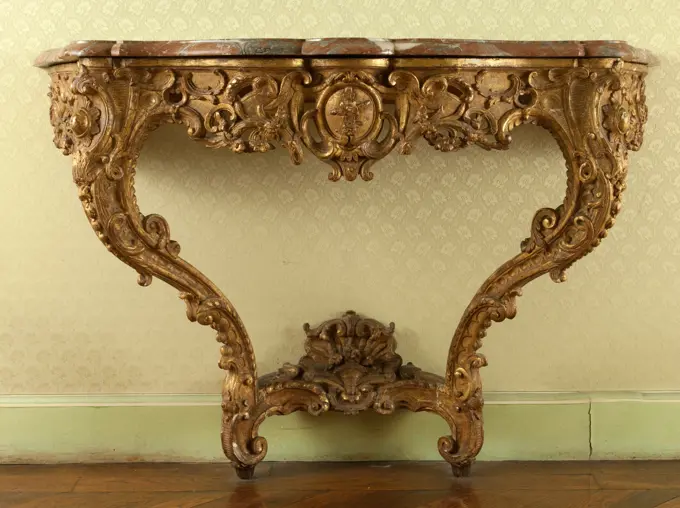
Table of Indonesian wood, anonymous, c. 1720 - c. 1740 Table of Indonesian wood, resting on angle-placed S-shaped legs, which end in sphere-containing claws and are decorated above the swelling with a stabbed shell motif. The legs are connected by an X-shaped cross, formed by S-shaped sports with a flower basket at the intersection. The rules are sculpted on the underside and have stabbed shell motifs flanked by volutes, as middle pieces. The far -cross leaf is of a different type of wood; Probably not originally. Indonesia wood (plant material). teak (wood) Table of Indonesian wood, resting on angle-placed S-shaped legs, which end in sphere-containing claws and are decorated above the swelling with a stabbed shell motif. The legs are connected by an X-shaped cross, formed by S-shaped sports with a flower basket at the intersection. The rules are sculpted on the underside and have stabbed shell motifs flanked by volutes, as middle pieces. The far -cross leaf is of a different type of w
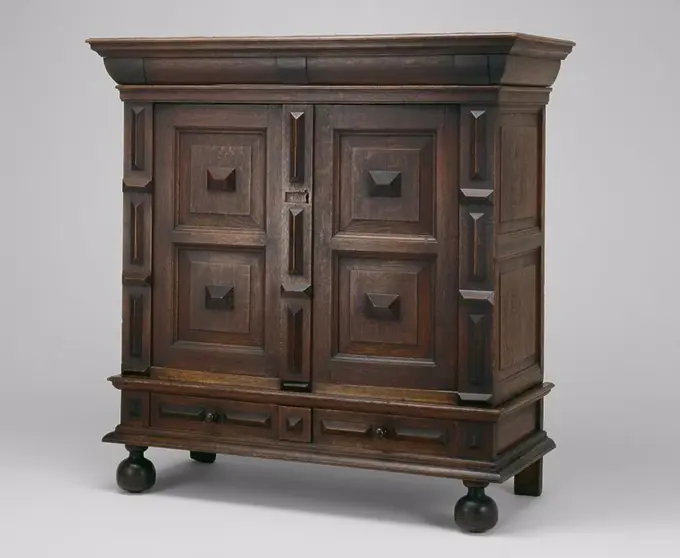
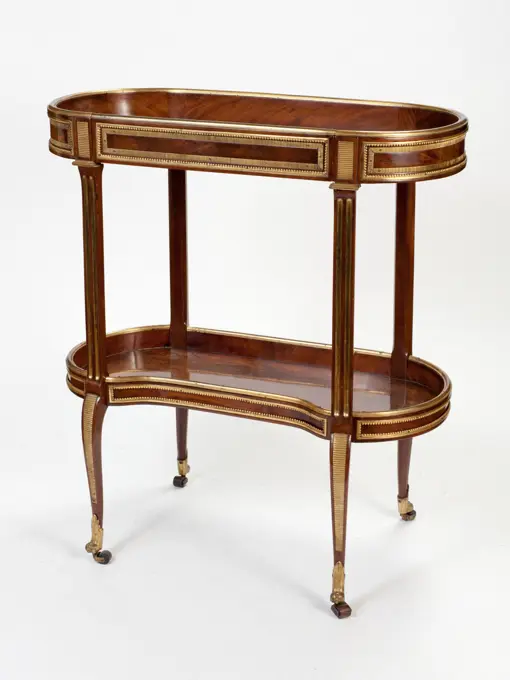
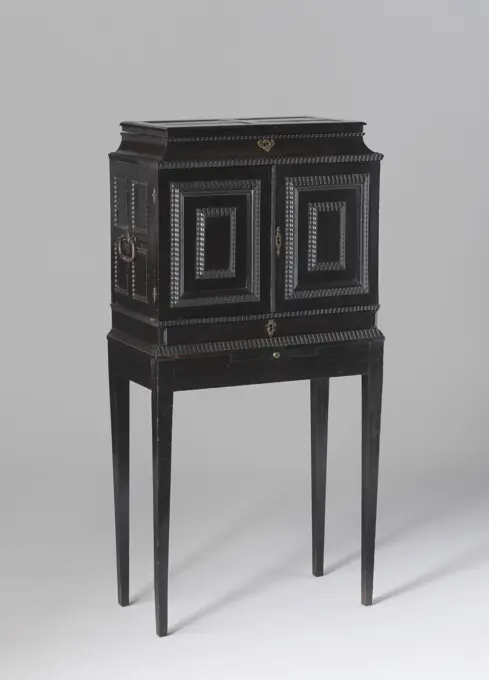
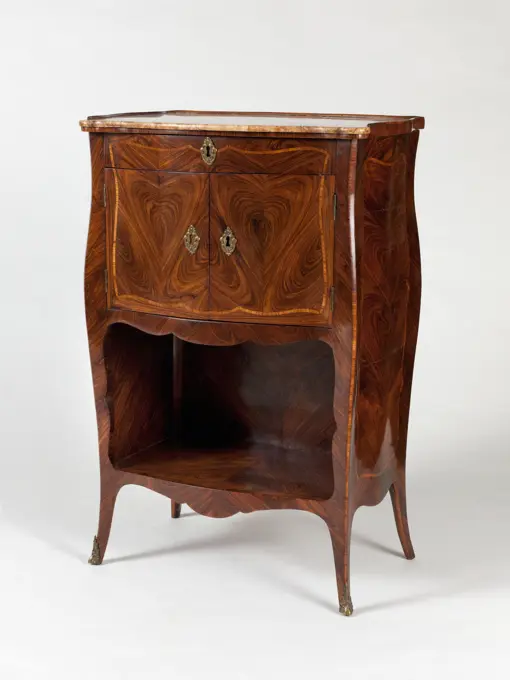
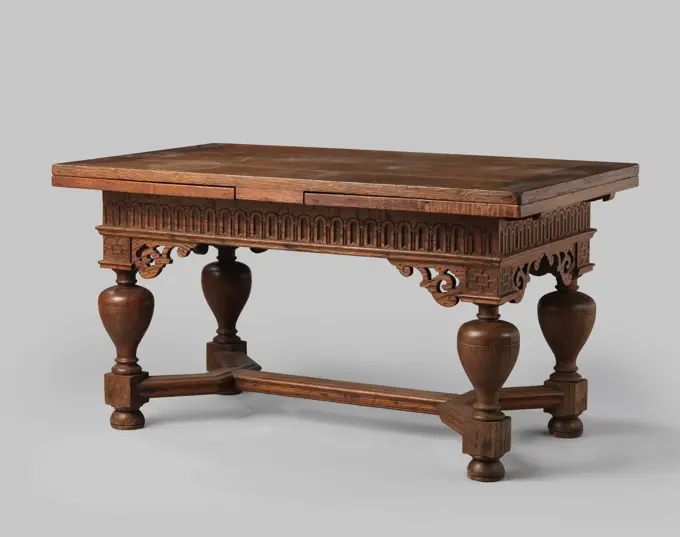
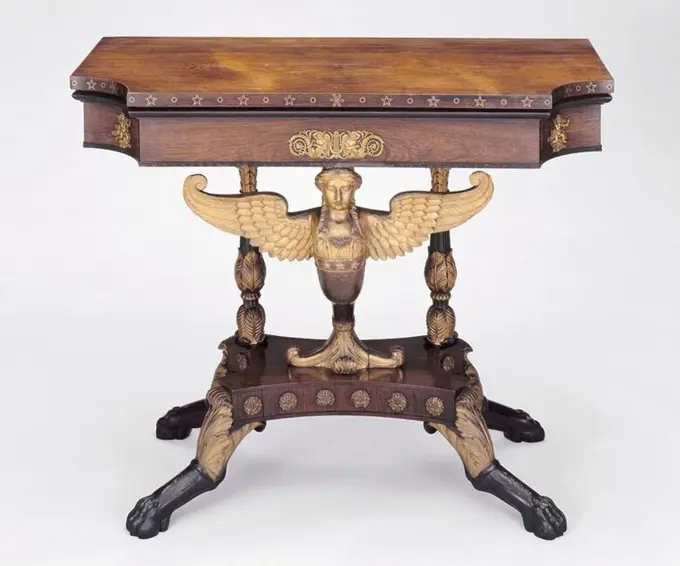
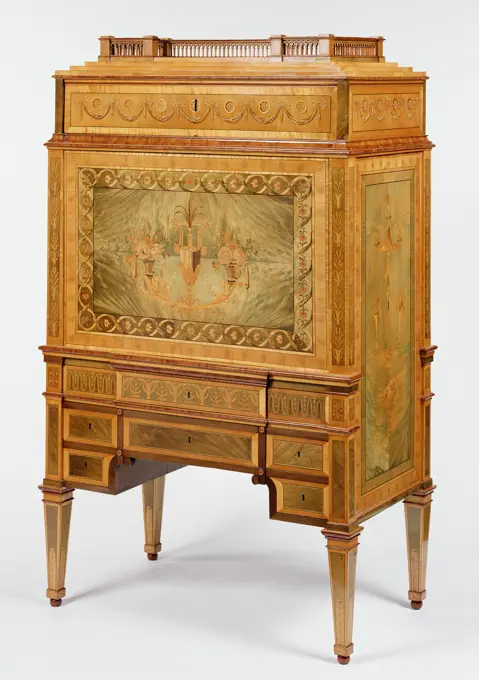
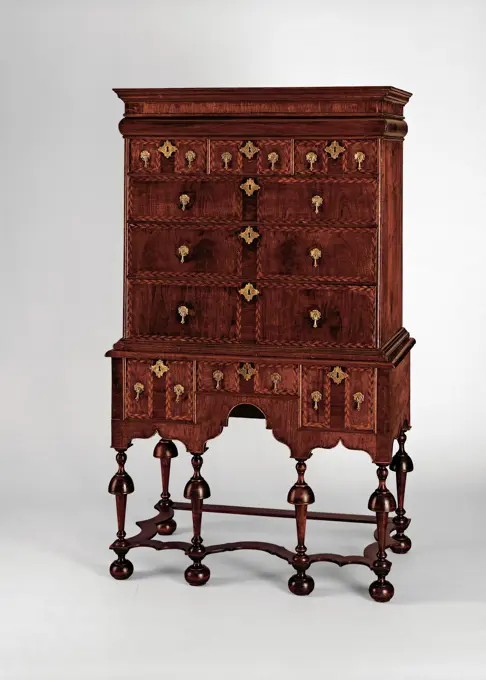
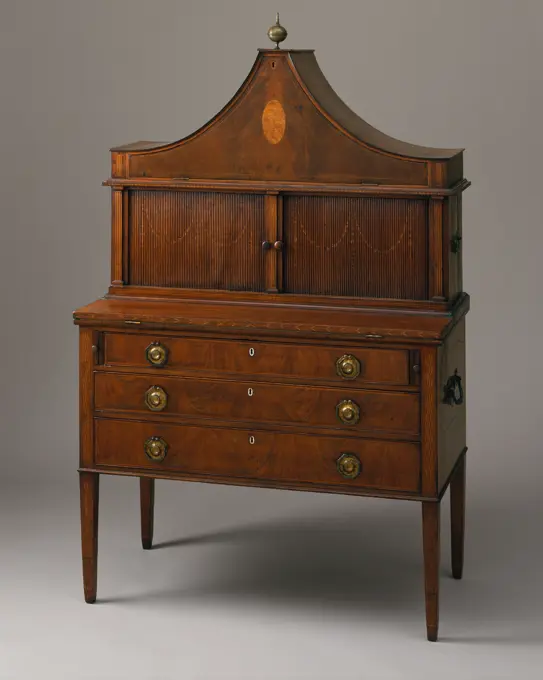
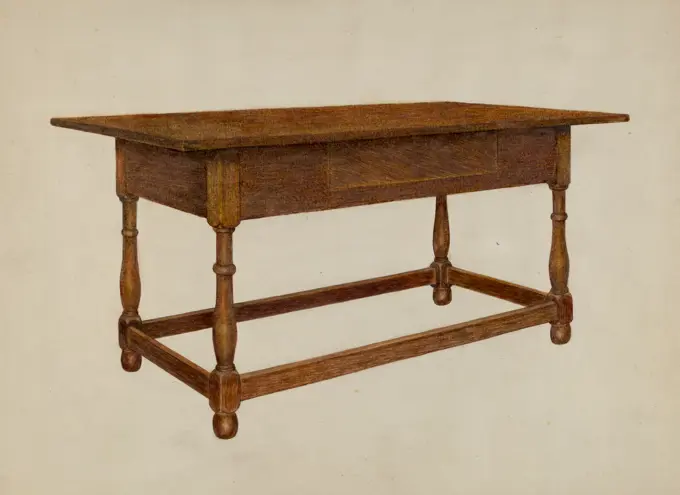
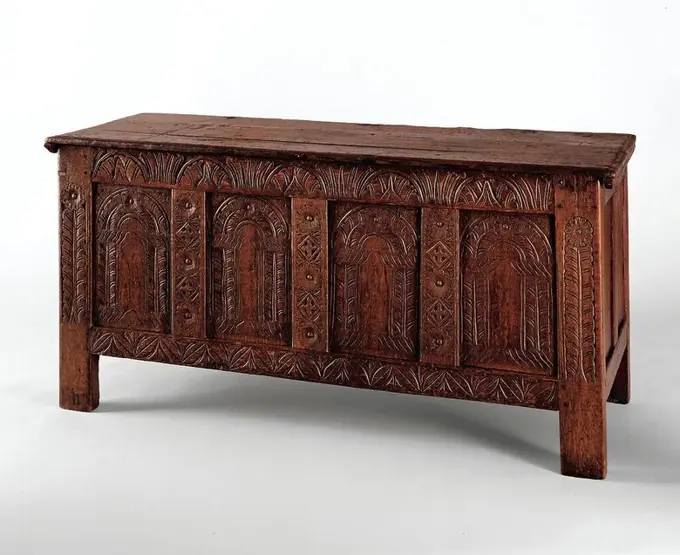
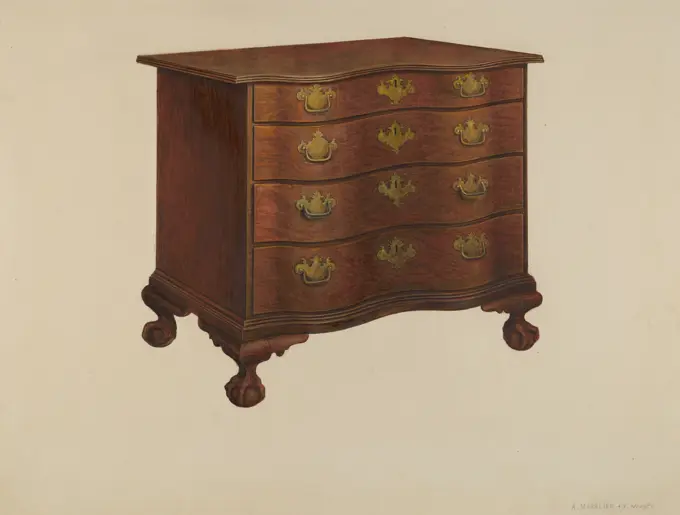
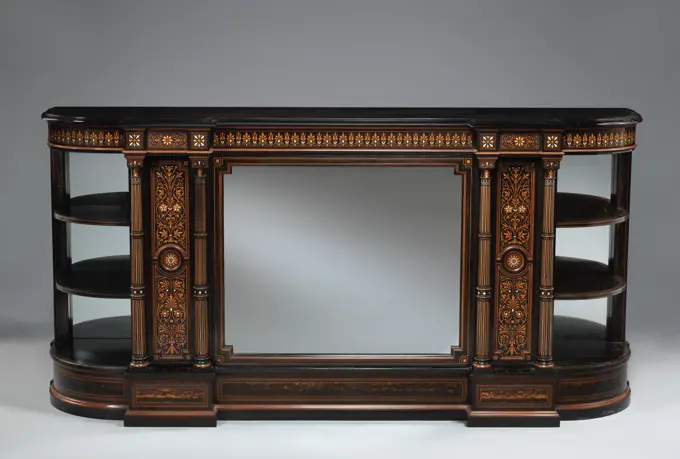
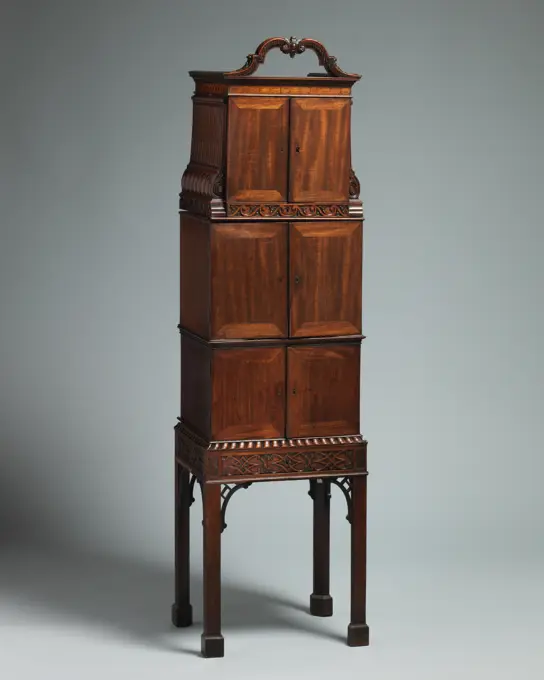
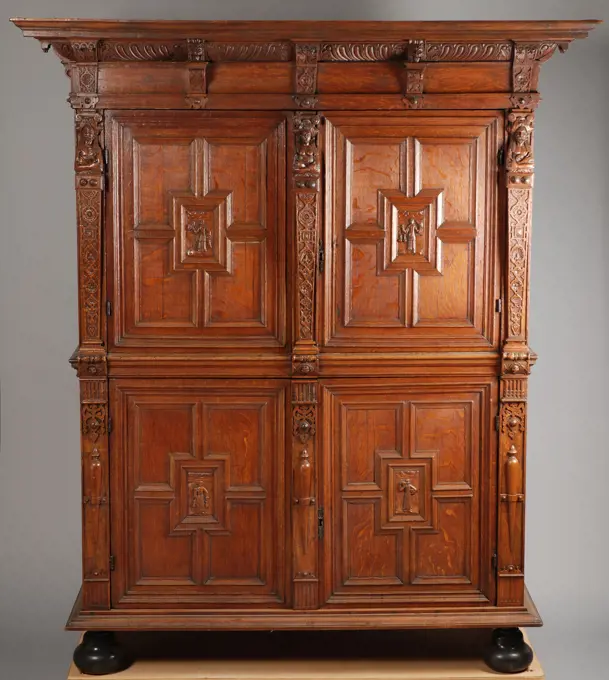
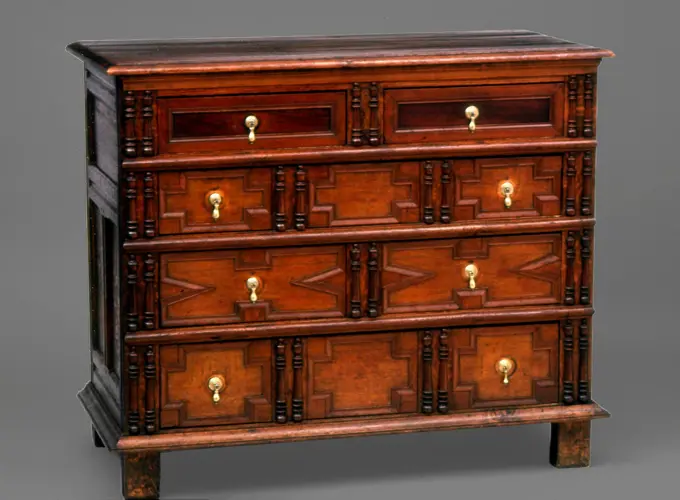
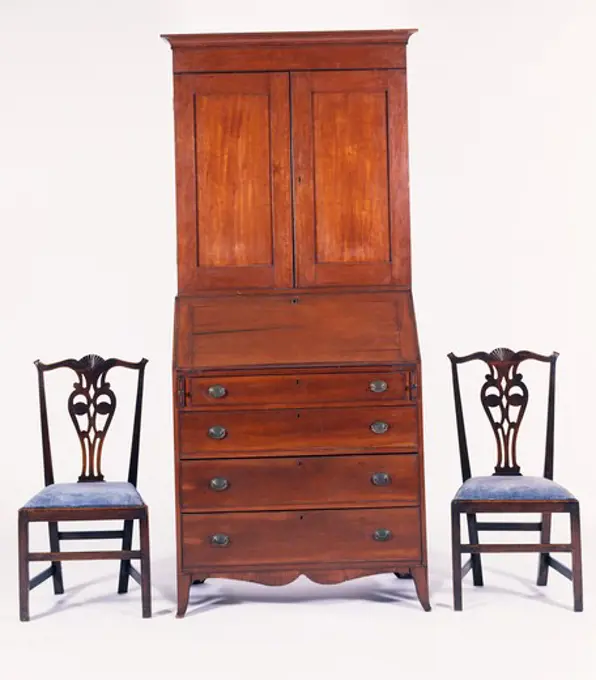
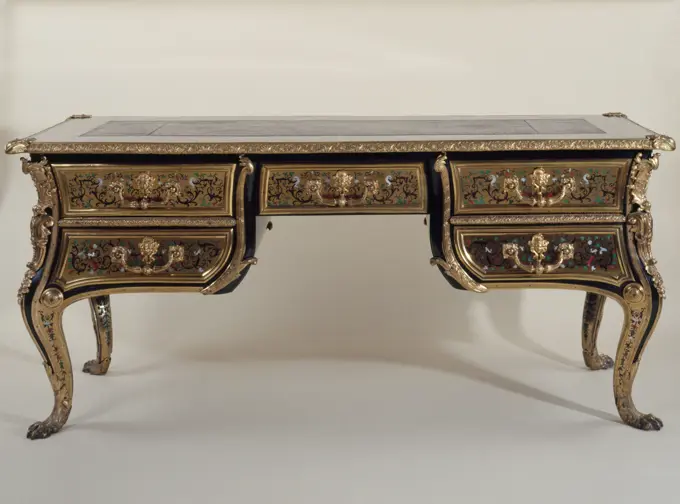
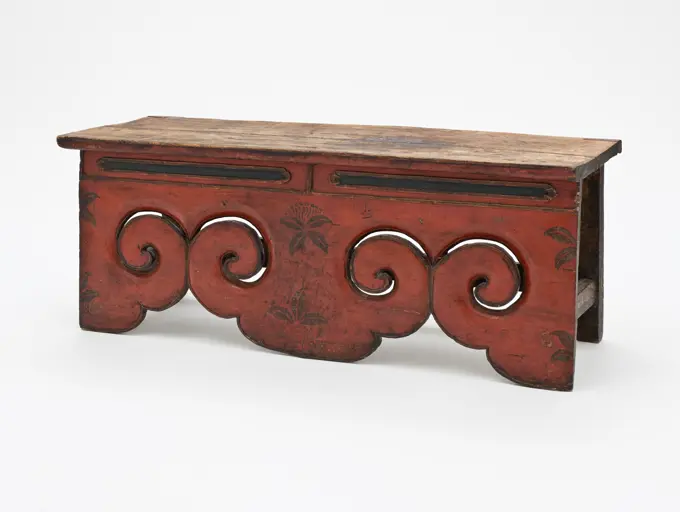
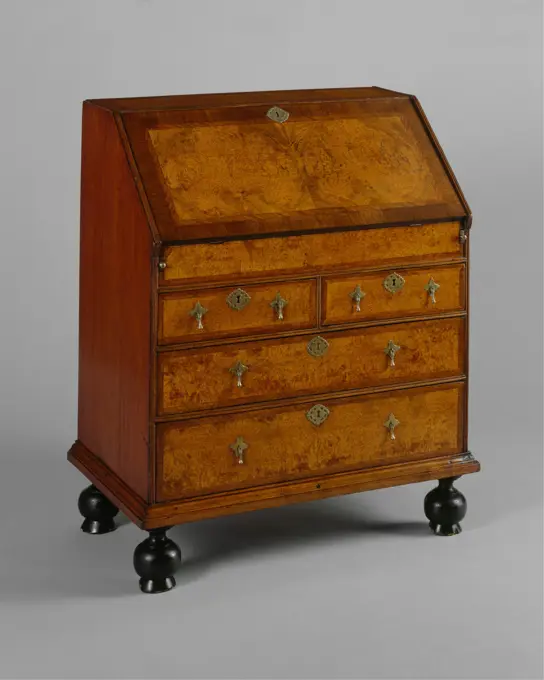
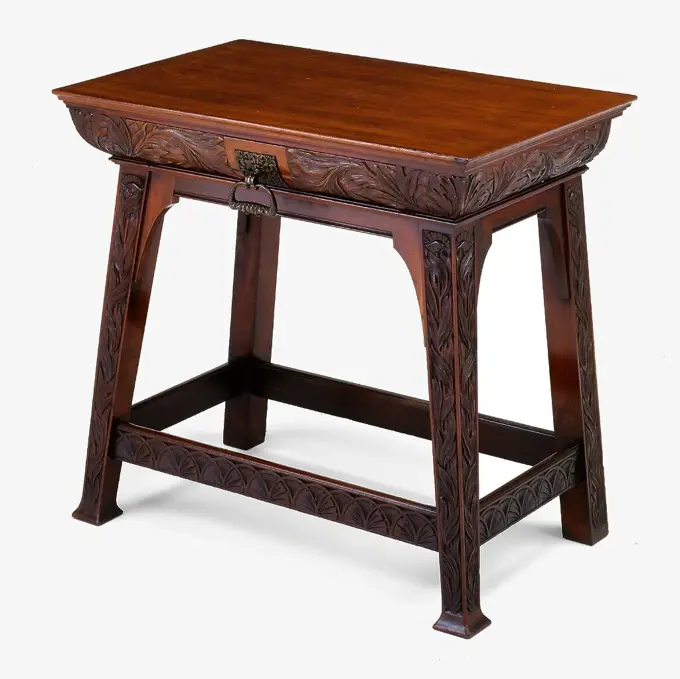
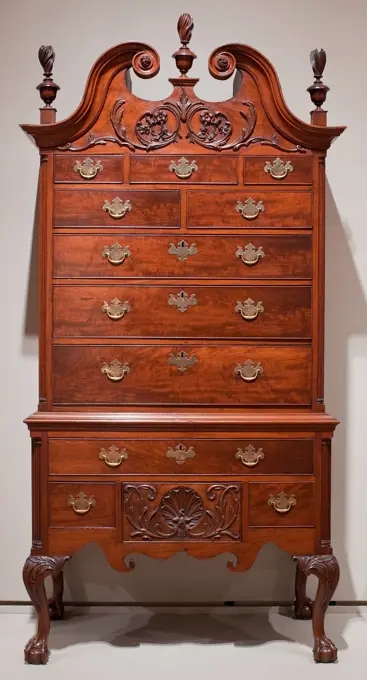
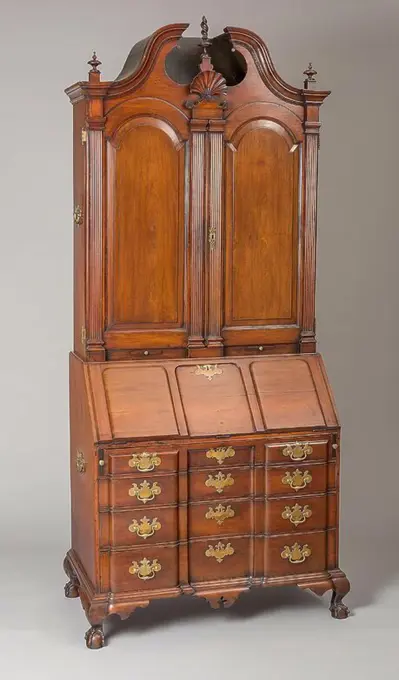
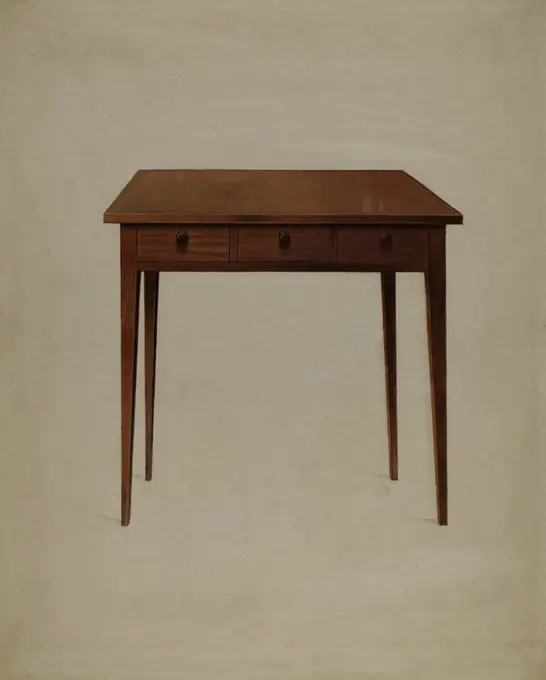
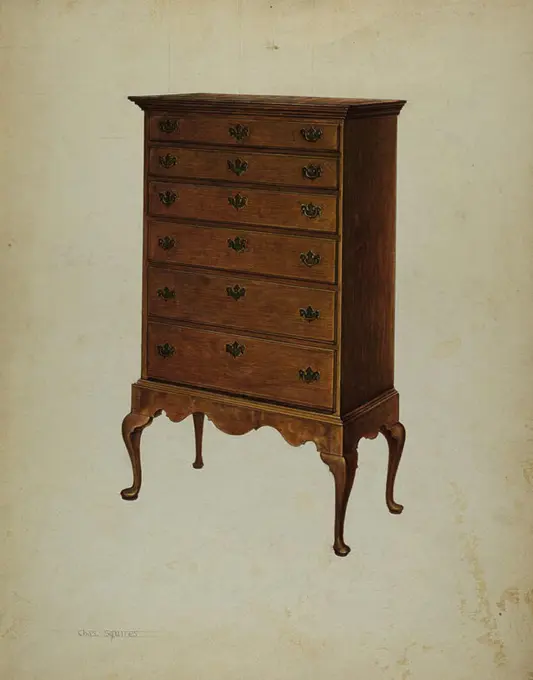
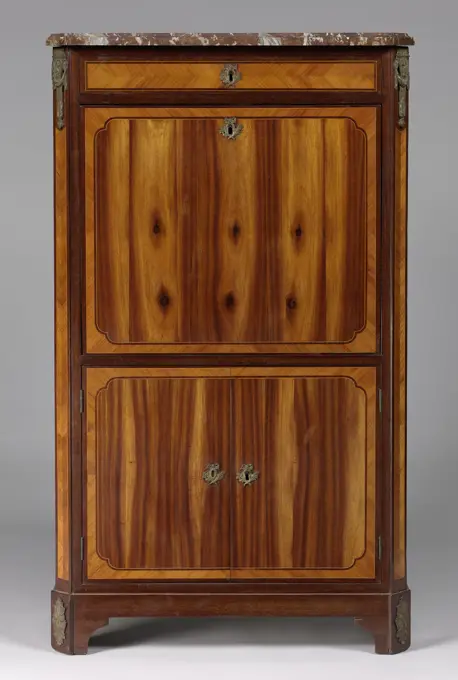
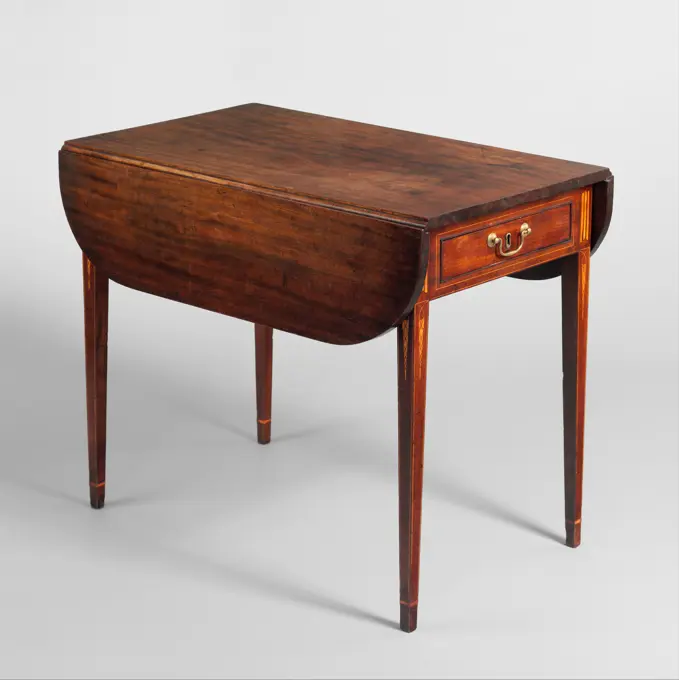
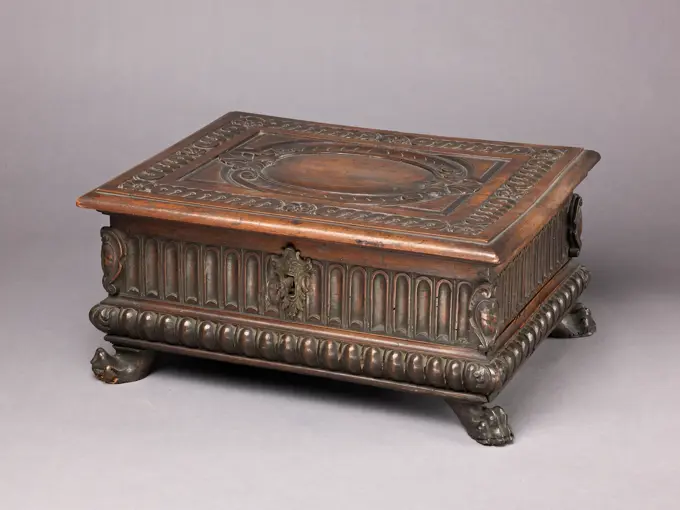
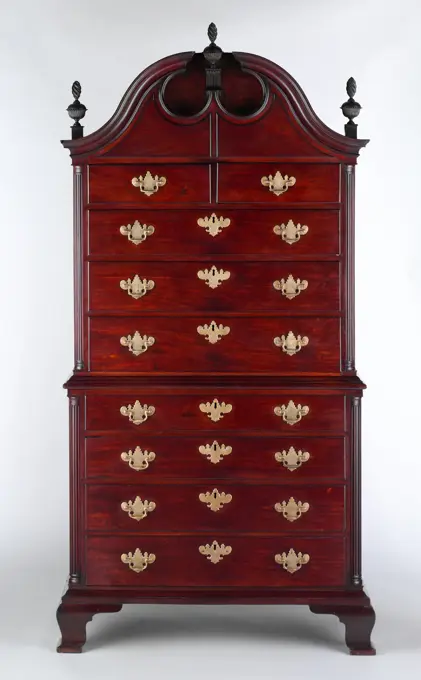
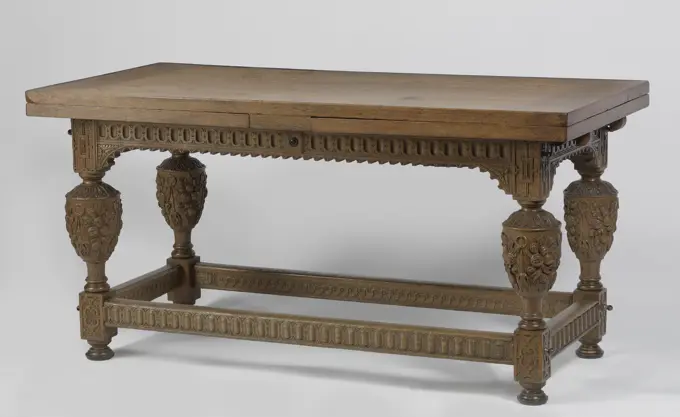
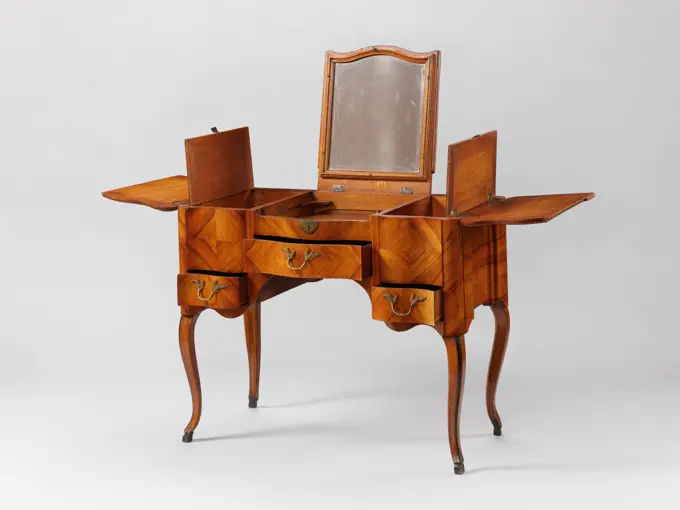
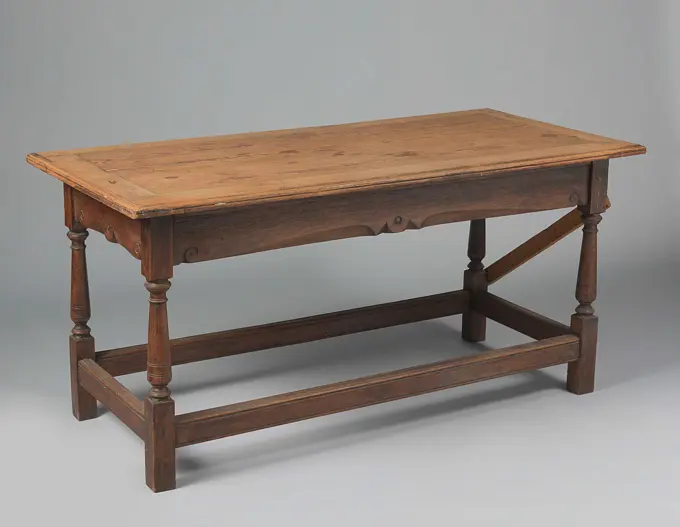
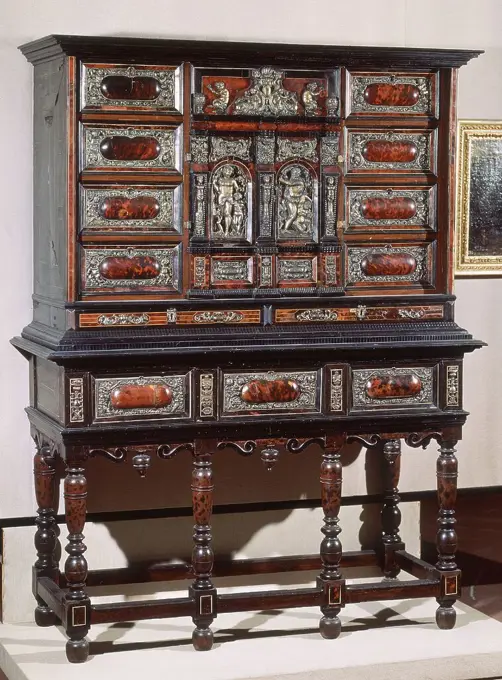
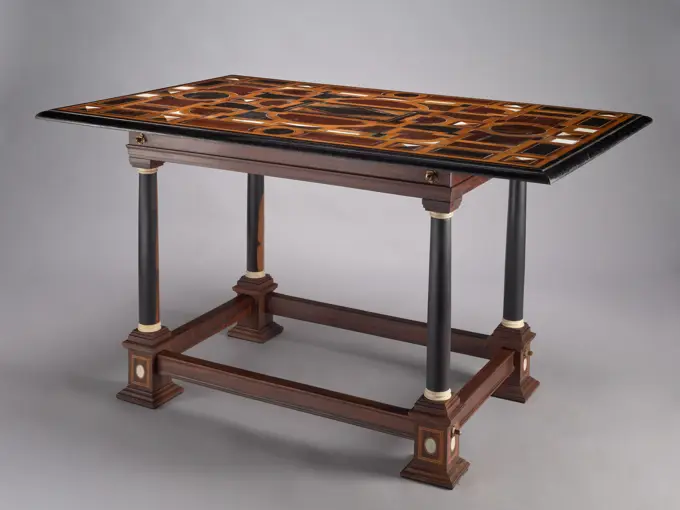
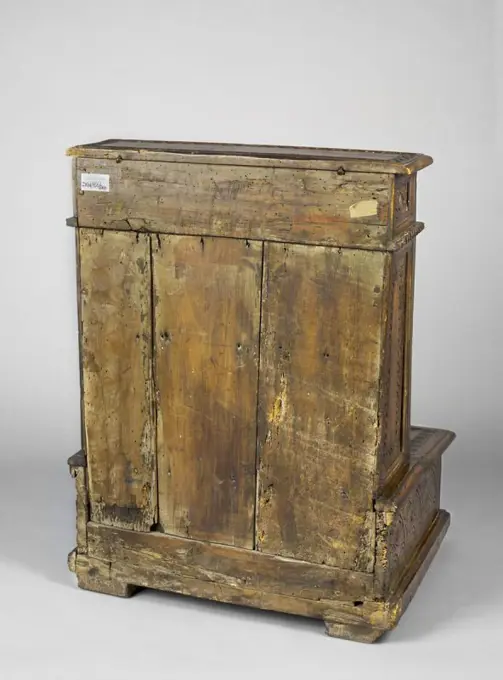
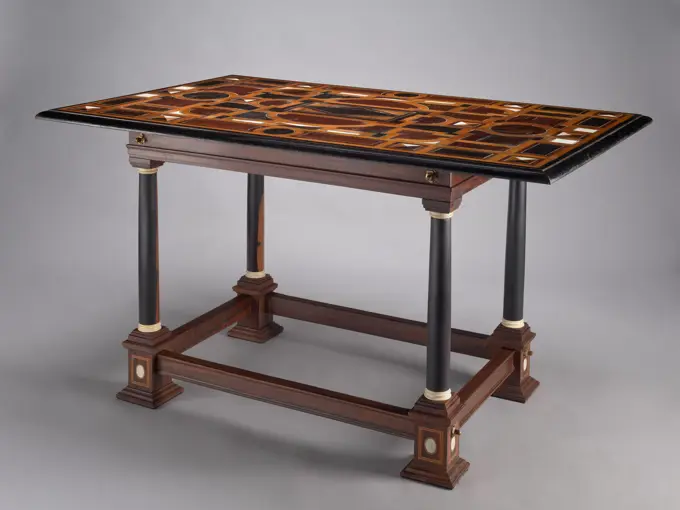
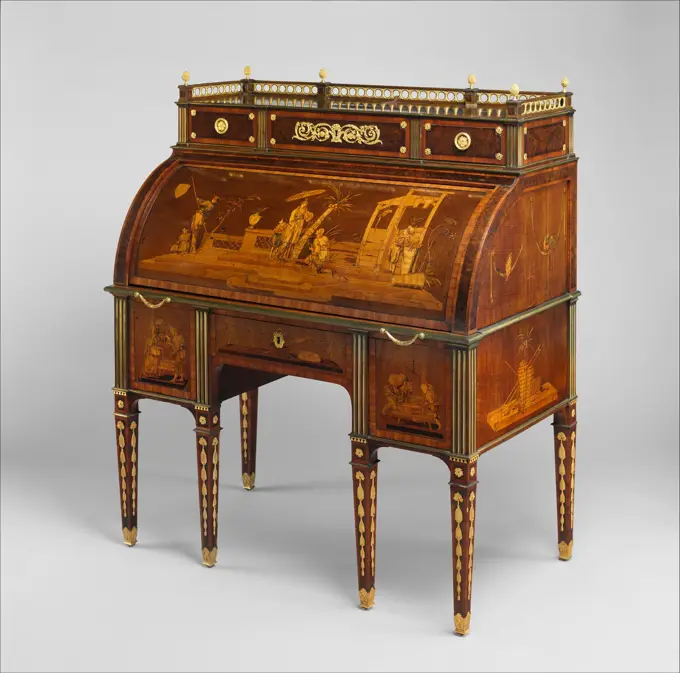
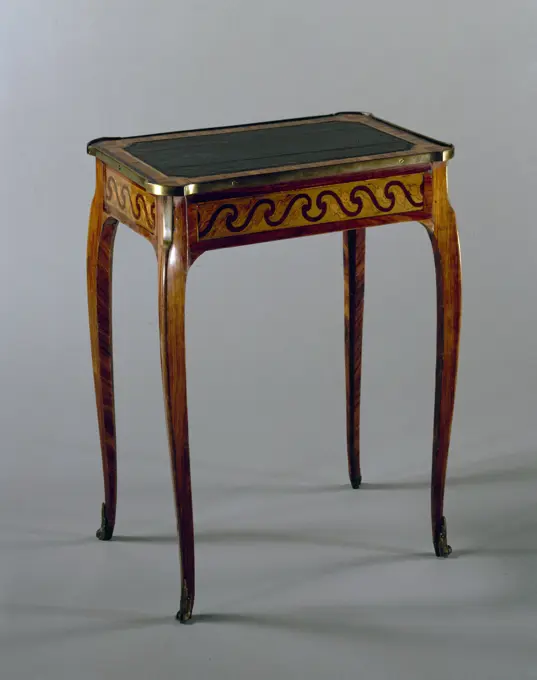
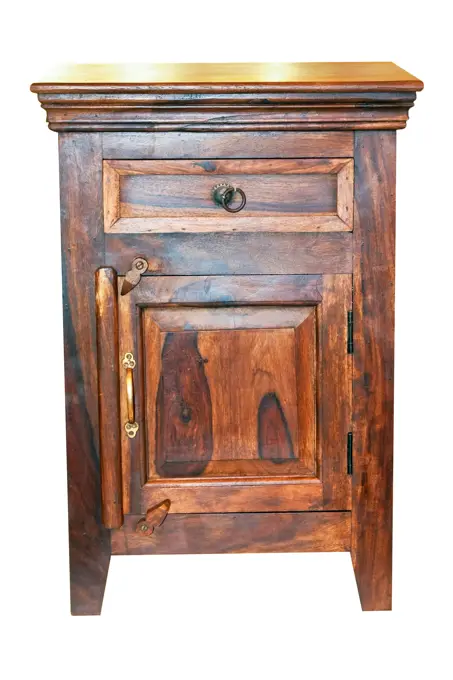
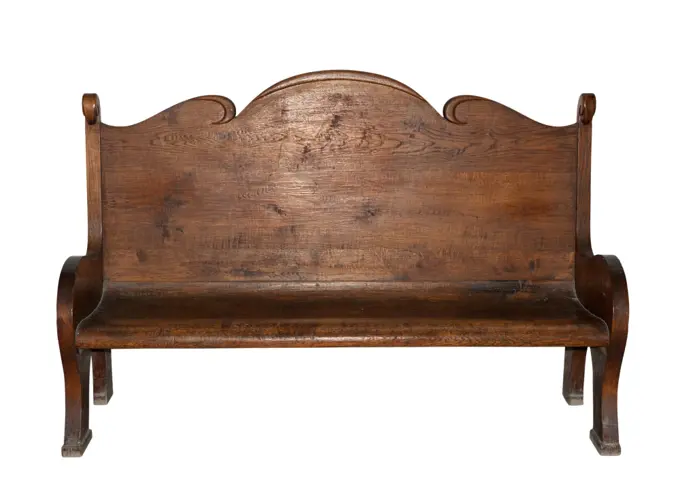
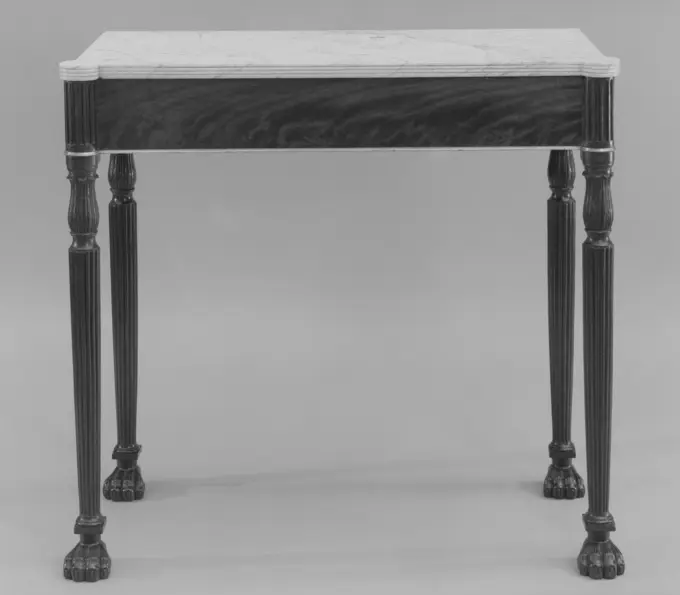
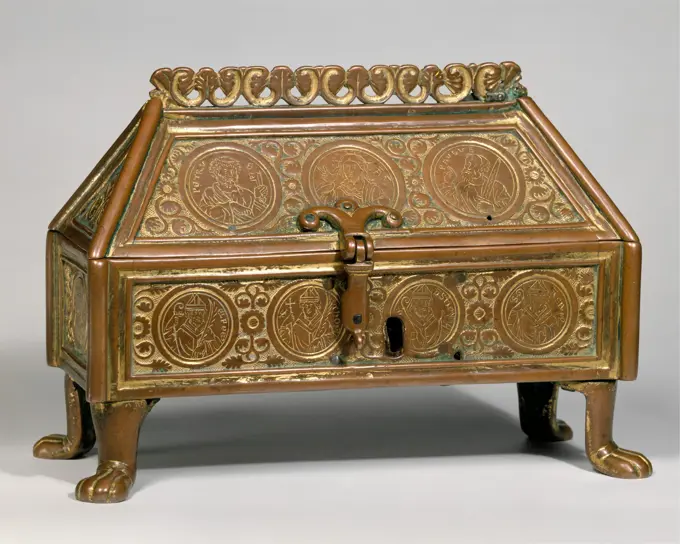
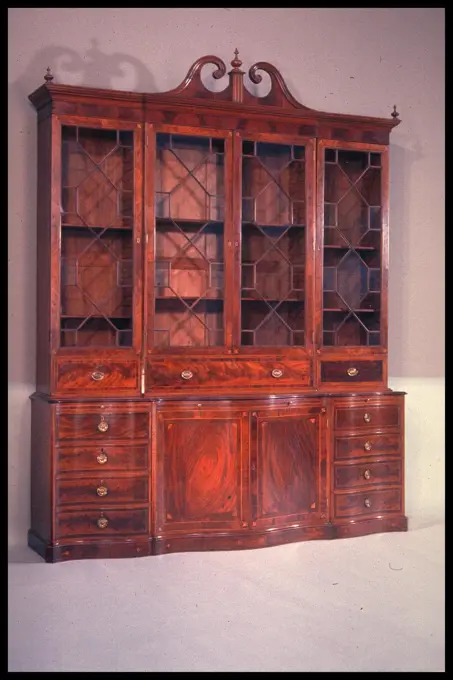
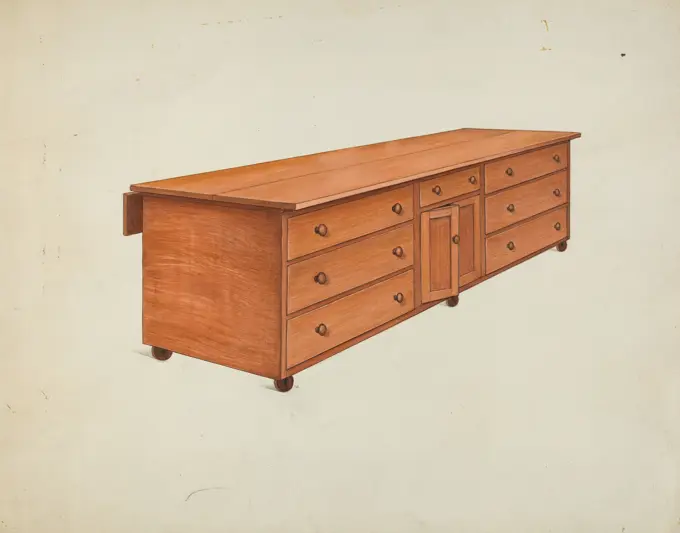
Sideboard. unknown, creatorCharles Squires, Chest, c 1937 ChestCupboard;  XVII century; 2. PO. 19th century (1601-00-00-1700-00-00);Salon cylinder organ in the form of a secretary. Salon cylinder organ in the form of a secretary, of oak and mahogany (the valves of flower plate), the side pockets lined with green boring valves, friezes and styles. Decorated with copper figures and ornament in classic style: pans figures, centaurs, dancing woman figures, lake mines, masks. Staircase with white marble leaf. From inside: two rolls and a pendulum. Signature: D.n. Store à Amsterdam. According to roller cupboard BK-NM-14353-b.Kast. American; New York area. Date: 1650-1700. Dimensions: 170.8 × 168.3 cm (67 1/4 × 66 l/4 in.). Oak and walnut. Origin: New York. Museum: The Chicago Art Institute, Chicago, USA.Basin stand 1810-15 Attributed to William Hook The holes cut out of the top shelf of this basin stand were meant to hold a porcelain ewer and bowl. Water from the ewer was poured into the bowl for the purpose of washing or shaving. The William Hook attribution is based on the profile of the tapering turned feet.. Basin stand. American. 1810-15. Mahogany, mahogany veneer with white pine. Made in Salem, Massachusetts, United StatesDresser;  1780-1800 (1780-00-00-1800-00-00);Table of Indonesian wood, anonymous, c. 1720 - c. 1740 Table of Indonesian wood, resting on angle-placed S-shaped legs, which end in sphere-containing claws and are decorated above the swelling with a stabbed shell motif. The legs are connected by an X-shaped cross, formed by S-shaped sports with a flower basket at the intersection. The rules are sculpted on the underside and have stabbed shell motifs flanked by volutes, as middle pieces. The far -cross leaf is of a different type of wood; Probably not originally. Indonesia wood (plant material). teak (wood) Table of Indonesian wood, resting on angle-placed S-shaped legs, which end in sphere-containing claws and are decorated above the swelling with a stabbed shell motif. The legs are connected by an X-shaped cross, formed by S-shaped sports with a flower basket at the intersection. The rules are sculpted on the underside and have stabbed shell motifs flanked by volutes, as middle pieces. The far -cross leaf is of a different type of wBureautafel, anonymous, c. 1820 Oak desk Lijmed with mahogany, with batter of gilded copper. The slanted writing sheet is the lid of a storage space, resting on four Tuscan columns on sled feet between which a crossbar. The pre -rule bears batter in the form of palmets and a plate with swans, tendrils and shield. The uprising has two doors with glass and drawers, placed between columns on a round basement. In the hood above it are houses with batter, between which a blind bar with batter as on the pre -line. Northern Netherlands (possibly) wood (plant material). oak (wood). mahogany (wood). copper (metal). glass. leather gilding Oak desk Lijmed with mahogany, with batter of gilded copper. The slanted writing sheet is the lid of a storage space, resting on four Tuscan columns on sled feet between which a crossbar. The pre -rule bears batter in the form of palmets and a plate with swans, tendrils and shield. The uprising has two doors with glass and drawers, placed between columns on a rAdam Weisweiler (1744-1820). Work table. Building: oak and mahogany; Ronceux mahogany veneer; Golden brass and bronzes. 1787. Paris, Carnavalet museum. Chene, marquetry, furniture, work table, 18th 18th 18th 18th 18th 18th 18th century, wood, furniture. Buffet of oak, glued with multiple woods rests on conical legs and has overhangs placed corner styles. Above the two doors, a sham tray is flanked by loading, decorated with landscapes. The styles and middle needle with batter show sham cannelures and guttae; Wear the styles at the loading trifle and an ionic capital. The doors, sides and folding sheet show within rectangular defined fields of music trophies in medallions, most hung on a cord with bowKey, c. 1400 - c. 1950 Key of iron.  iron (metal) Key of iron.  iron (metal)Chest of drawers (Chiffonier). unknown, creatorNightstand. Placing of violet, chiseled and gilded bronze, top of the Jura yellow breach, 1715. Paris, Carnavalet museum. 77640-17 Breche, bronze, chisel, dore, gilding, jura yellow, marquetry, furniture, purple plating, lock, regence style, night table, 18th century, furnitureChest of drawers 1765-75 American. Chest of drawers 20596Plate, Anonymous, 1600 - 1650 Table of oak on four legs connected by a double y-shaped cross, which are articulated vase-shaped. The cross has breakdowns. The lower houses are unprocessed, the upper wear a chain ornament. The sawn support pieces show C-Voluten. The rules are decorated with scales. The furniture has two draft sheets. Northern NetherlandsNetherlands wood (plant material). oak (wood) Table of oak on four legs connected by a double y-shaped cross, which are articulated vase-shaped. The cross has breakdowns. The lower houses are unprocessed, the upper wear a chain ornament. The sawn support pieces show C-Voluten. The rules are decorated with scales. The furniture has two draft sheets. Northern NetherlandsNetherlands wood (plant material). oak (wood)Chest withdrawersChest;  1500-1520 (1500-00-00-1520-00-00);Cupboard 1710-50 American. Cupboard. American. 1710-50. Pine, maple. Made in New England, United StatesCarl Strehlau, Pa German Chest, 1939 Pa. German ChestCard Table. Charles-Honoré Lannuier; American, born France, 1779-1819. Date: 1810-1820. Dimensions: 74.9 × 91.1 × 45.1 cm (29 1/8 × 35 7/8 × 17 3/4 in.). Mahogany with rosewood veneer, giltwood, brass and ebony inlay, ormolu. Origin: New York. Museum: The Chicago Art Institute, Chicago, USA.Secrétaire. Unknown maker, Northern EuropeanHigh chest of drawers 1715-35 American Contrasting light and dark wood banding creates a lively surface treatment on this high chest of drawers. Few chests with this type of herringbone-banded drawer border are known, and the exact place where this high chest was made has yet to be firmly decided, though one of its secondary woods, chestnut, suggests manufacture in eastern Connecticut or Rhode Island rather than New York, where some scholars have suggested.. High chest of drawers 4288Tambour Desk. John Seymour (United States, Massachusetts, Boston, 1738-1819)Seymour, Thomas (United States, Massachusetts, Boston, 1771-1848). United States, Massachusetts, Boston, 1794-1804. Furnishings; Furniture. Mahogany, satinwood inlays, and pineDorothea A Farrington, Tavern Table or Stretcher, 1935 1942 Tavern Table or StretcherChest. Culture: American. Dimensions: 29 x 61 x 21 3/4 in. (73.7 x 154.9 x 55.2 cm). Date: 1650-80.Chests used for household storage were common in seventeenth-century homes. This lift-top chest is embellished with carved motifs that are characteristic of the decorative vocabulary of the earliest New Haven joiners, including the carved arches in the panels, the lunettes on the upper rail, the paired leaves on the lower rail, and the rosettes on the stiles. Museum: Metropolitan Museum of Art, New York, USA.Sewing Table. Dated: 1941. Dimensions: overall: 42.4 x 31.2 cm (16 11/16 x 12 5/16 in.) Original IAD Object: none given. Medium: watercolor, colored pencil, and graphite on paperboard. Museum: National Gallery of Art, Washington DC. Author: Rolland Livingstone.Arsen Maralian and Frank Wenger, Chest of Drawers, 1938 Chest of DrawersHundred;  1. W. 18th century (1701-00-00-1725-00-00);Flats with flaps, flaps, rococo (style), ribbon and icing (ornament), purchase (provenance)Cabinet ca. 1870-75 Manufacture attributed to Jackson & Graham The shop of Jackson & Graham, at 37-38 Oxford Street, London, did not deal exclusively in furniture; it was, in fact, the main premises of a firm of "upholsterers, cabinet makers, carpet-manufacturers, interior decorators and importers of curtain materials and bronzes" (as described in the London Post Office Directories) that catered to the most sophisticated Victorian tastes. In the mid-1880s the firm employed between six hundred and a thousand workmen, among them a number of foreign specialists in marquetry and wood inlays. The firms products were shown in the great international exhibitions, starting with the 1851 Crystal Palace Exhibition in London, where an entire stand was devoted to them. Twenty-seven years later, in 1878, an even more lavish exhibition was mounted by Jackson & Graham for the Paris Exposition Universelle. One reviewer singled out the marquetry work on furniture, which comprised the majority of the fJoined table with drawer 1680-1710 American Rectangular tables such as this, with a high stretcher at the front and back and low side stretchers connected by a medial brace, represent a format peculiar to the late seventeenth and early eighteenth centuries. It includes a drawer and is ornamented with shaped brackets and cutouts on all four sides, indicating that it was designed to be freestanding. The legs and stretcher exemplify the turners art and resemble the bases of several chests-on-frames thought to have been made in and around Boston.. Joined table with drawer 8060Card Table with Mask-Carved KneesCardtableCoin cabinet ca. 1750 British. Coin cabinet. British. ca. 1750. Mahogany and mahogany veneer. Woodwork-FurnitureMargery Parish, Chest, c 1938 ChestOak Renaissance renaissance four-door wardrobe, cupboard cabinet furniture furniture interior design wood oak wood, Door panels with carved moldings detailed sculpture with caryatids and personifications: Hope ( woman with anchor) Justice ( woman with scale) Love ( woman surrounded by children) and woman with barrels under her arms renaissanceAmerican 20th Century, Sideboard, 1935 1942 SideboardDesk andbookcaseChest ofdrawersSecretary, 1800-1810, 86 3/4 x 40 3/4 x 21 7/8 in. (220.35 x 103.51 x 55.56 cm), Cherry, mahogany, other wood, 19th centuryChest-on-Chest, c. 1800. America, Rhode Island, Providence, early 19th Century. Mahogany; overall: 235 x 108.6 x 62.3 cm (92 1/2 x 42 3/4 x 24 1/2 in.).Hepplewhite & Chairs Secretary/Bookcase Chippendale Side Antique Furniture Card Table c 1810-1820 Boston. Mahogany, bird's eye maple, and leather . Artist unknownOctagonal Library Table Made 1835-1845 London. Ebony, boxwood, kingwood, mahogany, satinwood, pine, cedar, chestnut, tulipwood, and various stained and shaded woods, with ivory, pearl-shell, copper and brass inlay; the carcass of the top and of the drawer linings is mahogany; the carcass of the base pedestal is pine; replacement leather . Richard Hicks Bridgens (Designer)Flat office, so-called in the middle, to the marquetry of André-Charles Boulle, in oak, walnut and fir, mahogany tray with ebony veneer, marquetry with floral decoration and arabesques, bronzes golden, top lined with leather (view of Set on a clear background) ". Wood, leather and bronze, around 1725. Paris, Cognacq-Jay museum. 35087-3 Mahogany, arabesque, bronze, bronze dore, flat office, oak, leather, floral decor, louis xv time, marker, furniture, walnut, ebene plating, tray, fir tree, wood, furnitureOffering Table with an Apron in the Form of CloudsTable;  1880-1900 (1880-00-00-1900-00-00);Plant decorations, shells (ornament), rococo (style)Slant-top desk (secrétaire en pente) ca. 1745-49 Attributed to Bernard II van Risenburgh. Slant-top desk (secrétaire en pente) 232381DressingTable, American black walnut, southern yellow pine, 29 1/16 × 33 7/16 × 20 11/16 in. (73.8 × 85 × 52.5 cm), The positive and negative outline of the semicircular notches and drops on the skirt of this dressing table is well suited to the aesthetics of the period, where geometric designs were particularly fashionable. Similarities can be seen between the contour of the cabriole legs and the exaggerated S-curve handles of some silver drinking vessels made around the1730s. , Made in Delaware Valley, Probably made in New Jersey, American, 18thcentury, FurnitureCornerTableDesk 1700-1730 American Desks such as this one, combining the chest-of drawers and desk-box forms in one unit, became fashionable in Boston in the early eighteenth century. The slant-front lid is enlivened by richly figured burl veneers. It is hinged at the bottom and opens to provide a flat writing surface.. Desk 3126Card Table c 1819-1825 Boston. Because few pieces of classical furniture from Boston are labeled, scholars have relied on histories of ownership to make claims about furniture made there. This card table, whose style is unique to Boston during the early 19th century, can be firmly traced back to the Lyman family, Bostonians who summered in Newport, Rhode Island. And, although the table is not signed by the Vose firm, it features striking visual similarities to other pieces that are signed, and it bears consistent construction details, including a lavish use of mahogany as a secondary wood, that are characteristic of the shop of Issac Vose & Son, the Boston cabinetmaking firm that began when Issac Vose, Sr. (1767ñ1823), entered into a partnership with Joshua Coates (d. 1819) in 1805.. Mahogany, satinwood veneer, iron and brass . Isaac Vose & SonCabinet on stand. Culture: Dutch, Amsterdam. Dimensions: Overall: 70 1/4 × 53 7/8 × 22 7/16 in. (178.4 × 136.8 × 57 cm). Maker: Attributed to Jan van Mekeren (Dutch, Tiel ca. 1658-1733 Amsterdam). Date: ca. 1700-1710.Box-like cabinets on open stands became fashionable towards the end of the seventeenth century. Rather than on the overall shape, the attention of the cabinetmaker was lavished on exquisite marquetry decoration, especially blomwerk (floral work). The most striking floral marquetry has been attributed to Jan van Meekeren. More than two hundred flowers embellish this cabinet, several of which occur more than once, sometimes in reverse. By choosing bright yellow woods like barberry for daffodils, for instance, and by enhancing lighter woods with natural dyes, Van Mekeren achieved a rich and naturalistic palette not unlike those of contemporary flower painters. Museum: Metropolitan Museum of Art, New York, USA.Side Table. Arthur Heygate Mackmurdo (English, 1851-1942); England. Date: 1885-1895. Dimensions: 74.9 × 83.8 × 50.8 cm (29 1/2 × 33 × 20 in.). Mahogany and gilt brass. Origin: England. Museum: The Chicago Art Institute, USA.Highboy, c. 1760-80, Spikey Leaf Carver, American, (Philadelphia), 86 x 44 x 21 1/2 in. (218.44 x 111.76 x 54.61 cm), Mahogany and brass (handles), United States, 18th century, Recent scholarship has suggested that the carving on this chest was done by an unknown craftsman, now called the 'Spikey Leaf Carver,' as the spikey veins of his leaves run off the edge of the wood.Table chest withdrawersDesk and Bookcase. American; Salem, Massachusetts. Date: 1760-1770. Dimensions: 257.7 × 115.6 × 64.7 cm (101 1/2 × 48 1/2 × 25 1/2 in.) (base). Mahogany and white pine. Origin: Salem. Museum: The Chicago Art Institute, Chicago, USA.Table. Dated: c. 1938. Dimensions: overall: 28 x 22.7 cm (11 x 8 15/16 in.) Original IAD Object: 26 1/4" high; 31" wide; 17 1/2" deep. Medium: watercolor and graphite on paperboard. Museum: National Gallery of Art, Washington DC. Author: John W. Kelleher.Stool (Tabouret). unknown, authorChest-on-chest with secretarydrawerPier table, c. 1835, 36 3/4 x 44 x 23 in. (93.35 x 111.76 x 58.42 cm), Mahogany, marble, mirror glass, United States, 19th centuryHighboy. Dated: c. 1938. Dimensions: overall: 46 x 35.5 cm (18 1/8 x 14 in.) Original IAD Object: none given. Medium: watercolor, colored pencil, gouache, and graphite on paperboard. Museum: National Gallery of Art, Washington DC. Author: Charles Squires.M Rosenshield von Paulin, Chest, c 1939 ChestSecretary Montigny, Philippe Claude Montigny, 1775 - 1800 Secretary decorated with marquetery of mahogany and lemon wood and other types of wood on oak core. The beveled corner styles, with herringbone motif, have a console with a festoon of gilded bronze at the top. The front and the sides carry smooth fields. Layout from top to bottom: drawer, writing sheet and two doors. The furniture rests on sawn up support pieces that, just like the doors, the drawer and the writing sheet, are decorated with gilded bronze batter. Marked: Montigny Jme. Marble leaf. France wood (plant material). oak (wood). satinwood (wood). rosewood (wood). purpleheart (wood). boxwood. mahogany (wood). bronze (metal). marble (rock) gilding Secretary decorated with marquetery of mahogany and lemon wood and other types of wood on oak core. The beveled corner styles, with herringbone motif, have a console with a festoon of gilded bronze at the top. The front and the sides carry smooth fields. Layout from top to bottoDrop-leaf Pembroke Table John Townsend American ca. 1795 View more. Drop-leaf Pembroke Table. American. ca. 1795. Primary wood: mahogany and lightwood inlays; secondary woods: maple and chestnut. Made in Newport, Rhode Island, United StatesGate-legged Table. Dated: c. 1937. Dimensions: overall: 22.9 x 29.1 cm (9 x 11 7/16 in.) Original IAD Object: 54"x64"open, x20"closed. 29 1/2"high. Medium: watercolor, colored pencil, and graphite on paperboard. Museum: National Gallery of Art, Washington DC. Author: Frank Wenger.PembroketableWriting table, David Roentgen, c. 1775 - c. 1780 Writing table decorated with marquetery of multiple woods and gilded bronze. The oval furniture rests on four to the lower legs. The rules show in Marqueterie on buttons suspended with, on the front and back, a tub with rope, pulleys and flag, in which the letter R, and on the sides by a bow connected and anchors. The magazine is wearing a performance of a Chinese fisherman within a pink woody raming, on which a standing woman with parasol and children. Neuwied wood (plant material). rosewood (wood). oak (wood). rosewood (wood). bronze (metal) gilding Writing table decorated with marquetery of multiple woods and gilded bronze. The oval furniture rests on four to the lower legs. The rules show in Marqueterie on buttons suspended with, on the front and back, a tub with rope, pulleys and flag, in which the letter R, and on the sides by a bow connected and anchors. The magazine is wearing a performance of a Chinese fisherman within a pink woCasket (cassetta) end of 19th century or later (woodwork); early 16th century (textile) Italian or United States (). Casket (cassetta) 460638Chest-on-Chest ca. 1772 Thomas Townsend Thomas Townsend was a member of the famed Townsend-Goddard dynasty of Newport cabinetmakers and this is the only documented work by him. The raised panels above the top drawers, which echo the curves of the pediment, are characteristic of Newport manufacture. This chest-on-chest and another example from Philadelphia (1975.91) offer two elegant solutions to the challenge of integrating a scroll pediment with an architectural case.. Chest-on-Chest. American. ca. 1772. Mahogany, chestnut, tulip poplar. Made in Newport, Rhode Island, United StatesDraw-leaf table, anonymous, c. 1600 - c. 1625 Training table made of oak on four legs connected by foot rules, with vase -shaped medium, which is decorated with a stabbed festons and on top with Acanthus leaf. The foot rules are removed on two sides and show standing grunts from the outside and braid on the binen side. The bandage of the table, which has two draft sheets, has been obtained by means of crib screws. The copy ends of the bridge are covered by fillers on either side. The leaf consists of four widths in "Herlijst". Netherlands wood (plant material). oak (wood). ebony (wood) Training table made of oak on four legs connected by foot rules, with vase -shaped medium, which is decorated with a stabbed festons and on top with Acanthus leaf. The foot rules are removed on two sides and show standing grunts from the outside and braid on the binen side. The bandage of the table, which has two draft sheets, has been obtained by means of crib screws. The copy ends of the bridge are covPa. German Dower Chest. Dated: 1935/1942. Dimensions: overall: 37.1 x 44.3 cm (14 5/8 x 17 7/16 in.). Medium: watercolor and graphite on paper. Museum: National Gallery of Art, Washington DC. Author: Frances Lichten.Table. unknown, creatorDesk. Dated: 1935/1942. Dimensions: overall: 30.7 x 22.6 cm (12 1/16 x 8 7/8 in.). Medium: watercolor, graphite, and colored pencil on paper. Museum: National Gallery of Art, Washington DC. Author: Henry Meyers.Settle, Anonymous, c. 1500Doll cabinet - Renwal RenwalVanity table;  3. W. 18th century (1750-00-00-1775-00-00);TABLE. Wooden table, presumably belonging to the model of a line ship from 60 to 68 pieces on pile.Penant cabinet with curved walls, cylinder doors and marble leaves, anonymous, c. 1775 - c. 1800 Penant cabinet decorated with marquetery of pink, carpet and satin wood and covered with a white marble plate. The cupboard is half oval of diameter. The front has two cylinder doors; The curved walls are glued with geometric figures in rectangular fields. Two drawers in the top sill of the front. The four conical legs have gilded copper feet. On the styles, side walls, doors and sills gilded copper batter. Belonging to another penant cupboard, see: BK-NM-8840. Northern Netherlands wood (plant material). rosewood (wood). cherry (wood). satinwood (wood). oak (wood). marble (rock). metal. copper (metal). gilding (material) gilding Penant cabinet decorated with marquetery of pink, carpet and satin wood and covered with a white marble plate. The cupboard is half oval of diameter. The front has two cylinder doors; The curved walls are glued with geometric figures in rectangular fields. Two draweMUEBLE ITALIANO - SIGLO XVII. Location: MUSEUM OF FINE ARTS. Sevilla. Seville. SPAIN.Table base. unknown, creatorKneeler. unknown, contractorTable top, table foot;  The beginning of the 17th century (1601-00-00-1630-00-00), beginning of the 17th century (1600-00-00-1630-00-00);Rolltop desk ca. 1776-79 David Roentgen German This splendid rolltop desk is distinguished by having six legs instead of the usual four.1 The added pair and the lavish mounts changed the frontal view into a more facadelike structure.2 The presence of the mounts and the use of exotic marquetry woods point to an affluent patron.3 Even so, it is not the most elaborate desk designed by David Roentgen during this period. Traditionally, however, it is considered a preeminent example of his technical skill and artistic creativity.4 The monogram DR inlaid on the drawer above the kneehole indicates the cabinetmaker’s satisfaction with what he must have considered an exceptionally refined desk, as access to its inner secrets can be gained only via the keyhole above his initials.When the key is turned to the right, the compartment to the right of the kneehole slides forward. A button underneath can be pressed to release its front half. This swings aside to reveal two drawer panels, each wLowboy. Dated: c. 1938. Dimensions: overall: 36 x 35.1 cm (14 3/16 x 13 13/16 in.) Original IAD Object: 31 3/4"high; 33 3/4"wide; 21"deep. Medium: watercolor, colored pencil, graphite and some heightening on paperboard. Museum: National Gallery of Art, Washington DC. Author: Isadore Goldberg.Irving I Smith, Cabinet with Drawers, c 1937 Cabinet with DrawersWalnut and oak standing buffet, 1904. Artist: Shirley Slocombe.Pierre Pioniez. Writing table in oak, marquetry on a belt decorated with stations and tulips, drawer built -in on the right side, leather wrapped tray, golden bronzes (surface overview on a light background), around 1770. Paris, Cognacq museum -Jay. Bronze dore, belt, oak, right side, decor stations, march, furniture, leather sheath tray, louis xv style, writing table, embedded drawer, tulip, 18th century, wood, furnitureChest stand. unknown, contractorWooden locker Oriental style wooden locker isolated on white Copyright: xZoonar.com/Baloncicix 14274387Ancient bench. A bench of 1600-1700. A museum piece castle Lvov, UkrainePier table 1810-20 American By tradition, this pair of tables (67.262.2,.3) was made for the home of the prosperous sea captain Moses Rogers at 7 State Street in Lower Manhattan, opposite the Battery. The sensitivity of the cabinetmakerpossibly Duncan Phyfe (1768- 1854)is apparent in the highly figured veneers on the aprons, applied in opposite directions on the two tables to enhance their effectiveness as a matched pair standing side by side.. Pier table 5636Reliquary Chasse 1207-13 British Incised on the panels of this chasse is a series of bust-length figures within medallions. Represented on one lid panel is Christ flanked by Saints Peter and Paul, and on the other, the Virgin flanked by Saints Ursula and Cordula. On the front panel are Saints Elphege and Thomas Becket (both with martyrs palms), Dunstan, and Anselm, all canonized archbishops of Canterbury. On the back panel are Saints Blaise and Augustine. The end panels depict sainted English kings Edmund and Edward the Confessor. The choice of saints suggests that the chasse was made for Christ Church, Canterbury, a foundation rich in relics and, therefore, a full calendar of feast days. The saints represented here were mentioned in the early thirteenth-century calendar, or their relics were listed in the early fourteenth-century inventory. When the original gilding was intact, the medallions were more legible.. Reliquary Chasse. British. 1207-13. Copper; shaped, engraved, chased, anLibrarybookcaseDesk-on-frameCenter Table 1815-1825 Austria. Cherrywood and metal . Josef Ulrich DanhauserPair of pier tables. Culture: British. Dimensions: Overall (.1): 26 × 38 × 16 in. (66 × 96.5 × 40.6 cm);Overall (.2): 26 × 27 1/2 × 15 3/4 in. (66 × 69.9 × 40 cm). Date: ca. 1790-1800. Museum: Metropolitan Museum of Art, New York, USA.Cherry Chest of Drawers. Dated: c. 1941. Dimensions: overall: 45.7 x 35.6 cm (18 x 14 in.) Original IAD Object: 44"long; 47"high; 20 3/8"wide. Medium: watercolor, colored pencil, graphite and pen and ink on paperboard. Museum: National Gallery of Art, Washington DC. Author: Joseph Ficcadenti.Ray Holden, Shaker Tailor's Work Bench, c 1936 Shaker Tailor's Work BenchAnonymous. Console. Beech, marble. Paris, Carnavalet museum. 50574-1 Console, gilding, stretch, marble, furniture, furniture