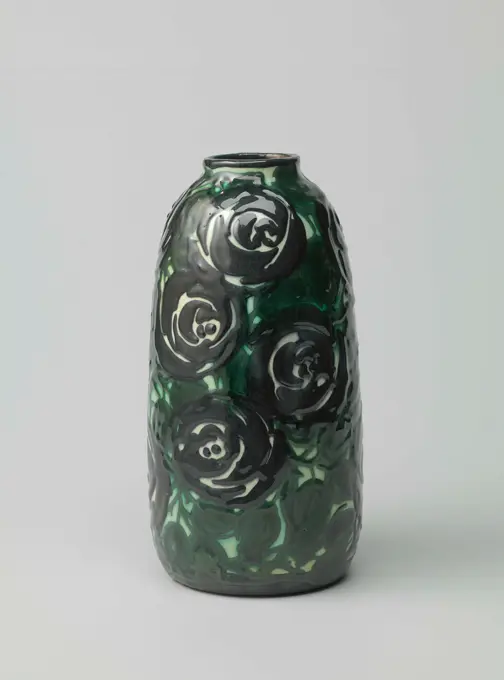
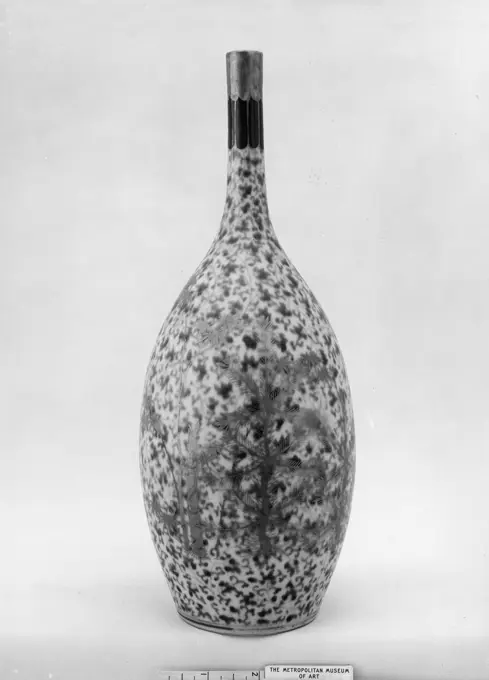
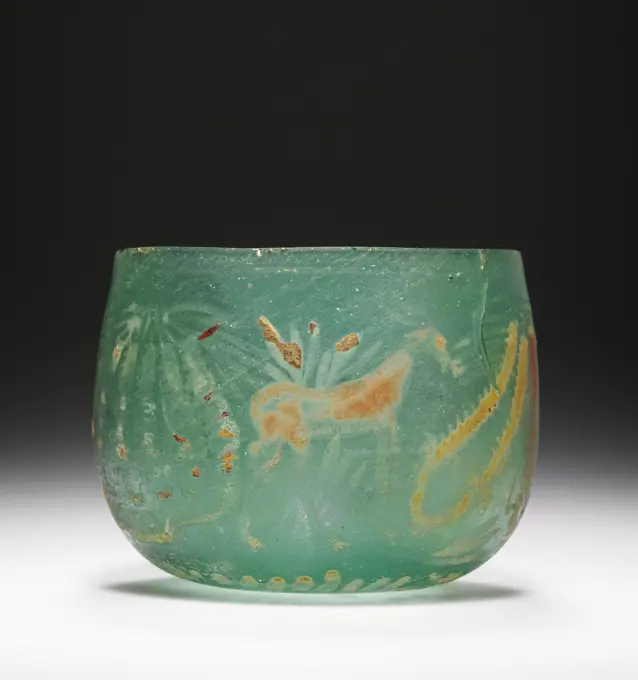
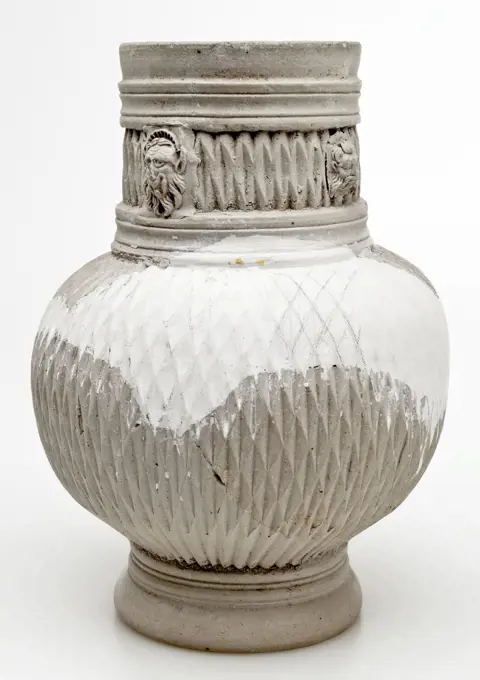
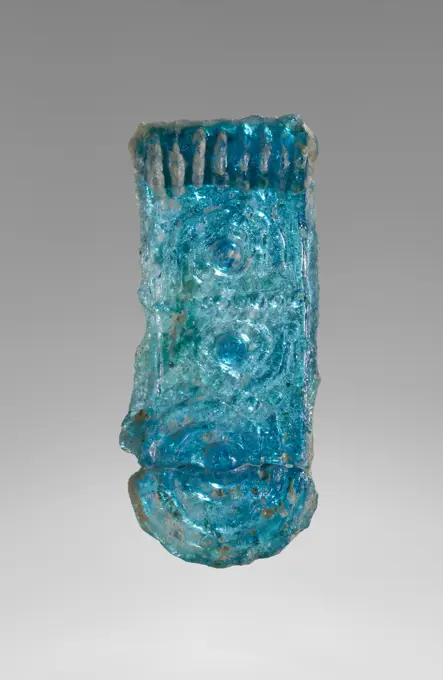
Antique Glass Bottles and Jars

Various historical glass bottles and jars from different eras, showcasing unique shapes and colors, highlighting craftsmanship and ancient artifacts.

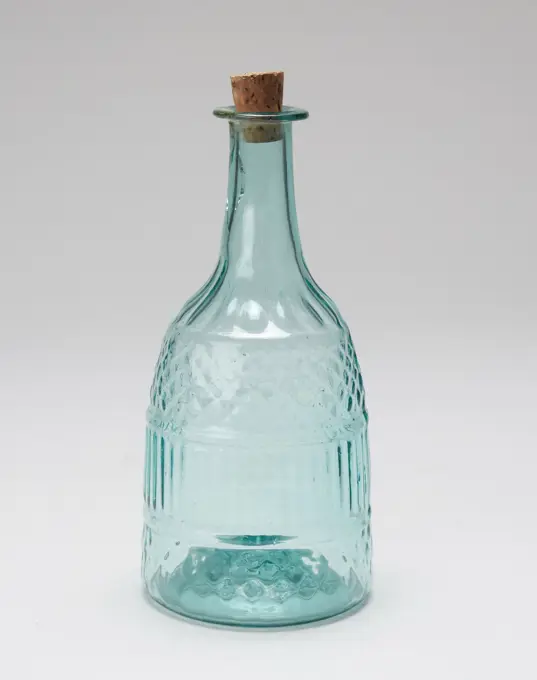
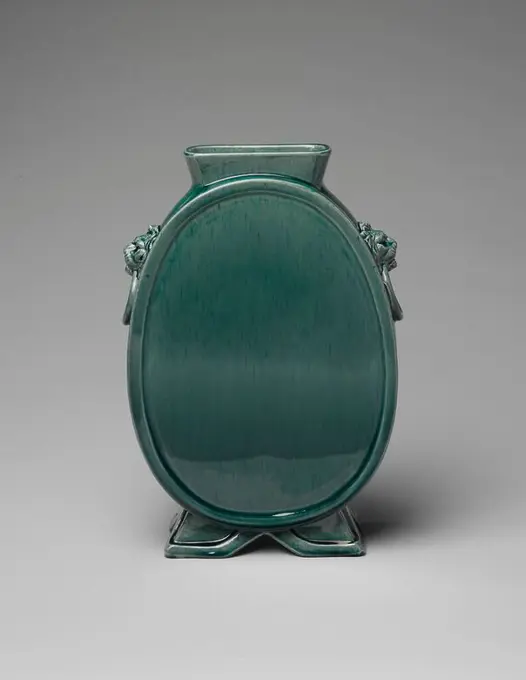
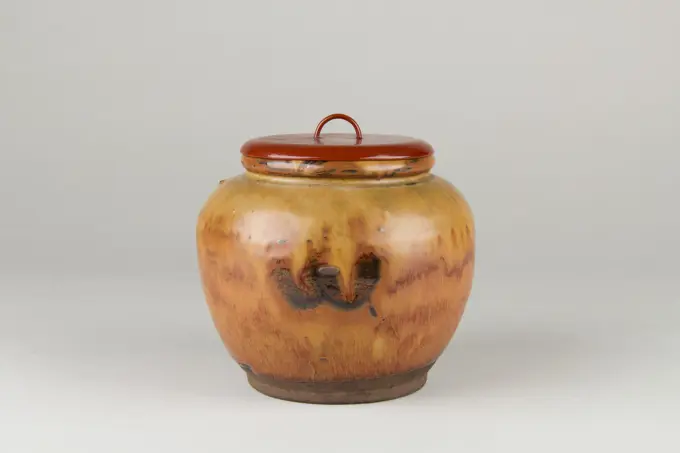
(Wide-bottomed bottle), Unknown Japanese, 7 13/16 x 7 7/8 x 7 7/8 in. (19.84 x 20 x 20 cm), Glazed ceramic, metal, Japan
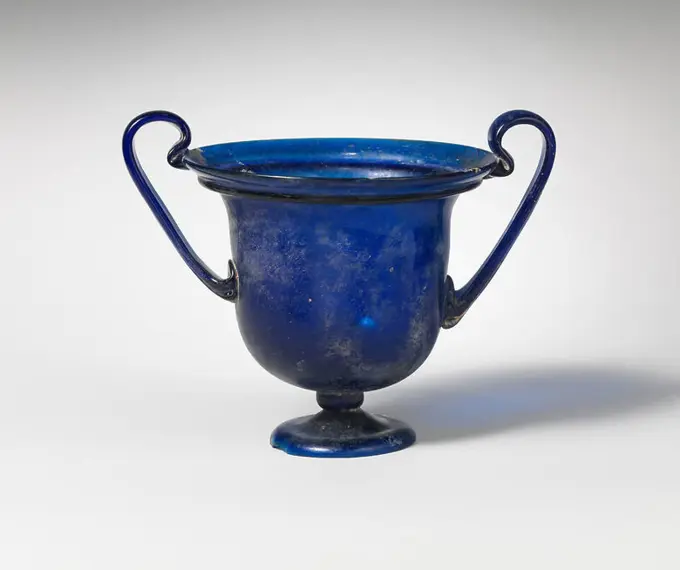
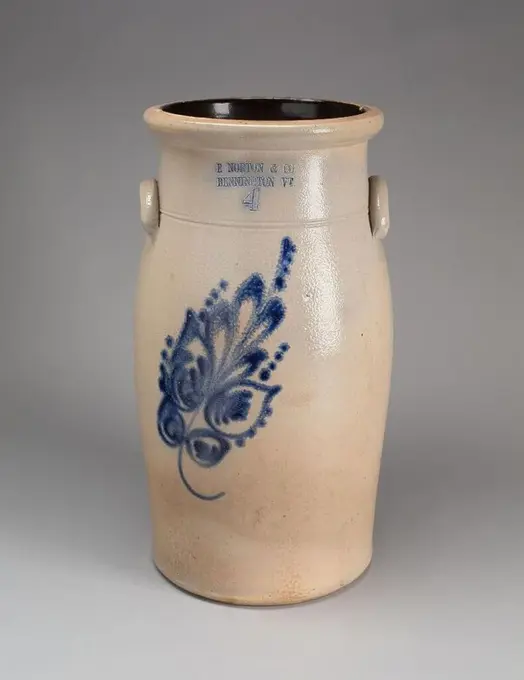
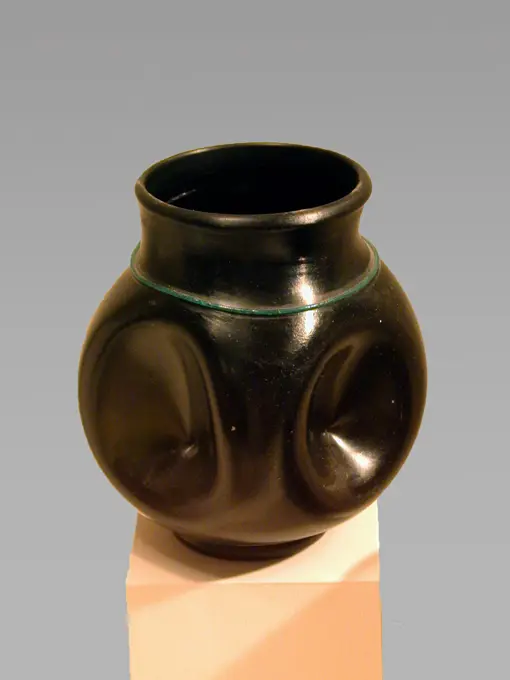
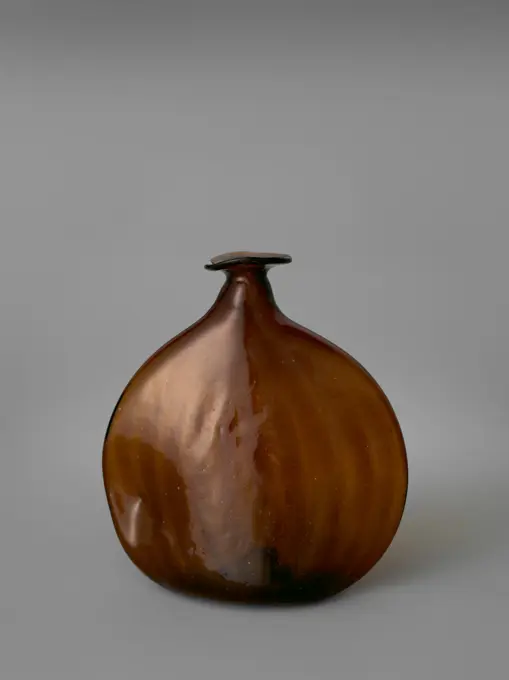
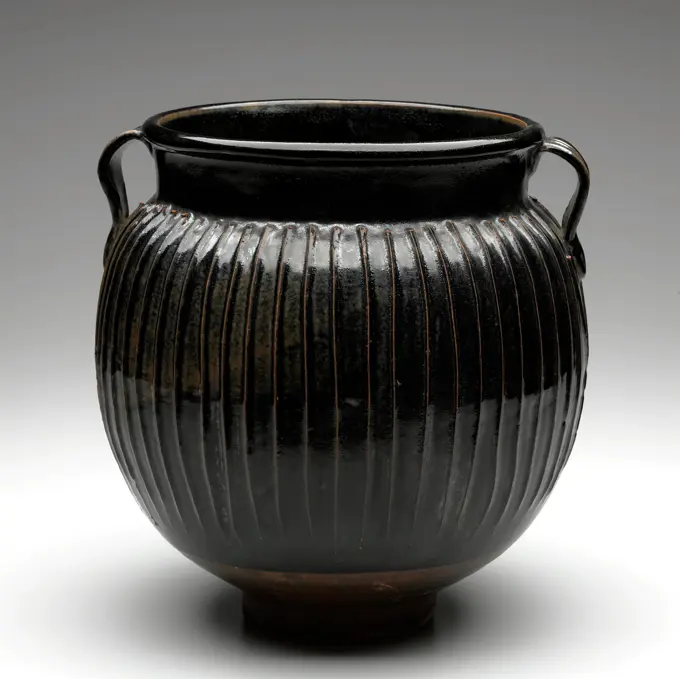
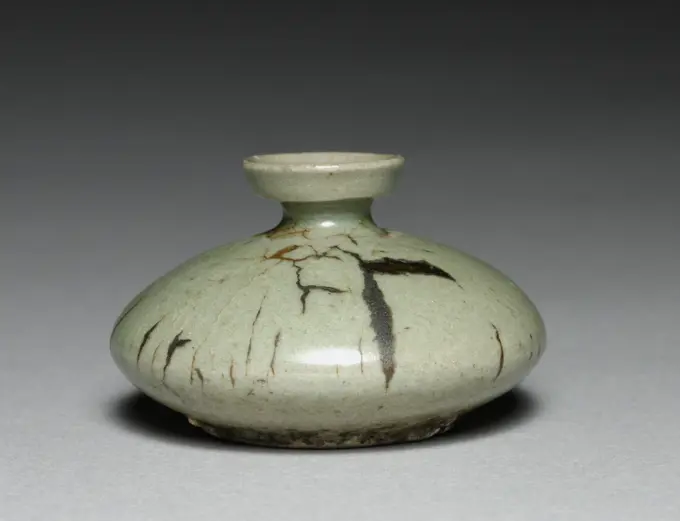
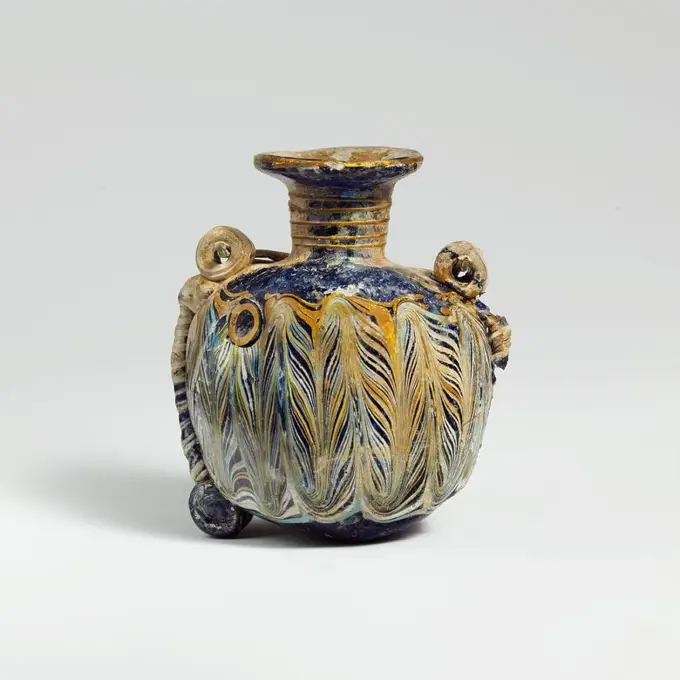
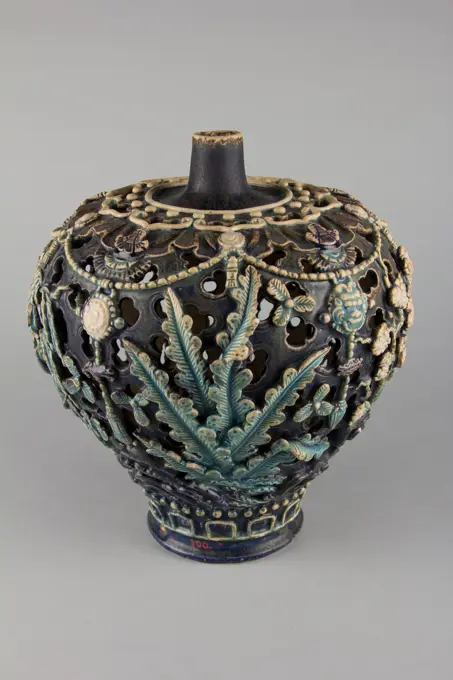
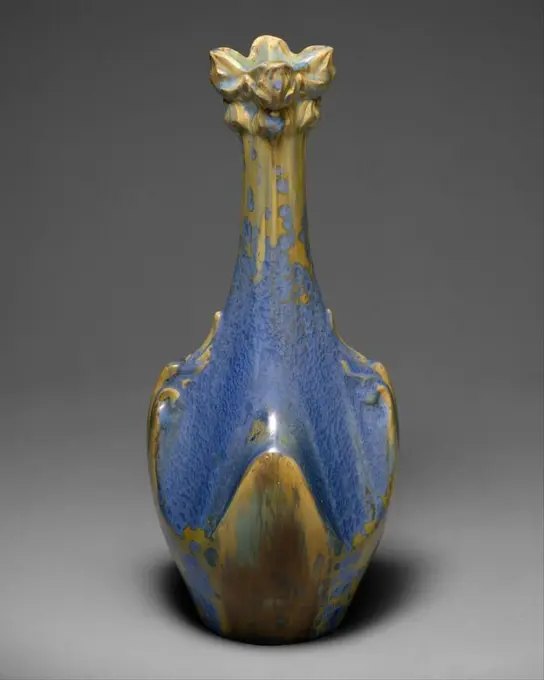
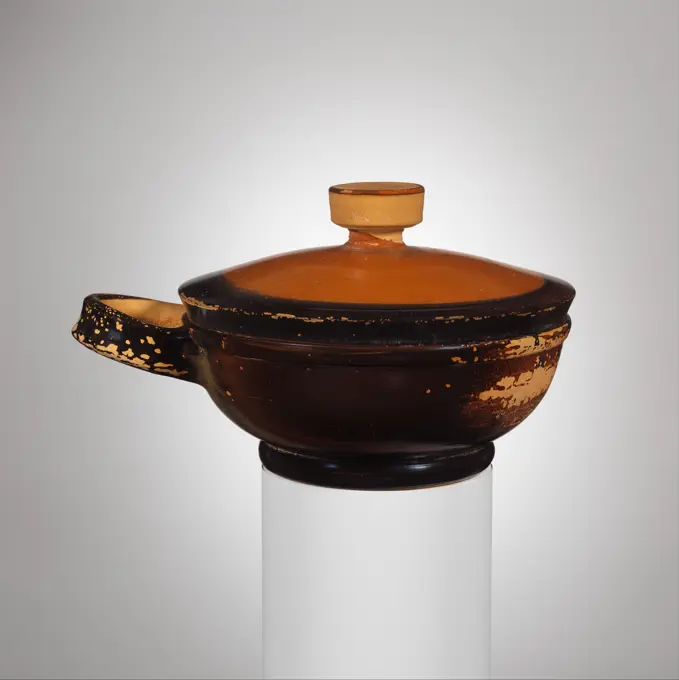
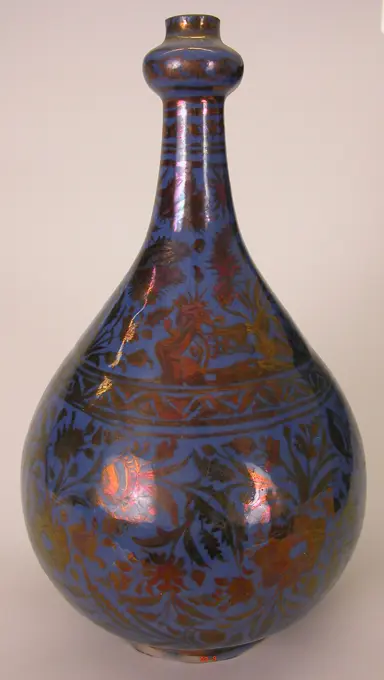
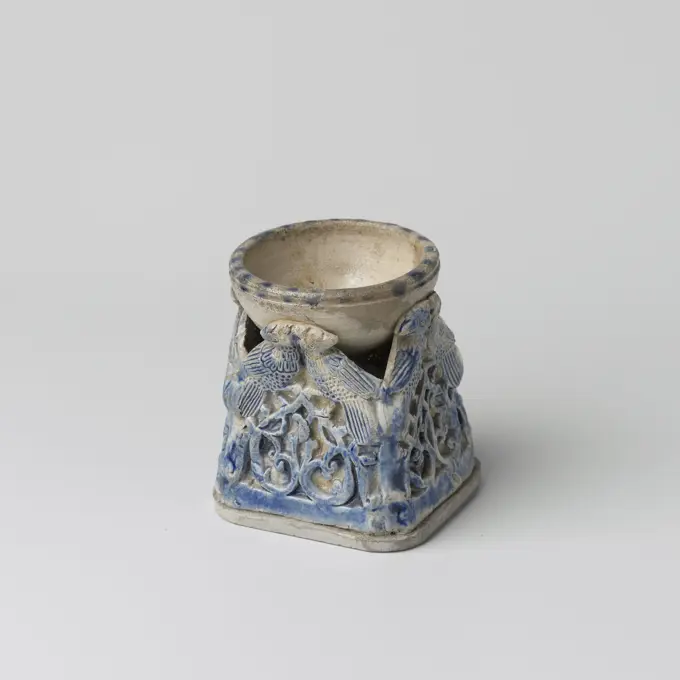
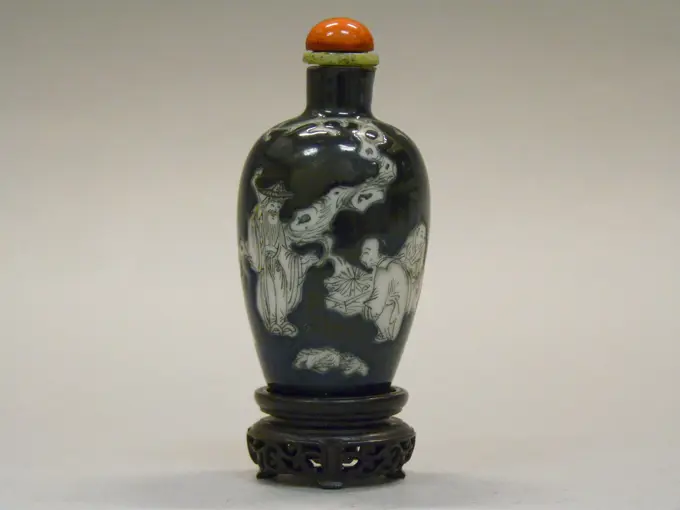
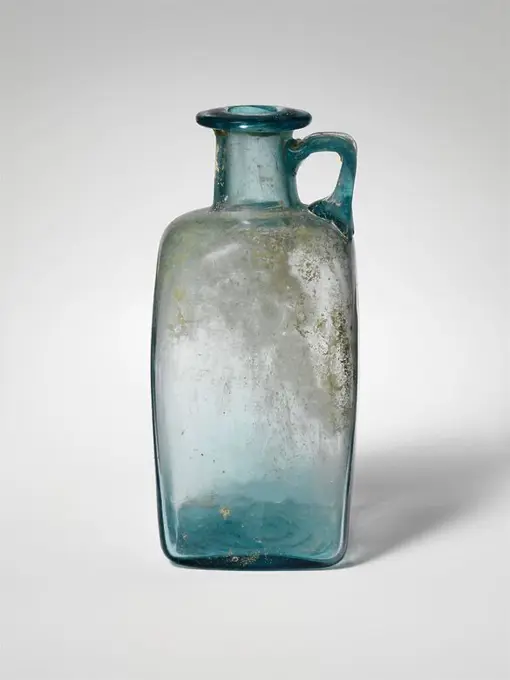
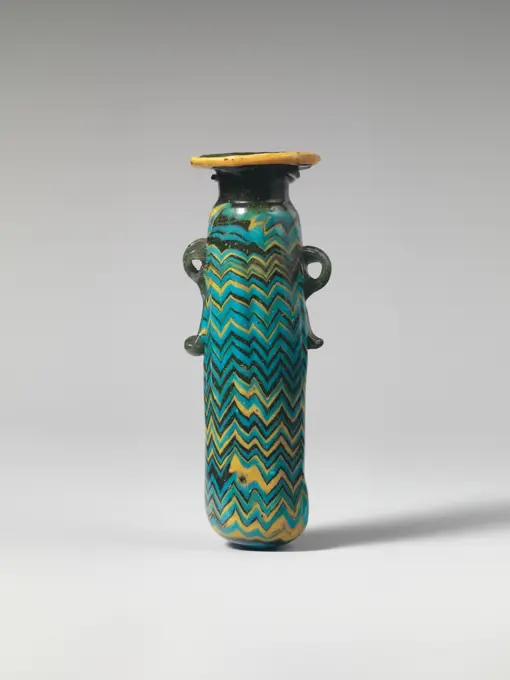
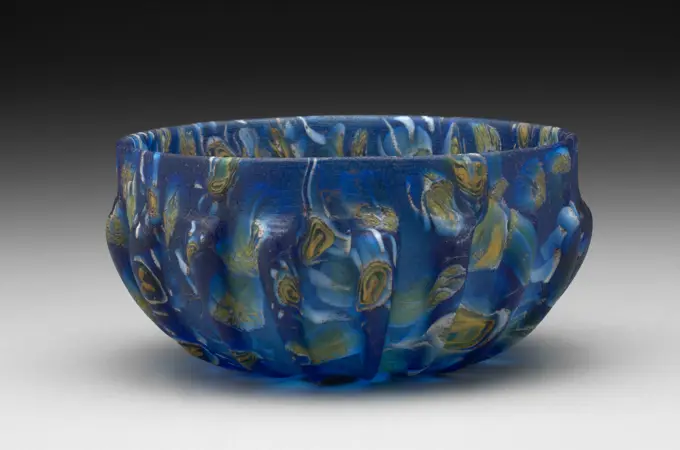
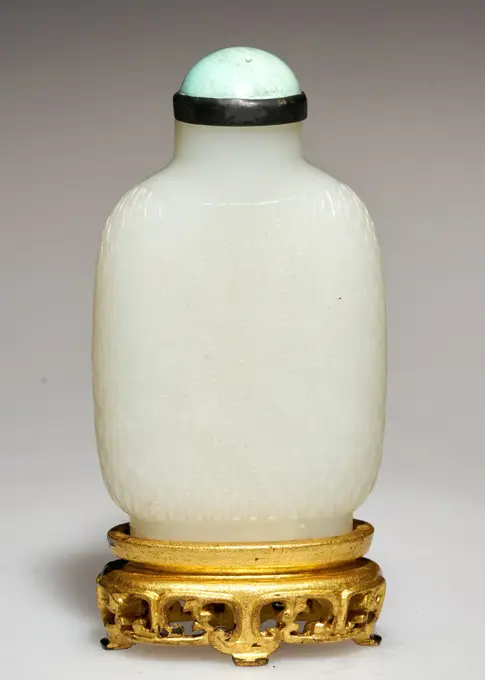
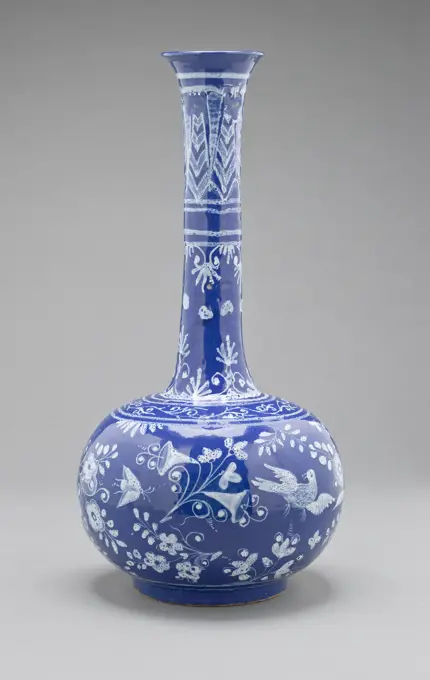
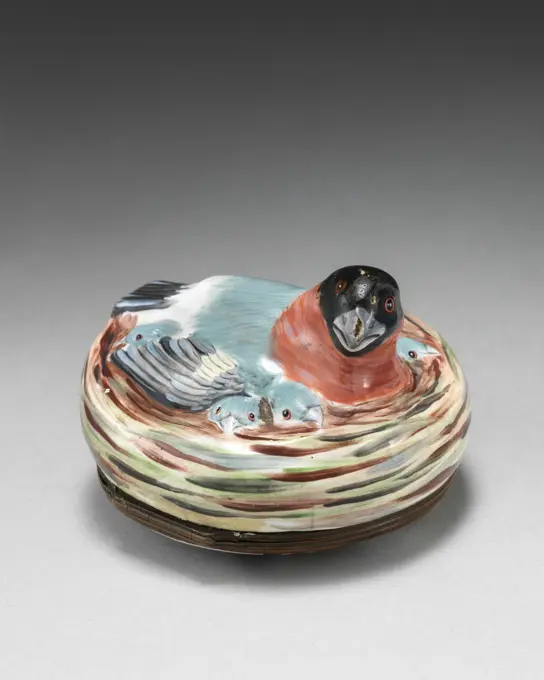
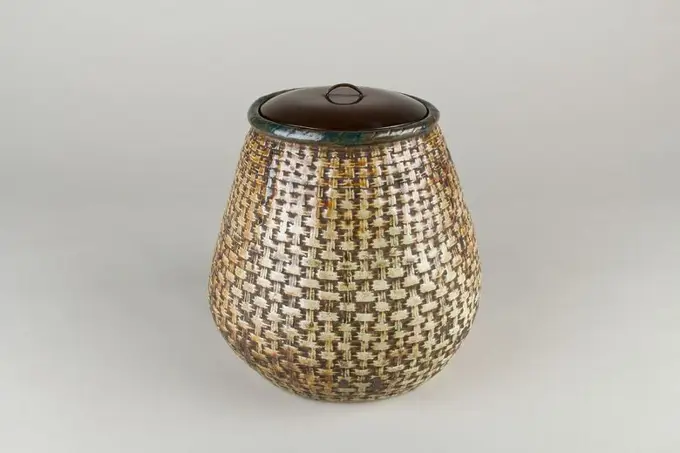
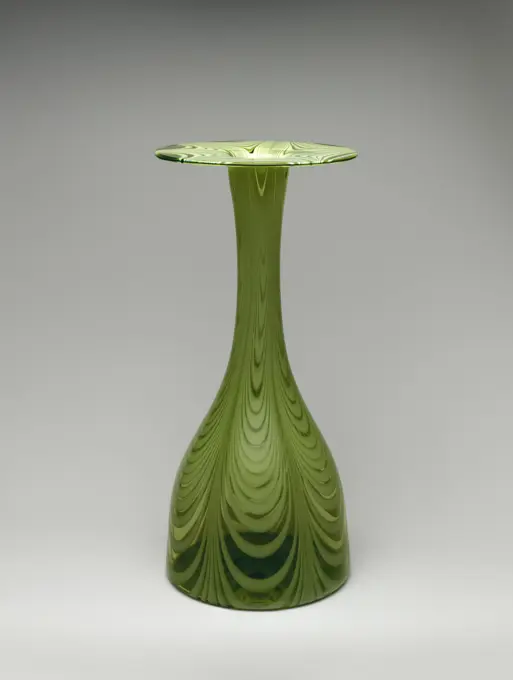
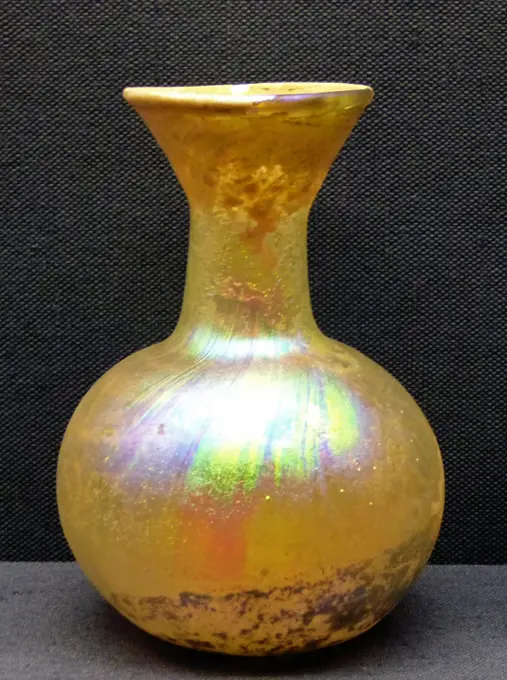
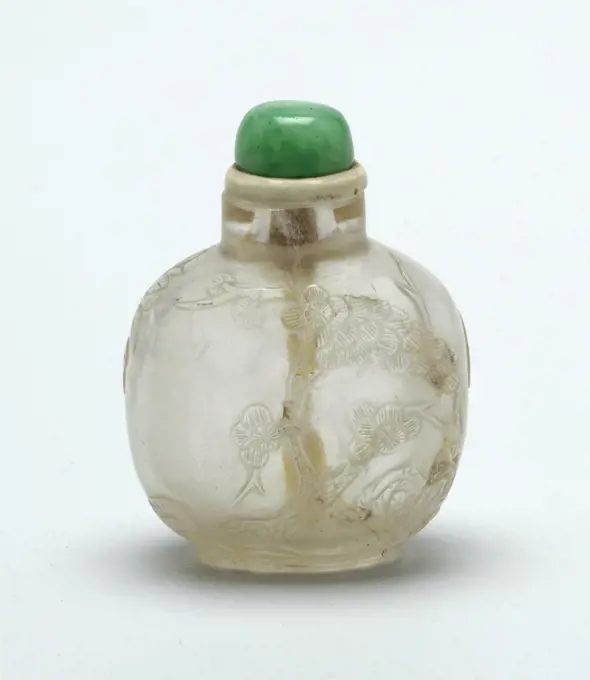
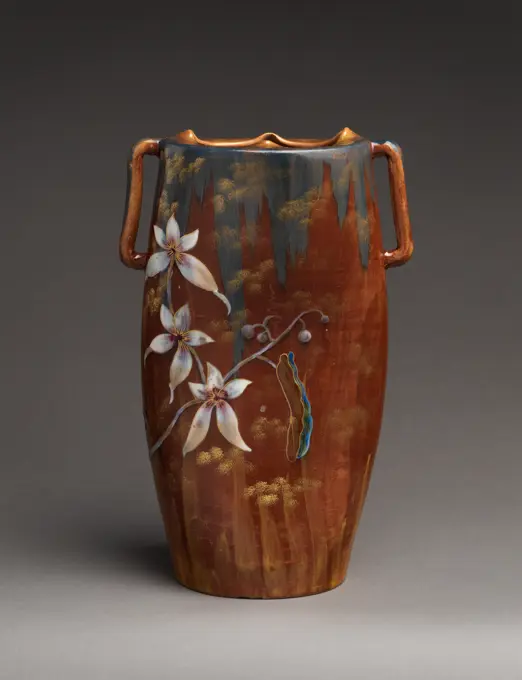
Decanter, 19th century, 7 5/16 x 3 5/8 x 3 5/8 in. (18.6 x 9.21 x 9.21 cm), Glass, United States, 19th centuryGlass cantharus (drinking cup). Culture: Roman. Dimensions: H. 4 11/16 in. (11.9 cm). Date: ca. A.D. 40-80.Translucent cobalt blue; handles in same color.Flaring, rounded rim, with folded solid flange below; bell-shaped body, carving in sharply to solid, short stem; low, splayed foot, formed from a separate gather with knocked-off and ground outer edge; uneven, flat bottom; low kick at center of inside of body; strap handles attached to lower sides of body in pads, tooled flat above, drawn up and outwards, then curved round and down in a loop above rim, and applied to lip and underside of rim.Complete, but repaired on rim at junction of both handles, with one small chip and rim and one larger chip on underside of edge of foot; some bubbles, elongated horizontally around rim; dulling, some pitting of surface bubbles, iridescent weathering, and small patches of limy encrustation.This is an early type of wineglass and would have graced the table of a wealthy Roman at a dinner or drinkVase with ossebloedrode and white überfang, Royal Leerdam Crystal, 1928 - 1929 Vase made of glass with slightly inserted bottom. Spherical, freely blown and formed body, turning into a slightly sloping neck. Colorless glass mass with an überfang of Ossebloedrood glass, over which an opaque white layer, broken open in a reducing fire. Marked with the Diamant Leerdam Unica C.J. Lanooy E 60. Leerdam glass glassblowing Vase made of glass with slightly inserted bottom. Spherical, freely blown and formed body, turning into a slightly sloping neck. Colorless glass mass with an überfang of Ossebloedrood glass, over which an opaque white layer, broken open in a reducing fire. Marked with the Diamant Leerdam Unica C.J. Lanooy E 60. Leerdam glass glassblowingChurn. E. Norton & Co.; American, 1881-1885; Bennington, Vermont. Date: 1881-1885. Dimensions: 43.8 × 21.6 cm (17 1/4 × 8 1/2 in.). Stoneware. Origin: Bennington. Museum: The Chicago Art Institute, Chicago, USA.Glass beaker late 2nd-mid-3rd century A.D. Roman Translucent dark green; trails in translucent turquoise blue.Rounded, slightly thickened rim; funnel-shaped neck; square body, with convex curving edges; outsplayed low applied base ring; concave bottom with pontil scar at center.Each side of body with large tooled indent and pointed kick on interior; trail in relief wound once round base of neck, and another trail wound 1½ times around undercurve of body.Two large holes in body, but otherwise complete; some pinprick bubbles; slight dulling and faint weathering. Glass beaker. Roman. late 2nd-mid-3rd century A.D.. Glass; blown, tooled, and trailed. Mid Imperial. GlassFlask probably 18th-19th century. Flask. probably 18th-19th century. Glass; mold blown; tooled on the pontil. Attributed to Iran or Turkey. GlassBottle 19th century. Bottle 443115Openwork Braizer or Incense Stick Holder. China. Date: 1365-1499. Dimensions: H. 22.7 cm (8 15/16 in.); diam. 10.9 cm (4 5/16 in.). Longquan ware; celadon-glazed stoneware with carved decoration. Origin: China. Museum: The Chicago Art Institute, Chicago, USA.Wide Mouth Jar (guan), 10th-13th century, 10 1/2 x 10 1/8 in. (26.7 x 25.7 cm), Cizhou type ware Stoneware with dark brown glaze over trailed white slip ribs, China, 10th-13th century, Although their specific function is unknown, brown-glazed, globular-shaped jars with wide mouths, double handles, and vertical rib décor were popular northern kiln products during Northern Song (960-1127) and Jin (1115-1234) dynasties. The distinguishing ribs are not rolled appliqué strips of clay as they seem, but rather, trailings of white kaolinic slip that were extruded onto the body of the vessel with a tool akin to a modern cake decorator. After all parts had dried, the potter applied the iron-rich glaze in two dippings. In firing, the glaze pulled away from the raised ribs causing them to appear slightly lighter in color than the thicker, darker glaze of the body.Waza with a wide stroke with a dense blue coating with purple spots unknownPilgrim bottle 17th-18th century Spanish. Pilgrim bottle. Spanish. 17th-18th century. Glass. GlassFlask. Attributed to Coffin & Hay; American, 1831-1857; Hammonton, New Jersey. Date: 1831-1840. Dimensions: 18 × 12.1 cm (7 1/16 × 4 3/4 in.). Glass. Origin: Hammonton. Museum: The Chicago Art Institute, Chicago, USA.Bowl 1830-50 American. Bowl. American. 1830-50. Free-blown glass. Made in United StatesFlask; Eastern Mediterranean; 6th - 8th century; Glass; 13.5 cm (5 5,16 in.)Hes Vase. Dimensions: H. 31.2 cm (12 5/16 in.); Diam. 8 cm (3 1/8 in.). Dynasty: Dynasty 18. Reign: reign of Thutmose IV. Date: ca. 1400-1390 B.C.. Museum: Metropolitan Museum of Art, New York, USA.Stoneware jug be cut on the shoulder with ribs on the carve, protruding ridge over the belly, ribs underneath, jug crockery holder soil find ceramic stoneware glaze salt glaze, hand-turned carved glazed fried Stoneware jug gray shard with salt-glaze curled tail profile rings around neck and foot archeology City Triangle Rotterdam Town Hall City Hall import pottery serve serve donate wine beer Soil discovery: excavated on the site destined for the Town Hall or the post office on the Coolvest (1914 1915).Ginger jar with cover, one of a pair, 1662-1722, 11 3/16 × 5 5/16 × 5 5/16 in. (28.42 × 13.49 × 13.49 cm), Glazed porcelain, China, 17th-18th centuryVase - bottle. unknown, craftsmanOil Bottle, 1100s-1200s. Korea, Goryeo period (918-1392). Celadon ware; outer diameter: 7.4 cm (2 15/16 in.); overall: 4.6 cm (1 13/16 in.).Glass perfume bottle. Culture: Roman. Dimensions: 1 1/2 in. (3.8 cm)Diam. of rim: 3/8 in. (1 cm)Length: 13/16 in. (2 cm)Width: 11/16 in. (1.7 cm). Date: 1st century A.D..Miniature perfume bottleTranslucent deep turquoise green.Rim folded out, over, and in, flattened on top; long, slightly conical neck, tooled in around base; lentoid body with tooled indents in both sides; round bottom.Intact; pinprick and a few very large bubbles; dulling and patches of iridescent weathering. Museum: Metropolitan Museum of Art, New York, USA.Glass lentoid aryballos (perfume bottle). Culture: Eastern Mediterranean or Italian. Dimensions: 3 1/2 × 3 1/16 × 2 3/16 in. (8.9 × 7.8 × 5.5 cm)Diam. of rim: 1 9/16 in. (4 cm). Date: late 4th-early 3rd century B.C..Translucent cobalt blue, with handles, coils, and feet in same color; trails in opaque yellow, opaque white, and opaque turquoise blue.Broad rim-disk, sloping inward, made as a spiral coil around top of neck; cylindrical neck, tapering downward; broad, almost horizontal shoulder with rounded outer edge; flattened globular body, with convex sides; shallow convex bottom; two rolled cylindrical feet on either side of bottom; two vertical ring handles attached to shoulder; two coils running down sides between handles and feet.An unmarvered fine yellow trail attached at the edge of rim-disk; another similar yellow trail wound spirally five times round neck; on body, bands of yellow, white, and turquoise blue trails tooled into a feather pattern in thirteen vertical patterns Jug with small medallions, anonymous, c. 1650 - c. 1699 Jug of stoneware on high foot with a pear -shaped body and wide neck. A profile just below the edge and the C-shaped ear is attached to the neck and belly. Partly covered with cobalt blue. The jug is largely covered with a relief decoration of small printed and imposed medallions with a rosette against a blue background. On the foot, some entry lines, one of which is filled in with blue. Westerwald. Westerwald stoneware. glaze. cobalt (mineral) vitrification Jug of stoneware on high foot with a pear -shaped body and wide neck. A profile just below the edge and the C-shaped ear is attached to the neck and belly. Partly covered with cobalt blue. The jug is largely covered with a relief decoration of small printed and imposed medallions with a rosette against a blue background. On the foot, some entry lines, one of which is filled in with blue. Westerwald. Westerwald stoneware. glaze. cobalt (mineral) vitrificationJar. China. Date: 665 AD-799 AD. Dimensions: H. 19.0 cm (7 1/2 in.); diam. 21.8 cm (8 9/16 in.). Earthenware with three-color (sancai) lead glazes. Origin: China. Museum: The Chicago Art Institute, Chicago, USA.Openwork vase with plants late 15th-early 16th century China. Openwork vase with plants 45990Vase in the Shape of a Gourd 18th century China. Vase in the Shape of a Gourd. China. 18th century. Porcelain with tea-dust glaze. Qing dynasty (1644-1911), Qianlong period (1736-95). CeramicsJugGeorges Despret (1862-1952). Cut on foot. Glass, glass paste. XIXth-XXth century. Museum of Fine Arts of the City of Paris, Petit Palais. 19th XIXth XIX 19th 19th 19th century, XXth XXth XX 20th 20th 20th centuryVase. Culture: French, Pierrefonds. Dimensions: Height: 11 3/4 in. (29.8 cm). Factory: Factory of Olivier de Sorra. Date: ca. 1885.Art Nouveau potter Olivier de Sorra is known for the fine stoneware and crystalline glazes he produced at his factory, Pierrefonds. Molded with stylized foliage and glazed entirely in variegated shades of sky blue and tan with mottled and streaked patterns, this vase represents the technical achievements of the nineteenth century in ceramics. Museum: Metropolitan Museum of Art, New York, USA.Vase with decor of black flowers and green leaves embossed against a white fond. Vase with decor of black flowers and green leaves embossed against a white fond. Signature: Stamp of the factory bonswerke Kandern and the number 455.Karaf, anonymous, c. 1600 - c. 1700 Carafe squeezed in a leaf motif. Spherical body with Rhombian studs blown in shape. Low, twice -cut neck, transferring to a funnel -shaped mouth with an octagonal edge, trimmed with a blue wire. On either side a C-shaped ear with blue comb ornament glassblower: Spainmaker: Granada (possibly) glass glassblowing Carafe squeezed in a leaf motif. Spherical body with Rhombian studs blown in shape. Low, twice -cut neck, transferring to a funnel -shaped mouth with an octagonal edge, trimmed with a blue wire. On either side a C-shaped ear with blue comb ornament glassblower: Spainmaker: Granada (possibly) glass glassblowingBottle 18th century Japan. Bottle 47307Rosewater Sprinkler or Bottle Vase With Light Brown and Precious Object and Antiques. Rose water dropper or pine bottle of porcelain with pear-shaped body, covered with a café-au-lait glaze and painted in underglaze blue. The lower part of the body is covered with a slight brown glaze above which a tire with a thick seamless glaze; The upper part in underglazing blue with napkin interspersed with a flower in a medallion, above values (pearl, diamond) and antiques (vase, tripod, scepter, books); The neck with pointed leaf motifs. Monochrome brown with blue and white.Vincent Burzy, Glass, 1935 1942 GlassWater cooler, 1950s, 16 1/2 x 11 x 11 in. (41.9 x 27.9 x 27.9 cm) (overall), glazed earthenware, Mexico, 20th centuryJug 18th century Italian, Venice (Murano). Jug. Italian, Venice (Murano). 18th century. Glass. GlassIncense Burner. Culture: China. Dimensions: H. 3 7/8 in (9.8 cm); L. 4 3/4 in (12.1 cm). Date: 16th century. Museum: Metropolitan Museum of Art, New York, USA.Cup. UnknownVase, Tiffany Glass and Decorating Company, American, 1892 - 1900, Mold-blown favrile glass, Tall vase in iridescent red orange, milli-flore (green leaves) motif., New York, NY, USA, ca. 1903, glasswares, Decorative Arts, VaseVase Vase; Designed by Bert (Lambertus) Nienhuis (1873 - 1960); Manufactured by de Distel Pottery, Amsterdam (Netherlands); Netherlands; earthenware; 15.3 x 7.4 cm (6 x 2 15/16 in.)Beaker. UnknownSnuff Bottle, 19th century, Jade, China, 19th centuryWine Bottle 19th century Shuntai Japanese. Wine Bottle. Shuntai (Japanese, 1799-1878). Japan. 19th century. Clay covered with buff crackled glaze and decoration in overglaze (Shino Oribe type). Edo (1615-1868) or Meiji period (1868-1912). CeramicsStoneware jug be carved with kerf cut technique, around three faces, jug crockery holder soil find ceramic stoneware, hand-turned carved baked Stoneware jug unglazed kerbschnitt three appliques: lion heads with strong human pull ear missing. Round hole at the top of the ear for the attachment of tin lid Profile rings around the neck and above the foot archeology Valckensteyn Poortugaal Albrandswaard indigenous pottery drink drink kitchen import donate serve Kerbschnitt Soil discovery: castle Valckensteyn in Poortugaal now Albrandswaard 1961-1962.Terracotta covered bowl with one handle ca. 450-400 B.C. Greek, Attic Although it is covered, as in a pyxis, and has one handle, as in a skyphos, this vase is a practical but rare combination of the two shapes.. Terracotta covered bowl with one handle 251264 Greek, Attic, Terracotta covered bowl with one handle, ca. 450400 B.C., Terracotta, total H. x diameter 2 1/8 x 5 in. (5.4 x 12.7 cm); H. without cover 3 1/2 in. (8.9 cm). The Metropolitan Museum of Art, New York. Gift of Gisela M. A. Richter, 1923 (23.43a, b)Vase with flowers and ornamental lines, company Wed. N.S.A. Brantjes and Co., c. 1895 - c. 1904 Vase (two pieces A and B), multi -colored painted with flowers and ornamental lines. Purmerend earthenware Vase (two pieces A and B), multi -colored painted with flowers and ornamental lines. Purmerend earthenwareBottle second half 17th century. Bottle 444948Salt cellar with birds and scrolls, anonymous, c. 1750 - c. 1799 Salt barrel of stoneware with a square body and a round bowl. Decorated in cobalt blue. On each side a printed relief decoration of two birds standing on an inverted heart shape with curl. The bowl rests on the heads of the birds. Westerwald. Westerwald stoneware. glaze. cobalt (mineral) vitrification Salt barrel of stoneware with a square body and a round bowl. Decorated in cobalt blue. On each side a printed relief decoration of two birds standing on an inverted heart shape with curl. The bowl rests on the heads of the birds. Westerwald. Westerwald stoneware. glaze. cobalt (mineral) vitrificationCANTARO PARA AGUA VIDRIADO PARCIALMENTE EN VERDE CON DOBLE ASA - SIGLO XX - ARTE POPULAR. Location: ALFARERIA. TARRAGONA. SPAIN.Snuff Bottle 19th century China. Snuff Bottle 41601Vase. Culture: American. Dimensions: H. 12 3/4 in. (32.4 cm); Diam. 3 1/4 in. (8.3 cm). Maker: Chelsea Keramic Art Works (1872-1889). Date: 1876-80. Museum: Metropolitan Museum of Art, New York, USA.Glass / cup;  I-II century (1-00-00-200-00-00);Jar 19th century Japan. Jar 46638Vase ca. 1891-95 Chelsea Pottery U. S. Steeped in ceramics from birth, Hugh C. Robertson pursued his craft with fierce devotion and a passion for experimentation. From a family of trained English ceramists, he honed his skills in New Jersey before settling in Massachusetts as one of the founders of Chelsea Keramic Art Works and later, Dedham Pottery. Robertsons lifelong explorations in glazes, particularly their color and texture, make him one of the key figures of American art pottery at the turn of the twentieth century.As all-consuming as his pursuit of the ideal oxblood glaze was, Robertson also pioneered other glazing techniques, among them the craquelé glaze, which he first achieved in 1886. This distinctive type of glaze, with its fine network of visible cracks, was a staple of Eastern ceramics that Westerners tended not to emulate because they considered such crazing a flaw. Appreciating its aesthetic value, Robertson perfected an allover white crackle glaze often enhanced witVase with a rosette in relief, N.V. Haagsche Plateel Factory Rozenburg, 1888 Vase of earthenware, cylindrical, on the outstanding foot and halfway a flattened spherical nodus with notches, covered with a rosette in relief. Painted with ornament in yellow, green, dark blue and brown on light brown stock. Marked: WV (with flag) G/The Hague/D and W.N. (above which a triangle with a dot), in black. The Hague earthenware Vase of earthenware, cylindrical, on the outstanding foot and halfway a flattened spherical nodus with notches, covered with a rosette in relief. Painted with ornament in yellow, green, dark blue and brown on light brown stock. Marked: WV (with flag) G/The Hague/D and W.N. (above which a triangle with a dot), in black. The Hague earthenwareSnuff Bottle. Culture: China. Dimensions: H. 2 3/8 in. (6 cm). Date: late 18th century. Museum: Metropolitan Museum of Art, New York, USA.Vase; Andou (enamel cloisonné; 1881-); around 1912-1926 (1912-00-00-1926-00-00);Tuit jug with pear -shaped body, anonymous, c. 1700 - c. 1900 Deep inserted soil. Wide, hollow stand ring. Silent -flat -shaped body, transfer to a faint ribbed nodus and a low, slightly sloping neck with a rim slabs inwards. A ribbed drip ring has been laid around the neck. The high, curved spout is trimmed at the opening with a double wing. Small, c-shaped ear. Persia glass glassblowing Deep inserted soil. Wide, hollow stand ring. Silent -flat -shaped body, transfer to a faint ribbed nodus and a low, slightly sloping neck with a rim slabs inwards. A ribbed drip ring has been laid around the neck. The high, curved spout is trimmed at the opening with a double wing. Small, c-shaped ear. Persia glass glassblowingFigure of a bird and a lidded pot. All kinds of objects were included in grave goods, from utilitarian vessels, such as this little pot, to figures representing important aspects of the deceaseds surroundings during his lifetime. The little model of a bird shows that there was also room for cheerful elements.Flask. Culture: British, possibly Nailsea. Dimensions: Height: 7 7/8 in. (20 cm). Date: late 18th-early 19th century. Museum: Metropolitan Museum of Art, New York, USA.Ewer, anonymous, c. 1350 Can from rock crystal with gilded silver frames. The pear -shaped barrel is sharpened in twelve vertical facets. A bulb profile runs around the neck. The square rectangular ear in diameter has three protrusions. Landscapes are engraved on the frame of foot and neck. The lid also cut in twelve facets has a lion's head -contained lion's head as a crown. Southern Italy (Possible) silver (metal) grinding / gilding Can from rock crystal with gilded silver frames. The pear -shaped barrel is sharpened in twelve vertical facets. A bulb profile runs around the neck. The square rectangular ear in diameter has three protrusions. Landscapes are engraved on the frame of foot and neck. The lid also cut in twelve facets has a lion's head -contained lion's head as a crown. Southern Italy (Possible) silver (metal) grinding / gildingCeladon-Glazed Double-Gourd Vase 1700-1899 China. Celadon-glazed porcelain .Snuff bottle 18th-19th century China. Snuff bottle 41111Vase. unknown, craftsmanGlass square bottle. Culture: Roman. Dimensions: Overall: 5 11/16 x 2 3/8 x 2 3/8 in. (14.4 x 6 x 6 cm). Date: 1st-2nd century A.D..Translucent light blue, with same color handle.Rim folded out, over, and in, and pressed into top of mouth, with slightly beveled top surface; cylindrical neck, expanding downwards; shoulder with rounded, sloping corners; slightly uneven, vertical sides, with slight downward taper; flat bottom; strap handle, with thick ribs on either side, attached to shoulder, drawn up vertically, turned in an acute angle and trailed onto neck.Molded decoration on bottom comprising five concentric rings and central dot in relief.Intact; pinprick bubbles and blowing striations; slight dulling and faint iridescence on exterior, with small patches of encrustation around neck and handle; areas of weathering and brilliant iridescence on interior. Museum: Metropolitan Museum of Art, New York, USA.Glass alabastron (perfume bottle) 5th century B.C. Greek, Eastern Mediterranean Semi-translucent olive green, with handles in same color; trails in opaque yellow and opaque turquoise blue.Broad horizontal rim-disk; cylindrical neck; narrow rounded shoulder; straight-sided cylindrical body; convex bottom; two large vertical ring handles with knobbed tails, applied over trail decoration.A yellow trail attached at edge of rim-disk; another yellow trail applied to top of body together with a turquoise blue trail, overlaid on the yellow; both wound in a spiral around body, tooled into a close-set zigzag pattern with alternate upward and downward strokes, forming vertical ribs on sides; the turquoise blue trail ending in a circle on bottom.Intact; some surface pitting, but very little weathering.During the fifth century B.C., the colors of Mediterranean Group I vessels expanded from blue or opaque white to include dark green, golden brown, and opaque brick red.. Glass alabastron (perfume botJar with Cover Cover made by Ikkan. Jar with Cover 48272Conical Beaker ca. 1450 German. Conical Beaker. German. ca. 1450. Mold-blown glass. Made in Trier (), Middle Rhineland, Germany. Glass-VesselsJar with Peony Scrolls 1600-1644 Junyao. Longquan ware; stoneware with underglaze carved decoration .RibbedBowlBottle with the motif of two dragons, bats and flowers unknownGlass jug 2nd-3rd century A.D. Roman, Cypriot Translucent pale blue green; handle in same color but with olive green streaks.Rim folded out, down, over, and in, and pressed flat on top surface; oval mouth; cylindrical neck with tooling marks around base; large piriform body; pushed-in bottom; curving handle with ribs at sides, attached to top of body with downward fins, drawn up and out, turned in horizontally and trailed on to top of neck and rim, with folded thumb rest above.Complete but several internal cracks in rim and body; pinprick and larger bubbles with some white gritty impurities in body, and many black streaky impurities in handle; faint iridescence and weathering, with one patch of brownish weathering on interior.Bluish pear-shaped blown glass vase with curving handle.. Glass jug 239700Snuff Bottle, 19th century, Jade, China, 19th centuryBottle. Culture: China. Dimensions: H. 10 in. (25.4 cm). Museum: Metropolitan Museum of Art, New York, USA.Maker Unknown, Cream Pitcher, c. 1880, colorless glass.OinochoeBottle 1835-1855 England. Glass .Terracotta stemmed calyx. Culture: Greek, Attic. Dimensions: H. 2 3/8 in. (6.1 cm). Date: early 5th century B.C..This useful shape was popular from the last quarter of the sixth century B.C. into the third quarter of the fifth. It may have contained foods such as nuts, olives, and other small fruits. Museum: Metropolitan Museum of Art, New York, USA.Bottle. France, Nevers, circa 1640. Furnishings; Accessories. Earthenware with tin glaze and enamel (grande feu faience)Cerámica mexicana de búcaros · V&ALos búcaros mexicanos son vasijas de barro muy pulidas hechas de arcilla roja fragante, que se usaban para dar sabor al agua, siglo XVII.Bonbonnière 1760-70 British, Bilston, South Staffordshire. Bonbonnière. British, Bilston, South Staffordshire. 1760-70. Enamel on copper. Enamels-PaintedVase. Takasaki Koichi (fl. ca. 1900), male artistRailroadFlask.  Manufacturer: Mount Vernon Glass Works, American, 1810-1844 Manufacturer: Saratoga Mountain Glass Works, 1844-1890Double-Gourd Vase with Incurved Loop Handles. China. Date: 1723-1735. Dimensions: H. 25.2 cm (9 15/16 in.); diam. 13.8 cm (5 7/16 in.). Porcelain with underglaze molded decoration. Origin: China. Museum: The Chicago Art Institute, Chicago, USA.Cornflower Inlay, 1350-1296 BC. Egypt, New Kingdom late Dynasty 18 (1540-1296 BC). Polychrome faience; overall: 4.1 cm (1 5/8 in.).Water Jar (Mizusashi) in the Shape of a Bamboo Basket. Culture: Japan. Dimensions: H. 8 1/4 in. (21 cm); Diam. 7 1/2 in. (19.1 cm); Diam. of rim 5 in. (12.7 cm); Diam. of base 6 in. (15.2 cm). Date: second half of the 18th-early 19th century. Museum: Metropolitan Museum of Art, New York, USA.Tripod Jar 700 CE-750 CE China. Earthenware with three-color (sancai) lead glazes .Large Bowl, Model 527. François Décorchemont; French, 1800-1971. Date: 1947-1950. Dimensions: 14 × 21 cm (5 1/2 × 8 1/4 in.). Glass. Origin: France. Museum: The Chicago Art Institute, Chicago, USA.Fragment of a winecup of Chinese porcelain from the wreck of the Dutch East Indiaman Witte Leeuw, anonymous, before 1613  Fragment wine head from V.O.C. ship De 'Witte Leeuw'. Wine head of porcelain, painted in underly glaze blue with a frieze of stylized leaves with a Frisian with spirals underneath. The bottom is glazed, the foot ring is straight, faceted and stands inside. No oven sand was found. There is no relief and the lip has been shelled. Jingdezhen porcelain   Sint-HelenaClutha vase ca. 1888 Christopher Dresser British, Scottish Dresser came to glassware relatively late in his career. This vase belongs to the group of glassware trademarked "Clutha" in 1888 by the Glasgow-based glassworks of James Couper & Sons. From this date until 1896, Christopher Dresser was sole designer of Couper & Sons Clutha glassware, which was retailed by Liberty & Co. in London from the 1880s until around 1900. The name "Clutha" was deliberately historicizing, being the old, perhaps romanticized, Gaelic name for Glasgows river Clyde. In an article published in the 1870-73 Technical Educator, Dresser celebrated how "Glass has a molten state in which it can be blown into the most beautiful shapes" and the designs of most of Dressers Clutha vases depend upon this singularity of the production process; embracing irregular, organic forms and prizing the colored striations, as well as bubbles, particular to the medium, which Dresser also admired in Roman glass. Liberty & Co.s pSmall vase. unknown, craftsmanVase. Dated: 1935/1942. Dimensions: overall: 36.7 x 28.3 cm (14 7/16 x 11 1/8 in.). Medium: watercolor, graphite, and gouache on paper. Museum: National Gallery of Art, Washington DC. Author: Robert Stewart.Blown-glass ampullae and cups, used as containers for perfumed oils. From the East Mediterranean. 1st-4th century AD.Snuff Bottle, 1820-1850, 2 11/16 x 1 15/16 x 1 1/4in. (6.8 x 4.9 x 3.2cm), Enameled porcelain, jade, China, Daoguang PeriodVase. Culture: Japan. Dimensions: H. 10 1/8 in. (25.7 cm). Date: 18th century. Museum: Metropolitan Museum of Art, New York, USA.Snuff bottle and stopper, Rock crystal, jade, China, 1736-93, containers, Decorative Arts, Snuff bottle and stopperVase ca. 1885 Emile Gallé French The sensitive naturalism of Gallé's floral decoration was the culmination of serious botantical observations made when he was young and the later influence of japonisme.. Vase. French, Lorraine (Nancy). ca. 1885. Glazed earthenware. Ceramics-PotterySmall green terracotta pitcher with a cork . Small green terracotta pitcher with a cork to serve raki in the mountains of the island of CreteEgyptian Alabaster Jar. Artist: UnknownChess Piece, Pawn 12th century. Chess Piece, Pawn 455066Cast Pendant. Unknown