Antique Glass Vessels

Historical glass jars from various eras, featuring intricate designs and textures. The collection showcases ancient craftsmanship with unique shapes and decorations.

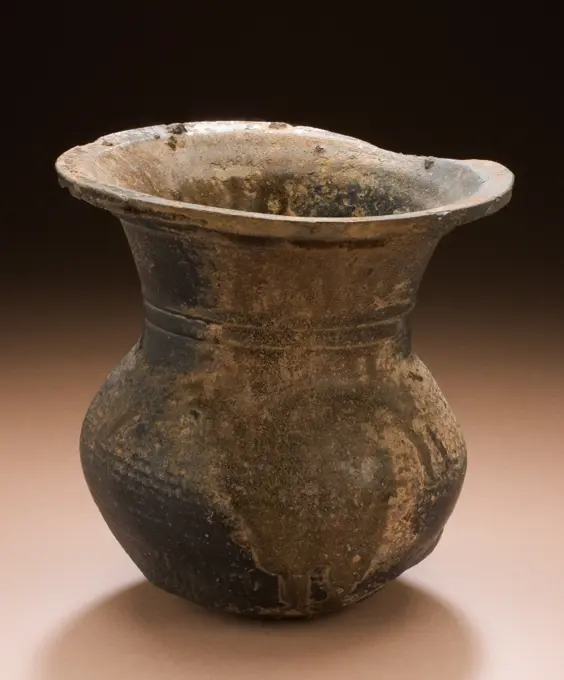
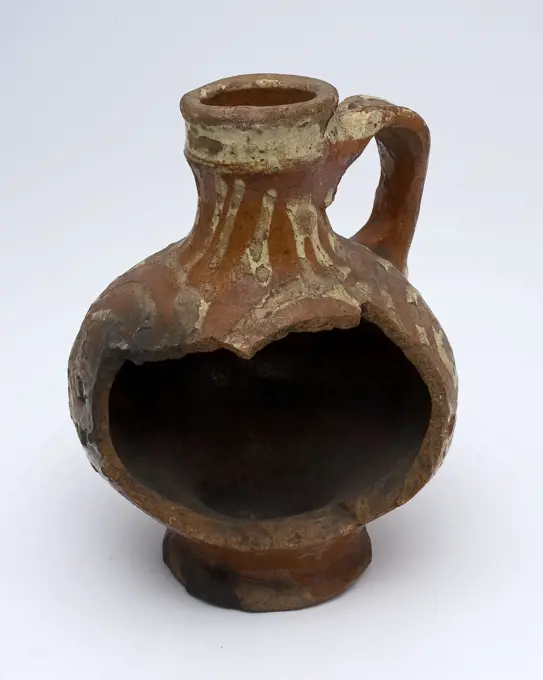
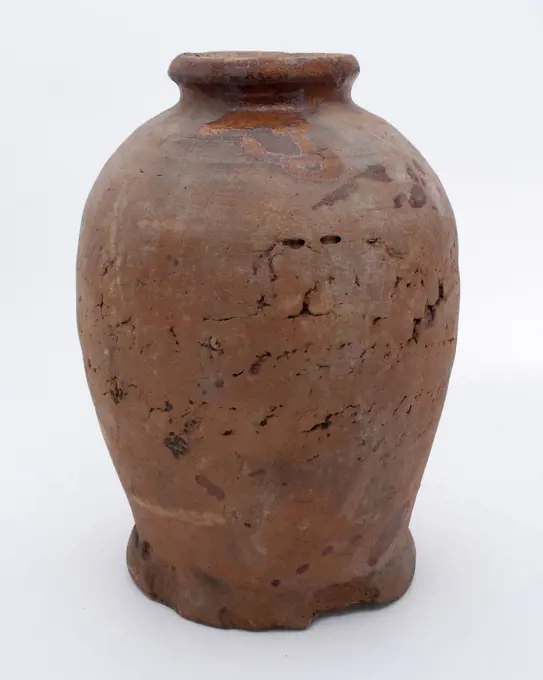
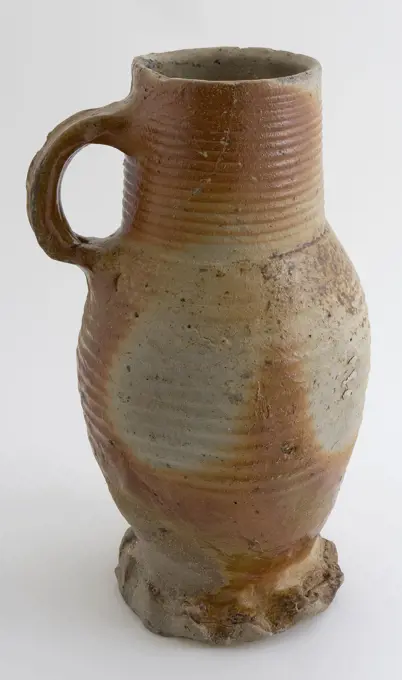
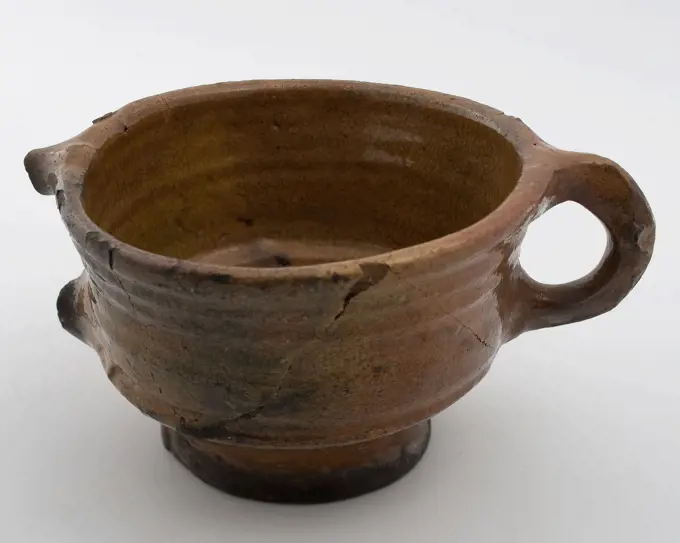
Pottery drinking breaker, drinking bowl, ball model with small neck opening, drinking cup drinking utensils holder earth discovery ceramics earthenware glaze lead glaze, hand turned glazed baked Pottery drinking breaker drinking bulb model with small neck opening Drip-shaped and ending in point cup can not be dropped. Internally glazed archeology indigenous pottery drink room wine beer
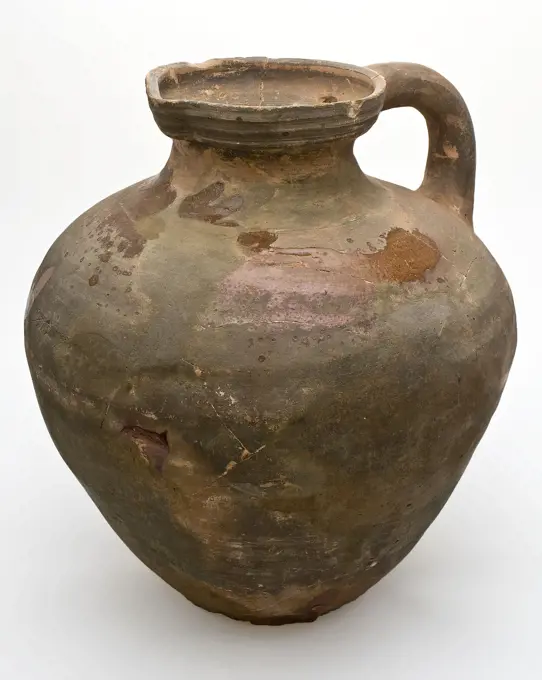
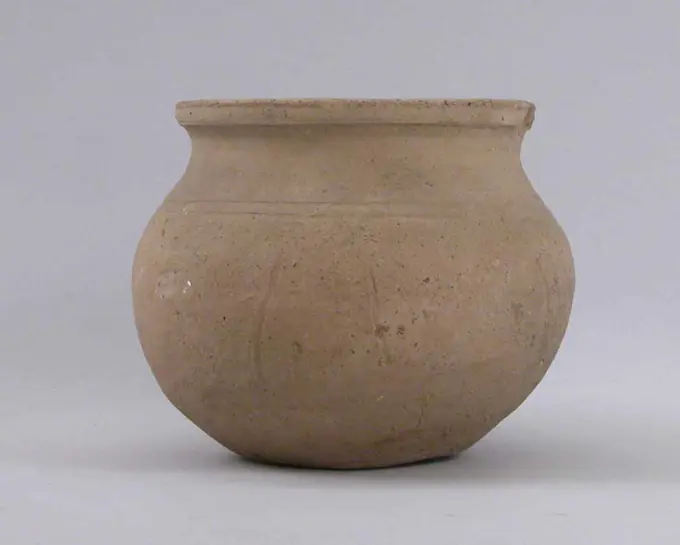
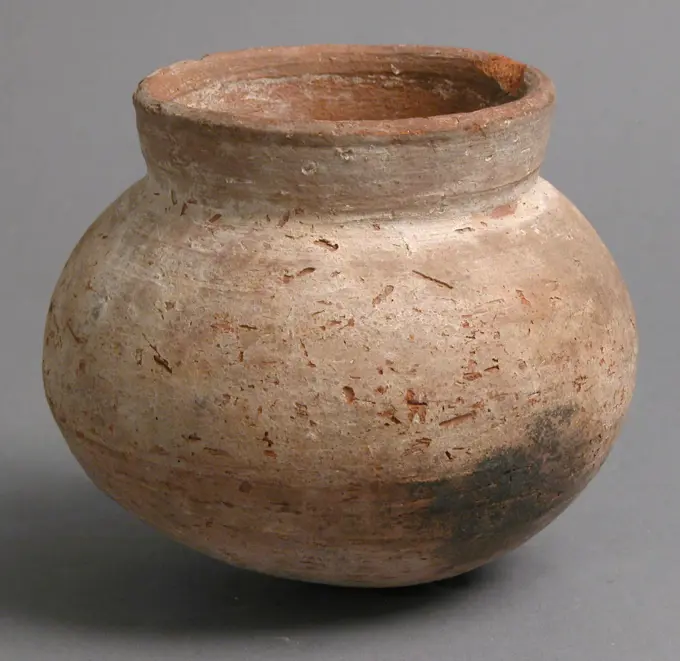
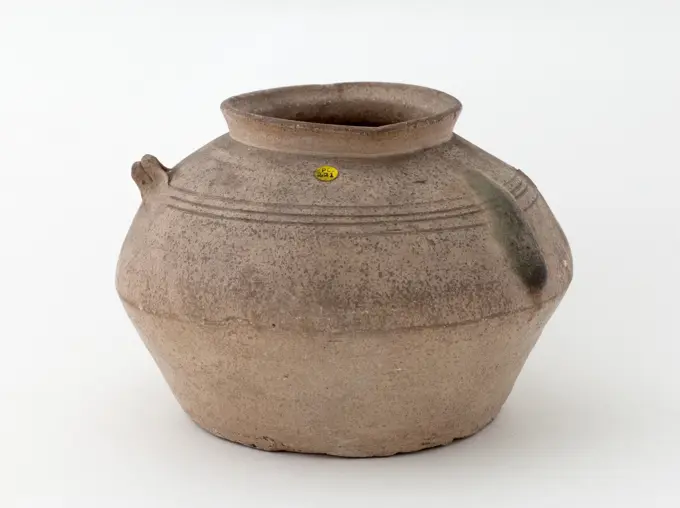
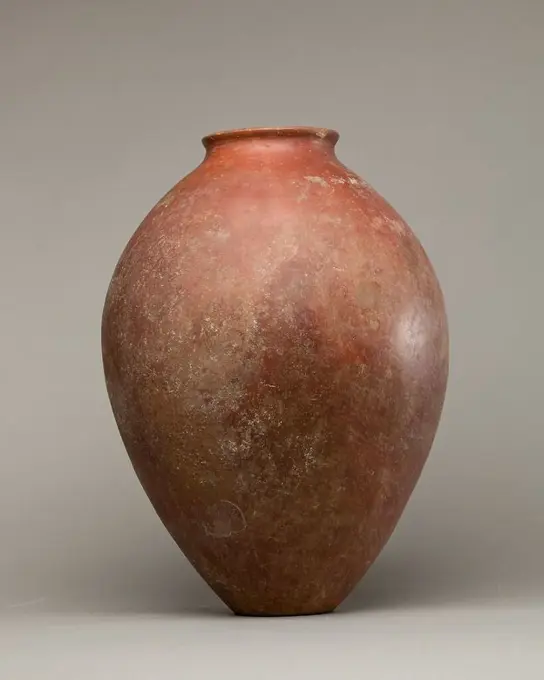
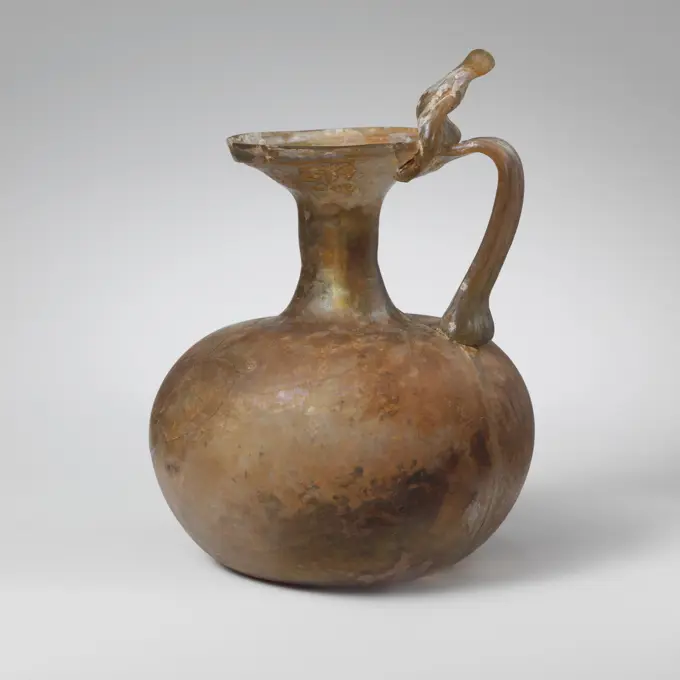
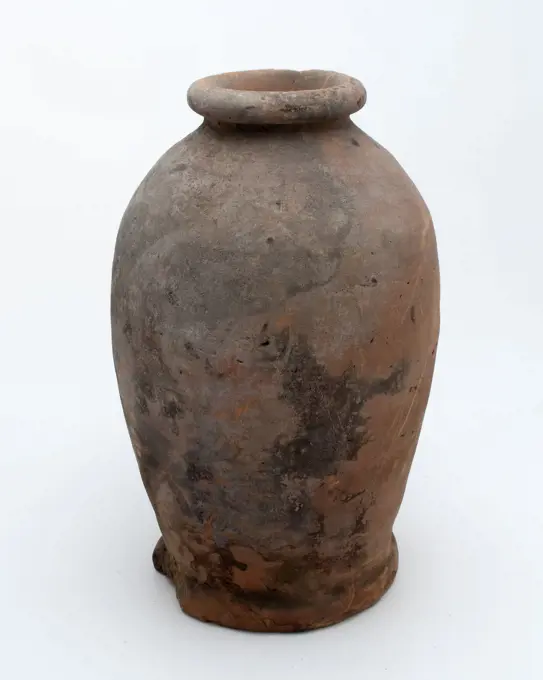
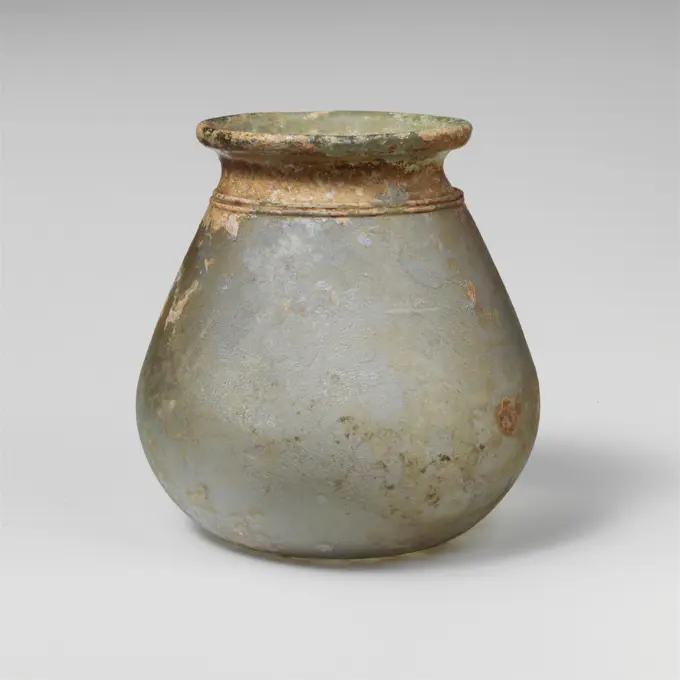
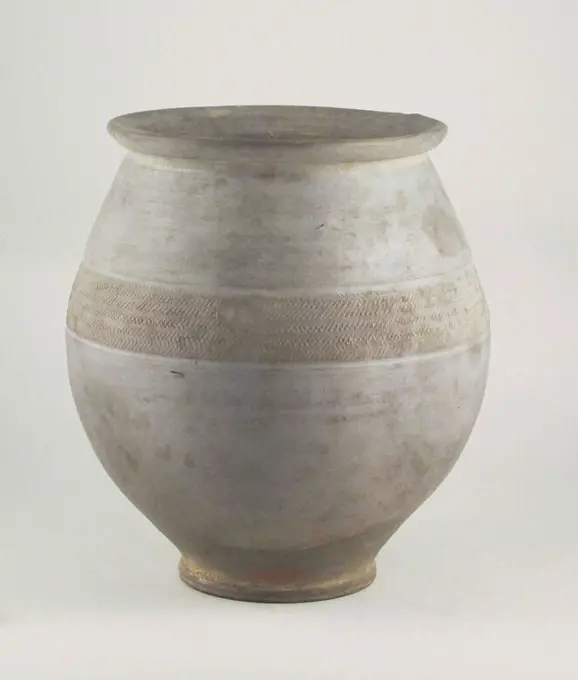
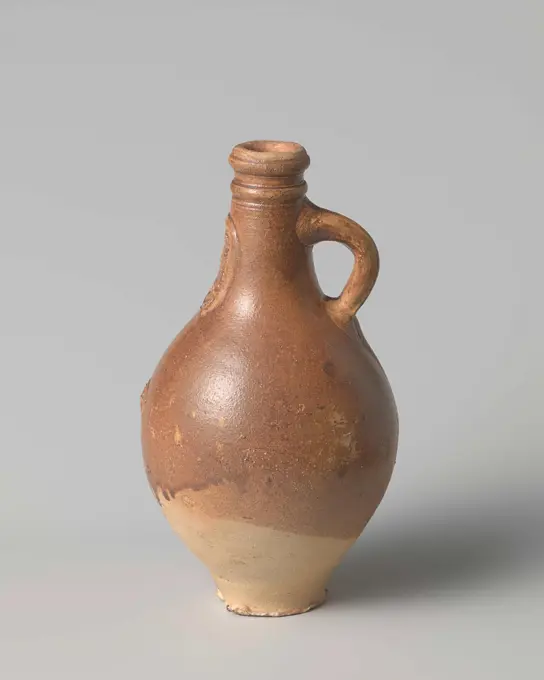
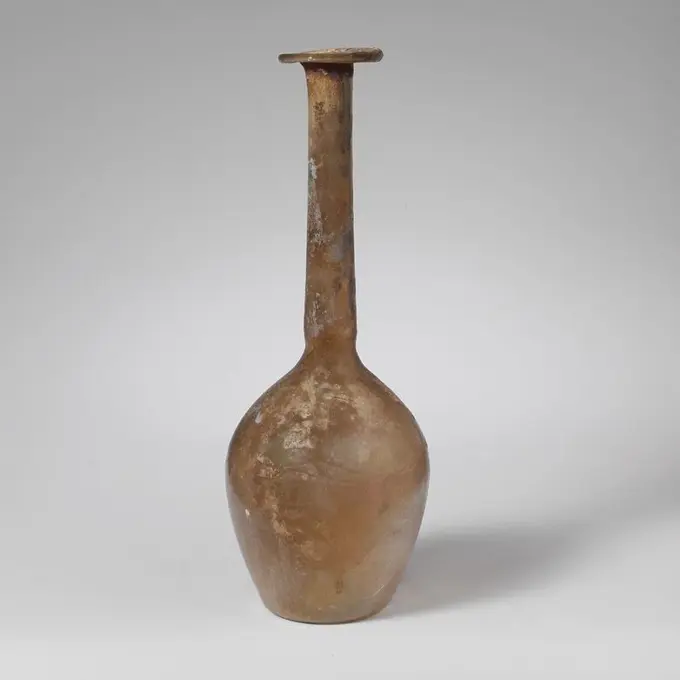
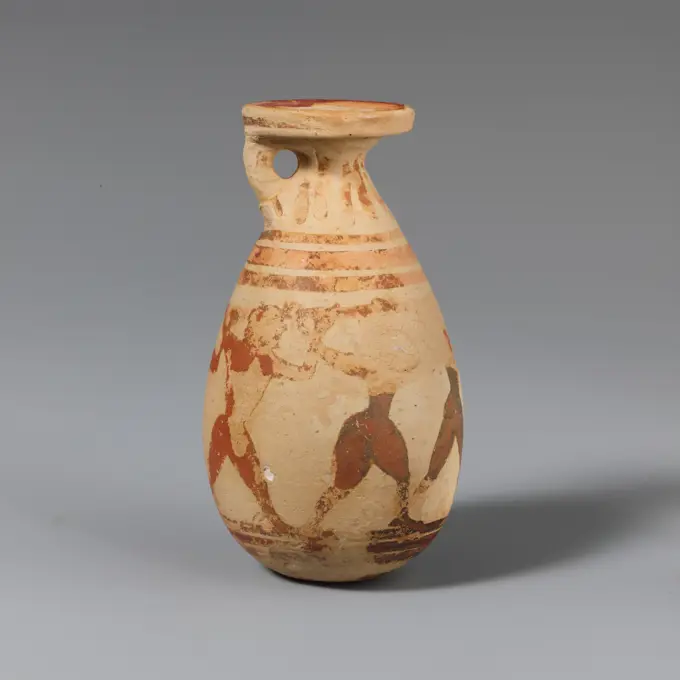
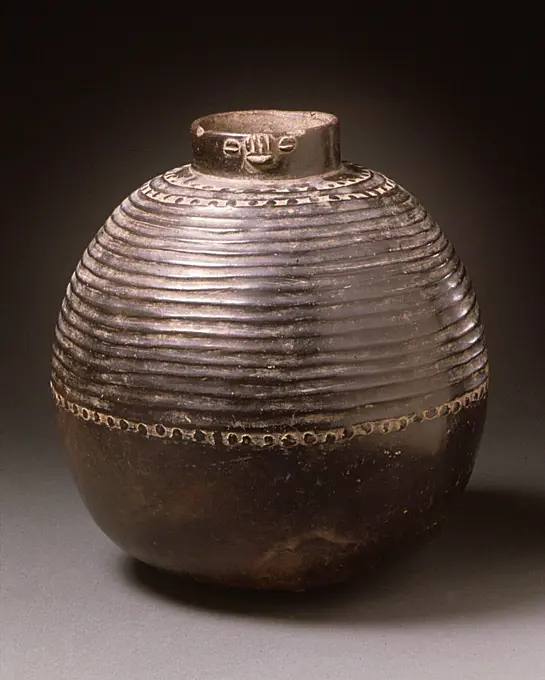
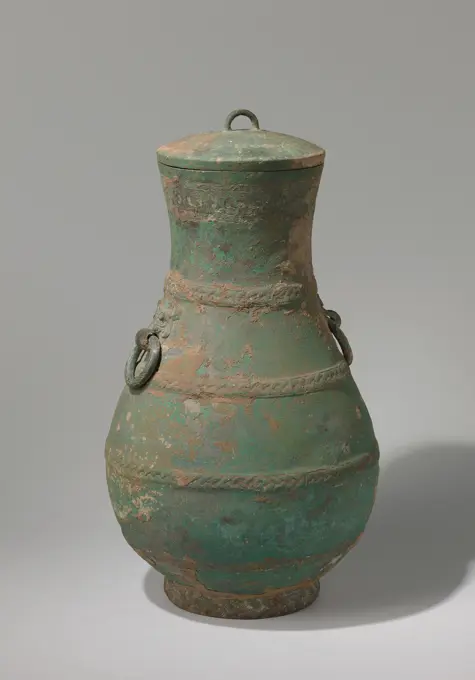
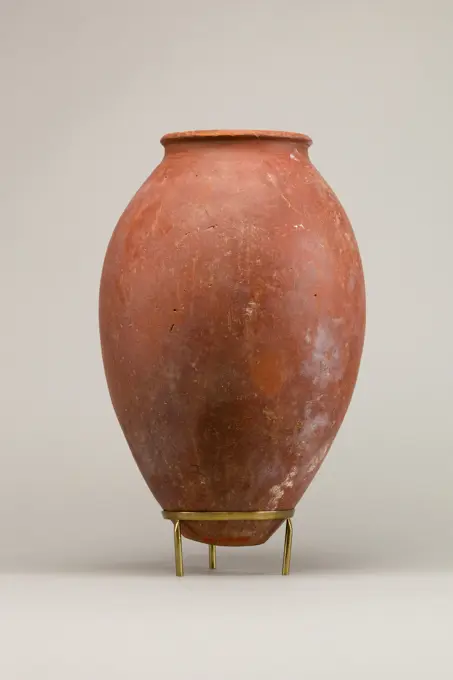
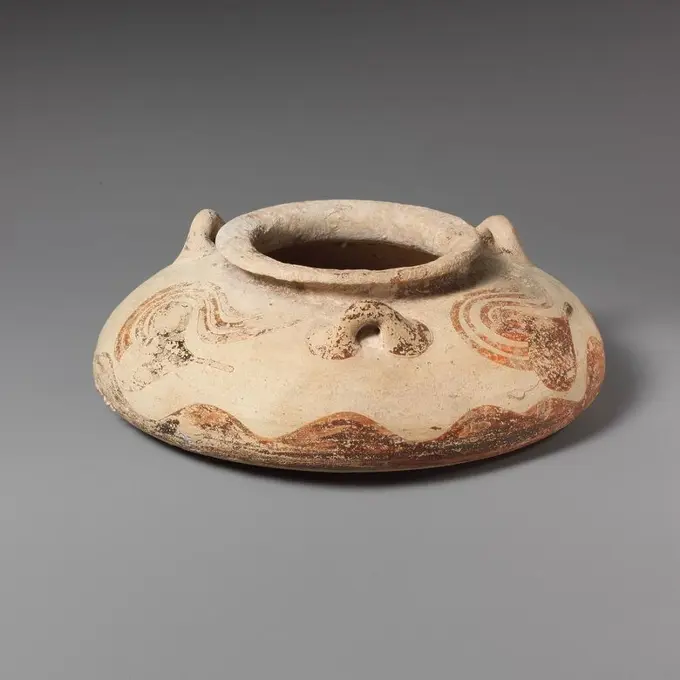
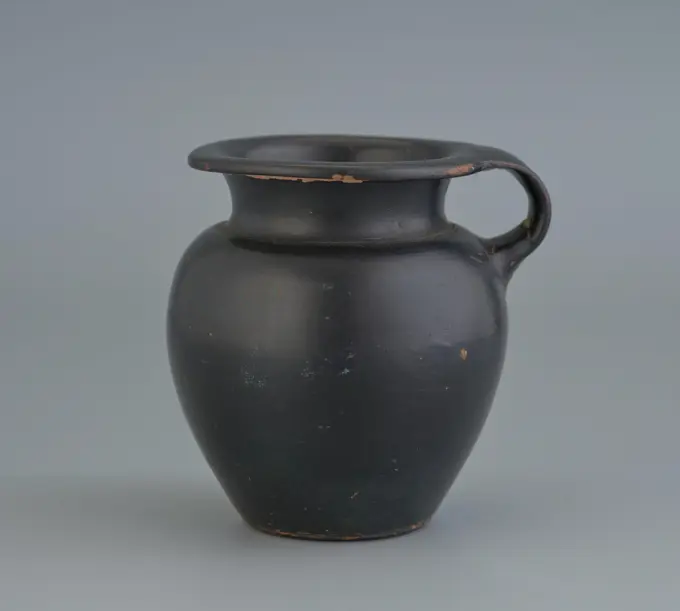
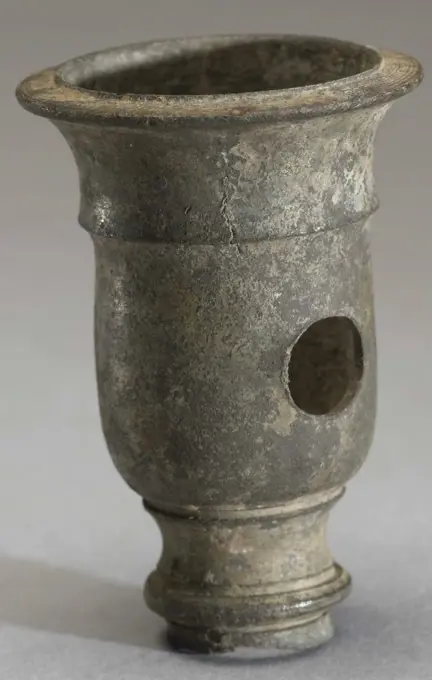
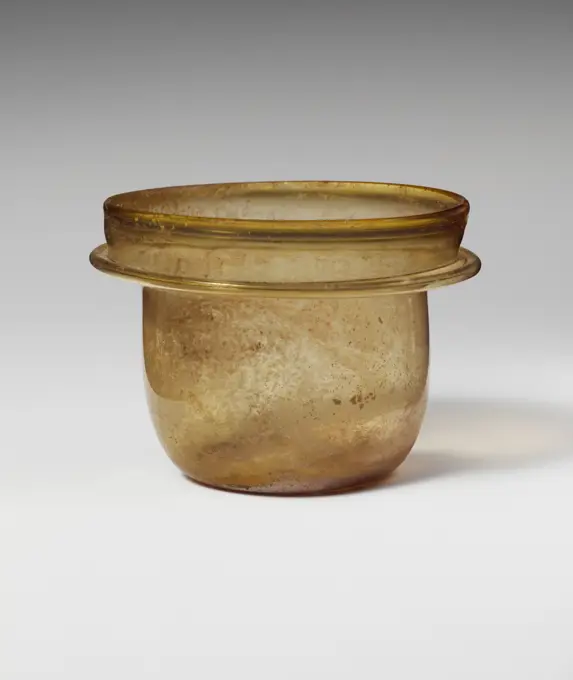
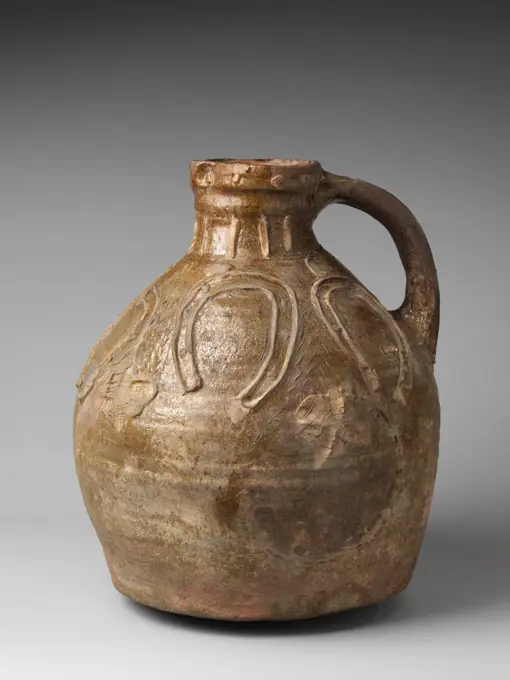
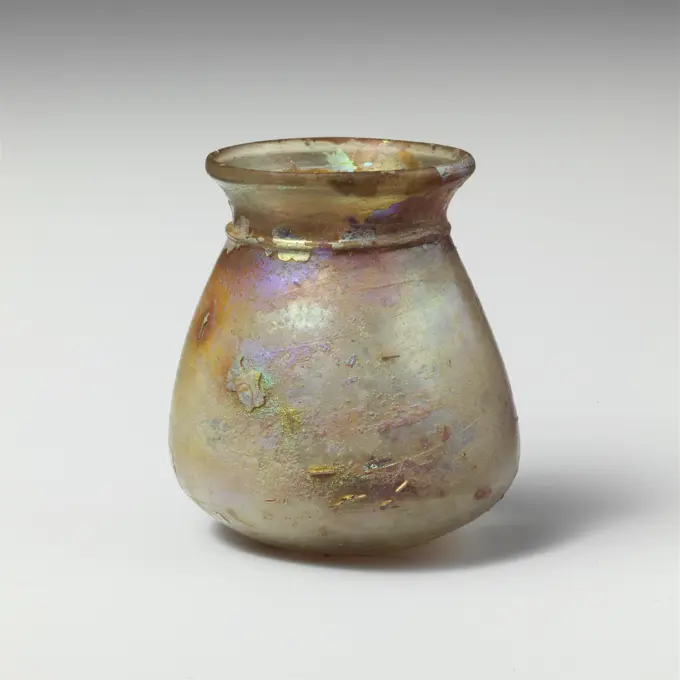
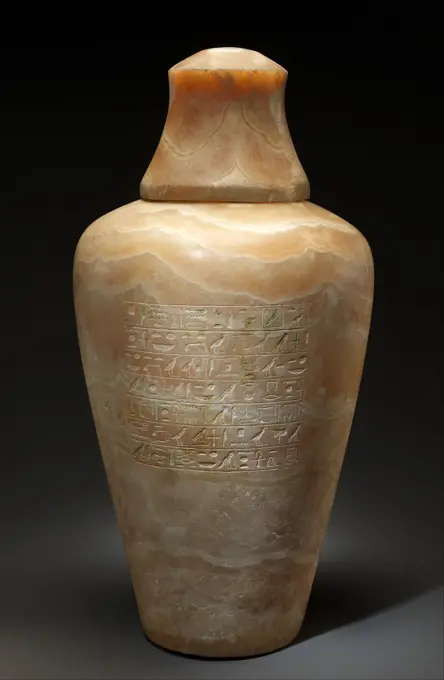
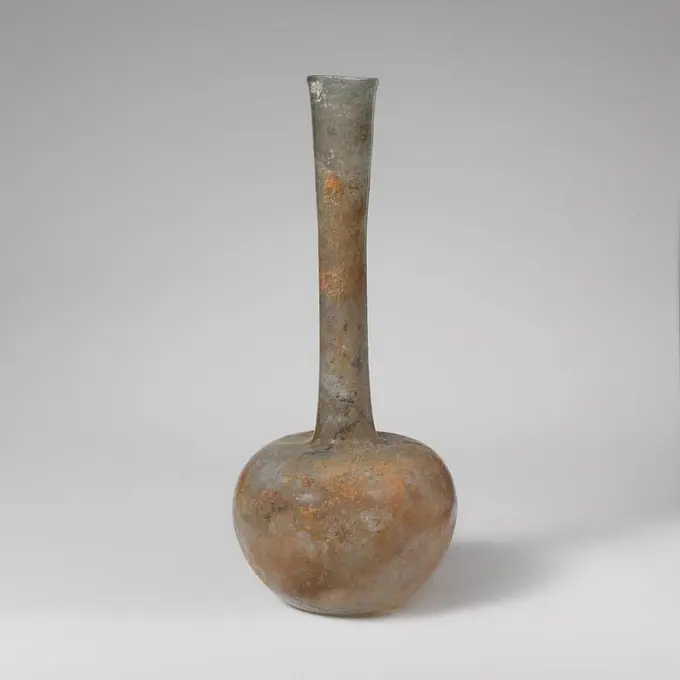
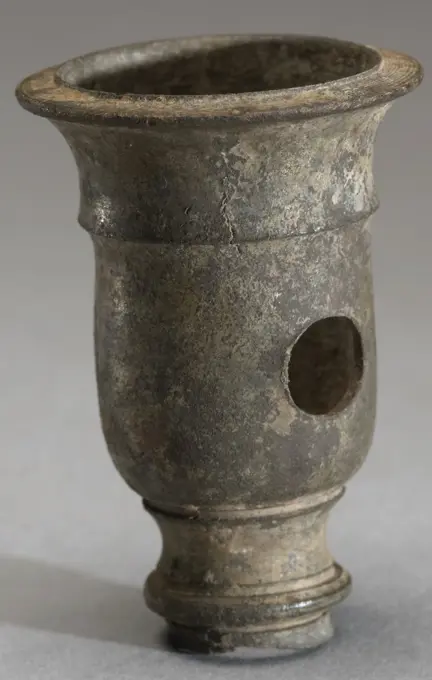
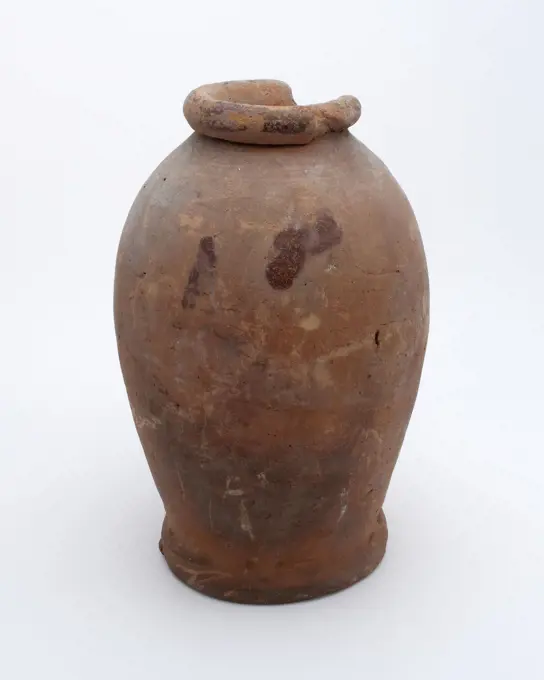
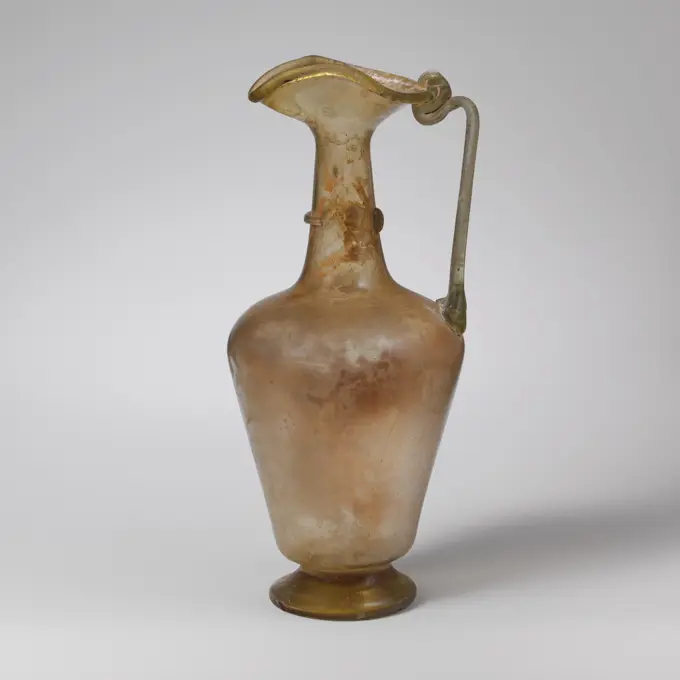
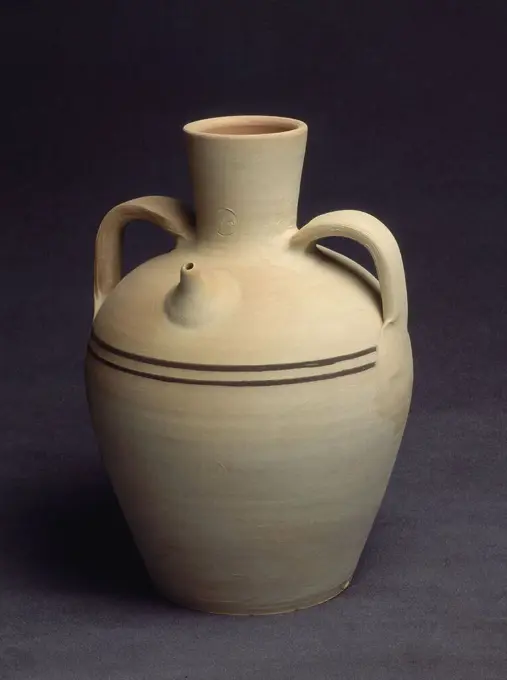
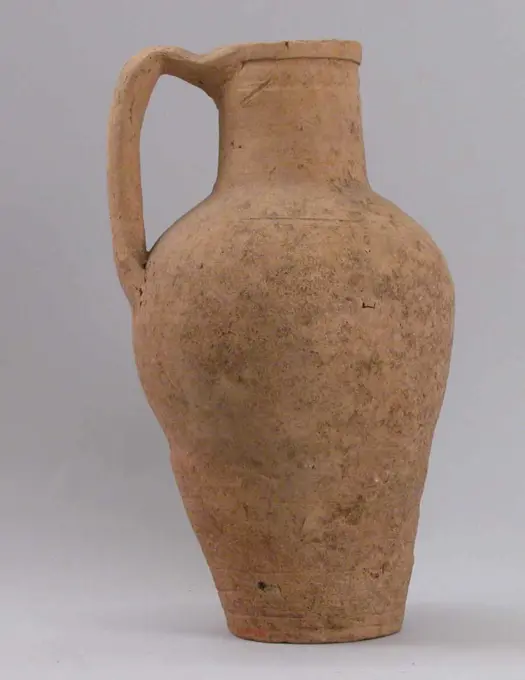
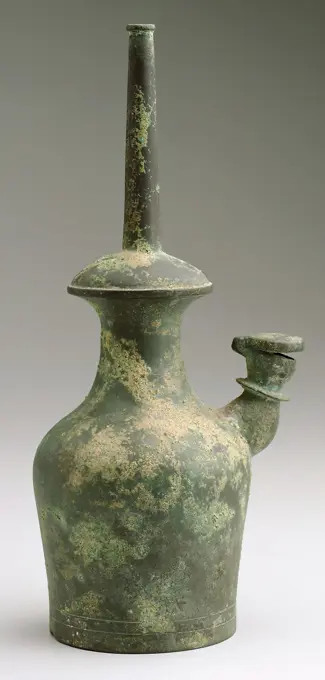
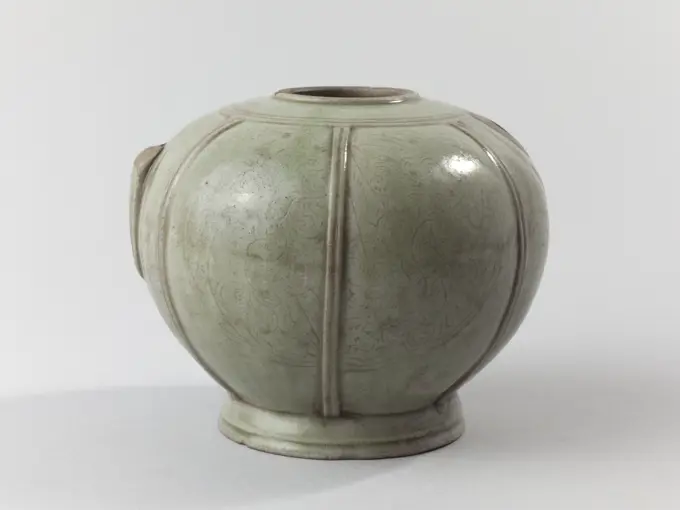
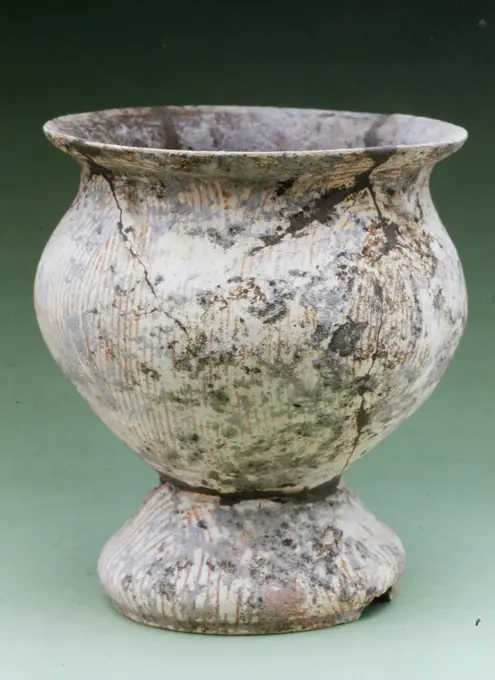
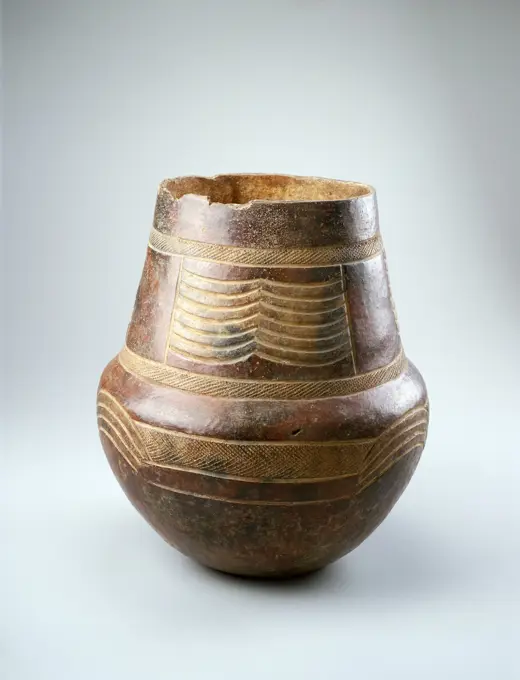
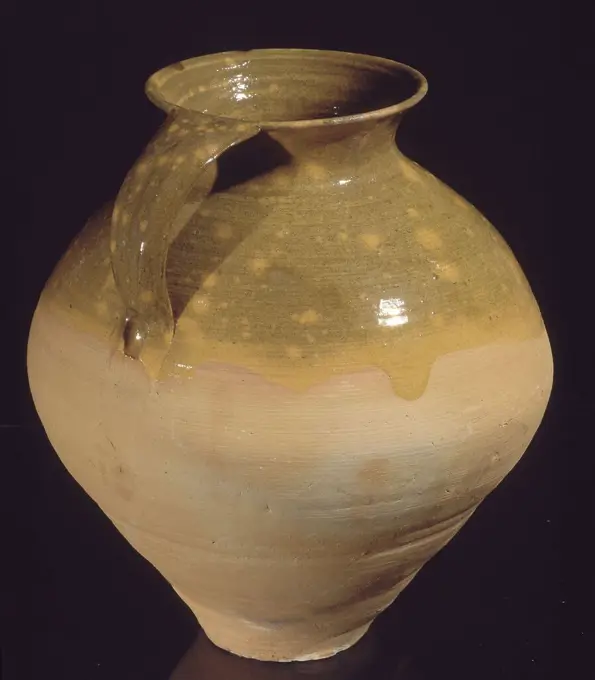
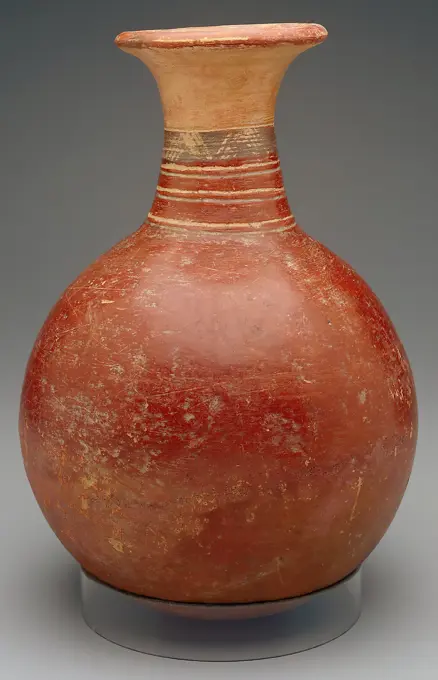
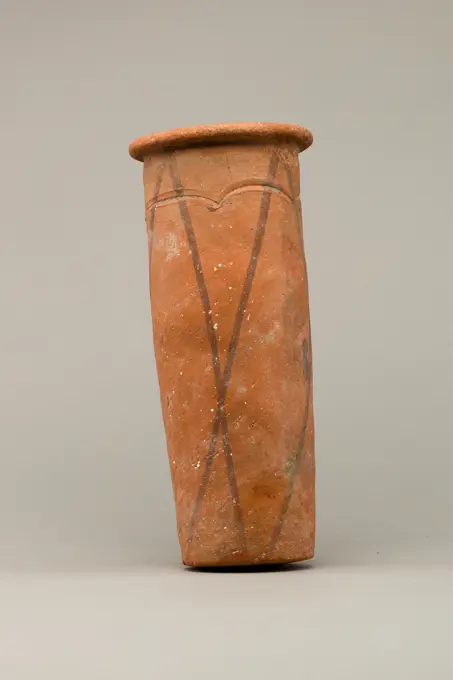
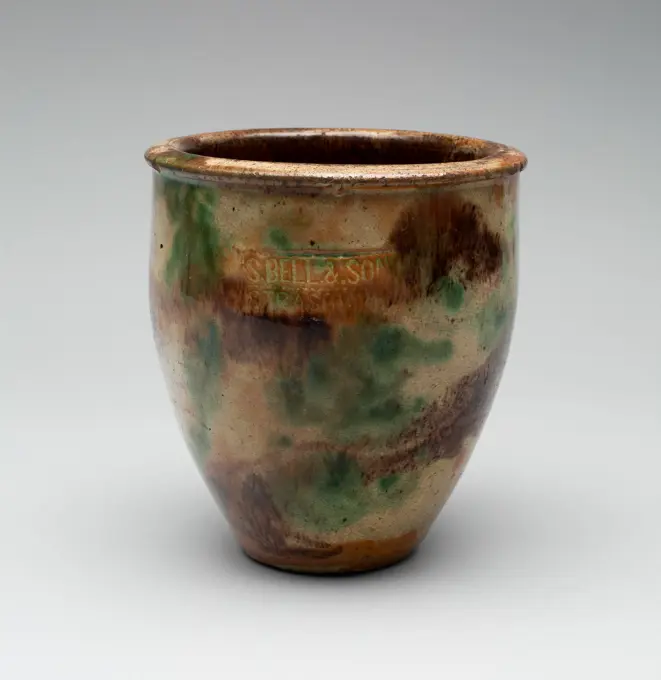
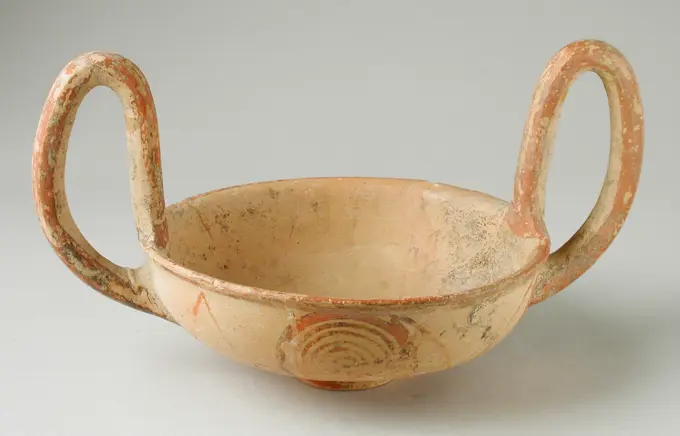
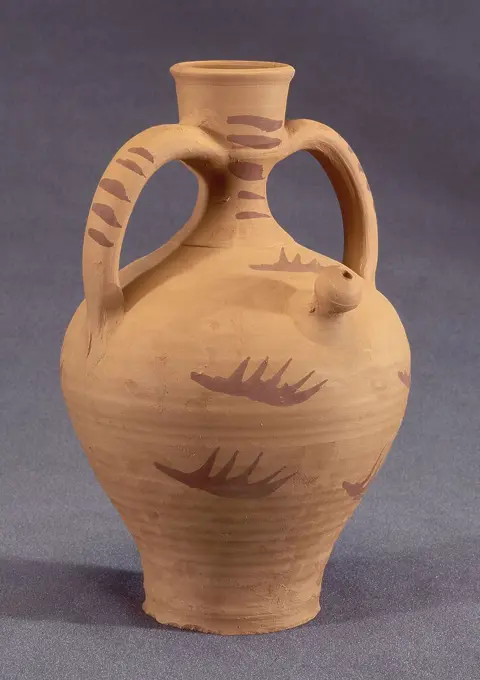
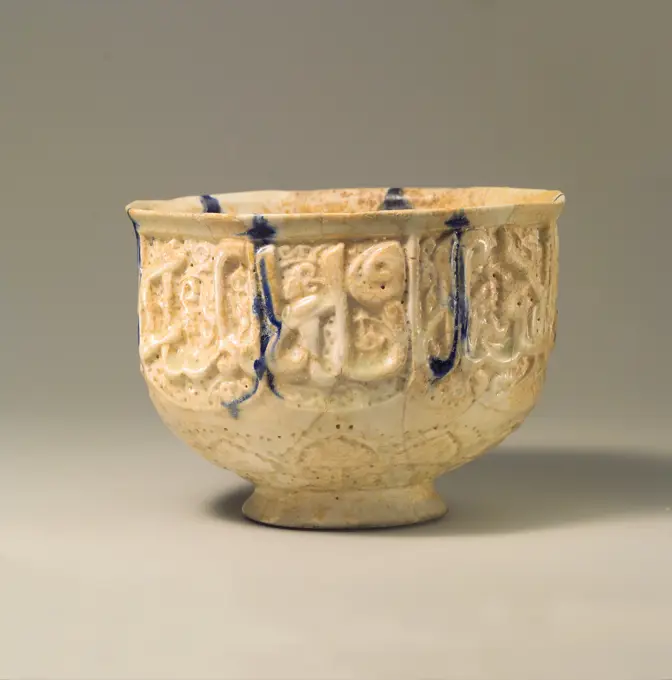
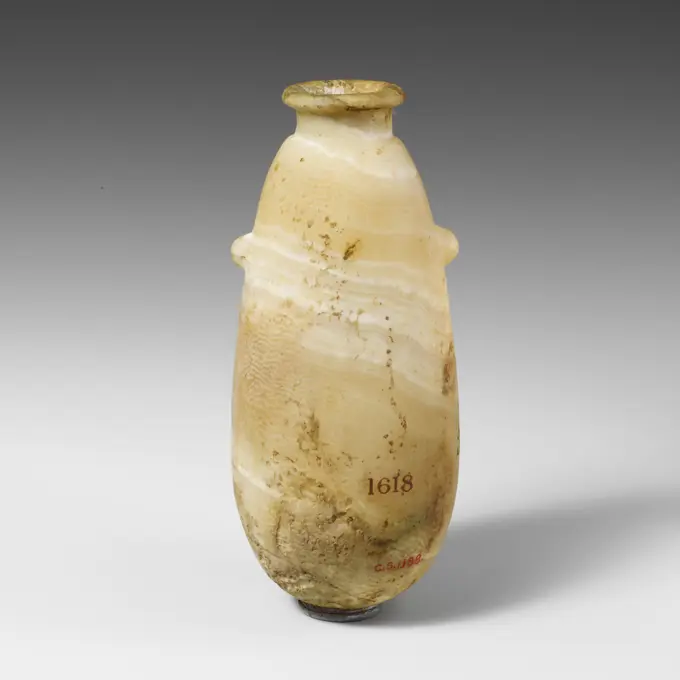
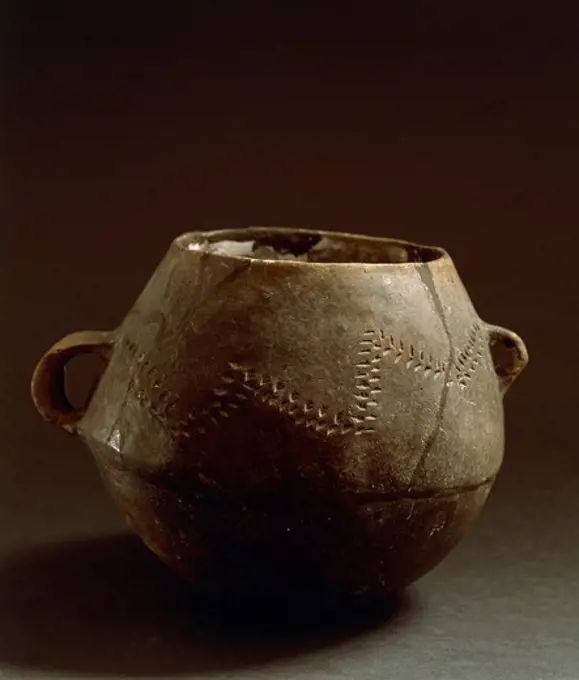
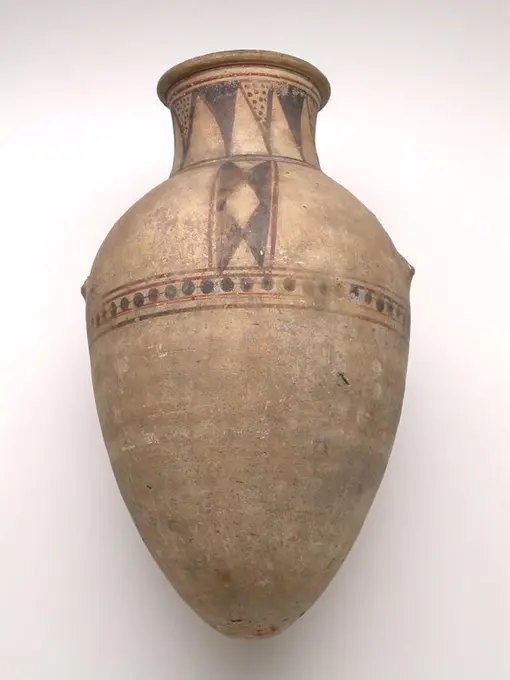
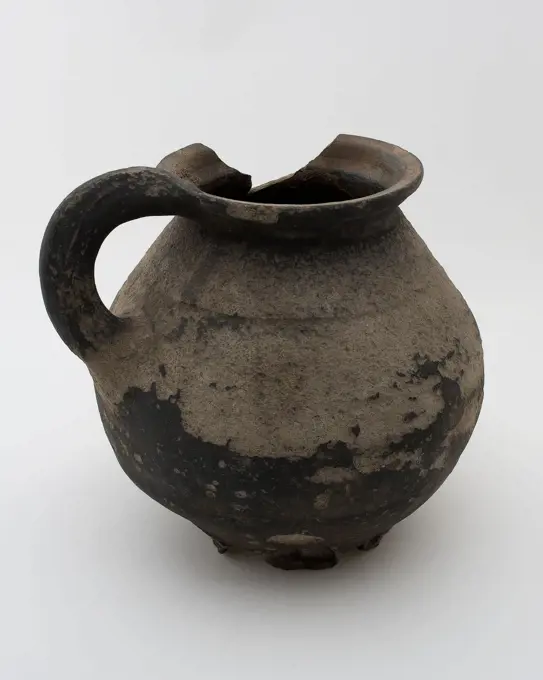
Glass jar 3rd-4th century A.D. Roman Translucent streaky yellow green; trails in same color.Rim folded out, round, and in; broad neck, tapering downwards; globular body; kick in bottom with pontil scar.Trails applied to bottom and drawn up across body forming nine irregular vertical loops; another trail applied below rim and wound down in a spiral five times, ending over tops of loops.Intact; many bubbles and some inclusions; dulling, iridescence, and slight weathering on exterior, patches of encrustation and brown weathering with iridescence on interior.Yellow, with horizontal threads on neck and shoulder and vertical loops on body.. Glass jar 245318Jar with Round Bottom and Flaring Mouth. Korea, Three Kingdoms period, Old Silla kingdom (57 B.C.-A.D. 668), 5th-7th century. Furnishings; Serviceware. Coil-built stoneware with stamped and combed decoration and natural ash glazeJar with Square Handles. China. Date: 450 AD-499 AD. Dimensions: H. 17.8 cm (7 in.); diam. 20.6 cm (8 1/8 in.). Stoneware with light olive-green glaze and incised decoration. Origin: China. Museum: The Chicago Art Institute, Chicago, USA.Pottery jug with ear, on six stand fins, neck with cuff collar and spout, water jug crockery holder soil find ceramic earthenware glaze lead glaze, hand turned set glazed fried jug of reddish brown earthenware profiled collar with cuff collar and shaving clip one ear six pinched fins glaze wipe on shoulder rotations archeology Valckensteyn Poortugaal Albrandswaard indigenous pottery serving drink kitchen water washing food preparation Soil discovery: moat at drawbridge castle Valckensteyn at Poortugaal now Albrandswaard 1962.Bowl 9th-10th century This object was excavated at Nishapur.Nishapur was a vital city in the early and middle Islamic periods, located along one of the main trajectories that connected Iran and West Asia Islamic lands with Central Asia and China. These itineraries are often referred to by the term Silk routes’ but were in fact crucial to the movement of constellations of materials and objects, as well as people and ideas. The diverse population of Nishapur and its surroundings, from the better-researched elite groups of merchants, land-owning aristocracy, and literates, to the less-known artisans, farmers, miners, and servants, were instrumental in adapting global cultural trends to create their own distinctive visual languages. This is seen in the material remains of everyday life in medieval Nishapur - from pots and pans to lighting devices, inkwells, textiles and trimmings, jewelry, games and toys, talismanic devices, weapons, coins, and architectural fragments.Nishapur lost its poPre-Columbian art. Pre-Incan. Cosanga or Pazaleo Culture (700-1500 AD). From Ecuador. Ceramic vessel. 24 x 24 cm (diameter). Private collection.Vase, 1-200. Parthian, 1st-2nd Century. Terracotta; overall: 13.9 cm (5 1/2 in.).Pot 4th-7th century Coptic. Pot 476292AryballosPottery drinking breaker, drinking bowl, ball model with small neck opening, drinking cup drinking utensils holder earth discovery ceramics earthenware glaze lead glaze, hand turned glazed baked Pottery drinking breaker drinking bulb model with small neck opening Drip-shaped and ending in point cup can not be dropped. Internally glazed archeology indigenous pottery drink room wine beerJar ". Terracotta. Vietnam-Xe-Xive s. Paris, Cernuschi museum. 72185-9 Jar, Vietnamese object, terracottaRed polished ware jar. Dimensions: 14 9/16 in. (37 cm). Date: ca. 3850-2960 B.C.. Museum: Metropolitan Museum of Art, New York, USA.Jug with Handle. Culture: Coptic. Dimensions: Overall: 8 3/8 x 3 9/16 in. (21.2 x 9.1 cm). Date: 4th-7th century. Museum: Metropolitan Museum of Art, New York, USA.Glass jug 4th century A.D. Roman Colorless with pale blue green tinge; handle in same color.Plain rounded rim with thickened, beveled fold below; broad, flaring mouth; slender, cylindrical neck with tooling indent around middle and expanding downward below; horizontal shoulder curving to join imperceptibly with large bulbous body; concave bottom; strap handle applied to shoulder, drawn up and out, turned in horizontally, drawn up and tooled to form pointed backward projecting thumb rest above, and then trailed on to rim and underside of mouth.Broken, with many cracks, one part of rim and mouth missing, two holes in shoulder, and four small holes in body; some pinprick bubbles; pitting, dulling, and iridescence with creamy weathering on interior.. Glass jug 239732Jug. Conversely egg-shaped jug of stoneware, with a cylindrical neck and a C-shaped ear. The shoulder is decorated with stamped lines within which radier-shaped motifs. The neck is decorated with three imposed rosettes.Pottery pot on stand, baluster shape, used in the sugar industry, sugar bowl pot holder soil find ceramic earthenware glaze lead glaze, hand turned glazed baked Pottery pot on stand. Baluster shape with round shoulder and narrow neck opening. Rubbing round neck edge Smooth finished Red shard internal glazed Sugar cones made here archeology indigenous earthenware sugar confectionery sugar industryGlass jar 3rd century A.D. Roman Colorless with pale blue green tinge; trail in same glass.Thickened, rounded rim; flaring mouth; short, concave neck; bulbous body, turned in to small bottom with central kick.Trail applied on neck and wound twice around top of body.Intact; few bubbles; pitting, dulling, and iridescence, with some patches of creamy brown weathering around neck.. Glass jar 244603Jar. Dimensions: 6 5/16in. (16cm)Other (diameter of body): 5 11/16in. (14.5cm).Gray wide-mouthed jar with five furrowed lines on shoulder. Museum: Metropolitan Museum of Art, New York, USA.Glass jar. Culture: Roman. Dimensions: Overall: 2 9/16in. (6.5cm)Diam.: 3 1/8 x 2 7/16 in. (7.9 x 6.2 cm). Date: 2nd-3rd century A.D..Colorless with pale greenish tinge.Rounded and everted rim; narrow, concave neck; bulbous body, tapering downwards; pushed-in bottom with traces of irregular pontil mark.Intact; some pinprick and larger bubbles; dulling, iridescence, and whitish weathering. Museum: Metropolitan Museum of Art, New York, USA.Bearded manner. Bearded manner of stoneware. The egg-shaped belly crosses in the high, a narrowing neck. Pressed a rosette on the abdomen and a very volatile and roughly carried out on the neck.Glass perfume bottle. Culture: Roman. Dimensions: 7 7/8in. (20cm)Other: 2 13/16 in. (7.2 cm)Diam. of rim: 1 7/16 in. (3.7 cm). Date: 2nd-3rd century A.D..Colorless with pale yellow green tinge.Thick, rounded, and slanting rim, folded unevenly out, down, over, and in, with fairly broad collar to mouth; cylindrical neck, expanding downward and tooled in around base; elongated piriform body; pushed-in bottom with kick.Intact, except for crack in side of body; elongated and pinprick bubbles; dulling and deep iridescent weathering; encrustation under rim; remains of black enamel-like weathering on bottom. Museum: Metropolitan Museum of Art, New York, USA.Terracotta alabastron (perfume vase) 575-550 B.C. Greek, Corinthian The blinding of PolyphemosThe blinding of Polyphemos is one of the most dramatic episodes in the voyage of Odysseus, king of Ithaka, from the Trojan War to his native island. Representations begin in the seventh century B.C. but are rare. This vase is noteworthy because an event of extraordinary moment is rendered with a bare minimum of artistic means.. Terracotta alabastron (perfume vase) 244857Vessel. Mexico, Colima, 200 BCE-500 CE. Ceramics. Burnished ceramic with slipRitual Wine Cup, Anonymous, -500 --200 Ritual wine cup with five tires of wickerwork around the barrel, one of which is around the foot. China bronze (metal) Ritual wine cup with five tires of wickerwork around the barrel, one of which is around the foot. China bronze (metal)Red polished ware jar ca. 4500-4000 B.C. () Predynastic Period. Red polished ware jar. ca. 4500-4000 B.C. (). Pottery. Predynastic Period. From Egypt, Northern Upper Egypt, Mahasna, Tomb H 107, EEF excavations 1908-1909Bowl 4th-7th century Coptic. Bowl 477745Pottery oil jug on stand with standing ear and silt decoration on the neck and belly, oil jug crockery holder soil find ceramic earthenware glaze lead glaze clay, ring 6.5 hand-turned decorated glazed fried lemonade Pottery jug be red shard topped by cutting bandoor stand ring Fully glazed Straight neck edge. Sludge decoration horizontal stripes on the ear vertical stripes around the neck circular motifs on the abdomen. Ball-shaped model with slender neck. Bandoor is inclined attached archeology indigenous pottery oil lamp enlighten tear servingGlass beaker. Culture: Roman. Dimensions: Overall: 3 1/2 in. (8.9 cm)Diam.: 3 1/8 in. (7.9 cm). Date: 2nd-3rd century A.D..Translucent pale blue green.Rounded, thickened rim, folded slightly inwards; flaring mouth; indented body with slightly bulbous sides, tapering downwards; squarish, pushed-in bottom.Cylindrical body has four large indentations extending from below mouth to rounded edge of bottom, giving body horizontal cross section that appears to be square with prominent rounded corners.Intact; some pinprick bubbles; dulling and creamy brown weathering on exterior; some soil encrustation and limy weathering on interior. Museum: Metropolitan Museum of Art, New York, USA.Terracotta squat alabastron (jar). Culture: Mycenaean. Dimensions: 2 3/4in. (7cm)Other: 7 3/4in. (19.7cm). Date: ca. 13th century B.C..Squat jar with flattened body and three handles. Museum: Metropolitan Museum of Art, New York, USA.Pot 4th-7th century Coptic. Pot 477290Jug China. Jug 51988Jug, 2nd-3rd century A.D., Terracotta, 10.1 × 11.4 cm (4 × 4 1/2in.), The Yale-British School Excavations atGerasa, Excavated in Gerasa, Jordan, Gerasa(Jordan), Roman, Containers -CeramicsVessel (Jiao Dou). Culture: China. Dimensions: H. 6 in. (15.3 cm); W. 8 1/2 in. (21.6 cm); Diam. 4 5/8 in. (11.7 cm). Date: 13th-11th century B.C.. Museum: Metropolitan Museum of Art, New York, USA.Footed pot. Culture: South Netherlandish. Dimensions: Overall: 5 3/4 x 5 1/2 in. (14.6 x 13.9 cm). Date: 13th century.The feet of this pot were, almost whimsically, pressed into the clay with a thumb. The extended glazed lip suggests that the vessel was intended to be stoppered. Museum: Metropolitan Museum of Art, New York, USA.Wide-Necked Cosmetic Jar ca. 1550-1450 B.C. New Kingdom This wide-necked jar was excavated by the Museum's Egyptian Expedition in 1916. When found, it contained a glass hairpin and a wooden kohl stick, a cosmetic implement used to apply eye makeup. Although the original contents were not preserved, stone jars such as this one were often used to store cosmetic oils and unguents. The jar had been placed near the head of a coffin along with a number of other objects that came to the Museum including: two other alabaster vessels (16.10.423-.424); one small ointment jar of serpentine (16.10.422); two pottery vessels (16.10.427-.428), a small ivory cosmetic box (16.10.425), and three ivory combs (16.10.428-.430).. Wide-Necked Cosmetic Jar 544028Jug with Grapevines 4th-7th century Coptic. Jug with Grapevines 478667Stoneware chamber pot, ease of use on stand with cylindrical neck, wide band ear, pot holder sanitary soil found ceramic stoneware icing salt glaze, hand turned glazed baked Small stoneware room pot dark gray shard covered with brown gray salt glaze wide and standing bandoor stand. Cylindrical neck with small neck opening. Bullet body. Rotation between the foot and the shoulder archeology indigenous pottery import drains night sleeping room hygieneTrefoil Oinochoe. UnknownJar ca. 1981-1550 B.C. Middle Kingdom. Jar. ca. 1981-1550 B.C.. Marl clay A3, "Qena clay". Middle Kingdom. From Egypt, Memphite Region, Lisht North, Tomb of Nakht (493), Pit 307, MMA excavations, 1913-14. Dynasty 12Pottery pot on stand, baluster shape, originating from the sugar production, sugar pot pot holder soil find ceramic earthenware glaze lead glaze, hand-turned glazed earthenware pot on stand. Red shard internally glazed. Baluster shape with small neck opening and thick round neck edge Roughly formed from very dry clay. Was used for making sugar cones in the sugar industry archeology indigenous pottery craft sugar sugar industry confectioneryGlass bottle. Culture: Roman. Dimensions: H.: 9 9/16 in. (24.3 cm). Date: 5th century A.D. or later.Translucent pale blue green; trails in same color.Everted rim, folded over and in; cylindrical neck, tapering downwards with horizontal indent at base; broad, sloping shoulder with rounded, slightly bulging outer edge; cylindrical body with sides tapering downwards; deep pushed-in bottom.On neck, one fine trail, applied as an elongated pad and wound twice round as two parallel lines; a second trail, farther down neck, wound round as one thicker overlapping line.Intact; a few bubbles and black impurities, especially in neck and rim, and numerous surface scratches of exterior of shoulder and side; some dulling, soil encrustation, brownish weathering, and iridescence.Tall, with threads on neck. Museum: Metropolitan Museum of Art, New York, USA.Jug;  2. after IV W.P.N.E. (-350-00-00--301-00-00);Pot 4th-7th century Coptic. Pot 477296Candlestick, fifty, fragment; Collar cover. Fragment of fiftearily candlestick consisting of a cylindrical candle holder with two round leak holes. Gat seams over the egg lists visibleGlass cup mid-1st-2nd century A.D. Roman Translucent greenish yellow.Vertical rounded and thickened rim; broad, cylindrical neck, slightly tapering downward, with folded tubular flange at base; slender S-shaped profile to body, which curves in at top behind flange, descends almost vertically with slightly convex sides, and then curves in to pushed-in base with trace of pontil scar.Intact, except for small crack in rim and neck; few bubbles; patches of dulling, slight pitting, iridescence, and limy weathering.Yellow cup with offset rim.. Glass cup. Roman. mid-1st-2nd century A.D.. Glass; blown. Early to Mid Imperial. GlassStoneware jug, cylindrical neck, pinched foot, glaze stains, jug crockery holder soil find ceramic stoneware glaze salt glaze, hand turned baked glazed stoneware pot jug. Cylindrical neck ovoid body pinched foot Narrow rings on the neck wide revolving lips on the belly Gray shard Shiny red flamed spots dark brown speckles archeology import pottery serving drink water beer Rotterdam education Academy of Fine Arts and Technical Sciences Cool Coolvest Dijkzigt G.J. de Jonghweg City Triangle Blaak Academy of Fine Arts and Technical Sciences Rotterdam.Dish;  around 2055 1650 BC ; Medium Pa (-2055-00-00--1650-00-00);Collection of ancient Egypt, Polish-French excavations in Edfu (Egypt)Jug with Horseshoes 13th century British While intended for use in making and storing ale, this jug bears firing cracks on the side that rendered it a "waster," not suitable for holding liquid. The surface is decorated with brooches and horseshoes, emblems of the de Ferrers family. (The French word ferrer means "to shoe a horse.") As Earls of Derby, the family resided at Duffield Castle until 1266, when the building was destroyed following Robert de Ferrers rebellion against the king.. Jug with Horseshoes 651287Terracotta oinochoe (jug). Culture: Lydian. Dimensions: H. 10 1/4 in. (26.1 cm). Date: 6th century B.C..One-handled jug with dark glaze, with horizontal bands in red. Museum: Metropolitan Museum of Art, New York, USA.Pot 4th-7th century Coptic. Pot 477262Bottle 1770-1830 American. Bottle 598Glass jar 3rd century A.D. Roman Colorless; trail in same glass.Thickened, rounded rim; flaring mouth; short, concave neck; bulbous body, turned in to small concave bottom.Thick trail applied around neck.Complete but cracked on body and bottom; pinprick and a few larger bubbles and blowing striations; pitting and brilliant iridescence, with some patches of creamy weathering; some soil encrustation on interior.. Glass jar 244602SKYPHOS - SIGLO VII AC - VASO PROTOCORINTIO. Location: MUSEO ARQUEOLOGICO-CERAMICA GRIEGA. GRANADA. SPAIN.Vase. Carnavalet museum, history of Paris.Pottery pot on stand, baluster shape, short neck, used in sugar production, sugar pot pot holder soil find ceramic earthenware glaze lead glaze, hand-turned glazed earthenware pot on stand. Baluster shape with narrow neck opening. Thick and round neckline. Red shard internal glazed Here sugar cones were made archeology indigenous earthenware sugar confectionery craft sugar industryBowl ca. 3200-1050 B.C. Cypriot Globular with two handles, no decoration.. Bowl. Cypriot. ca. 3200-1050 B.C.. Terracotta. Bronze Age. VasesJug, bronze (gilt), gold, wood(), Jug with loop handle decorated with mascaron and acanthus volute., France, ca. 1820, metalwork, Decorative Arts, JugMagical Water Jar of Sithathoryunet with Lid ca. 1887-1813 B.C. Middle Kingdom This highly sculptural image of a vessel resembles the much smaller metal ewers with spouts that Egyptians usedtogether with matching basinsfor washing their hands before meals and pouring libations for deities and the dead. The utilitarian form has been enlarged and transferred into stone in order to assure an eternal water supply for the dead princess.The incised text reads, in translation:"Princess Sithathoryunet, accept these your cool waters from the earth, which beget everything living and all things, for they are what this earth gives(this earth) that begets everything living and from which everything comes.May you (Sithathoryunet) live through them and be restored through them. May you live and be restored through this air that is from it. It shall beget you and you shall emerge alive through everything you might desire. May they be to your good.". Magical Water Jar of Sithathoryunet with Lid 547Glass flask. Culture: Roman. Dimensions: Overall: 7 7/8in. (20cm)Other: 3 7/8in. (9.8cm). Date: 3rd-4th century A.D..Translucent blue green.Plain, rounded, and slightly thickened vertical rim; tall, slightly concave, cylindrical neck; horizontal shoulder; bulbous body, curving in to small, concave bottom.Intact; many bubbles, elongated in neck; slight dulling, extensive pitting and iridescent weathering. Museum: Metropolitan Museum of Art, New York, USA.Glass bottle. Culture: Roman. Dimensions: 8 3/16 in. (20.8 cm)Other: 6 13/16 in. (17.3 cm)Diam. of rim: 1 1/2 in. (3.9 cm). Date: 2nd-3rd century A.D..Translucent blue green.Thick everted rim, folded in and pressed flat on top, forming inner lip to mouth; cylindrical neck, expanding downwards; slightly concave shoulder; large globular body; pushed-in bottom.Wheel-abraded decoration in parallel horizontal bands around body, comprising two broad bands around upper body, six narrower lines aroudn center, and a single broad band around lower body.Intact; some pinprick and elongated bubbles; dulling and faint limy weathering on exterior, iridescent weathering on interior.Greenish blown glass vase with slender neck. Museum: Metropolitan Museum of Art, New York, USA.Candlestick, five -part, fragment, anonymous, c. 1590 - c. 1596 candlestick Fragment of five -part candlestick consisting of a cylindrical candle holder with two round leakage holes. Do you visibly cast seams over the egg lists Netherlands tin (metal) casting  Nova Zembla. Saving HuysOvoid ewer with a dragon handle, anonymous, c. 800 - c. 999 Egg -shaped can of stoneware, with a translucent white enamel with which only the upper half is covered. The spout is formed by hand and the ear is modeled in the form of a dragon. Around the spout a bond with lines taken. Xing, tongs. China stoneware. glaze engraving / vitrification Egg -shaped can of stoneware, with a translucent white enamel with which only the upper half is covered. The spout is formed by hand and the ear is modeled in the form of a dragon. Around the spout a bond with lines taken. Xing, tongs. China stoneware. glaze engraving / vitrificationBowl. Culture: Coptic. Dimensions: Overall: 1 11/16 x 3 1/8 in. (4.3 x 7.9 cm). Date: 4th-7th century. Museum: Metropolitan Museum of Art, New York, USA.Hu storage jar, 1st century BCE - 1st century CE, 12 7/16 x 8 13/16 x 8 in. (31.59 x 22.38 x 20.32 cm), Bronze, China, 1st century BCE - 1st century CEPottery pot on stand, baluster shape, used in the sugar industry, sugar bowl pot holder soil find ceramic earthenware glaze lead glaze, opening 7.5 hand turned glazed baked Pottery pot on stand. Baluster shape with round shoulder and narrow neck opening. Smooth finished. Thick and round neckline. Red shard internal glazed Here sugar cones were made archeology indigenous earthenware sugar confectionery sugar industryGlass jug with trefoil rim 4th-5th century A.D. Roman Translucent pale greenish yellow; handle and trail in same color.Rim folded out and rounded in the flame; trefoil, flaring mouth; cylindrical neck, expanding downwards; broad, sloping shoulder; body with straight side, tapering downwards; splayed tubular foot, made by folding; uneven, slightly concave bottom with pontil scar; rod handle applied in a large pad to outer edge of shoulder, drawn up almost vertically, then turned in and down, and folded onto underside of rim, with trail splayed out along edge of rim on one side.Tubular trail applied as a pad and wound horizontally from left to right once around neck.Intact, except for small part of lower trail; some bubbles and blowing striations, and black impurities in handle; some dulling, slight pitting, and iridescence on exterior, patches of reddish soil encrustation and weathering on interior.. Glass jug with trefoil rim 256711"BARRAL DE MONT" O BOTIJO DE CUELLO ANCHO CON DOS ASAS. Location: ALFARERIA. SPAIN.Jug 9th century. Jug 449399Cantaro, Tivenys. Museu Català de les Arts i Tradicions Populars.Water bottle (kundika), 12th-13th century, Unknown Korean, 7 3/4 in. (19.69 cm), Bronze, Korea, 12th-13th centuryBUIRE (lower part). Gray green transparent celadon sewage. Paris, Cernuschi museum. 78844-20 Asian art, table art, drink, bun, old ceramic, covered, email, gres emaille, container, table service, vase to liquorSmall BowlPot 4th-7th century Coptic. Pot 477263Storage Jar, c. 3000 BCE, 10 13/16 x 9 1/8 x 9 1/8 in. (27.46 x 23.18 x 23.18 cm), Stoneware, Thailand, 31st-30th century BCEJar, 20th century, 16 x 16 in. (40.64 x 40.64 cm), Ceramic, Democratic Republic of the Congo, 20th centuryNaczynie w kształcie manierki. unknown, authorGlass jug. Culture: Roman. Dimensions: H.: 3 3/8 in. (8.6 cm)Diam.: 1 1/16 x 2 in. (2.7 x 5.1 cm). Date: 3rd-4th century A.D..Small jug.Translucent pale blue green; same color handle and trail.Rim folded out, down, round, and in, and pressed into side of flaring mouth; cylindrical neck expanding downwards; sloping shoulder; convex side to body, tapering downwards; slight kick in bottom and pontil mark; rod handle applied in a pad, tooled into an upturned pinched projection, on outer edge of shoulder, drawn up and out, tooled into a projecting fold, then drawn inwards, and folded onto top of neck, underside of mouth, and edge of rim, with another projecting fold above level of rim.Fine spiral trail applied as a large pad on neck, wound round twenty-four times down lower half of neck, shoulder, and body, and extending onto bottom; on body, seven deep vertical indents.Intact, except for slight loss to trail on shoulder; many bubbles; dulling, limy brownish weathering, and iridescencOLLA O CANTARO DE BOCA ANCHA DE DONDE SALE EL ASA-PARCIALMENTE VIDRIADO. Location: ALFARERIA. SPAIN.Urna ibérica de barro procedente de la necròpolis de Mianes, Santa Bàrbara-Tortosa. Museu d'Història de Catalunya.Pot, 14 1/16 x 10 1/8 in. (35.72 x 25.72 cm), Terra cotta, MaliPot. Terre to which. Vietnam. Paris, Muse Cernuschi. Asian art, art of extreme orient, art of Vietnam, Vietnamese art, terracotta, dishesBowl. Culture: Coptic. Dimensions: Overall: 2 1/16 x 3 9/16 in. (5.2 x 9 cm). Date: 4th-7th century. Museum: Metropolitan Museum of Art, New York, USA.Vase 1886 Chelsea Keramic Art Works. Vase. American. 1886. Stoneware. Made in Chelsea, Massachusetts, United StatesJar ca. 3850-2960 B.C. Predynastic Period. Jar. ca. 3850-2960 B.C.. Pottery. Predynastic Period. From Egypt, Northern Upper Egypt, Abadiya, Cemetery R, EEF excavations 1898-99Flower Pot c 1882-1908 Strasburg. Earthenware . UnknownKantharos (Drinking Cup). Greece, Athens, circa 1250 B.C.. Furnishings; Serviceware. TerracottaBottle withAjaxBOTIJA PEQUEÑA PARA AGUA SIN VIDRIAR Y DECORADA CON PEINE - S XX. Location: ALFARERIA. TRAIGUERA. Castellón. SPAIN.Bottle;  IX-X century (801-00-00-1000-00-00);gift (provenance)Bowl of Barley ca. 1479-1458 B.C. New Kingdom. Bowl of Barley. ca. 1479-1458 B.C.. pottery. New Kingdom. From Egypt, Upper Egypt, Thebes, Deir el-Bahri, Tomb of Senenmut (TT 353), Foundation deposit, MMA excavations, 1926-27. Dynasty 18Pierced Bowl Signed by Hasan al-Qashani late 11th-early 12th century The auspicious words glory, prosperity, blessed power, and mercy to its owner” are inscribed in cursive script on this bowl, while the kufic inscription reads Made by Hasan al-Qashani.” The latter portion of the potter’s name links him to Kashan, a central Iranian town that was a major center for stonepaste production and is believed to have had a monopoly on complex ceramic technologies. Stonepaste, however, was produced throughout Iran.. Pierced Bowl Signed by Hasan al-Qashani. late 11th-early 12th century. Stonepaste; molded and pierced, monochrome decoration under transparent glaze. Made in Iran. CeramicsAlabaster alabastron (perfume vase) 6th-5th century B.C. Cypriot The alabastron has two small lugs, a short neck, and a convex lip.. Alabaster alabastron (perfume vase) 243979Prehistory, Italy, Bronze Age. Ceramic cup.Pomeranian Culture. Iron Age. 7th-3rd century BC. Poland. Face-Urn. Burial urn with face. From Niestepowo. Poland. Archeological Museum of Gdansk. Poland.Pottery purchase pot, toys, internal glazed, two bandors, on three legs, cooking pot crockery holder kitchenware toy relaxing device soil find ceramic earthenware glaze lead glaze, hand turned glazed baked Pottery gift jar toy red shard internal glazed two bandors on three legs The ears are very sloppy and crooked archeology Rotterdam City triangle Oudehaven indigenous pottery food preparation cooking food kitchen play child Soil discovery: Oude Haven Rotterdam.Amphora. Egyptian. Date: 1550 BC-1295 BC. Dimensions: 36.2 × 21.6 × 21.6 cm (14 1/4 × 8 1/2 × 8 1/2 in.). Ceramic, pigment. Origin: Egypt. Museum: The Chicago Art Institute, Chicago, USA. Author: Ancient Egyptian.Pottery jug be put on six fins, standing sausage ear, gray shard, water jug be crockery holder soil find ceramic pottery, hand-turned baked Pottery can be glazed on six stand fins blue-gray shard unglazed. Ball-shaped body with gradual narrowing to the neck and foot. Small neck opening with outstanding neck edge. Standing sausage above the edge excellent archeology indigenous pottery water donate food prepare cooking cuisineEarthenware pap bowl, red shard, glazed, two pinched sausage ears, on stand, papkom bowl crockery holder earthenware pottery earthenware glaze lead glaze, hand-turned glazed baked earthenware pap bowl red shard entirely covered with lead glaze with greenish spots two upside-down wrinkles stand ring scour marks on the underside Rotary teeth archeology indigenous pottery porridge eating kitchen cooking food preparing foodJar 11th century. Jar 446845Iberian art. Vessel with decanter beak. 3rd century BC. From Moli de l'Espigol site (Municipality of Tornabous). Catalonia. Spain. From Moli de l'Espigol site (Municipality of Tornabous). Province of Lleida, Catalonia, Spain. Museu Comarcal de l'Urgell-Tarrega. Tarrega.