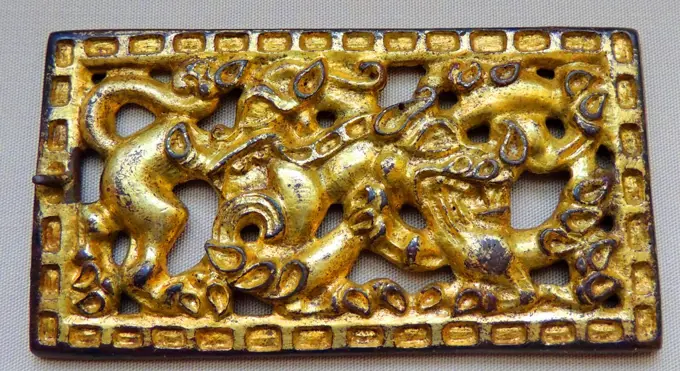
Antique Gold Accessories

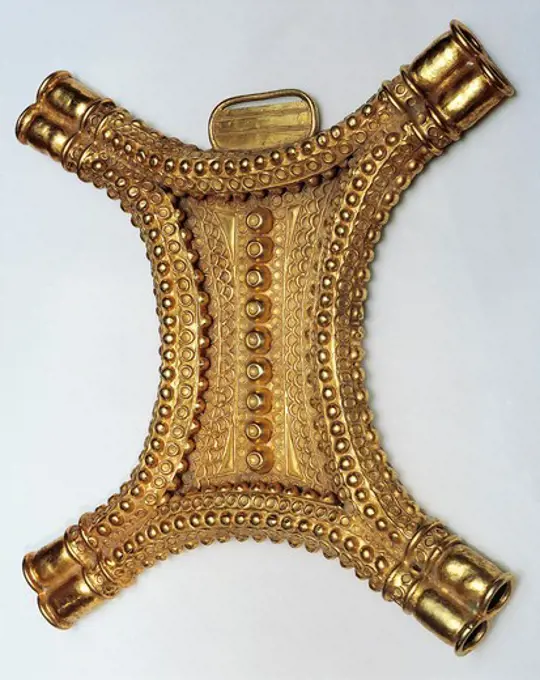
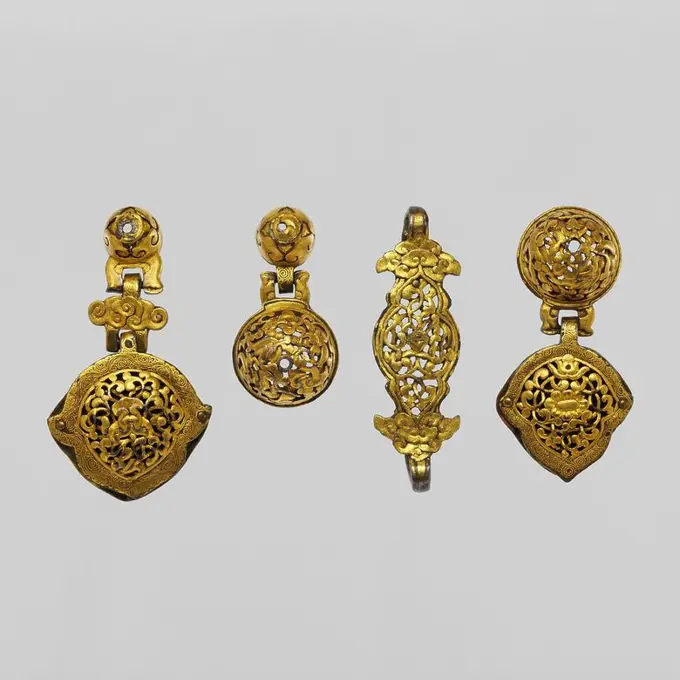
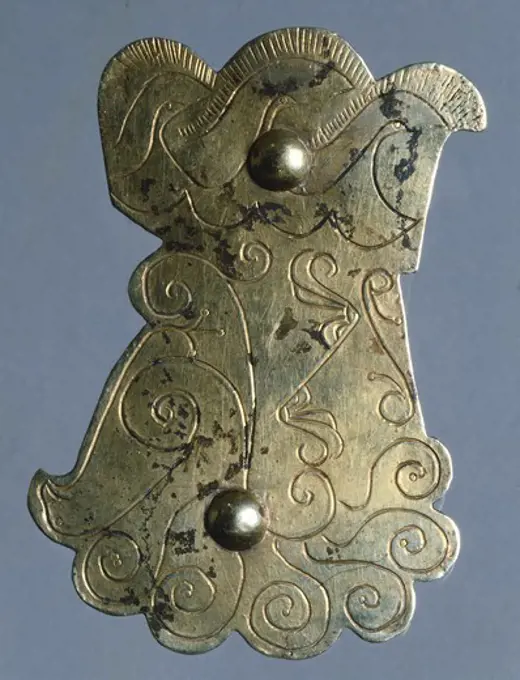
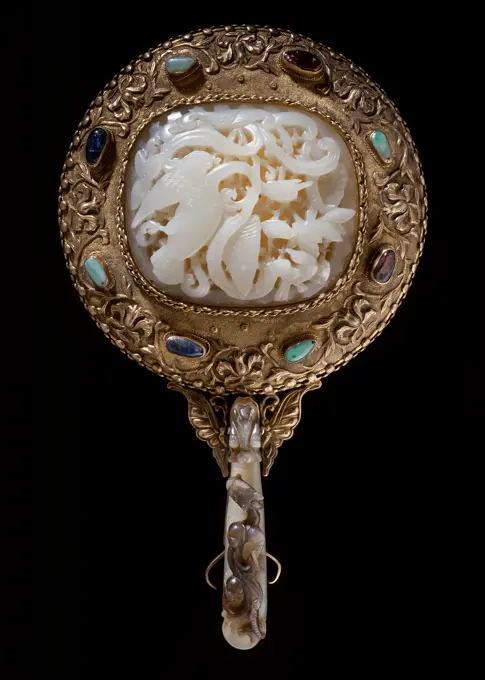
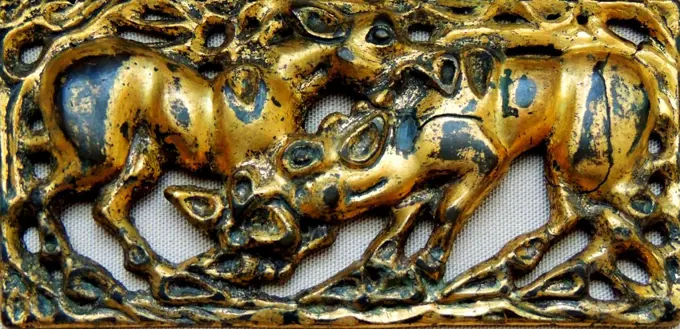
A selection of ornate gold belt fittings and decorative mounts, featuring intricate carvings and historical significance from ancient nomadic tribes.

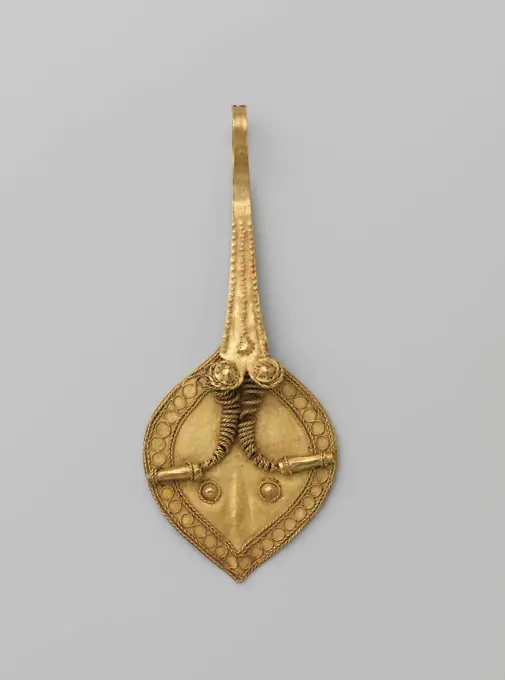
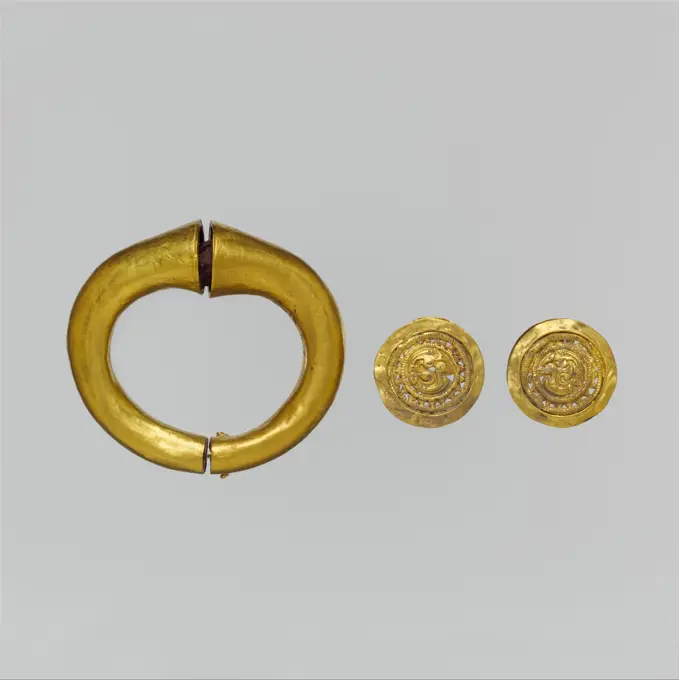
Ear ornament, anonymous, 1300 - 1400 Ear ornament consisting of an upright leaf with an openwork palm -shaped decoration that is interrupted in the wide section by a decorated protrusion. Indonesia gold (metal) Ear ornament consisting of an upright leaf with an openwork palm -shaped decoration that is interrupted in the wide section by a decorated protrusion. Indonesia gold (metal)
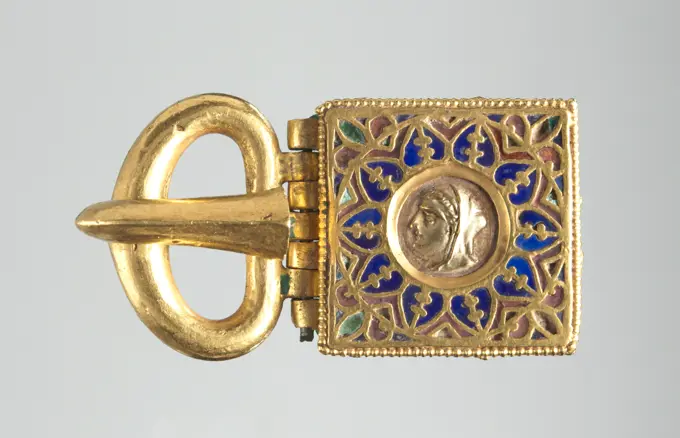
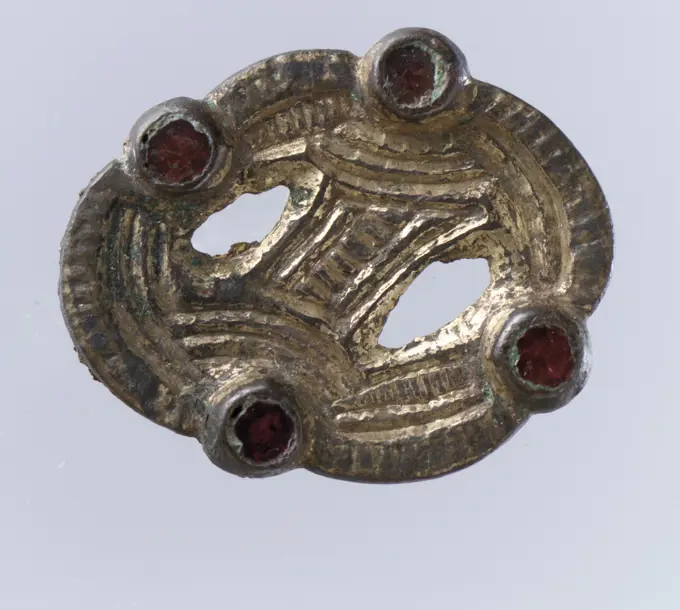
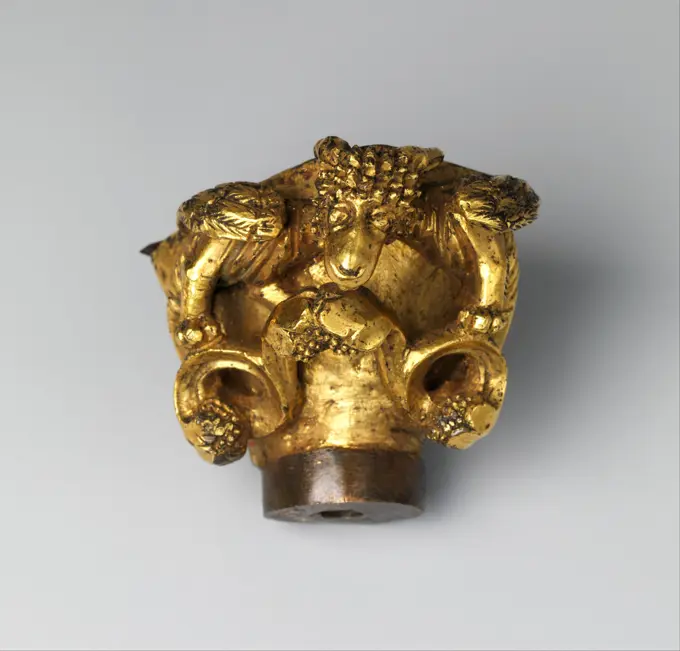
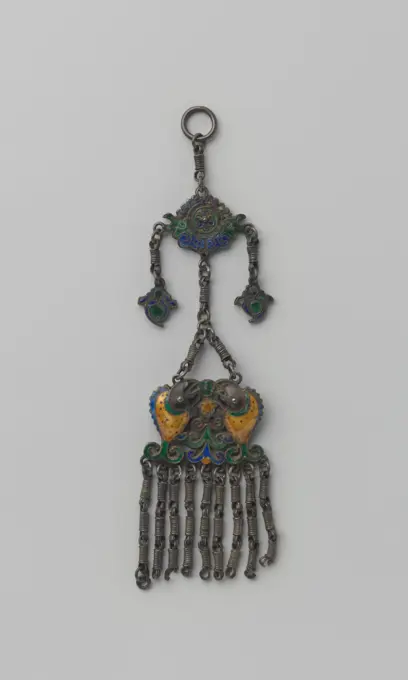
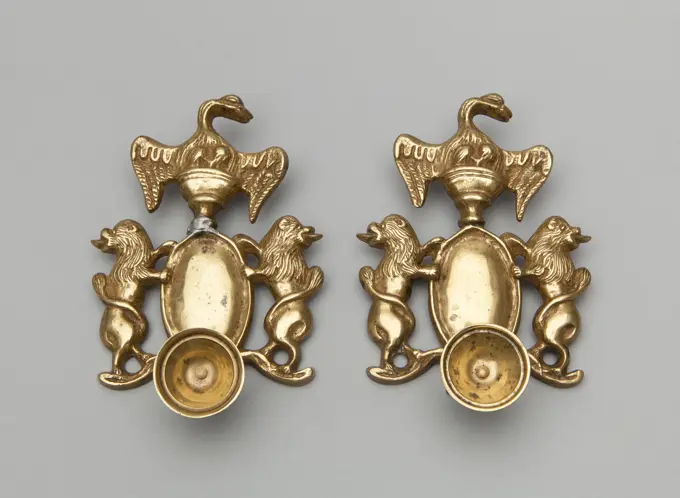
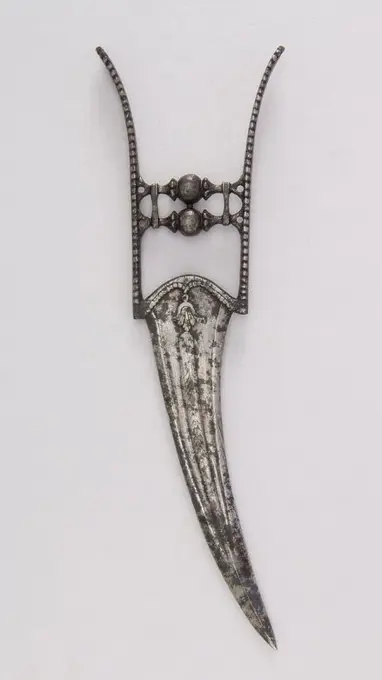
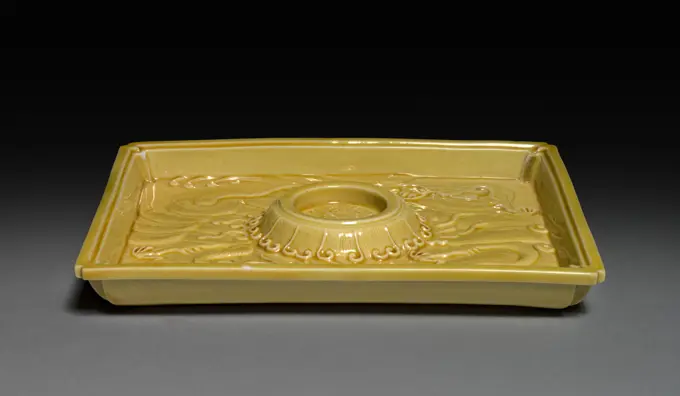
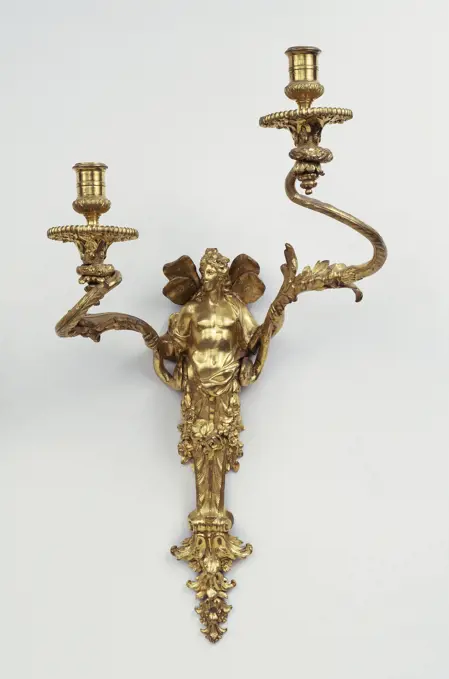
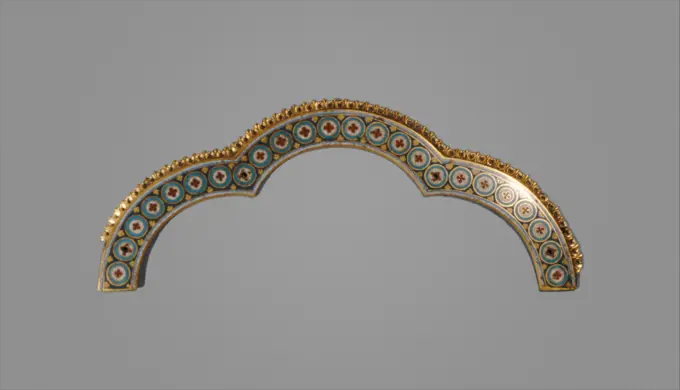
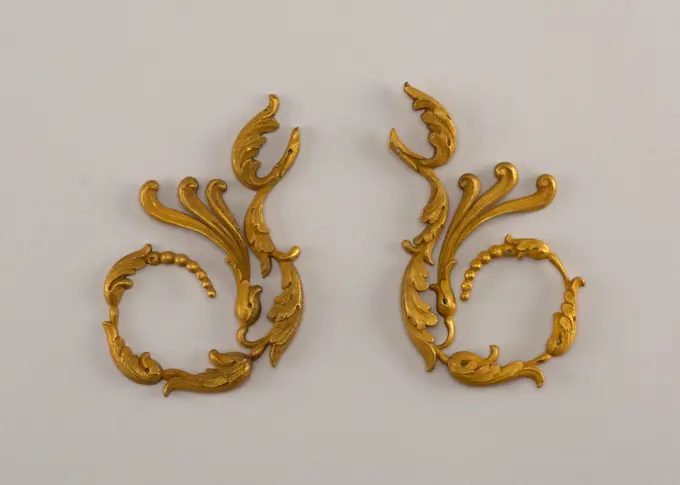
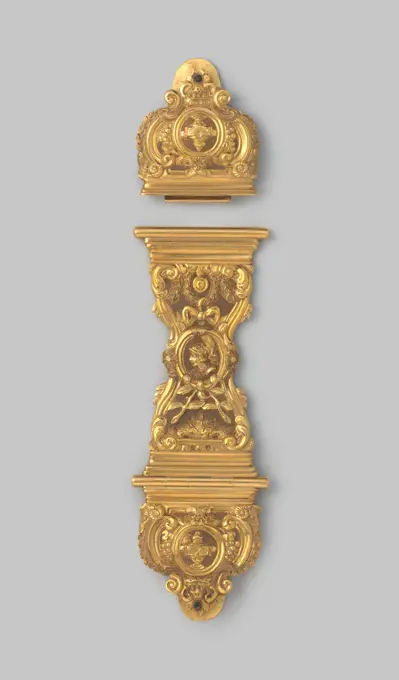
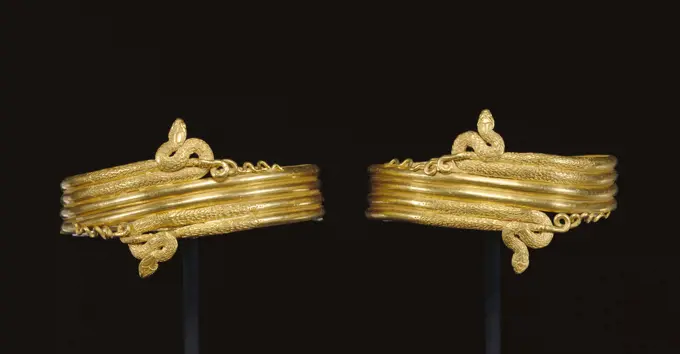
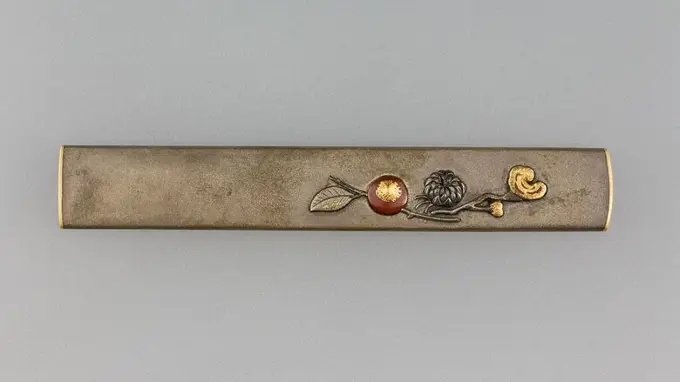
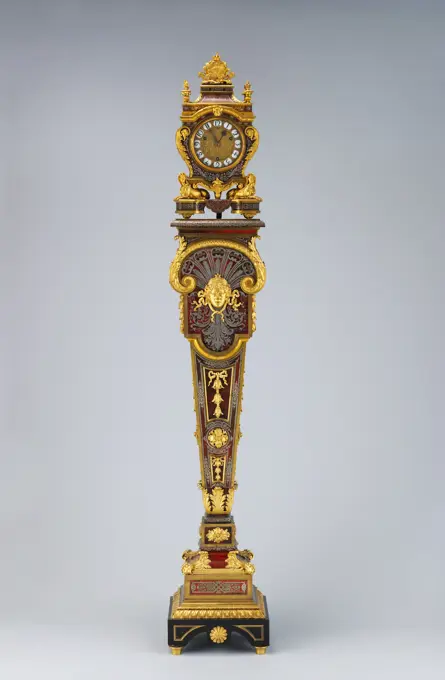
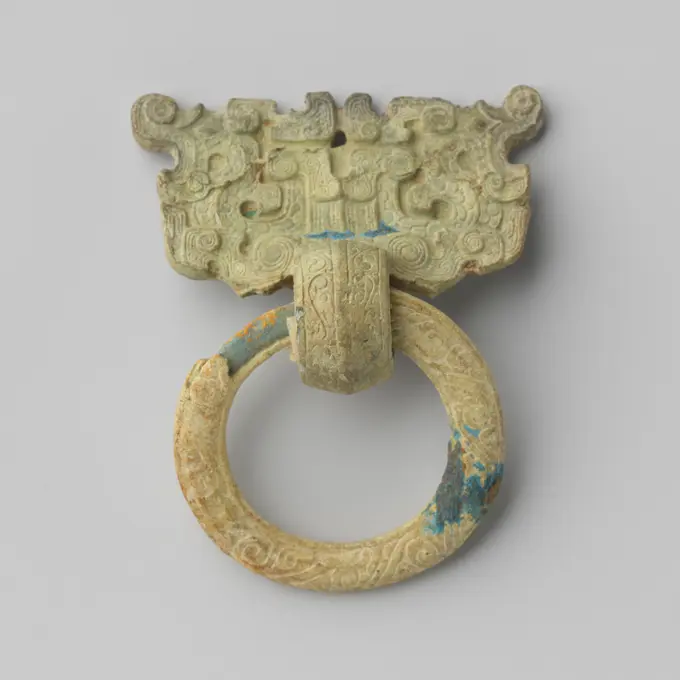
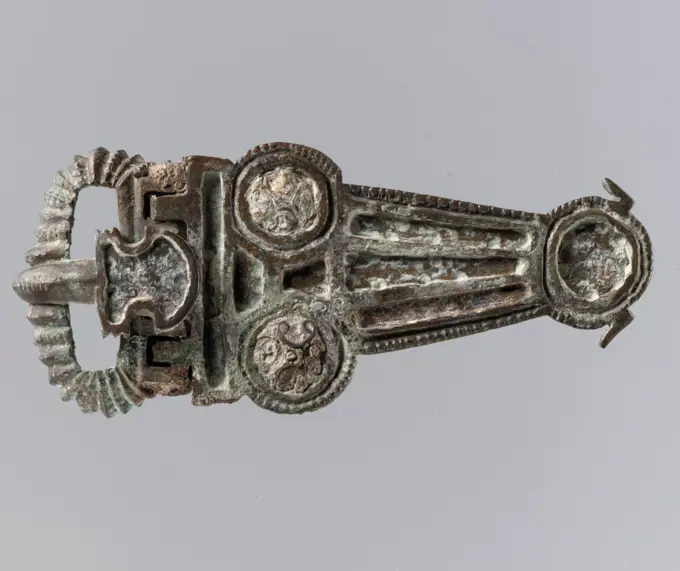
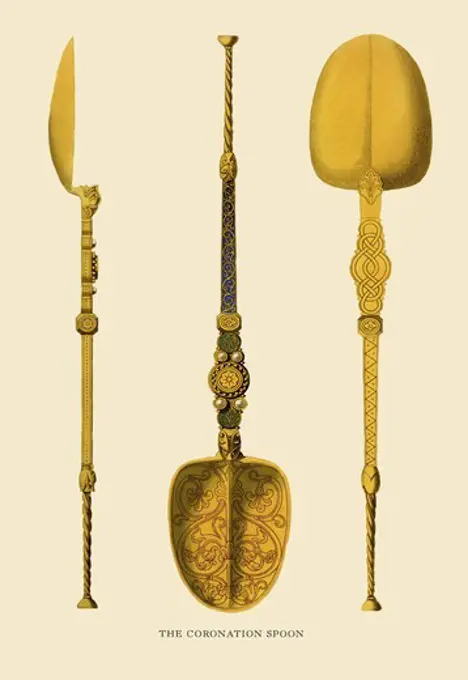
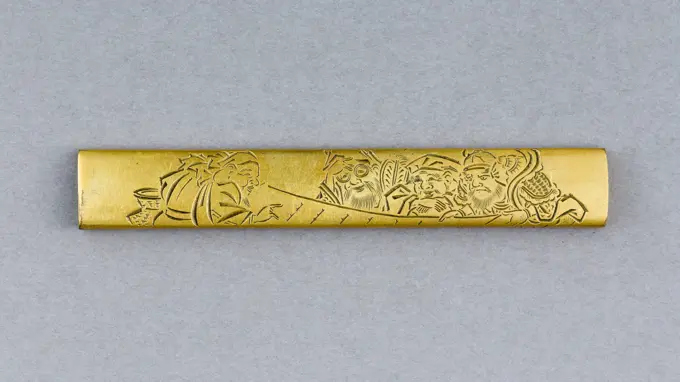
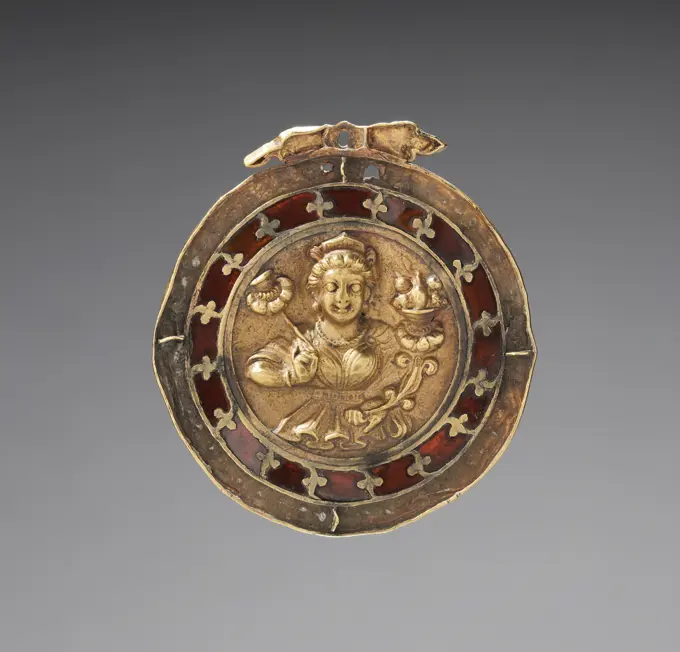
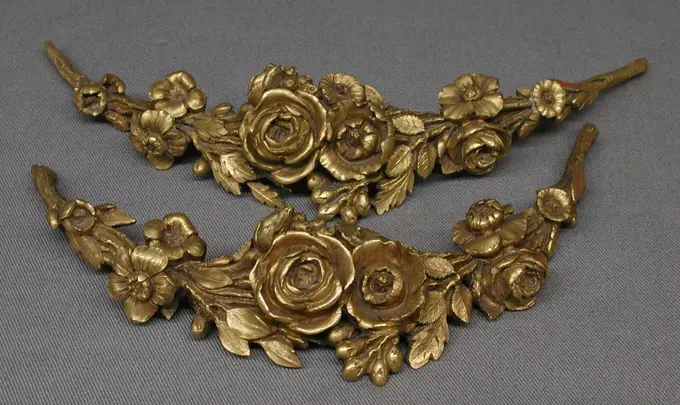
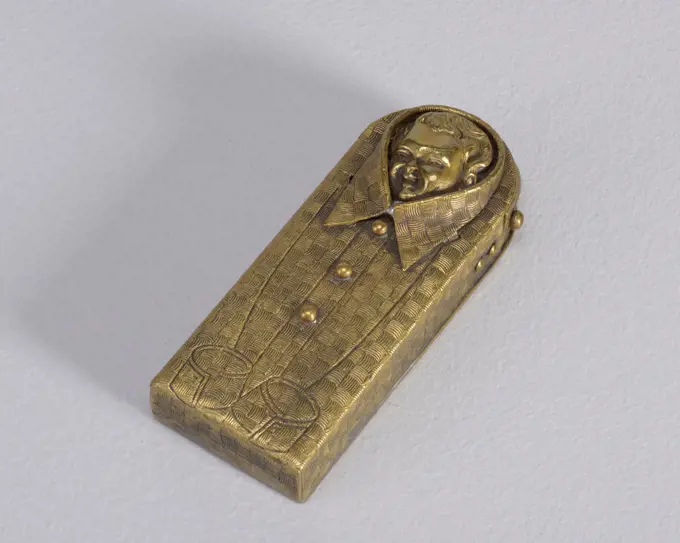
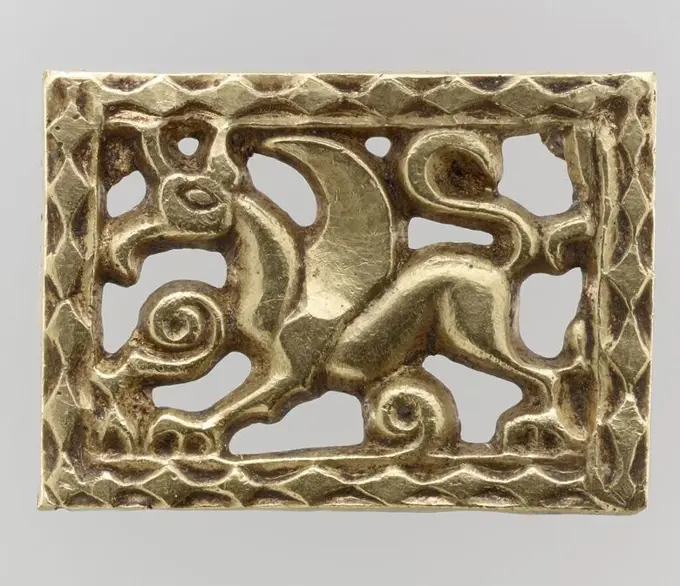
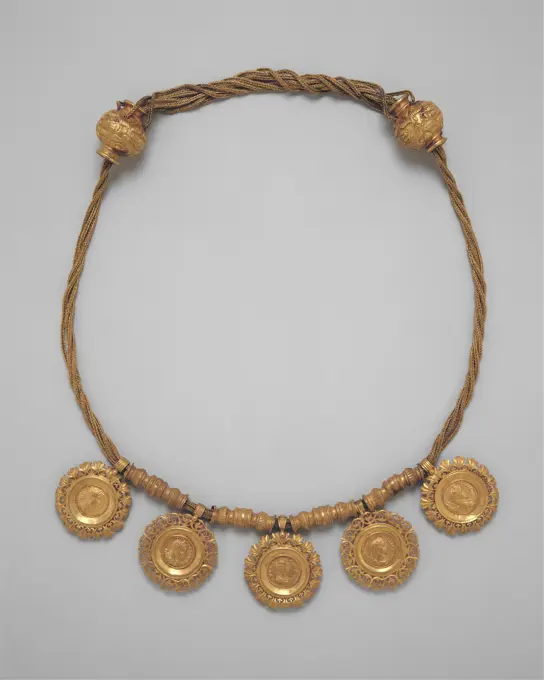
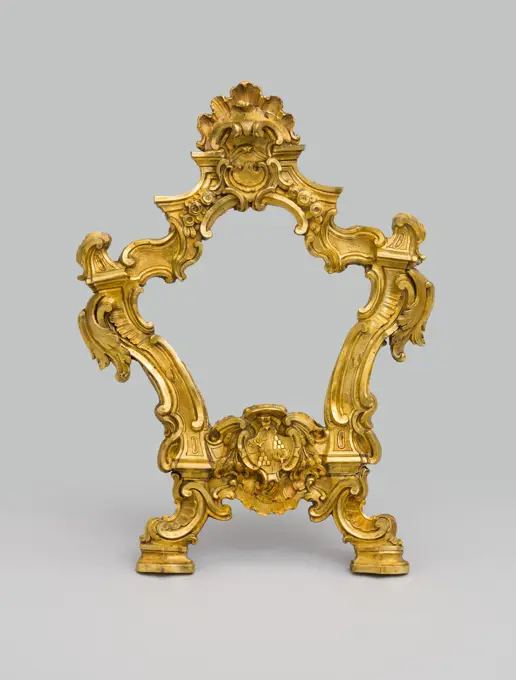
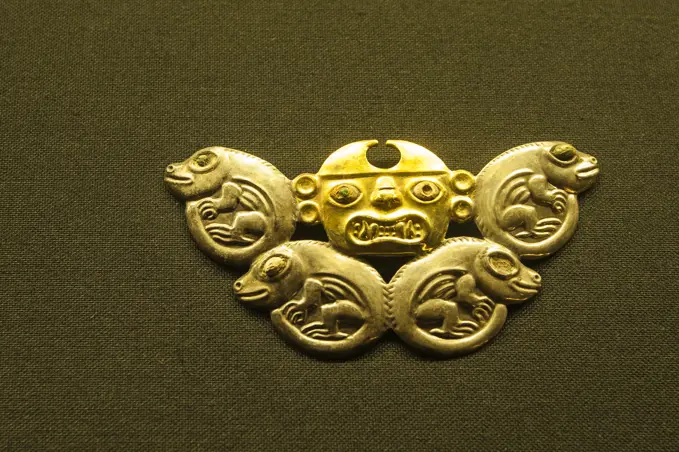
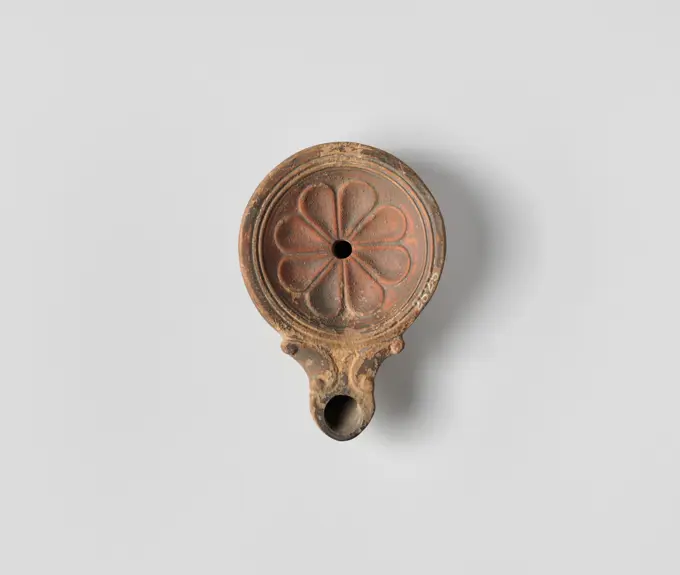
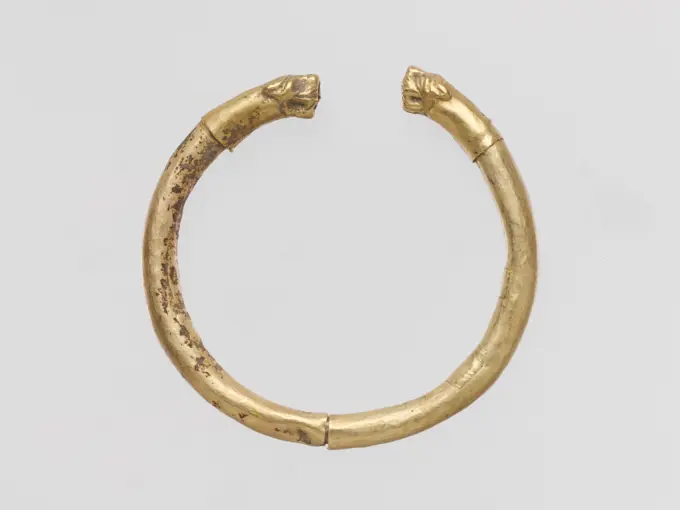
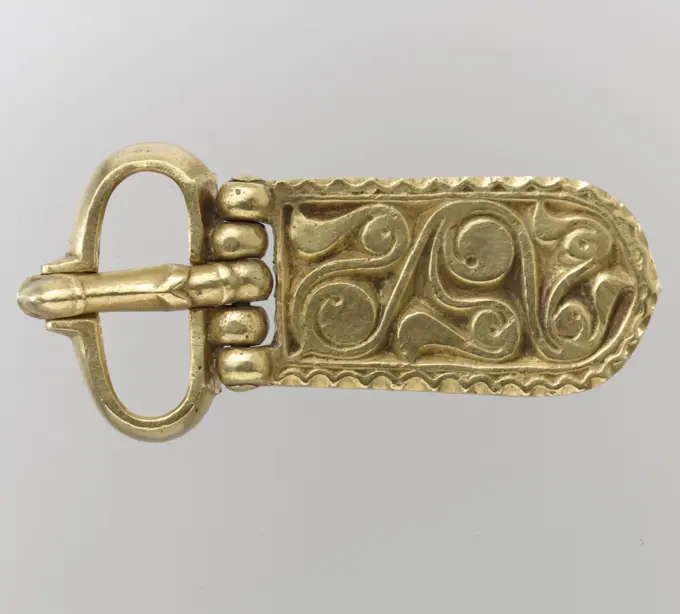
Gold Buckle 700s Avar The treasure contains an array of belt fittings, some elaborately decorated, some unfinished or defectively cast. Some show no signs of use, while others are quite worn.The AvarsThe Avars were a nomadic tribe of mounted warriors from the Eurasian steppe. The Byzantine emperor Justinian negotiated with them in the sixth century to protect the Empires northern border along the Black Sea. Emboldened by their subjugation of numerous tribes, they unsuccessfully attempted to seize the Empires capital, Constantinople. They remained a scourge of both Byzantium and the Western kingdoms until Charlemagne defeated them through a series of campaigns in the 790s and early 800s.All the money and treasure that the Avars had been years amassing was seized, and no war in which the Franks have ever engaged.. brought them such riches and such booty. Up to that time the Avars had passed for a poor people, but so much gold and silver was found.. that one may well think that the FranMountEar versions of gold. Ear version of the naassers. See also NG-NM-7106-1.MountSconce (one of a pair) 1666-99 British, Surrey. Sconce (one of a pair). British, Surrey. 1666-99. Enamel on brass. Metalwork-BrassBuckle with Embossed Head in Profile, 400-600. Byzantium, early Byzantine period, 5th-6th Century. Gold, lapis lazuli, and glass; overall: 4.5 x 2.6 cm (1 3/4 x 1 in.).HandleOpenwork Brooch second half 6th century Frankish. Openwork Brooch 465342 Frankish, Openwork Brooch, second half 6th century, Silver-gilt, garnets, Overall: 1 1/4 x 1 x 5/16 in. (3.2 x 2.6 x 0.8 cm). The Metropolitan Museum of Art, New York. Gift of J. Pierpont Morgan, 1917 (17.192.36)Ear ornament, anonymous, 1300 - 1400 Ear ornament consisting of an upright leaf with an openwork palm -shaped decoration that is interrupted in the wide section by a decorated protrusion. Indonesia gold (metal) Ear ornament consisting of an upright leaf with an openwork palm -shaped decoration that is interrupted in the wide section by a decorated protrusion. Indonesia gold (metal)Capital from a Reliquary Shrine ca. 1175-1200 German. Capital from a Reliquary Shrine 464430Goldsmith's art, Austria, 19th century. Miniature decorated gold and enamel bracelet, 1829. Front side.Clasp from Tomb 2 of Kheniale Tekke, near Knossos (Greece). Goldsmith art, Greek Civilization, 8th Century BC.Box (The Netherlands); engraved brass and copperChatelaine ,, 1600 - 1699 Chatelaine of silver with email. The body consists of 2 fish, below 9 chains hang. Iran (possibly) silver (metal). Chatelaine of silver with email. The body consists of 2 fish, below 9 chains hang. Iran (possibly) silver (metal).Spain, Madrid, Gold piece, part of treasure from Evora (Portugal)Bliżej Kultury unknownBuckle from the wreck of the Dutch East Indiaman 't Vliegend Hart, , 1700 - 1735  Metal buckle. Middelburg copper alloy. tin (metal)Nineteen Ornamental Fittings from a Horse Harness and an Ornamental Saddle Steel. Culture: saddle plate, Chinese or Tibetan; harness fittings, Tibetan. Dimensions: Saddle plate (2002.17.20); H. 3 1/2 in. (8.9 cm); W. 4 1/4 in. (10.8 cm); Wt. 5.5 oz. (155.9 g); harness fittings (2002.17.4, .7, .10, .16); L. 3 1/8 in. (7.9 cm) to 2 1/8 in. (5.4 cm). Date: saddle plate, 17th-18th century; harness fittings, 15th-17th century. Museum: Metropolitan Museum of Art, New York, USA.Gold paragnatide (cheekpiece) from a helmet. Goldsmith art. Scythian Civilization, 4th Century BC.Pair of tassels 17th century Italian. Pair of tassels. Italian. 17th century. Silk and metal thread. Textiles-TrimmingsPlaque with Goose and Falcon. China, late Jin to early Yuan dynasty, about 1200-1300. Jewelry and Adornments; plaques. Abraded jade; gilding, ruby, sapphire; jadeiteGold Medal of Virtuti Militari Woodhaeuses, Johan Philip (1741 1792)Gold earring with winged figure (one of a pair) 1st century B.C. Greek These items, all found on Cyprus, reflect styles and tastes that were prevalent throughout the Hellenistic world, notably in the use of Eros figures, animals and brightly colored gemstones. Gold earring with winged figure (one of a pair) 242940Box (France); diamonds, goldFragment, Frame; wood, gildedT'ao Tieh Mask, with Pendant Ring, 700 BCE, 4 9/16 × 3 1/4 × 1 1/16 in., 0.4 lb. (11.59 × 8.26 × 2.7 cm, 0.2 kg), Bronze, China, 8th century BCEclasp and buckle, Silver gilt, Sweden, 19th century, jewelry, Decorative Arts, clasp and buckleSpindle Whorl, 700s - 900s. Iran, early Islamic period, 8th - 10th century. Bone, incised; overall: 0.8 x 2.5 x 2.5 cm (5/16 x 1 x 1 in.).Necklace, Gilt silver, Necklace of gilt silver, made of two distinctly different designed parts. Lower part: seven 12-sided ridged globular units of filigree work and of graduating sizes. Connected by elongated bell-shaped unit to upper part of filigree braided links over circular, small-scaled units., Turkey, 19th century, jewelry, Decorative Arts, NecklaceSconce (one o a pair)RosetteTri-Lobed Arch from a Reliquary Shrine. Artist: Nicholas of Verdun and Cologne Followers. Culture: German. Dimensions: Overall: 4 1/2 x 11 in. (11.4 x 27.9 cm). Date: ca. 1200. Museum: Metropolitan Museum of Art, New York, USA.Kruithoorn; Ornament in the form of a dagger sheath of sliced and colored ivory in a frame of precious metal. Ornament in the form of a dagger sheath of cut and colored ivory in a frame of richly decorated precious metal. With golden chain.Fragment of the lace;  XVII century (1601-00-00-1700-00-00);Pendant (Italy); Designed by Hans Collaert the Elder (Flemish, ca. 1530 - 1581); Ernesto Pierret (French, b. 1824); Engraved by Hans Collaert II (Flemish, 1560 - 1628); gold, enamel, rubies, sapphires, pearlsDagger (Katar). Culture: Indian. Dimensions: H. 11 1/4 in. (28.6 cm); W. 3 7/16 in. (8.7 cm); Wt. 6.7 oz. (189.9 g). Date: 18th century. Museum: Metropolitan Museum of Art, New York, USA.CDK unknown, school hirata shippoPair of Ear Plugs with Hamsas (Wild Geese) 1st century Pakistan (ancient region of Gandhara). Pair of Ear Plugs with Hamsas (Wild Geese) 39415Cup Stand with Dragons in Waves, 1662-1722. China, Jiangxi province, Jingdezhen kilns, Qing dynasty (1644-1911), Kangxi reign (1662-1722). Porcelain with molded decoration and yellow glaze; overall: 1.6 x 10.1 cm (5/8 x 4 in.).Furniture Mount (France); gilt bronzeMountMiser's purse, Medium: silk, metal Technique: crocheted, Crocheted red silk ornamented with gold beads in diagonal patterns. Two gold metal rings at opening; a fringe of twisted gold beads at one end; a gold drop at the other., France, early 19th century, costume & accessories, Miser's pursePair of Wall Lights; about 1700; Gilt bronze;Tri-Lobed Arch from a Reliquary Shrine ca. 1200 Nicholas of Verdun and Cologne Followers. Tri-Lobed Arch from a Reliquary Shrine 467720Gold parade belt buckle with turquoise and griffon from Porogi Jampol Vinnica or Vinnitsa Ukraine 1st century AD. Museum: Ethno Museum, Vinnitsa, UKRAINE.Fibulae, 500s-600s. Alemannic, Migration Period, 6th-7th century. Cast silver, parcel-gilt, with niello; overall: 10.5 x 6.5 x 1.7 cm (4 1/8 x 2 9/16 x 11/16 in.). A woman of high rank might have worn these twin fibulae on her shoulders, one fastening her inner garment on the right, the other her outer garment on the left. She might also have suspended them from her belt as decorative ornamentsBracket of a book lock with representations of the three angels at Abraham and the worship by the shepherds, 1773 Bracket of a book lock of gold, cast and ciseled, with representations in relief of the three angels at Abraham and the worship by the shepherds. The performances are surrounded by rocaille ornaments. Bible lock. The Hague gold (metal) casting Bracket of a book lock of gold, cast and ciseled, with representations in relief of the three angels at Abraham and the worship by the shepherds. The performances are surrounded by rocaille ornaments. Bible lock. The Hague gold (metal) castingPendant late 16th-early 17th century Spanish Pendants in the form of living creatures, both real and fantastic, start to appear in Spain in large numbers in the latter part of the sixteenth century. Although highly embellished with precious gems, most reflect the interest of Spanish goldsmiths in the lifelike portrayal of the underlying natural form. Dolphins and other sea creatures seem to have been particularly popular as talismans, perhaps reflecting the dangers inherent in the maritime enterprises so central to the exploitation of Spain's overseas empire  the source of the gold and emeralds used to produce this fish.. Pendant 206159Carving (Italy); wood, gildedKnife Handle (Kozuka) ca. 1615-1868 Japanese A kozuka is a handle of a by-knife that is part of a sword mounting. It is kept in a slot on the reverse of a katana scabbard, often with a matching kōgai (hairdressing tool).. Knife Handle (Kozuka) 34704MountGilt Bronze belt buckles. Ordos type, 3rd-1st century BC. These buckles show pairs of animals in combat.19th Century silver, bronze, gold and enamel clasp from JapanBoekslot, the clasper with a portrait medallion, Hendrik Tollenaar Wunsch, 1790 Book lock of gold, Louis XVI. The closing lamp in the middle and shows the portrait of a Roman in the medallion on that point. Amsterdam gold (metal) Book lock of gold, Louis XVI. The closing lamp in the middle and shows the portrait of a Roman in the medallion on that point. Amsterdam gold (metal)Powder Horn 1501-1600 France. Ivory .MountMountSnake Bracelets; Alexandria, Egypt; 220 - 100 B.C; Bracelets: Gold; Fastening pin: Copper alloyKnife Handle (Kozuka). Culture: Japanese. Dimensions: L. 3 13/16 in. (9.7 cm); W. 9/16 in. (1.4 cm); thickness 1/4 in. (0.6 cm); Wt. 1.2 oz. (34 g). Date: 1789-1876. Museum: Metropolitan Museum of Art, New York, USA.Clock with pedestal ca. 1690 Case attributed to André Charles Boulle French The eight-day, spring-wound movement of this timepiece, signed J. Thuret,” was most likely the work of Isaac II Thuret, clockmaker to Louis XIV and a member of an important family of horologists. In May 1691 he organized a lottery with a repeater clock on a pedestal as first prize. This piece was fitted with a barometer and, in addition, was richly decorated with gilt bronze. It appears to have been very similar to the Museum’s clock and gives a good indication of its date. Just like the first prize in the lottery, the Museum’s clock was intended to hold a barometer in its pedestal (see detail far right). Five inscriptions near the top alluding to various weather conditions, ranging from tourment[e (tempest) to tres sec (very dry), form the perimeter of the dial of a barometer, although the piece appears never to have been used as such.The case and pedestal of the clock, ornamented with marquetry of tortoisesEarring with pendants and female head 3rd century B.C. Etruscan. Earring with pendants and female head 250658 Etruscan, Earring with pendants and female head, 3rd century B.C., Gold, silver, Other: 1 5/16 x 1 1/4 x 4 1/16 in. (3.3 x 3.2 x 10.3 cm). The Metropolitan Museum of Art, New York. Rogers Fund, 1917 (17.230.134)Gold and Niello Bracelet 5th-6th century Byzantine The bracelet's box housed a relic meant to protect the owner, whose name, probably Myras, appears in a monogram. As Christianity became the dominant religion in Byzantine society, Christian imagery was increasingly found on jewelry. Crosses appear by the fifth century; the Virgin Mary, saints, angels, and other holy figures became popular in the sixth century. The images were thought to protect the wearer, aid in prayers, and even perform miracles.. Gold and Niello Bracelet 464165 Byzantine, Gold and Niello Bracelet, 5th6th century, Gold, niello, Overall: 2 3/8 x 2 3/8 x 7/8 in. (6.1 x 6.1 x 2.3 cm) bezel: 7/8 x 1 x 9/16 in. (2.3 x 2.5 x 1.5 cm) band ht: 13/16 in. (2 cm). The Metropolitan Museum of Art, New York. Gift of J. Pierpont Morgan, 1917 (17.190.2054)Round Bezel EarOrnamentMounted Rock Crystal, 500s-600s. Byzantium, Byzantine period, 6th-7th centuries. Gold, quartz, almandine; overall: 10.2 x 1.9 x 1.6 cm (4 x 3/4 x 5/8 in.).Handle. Rich game of Arabesken, located in different level; Part of a few.The Carambolo treasure, 8th century BC, Necklace, Archaeological museum, Sevilla, Region of Andalusia, Spain, Europe.Mount; 1904-21-11-aV-Shaped Buckle 7th century Frankish. V-Shaped Buckle 465358 Frankish, V-Shaped Buckle, 7th century, Copper alloy, cast (tongue, loop, plaque); red enamel with impressed..., Overall: 4 5/16 x 1 13/16 x 11/16 in. (11 x 4.6 x 1.7 cm). The Metropolitan Museum of Art, New York. Gift of J. Pierpont Morgan, 1917 (17.192.53)Coronation Spoon, Costume & Decorations of the Middle AgesKnife Handle (Kozuka) end of 18th century Japanese A kozuka is a handle of a by-knife that is part of a sword mounting. It is kept in a slot on the reverse of a katana scabbard, often with a matching kōgai (hairdressing tool).. Knife Handle (Kozuka) 32211Bow Brooch 500-550 Frankish The bow brooch was a component of many Germanic women's dress. In Frankish territory brooches were generally worn in pairs, as decorative elements on a strap hanging from the belt. The bow refers to the bend or curve that links two terminals.. Bow Brooch. Frankish. 500-550. Silver, gilt and cast; garnet with unpatterned foil backing; bone; iron spring/pin. Metalwork-SilverGold pectoral with central part shaped as bust of Artemis, from Thessaly, GreeceEarring, 1800s. Russia, 19th century. Silver gilt; overall: 2.9 cm (1 1/8 in.).Pendant with Shri, c. AD 100s. Pakistan, Gandhara, Sirkap, Kushan Period (1st century-320). Gold repoussé and carnelian; diameter: 5 cm (1 15/16 in.).Badge or Harness Pendant late 14th century Spanish Heraldry, or coat-of-arms, were vitally important in Europe throughout the Middle Ages and the Renaissance. Heraldic emblems were used to identify noble families, cities, regions, and even countries. In addition to being displayed on shields and flags, heraldry was incorporated into architectural decoration on the interior and the exterior of buildings, on furniture, works of art, clothing, and horse equipment. Harness pendants, like this example, would have been attached to a headstall, bridle, or other straps making up the tack of a horse ridden by a nobleman or noblewoman, or a member of their household. Many harness pendants also have decoration that is simply ornamental, or have symbols that are not specifically heraldic in nature.. Badge or Harness Pendant. Spanish. late 14th century. Copper, gold, enamel. Miscellaneous-BadgesPair of vase ornaments 18th century French. Pair of vase ornaments 190173 French, Pair of vase ornaments, 18th century, Gilt bronze, Overall (.435a, confirmed): 3 in.  7 3/8 in.  1 1/4 in. (7.6  18.7  3.2 cm); Overall (.435b, confirmed): 3 3/4  6 3/8  1 1/8 in. (9.5  16.2  2.9 cm). The Metropolitan Museum of Art, New York. Gift of J. Pierpont Morgan, 1906 (07.225.510.435a, b)Folded Shirt with Child's Head for 'New York Clothing House, Baltimore.', Brass, In the shape of a folded man's shirt, with incised checkerboard-patterned weave, cuffs and bib, 3 raised buttons on front, smiling child's head peering out from opening at collar. Reverse inscribed 'New York Clothing House, 102 & 104 Baltimore St., Baltimore.' Upper curved section swings open to reveal match compartment. Textured surface on bottom possibly intended as striker., late 19th century, containers, Decorative Arts, Matchsafe, MatchsafeGold Openwork Belt Mount. Culture: Avar. Dimensions: 2 1/8 × 1 9/16 × 1/4 in., 1.222 Troy Ounces (5.4 × 3.9 × 0.6 cm, 38g). Date: 700s.The treasure contains an array of belt fittings, some elaborately decorated, some unfinished or defectively cast. Some show no signs of use, while others are quite worn.The AvarsThe Avars were a nomadic tribe of mounted warriors from the Eurasian steppe. The Byzantine emperor Justinian negotiated with them in the sixth century to protect the Empire's northern border along the Black Sea. Emboldened by their subjugation of numerous tribes, they unsuccessfully attempted to seize the Empire's capital, Constantinople. They remained a scourge of both Byzantium and the Western kingdoms until Charlemagne defeated them through a series of campaigns in the 790s and early 800s.All the money and treasure that the Avars had been years amassing was seized, and no war in which the Franks have ever engaged . brought them such riches and such booty. Up to that time Collar with medallions containing coins of emperors ca. A.D. 225 Roman Period This collar displays medallions containing coins of Emperors Lucius Verus (r. AD 161-169) and Alexander Severus (r. AD 222-235) and of Julia Domna, Wife of Emperor Septimius Severus (r. AD 193-211) and mother of Geta (r. AD 211-212) and Caracalla (r. AD 211-217). The use of imperial portrait coins - almost exclusively the aureus - as jewelry became widespread with the third century A.D. In this example, the globular pulls for adjusting the necklace are decorated with schematic theater masks.. Collar with medallions containing coins of emperors 547949Furniture mount, Gilt bronze, Mount Olympus; Juno and Jupiter in clouds., France, late 18th-early 19th century, metalwork, Decorative Arts, Furniture mountGold and precious stone necklace with medallion portraying Caracalla, from Nikolaevo, BulgariaNecklace 6th-8th century Byzantine (). Necklace 468551RosetteLismore Crozier early 20th century (original dated early 11th century) Irish. Lismore Crozier 463132verschnörkelte goldene antike uhr um 1600 britisches london verschnörkelte goldene antike uhr um 1600 britisches london LicenseRF Copyright: xZoonar.com/GallóxGusztávx 23309463Chamberlain's Key Key; France; gilt bronze, tassleNecklace. Dynasty: Dynasty 12-13. Date: ca. 1981-1640 B.C.. Museum: Metropolitan Museum of Art, New York, USA.Earring 6th-7th century Langobardic. Earring 465179 Langobardic, Earring, 6th7th century, Gold, Overall: 1 15/16 x 1 13/16 x 1/2 in., 0.1oz. (4.9 x 4.6 x 1.2 cm, 3g). The Metropolitan Museum of Art, New York. Gift of J. Pierpont Morgan, 1917 (17.192.123)Cuff of a Gauntlet Made 1540-1570 Italy. Steel, brass, and textile .Carte Gloria Frame 1765-1766 Italy. This magnificent altar set, made by the Roman Rococo goldsmith Leandro Gagliardi, is comprised of statuettes of four apostlesóSaints Andrew, John, Peter, and Paul; four candlesticks; a crucifix; and three frames to hold cards indicating the part of the Mass being performed. The altar set was made for Flavio Chigi (1711ñ1771) and bears the Chigi and Albani coats of arms. It might have been intended for use in the family chapel of the Palazzo Chigi in the Piazza Colonna, Rome.. Gilt bronze . Leandro GagliardiGold artifacts in Cao Museum in the El Brujo Archaeological Complex near Trujillo, Peru, South AmericaTorah shield, 19th-early 20th century, 17 3/8 x 12 1/4 x 7/16 in. (44.1 x 31.1 x 1.1 cm), Silver, United States (probably), 19th-20th century, A shield such as this typically hangs on the outside of a torah. The window holds a set of interchangeable plaques denoting the section of the Torah to be read for the service that day.Brooch, Gold, enamel, pearls, diamonds, emeralds, Gold and emamel brooch with four button pearls, twelve diamons, one octagonal emerald, and four square emeralds., London, England, 19th century, jewelry, Decorative Arts, BroochBliżej Kultury unknownPowder Primer Flask (baruddan). India, Mughal empire, circa 1700-25. Arms and Armor; powder primer flasks. Mottled gray nephrite jade inlaid with spinels and clear gemstones set in gold, gilt copper alloy fittingsTerracotta oil lamp 1st century B.C.-1st century A.D. Roman Loeschcke Type 4. Mold-made. Discus: rosette of eight rounded petals; a single filling hole at center; band of lines and grooves towards edge. Volutes flanking nozzle, with large wick hole. Incised base ring, and raised, flat base.Intact.. Terracotta oil lamp. Roman. 1st century B.C.-1st century A.D.. Terracotta. Early Imperial. TerracottasEarring 3rd century Pontic. Earring. Pontic. 3rd century. Gold, garnet, glass paste. Metalwork-GoldGold bracelet with finials in the form of feline heads late 7th century B.C. East Greek Bracelet with feline heads.. Gold bracelet with finials in the form of feline heads. East Greek. late 7th century B.C.. Gold. Archaic. Gold and SilverBadge or Harness Pendant 15th century Spanish Heraldry, or coat-of-arms, were vitally important in Europe throughout the Middle Ages and the Renaissance. Heraldic emblems were used to identify noble families, cities, regions, and even countries. In addition to being displayed on shields and flags, heraldry was incorporated into architectural decoration on the interior and the exterior of buildings, on furniture, works of art, clothing, and horse equipment. Harness pendants, like this example, would have been attached to a headstall, bridle, or other straps making up the tack of a horse ridden by a nobleman or noblewoman, or a member of their household. Many harness pendants also have decoration that is simply ornamental, or have symbols that are not specifically heraldic in nature.. Badge or Harness Pendant. Spanish. 15th century. Copper, gold, enamel. Miscellaneous-BadgesGilt Bronze belt buckles. Ordos type, 3rd-1st century BC. These buckles show pairs of animals in combat.