Antique Gold Accessories

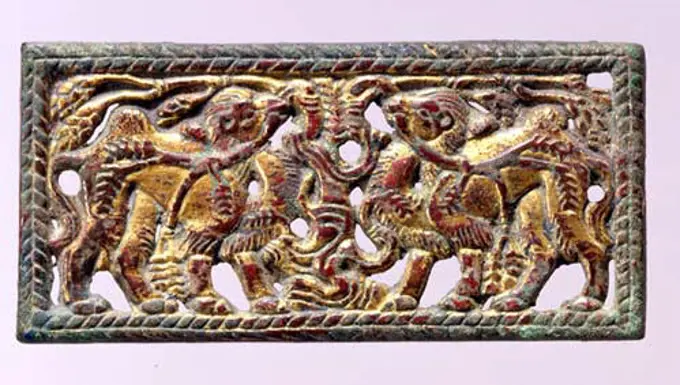
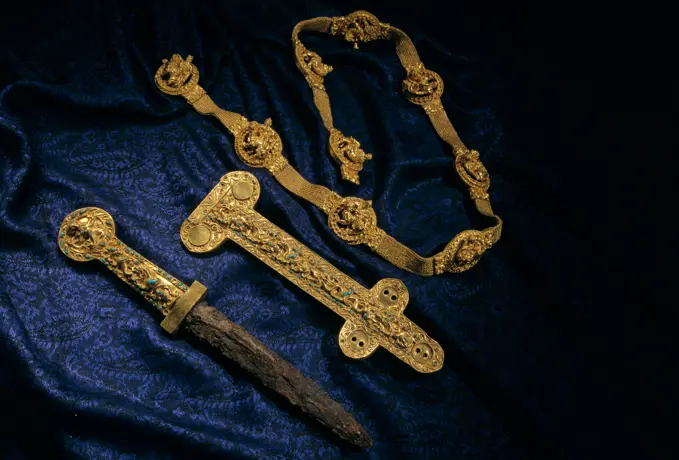
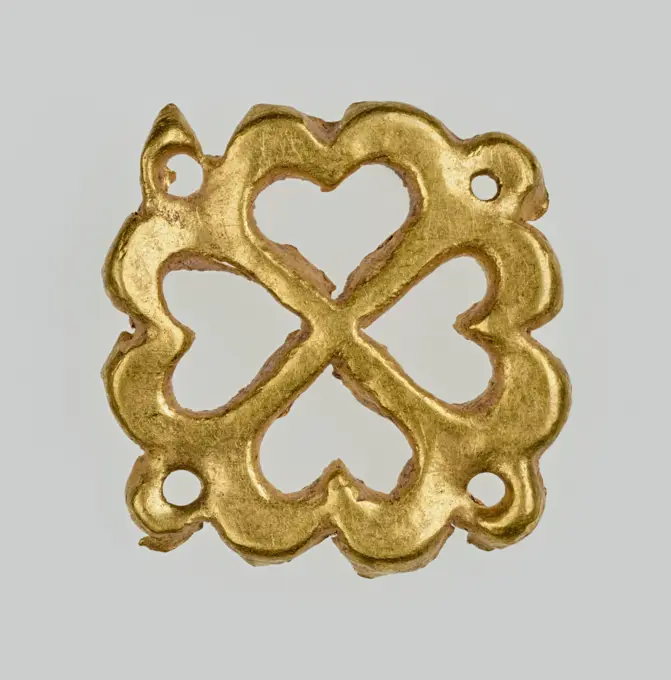
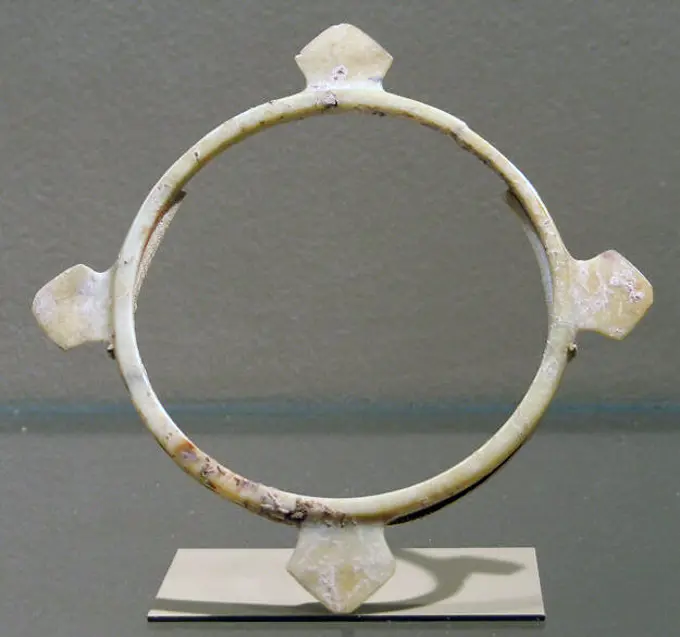
A selection of ornate gold belt fittings and decorative mounts, featuring intricate carvings and historical significance from ancient nomadic tribes.

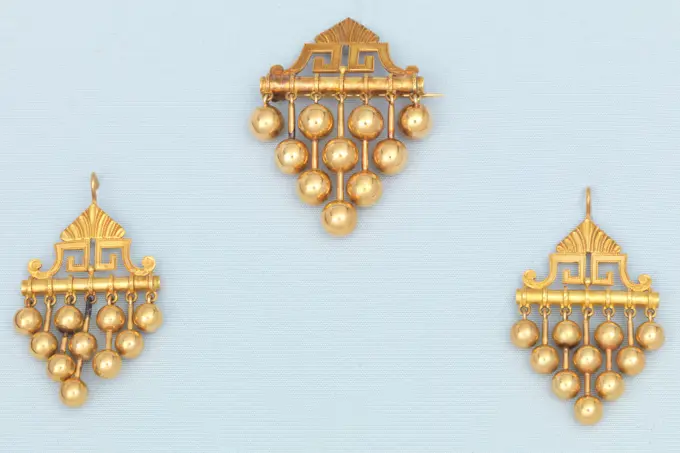
Ear ornament, anonymous, 1300 - 1400 Ear ornament consisting of an upright leaf with an openwork palm -shaped decoration that is interrupted in the wide section by a decorated protrusion. Indonesia gold (metal) Ear ornament consisting of an upright leaf with an openwork palm -shaped decoration that is interrupted in the wide section by a decorated protrusion. Indonesia gold (metal)
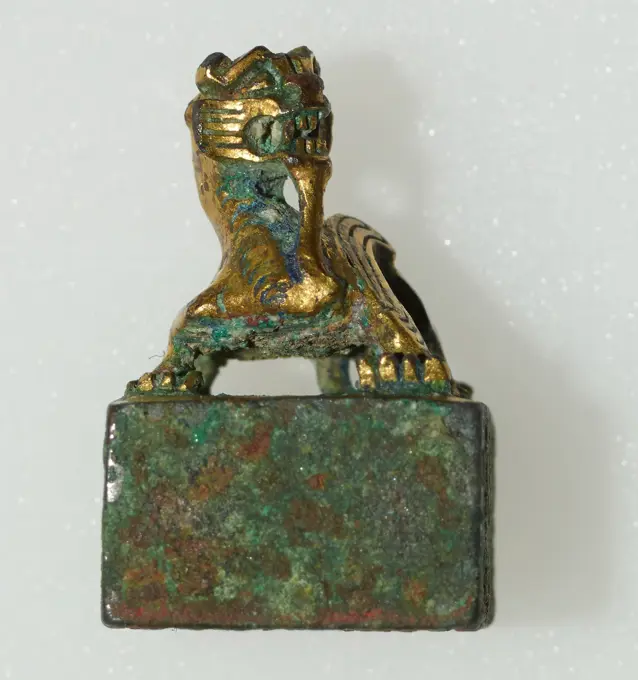
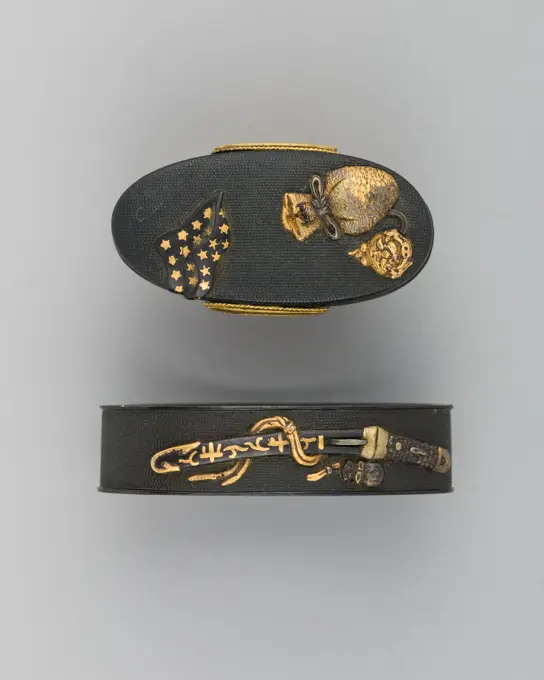
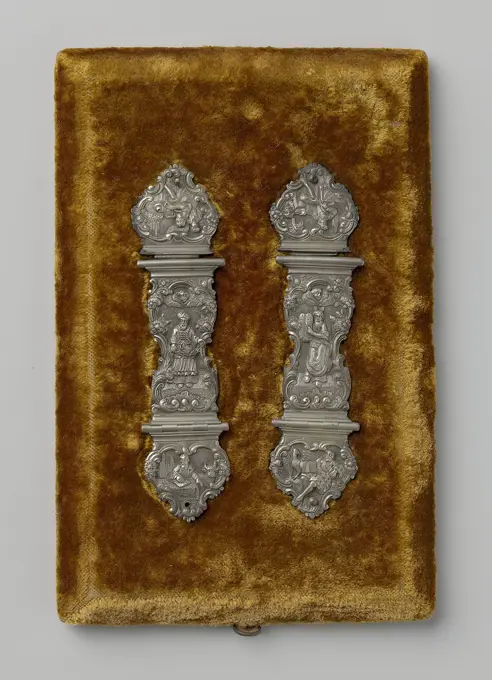
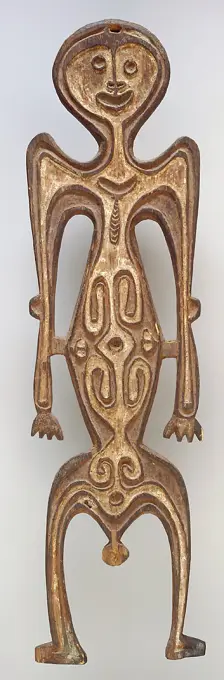
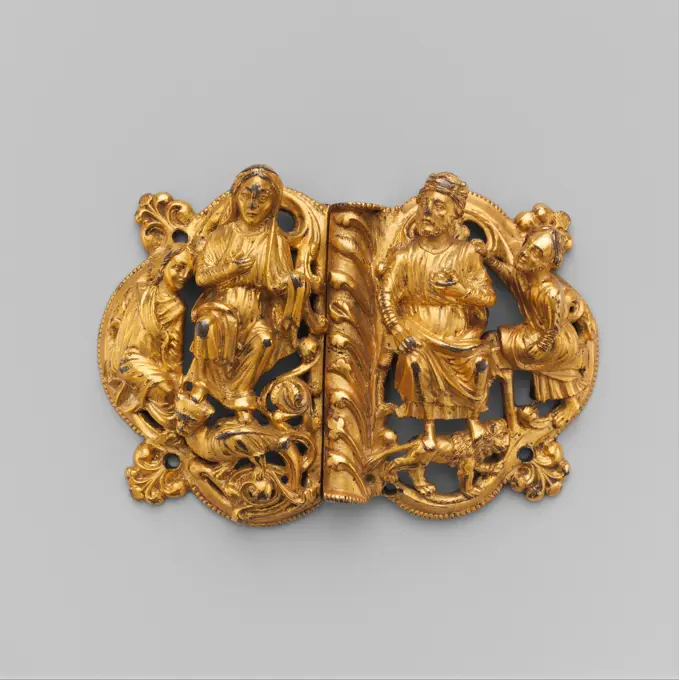
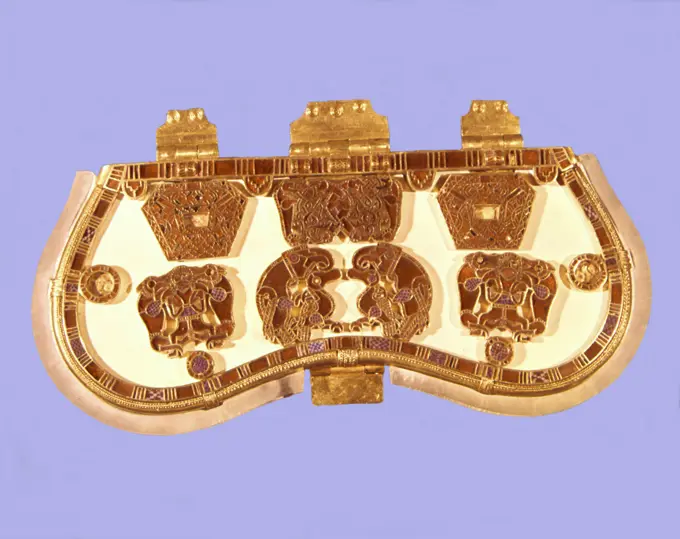
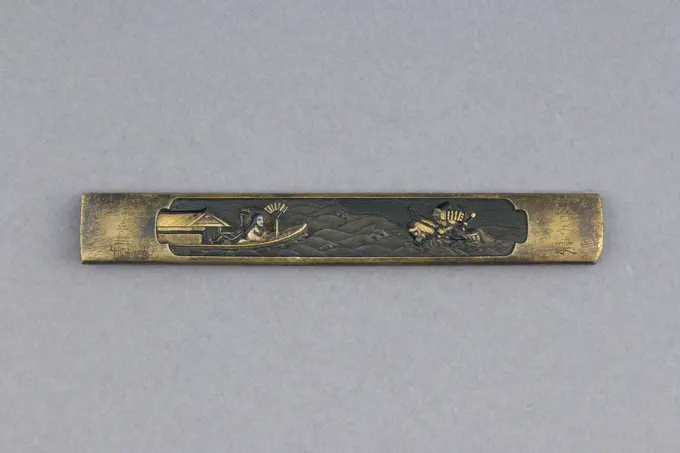
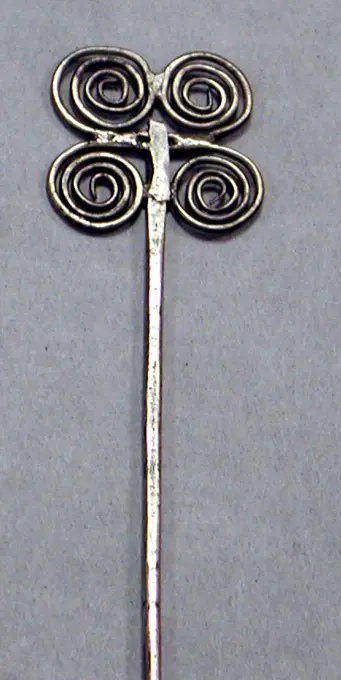
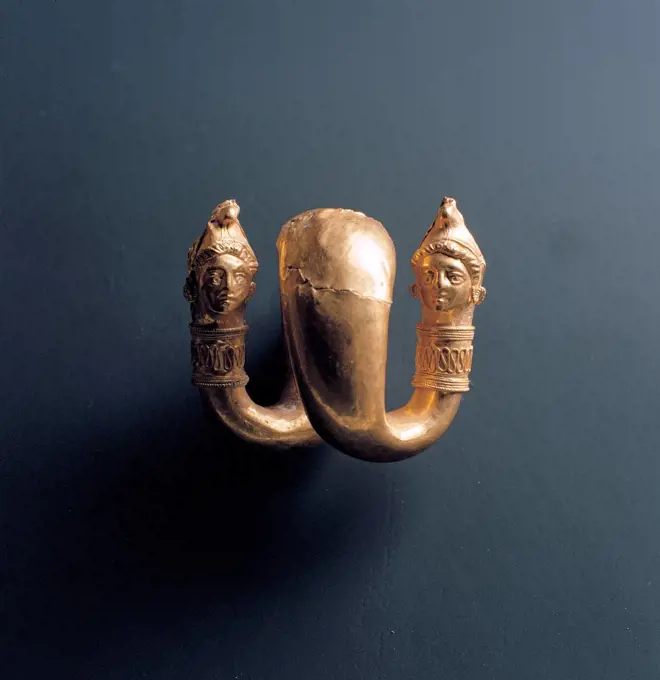
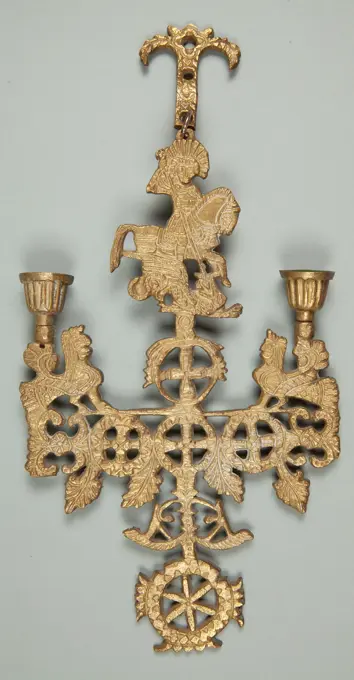
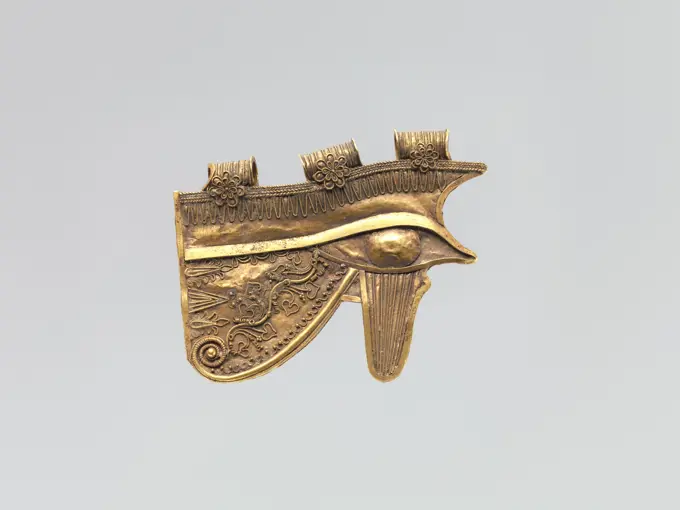
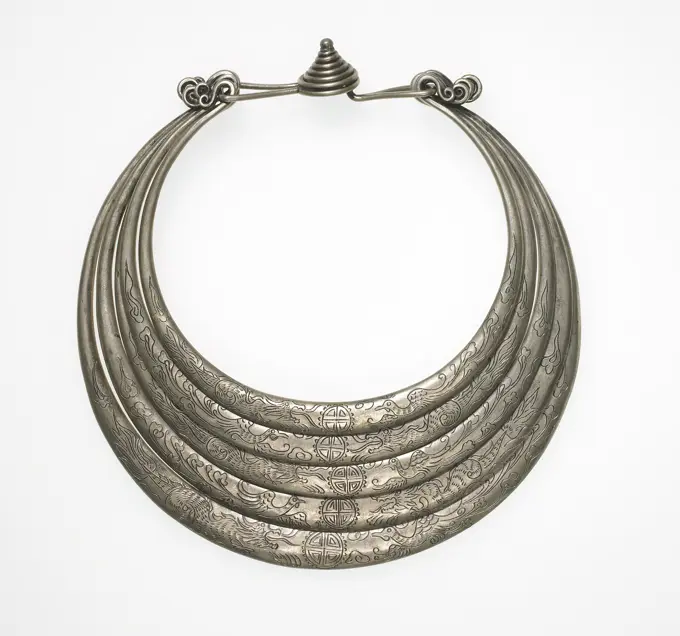
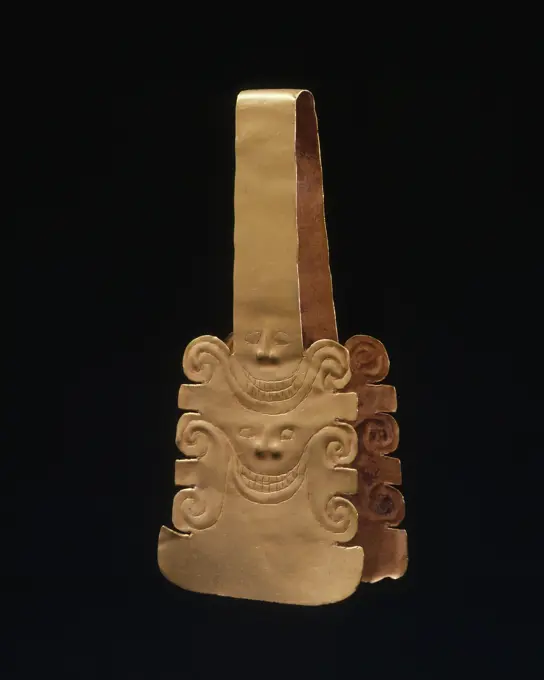
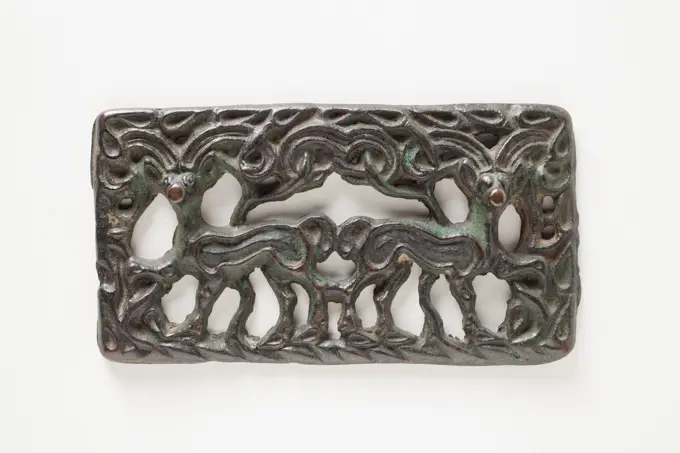
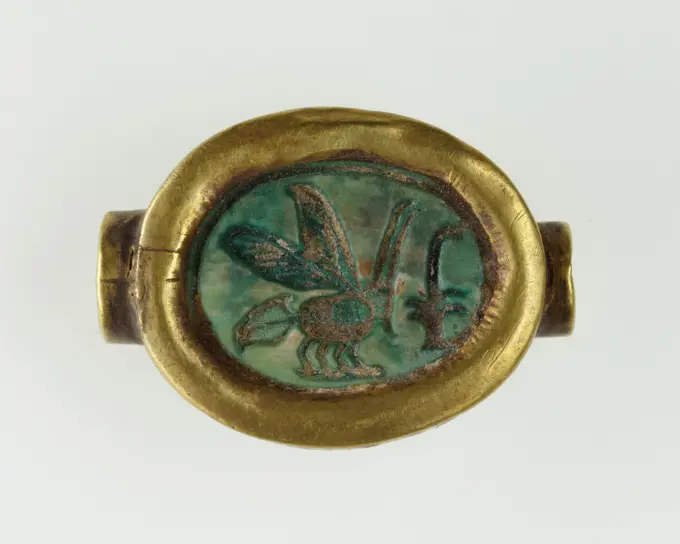
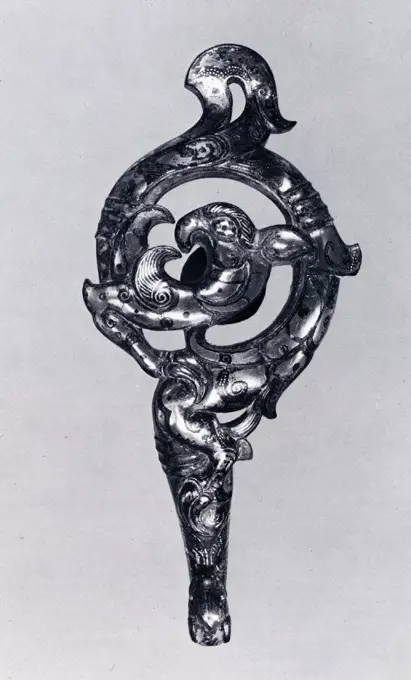
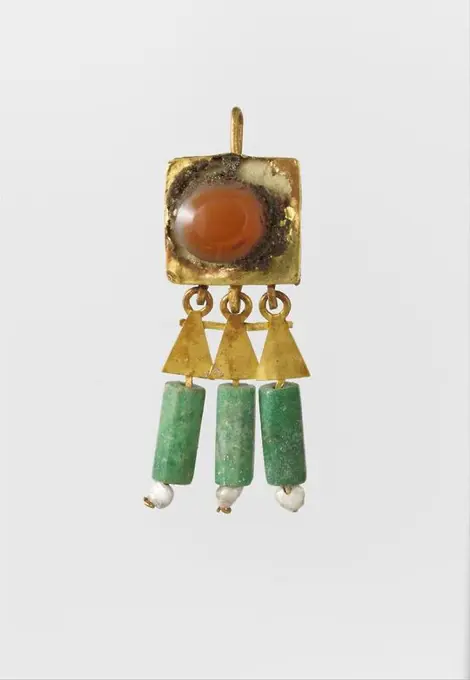
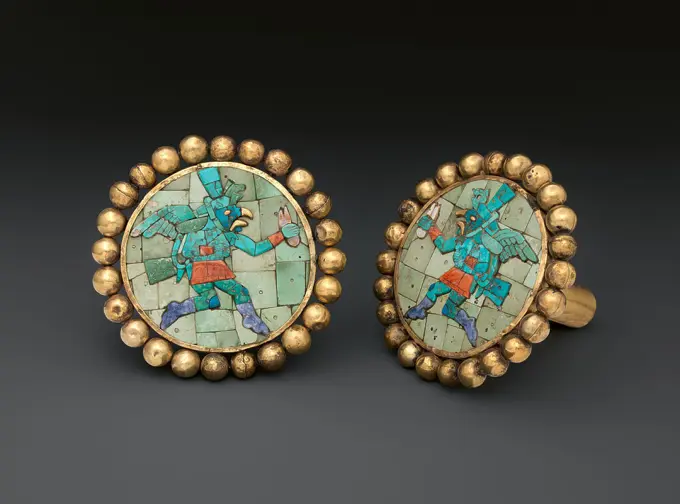
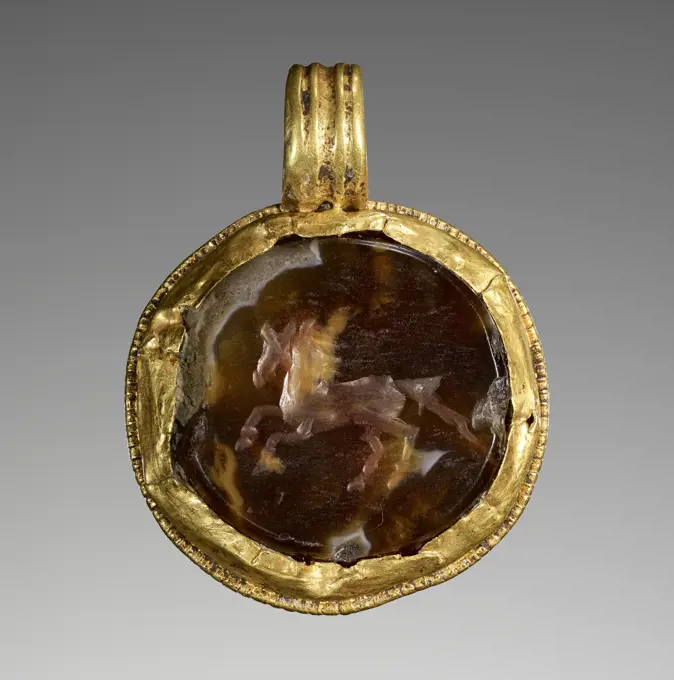
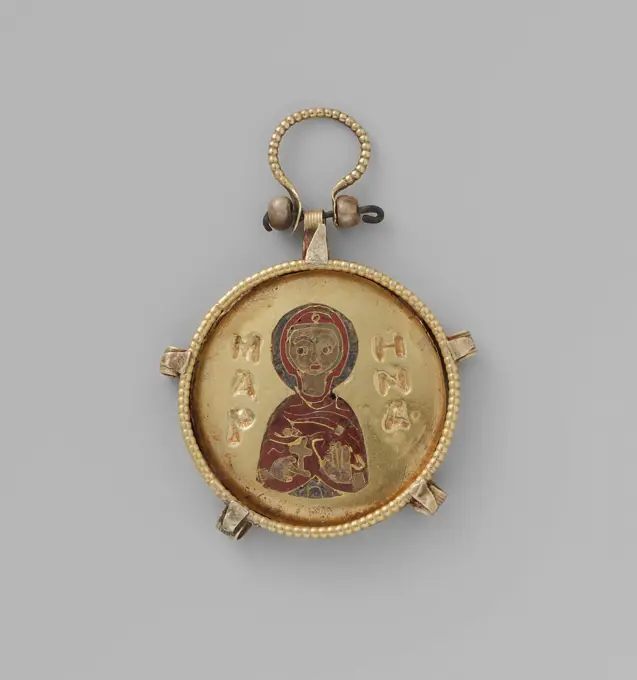
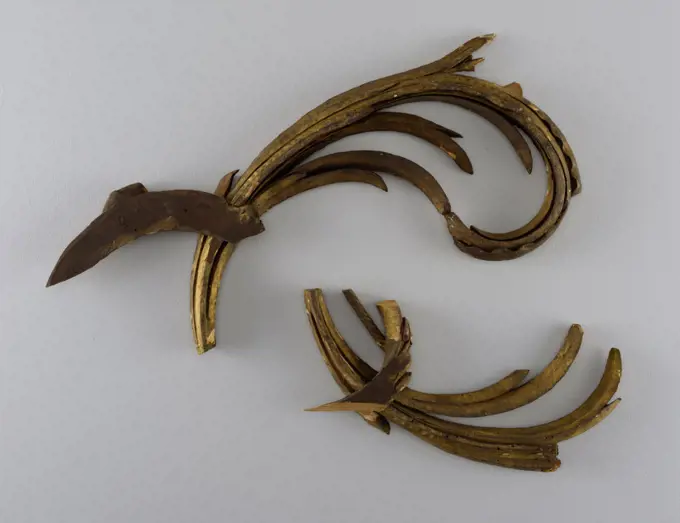
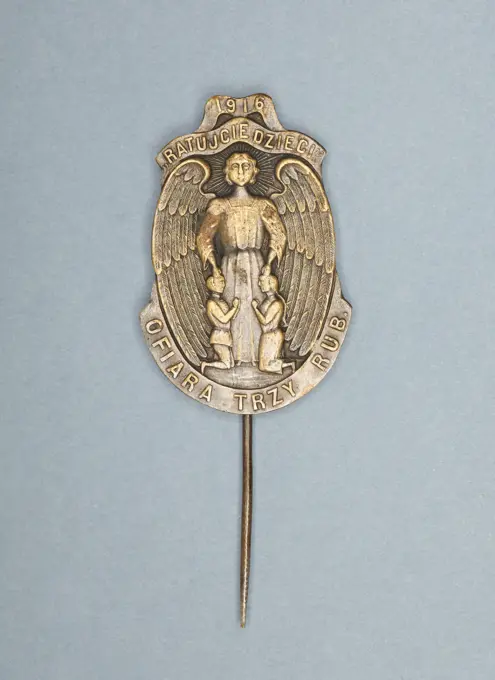
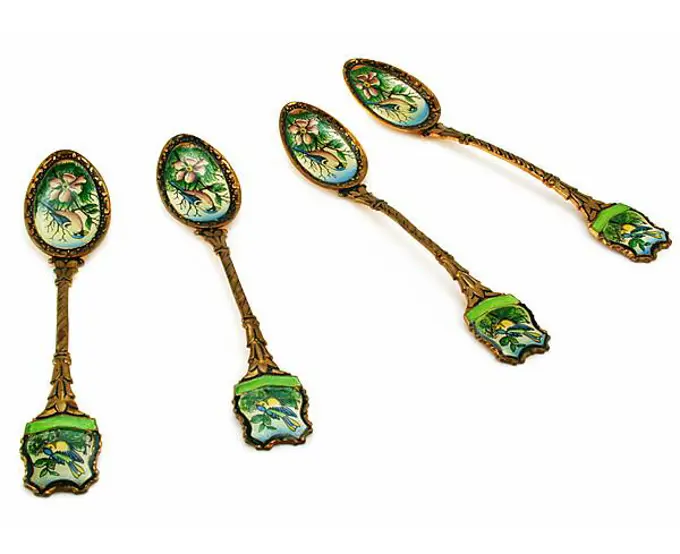
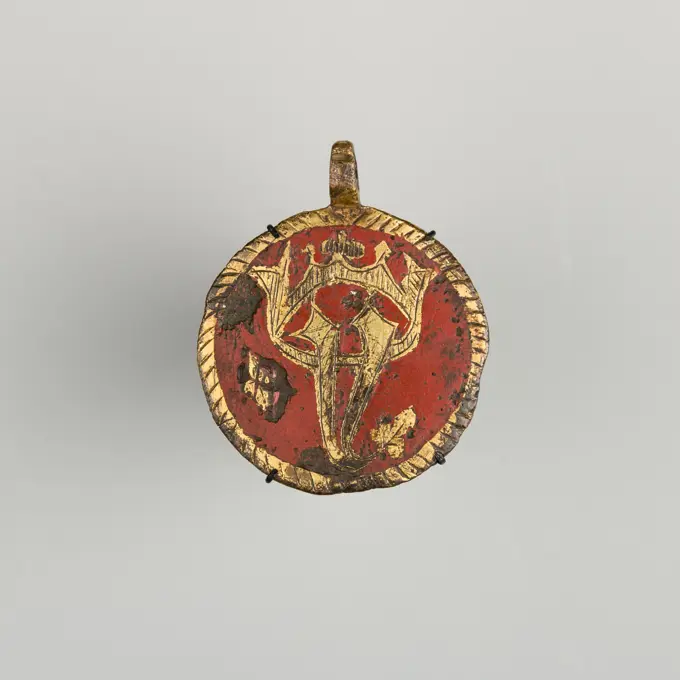
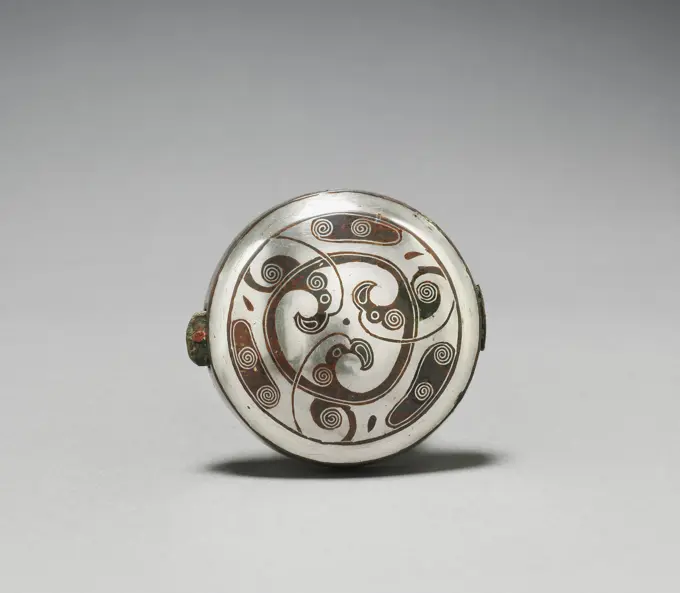
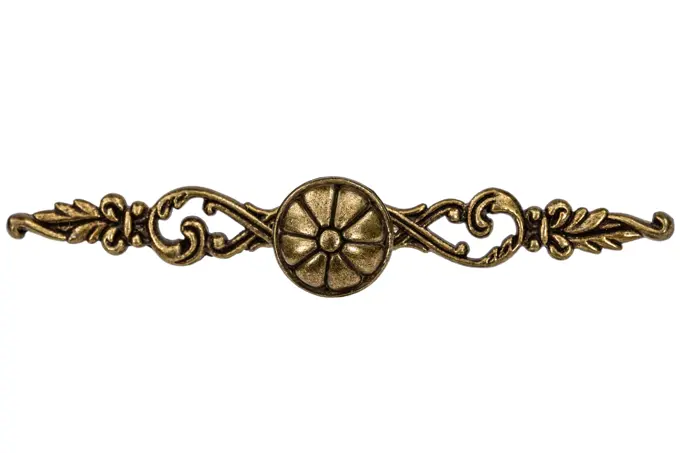
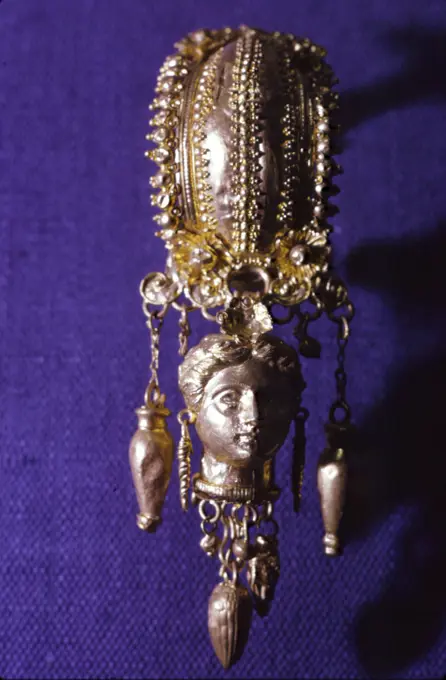
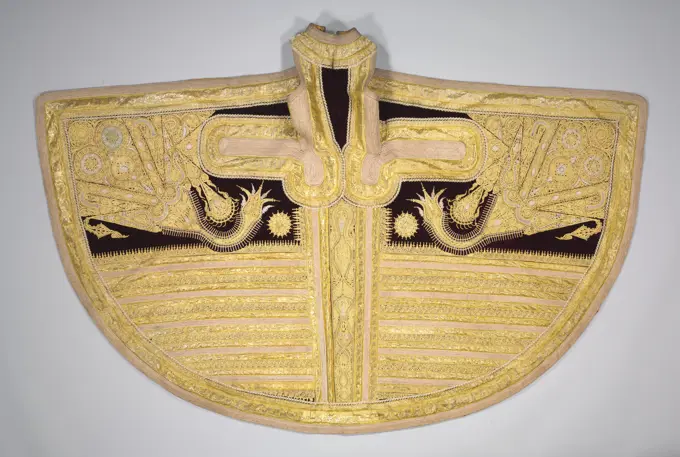
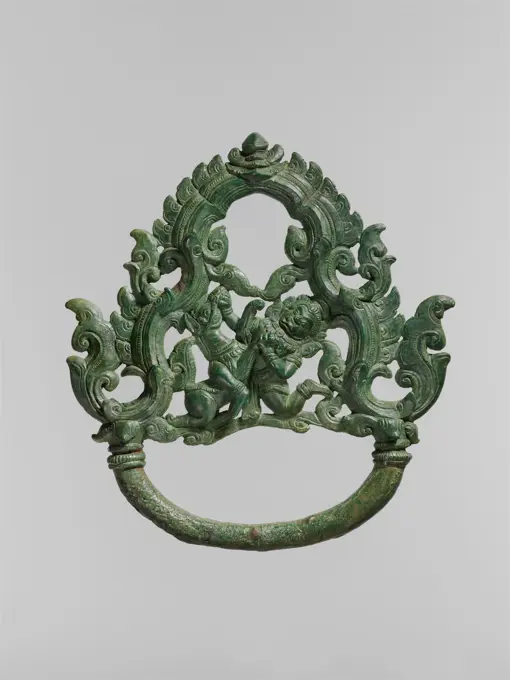
Earrings (USA); goldPersonal Seal, 2nd century, 3/4 x 7/16 x 7/16 in. (1.91 x 1.11 x 1.11 cm), Gilt bronze, China, 2nd century, A superbly modeled chimera comprises the handle of this tiny square seal whose legend, Chen Shang hsin yi, cast on the reverse in negative seal script, may be translated as the 'personal seal of Chen Shang.' Small undecorated seals are known from the Warring States (480-221 BCE) and Ch'in (221-206 BCE) dynasties while more elaborate animal-shaped knobs were popular during Han as the use of official and personal seals became widespread. Seals with tortoise, chimera, ram, and camel-shaped knobs were popular and have been excavated from Eastern Han tombs. In spite of its extremely small size, the chimera on this example is exceptionally detailed and animated.Oval Dish, late 1500s. Circle of Bernard Palissy (French, 1510-1589). Earthenware and lead glazes; overall: 30 x 22.6 cm (11 13/16 x 8 7/8 in.).Goldsmith's art, Flanders, 16th century. Enamelled gold set with pearls, diamonds, garnets and rubies pendant representing a merman, 1580-1590, mm. 80x54.Mount; fire-gilt bronzeDrawer Pull; 1904-18-5COLGANTE DE ORO QUE REPRESENTA UNA CHAMAN CON MASCARA DE COCODRILO - REGION DE DIQUIS - COSTA RICA - 1000-1500 DC. Location: MUSEO DE AMERICA-COLECCION. MADRID. SPAIN.Sword-Hilt Collar and Pommel (Fuchigashira) second half 18th century Japanese A fuchigashira is a pair of matching sword fittings comprising the fuchi (collar at the base of the grip of the sword hilt) and kashira (pommel cap at the end of a sword hilt).. Sword-Hilt Collar and Pommel (Fuchigashira). Japanese. second half 18th century. Copper-gold alloy (shakud), copper-silver alloy (shibuichi), gold. Sword Furniture-Fuchi-KashiraGalvanoplastic Reproduction of a Book Lock, Anonymous, 1765 Galvanoplastic reproduction of a golden book lock. On the Klampen Moses and Aaron. On each of the four final pieces an evangelist, caught in rich ornament. The lock attached to a block of bronze velvet maker: Netherlands (possibly)silversmith: Amsterdam metal Galvanoplastic reproduction of a golden book lock. On the Klampen Moses and Aaron. On each of the four final pieces an evangelist, caught in rich ornament. The lock attached to a block of bronze velvet maker: Netherlands (possibly)silversmith: Amsterdam metalOne square. UnknownOne square. UnknownBioma Figure, 20th century, 24 7/8 x 6 3/4 x 5/8 in. (63.18 x 17.15 x 1.59 cm), Wood, pigment, Papua New Guinea, 20th century, Bioma are spirit figures that were part of large presentations of objects in men's ceremonial houses, which included skulls of ancestors, enemies, crocodiles and pigs, as well as other objects. The energetic and symmetrical silhouette carved in low relief on one side of a red and white painted board is typical of bioma design. The legs are bowed to fit over one of the skulls on display.Badge. Culture: Spanish. Dimensions: H. 2 5/8 in. (6.7 cm); W. 2 1/8 in. (5.4 cm); Wt. 1 oz. (28.3 g). Date: 14th century. Museum: Metropolitan Museum of Art, New York, USA.. On each of the two related, cartophormous plates (A and B), a corn field is driven in which a cornmeter is bent over the size, a basket with grain grains. In his left hand, he holds a scoop and in his judge with which he abstracts the size. This scene is shown on the two plates from a different point of view; On a, the cornmeter is diagonally shown from behind; on b from the front. The almost identical cartouches are made up of soft parts that have masqueric shapes in the middle of top and top. The city weapon of Amsterdam has been included in the upper edge. Left and top right lights a corn meter shake from the list; A basket with bar has been processed in the lower edge. At the bottom of every shield hangs on a chain, a banderole decorated with a soft orbums with a roughened ground. The text coor is on that of A.meters and on that of B 16 Gildt 33.RingClasp ca. 1200 South Netherlandish The monumental classicizing figure style and the soft tubular drapery typify the transitional style of about 1200. The masterful rendering of this object has led scholars to associate it with the work of Nicholas of Verdun, an outstanding goldsmith of the period. The figures are generally thought to represent Solomon and the queen of Sheba, but they also have been interpreted as Ahasuerus and Esther. A similar clasp was excavated at Dune in Gotland; although the style is different, parallels in iconography suggest a common traditional source. The clasp probably was intended as a girdle or cloak closure.. Clasp 471284Gold and enamel jewellery from the Sutton Hoo treasure. 7th cent. AD. Brooch. Anglo Saxon ENGLAND.MountOval Shallow Dish. Eastern Mediterranean, 225-650 A.D.. Furnishings; Serviceware. Silver. Hanger of gold. Made from filigree. The pendant can be hung on both the brooch and the necklace.Handscreen (Italy); engraved paper leaf, turned and painted wood handleKnife Handle (Kozuka) 18th century Japanese A kozuka is a handle of a by-knife that is part of a sword mounting. It is kept in a slot on the reverse of a katana scabbard, often with a matching kōgai (hairdressing tool).. Knife Handle (Kozuka) 33358Fragment goudgalon, 1800 - 1900 Fragment golden galon, decorated with garlands with flowers and a branch with leaves and flowers.  . Fragment golden galon, decorated with garlands with flowers and a branch with leaves and flowers.  .Powder Flask 1698 Norwegian. Powder Flask. Norwegian. 1698. Horn (cow), wood, brass, cord. Firearms Accessories-Powder HornsEarring, 1800s. Russia, 19th century. Silver, enamel and red glass beads; overall: 6.4 x 2.6 cm (2 1/2 x 1 in.).Loop .Pin 14th-15th century Chimú (). Pin 315650A helix ear-ring, by Unknown artist, 4th Century -3rd Century b.C.,, . Italy: Puglia: Taranto: Taranto: National Archaeological Museum. Whole artwork. Helix pendant ends human protomes frontal beret/cap PhrygeanRing with Claw setGemMetal candlestick for hanging, in the Balkan styleNaszyjnik. nieznany warsztat północno mezopotamski, workshopTorque, 13 x 14 x 1 1/8 in. (33.02 x 35.56 x 2.86 cm), Silver, ChinaBead (with granulation). UnknownWedjat eye with granulation and decorative wire ornament 332-30 B.C. Ptolemaic Period This amuletic wedjat eye is a hollow construction beautifully decorated with vegetal ornament - rosettes, garlands, leaves, and tendrils. The ornament is created with granulation and various types of decorative wires. Three loops at the top would permit the wedjat to be suspended. The deformation of the left hand loop, in particular, suggests that this jewel saw a lot of use.. Wedjat eye with granulation and decorative wire ornament 551353Necklace, 9 3/8 x 9 1/8 x 1 1/8 in. (23.81 x 23.18 x 2.86 cm), Silver, ChinaBelt Buckle with Recumbent Stags 2nd century B.C. North China. Belt Buckle with Recumbent Stags 65292Greek art. Hellenistic. Gold armband with male triton holding a small winged Eros. (ca. 200 B.C.). Metropolitan Museum of Art. New York. United States.Bracelet (in twoparts)Ornamented Tweezer 100 B.C.-A.D. 400 Calima-Yotoco This tweezerlike ornament is embellished on the front and back with two superimposed grinning faces whose prominent sets of teeth seem skeletal, but whose fleshy noses do not. The faces end in swirls along the edges of the object. Sometimes called brazeletes in Spanish, such ornaments may have been worn suspended from a cord tied around the upper arm. Although seemingly a curious form of decoration to modern viewers, tweezerlike ornaments were a common symbol of power and authority throughout the western reaches of the ancient Americas. Along with ear ornaments, headdress diadems, and pectorals, these tweezerlike objects formed part of the regalia that Yotoco leaders wore in life before they accompanied them in death. Yotoco (100 B.C.-A.D. 800) was the second of three cultures identified archaeologically in the Cauca Valley of southwest Colombia. Along with the earlier Ilama, and the later Sonso, these three societies are known collectPair of Sword-Grip Ornaments (Menuki) 18th century Japanese Menuki are a pair of ornamental sword fittings attached to either side of a sword hilt.. Pair of Sword-Grip Ornaments (Menuki). Japanese. 18th century. Gold. Sword Furniture-MenukiLoop.Plaque (Two Deer). Mongolia or Southern Siberia, 2nd-1st century B.C.. Sculpture; plaques. BronzeLappet 1877 French. Lappet 168510Headdress Ornament, 1800s-1900s. China, Qing dynasty (1644-1911). Copper-silver alloy, gilding, kingfisher feathers, glass beads; overall: 10.3 x 5.4 cm (4 1/16 x 2 1/8 in.).Scarab Set in a Ring Bezel New Kingdom ca. 1492-1473 B.C. This scarab ring bezel was found among the hand bones of one of the unidentified adult woman buried in the tomb of Hatnefer and Ramose (see 36.3.1). The well-carved scarab is inscribed on the base with a sedge plant, symbol of the Nile valley (Upper Egypt) and a bee, symbol of the Nile delta (Lower Egypt). These two hieroglyphs represent the royal title King of Upper and Lower Egypt.Torque, 11 1/4 x 13 1/4 x 5/8 in. (28.58 x 33.66 x 1.59 cm), Silver, ChinaBelt hook ca. 3rd-2nd century B.C. China. Belt hook 49492Grape brooch, 1895, from the Hull Grundy collections. Anne Hull Grundy (1926-1984), formed the greatest post-war collection of 19th-century jewellery. Badge or Harness Pendant 14th century Spanish Heraldry, or coat-of-arms, were vitally important in Europe throughout the Middle Ages and the Renaissance. Heraldic emblems were used to identify noble families, cities, regions, and even countries. In addition to being displayed on shields and flags, heraldry was incorporated into architectural decoration on the interior and the exterior of buildings, on furniture, works of art, clothing, and horse equipment. Harness pendants, like this example, would have been attached to a headstall, bridle, or other straps making up the tack of a horse ridden by a nobleman or noblewoman, or a member of their household. Many harness pendants also have decoration that is simply ornamental, or have symbols that are not specifically heraldic in nature.. Badge or Harness Pendant. Spanish. 14th century. Copper, gold, enamel. Miscellaneous-BadgesFlying-Fish Pendant 10th-15th century () Tolima (). Flying-Fish Pendant. Tolima (). 10th-15th century (). Gold. Colombia. Metal-OrnamentsEarring-hook type, with pendants and agate setting. Culture: Roman. Dimensions: Other: 9/16 × 3/16 × 1 1/16 in. (1.5 × 0.5 × 2.8 cm). Date: 3rd century A.D..Earring with three pendants. Museum: Metropolitan Museum of Art, New York, USA.Bracelet early 19th century American or European. Bracelet 124767Treasure of Guarrazar. Votive crown of the visigoth king Reccesuinth. Gold and precious stones. 7th century. Guadamur, Toledo, Spain. National Archaeological Museum, Madrid. Spain.Bartolome Garcia de Nodal (1574-1622). Spanish navigator. Portrait. Illustration by Llanta. Lithography. Cronica General de Espan~a. Historia Ilustrada y Descriptiva de sus Provincias. Galicia, 1866. Conical EarOrnamentJewelry. Gold. Late 4th century BC. From Mezek Tumulus, Haskovo region, Bulgaria. National Archaeological Museum. Sofia. Bulgaria.Helen Bronson, Tie back, c 1939 Tie-backPair of Ear Ornaments with Winged Runners. Culture: Moche. Dimensions: Diam. 3 3/16 in. (8 cm). Date: A.D. 400-700.Moche artists worked tiny pieces of highly valued materials such as shell, turquoise, and other blue-green stones into mosaics on the large circular frontals of ear ornaments. One pair here portrays winged runners, likely anthropomorphized owls, each holding a small bag. Darker inlays on the kneecaps, lower legs, and feet represent the figures' body paint. Ritual running by a human or an anthropomorphized animal is one of the most frequently depicted activities in later Moche ceramics, but, as with the lizard motif on the other ornaments, its full meaning is unknown.Unas incrustaciones oscuras en las rótulas, en las partes bajas de las piernas y en los pies hacen referencia a la pintura corporal de estos corredores. Las carreras rituales, ya sean corridas por humanos o por animales antropomórficos, son una de las actividades representadas con mayor frecuencia en las cerámiPalanquin hook circa 1300. Khmer Period from Cambodia. depicts a water spirit. Bronze with gildingScaraboid; Bern Group; late 4th century B.C; Mottled brown chalcedony; 0.6 × 1.6 × 1.6 cm (1,4 × 5,8 × 5,8 in.). Couter bucket with green irmailrand. Oval model with a fixed pivot and pin on the back. A fixed half a bow on one side, to attach one end of the belt. Through a green email window, a deepened, granulated and guiloded soil shines, which has been caught in fine, smooth rebels.Medallion with a female saint. Medallion of gold and email. The round medallion depends on a loop-shaped eye. In the middle is a bust of a female Saint, Marina, enamel in Email cloisonné.Fragment, wood, gilded, part of mirror surround, Italy, late 18th century, Decorative Arts, FragmentChinese bronze lid of a wine-vessel, 11th century BC.h Artist: UnknownCasement badge of the National issue Committee under the slogan Save children W Niechski, Wincenty Stefan (1883 1945)Set of golden spoons isolated on a white backgroundPendant for Horse Trappings Spanish 15th century The decoration of this and similar pendants in the Metropolitan Museum's collection (04.3.305, .326, .371, .384, .429, .437) includes heraldic arms, mottoes, and religious expressions. Originally, they were attached to the straps of a horse's bridle, reins, crupper, or saddle. View more. Pendant for Horse Trappings. Spanish. 15th century. Copper alloy, enamel, gold. Miscellaneous-BadgesSword-Hilt Pommel (Kashira), 1700-1850. Japan, Edo period (1615-1868). Shakudo; average: 3.5 x 1.8 cm (1 3/8 x 11/16 in.).The Penugia antiques, 17th Century, Russia, Moscow, Historical MuseumChariot Handle Bar Cap, 475-221 BC. China, Warring States period (475-221 BC). Bronze inlaid with silver; overall: 9.5 x 7.1 cm (3 3/4 x 2 13/16 in.).Purse, Medium: silk, gold-wrapped silk Technique: tapestry woven, Small purse having four identical shield-shaped panels joined with narrow gold braid; edged at top with same, with a gold cord to draw, whose ends have drops covered in gold netting; lined in rose silk taffeta. Each panel of blue silk with a small-scale symmetrical design woven in gold of a stylized plant with birds perched in the branches, and a winged female figure facing the birds with outstretched hands., France, 17th century, costume & accessories, PurseFurniture accessories: Stylish bronze handles, isolated on a white background Furniture accessories: Stylish bronze handles, isolated on a white background Copyright: xZoonar.com/OleksandrxKostiuchenkox 9780862stick, Armenian art, possibly from Georgia, Calouste Gulbenkian Foundation, ("Fundação Calouste Gulbenkian"), Lisbon, Portugal.Bliżej Kultury unknownGold earring, 3rd cent. BC. Etruscan artefact ITALY.COFRE DEL PROFETA MAHOMA. Location: PALACIO TOPKAPI-MUSEO. ISTANBUL. TURQUIA.Gold-Thread Embroidered Garment for a Woman, late 1800s. Prizrend, Serbia, or Scutari, Albani, late 19th century. Silk, velvet; gold- and silver-thread: bands, cords, couched embroidery; overall: 117 x 170.2 cm (46 1/16 x 67 in.).Earring with disc, chains Etruscan Disc set with garnet, with suspended amphora of garnet and four chains.. Earring with disc, chains 245863Belt Buckle with Bactrian Camels 2nd century B.C. North China. Belt Buckle with Bactrian Camels 65297Lluís Masriera / Colgante con aguila y dragón, 1901. Colección privada. Author: LLUÍS MASRIERA I ROSÉS.Dagger (Katar) with Sheath. Culture: Indian. Dimensions: L. with sheath 13 in. (33 cm); L. without sheath 11 3/4 in. (29.8 cm); W. 3 3/16 in. (8.1 cm); Wt. 10.5 oz. (297.7 g); Wt. of sheath 4 oz. (113.4 g). Date: 18th-19th century. Museum: Metropolitan Museum of Art, New York, USA.MountBracelet, One of a Pair 17th-19th century. Bracelet, One of a Pair. 17th-19th century. Silver. Attributed to India, Chennai (Madras). JewelryCrossPalanquin Ring with Demon Battling a Horse ca. early 13th century Cambodia or Thailand. Palanquin Ring with Demon Battling a Horse 39221Shaker Hair Wreath. Dated: c. 1938. Dimensions: overall: 43.7 x 25.4 cm (17 3/16 x 10 in.) Original IAD Object: 13" wide; 21 1/2" long. Medium: watercolor, pen and ink, and graphite on paperboard. Museum: National Gallery of Art, Washington DC. Author: Helen Bronson.Object design. 'Llibres of Passsanties', Silversmith's Guild. Museum: Museo de Historia, Barcelona.The Royal Game of Ur, also known as the Game of Twenty Squares, refers to An ancient game represented by two game boards found in the Royal Tombs of Ur in Iraq by Sir Leonard Woolley in the 1920s.Lluís Masriera / Broche con mujer libélula, 1903. Colección privada. Author: LLUÍS MASRIERA I ROSÉS.BuckleTaperstick 1820-21 Matthew Boulton British. Taperstick 232359Afghanistan, Dagger, sheath, and belt of warrior, gold artifacts from Tillya Tepe findSabre with scabbardTorque, 12 3/4 x 11 5/16 x 2 in. (32.39 x 28.73 x 5.08 cm), Silver, ChinaBow Fibulae, 500-550. Alemannic, 6th century. Silver gilt and niello; overall: 7.7 x 4.9 x 2 cm (3 1/16 x 1 15/16 x 13/16 in.).Pendant, Lozenge with Foliate Decoration 8th-12th century Indonesia (Central Java). Pendant, Lozenge with Foliate Decoration 64343Lotus Blossom Star. UnknownCopper plate from grenadi hat. A glass plate plate is screwed on a wooden board in the form of a grenadi sweater. The plate, partially cut-away, carries the crowned weapon held by two crowned lions, underneath a lion's head surrounded by cannons, flags, polishing, drums and inscription: m.o.: Ie. / .Maitiendrai. Randwelling Round Weapon: Honi.Soit.Qui.mal.y.pense. Standard M.O.: Copper plate of grenadermut / worn during Willem IV or V. The whole surrounded by grenades.Bangle with Flanges ca. 500 B.C.-A.D. 300 Thailand (Ban Chiang). Bangle with Flanges. Thailand (Ban Chiang). ca. 500 B.C.-A.D. 300. Stone. JewelryFragment goudgalon, 1800 - 1900 Fragment golden galon, decorated with garlands with flowers and a branch with leaves and flowers.  . Fragment golden galon, decorated with garlands with flowers and a branch with leaves and flowers.  .