Antique Gold Accessories

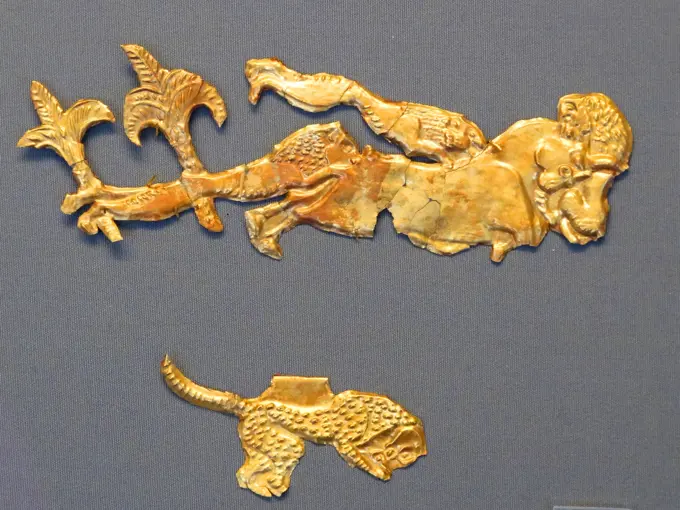
A selection of ornate gold belt fittings and decorative mounts, featuring intricate carvings and historical significance from ancient nomadic tribes.

Ear ornament, anonymous, 1300 - 1400 Ear ornament consisting of an upright leaf with an openwork palm -shaped decoration that is interrupted in the wide section by a decorated protrusion. Indonesia gold (metal) Ear ornament consisting of an upright leaf with an openwork palm -shaped decoration that is interrupted in the wide section by a decorated protrusion. Indonesia gold (metal)
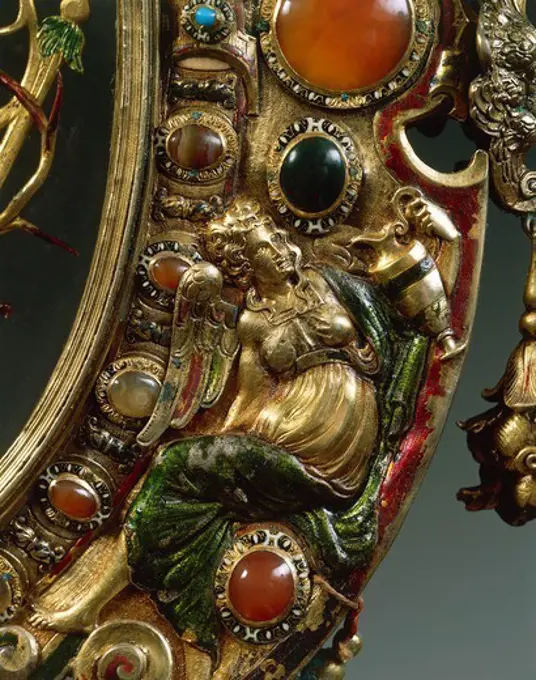
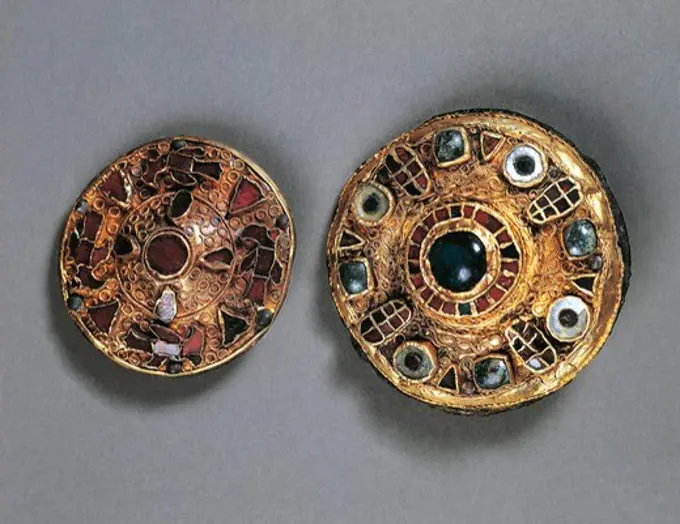
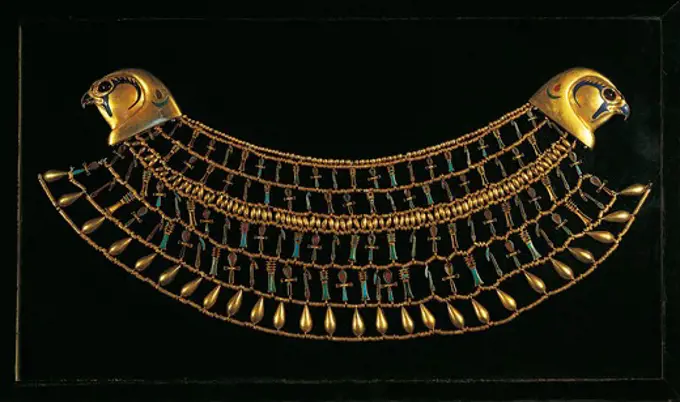
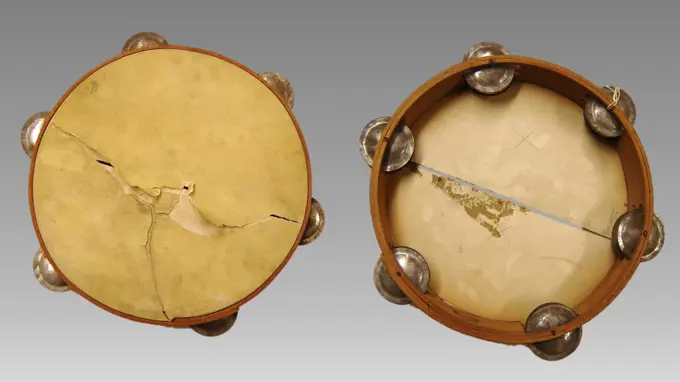
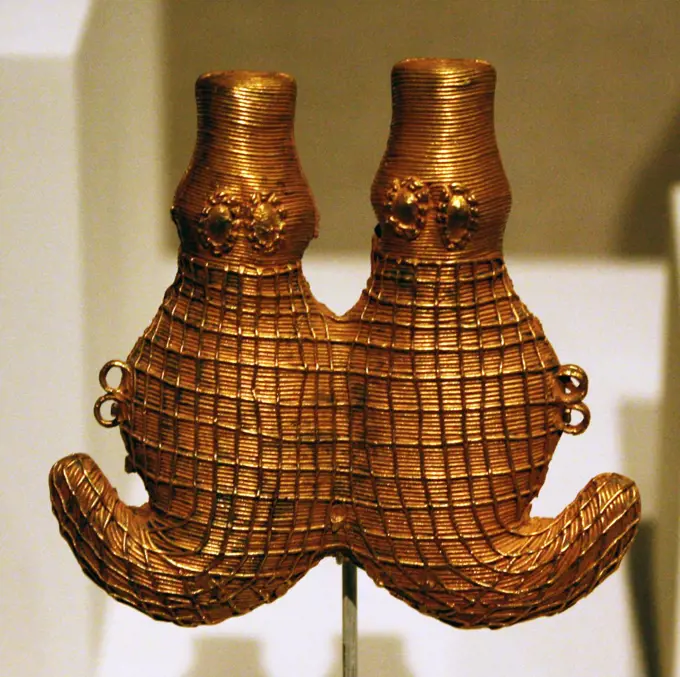
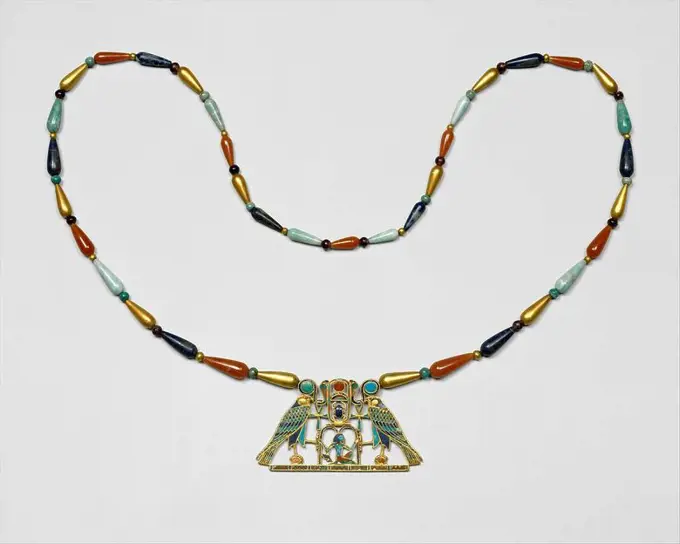
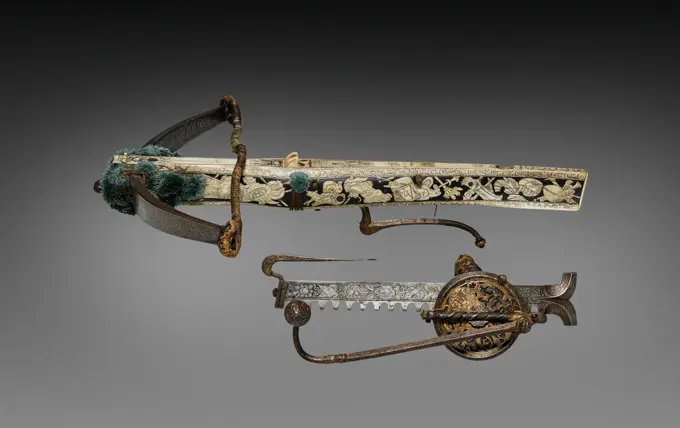
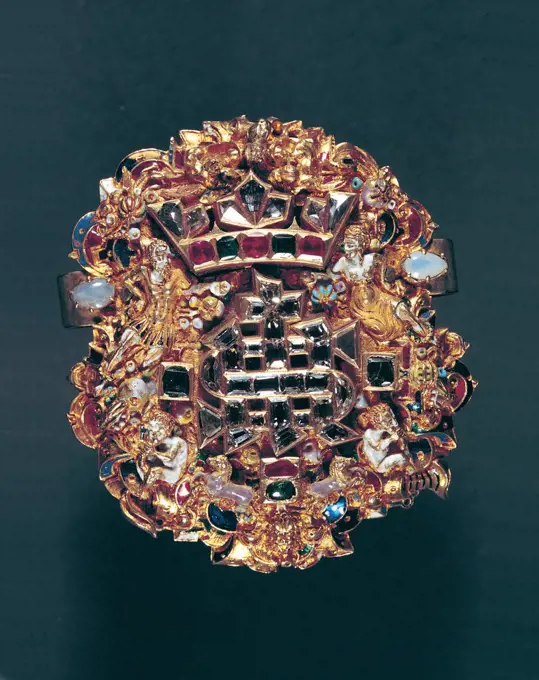
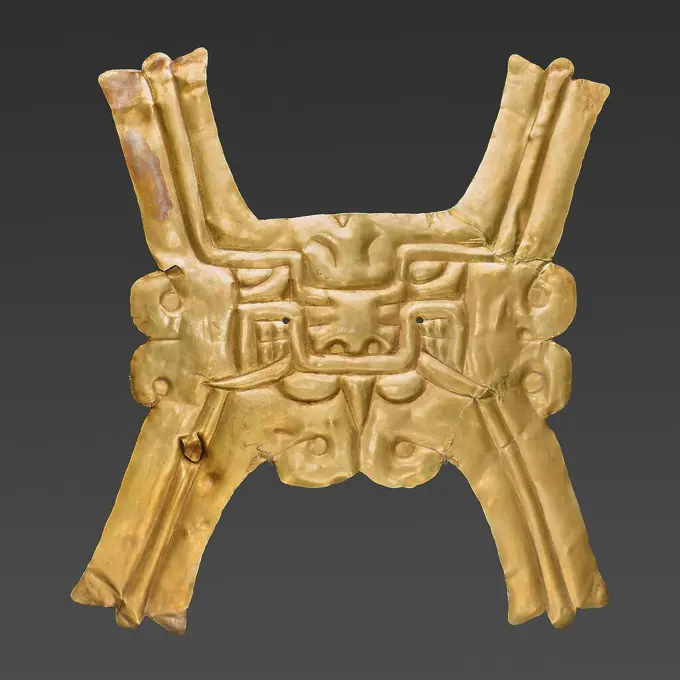
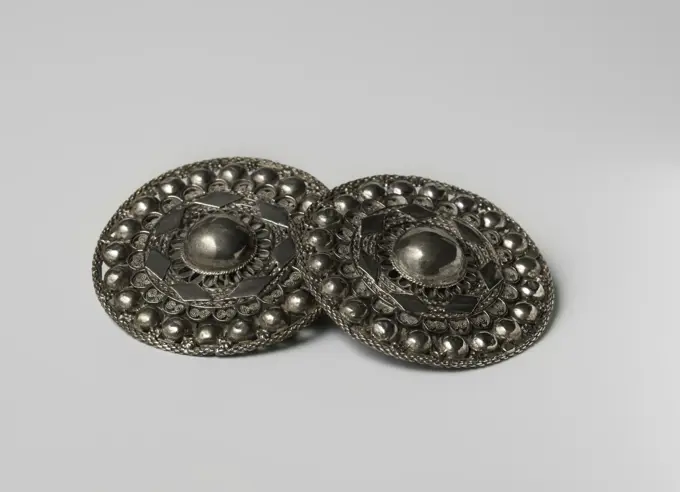
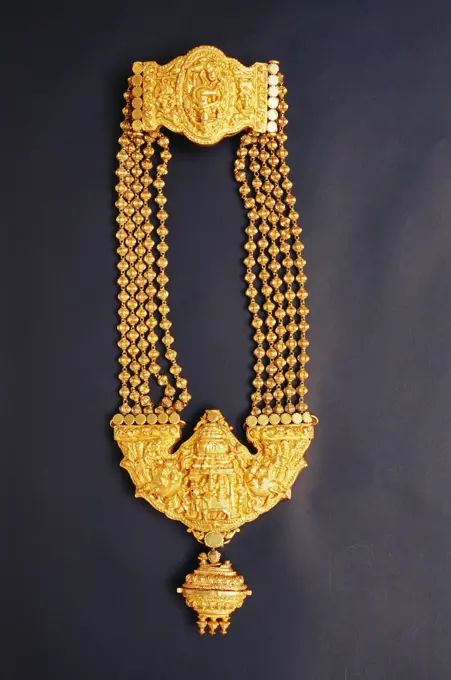
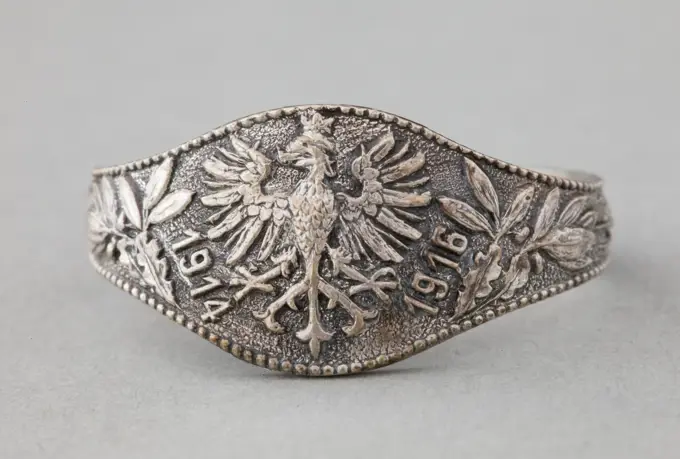
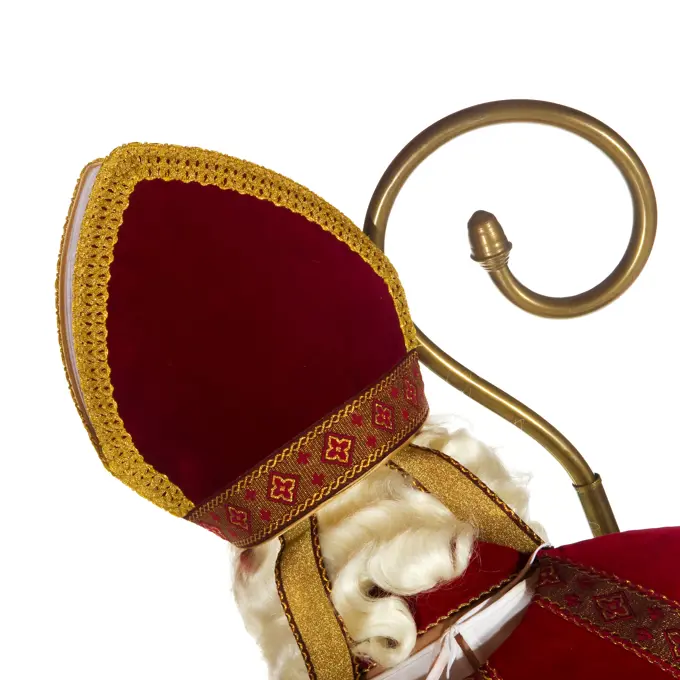
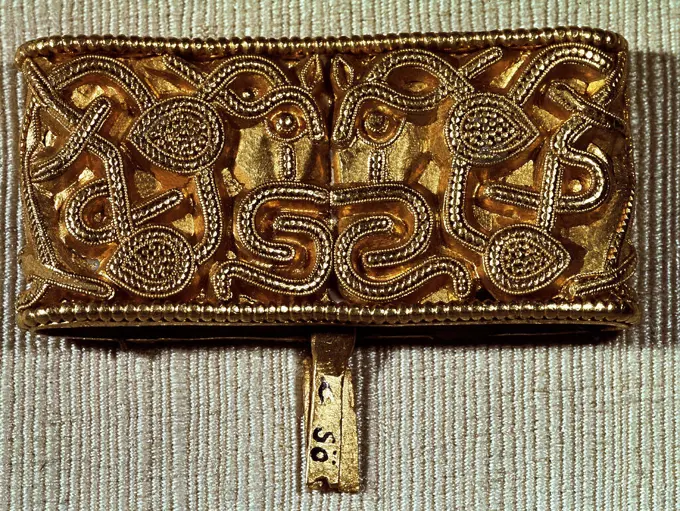
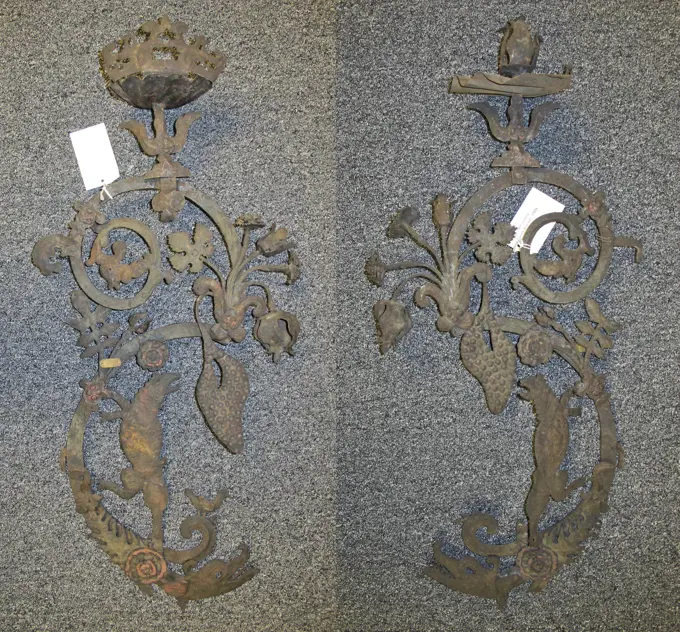
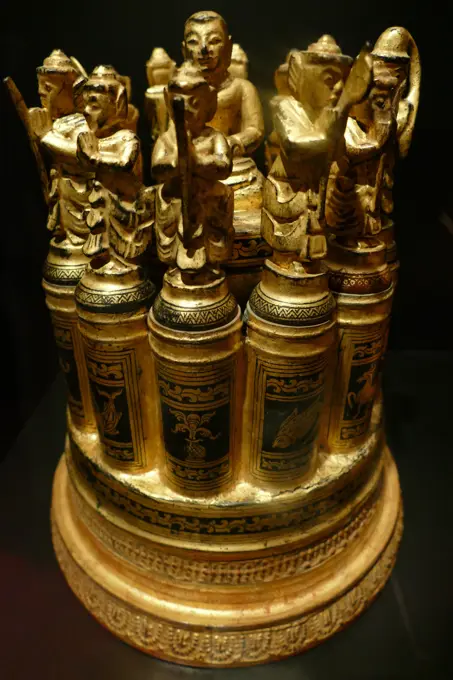
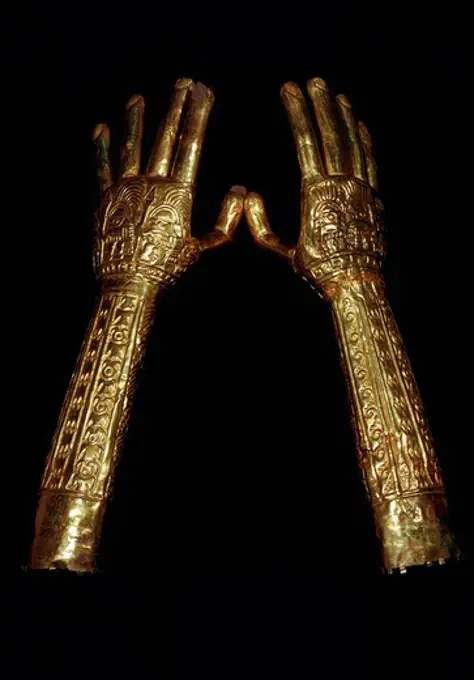
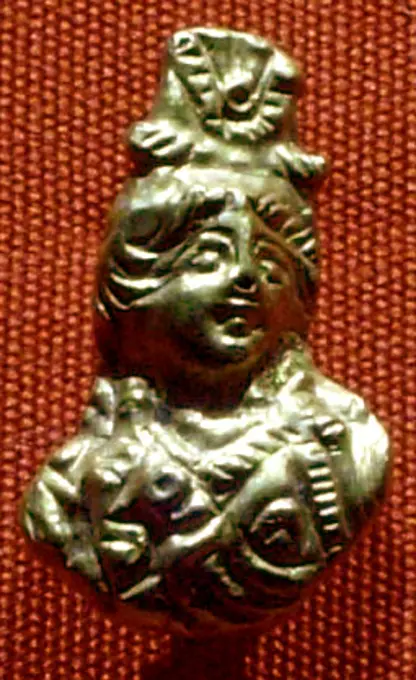
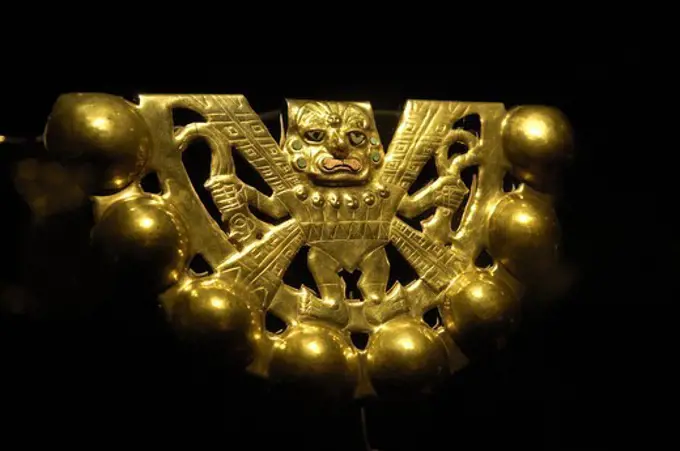
Snip box of gold ,, 1725 - c. 1750 Rectangular snuff box with hinged lid and battery -shaped thumb rest. The walls of the box are bent out and inside. In the profiled lid edge there is a driven plate, on which the goddess Diana with spear and hunting dog is presented, accompanied by a nymph and some children. The show is caught in a cartouche composed of symmetrical rocailles with foam, shells and flower motifs, of which draperies depends. The box is unnoticed. Northern Netherlands (possibly) gold (metal) Rectangular snuff box with hinged lid and battery -shaped thumb rest. The walls of the box are bent out and inside. In the profiled lid edge there is a driven plate, on which the goddess Diana with spear and hunting dog is presented, accompanied by a nymph and some children. The show is caught in a cartouche composed of symmetrical rocailles with foam, shells and flower motifs, of which draperies depends. The box is unnoticed. Northern Netherlands (possibly) gold (metal)Silversmith's art, Italy, 17th century. Cosimo Merlini (1580-1641), Reliquary of the Holy Cross, in gilded silver set with pietre dure. Height cm. 73. Detail.Badge of Honor.Impression Of Seal Cylinder; 1902-20-41Broad collar of Nefer Amulets ca. 1504-1450 B.C. New Kingdom The "nefer" hieroglyph signifies the word meaning "good" or "beautiful," so perhaps this necklace was meant to bring good wishes to the wearer. A collar of this size and craftsmanship belonged to a member of the upper class - in this case, a wife of Thutmose III.. Broad collar of Nefer Amulets. ca. 1504-1450 B.C.. Gold, crizzled glass, Egyptian blue. New Kingdom. From Egypt, Upper Egypt, Thebes, Wadi Gabbanat el-Qurud, Wadi D, Tomb of the Three Foreign Wives of Thutmose III. Dynasty 18Fragment (Italy); linenFibula (buckle)Pre-Columbian Gold pendants. Old traditional pieces dating back to 500AD. The Gold Museum. San Jose. Costa Rica. Central America.Large Round EarOrnamentTorque 8th-early 9th century Indonesia (Java). Torque 49685Gold quiver, from Vergina, Tomb of Philip IIEgypt, Cairo, Necklace that belonged to Princess Khnumit, twelfth dynastyPandereta (tambourine) 19th century Spanish. Pandereta (tambourine) 501455Mount (possibly France); bronze (gilt), goldUnidentified soldier in Union uniform and forage cap with portraits of Lincoln, Johnson, and an unidentified boy in a book-shaped locket with pages. iljunion, pp/liljwoch. Lincoln, Abraham, 1809-1865, Johnson, Andrew, 1808-1875, United States, Army, People, 1860-1870, Boys, 1860-1870, Soldiers, Union, 1860-1870, Military uniforms, Union, 1860-1870, United States, History, Civil War, 1861-1865, Military personnel, Union.Mirror;  beginning of the 18th century (1700-00-00-1710-00-00);Gold decorations for a robe or dress, from Circle A, a 16th-century BC royal cemetery, of the Bronze Age citadel of Mycenae in southern Greece. Characteristic of the early phase of the Mycenaean civilizationDouble crocodile - Code d'Ivoire, 19th-20th century. GoldPectoral and Necklace of Sithathoryunet with the Name of Senwosret II. Dimensions: L. of necklace (b): 82 cm (32 5/16 in.); H. of pectoral (a): 4.5 cm (1 3/4 in.); W. 8.2 cm (3 1/4 in.). Dynasty: Dynasty 12. Reign: reign of Senwosret II. Date: ca. 1887-1878 B.C..This pectoral is composed around the throne name of King Senwosret II. It was found among the jewelry of Princess Sithathoryunet in a special niche of her underground tomb beside the pyramid of Senwosret II at Lahun. Hieroglyphic signs make up the design, and the whole may be read: "The god of the rising sun grants life and dominion over all that the sun encircles for one million one hundred thousand years i.e., eternity to King Khakheperre Senwosret II."This cloisonné pectoral is inlaid with 372 carefully cut pieces of semiprecious stones. The heraldic design is replete with symbolism. Zigzag lines on the base bar represent the primordial waters out of which the primeval hill emerged. Each of the falcons, symbols of the Crossbow and Cranequin of Elector Augustus I of Saxony, c. 1553-73. Germany, Saxony, 16th century. Wood (walnut), bone veneers, flax cord, steel (etched, traces of gilding). woolen pompoms, stock decorated wih inlaid trophies of arms; bow: 58.5 cm (23 1/16 in.); butt: 5.7 cm (2 1/4 in.). This crossbow was a hunting weapon for Prince Elector Augustus I, a member of the ruling elite in the Holy Roman Empire. Augustus, powerful and wealthy, had even the most practical instruments ornately decorated, including this crossbow and its cranequin, or winding device.Pendant (Jkumka), One of a Pair 18th-19th century. Pendant (Jkumka), One of a Pair 446796Jewel with the monogram of the name of Jesus, by Unknown, 1592, 16th Century, cloisonne champleve. Italy, Lombardy, Mantua, Santa Barbara Basilica. Whole artwork. Jewel jewelry barbaric techniques cloisonne champleve brooch gold precious gems almandine: ruby spinel glass paste monogram of Christ crown treasure Gonzaga.Rectangular Box with Lid in the Shape of a Rooster Indonesia (Java). Rectangular Box with Lid in the Shape of a Rooster 49709Gold Pectoral with Zoomorphic Face. Chavín; North coast, Peru. Date: 600 BC-400 BC. Dimensions: 27.9 × 25.4 cm (11 × 10 in.). Gold. Origin: North Coast. Museum: The Chicago Art Institute, USA.Fibula Fragment. UnknownCast Piece of Metal from a Group of Diesinkers ToolsTwo large round Zeeland buttons of silver, Anonymous, 1858 Two large round Zeeland knots of silver. Round with a coarse pearl edge around a rosette that has been deposited by festons. In the middle half a sphere surrounded by openwork arches. Around an edge of windows. The knots are connected by a silver link. Netherlands silver (metal) Two large round Zeeland knots of silver. Round with a coarse pearl edge around a rosette that has been deposited by festons. In the middle half a sphere surrounded by openwork arches. Around an edge of windows. The knots are connected by a silver link. Netherlands silver (metal)Badge (probably from Horse Harness). Culture: Spanish. Dimensions: H. 2 3/8 in. (6 cm); W. 2 in. (5.1 cm); Wt. 0.5 oz. (14.2 g). Date: 14th century. Museum: Metropolitan Museum of Art, New York, USA.Rudraksha malai, rudraksha seeds are encased in gold worn only on special occasions by chettiar men, Tamil Nadu, India Copyright: xMxAmirtham/DinodiaxPhotoxItaly, Apulia, Tiara with oak leaves, goldEtruscan civilization, Ivory comb with relief depicting two winged sphinxes from Marsiliana Albenga, Banditella necropolis, Circolo degli Avori, Tuscany region, Italy, 4th century b.c.Toasts stand, with a web; Korzec (Porcelain Manufaktura; 1790-1832); 1828 (1828-00-00-1828-00-00);AK" monogram, purchase (provenance), gilded beltLoop. GAL 1990-148-286Pair of Stirrups (Yob Cha) 15th-18th century Tibetan. Pair of Stirrups (Yob Cha) 25116Funerary Equipment Belonging to Three Foreign Wives of Thutmose III, Metropolitan Museum of Art, Manhattan, New York City, USA, North AmericaTORQUES DE ORO DEL TESORO DE BERZOCANA. BRONCE JOYERIA. (DEPOSITO: MUSEO ARQUEOLOGICO NACIONAL).NotCAJA Y CHICHONERA DE UN RELOJ REPETIDOR S XVIII. Location: PRIVATE COLLECTION. MADRID. SPAIN.Comb. Culture: American. Dimensions: W. 4 3/4 in. (12.1 cm). Maker: Florence Koehler (1861-1944). Date: ca. 1905.Embodying the ideals of the Aesthetic and Arts and Crafts movements, Florence Koehler worked in a variety of decorative media, including domestic interiors, china decorating, jewelry, and painting. In jewelry, as in pottery and painting, Koehler exhibited a scholar's sense of the past and a modernist's eye for the contemporary. Favoring pearls, gems, unpolished gold, and muted enamel, she derived inspiration from Renaissance designs during her extended stays in England, France, and Italy.This suite of a brooch (or pendant), necklace, and comb was made around 1905 for Emily Crane Chadbourne, daughter of the Chicago industrialist Richard T. Crane. The four-strand necklace has a gold clasp formed of green enameled leaves and a cluster of pearls. The necklace could be worn alone or with the accompanying emerald, sapphire, and pearl pendant attached to the clasp. With its four reNecklace with cameo of Veronica's Veil. Culture: Italian, Rome. Dimensions: Overall (length of chain with tassels): 27 15/16 in. (71 cm);Overall (cameo): 2 3/4 x 1 13/16 in. (7 x 4.6 cm);Overall (Display footprint): 12 x 6 in. (30.5 x 15.2 cm). Maker: Firm of Castellani. Date: ca. 1870.This object and the group to which it belongs (see also 2014.713.1-.10) reflect the keen interest in historical styles in nineteenth-century Europe. Artists and designers looked to various artistic periods for forms and motifs. There was also an interest in reproducing works of art from earlier epochs with historical accuracy--an approach that is particularly evident in the taste for so-called archaeological jewelry (jewelry based on excavated examples from antiquity), which reached its zenith in the middle of the century.The jewelry made during this period encompassed Etruscan, ancient Roman, early Christian, Byzantine, and medieval styles. The firm of Castellani in Rome both pioneered and dominatedMelanesian tribal shield made from painted wood. from Papua New Guinea early 20th centuryEarflare Frontal 6th-7th century Moche (Loma Negra). Earflare Frontal 312509RingHoop earrings with disk and with conical pendant of balls and granules A.D. 2nd-3rd century Roman Period. Hoop earrings with disk and with conical pendant of balls and granules 547942Sinterklaas Sinterklaas with head at his back isolated over white ,model released, Symbolfoto Copyright: xZoonar.com/IvonnexWierinkx 7227025 ,model released, Symbolfoto ,property released18th century, gold and silver ornamental casket for female jewellery. Bardo Museum TunisiaPair of Sword-Grip Ornaments (Menuki). Culture: Japanese. Dimensions: Menuki (a); L. 7/8 in. (2.2 cm); Wt. 0.2 oz. (5.7 g); menuki (b); L. 1 in. (2.5 cm); Wt. 0.2 oz. (5.7 g). Date: late 16th-early 17th century. Museum: Metropolitan Museum of Art, New York, USA.Scandinavian art. Piece of ornament from a Viking scabbard. Gold.Spirally Twisted Tubular Bracelet with Sliding Clasp 2nd Century A.D.Berber brooches, Maghreb, "Corral del Carbón" , "al-fundaq al-yadida", 14th century, Granada, Andalusia, Spain.Pair of Candle Brackets, 1700s. Italy, 18th century. Wrought iron; overall: 78.8 x 35.6 cm (31 x 14 in.).Medal of Hayes and Wheeler Reform & Victory”.   Subject: Rutherford Birchard Hayes, American, 1822-1893  Subject: William A. Wheeler, American, 1819-1887Cáliz, siglo XV. Museo parroquial de Longares.Box containing compartments for powdered medicines with a Buddha figure at centre. 19th century lacquered wood. Myanmar.Lluís Masriera / Broche con mariposa, 1904. Colección privada. Author: LLUÍS MASRIERA I ROSÉS.Belt buckle, clasp in two parts. 19th century AD, Eastern Tibet.Hexagons (Italy); linen, metallic thread; a) H x W: 8.2 x 24.8 cm (3 1/4 x 9 3/4 in.) b) H x W: 8.2 x 24.8 cm (3 1/4 x 9 3/4 in.); Bequest of Richard Cranch Greenleaf in memory of his mother, Adeline Emma Greenleaf; 1962-50-198-a,bPre-Inca Chimu coastal culture gold funeral gloves at Mujica Gallo Museo de Oro, Lima, Peru.Egyptian civilization. Crown of Pharaoh Nebkheperre AntefVintage rustic cutlery in an old Bazaar placeGane  19th century (1830-00-00-1870-00-00);Figurine of a dragon on a white background, souvenirPendant: Bust of Isis 30 B.C.-A.D. 330 Roman Period Isis is identifiable by her crown with plumes, horns and a sun disk. The knotted garment and corkscrew curls are often associated with Greco-Roman images of the goddess.. Pendant: Bust of Isis 547918Button, 1801-50; cut steelGolden ritual rattle for the waist (3rd c. AD). Moche or Mochica Art. PERU. LAMBAYEQUE. Sipn. Royal Tombs of Sipn Museum.