Antique Gold Artifacts

Intricate gold objects including handles and ornaments showcasing intricate designs from various historical periods and cultures.

Spherical Pendant or Button Byzantine 900-950 This handsomely worked, hollow sphere may have decorated the border of an official scarf, like the loros worn by the Byzantine emperor, or have been used as a button to hold together the outermost vestments of members of the Orthodox clergy. Similar works have been found at Preslav, the capital of the Bulgarian empire in the early tenth century. View more. Spherical Pendant or Button. Byzantine. 900-950. Cloisonné enamel and gold. Made in Bulgaria (possibly). Enamels-Cloisonné
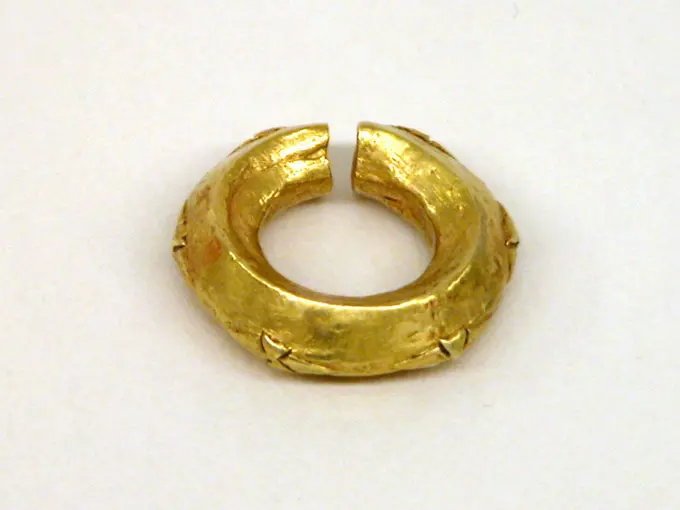
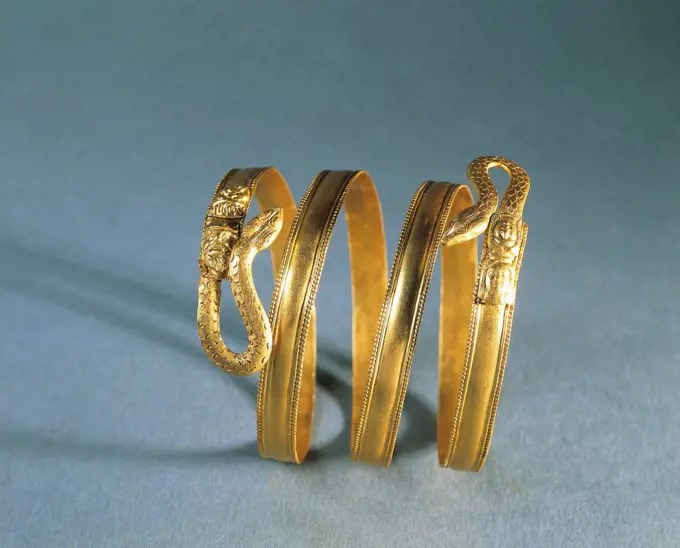
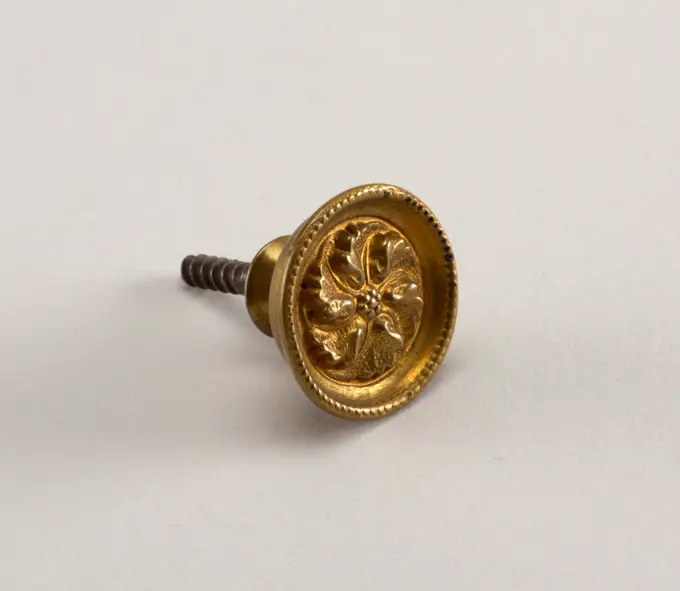
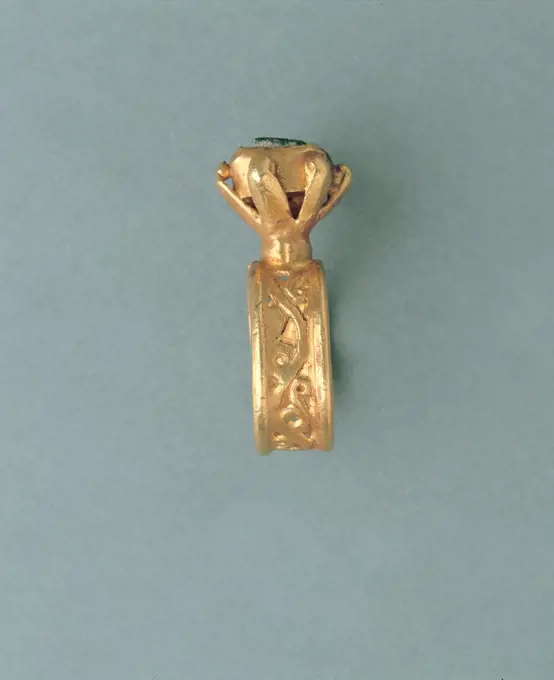
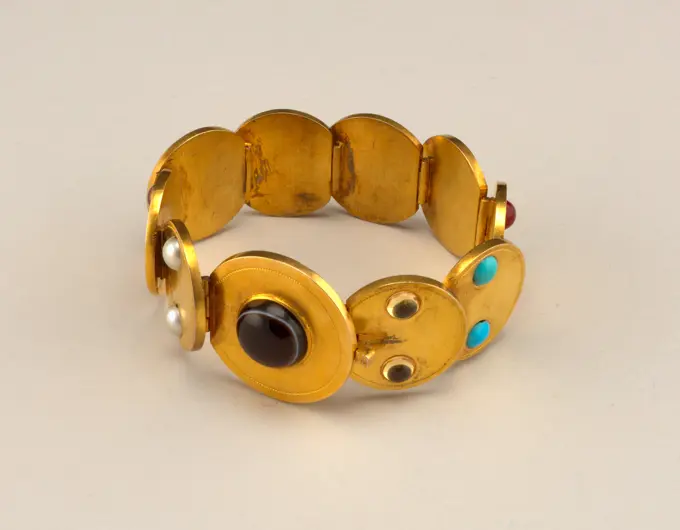
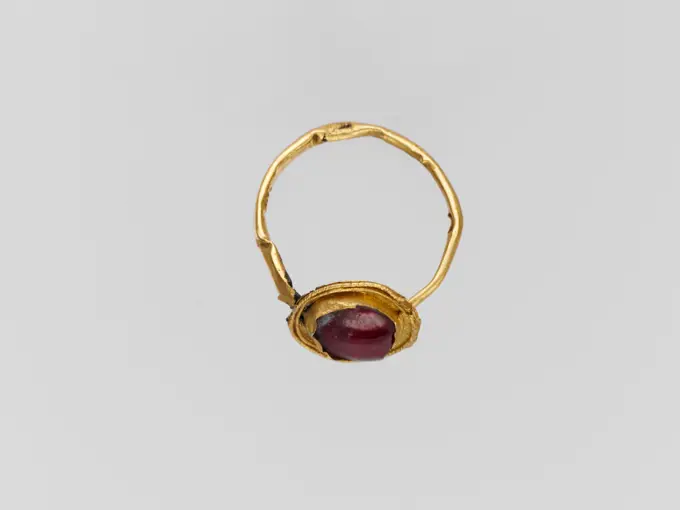
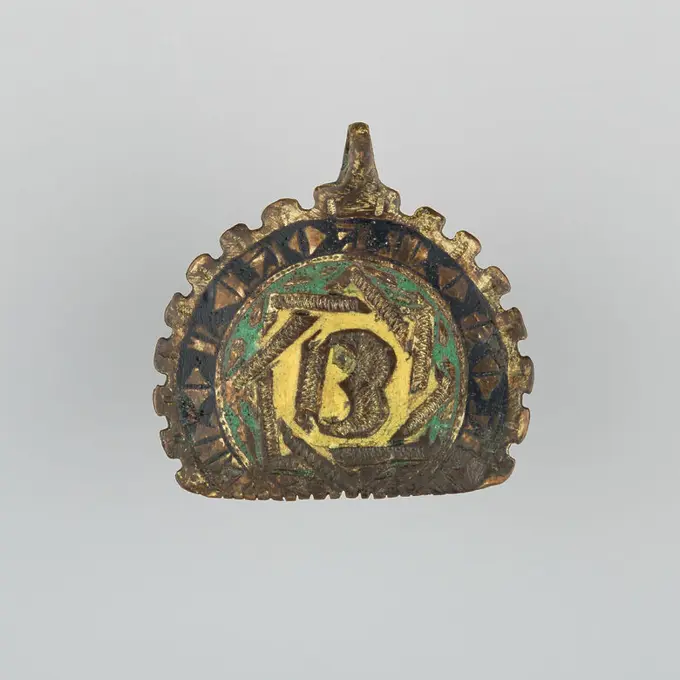
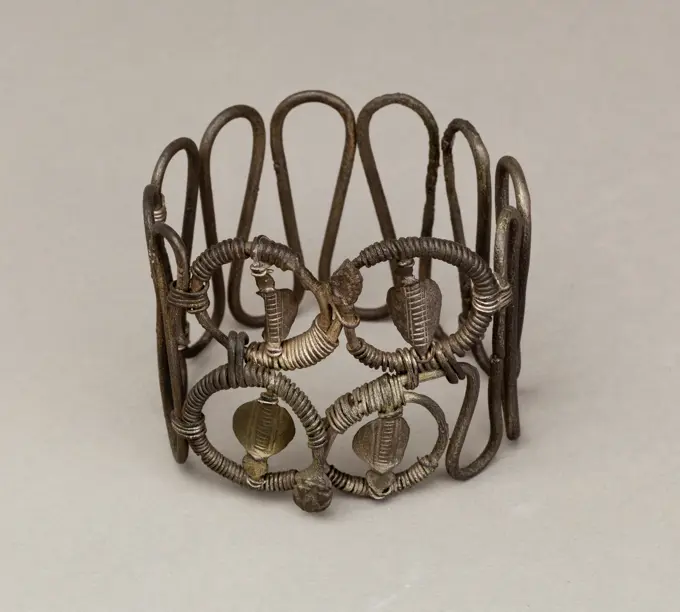
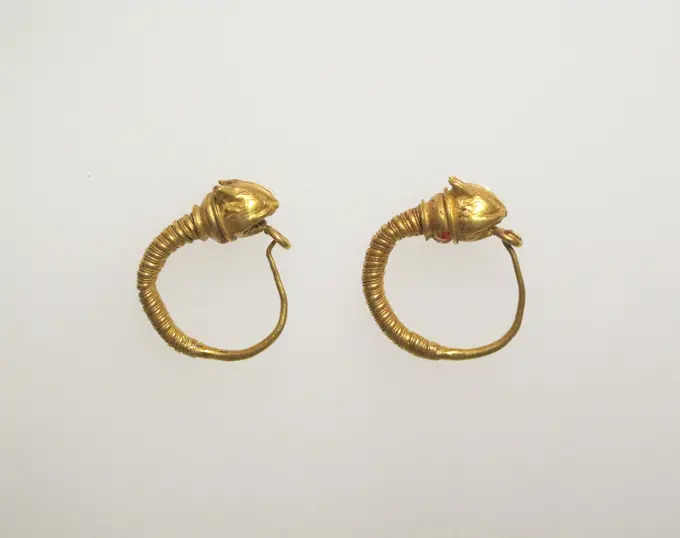
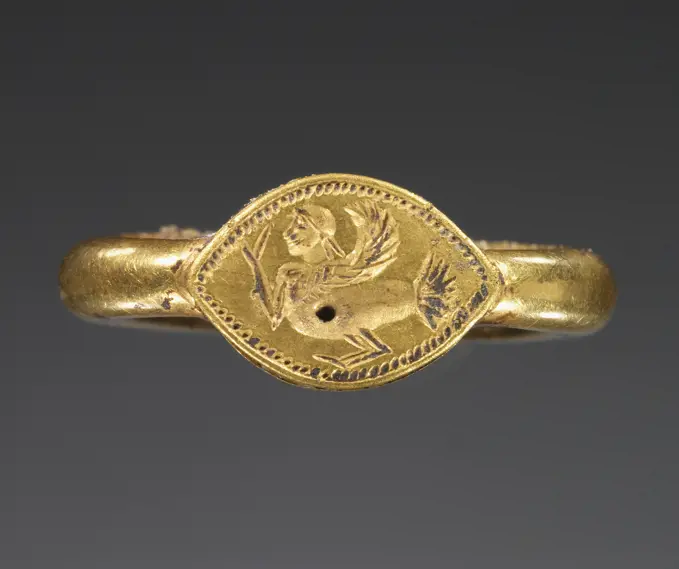
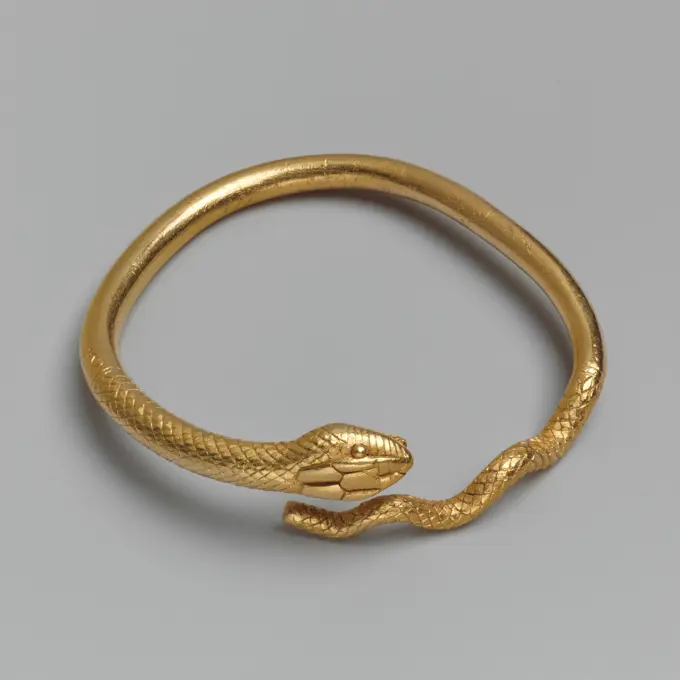
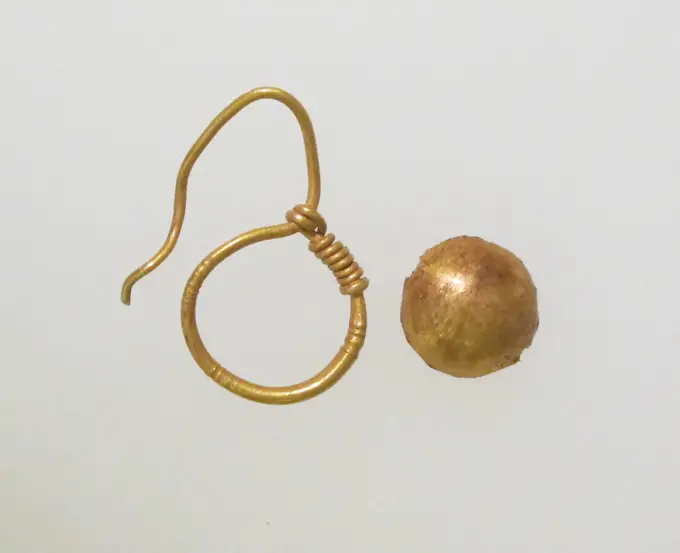
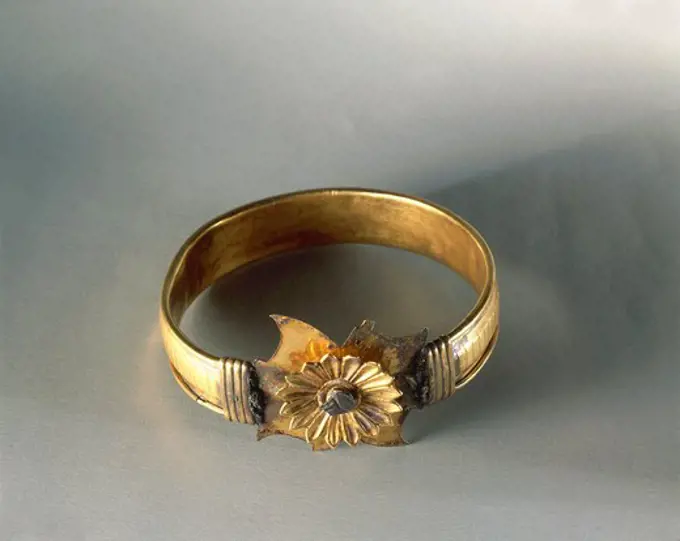
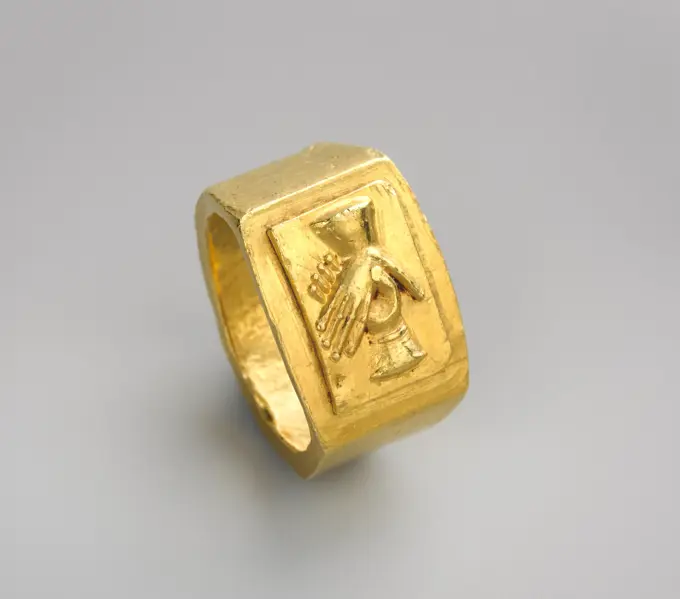
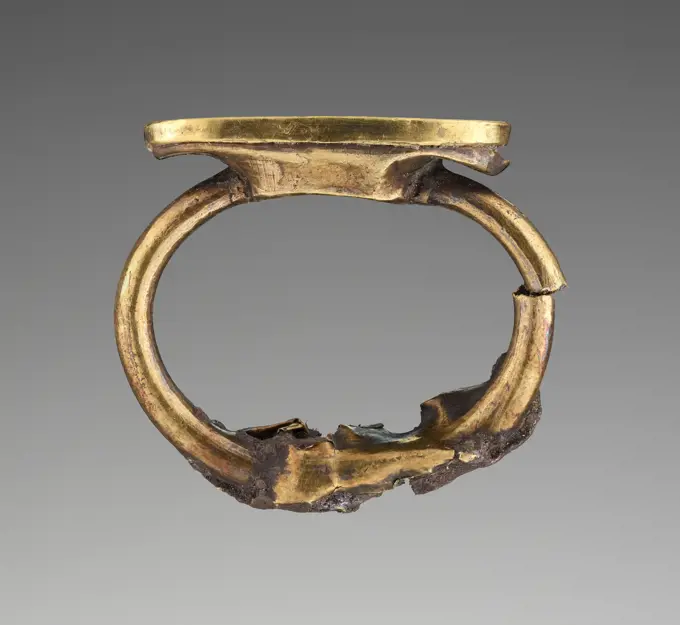
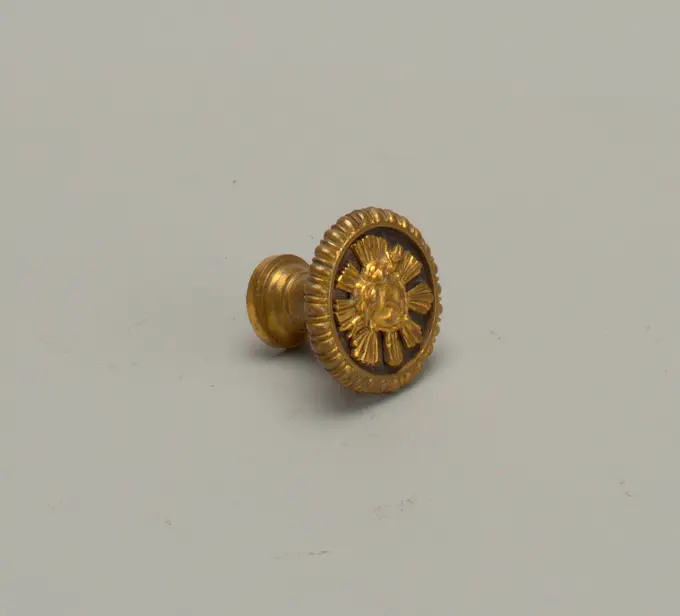
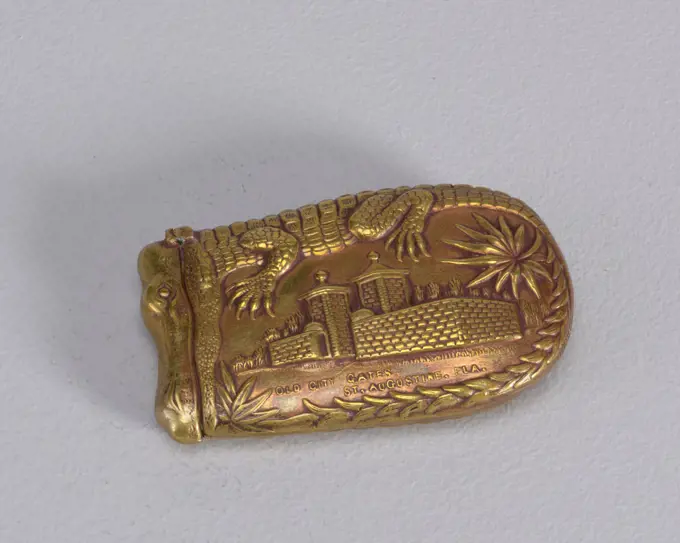
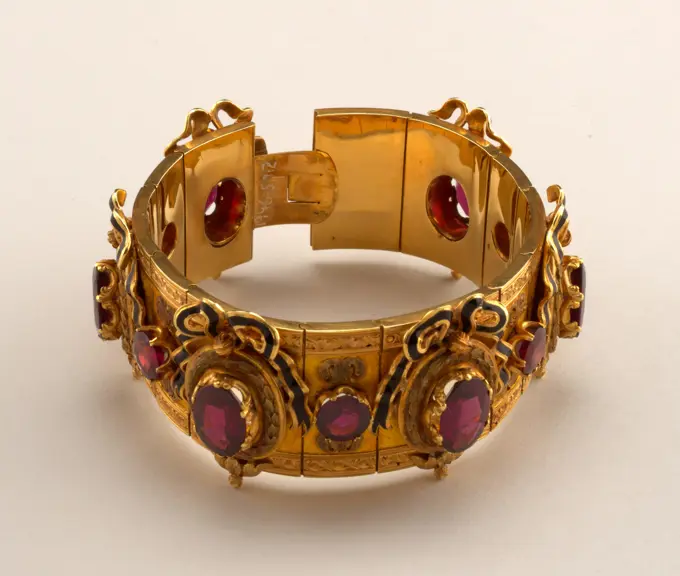
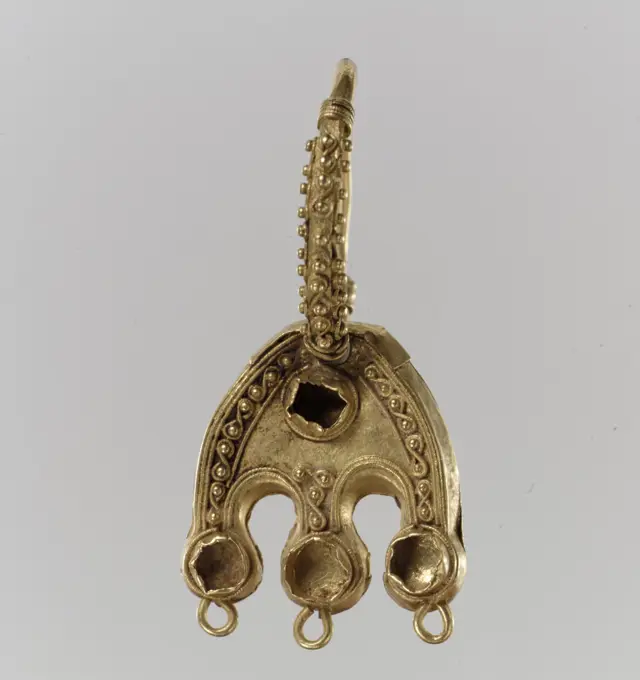
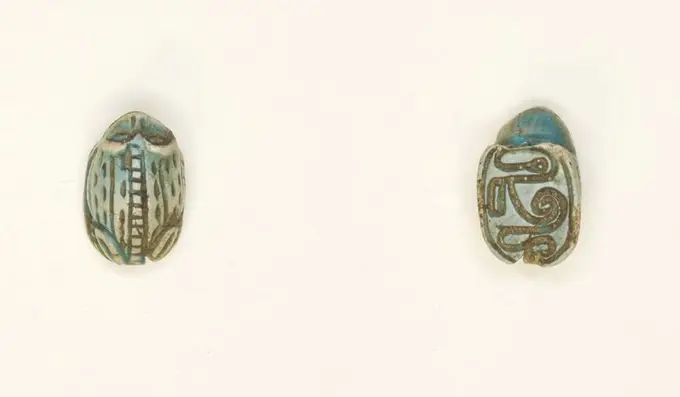
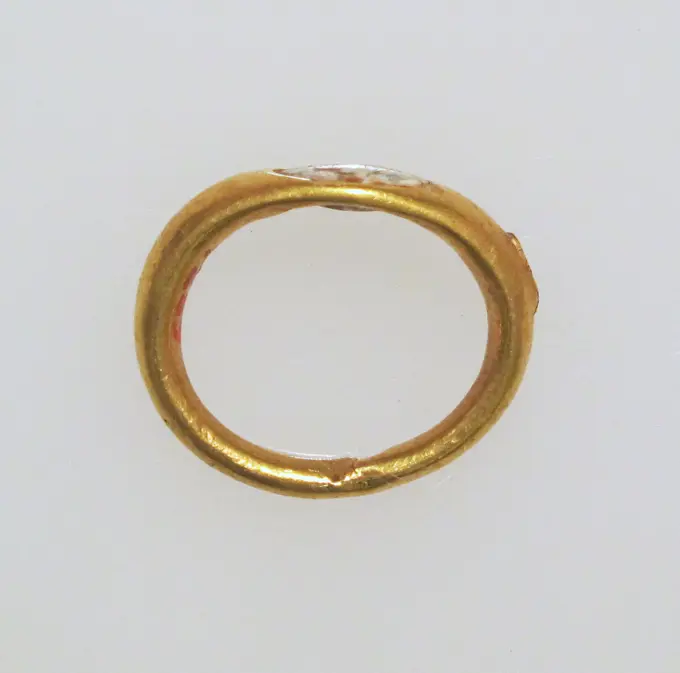
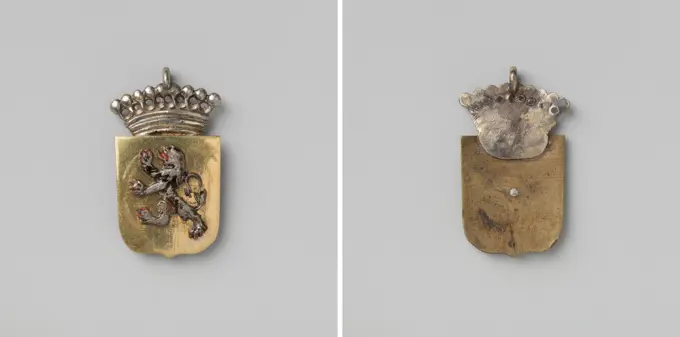
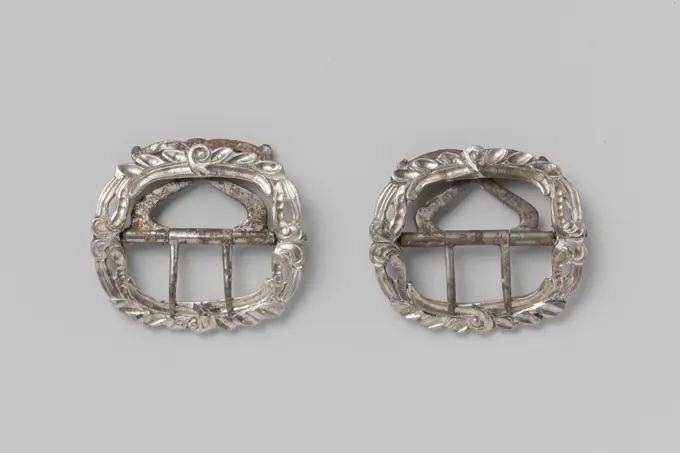
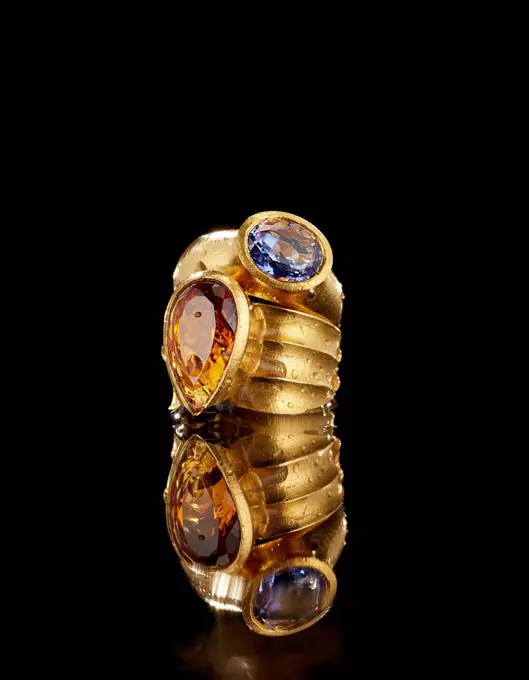
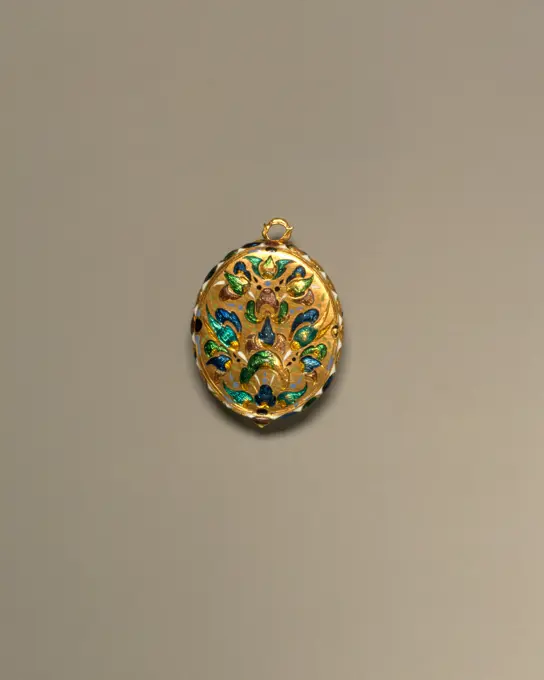
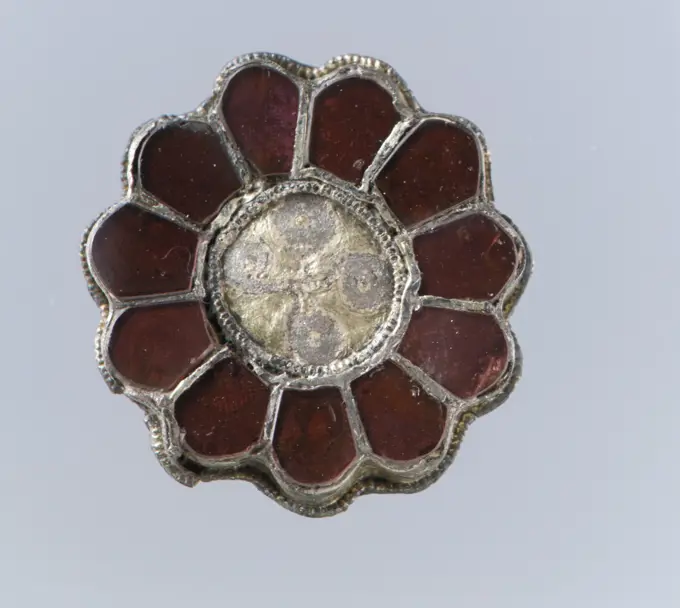
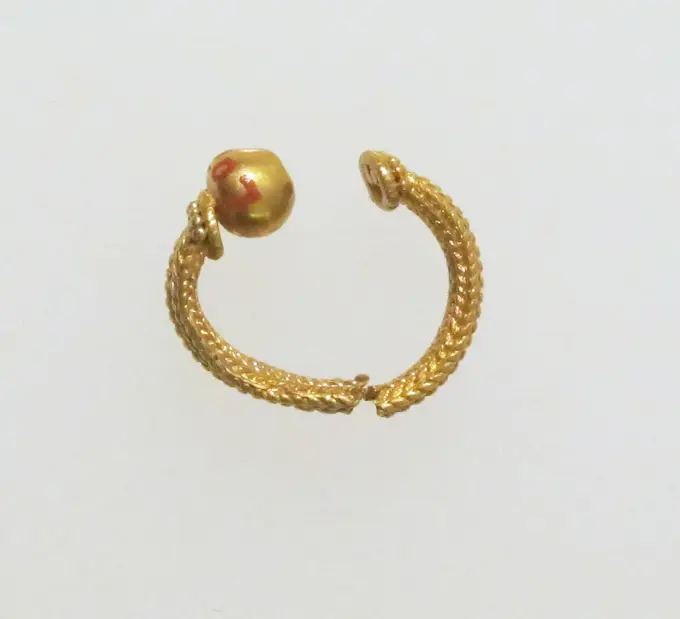
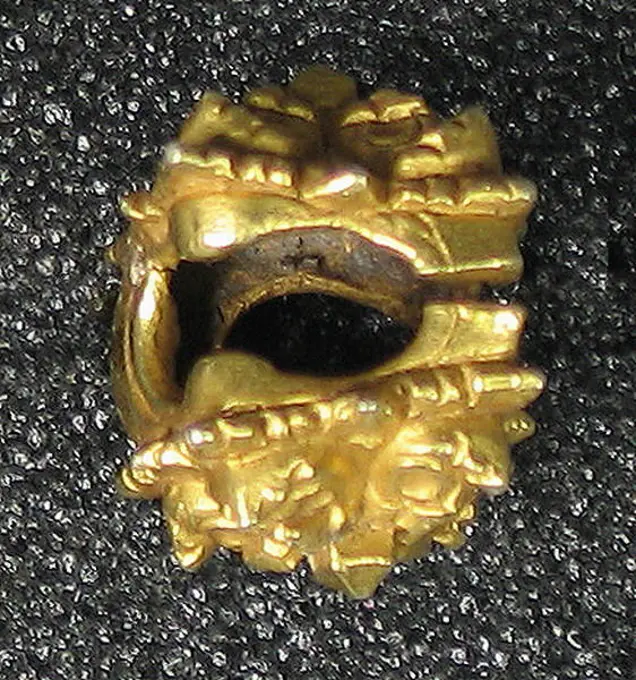
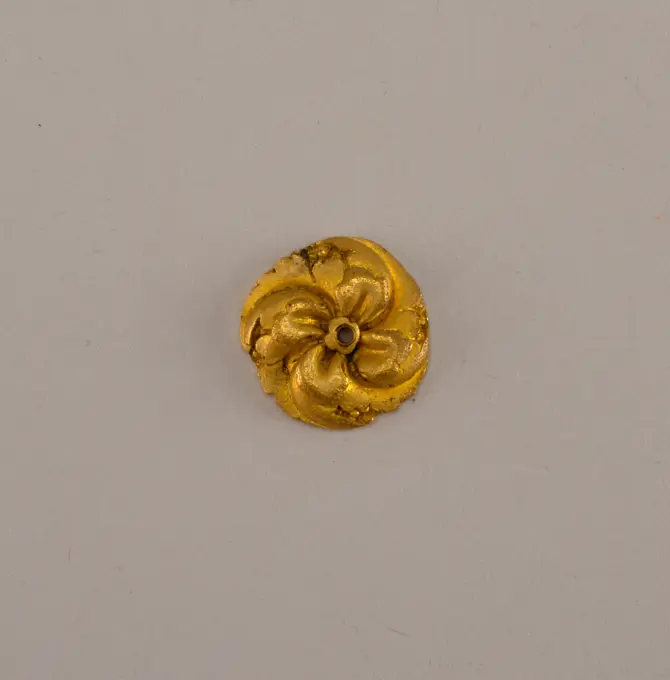
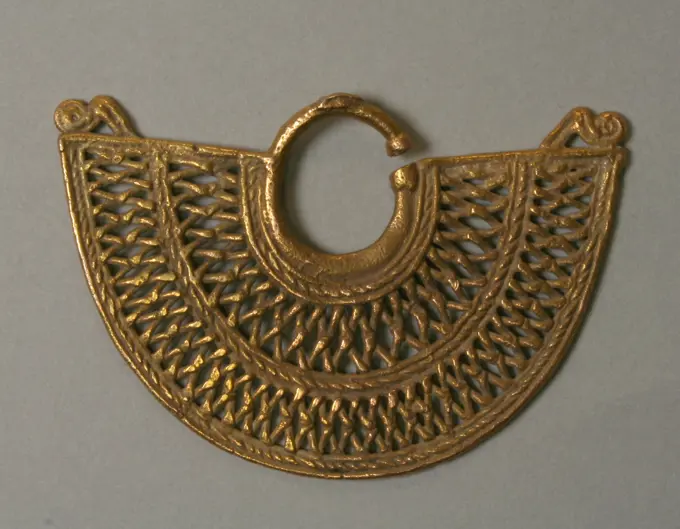
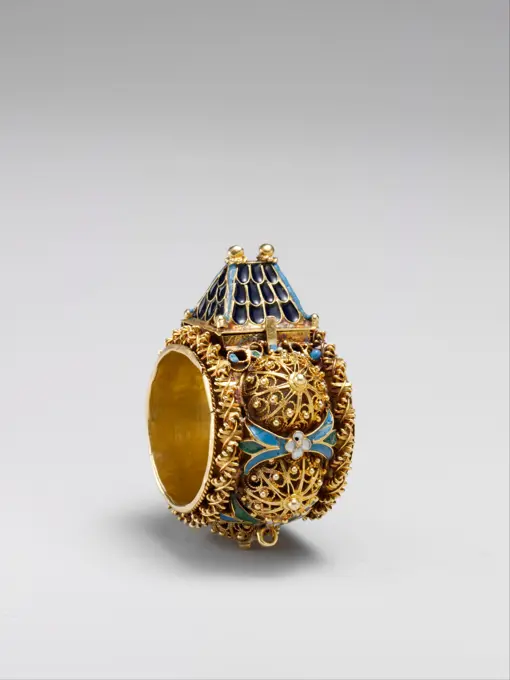
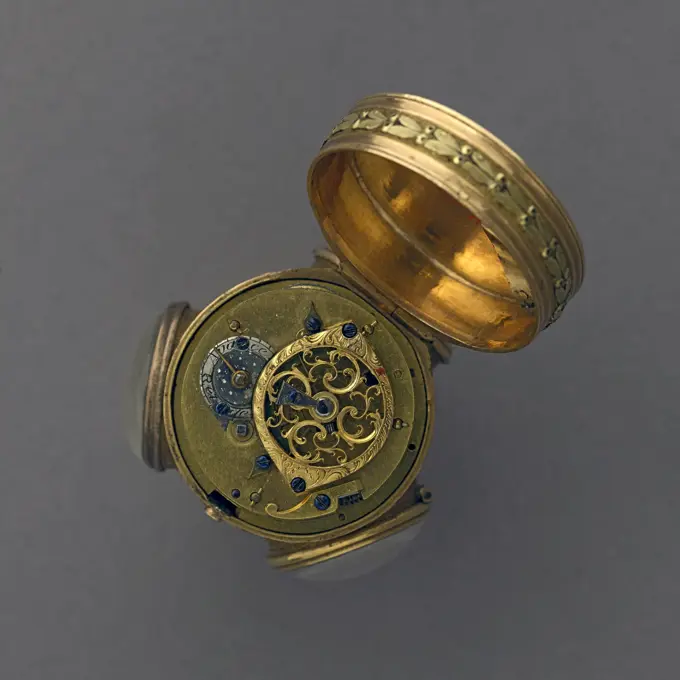
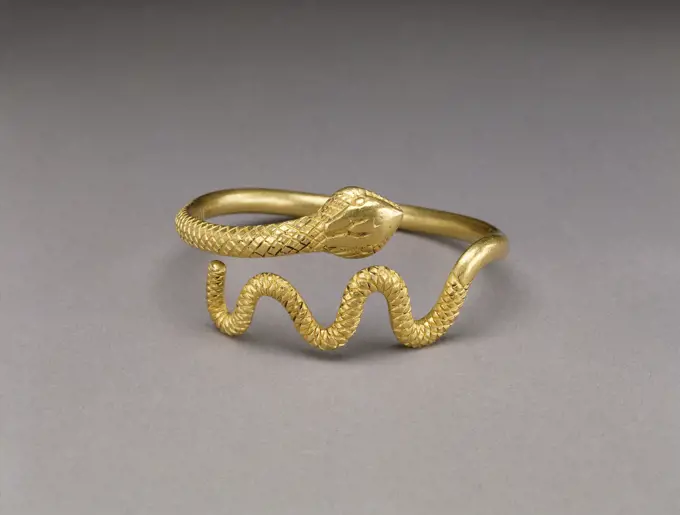
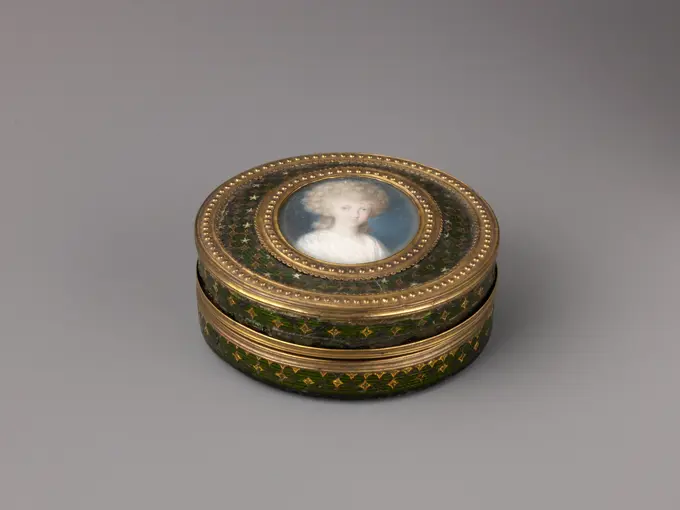
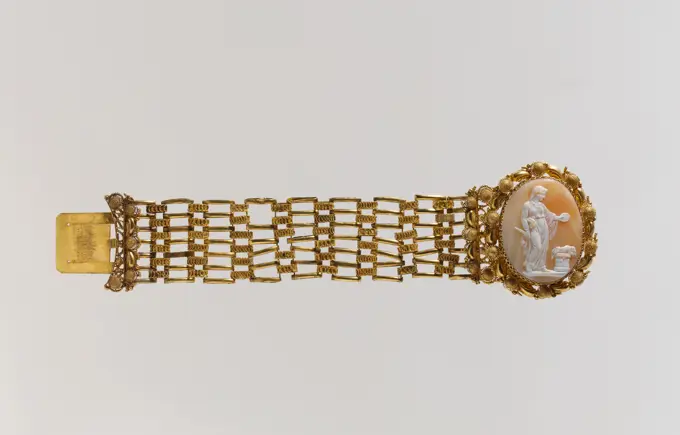
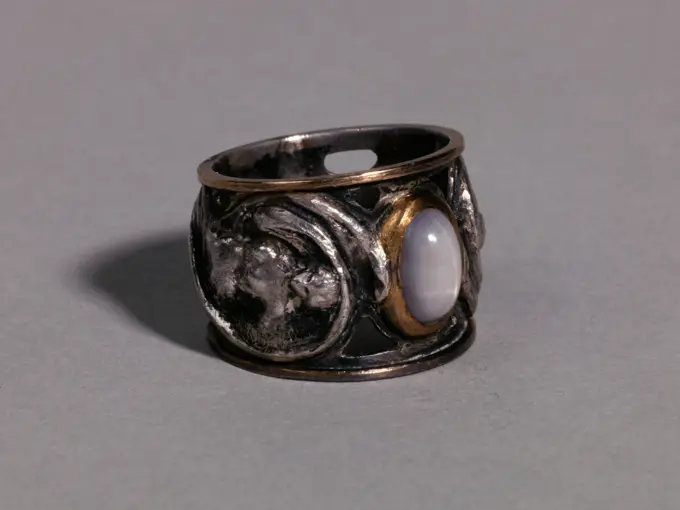
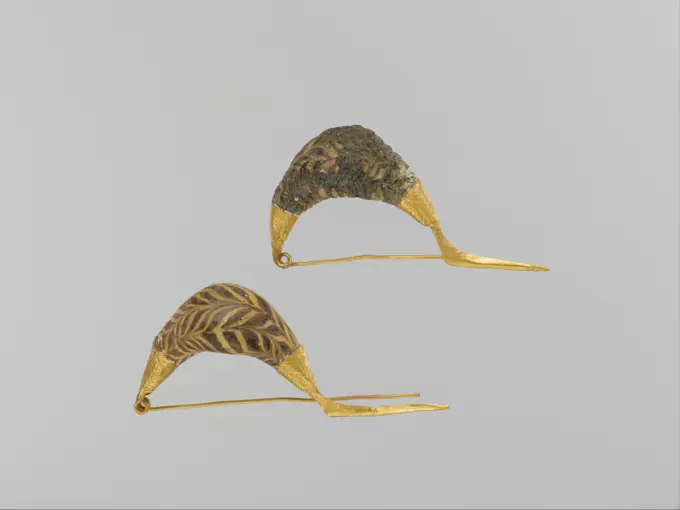
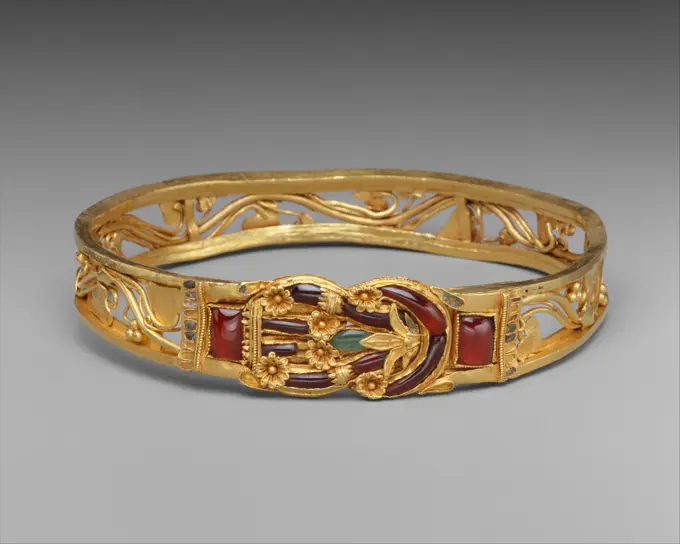
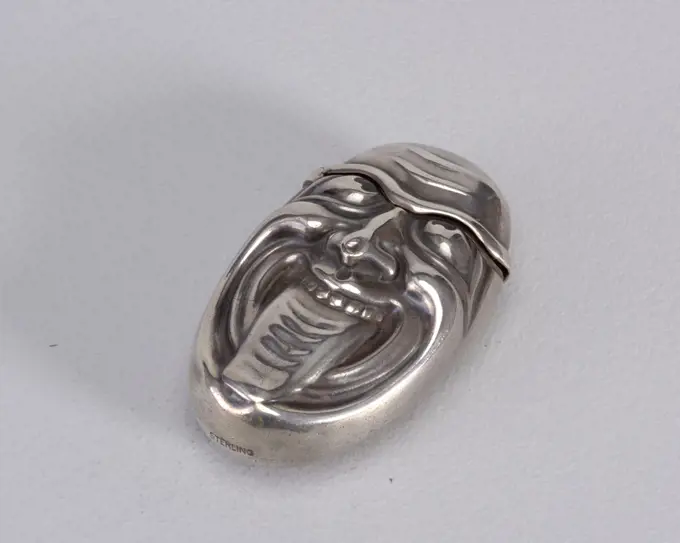
Handle (France); gilt bronzeCircular Ear Ornament Second half of the 8th-second half of the 10th century Indonesia (Java). Circular Ear Ornament 50094Pendant in the Shape of a Tortoise ca. 12th century Indonesia (Java). Pendant in the Shape of a Tortoise 50065Earring, crescent-shaped. Earring, crescent-shaped 243285Gold spiral ca. 1600-1100 B.C. Cypriot Of plain wire with two turns.. Gold spiral. Cypriot. ca. 1600-1100 B.C.. Gold. Late Bronze Age. Gold and SilverEar Ornament Second half of the 8th-second half of the 10th century Indonesia (Java). Ear Ornament 40122Spiral gold bracelet, Italy. Goldsmith art. Greek civilization, Magna Graecia.Bracelet (the Latin words NONRELINQUES on one side, NONRELINQUAM on the other) Bracelet; Made by Fortunato Pio Castellani & Sons (Italy); Italy; gold; H: 1.5 cm x L: 17.6 cm x D: 0.8 cmSpherical Pendant or Button Byzantine 900-950 This handsomely worked, hollow sphere may have decorated the border of an official scarf, like the loros worn by the Byzantine emperor, or have been used as a button to hold together the outermost vestments of members of the Orthodox clergy. Similar works have been found at Preslav, the capital of the Bulgarian empire in the early tenth century. View more. Spherical Pendant or Button. Byzantine. 900-950. Cloisonné enamel and gold. Made in Bulgaria (possibly). Enamels-CloisonnéEarring, crescent-shaped. Earring, crescent-shaped 243300Sword-Hilt Collar and Pommel (Fuchigashira) 18th-19th century Japanese A fuchigashira is a pair of matching sword fittings comprising the fuchi (collar at the base of the grip of the sword hilt) and kashira (pommel cap at the end of a sword hilt).. Sword-Hilt Collar and Pommel (Fuchigashira). Japanese. 18th-19th century. Copper-gold alloy (shakud), gold. Sword Furniture-Fuchi-KashiraKnob Knob; brassMountGold ring with quadrangular bezel with emerald glass pulp from the necropolis of Senise, by Unknown, 7th Century, cloisonne goldsmith's art. Italy, Campania, Naples, National Archaeological Museum. Whole artwork. Profile thickness ring quadrangular setting: bezel glass pulp emerald side cloisonne ring body with bow-shaped animal decoration Longobard barbaric art Lucania duchy: dukedom Benevento.Kolczyki w kształcie lwich głów. unknown, authorKnob (France)Goldsmith's art, Italy, 16th century. Chiseled gold ring set with ruby.Bracelet (possibly France); gold; Overall: 19.5 x 3 x 0.5 cm (7 11/16 x 1 3/16 x 3/16 in.)Gold ring with garnet ring stone late 4th-2nd century B.C. Greek or Cypriot Of thin foil with a round garnet in a box setting.. Gold ring with garnet ring stone. Greek or Cypriot. late 4th-2nd century B.C.. Gold, garnet. Hellenistic. Gold and SilverBadge (probably from Horse Harness). Culture: Spanish. Dimensions: H. 2 3/8 in. (6 cm); W. 2 7/16 in. (6.2 cm); Wt. 1 oz. (28.3 g). Date: ca. 1400. Museum: Metropolitan Museum of Art, New York, USA.Bracelet or armlet with uraei 304 B.C.-A.D. 364 Ptolemaic or Roman Period. Bracelet or armlet with uraei. 304 B.C.-A.D. 364. Silver. Ptolemaic or Roman Period. From Egypt, Central Delta, Tell el-Balamun (Diospolis Inferior), Carnarvon/Carter excavations, 1913Pair of Ear Ornaments with Bead in Collar 8th-12th century Indonesia (Central Java). Pair of Ear Ornaments with Bead in Collar 64224Ear Clip Second half of the 8th-second half of the 10th century Indonesia (Java). Ear Clip 49759A great fart with a glass paste;  Hellenistic period (-332-00-00--30-00-00);Rupiński G.Quail and Floral Decoration Matchsafe; Manufactured by Gorham Manufacturing Company (United States); USA; silver; 6.2 x 3.7 x 1.7 cm (2 7/16 x 1 7/16 x 11/16 in. )Archer's Ring 16th-17th century Turkish. Archer's Ring. Turkish. 16th-17th century. Bronze. Archery Equipment-Archer's RingGold bracelet 6th-5th century B.C. Greek, Cypriot Solid and quite plain, of a pair with 74.51.3555.. Gold bracelet. Greek, Cypriot. 6th-5th century B.C.. Gold. Gold and SilverRing, Before 1916. Greece or Italy, Rome (). Gold; diameter: 1.5 cm (9/16 in.).Earring with head of lynxes 4th-3rd century B.C. Greek. Earring with head of lynxes. Greek. 4th-3rd century B.C.. Gold. Gold and SilverRing. Ring 243525Siren; Greece; about 500 B.C; Gold; 1.4 × 1 cm (9,16 × 3,8 in.)EarringStirrup-shaped Ring with Oblong Bezel with "Nagari" Second half of the 9th-first quarter of the 10th century Indonesia (Java). Stirrup-shaped Ring with Oblong Bezel with "Nagari" 50385Gold bracelet in the form of a snake ca. 300-250 B.C. Greek, Ptolemaic This massive bracelet or armlet is cast in solid gold. The scales and details of the snake's head were chased after casting.. Gold bracelet in the form of a snake. Greek, Ptolemaic. ca. 300-250 B.C.. Gold. Early Hellenistic. Gold and SilverEarring with nail head pendant, 12 Cypriot. Earring with nail head pendant, 12 242645Bracelet, Gold, Gem-set gold disc bracelet., possibly France, 19th century, jewelry, Decorative Arts, BraceletEarring, delta-shaped. Earring, delta-shaped. Gold. Gold and SilverBracelet with flower from Greece, Mycenae, Grave Circle A, Tomb IVAmulet, Waisted by Triple Wire Twist 8th-12th century Indonesia (Central Java). Amulet, Waisted by Triple Wire Twist 64240Gold finger ring 3rd century A.D. Roman This impressive ring was used as a betrothal or wedding banda tradition that only became firmly established in the third century A.D. The small size of the hoop suggests that it was given to a young fiancée or bride, but its weight implies that the couple was able to afford valuable pieces of gold jewelry.. Gold finger ring. Roman. 3rd century A.D.. Gold. Late Imperial. Gold and SilverWinged Lion and Sphinx; Etruria; 550 - 500 B.C; Hoop: gold-plated silver; bezel: gold; 1.9 × 0.9 cm (3,4 × 3,8 in.)Gold spiral. Culture: Cypriot. Dimensions: Length: 1 1/4 in. (3.1 cm). Date: ca. 1600-1100 B.C..Of plain wire with one turn. Museum: Metropolitan Museum of Art, New York, USA.HookRing. Ring of gold-plated silver with rose slipping diamonds. The whole in the shape of a bow.'Old City Gates, St. Augustine, Fla.', Watson Company, Brass, Oblong, right side rounded, left side formed to resemble top of alligator's head, upper edge resembling alligator's back, featuring raised decoration of architectural monument, inscribed 'Old City Gates, St. Augustine, Fla.' beneath, surrounded by raised form of alligator, whose tail wraps down and around curved right side of box. Reverse features raised decoration of monument, inscribed 'Old Fort Marion, St. Augustine, Fla.' beneath. Top of alligator's head flips open at jaw line as box lid. Raised scales on alligator's back likely intended as striker., ca. 1910, containers, Decorative Arts, Matchsafe, MatchsafeRing with Hoop of Twisted Wire Second half of the 8th-second half of the 10th century Indonesia (Java). Ring with Hoop of Twisted Wire 50412Gold earring with head of an antelope 4th-3rd century B.C. Greek Consisting of a circlet of gold wire, twisted or plain, which tapers from an animal's head at the front end to a hooked point which passes through a loop below the animal's throat.. Gold earring with head of an antelope 242900Earring with plain loop and disc. Earring with plain loop and disc 243128Matchsafe (probably France); straw over cardboard, sandpaper; 7.5 x 4.2 x 1.6 cmGold hook type earring with discs in filigree. Gold hook type earring with discs in filigree. Gold. Gold and SilverBracelet (France); gold, black enamel, garnetsEarring 6th-7th century Byzantine or Langobardic Fashionable in Italy for at least a century before the arrival of the Langobards, earrings of the basket” variety, like the many shown in this case, quickly became part of Langobardic women’s dress.. Earring. Byzantine or Langobardic. 6th-7th century. Gold. Made in probably Italy. Metalwork-GoldScaraboid: Frog. Egyptian. Date: 1650 BC-1295 BC. Dimensions: 1.6 × 0.6 × 0.8 cm (5/8 × 1/4 × 5/16 in.). Glazed steatite. Origin: Egypt. Museum: The Chicago Art Institute, Chicago, USA. Author: Ancient Egyptian.in Aesthetic Style with Diagonal Opening Matchsafe; Made by Tiffany and Co. (United States); USA; silver; 6.5 x 3.3 x 1.5 cm (2 9/16 x 1 5/16 x 9/16 in. )Bell; Non -like Lona Huta; around 1840-1850 (1840-00-00-1850-00-00);Ring with turquoise. Ring with turquoise. Gold, turquoise . Gold and SilverEarring with nail head pendant, 12 Cypriot. Earring with nail head pendant, 12 242651Brabantse Revolution, Anonymous, 1789 - 1790  One -sided silver crowned coat of arms to Sea Eye; Standing, black lion on gold -colored coat of arms under pearl roy, in which eight recesses were left between pearls; Nagel is visible on the downside, with which lion is attached to shield. Belgium silver (metal). copper (metal) striking (metalworking) / soldering / gildingSilver buckle with decorated edge and a hinged part in which two teeth, Willem Hoogkamer, c. 1790 - c. 1800 Buckle of silver with decorated edge and a hinged part in which two teeth marked. Middelburg whole: Silver (Metal) forging Buckle of silver with decorated edge and a hinged part in which two teeth marked. Middelburg whole: Silver (Metal) forgingGolden ring with tanzanite and citrineButton, conical with ribs and leafy eye. Knot, conical shape with six ribs that come together in a point and a leafy eye.Hexagonal BezelRingLocket ca. 1620-40 probably French. Locket. probably French. ca. 1620-40. Gold, partly enameled; rock crystalRosette Brooch 550-650 Frankish Garnets, worked in the cloisonné technique, featured prominently in the luxury jewelry of the Franks. Jewelers would solder small compartments arranged in geometric patterns onto the surface of a metal disk. In those cells, or cloisons, they would place a textured piece of gold foil, which would show through the thin translucent garnet that would then be set on top.. Rosette Brooch 465385 Frankish, Rosette Brooch, 550650, Silver-gilt, garnets with patterned foil backings, Gilded silver with garnets, glass, and pearl, Overall: 1 1/8 x 3/16 in. (2.8 x 0.4 cm). The Metropolitan Museum of Art, New York. Gift of J. Pierpont Morgan, 1917 (17.192.79)Earring Etruscan Plaited open ring with ball at one end.. Earring 245961Earrings with Foliate Decoration 8th-12th century Indonesia (Central Java). Earrings with Foliate Decoration 64443Mount; gilt bronzeMountGold lunate earring with scrolls 6th7th century A.D. Byzantine. Gold lunate earring with scrolls. Byzantine. 6th7th century A.D.. Gold. Gold and SilverEar Ornament A.D. 1-1000 Zenú Metalworkers made this ear ornament by lost-wax casting. (For more information on this process, please see Metropolitan Museum of Art 2008.569.13a, b.) The entire piece was designed in wax at one stage, whether created from a pre-existing mold or not (please see below). The object has the appearance of filigree, that is, work in metal wire, but these wire-like elements in the design were built in wax and then cast as metal. The object is made of gold or more likely a gold alloy with copper. It appears nearly identical to Metropolitan Museum of Art 1974.271.58 but the surface of the present example appears more golden, while the other appears pinker. The ornament at hand feels heavier than the other one. Coarse, or large, metal grains, in a dendritic or tree-like form, are visible on the surface on both sides, suggesting that the workers pre-heated the mold and the molten metal cooled slowly, facilitating the growth of large grains. Like 1974.271.59, this eEarring of simple form Cypriot. Earring of simple form 242586Jewish betrothal ring Eastern European or Italian 17th or 19th century It is difficult to date and localize the large, ornamented rings that were created for use in synagogues during the wedding ritual. However, there is ample evidence that examples such as this one were exchanged during Italian Jewish weddings. The groom would place it on the bride's finger, but after the ceremony the ring would have been kept as a prized memento by either the family or the temple community. The gable roofperhaps symbolizing the Temple of Jerusalemopens to reveal the words "Good Luck."The Carambolo treasure, 8th century BC, Bracelet, Archaeological museum, Sevilla, Region of Andalusia, Spain, Europe.Cane pommel, gold chopped with three colors, watch with three dials. Foreign work (Switzerland). End of the 18th century or early 19th century. Paris, Cognacq-Jay museum. 35352-31 Dial, watchmaking, mechanism, watch, gold chisel, cane pommel, Switzerland, abroad work, three dialsSnake Bracelet; Egypt; 3rd - 2nd century B.C; Gold; 6.6 cm (2 5,8 in.)BraceletSnuffbox with a Portrait of a Woman ca. 1785 French On this modest interpretation of a Parisian gold box, the concentric circles simulate engine-turned grooves, and the rims recall the gold-beaded edges of boxes dating about 1775 - 85. The miniature, which is original, has a somewhat provincial style that is consistent with the dating of the box but does not permit attribution to a specific artist.. Snuffbox with a Portrait of a Woman 460489Ring with Large Purple Oval-Shaped Stone in Plain Mount 8th-early 10th century Indonesia (Java). Ring with Large Purple Oval-Shaped Stone in Plain Mount 50145A folding Quran stand Jammu-Kashmir. Openwork gold-damascened steel in Koftgari technique .Ring isolated on white backgroundMourningRing. Honorand: E. Gatchel, died 1758Brooch And Box (Italy); seed pearls, metalHat pin unknownHeaddress Ornament China. Headdress Ornament. China. Gold, pearl. Ming dynasty (1368-1644). JewelryCharm bracelet with gourmet switches made of silver, c. 1950 - c. 1960 Charm bracelet of silver with twenty -eight charms, including a well, a penguin, a car, a shield, a key, a shoe, a horn, a sea horse, another key, a lantern, a shield with the three -country point in Vaals, a house, A jug, a teat, a pig, a gondola, a camera, a Jacobs shell, an elephant, a jug, a sitting animal, a horseshoe, a mand bottle, a tea or coffee pot, a starfish and a poodle. One of the keys is the key on the occasion of 'Open the village' in Arnhem (for the disabled) by Mies Bouwman. Netherlands silver (metal) Charm bracelet of silver with twenty -eight charms, including a well, a penguin, a car, a shield, a key, a shoe, a horn, a sea horse, another key, a lantern, a shield with the three -country point in Vaals, a house, A jug, a teat, a pig, a gondola, a camera, a Jacobs shell, an elephant, a jug, a sitting animal, a horseshoe, a mand bottle, a tea or coffee pot, a starfish and a poodle. One of the keys iBracelet (part of a set) mid-19th century Italian, probably Naples Made to catch the eye of a shopper bent on ballroom glory, the cameos in this set of jewelry (99.33.1-.6) bear typical Grand Tour images, including (on the necklaces clasp) Guido Renis Aurora fresco of 1614 (Palazzo Pallavicini-Rospigliosi, Rome), mythological scenes, peasants of the Roman campagna, and (on both the pin and the necklace) Bertel Thorvaldsens ever-popular marble relief Night of 1815 (Thorvaldsens Museum, Copenhagen). Billing doves grace the earrings, and on one of the bracelets are a comely marine divinity and a dolphin.The rather flimsy fittings of stamped gold filigree suggest that this was costume jewelry, not meant to be worn often.. Bracelet (part of a set) 188478 Italian, probably Naples, Bracelet (part of a set), mid-19th century, Gold, shell (Cassia rufa), Overall: 1 13/16 x 6 15/16 in. (4.7 x 17.6 cm); visible cameo (confirmed): 35.2 x 28 mm. The Metropolitan Museum of Art, New York. Gift of Glass monochrome inlay fragment 1st half of 1st century A.D. Roman Translucent cobalt blue, opaque light blue, and translucent blue.Flat section, probably of an inlay, in three layers of glass.Some elongated bubbles; surface polished; dulling and creamy weathering on back; jagged edges weathered.. Glass monochrome inlay fragment. Roman. 1st half of 1st century A.D.. Glass; cast. Early Imperial, Julio-Claudian. GlassHenry Eugène Nocq (1868-1944). Ring. Money, opal. Museum of Fine Arts of the City of Paris, Petit Palais. 79583-3 Silver, ring, jewel, opal, stone, 19th 19th 19th 1919th 19th centuryGlass network mosaic bowl fragment late 1st century B.C.-early 1st century A.D. Roman Rim fragment.Translucent blue, opaque yellow, and colorless.Applied coil rim with beveled inner lip; convex curving side. Rim in blue with fine white spiral thread; body decorated with six colorless canes, slanting from top left to bottom right, decorated with two spirally twisted yellow threads; below, plain blue band.Pinprick bubbles; exterior polished, with pitting of surface bubbles; dulling, pitting, and creamy weathering on interior; jagged, weathered edges.. Glass network mosaic bowl fragment 257205Bracelet, 1800s. India, Lahore. Silver; diameter: 5.2 cm (2 1/16 in.).Tile, Glazed and lustered stonepaste, Shaped as a six-pointed star; painted in brown and white with luster glaze: elephant with large and small dots in center with floral motifs, surrounded by white border with brown calligraphy., Kashan, Iran, 13th century, tiles, Decorative Arts, TileWrapped WireRingGold sanguisuga-type fibulae (safety pins) with glass paste bows late 8th-early 7th century B.C. Etruscan Glass was a rare and expensive commodity in archaic Italy. A number of fibulae with bows made of glass paste have been excavated at Etruscan sites from Bologna to Veii but all of these have bronze pins and catch plates. Our examples, the only ones known to employ gold, must have significantly enhanced their owner's status.. Gold sanguisuga-type fibulae (safety pins) with glass paste bows 250536 Etruscan, Gold sanguisuga-type fibulae (safety pins) with glass paste bows, late 8thearly 7th century B.C., Gold, glass, Other: 3 9/16 in. (9 cm). The Metropolitan Museum of Art, New York. Rogers Fund, 1917 (17.230.120, .121)Belt Buckle (Denmark); Designed by Georg Arthur Jensen (Danish, 1866-1935); Manufactured by Georg Jensen Sølvsmedie (Denmark); silver, agate, amber; Overall: 6.5 x 13 cm (2 9/16 x 5 1/8 in.)Gold crescent-shaped earring 2nd half of the 5th century B.C. Greek, Cypriot This shape of earring has a long tradition in the ancient Near East, stretching back to the Early Bronze Age.. Gold crescent-shaped earring 243022Gold Earring with Pearls and Sapphires 6th-7th century Byzantine These elegant earrings are decorated with pearls, a favorite jewel of the Byzantines. Sapphires, then called hyakinthoi (hyacinths), became popular in Byzantine jewelry in the sixth century.. Gold Earring with Pearls and Sapphires 464028 Byzantine, Gold Earring with Pearls and Sapphires, 6th7th century, Gold, sapphire, pearls, Overall: 2 3/8 x 15/16 x 1/2 in. (6.1 x 2.4 x 1.2 cm) w/o hook: 1 9/16 x 15/16 x 3/8 in. (4 x 2.4 x 0.9 cm) Wt.: 12g. The Metropolitan Museum of Art, New York. Gift of J. Pierpont Morgan, 1917 (17.190.145)Tin ring, very poorly finished, ring ornament clothing accessory clothing soil find tin metal, d 0.3 cast Pewter ring Shield on which some grids can be seen but unclear exactly what it represents Rope decor over the ring. Cast in one go but the mold has shifted uneven casting seams archeology Rotterdam railway tunnel adorn prosperity status Soil discovery: Railway tunnel 1988-1993.Gold armband with Herakles knot 3rd-2nd century B.C. Greek The Herakles knot on this sumptuous armband is enriched with floral decoration and inlaid with garnets, emeralds, and enamel. According to the Roman writer Pliny, the decorative device of the Herakles knot could cure wounds, and its popularity in Hellenistic jewelry suggests that it was thought to have the power to avert evil.. Gold armband with Herakles knot. Greek. 3rd-2nd century B.C.. Gold inlaid with garnets, emeralds, and enamel. Hellenistic. Gold and SilverCuff Buttons (France); gold, sapphires, diamonds; Overall: 2.4 x 2.5 x 1.2 cm (15/16 x 1 x 1/2 in.)Face with Extended Tongue, Silver, Oval, in the form of a face with eyes looking upward and crossed, furrowed brow, wide open grin, and tongue extended out and down over chin. No ornament on reverse. Area from top of head down to continuous eye brow line is lid, hinged on upper left side. Ridged tongue likely intended as striker., USA, late 19th century, containers, Decorative Arts, Matchsafe, Matchsafe