Antique Gold Artifacts

Intricate gold objects including handles and ornaments showcasing intricate designs from various historical periods and cultures.

Spherical Pendant or Button Byzantine 900-950 This handsomely worked, hollow sphere may have decorated the border of an official scarf, like the loros worn by the Byzantine emperor, or have been used as a button to hold together the outermost vestments of members of the Orthodox clergy. Similar works have been found at Preslav, the capital of the Bulgarian empire in the early tenth century. View more. Spherical Pendant or Button. Byzantine. 900-950. Cloisonné enamel and gold. Made in Bulgaria (possibly). Enamels-Cloisonné
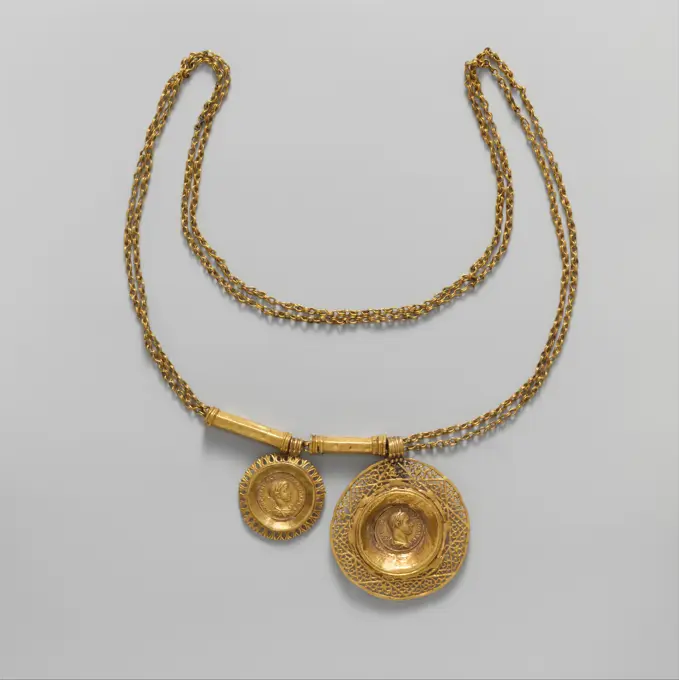
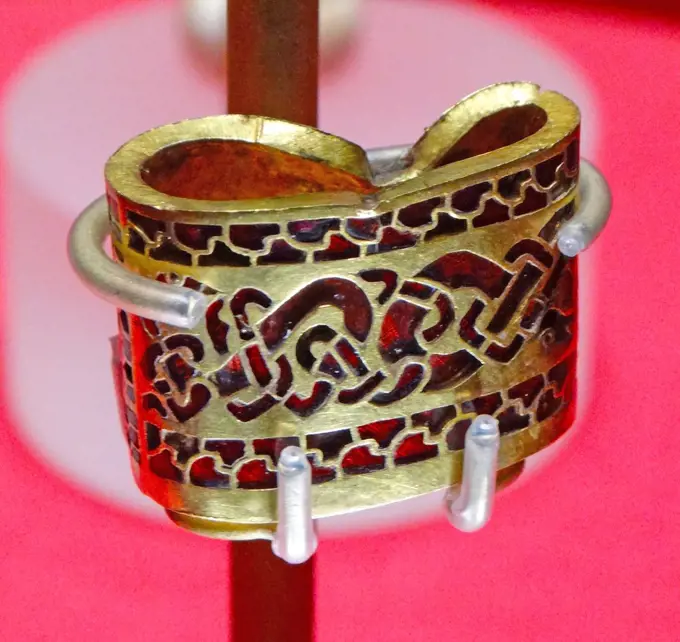
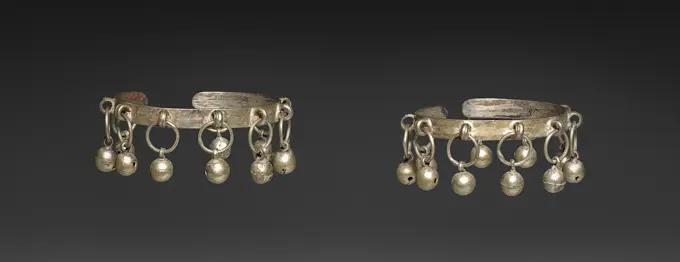
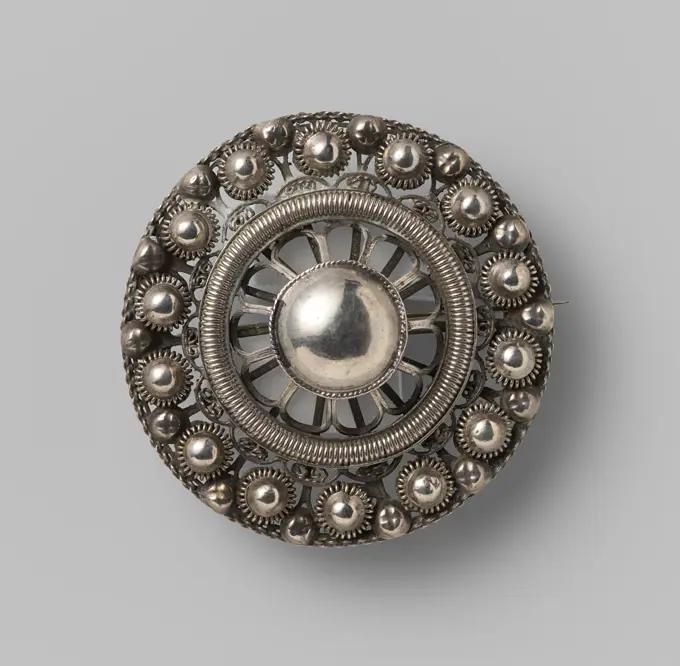
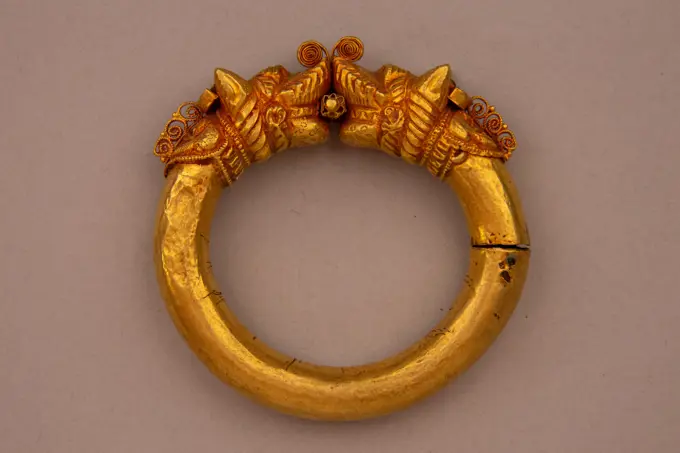
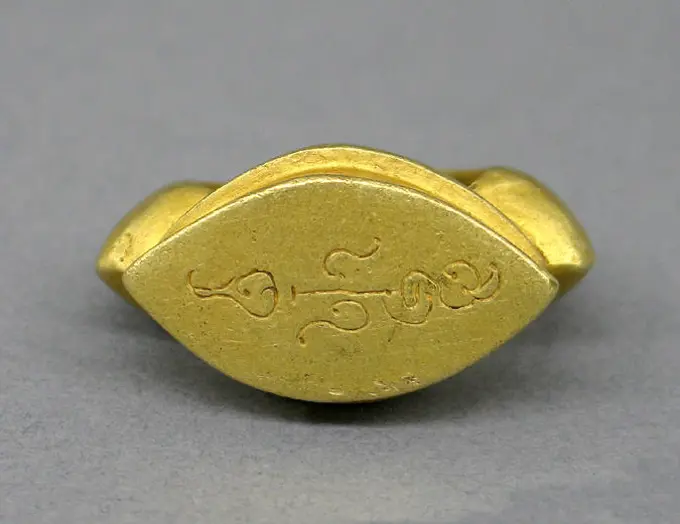
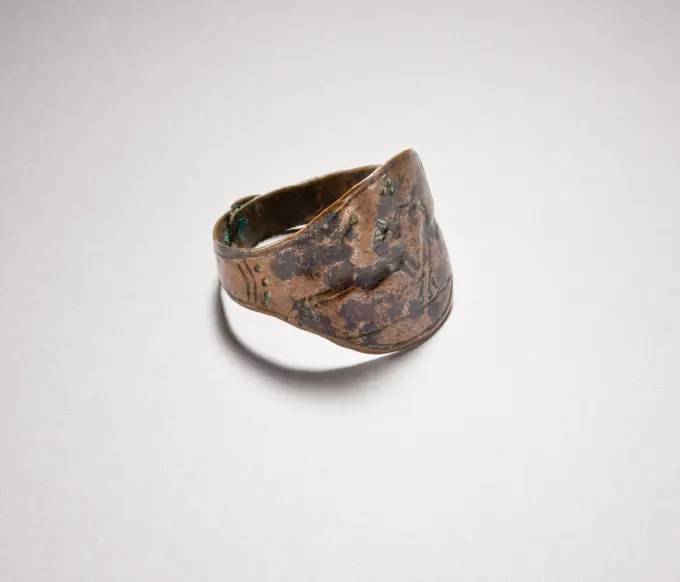
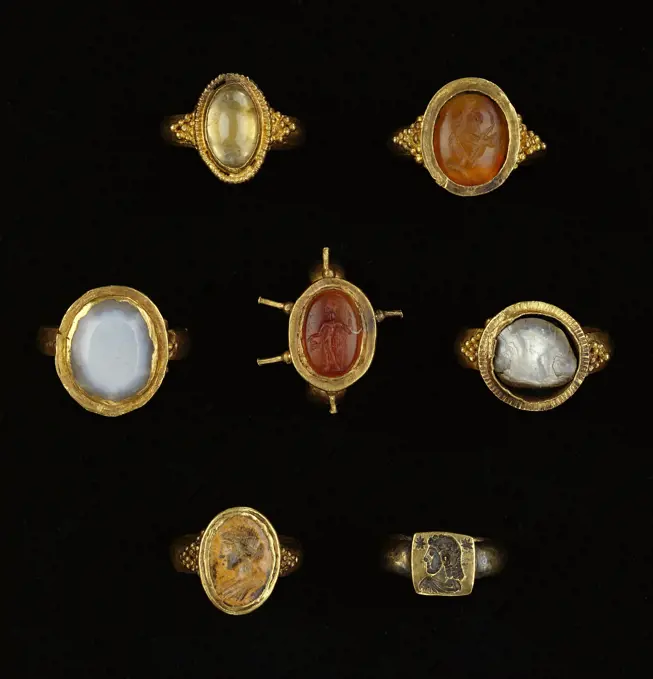
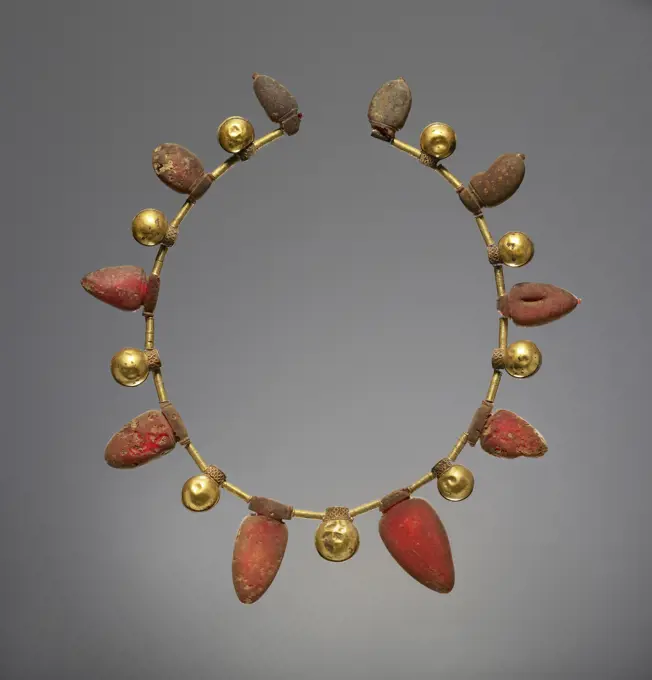
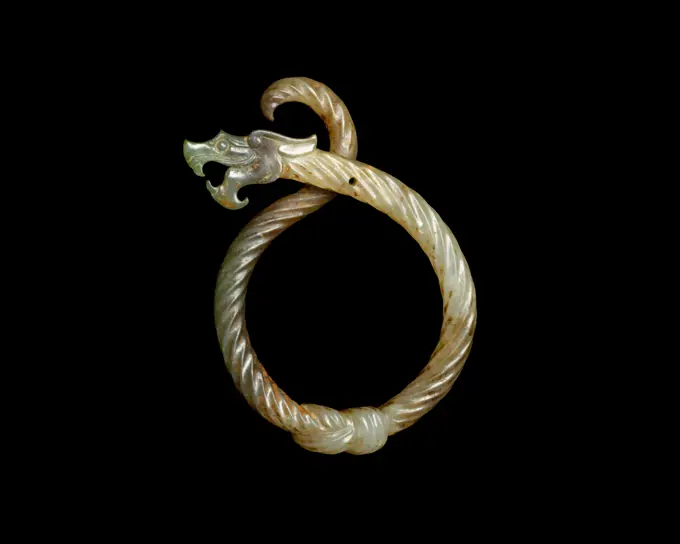
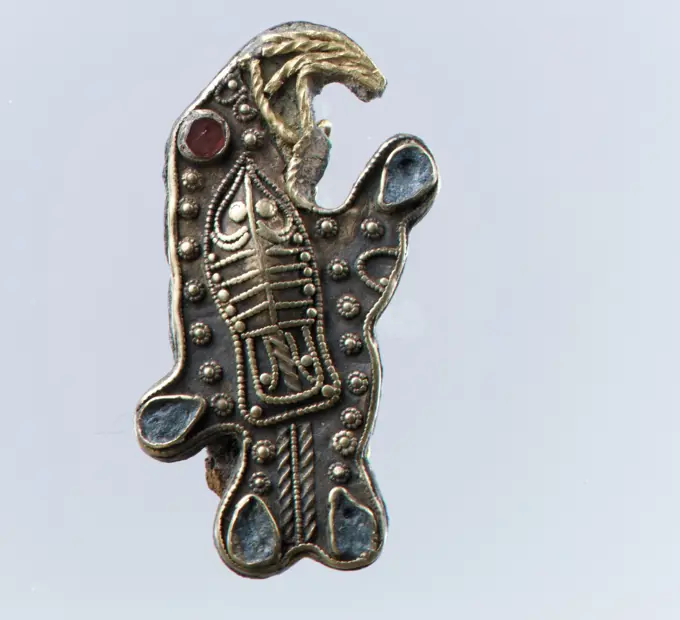
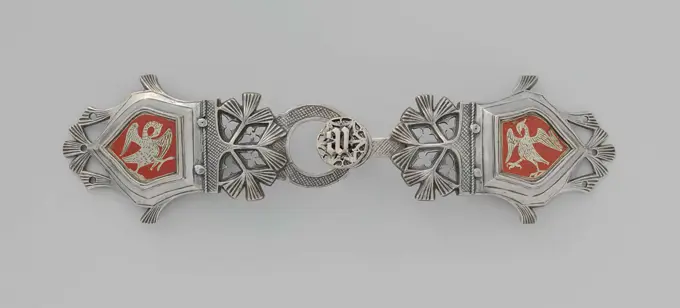
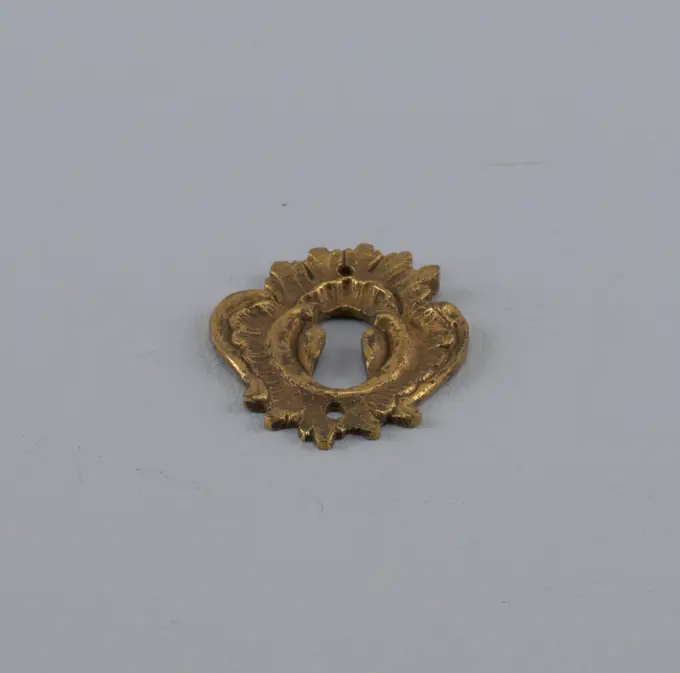
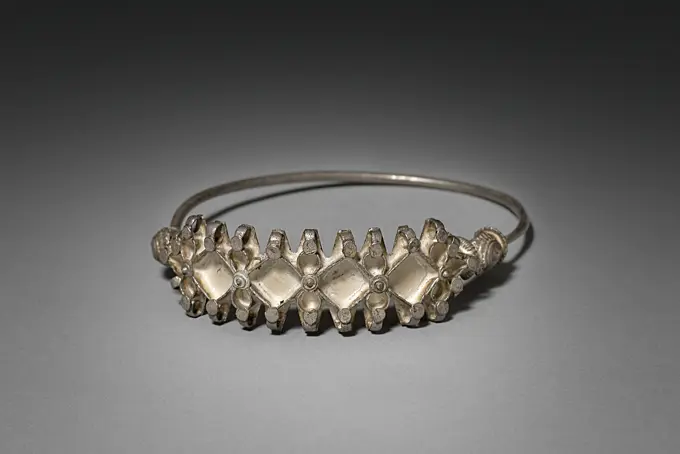
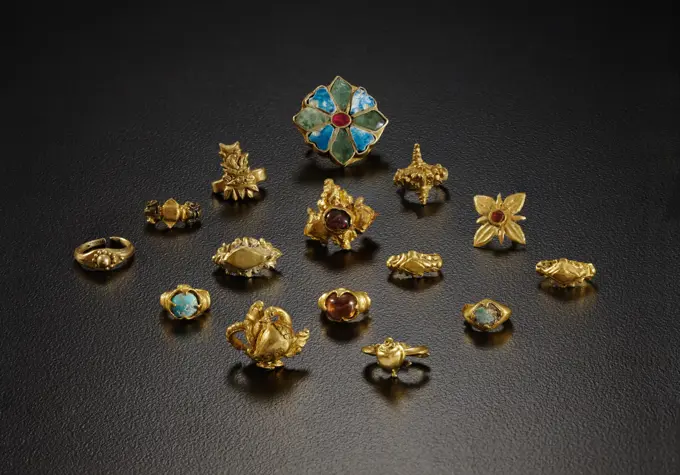
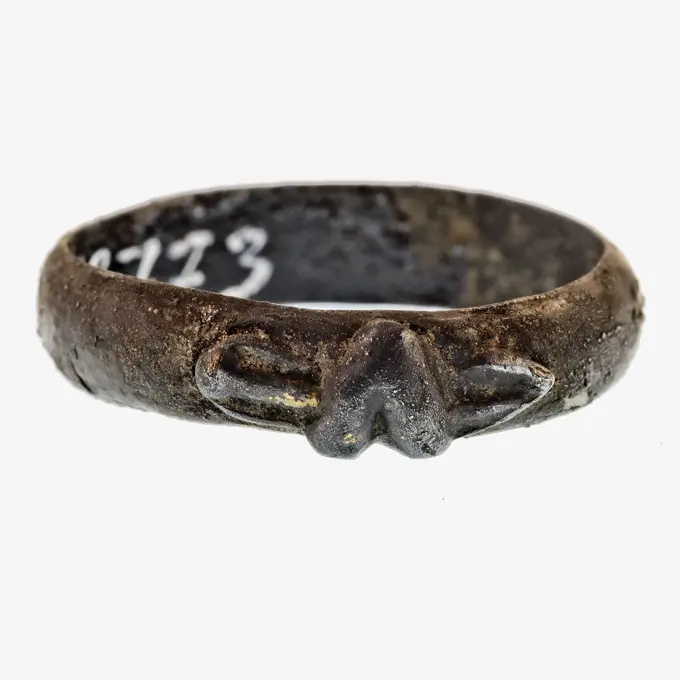
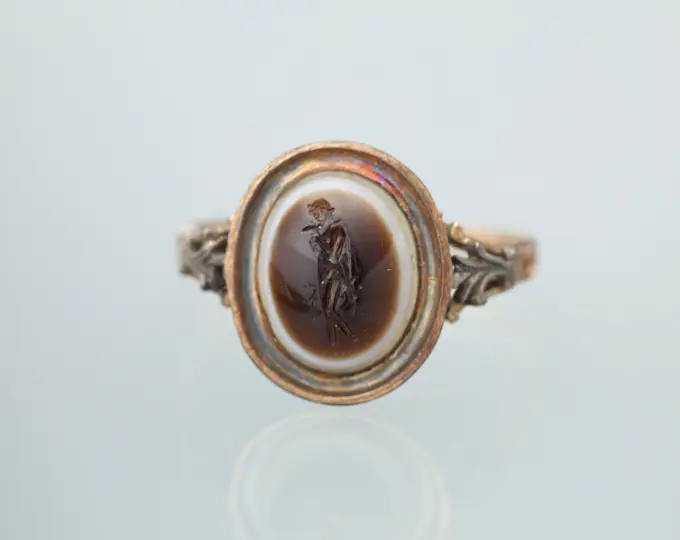
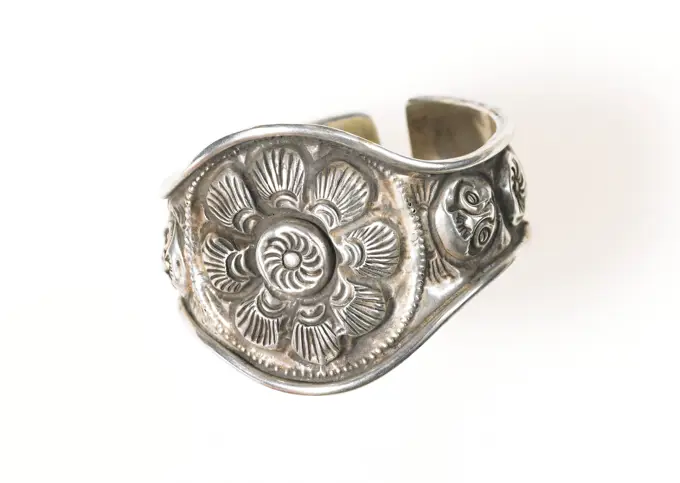
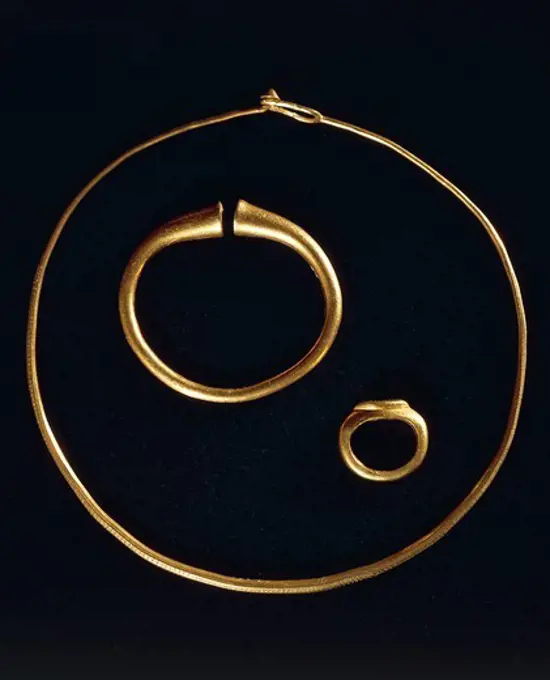
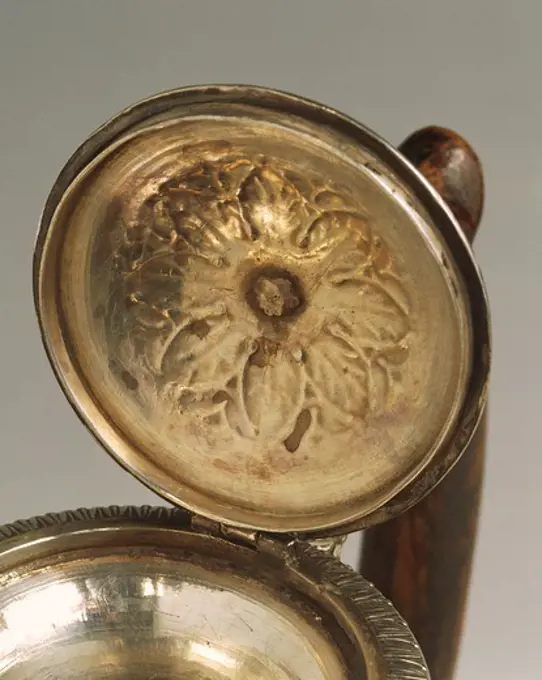
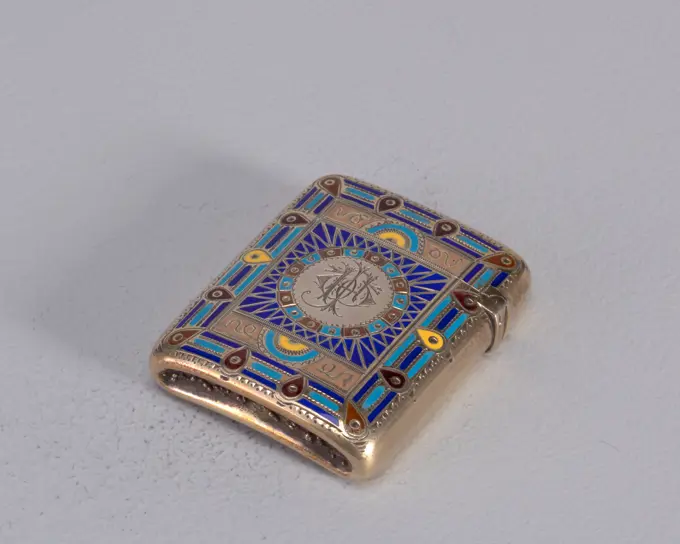
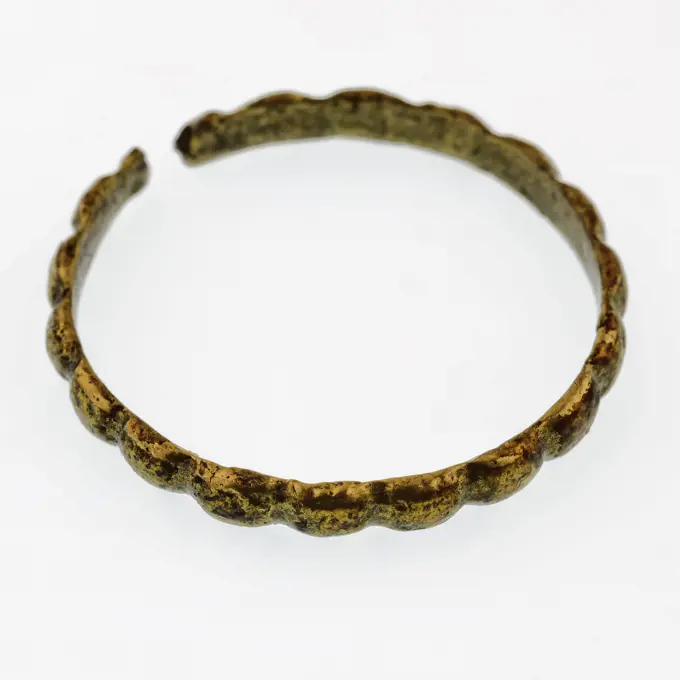
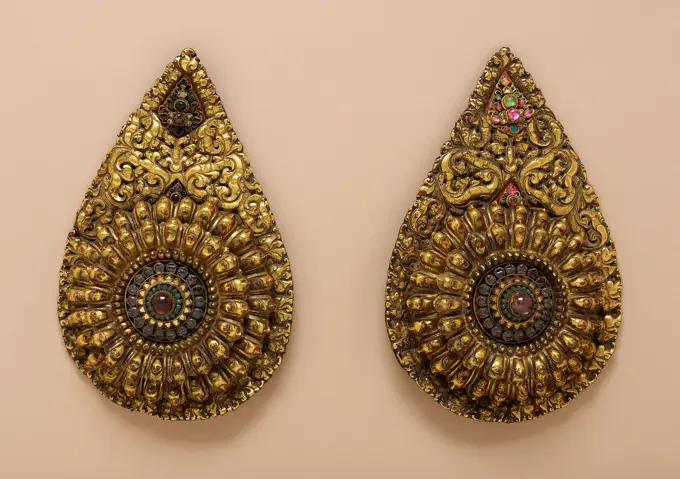
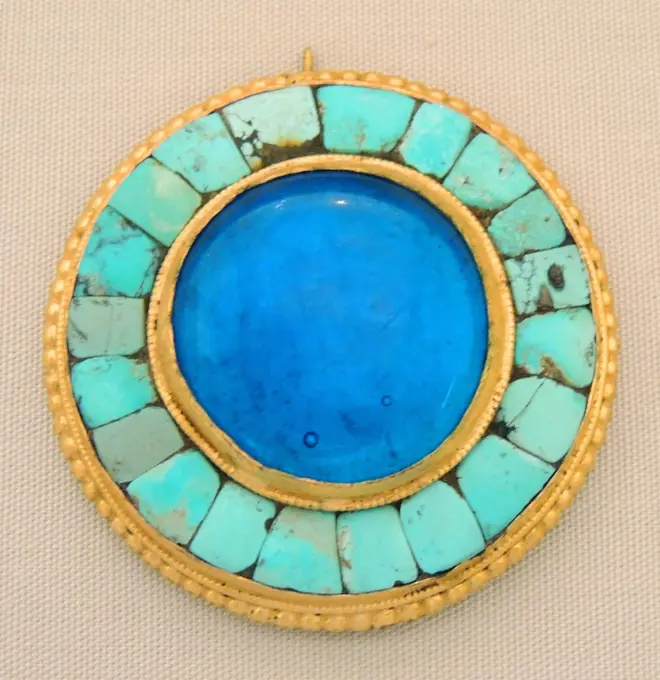
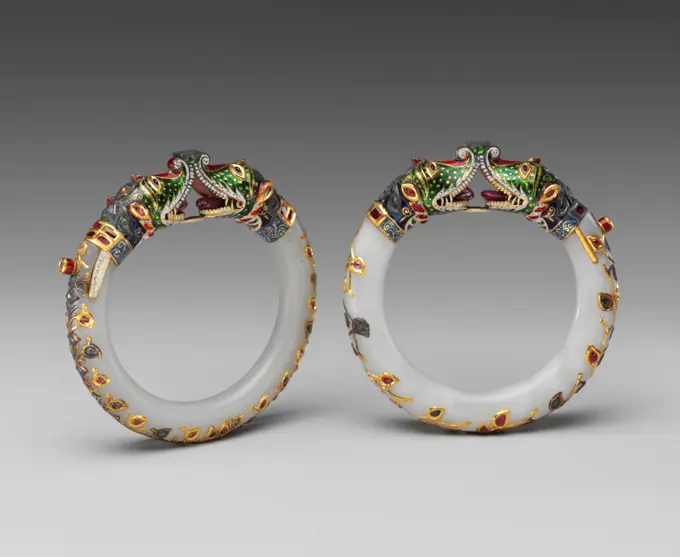
Bracelet 8th-early 10th century Indonesia (Java). Bracelet 40143Altar Ring 15th-19th century Lower Niger Bronze Industry. Altar Ring. Lower Niger Bronze Industry. 15th-19th century. Bronze. Nigeria, Lower Niger River region. Metal-SculptureGold necklace with coin pendants 3rd century A.D. Roman Two openwork pendants are suspended from a double chain of figure-of-eight loops. Each pendant is set with an aureus (gold coin) of the Emperor Alexander Severus (r. A.D. 222-235). Their different sizes and the second spacer suggest that additional pendants are now missing from the chain. The use of coins in jewelry became very fashionable in the third century and persisted until the early seventh century.. Gold necklace with coin pendants 249215Ring c 1800-1900 United States. Silver . Artist unknownHandle for a seax, or single-edged knife from the Staffordshire Hoard. This spectacular handle has some of the finest cloisonnÈ decoration. ëSeaxí describes any kind of single-edged knife. Everyone carried some sort of knife. The name ëSaxonsí probably means ëpeople of the knife'. The Staffordshire Hoard is a collection of Anglo-Saxon. Discovered in a field near the village of Hammerwich, near Lichfield, in Staffordshire, England, in 2009. it consists of over 3, 500 items, dated to the 7th or 8tPearl and Copper Button, 1790-1800. Made in Birmingham, maker unknownSamurai Warrior Matchsafe; Japan; brass; 6.3 x 3.9 x 1.5 cm (2 1/2 x 1 9/16 x 9/16 in. )Plate. Jade Vert, China, IV-Iie s. av. Paris, Cernuschi museum. Asian art, Chinese art, Asian civilization, Chinese civilization, jade, plaqueRingFinger Ring 7th century Frankish. Finger Ring 465257 Frankish, Finger Ring, 7th century, Silver, garnet or glass paste cabochon, Overall: 7/8 x 13/16 x 1/2 in. (2.3 x 2.1 x 1.2 cm) bezel: 3/8 x 1/4 x 3/16 in. (0.9 x 0.7 x 0.4 cm). The Metropolitan Museum of Art, New York. Gift of J. Pierpont Morgan, 1917 (17.192.194)Naszyjnik z ośmioma amforkami i półksiężycem. unknown, authorKeyhole escutcheon, Brass, France, 1780, Decorative Arts, Keyhole escutcheonBracelet 11th-12th century. Bracelet 452923Wristlets or Anklets for Children, 1800s. India. Silver;Gold bangle india april 2011 India Copyright: xNirmalaxMishra/DinodiaxPhotoxGoesese button of silver. Goesese knob of silver with a hook closure with an immaculate brochure. The ring is worn by the mother of Marjan Unger.Finger ring ca. 3rd-7th century A.D. Sasanian. Finger ring. Sasanian. ca. 3rd-7th century A.D.. Bronze. Sasanian. Iran, Qasr-i Abu NasrCarnavalet Museum, Medals CollectionBracelet, One of a Pair 18th century. Bracelet, One of a Pair. 18th century. Gold, rubies, emerald. Attributed to India, Punjab or Rajasthan. JewelryJapanese Thatched-Roof House Matchsafe; Japan; brass; 3.7 x 6.6 x 1.1 cm (1 7/16 x 2 5/8 x 7/16 in. )Stirrup. Culture: West Slavic. Dimensions: H. 5 1/4 in. (13.3 cm); W. 5 1/4 in. (13.3 cm); D. 3/4 in. (1.9 cm); Wt. 2.5 oz. (70.9 g). Date: 10th-11th century.This simple stirrup of Slavic type is said to have been found in East Prussia, today in Northern Poland.Horses had great importance in Slavic society, in both its social and religious aspects. Equestrian equipment, like stirrups, spurs and bits, are regularly found in their burials, even after their Christianization, among the goods warriors wanted to bring with them to the afterlife. The elite would sometimes even be accompanied by sacrificed horses, a meaningful practice at that time, considering the high economic value of horses. Museum: Metropolitan Museum of Art, New York, USA.Pair of belt spins. A pair of silver belt spins. Asymmetrical in shape and decorated with curls.Ring. UnknownGold bracelet on textured background, kundan bracelet, Style, fashion and design of jewelry. indian traditional jewellery, Indian wedding jewellery Copyright: xNehaxSadaye/DinodiaxPhotoxRing with Circular Bezel with Inscribed Fish Motif and "Sri" Second half of the 9th-first quarter of the 10th century Indonesia (Java). Ring with Circular Bezel with Inscribed Fish Motif and "Sri". Indonesia (Java). Second half of the 9th-first quarter of the 10th century. Gold. late Central Javanese period. JewelryGold and gold leaf bracelets from Tétouan, Morocco. Dated 10th Century AD.Ring with Oblong Bezel and "Sri" Inscription Second half of the 9th-first quarter of the 10th century Indonesia (Java). Ring with Oblong Bezel and "Sri" Inscription 50388Badge or Harness Pendant 14th century Spanish Heraldry, or coat-of-arms, were vitally important in Europe throughout the Middle Ages and the Renaissance. Heraldic emblems were used to identify noble families, cities, regions, and even countries. In addition to being displayed on shields and flags, heraldry was incorporated into architectural decoration on the interior and the exterior of buildings, on furniture, works of art, clothing, and horse equipment. Harness pendants, like this example, would have been attached to a headstall, bridle, or other straps making up the tack of a horse ridden by a nobleman or noblewoman, or a member of their household. Many harness pendants also have decoration that is simply ornamental, or have symbols that are not specifically heraldic in nature.. Badge or Harness Pendant. Spanish. 14th century. Copper, gold, enamel. Miscellaneous-BadgesArcher's Thumb Ring. Culture: Turkish. Dimensions: L. 1 1/2 in. (3.8 cm); W. 1 in. (2.5 cm); Wt. 0.4 oz. (11.3 g). Date: 16th-17th century.A thumb ring provided the archer with a firmer grip of the bowstring. As archery was considered a noble sporting exercise, thumb rings, often carried ostentatiously on strings hung from the belt, were worn as symbols of elevated social status. This example, fashioned in pale green nephrite jade set with gemstones in gold foliate mounts, is typically Ottoman. Similar rings are associated with Sultan Süleyman the Magnificent (r. 1520-66) and his immediate successors. Museum: Metropolitan Museum of Art, New York, USA.Mirror Frame Golden Oval Mirror Frame Isolated Included Clipping Path Copyright: xZoonar.com/Baloncicix 7318751Earrings, Hair, gold, A) and B). Gold hoop with heart and ball ornaments and band of woven human hair., USA, mid-18th century, jewelry, Decorative Arts, EarringsTwoStarsFinger Ring. Western Iran, circa 1350-800 B.C.. Jewelry and Adornments; rings. Bronze, hammeredGold earring with head of a bull. Culture: Cypriot. Dimensions: Diam.: 1 3/16 in. (3 cm). Date: 4th-3rd century B.C..Circlet of twisted gold wire, which tapers from the bull's head at the front end to a hooked point which passes through a loop below the animal's throat. Museum: Metropolitan Museum of Art, New York, USA.Ring with Claw setGemGreen tea with aromatic additives. Top view on white background Green tea with aromatic additives. Top view on white background. Copyright: xZoonar.com/BUTENKOVxALEKSEYx 14781021Almond-Shaped Pendant, 400-600. Byzantium, early Byzantine period, 5th-7th Century. Gold, lapis lazuli, garnet, and glass; overall: 5.1 x 2.9 cm (2 x 1 1/8 in.).Seven Rings; Roman Empire; 250 - 400; Gold, mother-of-pearl, carnelian, rock crystal, agate;Stirrup-Shaped Ring with Open Lotus Design on Bezel 8th-early 10th century Indonesia (Java). Stirrup-Shaped Ring with Open Lotus Design on Bezel 50262Ring 1838-47 French, Paris. Ring. French, Paris. 1838-47. Emerald, diamonds, gold, silverNecklace; Italy; 550 - 400 B.C; Gold and Amber; 39.5 × 4 × 4 cm (15 9,16 × 1 9,16 × 1 9,16 in.)Knotted dragon pendant 3rd century B.C. China This pendant takes the shape of a dragon with a sinuous body grooved to resemble twisted rope. It illustrates the extraordinary talent and skill of early Chinese jade carvers, in whose hands intractable jade seems a supple and malleable material.. Knotted dragon pendant. China. 3rd century B.C.. Jade (nephrite). Eastern Zhou dynasty (770-256 B.C.). JadeVices Theme, with Large Goblet Matchsafe; USA; silver; 6.5 x 4.2 x 1 cm (2 9/16 x 1 5/8 x 3/8 in. )Shoe spur of silver, oval -shaped with simple line decoration in low relief, c. 1750 - c. 1900 Silver shoe, oval -shaped with simple line decoration in low relief. Double hinge with a tooth from the middle, marked. West-Europa whole: Silver (Metal) forging Silver shoe, oval -shaped with simple line decoration in low relief. Double hinge with a tooth from the middle, marked. West-Europa whole: Silver (Metal) forgingBird-Shaped Brooch second half 6th century Frankish The dress of Frankish women generally consisted of a tunic, cinched by a belt from which hung an array of pendants. A wrap or cloak went over the tunic. Shoes and hosiery, fastened with buckles, covered the legs. Earrings, necklaces, and hairpins completed the ensemble.Aspects of this dress changed from the 300s to the 600s, and brooches in particular convey changes in taste. From the 300s to the 500s, pairs of small brooches, in an array of inventive shapes, held the wrap in place. By the 600s, a single large disc brooch, usually elaborately decorated, served the same function. No other piece of jewelry is more characteristic of Frankish dress than the brooch, and no other better demonstrates the virtuosity of Frankish metalworkers.. Bird-Shaped Brooch 465236 Frankish, Bird-Shaped Brooch, second half 6th century, Gold sheet with filigree and granulation and inlays of garnet and glass, Overall: 1 9/16 x 13/16 x 3/16 in. (4 x 2 x 0.5 Gesp met een wapen en het monogram IB.Buckle from silver and email, consisting of two parts. The two shield-shaped side pieces enclose a plaque in which a engraved silver pelican against a red background.Nose Ornament with Intertwined Serpents 6th-7th century Moche (Loma Negra) The Moche, who flourished on the North Coast of Peru from 200-850 A.D., created some of the most sophisticated metal body adornments ever discovered in the ancient Americas. This nose ornament, fashioned from hammered sheet, demonstrates the skill and ingenuity exercised by Moche artists. Two gold serpents with ears and fangs redolent of canines are seen in bilateral symmetry, joined by their intertwined bodies and a silver crescent-shaped plaque. Delicate gold danglers, attached with thin gold wires, hang from the sinuous bodies of the serpents and reflect light with the slightest motion, magnifying the sense of movement created by the fluid, curvilinear forms seen throughout the ornament. This nose ornament is stylistically associated with a site called Loma Negra, where similar adornments have been unearthed from the several hundred shaft tombs in the area. Loma Negra, which is situated in the semi-desert regKeyhole Escutcheon (France); gilt bronzeBronze ring, Conimbriga Monographic Museum, city of the Conventus Scallabitanus, Coimbra district, Portugal.fibula de La Tene I de doble prolongacion, , numancia, Garray, siglo II a.C, museo Numantino de Soria, Soria, Comunidad Autónoma de Castilla, Spain, Europe.Nose Ring, 20th Century. India. Silver; overall: 6.4 cm (2 1/2 in.).Mount; bronze (gilt)Ring last quarter 18th century French. Ring. French. last quarter 18th century. Gold, silver, diamonds, rubies, glassMountPeasant's Ring, 1700s. Germany, Bavaria, 18th century. Silver; face: 2.3 cm (7/8 in.).GooseRingLozenge-Shaped EarOrnamentFloral EarOrnamentRing, on which pierced heart, ring ornament clothing accessory clothing soil find silver metal, d 0.4 die-cast Ring with pierced heart on it. Probably the image is cast separately and soldered. Inside flat and smooth wall. Outside walled Engagement ring Silver silver metal archeology Rotterdam railway tunnel adorn status status prosperity engagement friendship love Soil discovery: Railway tunnel 1988-1993.Christopher Columbus, Plated brass, In the shape of Christopher Columbus' head in profile, identical on reverse. Lid, hinged on side, flips open at bottom when button on neck is depressed, inscribed 'Columbus' on one side of lid, 'Pat.d. Oct.25, '92' on reverse side. Striker on bottom of lid., patented 1892, containers, Decorative Arts, Matchsafe, MatchsafeNecklace with a Bearded Head Pendant. UnknownRingScarf pin with dog portrait, Gold, painted mother-of-pearl, glass, England, ca. 1865, jewelry, Decorative Arts, Tie pin, Tie pinSugar Bowl, from a Miniature Tea Set, porcelain, gold, Sugar bowl and lid, belonging to a tiny porcelain tea set with gold detail., Austria, 1830-1860, ceramics, Decorative Arts, sugar bowl, sugar bowlCuff bracelet, one of a pair, 2 x 2 7/8 x 2 7/8 in. (5.08 x 7.3 x 7.3 cm), Silver, ChinaBarbarian civilizations, France, 5th century. Goldsmith's art. Treasure of Pouan, princely burial of a Germanic warrior. Gold collar, ring and bracelet.Glass bead 4th century A.D. Roman Mosaic glass bead, blue and white in color.. Glass bead. Roman. 4th century A.D.. Glass. Late Imperial. GlassBird-Form Earring 8th-12th century Indonesia (Central Java). Bird-Form Earring 64428Silversmith's Art, Italy 19th century. Silver coffeepot. Detail: lifted hinged cover. Milan, approximately 1800.Necklace probably 19th century Italian This collection of largely ethnographic jewelry includes examples from cultures in South America, North America, Europe, Asia, and Africa and dates from the Pre-Columbian period to the twentieth century. Owned by renowned art collector and fashion enthusiast Muriel Kallis Newman, the collection represents her knowledge and appreciation of a wide range of jewelry design and making traditions. Numerous items in her collection are composite artifacts made from various cultures and time periods reappropriated as modern jewelry creations by or for Muriel. It is important to note that Newman wore many of the pieces in the collection, interpreting them to suit and express her own singular, often avant-garde style.. Necklace 141751Ring, 9th century, 13/16 x 1 3/8 x 1 5/16 in. (2.06 x 3.49 x 3.33 cm), Gold, gemstones, Vietnam, 9th centuryOrnament in the Shape of a Shankha Second half of the 8th-second half of the 10th century Indonesia (Java). Ornament in the Shape of a Shankha. Indonesia (Java). Second half of the 8th-second half of the 10th century. Gold. Central Javanese period. JewelryGold earring with head of a gazelle. Culture: Greek. Dimensions: H.: 11/16 in. (1.7 cm). Date: 3rd century B.C..Circlet of twisted gold wire, which tapers from the animal's head at the front end to a hooked point which passes through a loop below its throat. Museum: Metropolitan Museum of Art, New York, USA.Earring-hook type with leaf form. Earring-hook type with leaf form 243435Abstract Sunburst Reserve with Tear Drop Border Matchsafe; Manufactured by Gorham Manufacturing Company (United States); USA; silver gilt, enamel; 4.4 x 3.7 x .8 cm (1 3/4 x 1 7/16 x 5/16 in. )Pair of spherical gold earrings. Culture: Greek. Dimensions: Other: 1 9/16 in. (4 cm). Date: 6th-5th century B.C..Gold balls with filigree. Museum: Metropolitan Museum of Art, New York, USA.Rosary 17th-19th century Philippines. Rosary 40555Flower-Shaped Clothing Plaque 7th-9th century China (Xinjiang Autonomous Region, Central Asia) The nomadic communities of Central Asia used such plaques to embellish clothing and horse trappings. As these nomadic cultures herded animals and were constantly moving, their artistic production was expressed in portable objects that marked the wearers status and wealth. The outstanding preservation of these fragile ornaments suggests they were used in conjunction with burials, where the body was aggrandized with valuable textiles and augmented with gold. Although it is difficult to date and place these objects geographically, their presence in Central Asia and has a long, established history.. Flower-Shaped Clothing Plaque 65206Pendientes, siglo XVIII. Museu del Disseny de Barcelona.Design for a Gold and Cabochon Gem Brooch, Alexis Falize, French, 1811-1898, Brush and gouache, gum varnish over graphite on tan wove paper, Golden brooch in form of pendant. At top, green cabochon-cut gem supports gold chains off of which hang two more green stones, one cabochon-cut, the second, an ovoid shape. Four drop pearls appear through- out the design., Paris, France, ca. 1855, jewelry, Drawing, DrawingCast Earring with Ruby 8th-12th century Indonesia (Central Java). Cast Earring with Ruby. Indonesia (Central Java). 8th-12th century. Gold. JewelryColour photograph of Sikkimese Jewellery. Photographed by Alice S. Kandell. Dated 1971Button (France); pearl shell, glass, steelcollar de cuentas discoidales, cueva de Goikolau, Berriatua, Arkeologi Museoa, museo aqueologico, Bilbao, Bizkaia, Pais Vasco, Spain.Bracelet, 1800s. India. Silver; diameter: 5.2 cm (2 1/16 in.).Scarab with an Archer. UnknownCeremonial paper stringsButton, pearl shell, rhinestone and copper, button of pearl shell with design of swirled radial lines and in center, a rhinestone - copper shank., On card 29, France, 19th century, costume & accessories, Decorative Arts, ButtonSword-Hilt Collar and Pommel (Fuchigashira) 19th century Japanese A fuchigashira is a pair of matching sword fittings comprising the fuchi (collar at the base of the grip of the sword hilt) and kashira (pommel cap at the end of a sword hilt).. Sword-Hilt Collar and Pommel (Fuchigashira). Japanese. 19th century. Copper-gold alloy (shakud), gold, silver. Sword Furniture-Fuchi-KashiraGold Dress-Fastener, Late Bronze Age, Irish, c1400BC-600 BC. Artist: Unknown.RingFinger Ring with Intaglio Depicting the Head of a Woman. Roman. Date: 100 AD. Dimensions: Ring: W. 1.9 cm (3/4 in.); diam. 1.9 cm (3/4 in.)Cameo: 1.1 × 1.4 × 0.3 cm (7/16 × 9/16 × 1/8 in.). Sardonyx or carnelian, gold. Origin: Rome. Museum: The Chicago Art Institute, Chicago, USA.Incised HoopRingRing of yellow metal, puckered, ring ornament clothing accessory clothing soil find brass copper gold metal, d 0.3 Bumpy ring of yellow undefined metal Flat and smooth wall finished on the inside archeology Rotterdam rail tunnel wear adorn prosperity status Soil discovery: Railway tunnel 1988-1993.Pair of Oversize Earrings for an Image. Tibet, 16th-17th century. Jewelry and Adornments; earrings. Gilt copper repoussé with turquoise and clear stones with multicolored foilCircular blue glass set in gilt copper, Tibet, 18th century AD.Bracelet 18th-19th century India. Bracelet. India. 18th-19th century. Jade (nephrite) with gold, enamel, and stone inlays. Mughal period (1526-1858). JadeRing with Twisted Wire 8th-12th century Indonesia (Central Java). Ring with Twisted Wire 64320Gold rings and hair ties from Tomb F in the Agora of Corinth, (Greece). Goldsmith art, Greek Civilization, 9th-8th Century BC.Scarab, New Kingdom. Egypt, New Kingdom or modern forgery. Glazed steatite; overall: 0.8 cm (5/16 in.).