Antique Gold Artifacts

Intricate gold objects including handles and ornaments showcasing intricate designs from various historical periods and cultures.

Spherical Pendant or Button Byzantine 900-950 This handsomely worked, hollow sphere may have decorated the border of an official scarf, like the loros worn by the Byzantine emperor, or have been used as a button to hold together the outermost vestments of members of the Orthodox clergy. Similar works have been found at Preslav, the capital of the Bulgarian empire in the early tenth century. View more. Spherical Pendant or Button. Byzantine. 900-950. Cloisonné enamel and gold. Made in Bulgaria (possibly). Enamels-Cloisonné
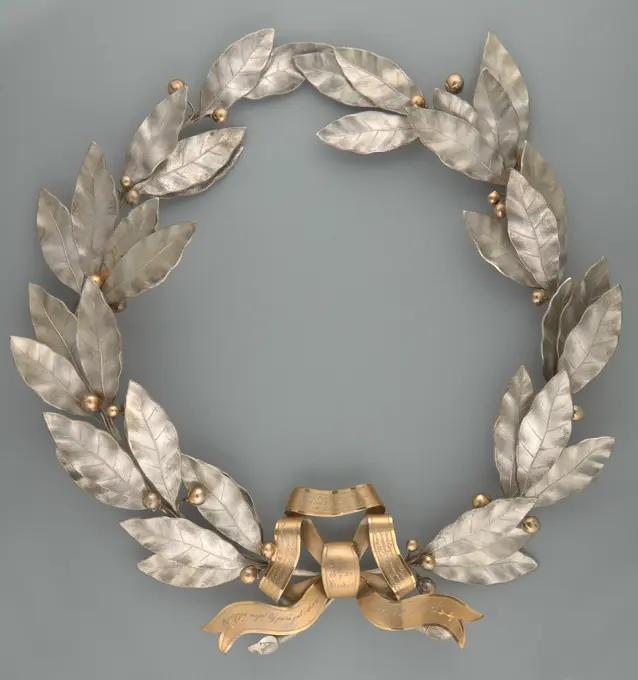
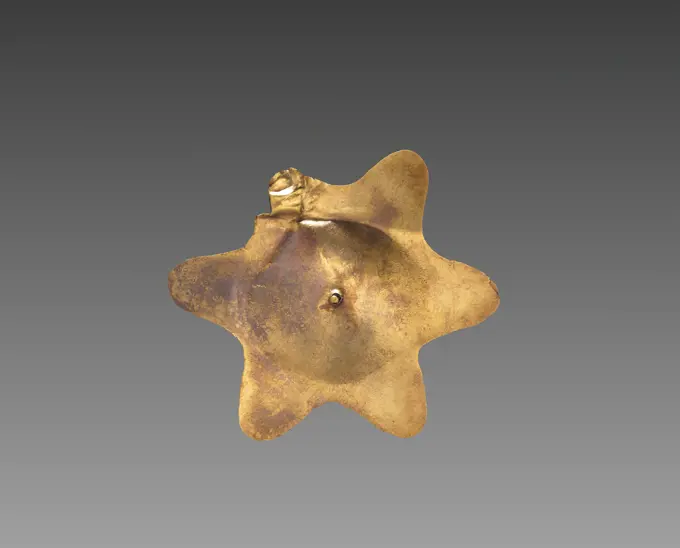
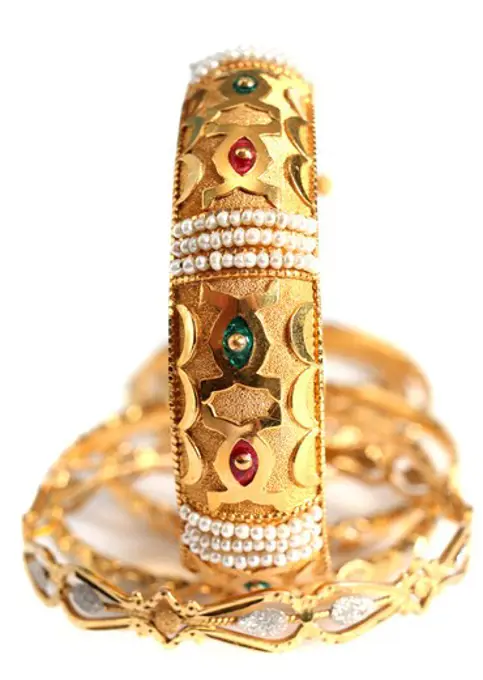
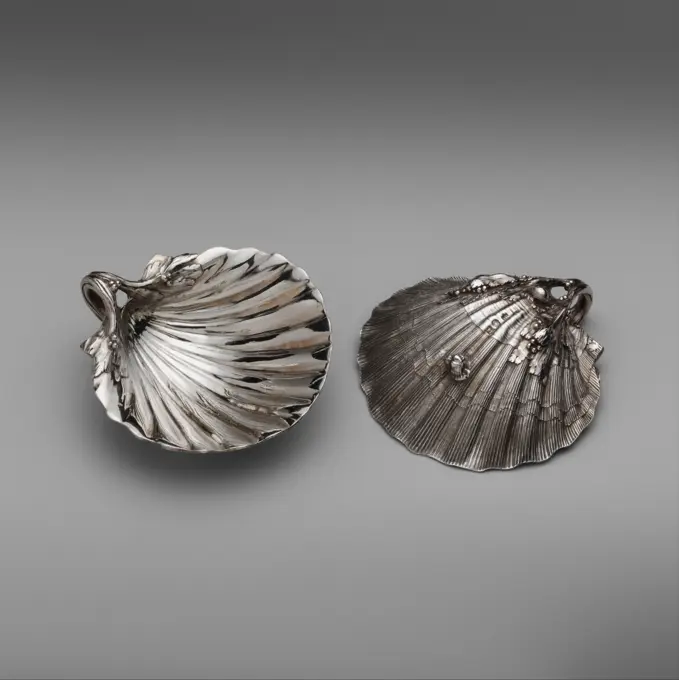
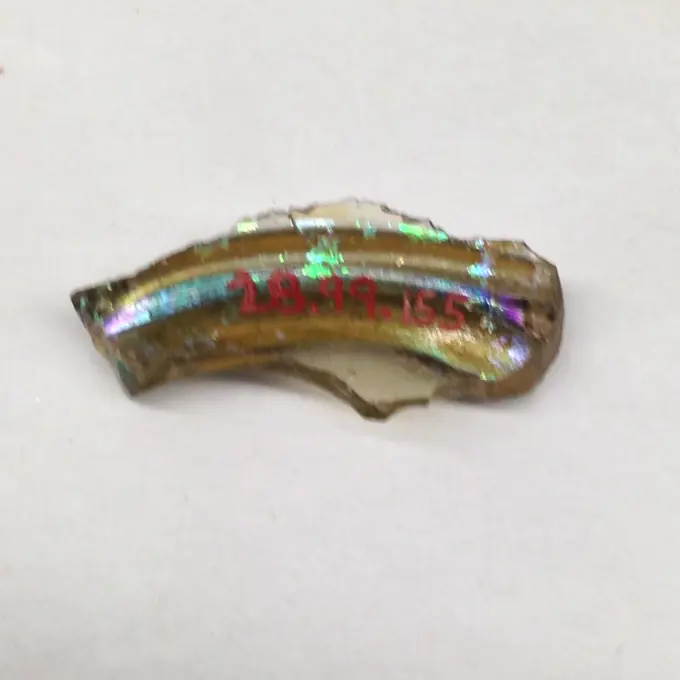
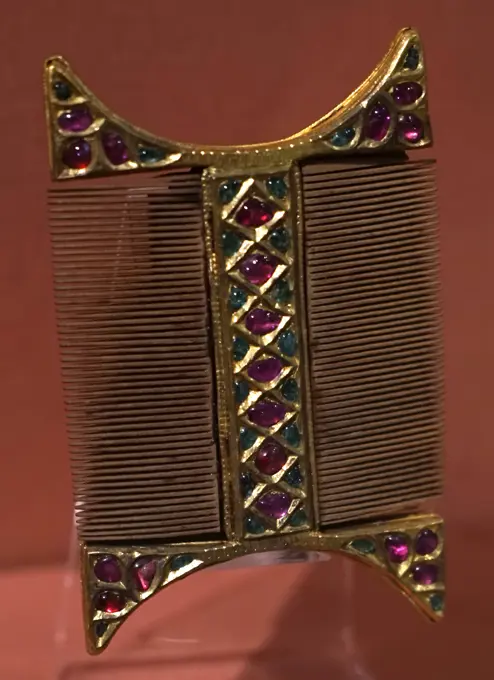
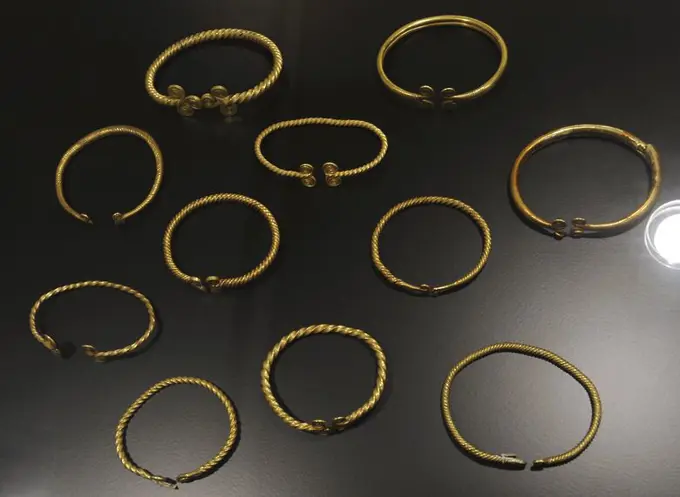
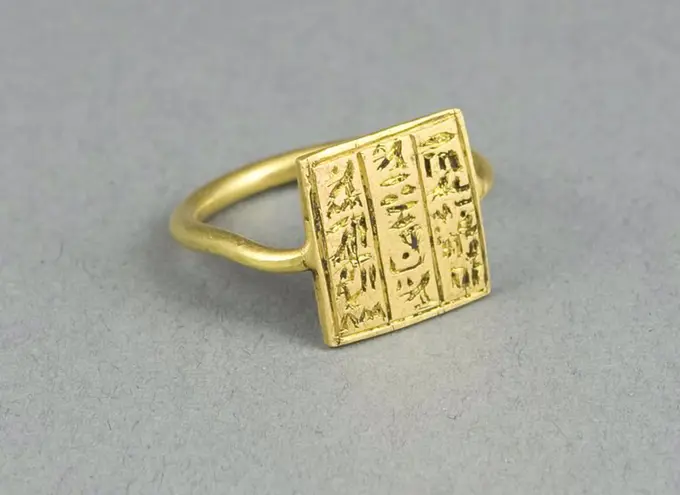
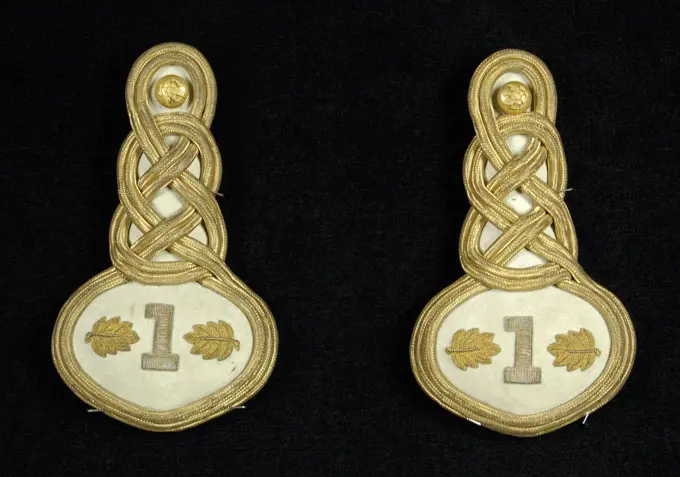
Glass mosaic fragment late 1st century B.C.-early 1st century A.D. Roman Rim fragment.Translucent purple, light blue green appearing green, opaque white and yellow.Vertical, rounded rim, with slightly thicker band on interior below; shallow side curving in sharply at bottom.Mosaic pattern formed from polygonal sections of two canes: one in a purple ground with a white circle and central white rod, and the other in a blue ground with a yellow spiral and a central tight yellow spiral.Polished exterior; slight pitting of surface bubbles on exterior; dulling and creamy weathering on interior, rim, and jagged edges.. Glass mosaic fragment 257368Wreath from Adam Mickiewiczs Funeral in Kraków Strzelecki, JulianHeaddress Ornament, c. 300 BC-AD 200. Peru, South Coast, Paracas. Hammered and embossed gold-copper alloy; overall: 5.2 x 4.6 cm (2 1/16 x 1 13/16 in.).Bracelet, 19th Century. India, Punjab () or Sind. Silver; diameter: 10.2 cm (4 in.).Round Vest Node or Silver Board, 1900 - 1925 Round vests node or on -board of silver. West-Europa silver (metal) Round vests node or on -board of silver. West-Europa silver (metal)A gold bracelet with small natural Gulf pearls and inlaid with enamel, in the Arab style.Bracelet 19th century. Bracelet 444694Pair of scallop-shell dishes 1771-73 Jacques-Nicolas Roettiers These dishes in the form of scallop shells were among the twenty-four of this model included in one of the most famous silver services of the eighteenth century, now known as the Orloff service. The Russian empress Catherine the Great ordered the service in 1770, and it was delivered to her at Saint Petersburg in thirteen or fourteen shipments between 1771 and 1775. Intended for sixty people, it comprised a wide variety of pieces, including tureens, plates, dish covers, candlesticks, sauceboats, saltcellars, spice boxes, and serving spoons.The scallop-shell form is modeled with great precision. A periwinkle and a dog whelk cling to the exterior, and the handle is in the form of a piece of seaweed. Curiously, this highly realistic interpretation of an element from nature has no counterpart in the rest of the service, which otherwise displays a rather formal Neoclassicism. Despite this stylistic incongruity, the twenty-four sReflectordecorative gold nugget (Foreign text means Good Luck)Silver excavations of the fights;Fragment ca. 1150-ca. 1250 European or Middle Eastern. Fragment 694309Comb made from gold, wood, emeralds and rubies. 1775-1825, Konbaung period. During the Konbaung period the use of precious stones was limited by law to royalty and the nobility. This sumptuously made comb would have belonged to a courtier or a member of the royal family. Burma (probably Amarapura or Ava, now Inwa)Granulated EarOrnamentGold necklace from Marsiliana d'Albegna, Grosseto province, Italy, Etruscan civilizationSnuffbox decorated with glass beads from Afghanistan. Dated 1989CloakPinSmooth and spiral bracelets in gold. Early Bronze Age, 1700-1100 BC. National Museum of Denmark. Copenhagen. Denmark.Button; pearl, shell, brass, copper, glass; 1931-59-225-jCufflink (Denmark); Manufactured by Georg Jensen Sølvsmedie (Denmark); silver; Bequest of David Harris Cohen; 1994-113-9-a,bFinger Ring. Egyptian. Date: 305 BC-30 BC. Dimensions: 1.4 x 2.2 x 2.3 cm (9/16 x 7/8 x 7/8 in.). Gold. Origin: Egypt. Museum: The Chicago Art Institute, Chicago, USA. Author: Ancient Egyptian.Amber beaded jewellery. Dated 3th Century BCEpaulets 1860-80 American. Epaulets 175625