Antique Japanese Artifacts

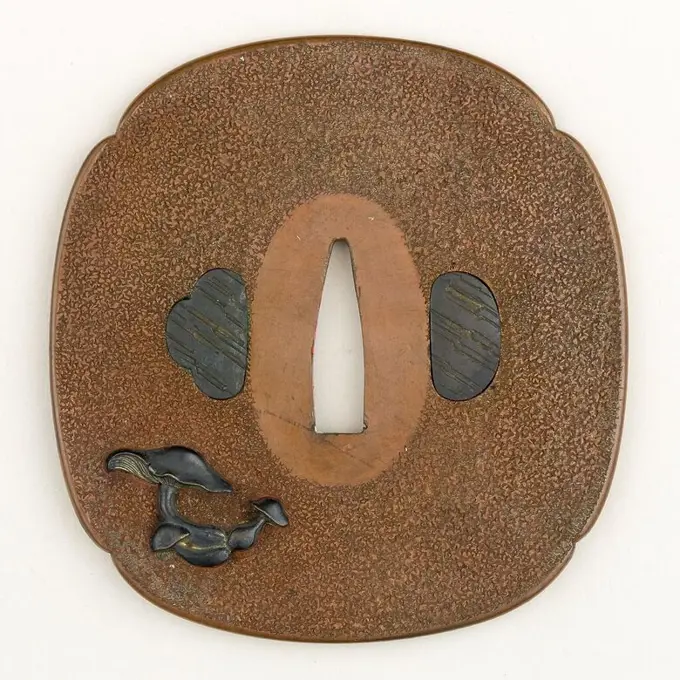
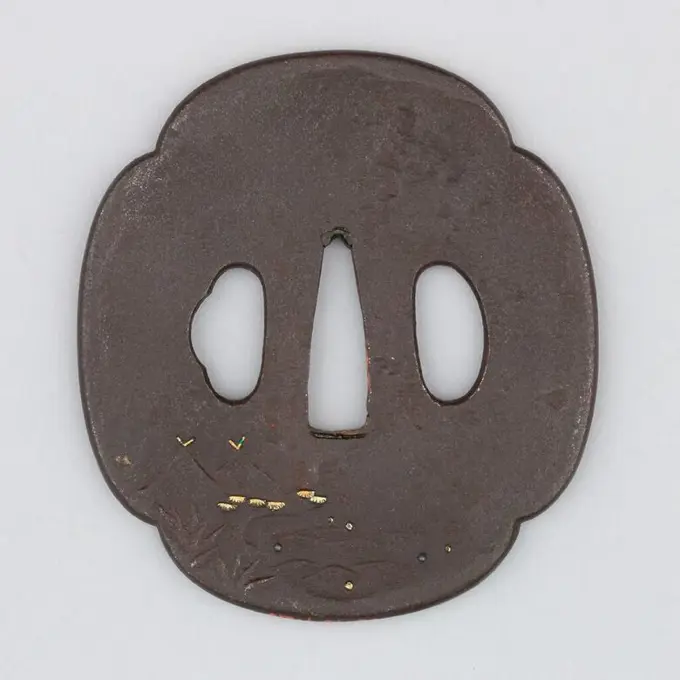
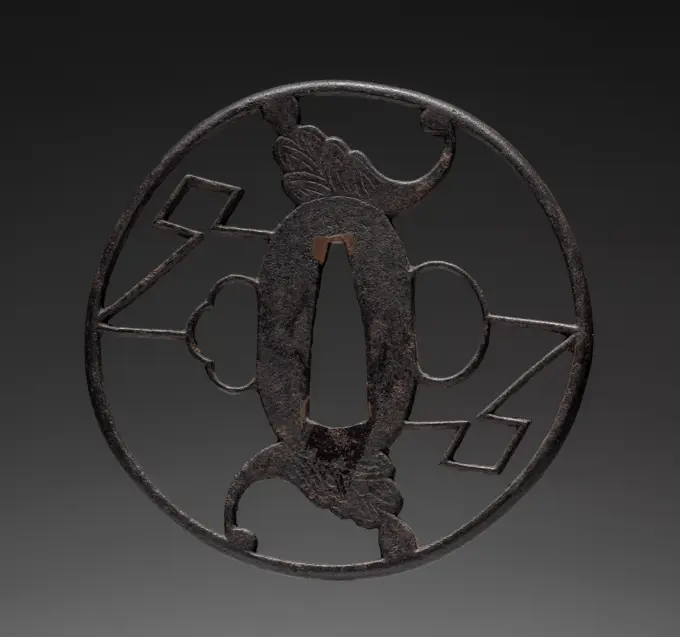
Intricate Japanese sword guards and mirrors featuring detailed designs. The pieces showcase historical craftsmanship in dark and bronze tones.

Mirror. Bronze. Cernuschi Museum, Asia Museum of Asia in the city of Paris.
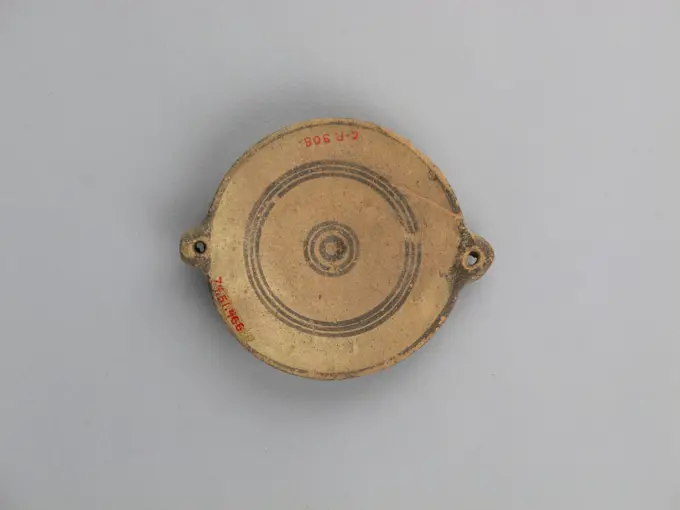
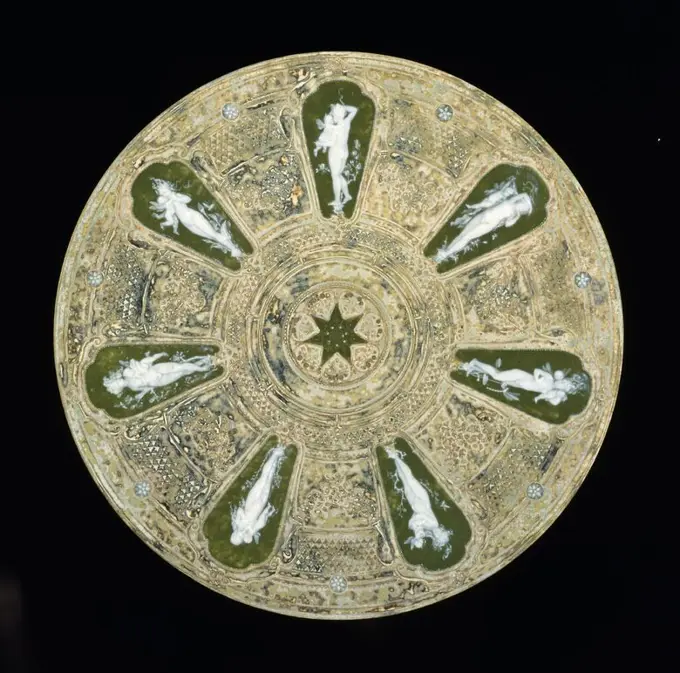
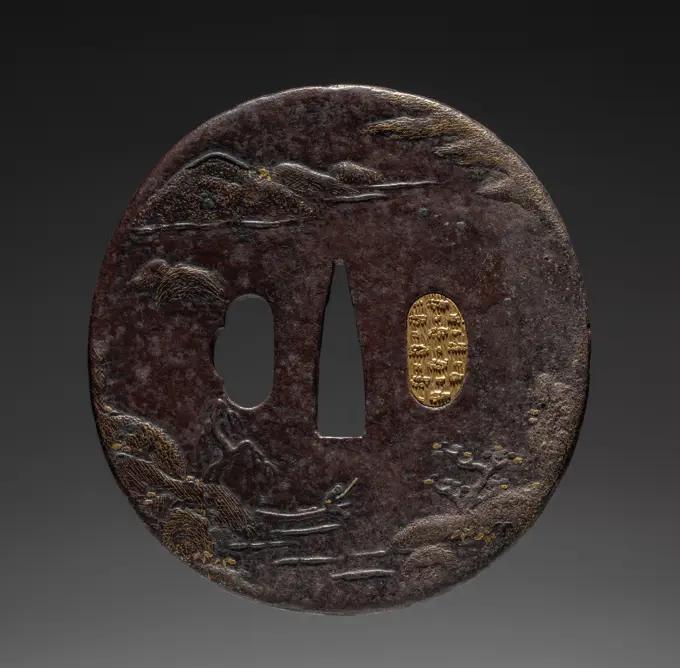
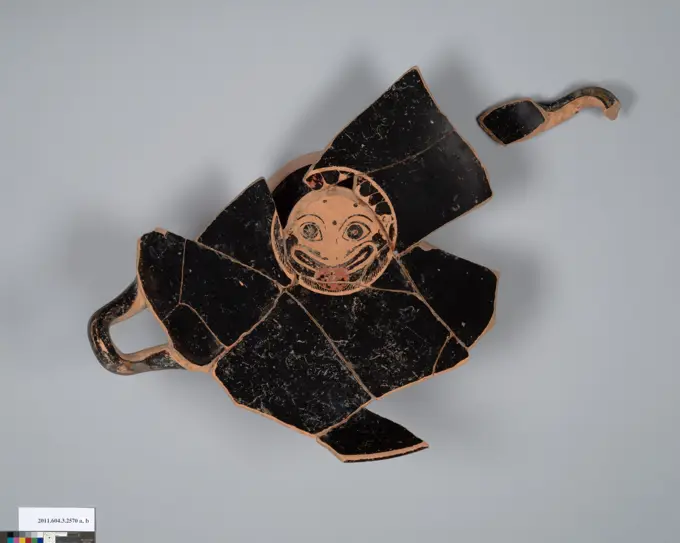
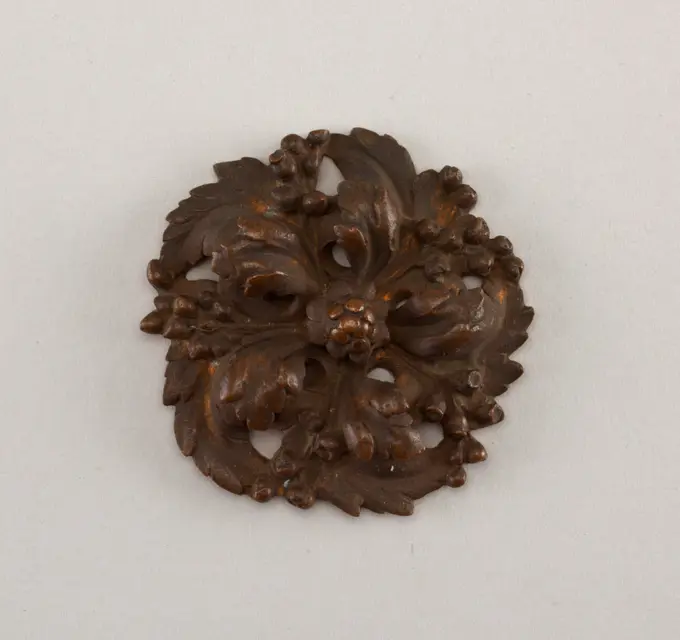
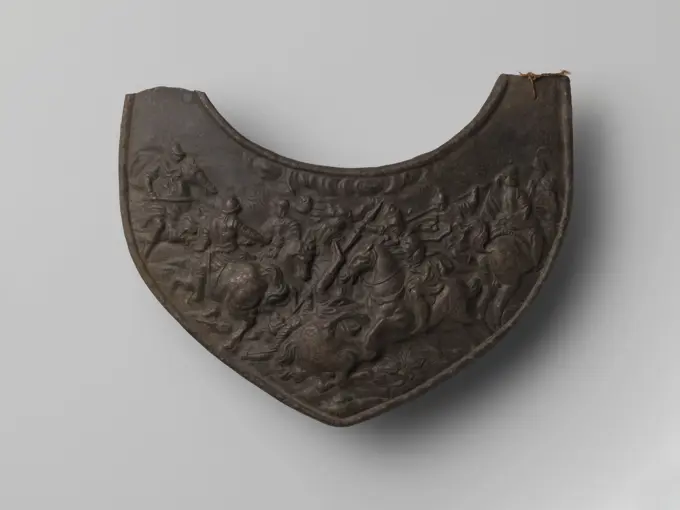
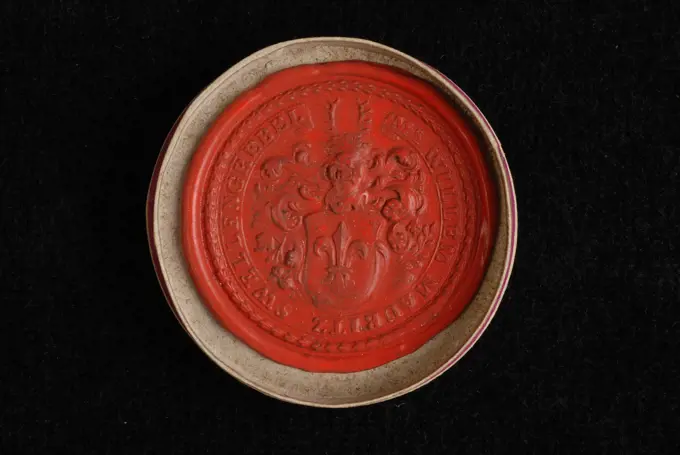
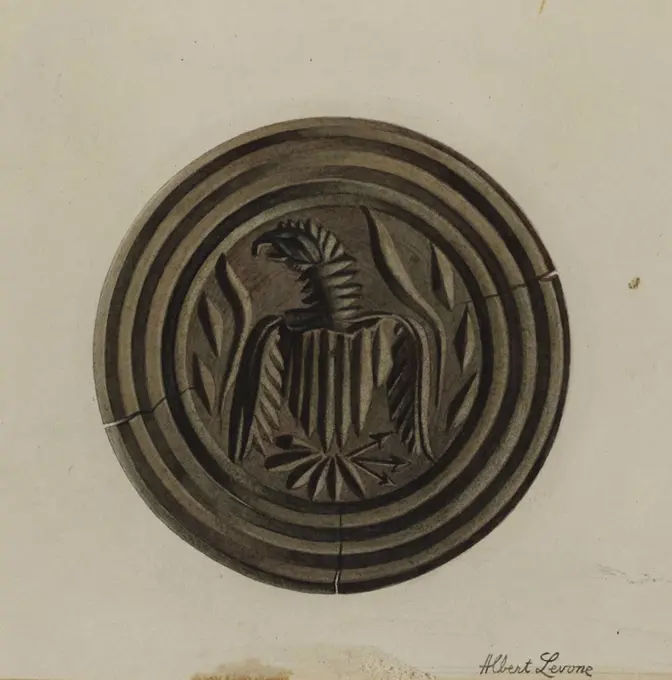
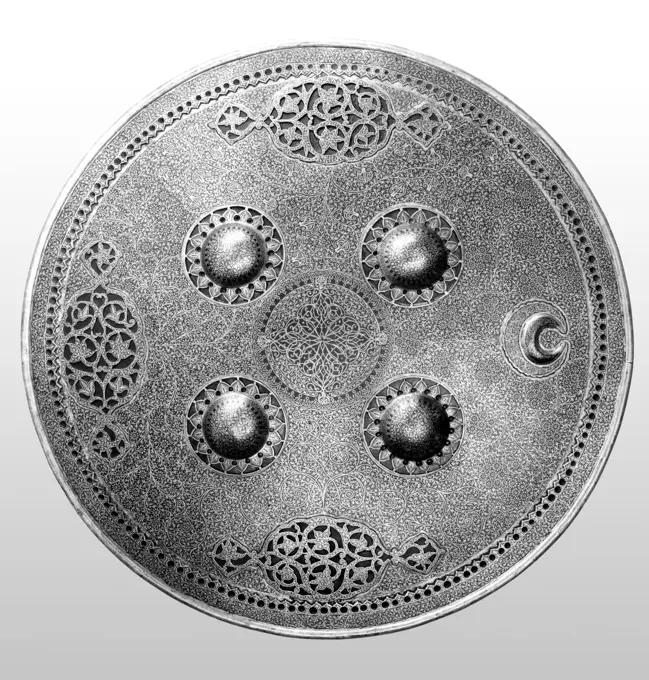
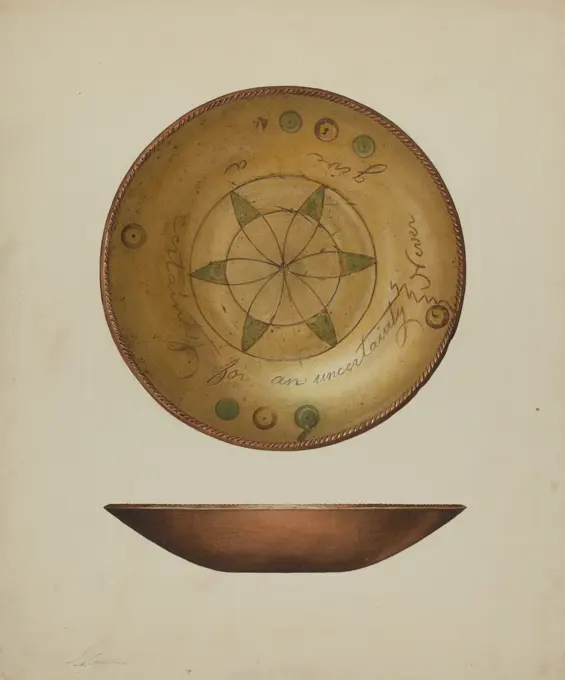
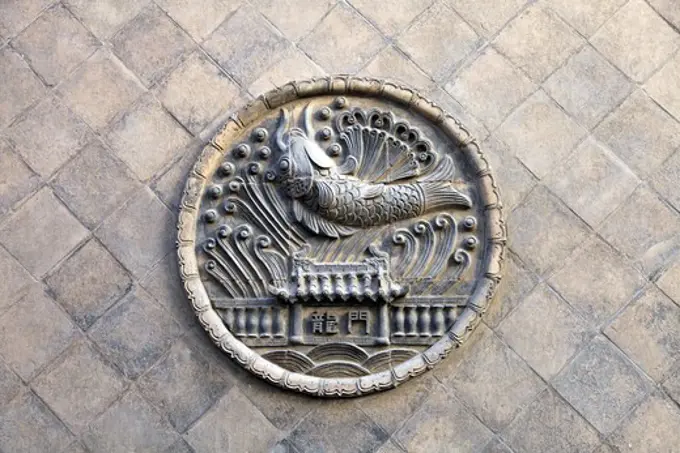
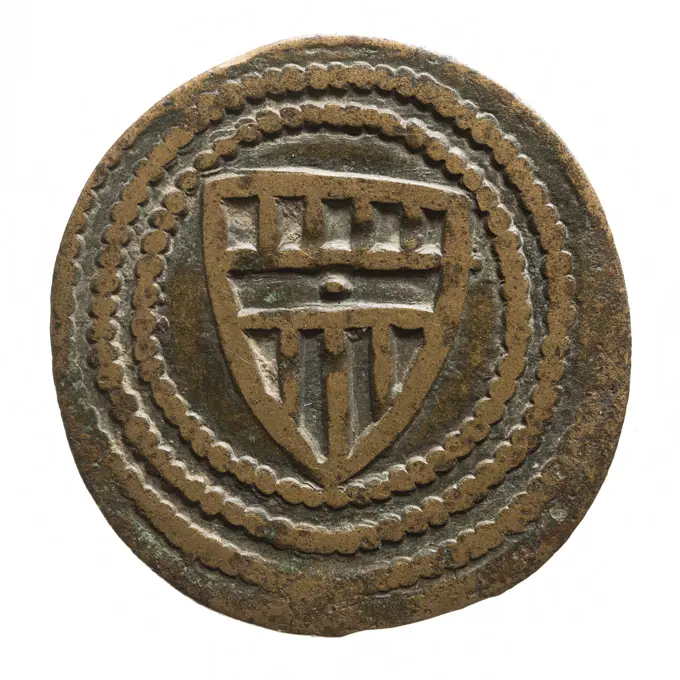
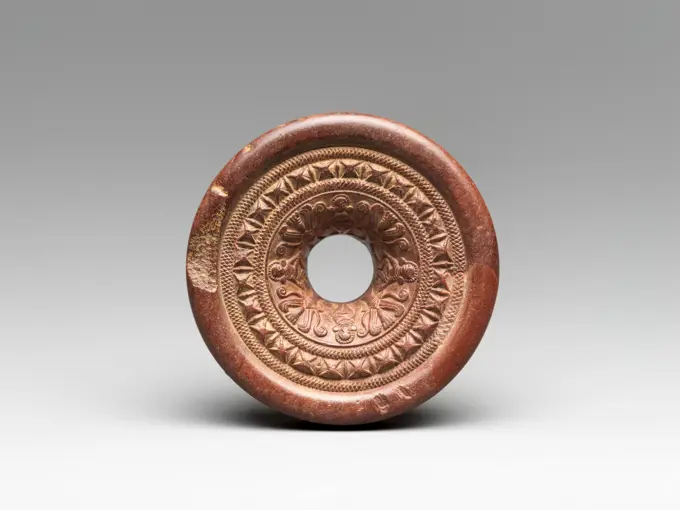
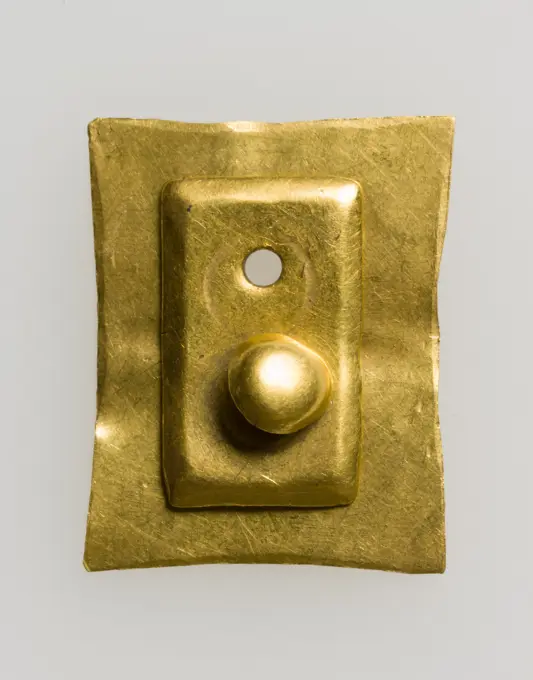
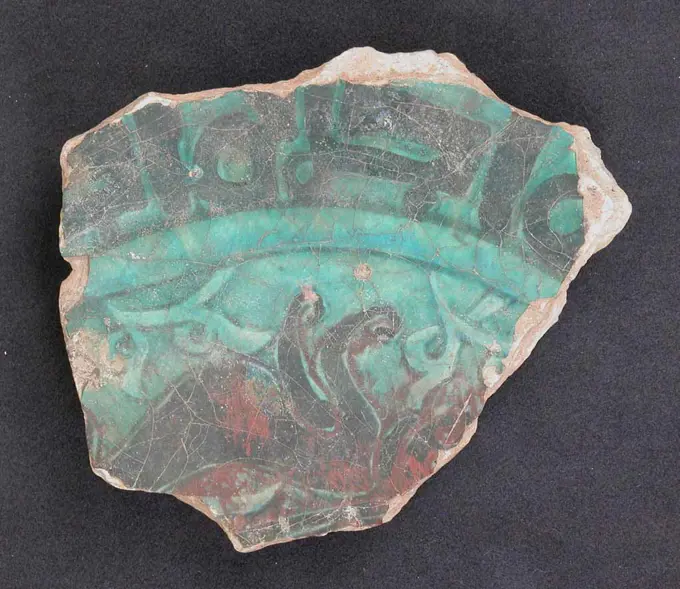
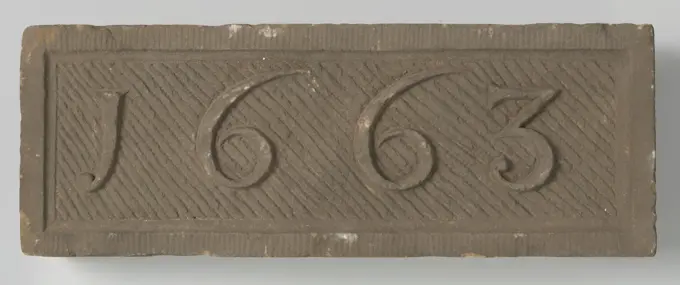
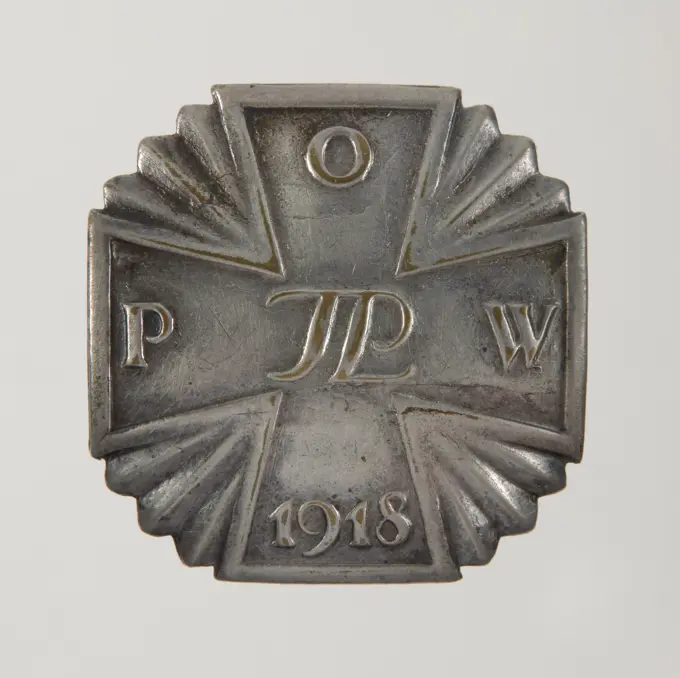
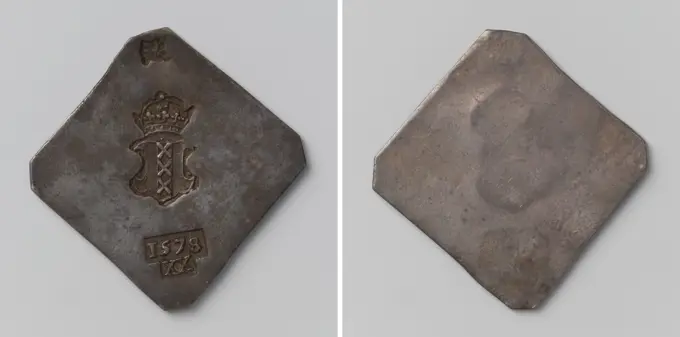
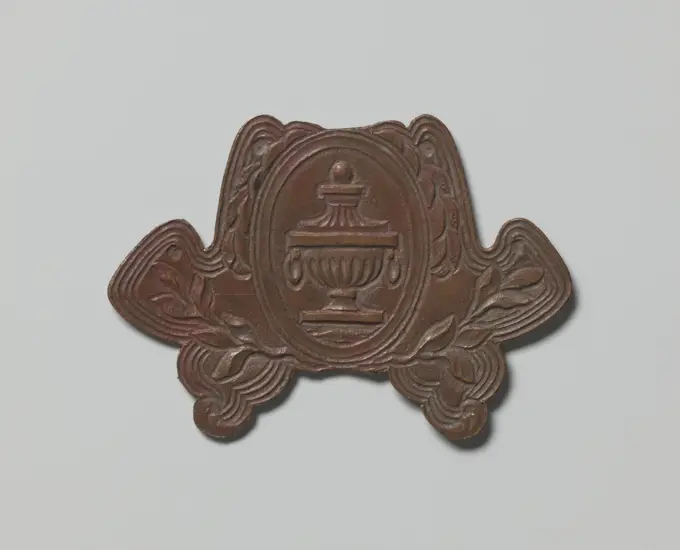
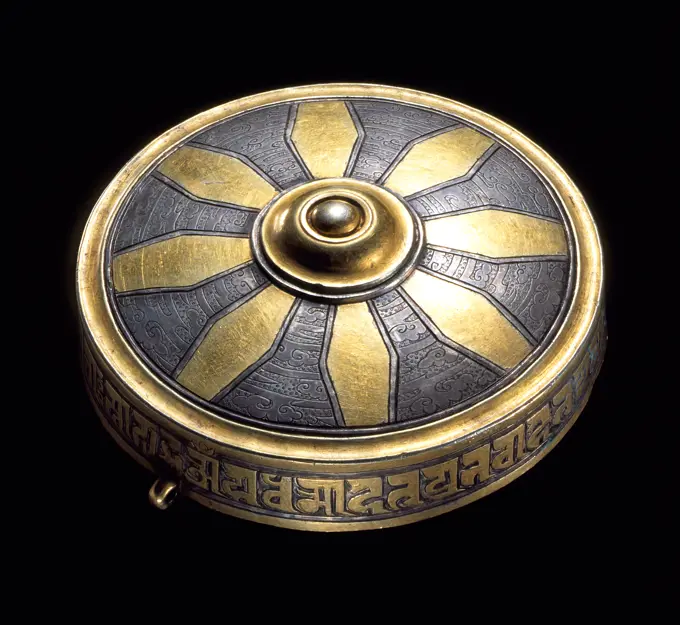
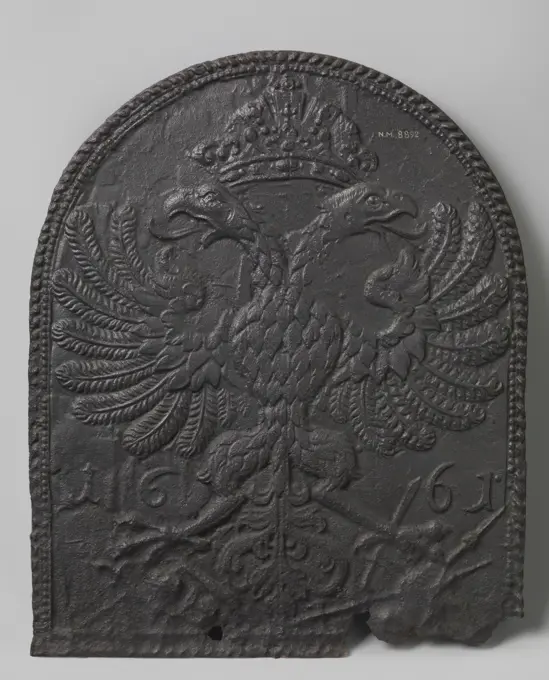
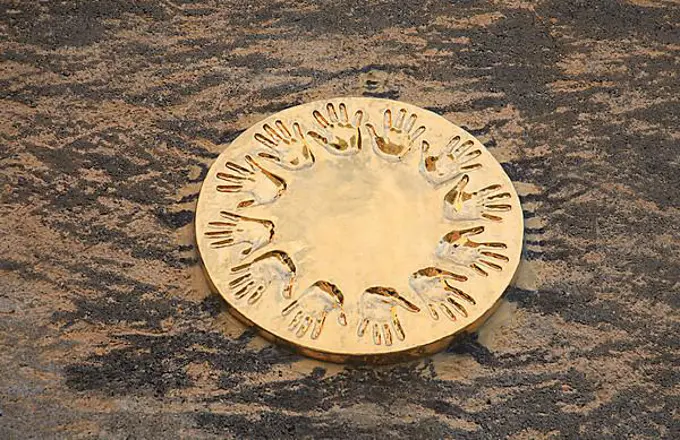
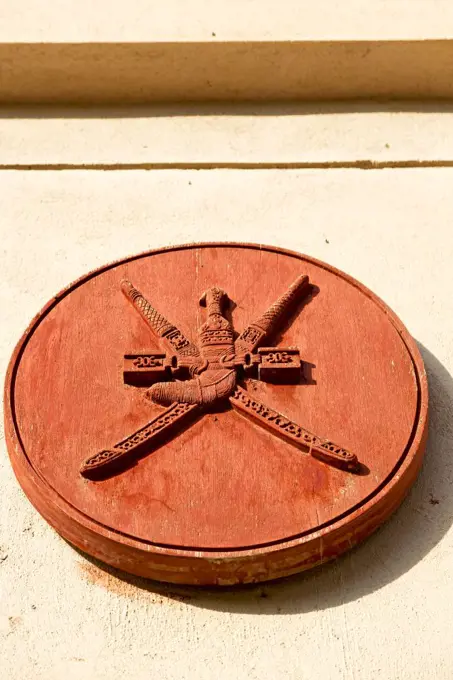
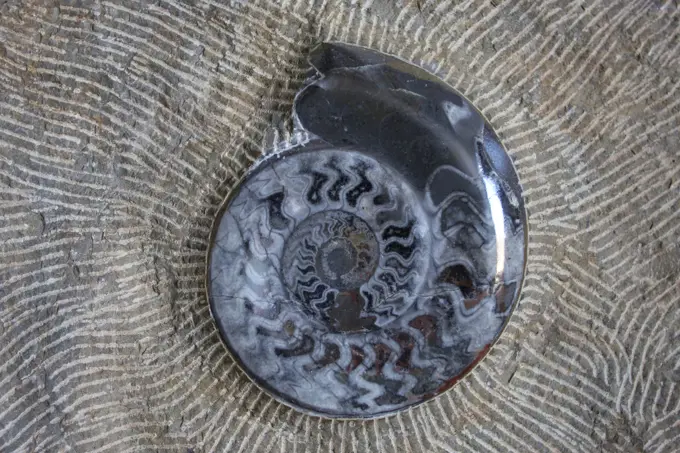
Morocco, fossil polishing and teatment, natulis spiral  shell fossilMirror with Cosmological Design, 12th-13th century, Unknown Korean, 5/16 × 6 7/8 × 7 in. (0.79 × 17.46 × 17.78 cm), Bronze, Korea, 12th-13th century, This mirror is a veritable map of the Korean cosmos with a central celestial frog surrounded by the divine animals of the four directionsthe White Tiger of the West, Black Tortoise of the North, Azure Dragon of the East, and Vermillion Phoenix of the South. Successively larger bands depict the eight trigrams, the ten heavenly stems and twelve earthly branches, the twenty-eight lunar mansions, and the twenty-four solar terms.Disk China. Disk 61955Plate 850-750 B.C. Cypriot Small plate with two handles and concentric bands.. Plate. Cypriot. 850-750 B.C.. Terracotta. Cypro-Geometric III. VasesPlaque fragment ca. 18th century B.C. Old Assyrian Trading Colony. Plaque fragment 323609Sword Guard (Tsuba) with Carp in Waterfall and Bridge, c. 1760-1829. Sekijoken Taizan Motozane (Japanese, 1740-1829). Iron; overall: 6.8 x 7.4 cm (2 11/16 x 2 15/16 in.).Planets-manager. Cornalet Collection Sites 2013-2016. Numismatic.Dish. Culture: French, Sèvres. Dimensions: Diameter: 17 in. (43.2 cm). Maker: Studio of Taxile Maximin Doat (French, 1851-1938). Date: 1900. Museum: Metropolitan Museum of Art, New York, USA.Carnavalet museum, medal collectionBerthe of needle side with a bar soil and inserts of fine needle ladies. Berthe of natural-colored coniferous ladies: Venetian relief side with a bar ground and fields that alternately apply a gauze side and an alençon ground. Round model. The pattern consists of tendrils with large flowers and leaves. The motifs are made with feston stitches and in particular the flower hearts filled with ornamental grounds are accentuated by thick scented cordons.Bliżej Kultury unknownSword Guard (Tsuba) with Chinese Landscape, c. 1615-1868. Japan, possibly Edo period (1615-1868). Iron; diameter: 7.8 cm (3 1/16 in.).Terracotta kylix: eye-cup (drinking cup) 540-520 B.C. Greek, Attic Interior, gorgoneion; Obverse, parts of two eyes, in between the eyes, a helmeted warrior to left, wearing a corselet, chitoniskos, and greaves, with his right arm bent, and his upper torso in three-quarter view; draped male to left wearing a chiton and himation; buttocks and legs of a warrior to right, wearing a chitoniskos and greaves; below each handle, vines with bunches of grapes; Reverse, part of an eye with a black and red oculus; around the stem, a band of rays, alternating with black and reserve; above, eight black glazed lines, in two groups of four; at the juncture of the bowl and the stem, a ring; the top of the foot is glazed and concave; the outer edge of the foot is reserved and concave; the resting surface has three black glazed lines; the inside of the stem is black glazed. Terracotta kylix: eye-cup (drinking cup). Greek, Attic. 540-520 B.C.. Terracotta; black-figure. Archaic. VasesTerracotta fragments of a kylix (drinking cup) 470 B.C. Greek, Attic Interior, woman, chair with drapery; Obverse, youth leaning on stick, seated youth with lyre, youth with stick; Reverse, seated youth playing flute, lower legs and drapery, base of column. Terracotta fragments of a kylix (drinking cup). Greek, Attic. 470 B.C.. Terracotta; red-figure. Classical. VasesSword Guard (Tsuba). Culture: Japanese. Dimensions: H. 3 3/8 in. (8.6 cm); W. 3 1/4 in. (8.3 cm). Date: late 18th-early 19th century. Museum: Metropolitan Museum of Art, New York, USA.Sword Guard (Tsuba). Culture: Japanese. Dimensions: H. 3 1/8 in. (7.9 cm); W. 2 7/8 in. (7.3 cm); thickness 3/16 in. (0.5 cm); Wt. 4.1 oz. (116.2 g). Date: 17th century. Museum: Metropolitan Museum of Art, New York, USA.Fireplace. A fireplace. Dated.Round Plaque 3rd century B.C.-A.D. 2nd century Vicús. Round Plaque 315569MountRing collar of a harness with relief of battle, c. 1550 - c. 1650 Iron ring collar. The top is hemisphere and the bottom runs in a slight point. The high relief shows a battle with men on horseback and with spears and swords. In the middle a horse with a rider falls to the floor. West-Europa iron (metal) forging Iron ring collar. The top is hemisphere and the bottom runs in a slight point. The high relief shows a battle with men on horseback and with spears and swords. In the middle a horse with a rider falls to the floor. West-Europa iron (metal) forgingLeibord with wooden border. Leibord with a wooden edge, rectangular with curved upper line, in which a hole with a string.Dutch circle, 1600 - 1800 Dutch circle, forerunner of a Theodolite.  copper (metal) Dutch circle, forerunner of a Theodolite.  copper (metal)medallion, sacrifice of Isaac, 5th century, Musei Vaticani, State of the Vatican City, Roma, Lazio, Italia.StampHumanitaire Congress in Brussels, Henri Charles Wurden, 1874 history medal Bronze medal in the form of flour, with four round leaves, interspersed by four points. Front: angel, is ready to pierce him with a sword with a fitting devil within the edge of fifteen coats of arms; On all four sides of it decorations with small Waptrookenen. Reverse: Inscription Brussels bronze (metal) striking (metalworking)  BrusselsCeltic civilization, Italy, 1st century b.C. Embossed silver phaleras, ornamental disks used on horse gear. From Manerbio, Brescia province.Deep Dish. Culture: Spanish. Dimensions: Overall: 2 3/8 x 17 3/8 in. (6.1 x 44.1 cm). Date: ca. 1430. Museum: Metropolitan Museum of Art, New York, USA.Wax seal with family crest of Willem Mauritz Swellengrebel, wax seal stamp informatievorm lacquer paper, Wax seal with the family crest of H. Swellengrebel with the coat of arms in gold blue lily with as helmet sign: two harts of natural color and crown and tarpaulins with text all around in box around: Mr . WILLEM MAURITZ SWELLENGREBEL heraldryDoolz and Velarde commemorative medal, Álava Armory Museum, Vitoria, Basque Country, Spain.Rosette dated 1575 German. Rosette. German. dated 1575. Brass. Miscellaneous-Buckles & OrnamentCarnavalet museum, medal collection Right registration on five lines; Reverse in a chalped bloom medallion, a faith. Above and below the ears of wheat and corn.Copper Disk Ornament 12th-15th century Chimú (). Copper Disk Ornament 315300Rowing, Scaffolding and Shirt Guild of Amsterdam, Gildenning of Willem de Groote, berth new bridge. Brass medal. Front: to the left sailing sailboat; On behind: seated man and flag. Downside: inscription above private label and heart with letters w, d and g between monograms of letters n and B.Pa. German Butter Mold. Dated: c. 1938. Dimensions: overall: 16.9 x 17 cm (6 5/8 x 6 11/16 in.) Original IAD Object: 4 1/2" in diameter. Medium: watercolor and graphite on paperboard. Museum: National Gallery of Art, Washington DC. Author: Albert Levone.Shield (Dhál) 19th century Indian Probably from Lahore, this is a virtuoso demonstration of koftgari, or counterfeit damascening. In this technique, the steel is crosshatched with files, and designs cut from gold or silver foil or wire are applied to the rough area and burnished in place.. Shield (Dhál). Indian. 19th century. Steel, gold, silk-velvet. ShieldsGiacinto Capelli, Pa German Plate, c 1938 Pa. German PlateSword Guard (Tsuba). Culture: Japanese. Dimensions: H. 2 3/4 in. (7 cm); W. 2 1/2 in. (6.4 cm); thickness 5/16 in. (0.8 cm); Wt. 4.9 oz. (138.9 g). Date: ca. 1615-1868. Museum: Metropolitan Museum of Art, New York, USA.Round Plaque. Culture: Vicús. Dimensions: Diam. 3 1/8 in. (7.9 cm). Date: 3rd century B.C.-A.D. 2nd century. Museum: Metropolitan Museum of Art, New York, USA.Planets-manager. Cornalet Collection Sites 2013-2016. Numismatic.Door Boss 15th-16th century European. Door Boss 468501Sword Guard (Tsuba) 18th century Japanese A tsuba is a sword guard and part of a sword mounting. It is mounted between the swords blade and grip to protect the users hands.. Sword Guard (Tsuba) 26377Sculpture on a brickFEDERATIVE PACT OF 1790. MEDAL Augustin Dupr� (1748-1833). Federative Pact (1790). Medal. Right and reverse. Silver, 1790.Die; engraved steelJeton de Compete Lombard Aux Armes des Franzesi, XIIIE-XVE SIECES Anonymous. "Token of Comput Lombard to the weapons of Parzesi, XIII-Xve centuries". CIRPER. 1285-1400.Ring stone with goddesses and aquatic plants 3rd-late 2nd century B.C. India, probably Bihar Ring stones, richly decorated with raised reliefs of female figures typically alternating with plant forms and other auspicious motifs, represent an enigmatic category of early Indian sculpture. Both the women and the flowering and fruit-bearing trees are presumably associated with fecundity. Such ring stones may have functioned as jewelers molds, with malleable gold sheet being hammered into the form. Here, the miniature carving shows affinities with Near Eastern seals and early Greek mold-made ceramics, supporting this theory. The ear ornaments worn by the figures are well known in this period, especially in ivory.. Ring stone with goddesses and aquatic plants. India, probably Bihar. 3rd-late 2nd century B.C.. Steatite (?). Mauryan. SculptureVotive Plaque with White Tara 16th-19th century Tibet. Votive Plaque with White Tara. Tibet. 16th-19th century. Black clay with color and gilt. SculptureGold Belt Mount with Rivet 700s Avar The treasure contains an array of belt fittings, some elaborately decorated, some unfinished or defectively cast. Some show no signs of use, while others are quite worn.The AvarsThe Avars were a nomadic tribe of mounted warriors from the Eurasian steppe. The Byzantine emperor Justinian negotiated with them in the sixth century to protect the Empires northern border along the Black Sea. Emboldened by their subjugation of numerous tribes, they unsuccessfully attempted to seize the Empires capital, Constantinople. They remained a scourge of both Byzantium and the Western kingdoms until Charlemagne defeated them through a series of campaigns in the 790s and early 800s.All the money and treasure that the Avars had been years amassing was seized, and no war in which the Franks have ever engaged.. brought them such riches and such booty. Up to that time the Avars had passed for a poor people, but so much gold and silver was found.. that one may well thinVase fragment Roman, Gaul Floral pattern.. Vase fragment. Roman, Gaul. Terracotta. VasesFragment 11th-12th century. Fragment 449973Facing brick with year 1663. ,, 1663  Lying rectangle with an shaded edge and an shaded surface on which the year 1663. The stone includes two facing bricks: KOG-ALS-146-1 with two spewing heads and KOG-ALS-146-2 with Anno. Netherlands (possibly) .Batter of a mission tire. Ten fitting parts of a mission tape, from brass. The ten parts are cut from copper plate, driven, engraved and sponately edited. A copper button with seven facets is riveted on each of them. They are equipped with holes on the corners or along the edge to be able to turn nails, with which they were constituted on the book band. Four corner pieces have a rear edged on two sides. The remaining four have that only at the top or bottom (these were placed against the back of the book). Two sides have been deposited with an open edge of cross flowers from each corner piece. The field in the middle is taken by three-dialed tendrils. The ornament on the middle parts exists on the corners from a plant with three leaves and two flowers in a pot. The four parts in between are taken by fantasy decreases.Commemorative badge Cross of the Polish Military Organization Rydz Mięk Y, Edward (1886 1941), Gajewski, KazimierzTwenty Stuiver, emergency coin from Amsterdam, beaten during the siege from the silver of the Nieuwe Kerk, Anonymous, 1578 - 1631 coin. siege coin Unilateral, diamond -shaped emergency coin with beveled corners. Front: three stamps above each other; From bottom to top: mint masters: fire sample; city coat of arms: crowned coat of arms; year above two letters X. Turn side: Blanco Amsterdam silver (metal) striking (metalworking)  AmsterdamTsuba; sentoku (alloy of copper, lead and zinc), shakudo (copper and gold alloy)Bliżej Kultury unknownModel for a decorative element of a chatelaine, anonymous, c. 1775 - c. 1800 The model driven out of plate for a founding shape is equipped with a decoration consisting of a vase in a medallion, surrounded by garlands and laurel branches. Amsterdam copper (metal) The model driven out of plate for a founding shape is equipped with a decoration consisting of a vase in a medallion, surrounded by garlands and laurel branches. Amsterdam copper (metal)Sword Guard, early to mid-1800s. Japan, Edo period (1615-1868). Iron; diameter: 7.7 cm (3 1/16 in.).Fragment of embroidered fabric () from the collection of the Minutoli Institut, Liegnitz (now Legnica, Poland). Belitski, Ludwig (1830-1902), photographerLid for Reliquary of Rabten Kunzan Phak of Gyantse. Central Tibet, Gyantse, circa 1450. Furnishings; Accessories. Parcel-gilt silverFireplace with crowned double -headed eagle, Anonymous, in or after 1661 - 1675 Cast iron fireplace, with semicircular top. In the middle is a double -headed eagle with spread wings and claws. A crown above that. In addition to the eagle, the year 1661. The whole is framed by pearl edge and decorative edge. Germany iron (metal) casting Cast iron fireplace, with semicircular top. In the middle is a double -headed eagle with spread wings and claws. A crown above that. In addition to the eagle, the year 1661. The whole is framed by pearl edge and decorative edge. Germany iron (metal) castingPlate.   Maker: Samuel Danforth, American, 1774-1816Buddhist hand plate at Juval Castle at the entrance to Schnalstal Valley, Vinschgau Valley, Alto Adige, Italy, Europeisolated object on white -   coin, JapanTable with round leaf, with four flowers, anonymous, c. 1800 - c. 1849 Table with round leaf, with four flowers in every quarter of the table top. Amsterdam (possibly) iron (metal) Table with round leaf, with four flowers in every quarter of the table top. Amsterdam (possibly) iron (metal)Impressions of aMedalBadge for the school hat of the School of Commerce and Industrial in LesznoStove plate with weapon Johan Maurits van Nassau-Siegen, Anonymous, c. 1654 - c. 1679  Almost rectangular stove plate with raised edge, and two notches on the left and right side (for attachment to stove); Centr. image of weapon with four quarters (from Johan Maurits van Nassau-Siegen), crowned with five-leaf royal crown, lying on the eight-pointed Johannieterkruis; The weapon is surrounded by a ribbon, on which an elephant hangs at the bottom (sign of the elephant order), used to the left; Under the weapon banderol with inscription: IOH: Mau Nas: Prin. Germany iron (metal) castingSouth African Coin refashioned into container by Anglo-Boer War POW'sbake  Treasury voivodeship and Podlasie;  1746 (1746-00-00-1746-00-00);Demon Soliciting Alms. Eisai (Japan, 19th century). Japan, late 19th century. Costumes; Accessories. Mixed-metal disk, ivory bowl; kagamibuta typePlanets-manager. Cornalet Collection Sites 2013-2016. Numismatic.in oman the national emblem wood  made    and the wallSports Medal: Skiing Paul Kramer Neuchatel