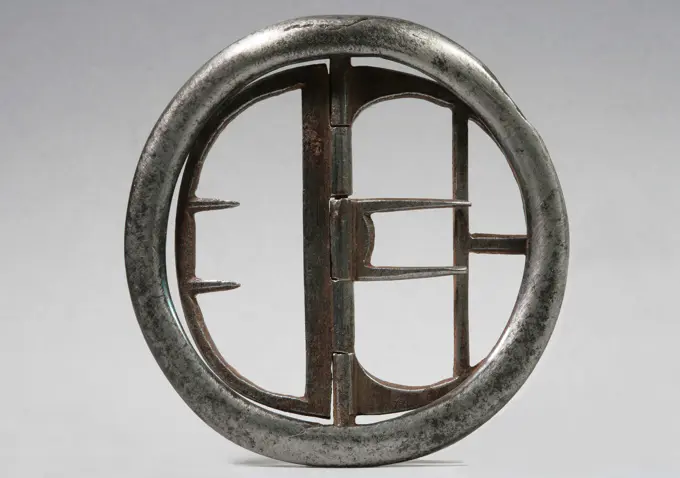
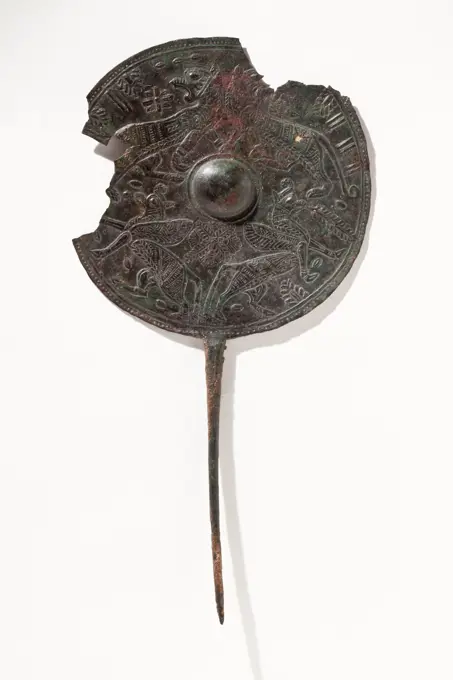
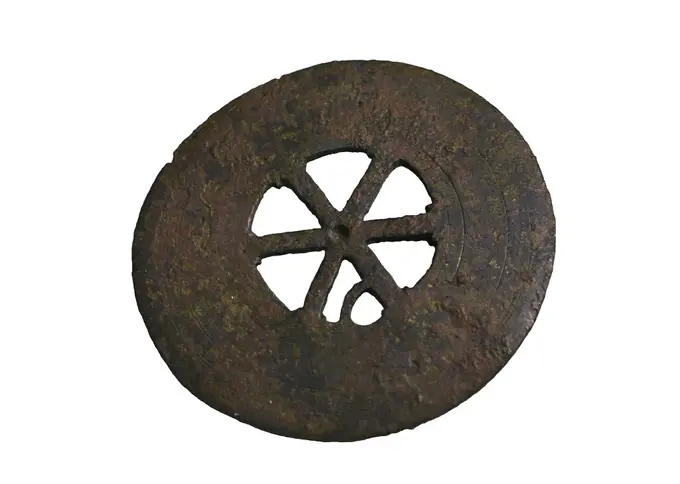
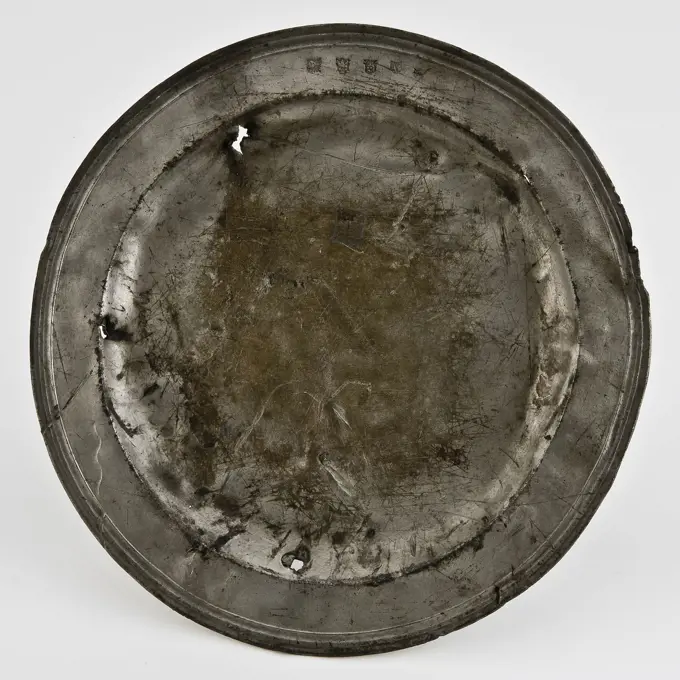
Antique Japanese Sword Guards

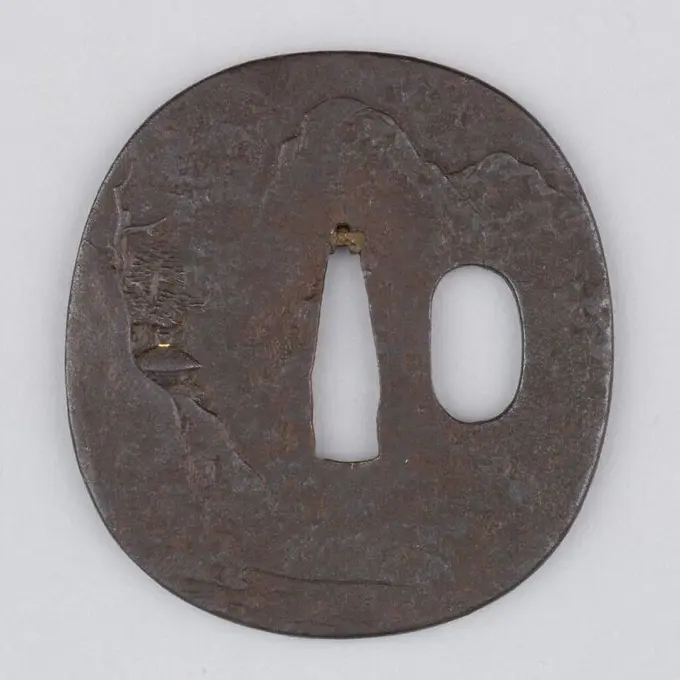
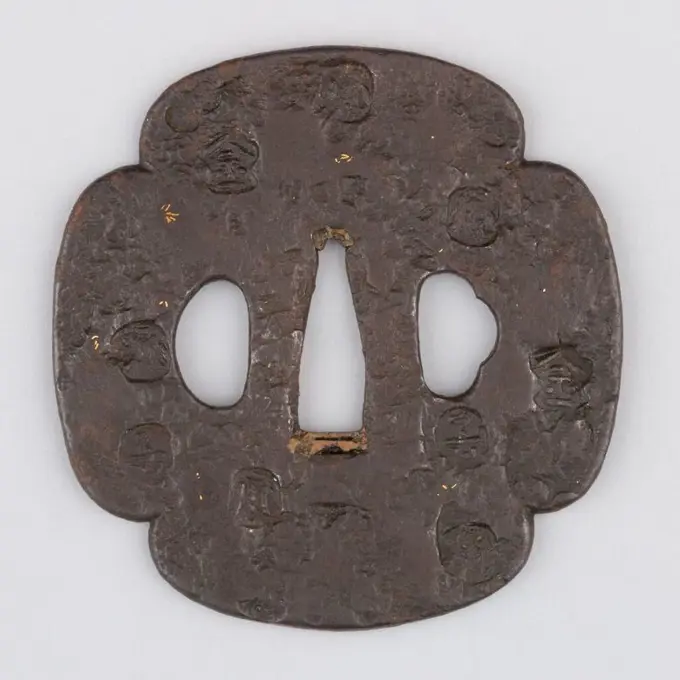
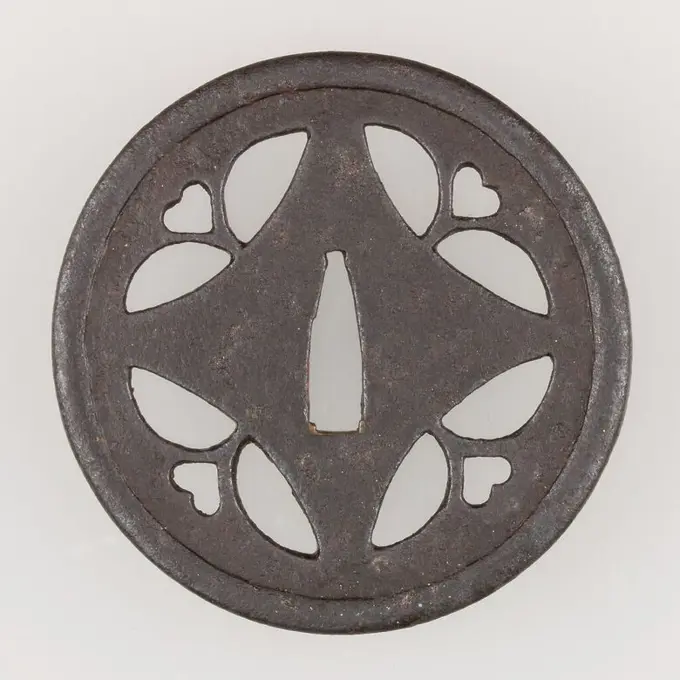
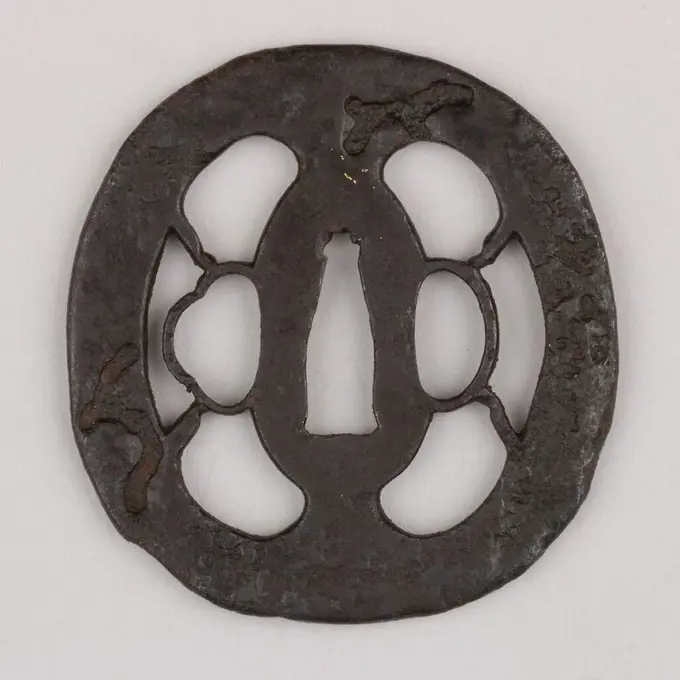
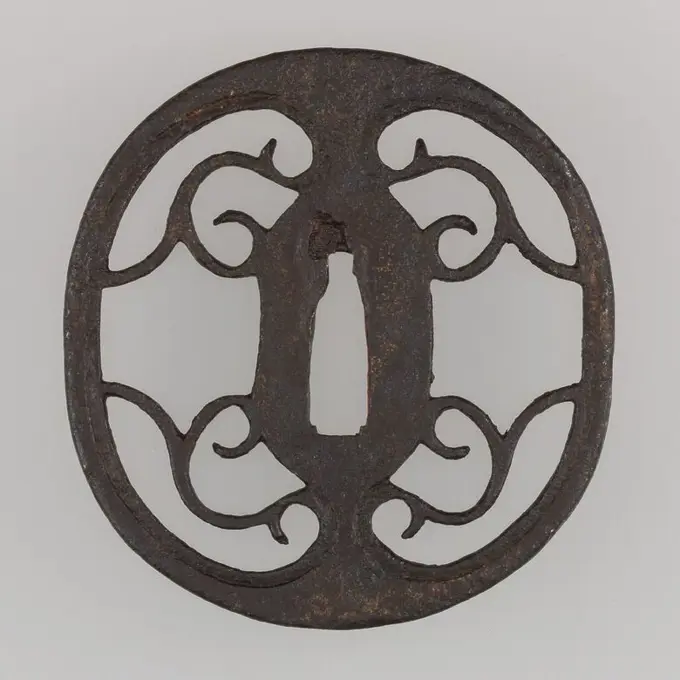
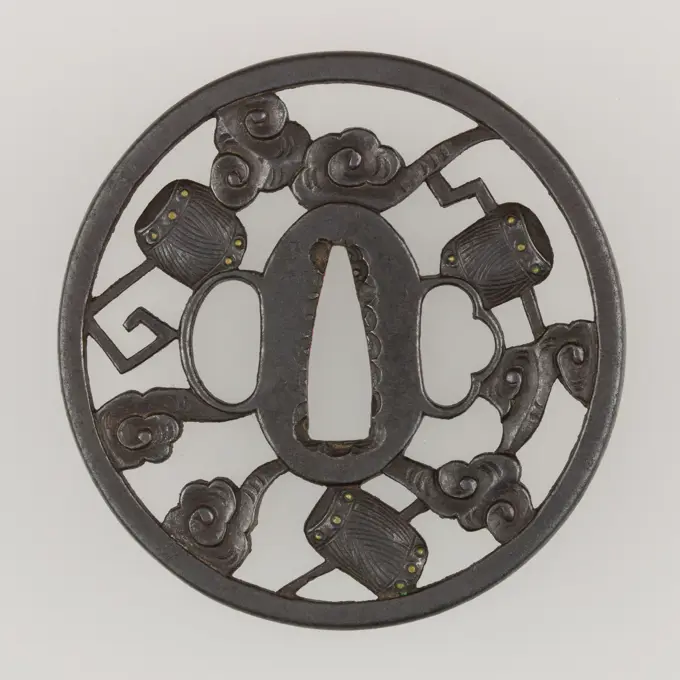
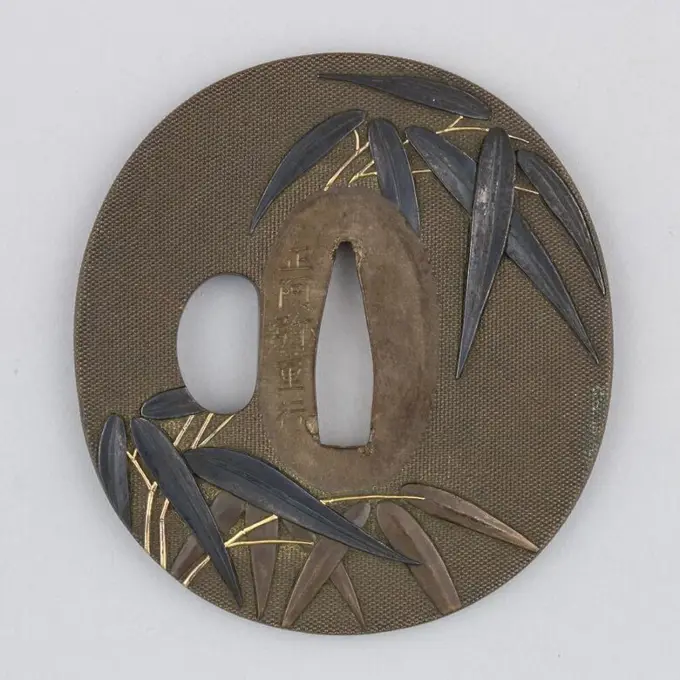
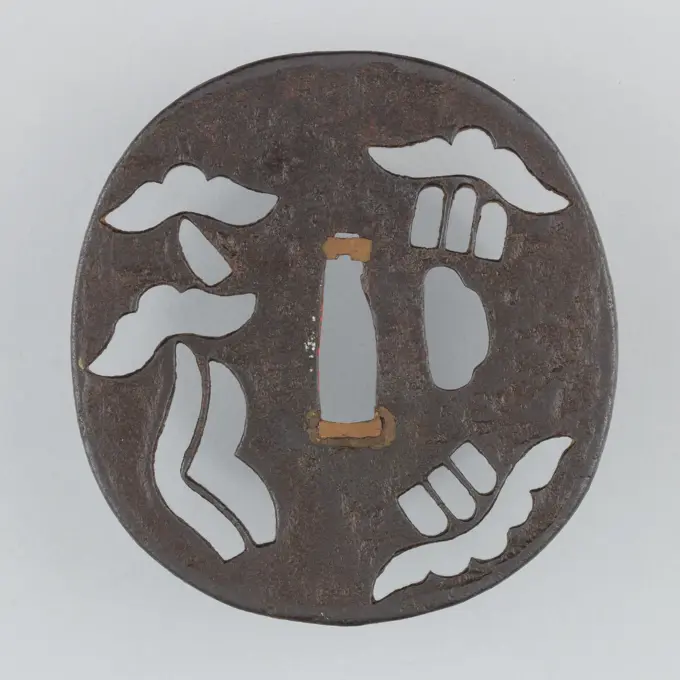
A selection of historical Japanese tsubas, each featuring unique designs and textures, showcasing traditional craftsmanship from various centuries.

Sword Guard (Tsuba) ca. 1615-1868 Japanese A tsuba is a sword guard and part of a sword mounting. It is mounted between the swords blade and grip to protect the users hands.. Sword Guard (Tsuba) 34486
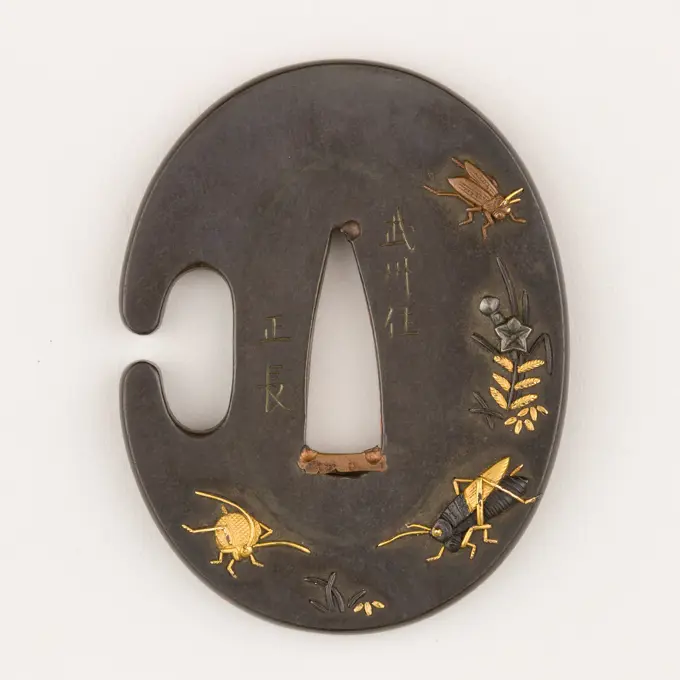
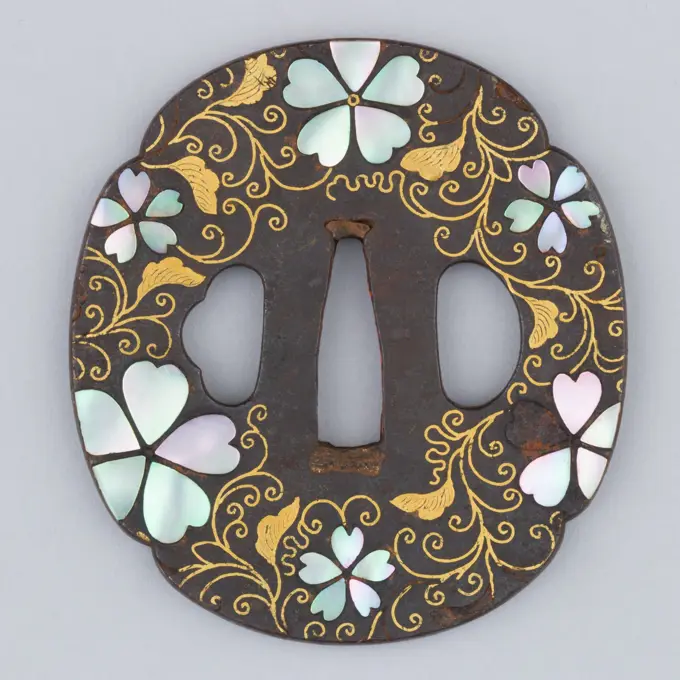
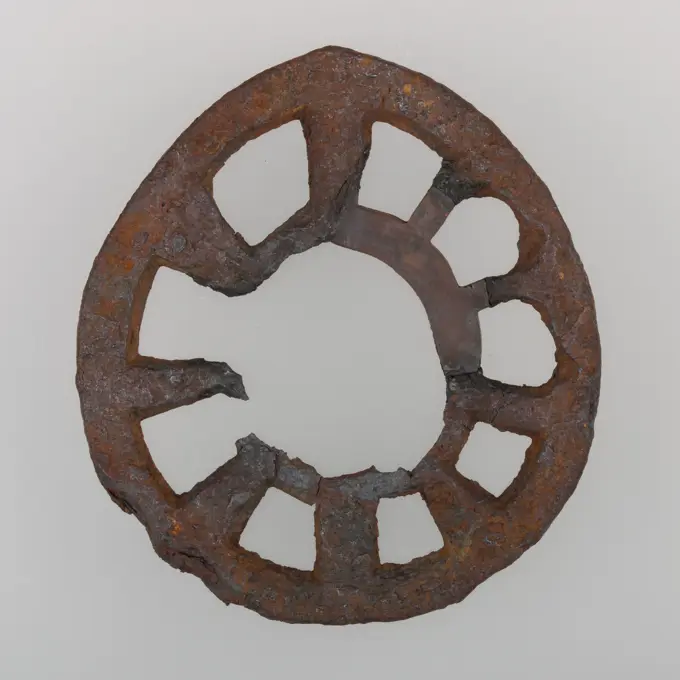
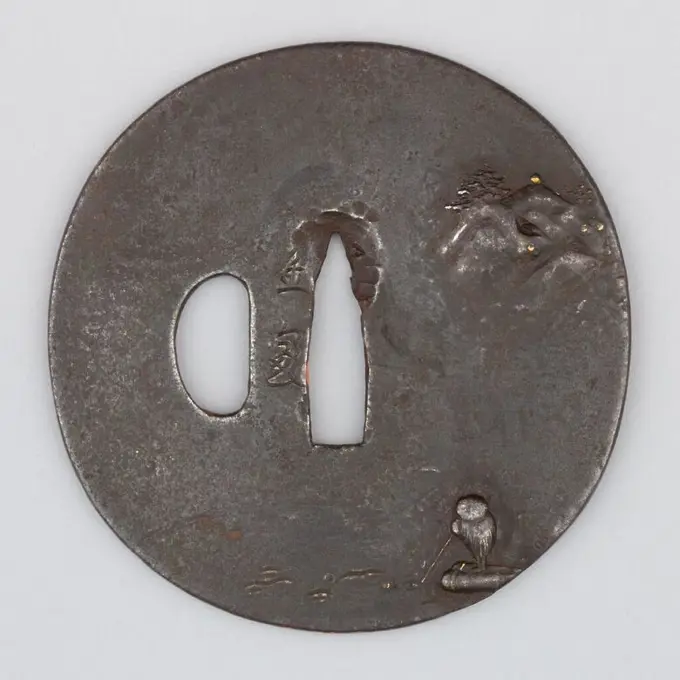
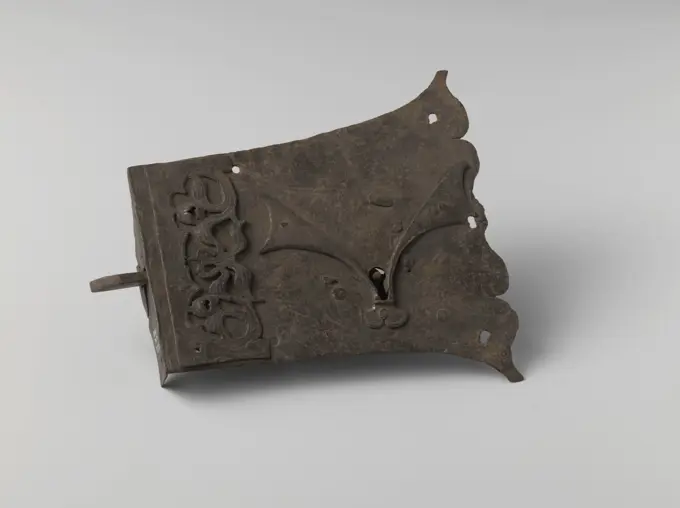
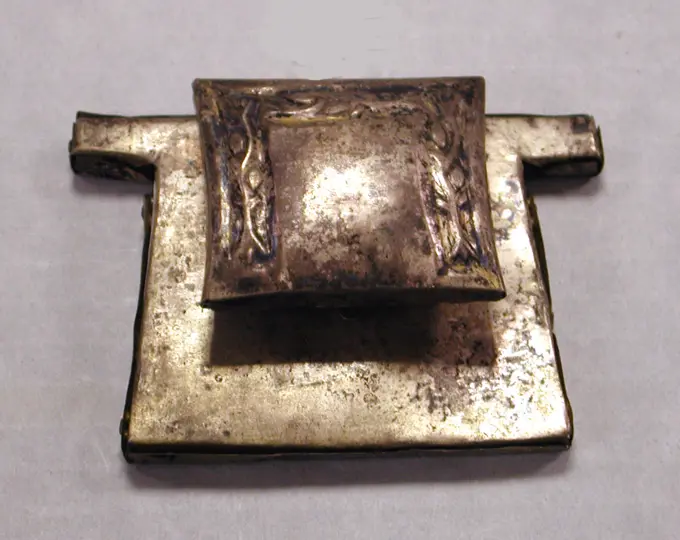
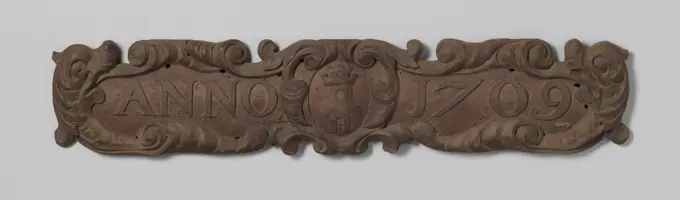
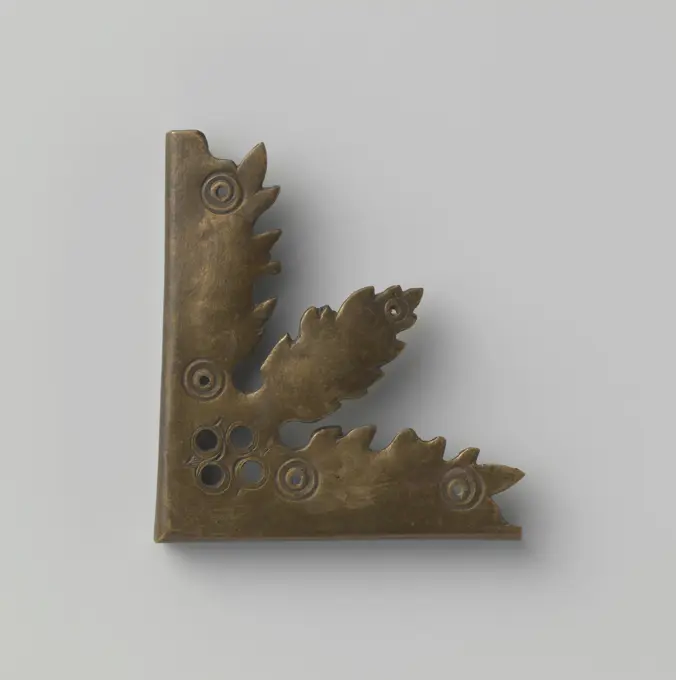
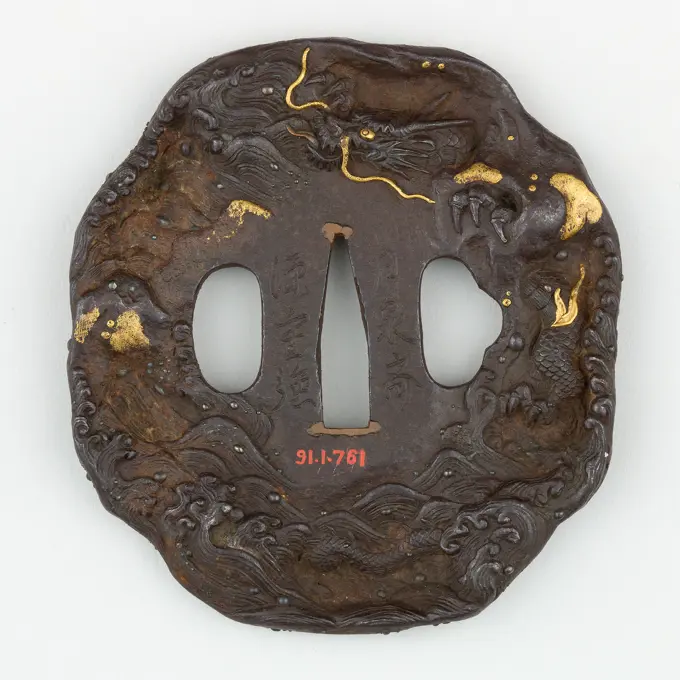
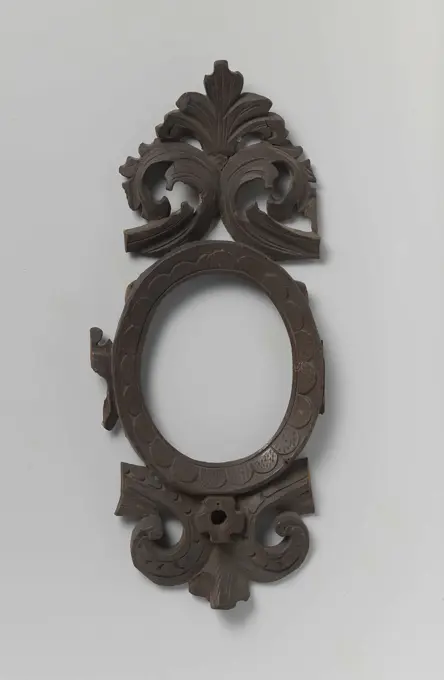
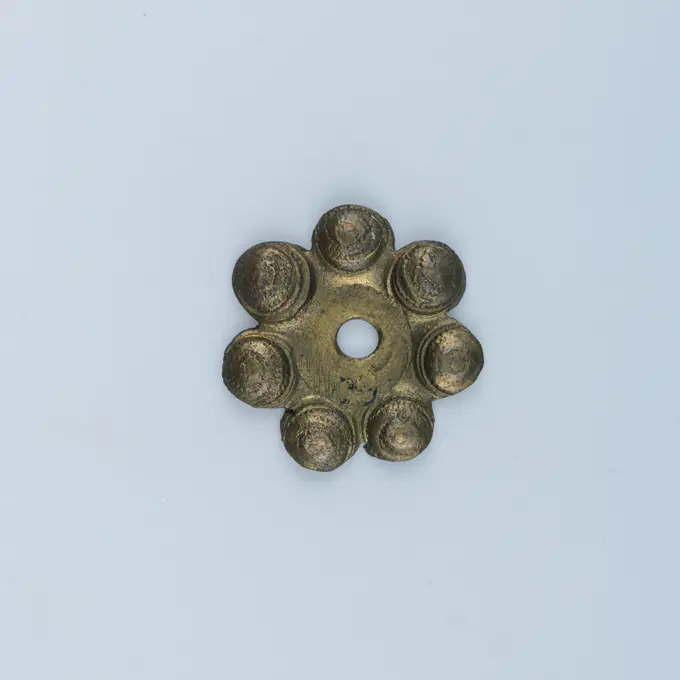
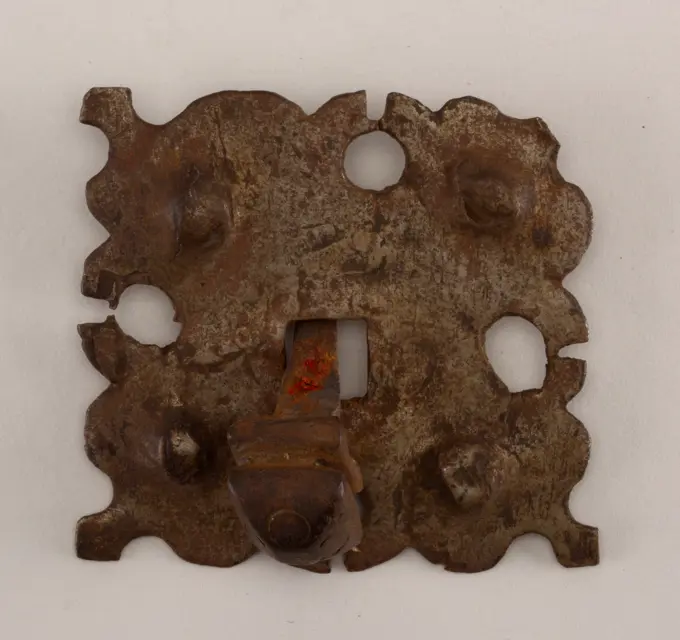
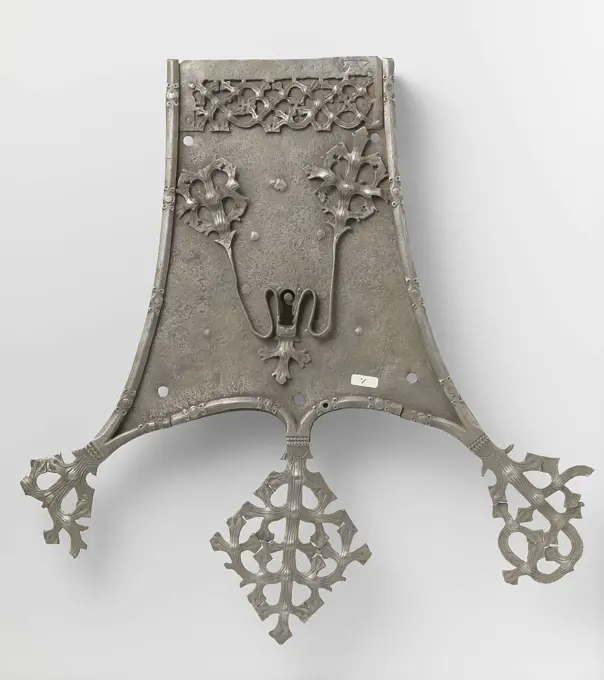
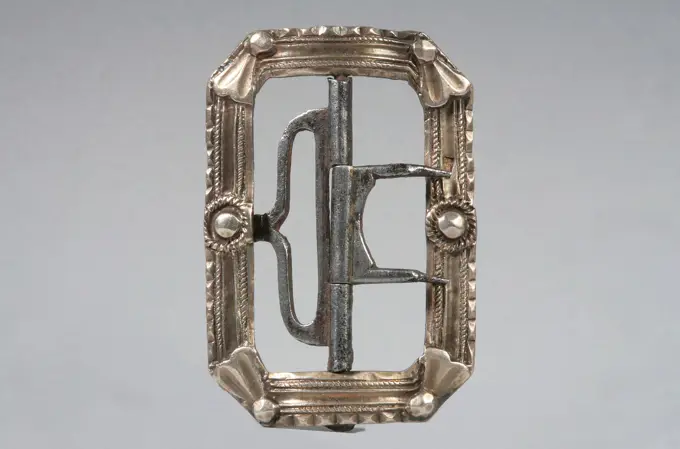
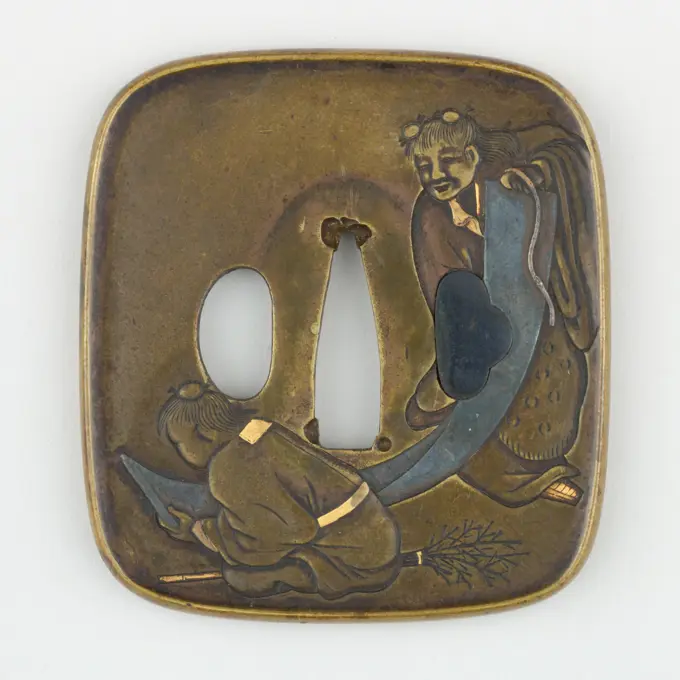
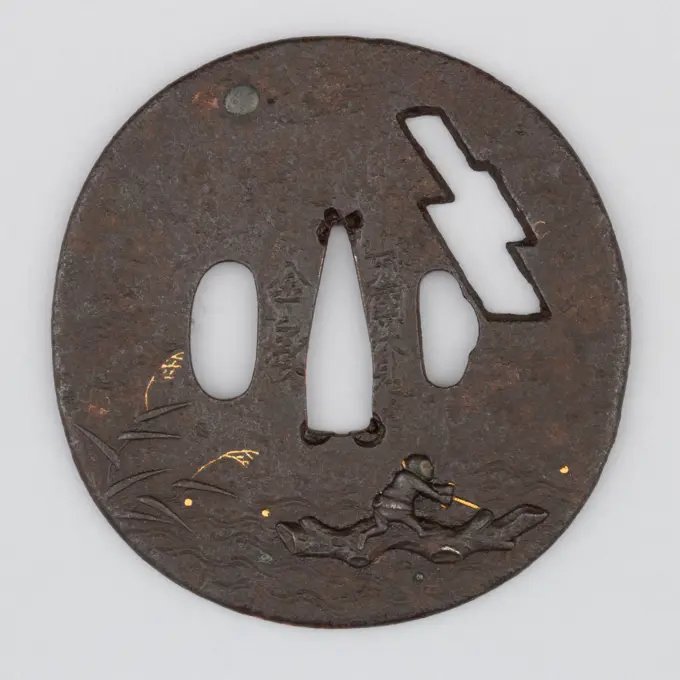
Sword Guard (Tsuba) 17th century Japanese A tsuba is a sword guard and part of a sword mounting. It is mounted between the swords blade and grip to protect the users hands.. Sword Guard (Tsuba) 29936Sword Guard (Tsuba). Culture: Japanese. Dimensions: Diam. 2 7/8 in. (7.3 cm); thickness 3/16 in. (0.5 cm); Wt. 4.3 oz. (121.9 g). Date: early 19th century. Museum: Metropolitan Museum of Art, New York, USA.Sword Guard (Tsuba). Culture: Japanese. Dimensions: H. 2 3/4 in. (7 cm); W. 2 1/2 in. (6.4 cm); thickness 3/16 in. (0.5 cm); Wt. 3.2 oz. (90.7 g). Date: 18th century. Museum: Metropolitan Museum of Art, New York, USA.Sword Guard (Tsuba). Culture: Japanese. Dimensions: H. 3 5/16 in. (8.4 cm); W. 3 1/4 in. (8.3 cm); thickness 3/16 in. (0.5 cm); Wt. 5 oz. (141.7 g). Date: ca. 1615-1868. Museum: Metropolitan Museum of Art, New York, USA.Sword Guard (Tsuba) 18th century Japanese A tsuba is a sword guard and part of a sword mounting. It is mounted between the swords blade and grip to protect the users hands.. Sword Guard (Tsuba) 35113Sword in black lacquered Schede, Anonymous, 1500 - 1725  Japan metal. lacquer (coating)  Japan metal. lacquer (coating). Round, to the edge thinning tsuba with Ishime ground; On the front in Iroe Takazogan two grasshoppers and a butterfly and a grasshopper on the back and a kind of anteater; Signed "Nagahara".Sword Guard (Tsuba) Japanese, Higo early 18th century A tsuba is a sword guard and part of a sword mounting. It is mounted between the swords blade and grip to protect the users hands.Sword Guard (Tsuba) ca. 1615-1868 Japanese A tsuba is a sword guard and part of a sword mounting. It is mounted between the swords blade and grip to protect the users hands.. Sword Guard (Tsuba) 25748Sword Guard (Tsuba) ca. 1615-1868 Japanese A tsuba is a sword guard and part of a sword mounting. It is mounted between the swords blade and grip to protect the users hands.. Sword Guard (Tsuba) 34486Sword Guard (Tsuba). Culture: Japanese. Dimensions: H. 3 1/4 in. (8.3 cm); W. 2 7/8 in. (7.3 cm); thickness 5/16 in. (0.8 cm); Wt. 5.9 oz. (167.3 g). Date: ca. 1615-1868. Museum: Metropolitan Museum of Art, New York, USA.Sword Guard (Tsuba) late 17th century Japanese A tsuba is a sword guard and part of a sword mounting. It is mounted between the swords blade and grip to protect the users hands.. Sword Guard (Tsuba) 34932Lock 16th century German The decoration of Gothic iron locks and keys was often elaborate and of the highest standard of workmanship. The motifs were frequently drawn from Gothic architecture, reproducing on a miniature scale complicated tracery patterns and even tiny statuettes. A number of these tiny locks were compound, with some of the mechanisms concealed from view, and required two or even three keys used in sequence to open them. It has been suggested that the greatly expanded use of locks on doors, or coffrets and other types of storage chests was a result of the increasing urbanization of life and the new emphasis on material wealth and private ownership which developed in the late Middle Ages.. Lock 468825Sword Guard (Tsuba). Culture: Japanese. Dimensions: H. 2 3/16 in. (5.6 cm); W. 1 11/16 in. (4.3 cm); thickness 1/4 in. (0.6 cm); Wt. 2.6 oz. (73.7 g). Date: ca. 1615-1868. Museum: Metropolitan Museum of Art, New York, USA.Sword Guard (Tsuba). Culture: Japanese. Dimensions: H. 3 11/16 in. (9.4 cm); W. 3 5/8 in. (9.2 cm); thickness 3/16 in. (0.5 cm); Wt. 4.3 oz. (121.9 g). Date: 15th century.This tsuba features an openwork design of stylized butterflies, in negative silhouette. It is made in the so-called kachushi (armor-maker's) style. Museum: Metropolitan Museum of Art, New York, USA.Sword Guard (Tsuba). Culture: Japanese. Dimensions: Diam. 3 3/8 in. (8.6 cm); thickness 3/16 in. (0.5 cm); Wt. 5.4 oz. (153.1 g). Date: 18th century. Museum: Metropolitan Museum of Art, New York, USA.Sword Guard (Tsuba). Culture: Japanese. Dimensions: Diam. 3 1/4 in. (8.3 cm); thickness 3/16 in. (0.5 cm); Wt. 3.7 oz. (104.9 g). Date: 18th century. Museum: Metropolitan Museum of Art, New York, USA.Sword Guard (Tsuba). Culture: Japanese. Dimensions: Diam. 3 3/16 in. (8.1 cm); thickness 1/8 in. (0.3 cm); Wt. 2.5 oz. (70.9 g). Date: 18th century. Museum: Metropolitan Museum of Art, New York, USA.Sword Guard (Tsuba) 18th century Japanese A tsuba is a sword guard and part of a sword mounting. It is mounted between the swords blade and grip to protect the users hands.. Sword Guard (Tsuba) 32182Sword Guard (Tsuba) 18th century Japanese A tsuba is a sword guard and part of a sword mounting. It is mounted between the swords blade and grip to protect the users hands.. Sword Guard (Tsuba) 26349Sword Guard (Tsuba) With the Motif of Insects and Autumnal Vegetation (草に虫図鐔) 18th century Japanese This small tantō-tsuba has a polished finish (migaki-ji) and shows in relief (takabori) on the obverse (omote) two crickets (one in gold and one in copper), a grasshopper (in gold and shakudō), and a Chinese bellflower which is one of the Seven Autumnal Flowers. The reverse (ura) is only sparsely decorated with plants towards the bottom left. Throughout the Edo period, there were several artists with the name Masanaga active in Edo, i.e. Musashi province as stated in the signature. For example, two from the Bushū Itō (伊藤) School and two from the Nara (奈良) School.. Sword Guard (Tsuba) With the Motif of Insects and Autumnal Vegetation (草に虫図鐔) 24987Brooch -Shoe Buckle 7th century Byzantine. Shoe Buckle 464881 Byzantine, Shoe Buckle, 7th century, Silver, Overall: 7/8 x 1 1/8 x 5/16 in. (2.3 x 2.9 x 0.8 cm). The Metropolitan Museum of Art, New York. Gift of J. Pierpont Morgan, 1917 (17.191.185)Decorative door boss and nail, Steel-plated wrought iron, Square pierced and repousséd mount of four cusps with wrought border-lines, surmounted by a second squared and pierced plate wrought into a four-quadrant design of trefoil leaves. Nails have tall spiraled conical heads on squared shanks., Spain, ca. 1550-1700, metalwork, Decorative Arts, Decorative door boss and nailLuckenbooth brooch -Sword Guard (Tsuba) 18th century Japanese A tsuba is a sword guard and part of a sword mounting. It is mounted between the swords blade and grip to protect the users hands.. Sword Guard (Tsuba) 26308Sword Guard (Tsuba) 18th century Japanese A tsuba is a sword guard and part of a sword mounting. It is mounted between the swords blade and grip to protect the users hands.. Sword Guard (Tsuba) 26379Sword Guard (Tsuba). Culture: Japanese. Dimensions: Diam. 3 1/8 in. (7.9 cm). Date: 17th century. Museum: Metropolitan Museum of Art, New York, USA.Tsuba, Iron, shakudo (a soft copper and gold alloy), This tatsu (iron) tsuba is kiku (chrysanthemum) in shape and pattern. Ji sukashi (cutout) workmanship forms the flowers petals. At the center is the nakago-ana, an opening through which the sword passes, surrounded by a migaki (smooth) surface with chisel marks and remnants of sekigane (plugs added to fit the tsuba to a sword) made of shakudo (a soft copper and gold alloy)., Japan, 17th century, metalwork, Decorative Arts, TsubaSword Guard (Tsuba) ca. 1615-1868 Japanese A tsuba is a sword guard and part of a sword mounting. It is mounted between the swords blade and grip to protect the users hands.. Sword Guard (Tsuba) 34414Sword Guard (Tsuba) ca. 1615-1868 Japanese This iron tsuba shows a brightly shining mother-of-pearl inlay of cherry blossoms embedded into arabesques.. Sword Guard (Tsuba) 34385Pair of Ear Spools. Chimú; North coast, Peru. Date: 1100-1470. Dimensions: Each h. 7.6 cm (3 in.). Silver. Origin: North Coast. Museum: The Chicago Art Institute, Chicago, USA.Sword Guard (Tsuba). Culture: Japanese. Dimensions: H. 3 1/16 in. (7.8 cm); W. 3 in. (7.6 cm).. Date: 18th century. Museum: Metropolitan Museum of Art, New York, USA.Dish with tulips, anonymous, 1450 - 1500 In the Plat de Schotel, where the center point is visible in the middle, with the help of stamp shapes are punched: a round high middle part, surrounded by four times a repetition of the motifs of a round -tissue leaf shape as well as a bear sitting on a trunk , surrounded by two tulips. Along the edge are two ringing ringing rings, which are still partially visible. The four tribes have a probably later drilled hole at the same distance. The center point has also become a small opening. Round holes were drilled in four places in four places, which are closed with red copper at the rear. The hanging ring was applied later. Neurenberg (possibly) brass (alloy). copper (metal) casting In the Plat de Schotel, where the center point is visible in the middle, with the help of stamp shapes are punched: a round high middle part, surrounded by four times a repetition of the motifs of a round -tissue leaf shape as well as a bear sitting on a trunk , surroRechthoekig applique.Rectangular applique, from yellow-gray jade with finely engraved arabeses bounded by double lines, here and there relief.. Mokko-shaped tsuba with raised edge; On both silk rain birds in Iroe Hirazogan above waves in elevated relief. Iroe Hirazogan is flat inlays in different colors.Sword Guard (Tsuba) ca. 3rd century-710 Japanese A tsuba is a sword guard and part of a sword mounting. It is mounted between the swords blade and grip to protect the users hands.. Sword Guard (Tsuba) 35129Sword Guard (Tsuba). Culture: Japanese. Dimensions: H. 3 3/16 in. (8.1 cm); W. 3 1/8 in. (7.9 cm); thickness 3/16 in. (0.5 cm); Wt. 4.1 oz. (116.2 g). Date: ca. 1615-1868. Museum: Metropolitan Museum of Art, New York, USA.TsubaHand guard, anonymous, 1800 - 1900 Oval tsuba with a tea hut and attributes of the tea ceremony in a positive silhouette and relief; Details in gold nunome-zogan. Japan iron (metal). gold (metal) Oval tsuba with a tea hut and attributes of the tea ceremony in a positive silhouette and relief; Details in gold nunome-zogan. Japan iron (metal). gold (metal)Slot, 1400 - 1499 A lock. Gothic.  iron (metal) A lock. Gothic.  iron (metal)Shield (Dhàl). Culture: Indian. Dimensions: Diam. 10 1/8 in. (25.7 cm); D. 1 3/4 in. (4.5 cm); Wt. 2 lb. 3.7 oz. (1012.1 g). Date: 19th century. Museum: Metropolitan Museum of Art, New York, USA.Henri Husson / Adrien-Aurélien Hébrard. Plate. Hammered copper, pushed and chopped, silver and silver frog. 1909-1914. Museum of Fine Arts of the City of Paris, Petit Palais. 75295-11 Silver, chisel, hammer copper, silver grenaille, regrowthSword Guard (Tsuba). Culture: Japanese. Dimensions: H. 3 in. (7.6 cm); W. 2 3/4 in. (7 cm); thickness 1/4 in. (0.6 cm); Wt. 5.8 oz. (164.4 g). Date: early 19th century. Museum: Metropolitan Museum of Art, New York, USA.Carnavalet museum, medal collection Right eye to the center of a crown of oak leaves; Behind, a bundle surmounted by an ax; Reverse registration on a line.Cup from a Rapier's Hilt, c. 1650-75. Italy, 17th century. Steel with etched floral, floiate, and bird designs; diameter: 12.3 cm (4 13/16 in.); overall: 16.9 cm (6 5/8 in.).Sword Guard (Tsuba) possibly 18th century Japanese A tsuba is a sword guard and part of a sword mounting. It is mounted between the swords blade and grip to protect the users hands.. Sword Guard (Tsuba) 33408Knip, anonymous A sorner single cut. A sorner single cut.Bowl or Deep Plate 19th century (original dated 1330) French. Bowl or Deep Plate 468753Sword Guard (Tsuba). Culture: Japanese. Dimensions: H. 2 7/8 in. (7.3 cm); W. 2 1/2 in. (6.4 cm); thickness 3/16 in. (0.5 cm); Wt. 4.4 oz. (124.7 g). Date: ca. 1615-1868. Museum: Metropolitan Museum of Art, New York, USA.MoldingSword Guard (Tsuba). Culture: Japanese. Dimensions: H. 3 1/8 in. (7.9 cm); W. 2 3/4 in. (7 cm); Wt. 1.5 oz. (42.5 g). Date: ca. 3rd century-710. Museum: Metropolitan Museum of Art, New York, USA.Pennanular or Omega Brooch 1st-2nd century Roman. Pennanular or Omega Brooch 466067 Roman, Pennanular or Omega Brooch, 1st2nd century, Bronze, Overall: 2 1/8 x 2 x 1/2 in. (5.4 x 5.1 x 1.2 cm). The Metropolitan Museum of Art, New York. Rogers Fund, 1981 (1981.205)Torch holder, c. 1500 sculpture  Florence bronze (metal)Sword Guard (Tsuba), c. 1615-1868. Japan, possibly Edo period (1615-1868). Iron; diameter: 6.8 cm (2 11/16 in.).Pierced Wooden Cover. Vaulted, openwork wooden lid.Plate and Nail 15th-16th century European. Plate and Nail. European. 15th-16th century. Iron. Metalwork-IronPlate. Bronze. North of Hebei and West of Liaoning, 6th-century BC. Paris, Cernuschi museum. 59697-1 Animal art, bronze, back, north hebei, number inventory, west liaoning, platePottery plate, decorated with plant in purple on white ground, plate dish crockery holder soil find ceramic earthenware glaze tin glaze, hand turned glazed baked Pottery plate decorated with stylized plant in purple on white fond. Decoration consists of flowering plant in the middle of the plate. Around it wreath of leaves on the edge. Plate is fully glazed. Stand with light soul archeology Rotterdam Overschie Kleinpolder Polderkade indigenous pottery served table food room table Ground discovery: Overschie 1979 De Lugt at the Polderkade.Old Iron Old metal iron on isolated studio white background Copyright: xZoonar.com/AndreyxSkatx 7790178Miniature Litter Backboard 11th-late 15th century Chimú or Chancay. Miniature Litter Backboard 309214Cartouche van Eikenhout with the weapon of Middelburg, Anonymous, 1709 Cartouche van Eikenhout with the weapon of Middelburg and the year 1709 in the middle. The curls at the end form monster heads. Brown painted.  wood (plant material). oak (wood) painting / painting Cartouche van Eikenhout with the weapon of Middelburg and the year 1709 in the middle. The curls at the end form monster heads. Brown painted.  wood (plant material). oak (wood) painting / paintingCorner piece of a book fittings (), C. 1400 - c. 1950 Corner piece of a book attachment () From brass.  brass (alloy) Corner piece of a book attachment () From brass.  brass (alloy)Decorative door boss and nail, Wrought iron, Square type, pierced and embossed with wrought lines. Quadrant leaf design based on old examples. Round, bell-shaped nail head on square shank., Spain, 17th century, metalwork, Decorative Arts, Decorative door boss and nailDecorative door boss and nail, Wrought iron, Flat, square mount, pierced, shaped and embossed into a foliate quadrant design derived from earlier leaf patterns. Circular piercings. Notched square and domed nail head on square shank., Spain, 17th century, metalwork, Decorative Arts, Decorative door boss and nailSword Guard (Tsuba) 18th century Japanese A tsuba is a sword guard and part of a sword mounting. It is mounted between the swords blade and grip to protect the users hands.. Sword Guard (Tsuba) 26343Sword Guard (Tsuba) late 16th-early 17th century Japanese A tsuba is a sword guard and part of a sword mounting. It is mounted between the swords blade and grip to protect the users hands.. Sword Guard (Tsuba) 29990Sword Guard (Tsuba) Depicting Dragon in Waves (に龍図鐔) 19th century Japanese The plate of this tsuba is interpreted in a highly uneven manner and shows a relief of a dragon in waves which is partially highlighted in gold nunome-zōgan. The spray of the waves appears to be shibuichi or silver. Shigehiro (重強), art name Gessensai (月泉斎), was an artist who was based in Ōmi province (present-day Shiga Prefecture). His name can also be read Shigeatsu.. Sword Guard (Tsuba) Depicting Dragon in Waves (に龍図鐔) 25680Brooch -Deurhengsel, c. 1400 - c. 1950 A door tixel  iron (metal) A door tixel  iron (metal)Wooden table at medallion portrait of Johan van Oldenbarnevelt. Wooden sliced table belonging to the ivory medallion portrait. Demolished pieces on the side.Rosette ca. 1540 French. Rosette. French. ca. 1540. Brass. Miscellaneous-Buckles & OrnamentLoop 2 rows of stones; Gorsses stones for outside row.Excerpt (foot ring) of a dish with red-baking shard, with yellow glaze at the front and back, on which stripes and curls are shown in sgrafitto technology with ocher and green glaze, anonymous, 1200- 1899  Italy earthenware  Italy earthenwareDecorative Door Boss And Nail; steel-plated wrought ironLoop.Talerz czerwonofigurowy z przedstawieniem ryb. unknown, authorBrooch -Disc - headed Pin. Iran, Luristan, Luristan bronzes, 1000-650 B.C.. Jewelry and Adornments; pins. BronzeSword Guard (Tsuba) possibly 18th century Japanese A tsuba is a sword guard and part of a sword mounting. It is mounted between the swords blade and grip to protect the users hands.. Sword Guard (Tsuba) 33414Sword Guard (Tsuba) ca. 1615-1868 Japanese A tsuba is a sword guard and part of a sword mounting. It is mounted between the swords blade and grip to protect the users hands.. Sword Guard (Tsuba) 33466Horse trapping decorated with an openwork Chrismon. Bronze. 4th-5th centuries. From the Roman villa of El Saucedo (Talavera la Nueva, province of Toledo, Spain). Museum of Visigoth Councils and Culture. Toledo, Castile-La Mancha, Spain.Ritual object, 7 1/16 x 6 3/16 x 2 11/16 in. (17.94 x 15.72 x 6.83 cm), Metal, LiberiaTin plate with flat bottom, seven brands and name owner: Lurting, plate crockery holder soil find metal tin, cast Plate with flat bottom narrow flat edge Edge: four-brand consisting of lion face with three-crown rose RS and next capital M under bottom: rose with crown and London medallion with three roses and pearl border in which D: SM archeology Rotterdam City Triangle Haringvliet serving food serving ground Ground discovery: Haringvliet Rotterdam dredging.. Behind this large lock plate is a comparatively simple lock, which originally secured a large chest. The flaring form with three finials allowed the plate to be firmly fixed to the chest. The Gothic foliate motifs on the plate and its finials provide the decoration.Tsuba, Metal, gilding, Japan, early 19th century, metalwork, Decorative Arts, TsubaSlit Ring (jue) 800 BCE-600 BCE China. Jade .Silver loop between 1798 and 1809. GAL1990.148.22 1798-1809. Losange for., Small guarantee hallmarkSword Guard (Tsuba) Depicting Hanshan and Shide (山拾得図鐔) mid-18th century Yoshiteru The obverse of this tsuba shows Hanshan (山, Japanese: Kanzan) and Shide (拾得, Japanese: Jittoku), popular figures in Zen painting, with their attributes scroll and broom respectively. The reverse depicts a pine tree with parts of the cones and the small bamboo at its base being highlighted in gold. The rest of the plate is polished and left undecorated. Haynes (H 12169.0) (see references) lists this artist as having died before 1781 and as follows: “Listed in the Sōken Kishō, 1781, vol. 4 p. 22, also listed by Hara 1902, p. 215. This name is also read Yoshiaki, or Kiki.”. Sword Guard (Tsuba) Depicting Hanshan and Shide (山拾得図鐔) 25696Sword Guard (Tsuba) ca. 1615-1868 Japanese A tsuba is a sword guard and part of a sword mounting. It is mounted between the swords blade and grip to protect the users hands.. Sword Guard (Tsuba) 34488Collar (China); silk, metallic yarns on silkPlate and Nail 15th-16th century European. Plate and Nail. European. 15th-16th century. Iron. Metalwork-IronEarrings 16th century-19th century probably Spanish. Earrings 90242Sword Guard (Tsuba) 17th century Japanese A tsuba is a sword guard and part of a sword mounting. It is mounted between the swords blade and grip to protect the users hands.. Sword Guard (Tsuba) 33397Sword Guard (Tsuba). Culture: Japanese. Dimensions: H. 2 7/8 in. (7.3 cm); W. 2 3/4 in. (7 cm); thickness 5/16 in. (0.8 cm); Wt. 3.9 oz. (110.6 g). Date: ca. 1615-1868. Museum: Metropolitan Museum of Art, New York, USA.Sword Guard (Tsuba) ca. 1615-1868 Japanese A tsuba is a sword guard and part of a sword mounting. It is mounted between the swords blade and grip to protect the users hands.. Sword Guard (Tsuba) 34432ShoeSP from the wreck of the East India Hollandia.schoen SP. Buckle, Chape Buckle, Shoe Buckle; (4) Fragm (1): (1) Ring (5.9x4.1, 0.3T) Squashed, molded, (1) Spindle, (1) Tongue, (1) Single-pronged loop.Fragment of square lock on a coffin. Fragment of square lock on a coffin, ship's slice box.Pendant 5th-10th century Tolima Although the various goldworking cultures of Colombia developed their own distinctive styles, some forms were shared by many. Among the ornaments that have a wide geographical distribution are the so-called heart-shaped pectorals. While the greatest concentration of finds occurs in the southwest in the middle Cauca and Magdalena River valleys, examples are also known from the Tairona people on the northern coast and from the Narino area on the Ecuadorean border.. Pendant 312758Sword Guard (Tsuba). Culture: Japanese. Dimensions: H. 2 5/8 in. (6.7 cm); W. 2 1/4 in. (5.7 cm); thickness 1/4 in. (0.6 cm); Wt. 4 oz. (113.4 g). Date: ca. 1615-1868. Museum: Metropolitan Museum of Art, New York, USA.