Antique Jewelry and Decorative Artifacts

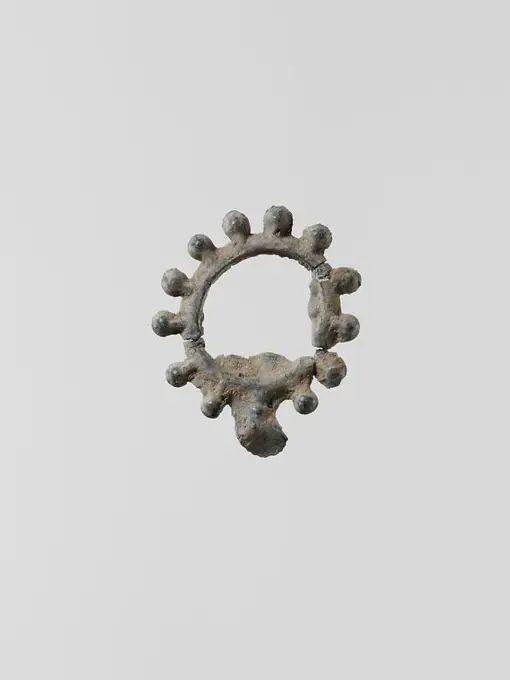
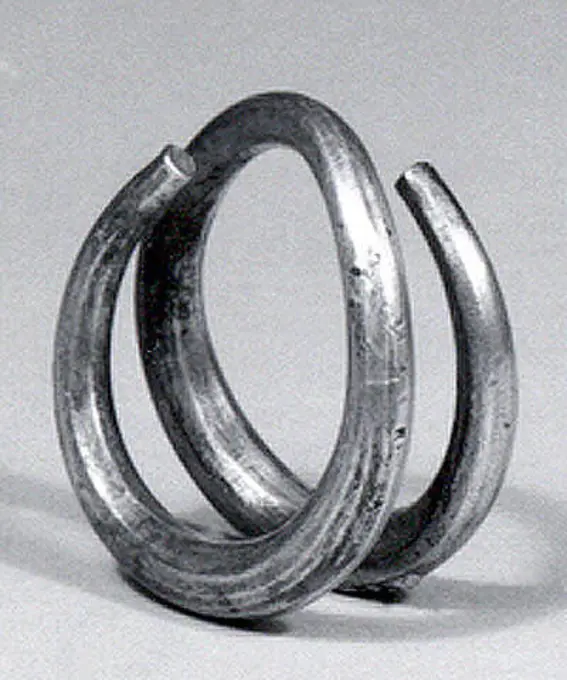
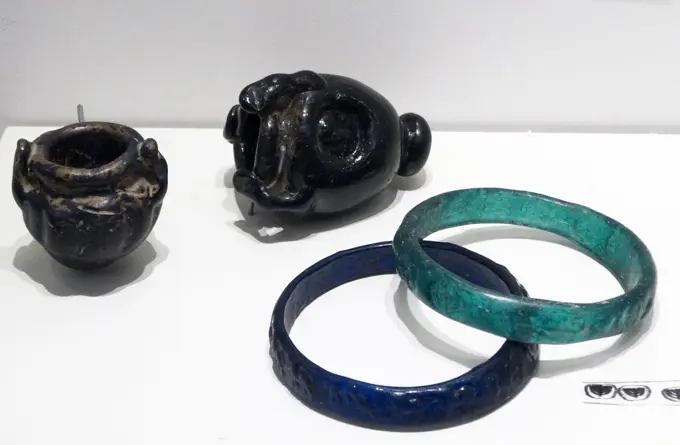
Historical buttons and bangles from various periods, crafted in bronze and featuring intricate designs, showcasing antique craftsmanship.
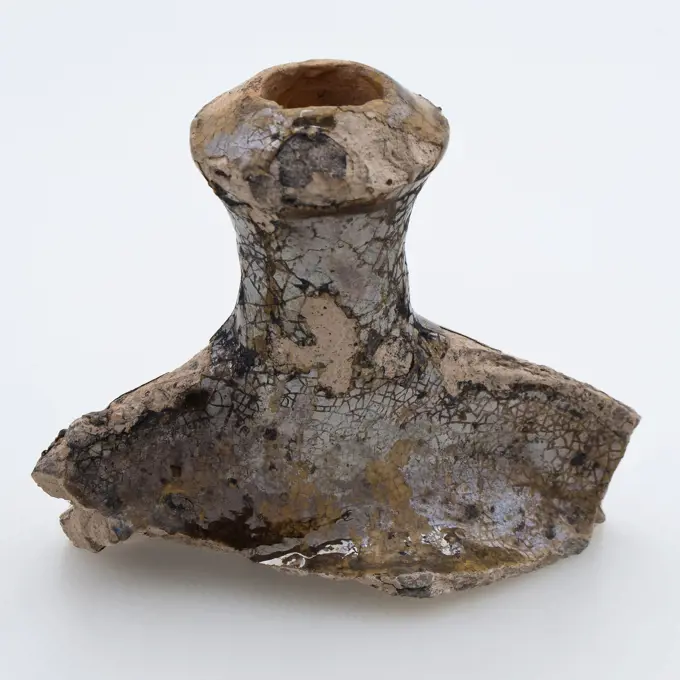
Spout of field bottle, French earthenware, glazed, Flask Holder Fragment soil found Ceramic Pottery Glaze Lead Glaze, w 9.4 Hand Turned Hand Formed Glazed Baked Fragment of Flask Yellowish shard with gray core completely covered with thick layer of lead glaze Double conical weighted edge of the spout. The basis of this object caliwates to be formed by the double folding of dish thick surrounding back on the outside archeology Rotterdam City Triangle Mariniersweg uitheems earthenware import packing transporting drinking archaeological find in the soil Mariniersweg 1983.
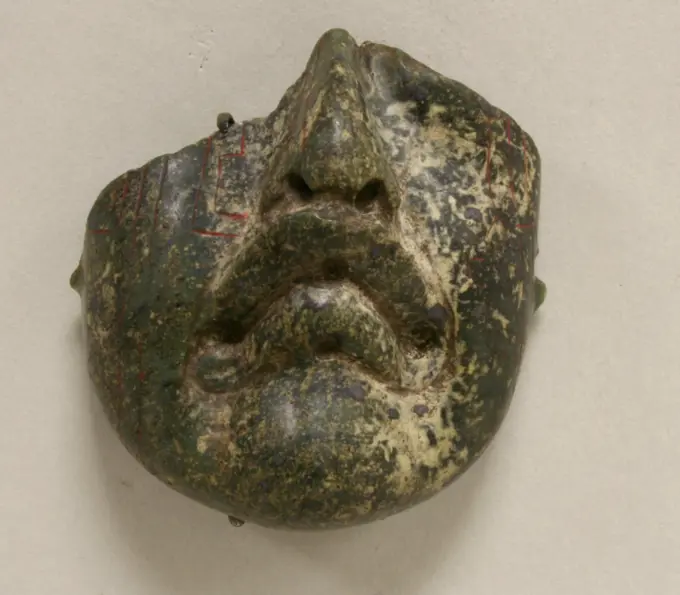
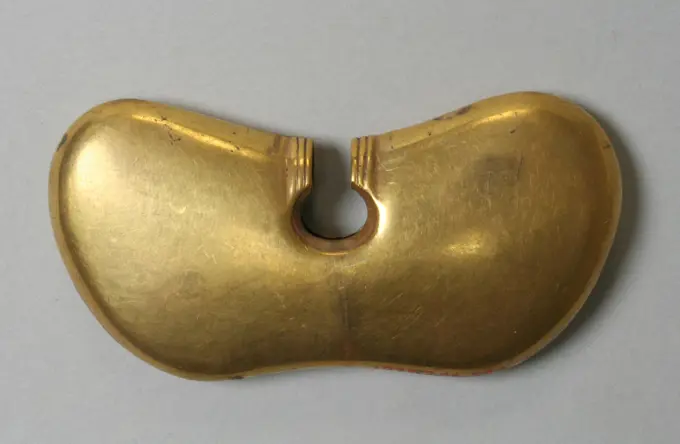
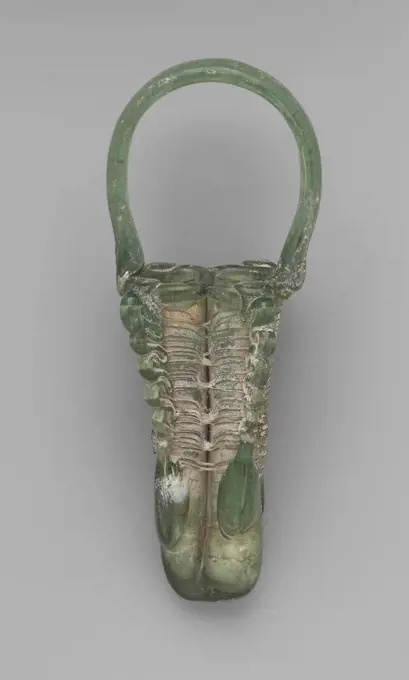
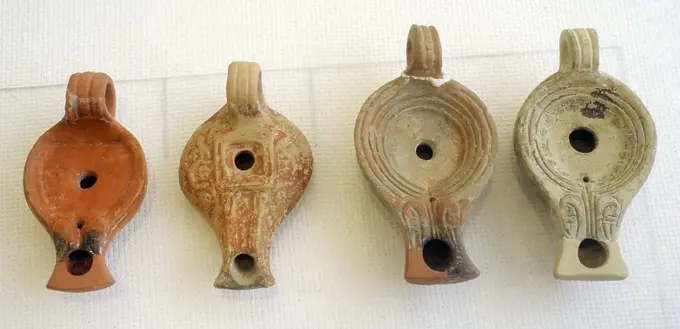
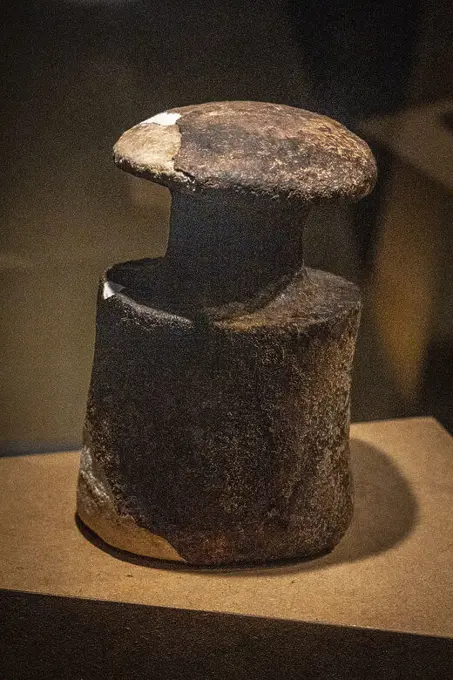
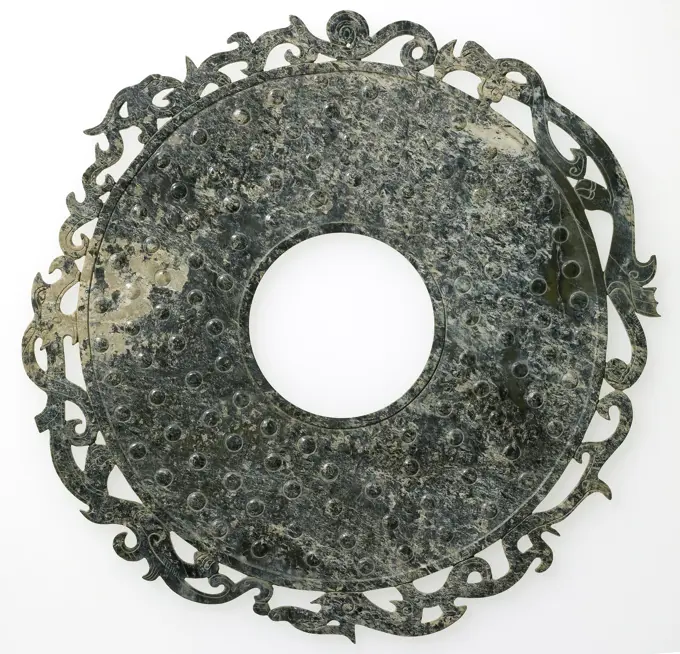
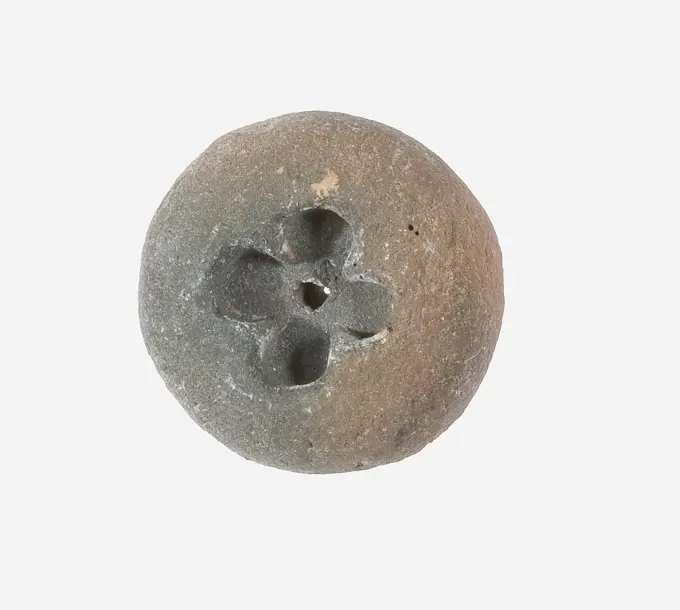
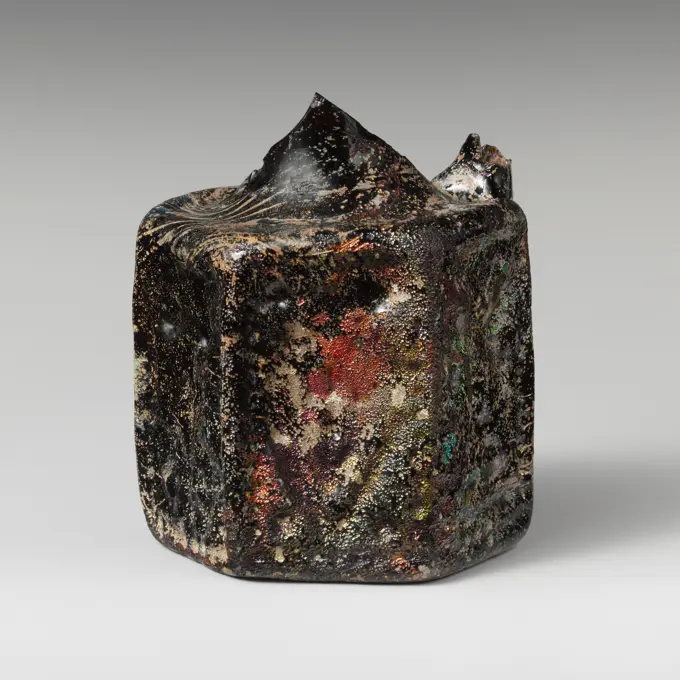
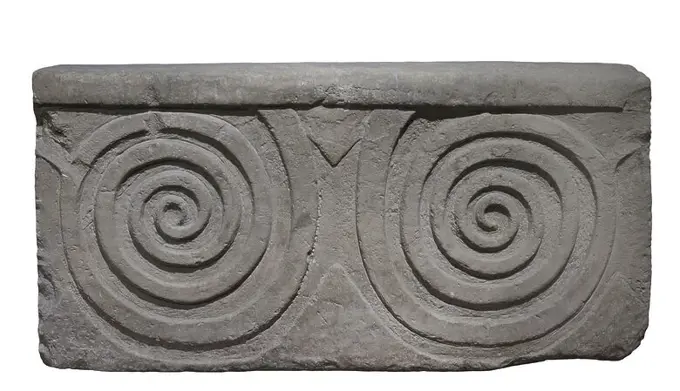
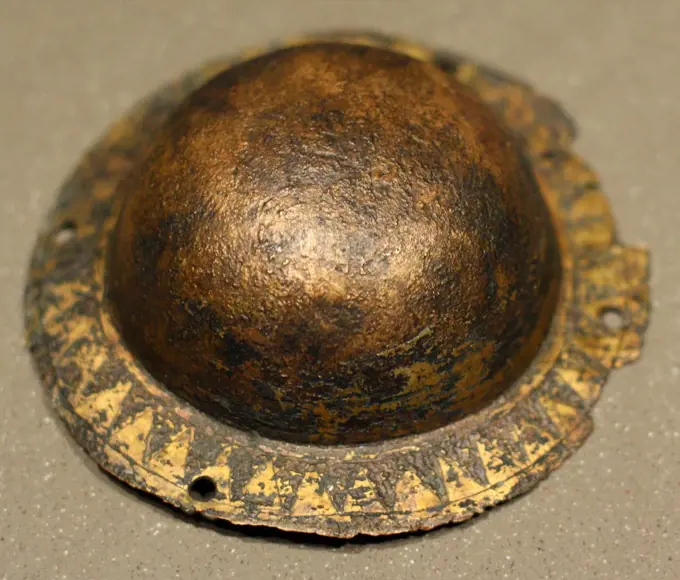
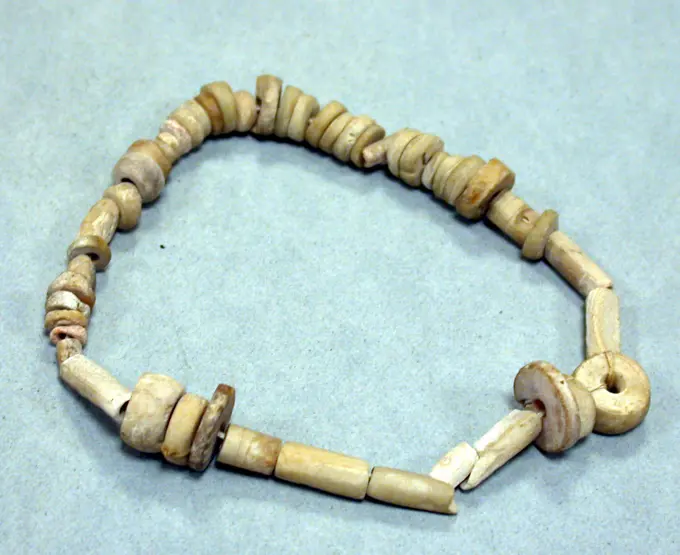
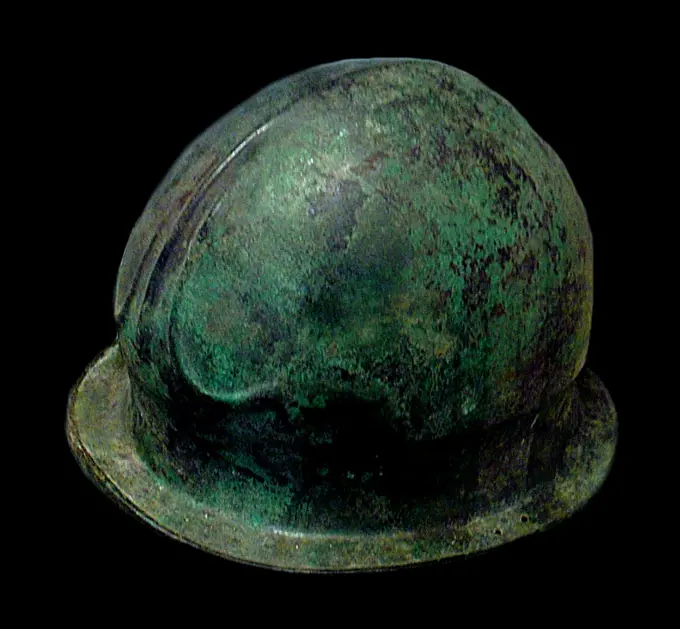
Anonymous, axle of Char (common name), 1050. Bronze. Cernuschi Museum, Asia Museum of Asia in the city of Paris.ShelfClockFragments 8th-13th century. Fragments 454754Bow Brooch 2nd-3rd century Roman. Bow Brooch 469822Mask Fragment 10th-6th century B.C. Olmec This greenstone maskette fragment depicts the lower portion of a face with a downturned mouth that is typical of Olmec art from the 1st millennium B.C. The artist incised the cheeks with geometric designs and they were then filled with red pigment. Two holes under the chin could have held pendant beads as part of a larger set of ritual regalia.. Mask Fragment 312759Clamp from the wreck of the East Indians Hollandia, Anonymous, 1700 - in or Before 1743  Terminals; id. 75-52H1447. Netherlands copper (metal)Lamp. UnknownWreaths, 6. Culture: Greek, Laconian. Dimensions: 1 1/8 × 15/16 in. (2.9 × 2.4 cm). Museum: Metropolitan Museum of Art, New York, USA.Nose Ornament 300 B.C.-A.D. 700 Early Quimbaya Metalworkers in the Quimbaya tradition created this nose ornament through lost-wax casting. (For more information on this process, please see Metropolitan Museum of Art 1974.271.48, and for more information on the Quimbaya name, please see 1979.206.529.) It is likely made of a gold alloy. A person may have worn the ornament by inserting the ends of the central opening into their nostrils. The ornament is hollow and has a rounded shape. It bears similarities in form to other Quimbaya nose ornaments like 2002.322.7, but, in this case, the upper and lower edges of the ornament slightly curve inward at their centers. At its central opening, each side shows a short group of bands. Except for these bands, the ornament is undecorated. The central opening extends farther into the ornament, widening to form a circular shape near the center of the object. The ornament is especially smooth and polished. To create this object, metalworkers first needeOne from a Pair of Bracelets ca. 1000 B.C.-A.D. 400 Thailand. One from a Pair of Bracelets. Thailand. ca. 1000 B.C.-A.D. 400. Bronze. Middle period-Late period. JewelryBead. Unknown 5th century B.C.Balsamarium (Double CosmeticTube), 5th-6th century A.D., Free-blown glass with trailed decoration and handle, pale green, 17 × 5.8 cm (6 11/16 × 2 5/16 in.) diameter withhandles, Roman, Eastern Mediterranean,Syrian(?), Containers -GlassTUMI DE COBRE ESTILO VICUS PREHISPANICO. Location: MUSEO DEL ORO COL MUJICA. Lima. PERU.Cannonball -Roman Era. Clay oil lamps with poor decoration, typical of the Republic period. 3rd-1st century BC. Spain. National Archaeological Museum. Tarragona. Catalonia, Spain.Bronze Age gold bracelet from Walderslade, Kent, 1000-600 BC. ENGLAND.idol in the form of a weight, limestone, 3000-2500 BC, Gruta do Correio-Mor, Loures, Portugal, Huelva Museum, Huelva, Andalusia, Spain.Shoe spacer from the wreck of the East Indies Hollandia, Anonymous, 1700 - in Or Before 1743  Schoengesp, met witte aanslag. Buckle, chape buckle, shoe buckle; (4) fragment(1): (1) ring (4.7x3.7) moulded, (1) tongue, (1) spindle, (1) single-pronged loop, id. NG 1980-27H349 Netherlands tin (metal)   SecondPlate and Nail 15th-16th century European. Plate and Nail. European. 15th-16th century. Iron. Metalwork-IronBi Disk, 206 BCE - 220 CE, 9 5/16 x 1/8 in. (23.65 x 0.32 cm) (outer diameter), Grey-green mottled nephrite (jade), China, 1st century CE, Originating in the Hongshan culture of the Neolithic period around 4000-3000 BCE, the bi disk, according to later Bronze Age interpretation, is emblematic of heaven. Although they retain the same decorative organization of the earliest examples, the bi disks from the Han dynasty tend to be more elaborate than their Neolithic predecessors. The outer band of this bi boasts openwork designs of pairs of dragons and phoenixes, whereas earlier examples display incised designs in solid stone. On the other hand, the raised bosses toward the center of this bi (known as guwen or 'grain pattern') are simpler in comparison to earlier Western Han examples, which were accompanied by incised spirals that suggested sprouting grainperhaps a symbol of fertility. By the late Han dynasty, the curving tail became less obvious or disappeared completely, as seen here.Bead in the Shape of a Tiger, c. 6th-8th century, 5/16 x 13/16 x 1/4 in. (0.8 x 2.1 x 0.6 cm), Stone, Myanmar (Burma), 5th-9th centuryQuatrefoil Mold ca. 1390-1353 B.C. New Kingdom. Quatrefoil Mold. ca. 1390-1353 B.C.. Pottery. New Kingdom. From Egypt, Upper Egypt, Thebes, Malqata, Palace of Amenhotep III, MMA excavations, 1910-11. Dynasty 18Yoke in Form of a Toad. Mexico, Central Veracruz, Veracruz, 300-600 CE. Stone. StoneGlass hexagonal jug late 6th-early 7th century A.D. Roman, Palestinian Translucent deep yellow brown, with same color handle.Neck expanding at base to broad, pushed-in shoulder, with pronounced outer edge; hexagonal body with vertical but hollow sides; slightly concave bottom with small circular pontil at center; handle applied as a pad to shoulder above edge between two panels on body.On body, six rectangular panels decorated in sunken relief, each with a border of small circular depressions: 1) cross fourchée on a tall staff with a short horizontal cross bar, emerging out of stylized foliage, 2) two concentric lozenges with cross at center and flanked by four round depressions at corners, 3) cross fourchée on three graduated steps, the base of the cross forming a fourth step, 4) as panel 2, 5) cross fourchée set on large globe decorated with elliptical rings, and 6) two concentric lozenges with four circular deressions arranged into a cross at center and flanked by four round depresA Pair of Ceremonial Objects or Musical Instruments. Indonesia, Savu, 1st-5th century. Tools and Equipment; musical instruments. Copper alloyBronze Mirror 470 B.C.Neolithic Period. Temple Period (3600 to 2500 BC). Tarxien Temple Complex. Malta. Built in honour of a mother goddess of fertility. Detail of an architectural fragment decorated with ornamental reliefs in the form of a spiral. National Museum of Archaeology. Valletta. Malta.Spiral 7th-6th century B.C. Etruscan. Spiral. Etruscan. 7th-6th century B.C.. Silver. Gold and SilverWhite ointment pot made of earthenware, with colorless lead glaze on the inside and outside, incomplete, anonymous, 1500 - 1799   earthenware. lead glaze   earthenware. lead glazeShield bosses iron gilded copper Second Half of the 12th century City wall Spandau, BerlinStrung Beads 1st-mid-16th century Peru; north coast (). Strung Beads. Peru; north coast (). 1st-mid-16th century. Shell beads. Peru. Beads-OrnamentsHandle of a bowl Roman. Handle of a bowl 256683ceramic vessel in the shape of a star, Son Fornes archaeological museum, post-alaiotic period room, Montuiri, Comarca de Es Pla, Mallorca, Spain.Thin Bangle with Attached Balls 300 B.C.-A.D. 400 Thailand (South). Thin Bangle with Attached Balls. Thailand (South). 300 B.C.-A.D. 400. Bronze. Late period. JewelryCoil ca. 7th-6th century B.C. Iran This silver coil was excavated at Tepe Nush-i Jan, an Iron Age hilltop site about 60 km sound of Hamadan in western Iran. Nush-i Jan was occupied in the 7th and 6th centuries B.C., and its occupants are generally thought to be the Medes, an Iranian people known from Assyrian, Achaemenid and Biblical sources. Though the textual sources portray them as a powerful empire, archaeological evidence for the Medes has yet to sustain this impression. Rather, they seem to have lived in scattered fortified sites in western and central Iran, without any clear capital. Nush-i Jan, one of the best known of these sites, features two temples, a columned hall, and a fort, where the coil was found.The coil was discovered in a bronze bowl containing 231 pieces of silver, including jewelry, ingots and scraps. At the time coins were not yet in use in Iran, and silver bullion was the primary form of money. The form of the silver did not matter, only the weight, so any silvSelection of bracelets featuring lions and menorahs. From an unknown location, from the 4th-5th century.Bowl 11th century. Bowl. 11th century. Lead; cast and incised. From Iran, Nishapur. MetalStylized bronze hands and head, From Vulci (Latium region, Italy)Bowl ca. 9th century B.C. Iran. Bowl 325042Bronze Helmet circa 700.Bone, shells and bronze jewelrycollar,aguja y cuentas decorativas,400-350 antes de Cristo, Museo arqueológico de Ibiza y Formentera, Patrimonio de la Humanidad «Ibiza, biodiversidad y cultura», Ibiza, balearic islands, Spain.