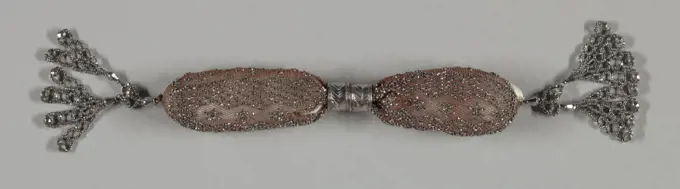
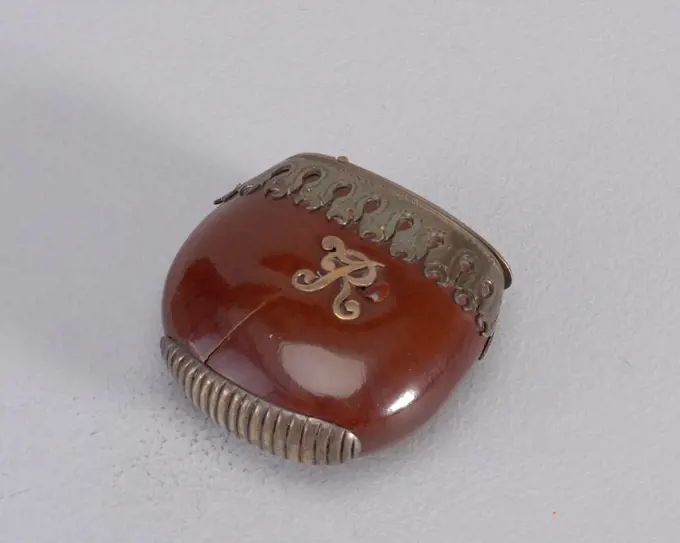
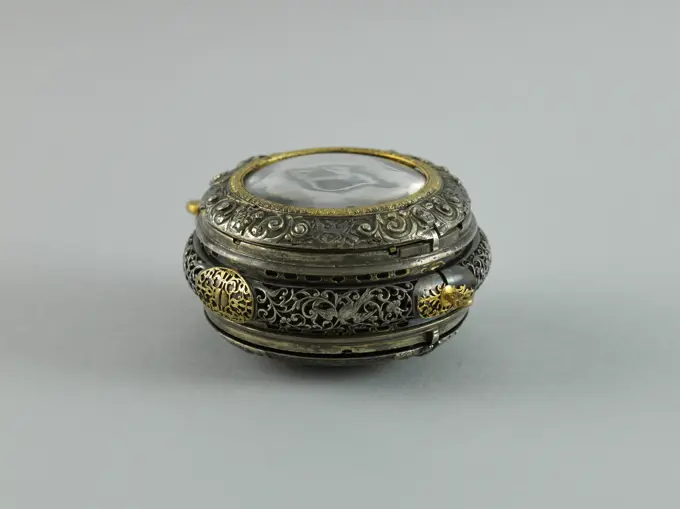
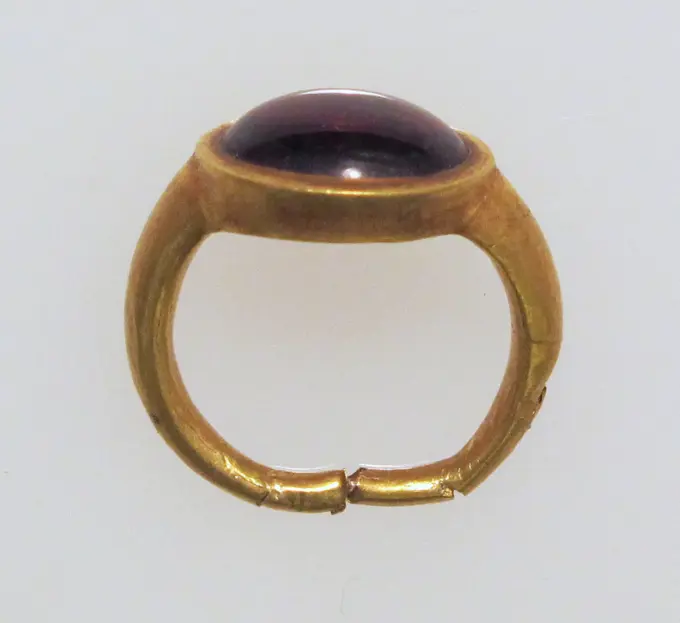
Antique Jewelry Artifacts

A collection of rings and decorative items made from gold and other materials, featuring intricate designs, stones, and historical significance.
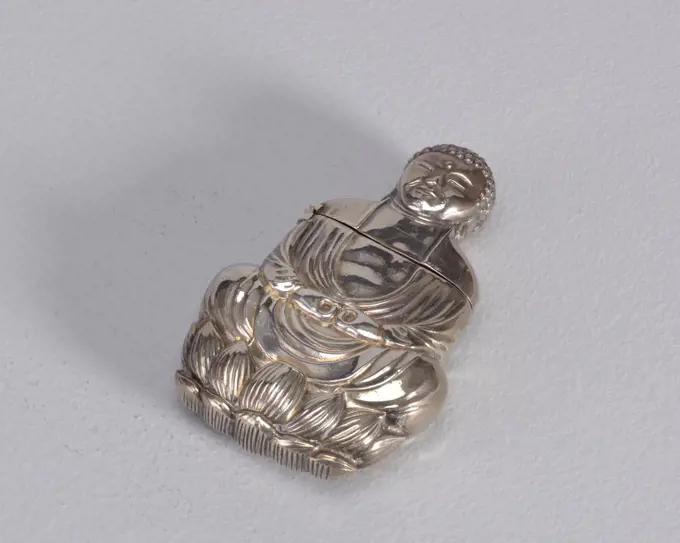
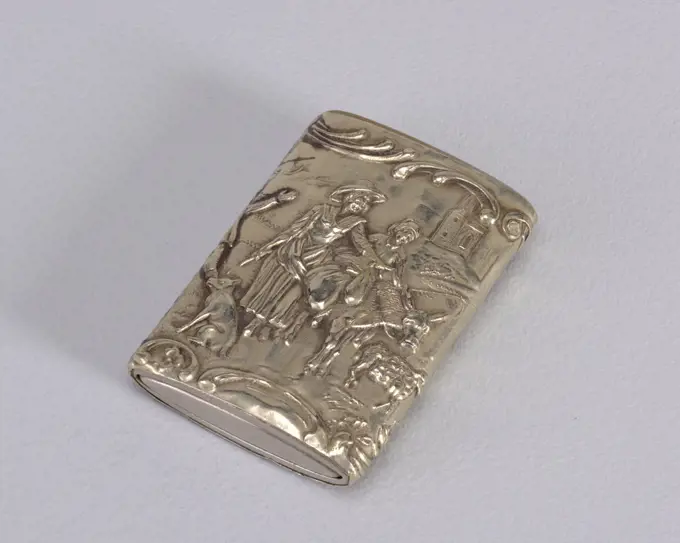
Seated Bodhisattva, Silver, In the form of a Bodhisattva, draped in loose clothing, seated on a lotus flower and assuming the Lotus position for meditation, with arms resting on crossed legs, thumb and forefinger of each hand forming a circle in front; head and shoulders (lid) open to right. Striker on bottom., late 19th century, containers, Decorative Arts, Matchsafe, Matchsafe
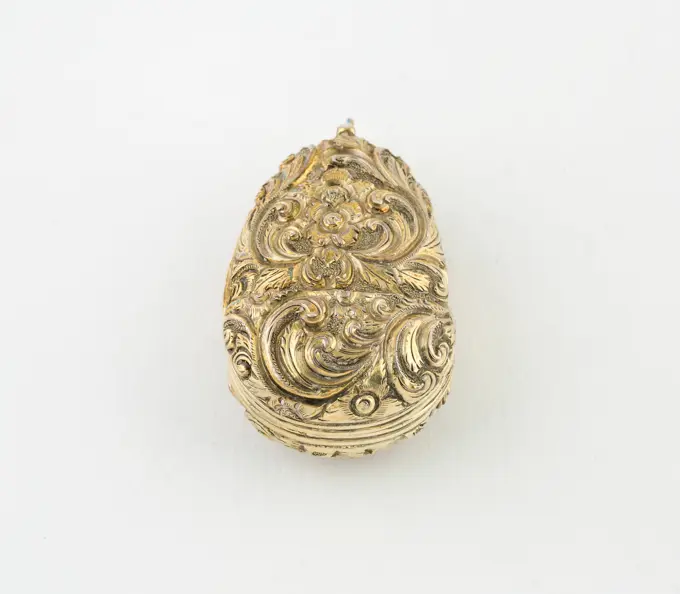
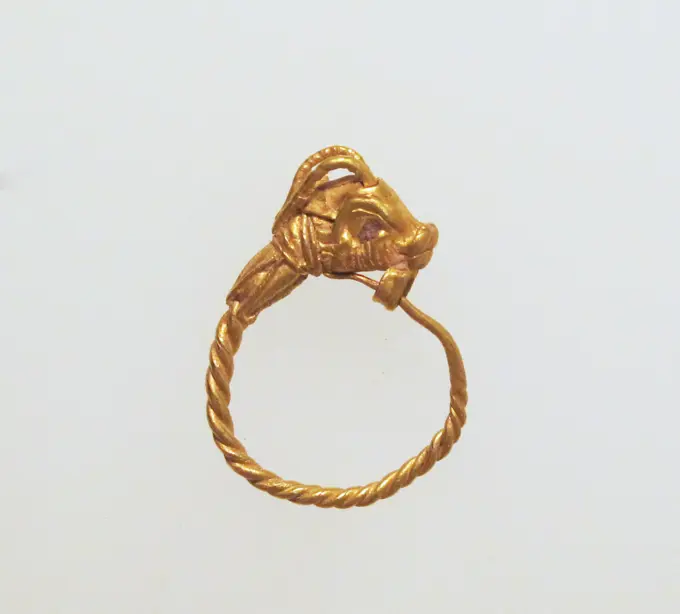
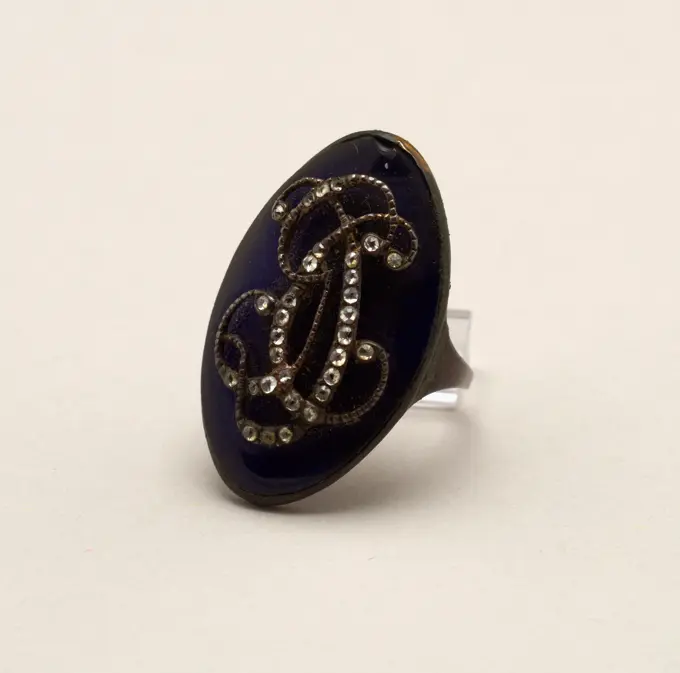
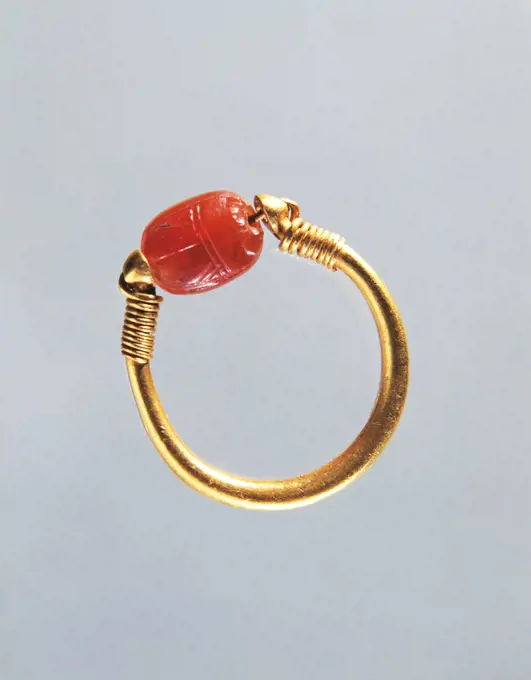
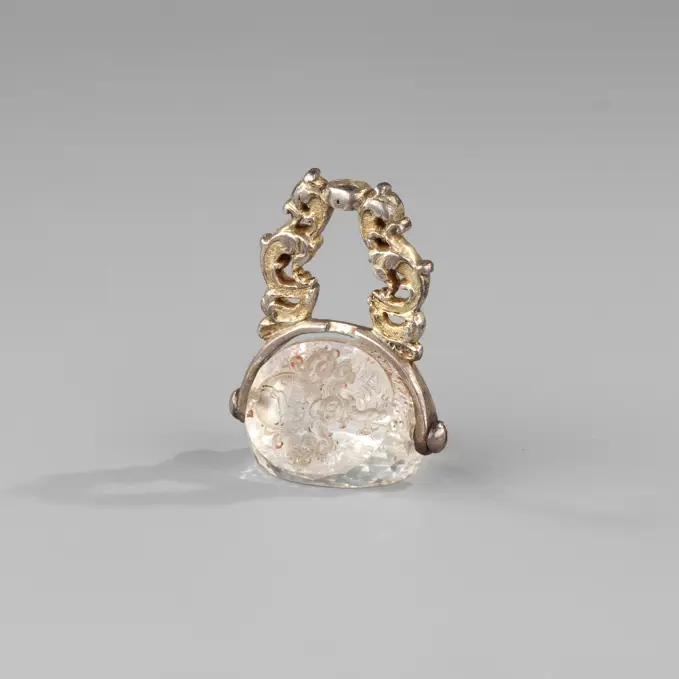
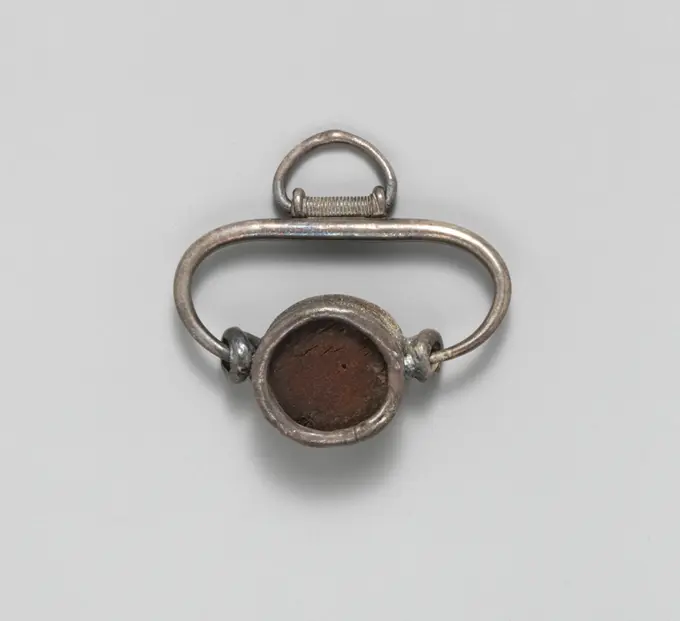
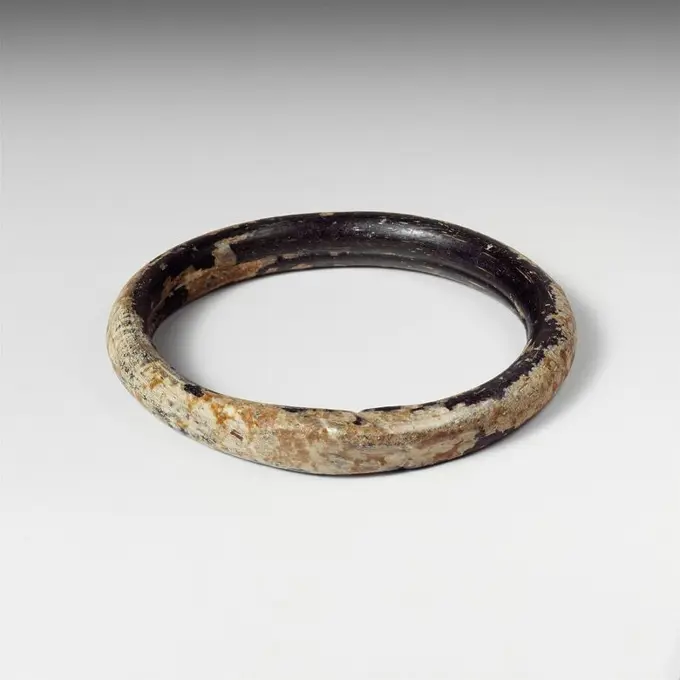
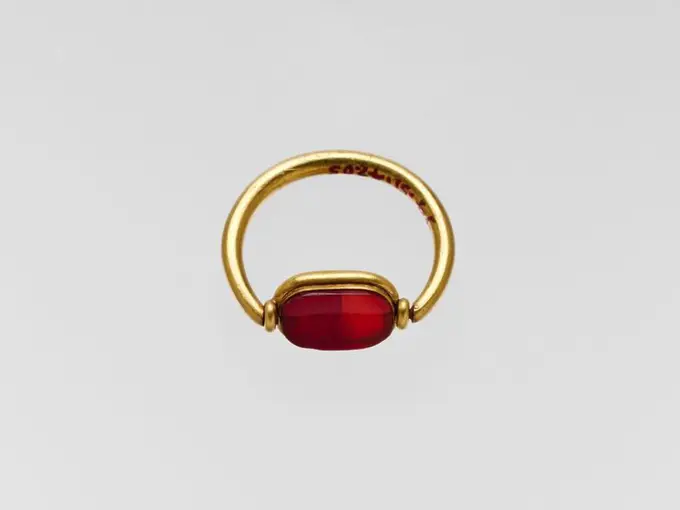
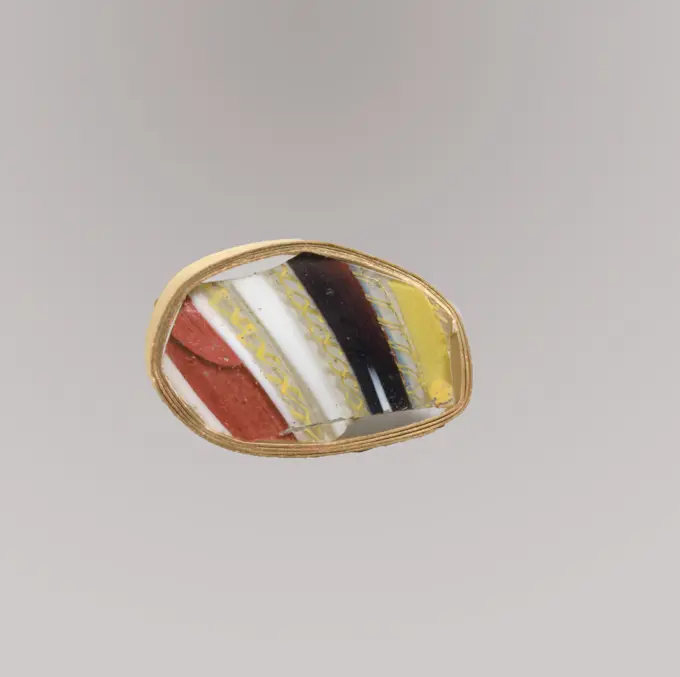
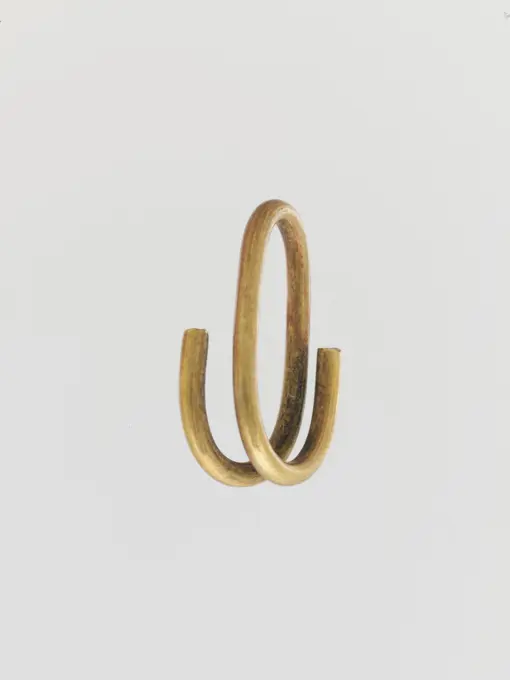
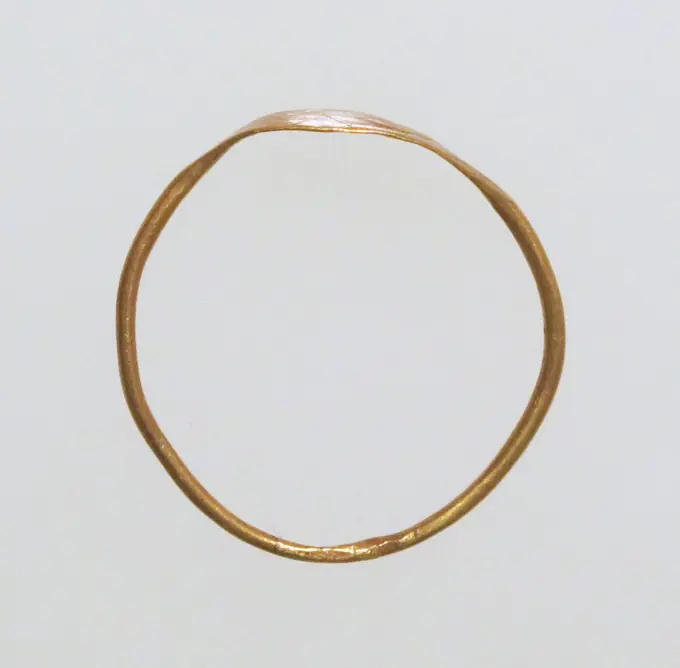
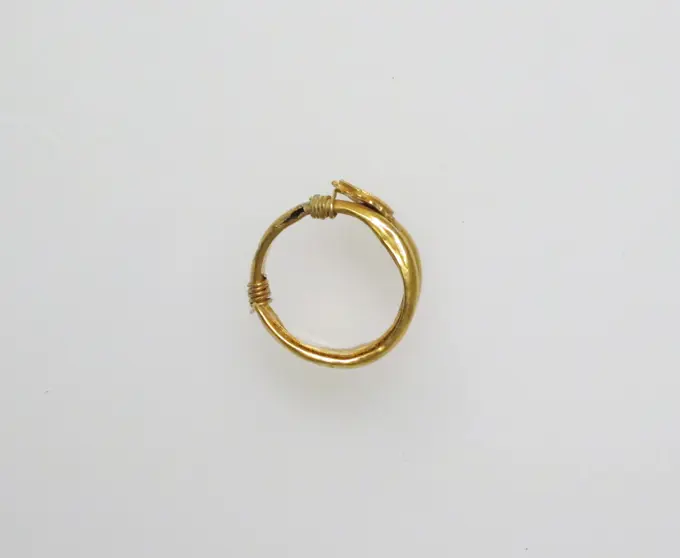
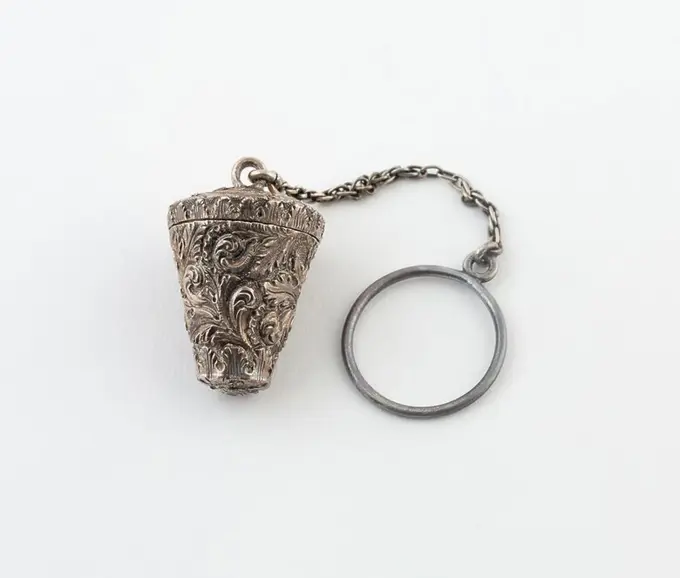
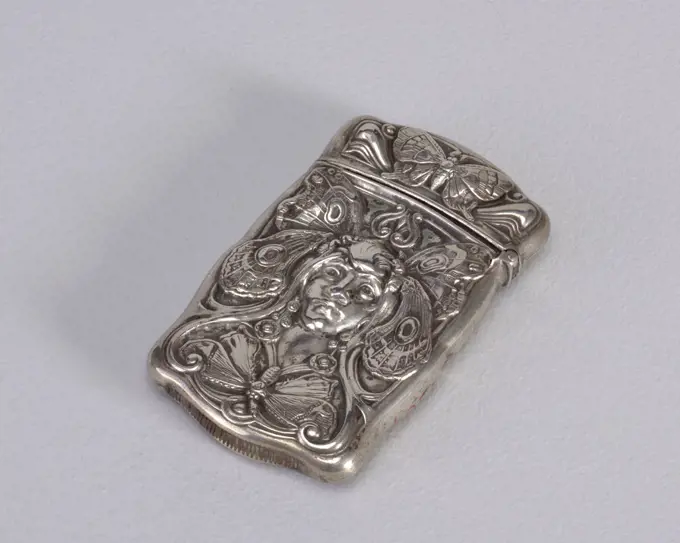
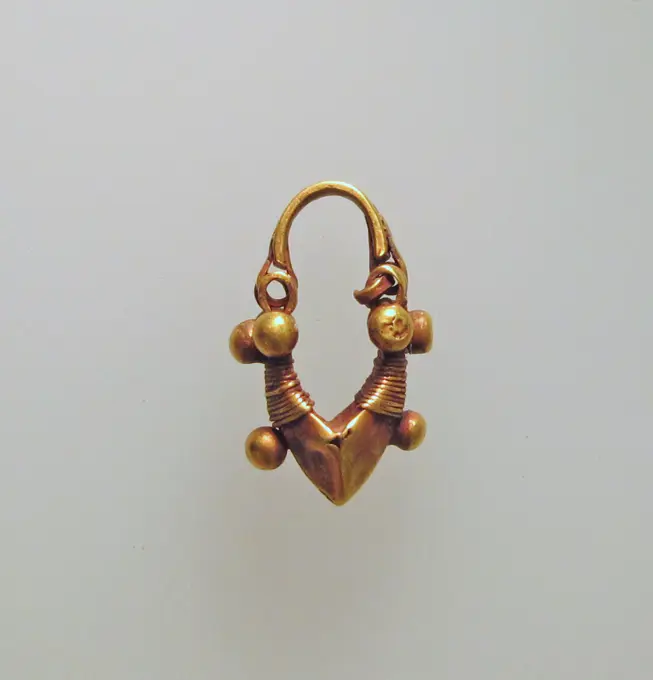
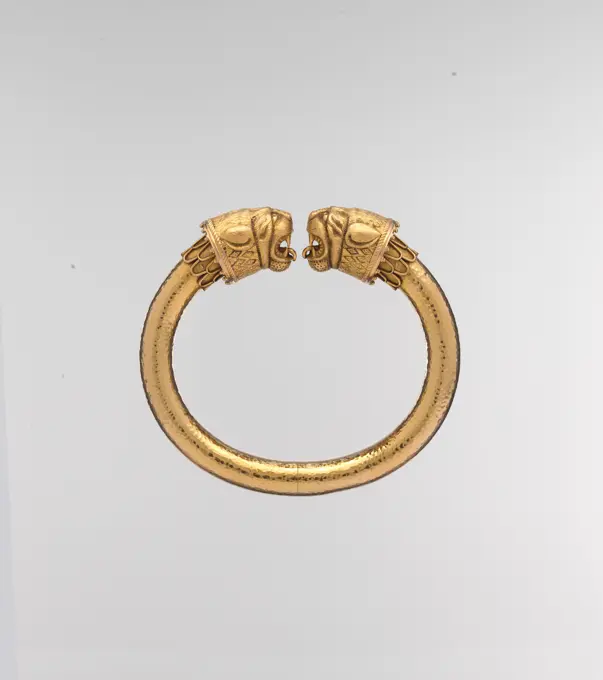
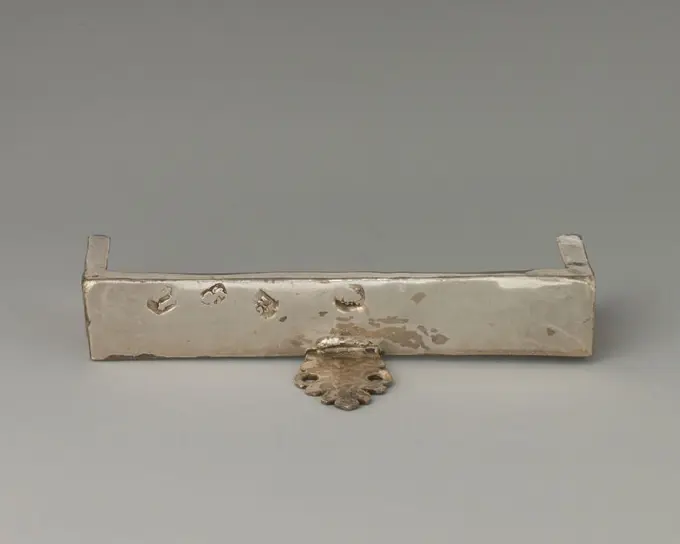
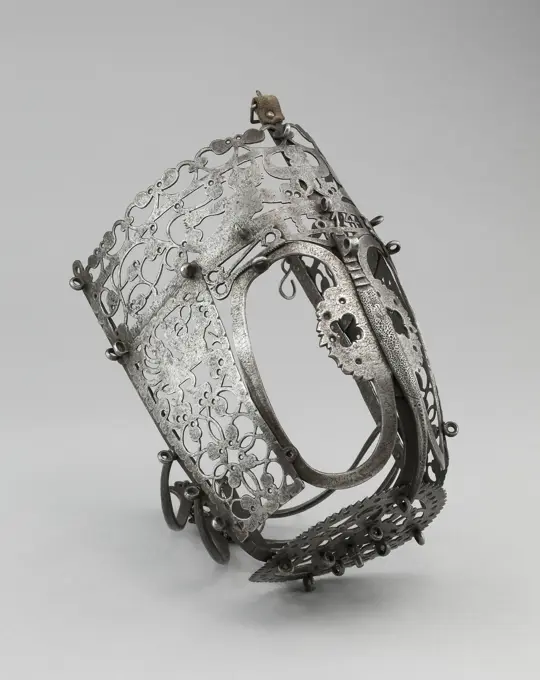
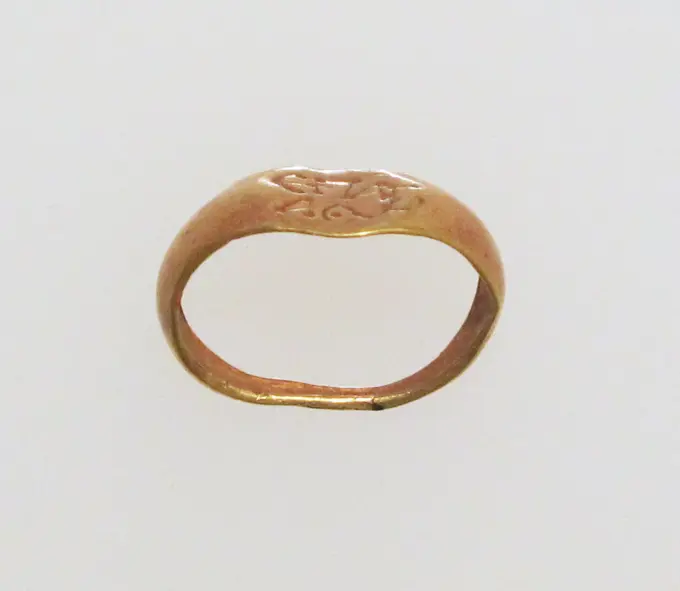
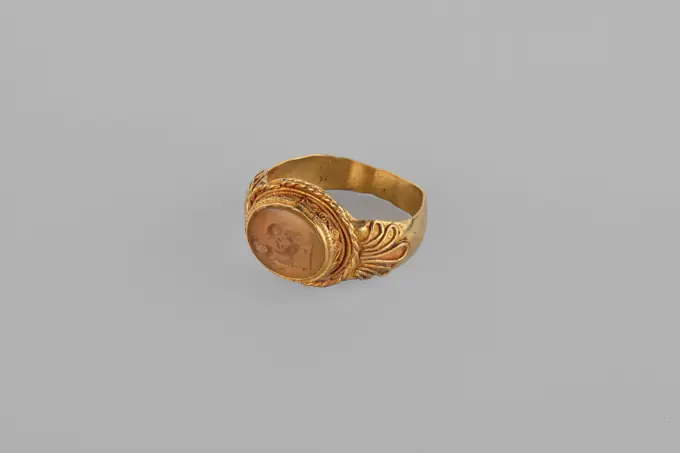
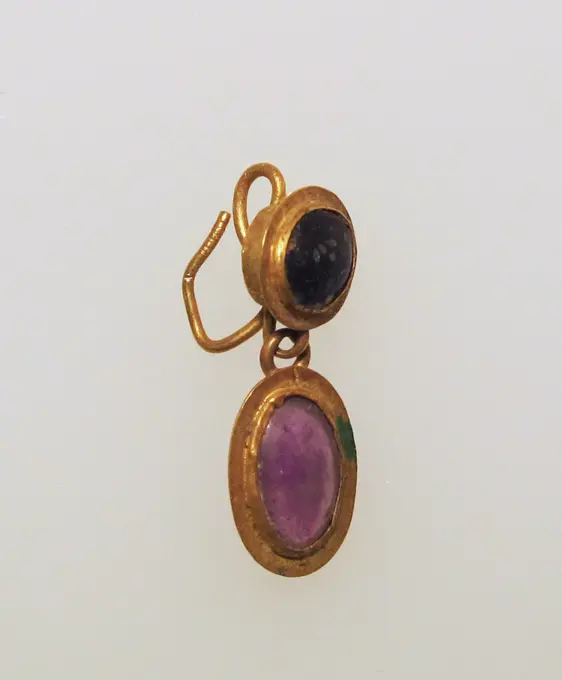
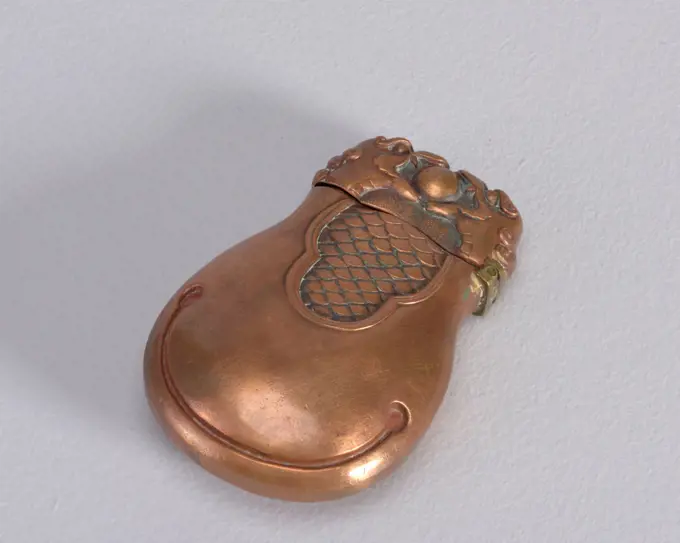
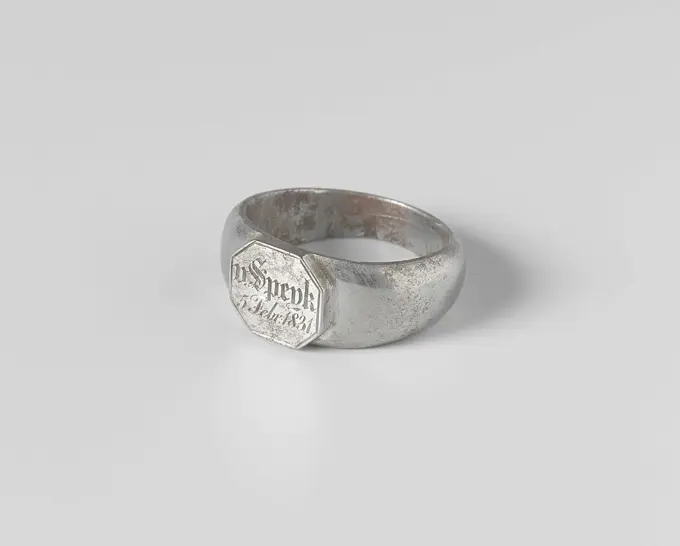
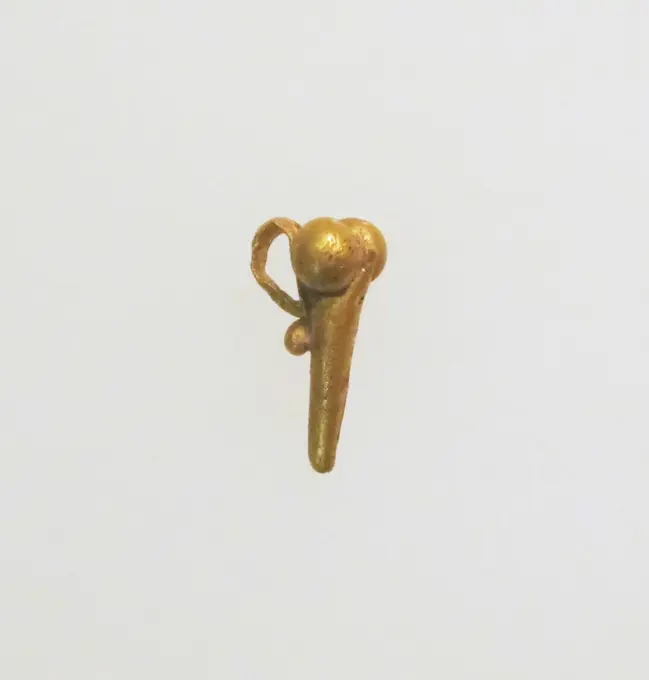
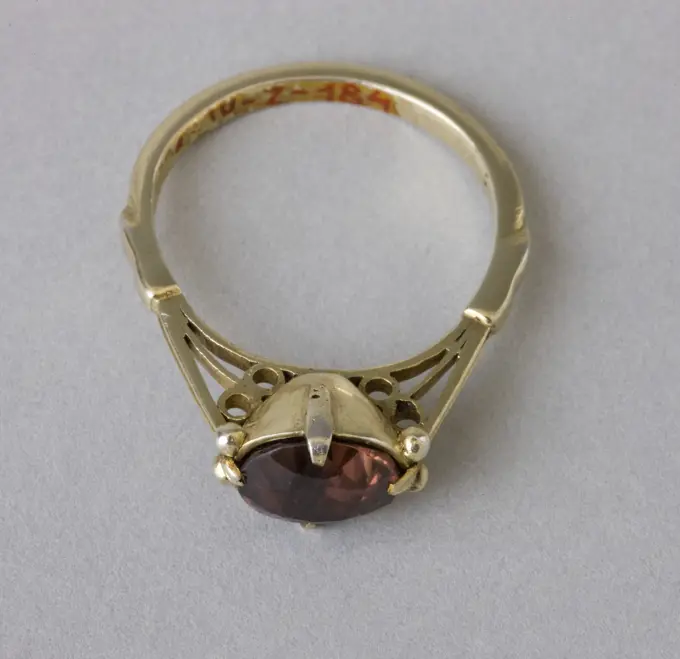
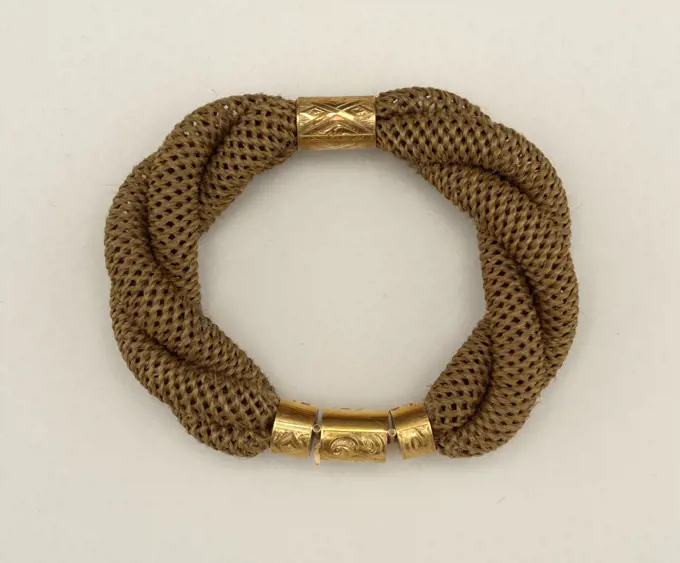
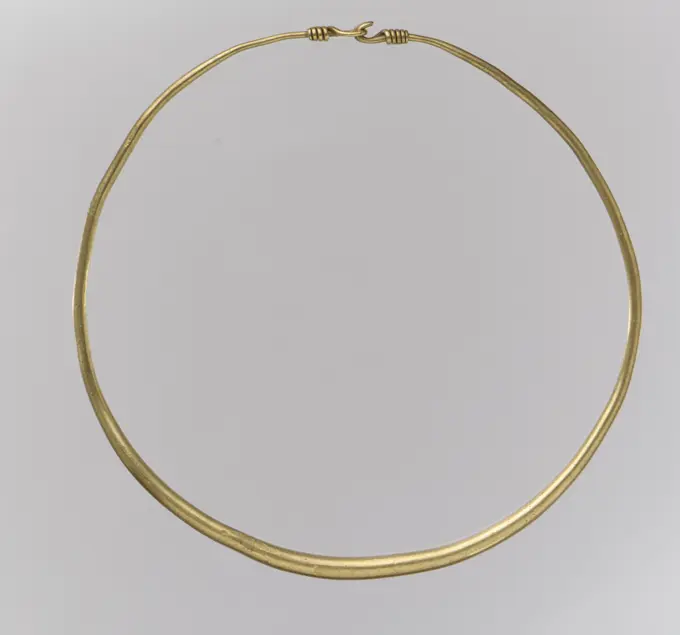
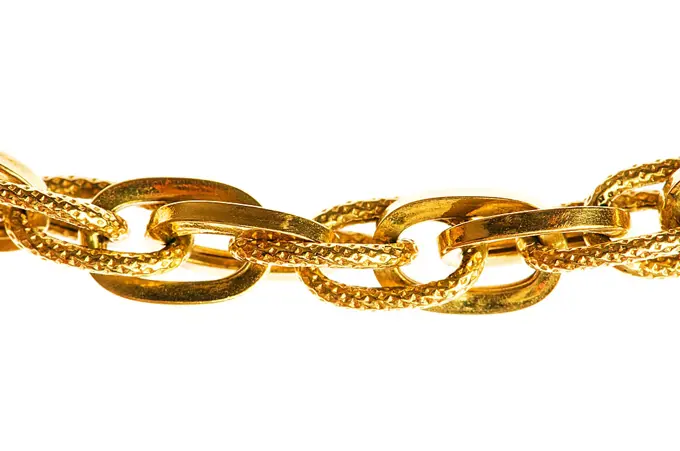
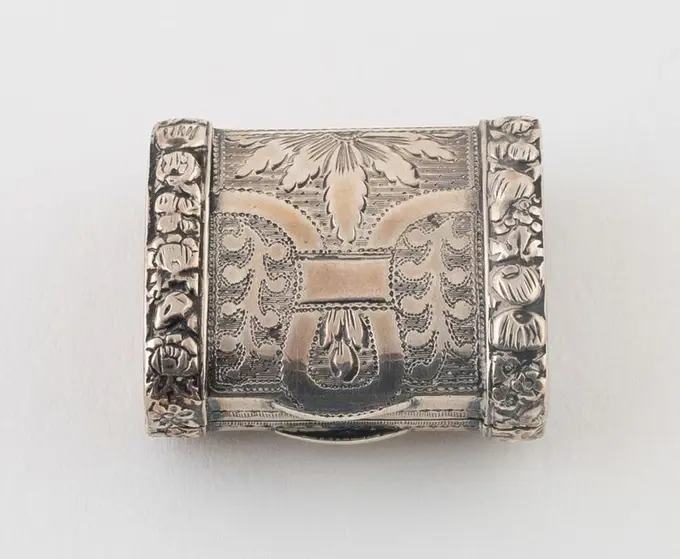
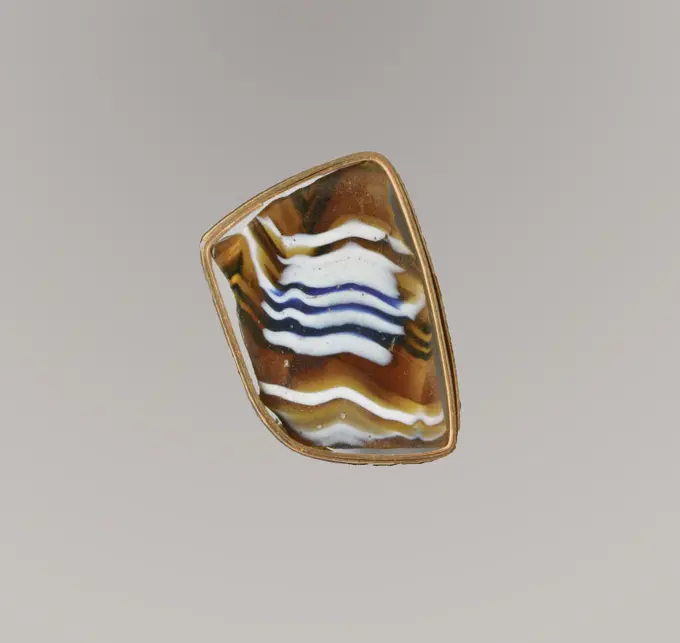
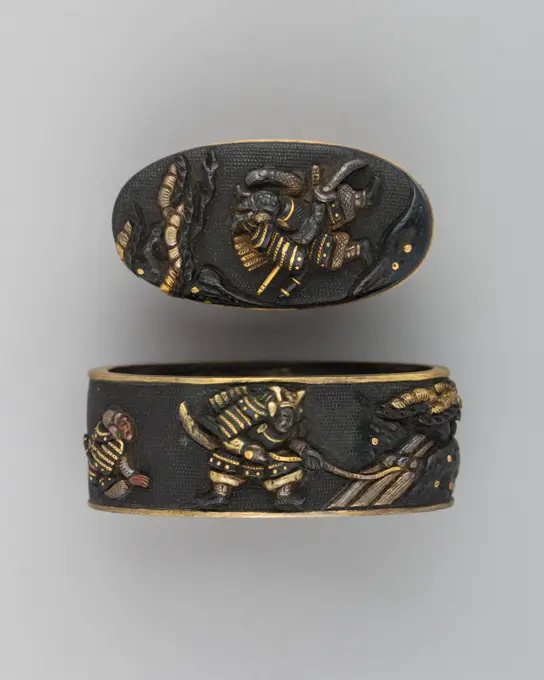
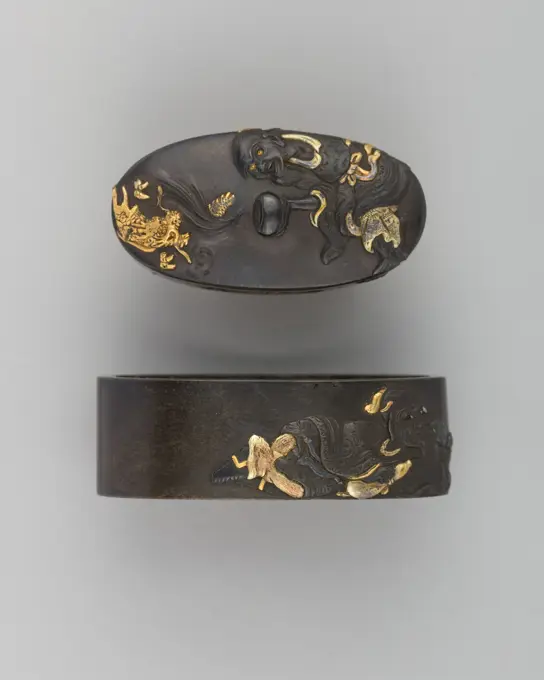
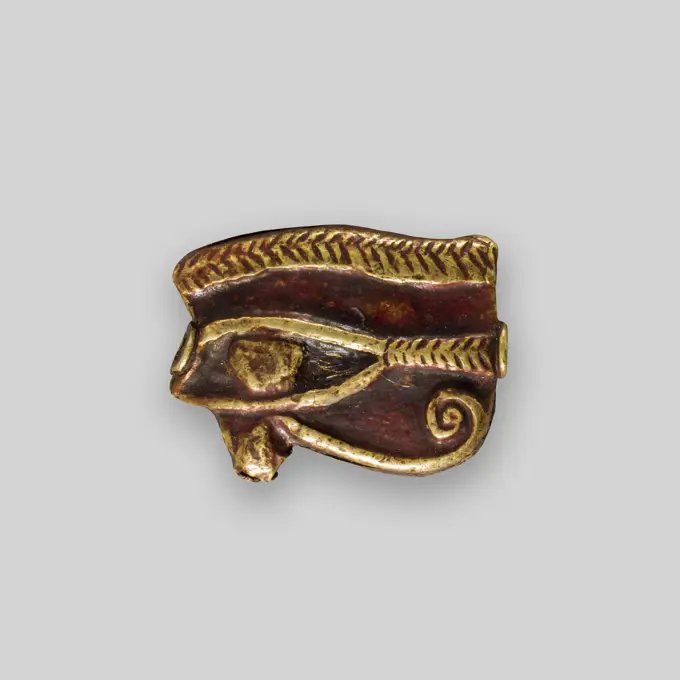
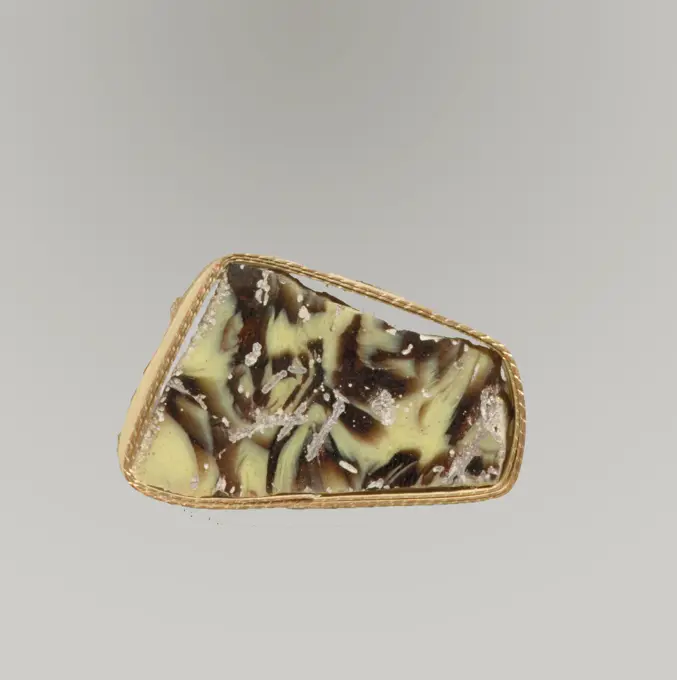
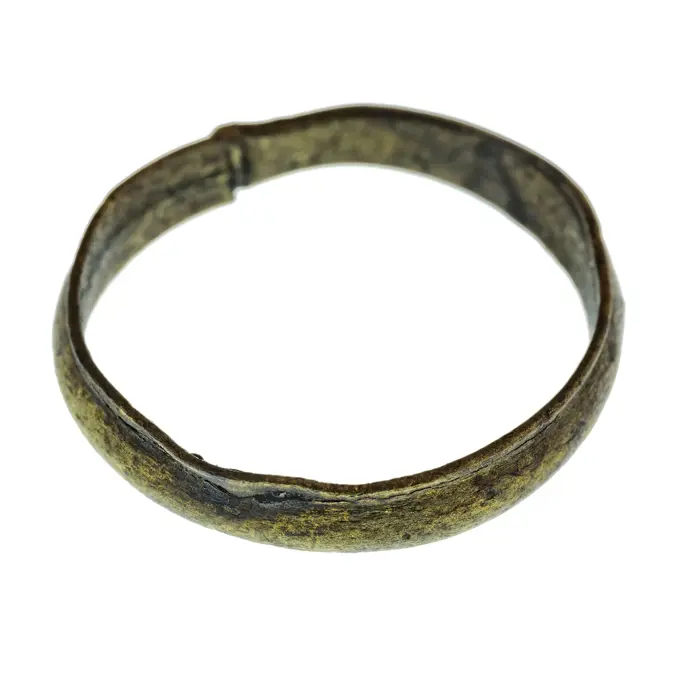
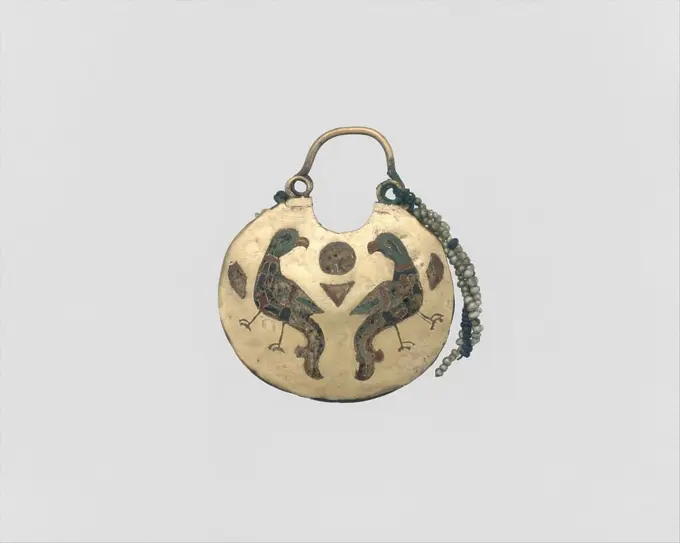
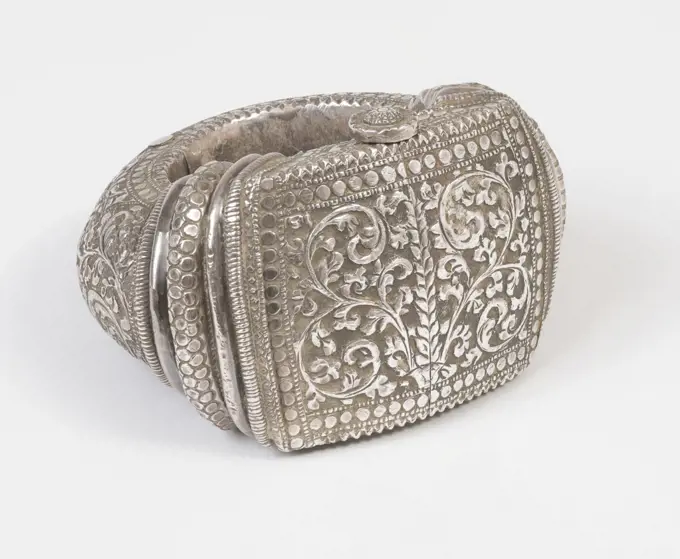
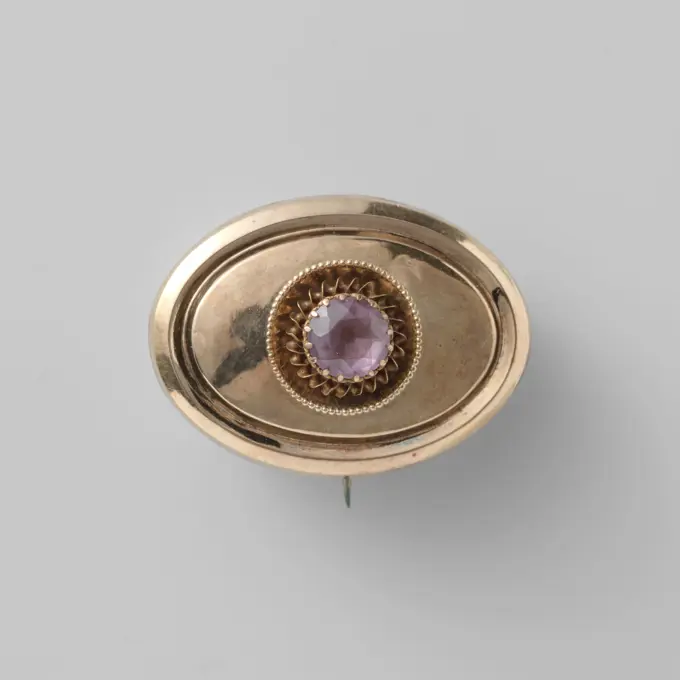
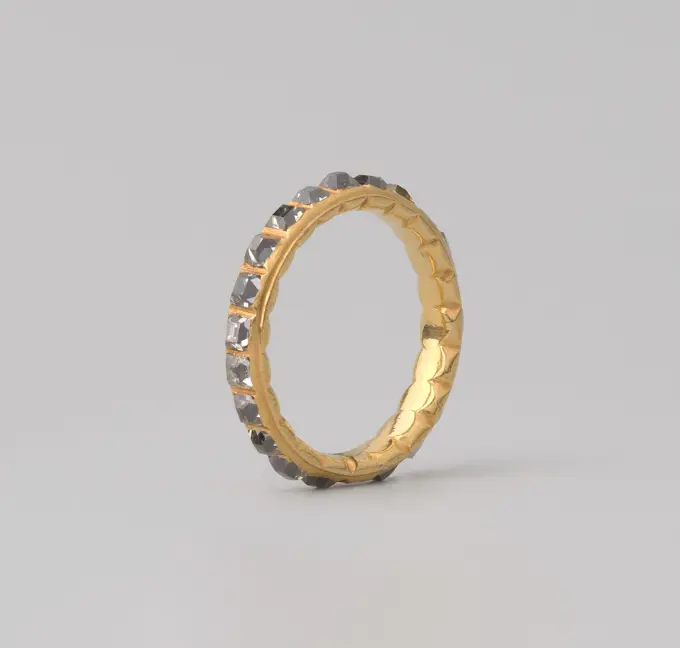
Ring with Table-cut Diamonds, anonymous, c. 1610 - c. 1650 A Golden Hoepring consisting of 22 connected bodies (outpatient cabinets), 19 of which occupied with table -cut diamonds. Three diamonds have been lost. Northern Netherlands gold (metal). diamond (mineral) grinding / casting A Golden Hoepring consisting of 22 connected bodies (outpatient cabinets), 19 of which occupied with table -cut diamonds. Three diamonds have been lost. Northern Netherlands gold (metal). diamond (mineral) grinding / castingEarring with head of lion Etruscan Ring of heavy double twisted wire.. Earring with head of lion 245965Scarab Cypriot Scarab in gold band setting, mounted in silver swivel ring; hippocamp.. Scarab. Cypriot. Agate, gold, silverSeated Bodhisattva, Silver, In the form of a Bodhisattva, draped in loose clothing, seated on a lotus flower and assuming the Lotus position for meditation, with arms resting on crossed legs, thumb and forefinger of each hand forming a circle in front; head and shoulders (lid) open to right. Striker on bottom., late 19th century, containers, Decorative Arts, Matchsafe, MatchsafeVibloby tobacco box. Vibluby tobacco box with different motifs on the individual panels. On the lid: 3 buffalo; On the bottom: bird and floral motifs; On the sides: floral motifs.Spoon (Netherlands); silver; L x W x D: 16.2 x 7.9 x 3.8 cm (6 3/8 x 3 1/8 x 1 1/2 in.)Vinaigrette 1805-1825 Birmingham. Silver gilt .Sugar tongs ca. 1772 Attributed to Myer Myers American. Sugar tongs 8013Gold earring with head of a goat 3rd century B.C. Greek. Gold earring with head of a goat 242899Ring (France); silver, paste, jewels.; b: 1.8 x 3.3 cm (11/16 x 1 5/16 in.); Bequest of Sarah Cooper Hewitt; 1931-6-191-a,bGold ring depicting a scarab, Italy. Goldsmith art. Greek civilization, Magna Graecia.Ok, baked;  3 18th century (1600-00-00-1799-00-00);Hippocentaurus (herb), herby, monogramyEgg-Shaped Vinaigrette 1853-1864 Birmingham. Silver and silver gilt .Earring, crescent-shaped. Earring, crescent-shaped 243293Silver gilt and amber pendant 7th century B.C. Etruscan Elliptical hoop topped by a suspension tube. The base of the ring accommodates an ovoid amber bead mounted so it may swivel. The amber is incised with simple geometric motifs.. Silver gilt and amber pendant. Etruscan. 7th century B.C.. Amber, silver. Archaic. Miscellaneous-AmberRing with red glass 3rd century A.D. Roman. Ring with red glass. Roman. 3rd century A.D.. Gold, glass. Late Imperial. Gold and SilverBrooch made of rectangular sliced leg with two colors of gold and rubies, c. 1945 - c. 1953 Brooch made of sliced leg with two colors of gold (yellow and red) and rubies. With two rosettes of red gold on both sides with a rounded ruby. One of the four rubies, top left, is synthetic. The brooch has a ball closure. The Hague gold (metal). ruby (mineral). bone (material). cutting / faceting Brooch made of sliced leg with two colors of gold (yellow and red) and rubies. With two rosettes of red gold on both sides with a rounded ruby. One of the four rubies, top left, is synthetic. The brooch has a ball closure. The Hague gold (metal). ruby (mineral). bone (material). cutting / facetingVinaigrette (France); silver, nielloGlass bracelet. Culture: Roman. Dimensions: H.: 1/2 in. (1.3 cm)Diam.: 3 in. (7.6 cm). Date: ca. 2nd-4th century A.D..Translucent very dark green, appearing black.Circular band; round in section but with groove around inner side; flattened into square section at seam where ends of rod have been pressed together with irregular tooling marks; small pontil scar on outer edge of opposite side.Intact; elongated bubbles; dulling, faint iridescence, and patches of thick, creamy weathering. Museum: Metropolitan Museum of Art, New York, USA.Earring or spiral 5th century B.C. Cypriot Gold plated bronze.. Earring or spiral 242797Earring Roman. Earring 246002Earring, delta-shaped with beads. Earring, delta-shaped with beads 243347Earring with plain loop and disc. Earring with plain loop and disc 243140Gold ring with carnelian ring stone. Culture: Greek. Dimensions: Other: 1 1/16 in. (2.7 cm). Date: 5th century B.C..Gold swivel ring with slightly thickened hoop and pivot ends, mounted with a carnelian. Museum: Metropolitan Museum of Art, New York, USA.Glass striped mosaic fragment late 1st century B.C.-early 1st century A.D. Roman Body fragment.Translucent blue, purple, opaque brick red, yellow, and white, with colorless glass.Wavy curving side. Striped mosaic pattern formed from lengths of different canes laid in regular, parallel bands: colorless with a double spiral yellow thread, yellow, colorless with a double spiral yellow thread, purple layered with blue and with a white streak, colorless with two overlapping spiral yellow threads, white, colorless with two overlapping spiral yellow threads, and white largely layered on both sides with red.Pinprick bubbles; exterior polished, with pitting of surface bubbles; dulling and faint iridescent weathering on interior and jagged edges.. Glass striped mosaic fragment. Roman. late 1st century B.C.-early 1st century A.D.. Glass; cast. Early Imperial. GlassGold spiral ca. 1600-1100 B.C. Cypriot Of plain wire with one turn.. Gold spiral. Cypriot. ca. 1600-1100 B.C.. Gold. Late Bronze Age. Gold and SilverGold ring with inscribed bezel 2nd-3rd century A.D. Roman. Gold ring with inscribed bezel 243518Ring. Ring 243523Earring or hair coil 5th century B.C. Greek, Spain . Earring or hair coil. Greek, Spain . 5th century B.C.. Gold, copper alloy. Classical. Gold and SilverThimble-Shaped Vinaigrette. Possibly England. Date: 1835-1845. Dimensions: H. 2.5 cm (1 in.). Silver and silver gilt. Origin: England. Museum: The Chicago Art Institute, Chicago, USA.Bracelet, Gold, onyx, pearls, France, ca. 1860, jewelry, Decorative Arts, BraceletGeuzenolenning with net and gourds in corresponding box, anonymous, 1800 - 1900 copy. box Geuzenolenning with accompanying box Low Countries    SpainEarring or spiral Cypriot. Earring or spiral 242775Female Mask and Butterflies, Gorham Manufacturing Company, Providence, Rhode Island, USA, founded 1818, Silver, Rectangular, with curved corners, top, bottom, and sides, featuring female mask with pendant earrings, long hair tendrils, and butterfly wings framing her face, smaller butterflies above, on lid, and below. Reverse features open reserve with monogram HB, framed by stylized curves and butterflies. Lid hinged on side. Striker in recessed groove on bottom., Providence, Rhode Island, USA, ca. 1900, containers, Decorative Arts, Matchsafe, MatchsafeEarring, boat-shaped Cypriot. Earring, boat-shaped 242600Bracelet ca. 1878 Tiffany & Co. One of the most celebrated acquisitions made by the Metropolitan Museum during its first decade of existence was the Curium Treasure from Cyprus. Discovered in 1875 at the ancient site of Kourion by American consul to Cyprus and amateur archaeologist Luigi Palma di Cesnola (1832-1904), this Treasure joined Cesnolas earlier collection of Cypriot antiquities, which the Museum had previously acquired. The fame of the Curium Treasure helped to establish The Met as a leading repository of ancient art on a par with major European museums.Cesnola was named a trustee of the Metropolitan Museum and elected Secretary in 1877. Two years later he became the Museums first Director, a position he would hold until his death in 1904. In August 1877, a formal agreement designated Tiffany & Co. as "sole agents" for the reproduction of works of art belonging to the Metropolitan Museum. Among the first objects reproduced by Tiffanys workshop were twenty items of Cypriot Miniature fender (part of a set). Culture: British, London. Dimensions: 9/16 × 3 in. (1.4 × 7.6 cm). Maker: Probably George Manjoy (British, active 1685-ca. 1720). Date: 1690-91. Museum: Metropolitan Museum of Art, New York, USA.Bamboo Stalk, Patinated and gilded copper, In the form of a bamboo stalk with raised, partially gilded, foliage decoration on front, and two small, raised birds on reverse, one of which is gilded. Lid is hinged on side. Striker on bottom., Japan, late 19th century, containers, Decorative Arts, Matchsafe, MatchsafeFinger Ring 6th-7th century Frankish. Finger Ring 465262 Frankish, Finger Ring, 6th7th century, Gold, carnelian intaglio, Overall: 3/4 x 11/16 x 1/2 in. (1.9 x 1.8 x 1.2 cm) bezel: 7/16 x 5/16 in. (1.1 x 0.8 cm). The Metropolitan Museum of Art, New York. Gift of J. Pierpont Morgan, 1917 (17.192.199)Horse Muzzle 1674 Germany. Iron and leather .Gold ring with inscribed bezel 1st century B.C.-3rd century A.D. Roman. Gold ring with inscribed bezel 243508Rock Crystal Relic in Spherical Shape ca. 12th century Cambodia. Rock Crystal Relic in Spherical Shape. Cambodia. ca. 12th century. Rock crystal with gilded banding. SculpturePierścień z gemmą ze sceną erotyczną. unknown, authorEarring-hook type with amethyst and paste settings 2nd century A.D. Roman. Earring-hook type with amethyst and paste settings 243371Female Skier Matchsafe; Manufactured by Webster Company; USA; silver, with traces of gilding; 6.7 x 4.2 x 1.2 cm (2 5/8 x 1 5/8 x 1/2 in. )Mokugyo (Gong) with Dragon Heads, Copper, In the form of a mokugyo, or gong, with two dragon heads at top, both joined by single pearl clasped in their mouths. Identical on front and back. Dragon heads form lid, hinged on side. Reserve on box body with scales likely intended as striker., late 19th century, containers, Decorative Arts, Matchsafe, MatchsafeConcept, aina or arsa glass mirror or speculum smooth surface reflect images India Copyright: xNirmalaxMishra/DinodiaxPhotoxGold spiral ca. 1600-1100 B.C. Cypriot Of plain wire with two turns.. Gold spiral. Cypriot. ca. 1600-1100 B.C.. Gold. Late Bronze Age. Gold and SilverPaperweight 1843-1865 England. Glass .Anonymous, hemispherical cup (main title). Glass paste with inclusions. Petit Palais, Museum of Fine Arts of the City of Paris.Cachet with the weapon of Pieter Labbert () Schmidt. A rock crystal is attached to the golden dangle with wearing eye and carrying ring on the one hand. The crystal has three oval sides, a coat of arms has been ground in one of them. Just like with NG-461, the crystal can ruin its axis. On the other side of the pendant, a copper hanger is attached, consisting of a round closure with a wearing eye, two links and a holder with a wearing eye. The holder is empty and has the shape of a gothic arc.Jewellery ring isolated on the white background. An iron ring of the gunboat No.2 from J.C.J. from Speyk; Widely finished to the octagonal flat part on which inscription "V Speyk / 5 Febr 1831" to which origin statement was hung.Torque, 8 3/16 x 9 9/16 x 1 5/16 in. (20.8 x 24.29 x 3.33 cm), Silver, ChinaBookclasp.  Maker: William Jones, American, 1694-1730Pendant in the form of a phallos 2nd century B.C.-4th century A.D. Roman. Pendant in the form of a phallos. Roman. 2nd century B.C.-4th century A.D.. Gold. Gold and SilverMiser's purse, Medium: silk, steel Technique: crocheted, Crocheted dark red silk ornamented with cut steel beads in star and zig-zag patterns; small evenly spaced diamond pattern of the same beads cover the rest of the area. Two steel rings for closing; ornate steel beads pendants at each end., France, early 19th century, costume & accessories, Miser's pursematchsafe, late 19th century, containers, Decorative Arts, matchsafeFlant, Jean (n. - D.1616), large travel watch (main title), 1600. Golden silver, engraved and chiseled, brass. Petit Palais, Museum of Fine Arts of the City of Paris.Ring with garnet. Ring with garnet 243681Ring Ziembowski, AleksanderBracelet, Hair, gold, Bracelet composed of three twisted woven tubes of brown human hair. Central mount of gold engraved with lozenges. Ends with three-part clasp of gold in form of articulated tube. Central part of clasp fitted with loop., USA, ca. 1870, jewelry, Decorative Arts, BraceletThin pancakes with sweet maple syrup or honey and fresh raspberries and blueberries. Hand drawn watercolor illustration isolated on white background Thin pancakes with sweet maple syrup or honey and fresh raspberries and blueberries. Hand drawn watercolor illustration isolated on white Copyright: xZoonar.com/LiubovxPonomarchukx 19735702Orange Tiger (Tithorea harmonia) butterfly pupa, South AmericaGold Neck Ring 5th century East Germanic Among the Germanic peoples neck rings were worn by both men and women. The considerable weight101.5 gramsindicates that this piece probably belonged to someone of high status.. Gold Neck Ring. East Germanic. 5th century. Gold. Metalwork-GoldBrochette of silver and gold with diamonds, fa. J. MES, c. 1912 - c. 1925 Brochette made of silver and gold with 41 rose -caused diamonds, between which small faceted diamonds, with a cannon closure. The top is made of silver, the bottom of gold. The back is equipped with floral engravings. Hoorn (North Holland) Top: Silver (Metal). Bottom: Gold (Metal). Diamond (Mineral) grinding / faceting / engraving Brochette made of silver and gold with 41 rose -caused diamonds, between which small faceted diamonds, with a cannon closure. The top is made of silver, the bottom of gold. The back is equipped with floral engravings. Hoorn (North Holland) Top: Silver (Metal). Bottom: Gold (Metal). Diamond (Mineral) grinding / faceting / engravingRing with hollow hoop. Ring with hollow hoop 243541DA-SC-89-09765. Country: UnknownRing. Ring 243528Vase;  19th/20th century (1801-00-00-1900-00-00);Belt, Silver, neillo, gilding, leather, Russia, late 19th-early 20th century, jewelry, Decorative Arts, BeltCarnavalet museum, medal collection Right portrait in bust of Pope Pius IX in priestly clothes in a medallion.Whistle. In Europe distinguished gentlemen often wore little whistles to give commands to dogs while hunting. This one, however, was purely decorative. It is shaped like a makara, a sea monster in Hindu mythology. Goa was the headquarters of the Portuguese in India. Local Indian craftsmen fashioned precious objects combining European and Indian elements.Earring, chain type. Earring, chain type 243096Wristlet or Anklet for Children, 20th Century. India. Silver; diameter: 5.4 cm (2 1/8 in.).Pair of Wire EarOrnamentsIce Skater, Silver-plated metal (possibly alpacca), Oblong, curved sides, featuring raised decoration of male figure skater in 19th century dress, muff over hands, boy on sled, harbor background with sail boats, coastal buildings, all framed by c-scrolls and floral motifs, stamped 'ALPACCA' near top, as well as unidentified maker's mark just below. Reverse features pastoral scene with 2 females in 19th century country dress, hoisting bags on to donkey's back, sheep and dog nearby, church in background, all framed by c-scrolls. Interior match container slides out of external, decorated sleeve, small thumb catch near top edge. Striker on top side., late 19th century, containers, Decorative Arts, Matchsafe, MatchsafeNecklace with amulet container;  20th century (1901-00-00-1980-00-00);Gourd-Shaped Sake Cup. Ōhara Mitsuhiro (Japan, 1810-1875). Japan, mid-19th century. Costumes; Accessories. Ivory with staining, sumiGolden chain isolated on the white backgroundRound EarOrnamentTorque, 8 1/2 x 7 3/4 x 1 3/4 in. (21.59 x 19.69 x 4.45 cm), Silver, ChinaPurse-Shaped Vinaigrette. Possibly John Turner; Birmingham, England. Date: 1818-1819. Dimensions: 2.3 × 2 cm (7/8 × 3/4 in.). Silver and silver gilt. Origin: Birmingham. Museum: The Chicago Art Institute, Chicago, USA.Celtic civilization, Italy, 3rd century b.C. Silversmith's art. Twisted silver torque or necklace. From the necropolis of Remedello, Brescia province.Glass mosaic ribbed bowl fragment late 1st century B.C.-early 1st century A.D. Roman Thin-walled body fragment.Translucent honey brown, cobalt blue, and opaque white.Outsplayed at top towards rim; straight side tapering downward.Spiral mosaic pattern formed from sections of a single cane in brown ground with white and blue threads in parallel horizontal lines; on exterior, parts of three shallow vertical ribs, tapering downward, with tooling marks across top of central rib.Polished interior; pitting of surface bubbles; dulling, creamy weathering, and faint iridescence on exterior and jagged edges.. Glass mosaic ribbed bowl fragment. Roman. late 1st century B.C.-early 1st century A.D.. Glass; cast. Early Imperial. GlassSword-Hilt Collar and Pommel (Fuchigashira) 18th century Japanese A fuchigashira is a pair of matching sword fittings comprising the fuchi (collar at the base of the grip of the sword hilt) and kashira (pommel cap at the end of a sword hilt).. Sword-Hilt Collar and Pommel (Fuchigashira). Japanese. 18th century. Copper-gold alloy (shakud), gold, silver, copper. Sword Furniture-Fuchi-KashiraGold earring with cage and ball pendant. Culture: Cypriot. Dimensions: Other: 1 3/8 in. (3.5 cm). Date: 7th-6th century B.C..Boat-shaped earring with cage and ball pendant. Museum: Metropolitan Museum of Art, New York, USA.Sword-Hilt Collar and Pommel (Fuchigashira) mid-19th century Japanese A fuchigashira is a pair of matching sword fittings comprising the fuchi (collar at the base of the grip of the sword hilt) and kashira (pommel cap at the end of a sword hilt).. Sword-Hilt Collar and Pommel (Fuchigashira). Japanese. mid-19th century. Copper-silver alloy (shibuichi), copper-gold alloy (shakud), gold, silver. Sword Furniture-Fuchi-KashiraVinaigrette in the Form of a Padlock 1818-1819 Birmingham. Silver and silver gilt .Eye of Horus (Wedjat) Amulet 305 BCE-30 BCE Egypt. Referred to as wedjat, these amulets represent a human eye enhanced or combined with the characteristic markings of a falcon, and refer to the god Horus. Made in many variations for over 3,000 years, they convey wholeness and health.. Gold . Ancient EgyptianBliżej KulturyGlass mosaic inlay fragment late 1st century B.C.-early 1st century A.D. Roman Fragment of revetment plaque.Translucent purple and opaque yellow.Flat inlay, with one straight beveled edge; underside slightly uneven and becoming thinner towards edge.Marbled mosaic pattern in purple ground with irregular yellow lines and streaks.Polished upper side; pitting of surface bubbles, with some surface cracks; pitting and iridescent weathering on underside and edges.. Glass mosaic inlay fragment. Roman. late 1st century B.C.-early 1st century A.D.. Glass; cast. Early Imperial. GlassCopper ring, irregularly grooved edge, ring part soil found copper metal, d 0,5 soldered Ring made of yellow copper or brass Soldered Irregular groove along the outside along one edge. Seems to be modeled archeology Rotterdam connect Rotterdam rail tunnel archaeological find in the soil: Rail Tunnel 1988-1993.Gold signet ring with engraved collet, Calabria, Italy. Goldsmith art. Greek civilization, Magna Graecia.One of a Pair of Temple Pendants, with Confronted Birds (front) and Human Heads (back). Culture: Kievan Rus'. Dimensions: Overall: 1 7/8 x 1 11/16 x 7/16 in. (4.7 x 4.3 x 1.1 cm). Date: 11th-12th century.When Kievan Rus, a powerful new state to the north of the Byzantine Empire, accepted Christianity as its official religion in 988, the aristocracy also adopted the manners and dress of the Byzantine court. Local artists soon produced their own versions of Constatinopolitan fashions. This temple pendant of precious metals worked in cloisonné enamel or niello are local variants of the more intricately detailed works made for the Byzantine court.As in Byzantium, temple pendants may have been worn next to the face by both the men and the women of Rus. The works shown here were perhaps buried by their owners when the Mongol armies under Batu Khan sacked Kiev in 1240. Museum: Metropolitan Museum of Art, New York, USA.Anklet and pin, Hollow silver with plaster, Hinged anklet closing with a silver pin. Part of anklet is semicircular and part flattened. Decoration of curving stems with leaves and bands of line-and-circle ornament. Hollow silver filled with plaster. a = anklet, b= pin., Possibly Gujarat, India, 19th century, jewelry, Decorative Arts, Anklet and pinJewelry from Indian Arts and Crafts Board displayGlass mosaic carinated bowl fragment Roman late 1st century BCE-early 1st century CE Body fragment.Translucent deep purple, turquoise blue, greyish blue, opaque white and yellow.Carinated side, with part of one narrow convex curve, then slanting sharply downward below.Mosaic pattern formed from polygonal sections of three canes: one in a purple ground with a hollow white circle and an inner, small yellow circle around a purple band and central white rod; another in a purple ground with a hollow rosette of greyish blue rods outlined in yellow around a purple band and a central yellow rod, and a third in a turquoise blue ground with an indeterminate pattern.Polished exterior; pitting and slight weathering of surface bubbles on exterior; dulling and iridescent weathering on interior and jagged edges.Ring, 20th Century. India. Silver; diameter: 2.4 cm (15/16 in.).Brooch van Goud, Anonymous, 1800 - 1900 A brooch from Goud. In the middle a deepened circle in which a wreath with a sharpened amethyst.  gold (metal). amethyst (mineral) A brooch from Goud. In the middle a deepened circle in which a wreath with a sharpened amethyst.  gold (metal). amethyst (mineral)