Antique Jewelry Artifacts

A collection of rings and decorative items made from gold and other materials, featuring intricate designs, stones, and historical significance.
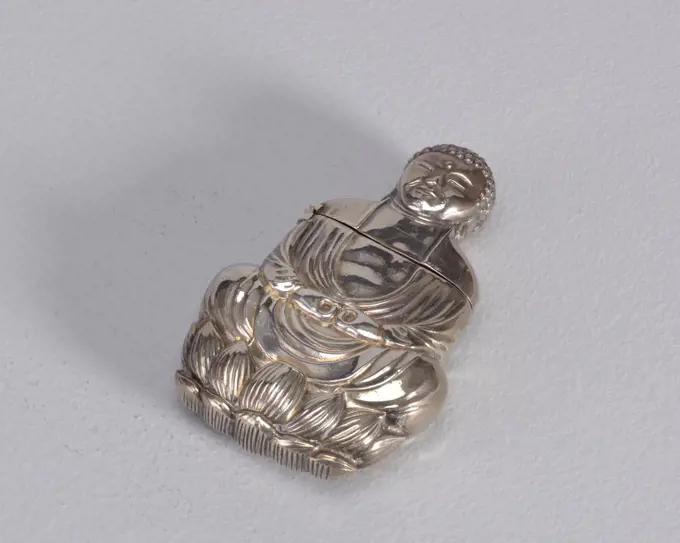
Seated Bodhisattva, Silver, In the form of a Bodhisattva, draped in loose clothing, seated on a lotus flower and assuming the Lotus position for meditation, with arms resting on crossed legs, thumb and forefinger of each hand forming a circle in front; head and shoulders (lid) open to right. Striker on bottom., late 19th century, containers, Decorative Arts, Matchsafe, Matchsafe
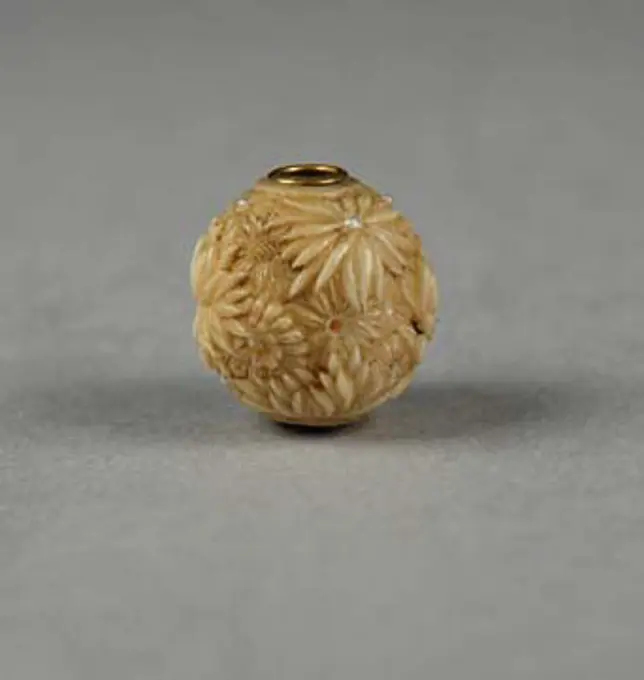
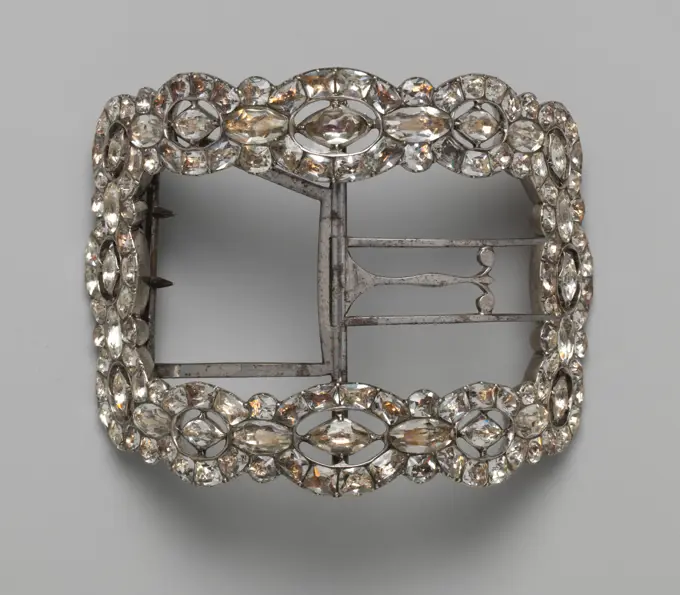
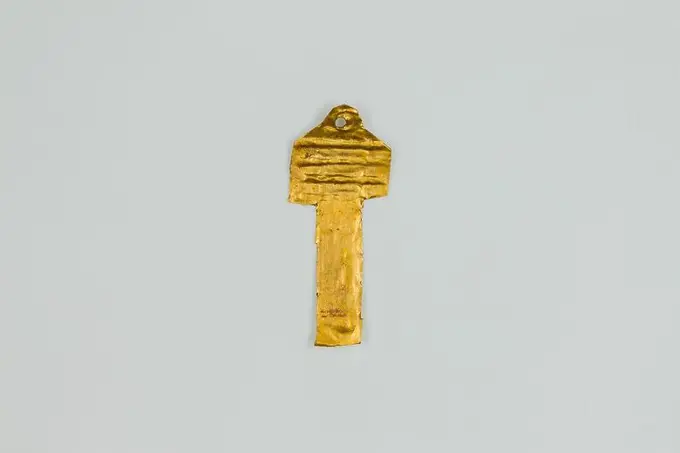
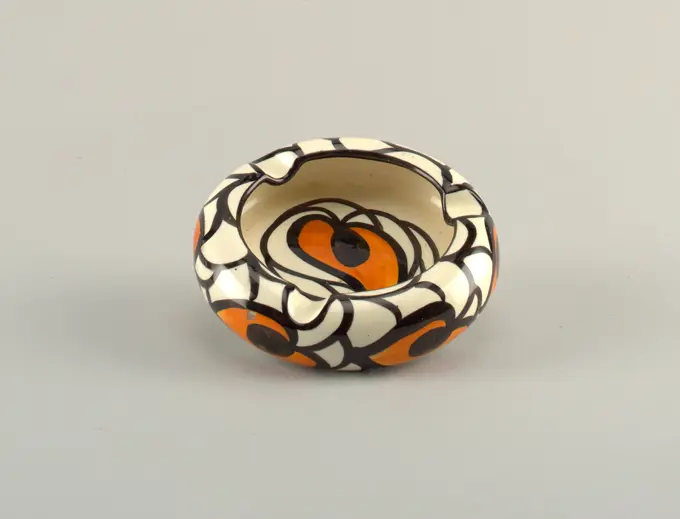
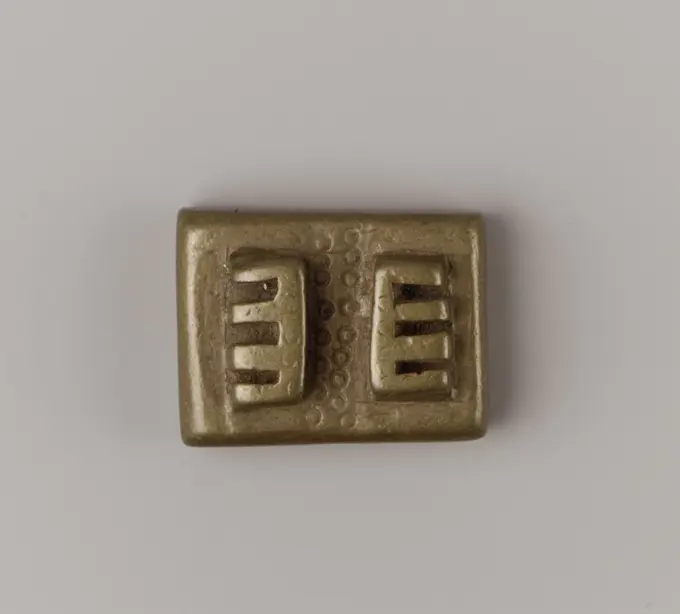
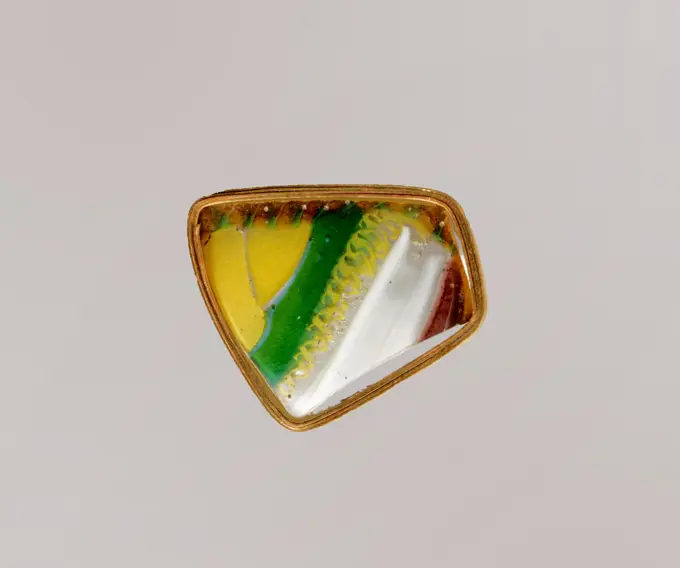
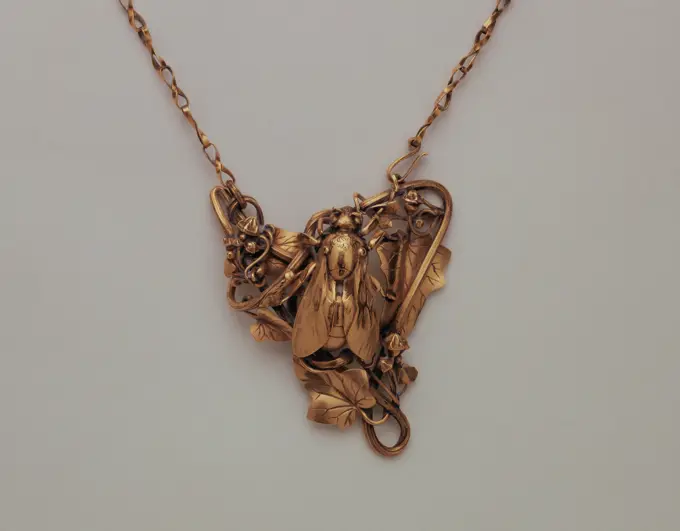
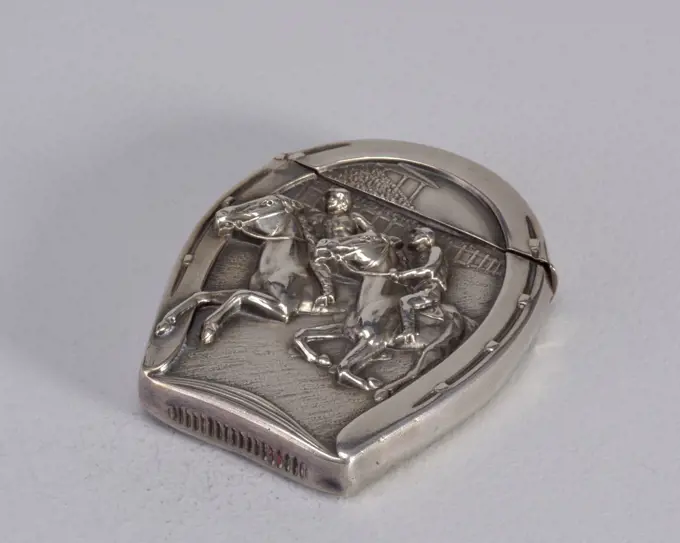
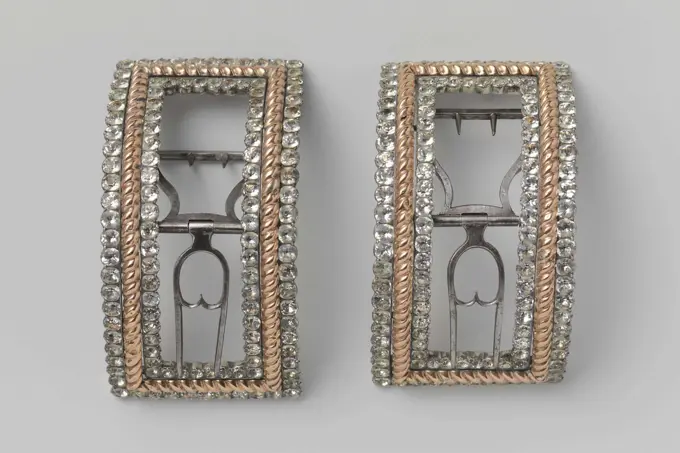
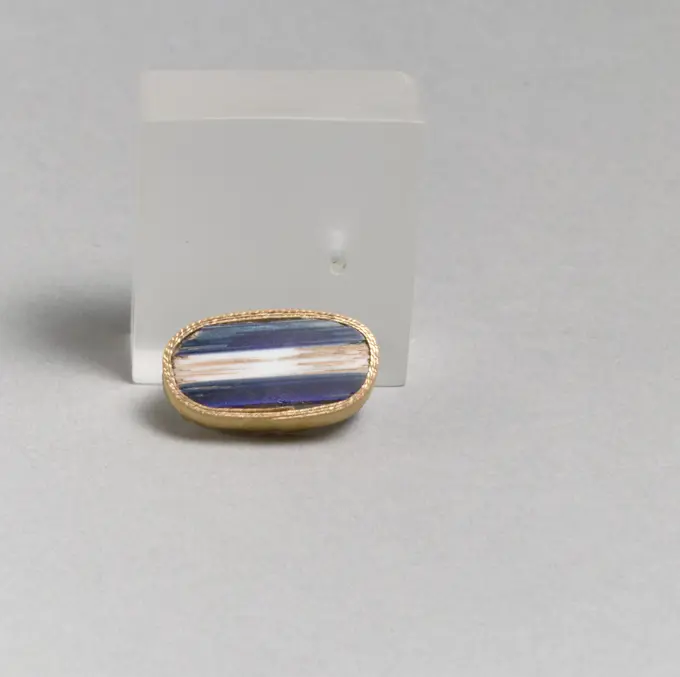
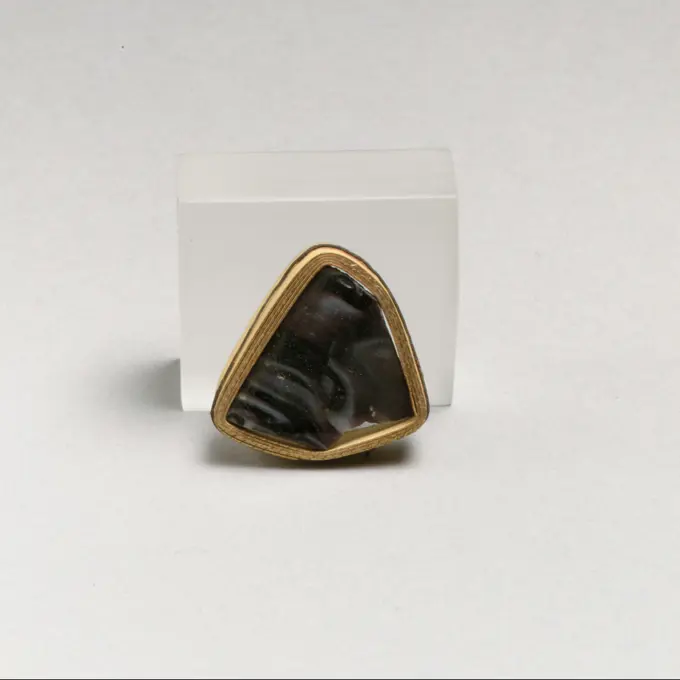
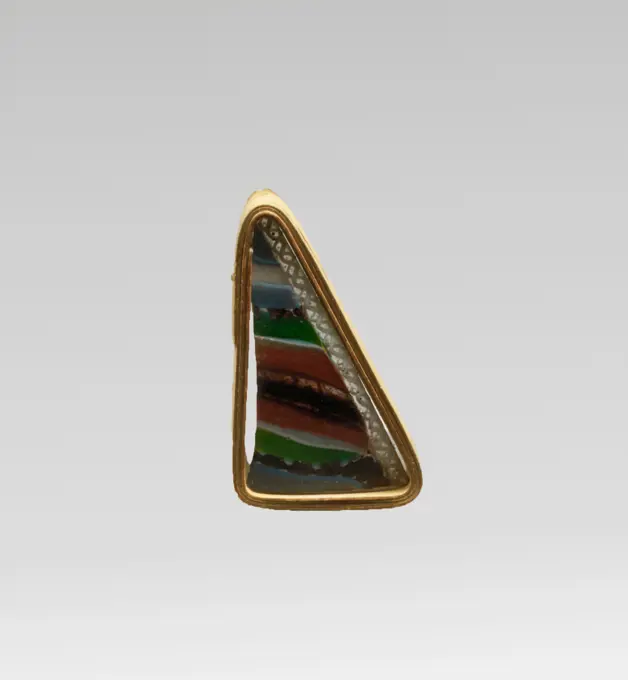
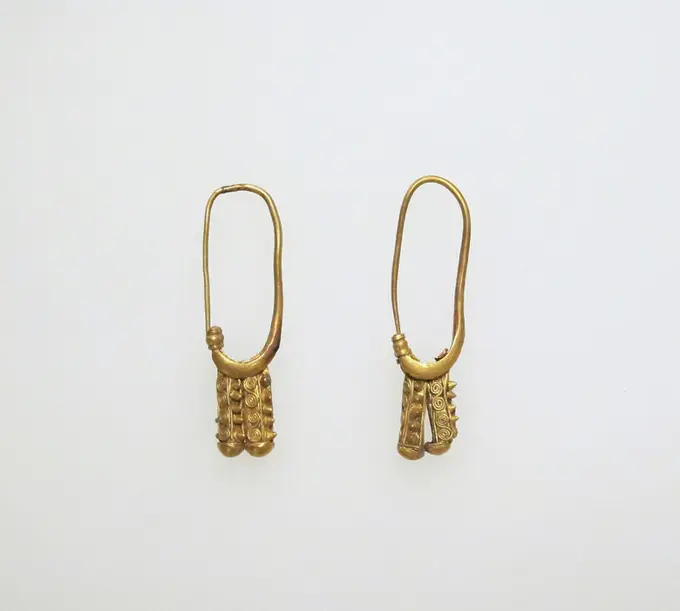
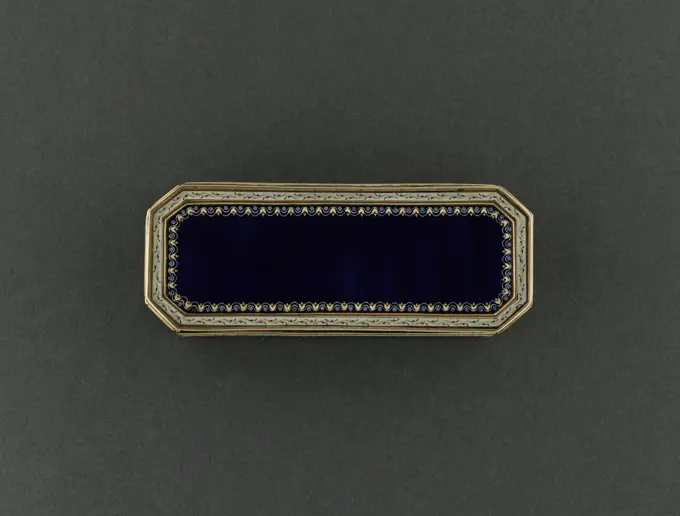
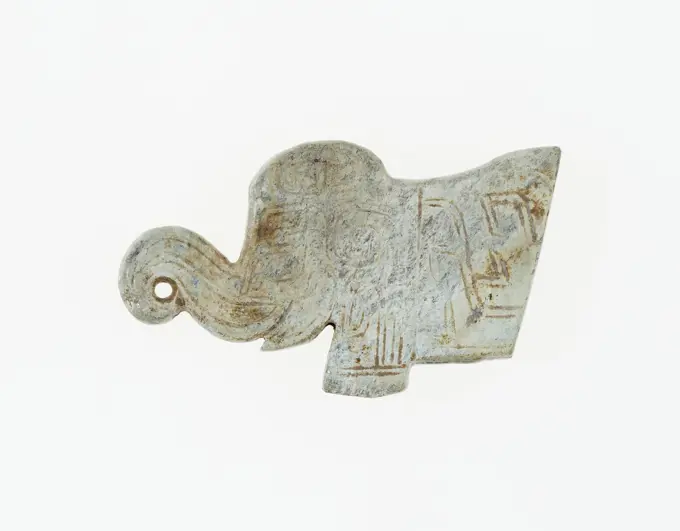
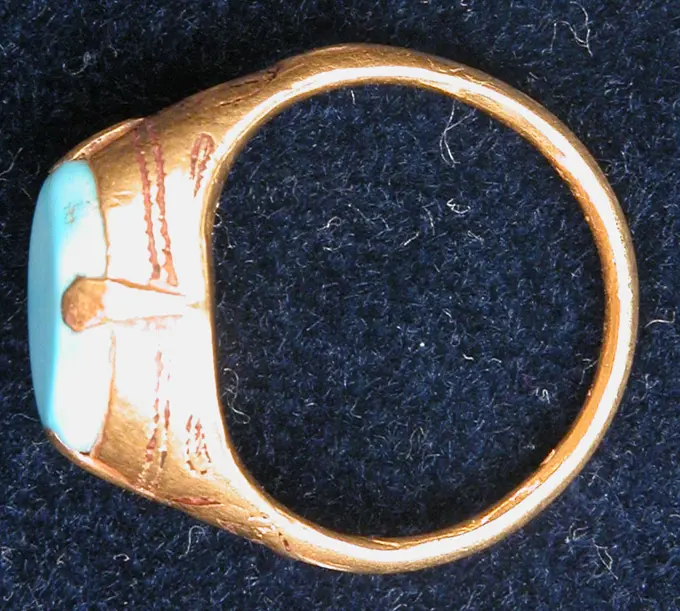
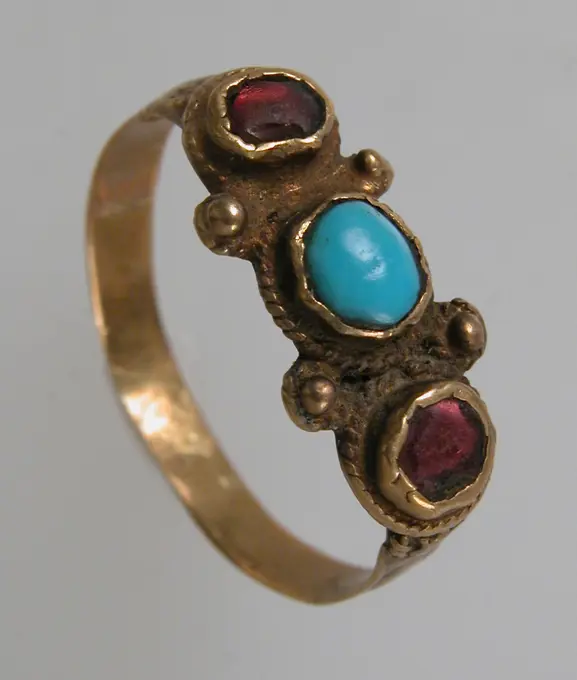
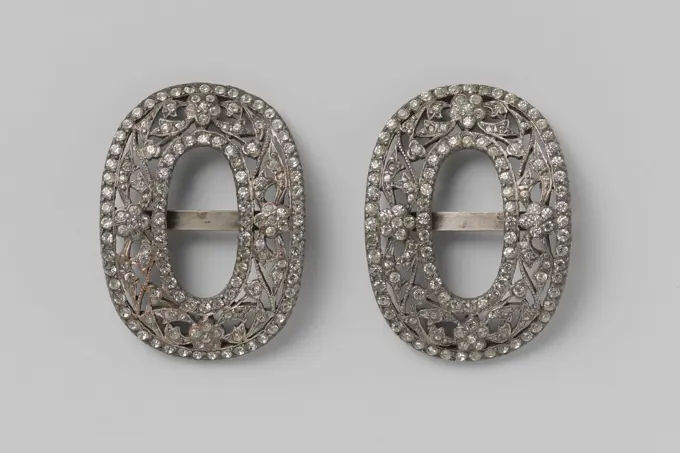
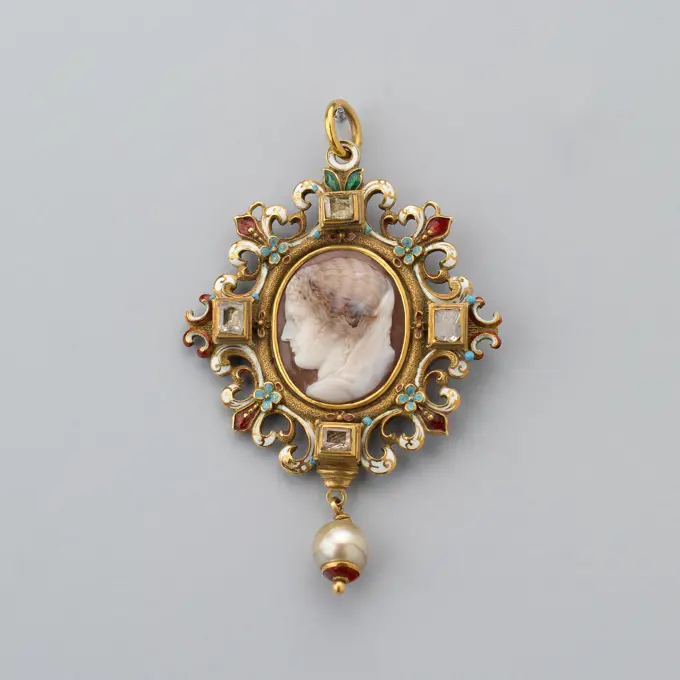
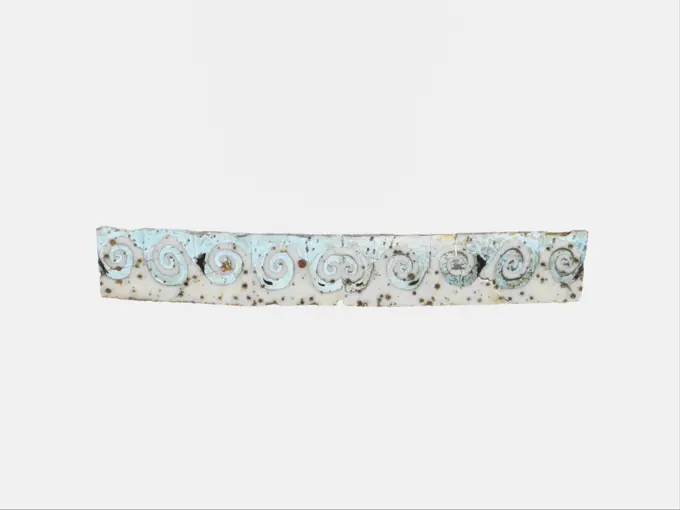
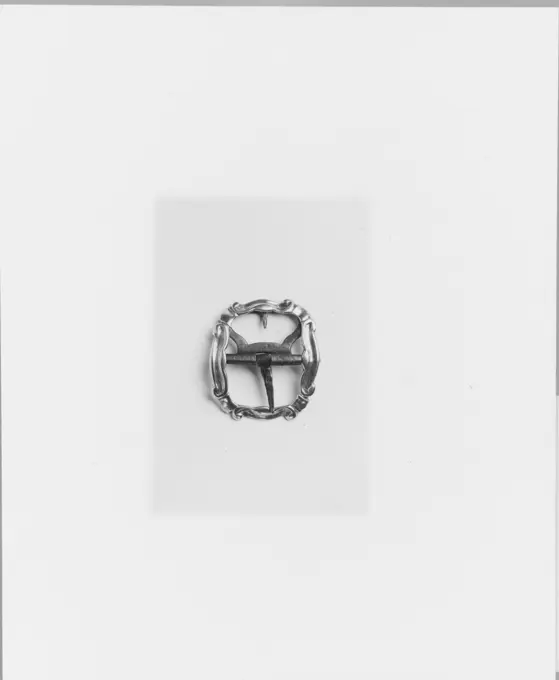
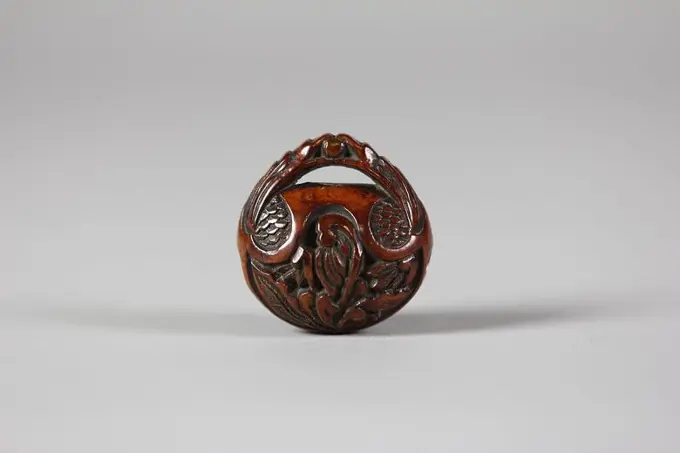
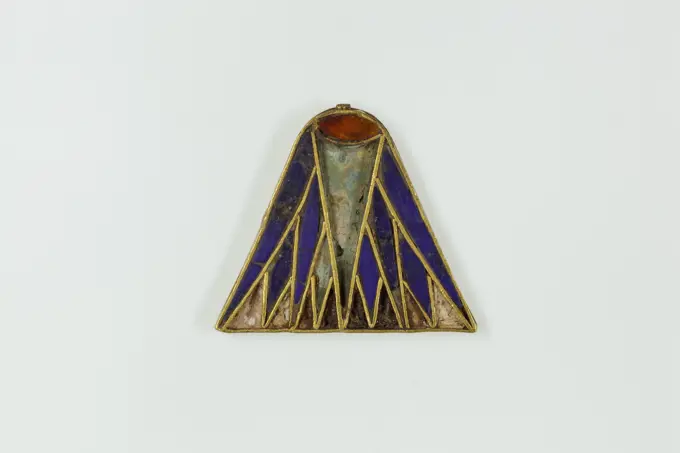
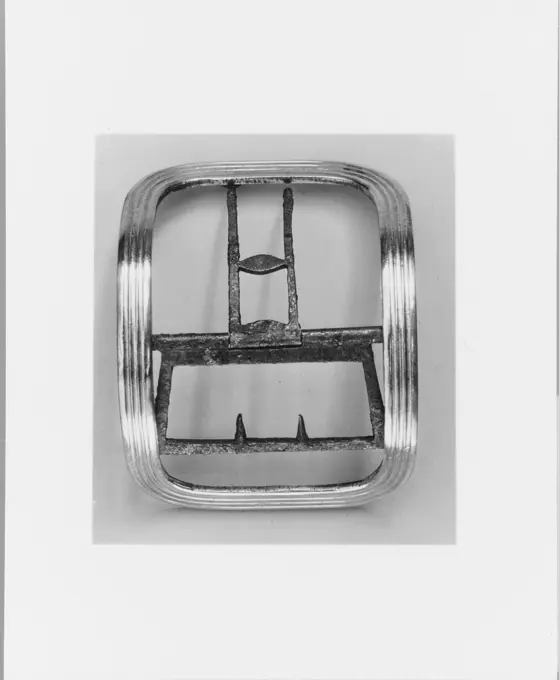
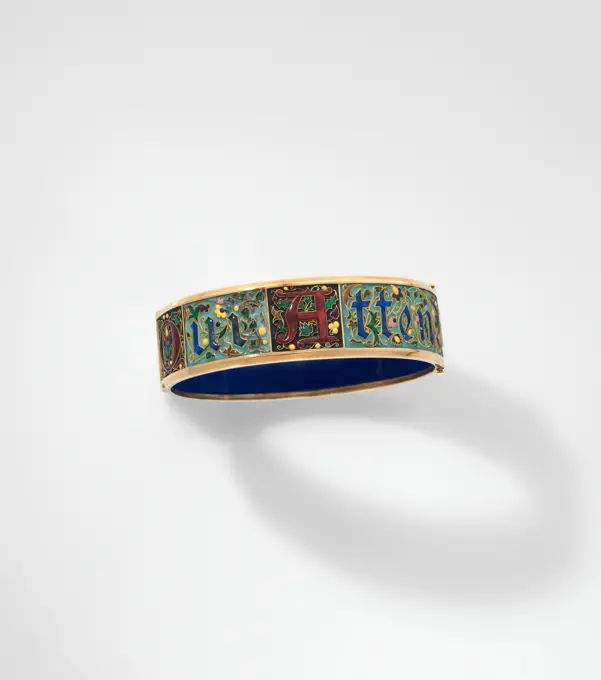
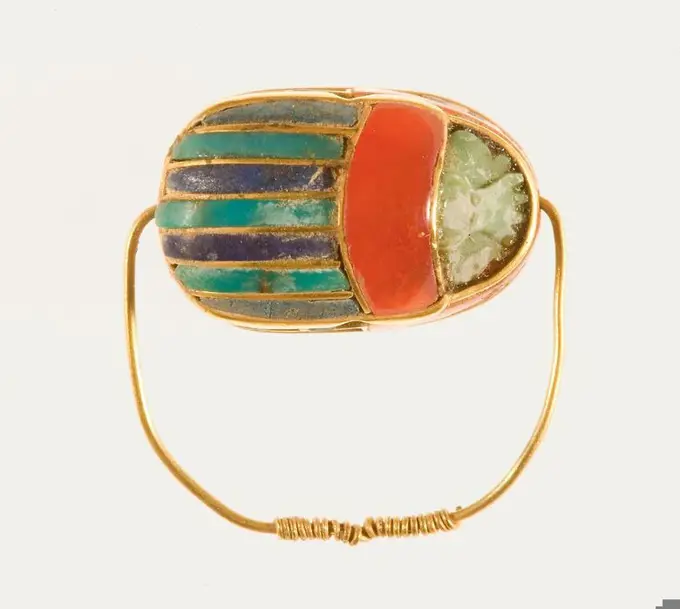
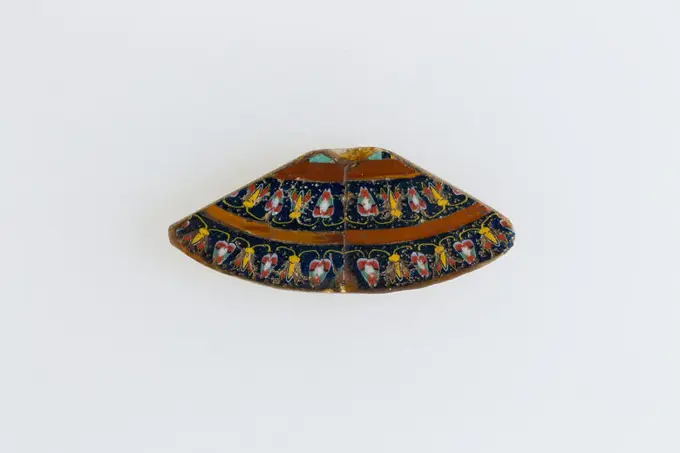
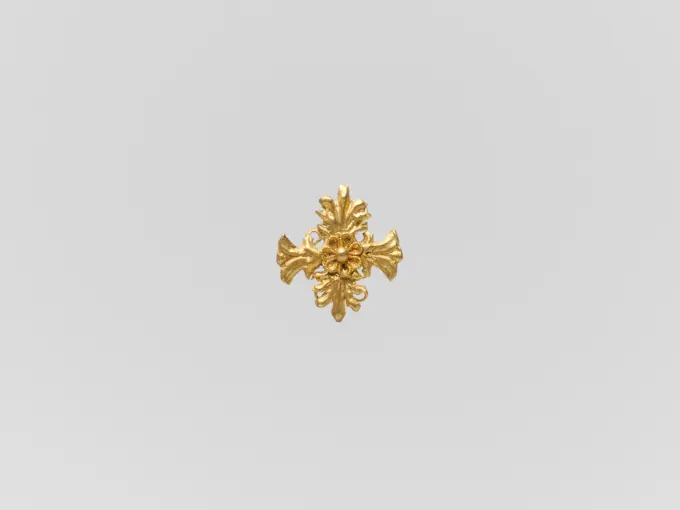
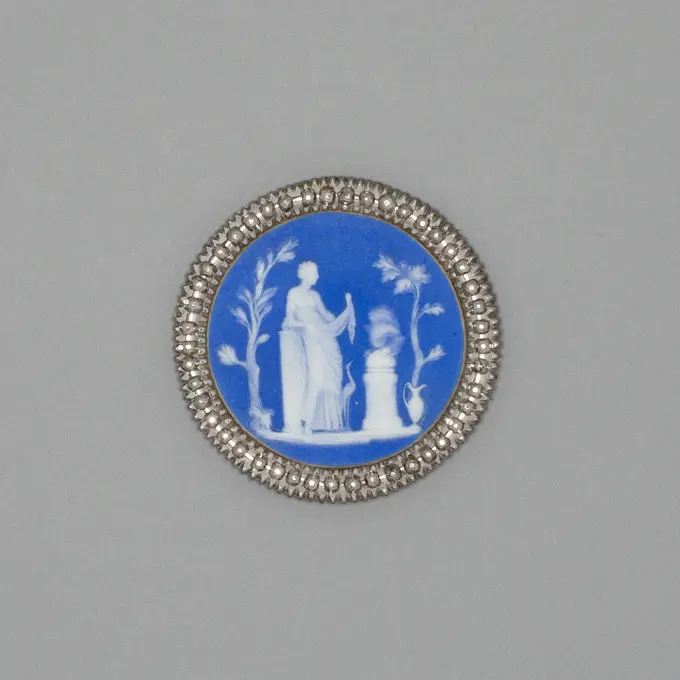
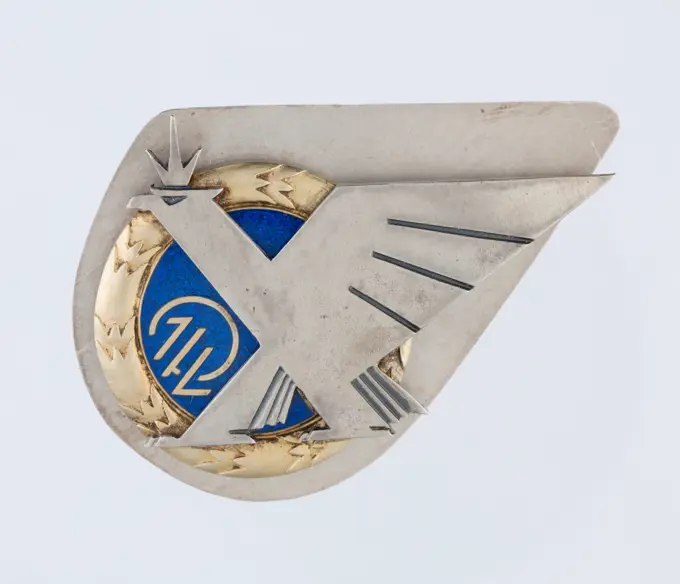
Pendant: winged female head 5th-4th century B.C. Italic Simple human head in profile with large eyes and a conical hat.. Pendant: winged female head. Italic. 5th-4th century B.C.. Amber. Classical. Miscellaneous-AmberCarved Bead 19th century Japan. Carved Bead. Japan. 19th century. Ivory. OjimeShoe buckles late 18th century British. Shoe buckles. British. late 18th century. metal, pasteRing. UnknownGlass mosaic ribbed bowl. Culture: Roman. Dimensions: diameter 5 1/8 in. (13 cm). Date: late 1st century B.C.-early 1st century A.D..Translucent deep purple and opaque white.Vertical rim with rounded and slightly uneven top edge; plain, vertical band around top of side, then bulging outward before curving in sharply to small concave bottom.On interior, two concentric grooves around outer edge of bottom and small, broader circle at center; on exterior, twenty-eight prominent vertical ribs, with rounded tops, tapering downward and extending onto bottom.Broken and repaired, with two large holes in rim and top of side and one small chip in rim; pinprick and a few larger bubbles; pitting, dulling, and faint iridescence.Rotary grinding marks on interior and on band around top of exterior.Ribbed bowls were a very common and popular type of early Roman cast tableware. Examples have been found right across the Roman world and even beyond. Those in mosaic glass like this one were intended metal clampsAbruzzo, Alba Fucens, General views, Italy, 20th century, photo, photography, EuropeA crushed beer can rests on a city sidewalk, highlighting issues of litter and pollution. Its worn surface shows signs of weathering, reflecting the impact of human activity on the environmentDjed pillar amulet. Dimensions: l. 2.5 cm (1 in.) × h. 1 cm (3/8 in.). Dynasty: Dynasty 26-29. Date: 664-380 B.C.. Museum: Metropolitan Museum of Art, New York, USA.Ashtray (Germany); Made by Schramberger Majolikafabrik (Germany); glazed earthenware; height 3.8, diameter 14.7 centimetersGold Double Frog Ornament 11th-16th century Veraguas. Gold Double Frog Ornament 310482Engraved Gem Inset into a Ring. UnknownFemale Playing Badminton, Silver, Oblong, with curved sides and corners, middle slightly cinched, small indentations on sides near bottom, as well as on top of lid, featuring raised decoration of female badminton player, 3/4 view in profile; she wears blouse with rolled-up sleeves tucked into skirt, hair loosly tied in a top knot, racket held in backhand position, some shrubbery in background. Lid hinged on side. Striker on bottom., ca. 1900, containers, Decorative Arts, Matchsafe, MatchsafeNaparstekGold Weight: Geometric 16th-17th century Akan peoples In the fifteenth century, cast Akan gold weights (brass figurines used to measure units of gold dust) were developed in response to the extensive trade in gold mined in Kumasi that was initially transported across Saharan trade routes. Locally, gold was prized for its decorative qualities, status, and because of a strong belief in its inherent power and mystery. The earliest treatment of gold weights was probably in the style seen in these examplesgraphic, abstractas a result of the Islamic influence in the gold trade at this time. This heavy rectangular form has very faint surface designs that were engraved or punched into the metal. Its edges are rounded, indicating extensive human wear. While these miniature artifacts, created as weights, were commonly melted down and recast, historic motifs were valued and constantly reintroduced. Although this example was probably made in the eighteenth or even nineteenth century, its designsGlass striped mosaic bowl fragment late 1st century B.C.-early 1st century A.D. Roman Rim fragment.Translucent honey yellow, purple, turquoise blue, mainly layered with yellow and appearing green, opaque yellow, and white, with colorless glass.Applied coil rim with lip ground flat; convex curving side, tapering inward at bottom. Rim in yellow with turquoise spiral thread; body decorated with vertical bands slanting from top right to bottom left, forming a pattern: yellow, turquoise, green, colorless with two yellow spiral threads, white, and purple.Some pinprick and larger bubbles; exterior polished, with some pitting of surface bubbles; dulling, pitting, and iridescent weathering on interior; some iridescent weathering on edges.. Glass striped mosaic bowl fragment. Roman. late 1st century B.C.-early 1st century A.D.. Glass; cast. Early Imperial. GlassLoop. 2 rows of stones.Henri Husson. Chain with pendant, around 1909 (before restoration). Museum of Fine Arts of the City of Paris, Petit Palais. 74341-2 Before catering, jewelry, chain, necklace, leaf, insect, fly, pendantGold pendant disk 7th-6th century B.C. Cypriot With flowers and buds in filigree work.. Gold pendant disk. Cypriot. 7th-6th century B.C.. Gold. Archaic. Gold and SilverRingHorseshoe, Battin & Company, American, 1896 - 1922, Silver, In the shape of a horseshoe featuring central, raised decoration of 2 jockeys racing their horses at track, reverse simulates horse's hoof with shoe. Lid (top of horseshoe) has thumb catch at front and hinged at upper left. Striker on bottom., ca. 1900, containers, Decorative Arts, Matchsafe, MatchsafePair of Stirrups 15th-17th century Tibetan or Mongolian The unusual, possibly unique, combination of horn and iron as well as the superior quality of the high-relief chiseling of the dragonheads, and the extensive use of gold and particularly silver damascening over their iron surfaces set these stirrups apart. The plainness of the tread plates, however, and the sturdy construction overall show that they were intended for rigorous use.. Pair of Stirrups 634490. Shoe buckle of astras with edge of gold-plated copper. For the curved, rectangular shape are two rows of grounded strass, between which a rectangular conveyed gilded copper edge is located.Glass inlay fragment late 1st century B.C.-early 1st century A.D. Roman Translucent cobalt blue and opaque white.Fragment of thin, flat strip with beveled edges at sides and rounded ends.Straight band of white overlay on surface, flanked by blue; more white overlay on back.Elongated bubbles; polished surface; iridescent weathering on back and edges.Probably used as decoration in wall or ceiling revetment or as inlay for furniture.. Glass inlay fragment 257188Stew with lighth test. Square stove, the top of which has beveled corners and five holes. The stove has been labeled: STK. = Amsterdam, JRL. = W (1756), Mt. = Daniel from STRANT, an ax and a crowned O. At the stew hears a test with the Invnr. BK-14913-V-b.Shoe spacer of silver -plated metal in the form of a horizontal rectangle, within which angular meanders, with stras, c. 1900 - c. 1925 Shoe spur of silver -plated metal in the form of a horizontal rectangle, in which angular meanders, with stras. France (possibly) Basic: Metal. Stones: Paste (Glass) forging / grinding Shoe spur of silver -plated metal in the form of a horizontal rectangle, in which angular meanders, with stras. France (possibly) Basic: Metal. Stones: Paste (Glass) forging / grindingNetsuke of Two Ducks Swimming. Culture: Japan. Dimensions: H. 1 3/8 in. (3.5 cm); W. 1 3/16 in. (3 cm). Date: 19th century. Museum: Metropolitan Museum of Art, New York, USA.Shining jewelryGlass mosaic bowl fragment late 1st century B.C.-early 1st century A.D. Roman Rim fragment.Translucent deep purple and opaque white.Outsplayed rim with rounded edge; concave curving side below.Mosaic pattern formed from polygonal sections of a single cane in a purple ground with white circles and a central white rod. Canes are distorted.Polished interior; pitting of surface bubbles on interior; deep pitting, faint iridescence, and creamy weathering on exterior, outer edge of rim, and jagged edges.. Glass mosaic bowl fragment 257353. Hair comb of imitation turtle with five teethGlass striped mosaic bowl fragment late 1st century B.C.-early 1st century A.D. Roman Rim fragment.Translucent blue layered with white appearing greyish blue, deep purple, purple layered with white appearing opaque pale red, turquoise blue layered with yellow appearing green, and opaque white, with colorless glass.Applied coil rim with vertical, rounded lip; side tapering inward. Rim in colorless glass with double white spiral threads; body decorated with bands slanting from top right to bottom left, forming a pattern: blue, white, blue, purple with white spiral thread, green, white, pale red, purple, pale red, white, purple with white spiral thread, and blue.Pinprick bubbles; exterior polished, with pitting of surface bubbles; dulling and iridescent weathering on interior; iridescent weathering on edges.. Glass striped mosaic bowl fragment. Roman. late 1st century B.C.-early 1st century A.D.. Glass; cast. Early Imperial. GlassGlass mosaic carinated bowl fragment late 1st century B.C.-early 1st century A.D. Roman Rim fragment.Translucent deep purple, light blue partially mixed with opaque yellow and appearing green, opaque white and yellow, and colorless.Outsplayed rim with slightly pointed edge; carinated side, with two convex curves, the upper being deeply curved, the lower being shallow.Composite mosaic pattern formed from polygonal sections of three canes: one in a purple ground outlined in white, with a central yellow spiral; the second in colorless with a yellow spiral, and the third in blue with a yellow spiral.Polished interior; pitting of surface bubbles on interior; thick iridescent weathering on exterior and edges.. Glass mosaic carinated bowl fragment. Roman. late 1st century B.C.-early 1st century A.D.. Glass; cast. Early Imperial. Glassold brass ring door handle old brass ring door handle on urban door Copyright: xZoonar.com/VVxVoennyyx 5032939Women's court shoes. Dyck, Johann (Wilno ; pracownia szewska ; ca 1800-ca 1850), authorSchmuck Schmuck Copyright: xZoonar.com/JulianxWeberx 877101Pair of Sword-Grip Ornaments (Menuki) 18th century Japanese Menuki are a pair of ornamental sword fittings attached to either side of a sword hilt.. Pair of Sword-Grip Ornaments (Menuki). Japanese. 18th century. Gold. Sword Furniture-MenukiEarring, boat-shaped. Dimensions: Other (A): 5/8 × 5/16 × 2 1/8 in. (1.5 × 0.7 × 5.3 cm)Other (.B): 9/16 × 1/4 × 2 3/16 in. (1.5 × 0.7 × 5.5 cm). Museum: Metropolitan Museum of Art, New York, USA.Sword-Hilt Collar (Fuchi) Japanese ca. 1615-1868 A fuchi is a collar that is mounted at the base of the grip of a sword hilt, usually made as part of a set with a matching kashira (pommel cap). View more. Sword-Hilt Collar (Fuchi). Japanese. ca. 1615-1868. Copper-silver alloy (shibuichi), copper-gold alloy (shakud), gold, copper. Sword Furniture-Fuchi-KashiraAnonymous Swiss. Small rectangular box with chopped gold, seized, guilloche and enamelled with an ancient rural scene. Paris, Cognacq-Jay museum. 56024-6 Blue, rectangular box, champetre, chisel, cut, enamel, seize, guillocher, gold, ancient scene, view aboveBracelet, c. 1900, 2 3/16 x 5/16 in. (5.6 x 0.8 cm), Silver, turquoise, United States, 19th-20th centuryHeart shaped made of gold chain Valentines Day, love, romance conceptScarab Finger Ring ca. 1850 - 1640 B.C. Middle Kingdom. Scarab Finger Ring. ca. 1850 - 1640 B.C.. Green feldspar. Middle Kingdom. From Egypt, Memphite Region, Lisht North, cemetery south of pyramid below House A1:1, Pit 885, MMA excavations, 1920-21. Dynasty 13, midMan with wheelbarrow, Frederik van Strant (I) (attributed to), c. 1725 Flat wheelbarrow with two long handles. The wheelbarrow is pushed by a man with a hat. The image is marked: Mt. = Attributed to Frederik van Strant I and a Zwijnskop. Amsterdam silver (metal) Flat wheelbarrow with two long handles. The wheelbarrow is pushed by a man with a hat. The image is marked: Mt. = Attributed to Frederik van Strant I and a Zwijnskop. Amsterdam silver (metal)Gold fibula (safety pin) with recumbent lion 6th-5th century B.C. Etruscan The large repoussé lion is carefully modeled to indicate ribs and mane. The coil of the fibula's spring doubles as its tail.. Gold fibula (safety pin) with recumbent lion 245988Medal with a chainPipe in the Form of a Twisted Man, 1780-1820. England, Staffordshire, late 18th-early 19th Century. Lead-glazed earthenware; diameter: 23 x 12.5 x 5.8 cm (9 1/16 x 4 15/16 x 2 5/16 in.); overall: 23 x 5.8 cm (9 1/16 x 2 5/16 in.).Flat Bangle 4000 B.C.-A.D. 400 Thailand. Flat Bangle 53367Case for a pipe. Ceylon (now Sri Lanka), c 1700-1725, ivory. Long-stemmed Gouda pipes were very popular with the Dutch, including those living in the topics. Since the clay pipes were fragile, protective cases for them were not an undue luxury. This ivory case from Ceylon is ornamented with flowing branches, a decoration that found great favour among Europeans. On the short end of the lid is a pipe-smoking Dutchman.Tear-shaped Elements 11th-12th centuryEarring with disc and pigeons 4th century B.C. Greek. Earring with disc and pigeons. Greek. 4th century B.C.. Gold. Late Classical. Gold and SilverElephant Pendant 1300 BCE-1000 BCE China. Jade .Loop.Ring 12th-13th century This elegant ring has been fabricated from gold sheet and a cabochon turquoise stone. According to eleventh-century polymath and natural philosopher Al-Biruni, turquoise in the medieval period was believed to immediately dispel the harmful effects of the evil eye. This ring therefore would have served both as a talisman, and as an ornament meant to adorn the wearer.. Ring 451110Finger Ring 7th century Frankish. Finger Ring 465294 Frankish, Finger Ring, 7th century, Gold, turquoise, glass paste, Overall: 13/16 x 3/4 x 1/4 in. (2 x 1.9 x 0.7 cm). The Metropolitan Museum of Art, New York. Gift of J. Pierpont Morgan, 1917 (17.192.227). Shoe buckle of silver plated copper decorated with a ridge, oval-shaped. A cut-away middle edge with four times a rose and ribbons are connected to a cord between two oval lists of cords ridge diamonds.Purse 1820 European. Purse 87670Two-Sided Pendant with Cameo showing Juno and Minerva 1801-1900 Europe. Cameo agateFrame enamel, gold, diamonds, and pearl .Book band. Band of silver, with lock, key and inserted silver pin. Front and rear cut down and engraved. On the inside a mirror, sundial and compass.Earrings, Hair, gold, Pair of earrings in design of three pendants of brown hair arranged around a disc placed below one gold leaf on a gold ring., USA, mid-19th century, jewelry, Decorative Arts, EarringsGlass beads. Glass beads. Glass. GlassGlass mosaic inlay late 1st century B.C.-early 1st century A.D. Egyptian, Roman Translucent light blue and opaque white.Thin narrow strip.Continuous guilloche or wave pattern.Broken and repaired; upper side ground and polished; pitted surface bubbles, dulling and faint weathering on edges and backThe inlay is made from two sections cut from the same cane of mosaic glass, with decoration appearing in mirror image.Bluish backed on colorless, maeander pattern in white.. Glass mosaic inlay 249626Knee Buckle 1730-75 American. Knee Buckle 4613Netsuke in the form of a Nut Containing a Carved Landscape. Culture: Japan. Dimensions: Diam. 1 1/2 in. (3.8 cm); D. 1 in. (2.5 cm). Date: 19th century. Museum: Metropolitan Museum of Art, New York, USA.Lotus pendant ca. 1981-1550 B.C. Middle Kingdom-Second Intermediate Period. Lotus pendant. ca. 1981-1550 B.C.. Gold, carnelian, lapis lazuli, pigmented calcareous bedding material. Middle Kingdom-Second Intermediate Period. From Egypt. Dynasty 12-17Matchsafe; silver; Overall: 5.9 x 5 x 1 cm (2 5/16 x 1 15/16 x 3/8 in.)Shoe Buckle ca. 1810 American. Shoe Buckle 7447Tulip shape icon made of  metalGolden star shaped paper party plate isolated on white backgroundBangle Bracelet ca. 1875 Alexis Falize Described by Lucien Falize as intimate mementos…. as precious as illuminated parchments,” gold bangle bracelets ornamented with brilliantly-colored enameled mottoes were a specialty of the Parisian jewelry house founded by his father, Alexis Falize, in 1838. Both father and son produced these romantic keepsakes, which were inspired by late fourteenth-century enameled and gem-set necklaces inscribed with galantes devises” (chivalrous mottoes). The firm is best-known for its designs based on medieval European art, as well as on Near Eastern and Japanese sources. Renowned for their elegant designs and meticulous craftsmanship, the three-generation firm flourished well into the twentieth century, until its closure in 1936.. Bangle Bracelet. French, Paris. ca. 1875. Gold, cloisonné enamelDoor Knobs 3 (England)Ornaments for a Woman's Hat 18th-19th century China Ornaments such as these, which were most likely part of a larger set, would have been attached to a hat made of silk thread on wire and worn by women at court. Unlike more formal headdresses decorated with gold ornaments, hats of this type were widely used. One of the Qianlong Emperor's daughters received thirty such hats as part of her dowry.. Ornaments for a Woman's Hat 60800Scarab ring of Sithathoryunet. Dimensions: l. 1.7 cm (11/16 in); w. 1 cm (3/8 in). Dynasty: Dynasty 12. Reign: reign of Senwosret II-Amenemhat III. Date: ca. 1887-1813 B.C..This superb example of an early ring was formed from gold and the beetle's wing cases, thorax and head were inlaid with semi-precious stones. In the Middle Kingdom (ca. 2030-1650 B.C.), scarab beetles were the preferred design for a ring bezel as the scarab, a symbol of the sun gold Re, emerged as a popular amulet type. Thin gold wire was used to create a ring's shank and was attached to the bezel in different ways, although most involved wrapping the ends of the wire neatly around the shank in a tight coil as can be seen here. The underside of this ring's bezel is uninscribed. Museum: Metropolitan Museum of Art, New York, USA.old style lion’s head knocker. Ancient KnockerEarring with pendant in the form of Eros 4th-3rd century B.C. Greek. Earring with pendant in the form of Eros. Greek. 4th-3rd century B.C.. Gold. Late Classical or Hellenistic. Gold and SilverBox (part of a set) 1675-1700 Southern German Part of set of silver miniature furniture, 31.37.1-.22, and a box, 31.37.23.. Box (part of a set) 196837Ringisolated golden object isolated golden object made in 3d graphics Copyright: xZoonar.com/StanislavxRishnyakx 2952478Memorial ring late 18th century probably British. Memorial ring. probably British. late 18th century. Gold, pearlsJewellery ring isolated on the black backgroundRing with Pontifical seal 1725-50 Italian. Ring with Pontifical seal 193473Collar-shaped inlay. Dimensions: H. 1.5 × W. 3.3 cm (9/16 × 1 5/16 in.). Date: 100 BC-100 AD.A mosaic glass technique allowed multiples of an image to be created: a figural or design composition was made by bundling colored glass canes, which were then drawn out into a long bar. The bar was then sectioned at right angles, probably by striking the bar with appropriate tools, to produce small inlay tiles. The tile would then be smoothed and polished on the face intended to appear outwards.Such elements could also be used side by side to create repeating patterns. Museum: Metropolitan Museum of Art, New York, USA.isolated golden object isolated golden object made in 3d graphics Copyright: xZoonar.com/StanislavxRishnyakx 2952515Pair of earrings 18th century () Iberian. Pair of earrings 206845Gold quatrefoil with palmettes and rosette 4th-3rd century B.C. Greek This element may have been a pendant from an earring.. Gold quatrefoil with palmettes and rosette. Greek. 4th-3rd century B.C.. Gold. Late Classical. Gold and SilverHeart shaped gold color metal object out of sackShell of a grove snail (Cepaea nemoralis) or cord snailDouble cup early 18th century Johann Friedericus Schloeff. Double cup 206220Roses on Cigar Band. Button (France); pearl shell, copper and glassA church of a metal church sword (Fuchi);  18th century (1701-00-00-1800-00-00);Grohman, Henryk (1862-1939) - collection, they, gift (provenance), demon, katana, handles, Japanese artJewelry from Indian Arts and Crafts Board displayButton with Offering of Victory 1775-1799 Burslem. Stoneware (jasperware) . Wedgwood Manufactory (Manufacturer)Bliżej Kultury Jan Knedler's engravingEmblem of the physician corps.