Antique Jewelry Pieces

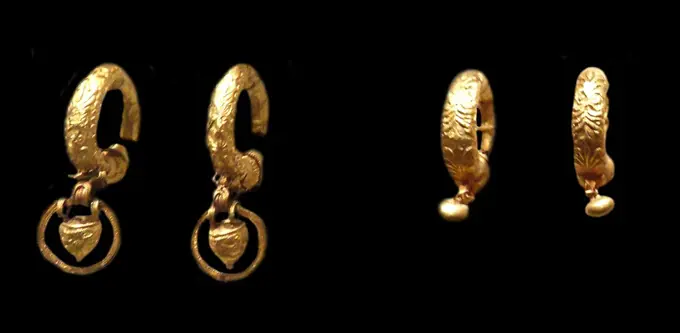
A collection of intricate antique jewelry items, including earrings and decorative containers, showcasing historical craftsmanship.

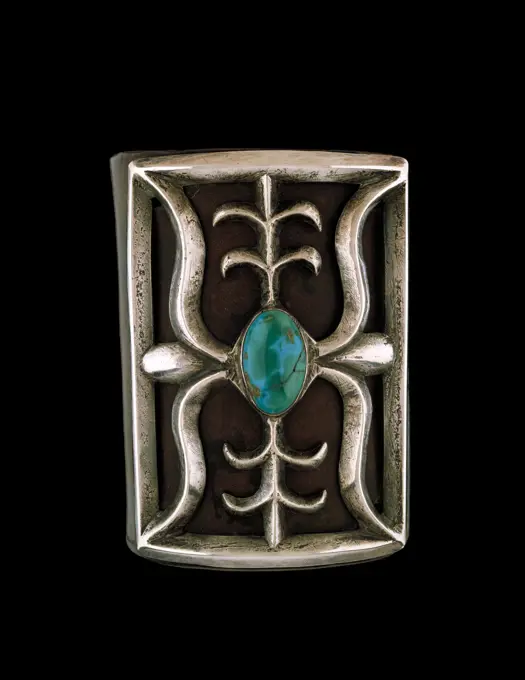
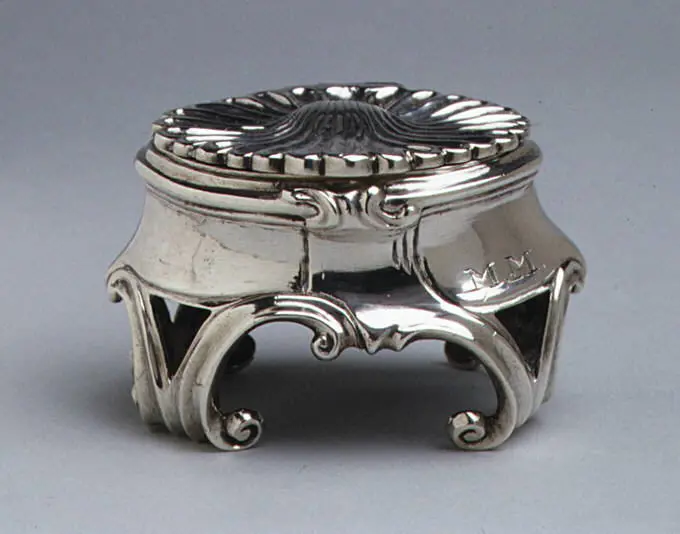
matchsafe, silver, 1881, containers, Decorative Arts, matchsafe
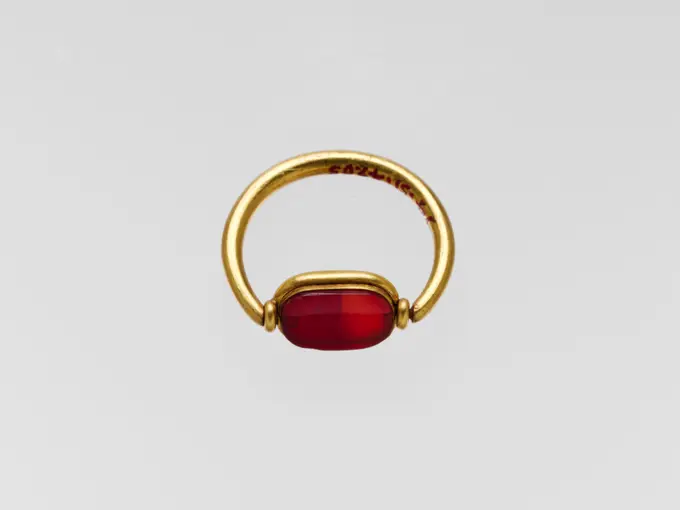
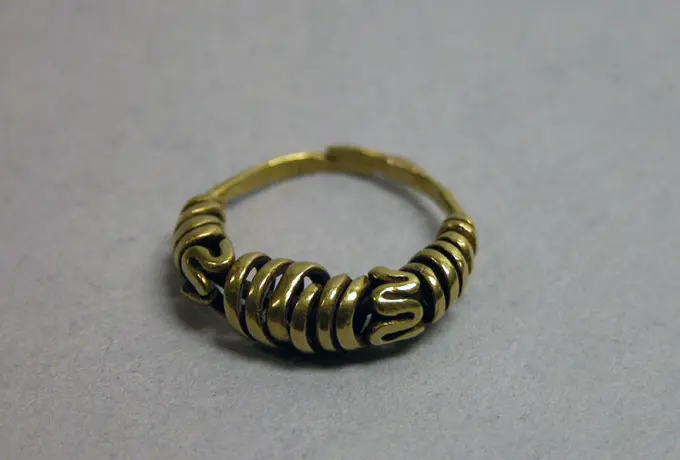
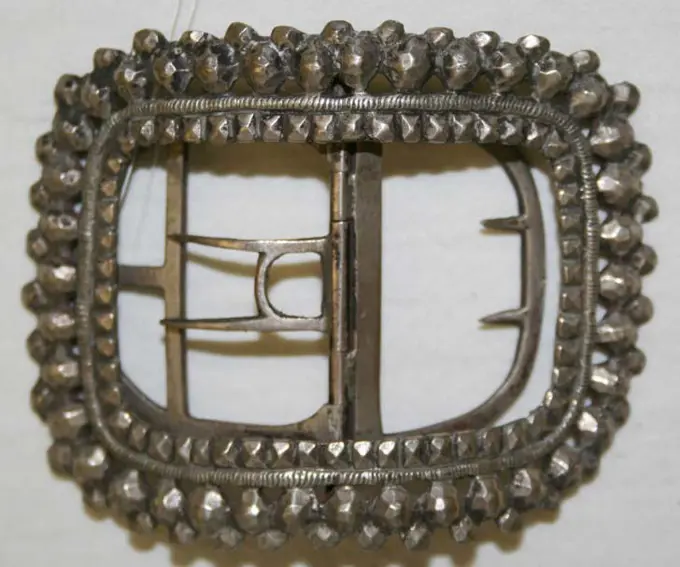
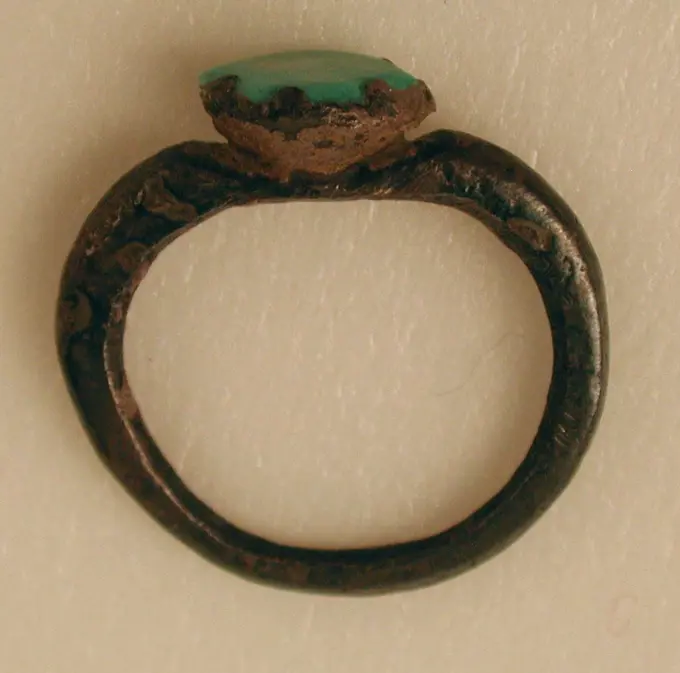
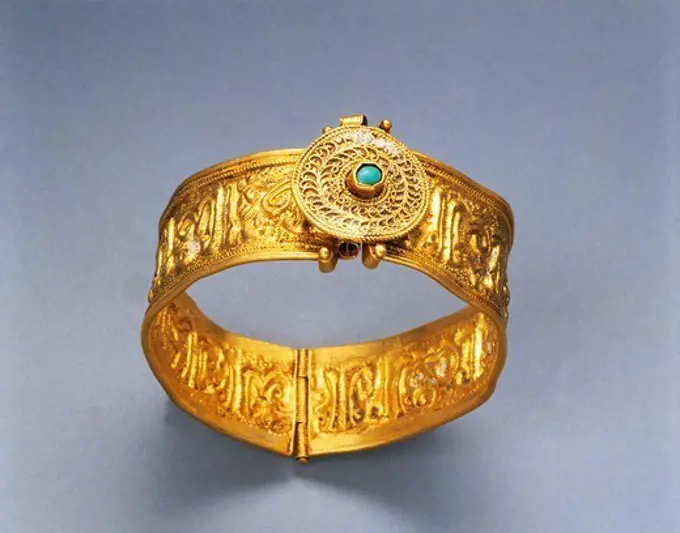
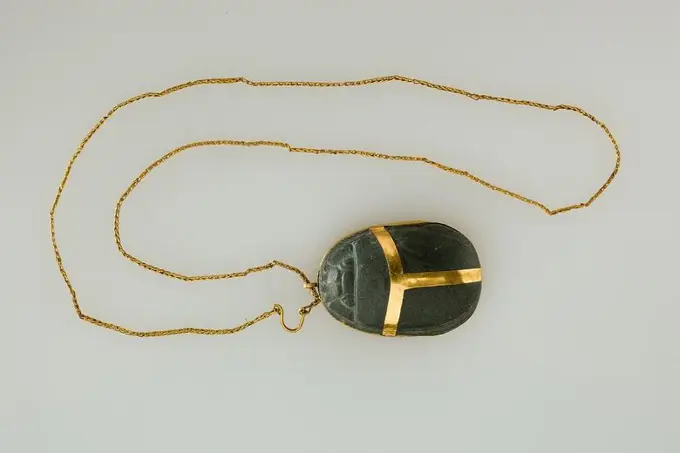
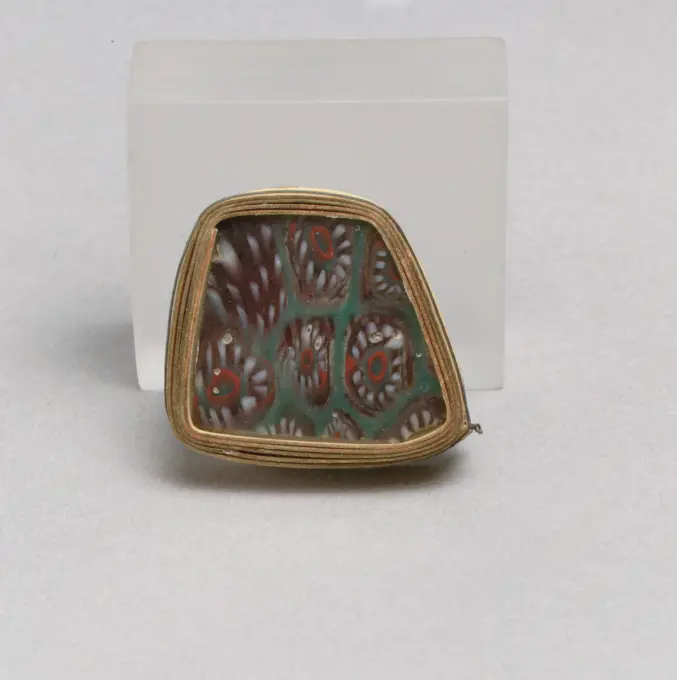
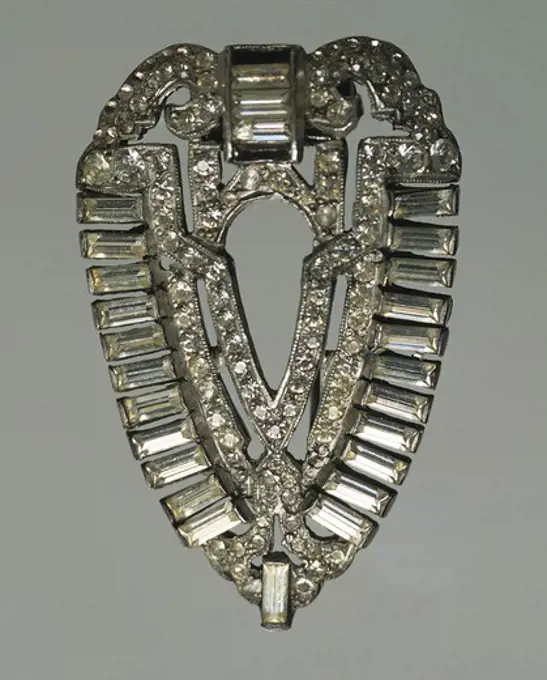
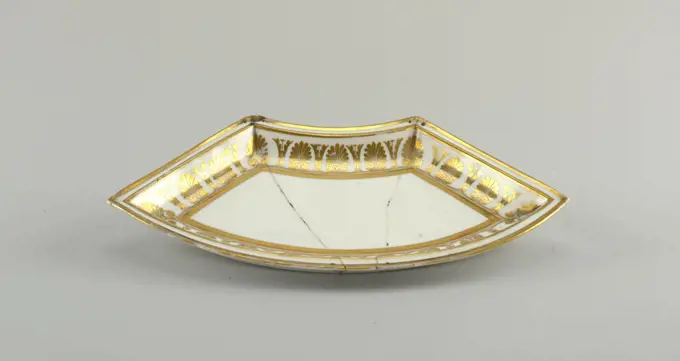
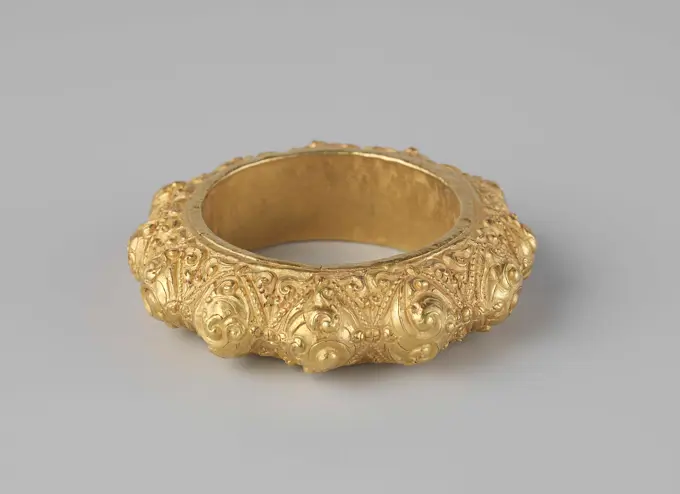
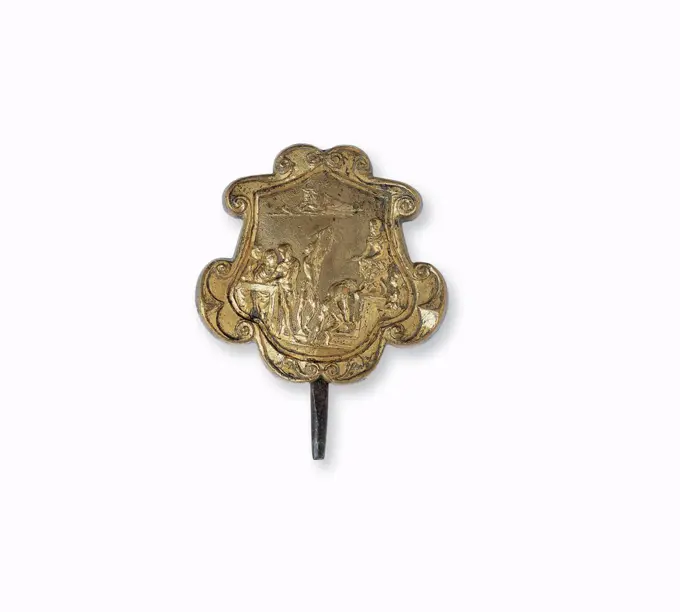
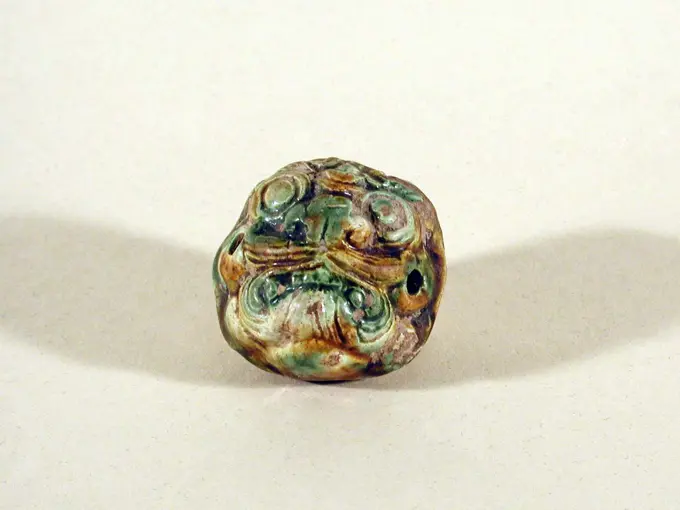
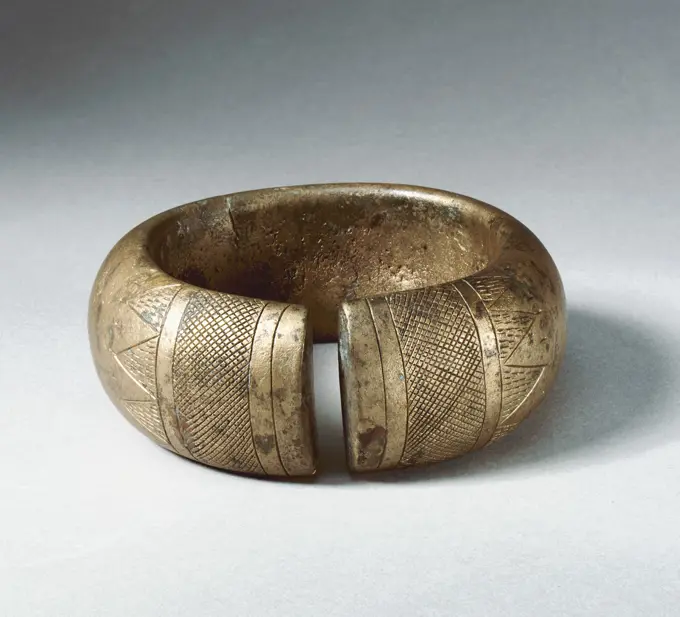
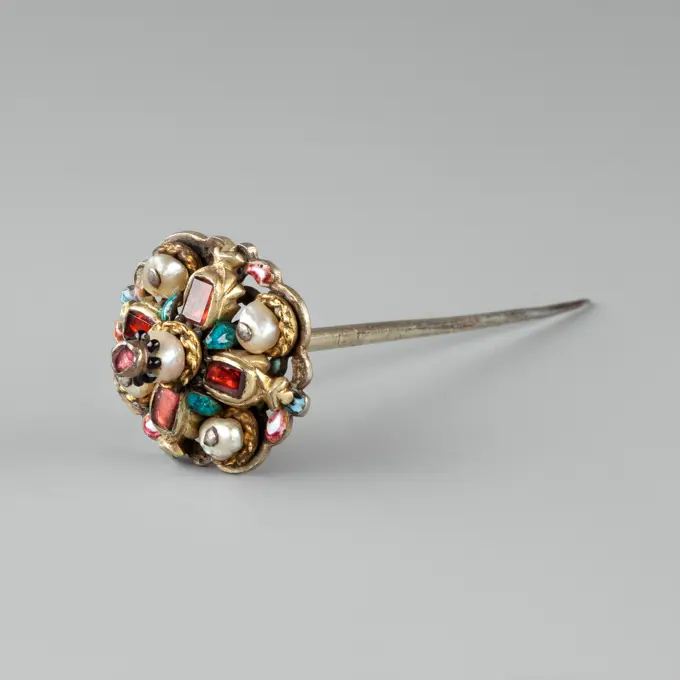
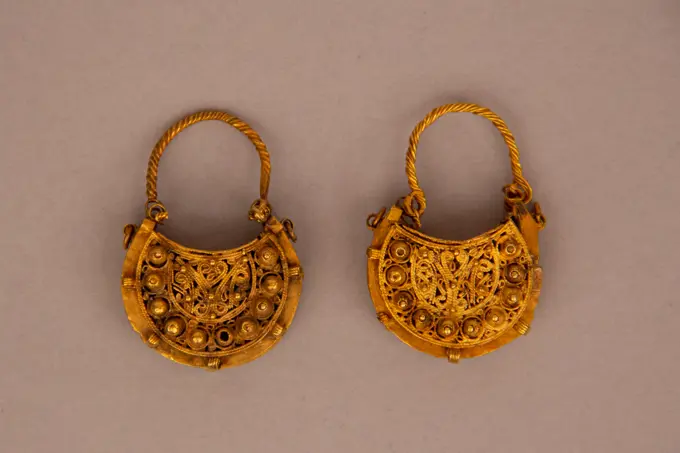
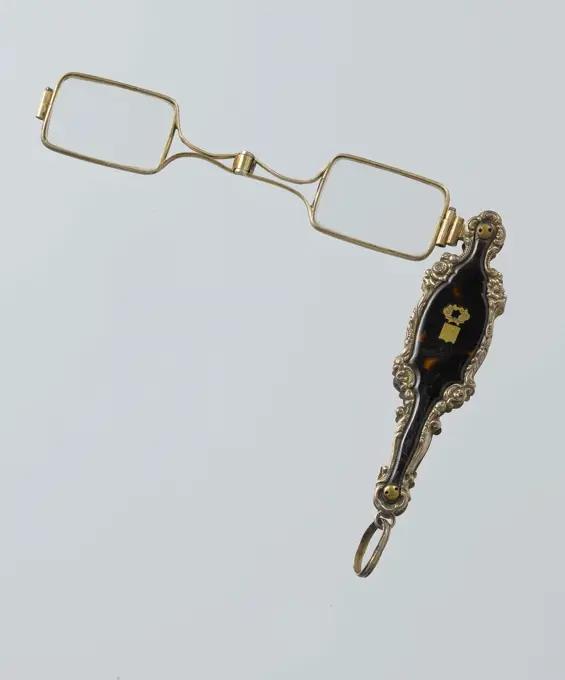
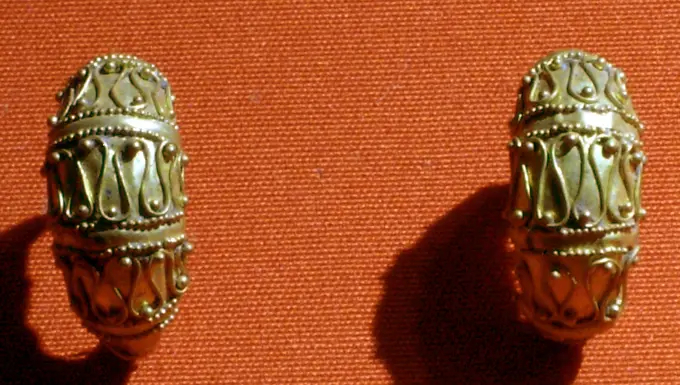
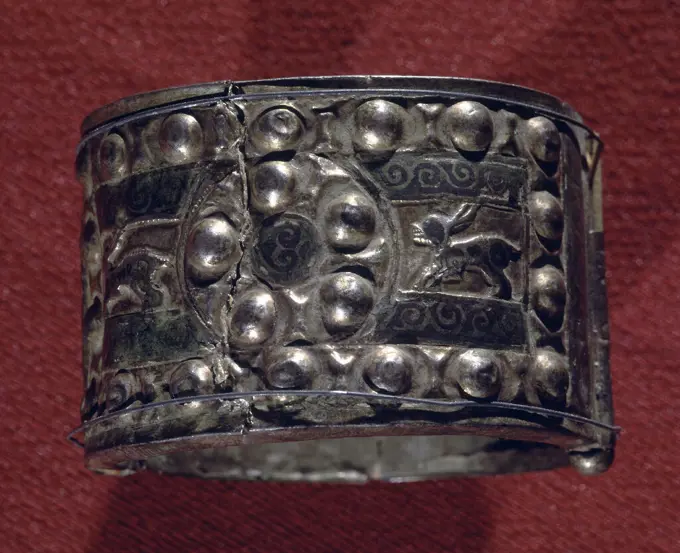
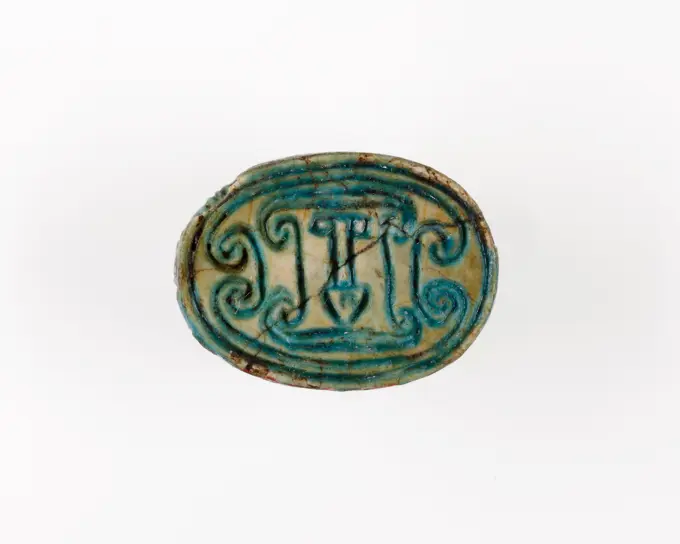
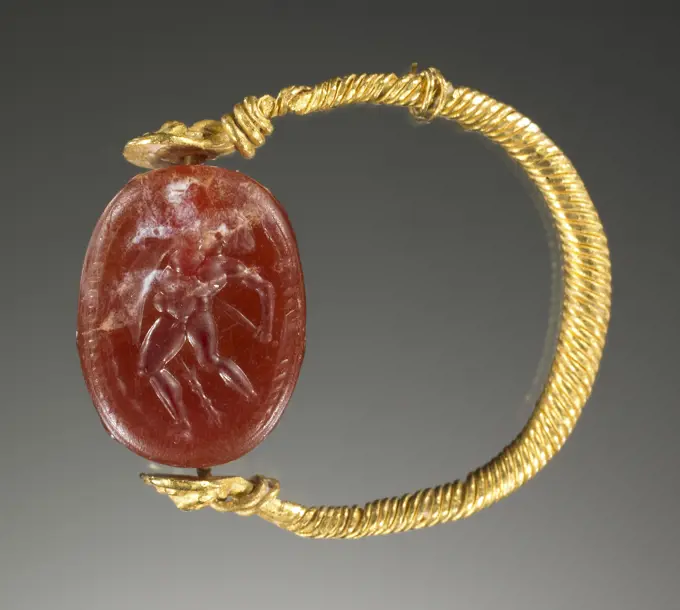
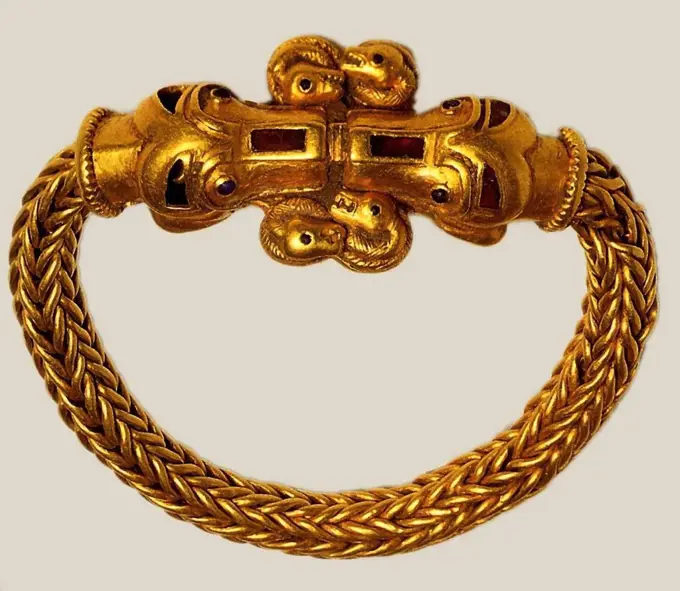
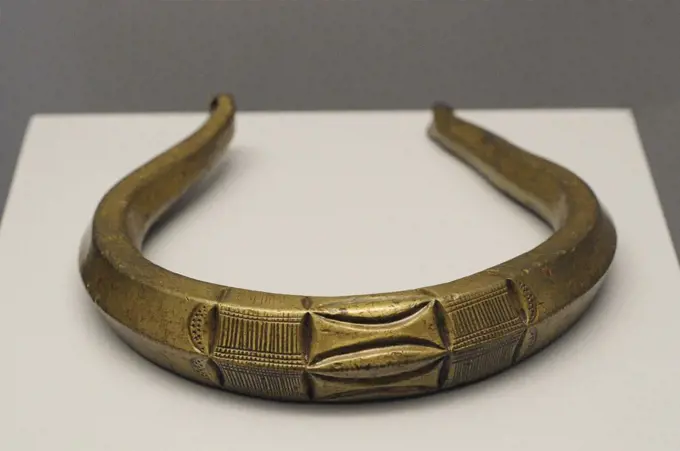
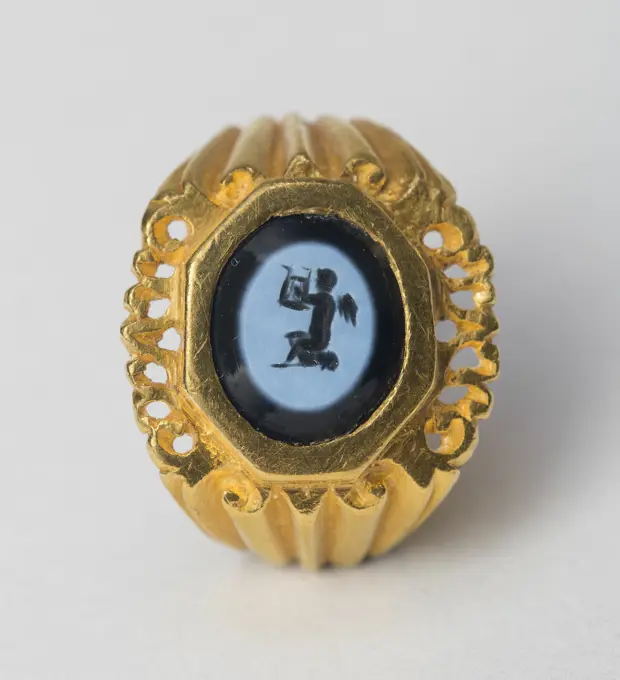
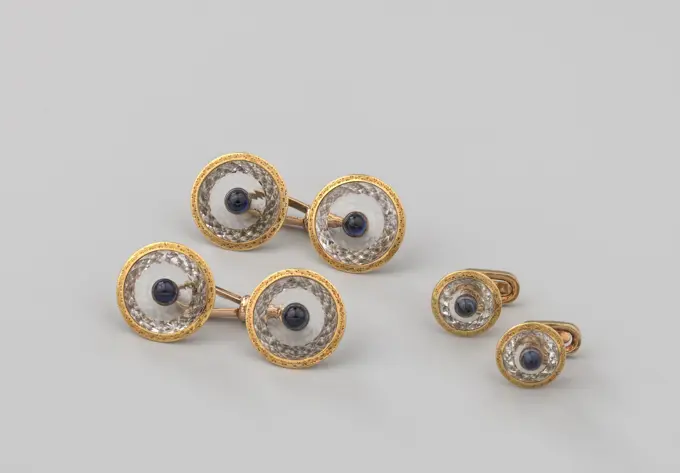
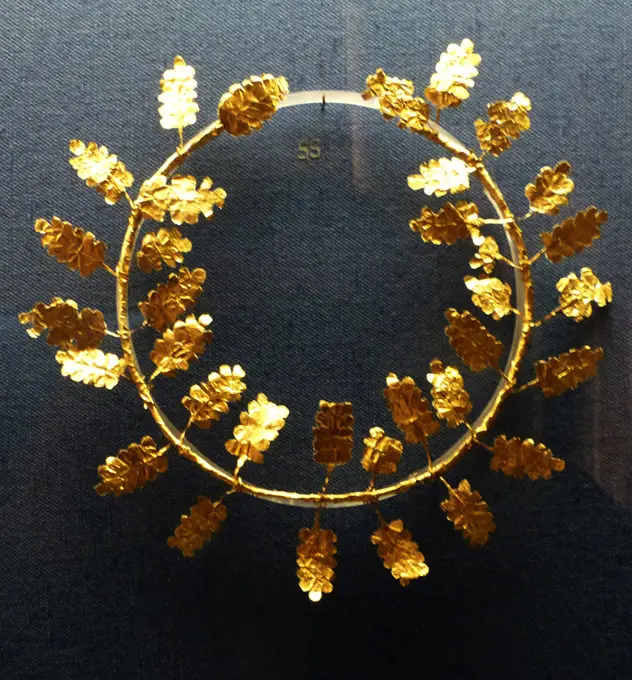
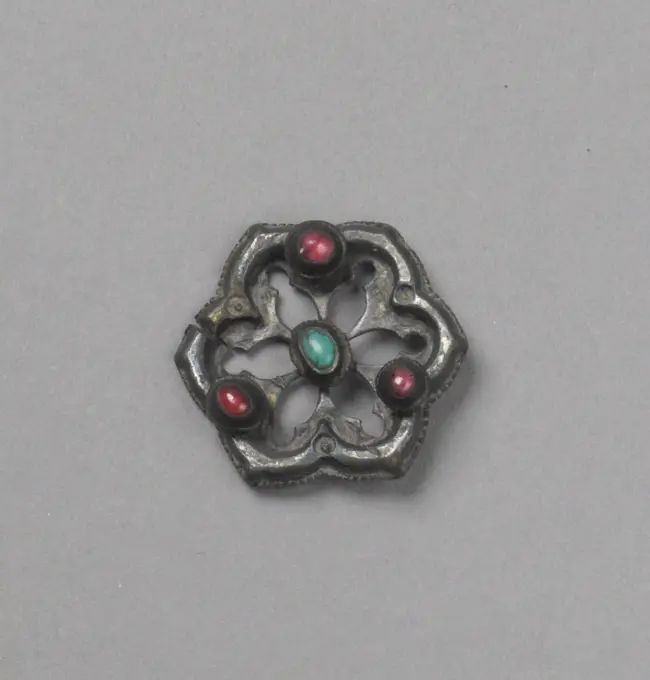
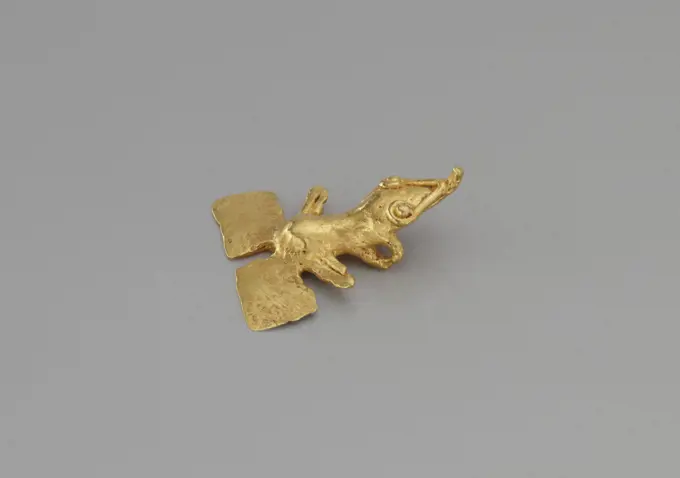
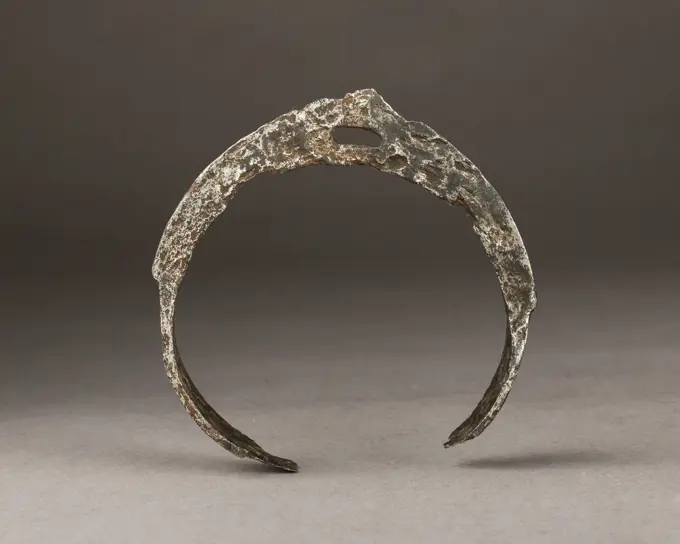
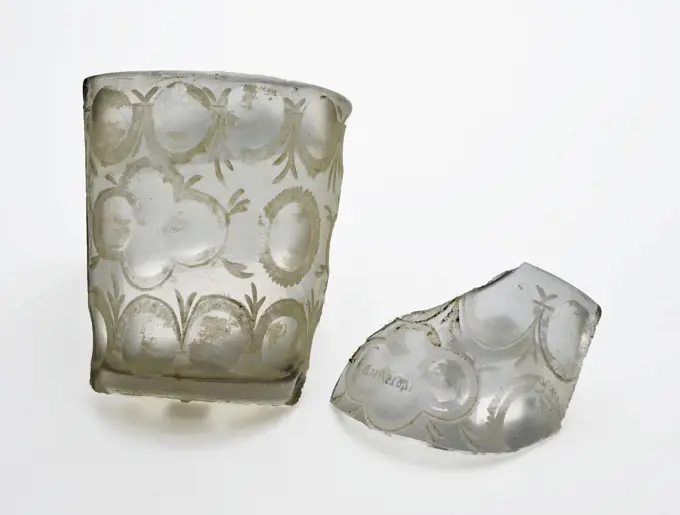
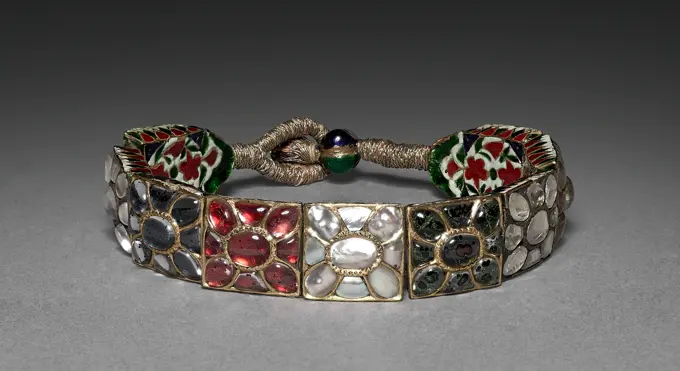
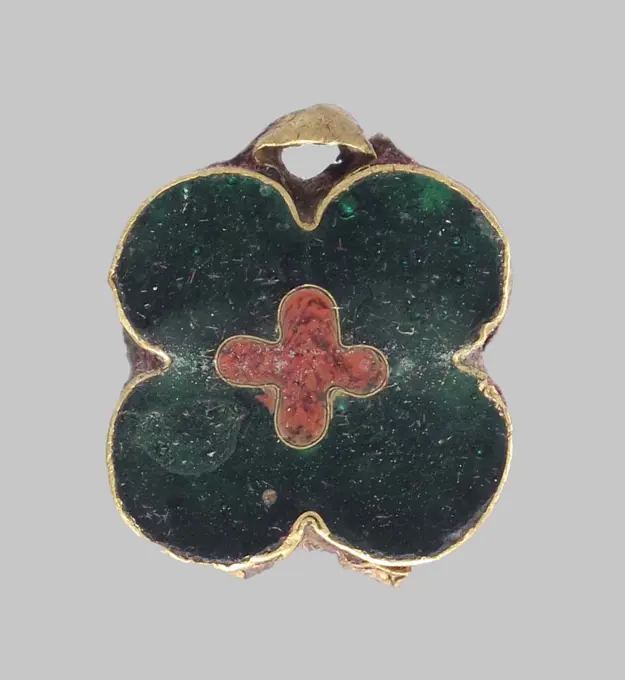
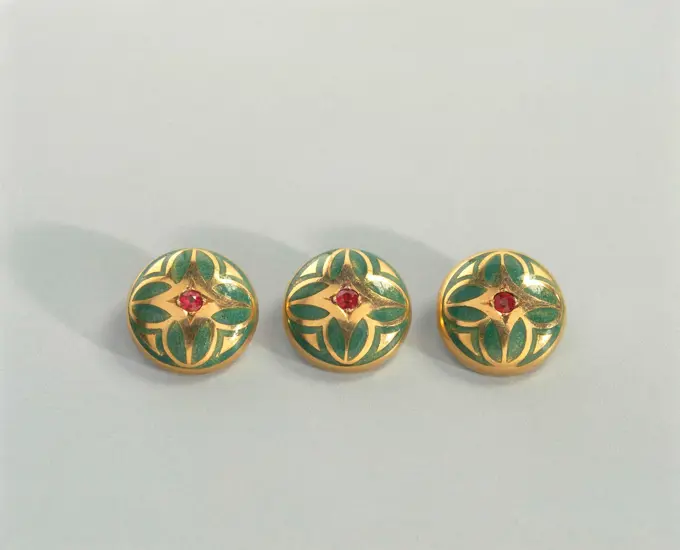
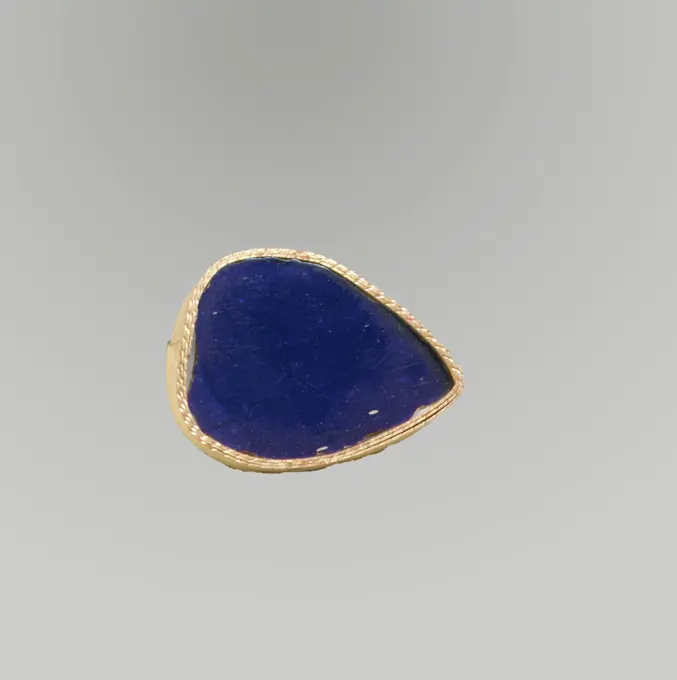
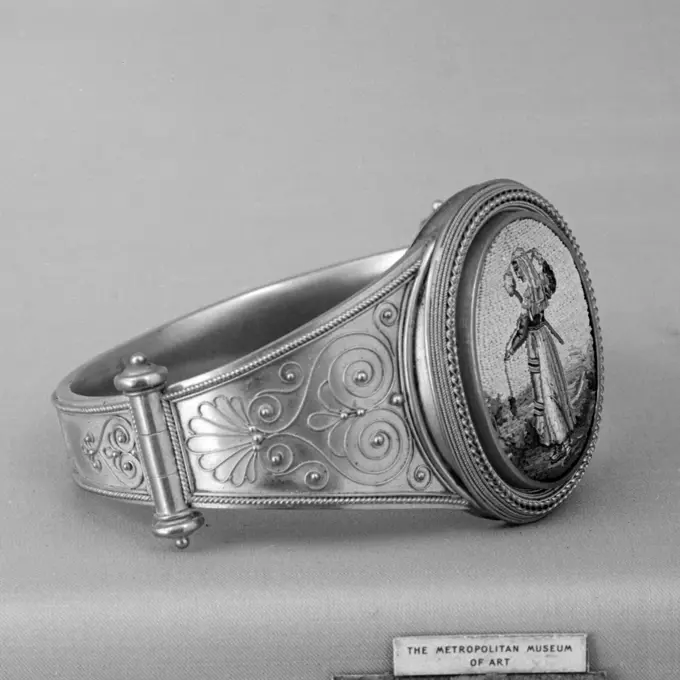
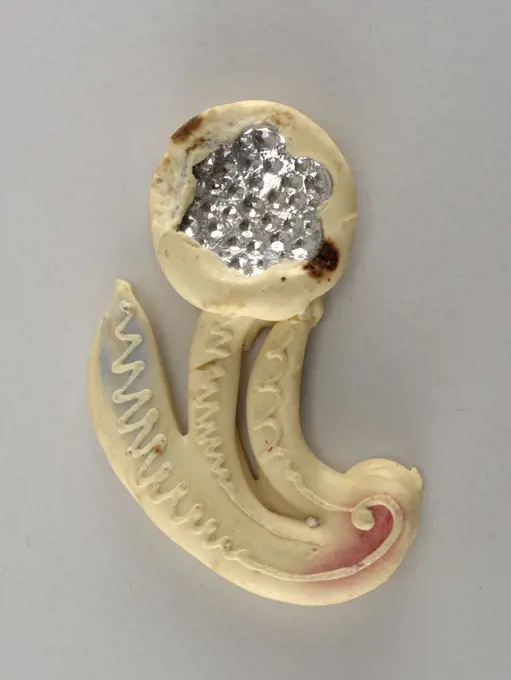
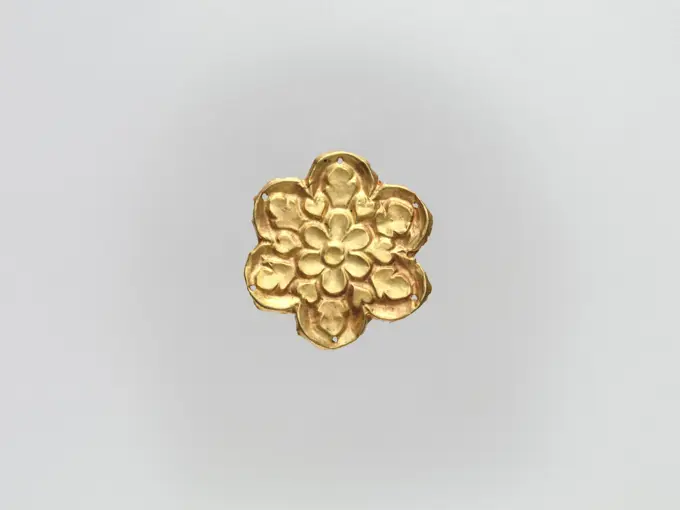
Glass finger ring 3rd-2nd century B.C. Greek Uncertain color, possibly colorless.Ring with large oval bezel and hoop carved out of a single piece of glass; bezel with flat upper surface and sharp edge; hoop D-shaped in cross section with large, irregular oval finger hole.Broken and repaired on one side of bezel and across back of hoop, with chips in outer edge of bezel; pitting of surface bubbles and brilliant iridescent weathering covering all of ring.The large flat bezel once may have been decorated with a painted design.. Glass finger ring 249599Gold ring with carnelian ring stone 5th century B.C. Greek Gold swivel ring with slightly thickened hoop and pivot ends, mounted with a carnelian.. Gold ring with carnelian ring stone. Greek. 5th century B.C.. Gold, sard. Classical. Gold and SilverBuckles, Steel, diamond paste, Two buckles, similar but not a pair. D-shaped buckles with frames of steel with cut paste diamonds; prongs and fastener of steel., France, 19th century, jewelry, Decorative Arts, BucklesGlass mosaic carinated bowl fragment late 1st century B.C.-early 1st century A.D. Roman Rim fragment.Translucent deep purple, light blue, opaque white and red.Outsplayed rim with rounded edge; carinated side, with thick upper convex curve, turned in at bottom.Composite mosaic pattern formed from polygonal sections of two canes, both outlined in white: one in a purple ground with a hollow rosette pattern of purple rods outlined in white with a central red rod within a white circle, and the other in a purple ground with a hollow rosette pattern of purple rods outlined in white with a central red rod within a blue circle.Polished interior; pitting of surface bubbles on interior; dulling, pitting, and weathering on exterior, outer edge of rim, and jagged edges.. Glass mosaic carinated bowl fragment 257369Glass pendant ca. 2nd-3rd century A.D. Roman Pear-shaped glass pendant, translucent blue green in color. Probably used as an earring.. Glass pendant. Roman. ca. 2nd-3rd century A.D.. Glass. Imperial. GlassBrooch 1885-1900 European. Brooch 104865Ring with Twisted Coil Motif Second half of the 8th-second half of the 10th century Indonesia (Java). Ring with Twisted Coil Motif. Indonesia (Java). Second half of the 8th-second half of the 10th century. Gold. Central Javanese period. JewelryBumpShoe buckles 18th century French. Shoe buckles 90145Loop. Flat strip with leaf garland patternGold and copper alloy bracelet with lion-head finials. Culture: Cypriot. Dimensions: Diam.: 3 1/8 in. (7.9 cm). Date: 5th century B.C..With heads of lions on the ends. Museum: Metropolitan Museum of Art, New York, USA.Fragment naszyjnika z amuletów (26 sztuk). unknown, authorRing 9th-11th century Excavated at Nishapur, this ring is one of very few silver objects to survive from the medieval period, as silver was often melted down to create currency. Turquoise deposits near Nishapur were exploited to create beautiful jewels, such as this one. According to eleventh-century polymath and natural philosopher Al-Biruni, turquoise was believed to dispel the harmful effects of the evil eye. This ring therefore would have served both as a talisman, as well as an ornament meant to adorn the wearer.. Ring 449887Ear Ornament last quarter of the 10th-last quarter of the 15th century Indonesia (Java). Ear Ornament. Indonesia (Java). last quarter of the 10th-last quarter of the 15th century. Gold. Eastern Javanese period. JewelryGold leaf bracelet, from the treasure of Nejzac. Jewellery. Mongolian Civilization, 14th Century.Pan Battling a Goat; Attributed to Sostratos or Workshop (Greek , about 25 - 1 B.C.); 25 - 1 B.C; Cameo: sardonyx; ring: gold; 2.3 × 1.6 × 0.4 cm (7,8 × 5,8 × 3,16 in.)Ribbon and ScrollOrnamentPair of Ear Ornaments, c. 500-200 BC. Peru, North Highlands, Chavín de Huantar(), Chavín Style (1000-200 BC). Hammered and cut gold; diameter: 9.6 cm (3 3/4 in.); overall: 2.6 cm (1 in.).Heart Scarab of Neferkhawet. Dimensions: h. 4.6 cm (1 13/16 in); w. 6.5 cm (2 9/16 in); d. 2.2 cm (7/8 in). Dynasty: Dynasty 18, early. Reign: reign of Thutmose I-early sole Thutmose III. Date: ca. 1504-1447 B.C.. Museum: Metropolitan Museum of Art, New York, USA.Glass mosaic fragment late 1st century B.C.-early 1st century A.D. Roman Thin-walled body fragment.Translucent pale blue green appearing semi-opaque greyish blue, translucent purple, opaque white and brick red, and colorless.Very shallow convex curving side.Mosaic pattern formed from polygonal sections of two canes: one outlined with a thick band in blue in a colorless ground streaked with purple, containing a circle of white dots and a blue rod at center surrounded by a red circle, and the other in a purple ground with a scatter of white rods.Pinprick bubbles; polished exterior; pitting of surface bubbles; dulling, pitting, and iridescent weathering on interior and edges.. Glass mosaic fragment 257304Goldsmith's art, Germany, 20th century. Art Deco style gold clip set with gems, circa 1925.Pair of Sword-Grip Ornaments (Menuki) 18th century Japanese Menuki are a pair of ornamental sword fittings attached to either side of a sword hilt.. Pair of Sword-Grip Ornaments (Menuki). Japanese. 18th century. Gold. Sword Furniture-MenukiDish, Meissen Porcelain Manufactory, German, active from 1710 to the present, hard paste porcelain, gold, White, with stylized palmettes in gilt. A) circular bowl, the flaring rim with vine motif. B) low cover with knob handle, rests inside rim bowl. C to F are curved to form a circle around the bowl., Germany, ca. 1810, ceramics, Decorative Arts, dish, dishPair of Bracelets. .Sword pommel with Mutius Scaevola and Roman scene, by Master IO.F.F., 15th Century, gilded bronze, natural brown patina. Italy: Lazio: Rome: National Museum of Palazzo Venezia: Inv. P.V. 11536. Whole artwork. Roman scene. Men podium altar table stick lance/spear frameOrnament with mask motif 8th century China. Ornament with mask motif. China. 8th century. Earthenware with three-color (sancai) glaze. Tang dynasty (618-907). CeramicsFragment ca. 1150-ca. 1250 European or Middle Eastern. Fragment 694351Anklet A.D. 100-250 Meroitic Period Artists of the Meroitic culture were noted for their fine metalworking skills. The Museum owns none of the exquisite inlaid cloisonné and gold jewelry produced during this period, but this heavy bronze anklet with its finely incised decoration gives some idea of their talent for working bronze, a much harder metal than gold.. Anklet 548351Spoon (Sweden); Made by Hans Henriksson Wettersten (active, 1682 - 1726); silver; L x W x D: 13.6 x 5 x 2.4 cm (5 3/8 x 1 15/16 x 15/16 in.)One of a Group of Bone Ornaments Japan. One of a Group of Bone Ornaments. Japan. Bone, vertebrae, claw. Final Jmon period (ca. 1000-300 B.C.). BoneStirrup-Shaped Ring with Oblong Bezel with Nagari Script 8th-early 10th century Indonesia (Java). Stirrup-Shaped Ring with Oblong Bezel with Nagari Script 50384Finger Ring 7th century Frankish. Finger Ring 465255 Frankish, Finger Ring, 7th century, Gold, garnet cabochon, Overall: 13/16 x 9/16 x 5/16 in. (2.1 x 1.5 x 0.8 cm) bezel: 1/4 x 5/16 x 3/8 in. (0.7 x 0.8 x 0.9 cm). The Metropolitan Museum of Art, New York. Gift of J. Pierpont Morgan, 1917 (17.192.192)Szpilka with Grewegs in the shape of rosettes;  End of the 17th century; 19th century (1890-00-00-1900-00-00);baroque (style), rosette (ornament), purchase (provenance)Bracelet with Holy Figures 5th-7th century This popular bracelet type often included an invocation for the protection of the wearer. Here eight medallions show angels and holy figures who stand in the orant (prayer) pose or carry crosses and censers. One medallion may show the angel Gabriel appearing to the Virgin (the Annunciation).. Bracelet with Holy Figures 446227Earring, One of a Pair 11th century These crescent-shaped (hilal) gold earrings have been fabricated with filigree openwork, beaded granulation, and several loops around the perimeter and interior which once attached gems. These characteristics, along with the hemispherical ornament, are typical of the opulent jewelry from the Fatimid Period (909-1171). The Fatimids ruled a kingdom that stretched across North Africa, the Levant and Hijaz, and as far south as Nubia, modern day Sudan, where it maintained control over the important gold mines which provided the raw materials required to make these sumptuous jewels.. Earring, One of a Pair. 11th century. Gold; wire, strips, filigree, and granulation. Made in Egypt. JewelryOjime 19th century Japan. Ojime. Japan. 19th century. Edo period (1615-1868). Ojime. Schrennierlorgnet with frame of silver in stem from turtle surround with flowers and seed beads in silver.Emboss brass design fitting on wooden photo frame, Jodhpur, Rajasthan, India Copyright: xSafatxAli/DinodiaxPhotoxPendant in the form a lion's head 4th century B.C. Greek. Pendant in the form a lion's head. Greek. 4th century B.C.. Gold. Late Classical. Gold and SilverScarab. UnknownLoop. An inner row of large stones, an outside row of small steel stones.Pair of boat-shaped earrings with filigree and granule decoration A.D. 1st-2nd century Roman Period Boat-shaped, sometimes called leech-shaped earrings, are a common type in Egypt and the eastern Mediterranean world, and few are well-dated.This earring with the addition of some granulation and and filagree decoration is likely to date from the late Ptolemaic Period into the second century AD.. Pair of boat-shaped earrings with filigree and granule decoration 566864Ring Figure of Serpent Uto ( ) 1390 BCE Egypt. Faience . Ancient EgyptianCarving in the Form of a Purse. Culture: China. Dimensions: H. 1/2 ×W. 2 × L. 3 in. (1.3 × 5.1 × 7.6 cm)Other (With tassel and ornament): 1 × 8 1/4 in. (2.5 × 21 cm). Date: 18th century. Museum: Metropolitan Museum of Art, New York, USA.Necklace with a scares and a thigh;  around 1650 BCE-OK. 1800 CE (-1655-00-00-1805-00-00);Scen.Gal.Eg.Scaraboid: Crouched Human Figure Shown in Profile. Egyptian. Date: 1550 BC-1069 BC. Dimensions: 1 × 0.6 × 0.5 cm (3/8 × 1/4 × 3/16 in.). Glazed steatite. Origin: Egypt. Museum: The Chicago Art Institute, Chicago, USA. Author: Ancient Egyptian.PULSERA DE PLATA DE EPOCA CALIFAL PERTENECIENTE AL TESORILLO DE GARRUCHA FECHADO ENTRE FINALES DEL SIGLO X Y PRINCIPIOS DEL SIGLO XI. Location: INSTITUTO VALENCIA DE DON JUAN-COLECCION. MADRID. SPAIN.Scarab Incised with Nefer Sign and Scrolls ca. 1760-1670 B.C. Middle Kingdom The majority of design scarabs of the late Middle Kingdom (late Dynasty 12-Dynasty 13, ca. 1850 -1640 B.C.) are decorated with symmetric compositions of protective hieroglyphs and/or scrolls. This scarab shows the sign for good and beautiful (nefer) with a decorative scroll design.. Scarab Incised with Nefer Sign and Scrolls. ca. 1760-1670 B.C.. Blue glazed steatite. Middle Kingdom. From Egypt, Memphite Region, Lisht North, Cemetery, MMA excavations. mid Dynasty 13Scarab; Etruria; 4th century B.C; Carnelian; 0.9 × 1.4 × 1.1 cm (3,8 × 9,16 × 7,16 in.)Etruscan gold earrings dated from 4th -3rd Century BCTorque, 12 x 10 3/4 x 1 in. (30.48 x 27.31 x 2.54 cm), Silver, ChinaSygnet ringGold object by anonymous artist, 4th-5th century, Russia, Moscow, State United Museum Centre in the Kremlin, L 22Bead Necklace. UnknownDecorated torque. Brass. 19th century. Benin culture. Africa. Museum of the Americas. Madrid, Spain. String of Beads 301 CE-500 CE Egypt. Perhaps used for personal adornment or decoration within the home, these beads are individually patterned with black stripes. It is possible that the abstract shapes had a symbolic or protective meaning in addition to providing a pleasing design.. Glass . Ancient RomanPendant with Zoomorphic Motif 19th-20th century Indonesia (Java, Outer Islands ?). Pendant with Zoomorphic Motif. Indonesia (Java, Outer Islands ?). 19th-20th century. Gold. JewelryVessel shaped earrings with twisted wire upper parts A.D. 3rd century or later Roman Period. Vessel shaped earrings with twisted wire upper parts 547935Portrait of a lady late 18th century possibly British. Portrait of a lady. possibly British. late 18th century. Porcelain. Ceramics-PorcelainKetoh, c. 1930, 3 1/2 in. (8.89 cm), Leather, silver, turquoise, United States, 20th centuryScarab. UnknownFinger Ring with Intaglio Depicting Eros 200 CE-300 CE Rome. Gold, banded stone or glass . Ancient RomanWinged Figure EarOrnamentPair of cufflinks and two on -board nodes, anonymous, c. 1890 - c. 1910 Facet sharpened rock crystals with blue sapphals put in gold and silver. Austria-Hungary gold (metal). silver (metal). sapphire (mineral). grinding / faceting Facet sharpened rock crystals with blue sapphals put in gold and silver. Austria-Hungary gold (metal). silver (metal). sapphire (mineral). grinding / facetingGold Diadem with Glass Inlays; Eastern Mediterranean; 50 - 25 B.C; Gold, garnet, and glass; 37 cm (14 9,16 in.)Ornament, Christmas Tree (USA); doughGold wreath of oak leaves and flowers. Late 4th early 3rd century BCRing Brooch first half 14th century Western European Although a large amount of inexpensive jewelry was manufactured during the Middle Ages, little has survived, because of the scant value placed upon it. Many examples, including this piece, were lost accidentally and later unearthed in excavations.. Ring Brooch 471818Accessory 1862-80 American. Accessory 173611Scarab Incised with Circles and Lotus Flowers ca. 1981-1850 B.C. Middle Kingdom The underside of the scarab shows a decorative pattern of cicrles, all linked to a circle in the center, together with two large lotus flowers. The back and sides of the scarab are also finely incised and show features that are characteristic for the first half of Dynasty 12.. Scarab Incised with Circles and Lotus Flowers 545243Pair of Ear Ornaments Composed of Beads Second half of the 8th-second half of the 10th century Indonesia (Java). Pair of Ear Ornaments Composed of Beads. Indonesia (Java). Second half of the 8th-second half of the 10th century. Gold. Central Javanese period. JewelryNecklace and bracelet, stone beads of variscite. Middle Neolithic. Bovila de Can Torrrents, Catalonia, Spain. Archeological Museum of Catalonia.Ear Ornament with GeometricFormsAnimal pendant A.D. 1-1000 Central American Isthmus This pendant depicts an animal, with features of a bird and a mammal. The animal is shown at rest, with its front legs and feet slightly elevated, suggesting alternatively that it is preparing to move. The object is solid and was made by lost-wax casting. Artists first designed the object as a wax model, all as one piece (please see Metropolitan Museum of Art 2008.569.13a, b for a more detailed discussion of lost-wax casting). The creature has protruding eyes in the shape of cylinders with rounded ends. It has a downturned nose and there is a wide, raised band of metal that extends from the tip of the nose towards the back of the animal, blending in with its tail. This band has three incisions, most likely made by the artist during the construction of the wax model. The incisions suggest the texture of the animals skin or pelage. The animal has four legs and feet. The legs project downward and diagonally and in all cases are inward fEarrings disc-shaped ears. 6th-7th century BC. Circles plant decoration and central dimple. Gold. Filigree and granulation. Louvre museum. Paris. France.Ring. Iran, circa 1350-650 B.C.. Jewelry and Adornments. BoneButton, silver, colored glass and turquoise, two buttons of silver filigree set with pieces of colored glass - b/: convex button; turquoise in top; red, blue, green and purple glass in sides - c/: flat button with red glass in center, a turquoise at each corner., France, 19th century, costume & accessories, Decorative Arts, ButtonMountFrogpendant, A.D.700-1550, Gold, 2.8 × 2.1 cm (1 1/8 × 13/16in.), Made in Costa Rica, Costa Rica,Diquis, 8th-16thcentury, JewelryStirrup 10th-12th century West Slavic Horses had great importance in Slavic society, in both its social and religious aspects. Equestrian equipment, like stirrups, spurs and bits, are regularly found in their burials, even after their Christianization, among the goods warriors wanted to bring with them to the afterlife. The elite would sometimes even be accompanied by sacrificed horses, a meaningful practice at that time, considering the high economic value of horses.. Stirrup. West Slavic. 10th-12th century. Iron. probably East Prussia. Equestrian Equipment-StirrupsSpiral Motif, Gorham Manufacturing Company, Providence, Rhode Island, USA, founded 1818, Silver, Rectangular, curved sides and corners, featuring undulating lines with spiral motif in lower right corner, identical motifs on reverse, spiral is situated on lower left. Lid hinged on side. Striker on bottom., Providence, Rhode Island, USA, copyrighted 1888, containers, Decorative Arts, Matchsafe, MatchsafeButton, 500s. Byzantium, early Byzantine period, 6th century. Rock crystal with a garnet mounted in a gold granulated star; diameter: 3.1 cm (1 1/4 in.).Fibula Fragment. UnknownTwo fragments of glass cup or drinking glass, conical, sharpened and decorated with radgraving, mug drinking glass drinking utensils tableware holder soil find glass, shaped blown glass engraved Drinking glass. Colorless and clear glass Slight discoloration through irisation. Conical model Fully decorated. Carved round surfaces around which radishes and leaf motifs are arranged as frame. Archeology Valckensteyn Poortugaal Albrandswaard drink wine beer serve Soil discovery: castle Valckensteyn in Poortugaal now Albrandswaard 1961-1962.Armlet, 1800s. India. Silver gilt with semiprecious stones and enamel; overall: 19.8 x 1.6 cm (7 13/16 x 5/8 in.).Bowl. unknown, craftsmanGolden Letter H on a white backgroundTieredFinialTieredFinialSalt 18th century Probably by R. Eva. Salt 208968Fragment of a Flower 11th century French. Fragment of a Flower 464540 French, Fragment of a Flower, 11th century, Cloisonn enamel, gold, Overall: 1/4 x 1/4 x 1/16 in. (0.6 x 0.6 x 0.1 cm). The Metropolitan Museum of Art, New York. Gift of J. Pierpont Morgan, 1917 (17.190.668)Applique in the Shape of an Ivy Leaf Calyx. Unknown. Button from gold and light green email, with a ruby.Glass monochrome fragment 1st half of 1st century A.D. Roman Translucent deep cobalt blue, layered with white or pale blue.Inlay fragment.Flat upper and underside; chipped edges, forming tear-drop shape.Polished upper side; dulling and creamy weathering on underside; iridescent weathering on chipped edges.. Glass monochrome fragment. Roman. 1st half of 1st century A.D.. Glass; cast. Early Imperial, Julio-Claudian. GlassBracelet ca. 1870-90 Italian. Bracelet 187493 Italian, Bracelet, ca. 187090, Gold, marble, 3 5/8  2 7/8  2 1/2 in. (9.2  7.3  6.4 cm). The Metropolitan Museum of Art, New York. Bequest of Maria Morgan, 1892 (93.6.3)Pair of Ear Flares 11th-13th century Lambayeque (Sicán). Pair of Ear Flares. Lambayeque (Sicán). 11th-13th century. Gold. Peru. Metal-OrnamentsBROCHE CON FORMA DE PAJARO PROCEDENTE DE FRANCIA - 1935/39 - BISUTERIA - DISEÑO DE CHANEL. Location: PRIVATE COLLECTION."Fern and Daisy Perfume Bottle No. 2661". Tiffany and Company; American, founded 1837; New York, New York. Date: 1870-1875. Dimensions: 12.2 × 3 cm (4 3/4 × 1 1/8 in.). Silver. Origin: New York City. Museum: The Chicago Art Institute, Chicago, USA. Author: Tiffany and Company.Ornament, Christmas tree, Dough, Circular flower with tin foil in center and with stem and leaf., USA, 1850-99, ornament, Decorative Arts, Ornament, Christmas treeFlower-Shaped Clothing Plaque 7th-9th century China (Xinjiang Autonomous Region, Central Asia) The nomadic communities of Central Asia used such plaques to embellish clothing and horse trappings. As these nomadic cultures herded animals and were constantly moving, their artistic production was expressed in portable objects that marked the wearers status and wealth. The outstanding preservation of these fragile ornaments suggests they were used in conjunction with burials, where the body was aggrandized with valuable textiles and augmented with gold. Although it is difficult to date and place these objects geographically, their presence in Central Asia and has a long, established history.. Flower-Shaped Clothing Plaque 65216