Antique Keys with Unique Designs

A collection of antique keys, including heart-shaped handles and intricate designs, reflecting historical significance and craftsmanship in metalwork.
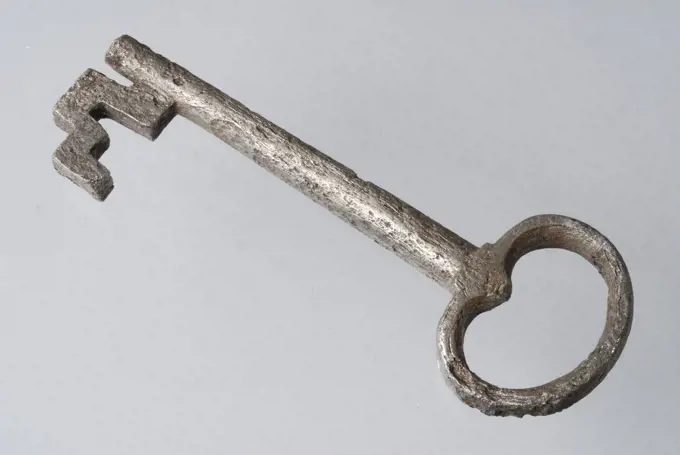
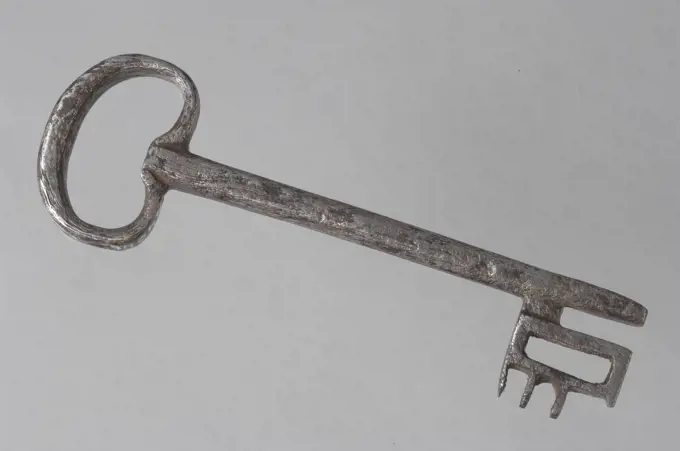
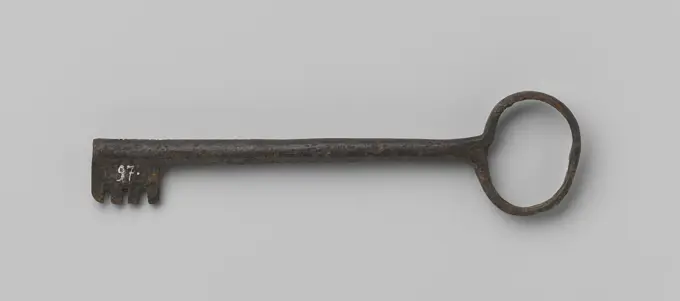
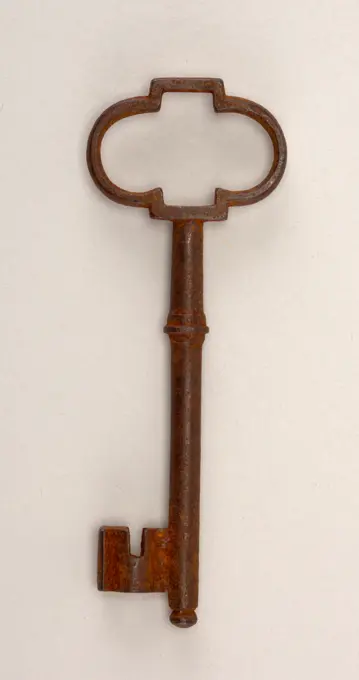
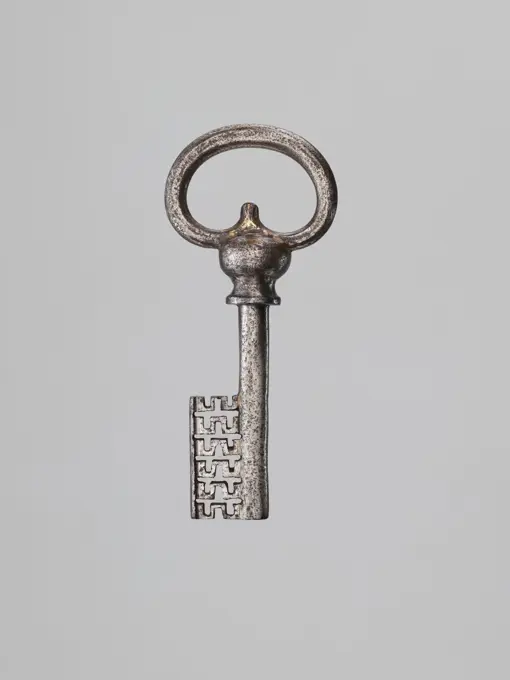
Key with oval handle and beard, key iron commodity founding iron metal, forged archeology closing door theft prevention property
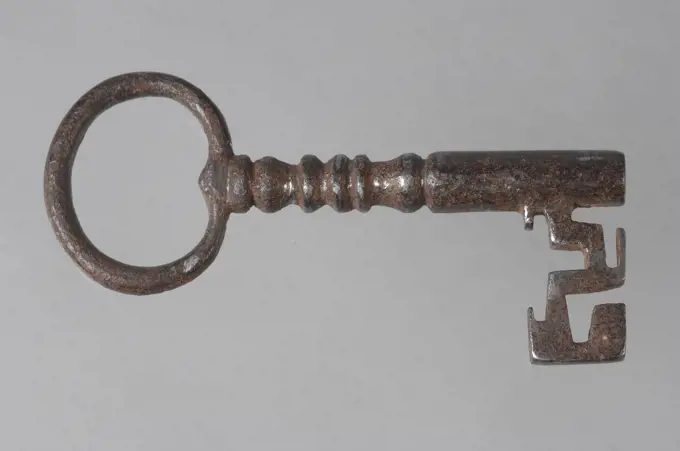
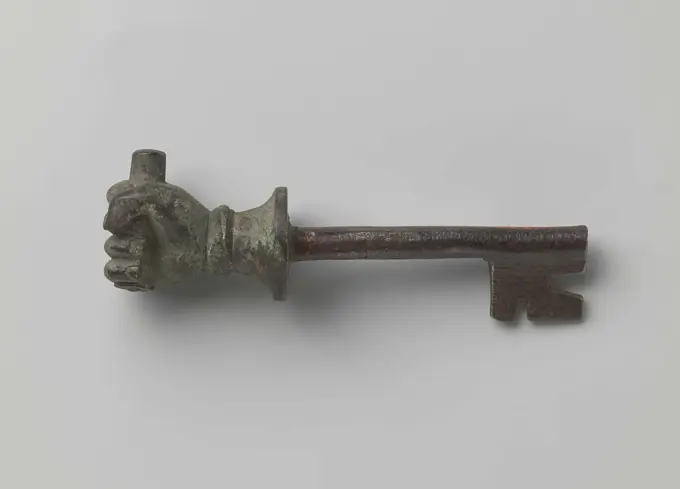
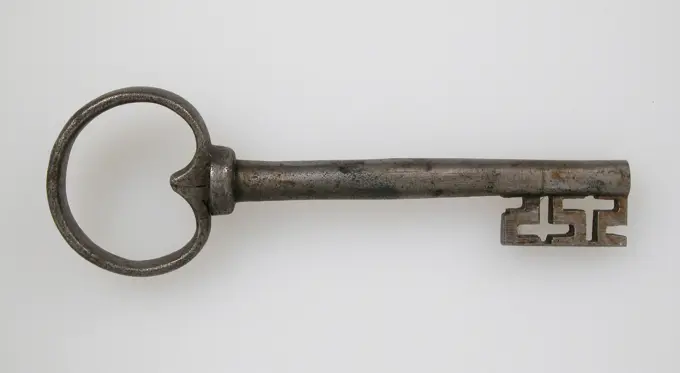
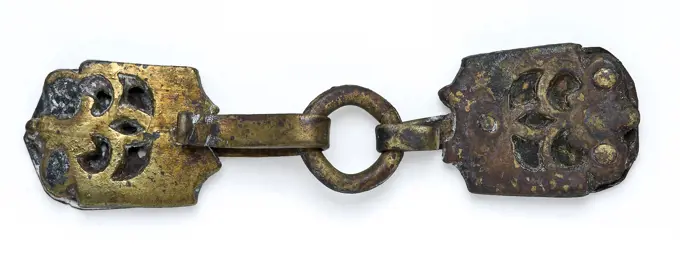
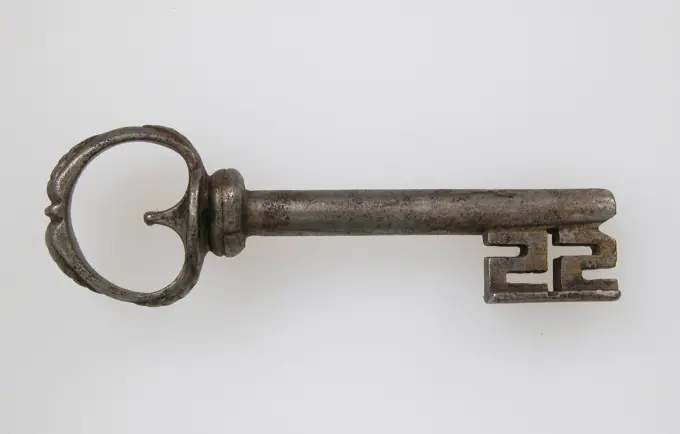
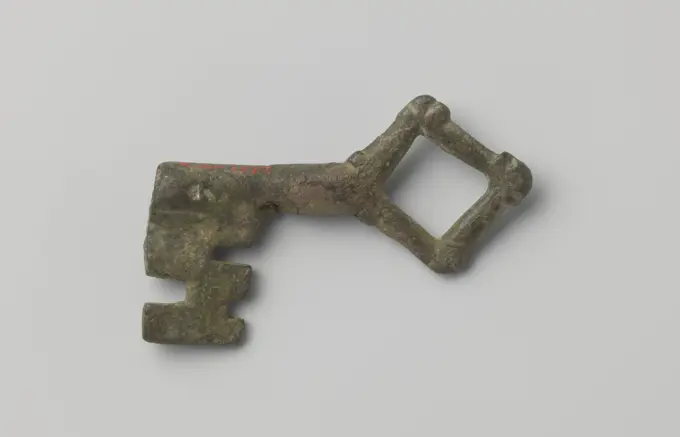
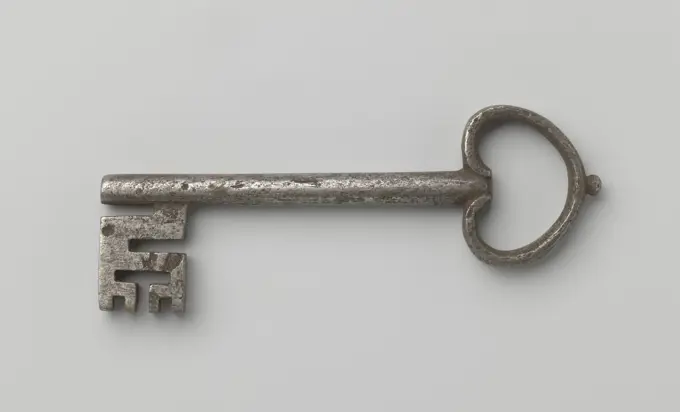
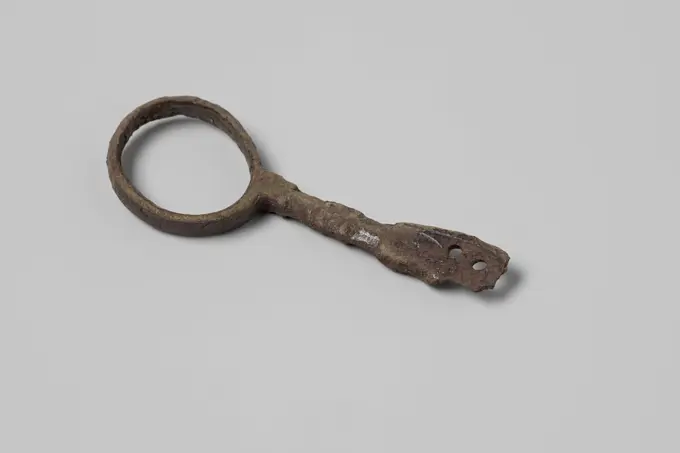
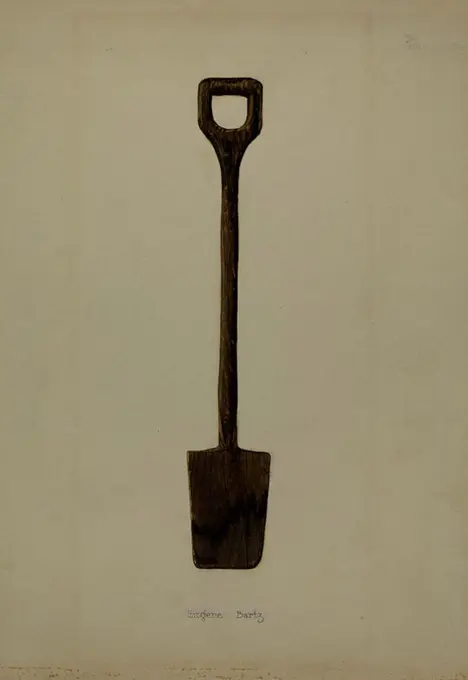
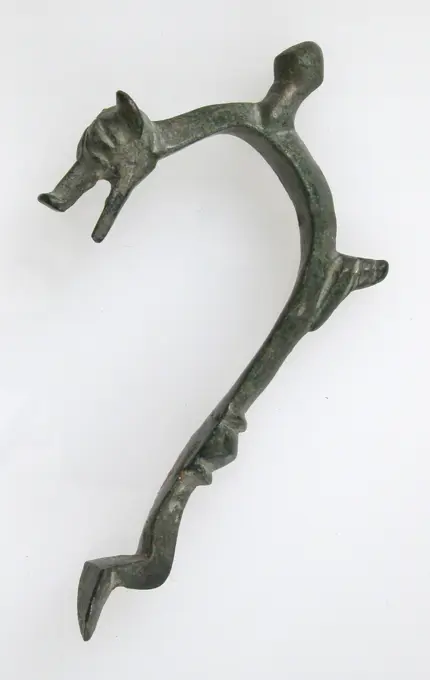
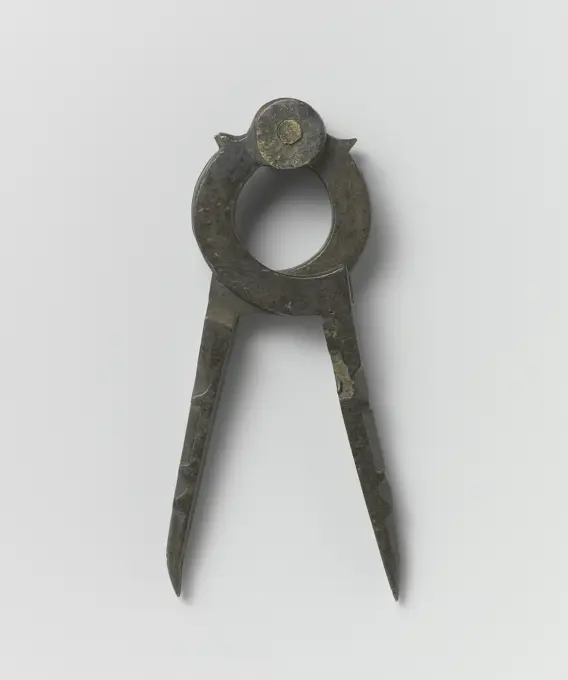
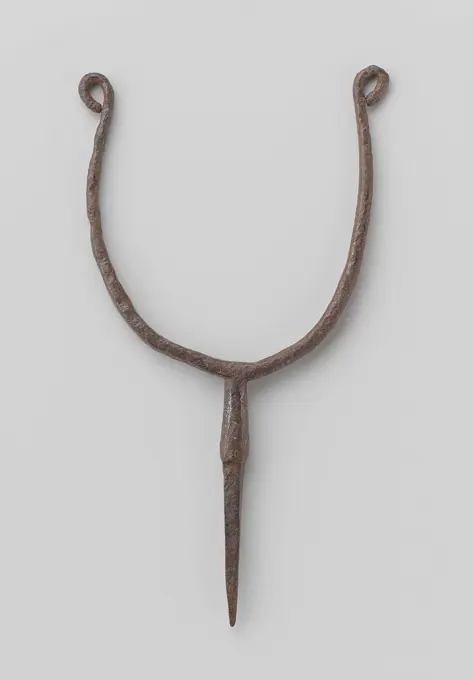
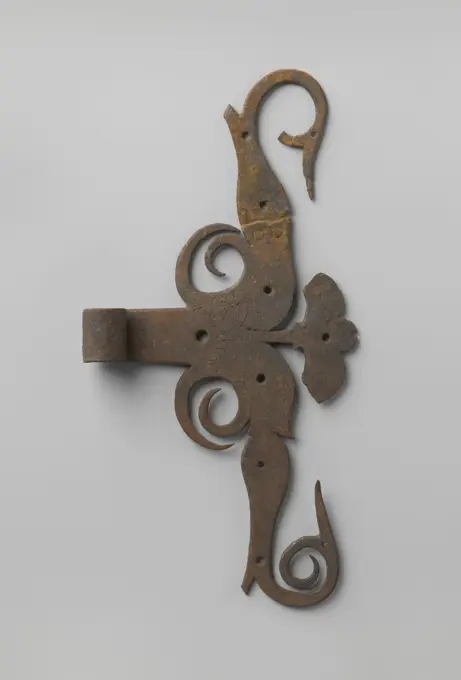
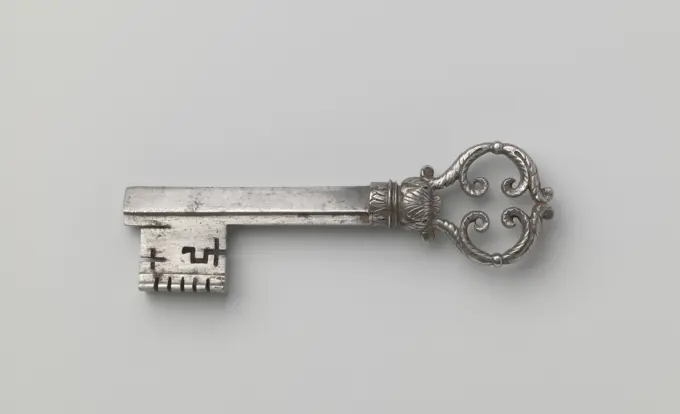
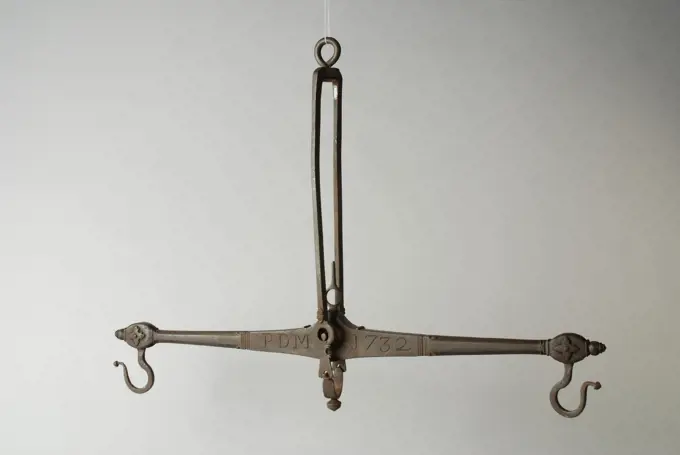
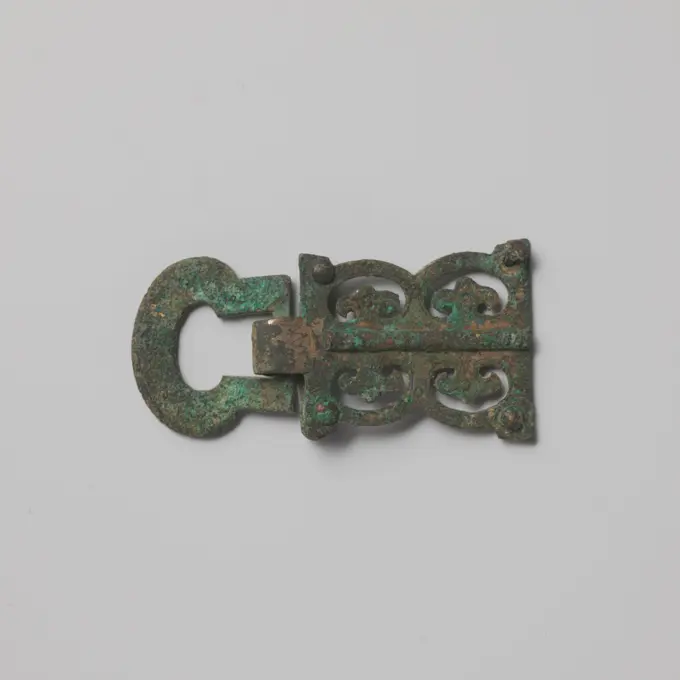
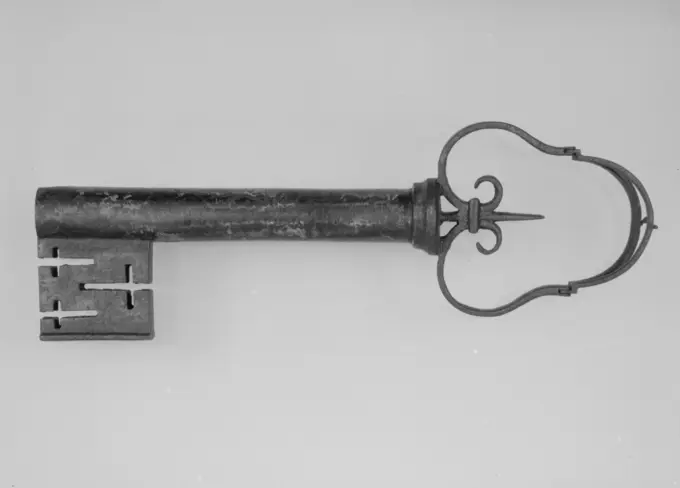
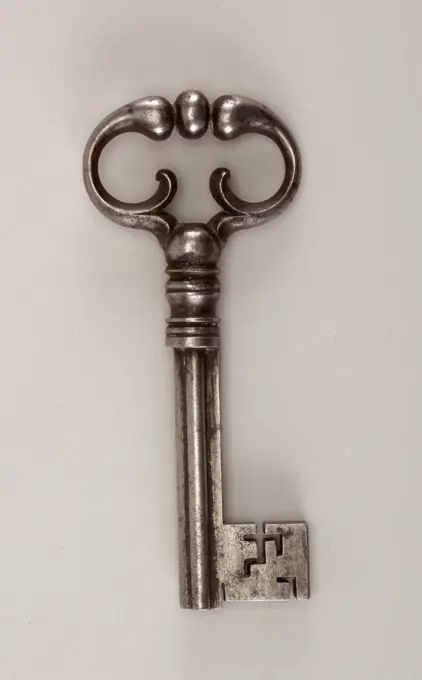
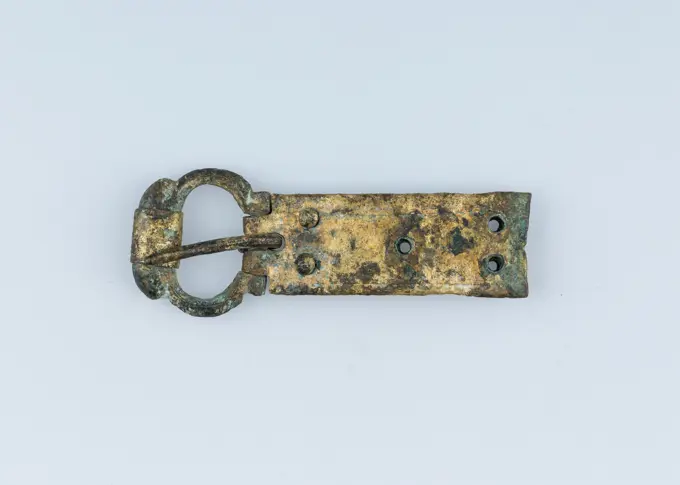
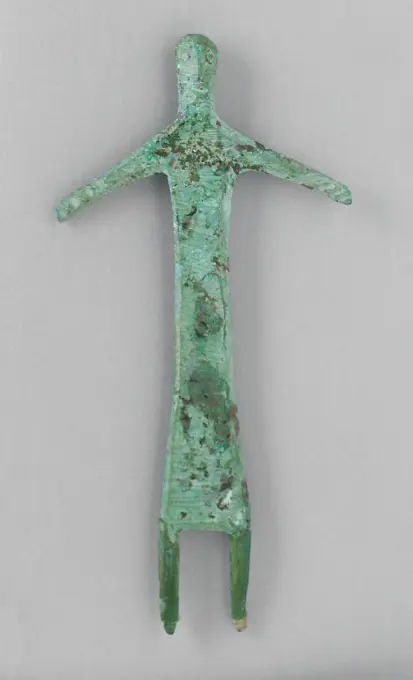
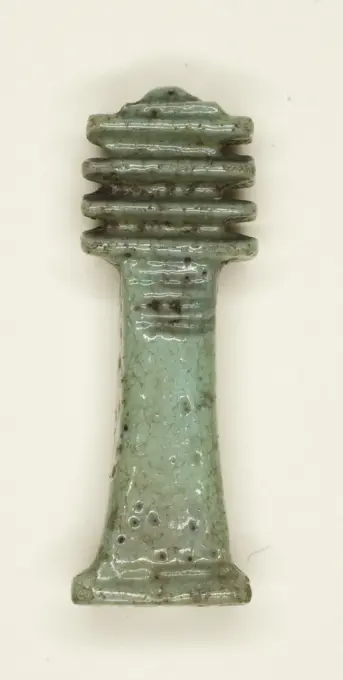
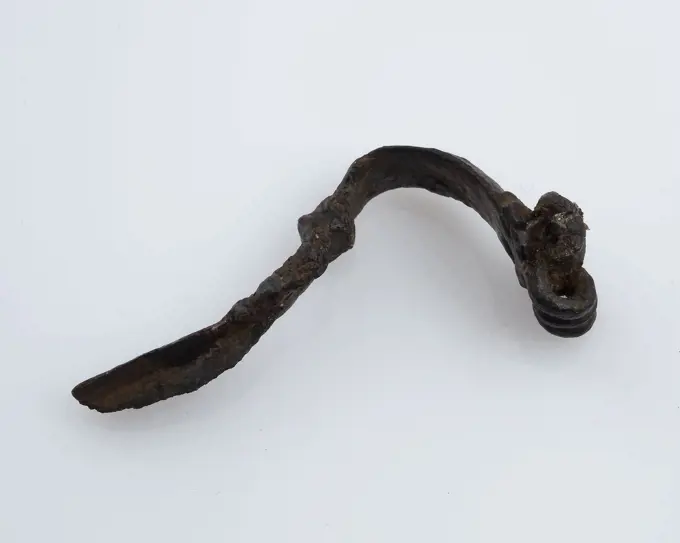
Key 14th century German. Key 468919Iron key with heart-shaped eye, massive key handle and cruciform beards in beard, key iron value foundations iron, hand forged Key with heart-shaped eye (handle) solid rectangular key handle cross-shaped notches (horizontal and vertical) in key beard and asymmetrical keyhole cross-section Archeology Rotterdam Delfshaven hang- en-sluitwerk archaeological find in the soil found in the ground in 1924 during excavation work for the Lage Erfbrug in Delfshaven.Iron key with heart-shaped eye, solid decorated key handle and cruciform beards in beard, key iron iron, hand-forged Key with heart-shaped key eye (handle) solid key handle with different profile edges cruciform key-shaped key (horizontal and vertical) and symmetrical keyhole cross-section hingesPipe key. Pipe key with oval handle consisting of leaf volutes, above covered by a curved rod. The key breast is facetically.Pipe key. Pipe key with handle in the shape of a fist, a broken staff holding. Hold from bronze, beard and shaft of iron.Key with oval handle and beard, key iron commodity founding iron metal, forged archeology closing door theft prevention propertyKey; 1909-2-273Sleutel.Key with diamond-shaped eye, long, downrighted shaft and t-shaped beard.Key 15th century German The decoration of Gothic iron locks and keys was often elaborate and of the highest standard of workmanship. The motifs were frequently drawn from Gothic architecture, reproducing on a miniature scale complicated tracery patterns and even tiny statuettes. A number of these tiny locks were compound, with some of the mechanisms concealed from view, and required two or even three keys used in sequence to open them. It has been suggested that the greatly expanded use of locks on doors, or coffrets and other types of storage chests was a result of the increasing urbanization of life and the new emphasis on material wealth and private ownership which developed in the late Middle Ages.. Key 468821Key 14th century German. Key 463347Sleutel.Key with L-shaped beard whose round handle encloses a heart.Belt buckle, two openwork belt tongs attached to ring, belt attachment accessory ground find copper metal, flat) Two double attachment plates attached to ring One attachment plate is attached with closed eye and the other with the aid of hook archeology Rotterdam confirming rail tunnel Soil discovery: trajectory Rotterdam rail tunnel.Key 14th century German. Key 463370Key 15th century German The decoration of Gothic iron locks and keys was often elaborate and of the highest standard of workmanship. The motifs were frequently drawn from Gothic architecture, reproducing on a miniature scale complicated tracery patterns and even tiny statuettes. A number of these tiny locks were compound, with some of the mechanisms concealed from view, and required two or even three keys used in sequence to open them. It has been suggested that the greatly expanded use of locks on doors, or coffrets and other types of storage chests was a result of the increasing urbanization of life and the new emphasis on material wealth and private ownership which developed in the late Middle Ages.. Key 46882739 keys from the collection of Emmanuel Vita Israël, 1200 - 1300 Key with an eye consisting of a square that stands on a short shaft with a corner.  bronze (metal) Key with an eye consisting of a square that stands on a short shaft with a corner.  bronze (metal)Key. Dimensions: L. 3 1/16 (7.8 cm). Date: 9th-10th century.This key, which came with a ring attached, terminates in a flat disk with two square holes and a square indentation that would have served to release a lock. Museum: Metropolitan Museum of Art, New York, USA.Plaque. Western Inner Mongolia, 5th-3rd century B.C.. Sculpture; plaques. Bronze, castBelt Buckle 7th century East Mediterranean. Belt Buckle 468709Key, c. 1600 - c. 1699 Key with a bean -shaped eye, on which a button.  iron (metal) Key with a bean -shaped eye, on which a button.  iron (metal)Pipe wrench. Pipe wrench with long shaft and oval eye. The small beard runs out in three teeth.Crossbow Brooch. Culture: Roman. Dimensions: Overall: 3 1/16 x 1 5/16 x 13/16 in. (7.8 x 3.3 x 2 cm). Date: 2nd-3rd century (). Museum: Metropolitan Museum of Art, New York, USA.Independent spring fibula. Copper alloy. 1st century. Paris, Carnavalet museum. 51550-10 Staple, copper alloy, attachment, Gallo-Roman time, spring fibula, Gallo-RomanPin from the wreck of the East Indiesman Hollandia. Tools and Instruments, Sewing and Sailmaking, PIN; Fragm or Shaft With Bow, ID. NG 1980-27H3265.Sleutel.Key whose shaft is at the top of vase and turns into a toothed ball. The grip is attached to this, consisting of two C-shaped leaf volutes, connected by a ball and downwards. Beard violated.Sleutel.Three key with a triangular eye, crowned by a button. The round capital is grooved. The shaft ends in a profiled point. Beard bent.39 keys from the collection of Emmanuel Vita Israël, c. 1200 - c. 1300 Pipe key with four -pass -shaped handle and whose shaft is grooved.  bronze (metal) Pipe key with four -pass -shaped handle and whose shaft is grooved.  bronze (metal)Pipe key. Pipe key whose handle is composed of leaf volutes. Key breast grooved, small beard. Handle and key chest of copper, pipe and beard of iron.Key 15th-16th century German The decoration of Gothic iron locks and keys was often elaborate and of the highest standard of workmanship. The motifs were frequently drawn from Gothic architecture, reproducing on a miniature scale complicated tracery patterns and even tiny statuettes. A number of these tiny locks were compound, with some of the mechanisms concealed from view, and required two or even three keys used in sequence to open them. It has been suggested that the greatly expanded use of locks on doors, or coffrets and other types of storage chests was a result of the increasing urbanization of life and the new emphasis on material wealth and private ownership which developed in the late Middle Ages.. Key 463373Key, c. 1600 - c. 1699 Key whose eye is formed by two C-Voluten bold to each other that enclose above a shell and are covered with leaf ornament at the bottom. The shaft runs past the beard in a widening.  copper (metal). gilding (material) gilding Key whose eye is formed by two C-Voluten bold to each other that enclose above a shell and are covered with leaf ornament at the bottom. The shaft runs past the beard in a widening.  copper (metal). gilding (material) gildingCarnavalet museum, medal collectionPijpsleutel.Pipe key with double hook-shaped beard and handle consisting of two inwards curved spirals. Associated with a padlock.Toy Shovel. Dated: c. 1937. Dimensions: overall: 35.2 x 24.6 cm (13 7/8 x 9 11/16 in.) Original IAD Object: 11 1/4" long; 2 1/2" wide. Medium: watercolor and graphite on paper. Museum: National Gallery of Art, Washington DC. Author: Eugene Bartz.Double Birds on Knobbed Pole. Greek; Thessaly. Date: 800 BC-600 BC. Dimensions: 5.8 x 2.7 x 1.0 cm (2 1/4 x 2 1/16 x 3/8 in.). Bronze. Origin: Thessaly. Museum: The Chicago Art Institute, Chicago, USA. Author: ANCIENT GREEK.MountSleutel van brons.Bronze key with hollow pipe, undivided beard, ring with seven holes and a hole in the crowning.KeyBrass coat with brand On the front, hook fastener bottomfound brass metal, cast brass coat hook Curve hook with point above collar. Wall plate with two outstanding ears above the center piece. Decorated with few transverse grooves Inlaid flower mark or decoration Backside of perpendicular pin with drilled-out eye archeology Rotterdam Kralingen-Crooswijk Kralingsche Bos Kralingse Plas hanging up clothing Soil discovery: collected in 1972 at the Kralingse Plas from sprayed-on dredge: metal detector finds and sight finds.Buckle 6th-7th century Byzantine. Buckle 466298Coffer or chest key 17th century probably Northern Italian or possibly French. Coffer or chest key. probably Northern Italian or possibly French. 17th century. Wrought iron. Metalwork-IronPrick Spur (Right) 13th century German The prick spur was the first type of spur to be invented, and it consists of a goad or prick, more or less pointed, connected to side arms or a heel plate. The earliest spurs were probably simple thorns attached at the back of the heel, before they started to be made out of metal in antiquity. Prick spurs were the main type of spurs used in the Middle Ages until the mid-14th century, when they were supplanted by rowel spurs, which appeared in Europe a century before and with which they had cohabitated for a time. As a knights status was closely related to his horse, spurs became one of the symbols of chivalry, and one of the tokens given to him during his knighting.. Prick Spur (Right). German. 13th century. Copper alloy, gold, tin. Equestrian Equipment-SpursPipe key, c. 1400 - c. 1950 Pipe key, so -called "bishop's key" with circular handle, in which a stylized cross is carved and on which there is a square eye. The steel is octagonal, the beard square and open.  bronze (metal) Pipe key, so -called "bishop's key" with circular handle, in which a stylized cross is carved and on which there is a square eye. The steel is octagonal, the beard square and open.  bronze (metal)Handle of Ewer 5th century B.C. Celtic. Handle of Ewer 466243Navigation, anonymous, c. 1590 - c. 1596  Card passer with two legs, each at the top half -circular -shaped and split and hinged that the upper part of the legs in the closed top edge forms a ring. The short leg is pierced and has a slot on the inside. Originally both legs had an iron point. Such a passer was used to adjust distances to the sea card.  brass (alloy) casting / filing  Nova Zembla. Saving HuysMusketvork. Musketvork.Key, c. 1700 - c. 1800 Key with a three -pass -like eye, on both sides of acanthus fillets. The eye is crowned by a button. The beard is Z-shaped.  silver (metal) Key with a three -pass -like eye, on both sides of acanthus fillets. The eye is crowned by a button. The beard is Z-shaped.  silver (metal)Household effects, anonymous, c. 1590 - c. 1596  Copper crane of a wine or beer vessel whose tube of the tap runs backwards. The tap is massive and keeps the tap opened over. The handle of the crane has the shape of a pointed three -pass and the mouth of the tap is rectangular of cross -section and has the circumference of a stylized animal head. The crane is identical to NM-7806-1. Historical: a combination of crane and tap to tap beer or wine from wooden barrels. Bronze and yellow cranes have been found in the Netherlands since the fifteenth century.  copper (metal). brass (alloy) casting  Nova Zembla. Saving HuysDeurhengsel, c. 1400 - c. 1950 A door tixel  iron (metal) A door tixel  iron (metal)Key; 1904-23-4Arrowheads, needles, hooks and harpoons. Culture: Japan. Dimensions: W. 1 1/2 in. (3.8 cm); L. 3 3/8 in. (8.6 cm). Museum: Metropolitan Museum of Art, New York, USA.Hairpin with a Boar. Cambodia, circa 12th century. Tools and Equipment; pins. Copper alloyEscutcheon; 1904-21-56Key Latch 1st-7th century Roman. Key Latch 462952Part, hinge () Hek door with pointed arch groins and the letter F., from Verz. Mannheimer, c. 1800 - c. 1900 Hinge () Low fence door. With a plinth and a Frisian that is decorated with seven laps in which a four -pass. In the middle pocket quadrangular bars with top and in the middle stamp profiled thickenings. The fence has formed a crowning out of six pointed arches, above which five laps with Vierpas. Under the middle round the letter (f). Iron, Copper thickening. Italy iron (metal). copper (metal) Hinge () Low fence door. With a plinth and a Frisian that is decorated with seven laps in which a four -pass. In the middle pocket quadrangular bars with top and in the middle stamp profiled thickenings. The fence has formed a crowning out of six pointed arches, above which five laps with Vierpas. Under the middle round the letter (f). Iron, Copper thickening. Italy iron (metal). copper (metal)Key, c. 1400 - c. 1950 Key with beautifully processed ring, in which a crown.  iron (metal) Key with beautifully processed ring, in which a crown.  iron (metal)Key, c. 1400 - c. 1950 Key.  iron (metal) Key.  iron (metal)Key, c. 1400 - c. 1500 Key with aankam -shaped beard, which continues beyond the end of the stem. Eye oval.  iron (metal) Key with aankam -shaped beard, which continues beyond the end of the stem. Eye oval.  iron (metal)Battle axe. Culture: New Caledonia. Dimensions: L. 9 1/16 in. (23 cm); W. 6 5/8 in. (16.8 cm); D. 7/16 in. (1.1 cm). Museum: Metropolitan Museum of Art, New York, USA.D-shaped buckle with middle pillar, buckle fastener part soil find copper metal, archeologyP.d.M., Black iron equator with ornamentation and on the arms PDM 1732, equator balance scale weighing instrument measuring instrument iron, Black iron equator or balance with decoration in the iron work Around closed eye as central suspension point open hooks at ends of arms In balance arms PDM and 1732 measure roads tin tinker tin tin Meeuws craft Originating from the Meeuws collection.BracketNeedle cooker. Needle tube in the shape of a key and with a piece of lava in the handle that is screwed.Buckle, anonymous, -206 - 220 Spoken. China bronze (metal). gilding (material) gilding Spoken. China bronze (metal). gilding (material) gildingKey, c. 1600 - c. 1699 Drilled key of which the handle consists of two broken C-Voluten a four-leaf leaf. The handle rests on a vase -shaped capital, which again rests on the disc -shaped and grooved key breast. The short shaft is three -sided.  iron (metal) Drilled key of which the handle consists of two broken C-Voluten a four-leaf leaf. The handle rests on a vase -shaped capital, which again rests on the disc -shaped and grooved key breast. The short shaft is three -sided.  iron (metal)Key. Key with four-sided shaft and oval eye. The beard is decorated with braid motif and ends in three rectangular teeth.Wrench spanner toolBelt Buckle 7th century Frankish or Burgundian. Belt Buckle 465064 Frankish or Burgundian, Belt Buckle, 7th century, Iron, silver inlay, bronze, Overall: 7 1/16 x 2 15/16 x 1 1/8 in. (18 x 7.4 x 2.8 cm) a buckle plate: 6 1/4 x 2 15/16 x 1 1/16 in. (15.9 x 7.4 x 2.7 cm) b tongue: 3 3/8 x 1 1/2 x 1 1/8 in. (8.6 x 3.8 x 2.8 cm). The Metropolitan Museum of Art, New York. Gift of J. Pierpont Morgan, 1917 (17.191.347a, b)Ritual knife, -1030 --490 Knife with a handle ending in a horse's head, with a light green shiny patina. It is possible that the cavities have been inlaid with other material. China bronze (metal) Knife with a handle ending in a horse's head, with a light green shiny patina. It is possible that the cavities have been inlaid with other material. China bronze (metal)Part, hinge () Hek door with pointed arch groins and the letter F., from Verz. Mannheimer, c. 1800 - c. 1900 Hinge () Low fence door. With a plinth and a Frisian that is decorated with seven laps in which a four -pass. In the middle pocket quadrangular bars with top and in the middle stamp profiled thickenings. The fence has formed a crowning out of six pointed arches, above which five laps with Vierpas. Under the middle round the letter (f). Iron, Copper thickening. Italy iron (metal). copper (metal) Hinge () Low fence door. With a plinth and a Frisian that is decorated with seven laps in which a four -pass. In the middle pocket quadrangular bars with top and in the middle stamp profiled thickenings. The fence has formed a crowning out of six pointed arches, above which five laps with Vierpas. Under the middle round the letter (f). Iron, Copper thickening. Italy iron (metal). copper (metal)Shop sign in the form of a key 17th-18th century French. Shop sign in the form of a key. French. 17th-18th century. Iron. Metalwork-IronRectangular Plaque ca. middle of the 6th century Frankish. Rectangular Plaque 465527 Frankish, Rectangular Plaque, ca. middle of the 6th century, Copper alloy, Overall: 2 1/16 x 3/4 x 3/16 in. (5.2 x 1.9 x 0.5 cm). The Metropolitan Museum of Art, New York. Gift of J. Pierpont Morgan, 1917 (17.193.208)Door beater, c. 1400 - c. 1950 A door beater.  iron (metal) A door beater.  iron (metal)Navigation.To determine the ships position and chart its course, the captain had an entire arsenal of instruments at his disposal. Among the items found on Nova Zembla are an astrolabium catholicum (universal astrolabe), a fragment of a copper sounding line, a cross staff, a sextant and a chart compass.Key, c. 1400 - c. 1950 Key with around eye, a handle that rejuvenates down and a massive beard mmet inlaid gold cross motif.  iron (metal) Key with around eye, a handle that rejuvenates down and a massive beard mmet inlaid gold cross motif.  iron (metal)Mace with Wheellock Pistol ca. 1550 French. Mace with Wheellock Pistol. French. ca. 1550. Steel, silver, gold. Combination WeaponsEarring 6th-7th century Byzantine or Langobardic Fashionable in Italy for at least a century before the arrival of the Langobards, earrings of the "basket" variety quickly became part of Langobardic women's dress.. Earring 469016Buckle late 14th century French. Buckle. French. late 14th century. Bronze gilt. Miscellaneous-Buckles & OrnamentFred Hassebrock, Branding Iron, c 1939 Branding IronCrescentic Axehead. Iran, Luristan, circa 1350-1000 B.C.. Arms and Armor; axes. Bronze, castPadlock, c. 1600 - c. 1900 A copper triangular padlock, from the Bataklanden, Midden Sumatra. Coming from the E. Vita Israels collection. Indonesia copper (metal) A copper triangular padlock, from the Bataklanden, Midden Sumatra. Coming from the E. Vita Israels collection. Indonesia copper (metal)Snaffle Bit. Culture: European. Dimensions: W. 9 3/4 in. (24.8 cm); Wt. 5.2 oz. (147.4 g). Date: ca. 650-475 B.C.The snaffle bit is the simplest type of horse bit, and has an effect on the bars (part of the horses' jaw without teeth) and the corners of the lips.The mouthpiece of this example is composed of two links jointed in the middle. The large rings on each side were used to hang it from the bridle while the smaller ones were connected to the reins. Such bits and other harness parts are found in male warrior burials associated with the Hallstatt culture, in which the use of the horse was a symbol of wealth and high status. Museum: Metropolitan Museum of Art, New York, USA.Rowel Spur (Right) late 13th - first half 14th century possibly French or Italian This spur belongs to the first type of rowel spur developed. The first rowel spurs, featuring a revolving disc or star at the end of the neck, appeared in Western Europe around the mid 13th century. They cohabitated with the earlier form, the prick spur, for about a century, before replacing it almost completely in Europe by the mid 14th century. The advantage of the rowel spur over the prick was it allowed the rider to reach the flanks of its horse with one of the points whatever the angle of its foot, which was very convenient regarding the riding position of the time, with long stirrups-leathers and extended legs. The fact that the rowel rolled against the horse instead of hitting it directly reduced also the probability of injuring it too seriously.. Rowel Spur (Right). possibly French or Italian. late 13th - first half 14th century. Copper alloy, gold. Equestrian Equipment-SpursKey, c. 1600 - c. 1699 Key probably used as a sign mark. The round openwork handle is formed from leaf vines that the letters A.B. And below that the year 1688. It is crowned by an eye. The shaft is screwed screw -shaped to the disc -shaped key breast and then turns into a smooth section.  iron (metal) Key probably used as a sign mark. The round openwork handle is formed from leaf vines that the letters A.B. And below that the year 1688. It is crowned by an eye. The shaft is screwed screw -shaped to the disc -shaped key breast and then turns into a smooth section.  iron (metal)Goldweight Rifle, 19th-20th century, 1 1/4 x 11/16 x 3 3/4 in. (3.18 x 1.75 x 9.53 cm), Brass, Ghana, 19th-20th centuryBOKEK;  1683 (1683-00-00-1683-00-00);Key; 1917-10-3Coronation spoon JW and ECW 1902-3Pipe key, c. 1700 - c. 1800 Pipe key whose narrow handle is formed by volutes decorated with leaf ornament and crowned by a palmet. The whole rests on a cushion -shaped capital. Beard solid. Handle and capital of copper, shaft and beard of iron.  copper (metal). iron (metal) Pipe key whose narrow handle is formed by volutes decorated with leaf ornament and crowned by a palmet. The whole rests on a cushion -shaped capital. Beard solid. Handle and capital of copper, shaft and beard of iron.  copper (metal). iron (metal)Buckle 14th century French. Buckle. French. 14th century. Bronze gilt. Miscellaneous-Buckles & OrnamentDoor knocker 16th century German. Door knocker. German. 16th century. Iron. Metalwork-IronKey from bronze. Bronze key with hollow pipe, jaw-shaped beard, ring with windows, triangular crown with round hole.Leaf and Scroll. Dated: 1938. Dimensions: overall: 35.5 x 24.3 cm (14 x 9 9/16 in.). Medium: watercolor, graphite, and colored pencil on paperbaord. Museum: National Gallery of Art, Washington DC. Author: Eugene Bartz.Decorative batter from the wreck of the East India Hollandia. Fitting, decorative fitting or fragment; Fragm, ID. NG 1980-27H1133, Left scrolling wing, eroded.Key;  XVII century (1601-00-00-1700-00-00);Nail 15th-16th century European. Nail. European. 15th-16th century. Iron. Metalwork-IronWhetstone handle ca. 9th-8th century B.C. Iran. Whetstone handle. Iran. ca. 9th-8th century B.C.. Bronze, stone. Iron Age II-III. Iran, probably from LuristanOne of Three Votive Figurines. Central Italy, Umbria, 5th century B.C.. Sculpture. BronzeAmulet of a Djed Pillar 1100 BCE-601 BCE Egypt. Columns with crossbars at their top represent the stylized backbone of the god Osiris, the main god of the afterlife. Known as djed columns, the backbone was associated with stability, hence with continued life.. Faience . Ancient EgyptianKey, c. 1400 - c. 1950 Key whose oval eye is tilted at the bottom. The shaft is profiled in the middle.  copper (metal) Key whose oval eye is tilted at the bottom. The shaft is profiled in the middle.  copper (metal)Bronze fibula or cloak pin, narrow curved model, fibula fastener soil find bronze metal, cast drawn bronze fibula or mantle pin Narrow and curved model Needle fibula archeology Spijkenisse roman time early Middle Ages dress fastening pins Soil discovery Spijkenisse.Bed leg (one of four) 16th century Italian. Bed leg (one of four). Italian. 16th century. Iron. Metalwork-Iron