Antique Metal Artifacts

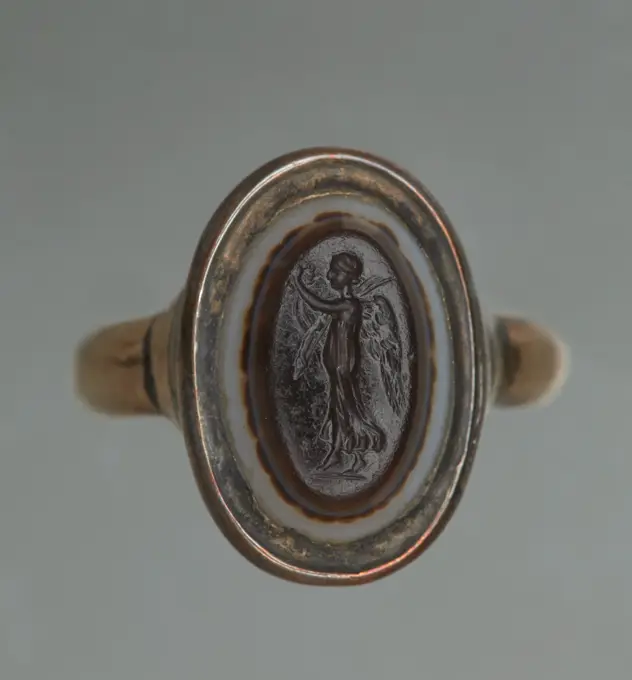
A variety of antique metal artifacts including Roman jewelry, ancient scarabs, and decorative pieces from different historical periods.

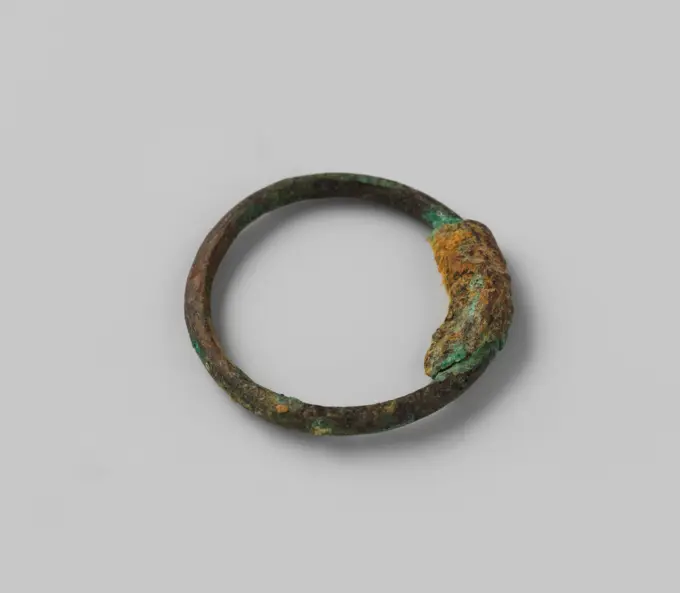
Mask with Ring Handle, one of a pair, 5th-4th century BCE, 4 × 2 5/8 × 1 1/4 in., 0.2 lb. (10.2 × 6.67 × 3.18 cm, 0.1 kg), Bronze, China, 5th-4th century BCE
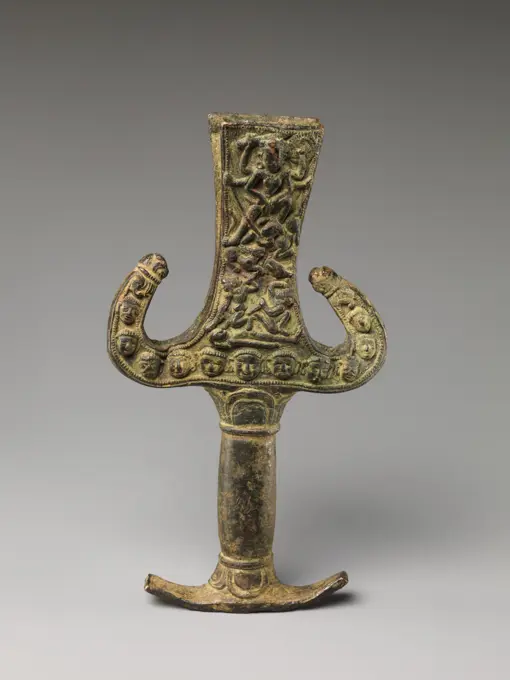
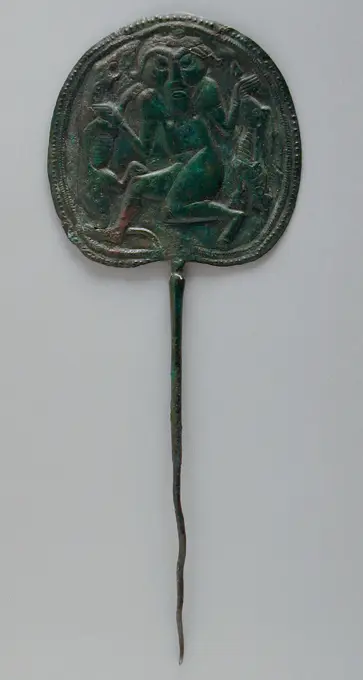
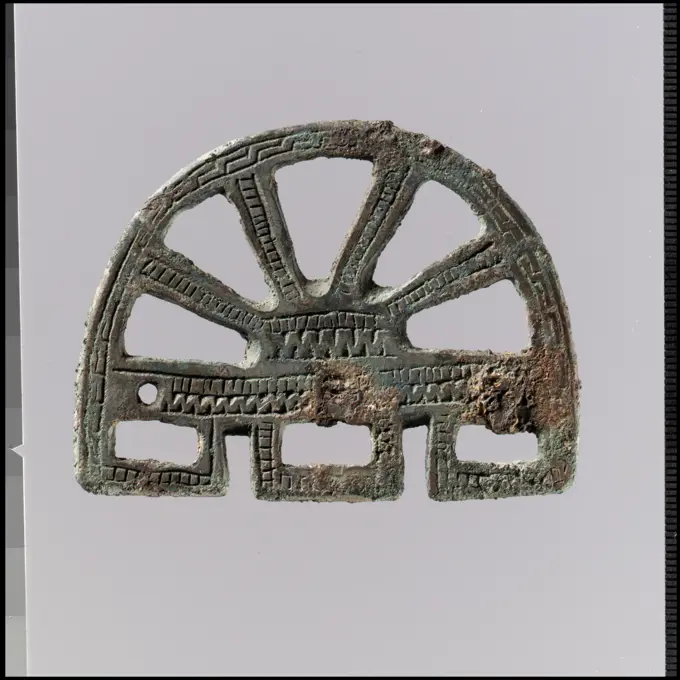
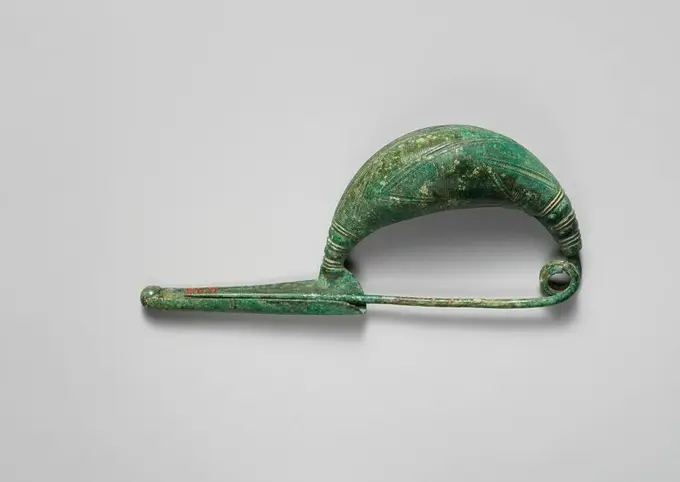
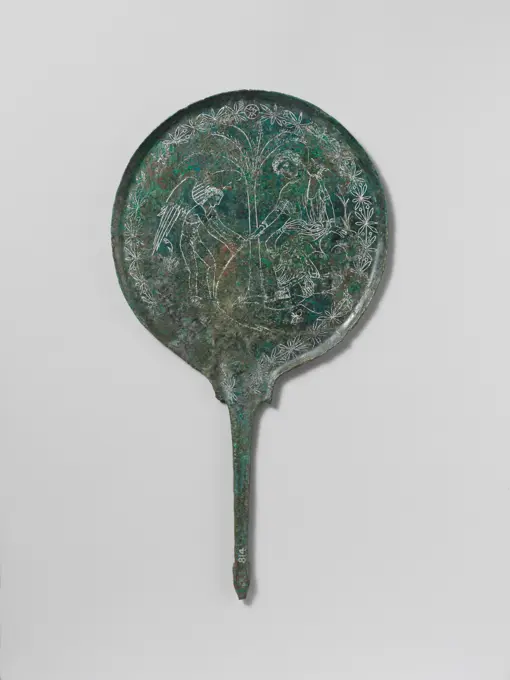
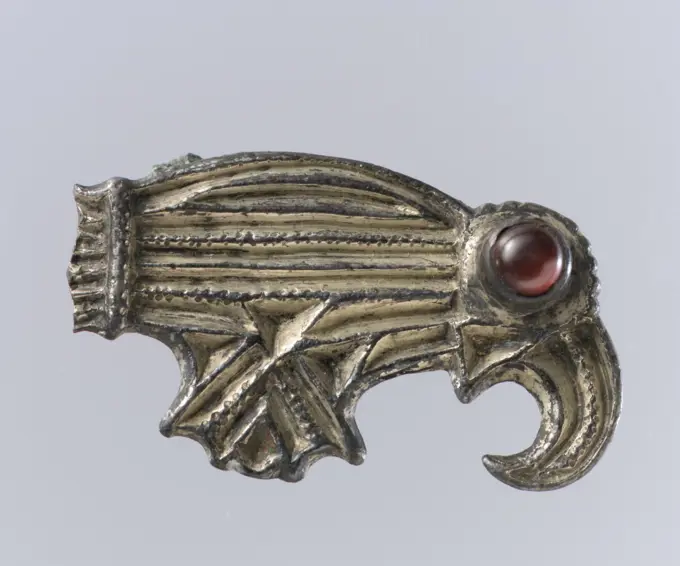
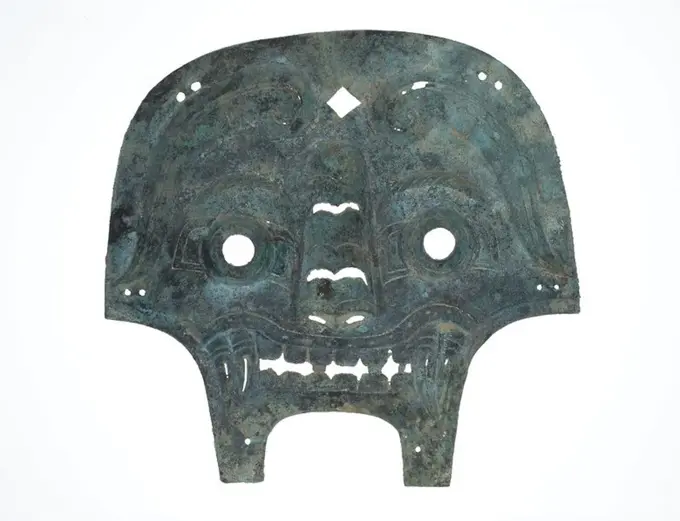
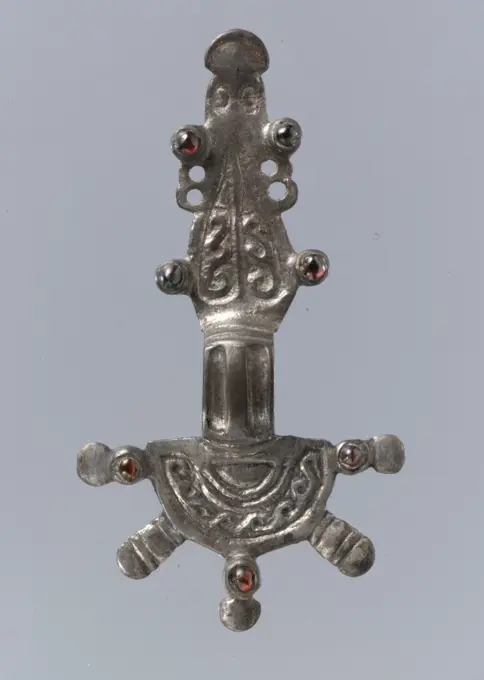
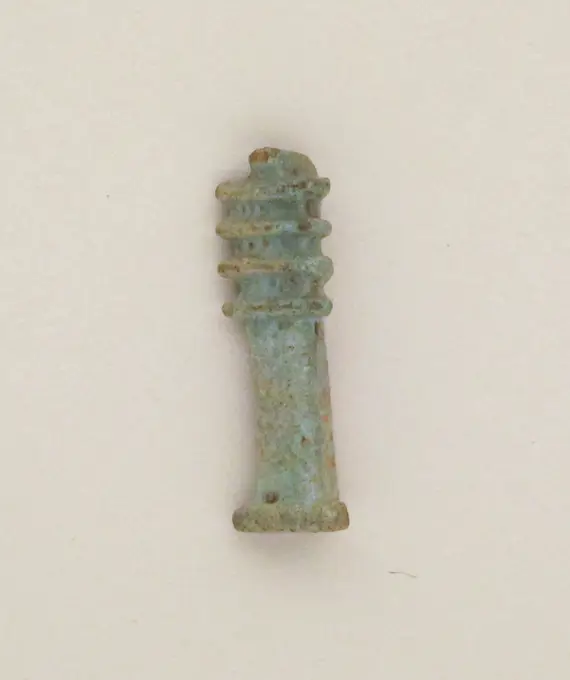
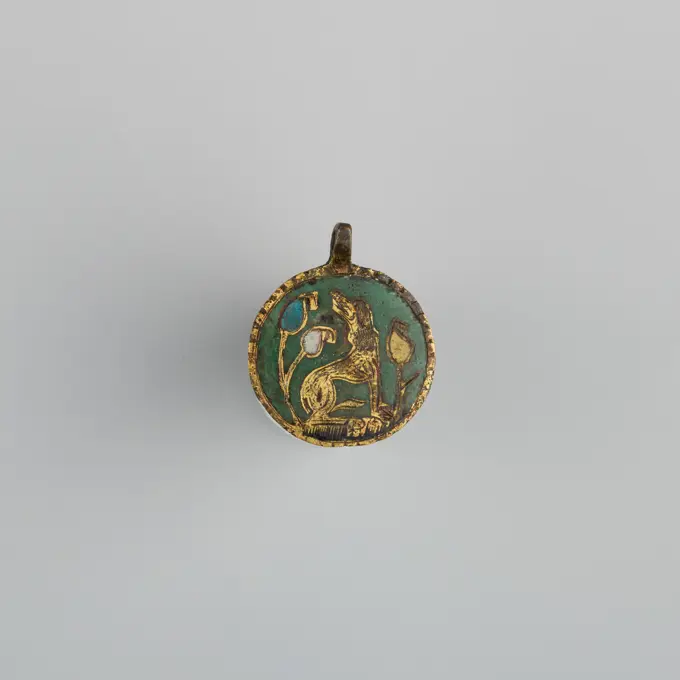
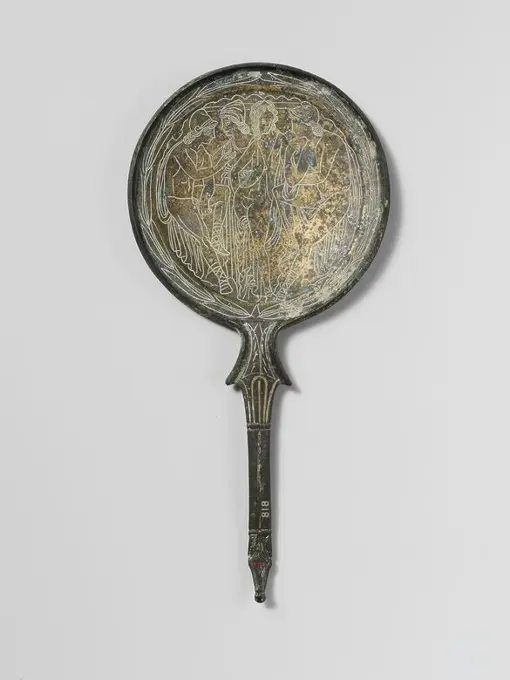
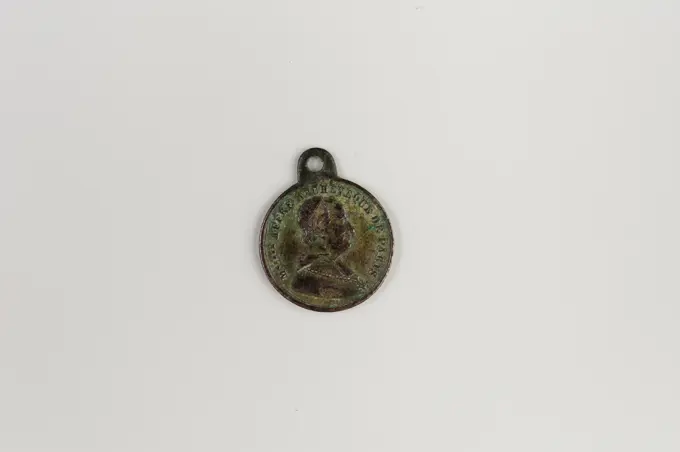
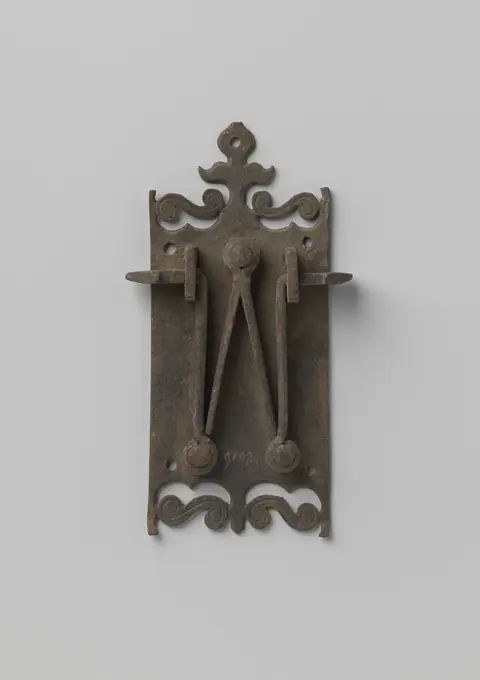
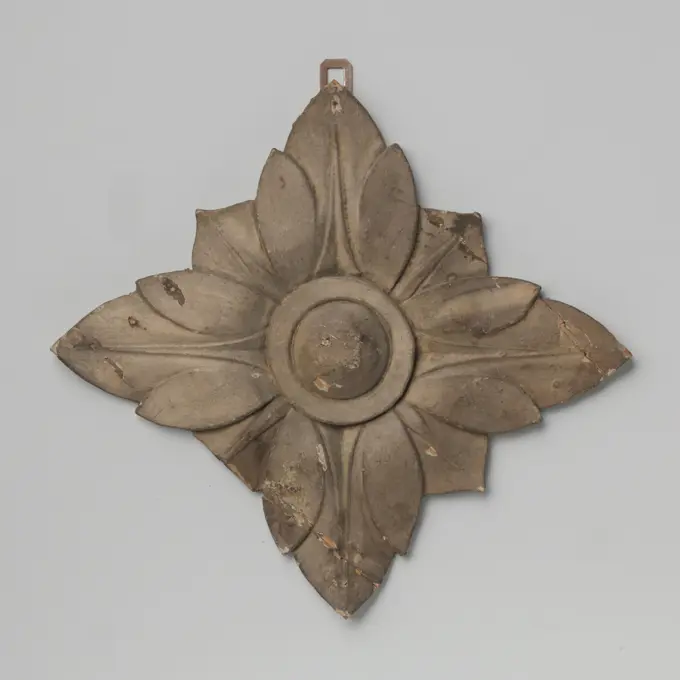
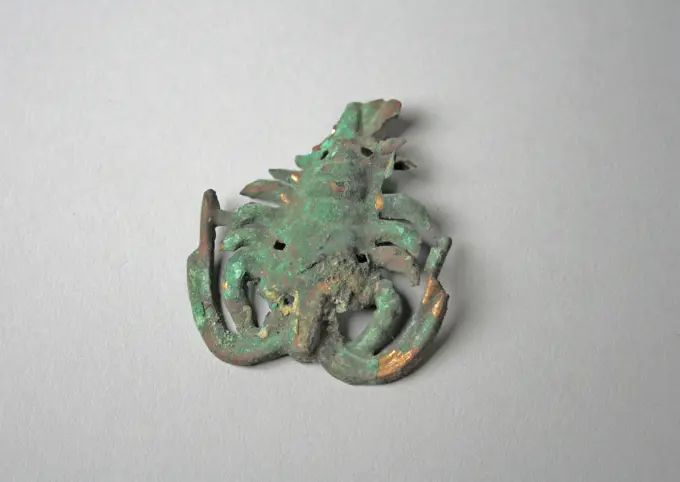
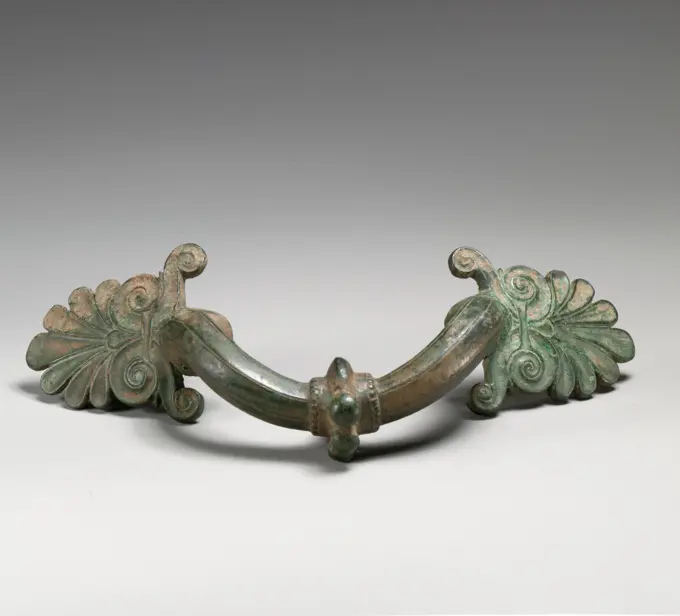
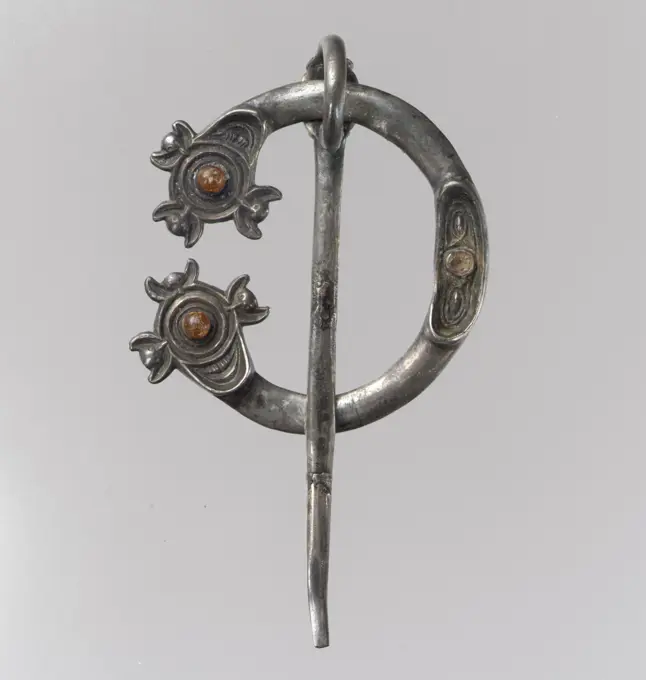
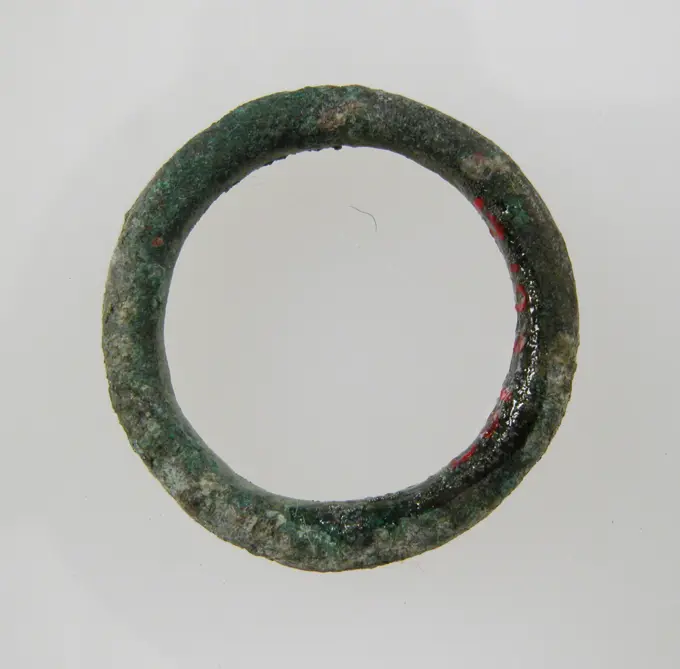
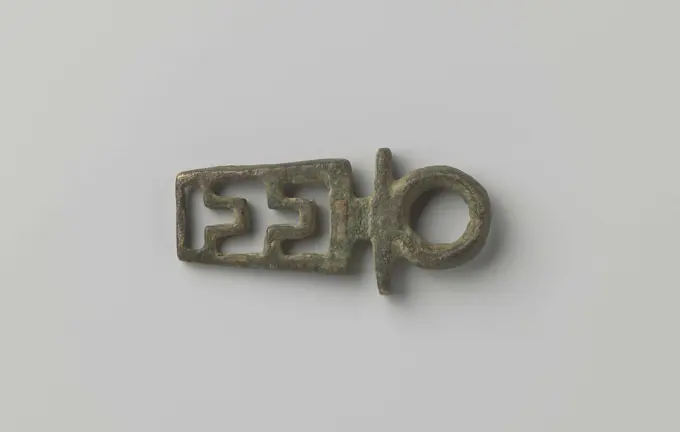
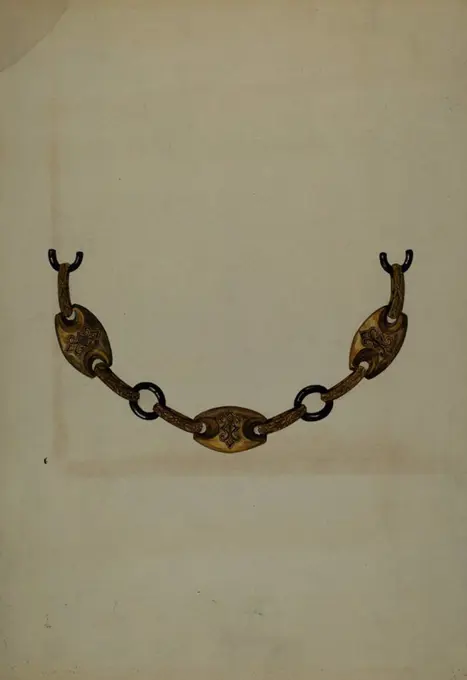
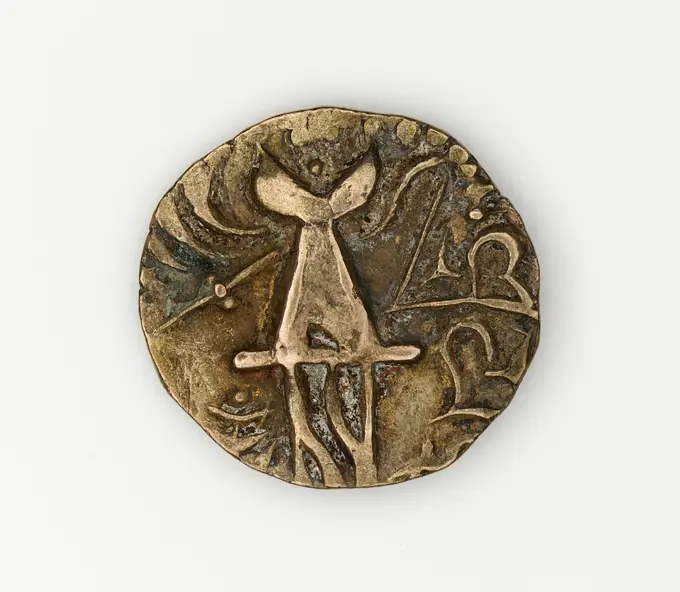
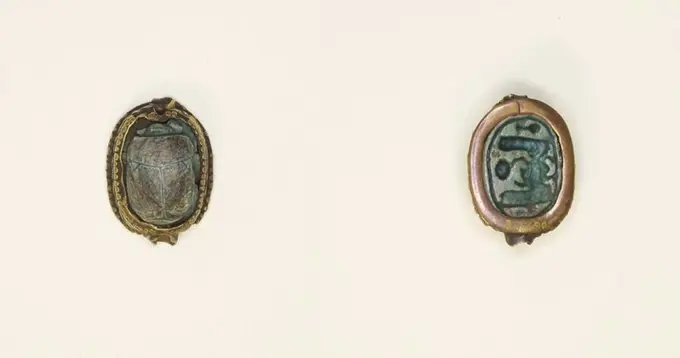
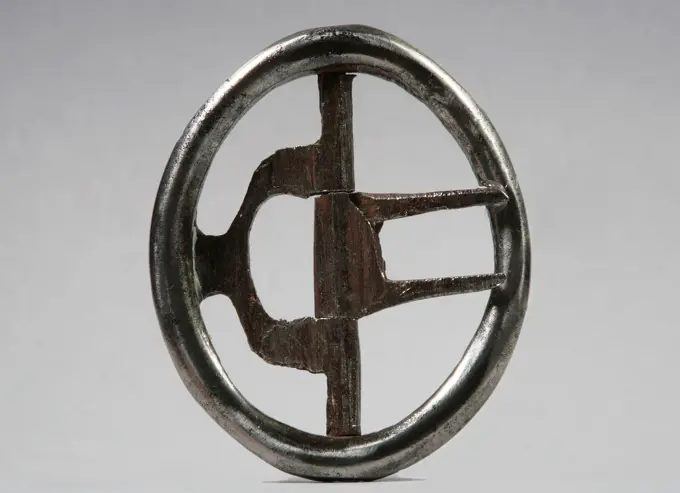
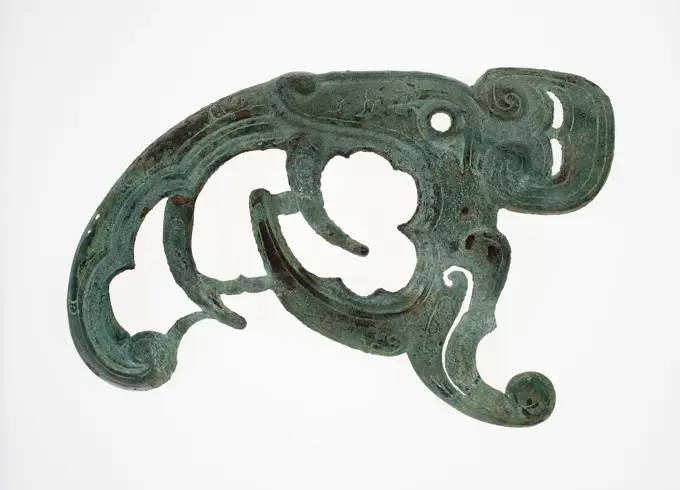
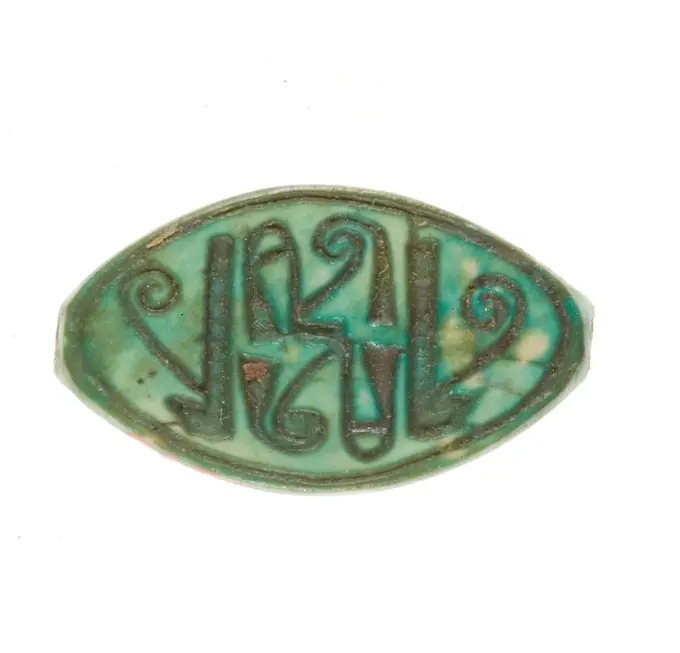
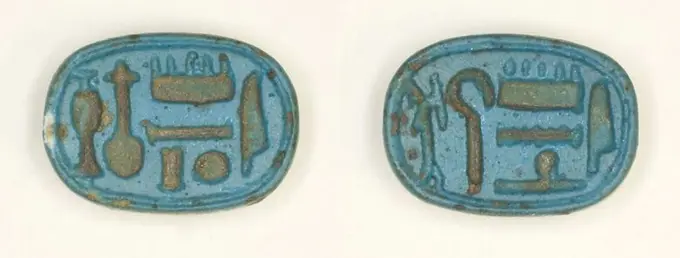
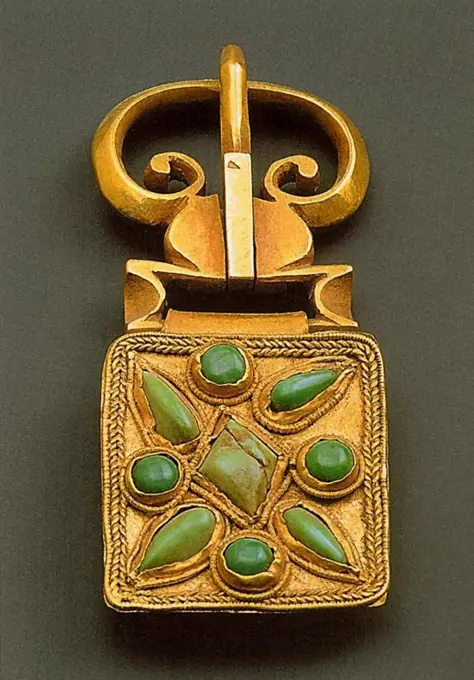
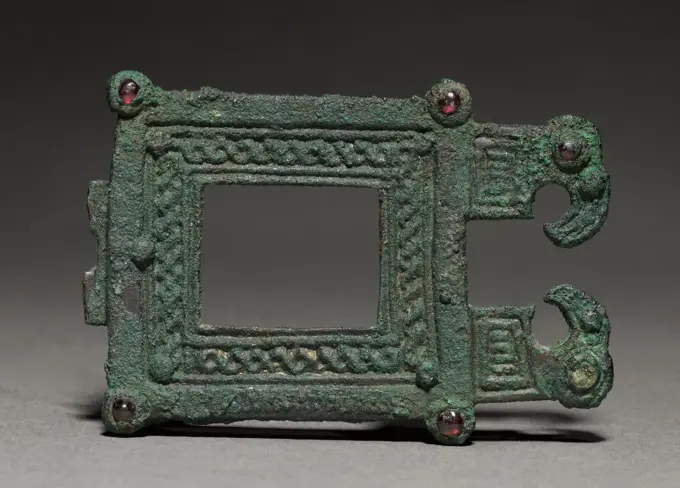
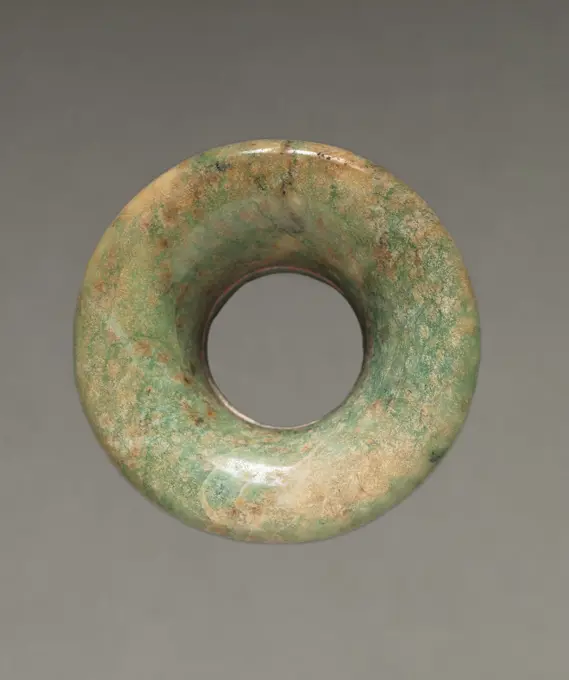
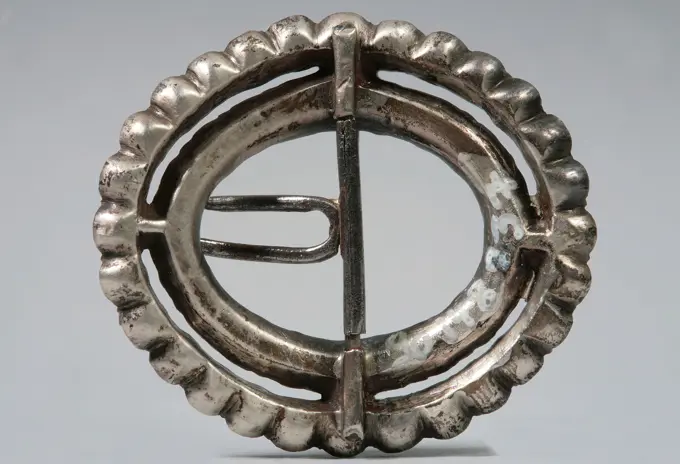
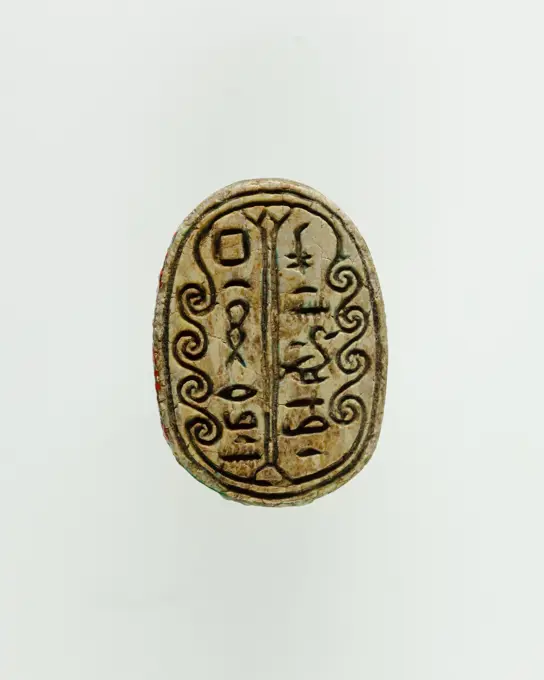
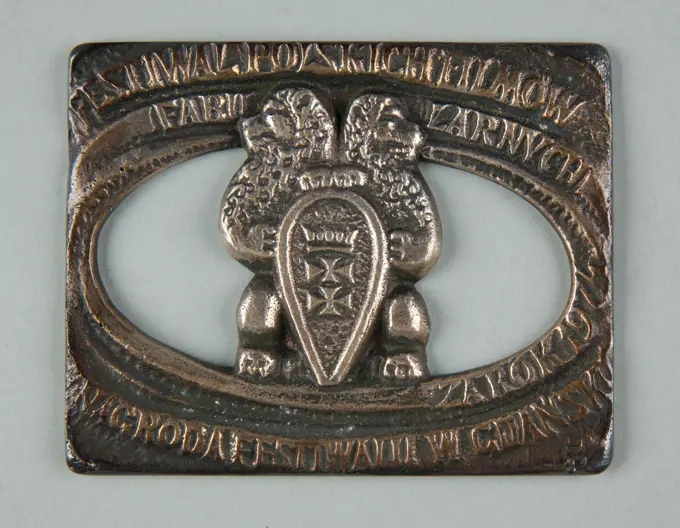
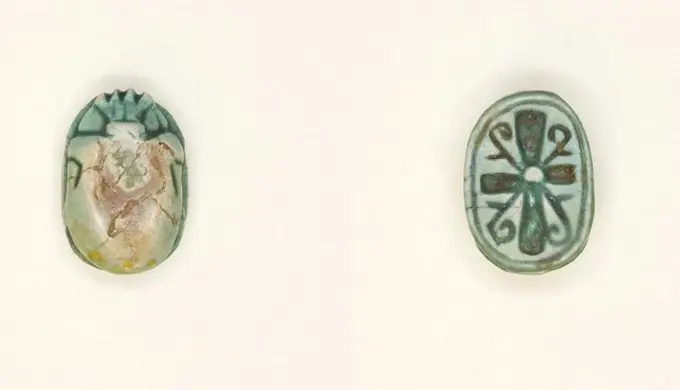
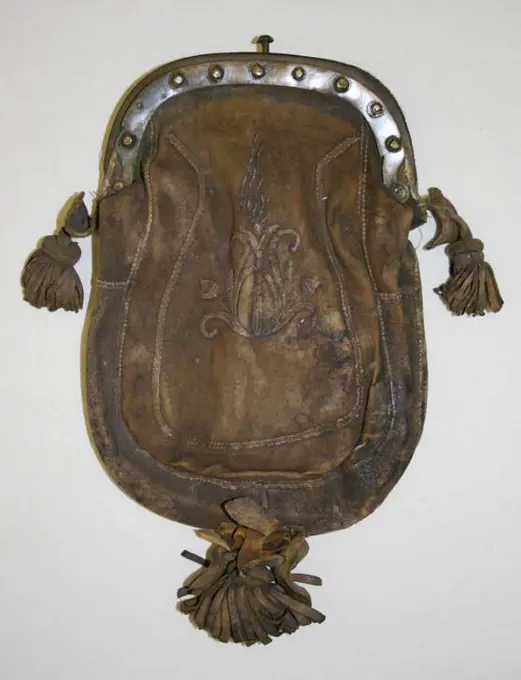
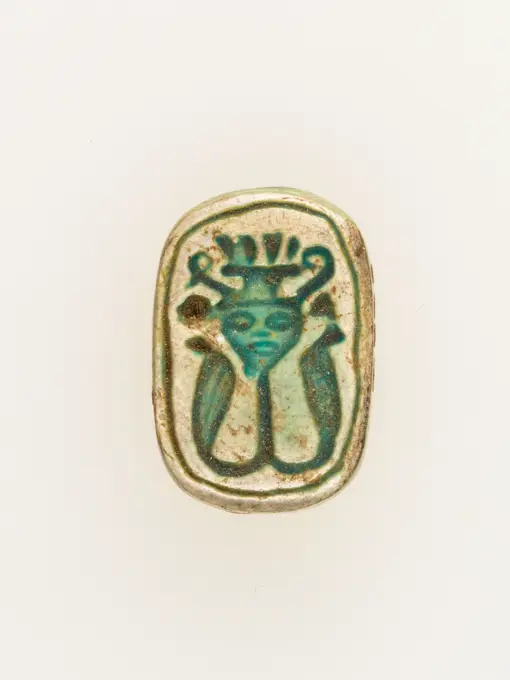
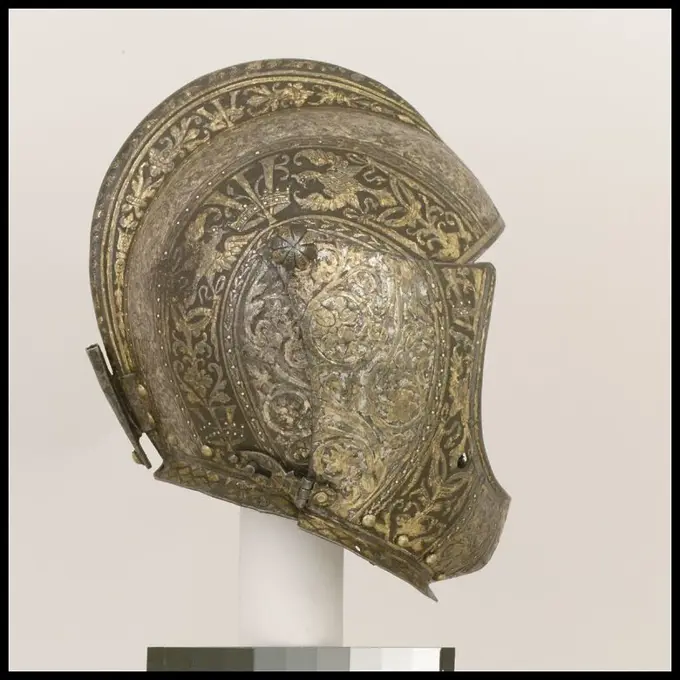
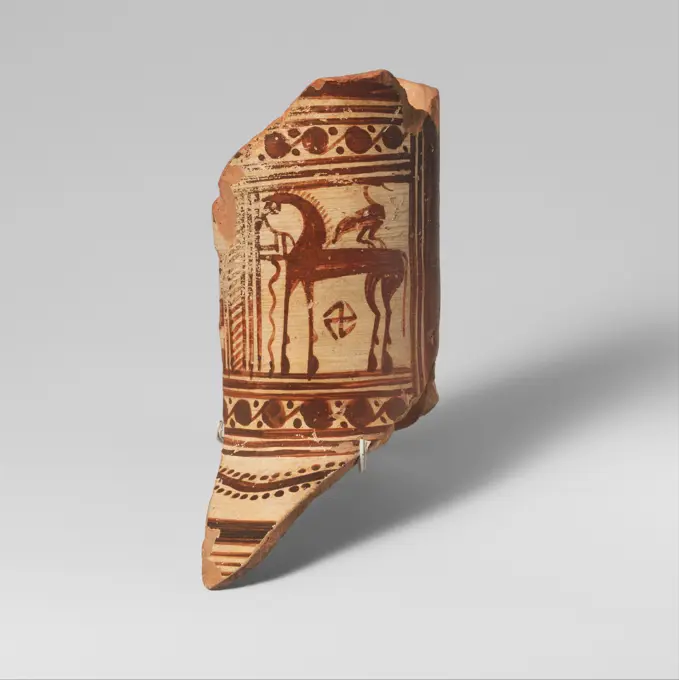
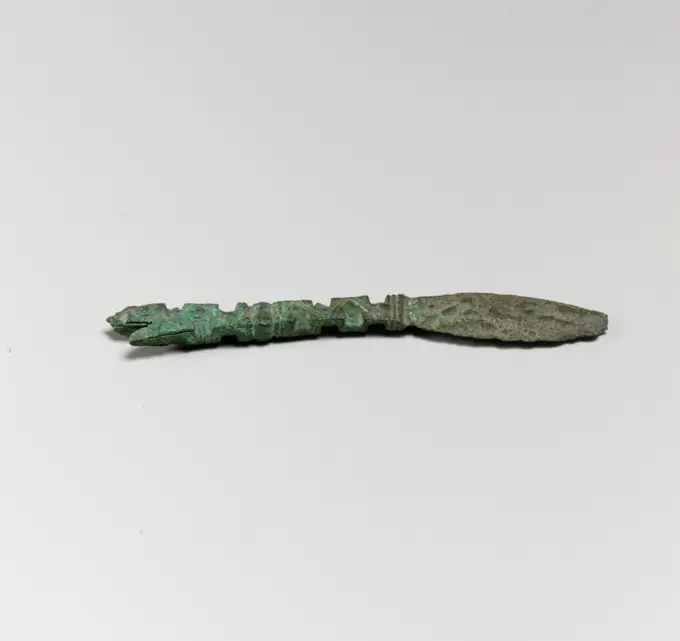
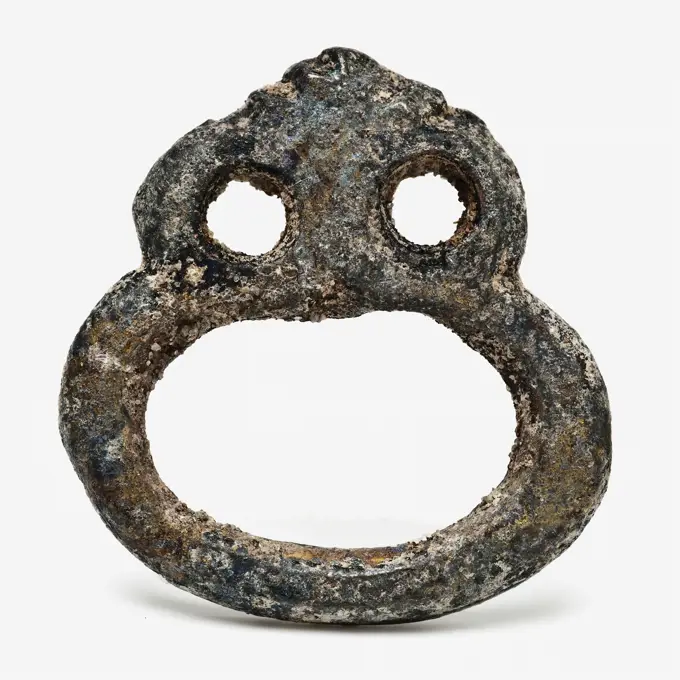
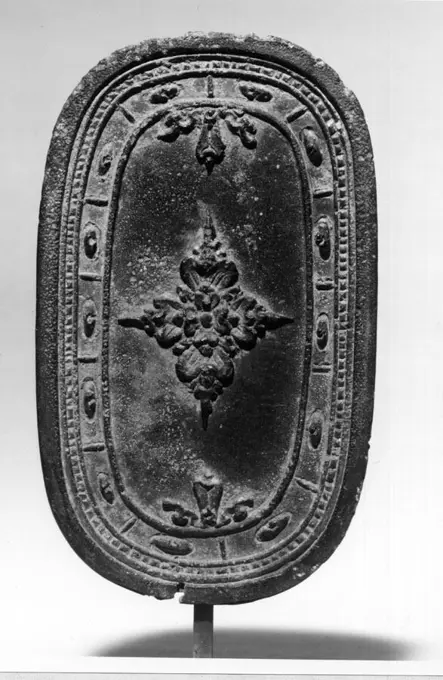
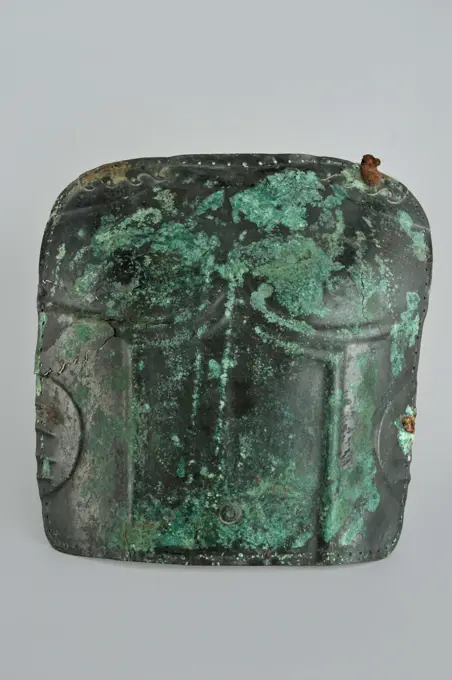
Bronze armor. unknown, authorSword Handle with Scenes of the Goddess Durga Slaying the Buffalo Demon Mahishasura 13th-14th century Nepal, Kathmandu Valley The detailed elaboration of the Mahisashuramardini scene on this blade fitting, complete with a garland of severed heads arrayed on the curve of the guard, suggests that this weapon was intended for ritual animal sacrifices. The same composition appears on both sides of the hilt. Traces of the iron blade (now missing) are preserved in the hilt.. Sword Handle with Scenes of the Goddess Durga Slaying the Buffalo Demon Mahishasura. Nepal, Kathmandu Valley. 13th-14th century. Copper alloy. early Malla period. MetalworkDisc - headed Pin. Iran, Luristan, Luristan bronzes, circa 1000-650 B.C.. Jewelry and Adornments; pins. Bronze, hammeredBadge or Harness Pendant 14th century Spanish Heraldry, or coat-of-arms, were vitally important in Europe throughout the Middle Ages and the Renaissance. Heraldic emblems were used to identify noble families, cities, regions, and even countries. In addition to being displayed on shields and flags, heraldry was incorporated into architectural decoration on the interior and the exterior of buildings, on furniture, works of art, clothing, and horse equipment. Harness pendants, like this example, would have been attached to a headstall, bridle, or other straps making up the tack of a horse ridden by a nobleman or noblewoman, or a member of their household. Many harness pendants also have decoration that is simply ornamental, or have symbols that are not specifically heraldic in nature.. Badge or Harness Pendant. Spanish. 14th century. Copper, gold, enamel. Miscellaneous-BadgesOpenwork Plaque 7th-8th century () Frankish. Openwork Plaque 465213 Frankish, Openwork Plaque, 7th8th century (), Copper alloy (leaded bronze), tinned surface, Overall: 2 7/8 x 2 3/16 x 1/16 in. (7.3 x 5.5 x 0.2 cm). The Metropolitan Museum of Art, New York. Gift of J. Pierpont Morgan, 1917 (17.192.154)Bronze navicella-type fibula (safety pin). Culture: Etruscan. Dimensions: Other: 6 5/8 in. (16.8 cm). Date: 8th century B.C..Fibula, boat-shaped type. Museum: Metropolitan Museum of Art, New York, USA.Bronze mirror ca. 350 B.C. Etruscan Aphrodite and Eros fishingThis scene of Eros assisting the fishing Aphrodite may be derived from similar representations on red-figure Greek pottery. Its significance is unknown.. Bronze mirror 247874Bird-Shaped Brooch late 5th-early 6th century Frankish. Bird-Shaped Brooch 465088Mirror with hunting scene 8th century China On this mirror back, mounted archers take aim at a pair of ducks flying over a stylized mountain and parrots eat the fruit of a flowering vine. Listen to experts illuminate this artwork's story Listen Play or pause #8994. Overview: Tang Dynasty - Bronze Mirrors Supported by Bloomberg Philanthropies We're sorry, the transcript for this audio track is not available at this time. We are working to make it available as soon as possible.. Mirror with hunting scene 44806Archers thumb ring, 480-221 BCE, 2 1/8 x 3/16 x 2 1/4 in. (5.4 x 0.48 x 5.72 cm), Partially calcified, translucent pale green jade, China, 5th-3rd century BCEMask from a Horse Bridle. China. Date: 899 BC-800 BC. Dimensions: 26.5 × 27.5 × 0.3 cm (10 3/8 × 10 3/4 × 3/32 in.). Bronze. Origin: China. Museum: The Chicago Art Institute, Chicago, USA.Pendant. Iran, 12th century. Jewelry and Adornments; pendants. Bronze, castBow Brooch first half 6th century Ostrogothic. Bow Brooch. Ostrogothic. first half 6th century. Silver-gilt, garnets cabochons. Made in Italy. Metalwork-SilverBliżej Kultury unknownFalse coin, pennyAmulet - pillar d Ed;  around 1069-30 BC ; 3rd passage period-Ptolemam period (-1069-00-00--30-00-00);The pillars of JedTile with Niche Design 12th century The original use of this panel is unknown, although the Qur'anic content of its inscription suggests a devotional meaning. The arches and columns reflect regional architectural forms. Similar panels had different functionsdepending on their context and inscriptional contentas mihrabs (prayer niches), sometimes recording an event, pious gifts, or funerary elements, or commemorating the construction of all or part of a building.. Tile with Niche Design 448445Amulet pendant, djed sign Symbolic objects used for amulets include a menat-pendant, the djed-sign, a papyrus capital are all common in Egyptian architecture. Also, a pectoral, such as is used on mummies, a bunch of grapes, or other clusters of fruit, and an inscribed bead are common shapes.. Amulet pendant, djed sign. Clay, glazed. Gold and SilverScarab Hieroglyph (Ankh Sign) 1550 BCE-1069 BCE Egypt. Glazed steatite . Ancient EgyptianDisk Brooch first half 7th century Frankish. Disk Brooch. Frankish. first half 7th century. Silver, glass paste or garnet, meersham(), metal foil,remnant iron pin. Metalwork-SilverEscutcheonSpindle Whorl A.D.1-500 Peruvian; north coast (). Spindle Whorl 308865Boss and Nail 15th-16th century European. Boss and Nail. European. 15th-16th century. Iron. Metalwork-IronBadge or Harness Pendant ca. 1400 Spanish Heraldry, or coat-of-arms, were vitally important in Europe throughout the Middle Ages and the Renaissance. Heraldic emblems were used to identify noble families, cities, regions, and even countries. In addition to being displayed on shields and flags, heraldry was incorporated into architectural decoration on the interior and the exterior of buildings, on furniture, works of art, clothing, and horse equipment. Harness pendants, like this example, would have been attached to a headstall, bridle, or other straps making up the tack of a horse ridden by a nobleman or noblewoman, or a member of their household. Many harness pendants also have decoration that is simply ornamental, or have symbols that are not specifically heraldic in nature.. Badge or Harness Pendant. Spanish. ca. 1400. Copper, gold, enamel. Miscellaneous-BadgesBronze mirror. Culture: Etruscan. Dimensions: length 10 5/8 in. (27 cm.); diameter 5 3/16 in. (13.2 cm.). Date: ca. 250-200 B.C..Engraved design with two men and two women: two outer figures are men wearing Phrygian hats and boots. Between them stand two women, one mostly nude, the other clothed, each turning toward the man next to her. In the absence of inscriptions identifying the figures, the male twins are usually called Castor and Pollux, the Dioskouroi; the two central figures are harder to identify: the nude female may be Turan (Aphrodite, Venus) or Helen, the Dioskouroi's sister; the dressed figure with Phrygian hat is probably Minerva. Museum: Metropolitan Museum of Art, New York, USA.Carnavalet museum, medal collection Bust law of Mgr affre to the right; Reverse registration on seven lines in a crown of palm leaves.Fragment of an object in the form of a stylized ram. Fragment of a bronze object in the form of a stylized RAM, to which an iron stem is attachedAnklet/BraceletScarab The God Ptah with Name of Usermaatra Setepenra (Ramesses II) 1279 BCE-1213 BCE Egypt. Glazed steatite . Ancient EgyptianKnipsot. .Book band. Corner of a silver book band.Interieuronderdeel, anonymous, 1700 - 1800 Diamond -shaped wooden ornament, presumably from a ceiling. On the diamond-shaped flat surface of oak with slightly bent sides, an en-relief cut flour has been applied in oak. See also: BK-18860-A. Northern Netherlands (possibly)Netherlands (possibly) wood (plant material). oak (wood). paint (coating) Diamond -shaped wooden ornament, presumably from a ceiling. On the diamond-shaped flat surface of oak with slightly bent sides, an en-relief cut flour has been applied in oak. See also: BK-18860-A. Northern Netherlands (possibly)Netherlands (possibly) wood (plant material). oak (wood). paint (coating)Crayfish 6th-7th century Moche (Loma Negra). Crayfish 314475Bronze handles of a hydria (water jar) early 5th century B.C. Greek This handle is iconographically similar to 1993.133 and has counterparts in other collections. The type was, therefore, established and may have been the specialty of one workshop. The small differences in detail are worth noting.. Bronze handles of a hydria (water jar) 253564 Greek, Bronze handles of a hydria (water jar), early 5th century B.C., Bronze, Overall: 8 3/4 x 7 5/16 in. (22.2 x 18.6 cm); a, H. 8 3/4 in. (22.2 cm); b,c width with palmettes 7 5/16 in. (18.6 cm). The Metropolitan Museum of Art, New York. Samuel D. Lee Fund, 1938 (38.11.11ac)Open-Ring Brooch early 800s Pictish or Irish This silver penannular broocha type that was widespread in the British Isles during the Early Christian periodwas discovered in June 1854 in a field near Galway, Ireland. Each terminal is decorated with three stylized masks in the form of birds' or bats' heads, enframing a centrally mounted polished amber. The simple, flat-headed pin was mounted backwards when the brooch was found.Typologically, the brooch is related to a number of Pictish examples found on St. Ninian's Isle in Scotland that, characteristically, have formalized animal or bird masks executed in relief on the terminals. Such brooches appear to have been in fashion toward the end of the eighth century. The Galway brooch is one of three atrributed to the Pictsearly inhabitants of Scotlandthat were found in Ireland, and demonstrate the close stylisitc affinities between Irish and Pictish forms. Since the brooch can be related to others of Irish origin, dated to the ninth centPlain Ring Frankish 7th centurySchuifsleutel.Scroll key with annular eye and wide key cabinet.Bliżej Kultury unknownNecklace. Dated: c. 1938. Dimensions: overall: 35.8 x 24.8 cm (14 1/8 x 9 3/4 in.). Medium: watercolor, graphite, and pen and ink on paperboard. Museum: National Gallery of Art, Washington DC. Author: Katherine Hastings.Dinar of Yasavarmana. India, Jammu and Kashmir, Kashmir region (), 5th century or later. Tools and Equipment; coins. Debased goldFigure of an Arm and Shoulder with Drapery. Egypt, Roman Period or later (200 - 700 CE). Sculpture. BronzeScarab: Winged Scarab Beetle with Hieroglyphs. Egyptian. Date: 1550 BC-1069 BC. Dimensions: 1.6 × 1.1 × 0.6 cm (5/8 × 7/16 × 1/4 in.). Faience, metal. Origin: Egypt. Museum: The Chicago Art Institute, Chicago, USA. Author: Ancient Egyptian.Tweezers in the Shape of a Bird Made 1000-1400 Peru. Gold . ChimúShort Sword and Sheath with Crouching Feline 10th-8th century BC Northeast China. Short Sword and Sheath with Crouching Feline 59449Loop.Five Hand Guards (smoke), natsuo, 1850 - 1875 Mokko-shaped tsuba with raised edge. At the front in relief shoki who caught a devil (ONI) and at the rear an ONI in a willow tree; Details in gold; Engraved signature "nattsuo" with seal "koi" (in the spirit of the old; a l'Ancienne). Two small round holes to get a cord through, which is beaten around the wrist to fuse the sword kept in hand (Udenuki -a) Japan iron (metal). gold (metal) Mokko-shaped tsuba with raised edge. At the front in relief shoki who caught a devil (ONI) and at the rear an ONI in a willow tree; Details in gold; Engraved signature "nattsuo" with seal "koi" (in the spirit of the old; a l'Ancienne). Two small round holes to get a cord through, which is beaten around the wrist to fuse the sword kept in hand (Udenuki -a) Japan iron (metal). gold (metal)Pair of Plaques with Profile Animal Heads 1027 BCE-221 BCE China. This metal plaque is one of a pair that was beaten together to form mirror images of an animal head in profile with gaping mouth and curved fang. Similarly curved and perforated examples, which have been excavated from the burials of horses and chariots, suggest that these plaques originally formed the cheek pieces for a horseís bridle. Alternatively, they may have been sewn onto leather to form defensive armor for the chest or back of a soldier.. Bronze .Belt Ornament with Zoomorphic Design 6th-5th century B.C. North China and south-central Inner Mongolia. Belt Ornament with Zoomorphic Design. North China and south-central Inner Mongolia. 6th-5th century B.C.. Tinned bronze. MetalworkCowroid Seal Amulet Inscribed with a Decorative Pattern ca. 1479-1458 B.C. New Kingdom Most of the amulets found in the foundation deposits of Hatshepsut's funerary temple were scarabs, but a hand full were carved in the shape of a cowrie shell. Like this one, the backs of most of these cowroids have been incised with a decorative pattern that suggests the setting of a swivel ring bezel (see 36.3.46). Others (27.3.180) have also been inscribed with the image of a bolti fish (a tilapia), and two have been carved with the image of a falcon, with its wings outstretched and wearing an atef-crown (27.3.164, 27.3.396).The decoration on the base of this cowroid includes stylized representations of the red crown of Lower Egypt (the Delta region) at right and left. The curling plumes of the crowns are echoed in the geometric floral pattern in the center.. Cowroid Seal Amulet Inscribed with a Decorative Pattern. ca. 1479-1458 B.C.. Steatite (glazed). New Kingdom. From Egypt, Upper Egypt, Thebes,Poland, Władysław Jagiełło (King of Poland, 1386 1434), Denar, 1398 1422, Town of Krakow W ADYS AW JAGIECH (CA 1351 1434), Mint of KrakówLead wreath 6th-5th century B.C. Greek, Laconian Archaic bronze statuettes from Sparta include representations of youths wearing similar wreaths or headdresses.. Lead wreath 251724 Greek, Laconian, Lead wreath, 6th5th century B.C., Lead, Height: 1 1/8 in. (2.9 cm). The Metropolitan Museum of Art, New York. Gift of A. J. B. Wace, 1924 (24.195.158)Scarab ca. 1492-1473 B.C. New Kingdom This scarab was found with twenty-three other scarabs and seal-amulets in the coffin of a young woman who was buried in Hatnefer's tomb (see 36.3.1 and 36.3 26). The base is inscribed with a decorative pattern.. Scarab 548978Plaque: Amun Re, Good of Praise/ Amunhotep Ruler of Thebes. Egyptian. Date: 1390 BC-1352 BC. Dimensions: 1.6 × 1 × 0.5 cm (5/8 × 3/8 × 3/16 in.). Steatite. Origin: Egypt. Museum: The Chicago Art Institute, Chicago, USA. Author: Ancient Egyptian.Pendant, Gold, Turquoise, 2nd century AD, Russia, Krasnodar, State historical and archeological museum,Handle. Main motif taotie; furthermore characteristic leave Zhou-ornamentics; Forms a couple with Mak 16a.Plate and Nail. Culture: European. Dimensions: Overall: 3 3/8 in. (8.6 cm). Date: 15th-16th century. Museum: Metropolitan Museum of Art, New York, USA.Badge with Hood of Saint Dorothy 15th century British. Badge with Hood of Saint Dorothy 474369Glass pendant in the form of a jar ca. 4th century A.D. Roman Translucent pale green glass, with handle and base in same color.Bulbous body; flat disk-shaped pad base; suspension loop attached at top.Six deep vertical ribs on body, and six ribs across suspension hoop.Intact, except for small weathered chip in base; pinprick bubbles; dulling, pitting, and slight weathering.. Glass pendant in the form of a jar. Roman. ca. 4th century A.D.. Glass; rod-formed and tooled. Late Imperial. GlassBracelet. Bracelet with four bubbles.Brooch 11th century B.C. European Bronze Age. Brooch 478176Scarab Inscribed with the Throne Name of Amenhotep I ca. 1525-1504 B.C. New Kingdom. Scarab Inscribed with the Throne Name of Amenhotep I. ca. 1525-1504 B.C.. Egyptian Blue , gold. New Kingdom. From Egypt. Dynasty 18Pin 4th-7th century Recuay. Pin 315807Ring -shaped fragment from the wreck of the East Indians Hollandia, Anonymous, 1700 - in Or Before 1743 fragment Varied parts or fragments, rings or ring-shaped fragments; id. 80H946. Netherlands copper (metal)   SecondBuckle, 500s. Ostrogothic, Migration period, 6th century. Bronze and garnets; overall: 12.1 x 5.9 cm (4 3/4 x 2 5/16 in.).Medieval mirrors from the Eastern Islamic world, made from cast copper alloy. Dated 11th CenturyEar Ornament, 150-200. Central Mexico, Teotihuacán style, Classic Period. Jadeite-albitite(); diameter: 5.6 cm (2 3/16 in.); overall: 2.4 cm (15/16 in.). Near Teotihuacán's largest palace is a small temple gorgeously ornamented with green-feathered serpents, symbols of the earth's fertility. Beneath the temple lie at least 120 human sacrifices, most men, many warriors, and some wearing greenstone ornaments like these, perhaps a set. The sacrifices, apparently laid out to mark the cardinal directions, may have consecrated the temple or a ruler's tomb, or both.Scarab Inscribed for an Official ca. 1760-1670 B.C. Middle Kingdom. Scarab Inscribed for an Official. ca. 1760-1670 B.C.. Brown glazed steatite. Middle Kingdom. From Egypt. mid Dynasty 13Loop. 2 rows of uncoatical stones.Belt Plaque with Horse and Wolf 3rd-2nd century B.C. North China. Belt Plaque with Horse and Wolf 59513Pendant. Unknown 6th-7th century Dark amber-colored glass bearing a frontal portrait bust in the Imperial Byzantine style. It appears to be a female wearing a crown with pendilia. Inscribed in the field: NI to the left; KH to the right.Scarab of Princess Redenptah ca. 1770-1670 B.C. Middle Kingdom This scarab is inscribed with the name and royal titles of princess Redenptah (Dynasty 13). The inscription is surrounded by a border of interlocking scrolls and divided by a lotus flower.. Scarab of Princess Redenptah. ca. 1770-1670 B.C.. Green glazed steatite. Middle Kingdom. From Egypt, Memphite Region, Lisht North, Cemetery, debris, MMA excavations. mid Dynasty 13Scaraboid seal ca. late 2nd millennium B.C. Cypriot. Scaraboid seal 327805Festival of Polish Film Festival in Gdańsk for 1974De Witte Pijnders, 1900 - 1920  Tobacco vignette for a store in the new Ebbingestraat in Groningen. Groningen brass (alloy) printing blockScarab: Cross Pattern. Egyptian. Date: 1650 BC-1550 BC. Dimensions: 1.3 × 0.8 × 0.6 cm (1/2 × 5/16 × 1/4 in.). Glazed steatite. Origin: Egypt. Museum: The Chicago Art Institute, Chicago, USA. Author: Ancient Egyptian.Sword Guard (Tsuba) dated 1780 Japanese A tsuba is a sword guard and part of a sword mounting. It is mounted between the swords blade and grip to protect the users hands.. Sword Guard (Tsuba) 29957Purse 1630 European. Purse 116933Scaraboid with an image of Hathor ca. 1550-1295 B.C. New Kingdom This goddess face is flanked by the uraei that often accompany Hathor. Loop elements rise above the podium crown. These have sometimes been interpreted as a row of uraei, and by the later eighteenth dynasty this may be the case. However, the modius with uraei appears on queens crowns only in the time of Amenhotep III, so early loop crowns probably represent something else, possibly feathers like those worn on crowns by Bes and Anukis.The opposite is flat and bears an image of the protective goddess Taweret with a knife(?) to fight fiends and the hieroglyph for protection.. Scaraboid with an image of Hathor 560720Lead figure of a winged goddess, possibly Artemis Orthia late 7th-6th century B.C. Greek, Laconian Small flat votive figurines of cast lead have been found in great quantities at the ancient sanctuaries of Laconia; over one hundred thousand, dating from the seventh century B.C. to the Classical period, were dedicated to the goddess Artemis Orthia in Sparta.. Lead figure of a winged goddess, possibly Artemis Orthia 251606 Greek, Laconian, Lead figure of a winged goddess, possibly Artemis Orthia, late 7th6th century B.C., Lead, Height: 1 3/8 in. (3.5 cm). The Metropolitan Museum of Art, New York. Gift of A. J. B. Wace, 1924 (24.195.40)Viking bronze brooch, c.8th-11th century. Artist: UnknownClose-Helmet of Vicenzo I Gonzaga (1562-1612), Duke of Mantua. Culture: Italian, Milan. Dimensions: Helmet (a); H. 13 in. (33 cm); W. 8 3/4 in. (22.2 cm); D. 9 1/2 in. (24.1 cm); Wt. 5 lb. 2.4 oz. (2336 g); brim (b); H. 3 in. (7.6 cm); W. 8 3/4 in. (22.2 cm); D. 8 1/2 in. (21.6 cm); Wt. 12.7 oz. (360 g). Date: ca. 1587. Museum: Metropolitan Museum of Art, New York, USA.Sword Guard (Tsuba) ca. 3rd century-538 Japanese A tsuba is a sword guard and part of a sword mounting. It is mounted between the swords blade and grip to protect the users hands.. Sword Guard (Tsuba) 35779Bell. Western Iran, circa 1000-650 B.C.. Tools and Equipment; musical instruments. Bronze, castPlaque with Animal Mask. China. Date: 1300 BC-1000 BC. Dimensions: 1 5/8 × 1 3/8 × 3/8 in. Jade. Origin: China. Museum: The Chicago Art Institute, Chicago, USA.Bracelet 6th-5th century B.C. Cypriot. Bracelet 244350Door knocker late 16th century Italian, Venice The figures of Prudence and Fortitude are joined by a serpent eating its own tail, a symbol of Eternity. In the cartouche is a dove with an olive branch, symbolic of Peace.. Door knocker. Italian, Venice. late 16th century. Bronze. Metalwork-BronzeMirror with Concentric Circles and Linked Arcs, late 3rd Century BC - early 1st Century. China, Western Han dynasty (202 BC-AD 9). Bronze; diameter: 6.2 cm (2 7/16 in.); overall: 0.7 cm (1/4 in.); rim: 0.3 cm (1/8 in.).Shoe Buckle 1760-85 American. Shoe Buckle. American. 1760-85. Silver plate on brass. Probably made in United StatesBow-Shaped Fitting 13th-10th century B.C. Northwest China. Bow-Shaped Fitting 58935Fragment of a terracotta oinochoe (jug) ca. 750-740 B.C. Attributed to the Cesnola Painter Two metopes, each containing a horse tethered to a manger and a bird. Fragment of a terracotta oinochoe (jug) 244757Knife 1st-3rd century A.D. or later Roman With curved, one edged blade and moulded handle.. Knife 246770Fibula with the crossbar;  Indefinite (0-00-00-0-00-00);Rattlesnake Eye-GogglesKey Ring with Lovers late 15th century German During the fifteenth and sixteenth centuries, particularly in the North, it was common for mistresses of the house to carry the keys for their numerous chests, cupboards, and their doors on rings suspended from their belts or girdles by a chain or cord.Sometimes the key ring was attached to one of several chains hanging from a large broochlike device fastened directly below the belt. This device was used not only to attach key rings and other items but also to pin up trailing skirts.This key ring, though possibly carried separately, may once have been attached in the fashion described above. The small sculpture of the courting couple would have served at the finial or handle. Though key rings with non-figurative terminals exist from the fifteenth and sixteenth centuries, at least two other key rings with very similar figures have survived. This particular example is opened by detaching the screw that links the ring to the figures. It is posMetal belt buckle with three eyes, buckle harness clothing accessory clothing soil find brass copper metal, cast Girdle fastener with three eyes Undefined metal. One oblong large hole and two small eyes next to lobed or toothed edge. Archeology. Rotterdam rail tunnel. Fastening: fastening. Taking along. Belt. Soil discovery: trajectory of the Rotterdam tunnel.Oval Box Lid 10th-11th century Indonesia (Java). Oval Box Lid 37708Fragment of a Bowl 14th century. Fragment of a Bowl 452299Bliżej Kultury unknownRingBird Plaque, 2nd-3rd century, 5 1/2 x 9 7/8 in. (13.97 x 25.08 cm), Gilt bronze, China, 2nd-3rd century