Antique Metalware

Images of decorative metal items like forks and spoons, showcasing intricate designs and craftsmanship from different historical periods.

Spoon, brass, enamel, Oval bowl, decorated on back; slightly curved neck. Enameled handle, floral pattern in white, pink and black on light blue ground. Brass mounts along the sides of handle., possibly Germany, ca. 1600-1700, cutlery, Decorative Arts, Spoon
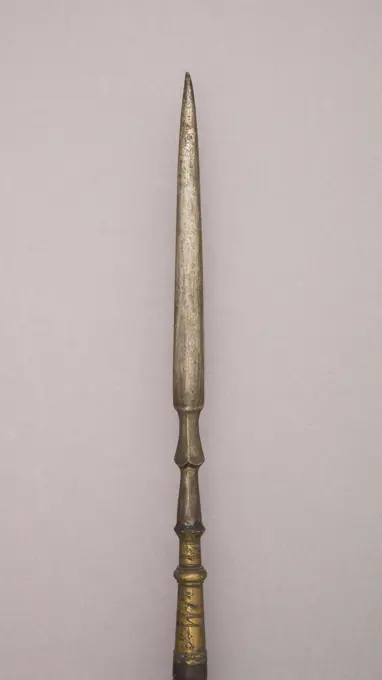
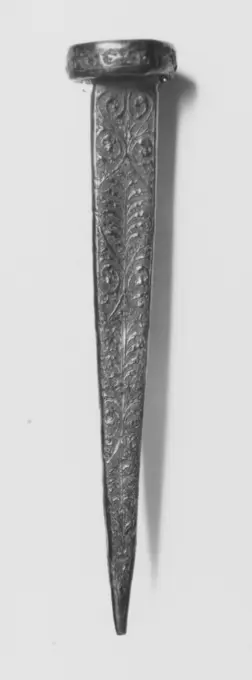
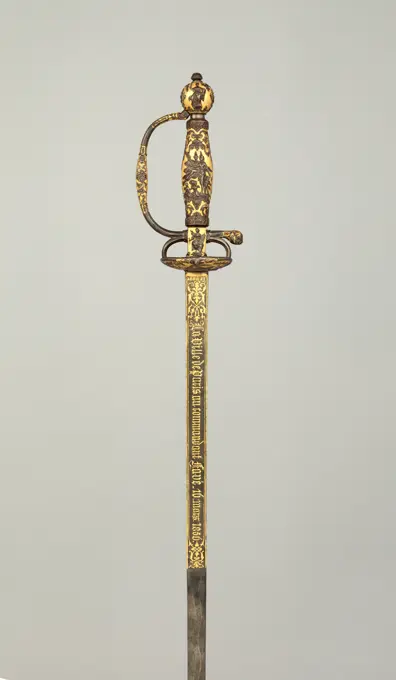
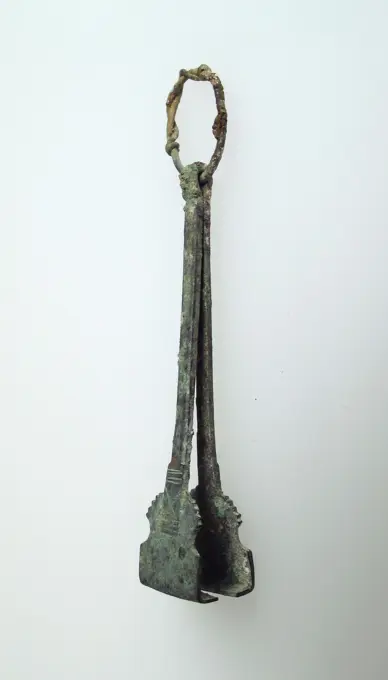
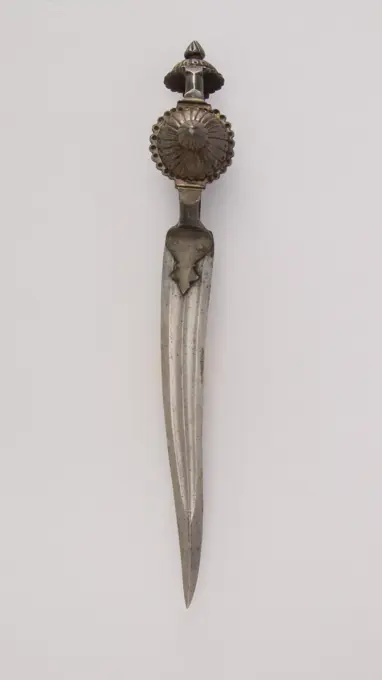
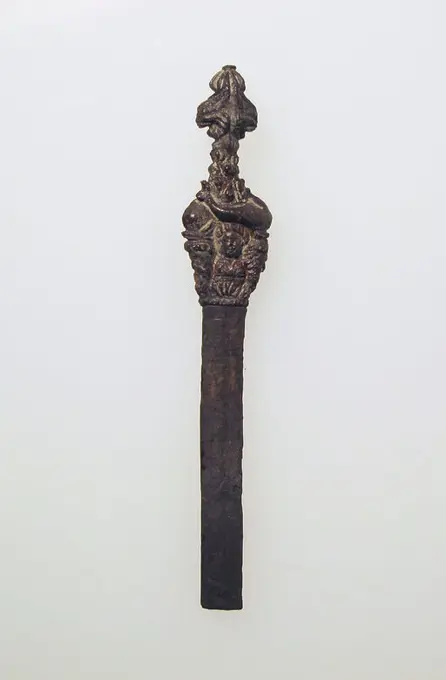
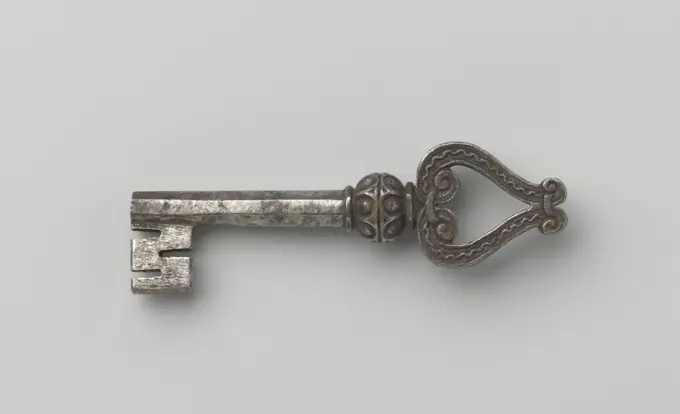
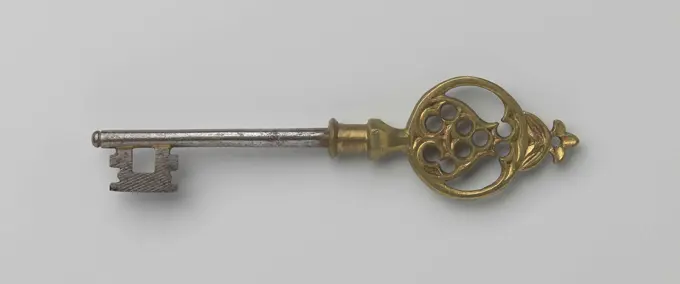
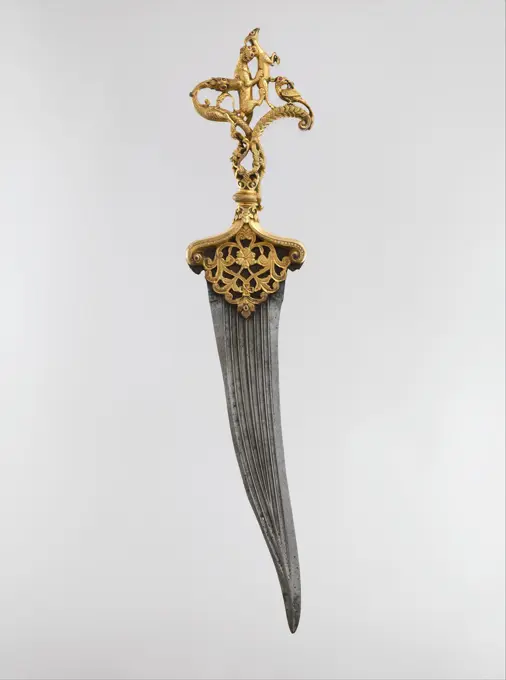
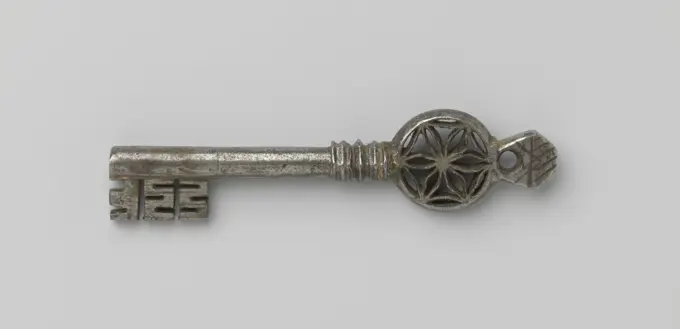
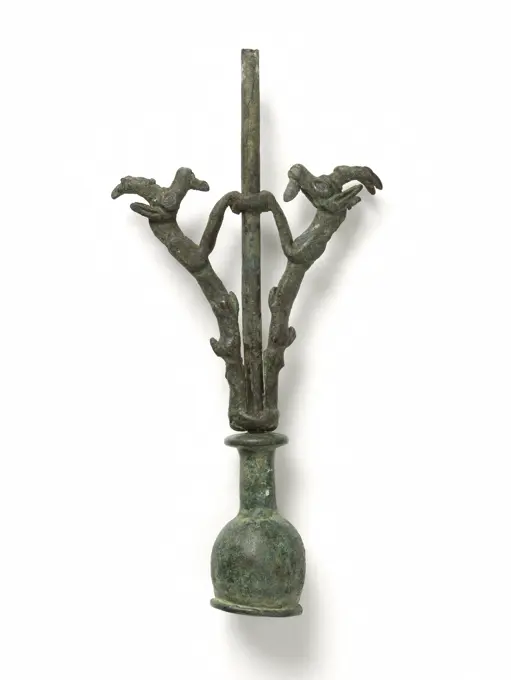
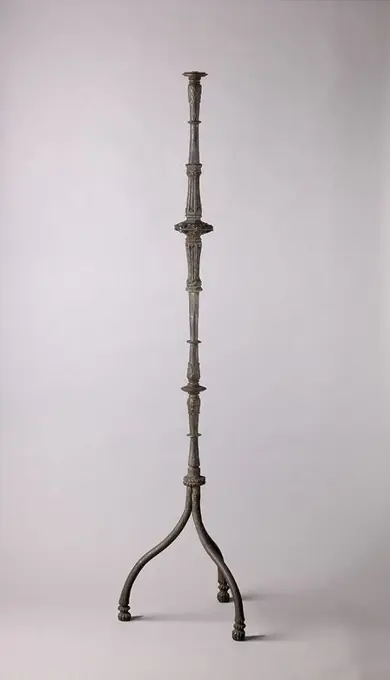
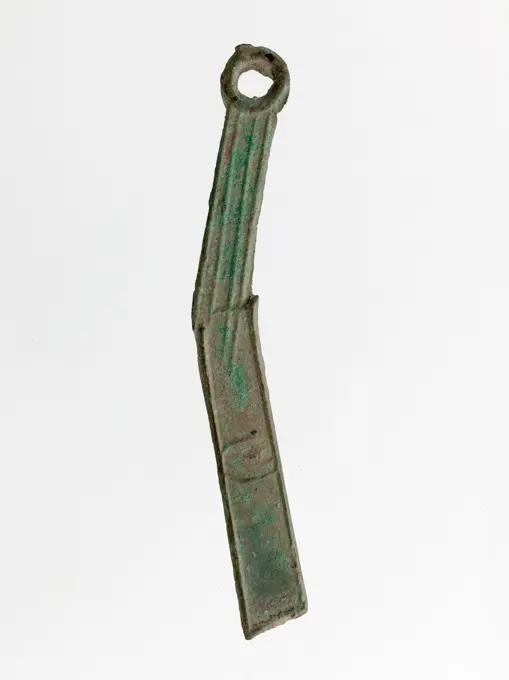
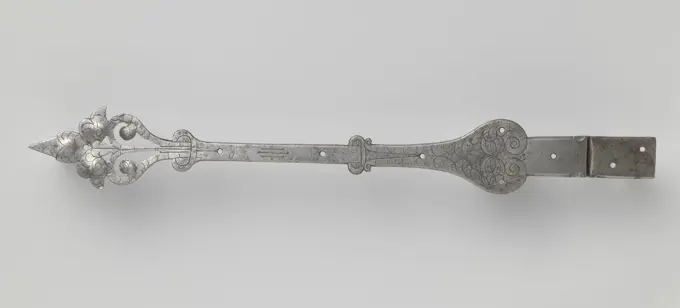
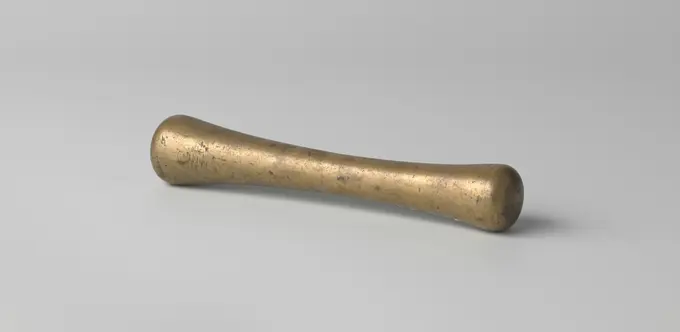
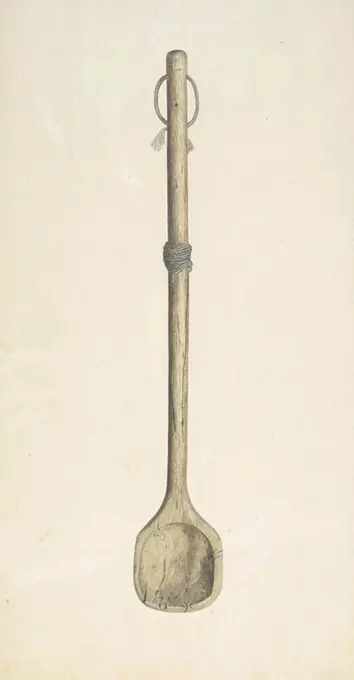
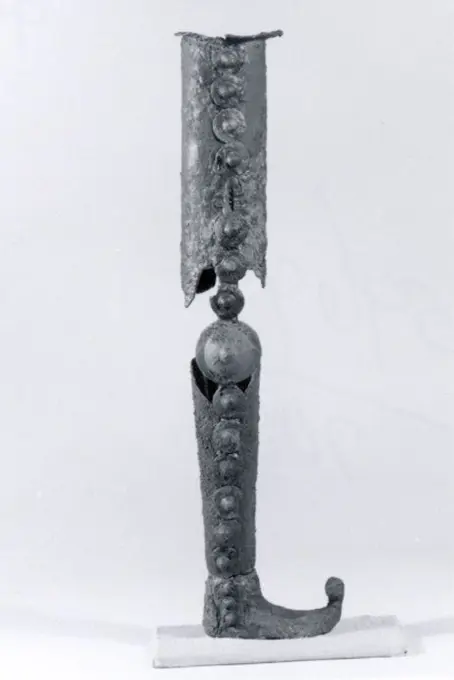
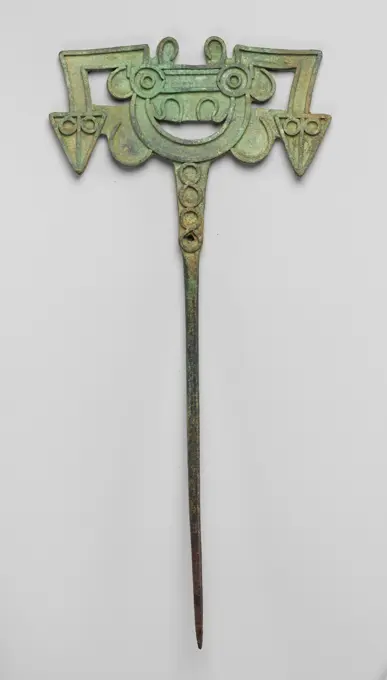
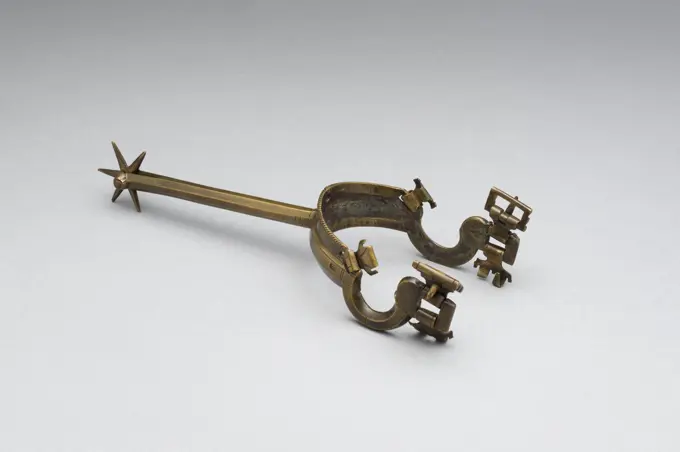
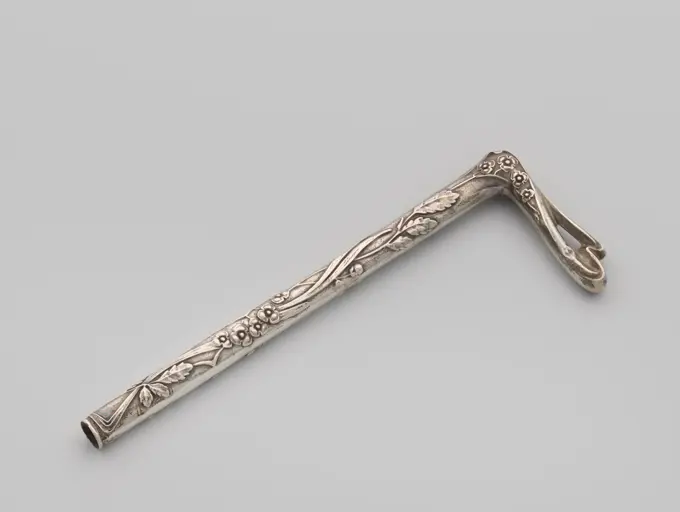
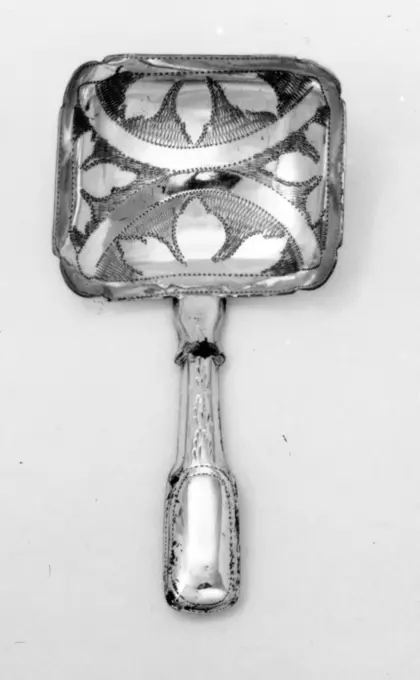
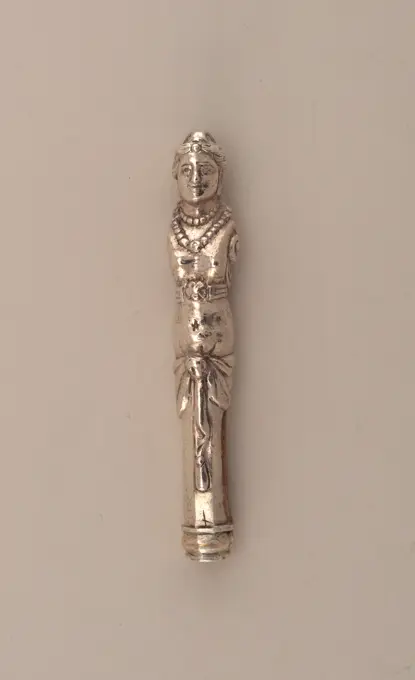
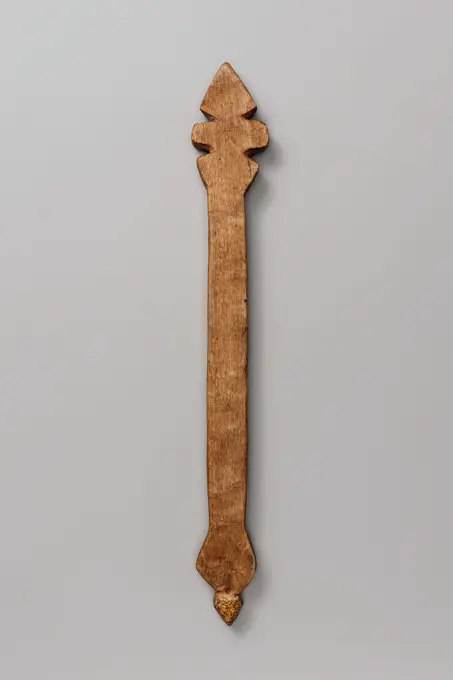
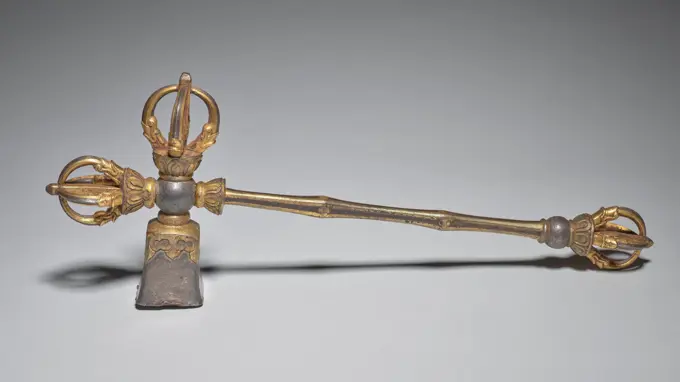
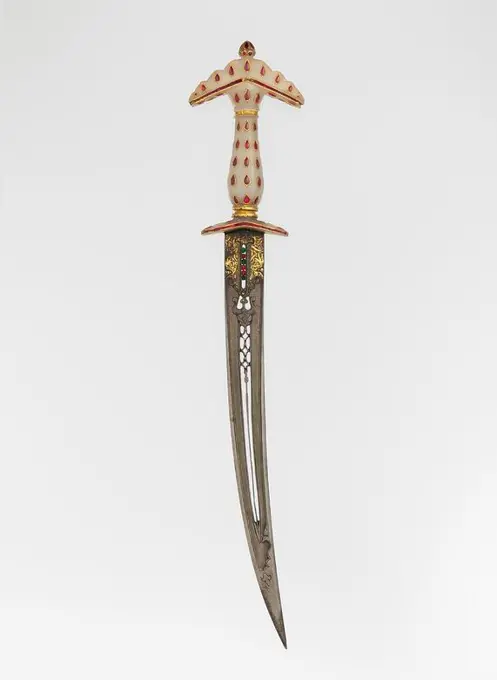
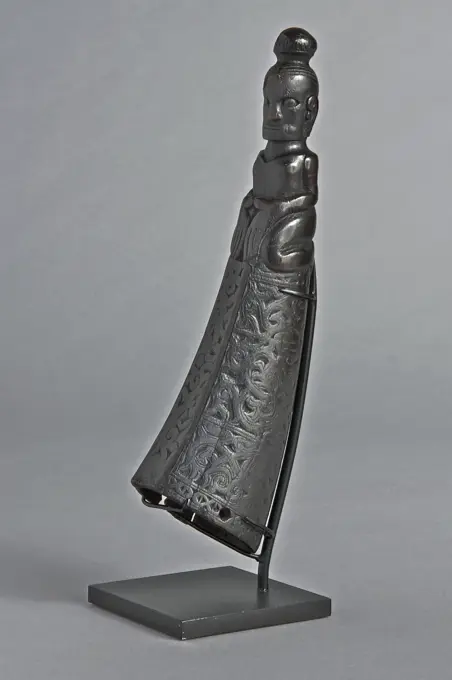
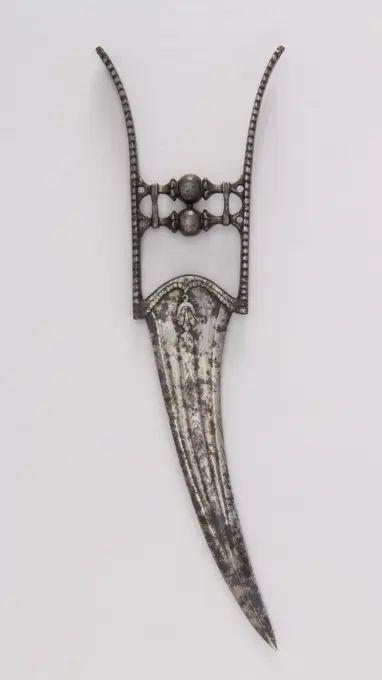
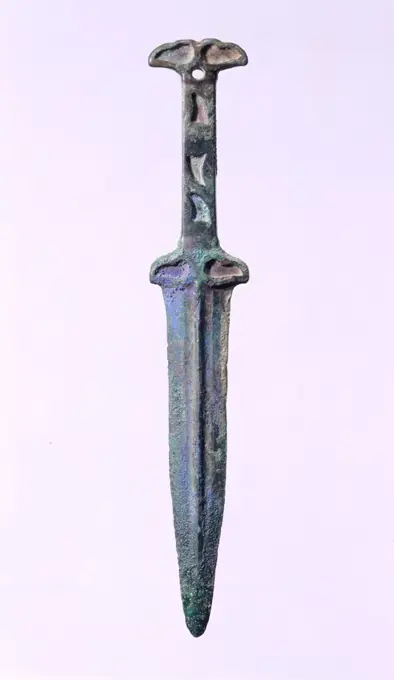
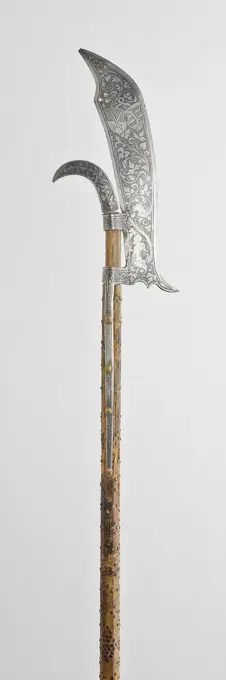
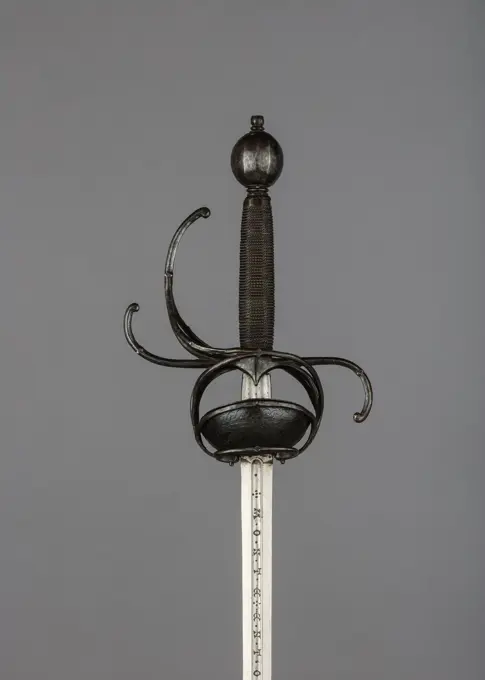
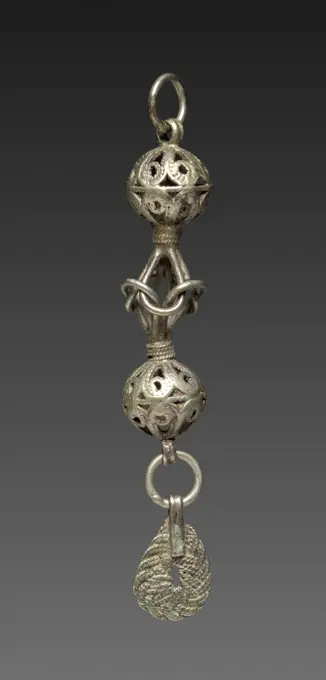
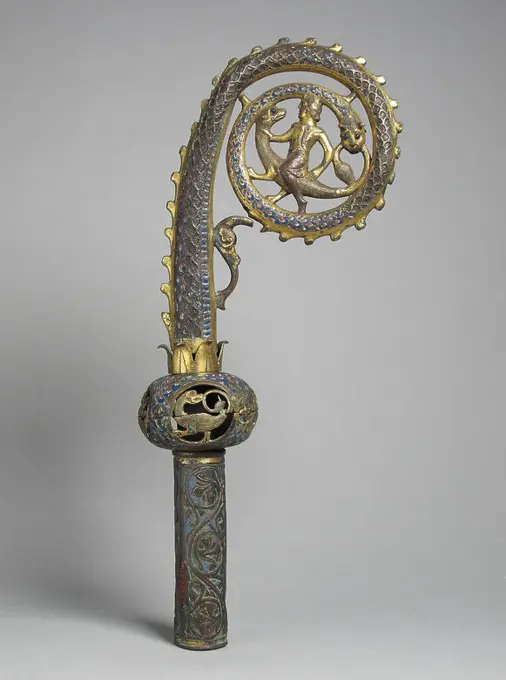
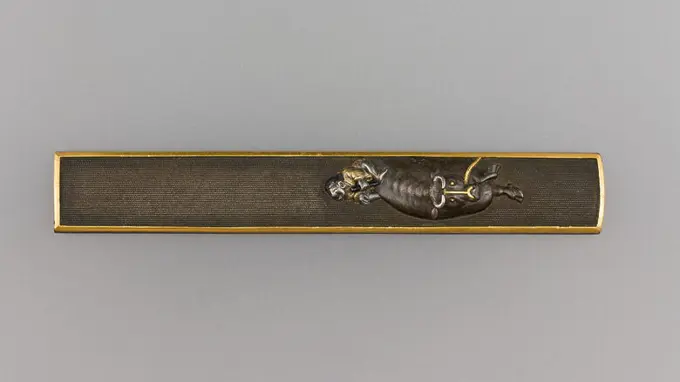
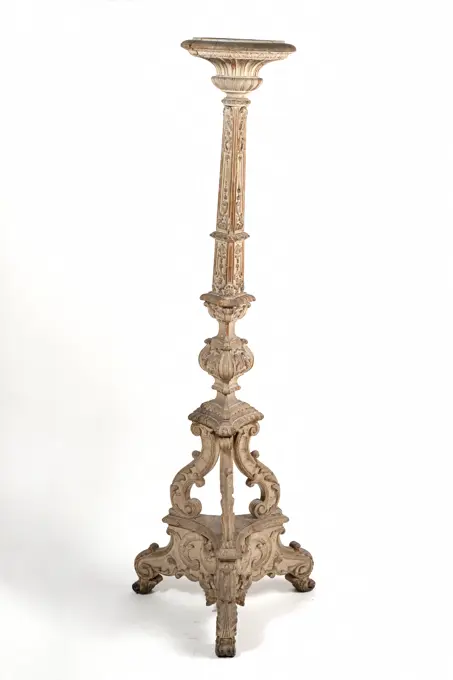
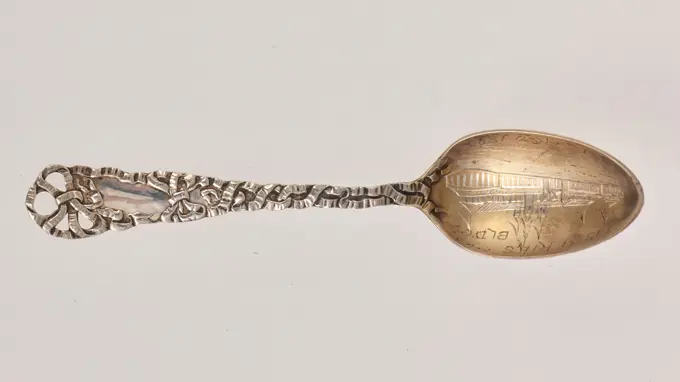
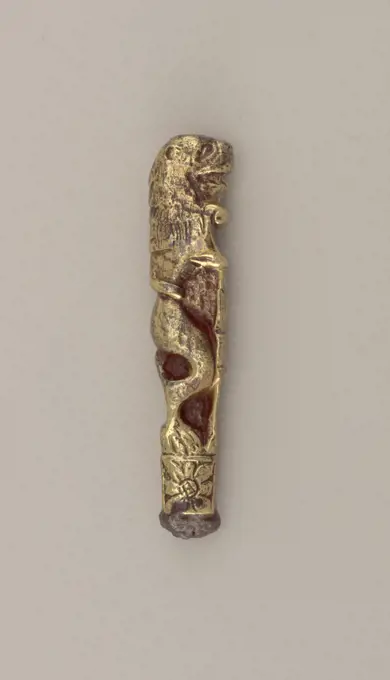
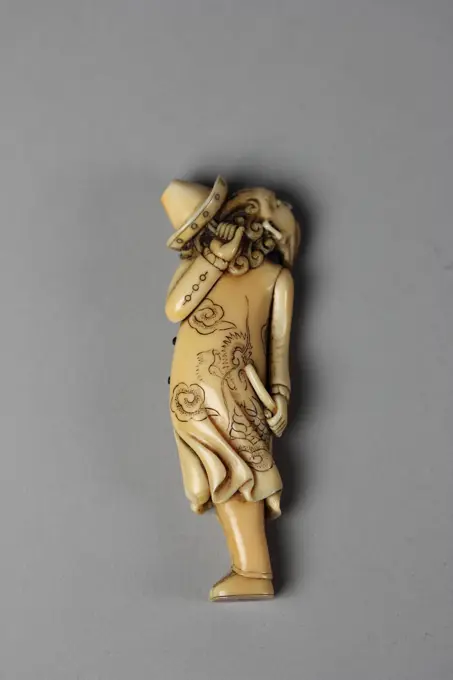
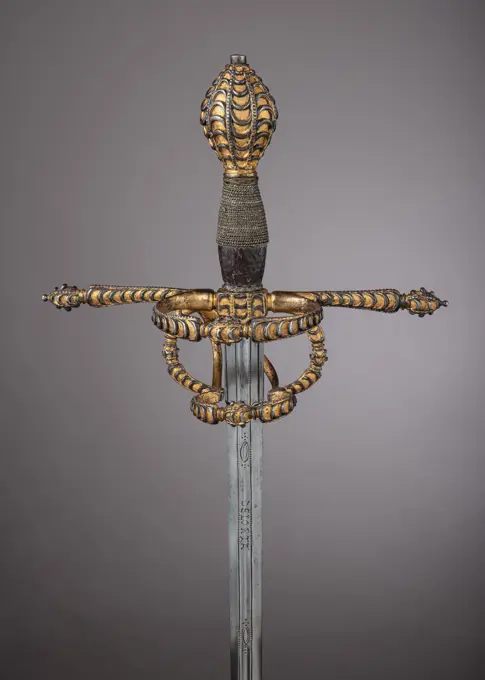
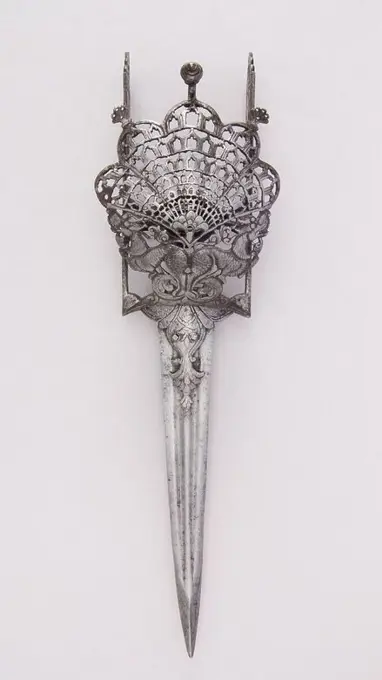
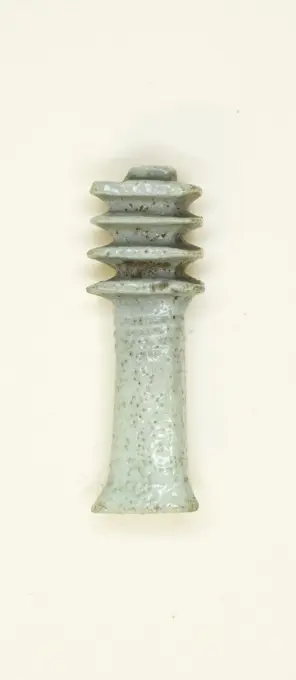
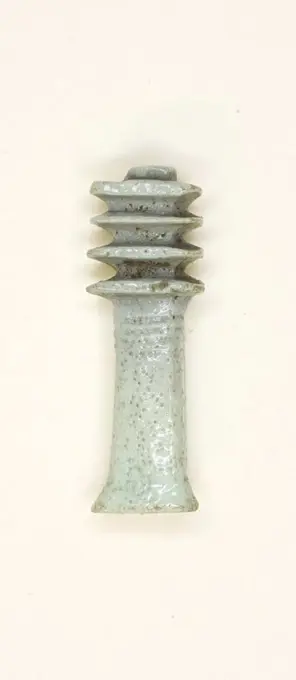
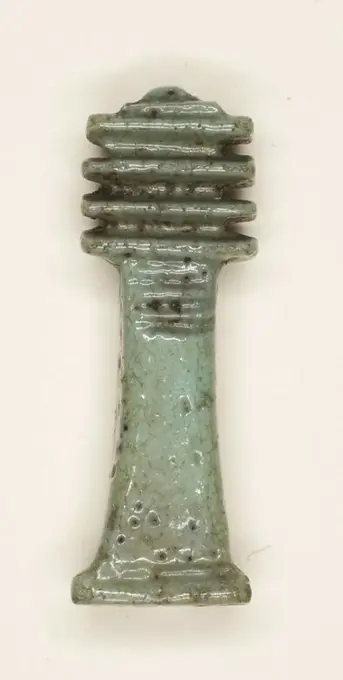
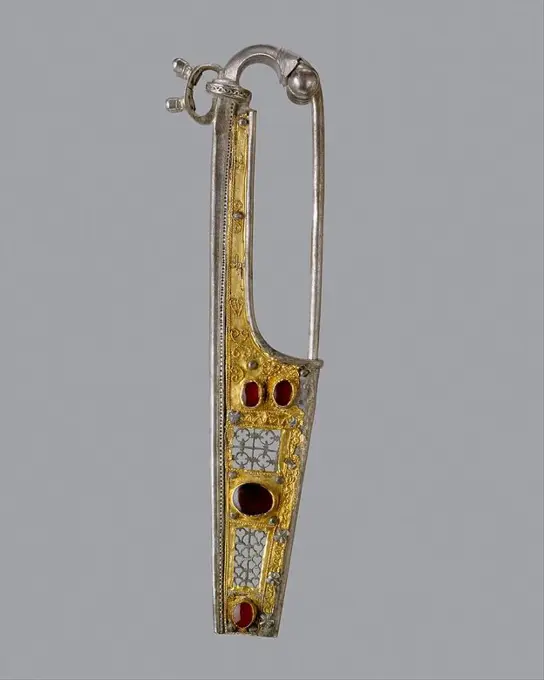
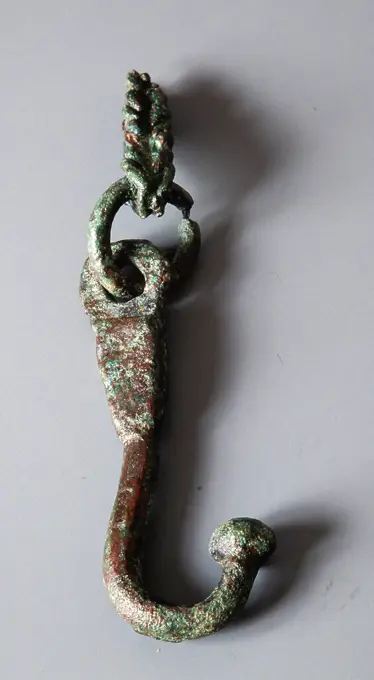
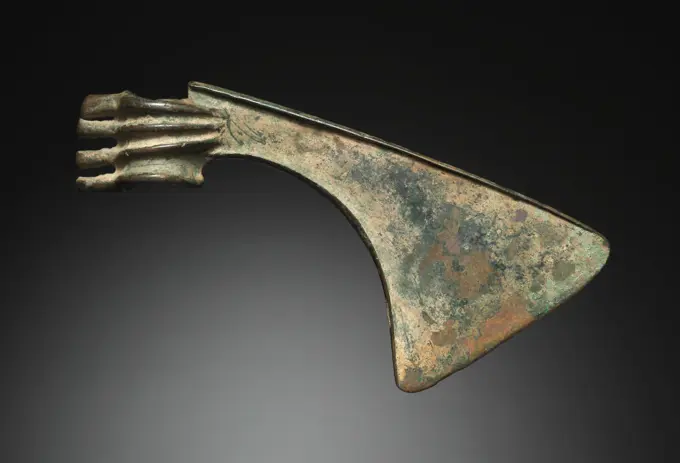
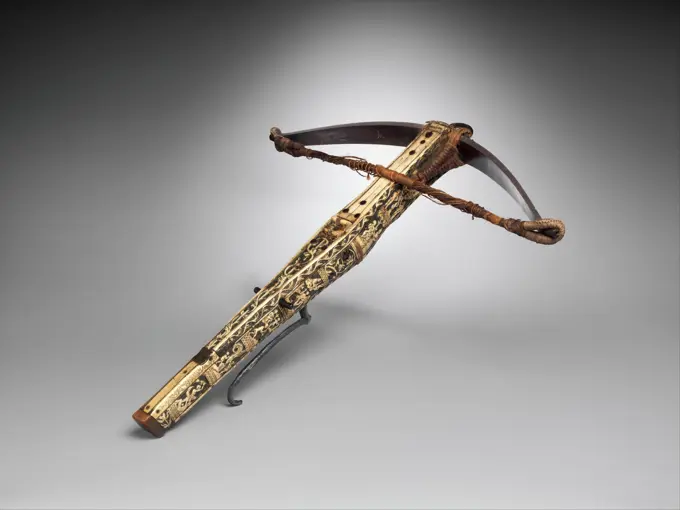
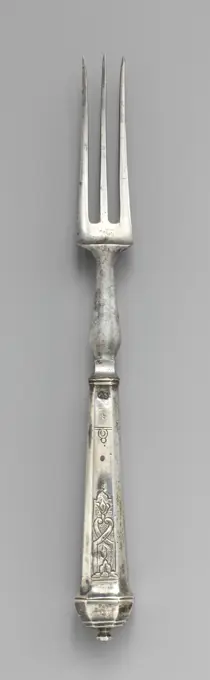
Table fork early 19th century Flemish. Table fork. Flemish. early 19th century. Steel, silver. Metalwork-SteelSpear 18th-19th century Malayan. Spear 30703Pijpsleutel.Pipe key with handle consisting of a laurel wreath to which a ribbon is stretched and the ends of which are zig-saw-wise hanging from below against a circular capital. An eagle is attached to one side of the handle. Handle and capital of gold-plated copper, shaft and beard of iron.Spoon, brass, enamel, Oval bowl, decorated on back; slightly curved neck. Enameled handle, floral pattern in white, pink and black on light blue ground. Brass mounts along the sides of handle., possibly Germany, ca. 1600-1700, cutlery, Decorative Arts, SpoonSheath for a Roundel Dagger ca. 1500 Italian. Sheath for a Roundel Dagger 32751Knife, 1700s. Spain, 18th century. Steel blade, groove horn handle with sunken silver bands; overall: 34.3 cm (13 1/2 in.); blade: 21.4 cm (8 7/16 in.); across top: 3.9 cm (1 9/16 in.).Key 9th-10th century This key, which came with a ring attached, terminates in a flat disk with two square holes and a square indentation that would have served to release a lock.. Key. 9th-10th century. Bronze; cast. Attributed to Iran, Nishapur. Excavated in Iran, Nishapur. MetalSmallsword Presented by the City of Paris to Commandant Ildefonse Favé (1812-1894) dated 1856 Paul Bled French This smallsword was presented by the City of Paris to Commandant Ildefonse Favé to commemorate his official announcement to the city of the birth of Napoléon, Prince Imperial (1856-1879), son of Emperor Napoleon III, on March 16, 1856, as indicated by the inscription on its blade. The birth of the Bonaparte heir was celebrated as an event of national importance throughout France. Sometime after the announcement, this sword was commissioned from Lepage-Moutier, a renowned firm of Parisian gunmakers. To create the hilt, Lepage employed Paul Bled (1807-1881), one of the most famous modelers and steel chiselers of the period. Perhaps to evoke the glory of previous reigns, Bled made the hilt as an exacting replica of an eighteenth-century smallsword, copying an example then in the private collection of Alfred-Emilien O'Hara, comte de Nieuwerkerke (1811-1892), Minister of Fine Arts Tweezers 7th century Frankish. Tweezers. Frankish. 7th century. Copper alloy. Made in Northern France. Metalwork-Copper alloyDagger (Bichuwa) 18th century Indian, South Indian. Dagger (Bichuwa) 31725Hair pin. Dimensions: Other: 5/8 × 5/16 × 3 5/8 in. (1.5 × 0.8 × 9.3 cm). Museum: Metropolitan Museum of Art, New York, USA.Pipe key, c. 1400 - c. 1950 Pipe key whose handle consists of a winch; The capital is spherical and decorated by an egg list. The shaft is octagonal. Empire.  iron (metal) Pipe key whose handle consists of a winch; The capital is spherical and decorated by an egg list. The shaft is octagonal. Empire.  iron (metal)Sleutel.Key with circular grip whose openings consist of fish blow and holes. It is crowned by a half round disk on which a leaf pattern is located. The capital is approximately rejuvenated upwards. Handle, capital and key chest of copper, shaft and beard of iron; Neo-gothic.Button, 1800s. Balkans(), 19th century. Silver; average: 8.3 cm (3 1/4 in.).Dagger with Zoomorphic Hilt second half 16th century Portraits of Sultan 'Ali 'Adil Shah of Bijapur (r. 1558-80) show him wearing daggers with zoomorphic hilts which combine Persian and Indian symbols of power. In this superlative, ruby-studded example, a dragon, whose tail wraps around the grip, attacks a lion, which in turn attacks a deer. Before the deer is a parrot-like bird with a snake in its beak, symbolism associated with the deity Garuda. Lower down on the hilt is the head of a yali, a mythical lion-like animal, with floral scrolls issuing from its mouth. Listen to experts illuminate this artwork's story Listen Play or pause #1173. Kids: Dagger with Zoomorphic Hilt Supported by Bloomberg Philanthropies We're sorry, the transcript for this audio track is not available at this time. We are working to make it available as soon as possible.. Dagger with Zoomorphic Hilt. second half 16th century. Hilt: copper; cast, chased, gilded, and inlaid with rubies.Blade: steel; forged. AttriPipe key, 1500 - 1600 Venetian key "with rose in the round handle on which a cross -shaped uprising is with an eye. The capital is ribbed.  iron (metal) Venetian key "with rose in the round handle on which a cross -shaped uprising is with an eye. The capital is ribbed.  iron (metal)Door stalk of iron iron, decorated with engraving and fool heads, anonymous, 1600 - 1700 Door stalk of eater decorated with engravings. The batter is from the hinge as follows: a right beginning; A nodus with two outer -looking fool heads; Narrow baluster -shaped rod, from which a few leaf motifs spring towards the end, which curls like volutes. In the middle of it, two fool heads look at each other. The whole ends in a pointed leaf with two curling tendrils on either side of them.  iron (metal). tin (metal) engraving Door stalk of eater decorated with engravings. The batter is from the hinge as follows: a right beginning; A nodus with two outer -looking fool heads; Narrow baluster -shaped rod, from which a few leaf motifs spring towards the end, which curls like volutes. In the middle of it, two fool heads look at each other. The whole ends in a pointed leaf with two curling tendrils on either side of them.  iron (metal). tin (metal) engravingFauchard of the Bodyguard of Cardinal Scipione Borghese-Caffarelli (1576-1633) Italian ca. 1600-1610 View more. Fauchard of the Bodyguard of Cardinal Scipione Borghese-Caffarelli (1576-1633). Italian. ca. 1600-1610. Steel, copper, gold, silver, wood, textile. Shafted WeaponsTaught. Two ibexes faced. LURISTAN. 1150-900 BC. J-C. Paris, Cernuschi museum. 35175-10 Confront, iron age, bouquetin, brandLacquer Hairpin with Geese. Culture: Japan. Dimensions: L. 5 1/8 in. (13 cm). Date: second half of the 19th century. Museum: Metropolitan Museum of Art, New York, USA.Candlestick. Culture: French (). Dimensions: H. 149 cm.. Date: 18th century (). Museum: Metropolitan Museum of Art, New York, USA.ForkSpoon, silver, Oval bowl, the shaped and reeded stem embossed at mid-stem with C-scroll surrounded indented oval cartouche with baluster foliate terminal below the lozenge shaped crusher., France, 19th century, cutlery, Decorative Arts, SpoonBatter, c. 1400 - c. 1950   iron (metal)   iron (metal)Monnae. Courteau yidao. Civreux petiage. Ive-iieie siecle AV.-JC. Par musée musée malée. Copper alloy, archeology, Chinese art, Yidao knife, archeological vestigeKey, c. 1400 - c. 1500 Finely driven key, the back a jour.  iron (metal) Finely driven key, the back a jour.  iron (metal)Parasol button or umbrella button of painted wood, with fan motifs in red, blue and green, Gustav Schnitzler, c. 1920 Konical parasol button or umbrella button made of painted, cut wood. The button is dark brown and is decorated with fan motifs in red, blue and green. There is a leather belt around the button. Nijmegen whole: Wood (plant material). belt: Leather painting Konical parasol button or umbrella button made of painted, cut wood. The button is dark brown and is decorated with fan motifs in red, blue and green. There is a leather belt around the button. Nijmegen whole: Wood (plant material). belt: Leather paintingMountHinge, c. 1400 - c. 1950   metal   metalStamper van brons.Bronze pistil thickened to both ends.Two bandeliers with gilded lion heads, 1825 - 1832  Lacquered leather couple with gilded lion heads. Netherlands leather. gilding (material)Baker's Mixing Spoon. Dated: c. 1939. Dimensions: overall: 40.9 x 21.7 cm (16 1/8 x 8 9/16 in.) Original IAD Object: 18" long, 2 13/16" wide. Medium: watercolor, graphite, and colored pencil on paperboard. Museum: National Gallery of Art, Washington DC. Author: Paul Poffinbarger.Cranequin (Winder) for a Sporting Crossbow Made 1550-1620 Germany. Steel, wood, and cord .Leg of a chair or table () ca. 9th century B.C. Iran. Leg of a chair or table () 325609Pin Recuay artist(s) 200-700 CE View more. Pin. Recuay artist(s). Recuay. 200-700 CE. Copper (cast). Peru, Ancash. Metal-OrnamentsMountSpoon 5th-6th century Byzantine. Spoon 463638Pair of Rowel Spurs ca. 1500 and 19th century South German This pair is composed of a genuine iron spur plated covered with brass foil, and a 19th-century reproduction covered with red copper plated with a brass-like patina. The authentic one bears the stamp of its maker, a letter R. Its original mate which the copy is replacing is preserved in the Kunsthistorisches Museum in Vienna (A131).Around 1400, the length of the rowel spurs necks started to increase in western Europe, some examples extending even as long as the riders foot in the 15th century. At this period, the elevated war saddles and the very specific riding style, with long stirrup leathers and legs extended forward, had the consequence of taking away the riders feet from the horses flank. Thus, these long necks gave them easier access without having to disturb the riders position too much. As the riding position changed at war in the first decades of the 16th century, such long necks were not needed anymore. However,Figurine. UnknownHandle from silver, anonymous, c. 1775 - c. 1800 A loose silver handle. On the four children in medallions and running dogs and a deer and on the point and running horse.  silver (metal) A loose silver handle. On the four children in medallions and running dogs and a deer and on the point and running horse.  silver (metal)Dagger with Sheath. Culture: Turkish. Dimensions: L. with sheath 20 3/4 in. (52.7 cm); L. without sheath 19 1/16 in. (48.4 cm); L. of blade 14 5/8 in. (37.1 cm); W. 1 7/8 in. (4.8 cm); D. 1 1/4 in. (3.2 cm); Wt.14.3 oz. (405.4 g); Wt. of sheath 9.4 oz (266.5 g). Date: 19th century. Museum: Metropolitan Museum of Art, New York, USA.Ear 1400 - c. 1950 jewellery Earseyers of the Niassers. See also NG-NM-7106-1.  gold (metal)   IndonesiaParasolknop met Jugendstil-ornament., anonymous, c. 1900 Silver's parasol button, decorated with Jugendstil ornament in relief. Master signs: a climbing animal (unicorn) In standing oval, and a boar. Germany silver (metal) Silver's parasol button, decorated with Jugendstil ornament in relief. Master signs: a climbing animal (unicorn) In standing oval, and a boar. Germany silver (metal)Unite and Hilliard, Caddy Spoon, 1828/29, silver.Oboe ca. 1785-1800 Jacob Anthony American Jacob Anthony was born in Germany in 1736 and emigrated to the United States, where he established his own shop in the 1760s. Like many other musical instrument manufacturers, Anthony used his skills to produce a variety of products. He is listed in Philadelphia directories as a musical instrument maker and a wood turner. This oboe is typical of a German-made instrument from the eighteenth century and one of the earliest known oboes to have been made in the United States.. Oboe 503489Ceremonial Spoon, 19th century, 17 x 3 5/16 x 4 in. (43.18 x 8.41 x 10.16 cm) (including attached base), Wood, Democratic Republic of the Congo, 19th centuryKnife, Figures 16th-18th century Quechua (). Knife, Figures 307469Table knife with forged blade and machined brass handle, blade with crown with three holes, knife cutlery soil find iron brass metal, archeologyLiturgical Spoon 6th century Byzantine. Liturgical Spoon 468506Handle (probably Italy); silver; L x W: 8 x 0.9 cm (3 1/8 x 3/8 in.); The Robert L. Metzenberg Collection, gift of Eleanor L. Metzenberg; 1985-103-254-bRitual staff China Linear scrolls decorate the handle of this ritual staff (khatvanga), which is thought to quell demons and, by extension, the various obstacles found on one's spiritual journey. The finial of the staff consists of an overflowing vase, a long-standing Indic symbol of abundance, set beneath three heads-one human, one decaying, and one skeletal-which symbolize the inevitability of change and death.. Ritual staff 39392Krzyż ręczny. nieznany warsztat etiopski (1400-1970), authorVajra Hammer, 17th century, 13 11/16 x 5 1/4 x 1 7/8 in. (34.8 x 13.3 x 4.8 cm), Iron with silver and gilt, Tibet, 17th century, A vajra hammer (skt. vajramudgara, Tbt. dorjey towa) symbolizes the relentless effectiveness of critical wisdom to smash ignorance and illusion. The hammer is often shown being carried by numerous deities and dharma protectors in Buddhist sculpture and painting, and it is used by the priesthood in esoteric rituals. It is employed, for instance, in the purification ceremony that preceeds a kalachaka initiation.Folding knife 17th century possibly Swiss. Folding knife. possibly Swiss. 17th century. Steel, silver, mother-of-pearl. Metalwork-SteelCaucasian kamaDagger with Sheath. Culture: Hilt, Indian, Mughal; blade, Turkish or Indian. Dimensions: L. 17 in. ( 43.18 cm). Date: late 17th century. Museum: Metropolitan Museum of Art, New York, USA.Belt hook China. Belt hook 61081Magic Horn or Gunpowder Horn(Salempang)Four knives and a fork belonging to Emperor Charles V, anonymous, 1532 Pre -cutting knife with the coat of arms of Karel V with motto on the front of the blade. On the other side a cartouche with an inscription. Italy copper (metal). ebony (wood). iron (metal) Pre -cutting knife with the coat of arms of Karel V with motto on the front of the blade. On the other side a cartouche with an inscription. Italy copper (metal). ebony (wood). iron (metal)Dagger (Katar) 18th century Indian. Dagger (Katar) 31525Short Sword with Birds' Heads on the Handle 6th-5th century B.C. North China and south-central Inner Mongolia. Short Sword with Birds' Heads on the Handle 59448Belt Hook 15th century French. Belt Hook. French. 15th century. Wrought Iron. Metalwork-IronSleutel.Key of which the round handle is formed from rank ornaments. The shaft is baluster-shaped and canceled and walks past the beard and ends in a flat button.Button, 1800s. Balkans(), 19th century. Silver; average: 8.3 cm (3 1/4 in.).Glaive of the Bodyguard of August I, Elector of Saxony Made 1575-1585 Saxony. Pole arms (staff weapons) were used not only in warfare and hunting, but also in sporting combat and ceremonies. The term refers to a family of edged weapons attached to wooden staffs. With the exception of the lance, which remained the weapon of the mounted knight, all other staff weapons were wielded by men on foot by 1600. With the development of firearms and their introduction as infantry weapons, pole arms lost their importance on the field, and from the mid-16th century, they were reserved for use in sporting contests and by princely bodyguards for ceremony and parade. The blades lent themselves to embellishmentóengraving, etching, or other forms of decorationóand provided a perfect surface for the coats of arms of noble or princely families. The ceremonial use of staff weapons continues to this day with the Swiss Guards at the Vatican and Britainís Yeomen of the Royal Guard.. Steel, brass, wood, and siSitula handle with Sylen's performance;  1. PO. 5th century BC (-500-00-00--451-00-00);EtruriaRapier Spanish ca. 1600 The rapier was the principal civilian sidearm throughout the sixteenth and seventeenth centuries. Designed for cut-and-thrust fencing of progressively complex techniques, the rapier is characterized by a double-edged blade with an acute point and an elaborate guard for the hand. The guards, usually of iron or steel, were subject to a variety of embellishment. They were engraved, chiseled, gilded, damascened, and encrusted in gold and silver in keeping with fashionable styles. Unless otherwise noted, the materials, attributions, and dating given here refer to the hilts. Rapier blades, invariably of steel, bear a variety of makers marks denoting their origin in the two principal centers of blademaking, Toledo in Spain and Solingen in Germany. View more. Rapier. Spanish. ca. 1600. Steel, iron wire. SwordsButton, 1800s. Balkans(), 19th century. Silver; average: 8.3 cm (3 1/4 in.).Jineta sword. Nasrid sword type that was introduced in Al-Andalus by the Zenata, one of the Berber tribes that went to the aid of the Caliphate regime in their fight against the Christian armies. 14th century. Steel, bronze and silver. Detail of the hilt with enameled and nielloed decoration, in the form of intertwined circular bands, superimposed on other transversal and longitudinal bands with scripts alluding to God. From the Church of San Marcelo (León, Spain). National Archaeological Museum. Madrid. Spain.Head of a Crozier. Culture: French. Dimensions: Overall: 12 3/16 x 5 3/4 x 2 1/4 in. (31 x 14.6 x 5.7 cm). Date: 1210-15. Museum: Metropolitan Museum of Art, New York, USA.Knife Handle (Kozuka). Culture: Japanese. Dimensions: L. 3 3/4 in. (9.5 cm); W. 9/16 in. (1.4 cm); thickness 5/16 in. (0.8 cm); Wt. 1.1 oz. (31.2 g). Date: late 18th-early 19th century. Museum: Metropolitan Museum of Art, New York, USA.Anonymous. Tree. Carved and painted oak. 1700-1725. Paris, Carnavalet museum. Furniture, furnitureBone pin 1st-4th century A.D. Roman, Cypriot The busts were worked separately and attached. Such ornate pins were probably used as hair ornaments.. Bone pin 244085Fisheries Building Souvenir Spoon, 1893, 4 1/8 x 1 7/8 x 5/8 in. (10.48 x 4.76 x 1.59 cm), Sterling silver, 19th centuryThe Betel (Piper betle) is the leaf of a vine belonging to the Piperaceae family, which includes pepper and Kava. It is valued both as a mild stimulant and for its medicinal properties. Chewing areca nut is an increasingly rare custom in the modern world. Yet once, not so long ago, areca nut - taken with the leaf of the betel tree and lime paste - was widely consumed throughout South and Southeast Asia by people of all social classes, and was considered an essential part of daily life.Knife handle, brass, Handle of cast brass in form of standing lion holding shield on rosette decorated socle at front. Floral decoration on base., England, ca. 1650-75, cutlery, Decorative Arts, Knife handleDessert Spoon with Hunt Scenes, c. 1822. Paul Storr (British, 1771-1844). Gilt silver; overall: 22.5 x 4.6 x 3.5 cm (8 7/8 x 1 13/16 x 1 3/8 in.). Paul Storr was perhaps the most famous and successful English silversmith working in the early 19th century. This fork and spoon were originally part of a larger set. The exceptionally high quality of the metalworking and gilding of these pieces is typical of Storr's work.Netsuke of Standing Foreigner (Nanbanjin); late 18th-early 19th century Japan. Netsuke of Standing Foreigner (Nanbanjin);. Japan. late 18th-early 19th century. Ivory. Edo period (1615-1868). NetsukeRapier ca. 1570-80 European The rapier was the principal civilian sidearm throughout the sixteenth and seventeenth centuries. Designed for cut-and-thrust fencing of progressively complex techniques, the rapier is characterized by a double-edged blade with an acute point and an elaborate guard for the hand. The guards, usually of iron or steel, were subject to a variety of embellishment. They were engraved, chiseled, gilded, damascened, and encrusted in gold and silver in keeping with fashionable styles. Unless otherwise noted, the materials, attributions, and dating given here refer to the hilts. Rapier blades, invariably of steel, bear a variety of makers marks denoting their origin in the two principal centers of blademaking, Toledo in Spain and Solingen in Germany.. Rapier. European. ca. 1570-80. Steel, gold, silver. SwordsPewter spoon with Engelmerk in steel backside above, spoon cutlery soil find tin metal, Steel top behind: angel in oval archeology Stadscentrum Stadsdriehoek Rotterdam Laurenskerk war Second World War Soil discovery: during World War II in ruins at St. Laurenskerk Rotterdam.Guarded Dagger (Katar). Culture: Indian, Thanjavur. Dimensions: L. 15 7/8 in. (40.3 cm); W. 4 1/2 in. (11.4 cm); Wt. 1 lb. 6.2 oz. (629.4 g). Date: 17th century. Museum: Metropolitan Museum of Art, New York, USA.Amulet of a Djed Pillar 664 BCE-332 BCE Egypt. Faience . Ancient EgyptianPin 4th century B.C. European. Pin 90134Amulet of a Djed Pillar. Egyptian. Date: 664 BC-332 BC. Dimensions: 2 x .5 x .5 cm (3/4 x 3/16 x 3/16 in.). Faience. Origin: Egypt. Museum: The Chicago Art Institute, Chicago, USA. Author: Ancient Egyptian.Amulet of a Djed Pillar. Egyptian. Date: 1100 BC-601 BC. Dimensions: 2.25 × 0.75 × 0.5 cm (7/8 × 5/16 × 3/16 in.). Faience. Origin: Egypt. Museum: The Chicago Art Institute, Chicago, USA. Author: Ancient Egyptian.Bronze sliding key, c. 1400 - c. 1950 Bronze sliding key. unknown bronze (metal) Bronze sliding key. unknown bronze (metal)Hand Mirror, c. 1895. Villé Vallgren (Finnish, 1855-1940). Bronze and glass; overall: 27.3 x 14.6 cm (10 3/4 x 5 3/4 in.).Wing Brooch. Culture: Roman. Dimensions: Overall: 7 11/16 x 1 15/16 x 1 9/16 in. (19.6 x 4.9 x 3.9 cm). Date: 100-200.This richly decorated brooch, wrought in silver, is an exceptional example of a type of brooch made in the Roman border province of Pannonia, on the Danube River. These objects are called "wing brooches" because of the winglike extensions that flank the knob at the bend of the bow. On this work, the knob is decorated with a zigzag pattern, and the two wings are adorned with two small knobs. A punchwork design extends from the knob along the length of the bow. As is typical of the few other surviving examples of this quality, the large, trapezoidal catch plate is covered with gold foil, except where it is pierced with elaborate patterns. Twisted gold wire laid down in wavy lines and scroll-and-heart motifs decorate the foil. Four carnelians frame the two intricate openwork patterns near the tip of the catch plate--one of linked circles and one of linked hearts. Rounded Kozuka; shibuichi; Bequest of George Cameron Stone; 1936-4-590Colgador romano de bronce. Can Serra Museu de Mataró.Knife with on which the abundance and steadfastness, c. 1400 - c. 1950 On the subjects of the abundance and steadfastness. A running dog at the end. Brands l and helmeted head. With corresponding case.  silver (metal) On the subjects of the abundance and steadfastness. A running dog at the end. Brands l and helmeted head. With corresponding case.  silver (metal)Axe-Head with Four Picks, 2nd-1st Millenium BC. Iran, Luristan (), 2nd-1st Millenium BC. Bronze; overall: 9.1 x 3.4 x 21.6 cm (3 9/16 x 1 5/16 x 8 1/2 in.).Walking Stick-Hammer-Sword-Wheellock Pistol 1585-1605 Augsburg. Steel, iron, bronze, brass, gilding, walnut, ebony, nd staghorn .Penannular Brooch. Ireland, 17th-18th century. Jewelry and Adornments; brooches. Bronze, castKnifeAx Head ca. 13th-16th century probably Tibetan or Mongolian. Ax Head 35629Flute 180 BCE-500 CE Peru. Bone . NazcaLeft Leg, 1801-1900. Germany, 19th century. Steel with black paint; overall: 27.3 x 33 cm (10 3/4 x 13 in.).Knife with Porcelain Handle, silver, gold, porcelain, vitreous enamel, Gilded sabre-shaped blade, bolster decorated with scrolls in relief. Ribbed ferrule, round in section. Tapering white porcelain handle with multi-color decoration of flowers, birds and two scenes: on the front side, two men looking out over a harbor. On the back a lady with a fan standing outside next to a rosebush; landscape with trees. Gilded, scrolled decoration around scenes, along the sides, and on the top of handle., Dresden, Germany, 1830-1860, cutlery, Decorative Arts, knife, knifeCrossbow (Halbe Rüstung) with Cranequin (Winder) crossbow, ca. 1560-80; cranequin, first half of the 16th century crossbow, possibly Bavarian; cranequin, probably southern German. Crossbow (Halbe Rüstung) with Cranequin (Winder) 27870