Antique Metalware

Images of decorative metal items like forks and spoons, showcasing intricate designs and craftsmanship from different historical periods.

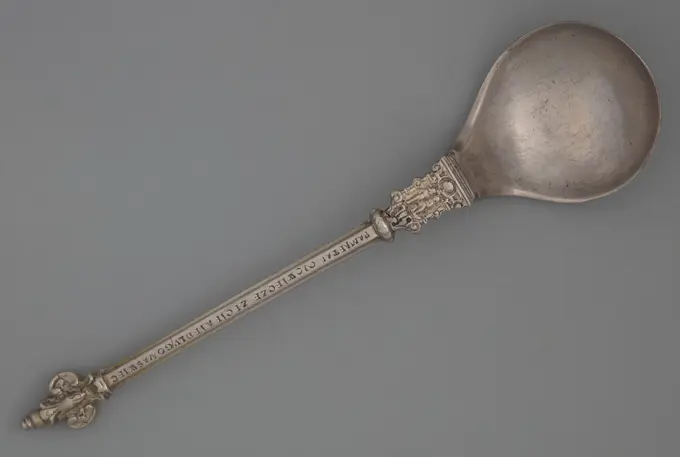
Spoon, brass, enamel, Oval bowl, decorated on back; slightly curved neck. Enameled handle, floral pattern in white, pink and black on light blue ground. Brass mounts along the sides of handle., possibly Germany, ca. 1600-1700, cutlery, Decorative Arts, Spoon
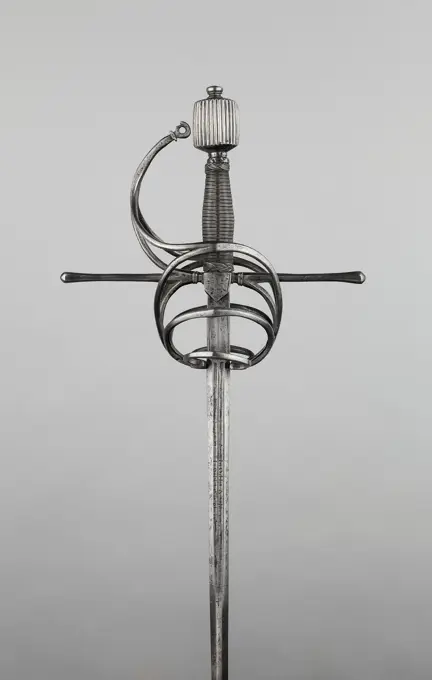
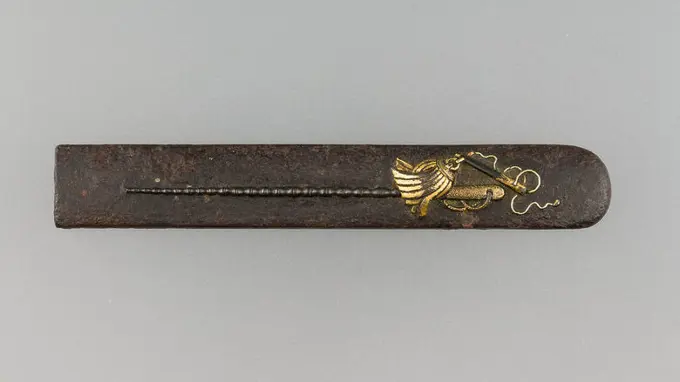
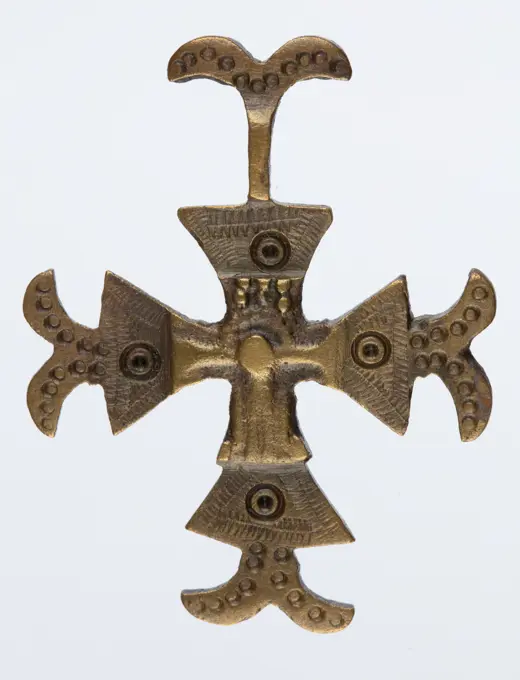
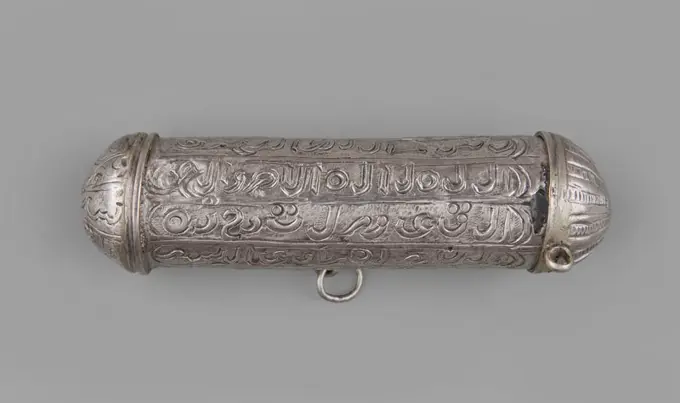
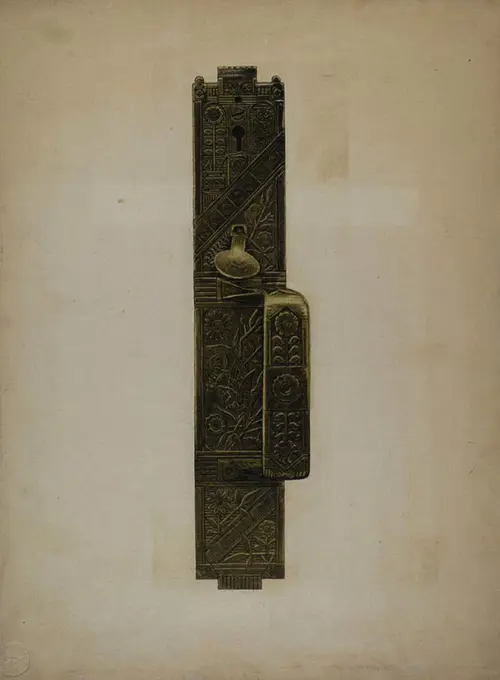
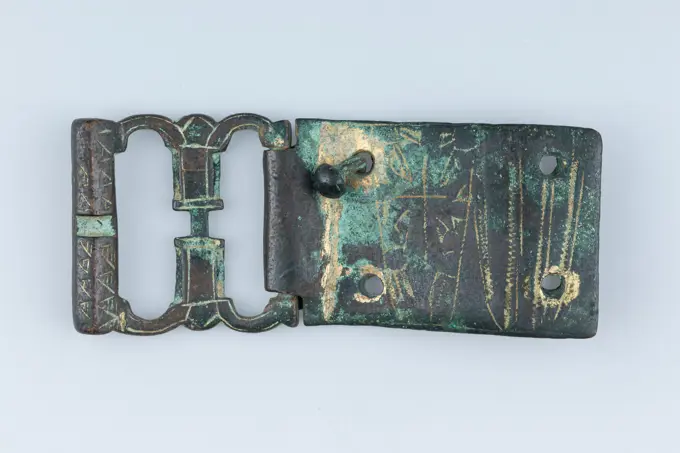
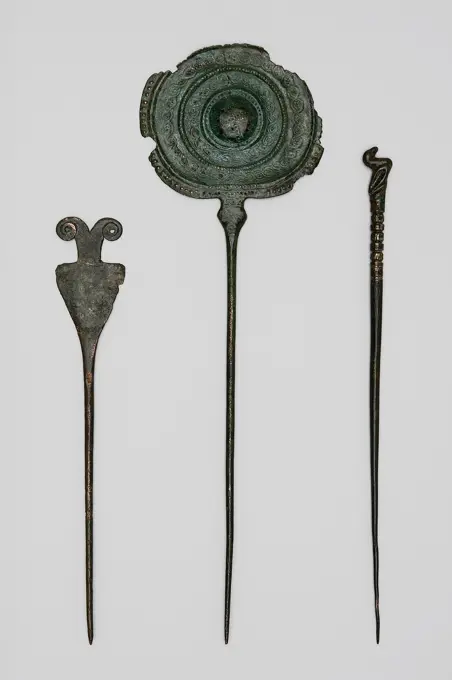
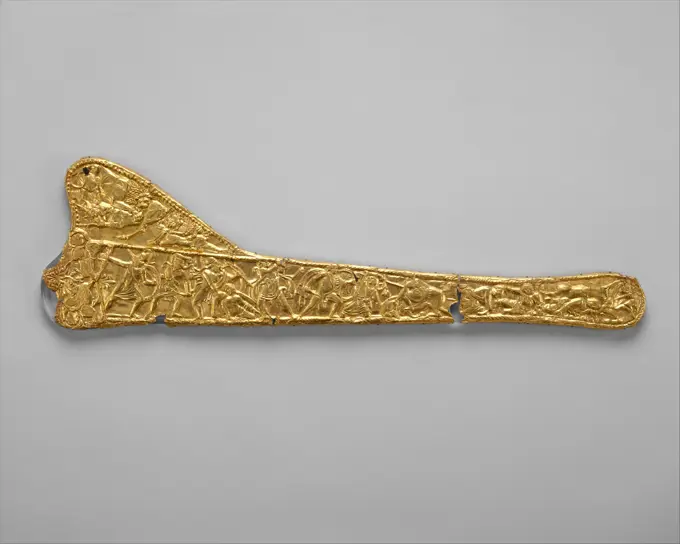
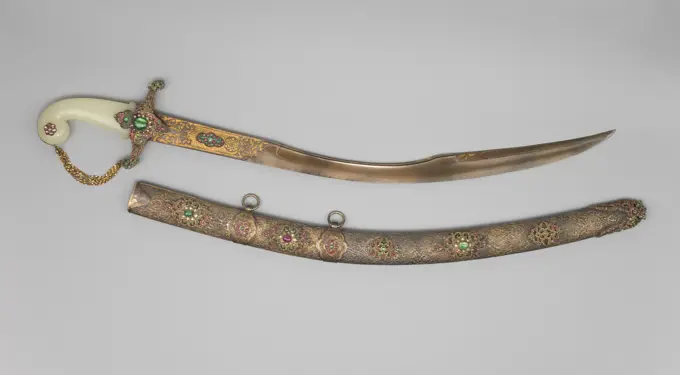
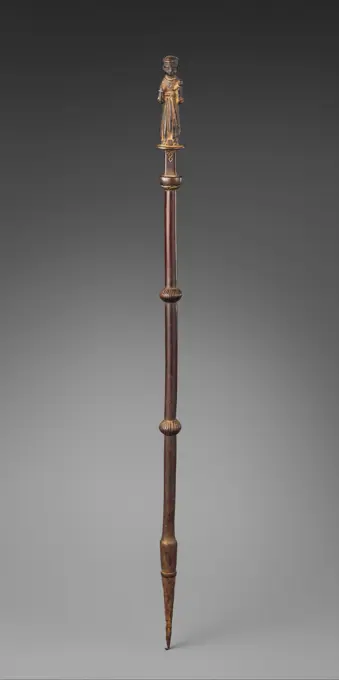
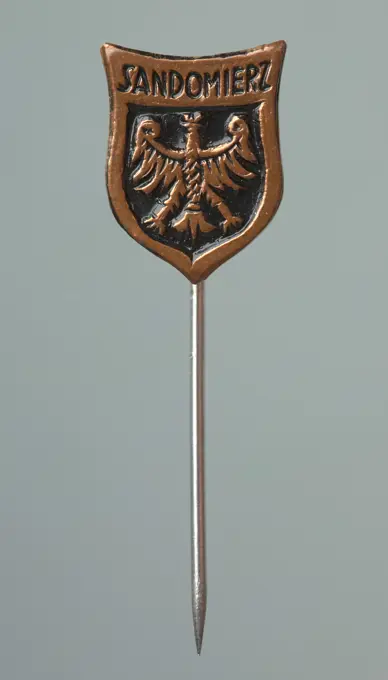
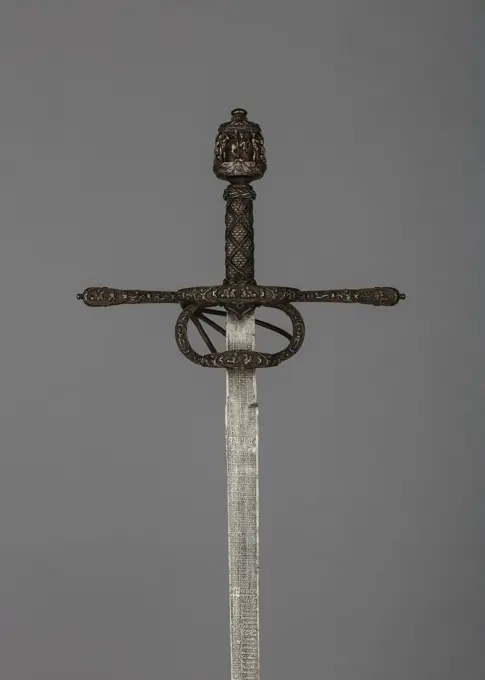
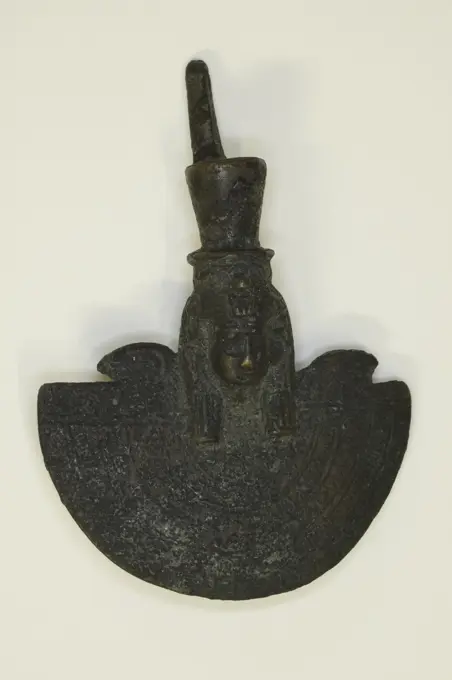
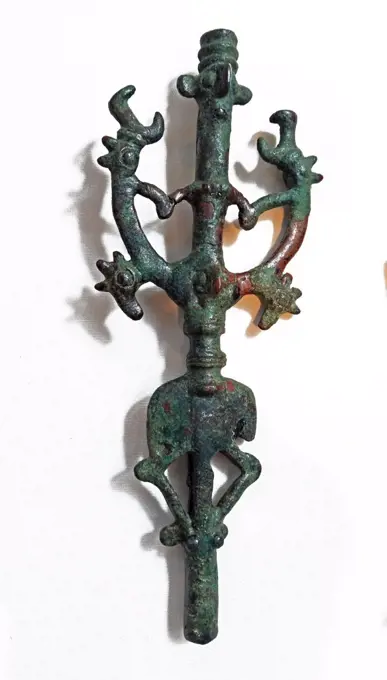
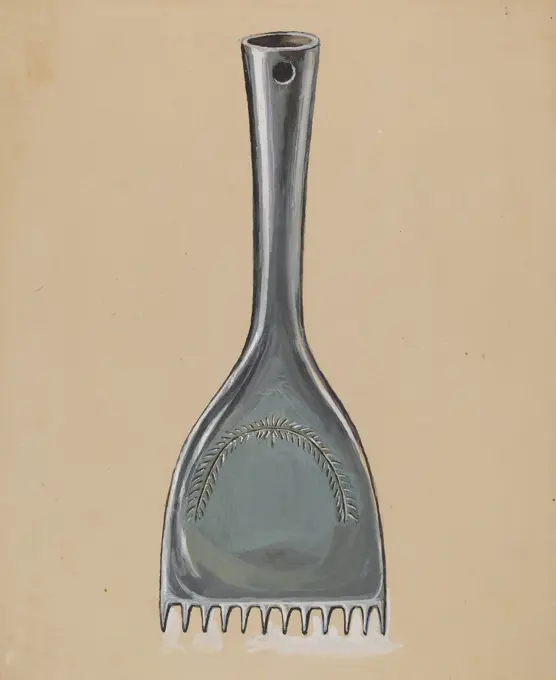
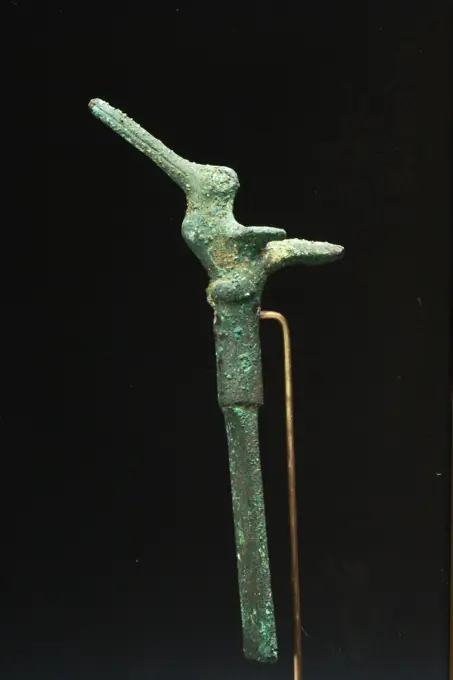
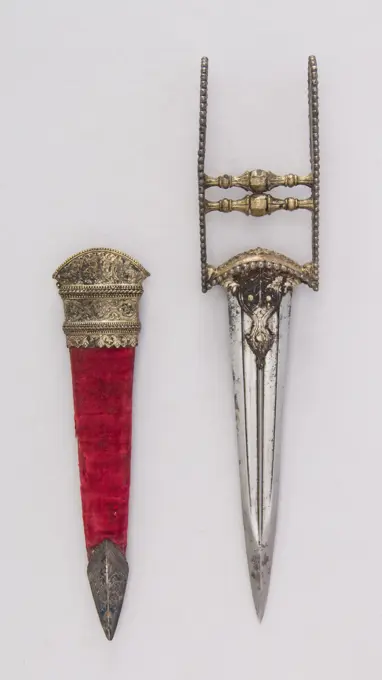
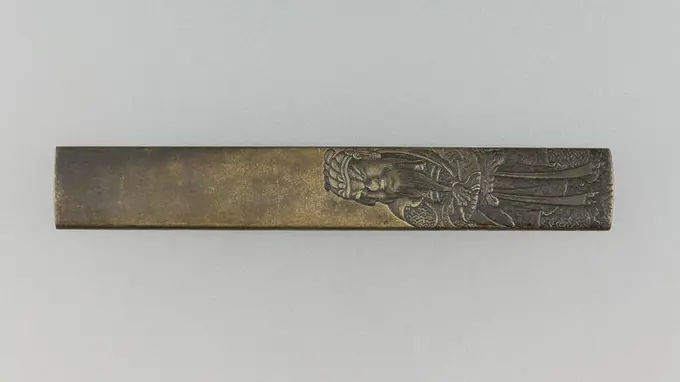
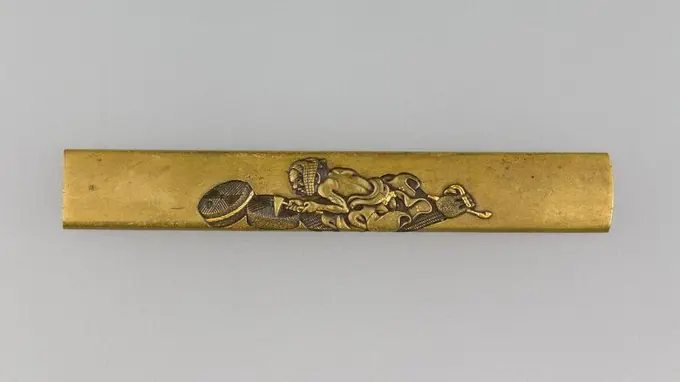
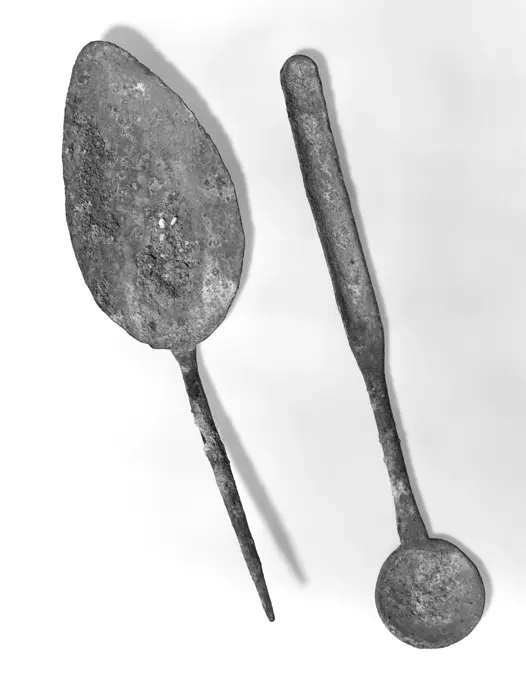
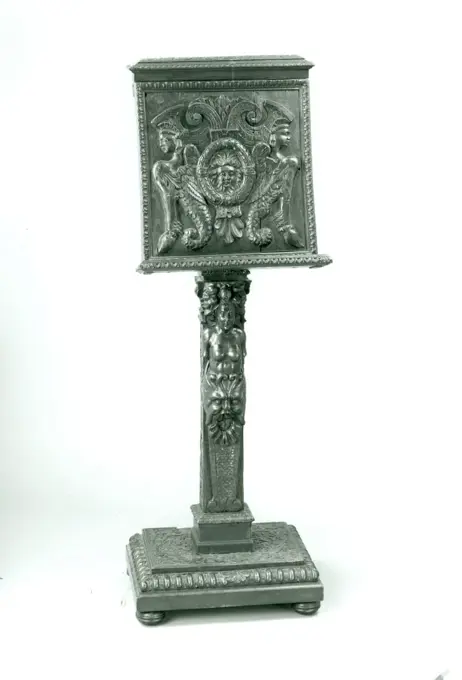
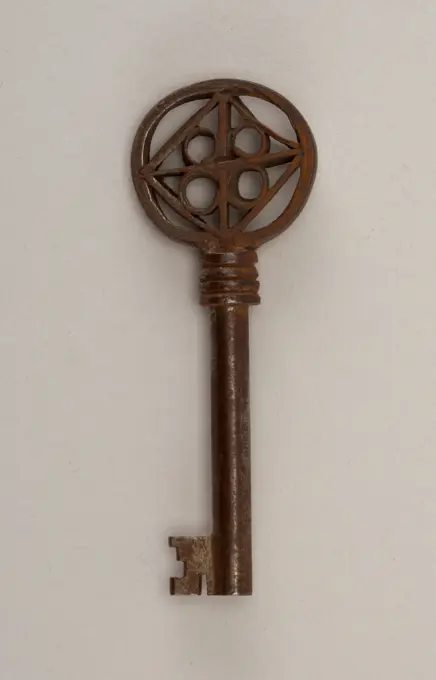
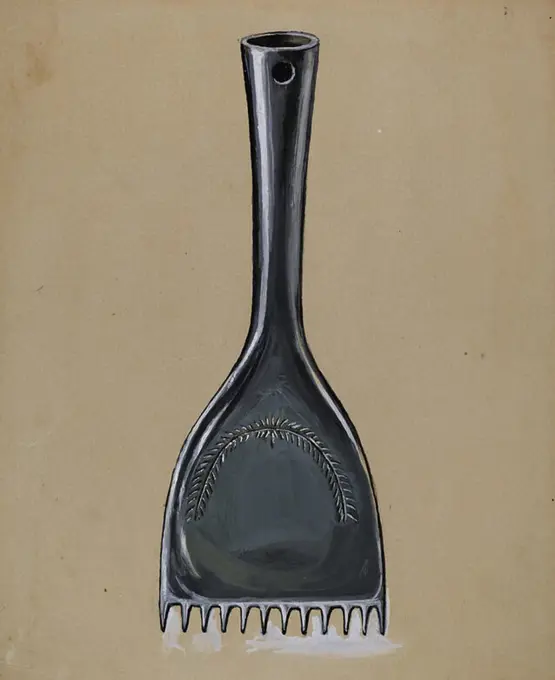
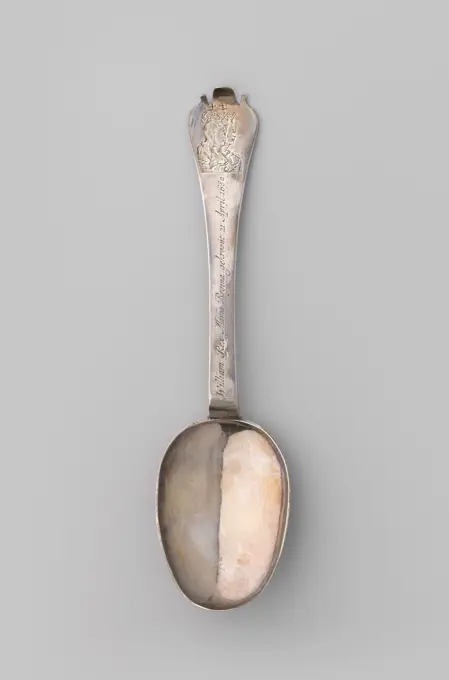
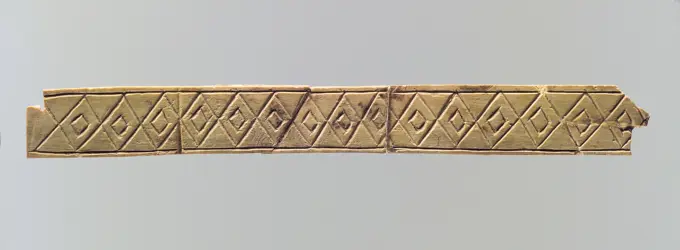
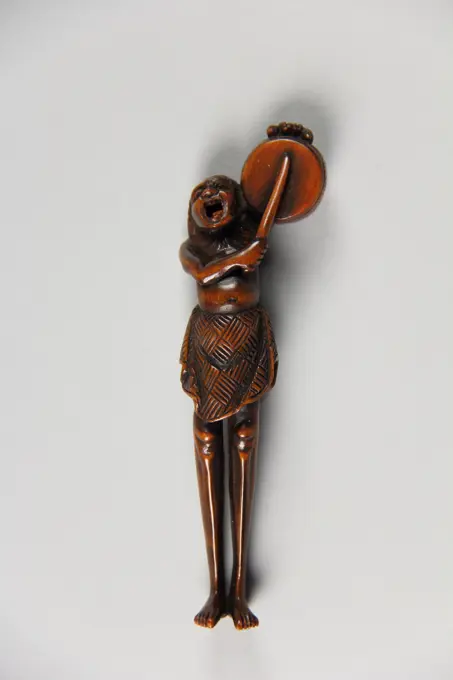
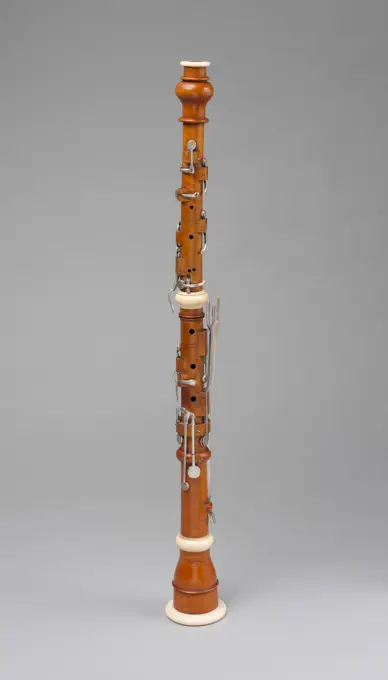
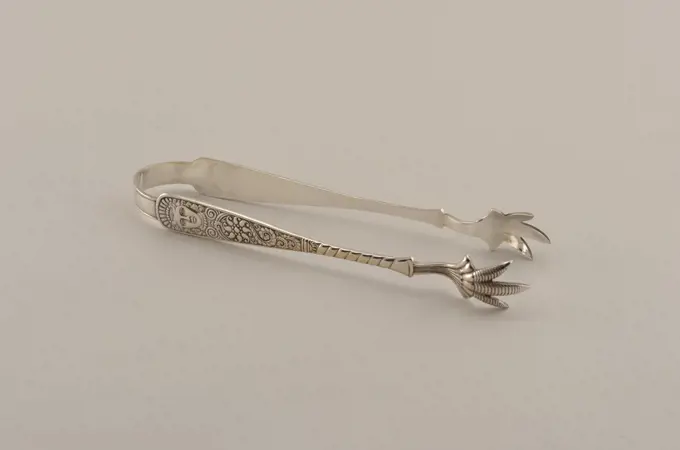
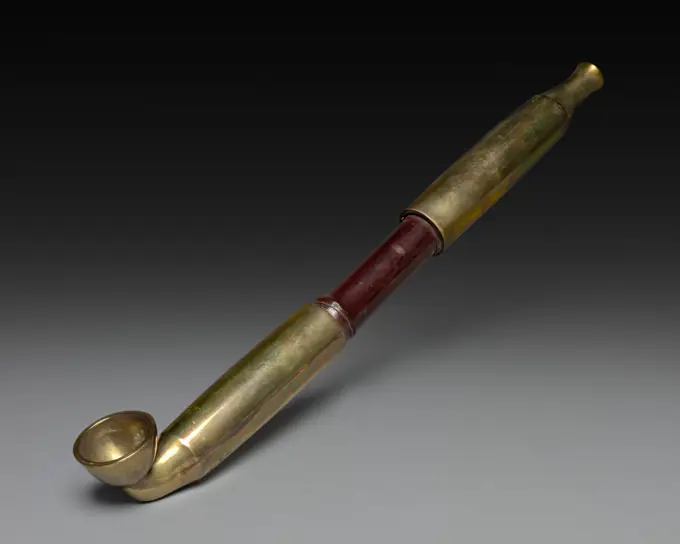
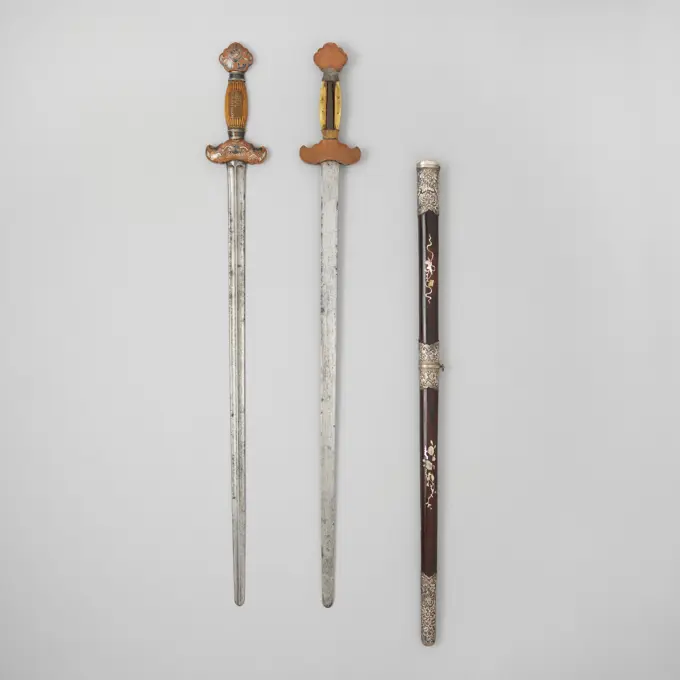
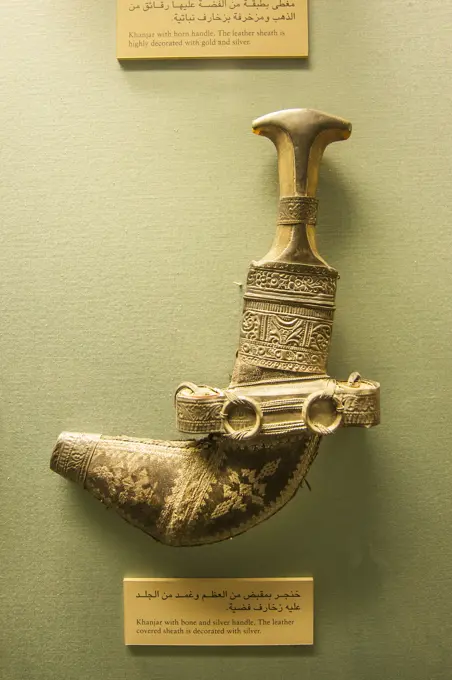
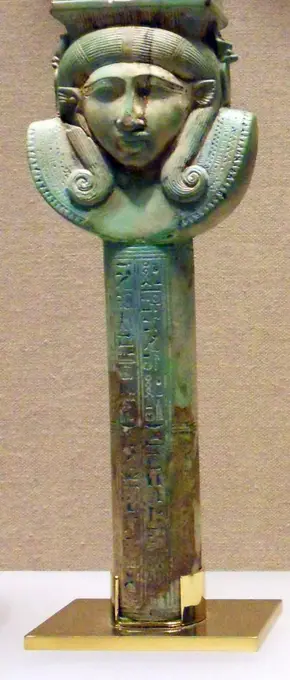
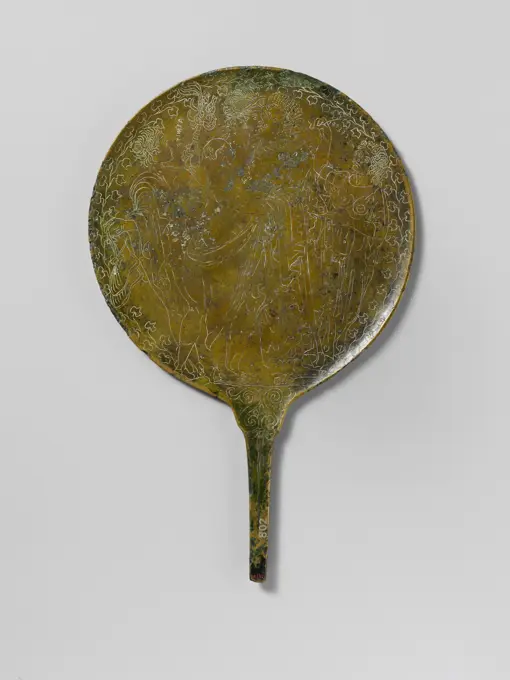
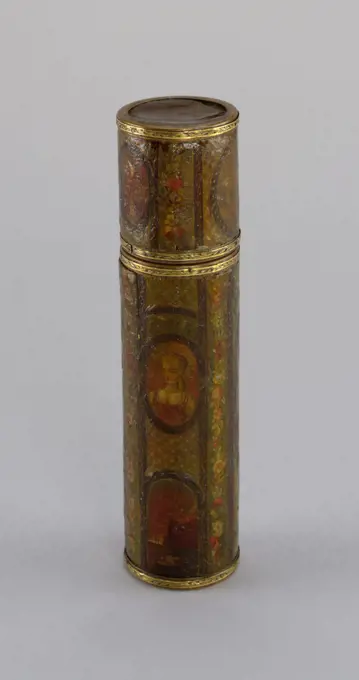
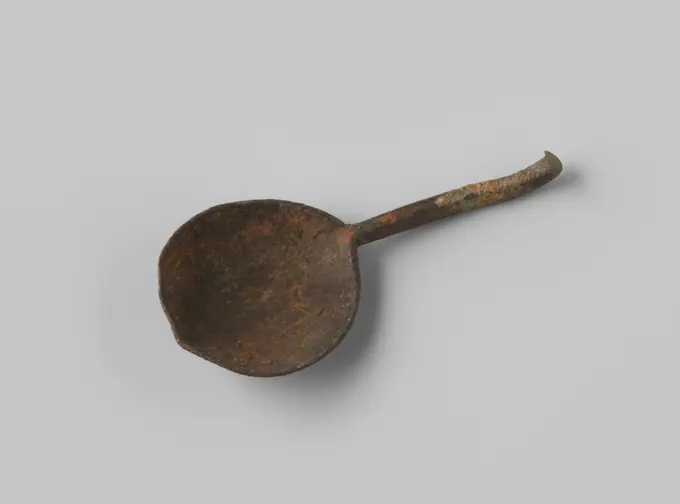
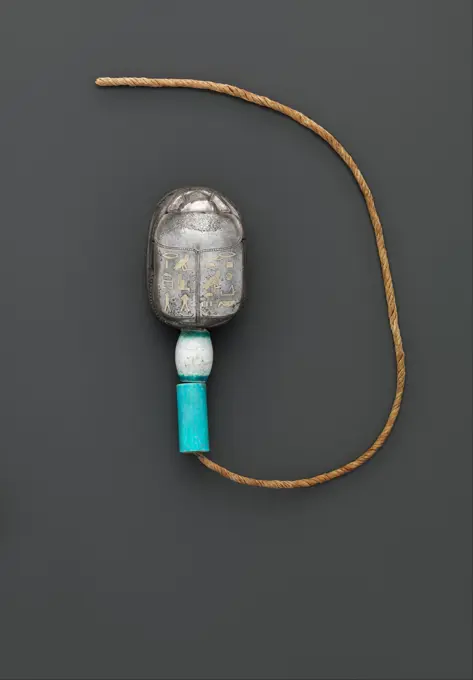
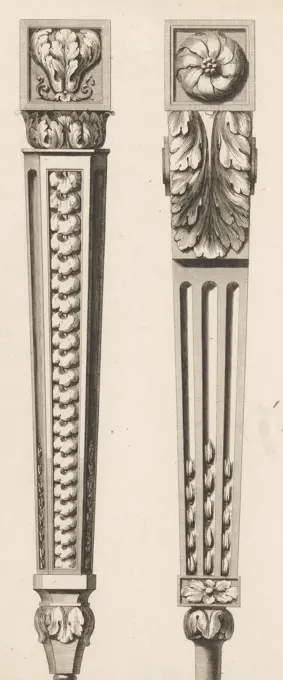
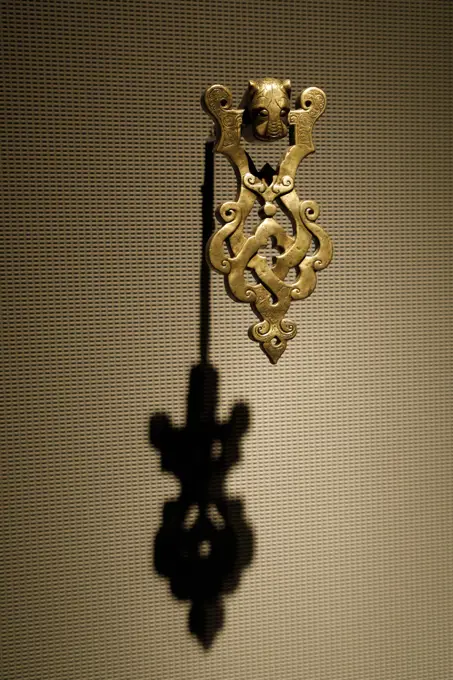
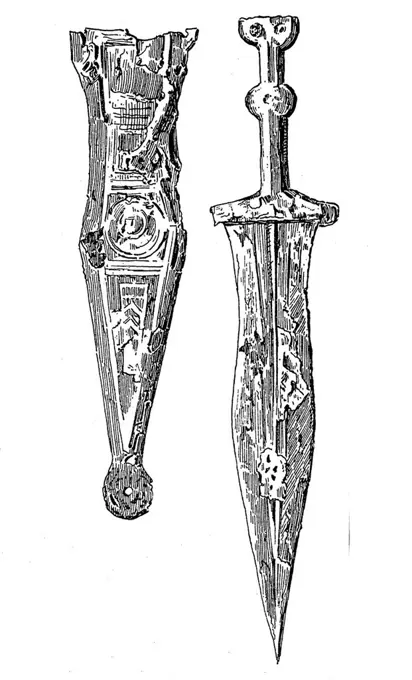
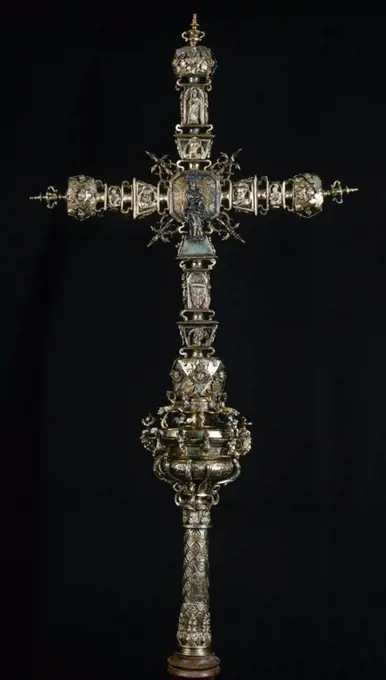
Four knives and a fork belonging to Emperor Charles V.Charles V acquired this portable cutlery set in Italy. The two large knives bear his arms and the chain of the Order of the Golden Fleece. Above this is the emperors crown and below it the Burgundian cross of Saint Andrew with the mythical pillars of Hercules (signifying the end of the world). They are all symbols of the emperors power.Rapier Made 1610-1620 Italy. Iron, steel, copper, and wood .Knife Handle (Kozuka). Culture: Japanese. Dimensions: L. 3 13/16 in. (9.7 cm); W. 9/16 in. (1.4 cm); thickness 5/16 in. (0.8 cm); Wt. 1.1 oz. (31.2 g). Date: 18th century. Museum: Metropolitan Museum of Art, New York, USA.Bliżej Kultury unknownKey Handle 1st-7th century Roman. Key Handle 462979Amulet (hijab) box. unknown, craftsmanBelt tongue with simple embossing in relief, fitting belt clothing accessory clothing soil find copper bronze metal, in current bent form) archeologyCeltic Brooch early 20th century (original dated 8th-11th century) Irish. Celtic Brooch 463127SPIEGEL, Anonymous, 1200 - 1500 Mirror, front. Indonesia bronze (metal) Mirror, front. Indonesia bronze (metal)Door Latch and Handle. Dated: c. 1939. Dimensions: overall: 45.9 x 34.4 cm (18 1/16 x 13 9/16 in.). Medium: watercolor and graphite on paperboard. Museum: National Gallery of Art, Washington DC. Author: Paul Poffinbarger.Buckle 13th century French, Haute-Savoie. Buckle. French, Haute-Savoie. 13th century. Bronze, gilt. Miscellaneous-Buckles & OrnamentBodkin; unknown Lurista workshop; VIII - VI century BC ; period of ; period II (-800-00-00-501-00-00);Nassery, Solaiman (Fl. Ca 1890-Ca 1990), Luristan browns, gift (provenance), Iron period III (approx. 800-ok 600 BCWall pedestal (one of a pair) second half 17th century Italian. Wall pedestal (one of a pair) 194527Sheet-gold decoration for a sword scabbard ca. 340-320 B.C. Greek or Scythian In the main frieze is a battle between Greeks and barbarians; at the left end stand two griffins. The irregular field above the frieze shows deer being killed, one by a lion, the other by a griffin. The scabbard from which this gold decoration came would have been of another material, possibly bronze or iron. Such an elaborately embellished scabbard would have formed part of a ceremonial set of Scythian weapons typically including a sword, a bow, and a bow sheath. The Scythians were a nomadic people who lived in the Eurasian steppes during the first millennium B.C. Although the scabbard is of Scythian type, the decoration is Greek in style and undoubtedly of Greek workmanship. Similar sheet-metal goldwork from the royal cemetery at Vergina in northern Greece and from kurgans (burial mounds) of Scythian rulers in the North Pontic region (around the Black Sea) have been linked to the same workshop. Listen to exScissors 1775-81 French, Orléans. Scissors 200460Saber (Kiliç) with Scabbard Made 1875-1900 Turkey. Damascus steel, gold, gilt brass, rubies, emeralds, diamonds, jade, and wood . IslamicAmulet of a Djed Pillar 1070 BCE-525 BCE Egypt. Faience . Ancient EgyptianPrestige Staff: Saint Anthony of Padua 19th century Kongo peoples Uniting symbols of Kongo religious and secular power, this prestige staff was used as an insignia of office by a Kongo chief. At its summit is a brass pendant of St. Anthony of Padua, one of the most beloved saints in Kongo Christianity. The figures attributes confirm his identity: the cross held in his proper right hand, the Christ child balanced on his left hand, and his simple habit. The saints head is oversized in relation to his body, providing an expansive surface for both his simply molded and detailed incised facial features. The raised oval eyes have horizontal indentations at their centers, the nose is a softly raised triangle, and the lips raise at the corners into a smile. His thick eyebrows gently arch, with vertical lines to delineate each hair. Above, his head is bald except for a ring of hair. Known as a tonsure, this shaved hairstyle represented an act of religious humility. The detail of his triple-knSugar Spoon, 1819-1838. France, 19th century. Silver; overall: 22.3 cm (8 3/4 in.).Sandomierz Badge unknown labelBuffe. Culture: Italian. Date: late 16th century. Museum: Metropolitan Museum of Art, New York, USA.Key;  k. XVII century (1701-00-00-1800-00-00);Sword with Calendar Blade hilt, Italian; blade, German ca. 1575 View more. Sword with Calendar Blade. hilt, Italian; blade, German. ca. 1575. Steel, wood, iron. SwordsRhyton, c. 700. Central Asia or Tibet, early 8th century. Silver with gilding; overall: 30.5 cm (12 in.).Amulet of an Aegis with the Head of the Goddess 1069 BCE-332 BCE Egypt. Bronze . Ancient EgyptianTubes decorated with grotesque features. Dated 700 BCEdgar L Pearce, Iron Carpet Stretcher, c 1936 Iron Carpet StretcherKnife (Tumi), 1150-1450, 8 3/4 x 3 x 2 in. (22.23 x 7.62 x 5.08 cm), Copper, Peru, 12th-15th centuryDagger (Katar) with Sheath 18th century Indian. Dagger (Katar) with Sheath 31538Przeszo Przyszoci unknownBagpipe (crèche accessory). Culture: Italian. Dimensions: Overall (confirmed): 9 × 2 1/4 × 1 in. (22.9 × 5.7 × 2.5 cm). Date: second half 18th-mid-19th century.The practice of using crèche figures to restage religious events reached the height of its complexity and artistic excellence in eighteenth-century Naples, and the Metropolitan Museum of Art's group of Neapolitan crèche is one of the finest and most complete survivals of the art form. The ensemble consists of characters traditional to eighteenth-century Italian Christmas holiday customs. The Nativity, featuring the holy family, shepherds and their flocks, and a host of angels and cherubs is joined by the procession of the three Magi and colorful peasants, townspeople, and animals. The figures have articulated bodies of tow and wire with polychromed terracotta heads, and are all in partially distressed condition.These vibrant characters are further brought to life by a wide-ranging set of cloth, embroidery, leather, wicker, waxBOKEK;  XVII/18th century (1690-00-00-1710-00-00);Curb Bit ca. 1800 German The mouthpiece would make this bit rather harsh, since, because of the central high port for the tongue, the ribbed rollers would rest directly on the bars (part of the horses jaw without teeth). Its severity would be also increased by its rigidity, since the central joint of the mouthpiece does not move and its sides not articulate with the cheekpieces. This bit was possibly used on a carriage horse.. Curb Bit. German. ca. 1800. Iron alloy, tin. Equestrian Equipment-BitsSpoon with Reclining Figure on Handle. Possibly Inca; South coast or southern highlands, Peru. Date: 1450-1532. Dimensions: L. 10.8 cm (4 1/16 in.). Bronze. Origin: Peru. Museum: The Chicago Art Institute, Chicago, USA.Knife Handle (Kozuka). Culture: Japanese. Dimensions: L. 3 13/16 in. (9.7 cm); W. 9/16 in. (1.4 cm); thickness 3/16 in. (0.5 cm); Wt. 1.1 oz. (31.2 g). Date: 18th century. Museum: Metropolitan Museum of Art, New York, USA.Pair of Wall Lights. Attributed to Jean-Louis Prieur (French, active 1765 - 1785)Knife Handle (Kozuka). Culture: Japanese. Dimensions: L. 3 13/16 in. (9.7 cm); W. 9/16 in. (1.4 cm); thickness 3/16 in. (0.5 cm); Wt. 1.1 oz. (31.2 g). Date: 18th century. Museum: Metropolitan Museum of Art, New York, USA.Door Ornament 13th-14th century European. Door Ornament. European. 13th-14th century. Iron. Metalwork-IronKnife 1839-40 British, London. Knife. British, London. 1839-40. Silver gilt. Metalwork-SilverPointed Spoon. UnknownHead of a Crozier with Saint Michael Slaying the Dragon 1220-30 French. Head of a Crozier with Saint Michael Slaying the Dragon 464684Knife Handle (Kozuka). Culture: Japanese. Dimensions: L. 3 13/16 in. (9.7 cm); W. 9/16 in. (1.4 cm); thickness 1/4 in. (0.6 cm); Wt. 1.2 oz. (34 g). Date: ca. 1615-1868. Museum: Metropolitan Museum of Art, New York, USA.Button or Bead 8th-10th century The dot-in-circle motif recalls designs presumed to be of magical significance, most likely an abstract eye to ward off the evil-eye, which serves an apotropaic function. Easily reproduced with a tool and visible in many cultures and times, this symbol may have lost its meaning, and become simply a decorative pattern, or may have one that we have not yet discovered.. Button or Bead 449297Spoon 17th century possibly German, Augsburg. Spoon 188118 possibly German, Augsburg, Spoon, 17th century, Silver, parcel-gilt, Length: 6 3/4 in. (17.1 cm). The Metropolitan Museum of Art, New York. Gift of Mrs. Samuel P. Avery, 1897 (97.2.83)Lectern (with revised old parts) 1830-60s French (). Lectern (with revised old parts) 460633Key; 1909-2-247Iron Carpet Stretcher. Dated: c. 1936. Dimensions: overall: 28 x 23 cm (11 x 9 1/16 in.) Original IAD Object: 9 1/2" long; 3 1/2" wide. Medium: watercolor, gouache, graphite on paperboard. Museum: National Gallery of Art, Washington DC. Author: Edgar L. Pearce.Spoon with engraved performance of King William III and Queen Mary, Anonymous, 1689 Spoon of silver. The egg -shaped container is provided with a long, grooved needle on the bottom and is bent by means of single praise, bent at the onset and then straight steel, which extends to the rounded end, which runs into three curling lips, A so -called "pied de biche". On the top of the stem, the crowned busts in profile of King William III and Queen Mary are engraved, with the length underneath: Willem Rex Maria Regina. Crowned. April 21. 1689. Amsterdam silver (metal) engraving Spoon of silver. The egg -shaped container is provided with a long, grooved needle on the bottom and is bent by means of single praise, bent at the onset and then straight steel, which extends to the rounded end, which runs into three curling lips, A so -called "pied de biche". On the top of the stem, the crowned busts in profile of King William III and Queen Mary are engraved, with the length underneath: Willem Rex MaShort sword and scabbard. Culture: Sasanian. Dimensions: H. 3/4 x W. 2 3/8 x L. 11 7/8 in. (1.9 x 6.1 x 30.2 cm). Date: ca. 6th-7th century A.D.. Museum: Metropolitan Museum of Art, New York, USA.Acorn-top spoon third quarter 17th century Hieronymous Holl I. Acorn-top spoon 188089 Maker: Hieronymous Holl I, master 1649, died 1679, Acorn-top spoon, third quarter 17th century, Silver, Overall: 5 3/4  1 1/2 in. (14.6  3.8 cm). The Metropolitan Museum of Art, New York. Gift of Mrs. Samuel P. Avery, 1897 (97.2.54)Border strip ca. 9th-8th century B.C. Assyrian This is one of two fragments of a narrow strip decorated with an incised row of diamonds, set within a border marked by a single line above and below. Carved ivory pieces such as this were widely used in the production of elite furniture during the early first millennium B.C. They were often inlaid into a wooden frame using joinery techniques and glue, and could be overlaid with gold foil or inlaid with colored glass or stone pieces to create a dazzling effect of gleaming surfaces and bright colors. This strip was deliberately roughened on the back, probably to help the glue join the surface of the ivory to another element made out of wood or ivory.Built by the Assyrian king Ashurnasirpal II, the palaces and storerooms of Nimrud housed thousands of pieces of carved ivory. Most of the ivories served as furniture inlays or small precious objects such as boxes. While some of them were carved in the same style as the large Assyrian reliefs linNetsuke of Ashinaga Beating a Drum 19th century Japan. Netsuke of Ashinaga Beating a Drum. Japan. 19th century. Wood. Edo (1615-1868) or Meiji period (1868-1912). NetsukeBaptismal spoon of silver, anonymous, c. 1400 - c. 1950 Silver baptismal spoon with a twisted handle and a round driven container. At the top of the stem a sitting lion that is wearing a coat of arms, in which engraved the initials B.B. East Friesland silver (metal) Silver baptismal spoon with a twisted handle and a round driven container. At the top of the stem a sitting lion that is wearing a coat of arms, in which engraved the initials B.B. East Friesland silver (metal)Mirror with Hathor Emblem Handle ca. 1479-1425 B.C. New Kingdom. Mirror with Hathor Emblem Handle 548673Oboe ca. 1830 B. Schott fils German. Oboe 503908Spoon, early 20th century, 9 13/16 x 1 7/8 x 1 11/16 in. (24.92 x 4.76 x 4.29 cm), Wood, Somalia, 20th centuryNetsuke of Mouse and Leaves 18th century Japan. Netsuke of Mouse and Leaves. Japan. 18th century. Ivory. Edo period (1615-1868). NetsukeTraveling Spoon Spoon; silver, brass (under silver overlay); L x W: 18.4 x 4.1 cm (7 1/4 x 1 5/8 in.); The Robert L. Metzenberg Collection, gift of Eleanor L. Metzenberg; 1985-103-272Knife Handle (Kozuka). Culture: Japanese. Dimensions: L. 3 13/16 in. (9.7 cm); W. 9/16 in. (1.4 cm); thickness 3/16 in. (0.5 cm); Wt. 1 oz. (28.3 g). Date: ca. 1615-1868. Museum: Metropolitan Museum of Art, New York, USA.Cup-Hilted Rapier. Spanish or south Italian. Date: 1660-1700. Dimensions: Overall L. 114.3 cm (45 in.). Steel, iron, brass, and gilding. Origin: Italy. Museum: The Chicago Art Institute, Chicago, USA.Curb Bit. Culture: French. Dimensions: H. 9 1/4 in. (23.5 cm); W. 6 3/4 in. (17.1 cm); Wt. 2 lb. 10.1 oz. (1193.5 g). Date: 18th century.This is probably a driving bit, used for carriage horses. This very peculiar type of mouthpiece is described in some contemporary equestrian manuals, like L'art de la cavalerie by Gaspard de Saunier (1756), as used "for preventing the tongue from going down out of the mouth, as it happens to several horses, especially to carriage horses, because of the tendency of some drivers to maintain the reins constantly tight, weakening the jaws so that the tongue goes out.". Museum: Metropolitan Museum of Art, New York, USA.Combination Tool, 1500s. Germany or France, 16th century. overall: 20.4 x 13.4 cm (8 1/16 x 5 1/4 in.).Double -sided gingerbread formSpoon stalk with depicting apostle. Spoon stalk of silver with a gold-plated apostle at the end.'Assyrian Head' pattern, Meriden Brittania Company, Meriden, Connecticut, USA, 1808 - 1898, Rogers Brothers Silver, Hartford and Meriden, Connecticut, 1847 - 1862, Silver-plated metal, Meriden, Connecticut, USA, 1885-86, cutlery, Decorative Arts, Sugar tongs, Sugar tongsSword Belt 18th-19th century Moroccan. Sword Belt. Moroccan. 18th-19th century. Leather, gold, silver. Swords-AccessoriesSasanian sword blade of a silver-scabbarded sword. Made from gilded, crucible-steel; 6th-7th century AD, IranTobacco Pipe, early to mid-1800s. Japan, Edo period (1615-1868). Bamboo and brass; overall: 30.7 cm (12 1/16 in.).Double Sword with Scabbard 18th-19th century Vietnamese. Double Sword with Scabbard 27933Spoon; brassKohl Bottle in the Shape of a Duck 17th-18th century. Kohl Bottle in the Shape of a Duck 452811Pin. Money. Cernuschi Museum, Asia Museum of Asia in the city of Paris.Gallon;  beginning of the 19th century (1801-00-00-1810-00-00);Knife Handle (Kozuka) 18th century Japanese A kozuka is a handle of a by-knife that is part of a sword mounting. It is kept in a slot on the reverse of a katana scabbard, often with a matching kgai (hairdressing tool).. Knife Handle (Kozuka). Japanese. 18th century. Copper-silver alloy (shibuichi). Sword Furniture-KozukaLong knife of kama type with a scabbardPin (ttipqui) Peruvian artist(s) 19th century This spoon-shaped pin was used to secure a womans shoulder cloth or mantle. The bowl of the spoon features an engraved image of a bird, its beak open as if in song, perched on a plant with a four-petal flower, s-shaped stem, two buds, and two leaves. Short engraved lines around the edge of the bowl act as a border. A few sinuous engraved lines on the shoulder of the pin delineate a stem and leaf, and a green, faceted paste (leaded glass) gem serves as the plants blossom. The gem is held in place by nine prongs. Two small and one large loop on either side of the shoulder further draw the eye to this part of the pin. A decorative chain or chains, as in another example in the Metropolitans collection (1982.420.10), may have at one time been attached to these loops. Further stimulating the eye is the stippled texture, achieved through the use of a special hammer or rolling tool, applied to the shoulder and the loops. The shaft of the pin tapSilver spoon. Culture: Roman. Dimensions: Other: 4 3/16 in. (10.6 cm). Date: 3rd century A.D..This eating utensil was originally a combination spoon and knife. The small iron knife that folded into the handle of the spoon is now missing, but one can still see the hinge and the slot along the handle for the blade. Another example (17.192.254) is on view in the Museum's galleries of Medieval Art. Museum: Metropolitan Museum of Art, New York, USA.Ancient artifacts and weapons in the Dubai Museum, Dubai, United Arab Emirates.Cooker. A forged iron round sleeve for stamp wax. Separate lid hexagonal rotated. Above and under acanthus leaf decoration. At the bottom of a seal stamp with monogram in cartouche.Price pen with the weapon of Amsterdam and 1758, Hendrik Hop, 1757 Price pins of silver in the form of a goose feather with the applianed gilded silver weapon of Amsterdam with 1758. In this year, as a price for well -achieved results at the Latin school in Amsterdam, two students received the pen, namely Gerardus de Graaff and Joan Wern. van den Velden. This copy on which Cijver 4 is engraved, referring to the class in which the winner was, must have been handed over to one of them. Amsterdam silver (metal). gilding (material) gilding Price pins of silver in the form of a goose feather with the applianed gilded silver weapon of Amsterdam with 1758. In this year, as a price for well -achieved results at the Latin school in Amsterdam, two students received the pen, namely Gerardus de Graaff and Joan Wern. van den Velden. This copy on which Cijver 4 is engraved, referring to the class in which the winner was, must have been handed over to one of them. Amsterdam silver (metal). gilding (mManipel, Anonymous, c. 1500 - c. 1999 Manipel belonging to a grief almatics. Black ZijddaMast, trimmed with silver spacal. Europe textile materials. Manipel belonging to a grief almatics. Black ZijddaMast, trimmed with silver spacal. Europe textile materials.Miniature mirror Chimú or Chancay artist(s) 1300-1470 CE View more. Miniature mirror. Chimú or Chancay artist(s). Chimú or Chancay. 1300-1470 CE. Silver (hammered). Peru, North or Central Coast. Metal-ImplementsHead of the Goddess Hathor on a Sistrum 400 B.C.Anonymous. "Sturmabzeichen infantry in Silber". Metal. 1939-1945. General Leclerc Museum of Hauteclocque and the Liberation of Paris, Jean Moulin Museum. 158824-31Bronze mirror ca. 400-350 B.C. Etruscan Inscribed: Admite (Admetus) and Alcestei (Alcestis), from Euripedes' tragedy Alcestis of 438 B.C. and nude figure holding a torch-holder. Bronze mirror 246545DD-710 Gearing , Ships, Naval Vessels, Boats, Naval History, NavyTop for standard ca. 8th-7th century B.C. Iran. Top for standard 322854Etui and cover, Lacquer painted over shagreen; Vernis Martian, Cylindrical case with tortoise shell interior., France, late 18th century, containers, Decorative Arts, Etui and coverSpoon from the wreck of the East Indians Meresteijn, Anonymous, 1693 - 1702 spoon Pewter spoon: solid round stem (part) with round bowl -shaped spoon, corroded. Netherlands tin (metal)   Cape of Good HopeVase China. Vase. China. Cloisonné enamel on copper. Ming dynasty (1368-1644). CloisonnéScarab of the Storehouse Overseer Wah ca. 1981-1975 B.C. Middle Kingdom This large silver scarab is of exceptionally fine workmanship. It was cast in several sections that were soldered together. Details on the legs, head, and wing cases and the scroll meander pattern on the base were chased. An electrum suspension tube runs through the length of the scarab and the Inlaid hieroglyphs on the scarab's wing cases are electrum, an alloy of gold and silver. Their light color renders them almost invisible unless the scarab is tarnished. The inscription on the left wing case list Wah's name and his title "overseer of the storehouse" (more broadly speaking, "estate manager"). Those on the right name his employer, the "nobleman" Meketre.Meketre, an important official who began his career under Mentuhotep II of Dynasty 11 and continued to serve successive kings into early Dynasty 12, had an imposing tomb built in Western Thebes and Wah was buried in a small tomb nearby. Wah's burial was found inCurb Bit. Culture: German. Dimensions: H. 15 1/2 in. (39.4 cm); W. 7 1/2 in. (19.1 cm); Wt. 2 lb. 2.7 oz. (983.7 g). Date: 17th century.According to contemporary equestrian manuals, this was a gentle-medium bit, good for horses with a good mouth but a thick tongue and sensitive bars (part of the horses' jaw without teeth). The gooseneck canons of the mouthpiece were meant to give more freedom to the tongue. The banquets, the parts of the cheekpieces where the mouthpiece is attached, can be opened to switch out the mouthpiece, a feature particularly appreciated on dressage bits in Germany.If the very long shanks look impressive, and would logically add more leverage effect, and so more strength, they would actually have been blocked at some point by the horse's chest, reducing their impact. Curb bits were also at this time used with a very light hand, the well-trained horses responding by anticipation to the slightest move of the reins. Museum: Metropolitan Museum of Art, New YFrench Crown, Paris, Chéreau, Jacques-François, Lalonde, Richard de, Le Meunnié, C., C Cahier de Pieds de Meubles à divers usages, Two furniture legs, verso - stamped, Two ornamented furniture legs with leaf motifs., print, ornamental print, prints, ornamental prints, height 354 mm, width 189 mm, print maker, printmaker, 1784 - 1785, paper, papier, etching, engraving, engraving (printing process), intermediary draughtsman, after a drawing by, Publication (Event), Publication, French, 1742-10-14 - 1794-05-16, publisher, granter of privilegeQatar, Doha. Museum of Islamic Art, built 2008. Door knocker exhibit. (Editorial Use Only)Vessels from the Roman period, various urn vessels made of clay, Germany, digitally restored reproduction of an original from the 19th century, exact ...MountFork, from a flatware dessert service, 18th century, Meissen Porcelain Factory, Meissen, Germany, est. 1710, Hard paste porcelain, gilt metal, Germany, 18th centuryARTE GOTICO. ESPAÑA. CRUZ PROCESIONAL. Obra probablemente barcelonesa del s. XVI (77cm x 40cm). Realizada en plata sobredorada con incisiones con buril y elementos de fundición. Procede de la Seu Vella de Lleida. Museo Diocesano de Lleida. Cataluña.Officiersdegen, with silver tarragon, black leather sheath, white leather couple and a fedal, Peter servant, c. 1825 - c. 1850 Officiersdegen (A), with silver tarragon (B), black leather sheath (c), white leather torque (D) and a fedal (e). Solingen schede: leather Officiersdegen (A), with silver tarragon (B), black leather sheath (c), white leather torque (D) and a fedal (e). Solingen schede: leatherTurkey, Alaca Hoyuk, Grid standard, bronze