Antique Metalware

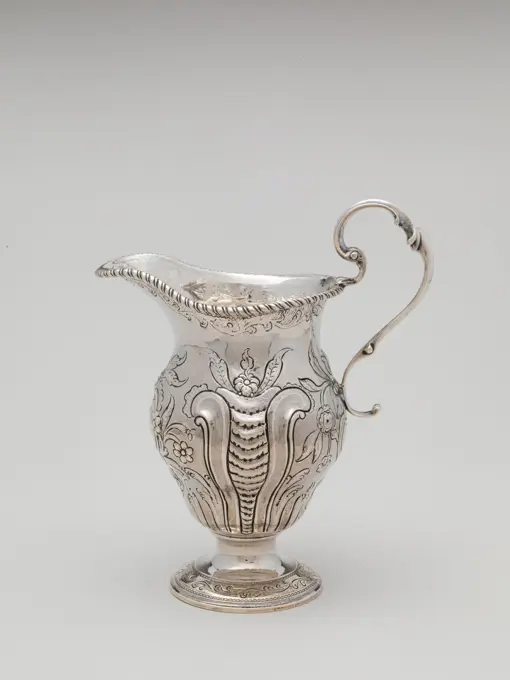
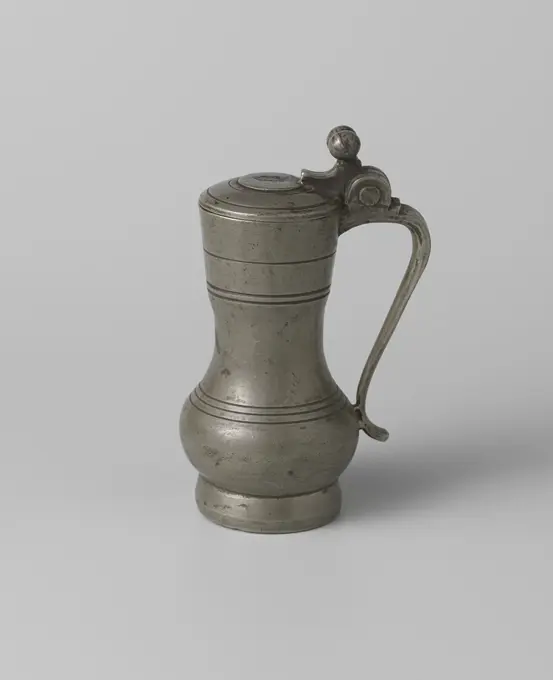
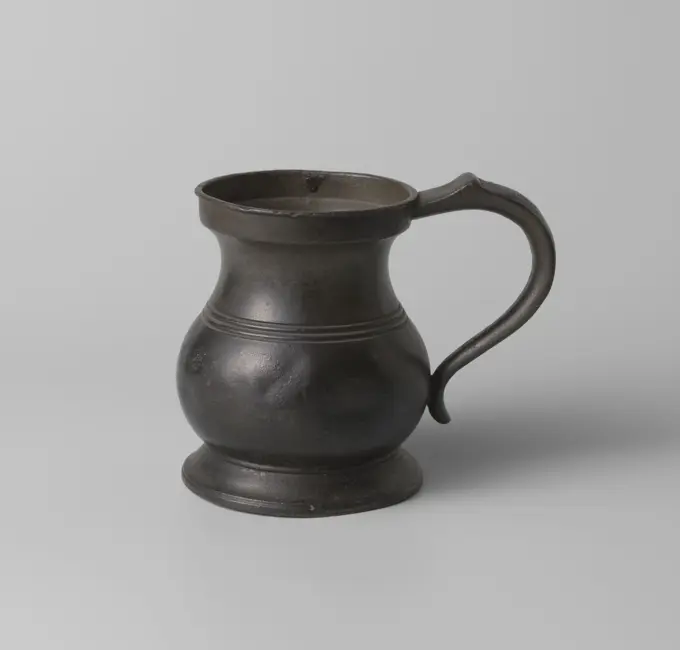
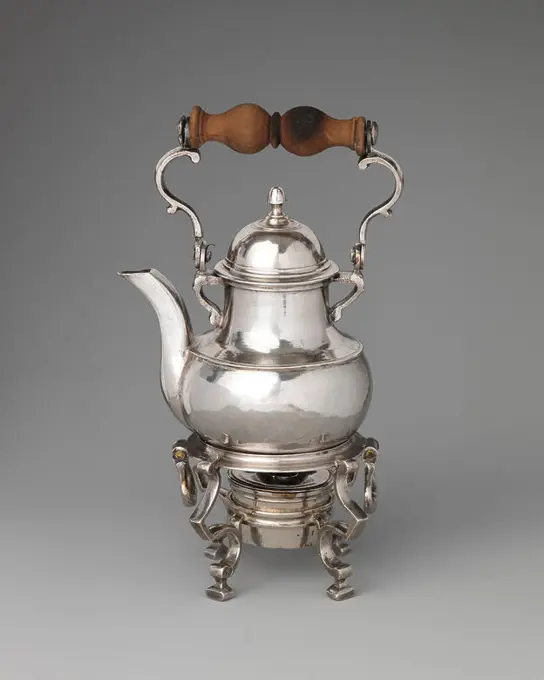
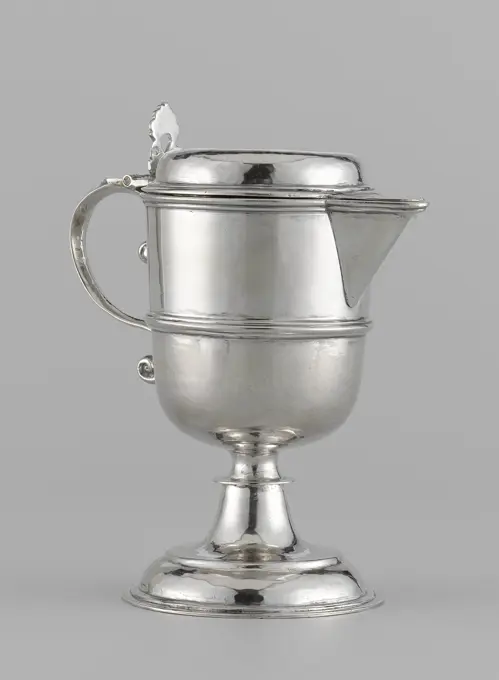
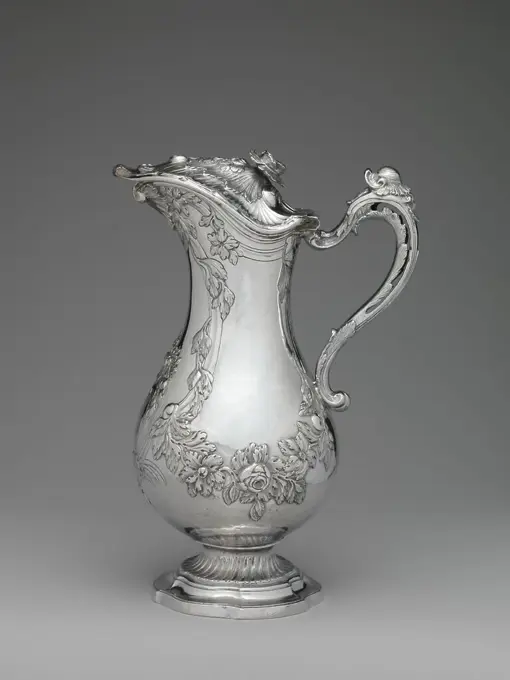
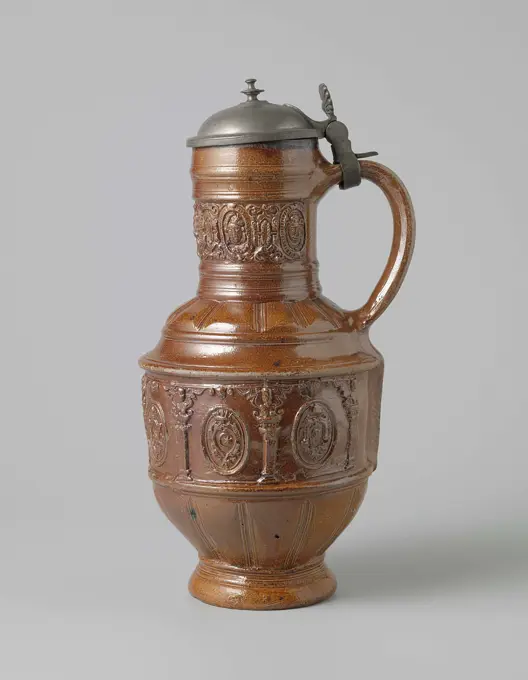
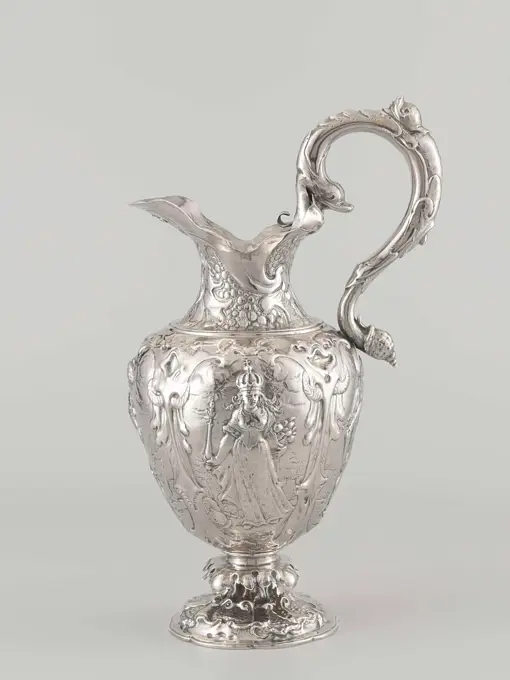
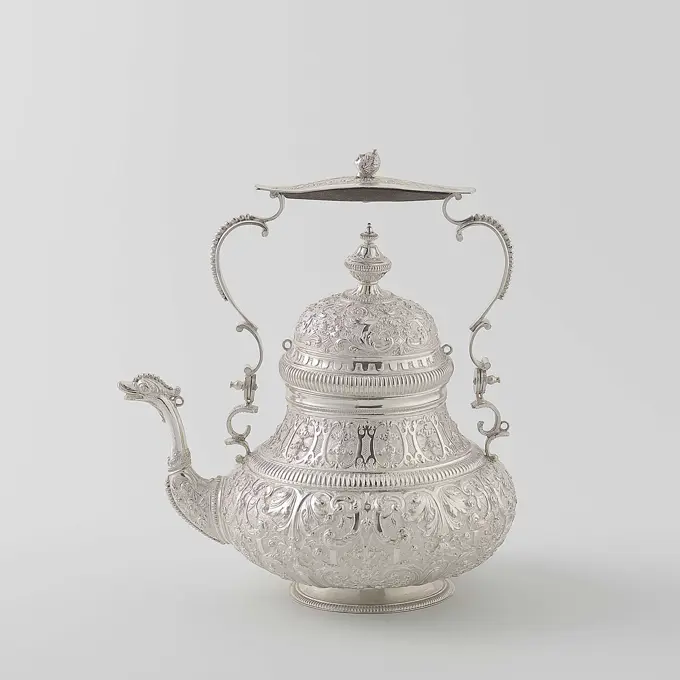
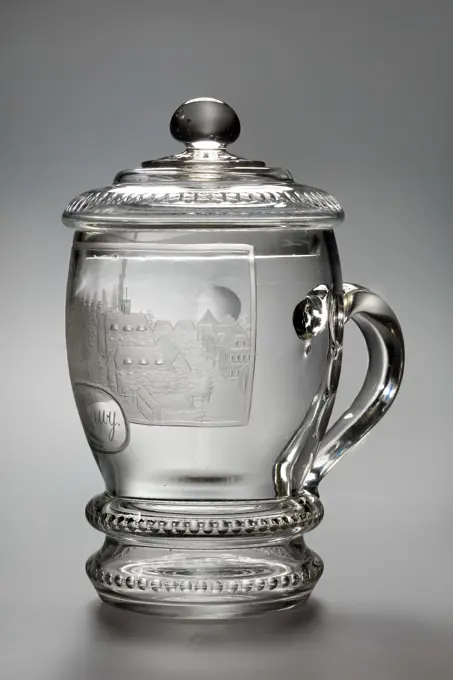
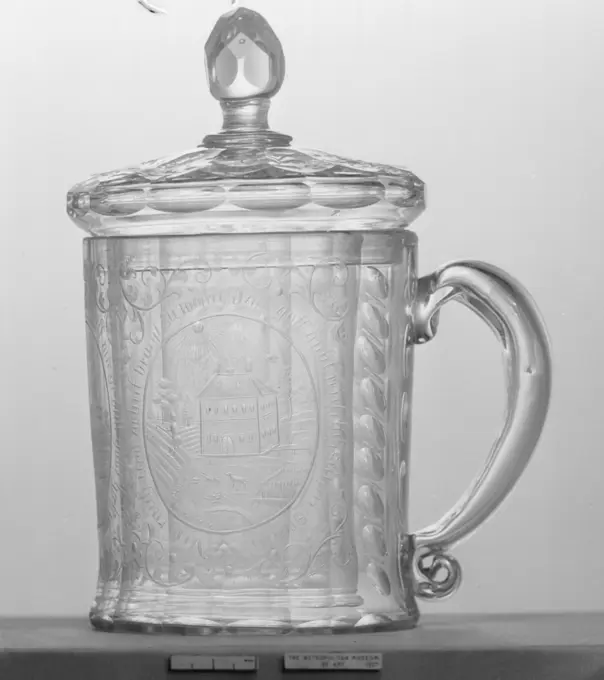
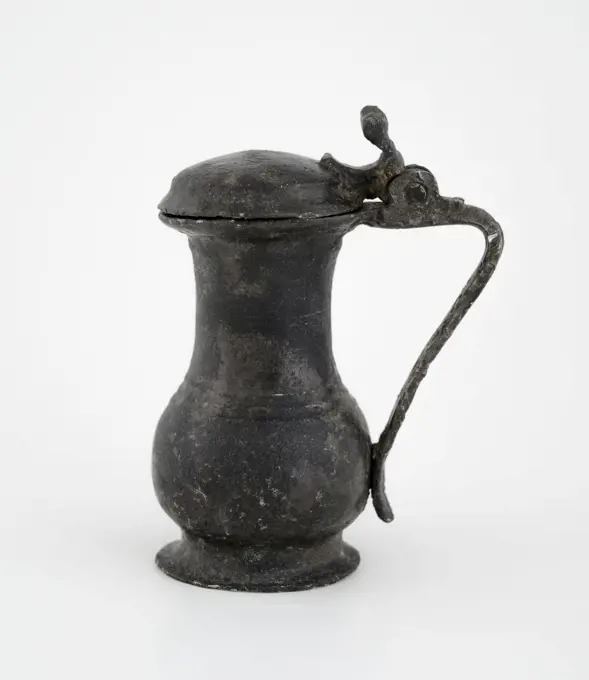
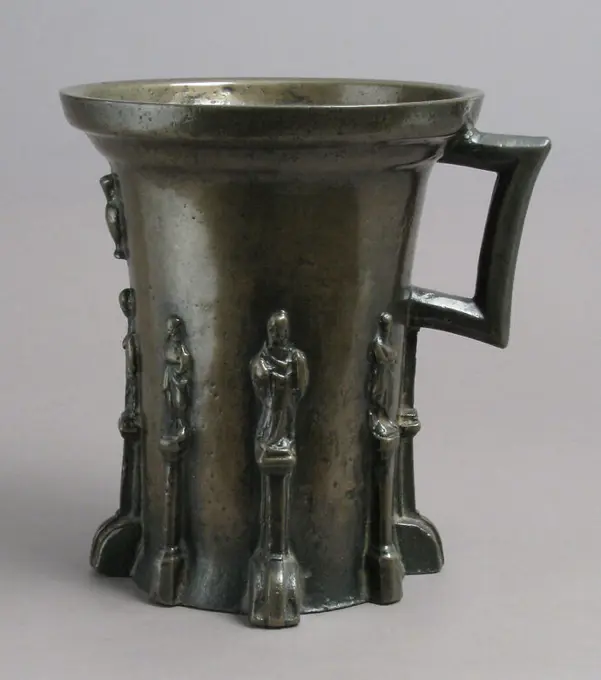
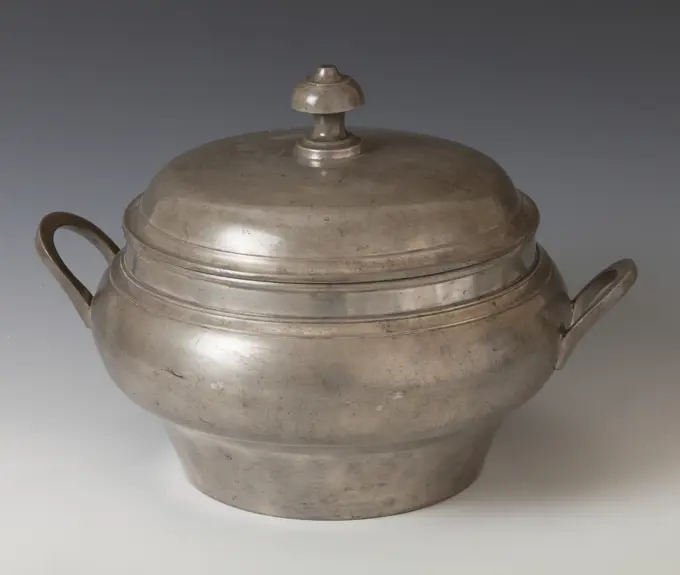
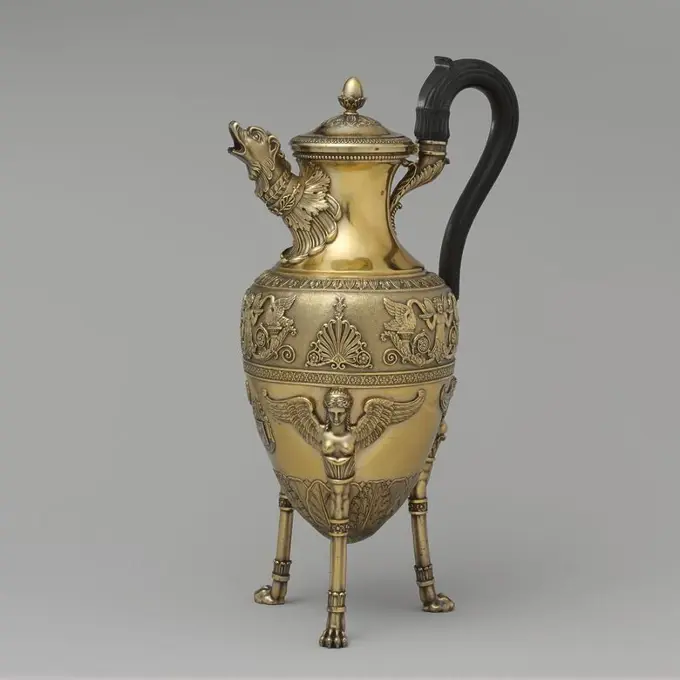
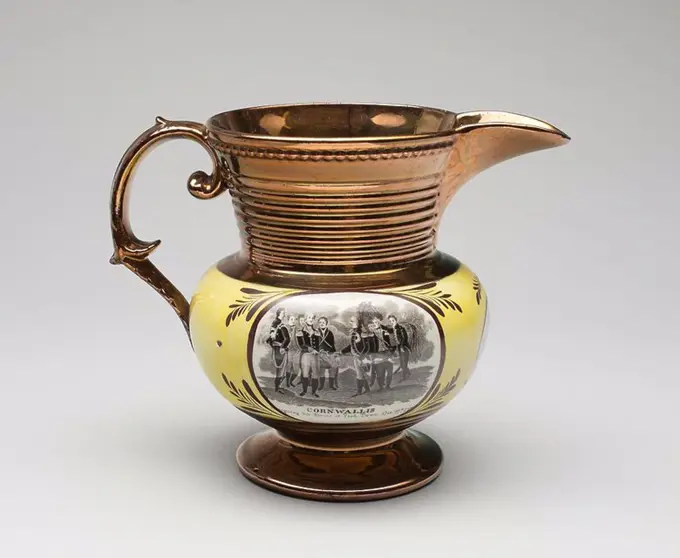
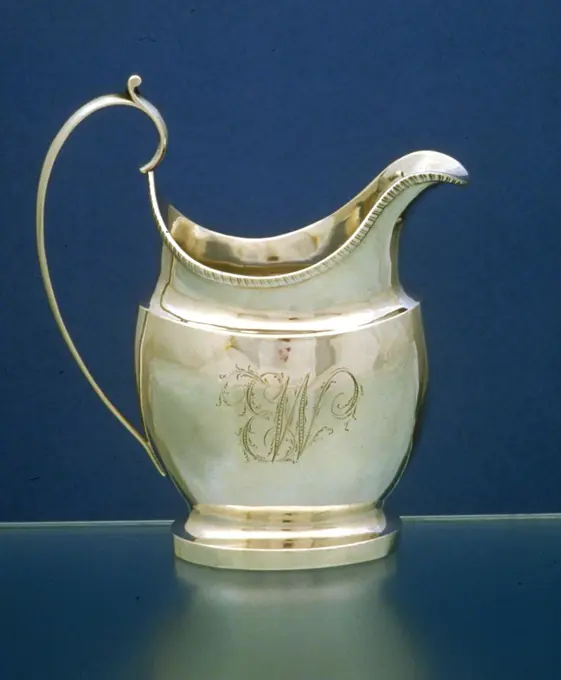
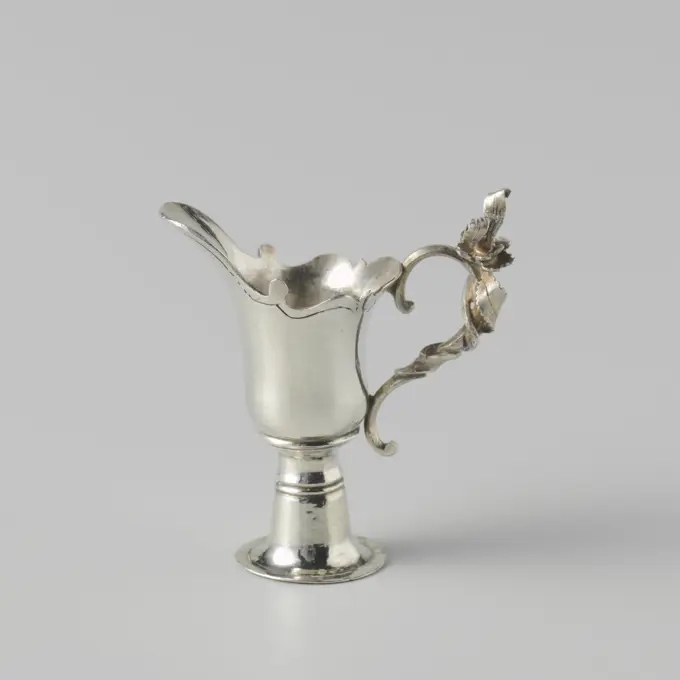
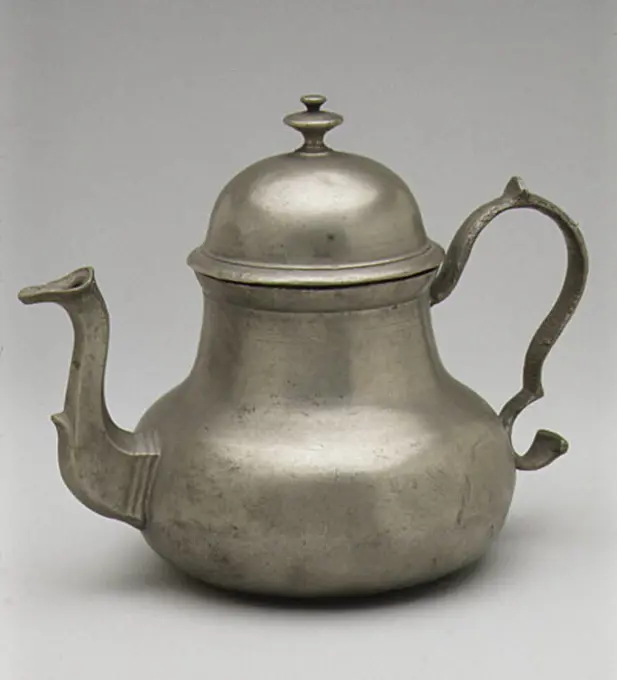
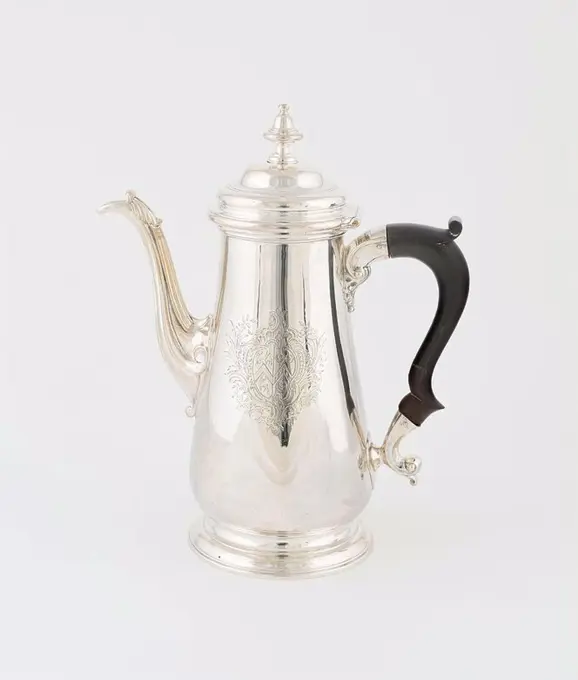
A display of vintage metal jugs and pitchers, showcasing intricate designs and historical craftsmanship.

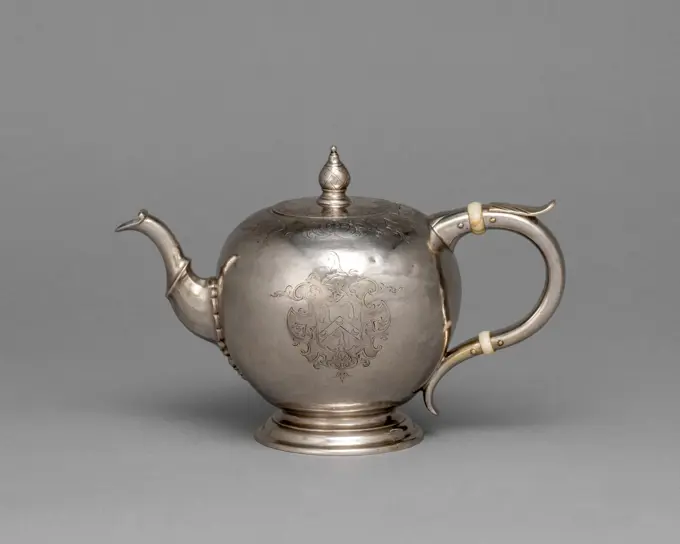
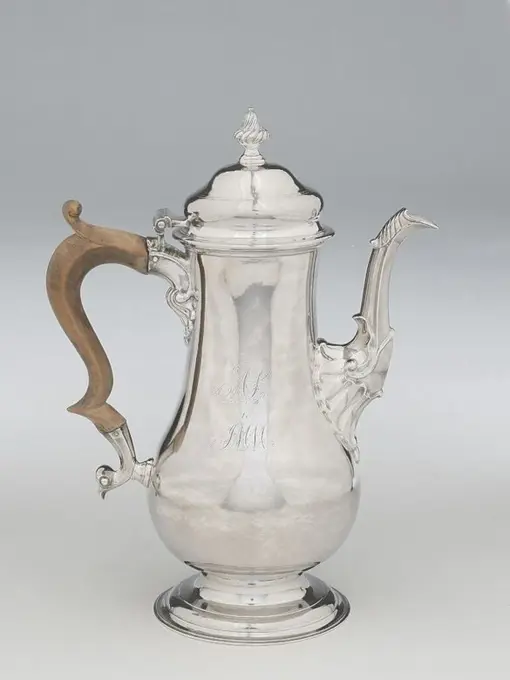
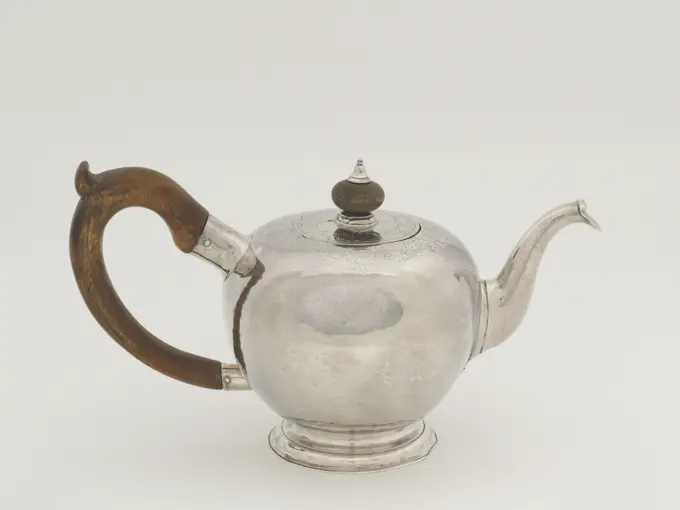
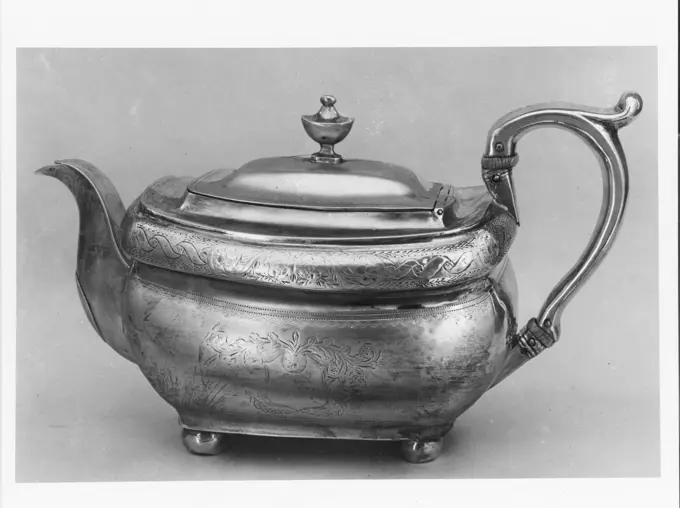
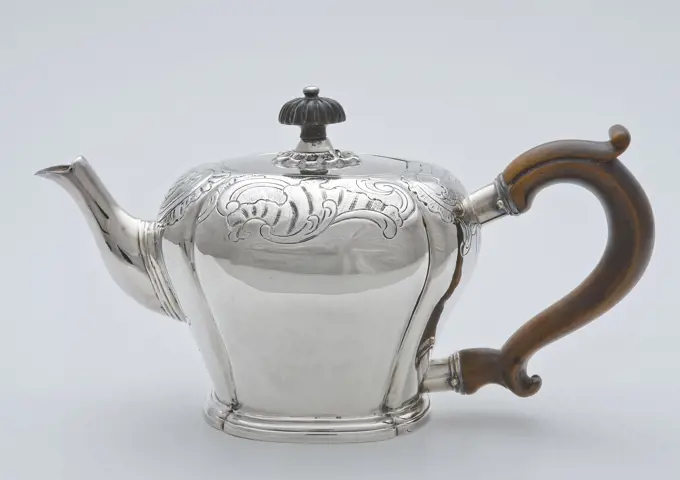
Silver teapot with brown knob and ear, teapot crockery holder silver wood, engraved chased cast Baluster-shaped body through vertical grooves in four piles divided on rectangular base with scalloped corners short straight spout pinned wooden ear flat lid with hinge rosette wooden button serving bottom bottom (smashed) serve before drinking tea brewing Rotterdam
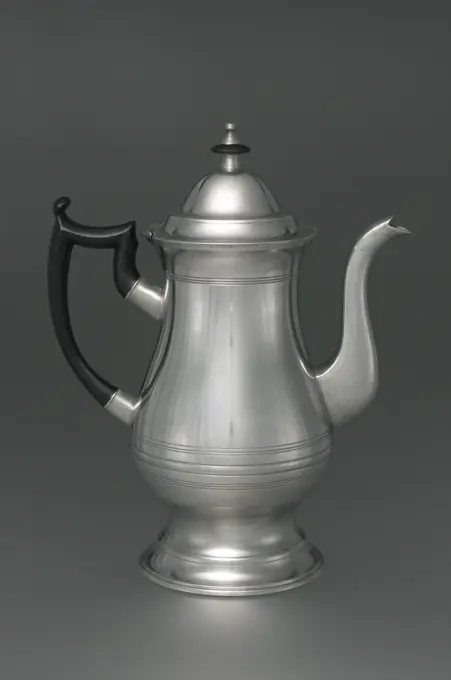
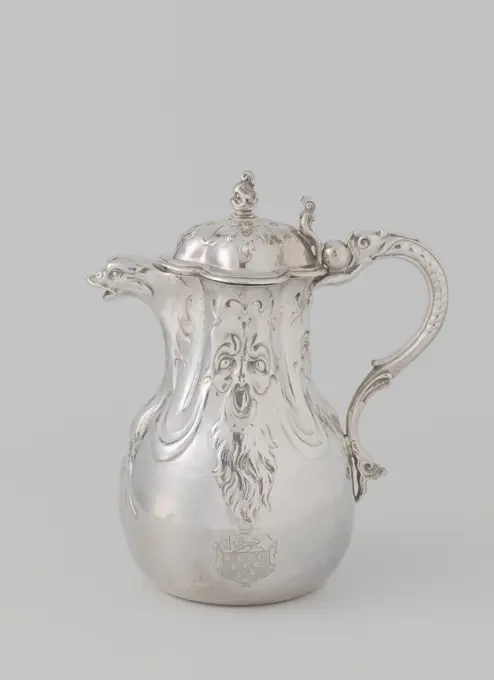
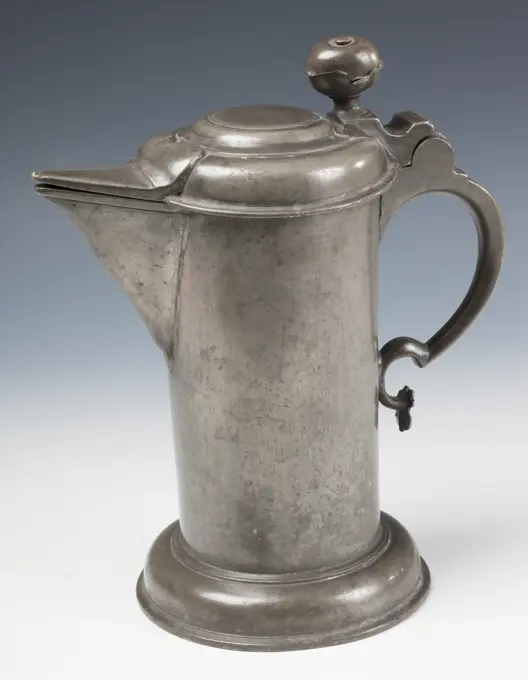
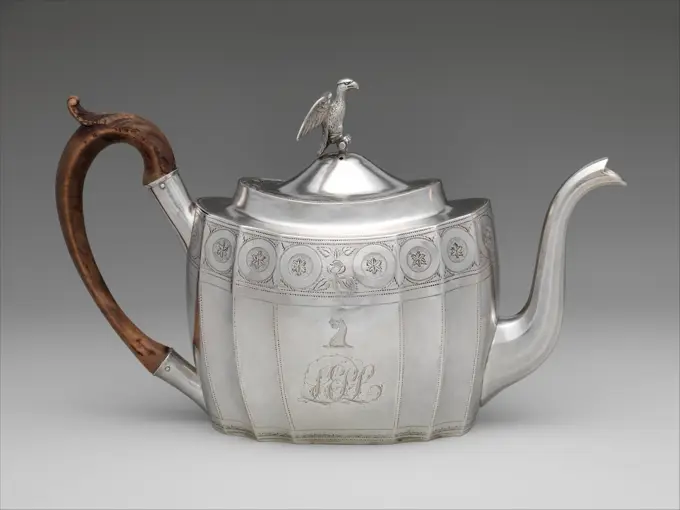
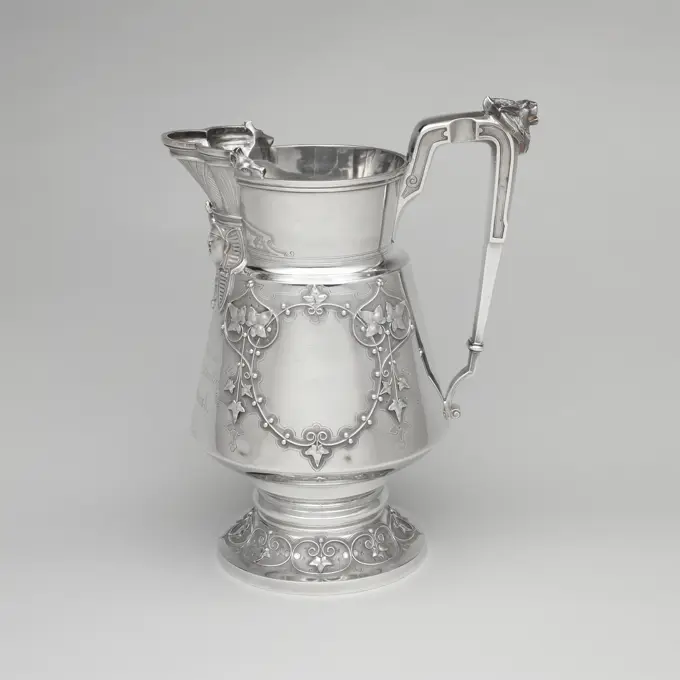
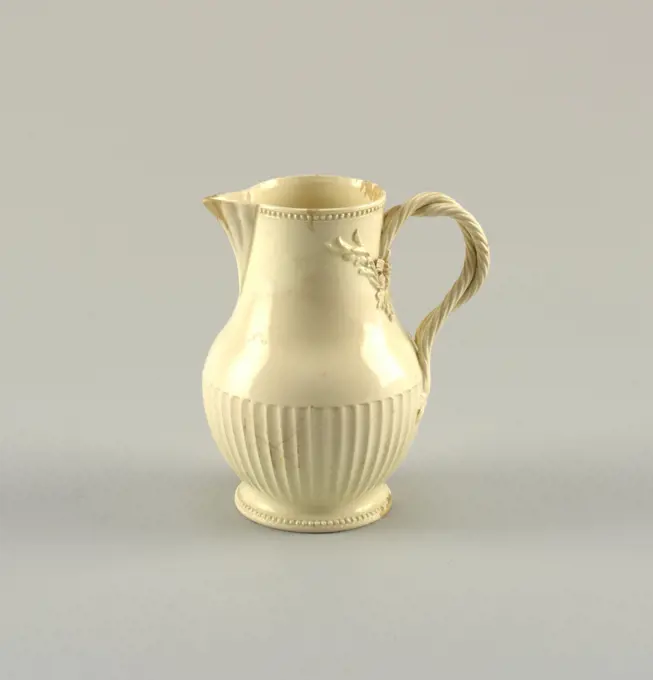
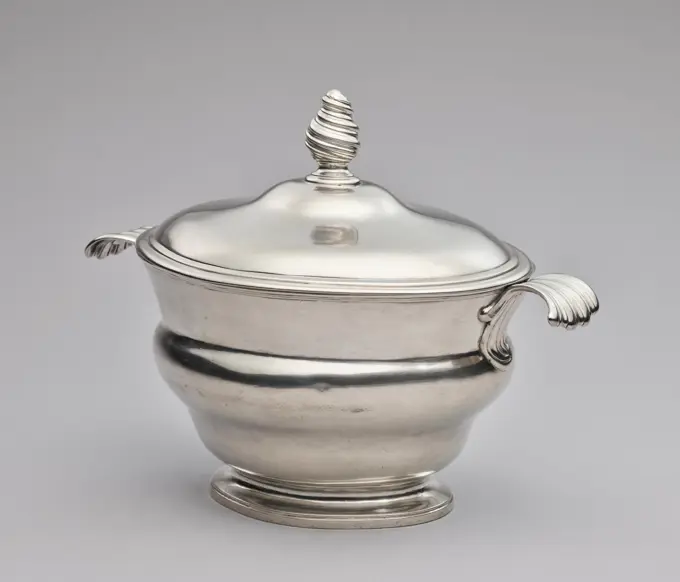
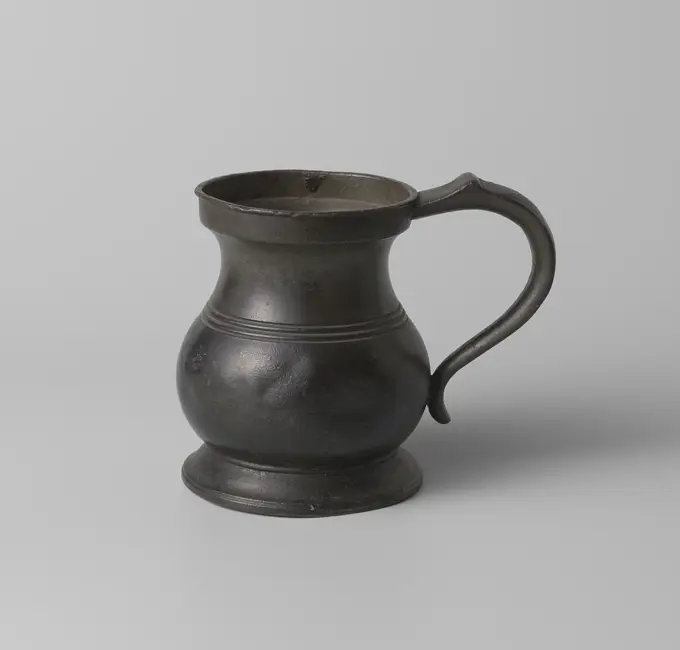
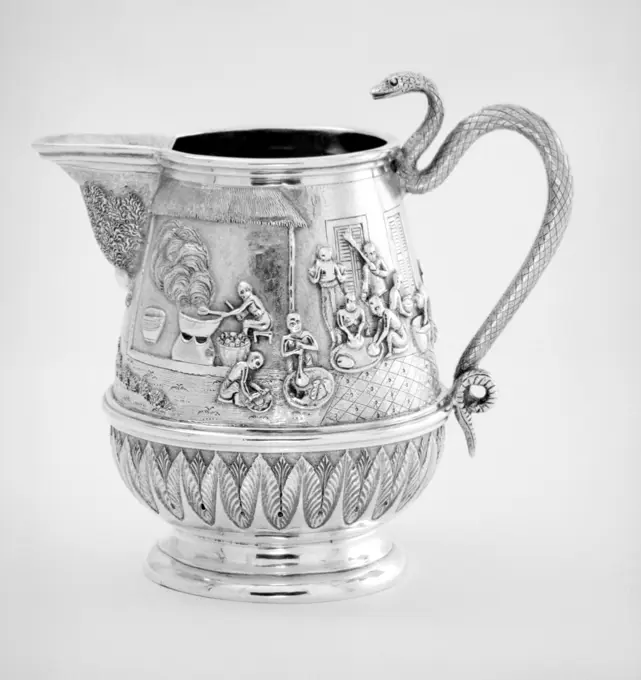
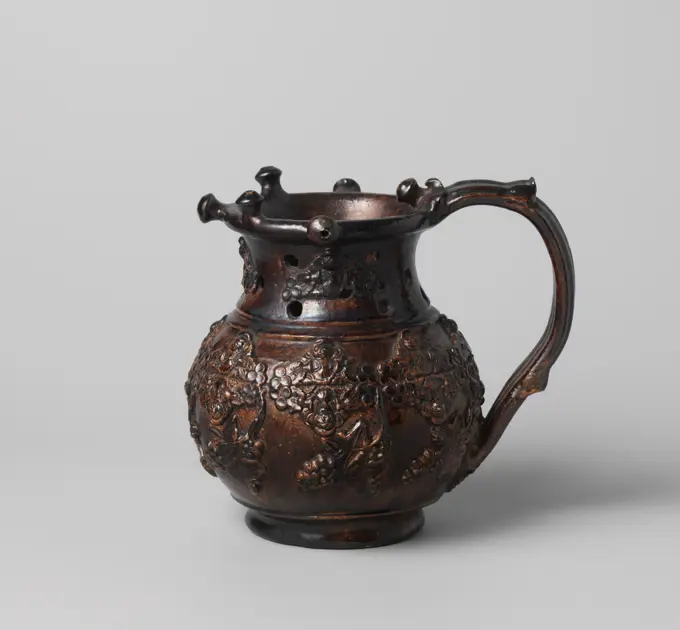
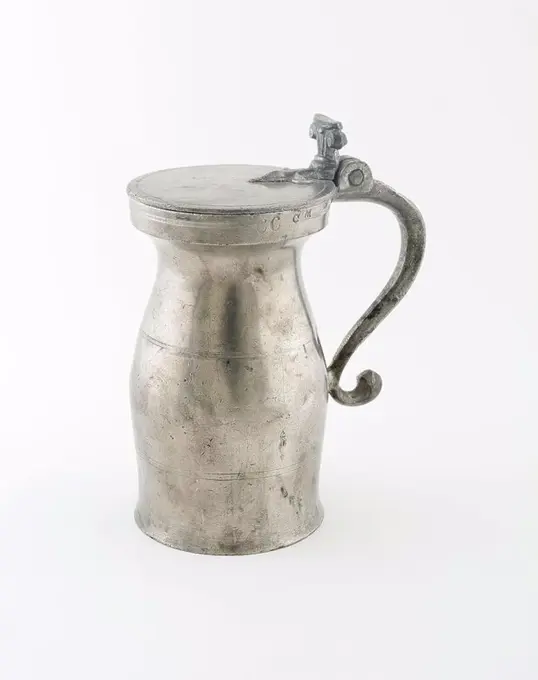
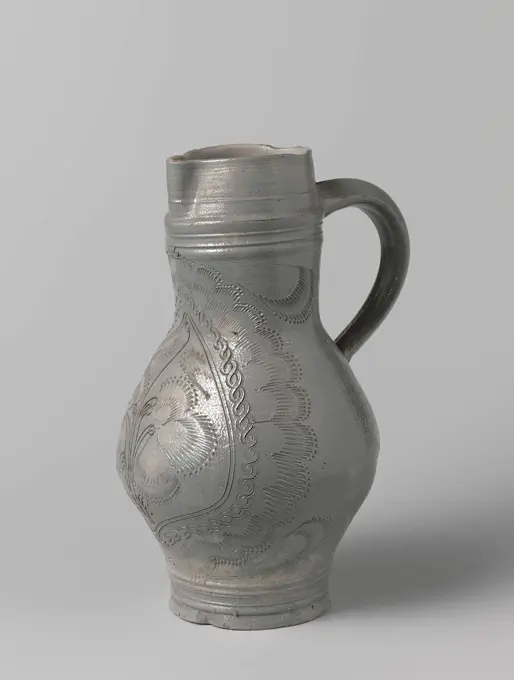
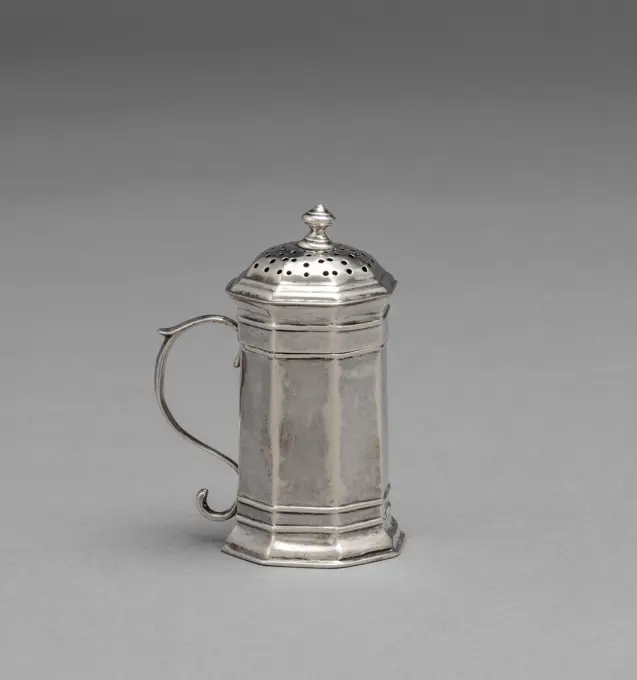
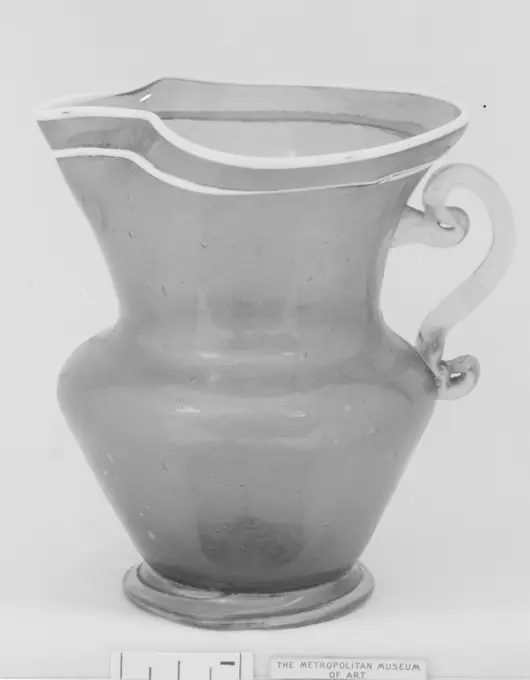
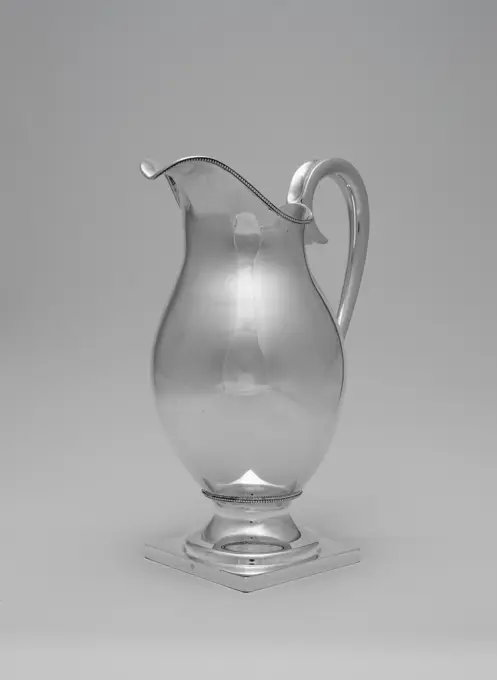
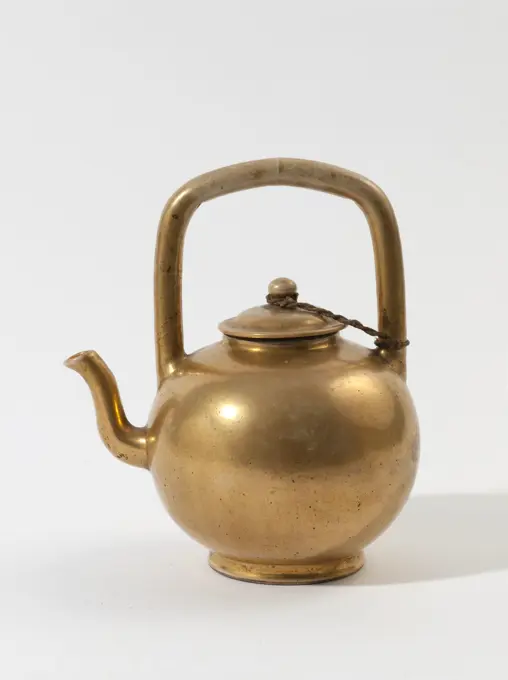
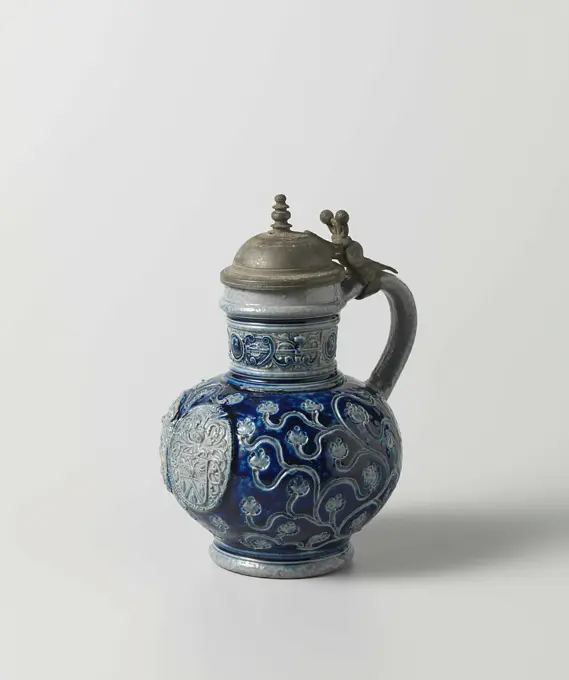
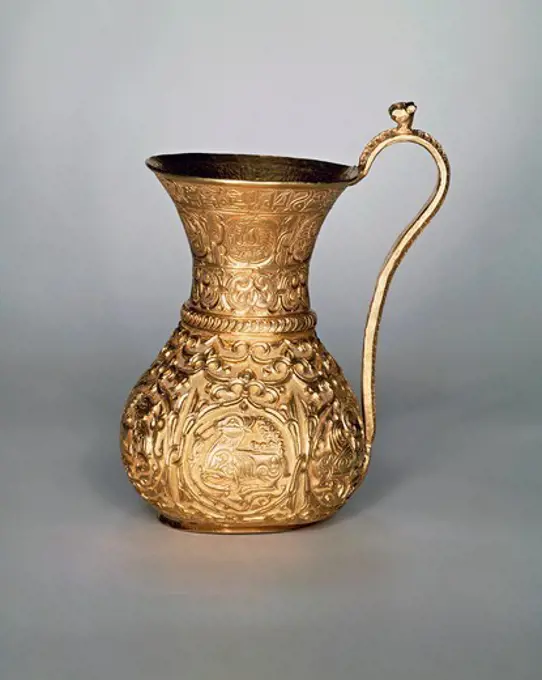
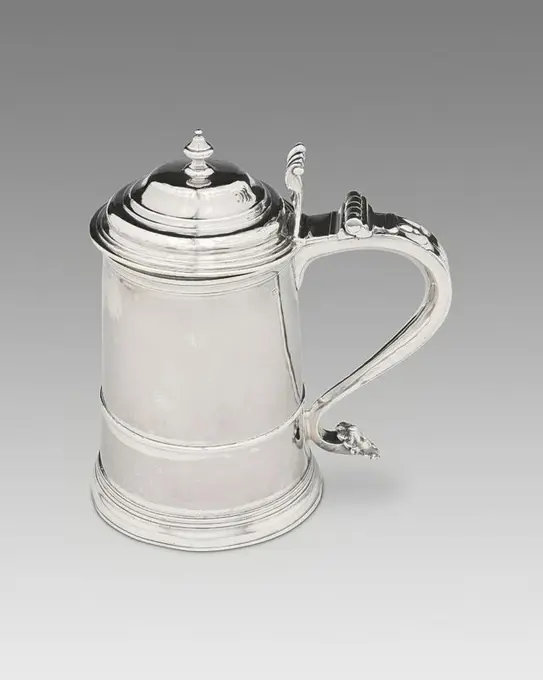
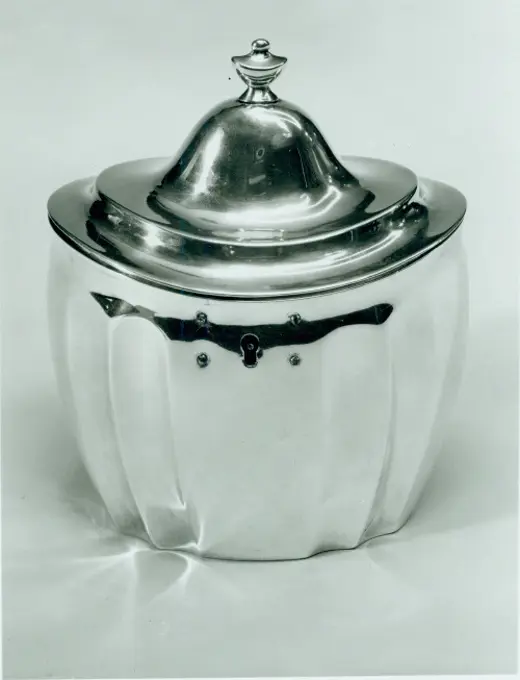
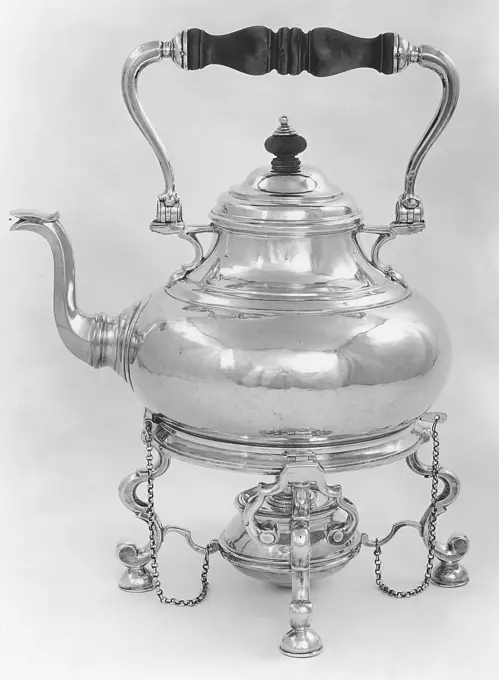
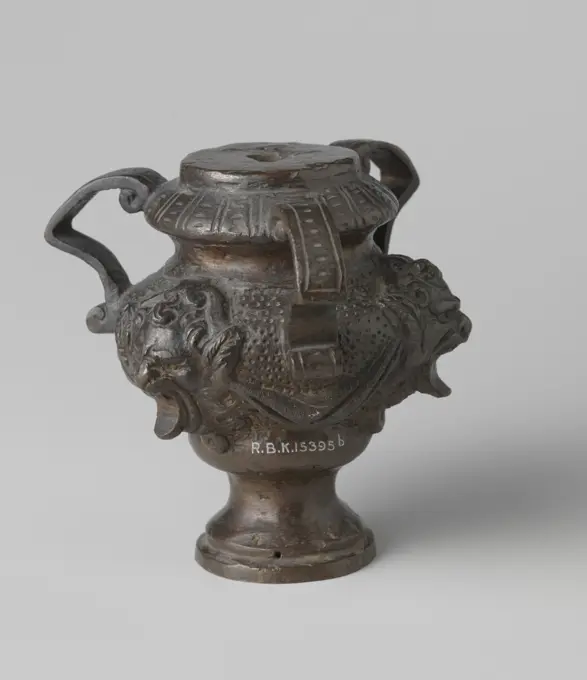
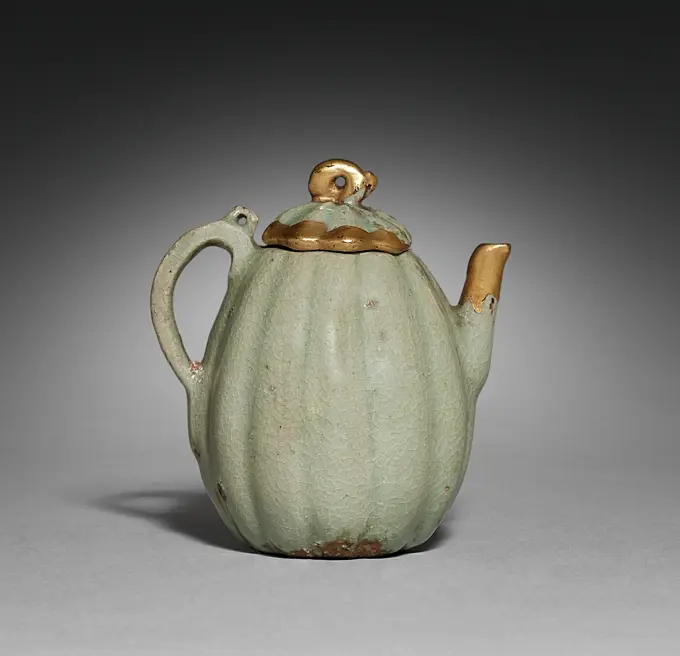
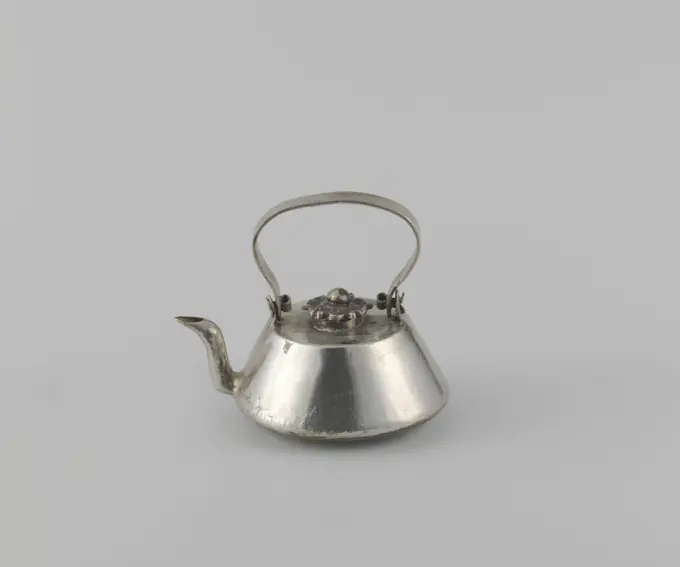
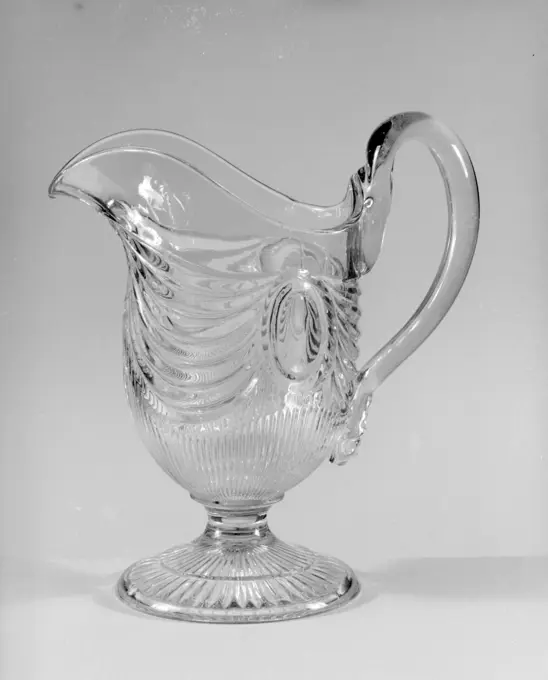
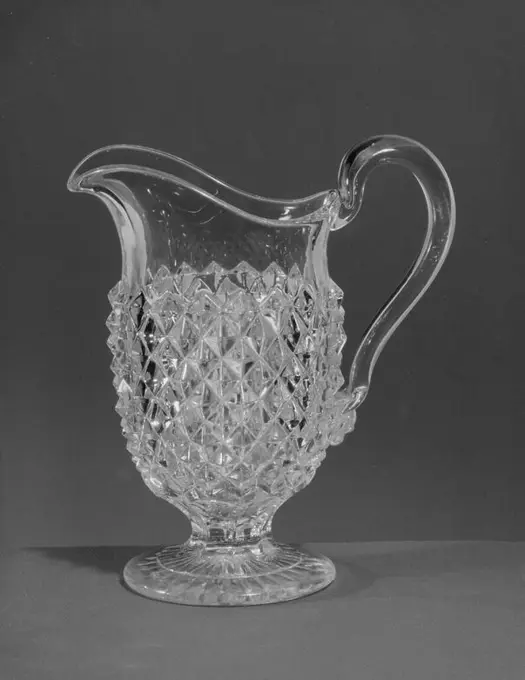
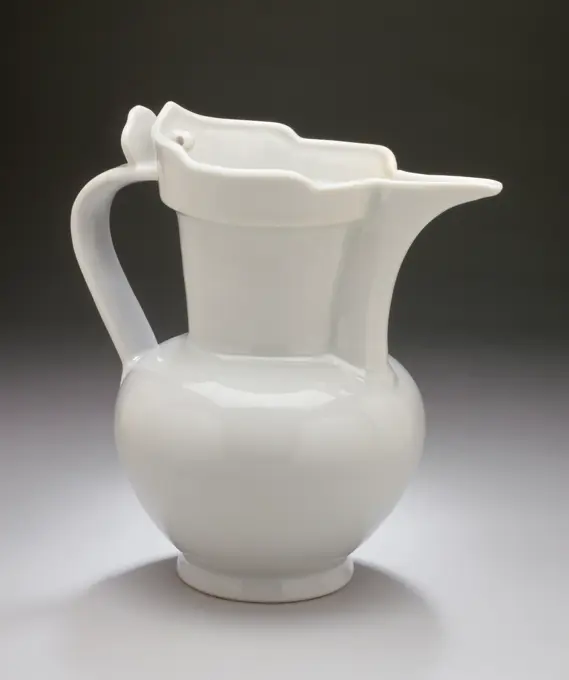
Coveredpitcher.   Maker: Daniel Curtiss, American, active 1821-40Coffeepot.   Maker: Roswell Gleason, American, 1799-1887Two Jugs, Christiaen van Vianen (Possible), John Cooqus (Rejected Attribution), c. 1660 - c. 1665 Wijnkan van Zilver, from above four -lobbig and with a spout in the form of a dragon's head. The S-shaped ear has a dragon head on the top and top. On the sides the later engraved armed weapon of the Bridgeman family. London silver (metal) Wijnkan van Zilver, from above four -lobbig and with a spout in the form of a dragon's head. The S-shaped ear has a dragon head on the top and top. On the sides the later engraved armed weapon of the Bridgeman family. London silver (metal)Jug Meyer, George (1661 1734)Jug 1726-27 Bernard Fletcher. Jug 204947Teapot ca. 1800 Attributed to Christian Wiltberger American This handsome tea and coffee service (1980.503.1--.4), although unmarked, has been attributed to the Philadelphia silversmith Christian Wiltberger on the basis of style. Stately and dignified, with its fluted forms and generous proportions, it represents the fully matured Neoclassical style. The service belonged to Eleanor Parke (Nelly) Custis (1779-1852), granddaughter of Martha Washington, who married George Washington's nephew Lawrence Lewis (1767-1839) on February 22, 1799. Family tradition holds that the service was a gift from General Lafayette and his son, who were close friends of the family. In addition to the matching bands of bright-cut ornament, each piece is engraved with the Lewis crest and with the script monogram "LEPL" for Lawrence and Eleanor Parke Lewis. In place of the customary urn or flame-shaped finial, cast eagles surmount three of the pieces, especially appropriate for America's first family.. Teapot. Silver teapot with brown knob and ear, teapot crockery holder silver wood, engraved chased cast Baluster-shaped body through vertical grooves in four piles divided on rectangular base with scalloped corners short straight spout pinned wooden ear flat lid with hinge rosette wooden button serving bottom bottom (smashed) serve before drinking tea brewing RotterdamJug 18th century possibly French. Jug 201836Pitcher ca. 1872 Ball, Black & Co. American This pitcher is a rare example of mid-nineteenth-century American silver in the Egyptian revival taste. It was probably designed by John Rudolph Wendt for the leading silver retailer Ball, Black & Company. According to its engraved inscription, the pitcher was presented to J. W. Bowdish, founding cashier, by the Directors of the National Bank of Pawling.American sterling silver in the Egyptian Revival style is extremely rare. This stately pitcher incorporates Egyptian motifs into a bold, classic form. The result is a coherent and dynamic composition and a sophisticated expression of the prevailing Egyptian taste. At the time this pitcher was created, the German-trained silversmith John Rudolph Wendt was Ball, Black & Co.s primary designer and supplier, and the pitcher exemplifies the exceptional quality for which Wendt is known.. Pitcher 18818Pitcher, Glazed earthenware, luster decoration Silver resist (chipped), ca. 1810, ceramics, Decorative Arts, PitcherCommemorative water pitcher -Pitcher;  1 PO. XVIII W (1690-00-00-1709-00-00);Measure (kelchkanne) Swiss 18-19th century View more. Measure (kelchkanne). Swiss. 18-19th century. Pewter. Metalwork-PewterCream jug, Lead-glazed earthenware ('cream ware'), Pear-shaped, footed, with ribbed and pointed spout. Lower half ribbed. Pearl band at lip and foot. Forked handle terminates in raised leaves and flowers., ca. 1790, ceramics, Decorative Arts, Cream jugCoveredPitcher.   Maker: John B. Jones, American, 1782-1854Vessel - vase;  2 after. 18th century (1750-00-00-1799-00-00);Measure can of tin. Measure can of tin. The stand ring is a baluster-shaped body, which is decorated halfway with a profiled tire. The lip edge runs straight up. From there the handle runs to the widest point of the abdomen. At the bottom, the handle curls light out.Pitcher, Marteleline. Maker Chaser: Christopher W. Clissold, American, born England, 1863-1938 Manufacturer: Gorham Manufacturing Company, American, founded 1831Tuitkan van Tin with lid, anonymous, 1600 - 1650 Tuitkan van Tin. The stand ring turns into a wide, flat stomach, which overflows into a cylindrical neck. At the top is a wide lip edge that runs out. The KAN is closed with a vaulted lid. The profiled thumb rest flows through a double -cacky hinge into the handle, which is attached to the widest point of the abdomen at the bottom and then walks out slightly outside. The straight spout runs from the widest point of the abdomen diagonally upwards and is closed with a small valve with a profiled thumb rest. Amsterdam (possibly) tin (metal) casting Tuitkan van Tin. The stand ring turns into a wide, flat stomach, which overflows into a cylindrical neck. At the top is a wide lip edge that runs out. The KAN is closed with a vaulted lid. The profiled thumb rest flows through a double -cacky hinge into the handle, which is attached to the widest point of the abdomen at the bottom and then walks out slightly outside. The straight spout runs from Creampot 1772-76 Myer Myers American. Creampot 2692Jug of tin (Rembrandtkan). Drinking jar of tin, a so-called Rembrandtkan. Profiles on the abdomen, neck and lip edge and on the transition from stand ring to belly. The jug is closed with a slightly vaulted, profiled lid. The thumb streaming consists of two bullets and goes over a one-case hinge into the handle, which bends slightly down at the bottom. A pile is applied to the inside.John Bayly, Coffeepot, c. 1775, silver.Cream Pitcher 1795-1805 England. Glass .Maker Unknown, Pitcher, c. 1825-40, colorless lead glass.Pitcher 1600-1699 Italy. Glass .Maatkan van Tin, Anonymous, After 1837 - Before 1901 Mason of Tin. On the stand ring is a baluster -shaped body, which is halfway decorated with a profiled band. The lip edge runs straight up. From there the handle runs to the widest point of the abdomen. At the bottom the handle curls out lightly. England tin (metal) casting Mason of Tin. On the stand ring is a baluster -shaped body, which is halfway decorated with a profiled band. The lip edge runs straight up. From there the handle runs to the widest point of the abdomen. At the bottom the handle curls out lightly. England tin (metal) castingMiniature kettle with brazier. Culture: British, London. Dimensions: Height: 3 13/16 in. (9.7 cm); Diameter of stand: 2 3/8 in. (6 cm). Maker: Robert Keble (British, active 1702). Date: 1718/19.The production of miniature silver furniture and tea, coffee, and chocolate equipment was a specialty of goldsmiths known as "toy men." The miniatures were probably intended for dollhouses. From the mid-eighteenth century in England until the present, porcelain and fine earthenware miniatures have been made as well. Museum: Metropolitan Museum of Art, New York, USA.Ampul, Cornelis Willems Snijder (Attribute to), 1674 Ampul with a hinged, roared lid and rest on a round foot with flat bottom edge. The foot is made up of a burned and a constricted, rejuvenating part. Along the flooded part run at the bottom and semi -round frames at the top. The rejuvenating part is articulated by a flat ring. The body has a convex belly and a straight wall. Profiled frames walk along the center of the wall and along the top. On one side there is a triangular spout, on the other side an ear in the form of a volute. De Duimrust has the shape of an openwork, voluted letter. A letter is engraved on the lid above the pour. On one copy the letter A, on the other the letter V. Haarlem silver (metal) hammering / soldering Ampul with a hinged, roared lid and rest on a round foot with flat bottom edge. The foot is made up of a burned and a constricted, rejuvenating part. Along the flooded part run at the bottom and semi -round frames at the top. The rejuvenating part is artiJacob Marius Groen, Tankard, c. 1705-1720, silver.Cream pitcher (part of a set) 1860-80 Anglo-Indian Part of a set that includes a teapot (1972.116.1) and sugar bowl (1972.116.2). The decoration combines Indian festival scenes amid palms and temples with domestic ones in European-style interiors.. Cream pitcher (part of a set) 205467Emick Romer, Jug and Cover, 1768/69, silver.Pitcher, Moulded and thrown unglazed stoneware (Black Basalt), encaustic silver decoration, Semi ovoid, with simple molded foot, cavetto shoulder. Outward curving lip and flattened strap handle. Silver band about base of foot, silver vine about shoulder, silver dotting on handle and silver line about opening edge., England, late 18th century, ceramics, Decorative Arts, PitcherEwer. Culture: French, Toulouse. Dimensions: Overall (confirmed): 10 5/8 × 7 1/8 × 5 1/8 in., 40.314oz. (27 × 18.1 × 13 cm, 1143g). Maker: Barthélemy Samson (master ca. 1760, died 1782). Date: 1771.Fine workmanship and excellence in design were not confined to the work of Parisian goldsmiths; Toulouse was also a productive center of goldsmithing in eighteenth-century France. The artisans in the provinces did not merely copy those of Paris but were creative in their own right, with regard to both form and ornament. The goldsmiths of Toulouse were especially adept at interpreting Rococo ornament at its most exuberant. The zoomorphic dolphin handle is finely pierced to catch light and underscore the malleability of the precious metal. Museum: Metropolitan Museum of Art, New York, USA.Purportedly John French, Pair of Teapots (spurious), probably late 19th/early 20th century, silver.Kan, anonymous, c. 1840 - c. 1880 Fopkan of lead glaze pottery. The jug is dark brown, bronze -like in color and has a relief ornament. Germany (possibly) earthenware. lead glaze Fopkan of lead glaze pottery. The jug is dark brown, bronze -like in color and has a relief ornament. Germany (possibly) earthenware. lead glazeQuart Wine Measure. England. Date: 1775-1785. Dimensions: 20.3 × 15.9 cm (8 × 6 1/4 (with handle) in.). Pewter. Origin: England. Museum: The Chicago Art Institute, Chicago, USA.Ewer 1698-99 I.V.. Ewer 200075Tobias Stoutenburgh, Creampot, c. 1735, silver.Teapot; pewterKettle; Lilpop successors after 1833 (Jakub Marci Ci); 1834-38 (1834-00-00-1838-00-00);Jug of stoneware with flowers and tendrils. Jug of stoneware, with a spout and ear. The jug is decorated at the front side with an ingrangled decoration of flowers and tendrils.Caster, c. 1735. John Burt (American, 1693-1746). Silver; overall: 9.1 cm (3 9/16 in.); with handle: 6.7 cm (2 5/8 in.); without handle: 4.8 cm (1 7/8 in.).Jug 18th century Italian, Venice or French. Jug. Italian, Venice or French. 18th century. Glass. GlassTankard ca. 1560 Flemish, Antwerp. Tankard 194253Pitcher 1820-40 American. Pitcher 5761Can. Brown can of earthenware with a pewter lid. On the straight-handed middle piece of the abdomen, a frieze has been printed with shields in oval between masks connected to masks.Tea jug. Werner, Teodor August (1836-1902), goldsmith, Werner i S-ka (Warszawa ; wytwórnia złotnicza ; 1864-1939), goldsmithEwer and basin. Scenes chased on silver were an Amsterdam speciality. This ewer and basin demonstrate Johannes Grills mastery in combining fanciful motifs with Classical figures. His work was also admired outside of the Netherlands: this ensemble, for instance, was made for Edward Sebright, an English nobleman. These showpieces were used to wash ones hands before and after a meal.Mustard pot 1748-49 Guillaume Egée. Mustard pot 200277Tankard, 1665. England, London, 17th century (Charles II). Silver gilt; diameter: 20.7 x 14.3 cm (8 1/8 x 5 5/8 in.).Measure early 18th century French or Flemish. Measure 193307Pitcher (Pichet balustre avec gobelet en botte) Charles Vovelle French late 19th century View more. Pitcher (Pichet balustre avec gobelet en botte). French, Chartes. late 19th century. Pewter. Metalwork-Pewter. Low foot tea kettle. The wide, round vessel gradually switches to a tapered neck. The curved spout ends in a dragon head; The high-roughing lid has a vase-shaped button. Barrel, spout and lid are decorated with fine, driven flowers and leaves between tape work on a granulated soil, interrupted by ribbed, horizontal profiles. The hinged handle is made up of volutes with a pearl set on the back and an ebony connecting piece, on which silver fittings with a child's headline as a grlanense.Teapot, c. 1740. Jacob Hurd (American, 1702-1758). Silver; overall: 14.8 x 22.6 cm (5 13/16 x 8 7/8 in.); without handle: 12.6 cm (4 15/16 in.). This teapot was made by Jacob Hurd, the father of Nathaniel Hurd whose portrait by John Singleton Copley is in gallery 204. The finial is probably not original to this teapot.Pitcher 1790-1817 Isaac Hutton American. Pitcher 5813Coffeepot. Joseph Richardson, Sr.; American, 1711-1784; Philadelphia, Pennsylvania. Date: 1765-1775. Dimensions: 29.5 × 11.6 (diam. at base) × 21.9 cm (11 5/8 × 4 5/8 × 8 5/16 in.); 1234.3 grams. Silver. Origin: Philadelphia. Museum: The Chicago Art Institute, Chicago, USA.Tea-pot. Porcelain with golden enamel monochrome coating, Qing dynasty (1644-1912). Provenance: China. Paris, Cernuschi museum. 78836-17 Asian art, Chinese art, art of living, fine ceramic, Ching dynasty, Qing dynasty, Tsing dynasty, porcelain, service to the, theiere, dishesMeasure 18th century British. Measure. British. 18th century. Pewter. Metalwork-PewterJug. Gray blue enamel jug with pewter lid. On the flattened, spherical belly are 2 oval medallions in which a weapon. On the cylinder-shaped neck a catouche with 3 mascaroons.Embossed gold jug from Iran. Goldsmith's art, Islamic Civilisation, 10th century.Teapot c 1740-1755 Boston. The round shape of this teapot was taken from earlier Chinese and English ceramic prototypes. The design was particularly popular in the Boston area, and several similar examples by Jacob Hurd are known today. The engraved foliage, mask, and scrollwork around the lid, although extremely restrained in execution, are typical of his work.. Silver and walnut . Jacob HurdTankard. Nieokreślona huta, factoryTankard. John Coney; American, 1655-1722; Boston, Massachusetts. Date: 1705-1722. Dimensions: 20.3 × 12.1 × 18.4 cm (8 1/8 × 4 3/4 × 7 1/4 in.); 891.2 grams. Silver. Origin: Boston. Museum: The Chicago Art Institute, Chicago, USA.Tankard and cover. Nieokreślona huta, factoryMug with cover ca. 1730 German, Silesia. Mug with cover. German, Silesia. ca. 1730. Glass. GlassVessel. Iran, circa 1000-650 B.C.. Furnishings; Serviceware. BronzePewter measuring jug, Measuring instrument measuring instrument soil found tin, ear 8.0 cast Construction: round foot stand ring squeezed foot ball body merging into slender neck flared wide lip arched lid. Ear: soldered on lip at right angles back to woadest bulging body Hinge: two eyes through which pin on top Duimrust slightly bent out in half e on lid soldered Possible horseshoe shape on lid can also damage archaeology Rotterdam rail tunnel measuring Soil discovery: collapsed Rail tunnel route summer 1989 .Mortar. Culture: North German. Dimensions: Overall: 7 15/16 x 7 13/16 x 6 11/16 in. (20.2 x 19.8 x 17 cm). Date: 15th century. Museum: Metropolitan Museum of Art, New York, USA.Joel Sayre, Tea Canister, c.1800, silver.Edward Workman, Teakettle, Stand, and Lamp, 1713-15, silver.Paul de Lamerie, Coffee or Hot-Water Jug, 1738/39, silver-gilt and wood.Vase-shaped component. On the abdomen, which is located, three lion heads, interconnected by three 'doekguirlandes'. Above three ears, formed from knotted, band-shaped S volutes.Melon-shaped Wine Ewer, 1100s-1200s. Korea, Goryeo period (918-1392). Celadon; outer diameter: 6.7 cm (2 5/8 in.); height with lid: 9 cm (3 9/16 in.). Many celadon ceramics, such as these two miniature pots, have been repaired with gold lacquer. Termed kintsugi (literally meaning gold joinery”) in Japanese, this restoration method highlights broken parts with glittering gold mixed with lacquer. Initiated in 15th-century Japan, the technique follows a popular aesthetic concept called wabi-sabi, which finds beauty in imperfect things. Goryeo celadons were considered rare treasures among early 20th-century Japanese collectors; thus, their broken condition is brilliantly highlighted in gold lacquer, as seen here in the repaired spouts, handle, and lid.Teakettle, Burner, and Stand 1848-51 Ball, Tompkins and Black. Teakettle, Burner, and Stand. American. 1848-51. Silver and ivory. Made in New York, New York, United StatesKetel, anonymous, c. 1600 - c. 1700 Boiler with a wide base and upwards sloping. The kettle has a lid with floral pattern and a handle. The boiler is marked with a boar head. Netherlands silver (metal) Boiler with a wide base and upwards sloping. The kettle has a lid with floral pattern and a handle. The boiler is marked with a boar head. Netherlands silver (metal)Jacob Hurd, Pepper Box, c. 1730-40, silver.Creamer 1860-70. Creamer. 1860-70. Pressed glassMilk jug; Sazikow (Moscow and St. Petersburg; the company Z Otnicz; 1793-1887); years of six years of 19th century (1860-00-00-1869-00-00);Foundation Jakub Ksawery Count. Potocki (1934-) - collections, Potocki, Jakub Ksawery (1863-1934) - collection, gift (provenance), milk (vessel), testamentary record of Jakub Ksawery PotockiCreamer. Culture: American. Dimensions: H. 6 1/2 in. (16.5 cm). Date: 1860-70. Museum: Metropolitan Museum of Art, New York, USA.Monk's Cap Ewer (Sengmaohu). China, Jiangxi Province, Jingdezhen, Chinese, Ming dynasty, Yongle period, 1403-1424. Furnishings; Serviceware. Wheel-thrown porcelain with molded, modeled, applied, and engraved decoration under clear glazeTureen with cover Zamponi AntonPair of vases, anonymous, c. 1720 - c. 1750 Vase with two ears, light blue, double -used, flattened in shape, with bronze frame. Parismaker: China porcelain. glaze. bronze (metal). gilding (material) gilding Vase with two ears, light blue, double -used, flattened in shape, with bronze frame. Parismaker: China porcelain. glaze. bronze (metal). gilding (material) gilding. Porcelain pear-shaped milk jug with ingrangled, braided C-shaped ear, small, triangular spout and lid, painted on the glaze in black and gold. On the outside a representation of the crucifixion with the two Maria's; The edge and lid edge with a tire with a decorative pattern. A chip in the edge of the lid. Part of a tea service. European performance in Encre de Chine.Coffeepot. Culture: French, Paris. Dimensions: Height: 13 1/8 in. (33.3 cm). Maker: Martin-Guillaume Biennais (French, 1764-1843, active ca. 1796-1819). Date: 1797-1809.This coffeepot came from the Borghese service. Museum: Metropolitan Museum of Art, New York, USA.Pitcher. England; English for the American market. Date: 1850. Dimensions: H. 17.8 cm (7 in.). Earthenware. Origin: England. Museum: The Chicago Art Institute, Chicago, USA.Creampitcher.   Maker: Lewis and Smith, American, active 1805-11Lampetkan, Anonymous, c. 1770 Lametkan on high, bell -shaped base. The handle of the jug is wound with a flower drink. The jug has a broad pour. The gift jug is not marked. The Schenkkan stands on a tray (BK-NM-1177-181-B-I), on the tray there are also six drinking glasses (BK-NM-11177-181-III up to BK-NM-1117777-181-B- VIII). The tray is on a folding table (BK-NM-11177-181-A). Netherlands silver (metal) Lametkan on high, bell -shaped base. The handle of the jug is wound with a flower drink. The jug has a broad pour. The gift jug is not marked. The Schenkkan stands on a tray (BK-NM-1177-181-B-I), on the tray there are also six drinking glasses (BK-NM-11177-181-III up to BK-NM-1117777-181-B- VIII). The tray is on a folding table (BK-NM-11177-181-A). Netherlands silver (metal)Shelf, vintage or brass milk pot for coffee, victorian drinkware or tools in kitchen at home. Metal, antique creamer or container for tea with copper, retro collectable or rustic design with patinaUrn; Manufactured by Württembergische Metallwarenfabrik (WMF) (Germany); wrought copper and cast brassTeapot probably ca. 1754-75 Christian Roth. Teapot 207853Coffee Pot. Fuller White; English, active 1742-73; London, England. Date: 1750-1751. Dimensions: 25.4 x 22.2 x 11.1 (10 x 8 3/8 x 4 3/8 in.). Silver and wood. Origin: London. Museum: The Chicago Art Institute, Chicago, USA.Ancient coasterTeapot 1800-1830 Hugh Wishart. Teapot. American. 1800-1830. Silver. Made in New York, New York, United StatesMustard; Matthews, Henry (Fl. 1893-Ca 1930); 1904/05 (1904-00-00-1905-00-00);Can with spout in the form of a dragon head with neck, anonymous, c. 1475 - c. 1525 The KAN is composed of the following parts: the hull with the foot (cast and turned), the spout (cast and accorded), the handle, the thumb rest and the lid button (cast). The round hull has a high round base, which broadens at the bottom to a flat stand ring. He has a flat, wide belly and a high conical flared neck. The lid is BOL-flat, increases to the center and has a bird as a button. The edge of the neck and lid are thoroughly profiled inwards. The spout, which is attached to the neck of the hull with a rod, has the shape of a dragon head with a neck, in which a bearded men's head has been citized at the start. The round -turning handle has a one -cash hinge, in which the thumb rest with the lid is attached. Foot, hull and lid are decorated with clearly profiled ribs and shilling. Neurenberg (possibly) brass (alloy) casting The KAN is composed of the following parts: the hull with the foot (cast andWeight. Bronze. China, Han dynasty. Paris, Cernuschi museum. 74290-6 Handle, bronze, han dynasty, weightTea and Coffee Service c 1809-1812 Philadelphia. Born in France, Jean-Simon Chaudron emigrated to Haiti in 1780, where he lived for thirteen years, before moving with his new wife to Philadelphia. By 1799 he was established as a silversmith and formed a partnership with Anthony Rasch, a Bavarian immigrant who had trained as a silversmith in Germany, in 1809. Utilizing technical advances that developed during the first decades of the nineteenth century, Chaudron and Rasch were able to produce a number of objects using many of the same decorative motifs. Together, the artisans created some of the most ambitious neoclassical silver in America, taking many of their decorative elements from French and English silver designs from the early nineteenth century, as well as motifs from Greek mythology.. Silver and ebonized wood . Jean-Simon ChaudronTeapot.   Maker: Jacob Hurd, American, 1702-1758Sung/ Song Dynasty ceramic, China.Driekranenkan, Johannes Jans de Vos, 1700 Three -tap of silver. The pear -shaped barrel rests on three legs. A winged putto crowns the lid. Leeuwarden silver (metal) Three -tap of silver. The pear -shaped barrel rests on three legs. A winged putto crowns the lid. Leeuwarden silver (metal)