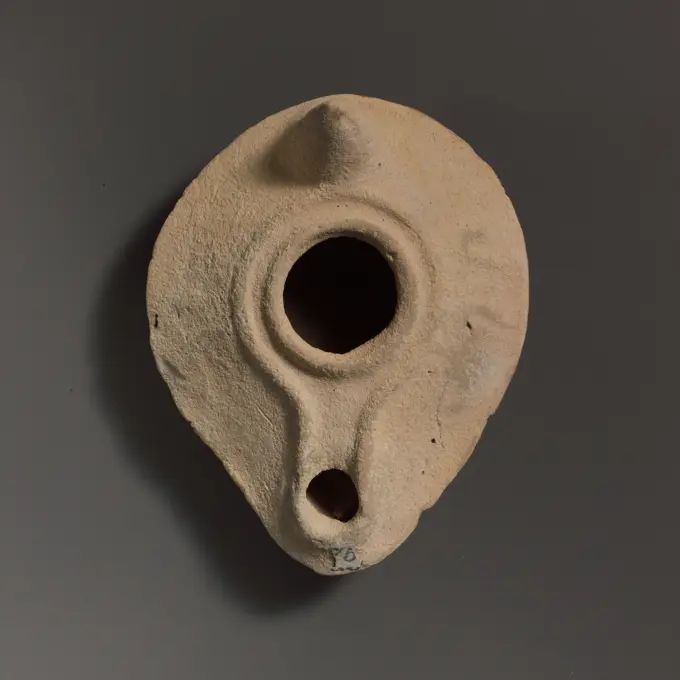
Antique Oil Lamps

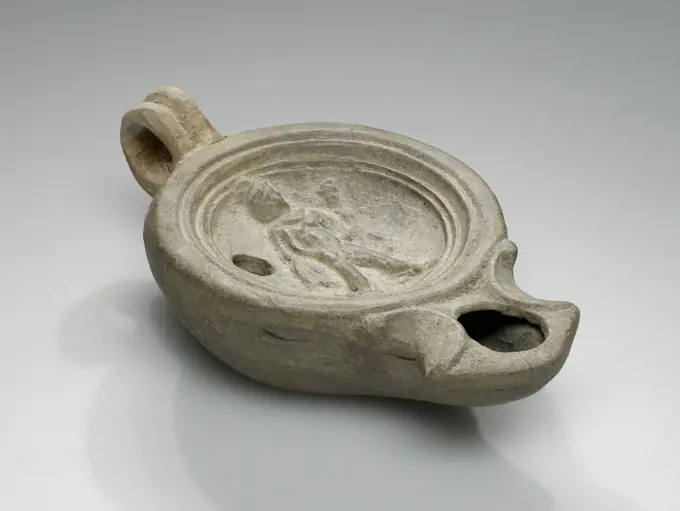
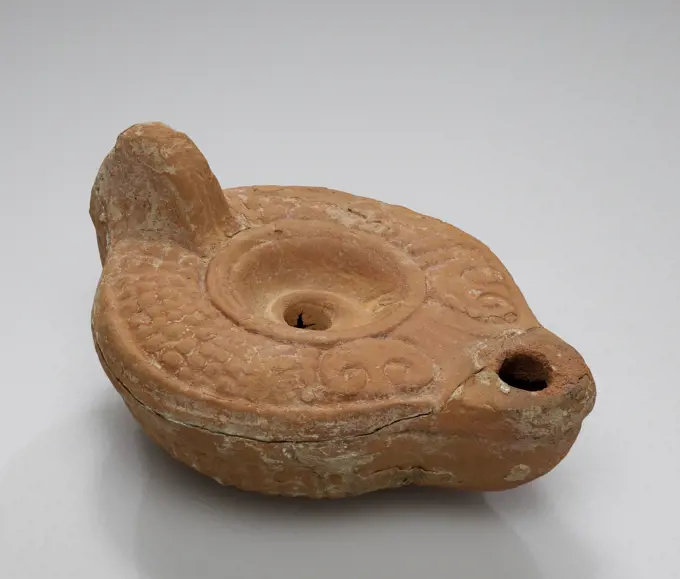
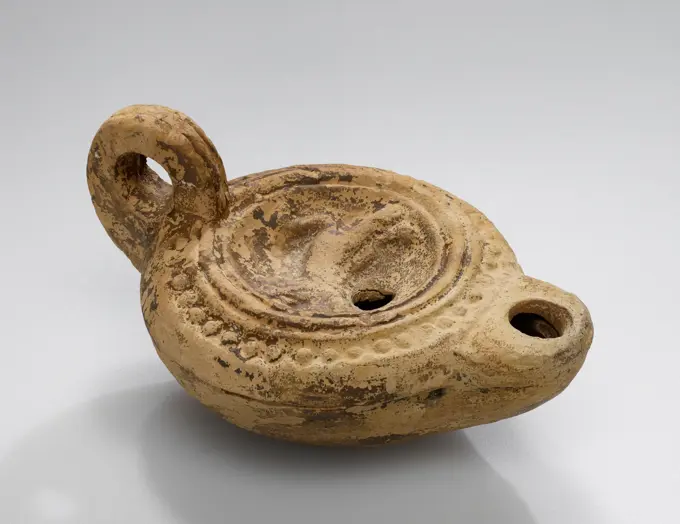
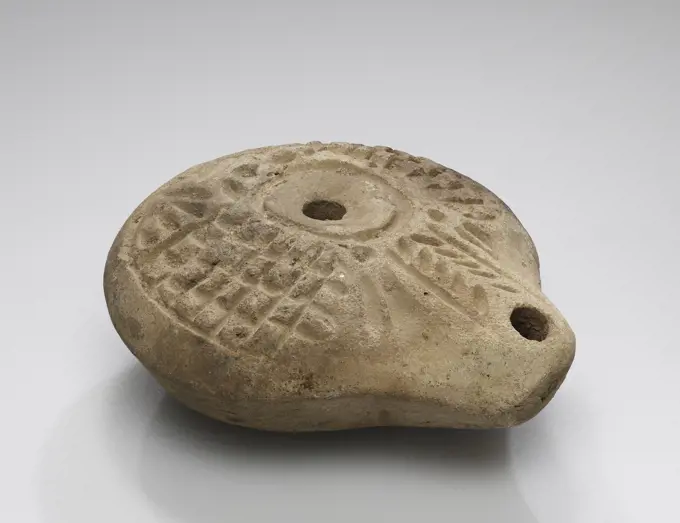
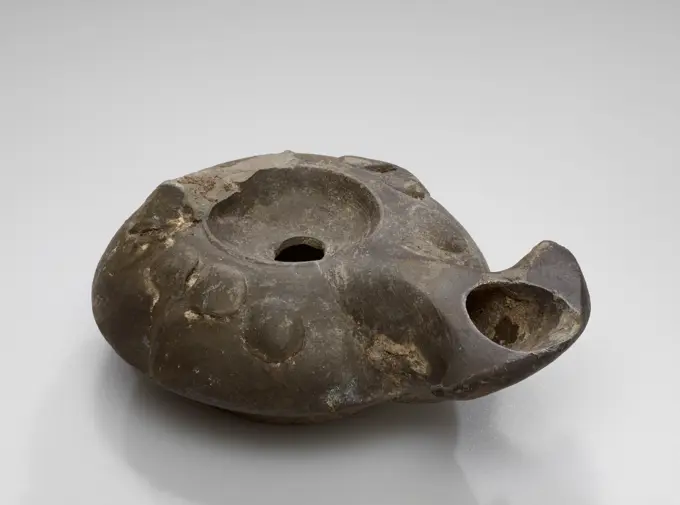
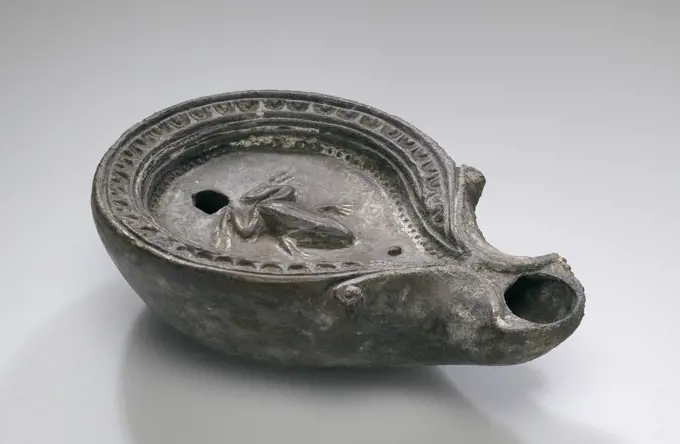
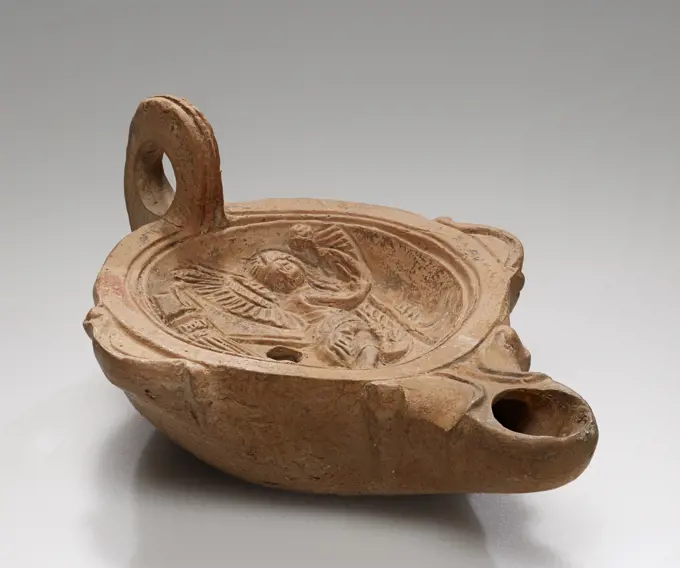
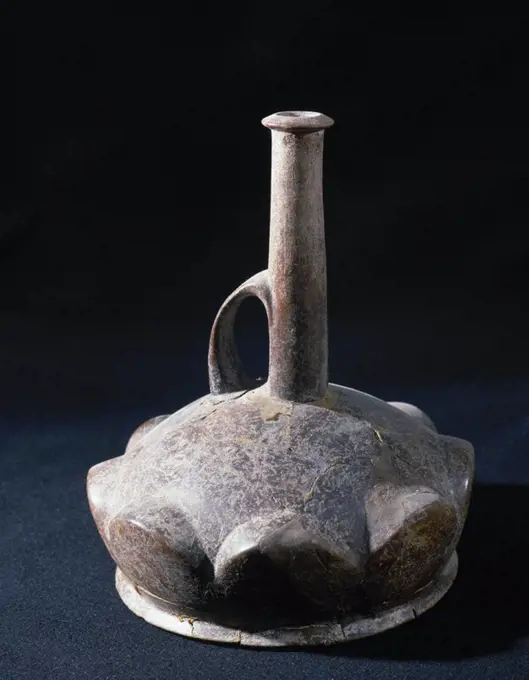
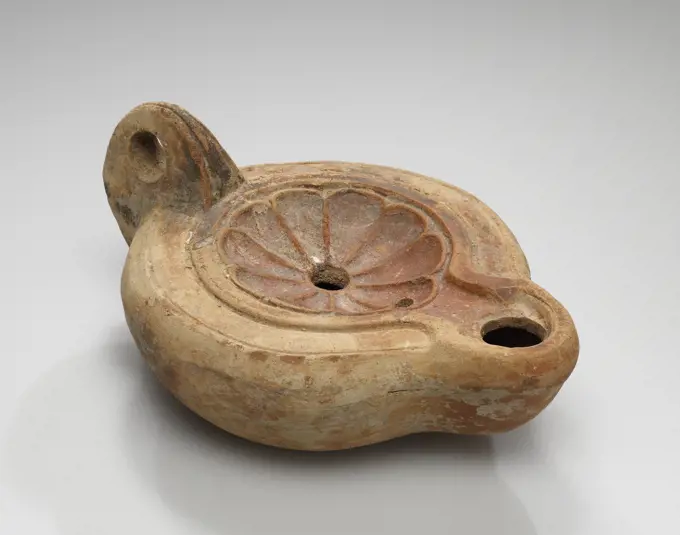
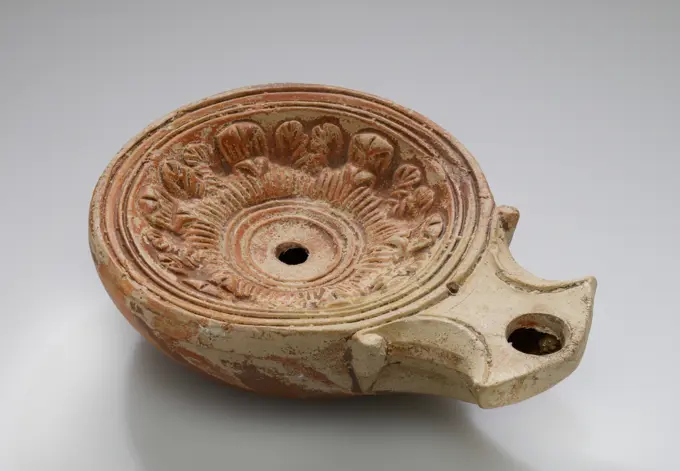
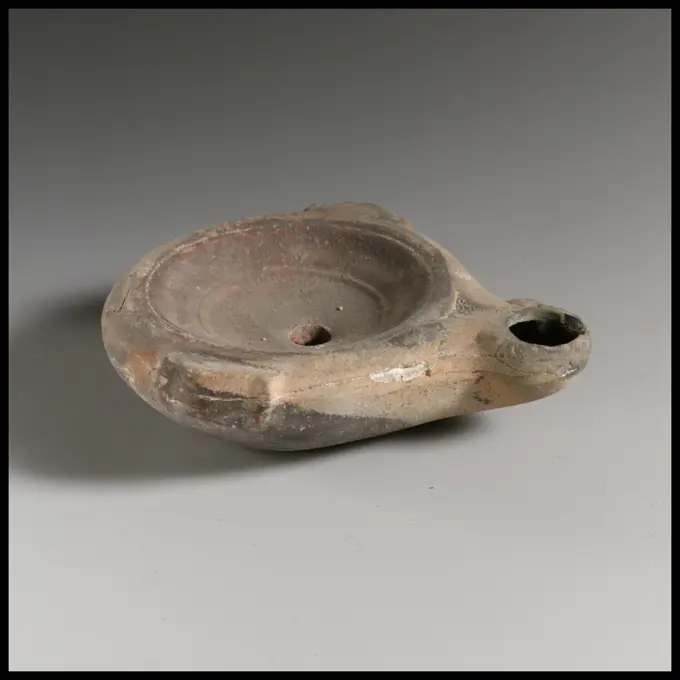
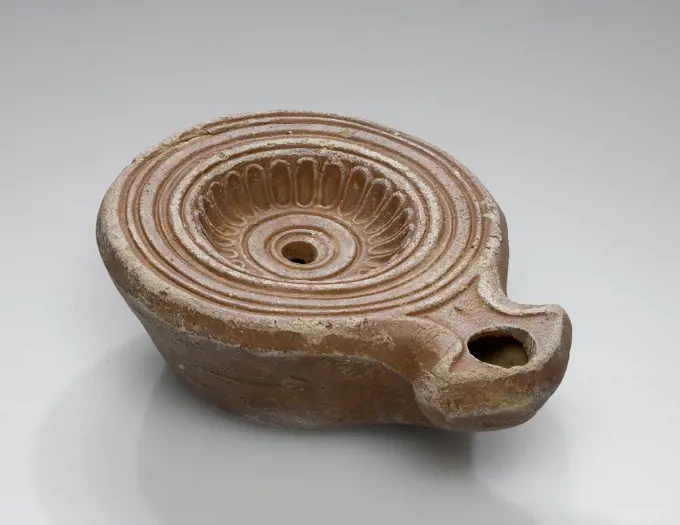
Collection of various ancient oil lamps made from terracotta, displaying intricate designs from Greek and other historical cultures.
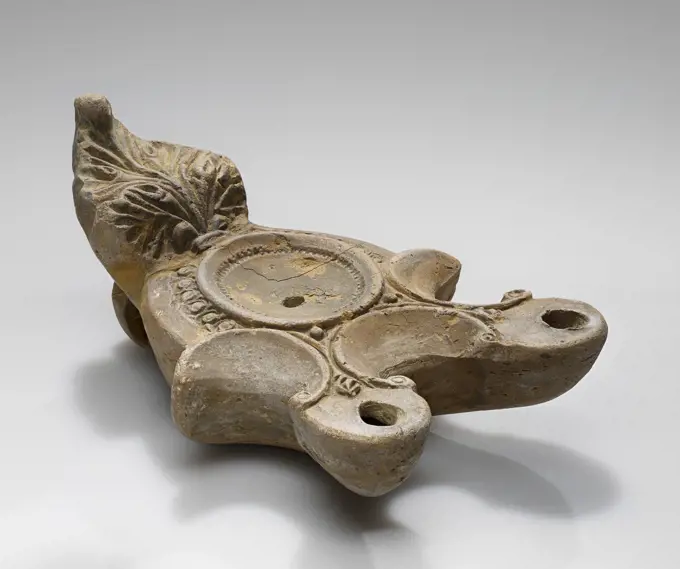
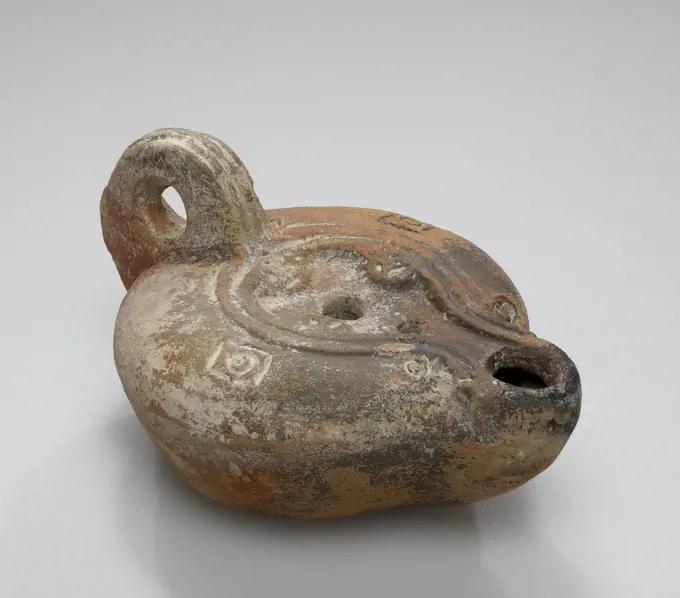
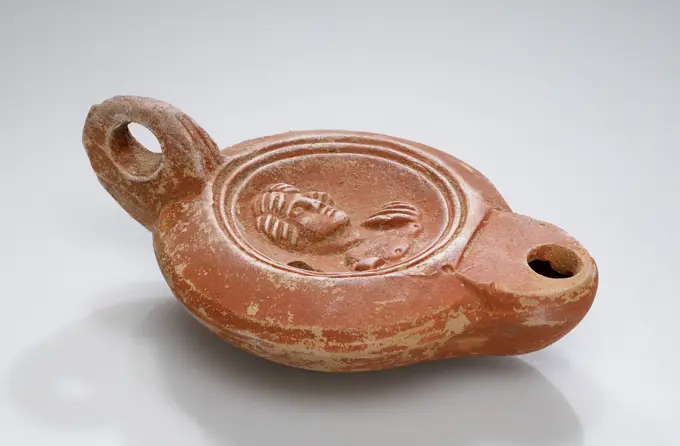
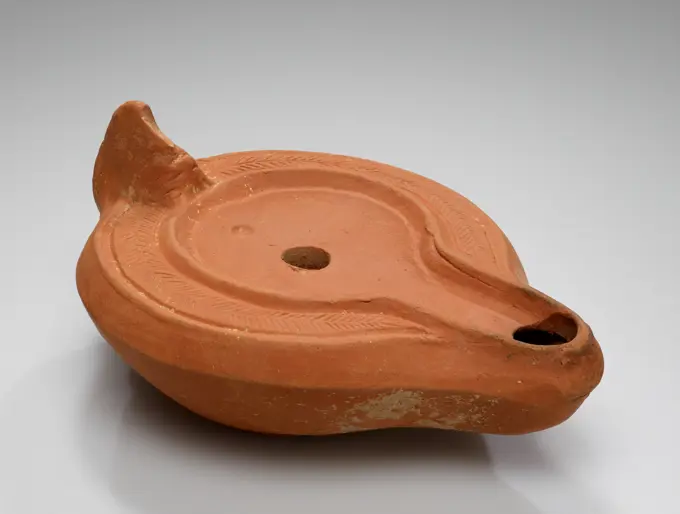
Lamp; Central Anatolia, Anatolia; 1st century B.C. - 4th century A.D; Terracotta; 3.8 x 8.5 x 15 cm (1 1,2 x 3 3,8 x 5 7,8 in.)
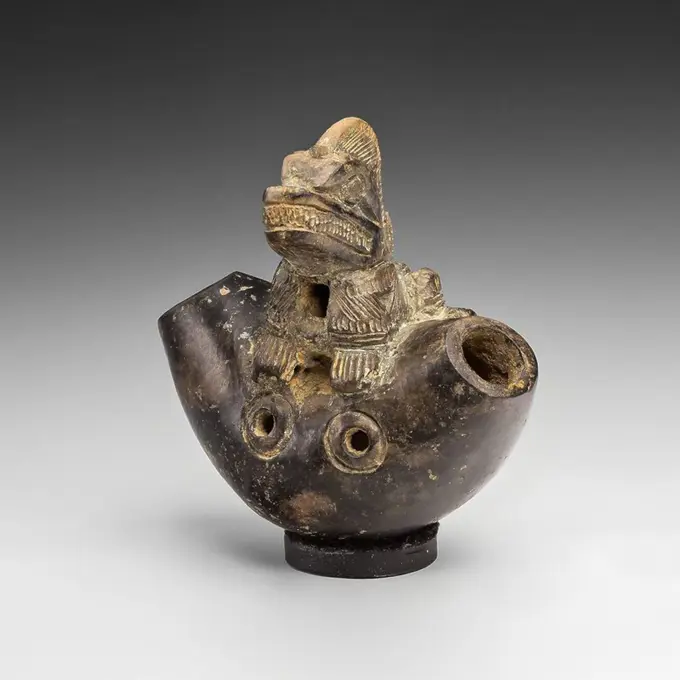
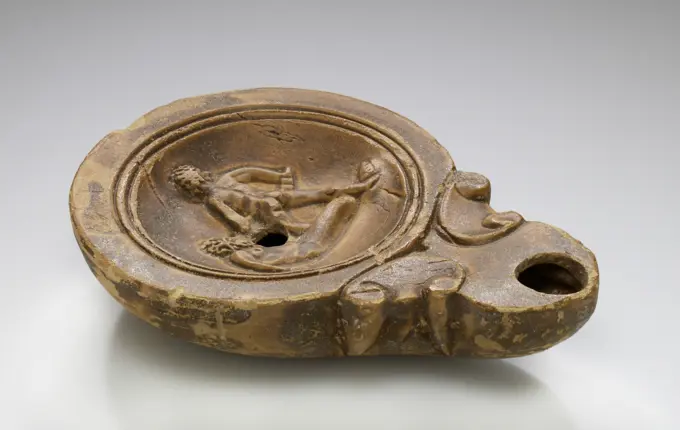
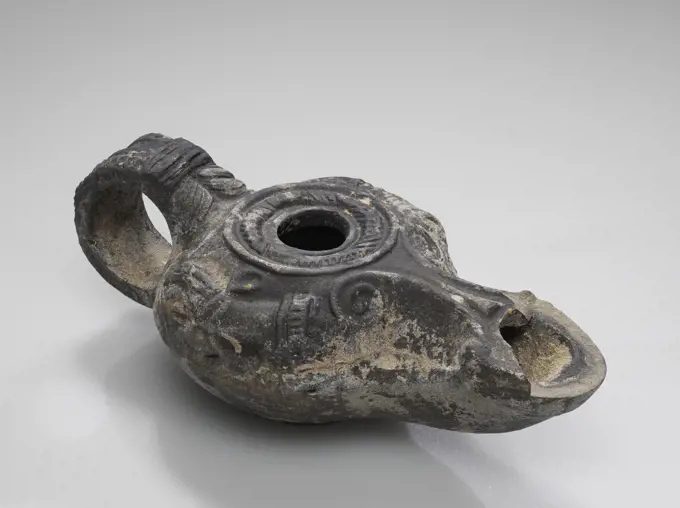
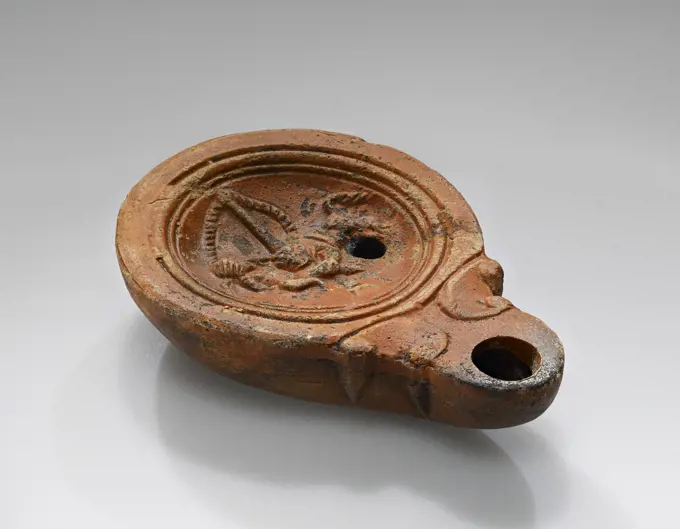
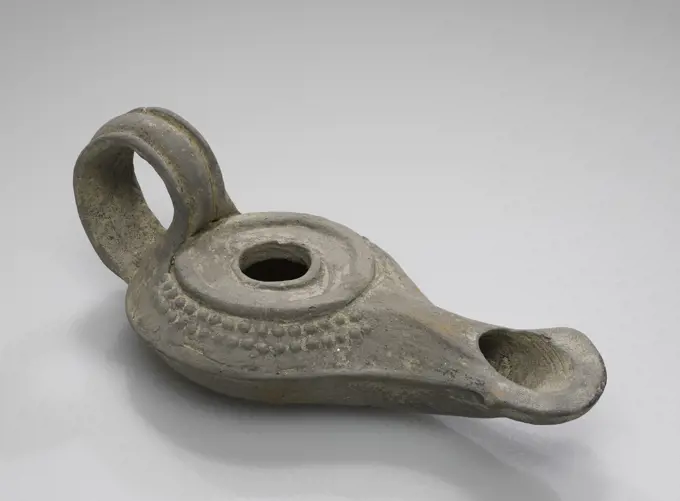
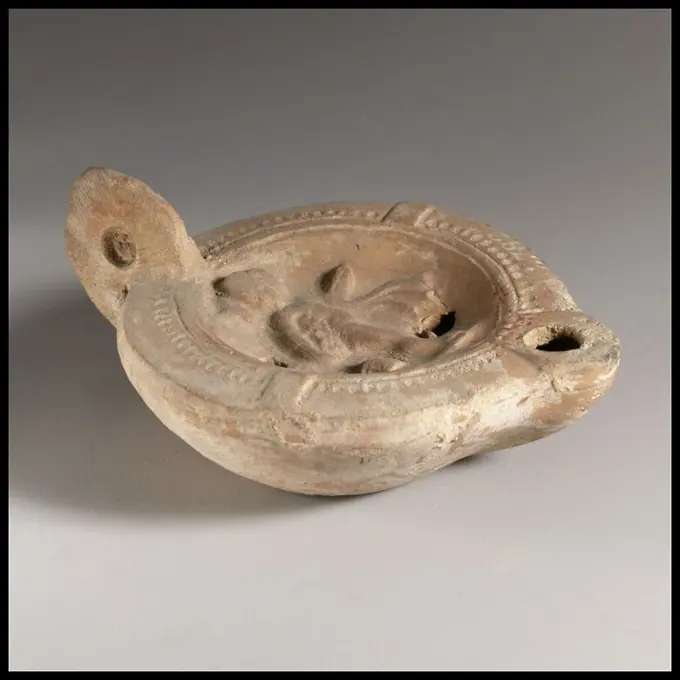
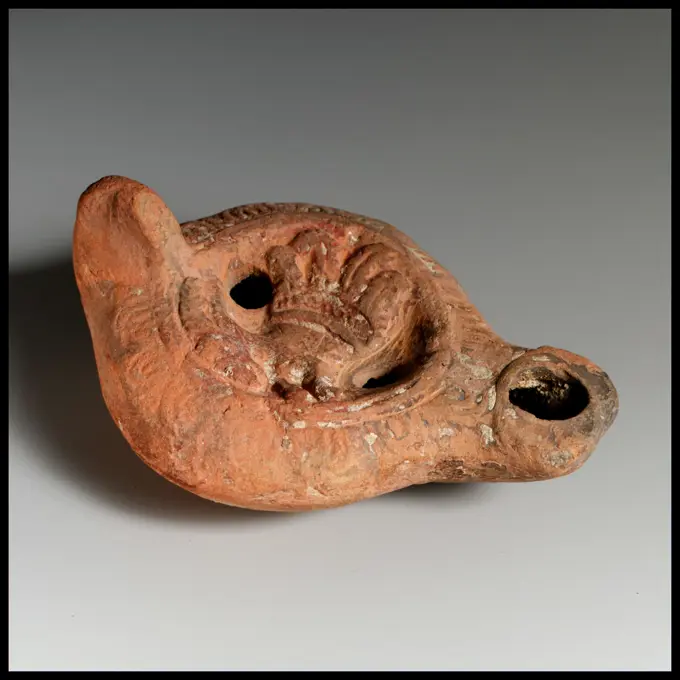
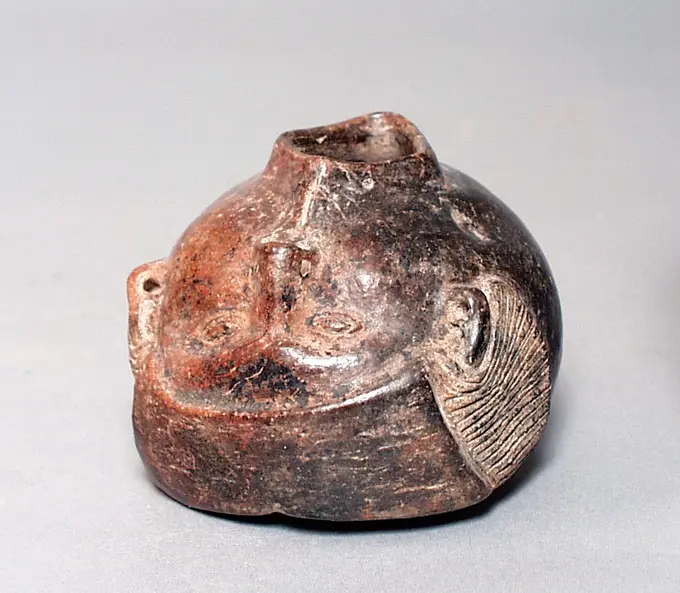
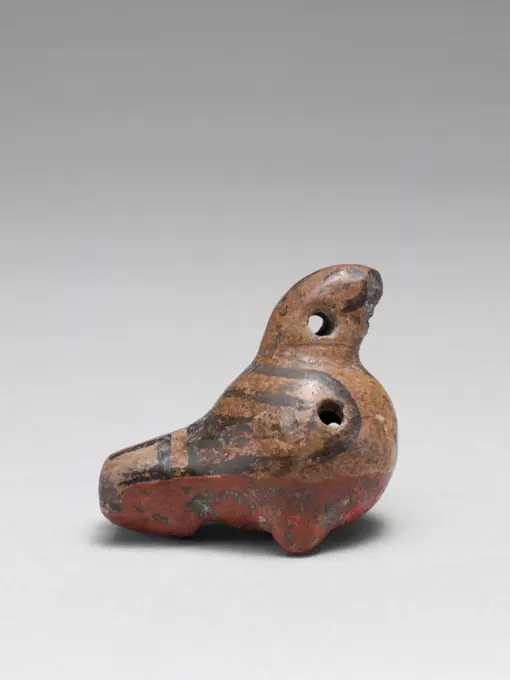
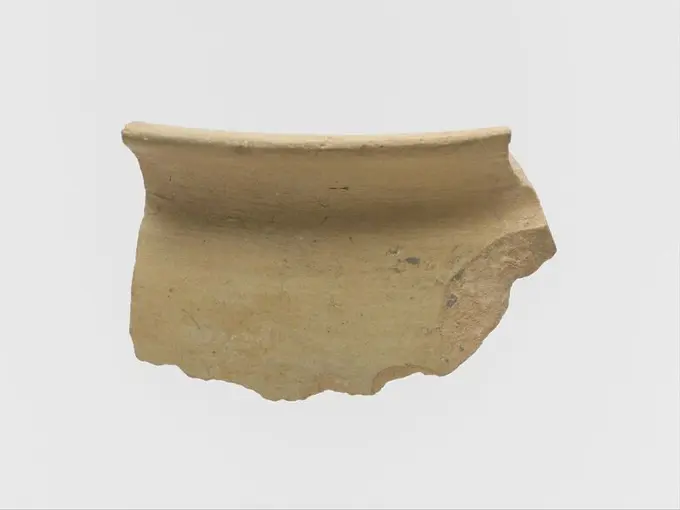
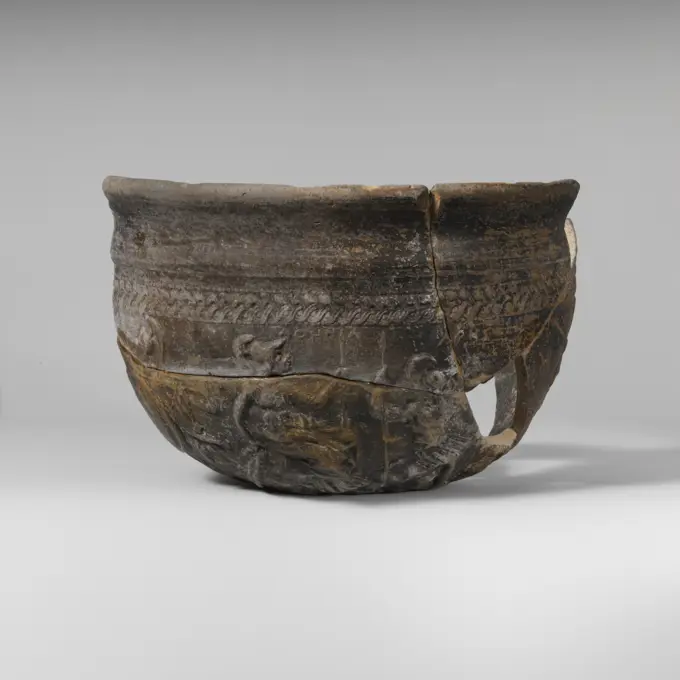
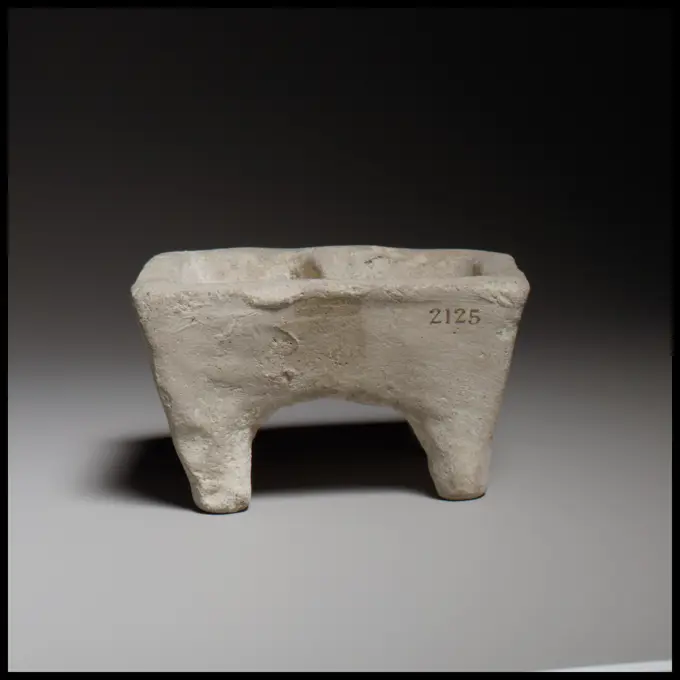
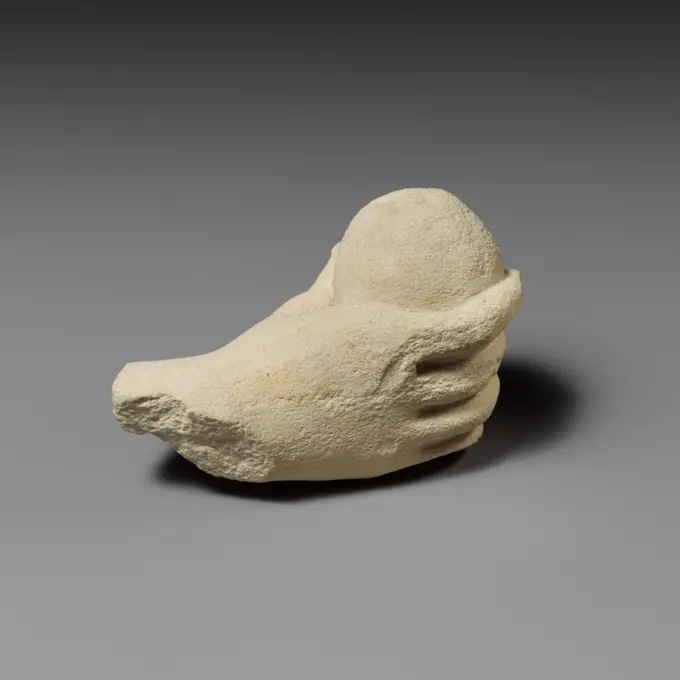
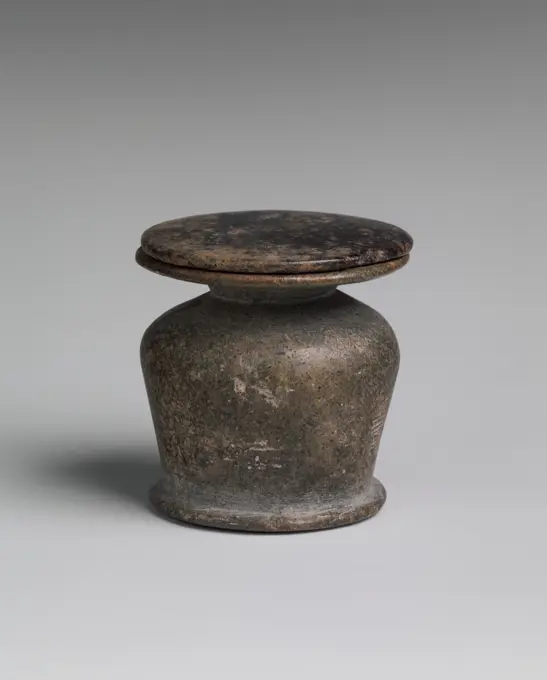
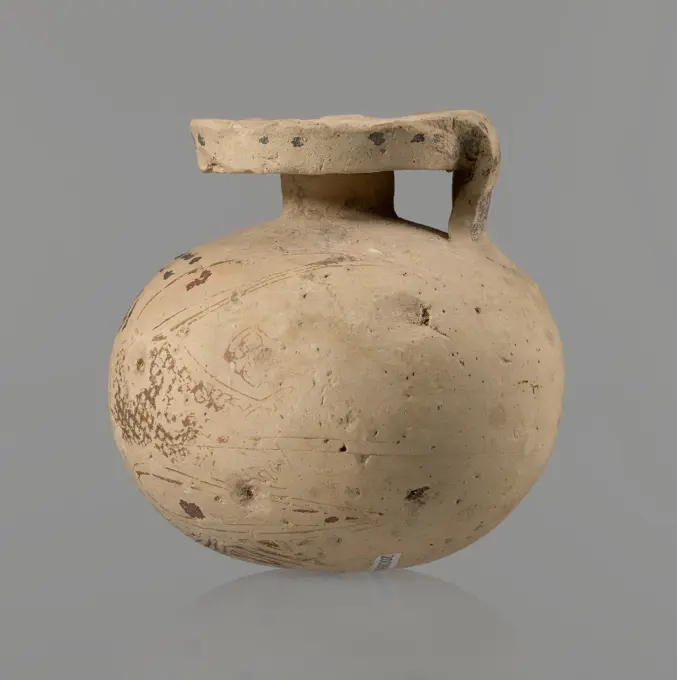
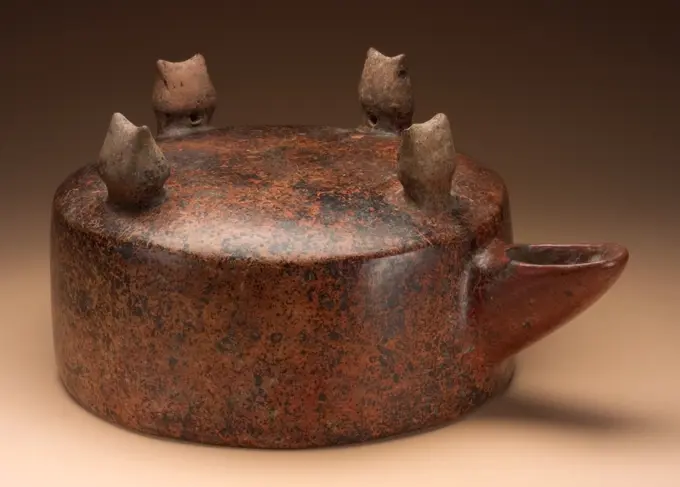
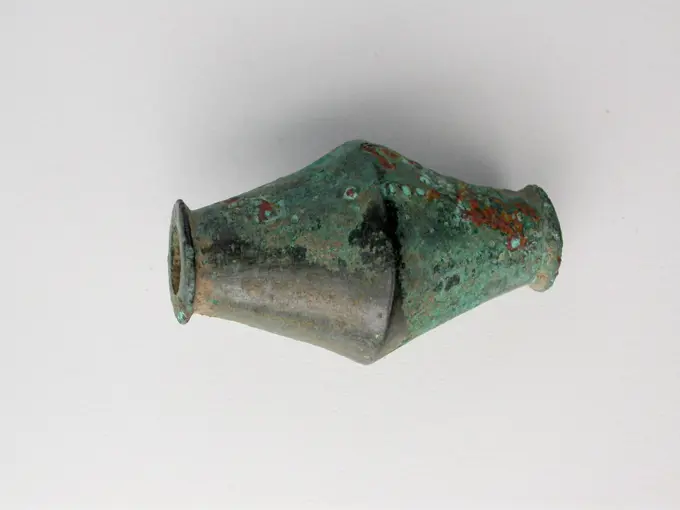
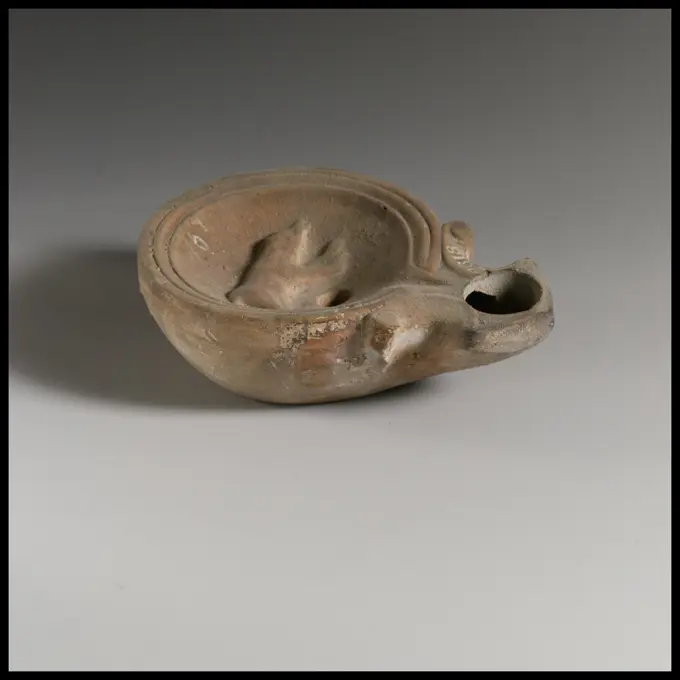
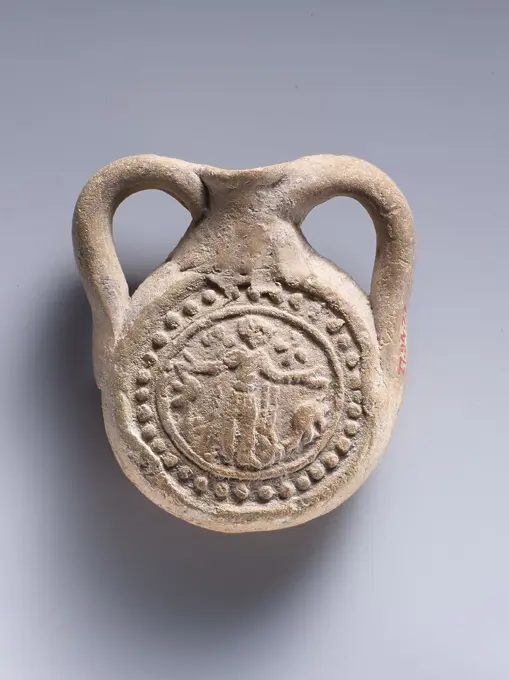
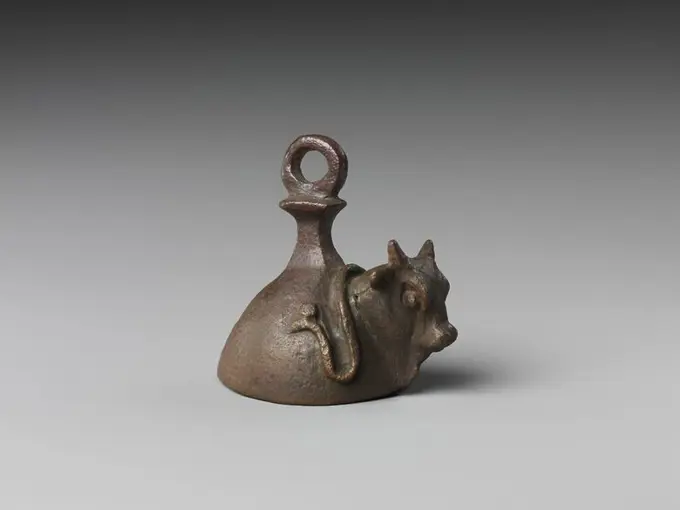
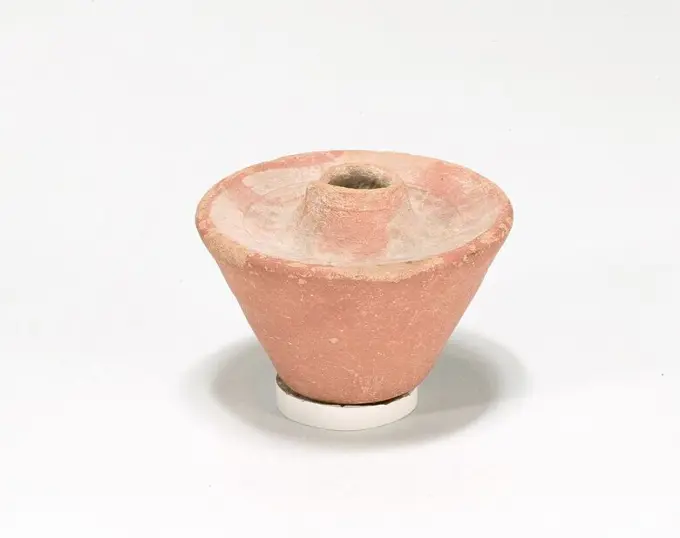
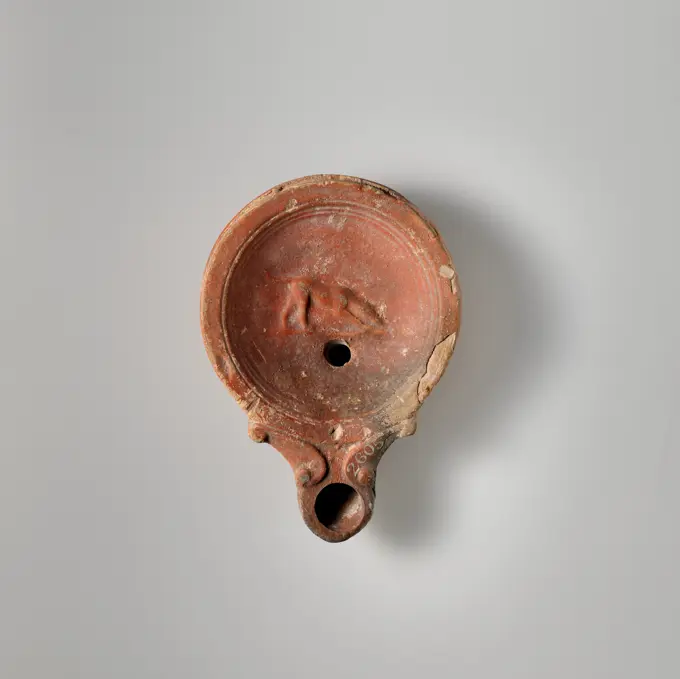
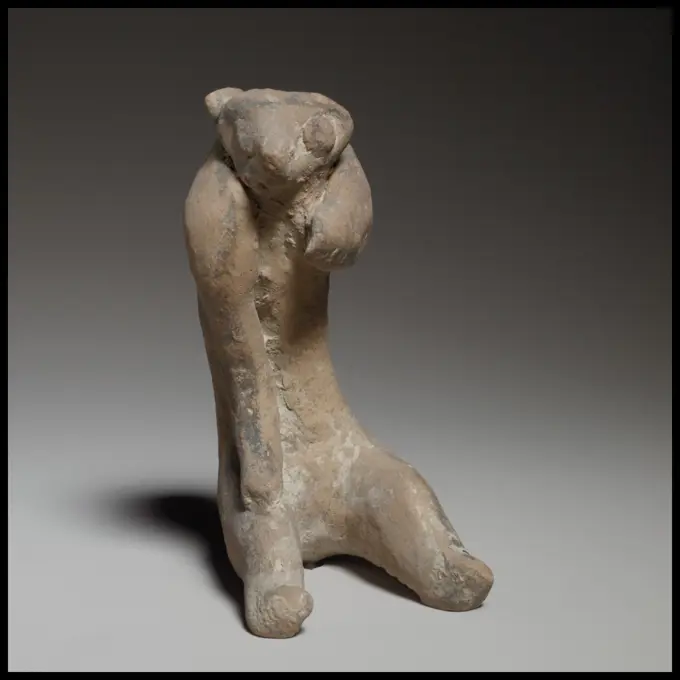
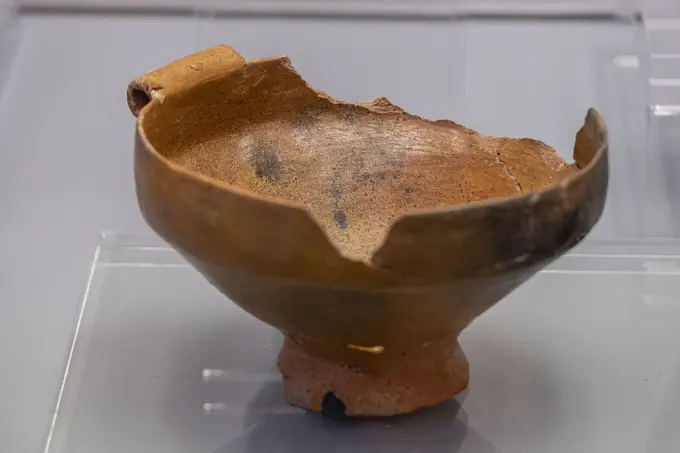
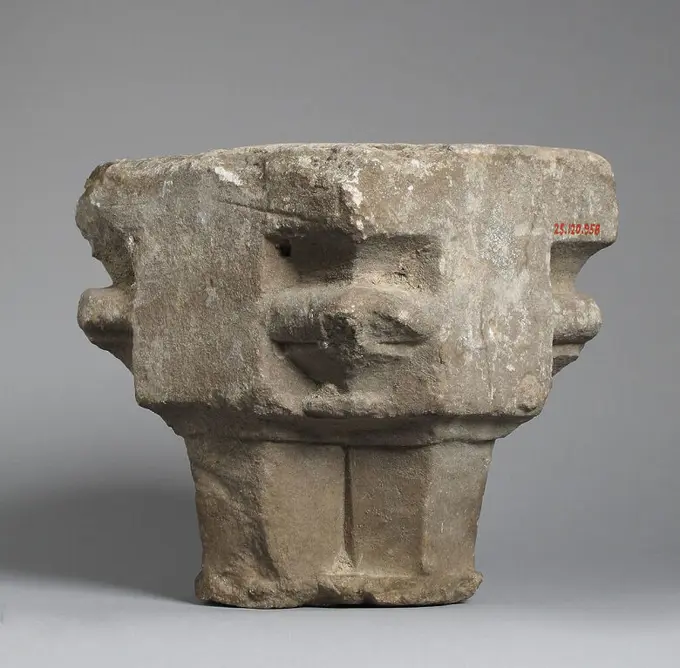
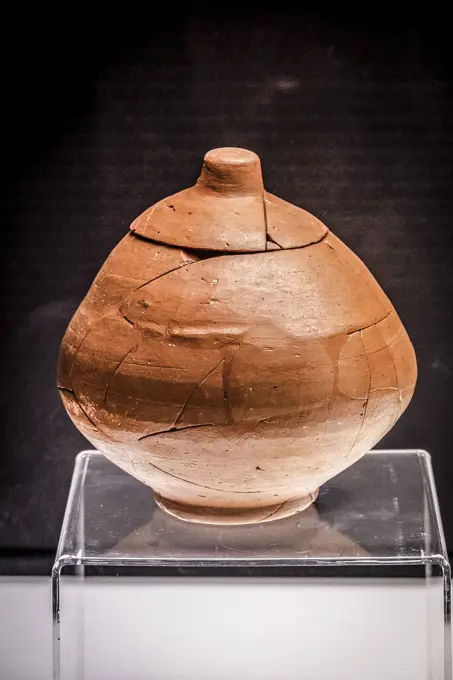
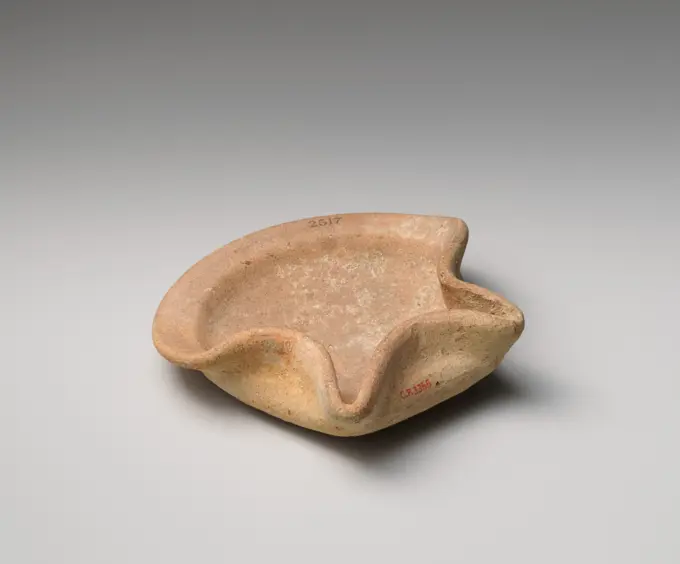
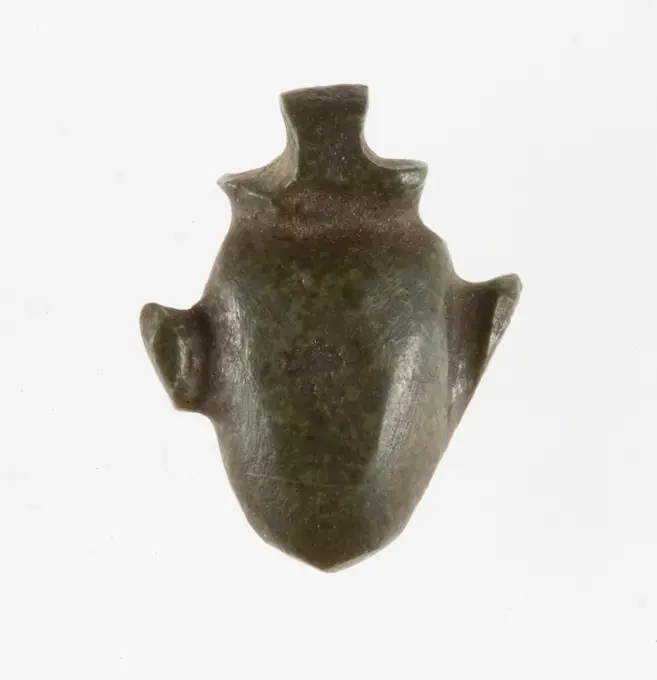
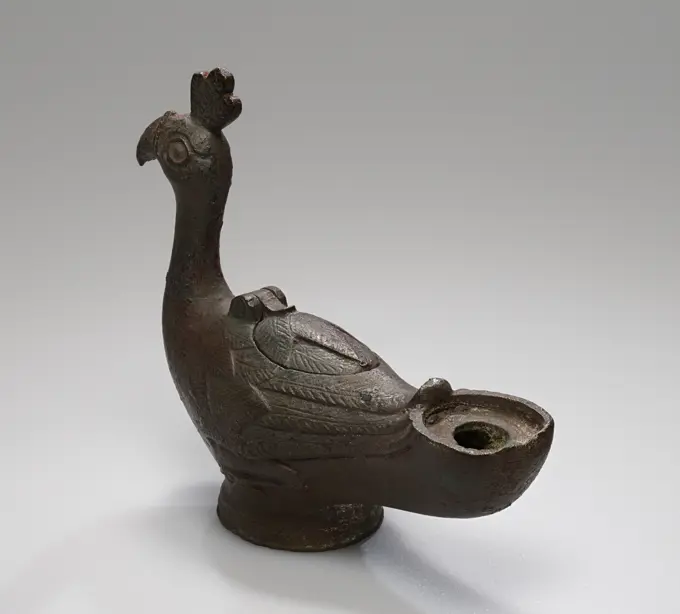
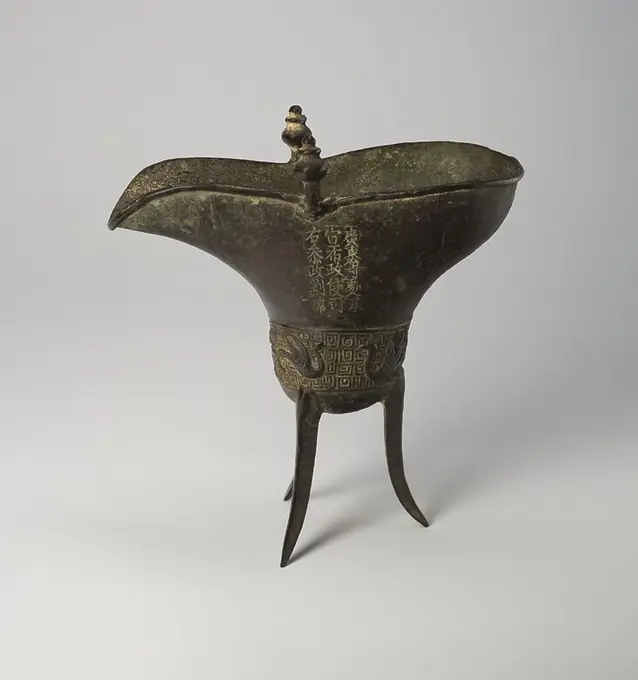
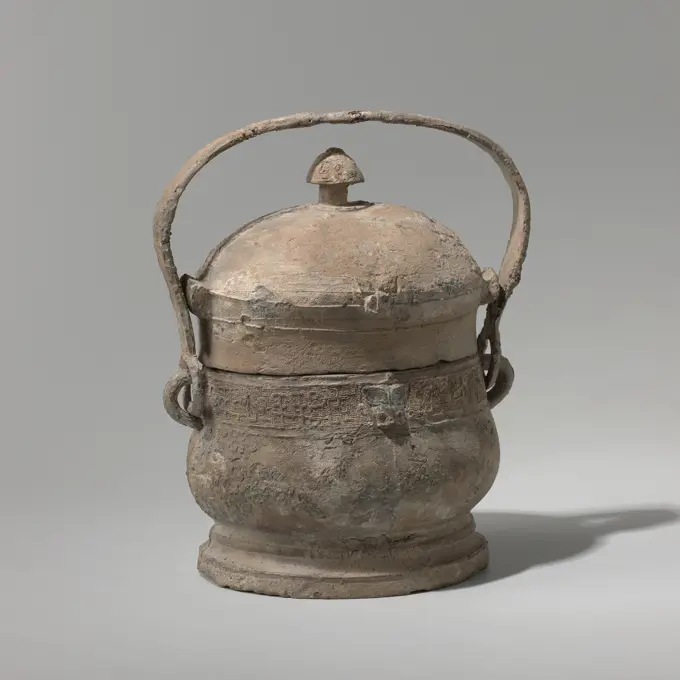
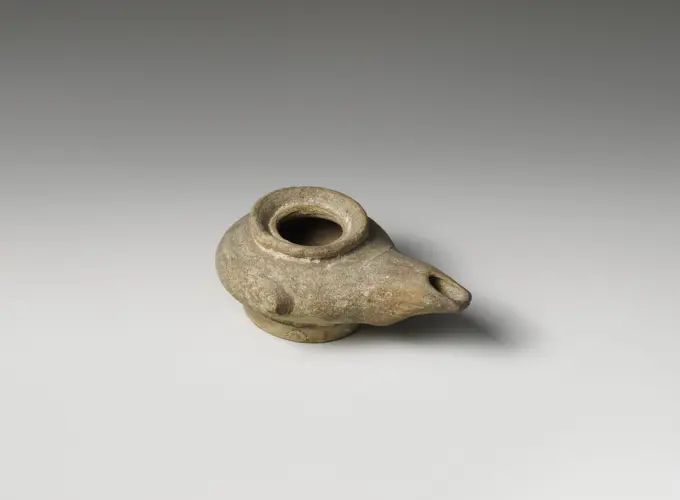
Terracotta oil lamp 2nd century B.C. Greek Wheel-made. Large central filling hole with horizontal rim, surrounded by a tall, flaring collar; carinated body; high base ring, and deep, concave base, decorated with one circular groove. Applied long nozzle, humped below, tapering to an elongated wick hole; an applied pointed lug on left side of body.Intact.. Terracotta oil lamp. Greek. 2nd century B.C.. Terracotta. Late Hellenistic. TerracottasLamp. UnknownWhistle with an Iguana or Saurian Sculpted on its Surface. Tairona; Sierra Nevada de Santa Marta, Colombia. Date: 1200-1400. Dimensions: H. 4.5 cm (1 3/4 in.). Ceramic and pigment. Origin: Colombia. Museum: The Chicago Art Institute, Chicago, USA.Lamp, North Africa; 1st - 4th century; Terracotta; 3 x 6.8 x 11.5 cm (1 3,16 x 2 11,16 x 4 1,2 in.)Lamp, South Anatolia, Anatolia; 1st - 4th century; Terracotta; 2.6 x 6.1 x 8.4 cm (1 x 2 3,8 x 3 5,16 in.)Lamp. UnknownLamp; Central Anatolia, Anatolia; 1st century B.C. - 4th century A.D; Terracotta; 3.8 x 8.5 x 15 cm (1 1,2 x 3 3,8 x 5 7,8 in.)Lamp. UnknownLamp. UnknownLamp. UnknownLamp, North Anatolia, Anatolia; 1st century B.C. - 1st century A.D; Terracotta; 4 x 5.9 x 11.2 cm (1 9,16 x 2 5,16 x 4 7,16 in.)Lamp. UnknownOil LampLamp, Roman Empire; 1st century B.C. - 4th century A.D; Terracotta; 2.4 x 7.1 x 10 cm (15,16 x 2 13,16 x 3 15,16 in.)Lamp, Central Anatolia, Anatolia; 2nd century B.C; Terracotta; 2.3 x 5.5 x 11.2 cm (7,8 x 2 3,16 x 4 7,16 in.)Neolithic standing figurine. UnknownLamp, South Anatolia, Anatolia; 1st - 4th century; Terracotta; 2.4 x 5.1 x 7.2 cm (15,16 x 2 x 2 13,16 in.)Lamp, Asia Minor; 1st - 4th century; Terracotta; 2.7 x 7.5 x 8.5 cm (1 1,16 x 2 15,16 x 3 3,8 in.)Bell. Thailand, Ban Chiang culture, 300 B.C.-A.D. 150. Tools and Equipment; musical instruments. Copper alloyVase fragment Minoan Early Minoan IITerracotta oil lamp. Culture: Roman. Dimensions: Length: 3 5/8 in. (9.2 cm)Height: 1 9/16 in. (4 cm). Date: ca. A.D. 175-250.Broneer Type 27C (Vessberg Type 16). Ring handle. Mold-made. Discus: Eros with lamp-holder in right hand and bowl of fruit in left. Two filling holes. On shoulder, small ovules interrupted by rectangular panels at sides. Museum: Metropolitan Museum of Art, New York, USA.Bottle;  X-XI century (901-00-00-1100-00-00);gift (provenance)Italic civilizations, Liguri, 9th century b.C. Decorated cup of Golasecca type. From the necropolis of Genicciola, province of Massa-Carrara.Oil Lamp with Molded Decoration Showing Erotic Couple. Israel, circa 100 A.D.. Furnishings; Lighting. Red slipped ceramicTerracotta oil lamp. Culture: Roman, Cypriot. Dimensions: Overall: 7/8 x 3 1/2 in. (2.2 x 8.9 cm). Date: 1st century B.C.-1st century A.D..Loeschcke Type 4. Mold-made. Discus: figure with one arm raised above his head, seated on a horse, galloping to right. Single filling hole below horse's belly, with a band of lines and grooves towards edge. Volutes flanking nozzle. Shallow, raised, flat base.Intact. Museum: Metropolitan Museum of Art, New York, USA.Lamp. UnknownImpasto bowl; Unknown Etruscan workshop; VII century BC (-700-00-00--601-00-00);Oil LampCover (common name). Sandstone with brown-black decoration under cover. Cernuschi Museum, Asia Museum of Asia in the city of Paris.Terracotta oil lamp ca. 6th century A.D. Roman Unpierced handle. Mold-made. Discus: in high relief, forepart of a horned goat facing left, issuing from a frond. Two large filling holes. On shoulder, large ovules. Base ring within two impressed lines; small, slightly concave base, with impressed human right foot.Intact.. Terracotta oil lamp. Roman. ca. 6th century A.D.. Terracotta. Late Imperial. TerracottasLamp. UnknownLamp, Anatolia; 1st - 4th century; Terracotta; 3.5 x 7.6 x 11.1 cm (1 3,8 x 3 x 4 3,8 in.)Lamp, Asia Minor; 1st century B.C. - 4th century A.D; Terracotta; 3.7 x 10 x 14 cm (1 7,16 x 3 15,16 x 5 1,2 in.)Pot Fragment 4th-7th century Coptic. Pot Fragment 477300Anthropomorphic VesselChariot wheel. Culture: Cypriot. Dimensions: diameter 6 in. (15.3 cm). Date: ca. 750-600 B.C..The wheel is solid and wheel-made. It has a tubular hub on either side to receive an axle. Museum: Metropolitan Museum of Art, New York, USA.Terracotta loom weight. Culture: Greek, Corinthian. Dimensions: H.: 1 11/16 x 2 1/16 in. (4.3 x 5.2 cm). Date: ca. 575-525 B.C..The geometric decoration shows a rather even balance between glazed and reserved areas. It recalls the checkerboard patterns on the shrouds depicted in Geometric representations of the prothesis (laying out of the dead). One wonders whether the pattern on the loomweight echoed, in simpler form, that of the textiles being woven. Museum: Metropolitan Museum of Art, New York, USA.Terracotta oil lamp. Culture: Roman. Dimensions: Overall: 1 3/8 in., 3.4 cm (3.5 x 3.4 cm). Date: 2nd century A.D.. Museum: Metropolitan Museum of Art, New York, USA.Oil Lamp. Egypt, probably 2nd century BCE - 4th century CE. Furnishings; Lighting. TerracottaSouth America. Chorrera culture. Late Formtive indigenous culture (1300 BC-300 BC in Ecuador). Ceramic vase. 23 x 20 cm. (diameter). From Ecuador. Private collection.Fragment of the vessel;The collection of ancient EgyptPottery Whistle ca. 800-1525 Costa Rican. Pottery Whistle. Costa Rican. ca. 800-1525. Clay. Pre-Columbian. Diquis Region, Costa Rica. Aerophone-Whistle Flute-whistleTerracotta rim of a vase. Culture: Helladic. Dimensions: Other: 1 3/8in. (3.5cm). Date: ca. 2000-1600 B.C..Yellow Minyan ware. Museum: Metropolitan Museum of Art, New York, USA.Lamp. UnknownLamp. UnknownHORNITO PEQUEÑO CON CHIMENEA - ARTE POPULAR S XX. Location: ALFARERIA. TAGARABUENA. Zamora. SPAIN.Lamp, North Africa; 1st - 4th century; Terracotta; 2.6 x 7.1 x 10 cm (1 x 2 13,16 x 3 15,16 in.)Lamp. UnknownOil LampTerracotta oil lamp ca. A.D. 40-100 Roman Loeschcke Type 4. Mold-made. Discus: a circle halfway down side; a single small filling hole slightly off-center; narrow band of lines and grooves around edge. Undecorated, narrow, sloping shoulder; two elongated scrolled knobs at sides. Volutes flanking nozzle, with large wick hole. Incised base ring, and uneven, slightly concave base.Intact.. Terracotta oil lamp 241463Limestone votive ear. Culture: Cypriot. Dimensions: H. 2 1/2 in. (6.4 cm). Date: 4th-3rd century B.C..The right ear is schematically rendered, with the canal indicated by a circular hole. There are traces of red paint. On the lobe are four syllabic signs signifying "I belong to a deaf person.". Museum: Metropolitan Museum of Art, New York, USA.Bowl. Culture: Coptic. Dimensions: Overall: 2 11/16 x 3 5/8 in. (6.9 x 9.2 cm). Date: 4th-7th century. Museum: Metropolitan Museum of Art, New York, USA.Dish. Culture: Coptic. Dimensions: Overall: 1 7/16 x 2 3/4 in. (3.7 x 7 cm). Date: 4th-7th century. Museum: Metropolitan Museum of Art, New York, USA.Terracotta Megarian bowl 2nd century B.C. Greek, Boeotian All but one of the figures on this bowl are inscribed. From left to right, the Cretan king Idomeneus attacks Phaistos as he steps into his chariot. To right of this vignette, Athena and Ares sit on rocks, facing a personification of the river Skamandros, while observing a fight between Agammenon and a now nameless Trojan foe. The subject matter on this bowl closely follows an episode in book V of Iliad, in which Athena exhorts Ares, the god of war, to remain neutral during the specific duals of the Trojan conflict that took place between the characters mentioned above. As in Homer's text, the two Olympians observe the fighting from the banks of the river Skamandros, a detail that confirms the subject matter depicted on the bowl.. Terracotta Megarian bowl. Greek, Boeotian. 2nd century B.C.. Terracotta; mold made. Hellenistic. VasesModel of a coffin ca. 600-480 B.C. Cypriot The model is handmade. The sides, which widen slightly toward the top, rest on four short legs. Model of a coffin. Cypriot. ca. 600-480 B.C.. Terracotta; hand-made. Cypro-Archaic II. TerracottasLimestone hand holding a piece of fruit Cypriot. Limestone hand holding a piece of fruit 242266Bottle Neck 10th-11th century. Bottle Neck 448708Fibula 9th-8th century B.C. Italic, Villanovan. Fibula 255999Terracotta oil lamp. Culture: Greek. Dimensions: Overall: 1 1/4 x 3 1/2 in. (3.2 x 8.9 cm).Wheel-made body, with applied long nozzle. Large central filling hole, surrounded by a plain band and an incised circle; convex sloping shoulder, with a single projecting knob at edge of left side; squat, carinated body. Flat base. Museum: Metropolitan Museum of Art, New York, USA.Kohl jar ca. 1550-1458 B.C. New Kingdom. Kohl jar 551055Cup ca. 2000-1600 B.C. Cypriot Horned handle and vertical bands.. Cup. Cypriot. ca. 2000-1600 B.C.. Terracotta. Middle Bronze Age. VasesAryballs orientalized;  575-550 BC (-575-00-00--550-00-00);Single disk block. Ship part, a single disk block, without disk.Terracotta oil lamp. Culture: Roman. Dimensions: 1 3/16 × 3 15/16 in. (3 × 10 cm). Date: 1st century B.C.-1st century A.D..Loeschcke Type 1A. Mold-made. Discus: a rosette with four large petals, interspersed with leafy fronds; a single filling hole at center, with a band of raised dots within two circles at edge. Volutes flanking angular nozzle, with a large wick hole. Raised base ring, and a flat base.Broken and repaired, with one hole in body. Museum: Metropolitan Museum of Art, New York, USA.Spouted Vessel with Four Houses. Mexico, West Mexico, Pacific Coast, Colima, Colima style, 200 BCE-500 CE. Ceramics. Slip-painted ceramicTerracotta lamp. Culture: Roman, Cypriot. Dimensions: Overall: 1 3/16 x 3 13/16 in. (3 x 9.7 cm). Date: 1st century B.C.-1st century A.D.. Museum: Metropolitan Museum of Art, New York, USA.Lamp. UnknownOil lamp. unknown, craftsmanBiconical Bead 800 BCE-600 BCE Greece. These precious bronzes objects are votives, or devotional gifts, made for gods. They come in many forms. Some are miniature sculptures of animals, mostly depicting horses, deer, and birds. Others are items of personal adornment, including beads and brooches. Quite a few seem once to have been attached to something else. This assemblage is characteristic of the thousands of votives that were hung from sacred trees or placed in sanctuaries around Greece. Once a shrine was full, the votives were gathered together and ceremonially buried to make room for more offerings. This comes from Thessaly in north-eastern Greece.. Bronze . Ancient GreekKohl jar. Dimensions: h. 5 cm (1 15/16 in). Dynasty: Dynasty 12-13. Date: ca. 1981-1640 B.C.. Museum: Metropolitan Museum of Art, New York, USA.Terracotta oil lamp mid-1st century A.D. Roman. Terracotta oil lamp 241468Ampulla (Flask) with Saint Menas. Date: late 6th-mid-8th century.Ampullae like this one were used by pilgrims to bring home water or oil from the great pilgrimage site for Saint Menas, said to be a late-third-century Egyptian Roman soldier who was martyred for his Christian faith. He is shown between the two camels who returned his body to Egypt for burial. Museum: Metropolitan Museum of Art, New York, USA.Dagger hilt inlay. Culture: Iran. Dimensions: 1.52 x 0.91 x 0.31 in. (3.86 x 2.31 x 0.79 cm). Date: ca. 9th century B.C.. Museum: Metropolitan Museum of Art, New York, USA.Pottery ointment jar, belly model with constriction above the foot, ointment jar pot holder soil find ceramic earthenware glaze lead glaze, hand turned glazed baked Pottery ointment jar. Abdominal model with constriction above the foot Minimal abdomen. Stand surface cut loose and untidy finished Red shard internally glazed Flat and outstanding neck edge archeology Rotterdam IJsselmonde health care indigenous pottery packing ointment care medication medicine craft pharmacy Soil discovery: Castle IJsselmonde pit 5 Rotterdam 1972.Bell with head of a bovine wearing a yoke ending in uraei. Dimensions: H. 4.4 × W. 3.2 × D. 4.5 cm (1 11/16 × 1 1/4 × 1 3/4 in.). Date: 332-30 B.C..Bells began to appear in Egypt about the 8th century BC. This bell is decorated with a bovine head wearing a yoke ending in uraei. The clapper is missing. Similarly shaped bells with heads of mythological animals were found in the cemetery at Naukratis, where they must have had some kind of amuletic function for the deceased. Museum: Metropolitan Museum of Art, New York, USA.Cristal Romano. Torre Llauder. Museo municipal, Mataró. Barcelona.Square Jug with a StyliteSaintLamp. UnknownLazio Viterbo Viterbo Museo Civico61. Hutzel, Max 1960-1990 Views of paintings (Middle Ages through 18th c.), frescoes, a tabernacle, coffin, sculpture reliefs, portal fragments, busts, sculpture, tapestry found in the Pinacoteca, Second floor gallery and Second floor cloister sequences. Antiquities: Many views of Etruscan and Roman fragments, sculpture, sarcophagi, pottery, masks, jewelry and other objects found in the Storeroom sequence (inventory numbers on back of prints), and the Cloister, Second floor Cloister, Valle Giulia, Sala Romana and Sala Etrusca sequences. General Notes: There are eight separate numerical sequences for this location. The cloister as an architectural structure, rather than museum site, is documented in the record and file for S. Maria della Verita, Cloister, all views of which are stored in Medieval core collection. Five views from the Museo Civico Second floor cloister sequence are stored in Medieval. German-born photographer and scholar Max Hutzel (1911-Lamp. Dimensions: H. 4 cm (1 9/16 in); diam. 5.5 cm (2 3/16 in). Dynasty: Dynasty 12-13. Date: ca. 1981-1640 B.C.. Museum: Metropolitan Museum of Art, New York, USA.Terracotta oil lamp 1st century B.C.-1st century A.D. Roman Loeschcke Type 4. Mold-made. Discus: standing hound, facing right, with head down and tail raised; ground line below; a single filling hole at center below line; band of lines and grooves towards edge. Volutes flanking nozzle, with large wick hole. Incised base ring, and slightly raised, flat base, with faint raised mark: I.Intact, but some flaking of surface.. Terracotta oil lamp. Roman. 1st century B.C.-1st century A.D.. Terracotta. Early Imperial. TerracottasTerracotta statuette of a monkey or bear ca. 600-480 B.C. Cypriot The effect of Cypriot terracottas often derives from the spontaneity and vivacity of the subjects represented. Even if the species is not surely identifiable, this small animal is lithe and alert.. Terracotta statuette of a monkey or bear 241194Terracotta lamp late 1st-2nd century A.D. Roman The discus on the top of this lamp depicts Serapis seated on a throne, holding a long scepter. To his right is Cerberus, the mythical dog who guarded the entrance to the Underworld.. Terracotta lamp 254485 Roman, Terracotta lamp, late 1st2nd century A.D., Terracotta, length 13.89 cm.. The Metropolitan Museum of Art, New York. Fletcher Fund, 1942 (42.11.47)cuenco, Zarranzano, Cubo de la Sierra, siglos VI - IV a.C, museo Numantino de Soria, Soria, Comunidad Autónoma de Castilla, Spain, Europe.Capital. Culture: French. Dimensions: Overall: 7 x 6 1/2 in. (17.8 x 16.5 cm). Date: 14th century. Museum: Metropolitan Museum of Art, New York, USA.Terracotta loom weight. Culture: Greek, Cretan. Dimensions: 4 3/4 in. x 2 1/2 in. (12 cm x 6.3 cm). Date: 6th century or later.In the form of a truncated pyramid. Museum: Metropolitan Museum of Art, New York, USA.cinerary urn, Carratiermes Necropolis, 4th-2nd century BC. Museum of the Tiermes Archaeological Site, Soria, Castile and Leon, Spain.Terracotta saucer-shaped oil lamp 4th century B.C. Cypriot Open, wheel-made. Thick, horizontal rim, with rounded lip, pinched in on one side with two projecting nozzles. Undefined, slightly convex base.Intact.. Terracotta saucer-shaped oil lamp. Cypriot. 4th century B.C.. Terracotta. Cypro-Classical. TerracottasClassic tripod pitcher with slip, Santa María Nebaj, anthropology museum, department of El Quiché, Guatemala, Central America.Lamp, North Africa; 1st - 4th century; Terracotta; 2.4 x 5.6 x 7.6 cm (15,16 x 2 3,16 x 3 in.)Amulet in the Shape of a Heart 664-30 B.C. Late Period-Ptolemaic Period. Amulet in the Shape of a Heart. 664-30 B.C.. Dark green stone. Late Period-Ptolemaic Period. From Egypt. Dynasty 26-30Terracotta oil lamp. Culture: Roman. Dimensions: Overall: 2 1/4 x 5 5/8 in. (5.7 x 14.3 cm). Date: 1st century B.C.-1st century A.D..Mold-made, with tall ring handle. Plain, deep discus, surrounded by a raised band flanked by two grooves. Broad, almost horizontal shoulder decorated with a raised pattern of rounded tongues, each with a central rib, radiating outward from edge of the discus and ending at the front in spirals forming the volutes flanking the back of the nozzle, with a large wick hole. Narrow handle, with large round finger hole, decorated with three incised lines, running along the front and top of the handle. An incised base ring, and a broad, flat base.The front of the handle added and joined to back that forms part of the molded body.Intact. Museum: Metropolitan Museum of Art, New York, USA.Bowl. Culture: Coptic. Dimensions: Overall: 2 13/16 x 3 11/16 in. (7.2 x 9.3 cm). Date: 4th-7th century. Museum: Metropolitan Museum of Art, New York, USA.Lamp. UnknownClay Serving Vessel 263 B.C. Goblet (jue). China. Date: 1464. Dimensions: 20.5 × 19.1 × 8.4 cm (8 1/16 × 7 1/2 × 3 5/16 in.). Bronze. Origin: China. Museum: The Chicago Art Institute, Chicago, USA.Ritual wine barrel, anonymous, c. -1700 - c. -800 Cover of ritual wine barrel with two monster heads. China lead (metal). antimony Cover of ritual wine barrel with two monster heads. China lead (metal). antimonyTerracotta oil lamp 7th century A.D. Roman Vessberg Type 19 (slipper lamp). Mold-made, with applied tall, conical handle. Sharply carinated body; wide filling hole with raised rim; channel to wick hole. Wide, rounded shoulder with indistinct ridges. Oval base ring, and flat base.Intact.. Terracotta oil lamp 241684Oil LampOil Lamp 4th-7th century Coptic. Oil Lamp 478724