Antique Oriental Carpets

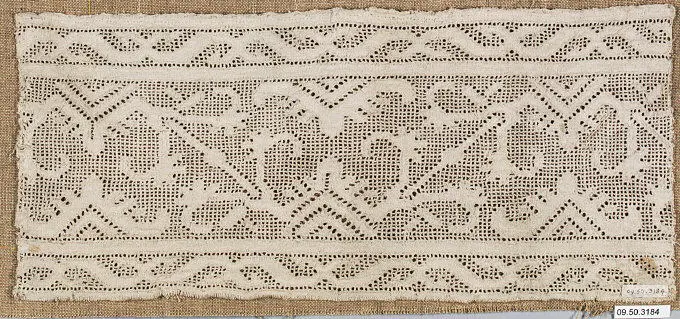
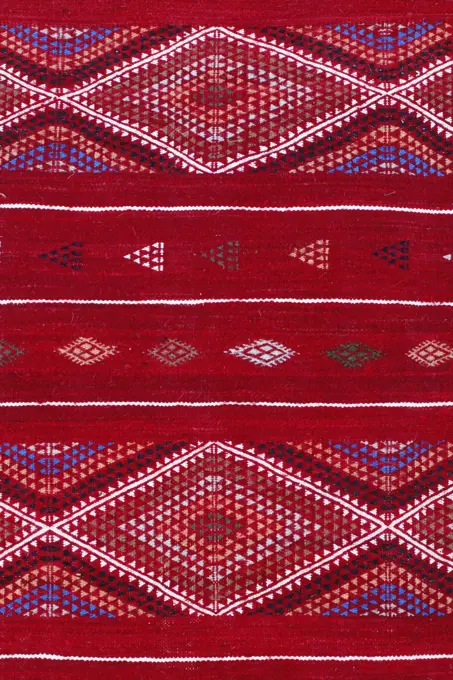
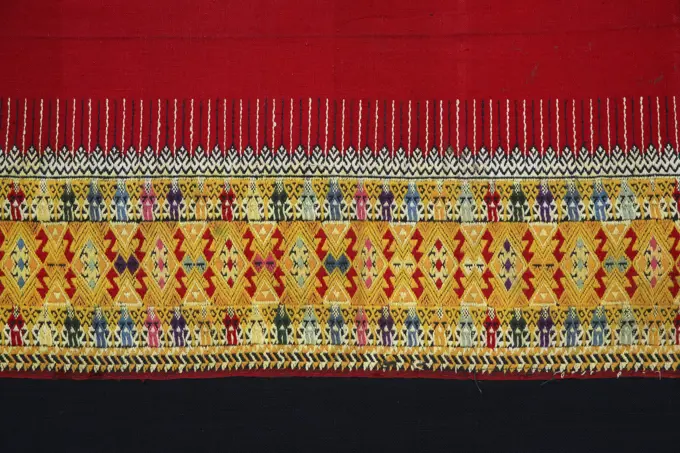
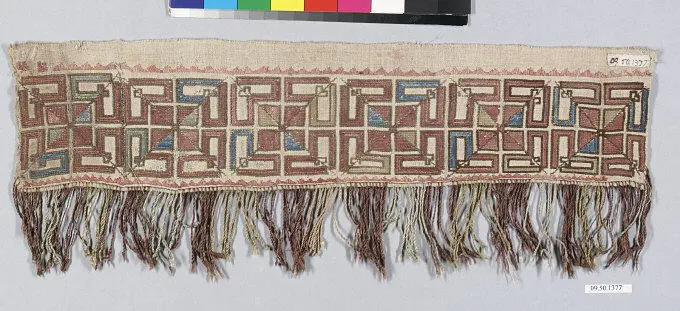
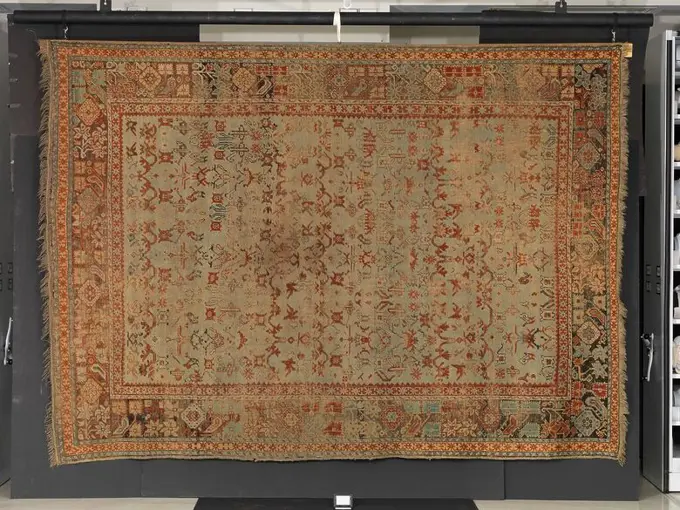
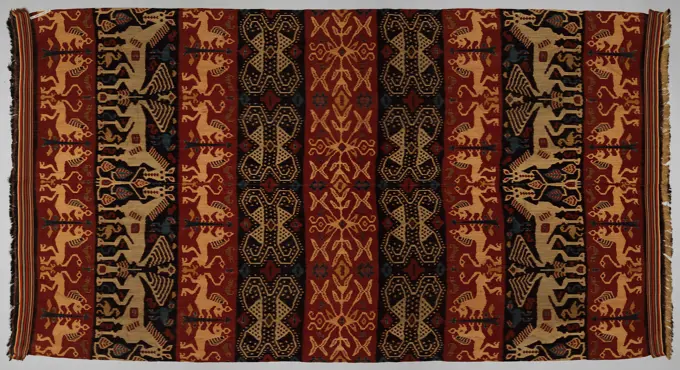
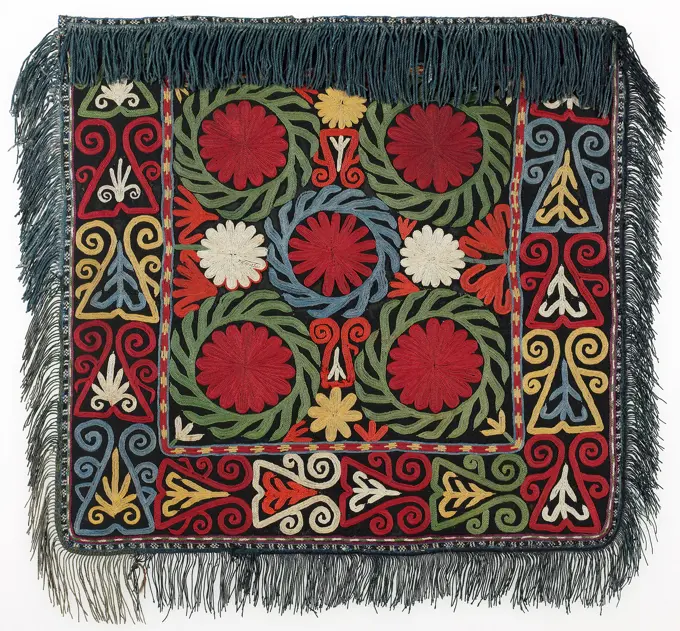
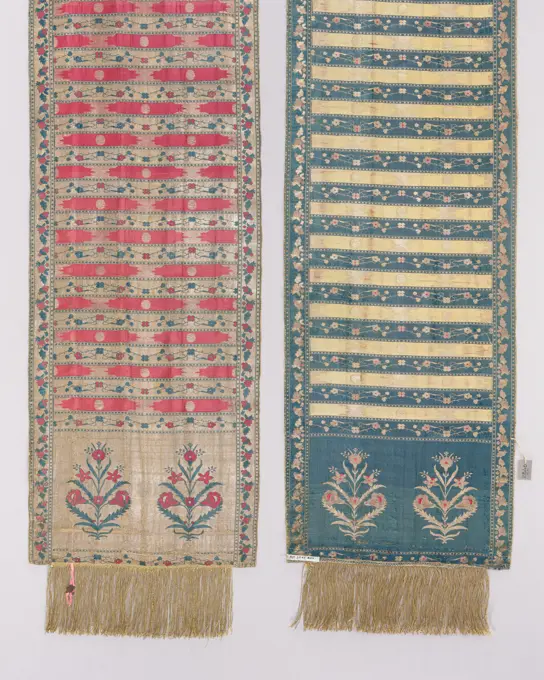
A collection of intricate vintage carpets featuring rich colors, patterns, and decorative elements from various historical periods and regions.

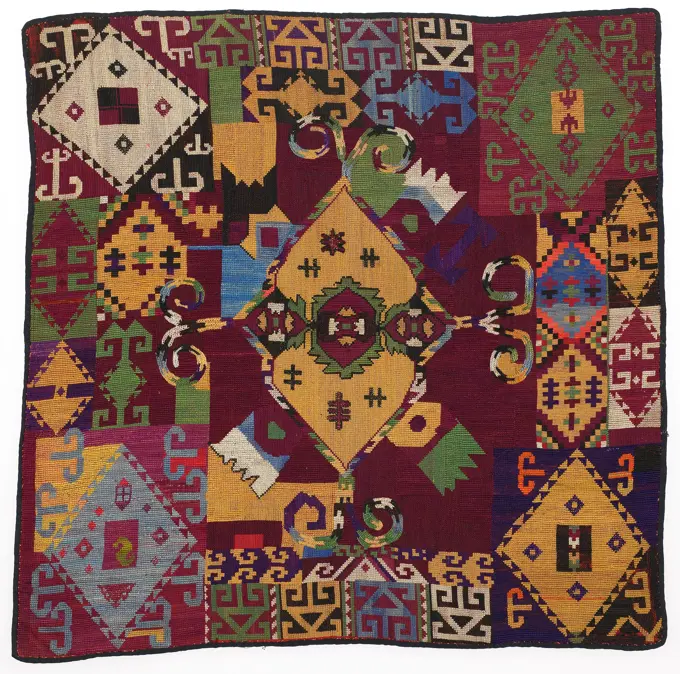
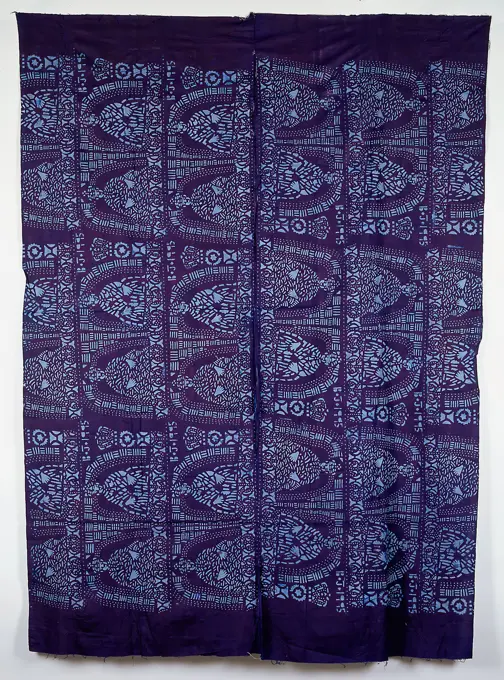
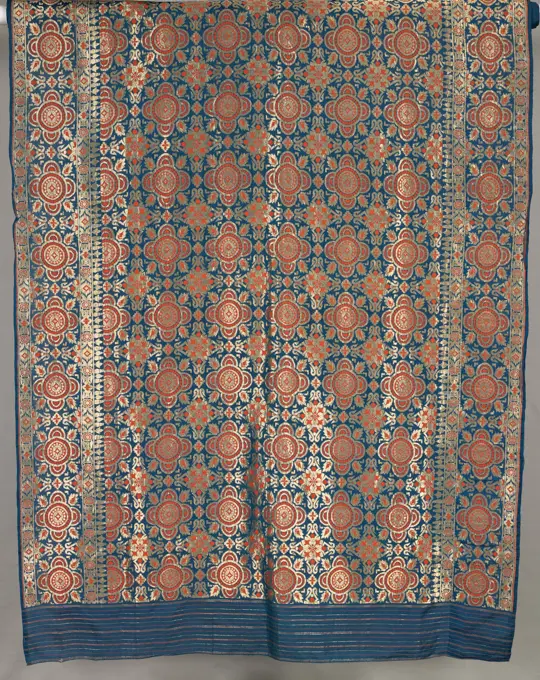
Woman's wrap (Kesa), first half of 20th century, 94 x 51 in. (238.76 x 129.54 cm), Cotton; embroidery, Bhutan, 20th century
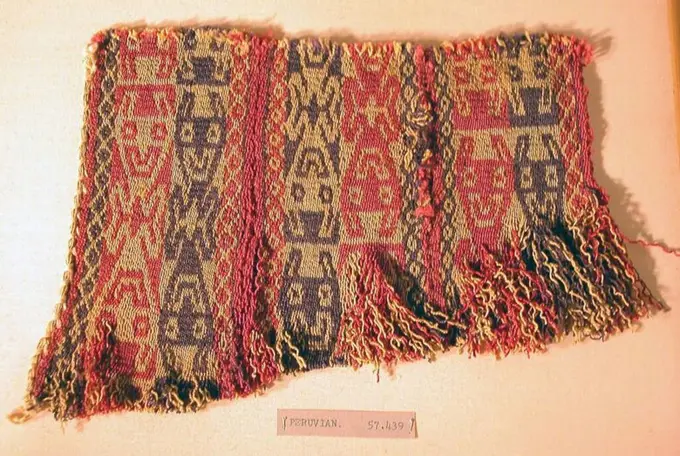
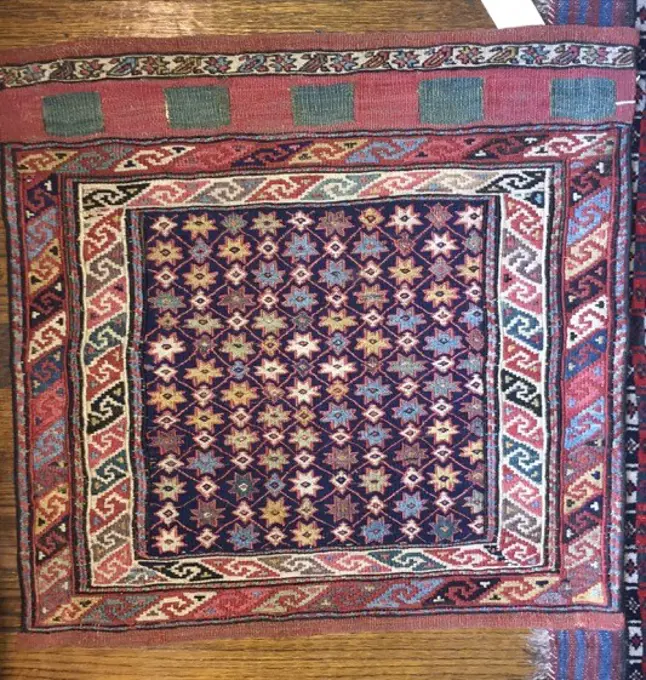
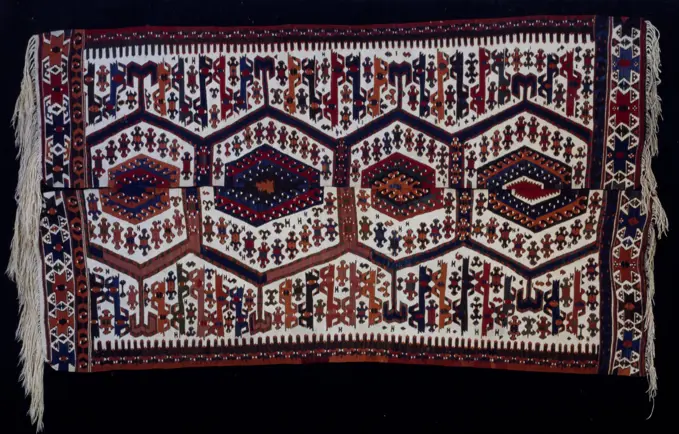
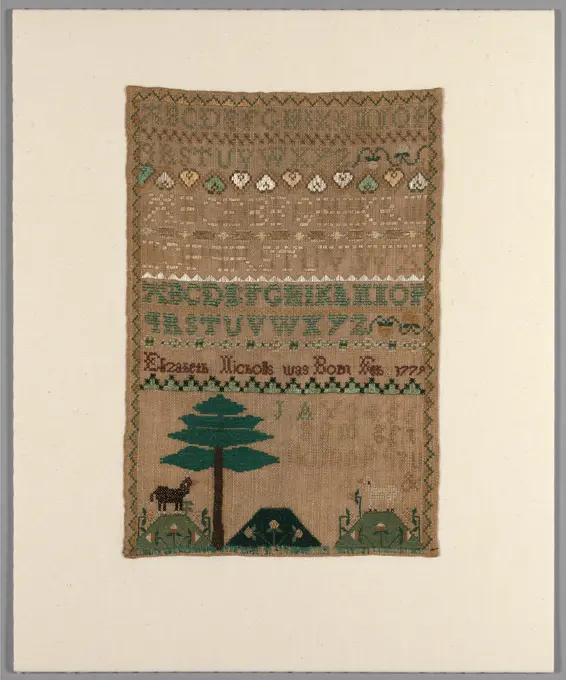
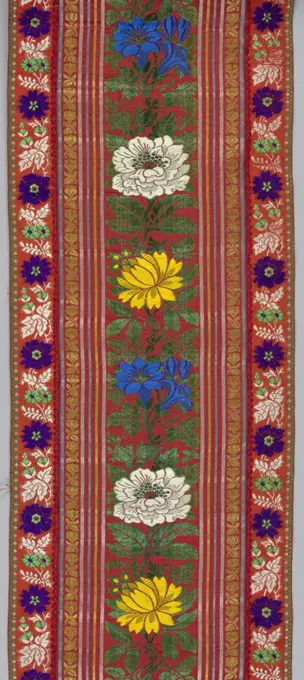
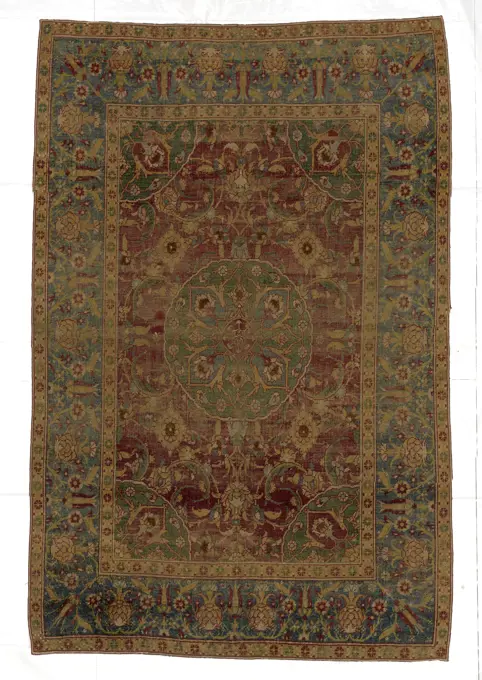
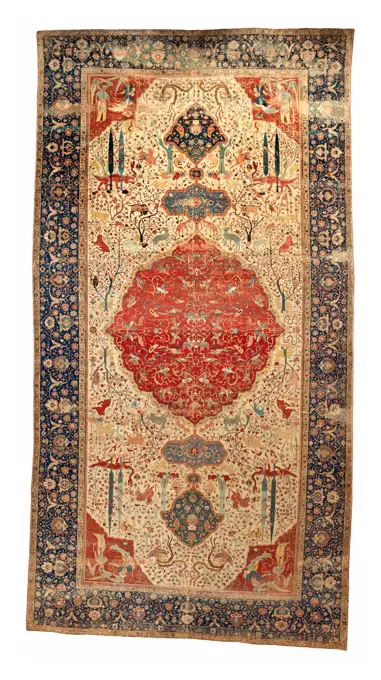
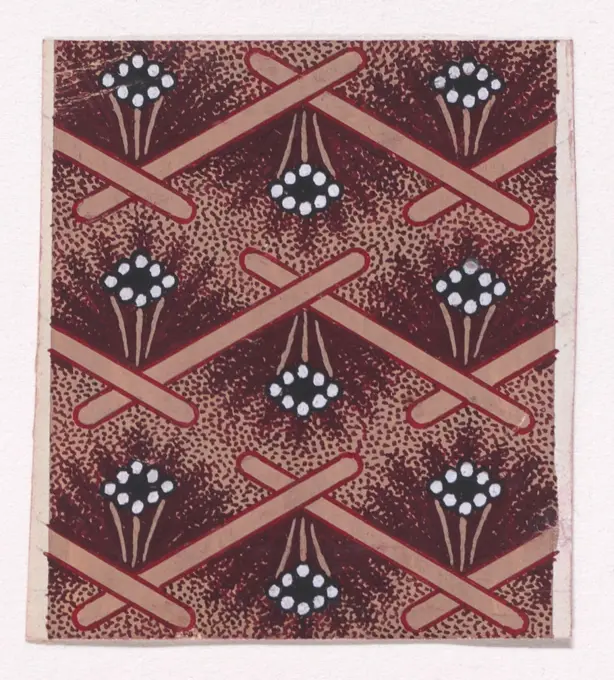
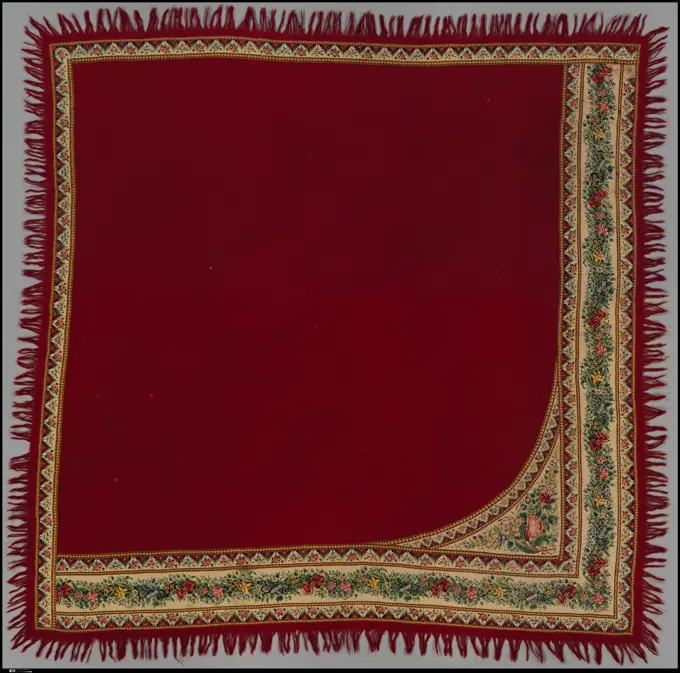
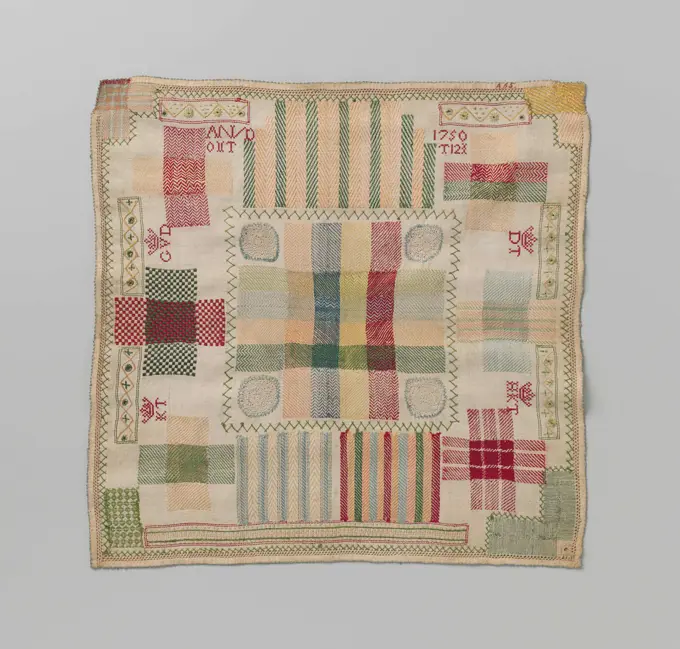
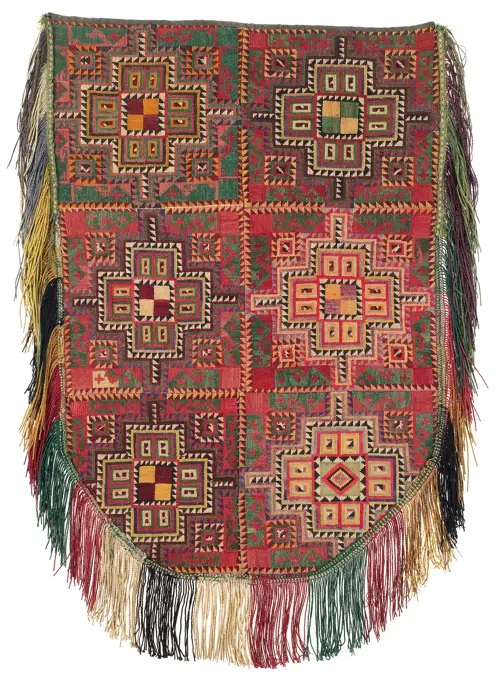
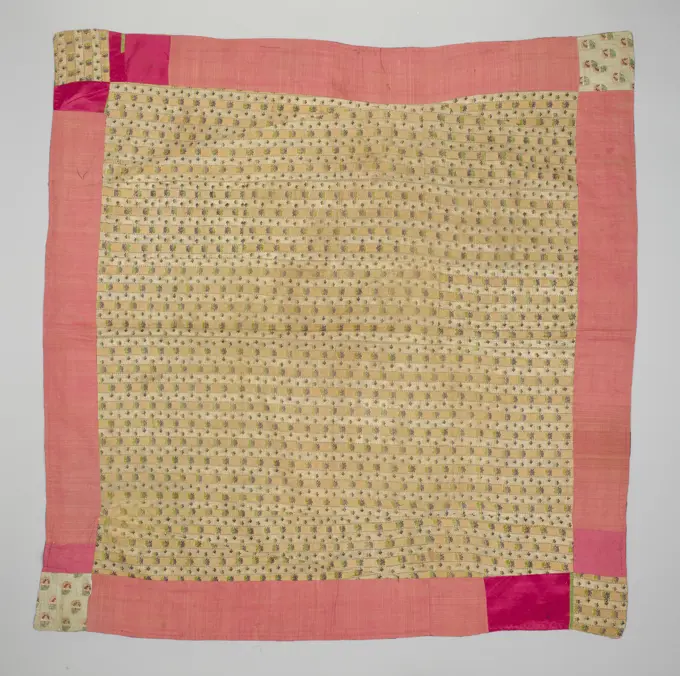
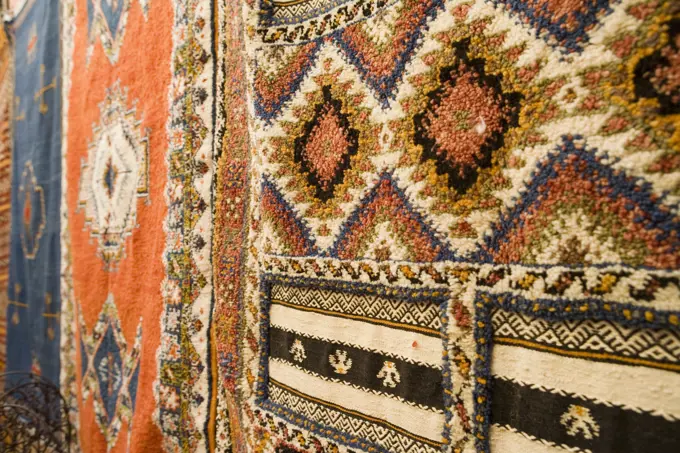
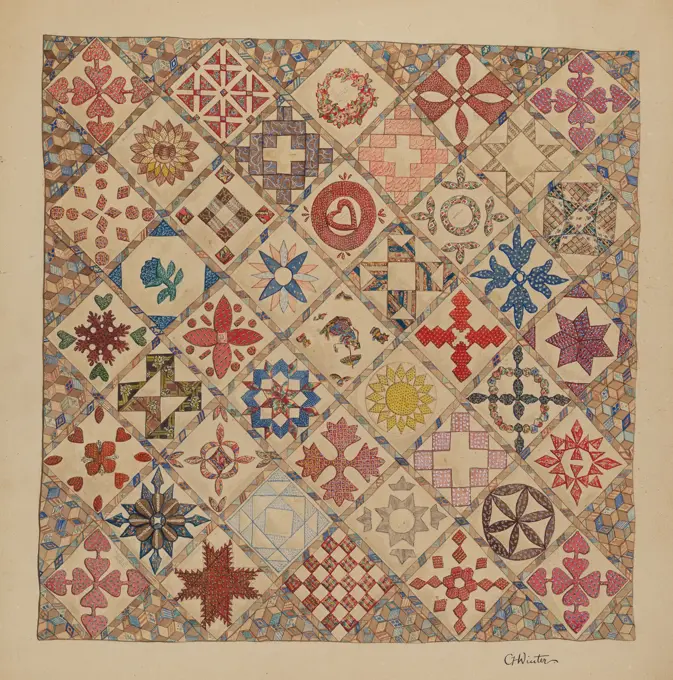
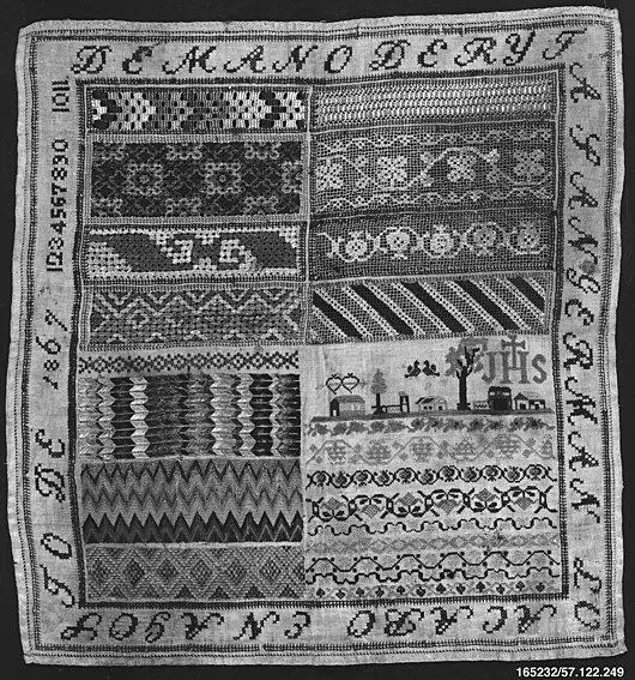
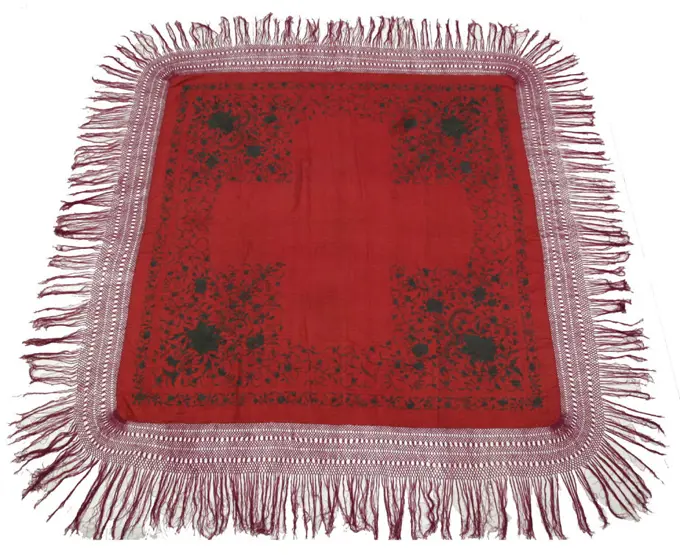
Square cashmere scarf, with red, blue and beige spray pattern on white field and along the edge a band, anonymous, c. 1830 Palmens scarf of woven wool. Square model with a white stock in a fully -knitted field and a poet -filled edge, all in brick, ultramarary blue and beige, here and there with shinier white points. The center pattern has an asymmetrical backdrop of sloping rows of blue clust flower and smaller red flower. In between diagonally oriented beige garlands with rose Drieblad. Against the field edge there are suitable edges in beige windows with inward triple flower branches, blue hyanc shades and red rosette buttons. As corner fillings, the slightly more than a quarter of a star flowers on the diagonally wear a large and straight pear -shaped flower, with all -round flowers on the cross axes, everything in the three colors. The narrow edges have symmetrical flowers around the peripheral line. Exception of narrow frames that cut each other on the corners and form a square wLoincloth 12th-15th century Chimú. Loincloth 312792Fragment. Peru, Possibly central coast. Date: 1000-1476. Dimensions: 22.9 × 17.5 cm (9 × 6 7/8 in.). Origin: Peru. Museum: The Chicago Art Institute, Chicago, USA.Fragment from an Embroidered Border, 1500s. Greece, Cyclades Islands, Southern Group, 16th century. Embroidery: silk on linen tabby ground; overall: 20 x 15 cm (7 7/8 x 5 7/8 in.).Band Made 1875-1900 China. Forty-four pairs and eight odd pieces of embroidered sleeve, ankle bands, etc. on gauze. . Han-ChineseKontusz sash. Manufaktura Skarbu Radziwiłłowskiego (Słuck; wytwórnia pasów; 1790-1846), manufacture, Madżarski Leon (ca 1740-1811), manufacturerCarpet second half 17th century. Carpet 446638Haik, Head covering, Second quarter of the 20th century, 89 1/2 x 47 5/8 in. (227.33 x 121 cm), Wool, cotton; supplementary weft patterning, Algeria, 20th centuryFragment (Shawl) Made 1000-1532 Peru. cotton and camilid wool, plain weave with supplementary patterning wefts; cotton and camilid wool, single interlocking tapestry weave (paired warps); and cotton, plain weave with supplementary patterning wefts; edged with camilid wool in cross knit loop stitches; left selvage present wefts turn on paired weft selvage cord; heading present three heading cords . IcaFragment (From an Orphrey Band) Made 1401-1500 Cologne. Silk, linen, and gilt-animal-substrate-wrapped linen, bands of four color complementary weft, weft-float-faced 1 2 'S' twill weave with inner wefts and of two color complementary weft, weft-float faced 1 2 weft chevron twill weave with inner warps .China, Colourful woven Chinese carpet.Conciliate belt; Manufaktura Karol Stanis Awa Radziwi A (S UCK; Pasów Factory; Ca 1767-1790), Madze Anski, Jan (fl. Ante 1757-Ca 1800); 1767-1780 (1767-00-00-1780-00-00);Krzeszowice, collection, Madżarski, Jan ( -A 1800), Tkacz, Radziwiłł, Karol Stanisław (1734-1790), Vilnius Voivode, Słuck, Persjarnia, two-part heads, metal thread, four-sided belt, semi-louse belt, index belts, Polish beltsIndo-Persian carpet with vine scroll and palmette pattern second half of the 17th century Indo-Persian. Indo-Persian carpet with vine scroll and palmette pattern 461327Baby Carrier, 27 1/2 x 27 in. (69.85 x 68.58 cm), Cotton; needlework, ChinaApron, 20th century, 14 3/4 x 14 1/2 in. (37.47 x 36.83 cm), Cotton, embroidery, indigo dye, China, 20th centuryShahsevan Saddle Bag Face ca. 1870 While the term "carpet" evokes a heavy, large rectangular textile (either knotted pile or flat-woven tapestry, called kilim) that covers a floor, a vast array of rug genres and techniques can be found in the Islamic world, where they serve various functions in nomadic encampments, villages, cities, and palaces. Flat-woven and richly embroidered textiles, such as this one, belong to the kinds of smaller tribal weavings that were common in the Middle East from Anatolia to Iran; it was generously given to The Met by Inger G. and William B. Ginsberg of New York. Such textiles were woven by nomadic tribes as containers for everyday items. Some were designed specifically to transport or store bedding, flour, salt, and wooden spindles used to make the woolen yarns from which these works were woven. Others were of smaller size, comparable to cross-body women's handbags, or çanta, or also possibly used by children. Most notable is the ubiquitous double saddlebIlgich, 19th century, 22 x 22 in. (55.88 x 55.88 cm), Silk, cotton, linen; cross-stitch, double chain stitch, Uzbekistan, 19th centurySleeve, 1700s. Greece, Dodecanese Islands, 18th century. Embroidery: silk on cotton tabby ground; overall: 53.4 x 49 cm (21 x 19 5/16 in.).Tabaklau ilgich, late 19th-early 20th century, 22 x 25 1/4 in. (55.88 x 64.14 cm), Silk, wool, cotton; chain stitch, cretan stitch, Uzbekistan, 19th-20th centuryTribal Carpet with Medallion Design 18th century The red ground of this carpet, with its eight-pointed shape, recalls earlier medallion carpets from Anatolia. The central motif, divided into alternating blue and white sectors, however, is reminiscent of nomadic gul or tribal emblems, and strongly suggests the Turkmen heritage of the carpets Anatolian village weaver.. Tribal Carpet with Medallion Design 447491Baby Carrier, 40 1/2 x 22 in. (102.87 x 55.88 cm), Cotton, silk, metallic tape, sequins; needlework, ChinaWoman's wrapper, 1995, 86 1/2 x 64 3/4 in. (219.71 x 164.47 cm), Cotton; stencilled, starch-resist patterning (àdire eleko); dyed, Nigeria, 20th century, Àdire isa popular form of surface ornamentation in the Yoruba culture in which designs are created by resist-dye techniques. The method of resist can take several forms; tie dye, stitched patterning, hand painting and stenciling are all commonly used to develop intricate patterns of pale blue on a deep indigo ground.Armenian sash unknownSari, 2005, 200 x 45 1/2 in. (508 x 115.57 cm), Silk and metal threads; woven, India, 21st centuryBed cover, ChinaWoman's Dress, c. 1880-1885. America, Native North American, Southwest, Navajo, Post-Contact, Late Classic Period. Tapestry weave: wool (handspun and bayeta); overall: 145 x 99 cm (57 1/16 x 39 in.).Front of a saddle bag, anonymous, c. 1890 The midfield is sprinkled with flowers against a red background and in the middle there is a truncated dark blue triangle with flowers. At the bottom of a beard. West Persia (Possible) Necklace and impact: Wool The midfield is sprinkled with flowers against a red background and in the middle there is a truncated dark blue triangle with flowers. At the bottom of a beard. West Persia (Possible) Necklace and impact: WoolKontusz sash/belt. unknown, authorCarpet Fragment probably 18th century. Carpet Fragment 451460Shoulder or Head Cloth (selendang) Made 1801-1900 Sumatra. Silk, cotton, and gold-leaf-over-lacquered-paper-strip-wrapped silk, plain weave with supplementary patterning and brocading wefts, plied main warp fringe terminating in knotted silk, cut tassels . MinangkabauQuilt, 'Evening Star'Khilim rug, 19th century, A. L.124 x W.32 in. B. L.124 x W.29 in., wool, Turkey, 19th centuryPillow Cover (Italy); silk on linen; Bequest of Marian Hague; 1971-50-83Double saddle bag, c. 1800 - c. 1900 Double saddle bag, front and rear sides. The fronts dark blue field with windows. White border. The backs' surface tissue with stripes in light and dark brown and blue. Caucasus wool. cotton (textile) embroidering Double saddle bag, front and rear sides. The fronts dark blue field with windows. White border. The backs' surface tissue with stripes in light and dark brown and blue. Caucasus wool. cotton (textile) embroideringDog blanket -Applique Quilt, 49 3/4 x 37 3/4 in. (126.37 x 95.89 cm), Cotton; needlework, ChinaSampler Made 1767-1800 United States. Linen, plain weave; embroidered with silk in cross, eyelet, and satin stitches . Elizabeth NichollsTent hanging, 20th century, 37 x 36 in. (93.98 x 91.44 cm), Silk, cotton; chain stitch, detached chain stitch, cretan stitch, back stitch, open chain stitch, Qoraqalpog'iston / Uzbekistan, 20th centurySkirt, 20th century, 18 3/8 x 16 7/16 in. (46.67 x 41.75 cm), Cotton, Vietnam, 20th centuryRibbon, Medium: silk Technique: brocaded on plain cloth, The width is composed of three ribbons sewn together. The broader central ribbon is dull red and has vertical stripes in blue, white, and yellow and green foliage repeated vertically. The narrow ribbons on either side are a brighter red and have flowers and foliage in purple, green, and white., England, 19th century, woven textiles, RibbonOriental carpet, anonymous, 1540 - 1600 Eastern carpet, Ottoman medal carpet. In the red midfield there is a lobed green medallion, in the corners of the quarter medallions. The midfield also shows rosettes, lotus flowers and sickle leaves. The edge is alternated decorated with rosettes, lotus flowers and sickle leaves. Cairo wool Eastern carpet, Ottoman medal carpet. In the red midfield there is a lobed green medallion, in the corners of the quarter medallions. The midfield also shows rosettes, lotus flowers and sickle leaves. The edge is alternated decorated with rosettes, lotus flowers and sickle leaves. Cairo woolShirt, ChinaCoronation Carpet. Iran, Islamic; Safavid, circa 1520-1530. Textiles; carpets. Knotted pile in wool on a cotton foundationTowel, Medium: linen, silk Technique: embroidered on plain weave using double running stitches for linear details; background area has horizontal and vertical wrapping stitches pulled tight to deflect groups of warps and wefts; weft loops in a countered two units of four-strand twining, Towel with an embroidered end and side borders in red. The embroidery fills the background of the pattern in a pattern of a curving vine. Decorative silk fringe sewn to four sides in red and white block pattern., Italy, early 17th century, embroidery & stitching, TowelOld hand made carpet and rugs of  traditional typesSash, 90 3/4 x 11 3/16 in. (230.51 x 28.42 cm), Cotton, metallic threads, ChinaFrancis Law Durand, Pieced Quilt, 0 Pieced QuiltTextile Design with Horizontal Rows of Undulating Garlands and Zig-Zagging Stiff Branches Flanked by Rosettes of Pearls Over a Stippled Background 1840 Anonymous, Alsatian, 19th century Rectangular sheet of paper with a textile design from a group, dated 1840, made in Mulhouse, Alsace, which was an important nineteenth-century center for textile production in the Haut-Rhin region of France. The design is made of a horizontal rows of undulating garlands rendered with dark reddish-brown stipples with zig-zagging stiff branches of light tan color with red outlines, flanked with alternating rosettes of eight small pearls of white color, over a background of light tan color with dark reddish-brown stipples.. Textile Design with Horizontal Rows of Undulating Garlands and Zig-Zagging Stiff Branches Flanked by Rosettes of Pearls Over a Stippled Background. Anonymous, Alsatian, 19th century. 1840. GouacheApron, 20th century, 14 1/4 x 14 3/4 in. (36.2 x 37.5 cm), Cotton, embroidery, indigo dye, China, 20th centurySotck exchange. XIXth.Band 16th-17th century Italian. Band 217775Berbere rug displayed in a carpet shop Tunisia.Double_hook patterned textile of Chom Thong, Dhara Dehvi collection, Chiang Mai, Thailand, Southeast Asia, AsiaQuilt. Dated: c. 1938. Dimensions: overall: 50.6 x 51.1 cm (19 15/16 x 20 1/8 in.) Original IAD Object: 108" wide; 84" long. Medium: watercolor and graphite on paper. Museum: National Gallery of Art, Washington DC. Author: Margaret Concha.Fragment 18th century Central European. Fragment 216498Shawl ca. 1830 Dimitri Kolokoltzev Manufactory. Shawl 227248American 20th Century, Colcha, 1935 1942 ColchaSampler (Germany); wool embroidery on cotton foundationSiapo (tapa cloth), circa 1917, Smoa, maker unknown. Gift of Thomas Trood, 1917.Shoulder Apron, 6 1/2 x 14 1/2 in. (16.51 x 36.83 cm), Cotton, ChinaFragment; warp; s-spun, z-twist linen. wefts; s-spun woolsStop flap from silk on coarse cotton. Stop piece on which different stitches and patterns are embroidered. On the LAP, the year Anno 1750 and Out T12i is embroidered. On the left, across the award-winning initials KT and GVD are embroidered and to the right across the award-winning initials DT and HKT. Silk on coarse cotton.Carpet (Ushak double-ended prayer rug). Probably Romania. Date: 1601-1700. Dimensions: 170.6 x 110.8 cm (67 1/8 x 43 5/8 in.). Wool, plain weave with supplementary wrapping wefts forming cut pile through a technique known as "Ghiordes (Turkish) knots". Origin: Romania. Museum: The Chicago Art Institute, Chicago, USA.Womans Ceremonial Skirt (Tapis)Jules Lefevere, Patchwork Crib Quilt, 1935 1942 Patchwork Crib QuiltConciliate belt; Manufaktura of Karol Stanisław Radziwiłł (Słuck; Pasów label; Ca 1767-1790), Manufaktura Treasury Radziwiłłowski (Słuck; Pasów Factory; 1790-1846), Madżarski, Leon (weaving; Słuck; Ca 1740-1811); 1780-1807 (1780-00-00-1807-00-00);Altered pillow cover, 20th century, 25 x 27 1/2 in. (63.5 x 69.85 cm), Silk, cotton; cross-stitch, Afghanistan, 20th centuryLight blue children's blanket. Light blue children's blanket with red, purple, white and yellow cross stripes.Sampler (England); Embroidered by Sarah Cook; silk embroidery on woolConciliate belt;  2nd half 18th century (1751-00-00-1800-00-00);Kontusz sash/belt. unknown, authorCarpet. Culture: American. Dimensions: 108 x 144 in. (274.3 x 365.8 cm). Date: 1881-82. Museum: Metropolitan Museum of Art, New York, USA.Herat. Date/Period: Late 16th century. Wool, cotton and silk. Height: 84 mm (3.30 in); Width: 124 mm (4.88 in). Author: UNKNOWN.Baby Carrier, 24 3/4 x 16 3/4 in. (62.87 x 42.55 cm), Cotton, sequins, metal discs; needlework, ChinaShawl; Hinggi Kombu. Shawl with horses and patola motifs.Ilgich, late 19th-early 20th century, 23 1/2 x 26 1/2 in. (59.69 x 67.31 cm), Silk, wool, cotton; chain stitch, Uzbekistan, 19th-20th centuryKontusz sash/belt. Madżarski, Jan (tkacz ; Słuck, -ca 1800), manager, Manufaktura Karola Stanisława Radziwiłła (Słuck ; wytwórnia pasów ; ca 1767-1790), manufacturePersian silk fabric unknownSampler ; silk and cotton embroidery on linen foundationSampler Made 1713 Germany. Linen, plain weave; with twenty nine squares filled with different needlework patterns in a variety of stitches . Margreta BemEgyptian OrnamentTraditional Moroccan rugs for sale in the souk, Fez, Morocco, North Africa, AfricaFabric cloth of pillow cover in Varanasi, Uttar Pradesh, India Copyright: xArunxMishra/DinodiaxPhotoxBelt -Charlotte Winter, Bedspread (Detail of Center), c 1937 Bedspread (Detail of Center)Baby Carrier, 30 1/2 x 15 in. (77.47 x 38.1 cm), Cotton; needlework, ChinaBag, 20th century, 12 1/4 x 8 1/8 in. (31.12 x 20.64 cm) (without tassels), Cotton, shells; needlework, India or Pakistan, 20th centuryTrouser Band Made 1875-1900 China. Forty-four pairs and eight odd pieces of embroidered sleeve, ankle bands, etc. on gauze. . Han-ChineseSampler 1867 Spanish or Mexican. Sampler 228176Back cover and spine. 1910. Book covers, bindings (gathered matter components). Spencer Collection. Romances, ByzantineIndian tapestry with cowrie shells and mirrors, Jodhpur, Rajasthan, India, AsiaBorder with Stags, Fountains, and Trees, 1500s. Italy, Sicily, 16th century. Needle lace, burato (twined ground and darned in one direction) and applied fringe; bleached linen (est.); overall: 13.5 x 177.3 cm (5 5/16 x 69 13/16 in.). Prancing stags, represented with their heads turned backward, flank an ornate fountain. The fountain motif could allude to rejuvenation and immortality.Bedcover (Star of Bethlehem Quilt) 1820-1840 New York. This large bedcover presents a spectacular display of stylish English chintz contrasted with plain white cotton fabric and red patterned cotton, likely of American production. Piecing and quilting this brilliant array of fabrics was an ambitious project. Colorful large and impressively complex quilts became increasingly common toward the mid-19th century, as the availability of a broad range of patterned textiles resulted in the creation of quilts for show, fostering friendly competition among quilters.. Cotton, various plain weaves; printed; some calendarized and glazed; pieced; lined with cotton, plain weave; pieced; batting cotton; quilted .Traditional Palestinian Embroidery Pattern 9Baby carrier, ChinaTurksih traditional woman scarf with some embroideryEmbroidery pattern unknownSquare Shawl Early 20th century China for Western market. Square Shawl 74466Loincloth, 20th century, 9 9/16 x 4 13/16 in. (24.29 x 12.22 cm) (excluding tie, tails and hanging beads), Cotton, buttons, metal disks, beads, monkey tails; embroidery, appliqué, Thailand, 20th centuryTextile (USA); cotton