Antique Silver Jugs

Stylish silver jugs and pitchers characterized by elegant shapes and historical significance, reflecting detailed craftsmanship and artistry.
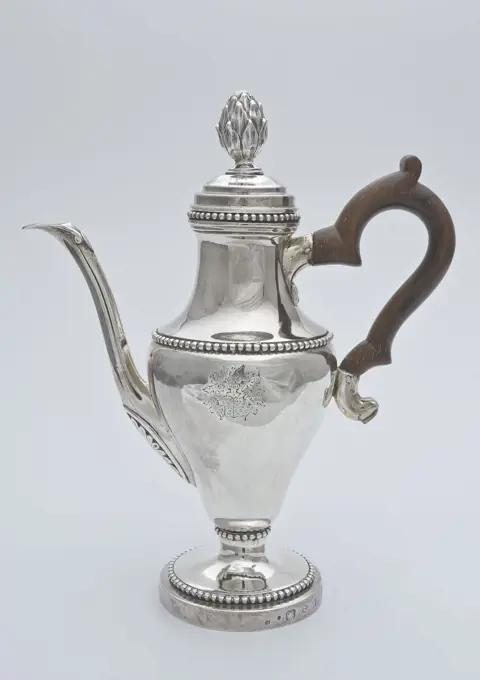
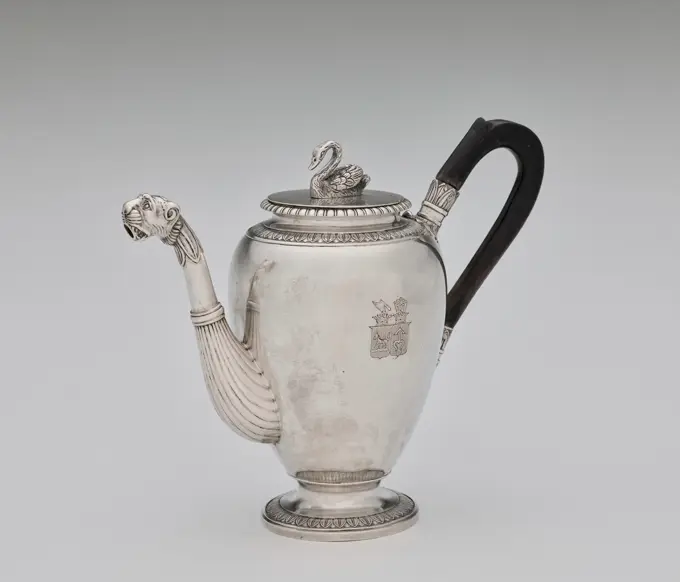
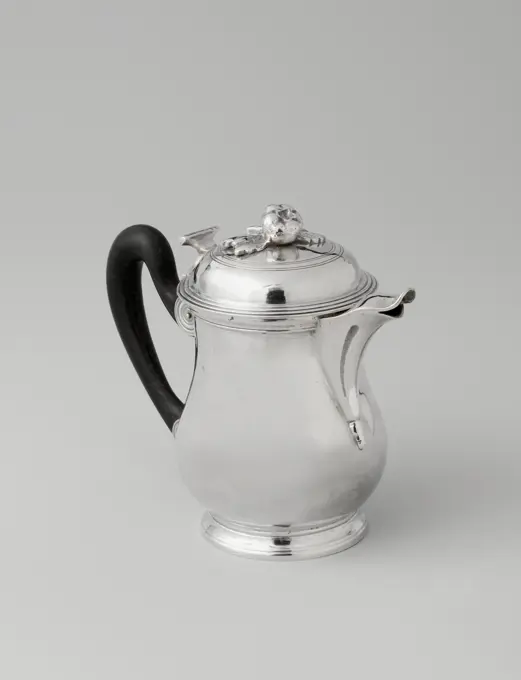
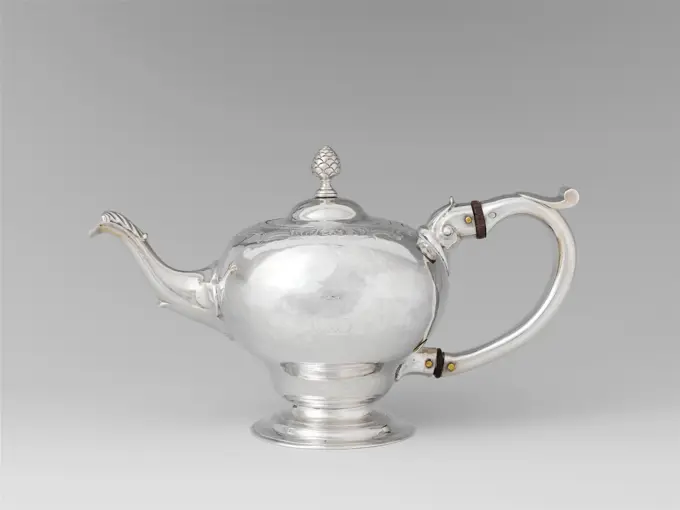
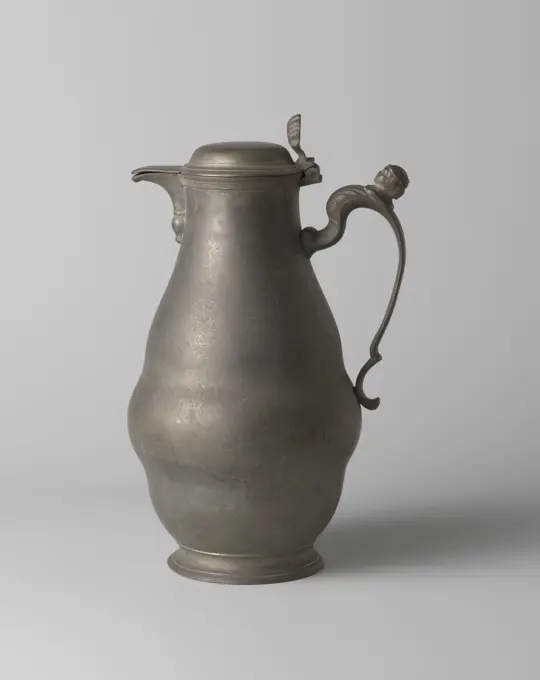
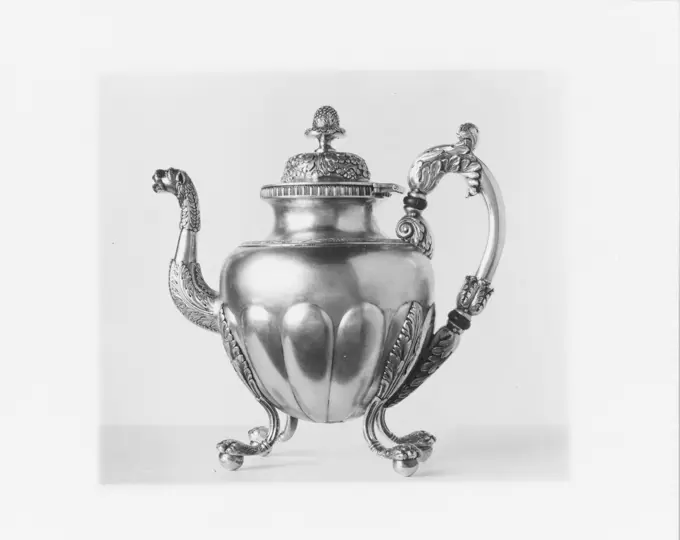
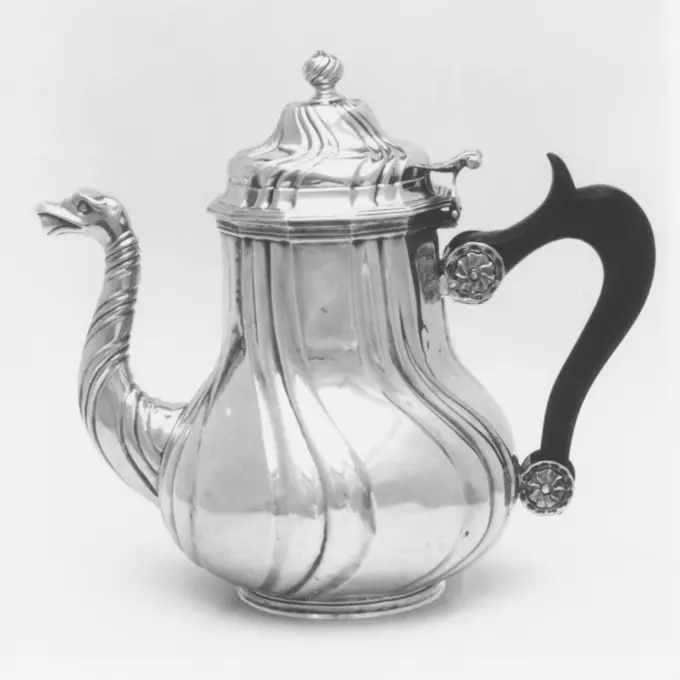
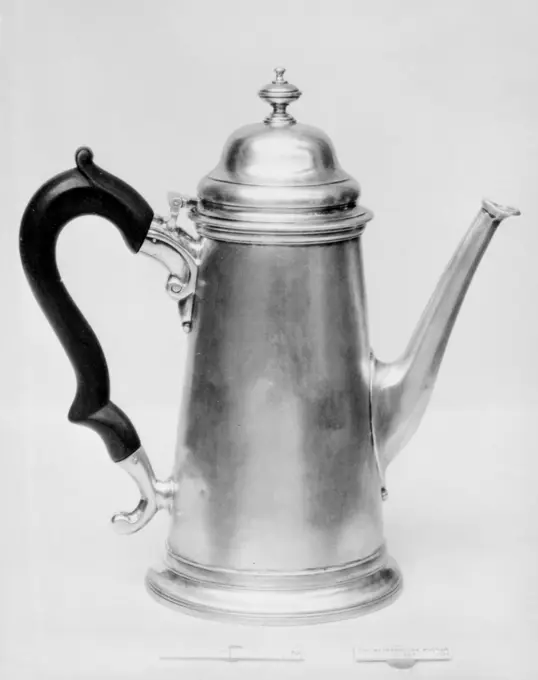
Silver jug with wooden handle with reversed pear-shaped body, with family crest, long narrow decorated spout and bud in the form of pine cone, tableware holder silver wood, cast Inverted pear shaped body with high bell-shaped neck on round constricted foot with ascending profile edge narrow long spout punctured wooden ear in the form of question mark, lid with ascending profile edges with large pine cone as bud, outer edge foot (debossed) heraldry Noothoven van Goor pour serving
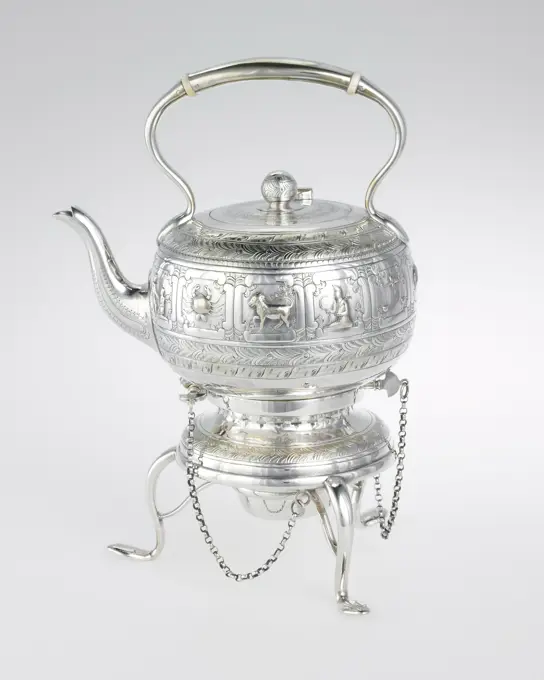
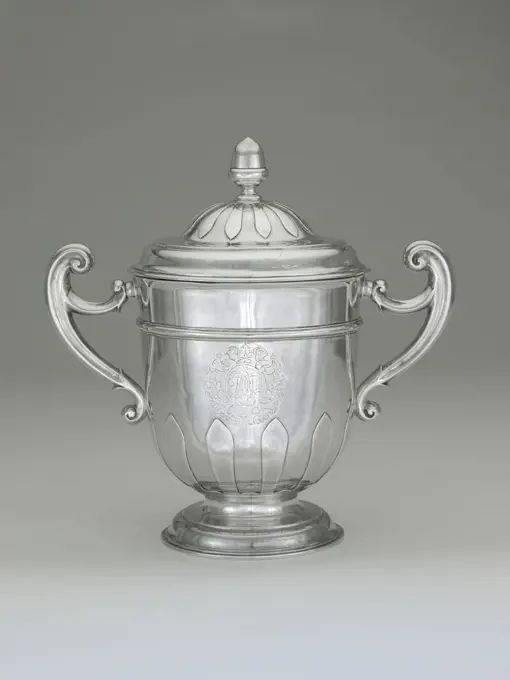
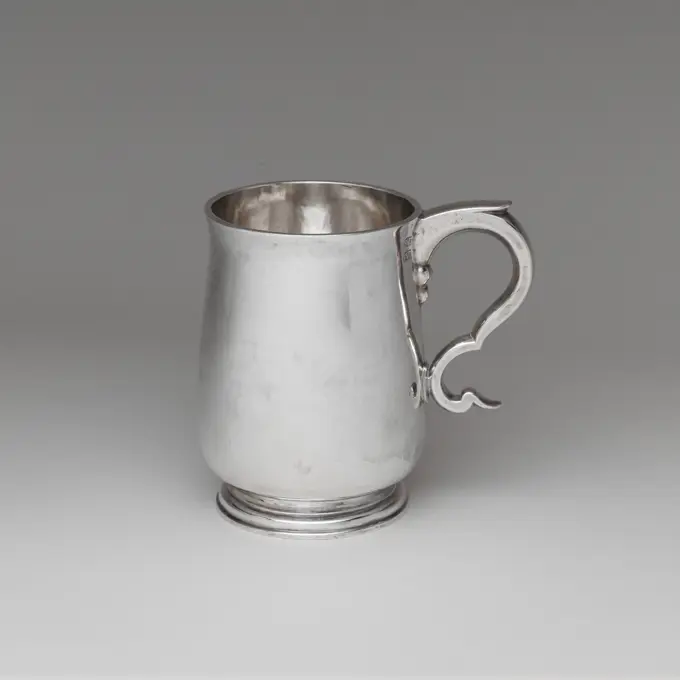
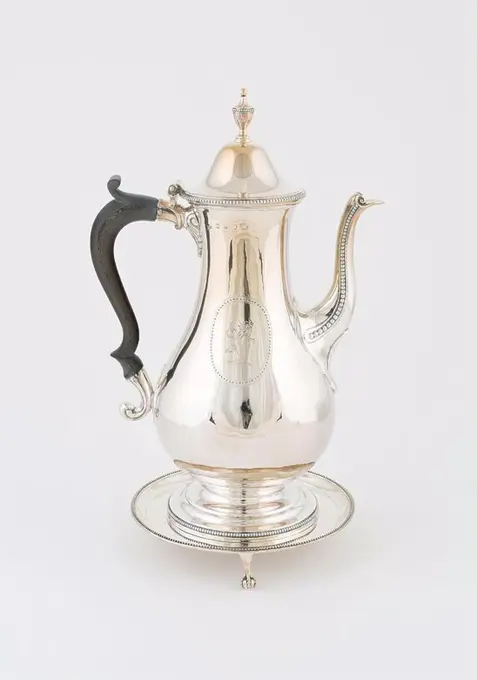
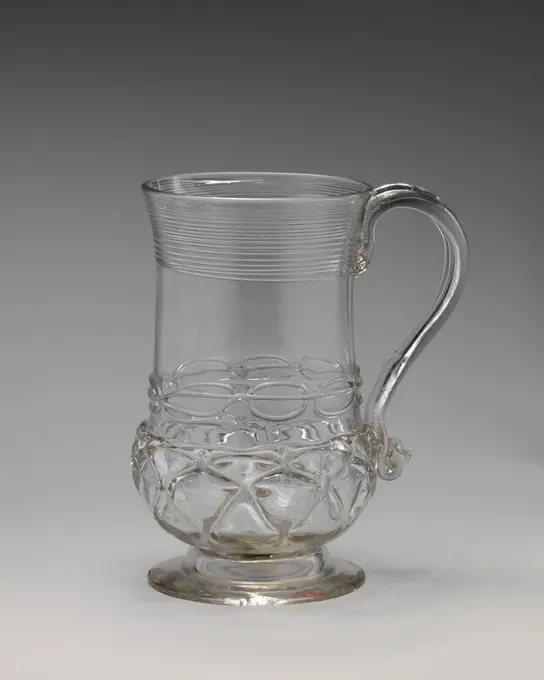
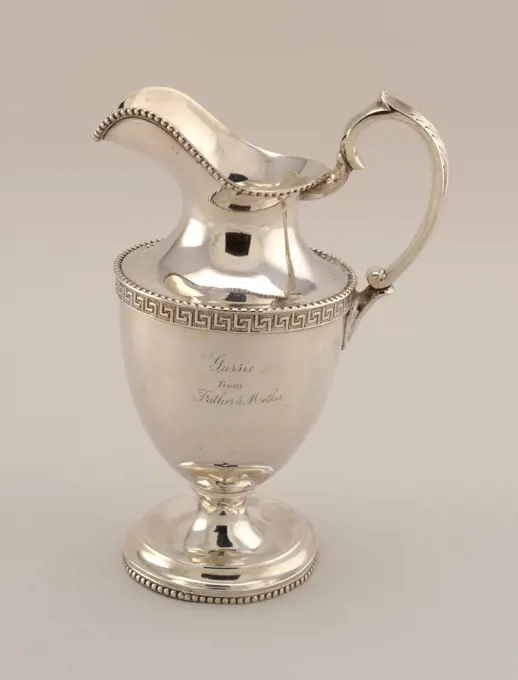
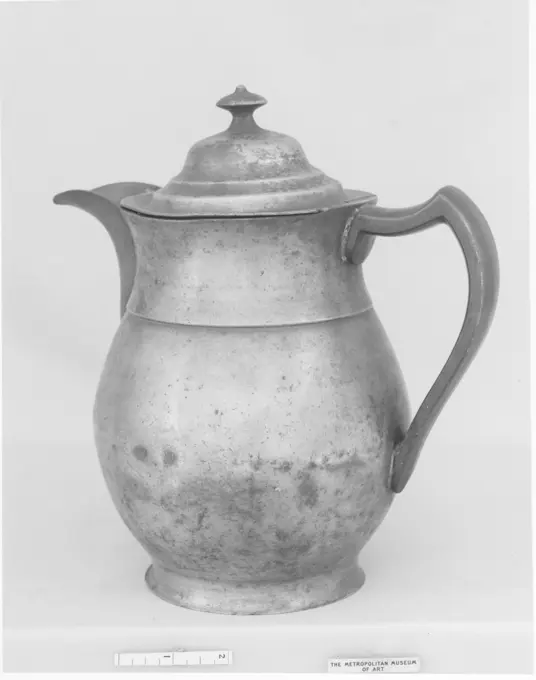
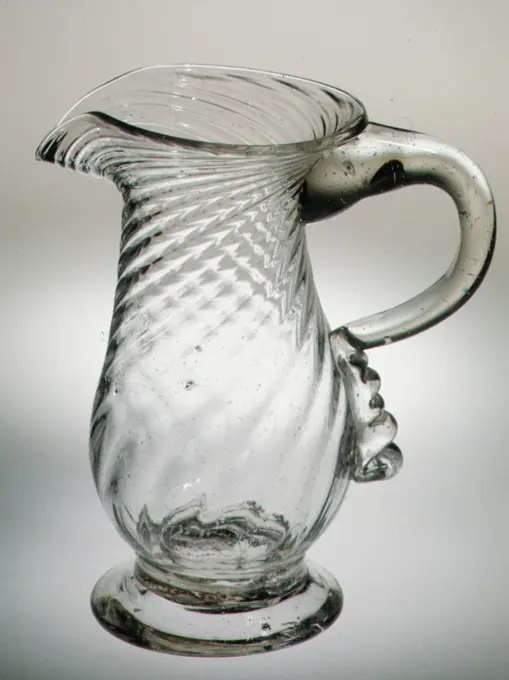
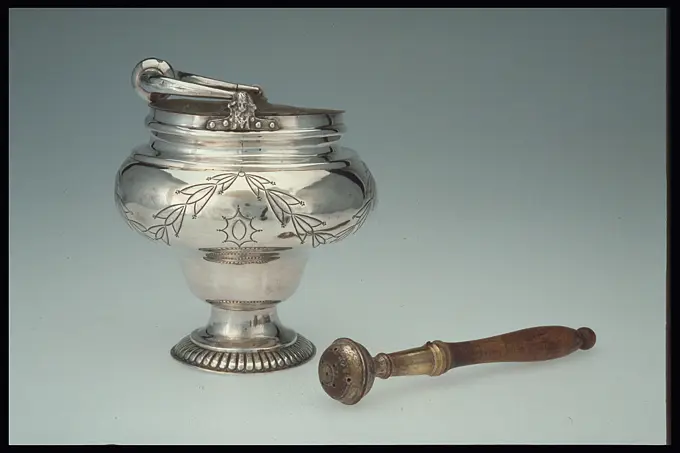
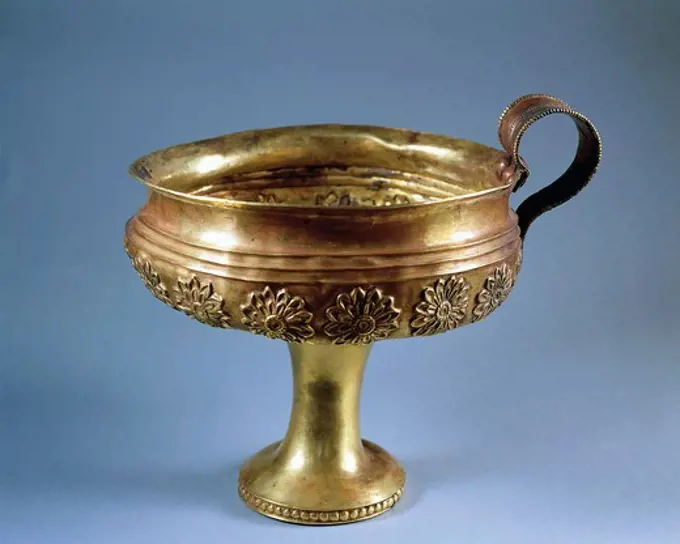
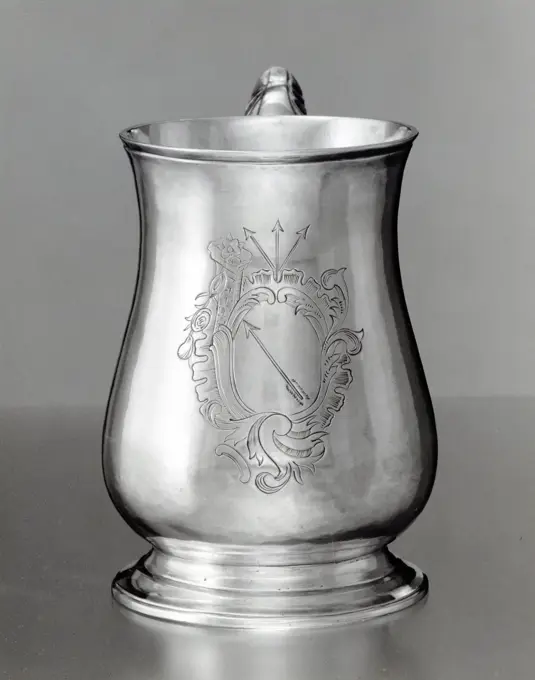
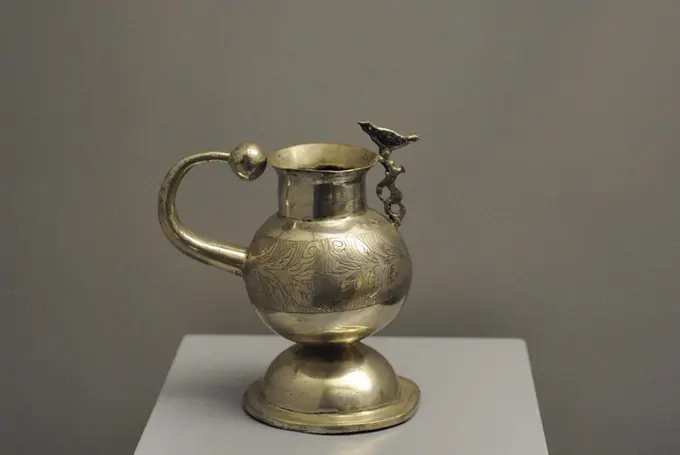
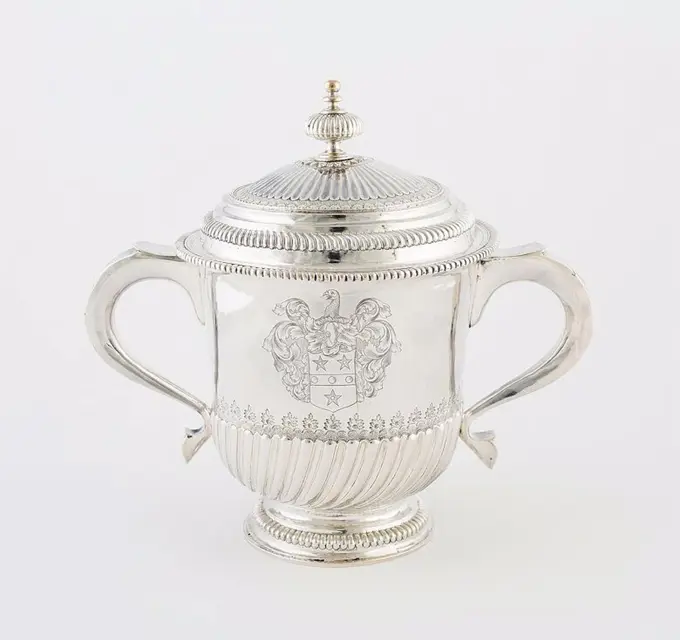
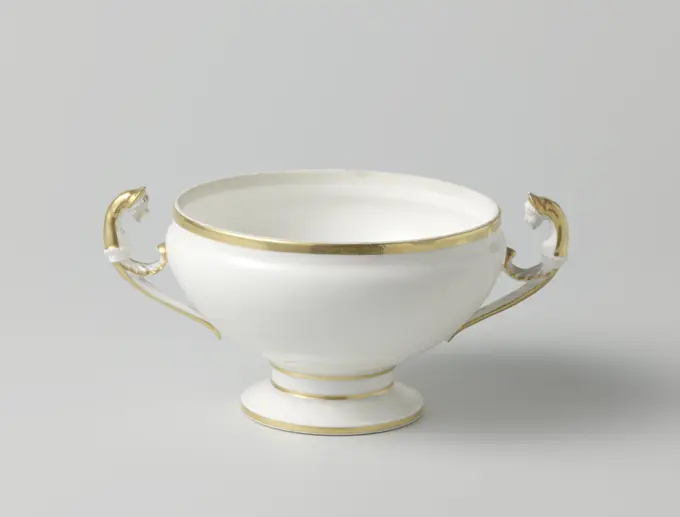
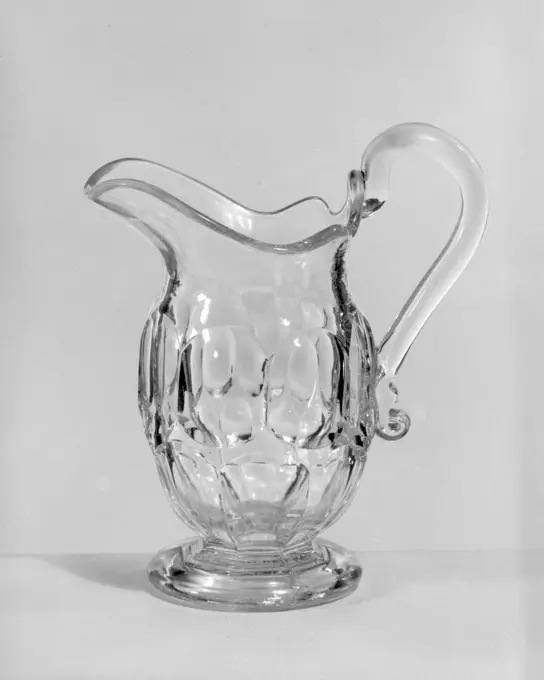
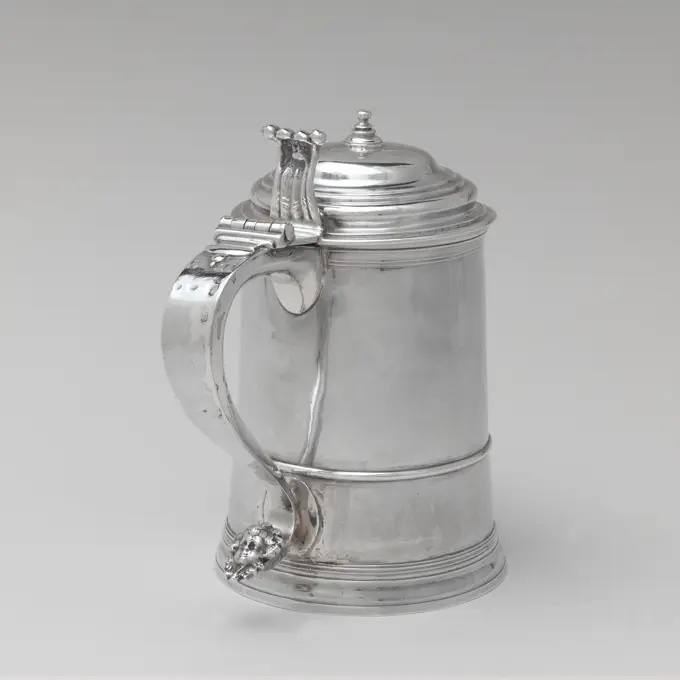
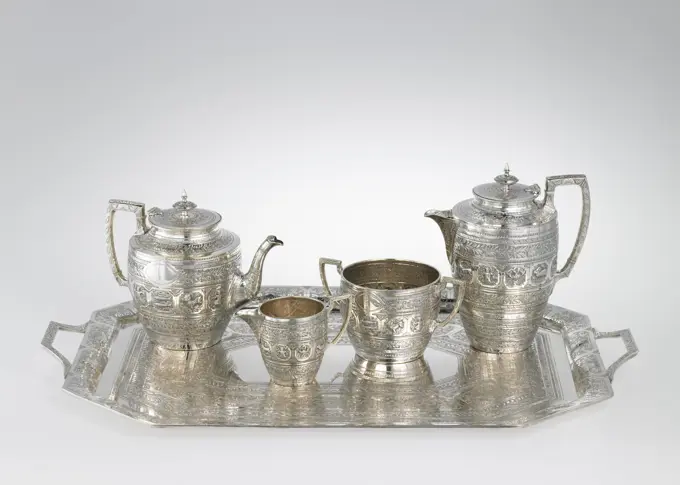
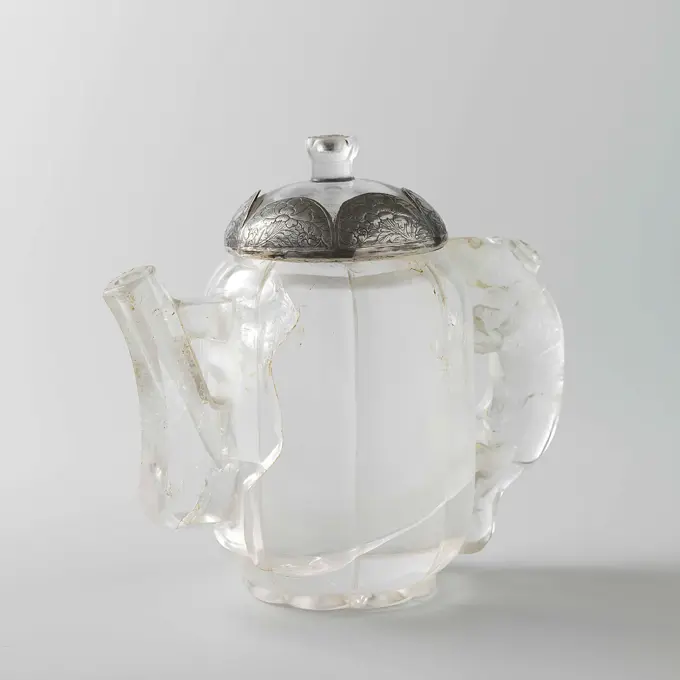
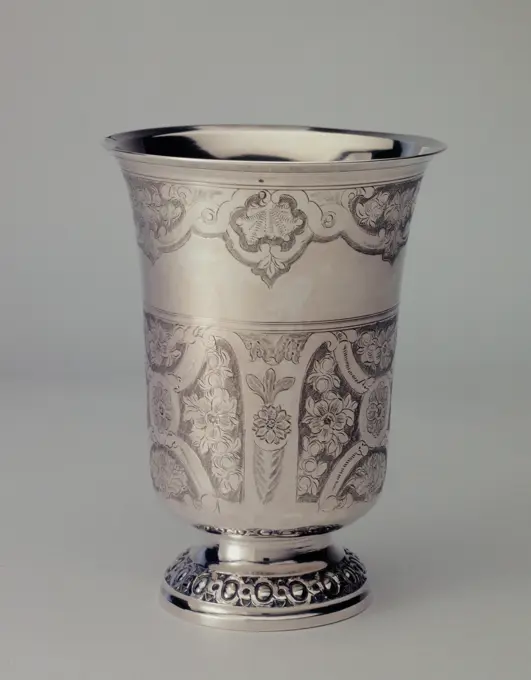
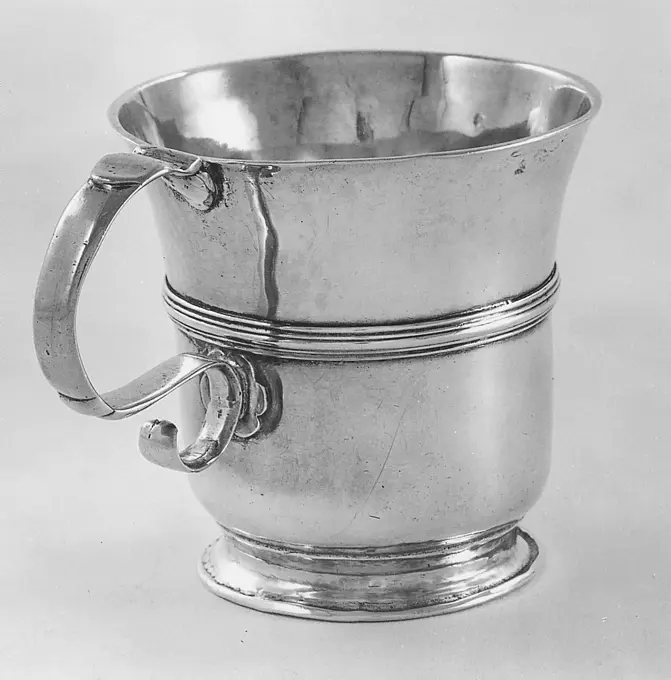
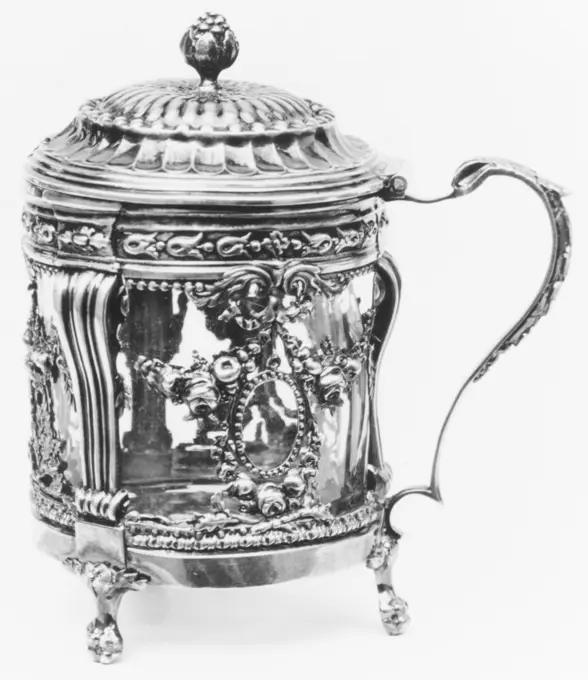
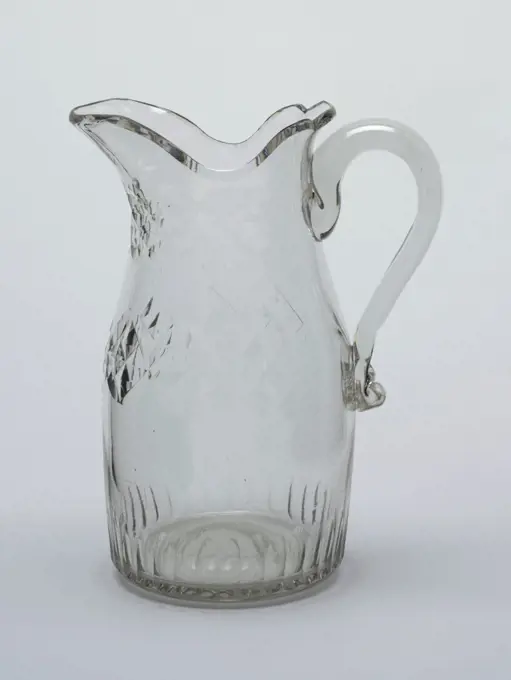
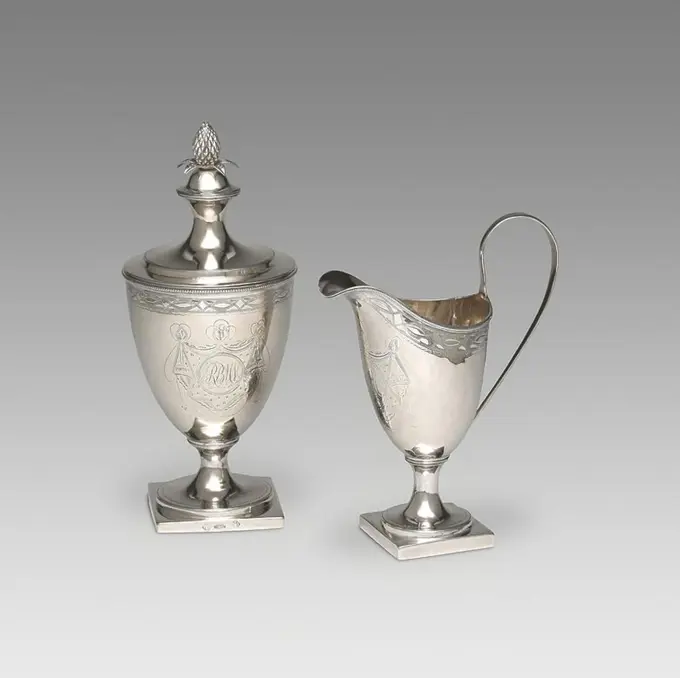
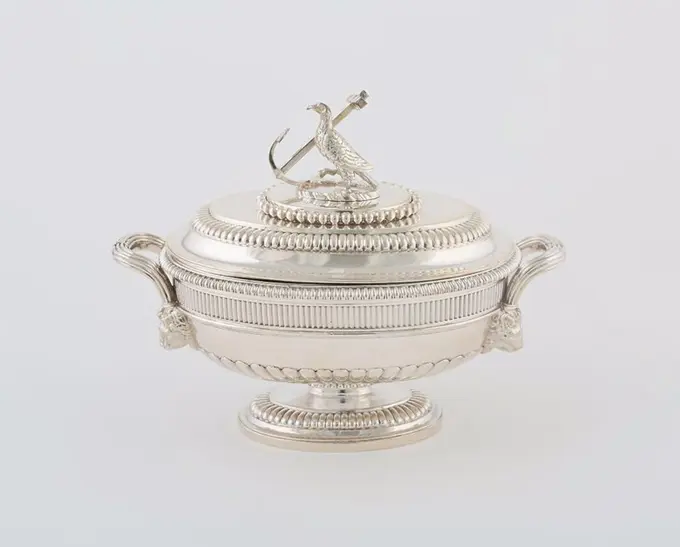
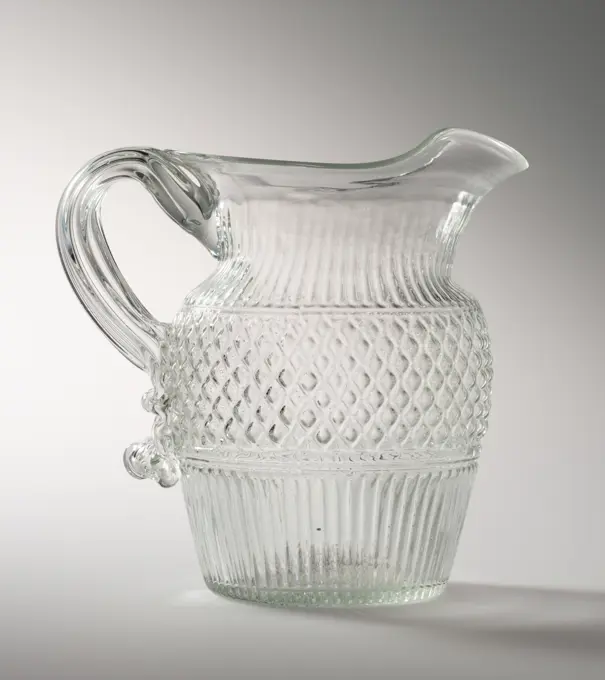
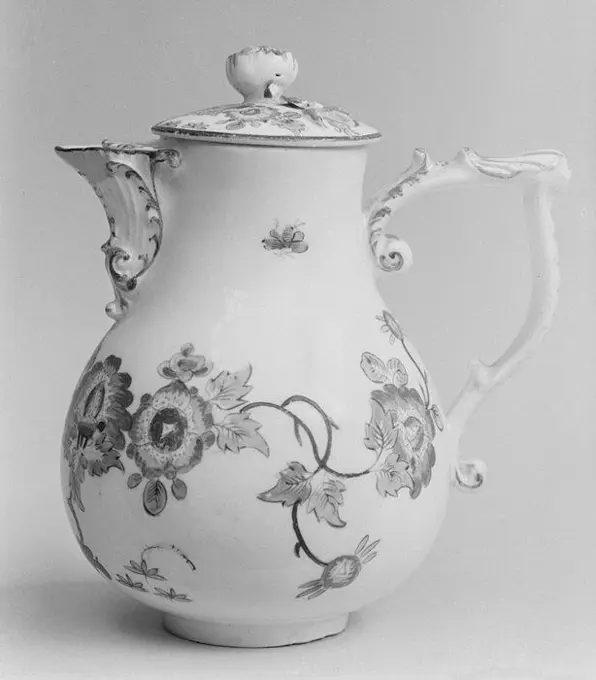
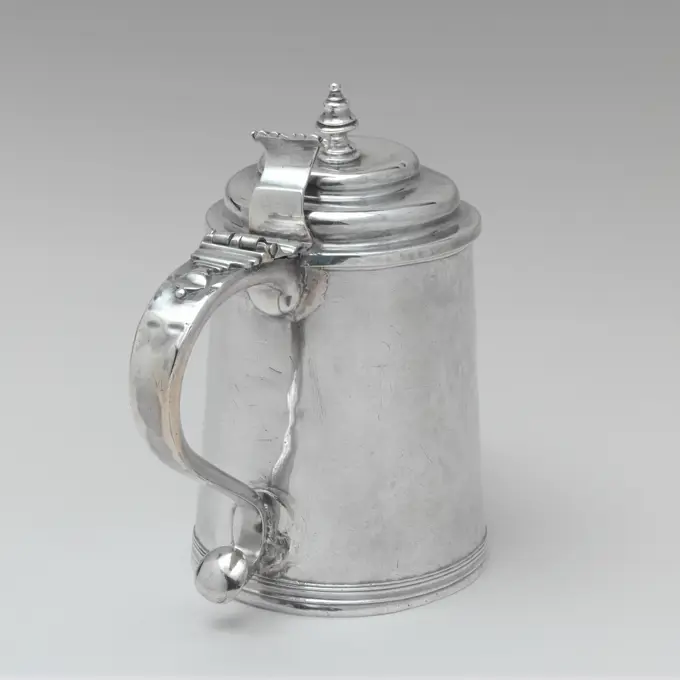
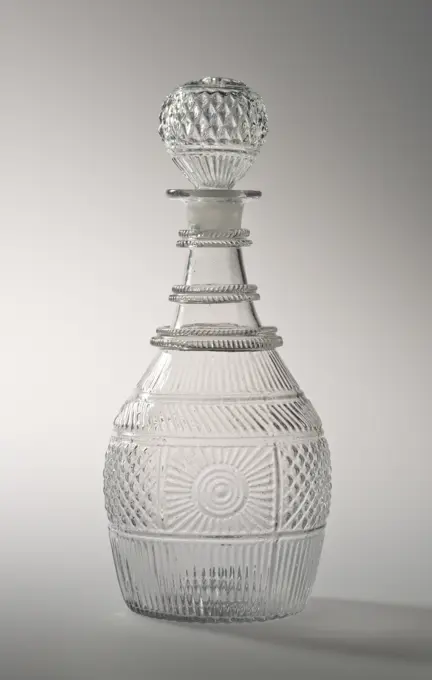
Coffee jug. Lilpop, Karol Jerzy (fl. 1820-1833), goldsmithPitcher 1833 Boston. Silver . John B. Jones and CompanySilver jug with wooden handle with reversed pear-shaped body, with family crest, long narrow decorated spout and bud in the form of pine cone, tableware holder silver wood, cast Inverted pear shaped body with high bell-shaped neck on round constricted foot with ascending profile edge narrow long spout punctured wooden ear in the form of question mark, lid with ascending profile edges with large pine cone as bud, outer edge foot (debossed) heraldry Noothoven van Goor pour servingCream jug, Silver (coin), Of wavy baluster form on conforming foot, with double C-scroll scroll handle., New Orleans, Louisiana, USA, ca. 1840, metalwork, Decorative Arts, Cream jugShaving jug ca. 1730-40 British This brass jug was intended to hold warm water for shaving, and would have been used in tandem with a basin that had a notched rim to be held firmly against the neck. Much of the 18th century domestic brass that we see today was originally silvered, but through use has lost its plating. More affordable than pure silver, silvered brass was nonetheless intended to make a statement about the owners taste and means.. Shaving jug. British. ca. 1730-40. Silvered brass. Metalwork-BrassCreamer 1800-1825 Possibly William Haverstick. Creamer 5695Kettle and warming stand, from an Anglo-Indian coffee and tea set, c. 1890, Possibly by J. Blond & Co.; Retailer: Mappin Brothers, London and Sheffield, 1797-1960s, 14 1/4 x 9 5/8 x 8 1/8 in. (36.2 x 24.45 x 20.64 cm) (overall), Silver, ivory, Scotland, 19th century, The Indian Pavilion at the 1888 International Exhibition in Glasgow, Scotland sparked Britain's interest in all things Indian. Designers adapted the Indian style for the British palate, known as Anglo-Indian design, which this tea set demonstrates. The teapot's angled handle and curved spout recall Indian examples, while the basic profile of the pieces remain traditionally western. The raised foliage introduces another exotic element, yet it is contained within horizontal bands. Signs of the zodiac run the length of the center band.Maker: Charles Le Roux, 1688-1748, Two-handled coveredcup, ca.1735, Silver, 10 1/4 × 10 5/16 in., 121.25 lb. (26 × 26.2 cm, 55 oz.), Made in New York, New York, American, 18thcentury, Containers -MetalsKettle;  19th century (1801-00-00-1900-00-00);Cream Pitcher, c. 1765. Paul Revere II (American, 1735-1818). Silver; overall: 10.9 x 9.5 cm (4 5/16 x 3 3/4 in.).Hot milk pot 1783-84 probably François Girard. Hot milk pot 200167Teapot 1760-75 Joseph Edwards Jr.. Teapot 8367Tankard.   Maker: John Dixwell, American, 1680-1725Tankard ca. 1766 Benjamin Burt American. Tankard 8203Milk jug. Plewińska, Joanna (wdowa po Stanisławie, fl. 1827-29), goldsmithMilk jug. Lilpop, Karol Jerzy (fl. 1820-1833), goldsmithTeapot. Schwartz, Jan Maciej (1772-1828), goldsmithCann 1735-50 Peter Van Dyck. Cann 5332Tankard. Culture: British. Dimensions: Height (with cover): 9 in. (22.9 cm). Date: late 18th century. Museum: Metropolitan Museum of Art, New York, USA.Coffee Pot and Stand. Hester Bateman; English, 1709-1794; London, England. Date: 1786. Dimensions: 29.2 x 17.9 x 15.6 cm (11 1/2 x 7 1/16 x 6 1/8 in.). Silver. Origin: London. Museum: The Chicago Art Institute, Chicago, USA.Mug. Culture: British. Dimensions: Height: 7 3/8 in. (18.7 cm). Date: 1750-1800. Museum: Metropolitan Museum of Art, New York, USA.Pitcher, cream, Silver, Ovoid body with concave shoulder and neck, extended i- open spout. Fret band and beading. Scrolled handle. Engraved on one side: 'Gussie from Father and Mother.' Monogram on opposite side: 'A J()S().', Photo'd 12/7/09., Philadelphia, Pennsylvania, USA, 1825-50, metalwork, Decorative Arts, Pitcher, creamWine Jug. Lid of rock crystal. In silver frame.Pitcher, 1800-1810. America, probably Massachusetts, 19th century. Silver; with handle: 18.1 x 21.3 cm (7 1/8 x 8 3/8 in.).Tankard, 18th century, 4 7/8 x 5 1/4 x 3 7/8in. (12.4 x 13.3 x 9.8cm), Pewter, England, 18th centuryMug. Culture: British, London. Dimensions: Height: 4 1/2 in. (11.4 cm). Maker: James Priest (active 1764-83); William Priest (active 1749-73, died between 1802-11). Date: 1770-71. Museum: Metropolitan Museum of Art, New York, USA.Coffeepot (USA); Manufactured by Sweetser Co., New York; silver, gold, ivoryJug, 1800s. Staffordshire Factory (British). Lustreware; diameter of mouth: 8.8 cm (3 7/16 in.); overall: 14.6 cm (5 3/4 in.).Sugar Bowl; Manufactured by Charles Horner Ltd.; rolled, stamped and cut silverInner box of Mosterdpot, Nathanael Teuter, 1805 Inner box of blue glass. Amsterdam silver (metal). glass Inner box of blue glass. Amsterdam silver (metal). glassCan with two coats of arms on the lid, anonymous, 1450 - 1500 The KAN is composed of the following parts: the hull, the lid (cast and turned), the handle, the spout and the thumb rest (cast). The cylindrical hull (with center hole in the bottom) has a spherical upper and broadens at the bottom. At the top the sphere turns into a short neck. The tissue spout is built from two sloping surfaces and a horizontal surface. A spout opening has been cut out in the hull, the raised edges of which have a accolade profile. The handle, which is around the top and swings out on the outside, is confirmed at the neck and to the lower part of the hull. It has a single hinge at the top for the round lid with the thumb rest. Rull and lid are decorated with grooved rings. The hull has a wide somewhat pointed rib in the middle of the bottom half. The thumb rest was equipped with two buttons. In the flat upper part of the lid, e -mail on silver relief are applied two next to each other weapons: on the leftSilversmith's Art, Italy 20th century. Mario Buccellati, Silver chocolate jug with embossed leaves and flower-shaped knob, based on the drawing of the illustrated Marabout in the Encyclopedie of Diderot and D'Alembert. Milan-Rome, approximately 1925.. Meissener Porzellan ManufakturMeissen, c. 1720painted decoration: Augsburg, c. 1720-1725mount: Elias Adam (c. 1669-1745), Augsburg, c. 1722-1726hard-paste porcelainJug. Because the gold mount plays a modest role here, attention is drawn to the shape and surface ornamentation of the jug. The graceful foliate scrolls on the wall extend into the handle.Wine Jug. Charles Frederick Kandler; English, born Germany, active 1735- c. 1778; London, England. Date: 1739-1740. Dimensions: H. 34 cm (13 3/8 in.). Silver. Origin: London. Museum: The Chicago Art Institute, USA.Skillet.  Maker: William Rouse, American, 1639-1705Punch Pot 1805-10 Simon Chaudron. Punch Pot 6820Creamer 1865-75 American. Creamer 2626Cream jug (part of a set) 1808 Danish, Copenhagen. Cream jug (part of a set) 198847Teapot with a bone ear. Radke, Emil (fl. 1830-ca 1867), goldsmithTeapot,  1800 - 1830Tankard ca. 1750 Possibly Paul Revere Jr. American. Tankard 8217Teapot 1770-95 John Letelier Sr.. Teapot 8425Mug; raised and cast silverMeasure, 18th century, 4 1/8 x 3 5/8 x 2 3/8 in. (10.48 x 9.21 x 6.03 cm), Pewter, England, 18th centuryShakkan van Tin with lid, Joseph Vos, 1740 - 1760 Shakkan van Tin. The pear -shaped body rests on the stand ring, which is vixored three times. At the top the body ends in a narrow, slightly outward lip edge with SNEB. The top is closed with a vaulted lid that can and SNEB covered. The thumb rest in shell shape has a three -room hinge. A battery -shaped handle is attached to the neck, which extends to the widest point of the abdomen and on which a Janus head is applied. The small spout originates from a glans form. Heusden tin (metal) casting Shakkan van Tin. The pear -shaped body rests on the stand ring, which is vixored three times. At the top the body ends in a narrow, slightly outward lip edge with SNEB. The top is closed with a vaulted lid that can and SNEB covered. The thumb rest in shell shape has a three -room hinge. A battery -shaped handle is attached to the neck, which extends to the widest point of the abdomen and on which a Janus head is applied. The small spout originatesCovered Jug 1825-27 Thomas Danforth Boardman. Covered Jug. American. 1825-27. Pewter. Made in Hartford, Connecticut, United StatesCreamer 1780-1825 American. Creamer 2598Jug; glass; 17 x 18.5 x 14 cm (6 11/16 x 7 5/16 x 5 1/2 in.); Bequest of Walter Phelps Warren; 1986-61-218Teapot 1825-45 Garrett Eoff. Teapot. American. 1825-45. Silver. Made in New York, New York, United StatesAspersorium - Pierre Huguet dit Latour (1771-1829)Coffee Service c 1900 Providence. Silver . Gorham Manufacturing CompanyTerracotta kantharos (drinking cup). Culture: Etruscan. Dimensions: H. 4 1/4 in. (10.8 cm). Date: 3rd century B.C..The piece is characteristic of "Malacena" fabric. Museum: Metropolitan Museum of Art, New York, USA.Golden goblet with rosettes, from Mycenae, Grave Circle A, Tomb IVPair ofMugs.   Maker: John Moulinar, American, born 1722Mug ca. 1720 German, Potsdam with Thuringia or Nuremberg decoration. Mug. German, Potsdam with Thuringia or Nuremberg decoration. ca. 1720. Glass. GlassMate. Silver. 19th century. Argentina. Museum of the Americas. Madrid, Spain.Coffee Can, rounded rectangular, with horizontal ribbed band, Bennewitz and Zonen firm, 1824 The rectangular pot with rounded corners rests with a vaulted foot on a straight base. Foot and barrel are separated by a vertically ribbed band. The vaulted barrel broadens itself to a straight part adorned with a ribbed band, above which the rejuvenating shoulder is located. A horizontally ribbed band has been installed on top of the outside of the vaulted, widening neck. The S-shaped bent spout is decorated with folds around the lower part. The curved ebbenhout ear exhibits from above two right angles; The upper silver stand is decorated with rosettes. The light vaulted lid has a flat top and a pointed round ebbenhout button. Amsterdam silver (metal). ebony (wood) The rectangular pot with rounded corners rests with a vaulted foot on a straight base. Foot and barrel are separated by a vertically ribbed band. The vaulted barrel broadens itself to a straight part adorned with a ribbed band, aboJug late 17th century French, Normandy. Jug. French, Normandy. late 17th century. Glass. GlassTwo-Handled Cup with Cover. Isaac Dighton; English, active 1698; London, England. Date: 1698-1699. Dimensions: 25.1 x 27.6 x 17.8 cm (9 7/8 x 10 7/8 x 7 in.). Silver. Origin: London. Museum: The Chicago Art Institute, Chicago, USA.Anonymous, poucher. Red sandstone (from Yixing). Petit Palais, Museum of Fine Arts of the City of Paris.Tureen with golden borders and woman's heads, anonymous, c. 1800 Turen Terrine of porcelain on high, spreading foot with a printed egg -shaped body and slightly indented, straight edge. The two ears are in the form of a leaf vank, ending in a women's head just before the edge. Painted with golden tires. Marked on the underside with no. 9 and CO 61. France porcelain. glaze. gold (metal) painting / gilding / vitrificationCreamer 1830-70 American. Creamer. American. 1830-70. Pressed glass. Made in United StatesTankard ca. 1715 John Coney Members of the Second Congregational Church of Marblehead, Massachusetts, presented this tankard to Reverend Edward Holyoke when he resigned his position at the church to become president of Harvard College in 1737. The engraved arms are those of the Holyoke family.. Tankard 8192Tea Pot, from a six-piece Coffee and Tea Set, 8 x 9 5/8 x 5 3/4 in. (20.32 x 24.45 x 14.61 cm), Silver, ivoryWine Jug. Can with lid from mountain crystal.Louis-Jacques Berger. "Cup". Money. 1807-1809. Museum of Fine Arts of the City of Paris, Petit Palais. 74380-29 Money, silverware, gobletRobert Inglis, Mug, 1705/6, silver.Balustervormige schenkkan van tin, anonymous, in or after 1637 Small baluster -shaped can from tin. The neck ends in a wide edge, which lies at the front bends out in a pour. The angular curved handle runs from the thickest point of the abdomen to the top edge of the jug. The flat lid is decorated with three entered circles with a point in the middle. The lid is angular on the spout side. The other half is round and has a thumb rest with two horizontal grooves. Low Countries tin (metal) Small baluster -shaped can from tin. The neck ends in a wide edge, which lies at the front bends out in a pour. The angular curved handle runs from the thickest point of the abdomen to the top edge of the jug. The flat lid is decorated with three entered circles with a point in the middle. The lid is angular on the spout side. The other half is round and has a thumb rest with two horizontal grooves. Low Countries tin (metal)Mustard pot 1786-87 Pierre-François Coste. Mustard pot. French, Paris. 1786-87. Silver; glass. Metalwork-SilverFlagon.  Maker: Johann Christoph Heyne, American, born Germany, 1715-1781Cup, purple red fond with golden piping and ear. Cup of porcelain, part of a coffee set, with purple red fond and golden piping and ear. On top of a broad golden trim in which engraved leaf drink. No brand.Mug.   Maker: Joseph Danforth, American, 1758-1788Trekpot. Round draw pot with S-shaped, handle and a straight spout. The lid has a high, profiled button. The drawbar is marked: STK. = Amsterdam, JRL. = B (1736), Mt. = Frederik from STRANT II and a ax.Jug, Glass, Barrel-shaped body tapering at neck, shaped lip with pouring spout, loop handle; cut around center with band of large printies enclosing faceted diamonds, around neck with hollow faceting, around base with short vertical fluting; ground pontil mark bottom., possibly Cork, Ireland, ca. 1815-18, glasswares, Decorative Arts, JugSugar Urn and Cream Pot. Daniel Van Voorhis; American, 1751-1824; New York, New York. Date: 1788-1798. Dimensions: Cream pot: 18.7 × 5.7 × 14 cm (7 3/8 × 2 1/4 × 5 1/2 in.); 181.3 gramsSugar urn: 24.1 × 10.2 × 10.2 cm (9 1/2 × 4 × 4 in.); 394.6 grams. Silver. Origin: New York City. Museum: The Chicago Art Institute, Chicago, USA.Teapot with cover 1743 Harmanus Nieuwenhuys. Teapot with cover 192127Wantwater bucket, round, anonymous, c. 1600 - c. 1699 The object is composed of the following parts: the bucket (cast and turned), the handle, the hook and the eye (beaten). The round bucket has a thin shaft at the bottom, which turns into a round of hollow foot (with center hole at the bottom). The shaft is profiled twice with a convex rib in the middle. Such a profiling also occurs at the top of the bucket. The handle with the other parts has been renewed. Southern Netherlands brass (alloy) casting / striking (metalworking) The object is composed of the following parts: the bucket (cast and turned), the handle, the hook and the eye (beaten). The round bucket has a thin shaft at the bottom, which turns into a round of hollow foot (with center hole at the bottom). The shaft is profiled twice with a convex rib in the middle. Such a profiling also occurs at the top of the bucket. The handle with the other parts has been renewed. Southern Netherlands brass (alloy) casting / striking (metaVessel for wine tastingVINAJERAS DE PLATA S XVIII. Location: IGLESIA DE SANTA MARIA DEL CAMPO. Coruña. SPAIN.Sauce Tureen and Cover from the Hood Service. Paul Storr; English, 1771-1844; London, England. Date: 1807-1808. Dimensions: 17.8 × 22.9 × 13 cm (7 × 9 × 5 1/8 in.). Sterling silver. Origin: England. Museum: The Chicago Art Institute, Chicago, USA.probably Boston and Sandwich Glass Works, Pitcher, c. 1825-40, mold-blown glass.Point of the Castanjevaas lid decorated with griffins, porcelain factory aan den Amstel, c. 1810 lid Point of the Castanjevaas lid whose ears has the shape of griffins. Netherlands porcelainWine fountain and cooler, Alger Mensma (attributed to), 1731 - 1732 The round, vase -shaped fountain has a tap, two ears with hinged handles and a loose lid. The foot rests with a hollow profile on the low, straightforward base. It is made up of a convex band and a constricted part, crowned by a convex and a constricted ring on which the body rests. On the foot, three fan motifs have been imposed, which curls over the base, where they are decorated with a leaf. A smaller shell motif has always been imposed between these large motives. A rectangular eye is attached to the base on both sides. In the foot, a ring is attached to one eye under the bottom of the body. The body has a low, convex belly on which a high, slightly constricted, widening part rests, which is closed on the bottom and top by a widened hollow profile and that is crowned by a wide, convex edge above which an S-shaped arched And a constricted part and the convex mouth edge. The curved tap is four -sided, with beveled coCoffeepot ca. 1740 Meissen Manufactory German. Coffeepot 199183Teapot ca. 1756 L.F.. Teapot 209117Teapot.   Maker: Benjamin Burt, 1729-1805Coffeepot 1757-58 John Langlands. Coffeepot 195241Beer mug with eight-sided flat lid, caught in frame of silver. Foot edge and lid decorated with etched mauresken; Cup with vertically ground facets .. beer mug, caught in a frame of gold-plated silver. On the eight-handed, flat lid and around the foot edge a decoration of etched mauresken. The cup is decorated with vertically polished facets.Skyfos. unknown, authorTwo-handled cup 18th century British, Staffordshire. Two-handled cup. British, Staffordshire. 18th century. Salt-glazed stoneware. Ceramics-PotteryEgg cup, 19th century, 2 5/8 x 2 x 2in. (6.7 x 5.1 x 5.1cm), Pewter, England, 19th centurySugar bowl (part of a service) 1760-70 Chinese, for Spanish market. Sugar bowl (part of a service) 201303Teapot. Culture: American. Dimensions: 8 5/8 x 9 7/16 x 6 1/4 in. (21.9 x 24 x 15.9 cm); 28 oz. 15 dwt. (894.3 g). Maker: Charters, Cann & Dunn (active 1848-1854). Retailer: Ball, Tompkins and Black (active 1839-51). Date: 1848-51. Museum: Metropolitan Museum of Art, New York, USA.Teapot & Stand Antiques Art Trade, Bonhams, London Silversmith's Art, Great Britain 18th century. Pair of silver sauce boats with shell-shaped body and zoomorphic handles.Tankard 1720-30 William Cowell Sr.. Tankard. American. 1720-30. Silver. Made in Boston, Massachusetts, United Statesprobably Boston and Sandwich Glass Works, Decanter and Stopper, c. 1826-40, colorless lead glass.Tankard, 1701-1702. Thomas I Parr (British). Silver; overall: 13.5 x 15.3 x 9.9 cm (5 5/16 x 6 x 3 7/8 in.).Hester Bateman, Cream Jug, 1789/90, silver.