Antique Silverware Collection

Historical silver vessels including teapots, mugs, and pitchers. Each piece reflects exquisite craftsmanship and rich heritage in metalwork.
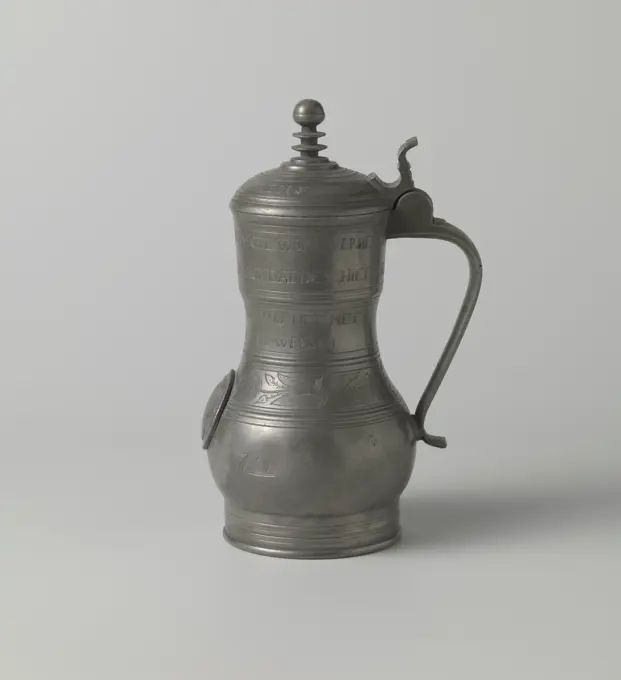
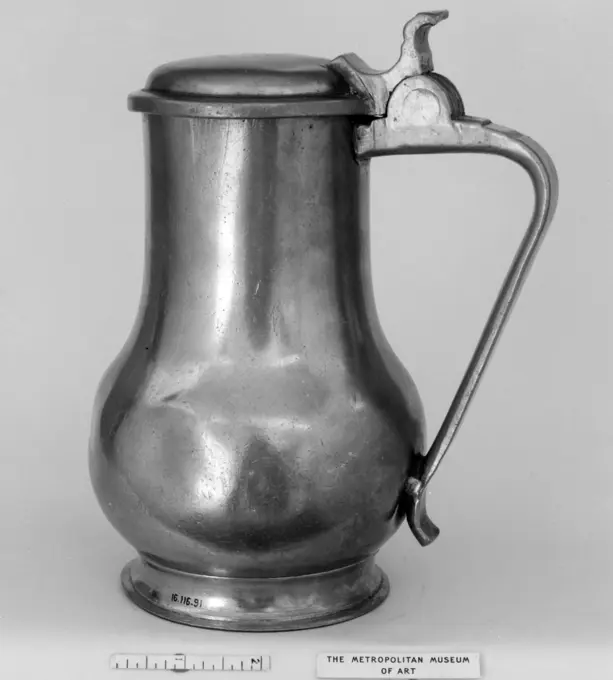
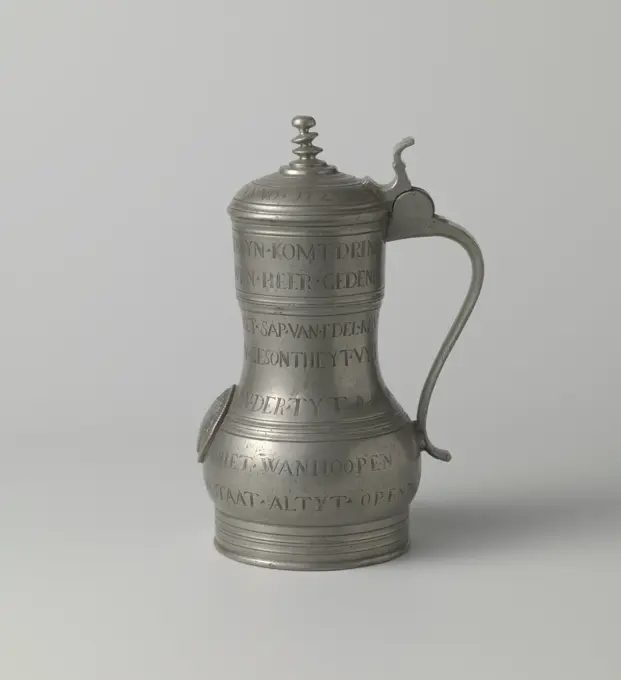
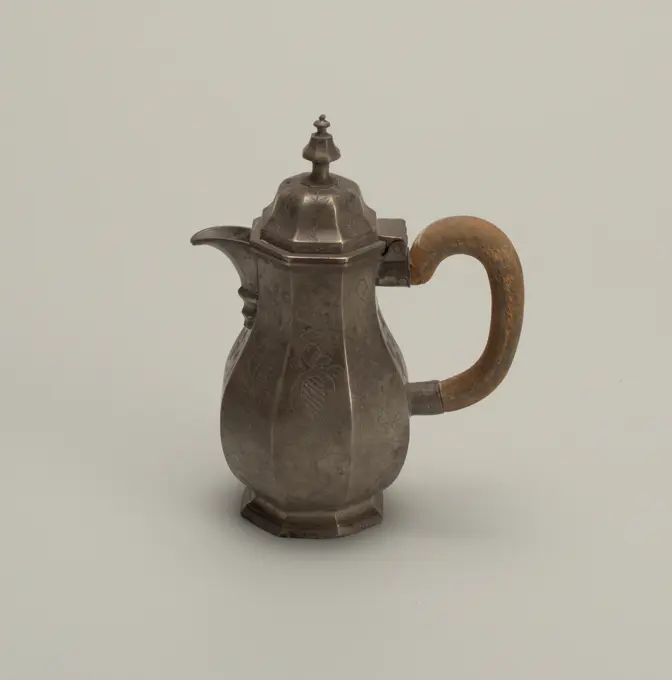
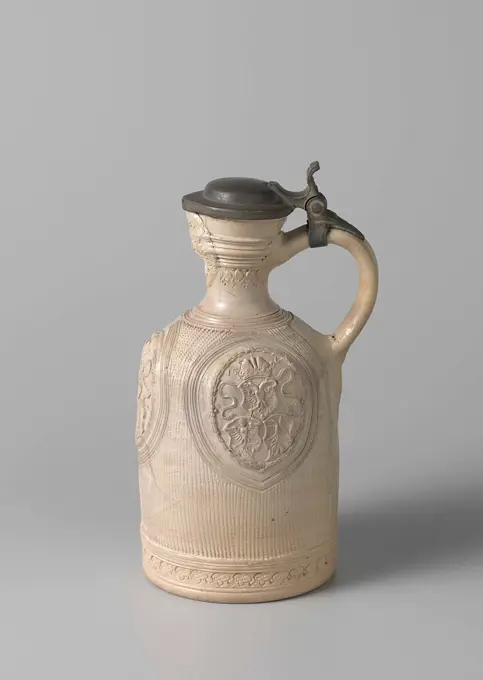
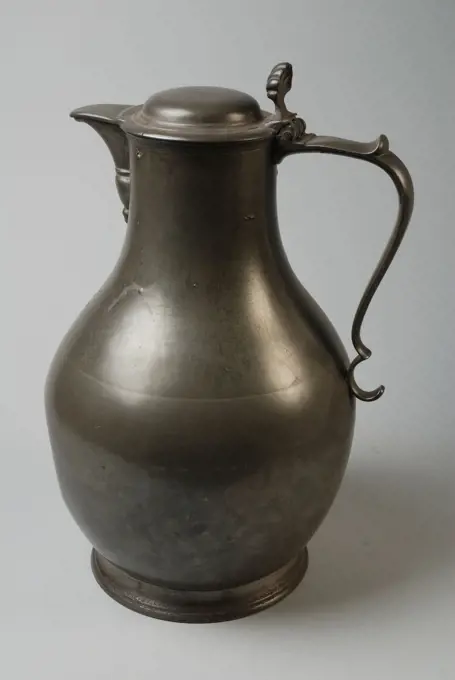
Gildekan van Tin for the Werversgilde, Matthijs van Ooyen (attributed to), 1708 - 1772 Jar of tin, from the Weversgilde. The foot is decorated with profiled tires. In addition, the baluster -shaped jug with inscription and rank motifs and a open medallion with a weapon. The top is closed with a vaulted lid with a button. The simple thumb rest runs through a double -cacky hinge into the decorated handle, which curls out slightly at the bottom. Nijmegen tin (metal) casting / engraving Jar of tin, from the Weversgilde. The foot is decorated with profiled tires. In addition, the baluster -shaped jug with inscription and rank motifs and a open medallion with a weapon. The top is closed with a vaulted lid with a button. The simple thumb rest runs through a double -cacky hinge into the decorated handle, which curls out slightly at the bottom. Nijmegen tin (metal) casting / engraving
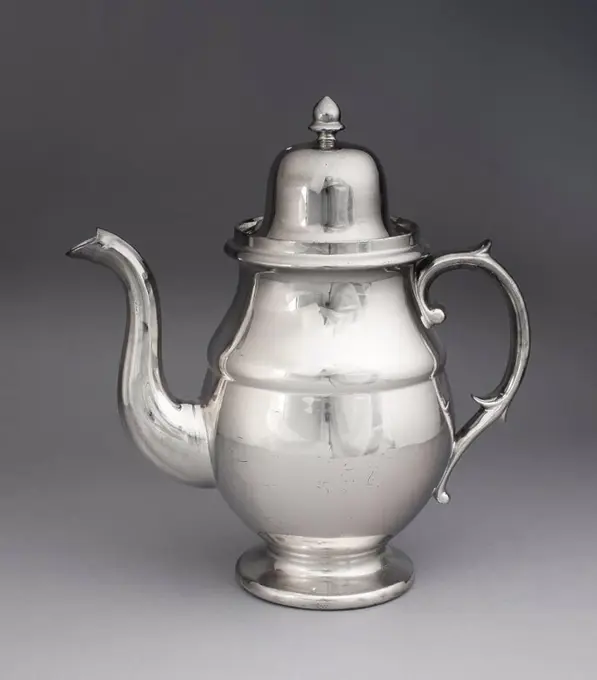
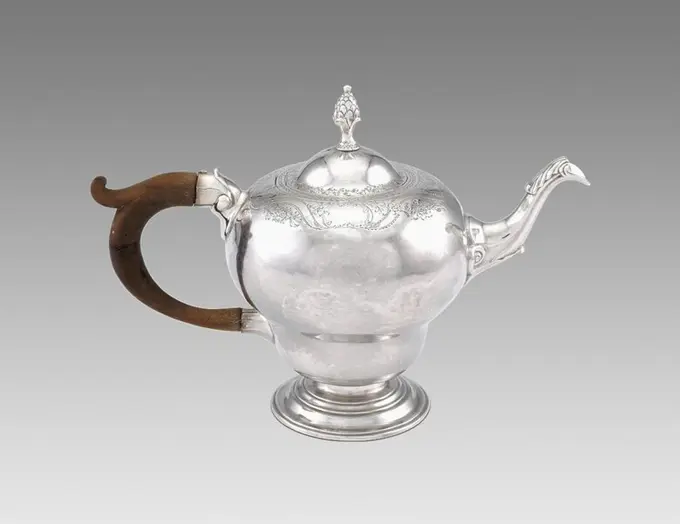
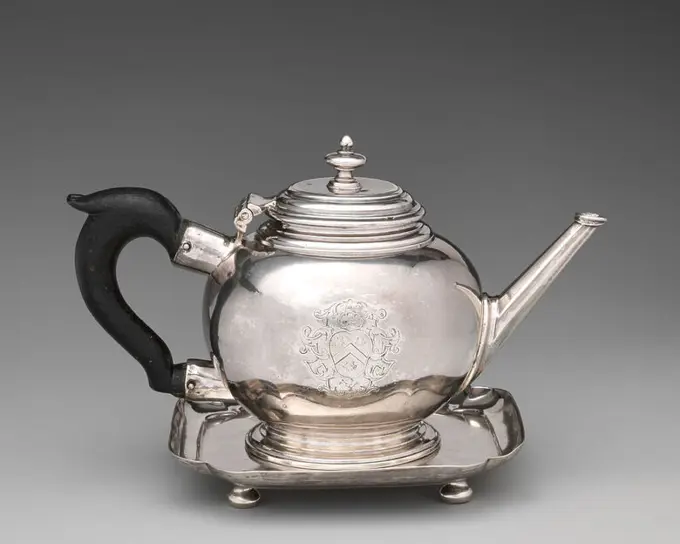
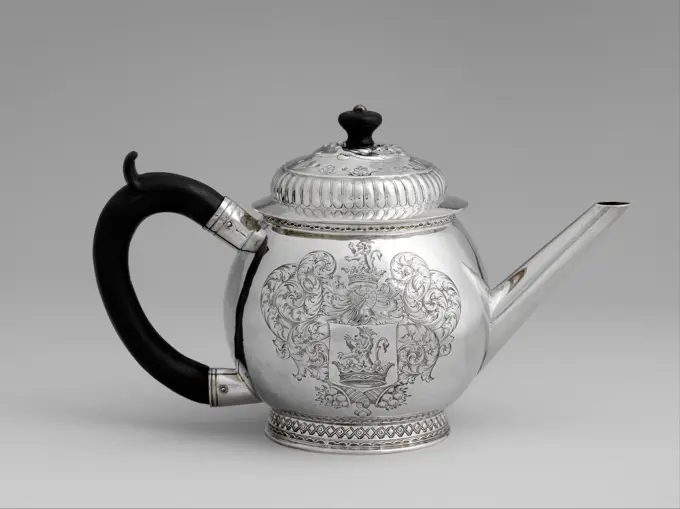
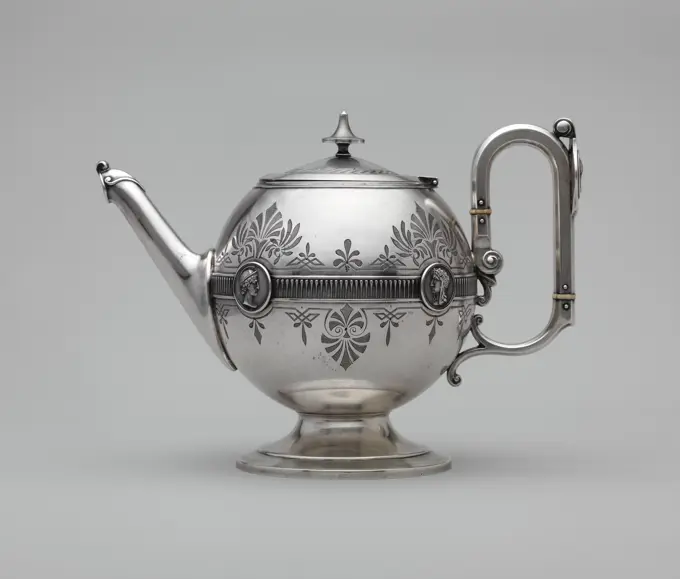
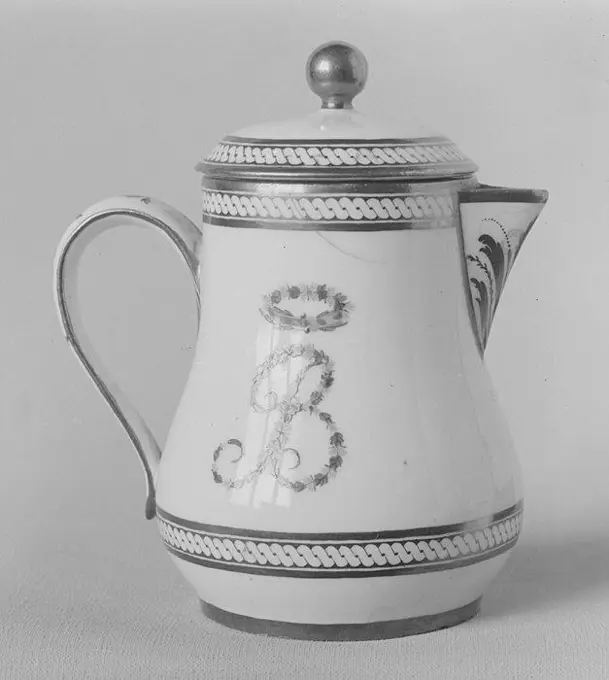
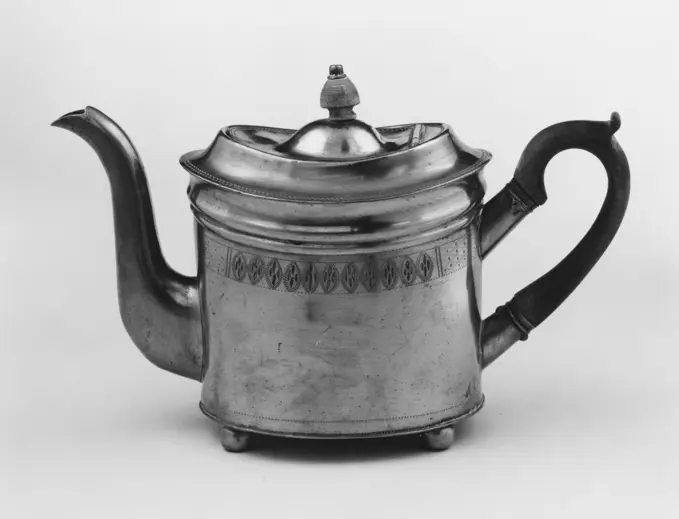
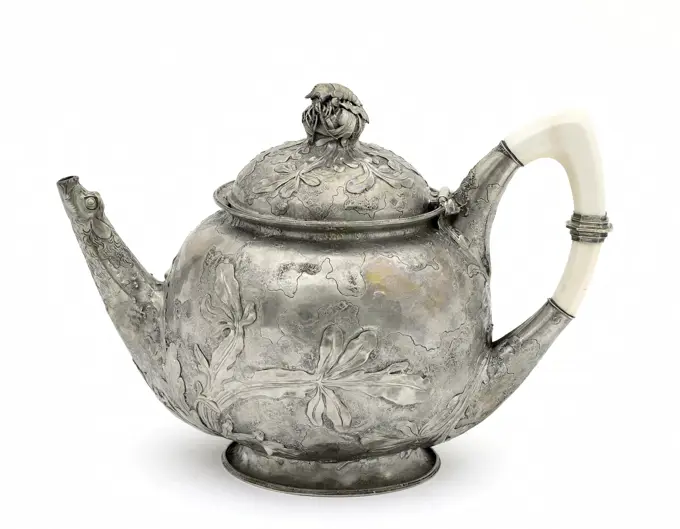
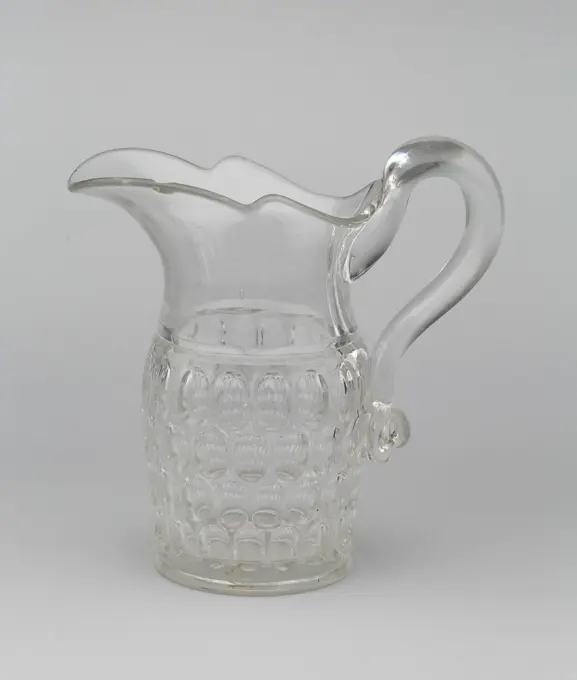
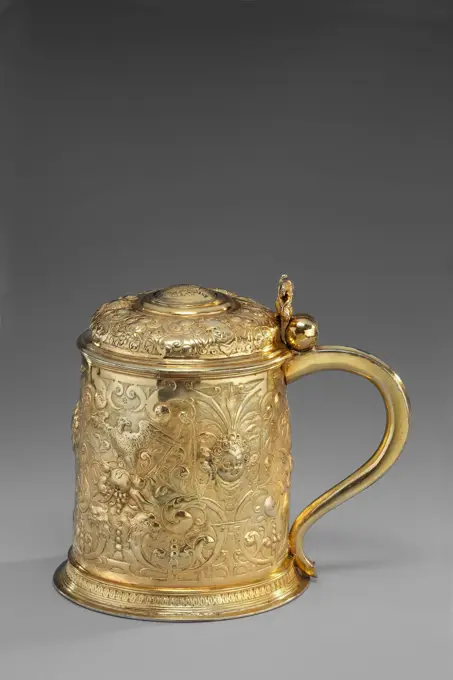
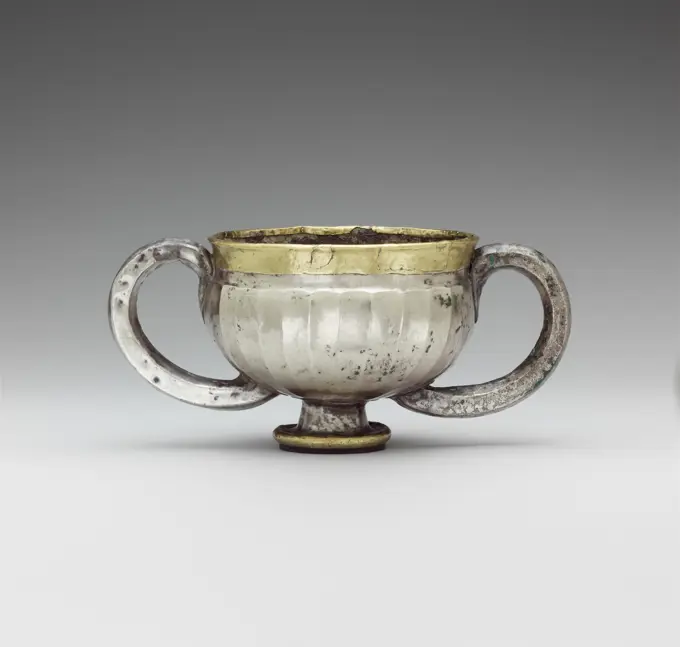
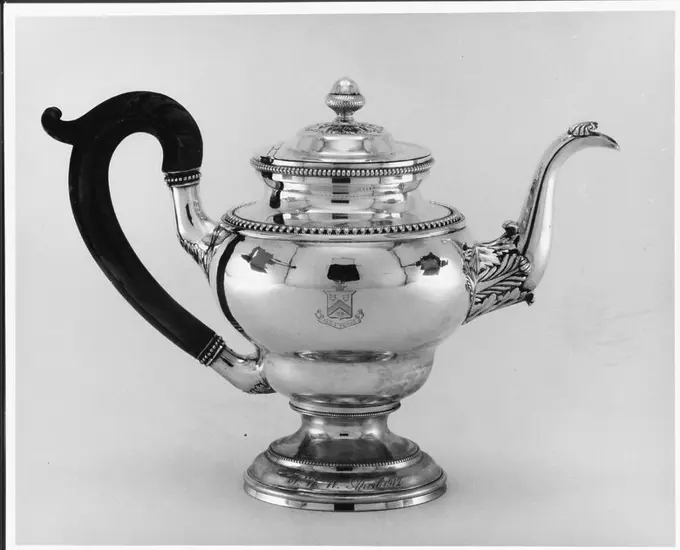
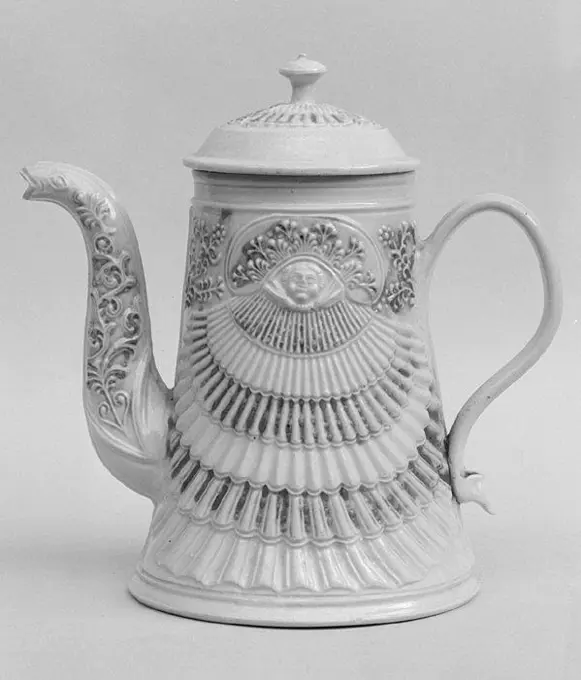
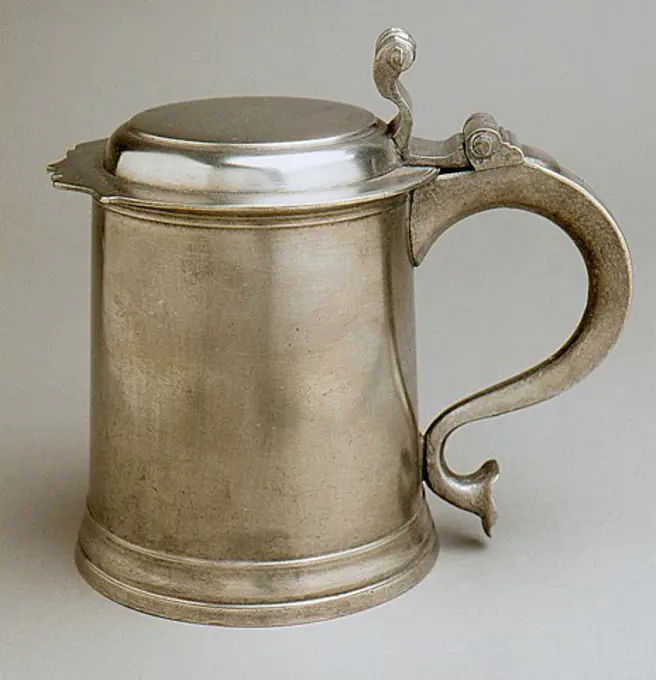
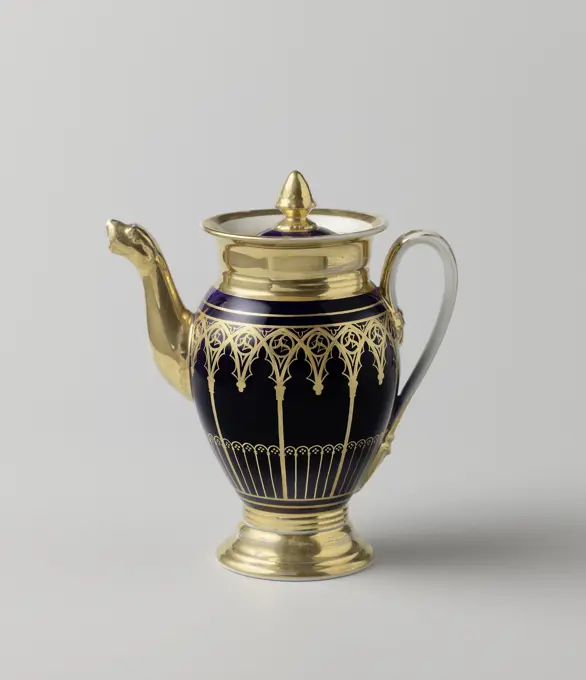
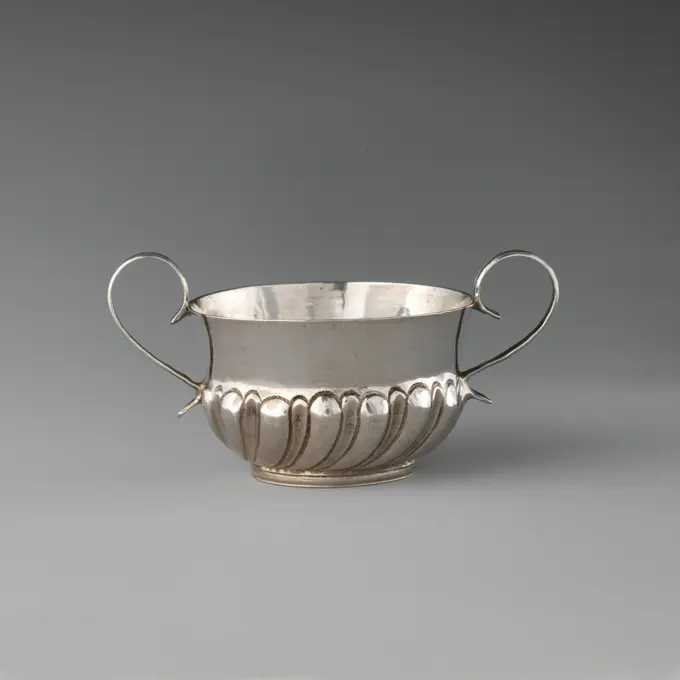
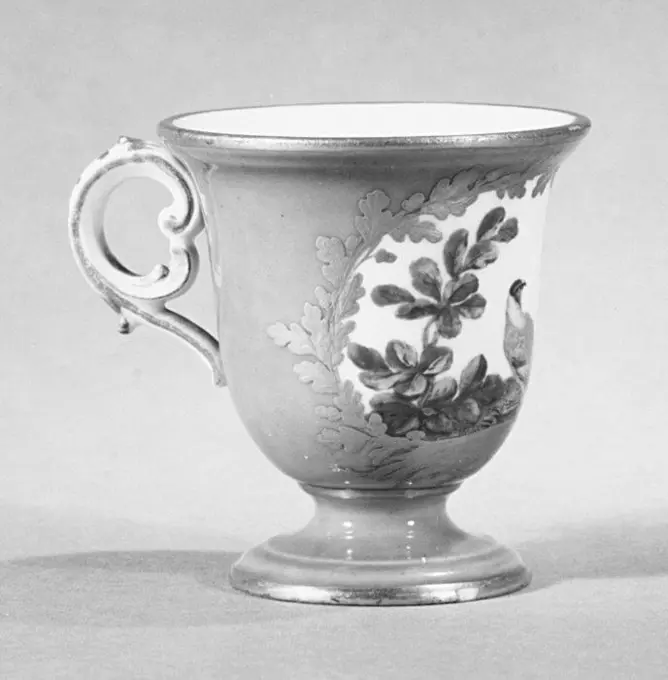
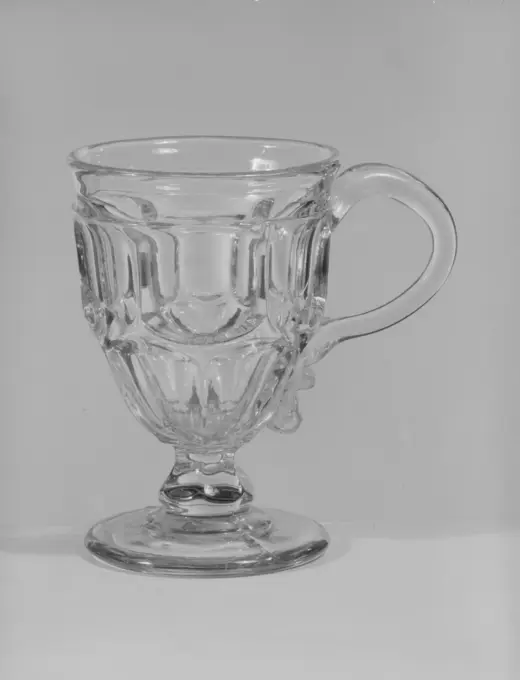
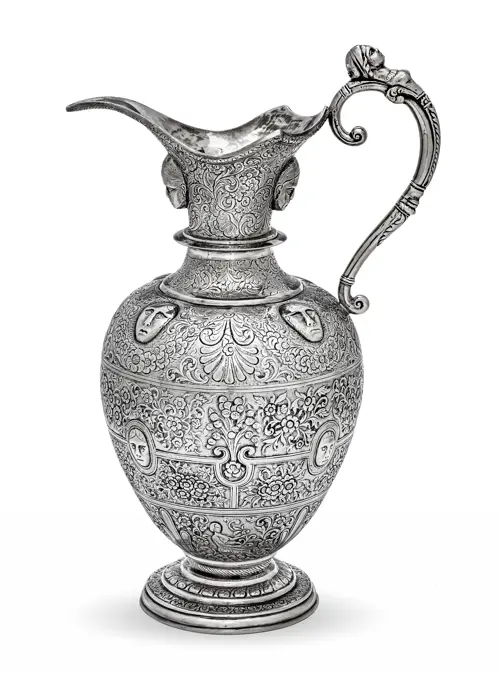
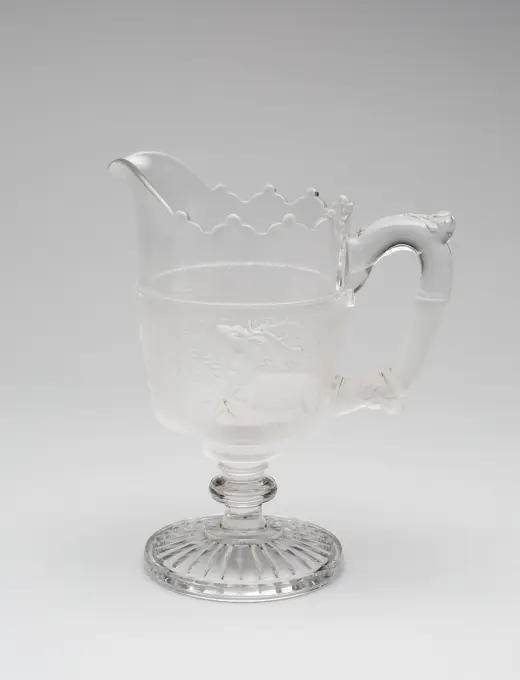
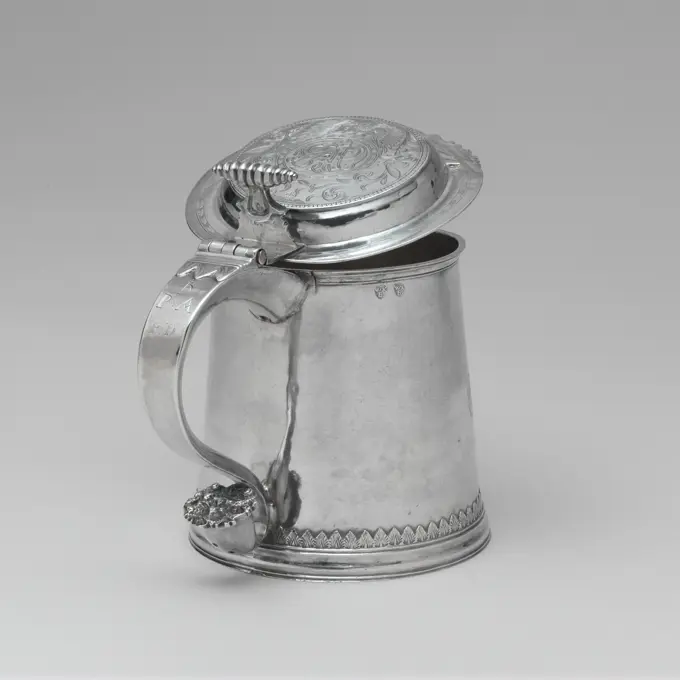
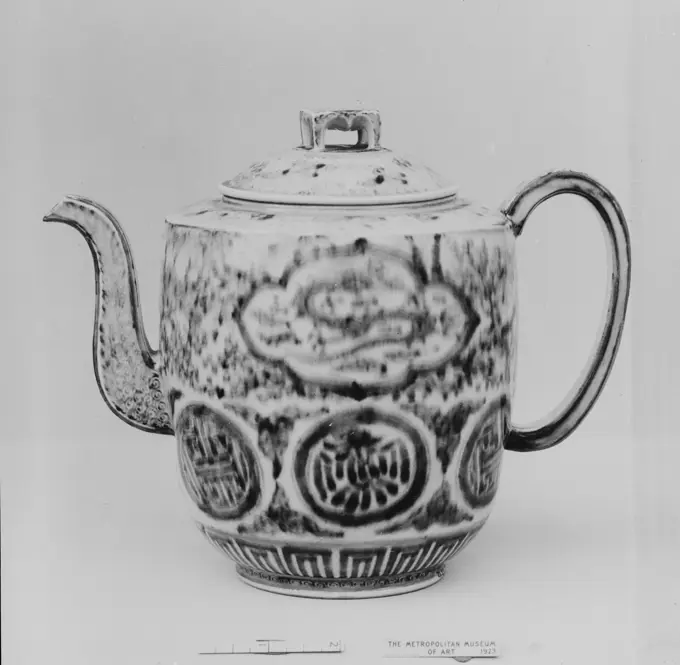
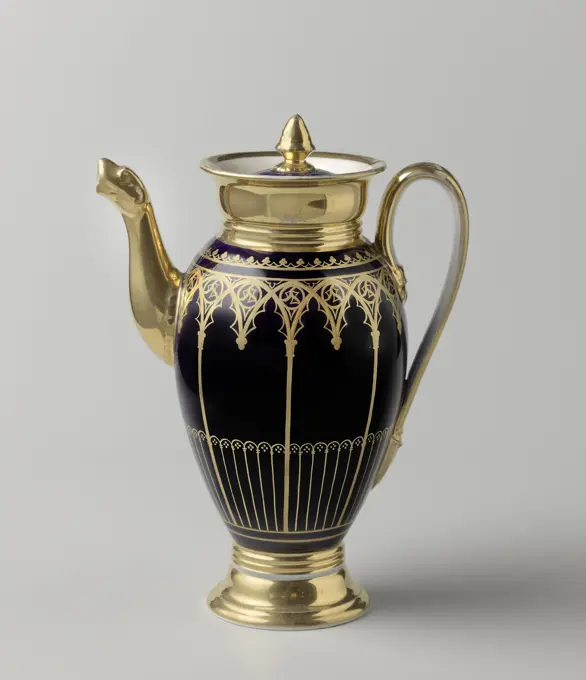
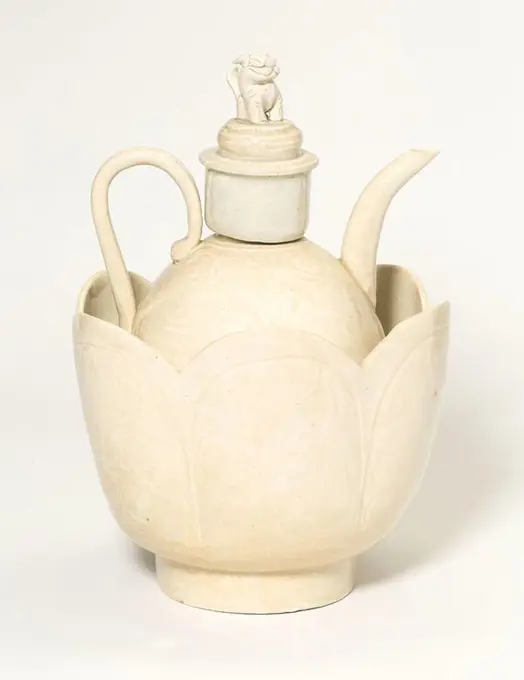
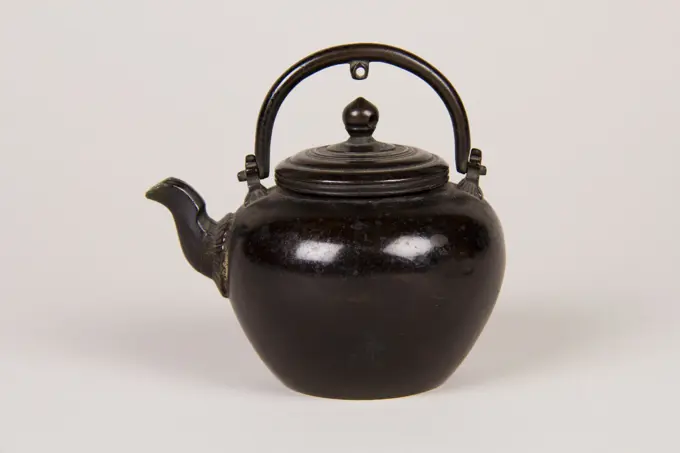
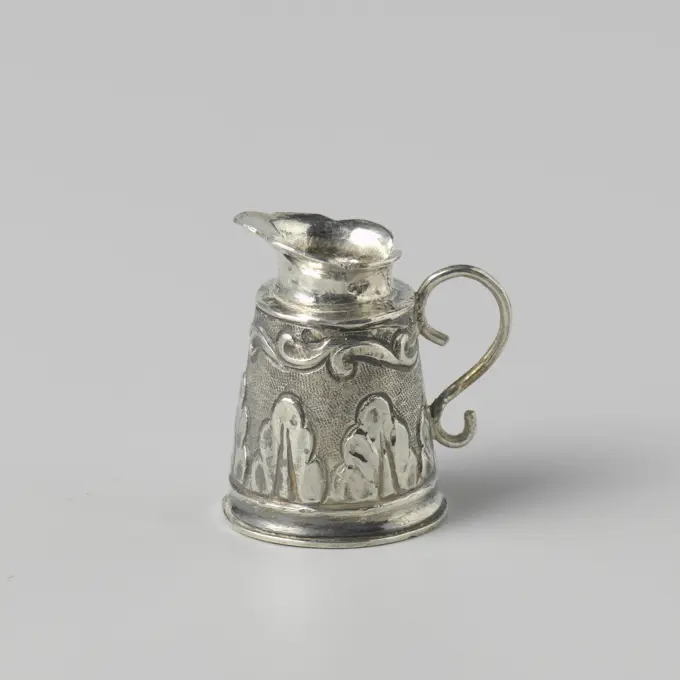
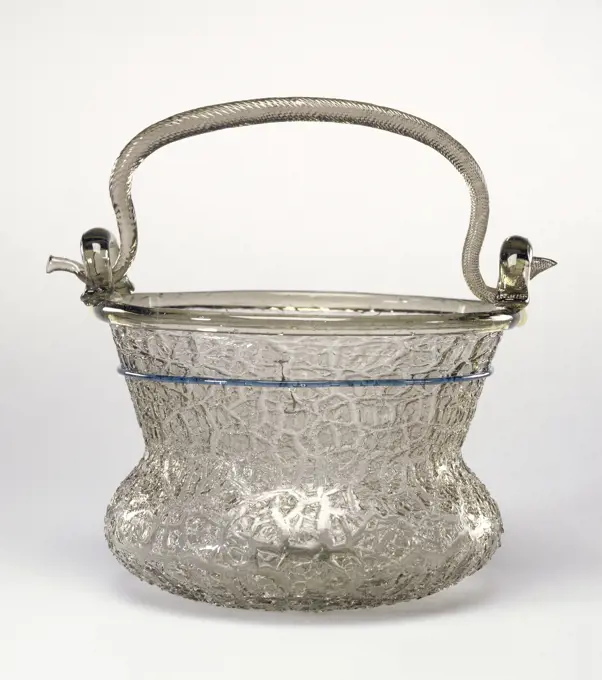
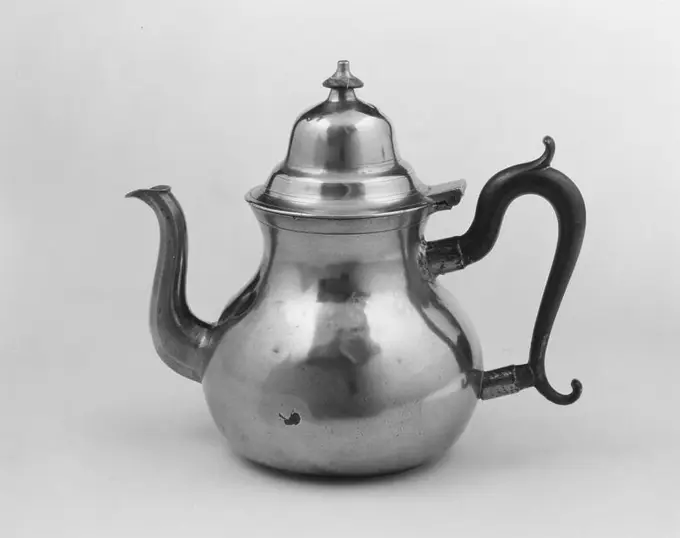
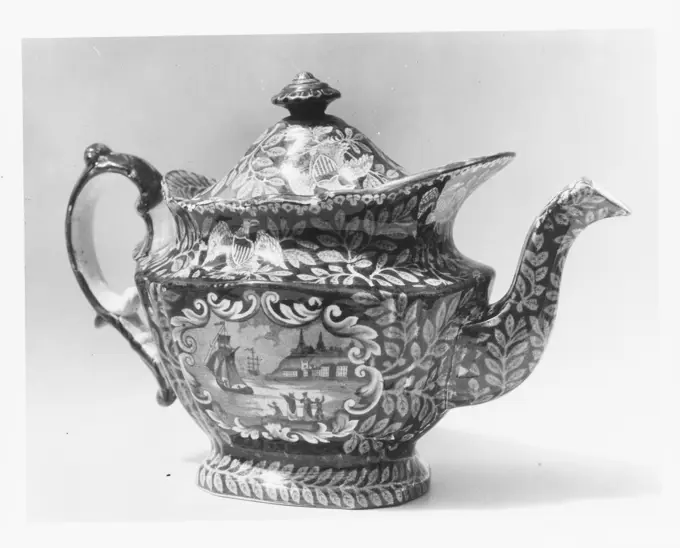
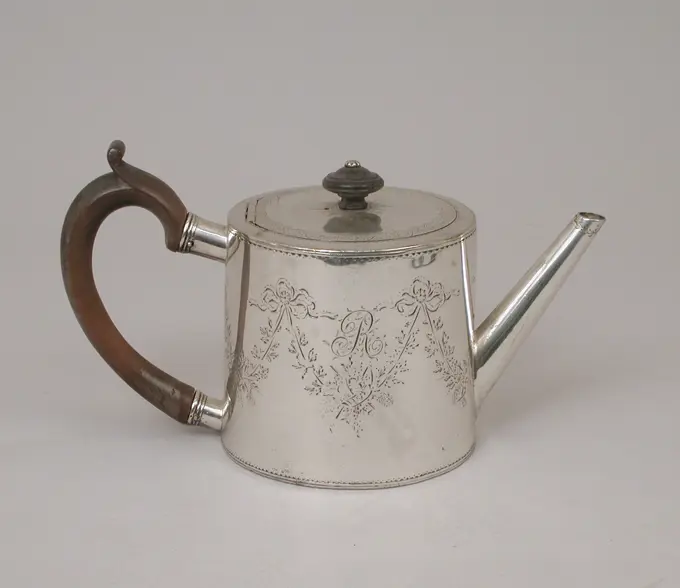
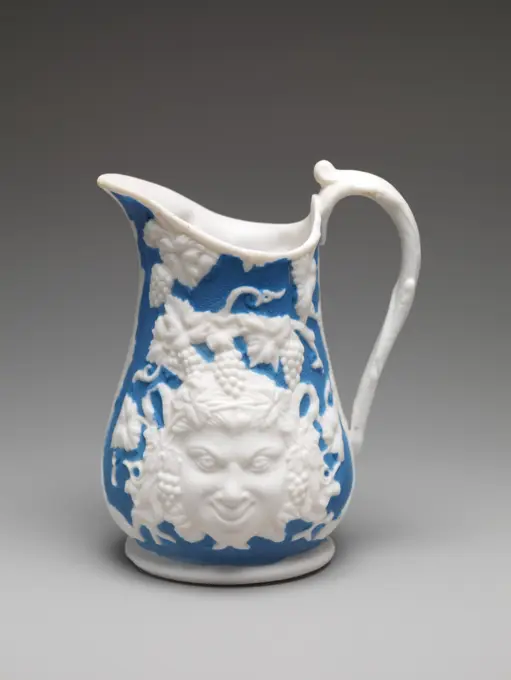
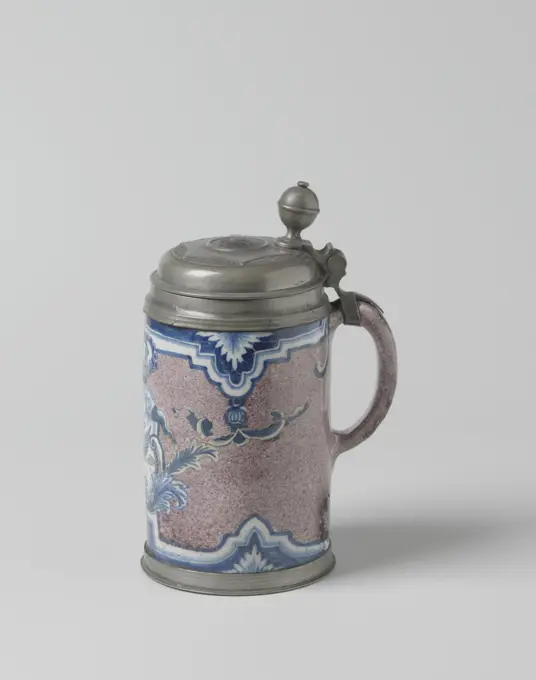
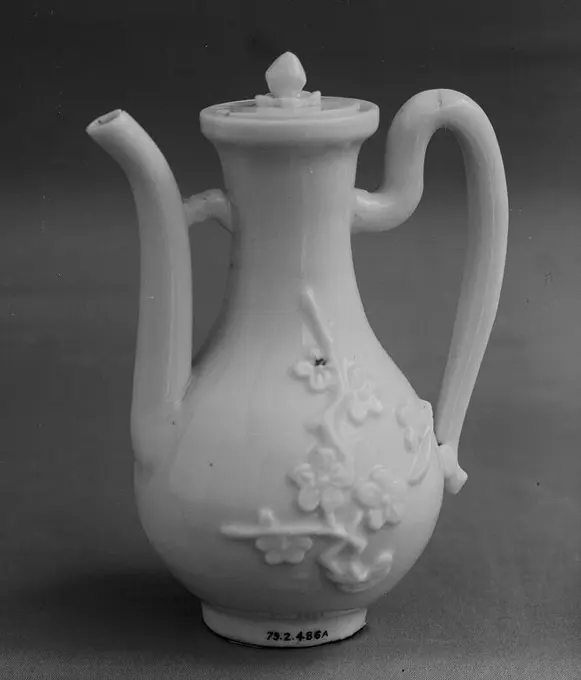
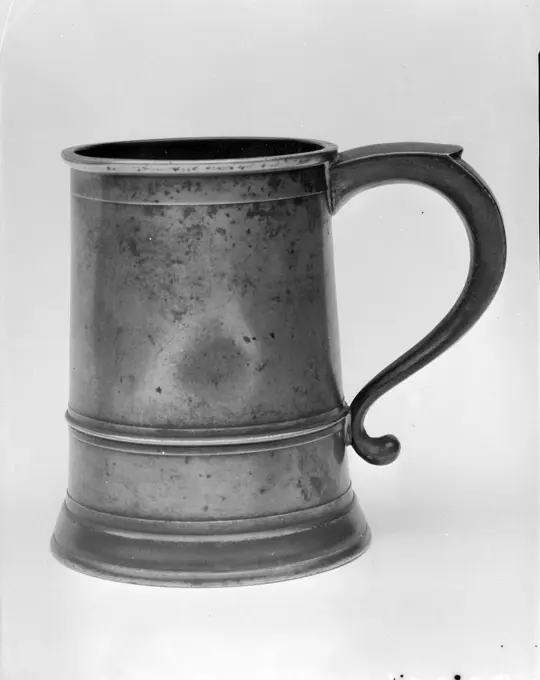
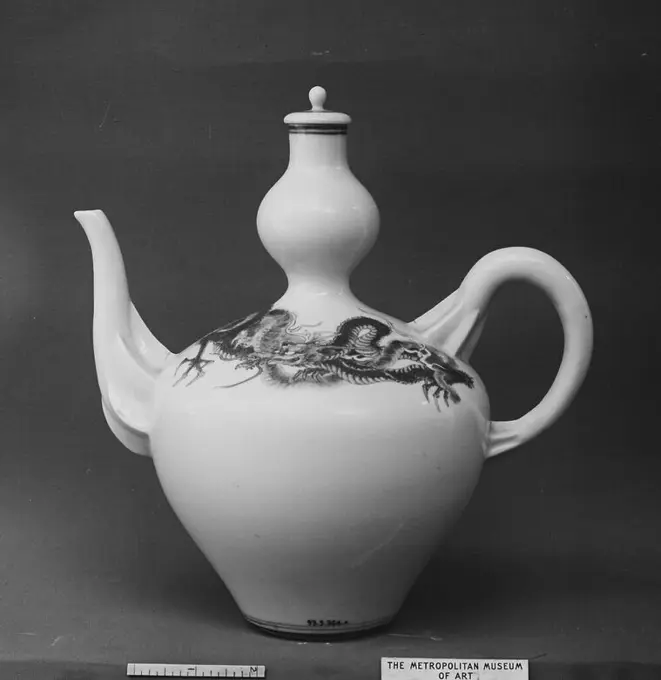
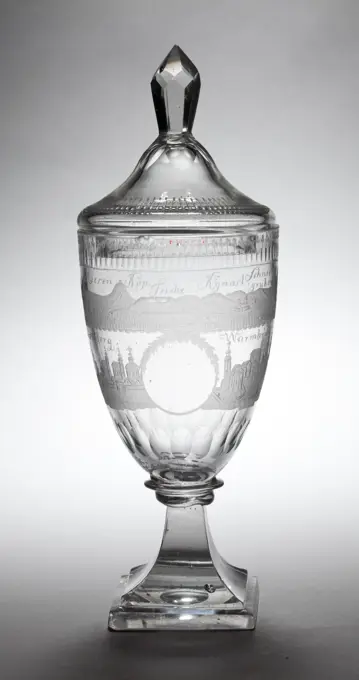
Wine can. Wine canned from silver, from above squaby and with a spout in the shape of a dragon head. The S-shaped ear has a dragon head at the top and top. On the sides the later applied engraved weapon of the Bridgeman family.Mug with cover (one of a pair). Culture: British, London. Dimensions: Overall (confirmed): 6 1/4 x 5 1/2 x 4 in., 13 oz. 3 dwt. (15.9 x 14 x 10.2 cm, 0.409kg). Maker: David Willaume I (British, 1658-1741). Date: 1702-3. Museum: Metropolitan Museum of Art, New York, USA.Chocolate Pot. England, Staffordshire. Date: 1810-1820. Dimensions: 30.5 cm × 29.2 cm (12 × 11 1/2 in.). Lead-glazed earthenware with lustre decoration. Origin: Staffordshire. Museum: The Chicago Art Institute, Chicago, USA.Teapot. Benjamin Burt; American, 1729-1805. Date: 1761-1774. Dimensions: 19.1 × 26.7 × 8.9 cm (7 1/2 × 10 1/2 × 3 1/2 in.). Silver, with mahogany. Origin: Boston. Museum: The Chicago Art Institute, Chicago, USA.William Garrard, Cream Jug, 1738/39, silver.Mug with cover (one of a pair) 1702-3 David Willaume I British. Mug with cover (one of a pair). British, London. 1702-3. Silver. Metalwork-SilverTeapot 1775-1785 Bohemia. Glass .Mustardpot. Retailer: Ball, Tompkins and Black, active ca. 1839 - 1851Creamer 1827 Harvey Lewis. Creamer. American. 1827. Silver. Made in Philadelphia, Pennsylvania, United StatesGildekan van Tin for the Werversgilde, Matthijs van Ooyen (attributed to), 1708 - 1772 Jar of tin, from the Weversgilde. The foot is decorated with profiled tires. In addition, the baluster -shaped jug with inscription and rank motifs and a open medallion with a weapon. The top is closed with a vaulted lid with a button. The simple thumb rest runs through a double -cacky hinge into the decorated handle, which curls out slightly at the bottom. Nijmegen tin (metal) casting / engraving Jar of tin, from the Weversgilde. The foot is decorated with profiled tires. In addition, the baluster -shaped jug with inscription and rank motifs and a open medallion with a weapon. The top is closed with a vaulted lid with a button. The simple thumb rest runs through a double -cacky hinge into the decorated handle, which curls out slightly at the bottom. Nijmegen tin (metal) casting / engravingPitcher 1850-70 American. Pitcher. American. 1850-70. Pressed glass. Made in United StatesTeapot and tray. Culture: British, London. Dimensions: Height (teapot .90): 4 5/8 in. (11.7 cm);Width (tray .91): 5 1/4 in. (13.3 cm). Maker: Bowles Nash (entered 1720). Date: 1725. Museum: Metropolitan Museum of Art, New York, USA.Milk Pot 1848-51 Ball, Tompkins and Black. Milk Pot 4397Decorative pitcher with lid; Horodnica (faience and porcelain factory; 1807-2012); 1840 (1840-00-00-1840-00-00);Teapot Jacob Boelen American 1690-1700 The globular body, straight spout, and detachable cover of this teapot imitate Chinese ceramics, while the luxurious armorial engraving, die-stamped foot band, and meander wire are characteristic of early New York silver. The striking contrast of plain surfaces with linear and sculptural ornament characterizes the finest work of this period. Engraved feather mantling surrounds the arms of the Philipse family, wealthy merchants of colonial New York. The teapot later passed into the Jay family.Inner box of Mosterdpot, Nathanael Teuter, 1805 Inner box of blue glass. Amsterdam glass Inner box of blue glass. Amsterdam glassCreamer ca. 1800 Hugh Wishart. Creamer 5878Teapot ca. 1865 Gorham Manufacturing Company The mid-nineteenth century witnessed an efflorescence of creativity in the American silver industry, fueled by the burgeoning middle classs increasing demand for refined luxury goods. Silversmiths devoted considerable time and creative energy to generating an endless variety of new designs and patterns. During the 1860s and 1870s silver flatware ornamented with portrait medallions inspired by antique coins and cameos enjoyed widespread popularity, with virtually every American silversmith producing their own proprietary "medallion" pattern. Gorham Manufacturing Companys designer George Wilkinson patented a medallion flatware pattern in 1864, and the quantity and variety of surviving silver in this pattern attest to its success. Medallions from this flatware pattern ornament the tea set as well as a toast rack (.4) and goblet (.5) in the American Wings collection. Although the three pieces match, they are an assembled set; the teapot is enMilk jug with cover (part of a traveling tea service) ca. 1788 Dihl et Guérhard French. Milk jug with cover (part of a traveling tea service) 194845Ewer with Floral Scrolls and Plantain Leaves in Relief, early 1300s. China, Jiangxi province, Yuan dynasty (1271-1368). Glazed porcelain with molded decoration, Shufu ware; overall: 9.2 x 13.4 cm (3 5/8 x 5 1/4 in.).Teapot 1820-40 Israel Trask. Teapot. American. 1820-40. Pewter. Made in Beverly, Massachusetts, United StatesCream pitcher 1827-35 Probably New England Glass Company. Cream pitcher. American. 1827-35. Pressed glass. Made in East Cambridge, Massachusetts, United StatesHenri Husson / Adrien-Aurélien Hébrard. Tea-pot. Money repelled and chopped. 1909-1914. Museum of Fine Arts of the City of Paris, Petit Palais. 75295-5 Money back, chisel, theierePitcher c 1850-1870 United States. Pressed glass . Artist unknownSmall mug with a late Renaissance ornament. Sigmundt, Peter (fl. 1608-1624), goldsmithClaret jug - Henry Birks & Sons Limited, 1893-2015 Henry Birks & Sons Limited, 1893-2015Gilded silver cup with two handles ca. 2300-2000 B.C. Anatolian This vase, along with 1989.281.45-.48 are said to have been found together, are best paralleled by pieces found by Heinrich Schliemann at Troy in a stratigraphic level know as Troy II. The wealth of jewelry and objects from the latest phase, Troy IIg, led Schliemann to believe that he had found the city described by Homer. In reality, this material is datable to about a thousand years before the Trojan War.. Gilded silver cup with two handles. Anatolian. ca. 2300-2000 B.C.. Silver, gold foil. Latter part of the Early Bronze Age. Gold and SilverCream Jug from the Kirkhill Teaservice,  c. 1730Wine Ewer with Lid 12th century Korea. Wine Ewer with Lid 50355Teapot. Culture: American. Dimensions: Overall: 8 3/8 x 12 x 5 5/8 in. (21.3 x 30.5 x 14.3 cm); 33 oz. 16 dwt. (1050.8 g)Foot: Diam. 4 1/4 in. (10.8 cm). Maker: Harvey Lewis (ca. 1783-1835). Date: 1827. Museum: Metropolitan Museum of Art, New York, USA.Soup tureen and cover, Silver, London, England, 1789-90, metalwork, Decorative Arts, Soup tureen and coverCoffeepot ca. 1750 British, Staffordshire. Coffeepot 199554Samuel Casey, Teapot, 1760, silver and wood.Tankard 1760-93 William Kirby. Tankard 8207Tankard Probably by Hermann Lambrecht Engraved figures after costume prints by Abraham Bosse French 1670-75 The engraved figures are copied from French costume prints by Abraham Bosse (1604-1676). View more. Tankard. Engraved figures after costume prints by Abraham Bosse (French, Tours 1602/04-1676 Paris). German, Hamburg. 1670-75. Silver, partly gilt. Metalwork-SilverTankard. William Rouse (United States, Massachusetts, Boston, circa 1640-1704). United States, Massachusetts, Boston, circa 1692. Furnishings; Serviceware. SilverSpherical milk jug. Chromecki, Wincenty (fl. 2 ćw. XIX w.-1853), goldsmithTwo-handled cup, 1690-1710, Jeremiah Dummer, American, 1645-1718, 3 1/2 x 4 in. (8.9 x 10.16 cm), Silver, United States, 17th-18th centuryStadskan of tin with lid.stadskan with lid of tin. On the high, hollow, conical foot with a wide stand ring, a baluster-shaped body with a straight raised lip edge, whereby the widest point of the body, halfway through the neck and at the lip edge tires are arranged to decoration. The top is closed with a vaulted, round lid with a button in the middle. The lid runs through angular thumbs of thumb and a one-case hinge over in an elongated S-shaped handle. A rose medallion is applied to the inside on the inside.Pitcher British 19th centuryMiniature Pitcher ca. 1835 American. Miniature Pitcher. American. ca. 1835. Lacy pressed glass. Made in New England, United StatesFlagon 18th century Dutch. Flagon 193294Tea kettle; Hossauer, Johann George (1794-1874); 19th century (1801-00-00-1900-00-00);Teapot with a gothic arcade decoration, Perche, c. 1800 - c. 1899 Porcelain teapot on spreading foot, with an egg -shaped body, bent spout and high ear, painted in under -glaze blue and on the glaze gold. The belly with a gothic arch decoration against a blue background. The foot, the neck, the ear and the spout are covered with gold. The spout ends in an animal head. Lid with the same decoration; pointed lid button. Saint-Yrieix-la-Perche  painting / gilding / vitrification Porcelain teapot on spreading foot, with an egg -shaped body, bent spout and high ear, painted in under -glaze blue and on the glaze gold. The belly with a gothic arch decoration against a blue background. The foot, the neck, the ear and the spout are covered with gold. The spout ends in an animal head. Lid with the same decoration; pointed lid button. Saint-Yrieix-la-Perche  painting / gilding / vitrificationTeapot and Stand 1790 London. Silver and wood . William VincentKantaros typu Sessile. nieznany warsztat attycki, authorBaluster-shaped tin of tin. Small baluster shaped can of tin. The neck ends in a wide edge, which lies on the front bends outside in a spout. The angular curved handle runs from the thickest point of the belly to the top edge of the can. The flat lid is decorated with three ingredcation circles with a point in the middle. The lid is angular on the tangle. The other half is around and has a thumb trust with two horizontal grooves.Cup, purple red with golden edges and ear. Cup of porcelain, part of a coffee set. Body purple red with golden edges and ear. On top of the broad golden trim in which an engraved leaf drink. No brand.Miniature porringer 1690-91 P. H., London Listen to experts illuminate this artwork's story Listen Play or pause #413. Retail Value. High and Low Supported by Bloomberg Philanthropies We're sorry, the transcript for this audio track is not available at this time. We are working to make it available as soon as possible.. Miniature porringer. British, London. 1690-91. Silver. Metalwork-Silver-MiniatureIce cream cup (tasse à glace) (one of a pair) (part of a service) 1771-72 Sèvres Manufactory French The table services produced at Sèvres in the eighteenth century were highly prized and extremely expensive. They were not only purchased by the Crown and members of the aristocracy but also given by the king as diplomatic gifts to foreign courts and visiting dignitaries, and the esteem in which they were held did much to enhance the factorys prestige and fortunes. Because the number of pieces composing a service was very large, the cost was enormous, but this did not deter many courtiers from ordering a dinner or dessert service, or both.One of the most celebrated services produced at Sèvres was delivered to Louis-René-Édouard, prince de Rohan-Guémenée (1734-1803), on September 7, 1772. All of the pieces were decorated with the rich turquoise ground color known as bleu céleste and with birds encircled by an elaborate gilt wreath of oak leaves and acorns. Many of the components of the seEgg Cup 1830-70 American With the development of new formulas and techniques, glass-pressing technology had improved markedly by the late 1840s. By this time, pressed tablewares were being produced in large matching sets and innumerable forms. During the mid-1850s, colorless glass and simple geometric patterns dominated. Catering to the demand for moderately-priced dining wares, the glass industry in the United States expanded widely, and numerous factories supplied less expensive pressed glassware to the growing market. At the Exhibition of the Industry of All Nations at New Yorks Crystal Palace in 1853, for example, the New England Glass Company exhibited 130 pieces of one design, "consisting of bowls, tumblers, champagnes, wines, and jelly glasses." This object belongs to one such service. Although the glass manufactory is not known, the glassware is very typical of the large services that were very popular with Americas middle class in the nineteenth century.. Egg Cup. American. Dish with cover (part of a service) 1785-1800 Chinese, probably for British market. Dish with cover (part of a service) 201127Teapot 1764-98 William Will. Teapot. American. 1764-98. Pewter, wood. Made in Philadelphia, Pennsylvania, United StatesEwer. India, Uttar Pradesh, Awadh, Lucknow, circa 1850-1860. Furnishings; Accessories. Silver, chased and engravedTwo-handled CoveredCup.  Maker: Gerrit Onckelbag, American, 1670-1732Cup (part of a service) ca. 1845 Sèvres Manufactory French. Cup (part of a service) 201384Silversmith's Art, England 18th century. Silver kettle with stove, George III style, marked Edward Vincent. London, 1734.Westward Ho!/Pioneer pattern cream pitcher c 1876 Philadelphia. Glass . Gillinder and Sons (Manufacturer)Tankard 1700-1730 Benjamin Wynkoop The smooth, flat covers of early New York tankards were ideal venues for decorative engraving. Here, period ornament surrounds an interlaced monogram of the script initials JD” for the original owner, Jonas Douw (ca. 1655-1736). The tankard’s body is engraved with a cartouche of leafy mantling surrounding the coat of arms and crest used by the Douw family. The tankard’s provenance is remarkably complete, and its successive owners include some of Albany’s best-known colonial families. Jonas’s son Petrus Douw (1692-1775) married Anna van Rensselaer (1696-1756) in October 1717, thereby uniting the Douws with one of Albany’s most prosperous families. The initials of Petrus and Anna are engraved on the handle of the tankard.. Tankard 8245Coffee Pot, c. 1800. America, Philadelphia, 19th century. Silver, wooden handle; overall: 34.5 x 23.8 x 12.6 cm (13 9/16 x 9 3/8 x 4 15/16 in.).Jug (England); Manufactured by W. Ridgway & Company (United Kingdom); glazed stonewareWater pot and cover 1820 Japan. Water pot and cover 48099Coffeepot with a gothic arcade decoration, Perche, c. 1800 - c. 1899 Coffee pan of porcelain on spreading foot, with an egg -shaped body, bent spout and high ear, painted in under -glaze blue and on the glaze gold. The belly with a gothic arch decoration against a blue background. The foot, the neck, the ear and the spout are covered with gold. The spout ends in an animal head. Lid with the same decoration; pointed lid button. Saint-Yrieix-la-Perche porcelain. glaze. cobalt (mineral). gold (metal) Coffee pan of porcelain on spreading foot, with an egg -shaped body, bent spout and high ear, painted in under -glaze blue and on the glaze gold. The belly with a gothic arch decoration against a blue background. The foot, the neck, the ear and the spout are covered with gold. The spout ends in an animal head. Lid with the same decoration; pointed lid button. Saint-Yrieix-la-Perche porcelain. glaze. cobalt (mineral). gold (metal)Sugar Bowl. Cup-shaped sugar bowl with two S-shaped handles and a lid with button. The wall of the pot is decorated with acanthus leaves rocaille ornaments in relief on a roughened surface. The sugar bowl is marked with a sword. The sugar bowl is saved as part of a coffee and tea table (BK-NM-11177-158).Cup 1740-50 British (American market). Cup. British (American market). 1740-50. Stoneware. Made in Staffordshire, EnglandWine Ewer and Warming Bowl. China. Date: 960 AD-1127. Dimensions: Ewer: h. 16.4 cm (6 3/8 in.); diam.15.1 cm (5 7/8 in.); bowl: h. 13.8 cm (5 3/8 in.); diam. 16.6 cm (6 1/2 in.). Qingbai ware; porcelain with underglaze carved and incised decoration. Origin: China. Museum: The Chicago Art Institute, Chicago, USA.Ritual Ewer 13th century Japan This small gilt-bronze object may have served as a ritual vessel called a kundika in Sanskrit, which held water used during Buddhist ceremonies and is one of the eighteen implements Buddhist monks and nuns need in order to perform their duties. Most East Asian kundika take the shape of long-necked bottles, although some examples have short, bulbous bodies like this one. However, its shape and diminutive size are also reminiscent of a water dropper.. Ritual Ewer 73181Gypsy, Samuel Alcock & Co., British, 1828 - 1860, Molded, glazed stoneware, Putty-colored job with relief decoration showing a family under a tent., 1843, ceramics, Decorative Arts, Pitcher, PitcherMilk jug, anonymous, c. 1814 - c. 1898 Cup-shaped milk jug with an S-shaped handle and a wide peat. The wall of the KAN is decorated with acanthus leaves and rocaille rooms in relief on a roughened surface. The milk can be marked with a sword. The milk can be kept as part of a coffee and tea table (BK-NM-11177-158). Netherlands silver (metal) Cup-shaped milk jug with an S-shaped handle and a wide peat. The wall of the KAN is decorated with acanthus leaves and rocaille rooms in relief on a roughened surface. The milk can be marked with a sword. The milk can be kept as part of a coffee and tea table (BK-NM-11177-158). Netherlands silver (metal)Gildekan van Tin van het Bakkersgilde, for Johanes van Sas, Anonymous, c. 1729 Jar of tin, from the bakers' guild. The foot is decorated with profiled tires. In addition, the baluster -shaped jug with inscription and a open medallion with a weapon. The top is closed with a vaulted lid with a button. The simple thumb rest runs through a double -cacky hinge in the handle, which curls out slightly at the bottom. Nijmegen (possibly) tin (metal) casting / engraving Jar of tin, from the bakers' guild. The foot is decorated with profiled tires. In addition, the baluster -shaped jug with inscription and a open medallion with a weapon. The top is closed with a vaulted lid with a button. The simple thumb rest runs through a double -cacky hinge in the handle, which curls out slightly at the bottom. Nijmegen (possibly) tin (metal) casting / engravingJug; pewterHoney bowl 18th century probably German or possibly Spainish, Catalonia. Honey bowl 186308A mug of luminaires silver; Kreussen (ceramic family; XVII-XIX century); after. XVII century (1650-00-00-1655-00-00);Covered Cup, 1723-1724. Gabriel Sleath (British, 1674-1756). Silver; overall: 25.7 x 23.2 x 13.7 cm (10 1/8 x 9 1/8 x 5 3/8 in.).Teapot with lid, black, decorated with corrugated edges. Teapot with black stone lid. The body with close-up ribbed edges. The S-shaped spout with volutes in relief. The C-shaped handle ends at the bottom in a stylized sheet. The lid is decorated with close-up concentric corrugated edges, and has a round button with air hole.Ice-Glass Situla (Secchiello); Façon de Venise, Netherlands; 1550 - 1600; Free-blown colorless (slightly grayish-brown) glass with applied decoration; 10.2 x 16.8 cm (4 x 6 5,8 in.)Teapot. Dimensions: 7 x 5 in. (17.8 x 12.7 cm). Maker: Possibly Eben Smith (active 1814-56). Date: 1800-1850. Museum: Metropolitan Museum of Art, New York, USA.Teapot ca. 1825-ca. 1835 British (American market). Teapot. British (American market). ca. 1825-ca. 1835. Earthenware, transfer-printed. Made in Staffordshire, EnglandTeapot late 18th century A. L.. Teapot. British, Colonial. late 18th century. Silver. Metalwork-SilverPitcher 1830-70 American. Pitcher 5732Beer mug with lid, anonymous, c. 1700 - c. 1750 Beer mug with lid. Potsdam (possibly)Wrisbergholzen (possibly) earthenware. tin glaze. tin (metal). Beer mug with lid. Potsdam (possibly)Wrisbergholzen (possibly) earthenware. tin glaze. tin (metal).Frank Fumagalli, Silver Teapot, 1935 1942 Silver TeapotPitcher 1780-1825 American. Pitcher 5668Can. Can be from stoneware. The wide cylindrical belly passes into the narrow neck. The themselves to the top Discarding Neck has a pointed spout. The entire body is decorated with horizontal notches. An oval medallion has been printed three times, each with three weapons: the national arms with year 1596, coat of arms of the Von Merlan family and the city of Nuremberg. With pewter lid.Mug. Dimensions: H. 3 5/8 in. (9.2 cm). Date: 18th century. Museum: Metropolitan Museum of Art, New York, USA.Rosewater jug 17th century French, Avignon. Rosewater jug 195041Tureen 1750-1800 Mexican. Tureen 9160Hanging Laver. Culture: South Netherlandish. Dimensions: Overall (with handle up): 12 1/4 x 12 7/8 x 7 3/8 in. (31.1 x 32.7 x 18.7 cm)with handle down: 5 7/8 x 13 3/8 x 7 3/8 in. (14.9 x 34 x 18.7 cm). Date: late 15th century. Museum: Metropolitan Museum of Art, New York, USA.Tinsmith: Johannes Daniël Druy, Jug with pear-shaped body, hinging lid and question mark-shaped ear, supper liturgical container holder tin, cast Can with horizontal solder flat bottom with foot ring pear-shaped belly with soldered profiled sneb band-shaped ear in questioned shape lid with shell-shaped thumb rest and two-headed hinge Profile edge on foot and lid thickening on sneb on the lid engraved circles - under the bottom four mark: ID standing angel lion bunch of grapes and crowned X above metal casting protestantism serving church Eucharist supper religious ceremony ceremony religion Overschie Rotterdam Collection AO from Kerkwijk.Teapot. Culture: Japan. Dimensions: H. 3 in. (7.6 cm); L. (incl. handle and spout) 6 in. (15.2 cm). Date: 19th century (). Museum: Metropolitan Museum of Art, New York, USA.Covered Ewer. Culture: China. Dimensions: H. 4 1/2 in. (11.4 cm). Date: early 18th century. Museum: Metropolitan Museum of Art, New York, USA.Mug 1810-50 Thomas Danforth Boardman. Mug. American. 1810-50. Pewter. Made in Hartford, Connecticut, United StatesEwer with Dragon. Artist: Style of Makuzu Kozan I (Miyagawa Toranosuke) (Japanese, 1842-1916). Culture: Japan. Dimensions: H. 9 1/4 in. (23.5 cm). Date: late 19th century. Museum: Metropolitan Museum of Art, New York, USA.Lee Mansion, Silver Pitcher engraved Abigail Cowell , Pitchers. Samuel Chamberlain Photograph Negatives CollectionMug (one of two) ca. 1775 Chinese, probably for British market. Mug (one of two) 202470Cup with lidTeapot with chi dragons and character of longevity (shou) 19th century China. Teapot with chi dragons and character of longevity (shou). China. 19th century. Stoneware with slip decoration (Yixing ware). Qing dynasty (1644-1911). CeramicsMelton Pitcher; Manufactured by Wedgwood (United Kingdom); England; glazed earthenwareBranches; Manufacture Nationale de Porcelaine de Sevres (1756-); 1822 (1822-00-00-1822-00-00);Creamer 1780-1820 American or British. Creamer 2591