Antique Silverware Collection

Historical silver vessels including teapots, mugs, and pitchers. Each piece reflects exquisite craftsmanship and rich heritage in metalwork.
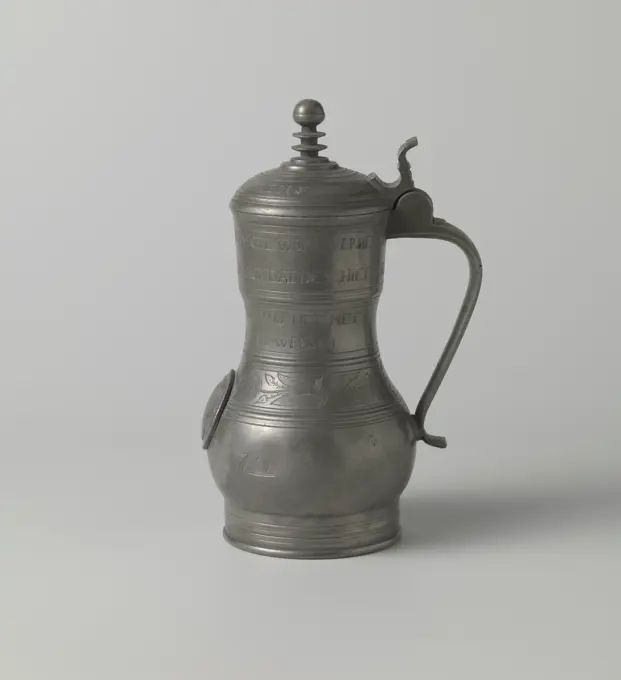
Gildekan van Tin for the Werversgilde, Matthijs van Ooyen (attributed to), 1708 - 1772 Jar of tin, from the Weversgilde. The foot is decorated with profiled tires. In addition, the baluster -shaped jug with inscription and rank motifs and a open medallion with a weapon. The top is closed with a vaulted lid with a button. The simple thumb rest runs through a double -cacky hinge into the decorated handle, which curls out slightly at the bottom. Nijmegen tin (metal) casting / engraving Jar of tin, from the Weversgilde. The foot is decorated with profiled tires. In addition, the baluster -shaped jug with inscription and rank motifs and a open medallion with a weapon. The top is closed with a vaulted lid with a button. The simple thumb rest runs through a double -cacky hinge into the decorated handle, which curls out slightly at the bottom. Nijmegen tin (metal) casting / engraving
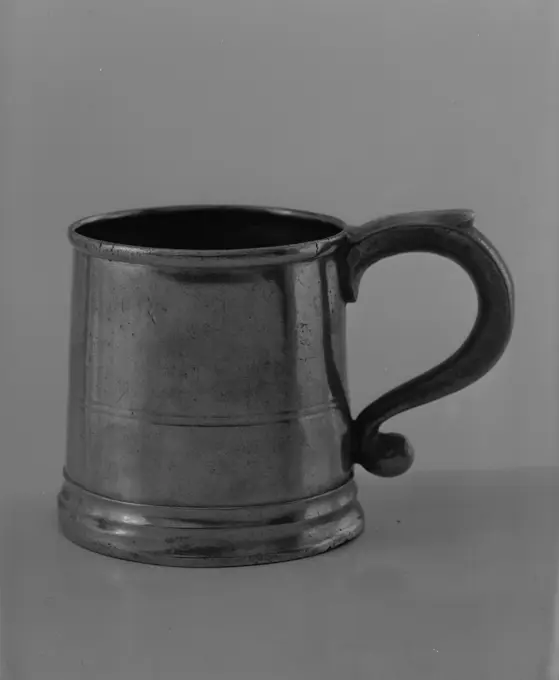
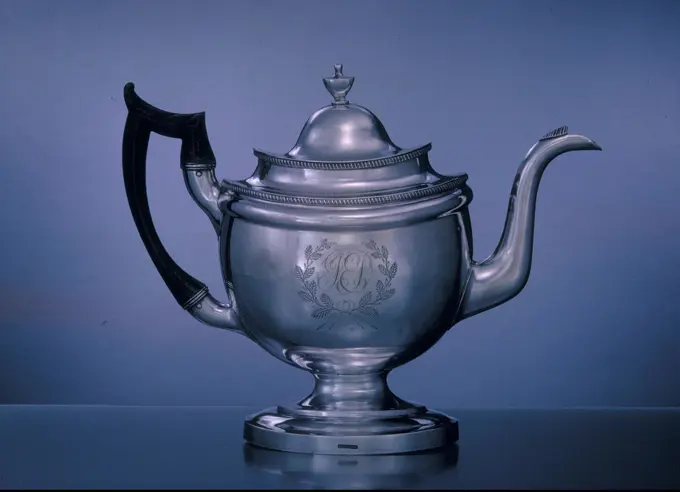
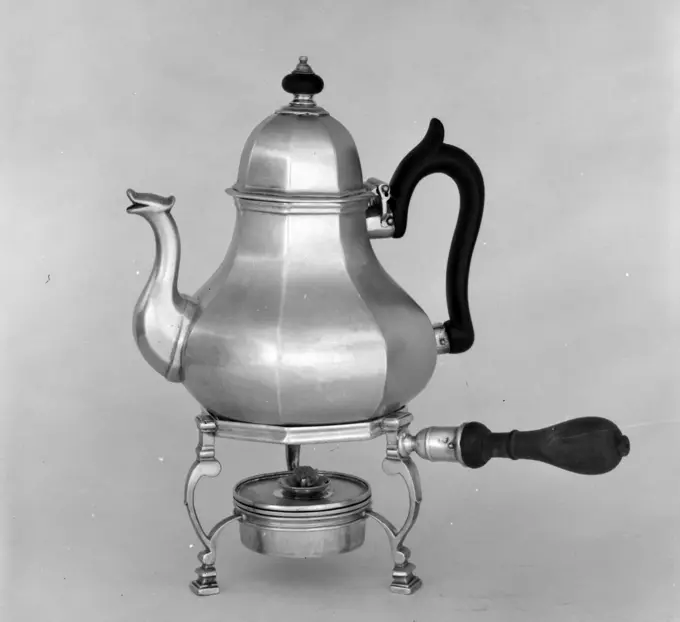
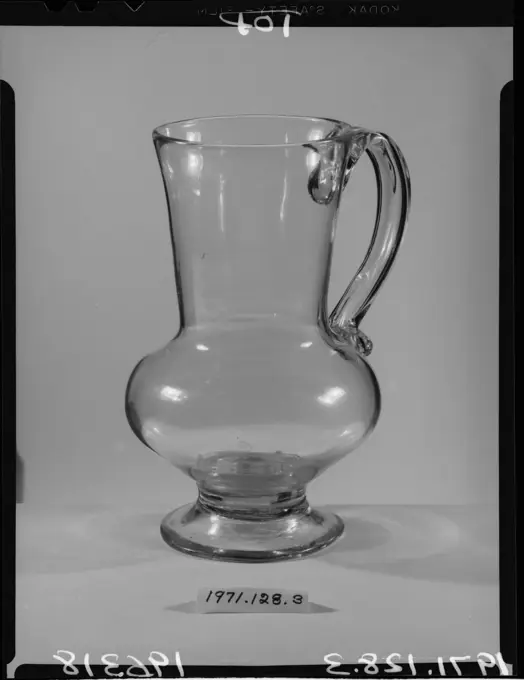
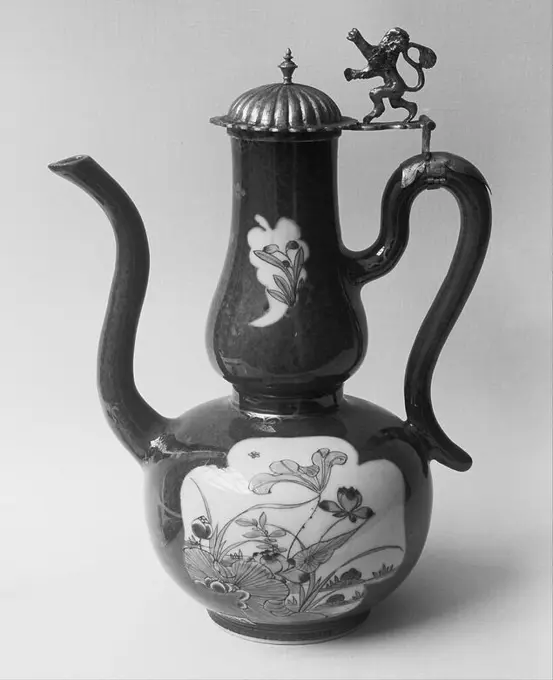
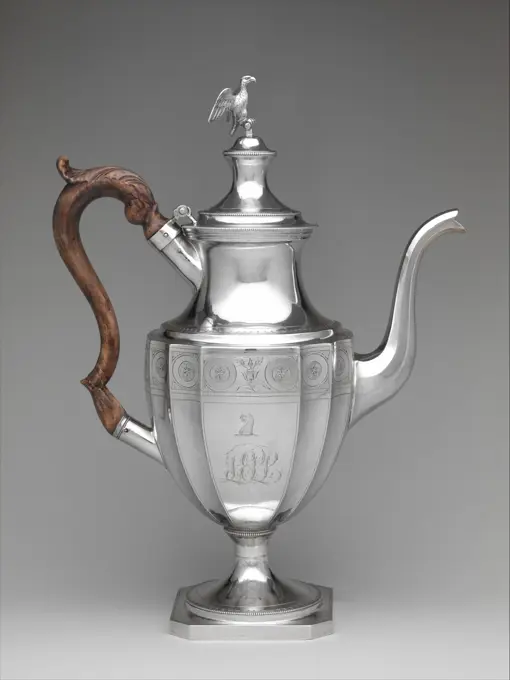
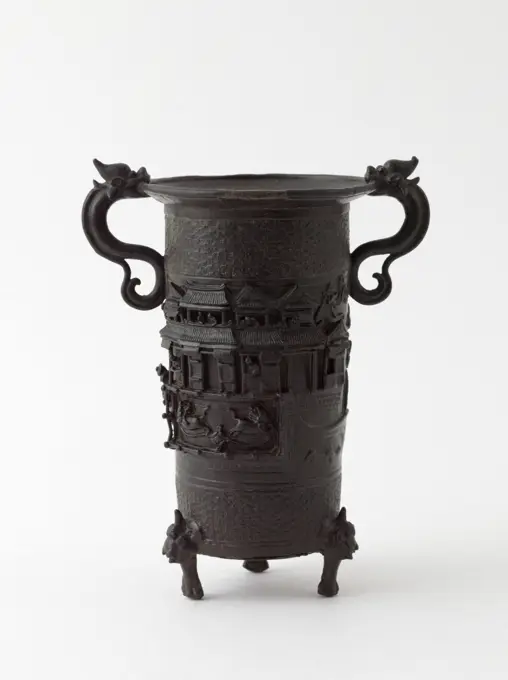
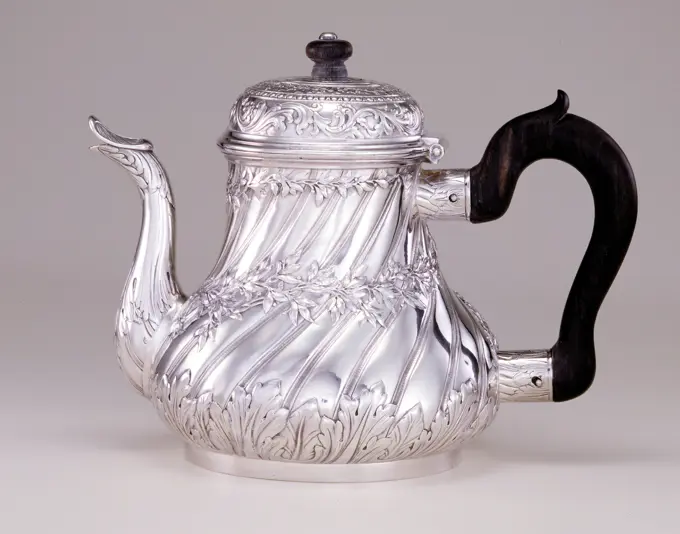
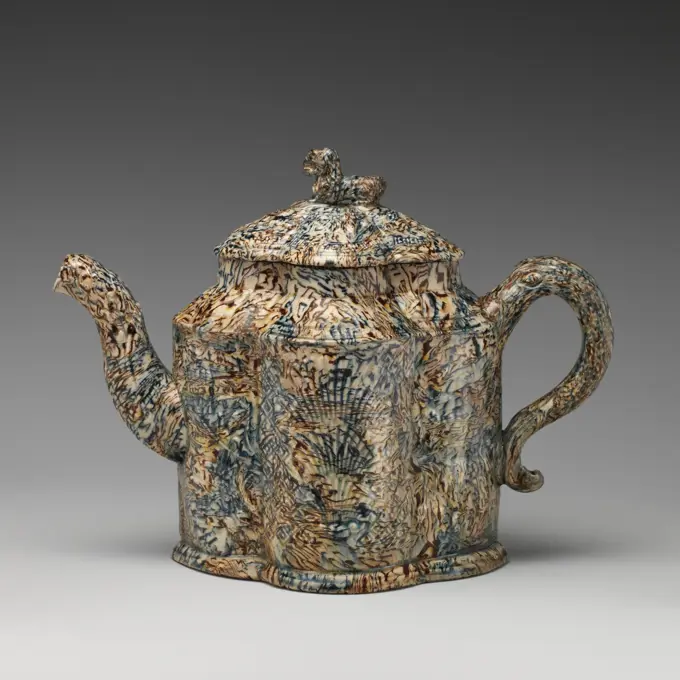
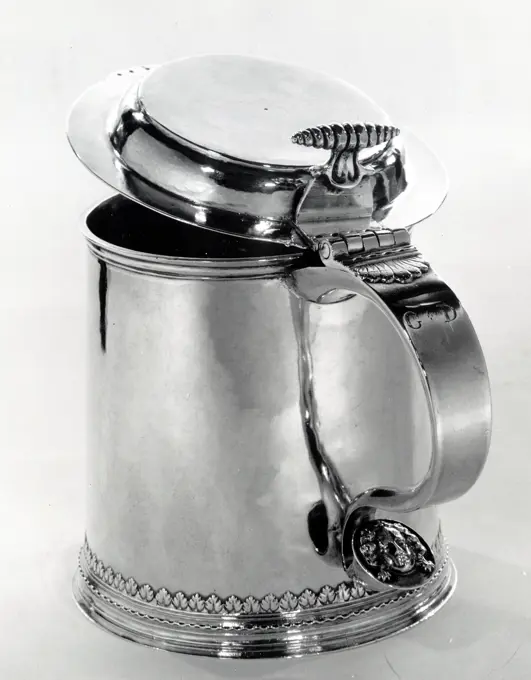
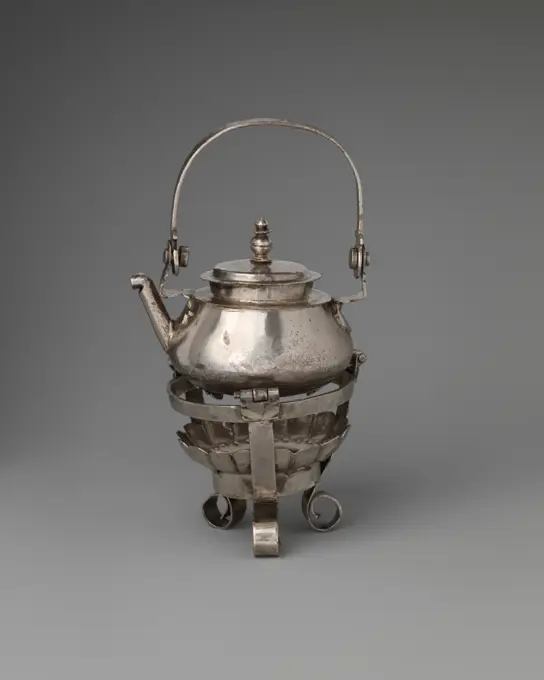
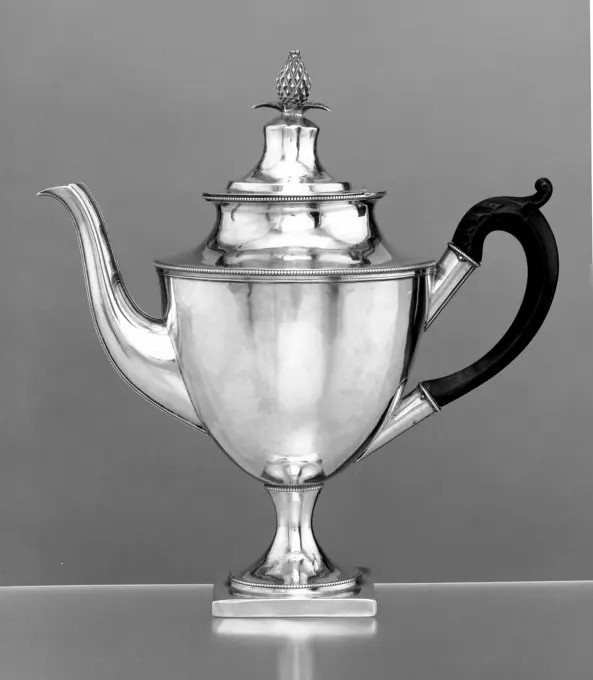
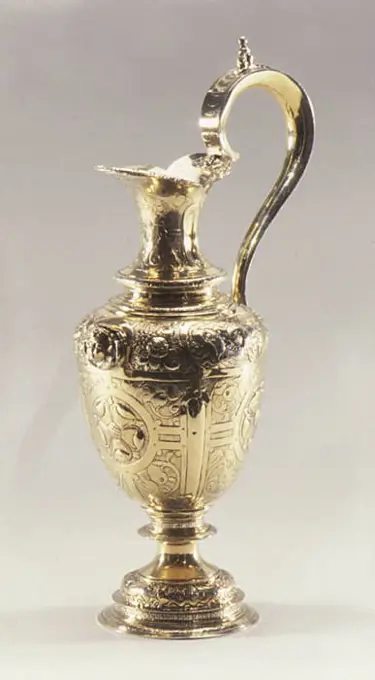
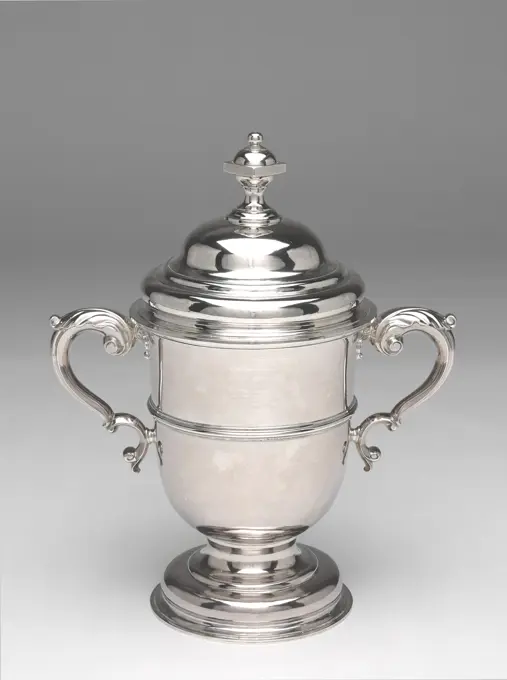
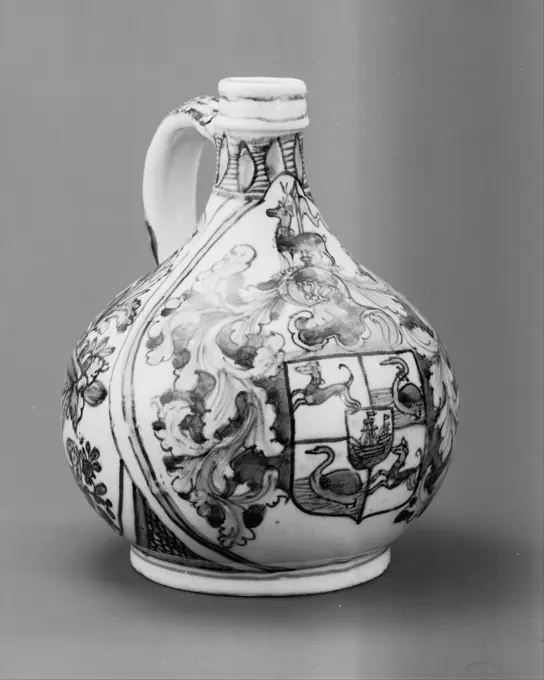
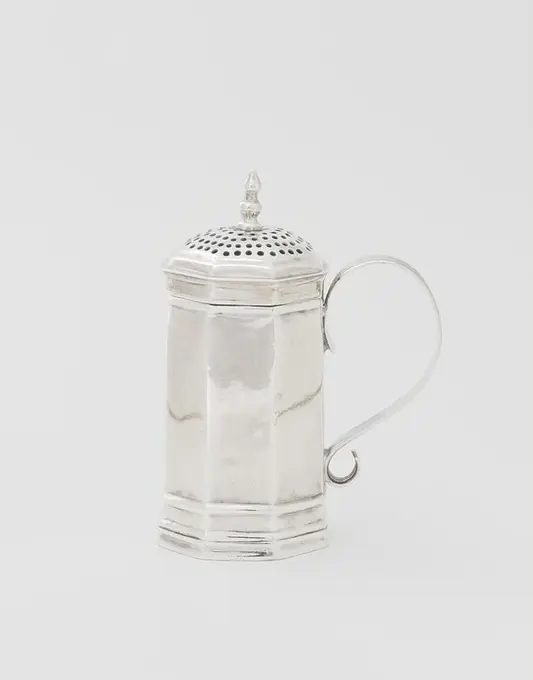
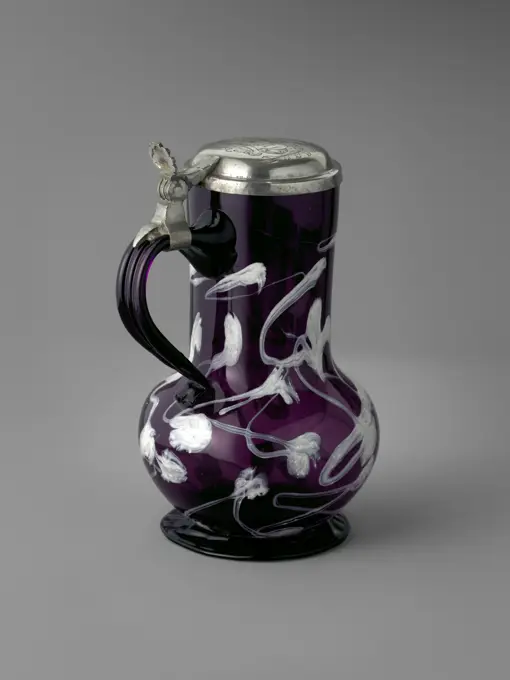
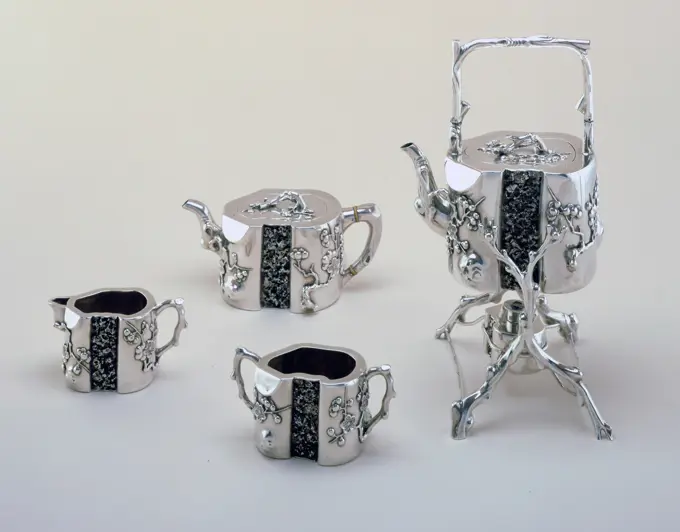
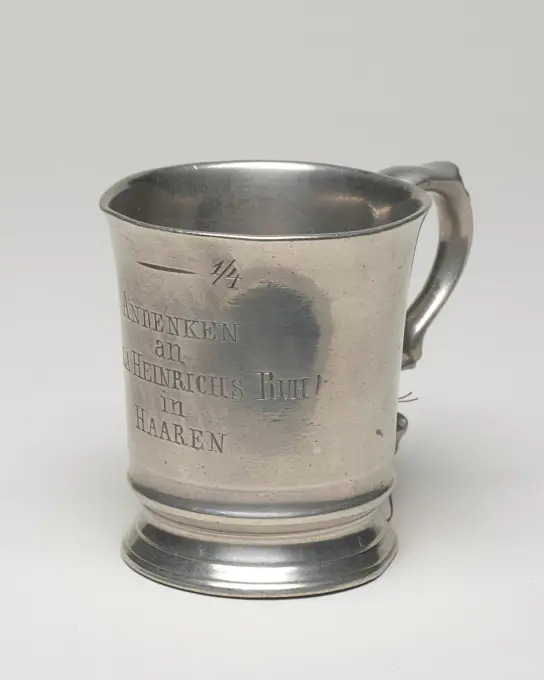
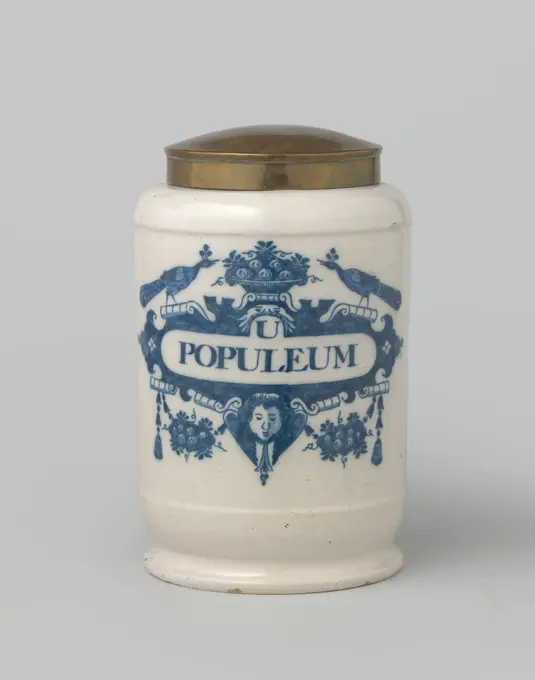
Tankard 1775-95 Peter Young. Tankard 8248Mug 1822-40 Daniel Curtiss. Mug. American. 1822-40. Pewter. Made in Albany, New York, United StatesSugarBowl.   Maker: William Garret Forbes, American, 1751-1840Chinesische Weinkanne aus dem frühen 18. Jahrhundert - Famille Verte Porzellan - antik Antique Chinese wine pot, early 18th century, featuring Famille Verte enamels on a hexagonal form with dragon handle and spout. Rich in historical and artistic detail. LicenseRF Copyright: xZoonar.com/GallóxGusztávx 23406712Etrog Container (Denmark); silverTeaset.   Maker: John McMullin, American, 1765-1843Teapot - "Wadsworth Tower". Dated: c. 1936. Dimensions: overall: 20.3 x 25.4 cm (8 x 10 in.) Original IAD Object: 6 1/2" high. Medium: black and white photograph. Museum: National Gallery of Art, Washington DC. Author: Helmut Hiatt.Flowerpot with representation of Bacchus, Silenus and three Bacchantes, Anonymous, c. 1680 - c. 1720 Lead flower vase in classic urn shape with two S-shaped ears on either side in the form of a hippocamp. The vase is built on a round base with acanthus leaves, a nodus consisting of a bayer wreath and a lobed edge that supports the vase body. The body is made up of an edge of acanthus leaves, a laurel wreath, a wide frieze with an identical bacchic representation on either side with a drunken silen, supported by a young bacchantes and with three bacchans. Above this Frisian a narrower edge with 'Egg and Dart' relief and a changed edge of symmetrical acanthus leaves at the end. The vase has a loose, zinc inner bucket. Netherlands lead (metal). zinc casting Lead flower vase in classic urn shape with two S-shaped ears on either side in the form of a hippocamp. The vase is built on a round base with acanthus leaves, a nodus consisting of a bayer wreath and a lobed edge that supports the vasPitcher with cover late 18th century Chinese, probably for American market. Pitcher with cover 194624Teapot with lamp and lampstand 1707 and 1713 Jonathan Rand. Teapot with lamp and lampstand. British, London. 1707 and 1713. Silver. Metalwork-SilverMug 1770-1800 American. Mug. American. 1770-1800. Free-blown lead glass. Made in United StatesM. Fray, Jug and Cover, 1838, silver.Maker Unknown, Two-handled Cup commemorating William Wilberforce and the abolition of slavery in Britain, c. 1870, lead-glazed earthenware.Ewer. Culture: China. Dimensions: H. 8 1/4 in. (21 cm). Date: late 17th-early 18th century. Museum: Metropolitan Museum of Art, New York, USA.Coffeepot ca. 1800 Attributed to Christian Wiltberger American This handsome tea and coffee service (1980.503.1--.4), although unmarked, has been attributed to the Philadelphia silversmith Christian Wiltberger on the basis of style. Stately and dignified, with its fluted forms and generous proportions, it represents the fully matured Neoclassical style. The service belonged to Eleanor Parke (Nelly) Custis (1779-1852), granddaughter of Martha Washington, who married George Washington's nephew Lawrence Lewis (1767-1839) on February 22, 1799. Family tradition holds that the service was a gift from General Lafayette and his son, who were close friends of the family. In addition to the matching bands of bright-cut ornament, each piece is engraved with the Lewis crest and with the script monogram "LEPL" for Lawrence and Eleanor Parke Lewis. In place of the customary urn or flame-shaped finial, cast eagles surmount three of the pieces, especially appropriate for America's first family.. CoffeTripod cylindrical pot. Fixed lateral handles in the shape of a dragon. On the paunch, landscape decor with horsemen on one side and palaces architectures on the other. Bronze. China. Paris, Cernuschi museum. 70002-12 Anse, Chinese art, bronze, extended shape, decorative motif, foot, relief, tripod vaseA mug with seasons staff; Petrus, Andreas (fl. Ca 1629-1630); 1630-1635 (1630-00-00-1635-00-00);Cupid (mitol.), Bachus (Mitol.), Ceres (Mitol.), Platoon (Mitol.), Venus (Mitol.), Seasons (Personification), Purchase (provenance)Gabriel Tillet, Teapot, 1754-56, silver and wood.Tankard 1668-69 I. N., London. Tankard 204921Tankard c 1783-1794 Philadelphia . John OwenTeapot 19th century China. Teapot. China. 19th century. Red stoneware (Yixing ware). CeramicsPrehistory, Bulgaria, Bronze Age. Thracian civilization. Treasures of Valci Tran. Cup with gold handle.Teapot ca. 1750 British, Staffordshire Listen to experts illuminate this artwork's story Listen Play or pause #407. Teapots Supported by Bloomberg Philanthropies We're sorry, the transcript for this audio track is not available at this time. We are working to make it available as soon as possible.. Teapot. British, Staffordshire. ca. 1750. Agateware (glazed earthenware). Ceramics-PotteryTankard.   Maker: Jacobus van der Spiegel, American, 1668-1708Miniature kettle with cover and brazier 1713-14 Possibly by George Manjoy British. Miniature kettle with cover and brazier. British, London. 1713-14. Silver. Metalwork-Silver-MiniatureTeapot.  Artist: Samuel Richards, Jr., active ca. 1791 - 1818Ewer 1610-11 Symon Owen It is believed that this ewer and basin, which bear the mark of the prominent London goldsmith Symon Owen, were made for Henry Frederick, prince of Wales (1594-1612) and eldest son of James I of England. While ewers and their accompanying basins were originally intended for the washing of hands at the dining table, they were also employed as part of lavish displays of silver on sideboards or buffets in princely or aristocratic houses.. Ewer 204939CreamPitcherCoffee filter jug, round, with vertically ribbed edges, Theodorus Gerardus Bentvelt, 1826 The jug has a slightly roared body above which there is a low, straight part. Just above the bottom of the pot and along the top and top of the straight part, vertically ribbed edges, flanked by narrow profiles, have been applied. The pot has an S-shaped bent spout and an ebbony with silverfarts; The one at the top is round and on either side decorated with a rosette. The vaulted neck of the pot rejuvenates to a large opening, in which the slightly broadening of the Cylindrian attachment fits. The attachment has a bottom with a large number of very small holes. It is equipped with a separate filter, consisting of a bottom with larger holes, surrounded by a straight up -standing wall and provided with a conical handle that is crowned by a smooth spherical button. The wall of the attachment is articulated in the same way as that of the pot. The faintly curved lid is crowned by a button in the form oPotty ĆmielówCovered Cup c 1764-1775 New York City. Period accounts refer to this form as either a Bishop or a Grace cup. Bishop was a drink made with wine, lemon, and sugar mixed with spiced port. The term Grace refers to the mealtime prayer, after which the cup was passed around the table. The cupís form is a later interpretation of the 17th-century caudle cup and the early-18th-century covered cup, examples of which are on display in the galleries.. Silver . Myer MyersHobnail Cruet after 1886 Probably Hobbs, Brockunier and Company. Hobnail Cruet. American. after 1886. Pressed colorless and opaque cranberry glass. Made in Wheeling, West Virginia, United StatesBottle 17th century Portuguese, Lisbon. Bottle 207983Pitcher 1830-70 American. Pitcher. American. 1830-70. Parian porcelain. Probably made in Bennington, Vermont, United Statesancient greek wash basin and jug over white wallyellow metallic teapot isolated on white background. 3d illustrationPepper Box. Moody Russell; American, 1694-1761; Barnstable, Massachusetts. Date: 1725-1750. Dimensions: 7.6 × 5.1 × 2.5 cm (3 5/8 × 2 1/2 × 1 1/2 in.); 66.9 grams. Silver. Origin: Barnstable. Museum: The Chicago Art Institute, Chicago, USA.Watering can -Tankard ca. 1740-1760 George Fielding. Tankard 8199Tankard 1716 probably German The shape of this tankard, with its bulbous bottom and flared foot, is typical of German pewter and stoneware vessels. The lid features a crudely engraved symbol of what appears to be carpenter's tools, suggesting that the piece may have served as a guild vessel, possibly for a carpenters's association. Its charm derives from the striking contrast between the rough-hewn pewter mounts and the calligraphic trails of white glass decorating the transparent purple body.. Tankard. probably German. 1716. Glass, pewter. GlassCoffee or Tea Service. Webster Manufacturing Company; American, 1859-1873; Brooklyn, N.Y. Date: 1870-1873. Dimensions: Coffeepot: h. 29.8 cm (11 3/4 in.); Sugar basin: h. 22.9 cm (9 in.); Milk pot: h. 5.3 cm (6 in.). Silver. Origin: Brooklyn. Museum: The Chicago Art Institute, Chicago, USA. Author: E. G. Webster and Son.Crystals engraved bowl with volutes, from the Louvre.Tankard.   Maker: Paul Revere, Sr., 1702-1754Sugar Bowl ca. 1810 American. Sugar Bowl 7983Jug or coveredcarafePitcherCup, c. 1800. Austria, Vienna, early 19th century. Porcelain; overall: 5.9 x 6.1 cm (2 5/16 x 2 3/8 in.).JUEGO TOCADOR DE FERNANDO VII. Location: MUSEO DEL ROMANTICISMO-OBJETOS VARIOS. MADRID. SPANIEN.Creamer, from a Tea Service, c. 1880, Wang Hinh Jo and Co., Hong Kong, 2 3/4 x 5 1/2 in. (7 x 13.97 cm), Silver, China, 19th centuryMug, 19th century, 4 1/2 x 3 3/8 x 3 1/8 in. (11.43 x 8.57 x 7.94 cm), Pewter, Netherlands, 19th centuryDelft pharmacist's spot Populaum, Anonymous, c. 1400 - c. 1950 Delft cylinder -shaped pharmacist's spot with a cartouche painted in blue underly glaze with name medicine 'above which the letter' U ', held by two peacocks and crowned by fruit basket. Along the bottom two fruit garlands. Delft pot: earthenware. deksel: copper (metal) Delft cylinder -shaped pharmacist's spot with a cartouche painted in blue underly glaze with name medicine 'above which the letter' U ', held by two peacocks and crowned by fruit basket. Along the bottom two fruit garlands. Delft pot: earthenware. deksel: copper (metal)Cup and Saucer. Made by W.T. Copeland & Sons; Stoke, England, c. 1847-1970; Retailed by J.M. Shaw & Co.; American. c. 1870s; New York. Date: 1876. Dimensions: Cup: 6.5 × 7.8 cm (2 9/16 × 3 1/16 in.); saucer: diam. (5 3/8 in.). Porcelain. Origin: England. Museum: The Chicago Art Institute, Chicago, USA.