Antique Textile Art

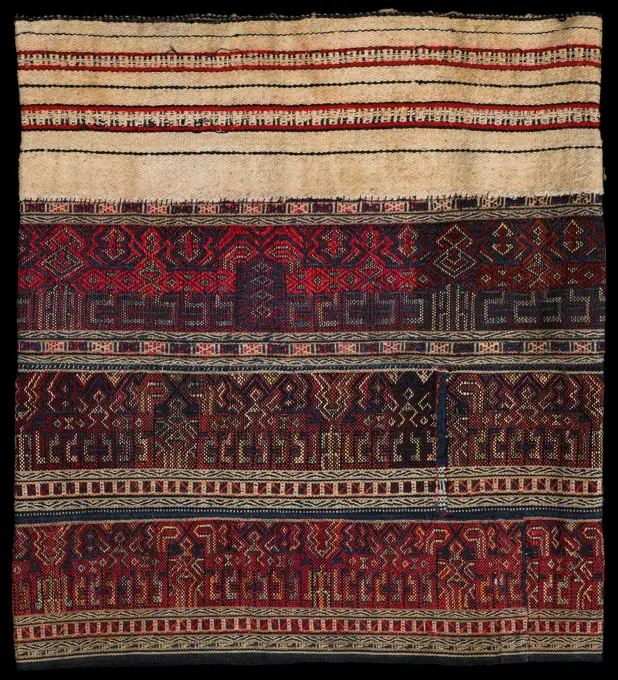
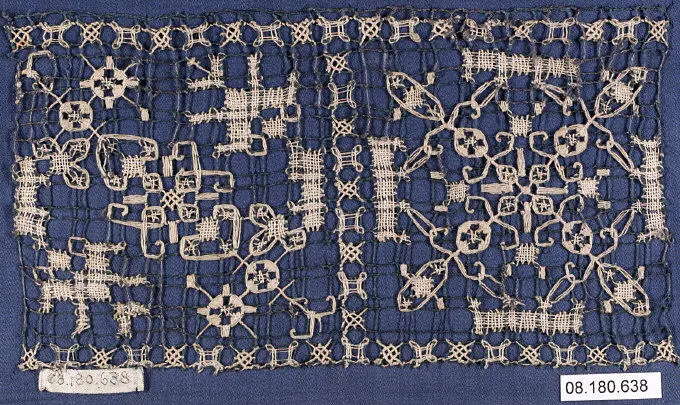
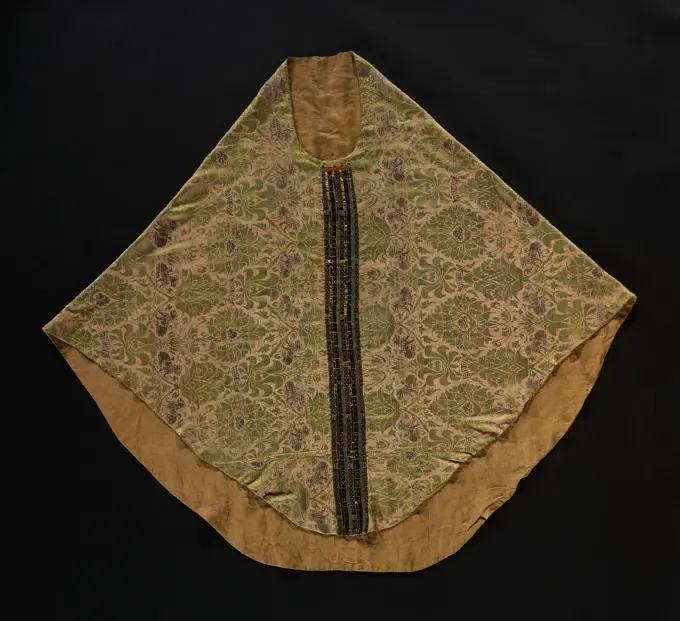
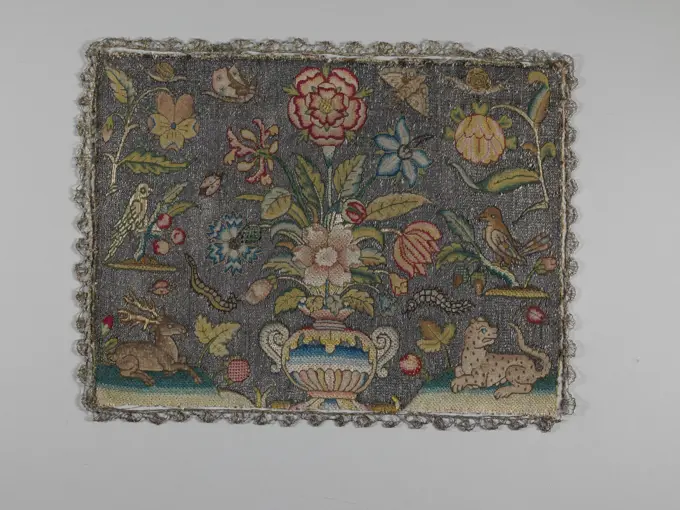
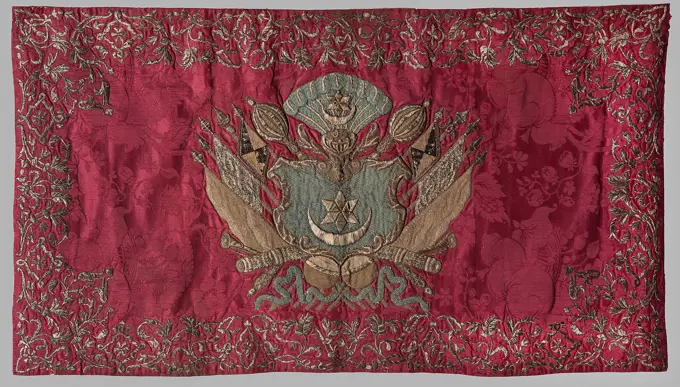
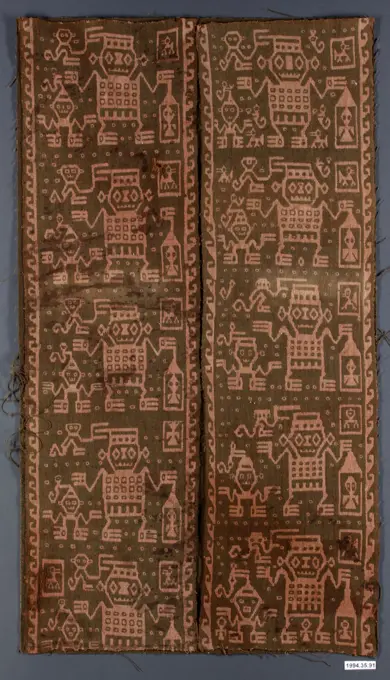
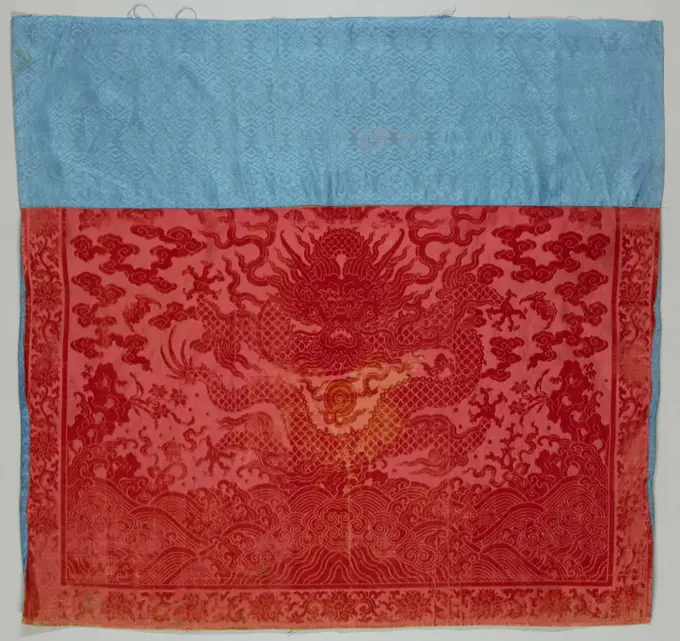
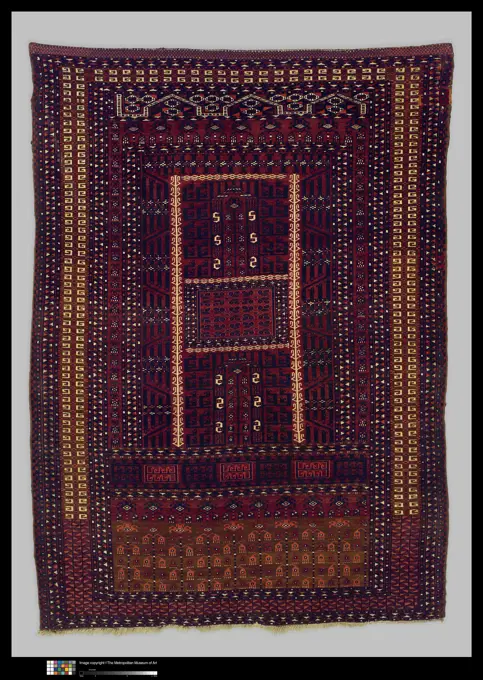
A collection of intricate textiles including 18th-century carpets, embroidered linen, and silk fragments, showcasing rich colors and historical patterns.

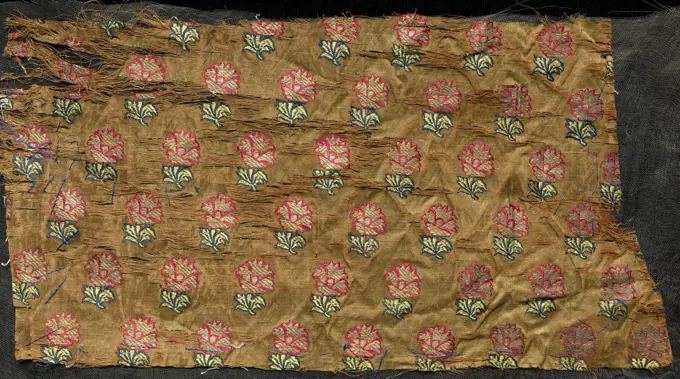
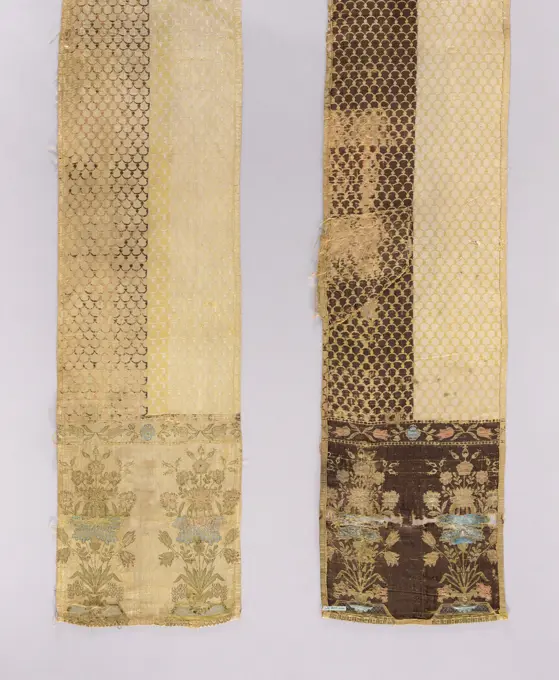
Fragment, Medium: silk Technique: woven, Scrolling vine and large flowerheads on a pink-orange ground., Japan, 17th-18th century, woven textiles, Fragment
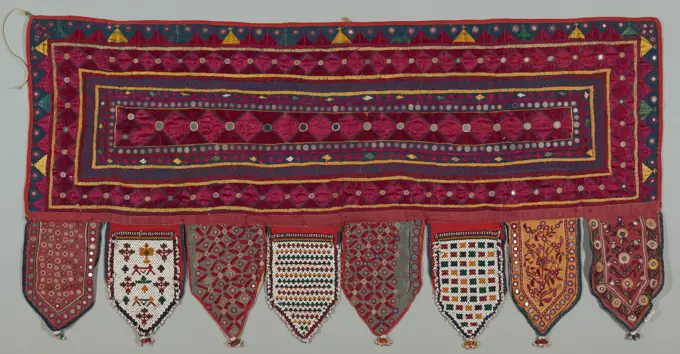
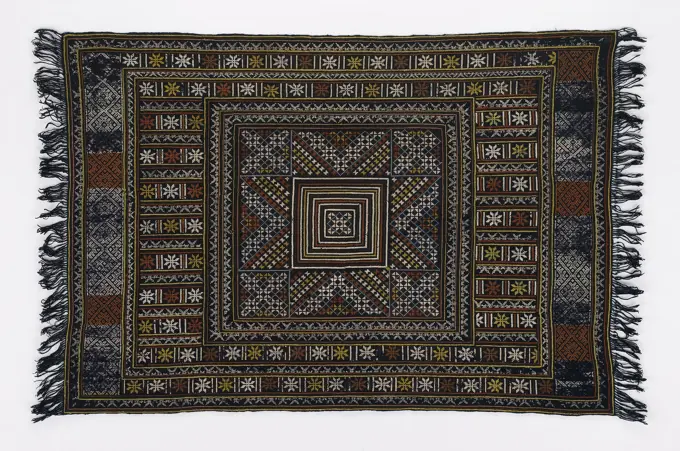
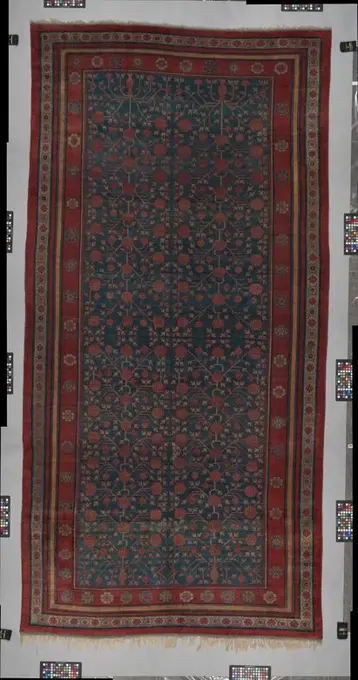
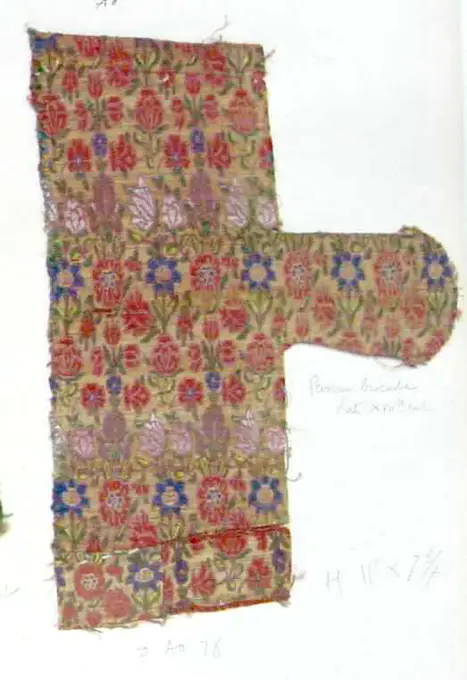
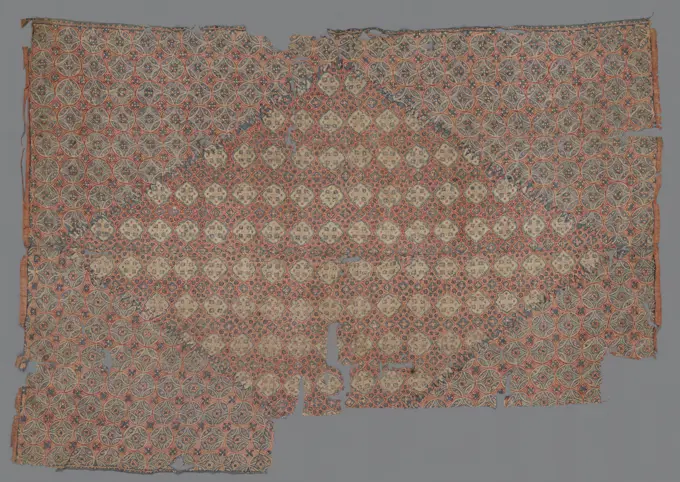
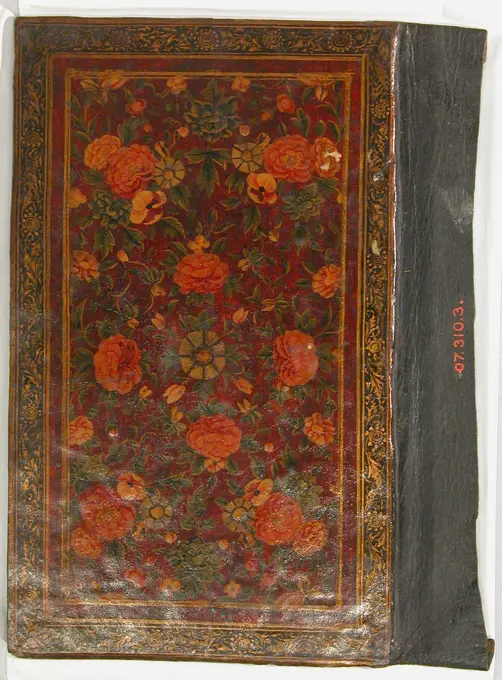
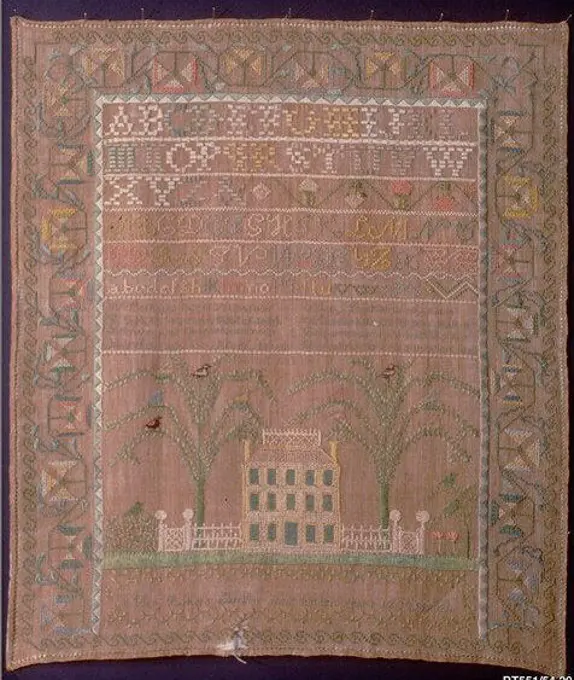
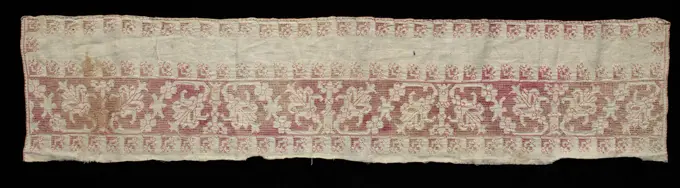
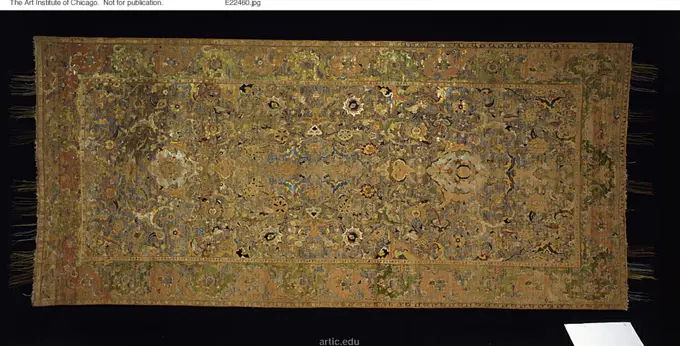
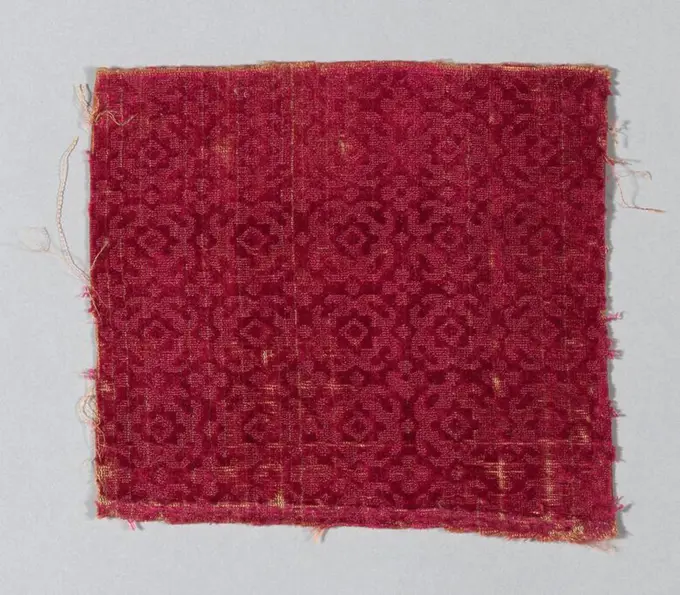
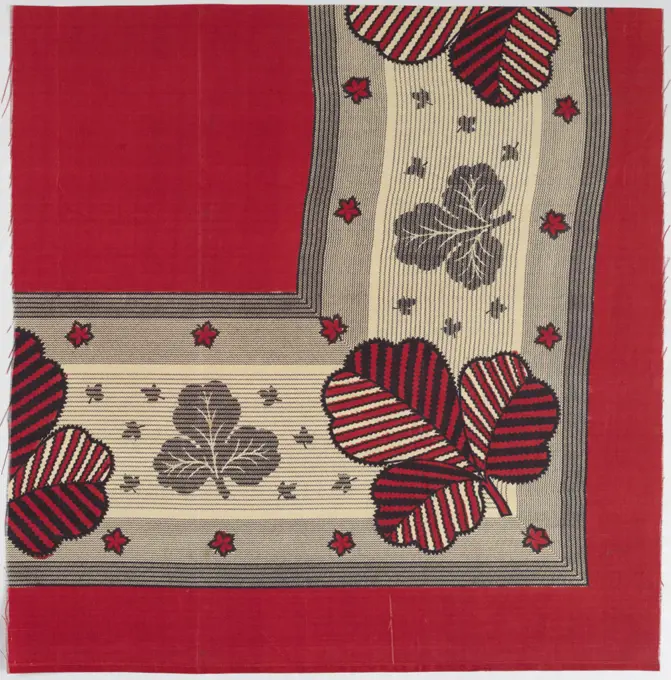
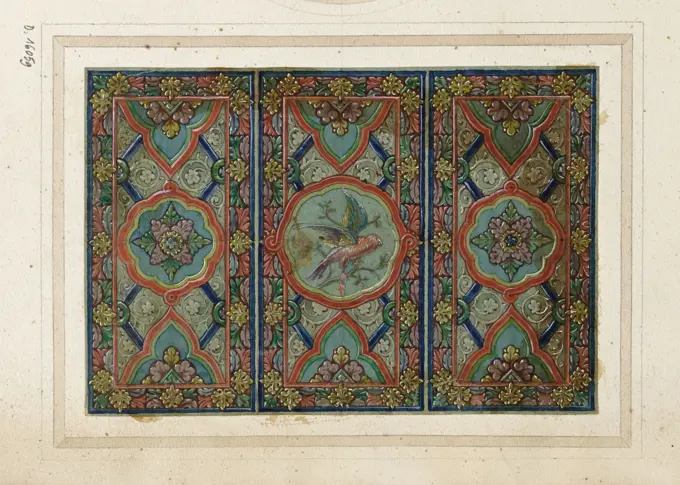
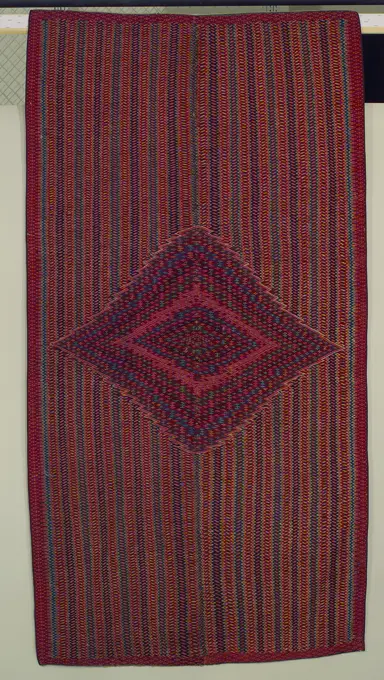
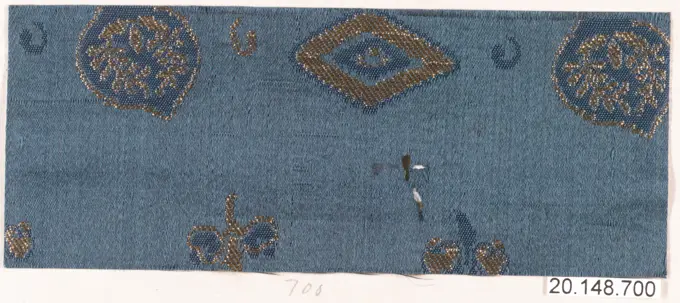
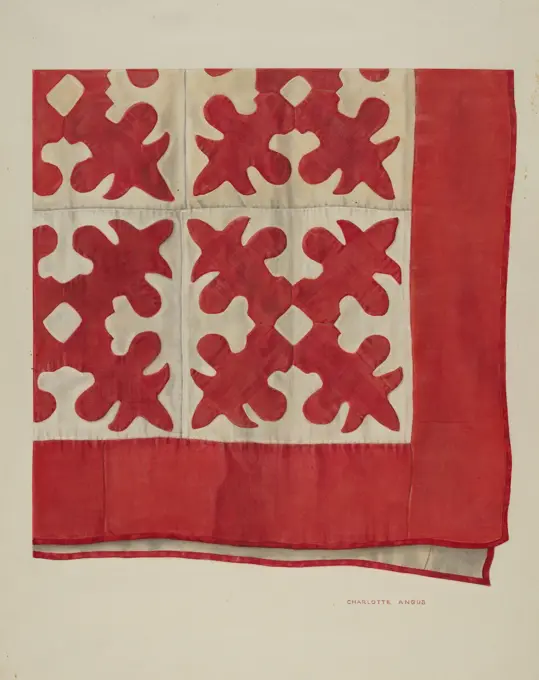
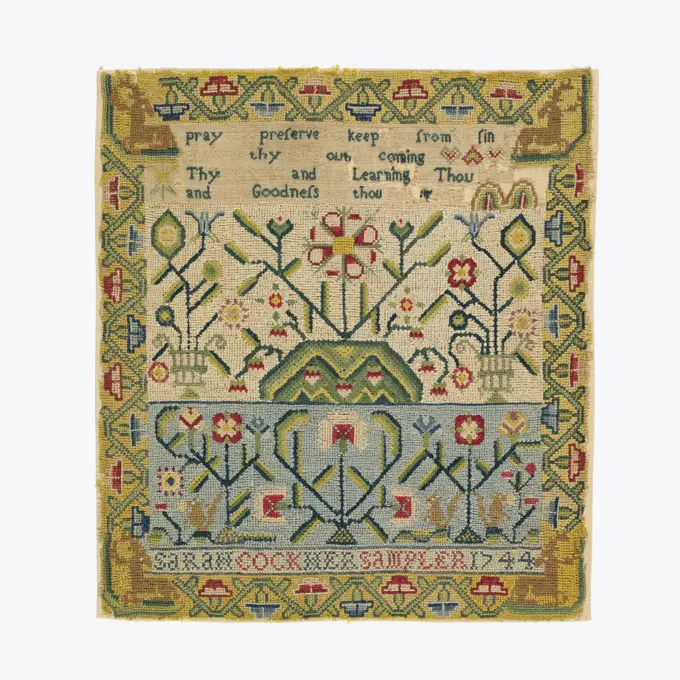
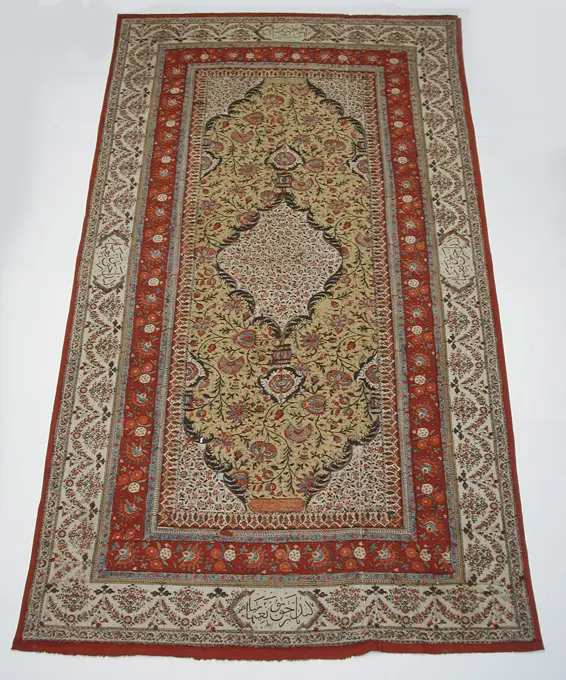
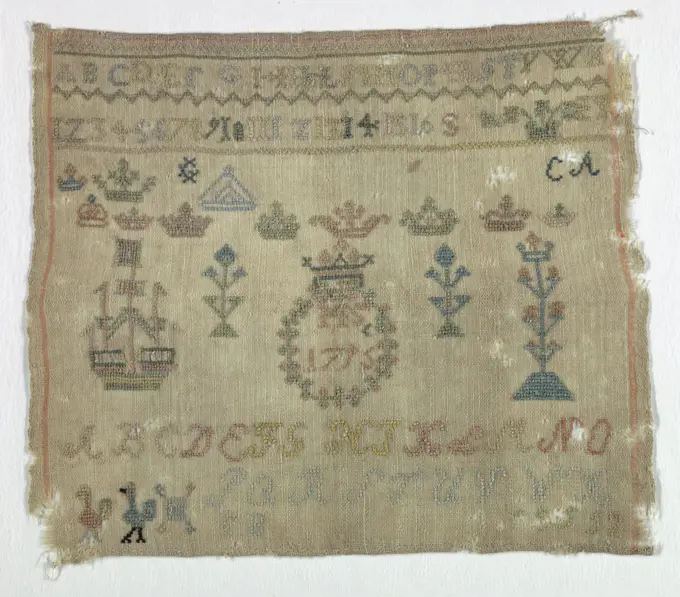
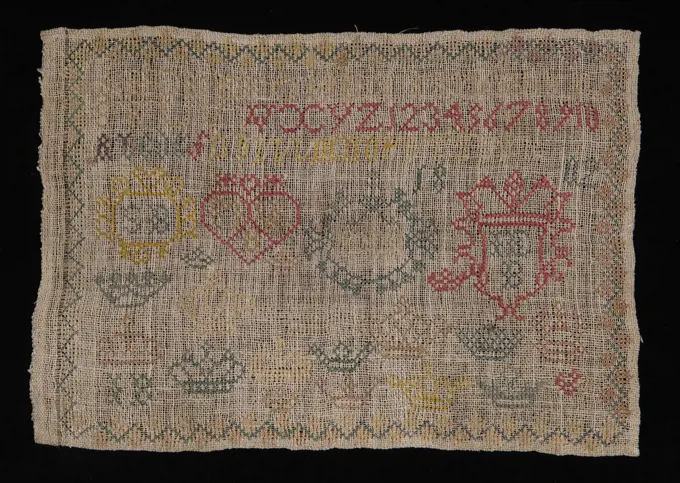
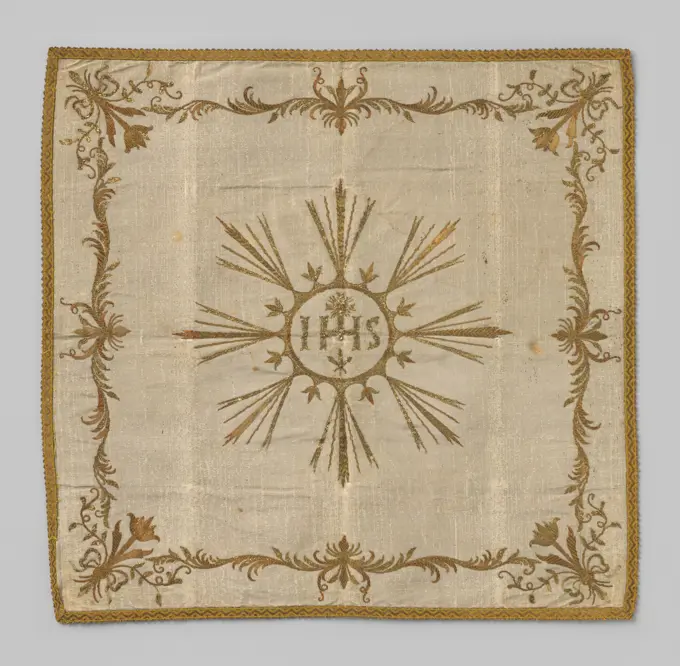
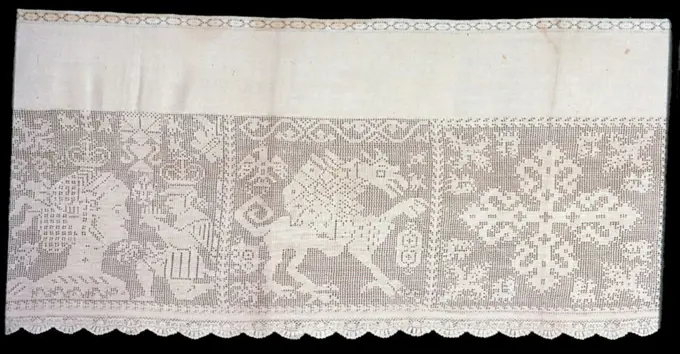
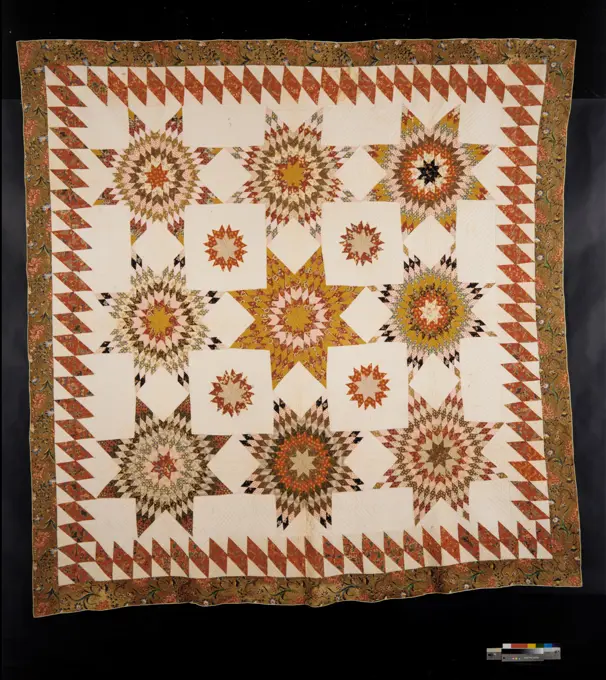
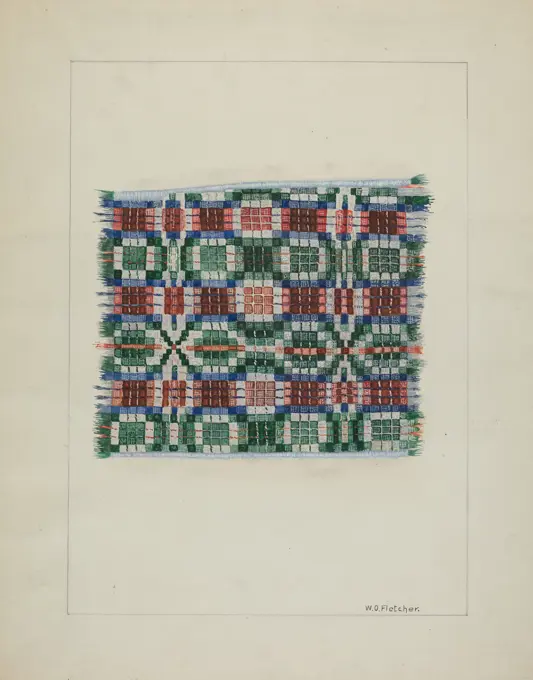
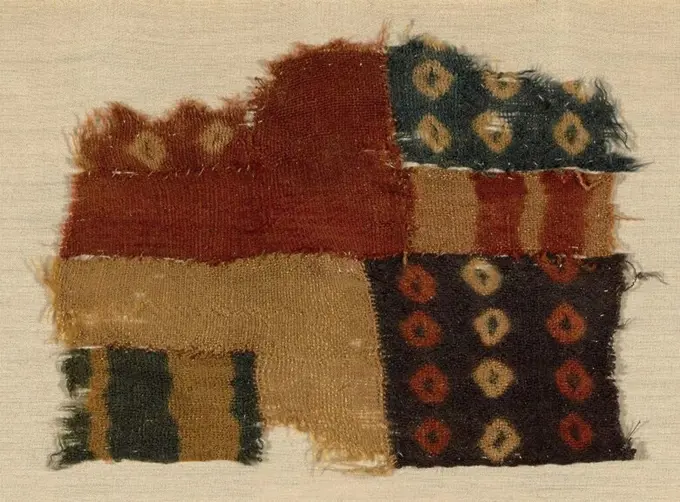
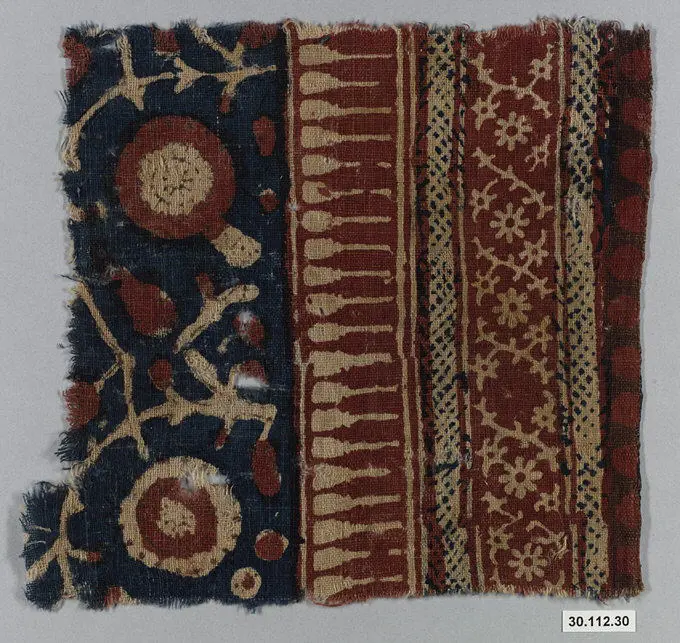
Textile Fragment 16th century The intertwining floriated tendrils and the elongated ogival borders of this textile fragment were produced by block-printing methods. Boldly decorated, it also features painted designs at the center which form curving stems of the red and white flower petals. The vibrancy of the red dye comes from Indian mulberry, which was commonly used in dye practices associated with Gujarat. The stylistic motifs seen in this textiles ornamentation are reminiscent of those in Jain manuscript painting.The bold presence and vibrancy of the dyes reinforces the importance of western India as a prominent producer of cotton textiles. Found in Fustat (known as Old Cairo), this textile serves as evidence of the Indian Ocean maritime trade and travel relations between both these areas and highlights their transregional and cross-cultural connections during the sixteenth century.. Textile Fragment 448524Hanging (India); silk, cotton, mirrored glass, glass beadsBand first half 19th century Hungarian (Slovakia). Band 217264Fragment, Medium: silk, metallic Technique: woven, Palmettes within ogival strapwork, Near East, 16th century, woven textiles, FragmentConciliate belt; Manufaktura Szczepan Filsjean (Kobyłka; Pasów Factory; 1787-1794); 1787-1794 (1787-00-00-1794-00-00);Waist Wrapper(Sabuk)Scarf, from a seven-piece costume, mid 20th century, 20 3/4 x 30 in. (52.71 x 76.2 cm) (without fringe), Cotton, China, 20th centuryBand (from Woman's Trousers or Robe) Made 1875-1900 China. .Border, Block-printed and flocked on machine-made paper with polished ground, Passementerie or imitation fancy gimp border. Threads, in two shades of deep red, are gathered together at regular intervals with blue beads. Narrow bands of blue stitching near top and bottom edges. Printed in red flock and blue on white satin ground., H#92, France, 1835-55, Wallcoverings, BorderSilk Fragment, 13th century. Spain, Islamic period or Mudejar, 13th century. Lampas weave, brocaded; silk and gold thread; overall: 68.6 x 64.4 cm (27 x 25 3/8 in.).Carpet. Dimensions: H. 174 in. (442 cm)W. 83 in. (210.8 cm). Date: late 18th-early 19th century.Carpets woven in the former silk road settlements of Kashgar, Yarkand, and Khotan, situated at the western end of the Taklamakan Desert, display a mixture of patterns and styles. Chinese influence can be seen in the palette-with emphasis on deep red, blue, and yellow-and in some patterns, particularly those of the borders. Field patterns typically draw from Iranian or Central Asian Turkic or even Mughal Indian traditions. The knot type is the asymmetrical knot favored in Iran. This rug bears one of the more popular patterns found in these carpets, the vase and pomegranate design, here arranged in four units repeated to fill the large field. Museum: Metropolitan Museum of Art, New York, USA.Border (France); machine-printed and flocked; 94 x 25 cm (37 x 9 13/16 in.)Textile Fragment 17th-18th century. Textile Fragment 454552Tube skirt, from a two-piece set, 16 3/16 x 14 1/2 in. (41.12 x 36.83 cm), Cotton, silk, ChinaFragment (Iran); silkNetwork 17th century Italian. Network 214988Chasuble. Italy, Lucca, late 14th century. Costumes; ecclesiastical. Silk plain weave with silk supplementary weft patterning bound in plain weave (lampas), with metallic thread discontinuous supplementary weft patterning (brocade) and silk satin with gilt-leather-strip supplementary weft patterning appliquéFragment Made 1600-1650 Italy. Silk, satin weave self-patterned by reversing of faces .Blanket, 78 1/2 x 44 1/2 in. (199.39 x 113.03 cm), Cotton; needlework, ChinaWearing Blanket 1860-70 Navajo. Wearing Blanket 307825Band; linen on silkDrawing, Ghiordes Prayer Rug; Elizabeth A. Nedwill; USAMantle or Hanging. Peru, North Coast, Chimu, 1250-1350. Costumes. Camelid fiber and cotton tapestry weave with spaced warps and weftsTrimming Fragment (France); silkCushion cover second quarter 17th century British. Cushion cover 228999Book Cover, 1800s. India, 19th century. Brocade, "kimkhwab"; silk, cotton, gold thread; overall: 14 x 22.9 cm (5 1/2 x 9 in.).Indian Trade Textile(Sarasa)Textile (Egypt); silk; Warp x Weft: 39.2 x 30.5 cm (15 7/16 in. x 12 in.)Piece 17th century Japan. Piece 71836Piece 18th-19th century Japan. Piece. Japan. 18th-19th century. Silk. Textiles-WovenBookbinding (Jild-i kitab) 19th century. Bookbinding (Jild-i kitab) 445224Embroidered sampler 1805 Mary Parker This alphabet sampler is enlivened by a grand five-bay, three-story house flanked by leafy trees with birds perched on the branches. The delicately stitched balustrade or "widows walk" along the eaves of the roof and the pattern of the pickets in the fence and gates reflect the makers interest in the stylish decorative elements of Federal architecture.. Embroidered sampler 14060Rug. unknown, authorConciliate belt;  1768-1780 (1768-00-00-1780-00-00);Kontusz sash/belt. Pracownia w Kutkorzu, atelierTextile fragments. There were different types of textiles qualities. During the Inca period, the finest was cumbi, made with vicua. Central coast. Late Intermediate Horizon (1000-1450). Peru. Cotton and camelid fiber. Museum of the Americas. Madrid, Spain.Needlepoint (Drawnwork) Lace and Embroidery Band, late 18th-early 19th century. Italy, Sicily, late 18th- early 19th century. Lace, needlepoint: linen; average: 16.5 x 74.4 cm (6 1/2 x 29 5/16 in.).Carpet Made 1601-1625 Iran. Cotton, silk, and gilt-and-silvered-metal-strip-wrapped silk, plain weave variation with supplementary brocading wefts and supplementary wrapping wefts forming cut pile ghrough a technique known as Persian (Sehna) knots; edged with silk, cotton, and gil-metal-strip-wrapped silk, woven and card woven fringe .Scarf, 18th century, 28 x 56 in. (71.12 x 142.24 cm), Embroidered linen, France, 18th centuryFragment, Medium: silk, linen Technique: 7&1 satin damask, Border strip with pattern of flowers showing the linen face of the satin and background of green silk., 17th century, woven textiles, FragmentTowel end, Medium: linen Technique: plain weave embroidered with deflected element work, Towel end with a wide band showing men on horseback alternating with a styled vase form with side scrolls. Above is a narrow band with the year 1821. At bottom is a narrow band with geometric decoration and braided fringe., Denmark, 1821, embroidery & stitching, Towel endTextileRebozo, early 20th century, 71 x 32 1/4 in. (180.34 x 81.92 cm) (without trim or fringe), Cotton, silk; weft resist dye (jaspe) ikat, Guatemala, 20th centuryDesign for a carpet, anonymous, c. 1854 - c. 1864  Manufacturer: Deventeramsterdam paper. gouache (paint) brush  Manufacturer: Deventeramsterdam paper. gouache (paint) brushPillow Case, 19th century, L.18 x W.20 in., wool, cotton, 19th centuryHandkerchief third quarter 19th century Philippine. Handkerchief 169865Fragment. Italy. Date: 1775-1800. Dimensions: 13.5 x 14.5 cm (5 3/4 x 5 in.). Cisele solid twill velvet. Origin: Italy. Museum: The Chicago Art Institute, Chicago, USA.Textile; silk, woolScarf sample, Medium: silk Technique: printed on plain weave, Quarter of a printed scarf in red and black. Shows field of plain red and border of shamrocks and small leaves., France, mid-19th century, printed, dyed & painted textiles, Scarf sampleShawl 1860-65 British. Shawl 104826Welum;  beginning of the 18th century (1701-00-00-1710-00-00);Trimming from embroidered doily unknownFragment (Japan)Album # 2; Stained glass project: ornament, medion with a parrot Gsell-Laurent workshop. Album # 2; Stained glass project: Ornament, medallion with a parrot. Watercolor, Gouache.Panel, 17th century, 47 x 28 in. (119.38 x 71.12 cm), Velvet; needlework, Spain, 17th centurySash (PaithaniPatka)Piece 18th century Japan. Piece. Japan. 18th century. Silk / Compound weave. Edo period (1615-1868). Textiles-WovenCushion Cover Made 1575-1625 Turkey. Silk, cotton, ìsilverî metal strips wrapped around a silk core, warp-float faced satin weave with ìsilverî supplementary metal-wrapped silk brocading wefts, supplementary binding wefts, and supplementary warps forming cut and voided velvet .Serape 1830-1860 Saltillo During the second half of the eighteenth and first half of the nineteenth century, a number of weaving centers flourished in northern Mexico that produced brilliantly colored, finely woven wearing blankets, or serapes, for the affluent clientele of prosperous mining communities and sprawling cattle and sheep ranches. Saltillo in the state of Coahuila, more than 500 miles north of Mexico City, was the most famous of these textile manufacturing towns; its name gradually become associated with any fine blanket of the region, although other towns, including San Miguel Allende, Guanajuato, and San Luis Potosí, also produced good quality serapes.The origin of the serape as a distinctive item of outer clothing for men is unclear. Not indigenous to Mexico, it is nonetheless part of the textile tradition that developed in Mexico during the colonial period. Both native American and European elements went into it. In Aztec Mexico, a smaller rectangular manta, or man's wePiece 17th century Japan. Piece 71696Jacket, 17 1/4 x 46 3/4 in. (43.82 x 118.75 cm), Cotton, shells, metal, ChinaPashmina Carpet with Gateway-and-Millefleur Pattern second half 18th century The area of northern India and eastern Pakistan was an important region for carpet weaving during the late seventeenth and eighteenth centuries. Millefleur carpets and some later flower-style pieces were manufactured there. They were usually made with fine knots and expensive pashmina wool. The type shown here was designed as a pair of cypress trees on either side under an arch, symbolizing the gateway to a flower-filled paradise. This example is distinguished by its geometric treatment of the millefleur pattern and a central vase from which the motifs grow.. Pashmina Carpet with Gateway-and-Millefleur Pattern 452192Bag, 19th century, 9 1/2 x 7 1/4 in. (24.13 x 18.42 cm), Cotton; passementerie, Syria, 19th centuryCover sheet Saddle bag decorated with raster motif; Triple edge with rosette flowers. Cover magazine of a saddle bag, Jaffi-Kurdistan-Mosul, of which the midfield is divided into windows through a grid. Triple edge whose middle is decorated with rectangles within which rosette flowers. At the bottom of an embroidered beard.Coat of combat cat;  1. PO. 18th century (1701-00-00-1750-00-00);Leliwa (coat of arms), Sieniawski, Adam Mikołaj (Wielki Hetman Cor. - 1666-1726), embroidery, Varia, Weeksil, purchase (provenance)Sash Fragments 14th-early 16th century Peruvian. Sash Fragments. Peruvian. 14th-early 16th century. Cotton. Peru. Textiles-WovenPanels, Technique: velvet, cut and voided, Four vertical panels of red voided velvet in a design of dragon, clouds, bats, waves, spray flaming jewels, etc. Ground of satin and lined with blue figured silk., China, 19th century, woven textiles, PanelsTowel End; linenThrone Back Cushion Cover, late 18th century, H.33-1/4 x W.25 in., silk, China, 18th centuryTent Door Hanging (Ensi) first half 19th century Admired for their deep, rich hues and the strength of their design, the textile arts of the Turkmen weavers combine a stark, dramatic beauty with absolute functionality. The seasonal migrations of the Turkmen tribes require that their every possessioneven their homesbe collapsible and portable. This large, knotted-pile textile, similar in most respects to a carpet, likely served instead to cover the entrance to a Turkmen tent. Such tent door hangings, called ensi, with their thick, densely knotted pile, not only protected the family from the outside elements, but also added further color and comfort to an interior living space already replete with soft carpets, cushions, and laden storage bags.. Tent Door Hanging (Ensi) 447501Panel Made 1775-1800 China. Center silk and gold-leaf-over-lacquered-paper-strip-wrapped silk, slit tapestry weave (kossu); painted; inner tape silk and gold-leaf-over-lacquered-paper-strip-wrapped cotton, plain weave with supplementary patterning warps; outer tape silk, warp-float faced 7 1 satin weave self-patterned by complementary ground weft floats; edged with cotton, warp-float faced 4 1 satin weave; glazed; backed with cotton, plain weave . ManchuChair Back Made 1601-1700 Italy. .Pillow, 18 3/4 x 16 in. (47.63 x 40.64 cm), Silk, cotton, silver metallic tape; needlework, ChinaLaces, 17th century. Stitch in air (Punto in Aria) lace hem with vegetable, floral and zoomorphic motifs, cm 18 x 400.Charlotte Angus, Oak Leaf Pattern Quilt, 1935 1942 Oak Leaf Pattern QuiltKhilim Rug, 19th century, Wool(), Iran, 19th centuryFragment; silkCarpet. Culture: French, Paris. Dimensions: Overall (confirmed): 245 x 143 in. (622.3 x 363.2 cm). Manufactory: Savonnerie Manufactory (Manufactory, established 1626; Manufacture Royale, established 1663). Date: ca. 1660-65.Contemporary with Louis XIV's rise to power in 1661, this carpet elegantly illustrates aspects of earlier French design while being a harbinger of the later Savonnerie production made specifically for the Sun King. The work is closely related to the so-called Louis XIII carpets, examples of which postdate that monarch's death in 1643. Characteristic of this group is a profusion of flowers enclosed by a central medallion, gathered in elaborate arrangements, and strewn throughout a field that is usually black, as in the present work. These carpets also exhibit a clearly defined border and a simple guard pattern. Indicative of the forthcoming transition to the grandeur of the more severe and classical style of later carpets, such as those made for the Grande Galerie oCamera:   DCS410A         Serial #:   410-1076Width:    1524Height:   1012Date:   5/7/98Time:   11:30:21Counter:    72ISO:        100 Aperture:   F16 Shutter:    125 Lens (mm):  28  Exposure:   M   Program:    Po  Exp Comp:    0.0Meter area: SpotFlash sync: NormDrive mode: H   Focus mode: M   Focus area: WideDistance:   1.0mSampler, Sarah Cook, Medium: silk embroidery on wool Technique: embroidery on plain weave, Four cross borders; one containing verse; two showing floral patterns and squirrels; the inscription 'Sarah Cook, her sampler 1744' surrounded by angular floral border with stags in the corners., England, 1744, embroidery & stitching, SamplerBands; medium; linenCover 19th century. Cover 445948Sampler, Medium: silk embroidery on linen foundation Technique: embroidered on plain weave, Alphabets, numerals, crowns, trees, a ship and birds., Germany, 1793, embroidery & stitching, SamplerKontusz sash/belt. Manufaktura Aleksandra Unruga (Kobyłka ; wytwórnia pasów ; 1781-1787), factorySampler worked in cross-stitch in colored silk on loosely untreated linen, marked SB IEB 1802, sampler embroidery needlework imagery silk linen, textile embroidery cross stitch horizontal rectangular piece of unbleached loosely woven linen The left is selvedge and the right and bottom and above hem edge of 0.4 cm . embroidery is embroided on the rag with silk in the colors dark green beige ocher yellow redbrown pink-red cream color and ivory color embroided: IB 1802 needleworkTextile, Medium: silk, metallic threads Technique: 4&1 satin damask with discontinuous supplementary weft patterning (brocade), Length of red silk damask brocaded with silver and yellow/green silk. Both the damask design and the brocade design show sinuous curving elements and exotic blossoms., Italy or Northern Europe, 1650-1700, woven textiles, TextileGeorge V Vezolles, Shaker Woolen Rug, 1935 1942 Shaker Woolen RugKelkvelum, c. 1750 - c. 1800 Chalice skin of silver -colored side with silver -colored side on which embroidered with gold thread: in the middle a ray wreath within which the letters IHS, along the edges leaf motifs and diagonally in the corners a stylized flower. Omboard with a band of yellow silk and gold thread. Salmon -colored silk.  silk. embroidering Chalice skin of silver -colored side with silver -colored side on which embroidered with gold thread: in the middle a ray wreath within which the letters IHS, along the edges leaf motifs and diagonally in the corners a stylized flower. Omboard with a band of yellow silk and gold thread. Salmon -colored silk.  silk. embroideringStencil with Pattern of Boats and Reeds on a Checked Background 19th century Japan. Stencil with Pattern of Boats and Reeds on a Checked Background 69936Altar Frontal Made 1601-1800 Italy. Linen, plain weave; cut and drawn work fillings of double hem, interlocking lace, overcast, and Russian overcast stitches; top and bottom edged of linen, bobbin straight lace .Band Made 1875-1900 China. Forty-four pairs and eight odd pieces of embroidered sleeve, ankle bands, etc. on gauze. . Han-ChineseSilk Fragments (pieced together), 1700s - 1800s. Iran, 18th-19th century. Compound weave: silk and gold; overall: 39.4 x 32.4 cm (15 1/2 x 12 3/4 in.).Fragment zijdeweefsel, anonymous, c. 1900 - c. 1910 Fragment (10 pattern -stuck parts) with pattern of stylized palm leaves with volutes, interspersed with switch -shaped tires. Pattern is signed. Arabia (possibly) Draughterman: Krefeld silk Fragment (10 pattern -stuck parts) with pattern of stylized palm leaves with volutes, interspersed with switch -shaped tires. Pattern is signed. Arabia (possibly) Draughterman: Krefeld silkSquare Shawl Made 1840-1860 France. Silk, wool, and cotton, warp threads dyed in multiple colors prior to weaving; center of 2 2 'S' twill weave; patterned areas of warp-float faced 3 1 'S' twill weave with supplementary patterning wefts bound in weft-float faced 1 3 'S' twill interlacings; main warp fringe; woven on loom with Jacquard attachment .Textile Fragment mid-11th century. Textile Fragment 448025Quilt, Star of Bethlehem pattern variation ca. 1840-50 American Unfortunately, little is known about the provenance of this quilt; however, it can be dated to the mid-nineteenth century by the type and palette of the brightly colored calicos. The clear hues of the reds and yellows are especially notable. This cheerful palette is shared by other quilts in the American Wing's collection, such as 46.152.2, 1980.498.3, and 2011.374, all of which can be accurately dated to the second half of the 1840s.. Quilt, Star of Bethlehem pattern variation 13880William O Fletcher, Handwoven Coverlet, c 1937 Handwoven CoverletCloth (tzute), early 20th century, 25 x 25 in. (63.5 x 63.5 cm), Cotton, silk; supplementary weft patterning, Guatemala, 20th centuryLower foot valence. UnknownFragment. Wari; Probably south coast, Peru. Date: 600 AD-800 AD. Dimensions: 19.1 x 15.2 cm (7 1/2 x 6 in.). Cotton, plain weave; printed and tie-dyed. Origin: Peru. Museum: The Chicago Art Institute, Chicago, USA.