Antique Textile Art

A collection of intricate textiles including 18th-century carpets, embroidered linen, and silk fragments, showcasing rich colors and historical patterns.

Fragment, Medium: silk Technique: woven, Scrolling vine and large flowerheads on a pink-orange ground., Japan, 17th-18th century, woven textiles, Fragment
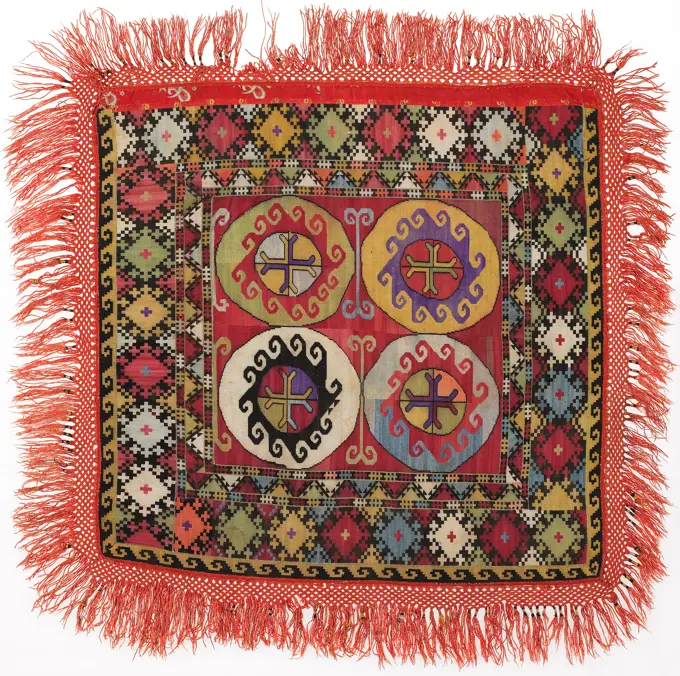
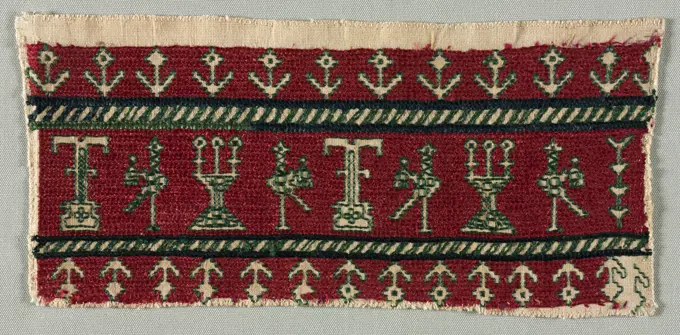
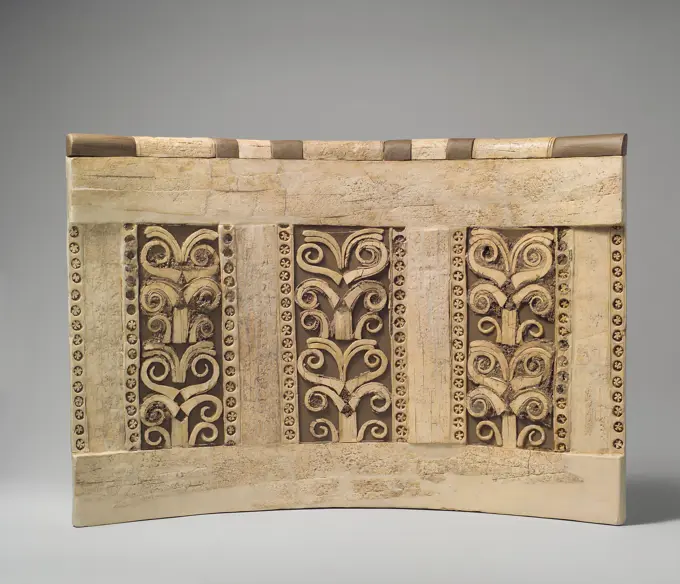
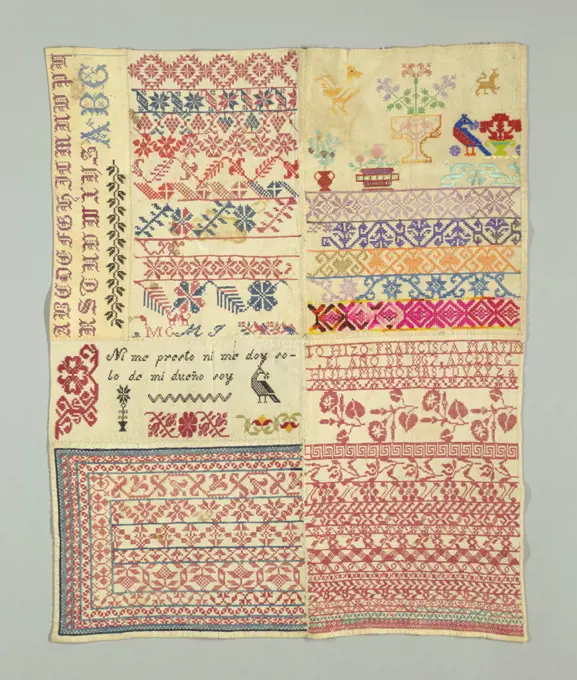
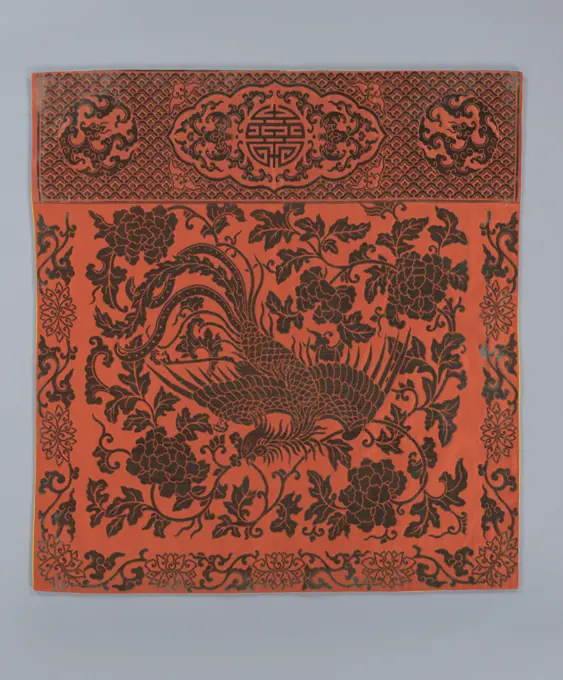
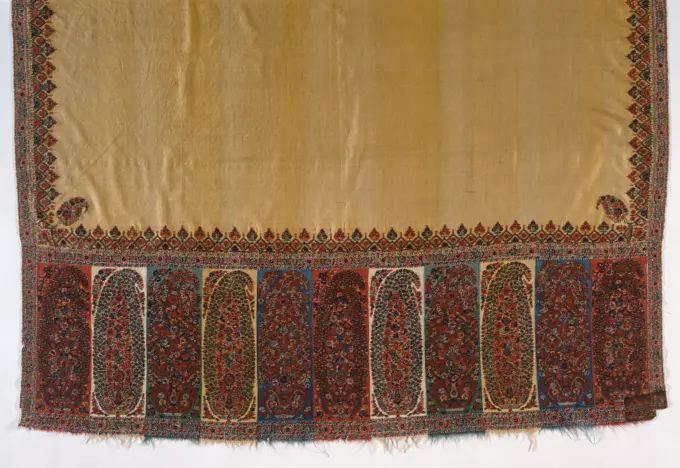
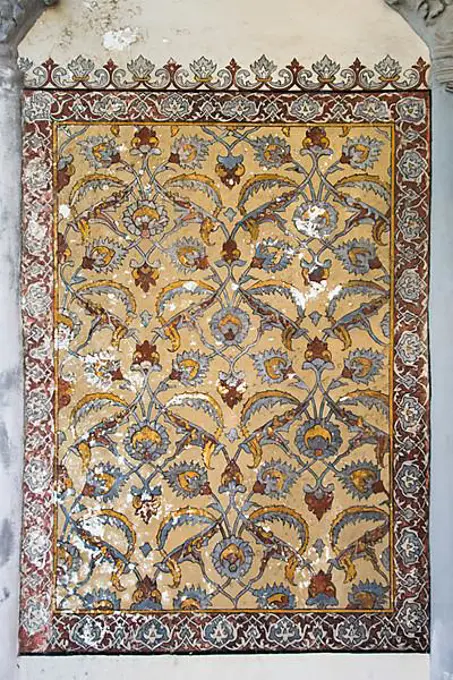
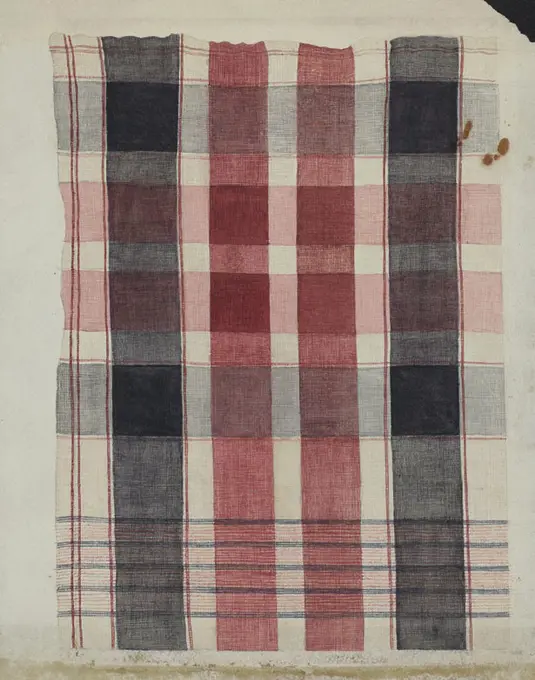
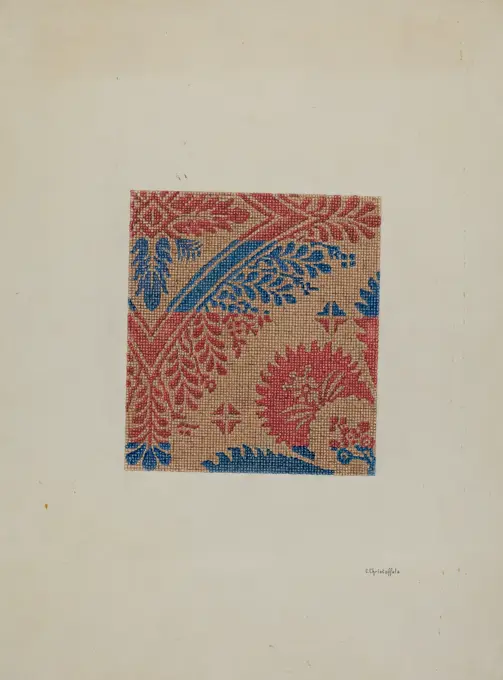
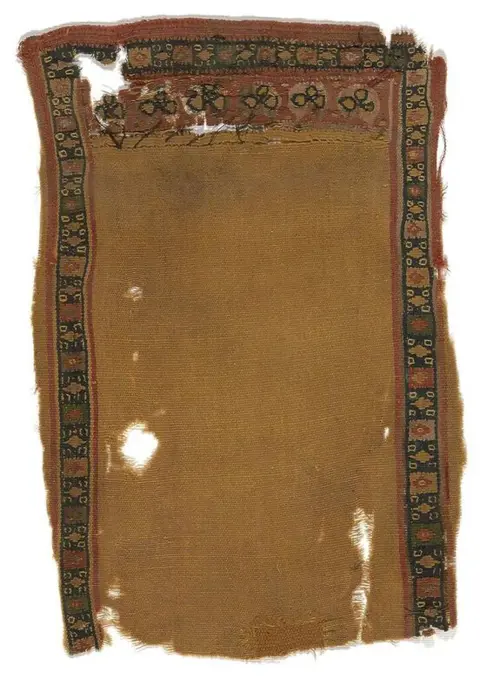
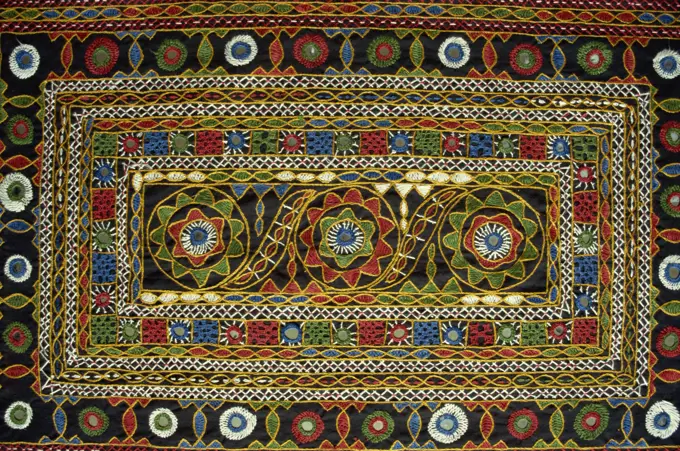
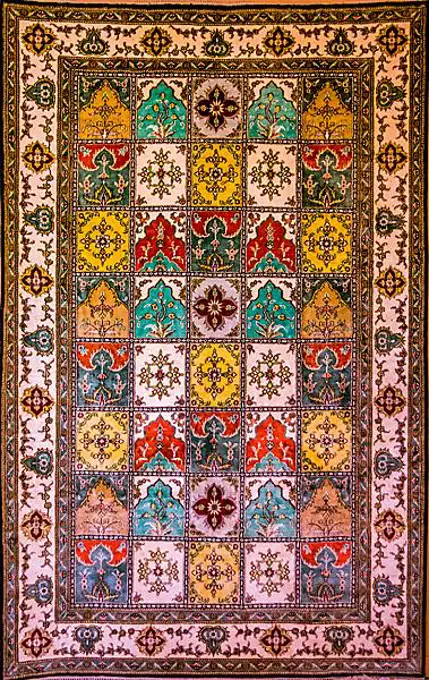
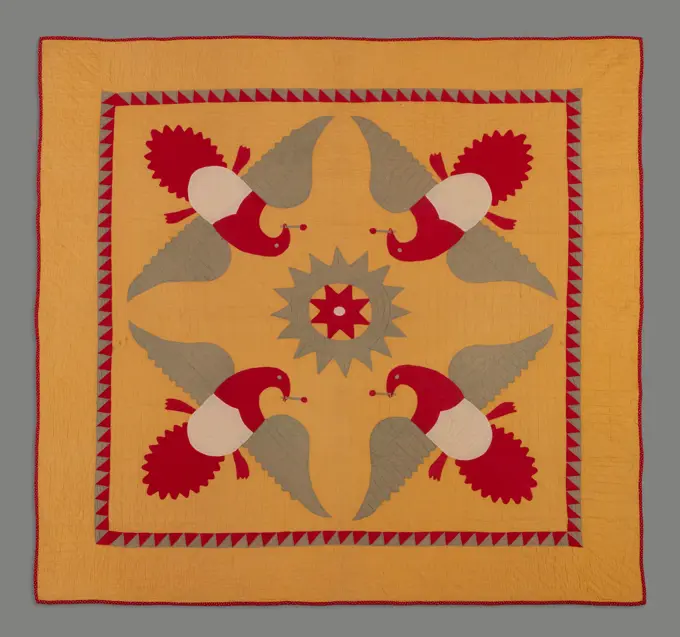
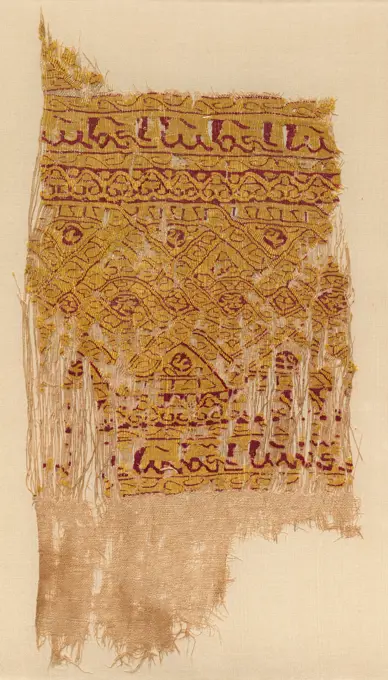
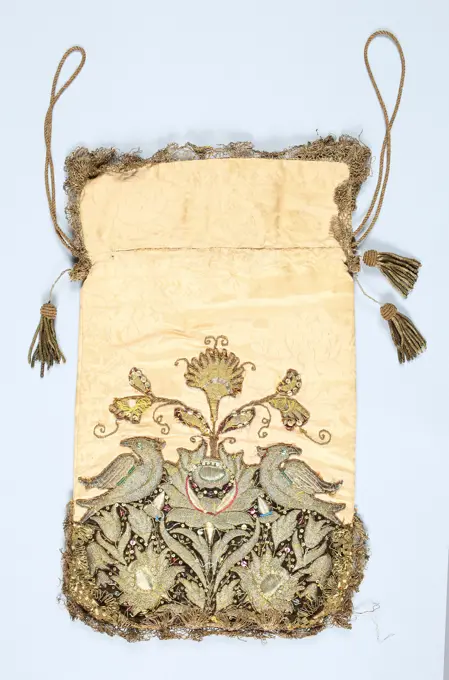
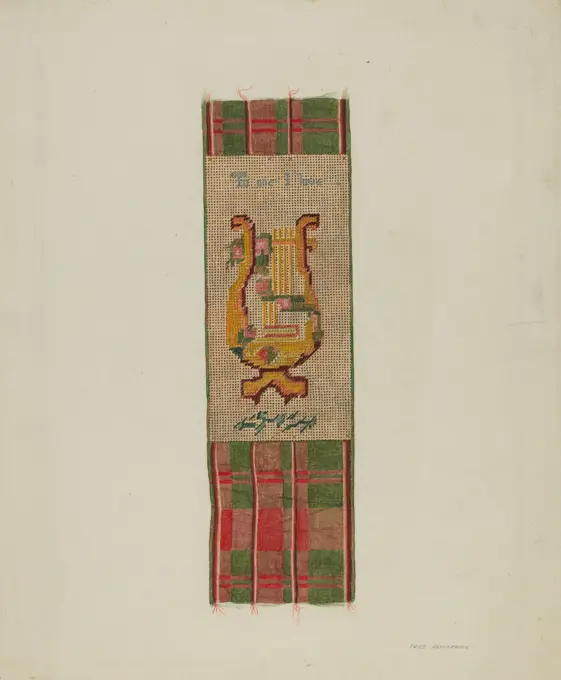
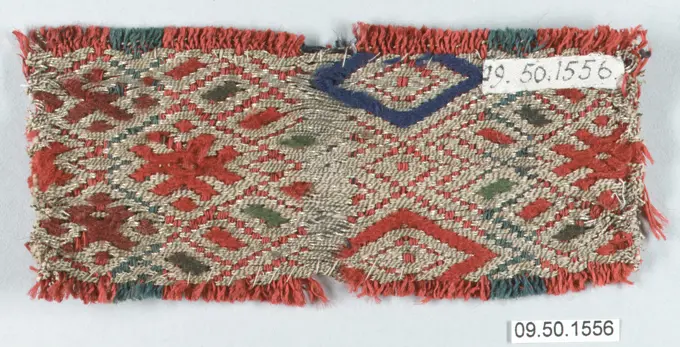
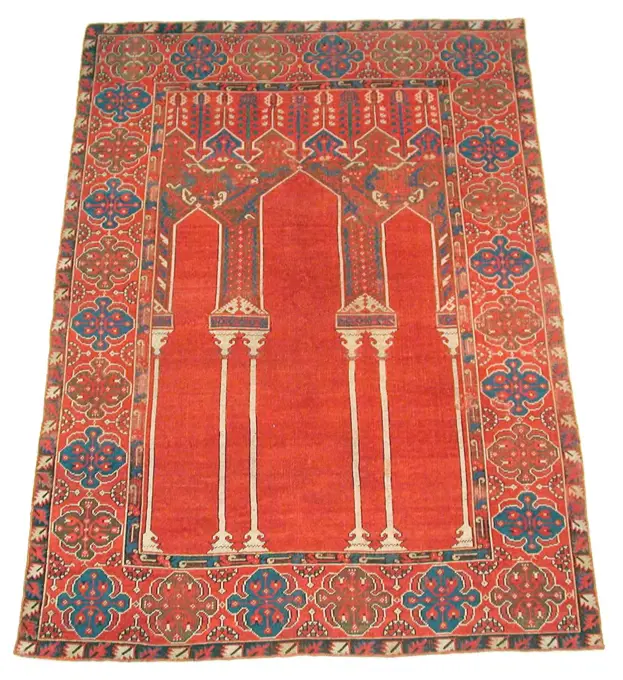
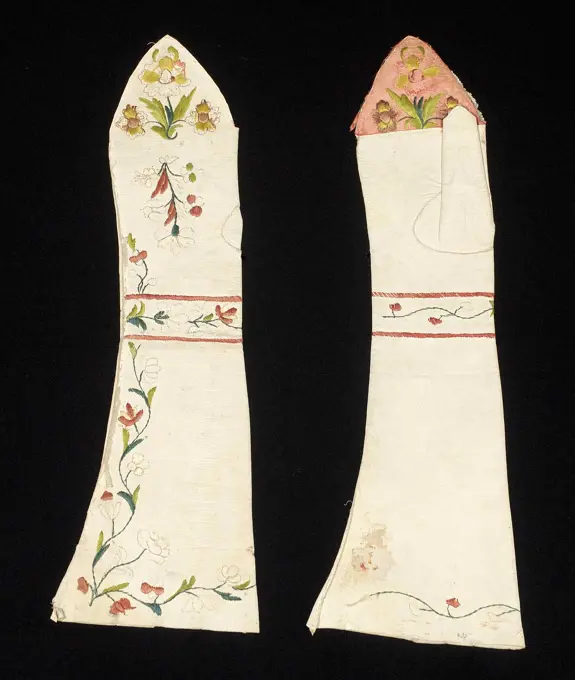
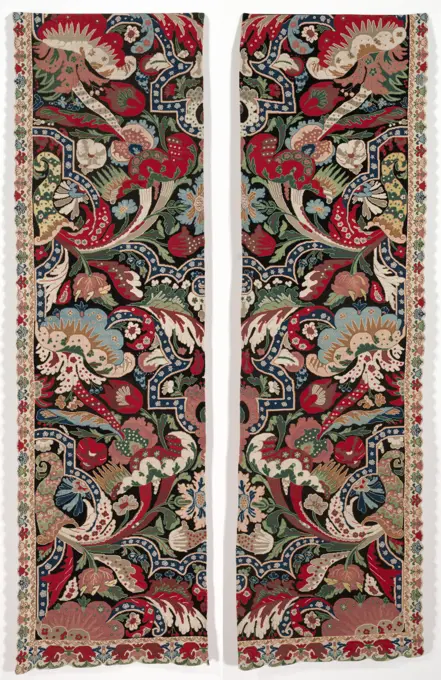
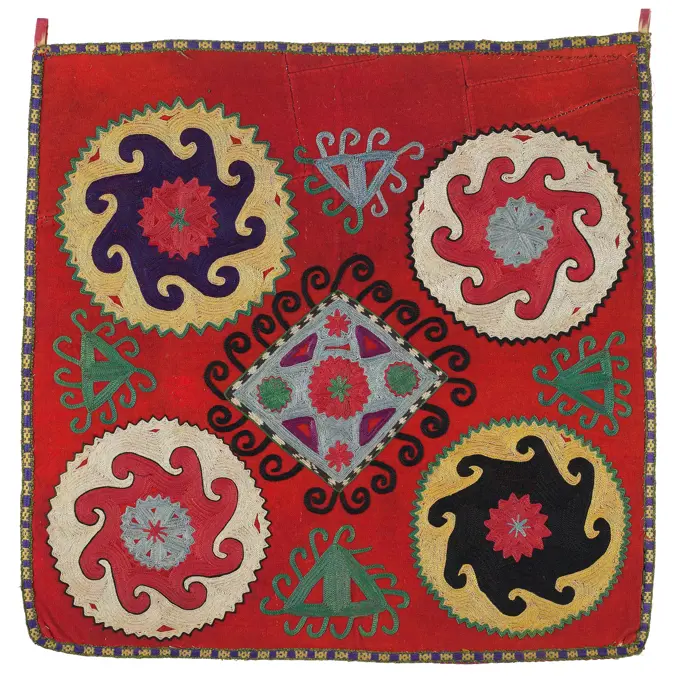
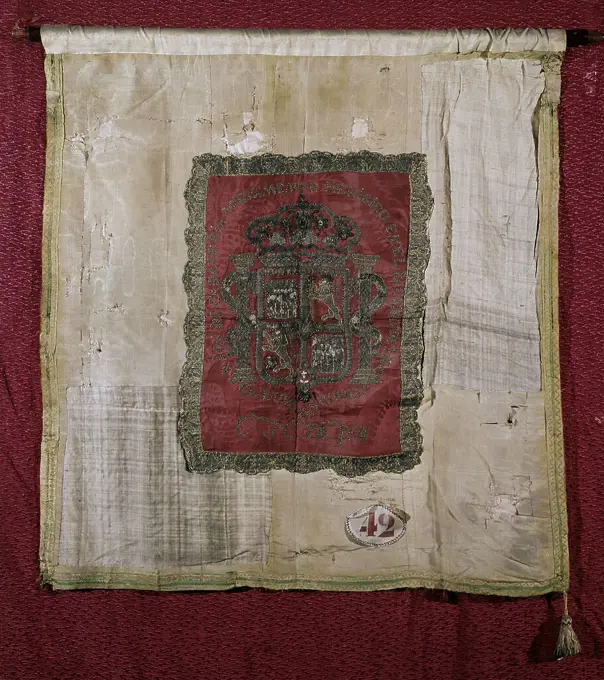
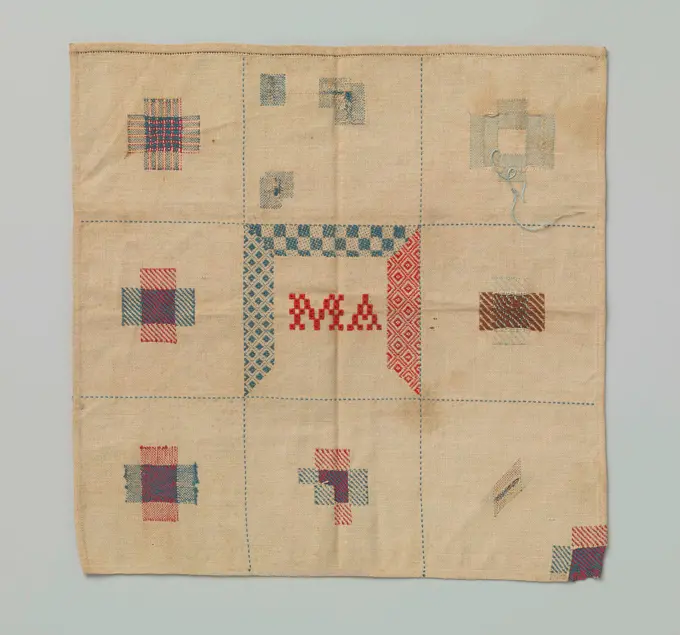
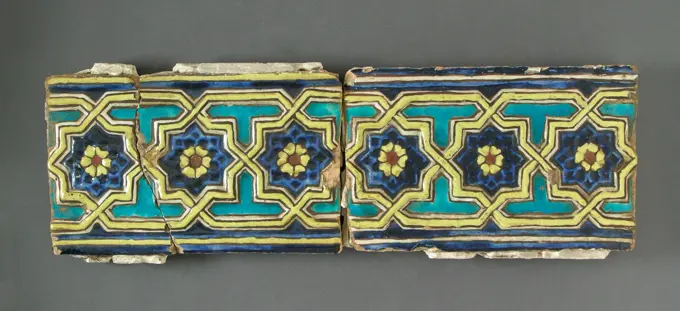
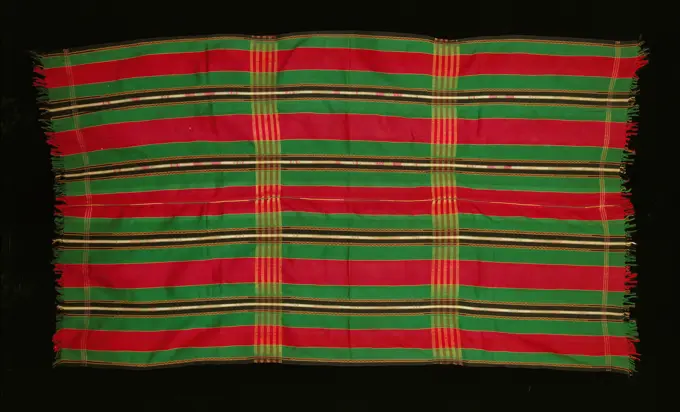
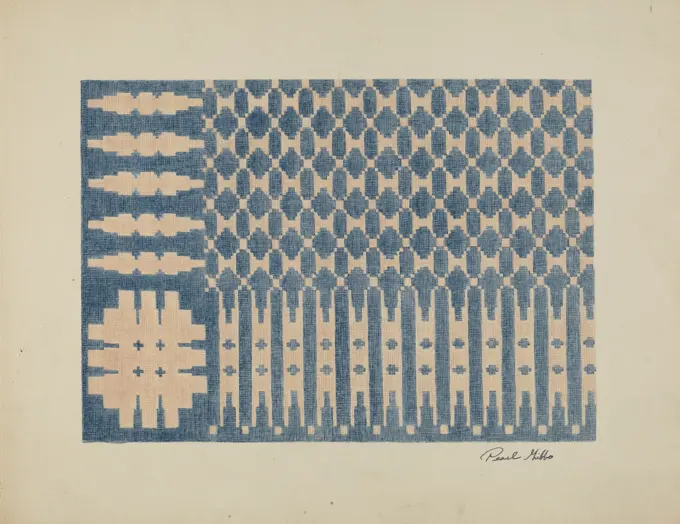
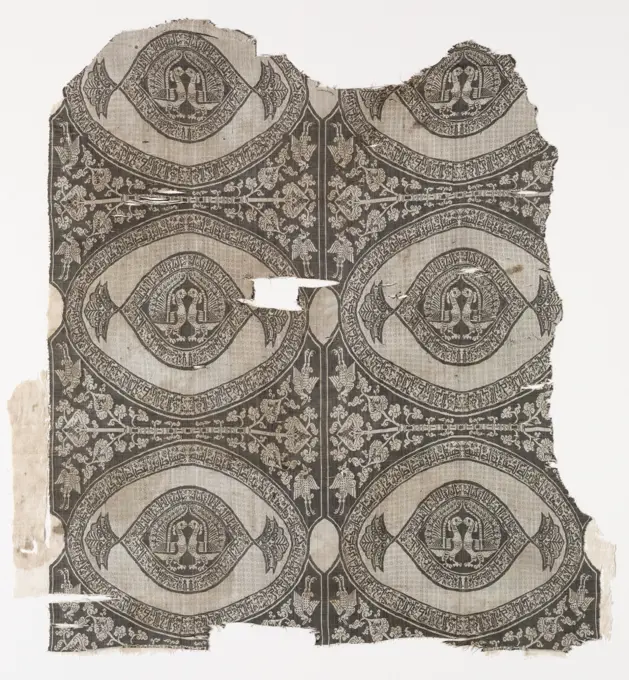
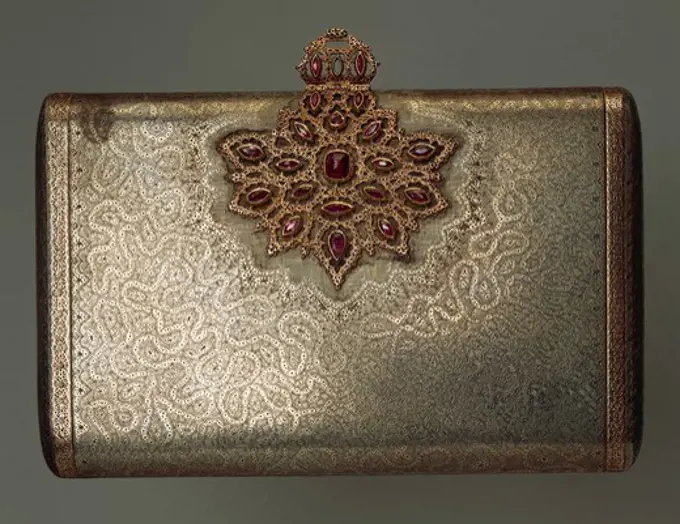
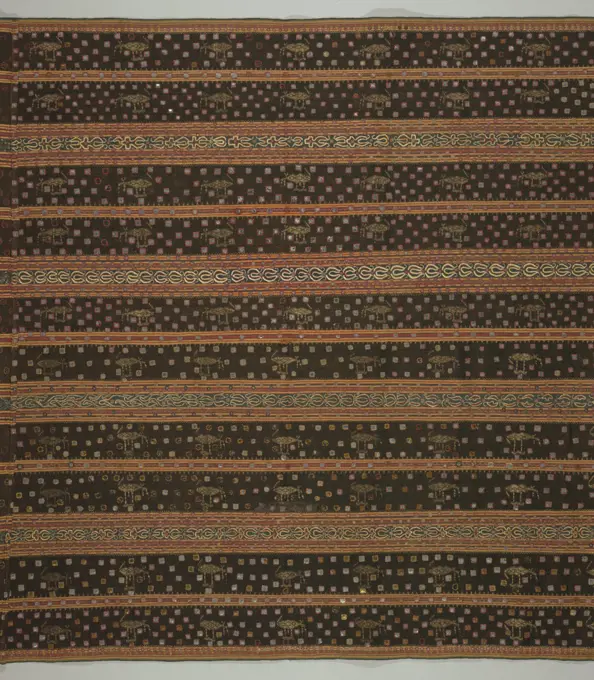
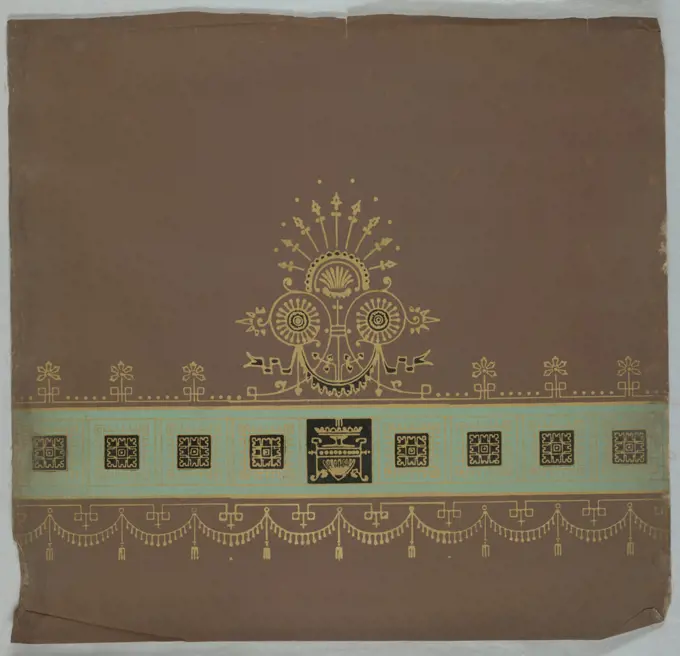
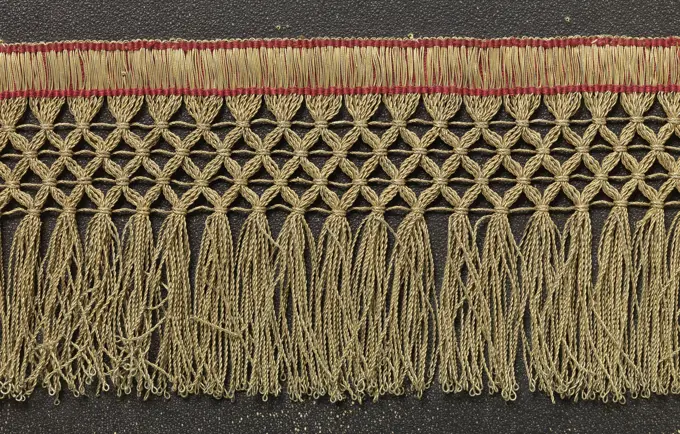
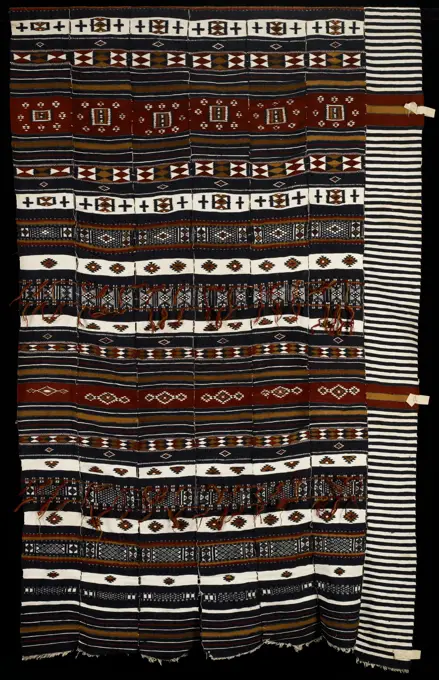
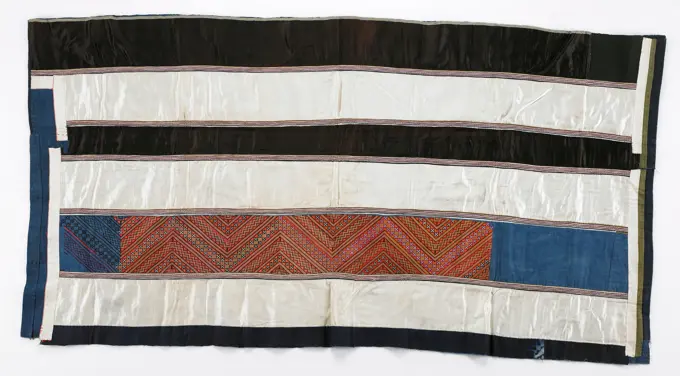
Turkey, Istanbul, Topkapi Palace, painted ceiling,Fragment or canvas of yellow and red satin brooka with a pattern of double crowned eagles with in the corners of flower ornaments. Fragment of cloth from yellow and red satin brochat, a blue weft locally, with a pattern of double crowned eagles, in the corners surrounded by a flower ornament and framed by a border of tight Rinceaux.Sampler, Medium: wool on cotton Technique: cross stitch on plain weave foundation. Counted stitches., An alphabet (missing the letter 'J') and a set of numbers at the top and scattered floral and animal motifs at the bottom with initials., Netherlands, 1842, embroidery & stitching, SamplerLog Cabin, Medium: cotton, wool, silk Technique: quilted, appliquéd on plain weave with supplementary warp pile (velvet), backed with satin weave, Square table cover. Central 'Log Cabin' design of 13 squares (1 large and 12 small) with stars at center (hearth). Each square is composed of colored strips with a variety of decorative embroidery, including blanket and chain stitch. The dark strips of fabric form a large X-shape. Border of bright blue velvet. Backed with blue silk satin, and tufted with yellow silk tufts appearing on the back. ., USA, late 19th century, embroidery & stitching, Patchwork cover, Patchwork coverTapaclothIlgich, early 20th century, 27 x 26 in. (68.58 x 66.04 cm), Silk, cotton; cross-stitch, Uzbekistan, 20th centuryFive Embroidered Fragments, 18th-19th century. Morocco, Azemmur, 18th-19th century. Embroidery: silk on linen tabby ground; overall: 10.2 x 23.2 cm (4 x 9 1/8 in.).Panel with a tree pattern ca. 8th century B.C. Assyrian This piece of ivory furniture was found in a storage room in Fort Shalmaneser, a royal building at Nimrud that was used to store booty and tribute collected by the Assyrians while on military campaign. It was probably part of a bed or couch, judging from the long strips of ivory inlay associated with it, which are also in the Metropolitan Museums collection (59.107.2a, b). Nineteen other similar furniture pieces, probably chair backs, were stacked in orderly rows in the same storage room. They are rare examples of ancient ivory furniture still in its original form; usually, the wooden frames holding the ivory pieces together have disintegrated by the time they are excavated, but since these chairs and couches were buried after the sack of the Assyrian palaces in 612 B.C., their arrangement was preserved. Set in a modern wood frame, this piece combines plain flat strips of ivory with three vertical rows of plant forms, each borderApron, 20th century, 26 x 46in. (66 x 116.8cm), Cotton, China, 20th centuryBaby Carrier, 21 1/2 x 16 3/8 in. (54.61 x 41.59 cm), Cotton, silk (); needlework, ChinaSquare; Made by Harmony Society; silkcarpet with animalistic ornamentSampler, Francesca Martin, Medium: silk and wool embroidery on cotton foundation Technique: embroidered in cross, long-armed cross, satin, and double running stitches on plain weave foundation, Patchwork of six small samplers. Predominantly in red and blue. Motto 'Ni me presto ni me doy solo de mi dueño soy.', Mexico, 1867, embroidery & stitching, SamplerFragment of a Tunic 5th century. Fragment of a Tunic 443669Field of four PompaDourtes, Anonymous, 1600 - 1625 Field of 4 Pompaadourtes (2 x 2) each with a multicolored (blue, yellow, red-orange and green) painted rosette surrounded by pomegranates within a four-pass frame. In the corners, filling technique ornament. Netherlands earthenware. tin glaze majolica Field of 4 Pompaadourtes (2 x 2) each with a multicolored (blue, yellow, red-orange and green) painted rosette surrounded by pomegranates within a four-pass frame. In the corners, filling technique ornament. Netherlands earthenware. tin glaze majolicaCushion; silk, metalSewing sample, France, late 19th century, Sewing sampleTable valance with phoenix 18th century China In a traditional Chinese reception hall, chairs for the hosts are set in pairs on either side of a central table and are covered with textiles that are not adhered directly onto the furniture. Made with velvet, the textiles provide not only comfort but also a pleasing aesthetic due to their shine and elegance. Here, the motif of phoenixes among peonies symbolizes noble women, making these pieces suitable for use in a ladys quarters.. Table valance with phoenix. China. 18th century. Cut and voided silk velvet. Qing dynasty (1644-1911). Textiles-VelvetsSkirt, 74 x 36 in. (187.96 x 91.44 cm), Silk, LaosTextile, Borage; Made by Morris & Co. (United Kingdom); England; cottonApron probably 19th century Romanian. Apron 98431Sari, Jacquard weave, India Copyright: xNirmalaxMishra/DinodiaxPhotoxEdward White, Coverlet, c 1937 CoverletFragment, Medium: silk, paper with applied gold foil Technique: compound weave, a) Olive green at top and white at bottom ground. All over hexagon pattern in gold. There is a large circular motif of yellow and green arcs with purple, red, gold, and blue fern fronds. b) Green background with a faded ombre effect. Hexagon pattern in gold, part of same circular motif at bottom right corner., Japan, 18th century, woven textiles, FragmentWoman's Shawl. India, Kashmir, circa 1815. Costumes; outerwear. Goat-fleece underdown (cashemere) double interlocking twill tapestry weaveSaddle Blanket () 1860-70 Navajo. Saddle Blanket () 313230Elongated scarf with black mirror, around which a full ornamental pattern, anonymous, c. 1860 - c. 1880 Elongated scarf with black mirror, around which a full ornamental pattern West-Europa whole: Wool Elongated scarf with black mirror, around which a full ornamental pattern West-Europa whole: WoolDarning sampler. Date/Period: 1825. Darning sampler. Medium: silk embroidery on cotton foundation. Technique: embroidered in running, satin, and cross stitches on plain weave foundation. Height: 270 mm (10.62 in); Width: 270 mm (10.62 in). Author: UNKNOWN.Floral art pattern example of the Ottoman timeBundle Handkerchief. Dated: c. 1936. Dimensions: overall: 27 x 21.6 cm (10 5/8 x 8 1/2 in.) Original IAD Object: 6 3/4" wide; 9 1/2" long. Medium: watercolor and graphite on paper. Museum: National Gallery of Art, Washington DC. Author: Alfred Denghausen.Scarf 1700-1945 American or European. Scarf 119263Darning sampler. Date/Period: Early 19th century. Darning sampler. Medium: silk embroidery on linen foundation. Technique: embroidered in running, satin, buttonhole and eyelet stitches with overcasting over withdrawn element work on plain weave foundation. Height: 305 mm (12 in); Width: 315 mm (12.40 in). Author: UNKNOWN.Cornelius Christoffels, Coverlet, c 1940 CoverletMuseo de Telas Medievales del Monasterio de las Huelgas. Almohada de la reina Berenguela. Patrimonio Nacional.Textile, Medium: cotton Technique: plain weave, Small check gingham in brown and tan., USA, late 19th century, woven textiles, TextileFragments with Gold Foil, 300s-400s. Egypt, Byzantine period, 4th-5th century. Undyed linen, dyed wool, and gold foil; plain weave with supplementary weft-loops, slit-tapestry weave with supplementary weft wrapping; average: 40.8 x 48.4 cm (16 1/16 x 19 1/16 in.). The rare gold foil and rich purple wool in these two fragments originally enriched a luxurious fabric. Costly gold foil wrapped around a silk core forms the central motif within a diamond, woven in tapestry weave. The surrounding interlacing knot designachieved with three overlapping squares (in the small fragment) or interlacing squares (in the large fragment)offered protection from danger and harm. The roundels were woven with extra, or supplementary, linen wefts wrapped on the purple ground. Linen pile loops in the ground fabric resisted abrasion in furnishing fabrics and provided insulation in tunics.Molde para estampación de indiana. Museu Català de les Arts i Tradicions Populars.Virginia Bufano, Sofa  Pillow Top, c 1937 Sofa - Pillow TopKontusz sash/belt. Manufaktura Skarbu Radziwiłłowskiego (Słuck; wytwórnia pasów; 1790-1846), manufacture, Manufaktura Karola Stanisława Radziwiłła (Słuck ; wytwórnia pasów ; ca 1767-1790), manufacture, Madżarski, Leon (tkacz ; Słuck ; ca 1740-1811), contractorCarpet probably late 18th-early 19th century. Carpet 453581Fragment (from a Tunic). Coptic; Egypt. Date: 401 AD-600 AD. Dimensions: 22.2 × 32. cm (8 1/4 × 12 3/4 in.). Wool, tapestry weave. Origin: Egypt. Museum: The Chicago Art Institute, Chicago, USA.Close_up of Rajasthani embroidery, Rajasthan state, India, AsiaConciliate belt;  End of the 18th century (1791-00-00-1800-00-00);Carpet Manufacture, Cappadocia, Turkey, Cappadocia, Turkey, AsiaRoundel 6th-7th century. Roundel 445765Quilt, Four Eagles pattern ca. 1880 American. Quilt, Four Eagles pattern. American. ca. 1880. Cotton. Made in Lebanon County, Pennsylvania, United StatesSampler 1799-1800 Dutch. Sampler 228126Kontushbelt.  Artist: Leon Madjarski, Armenian, 1740-1811Border Fragment; silk, linenFragment of Shoulder Band 6th-7th century. Fragment of Shoulder Band. 6th-7th century. Wool, linen; tapestry weave. Attributed to Egypt. TextilesFragment of a Tiraz-Style Textile, 1130 - 1149. Egypt, Fatimid period, Caliphate of al-Hafiz, AH 524-544, 12th Century. Tabby ground with inwoven tapestry ornament; linen and silk; overall: 26.4 x 13.4 cm (10 3/8 x 5 1/4 in.).Tablecloth; linenFragment Made 1601-1700 Italy. CiselÈ fancy cloth velvet .Chair seat cushion 17th century Italian or Spanish. Chair seat cushion 460436Reticle. 1890. GAL1965.4.11Sampler (Germany); silk embroidery on linen foundationFred Hassebrock, Bookmark, c 1938 BookmarkFragment early 19th century Romanian, Banat district. Fragment. Romanian, Banat district. early 19th century. Metal thread. Textiles-EmbroideredSkirt, 20th century, 190 x 36 in. (482.6 x 91.4 cm), Cotton, rayon; ikat, Guatemala, 20th centurySampler (Germany); silk embroidery on linen foundationBaby Carrier, 16 x 15 1/4 in. (40.64 x 38.74 cm), Cotton, silk, metallic tape; needlework, ChinaTextile FragmentAzerbaijan, Baku, Old Town, CarpetsPrayer Rug with Triple Arch Design 18th century Prayer rugs or "seccade" carpets were among the most popular rugs woven in Anatolia. Common features are the characteristic niche design evoking the mihrab or prayer niche and the smaller size that makes such carpets suitable for individual use. Departing from classical Ottoman court carpets, distinct designs and styles were created over time in villages and smaller towns of Anatolia, which explains the existence of a variety of types. This example from Ladik, near Konya in central Turkey shows a stylized niche with a triple arch - each arch shaped in triangles, supported by double columns. Poly-lobed medallions are repeated in the border, which adds polychrome accents in green, blue, red and white. While the stylized design and motifs, as well as the palette dominated by deep red are typical for carpets woven in Ladik during the later Ottoman period, the overall composition recalls the famous Ottoman court prayer rug ("Ballard double colBatiki decorative cloth with stylized Eastern motif, c. 1910 Cotton battery fierce with an oriental design of a blue circle with dots in every cru, around which stylized flowers in blue and Écru on an an aubine -colored foundation. Haarlem cotton (textile) Cotton battery fierce with an oriental design of a blue circle with dots in every cru, around which stylized flowers in blue and Écru on an an aubine -colored foundation. Haarlem cotton (textile)Floor Mat, 20th century, 56 x 78 in. (142.2 x 198.1 cm), Handspun wool, Mexico, 20th centuryNavy, 1940 - 1943 photograph Small photo album with blue checked fabric cover. Interior consists of 24 sheets with a rectangular frame that has been shifted behind. Album also includes 15 separate photos. Many photos about life on board a ship from De Kriegsmarine, service time in the Netherlands and some photos in Paris, in the 1940-1943. Netherlands (possibly) paper. photographic support. textile materials gelatin silver print  Netherlands. Germany. ParisTextile Fragment 4th-5th century. Textile Fragment 443247Fragment with a Composite Floral Motif Roundel 5th-6th century. Fragment with a Composite Floral Motif Roundel. 5th-6th century. Wool, linen; plain weave, tapestry weave. Attributed to Egypt. TextilesSampler (USA); Embroidered by Rosanna K. Johnsons; silk embroidery on cotton foundationMitts fourth quarter 18th century possibly British. Mitts 170543Pair of Needlework Bed Hangings in the Bizarre style, 1710-20. France, 18th century. Needlework, tent and cross stitch embroidery on canvas; silk, wool; overall: 82.5 cm (32 1/2 in.). These panels would have hung originally around a bed post as part of a full set of hangings on a bedstead in the early 1700's. Elaborate textile hangings were a conspicuous display of wealth since many ladies received their friends within their bedchamber. A full set enveloped the entire bedstead and, when closed, helped retain warmth long after the fire had gone out. This particular pair of panels is remarkable in that they represent many hours of highly skilled needlework. Their design is known as a "bizarre" pattern, which mimicked woven silks of the same era that were asymmetrical, boldly stylized adaptations of Asian fabrics that were coming into the European market from the trading routes at the time.Crimson;  1. PO. 18th century (1700-00-00-1750-00-00);Plant ornaments, Poland (culture), Polish clothingIlgich, late 19th-early 20th century, 22 x 22 in. (55.88 x 55.88 cm), Silk, wool, cotton; chain stitch, Uzbekistan, 19th-20th centuryCover. France. Date: 1808-1814. Dimensions: 197.7 × 156.1 cm (77 7/8 × 61 1/2 in.)Warp repeat (center): 35.6-35.8 cm (14-14 1/8 in.). Silk, warp-float faced 4:1 satin weave with weft-float faced 3:1 twill interlacings of secondary binding warps and supplementary patterning wefts; edged with silk covered linen cord. Origin: France. Museum: The Chicago Art Institute, Chicago, USA.Standard and shield of the battle of Ayacucho. Madrid, Army Museum. Location: ALCAZAR / MUSEO DEL EJERCITO-COLECCIÓN. Toledo. SPANIEN.Plug of multicolored silk on cotton. Silk stopper on cotton. The LAP is divided into nine compartments with 11 stops and the initials in the central box.Tiles. Uzbekistan, Samarqand, circa 1385. Ceramics. Earthenware, molded and glaze-paintedMan's Blanket, 20th century, 90 7/8 x 50 3/8 in. (230.84 x 127.94 cm), Cotton; plain weave, Myanmar (Burma), 20th centuryPearl Gibbo, Old Colonial Handwoven Bedspread, c 1940 Old Colonial Handwoven BedspreadBaby Carrier, 38 x 22 in. (96.52 x 55.88 cm), Silk, cotton, metal sequin and wire; needlework, ChinaPiece 16th-17th century Italian. Piece 223564Medallions with confronting peacocks, 1660-1955 (radiocarbon date, 95% probability). Iran , in the style of the Buyid period (945-1055). Silk: lampas weave; overall: 59 x 57.4 cm (23 1/4 x 22 5/8 in.).Textile Fragment 5th-6th century. Textile Fragment 445670Mexico, San Miguel de Allende. Rug patterns.Goldsmith's art, Italy, 20th century. Mario Buccellati, make-up case in silver engraved with ribbon motif and ornamented with gold and rubies, 1945-1949.Fragment (France); silk; Warp x Weft: 21.8 x 41.6 cm (8 9/16 x 16 3/8 in.)Textile (Egypt); linen, silkSarong, Medium: cotton, mica Technique: embroidered on plain weave, Festival sarong worn by women, of woven stripes in dark brown, coral, dark blue, and natural color. Ornamented with embroidery and pieces of mica attached in vertical rows., Lampung, Indonesia, 18th-19th century, embroidery & stitching, SarongTrimming (Italy); white and colored silk in uncut velvet weave.; Overall: 16 x 4 cm (6 5/16 x 1 9/16 in.)Window shade, Machine-printed, Near bottom edge, single wide band of green. Inside this band are squares containing motifs printed in gold. In the center is a large anthemia-like motif. A band of floral finials above, with a band of pendents, swags and tassels below. Printed on deep brown ground., USA, 1875-1900, Wallcoverings, Window shadeFrank van Goud, 1700 - 1900 Fringes of gold.  . Fringes of gold.  .Sleeve cloth; Sarung, Nage Keo. Sleeve cloth with geometric motifs.Angelo Bulone, Brocade Kerchief, c 1938 Brocade KerchiefCloseup detail of Persian carpets, Iranian carpets and rug.'Woollen Carpet, Enriched with Gold and Silver Thread. Persian; Late 16th Century', 1903. Artist: Unknown.Mosquito net (Arkila kerka), 20th century, 61 x 158 in. (154.9 x 401.3 cm), Cotton, wool; supplementary weft patterning, Mali, 20th century, For the Fulani of the Guimbau region of Mali, blankets are essential parts of a bride's trousseau. The bride's father commissions the creation of five blankets, the wedding blanket or arkila kerka, meaning mosquito net, being the largest and most important. During the winter months of November to January, Fulani cattle herders need protection from the cold, as well as from mosquitoes; these blankets are produced to meet this need. In addition, the blankets can serve as room-dividers.Conciliate belt; Manufaktura Karol Stanisław Radziwiłł (Słuck; Pasów label; Ca 1767-1790), Madżarski, Jan (Tkacz; Słuck, -A 1800); 1767-1780 (1767-00-00-1780-00-00);Skirt, 25 3/4 x 57 in. (65.41 x 144.78 cm), Silk, cotton, ChinaSquare; cotton